NihontoWatch Mon

NihontoWatch

Market
Encyclopedia
Kantei
NihontoWatch Mon

NihontoWatch

Market
Encyclopedia
Kantei

Description

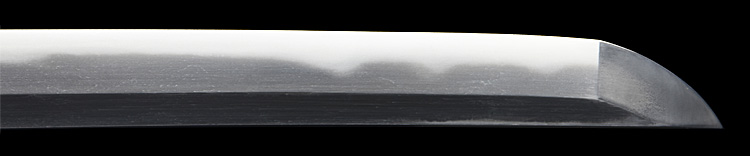
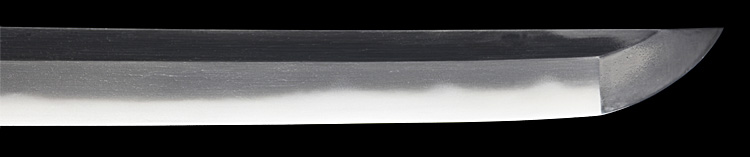
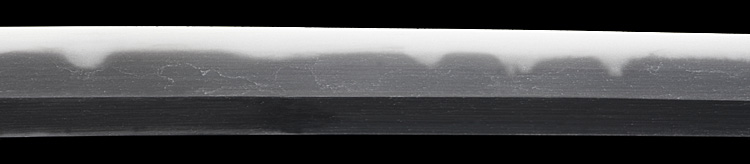
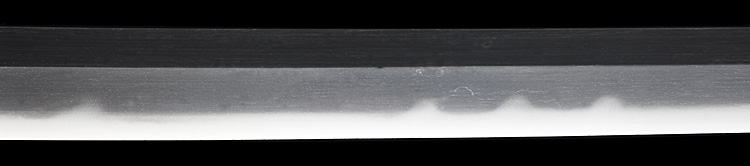
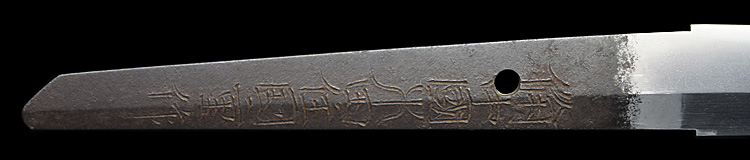
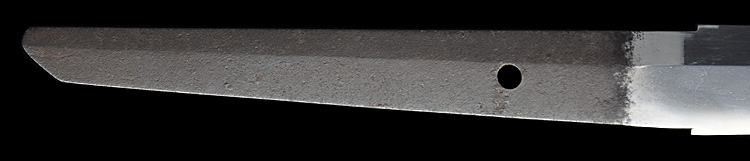
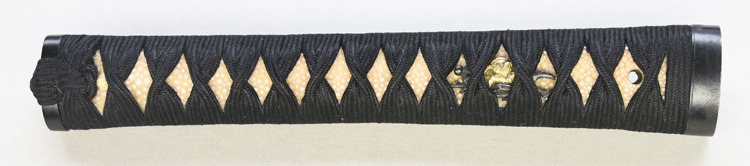
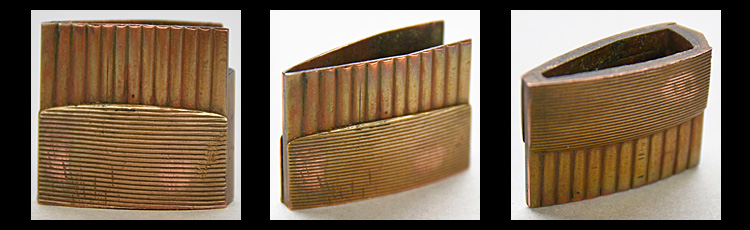
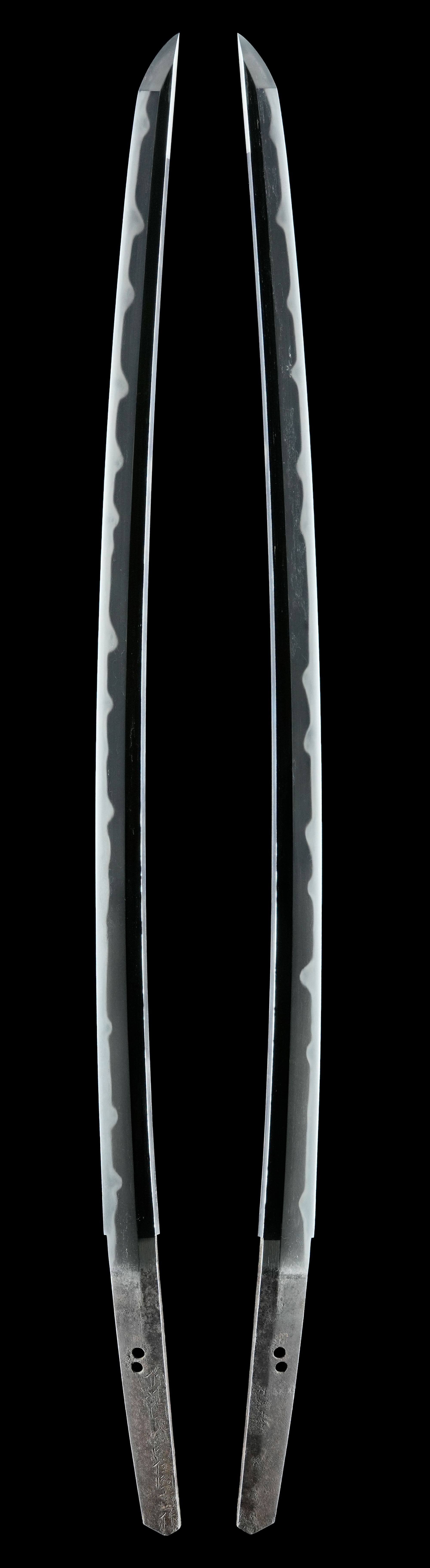
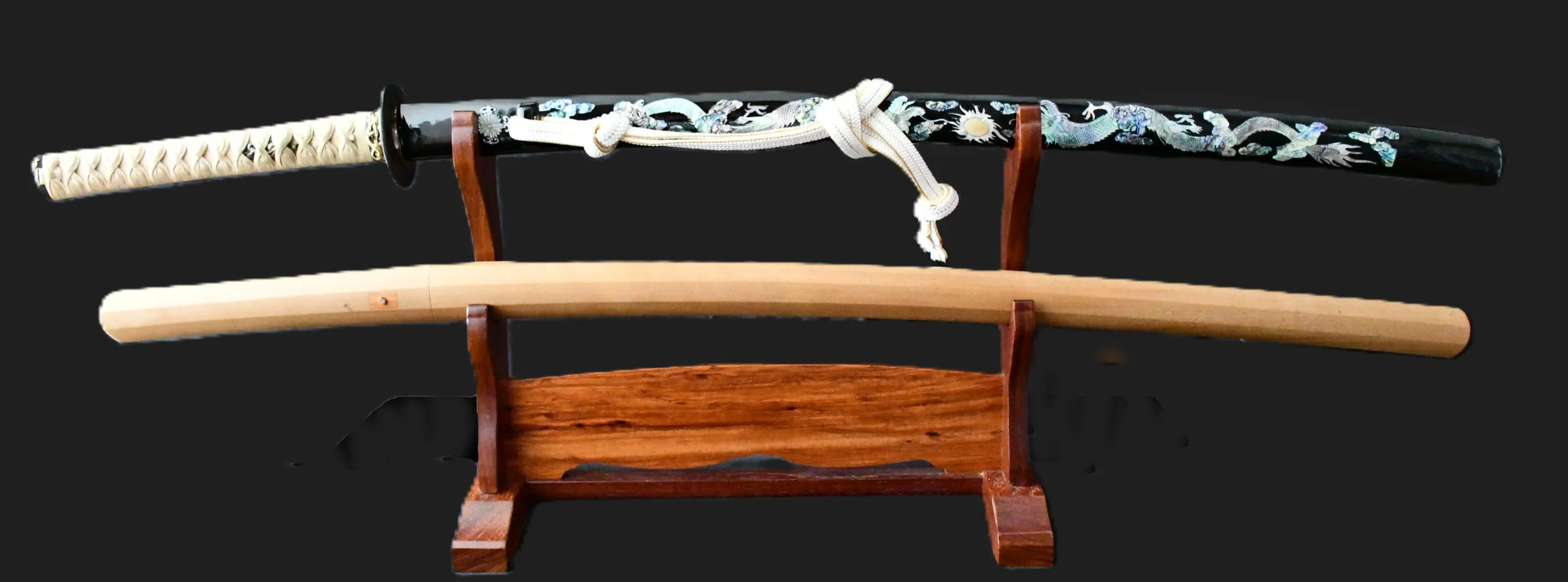
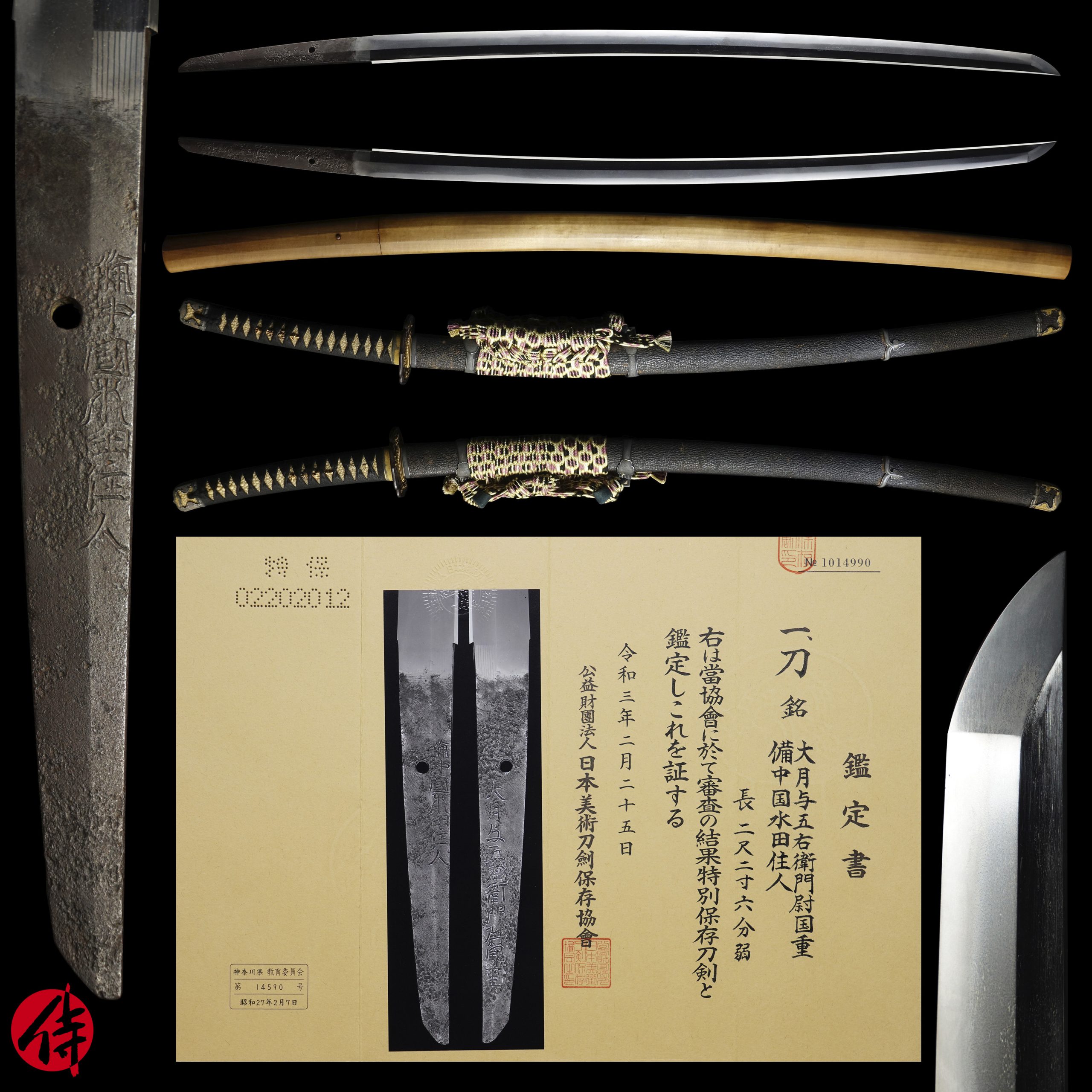
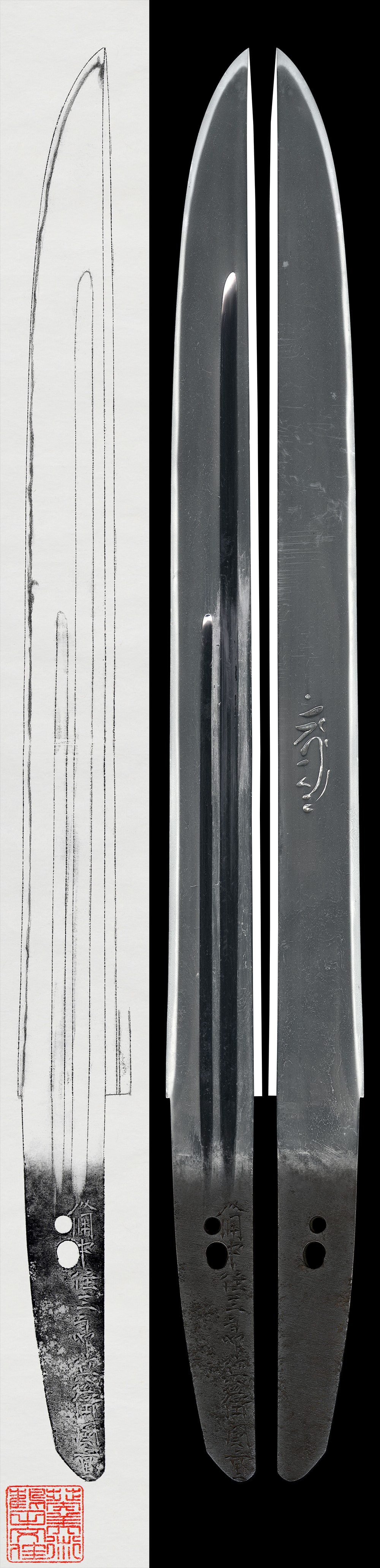
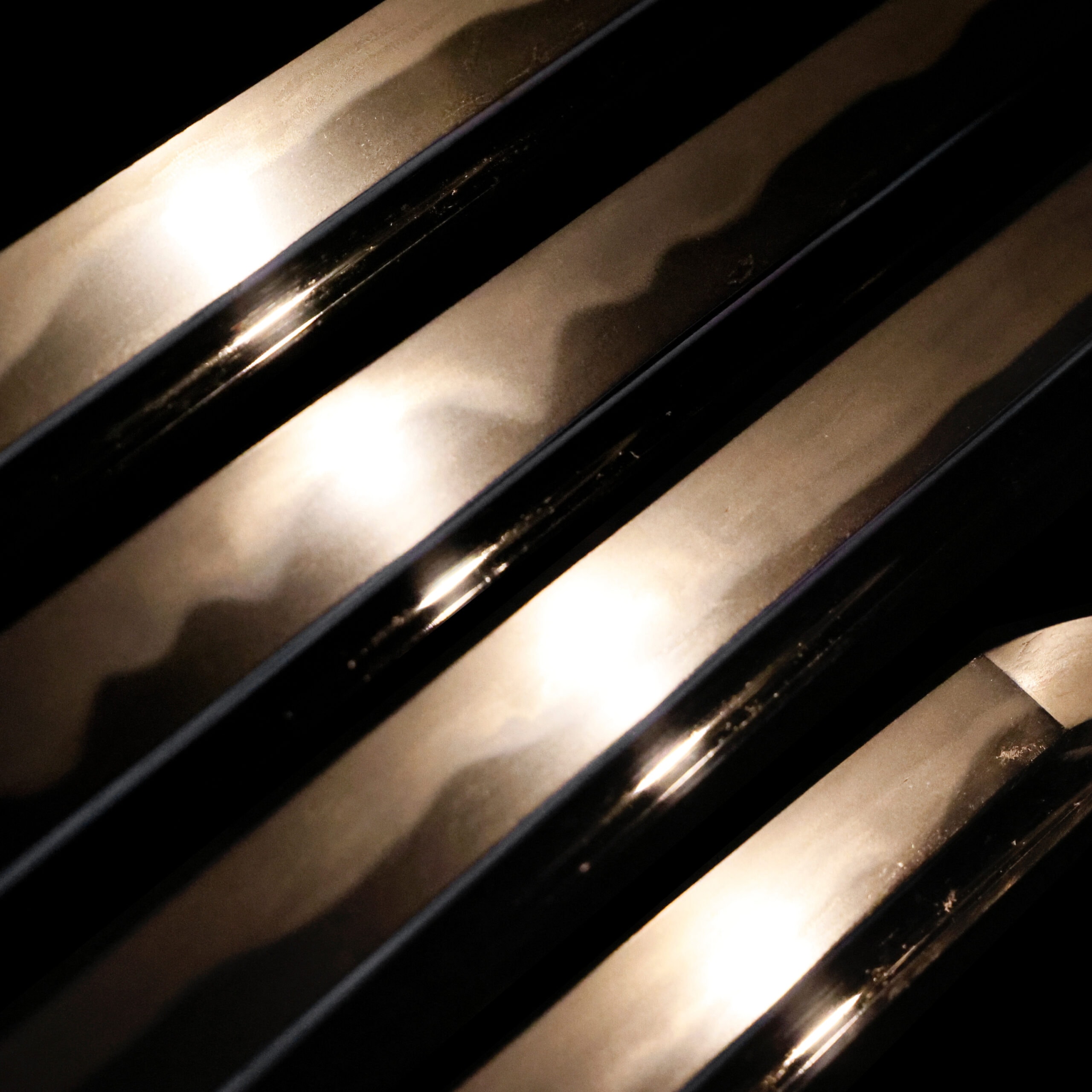
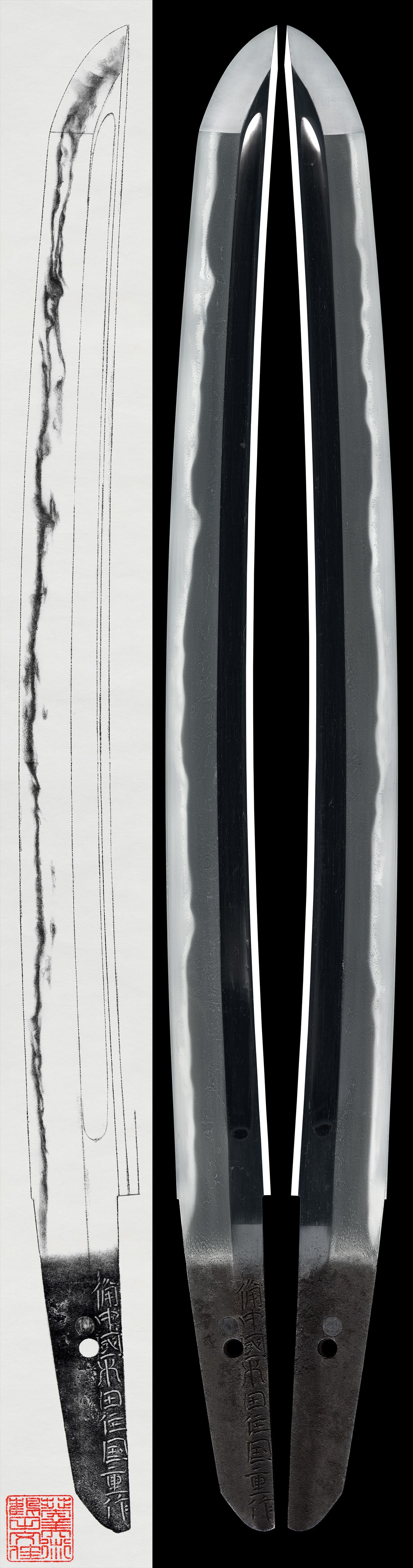
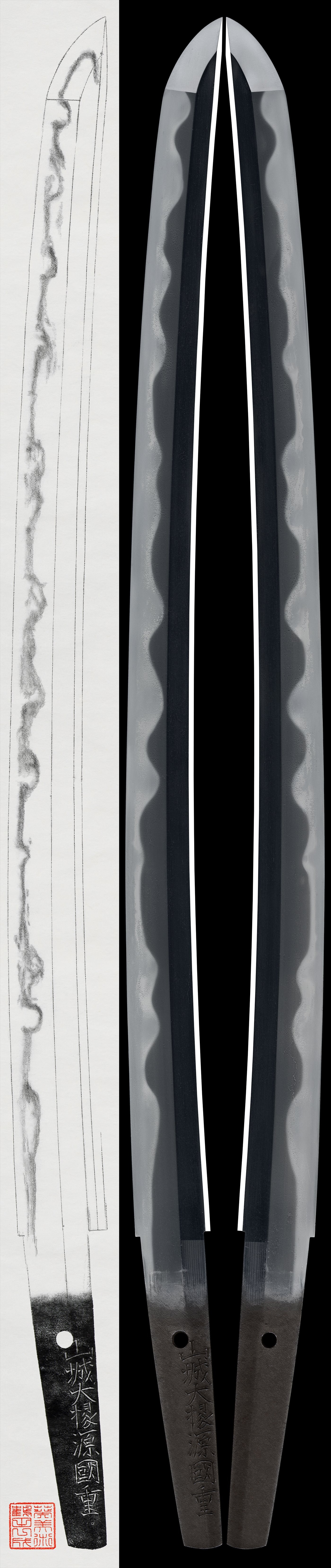
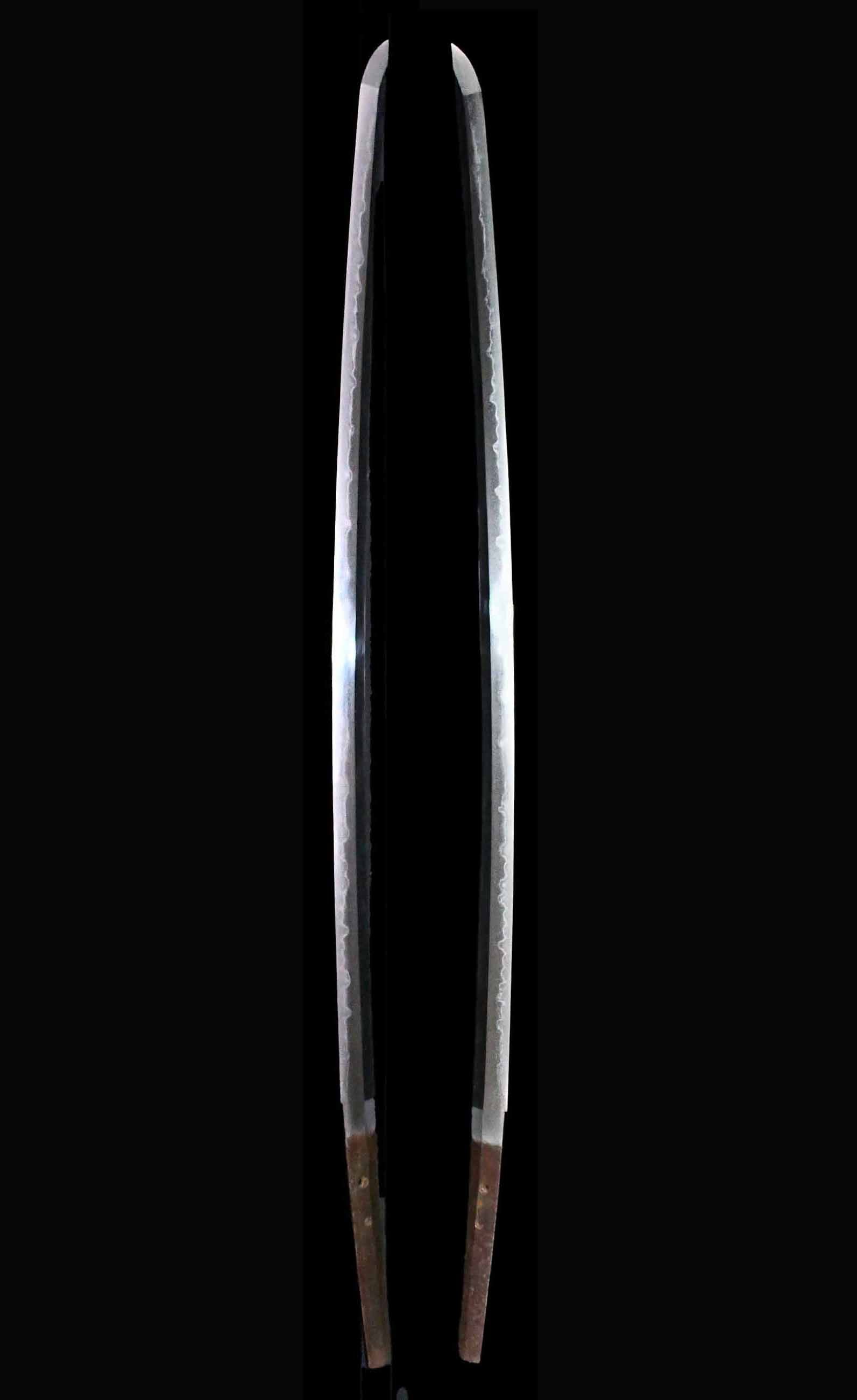
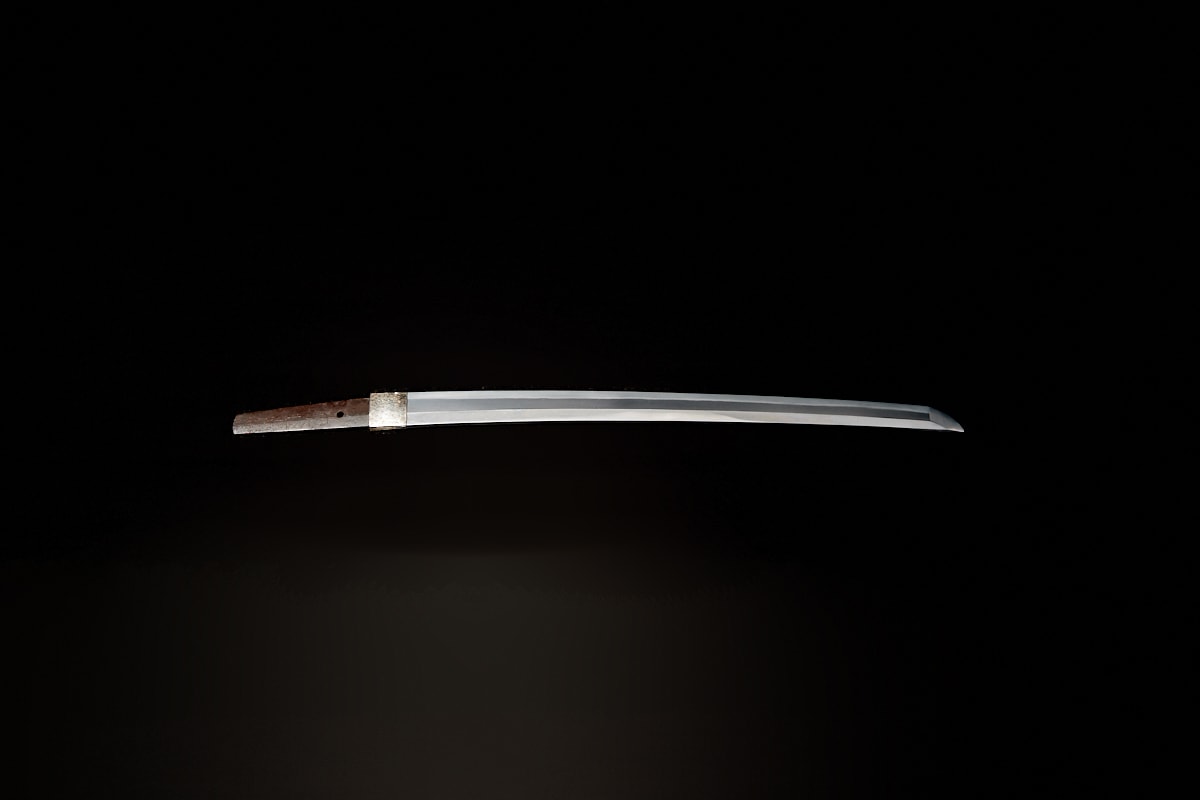
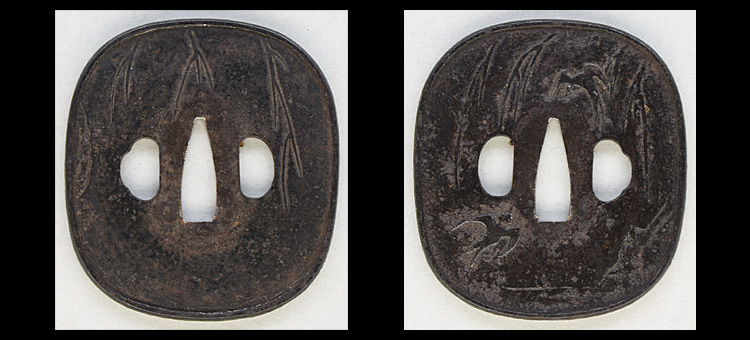
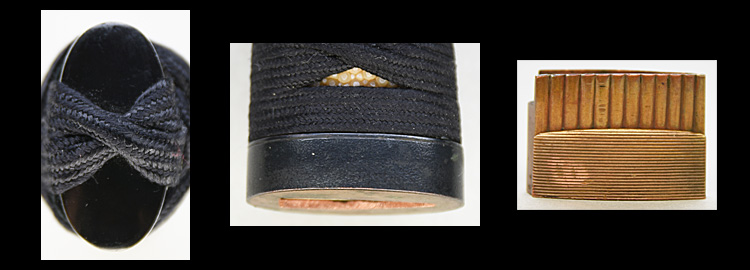
This is a katana made by Kunishige of Mizuta in Bitchu province during the early Edo period. It features a honzukuri-iori-mune construction with an ubu-nakago and an itame-hada mixed with masame, showing ji-nie and chikei. The hamon is gunome mixed with togari-ba in notare, with deep nioi, working ashi and yo, and bright, clear kinsuji and sunagashi. It comes with a black roiro-nuri saya uchigatana koshirae and a shirasaya, and is certified as Tokubetsu Hozon by the NBTHK.

NihontoWatch MonNihontoWatch
MarketEncyclopediaKantei
Swords›Mizuta›Kunishige›Katana: Bitchu Mizuta-ju Kunishige Saku
katanaTokubetsu Hozon
Mizuta Kunishige

Katana: Bitchu Mizuta-ju Kunishige Saku

mei · Mizuta · Edo · nagasa 70.9cm · sori 1cm
¥980,000
Visit seller website →
Mizuta Kunishige — 1 of 14
Mizuta Kunishige — 2 of 14
Mizuta Kunishige — 3 of 14
Mizuta Kunishige — 4 of 14
Mizuta Kunishige — 5 of 14
Mizuta Kunishige — 6 of 14
Mizuta Kunishige — 7 of 14
Mizuta Kunishige — 8 of 14
Mizuta Kunishige — 9 of 14
Mizuta Kunishige — 10 of 14
Mizuta Kunishige — 11 of 14
Mizuta Kunishige — 12 of 14
Mizuta Kunishige — 13 of 14
Mizuta Kunishige — 14 of 14
1 / 14
1 / 14
Mizuta Kunishige — 1 of 14Mizuta Kunishige — 2 of 14Mizuta Kunishige — 3 of 14Mizuta Kunishige — 4 of 14Mizuta Kunishige — 5 of 14Mizuta Kunishige — 6 of 14Mizuta Kunishige — 7 of 14Mizuta Kunishige — 8 of 14Mizuta Kunishige — 9 of 14Mizuta Kunishige — 10 of 14Mizuta Kunishige — 11 of 14Mizuta Kunishige — 12 of 14Mizuta Kunishige — 13 of 14Mizuta Kunishige — 14 of 14
Measurements & details
Smith
Mizuta Kunishige
Type
Katana
School
Mizuta
Period
Around 1624–1644(Kanei)
Province
Bitchu
Signature
Signed(100% of this smith's designated works are signed)
Measurements
Nagasa 70.9cmSori 1cmKasane 0.82cm
Description

This is a katana made by Kunishige of Mizuta in Bitchu province during the early Edo period. It features a honzukuri-iori-mune construction with an ubu-nakago and an itame-hada mixed with masame, showing ji-nie and chikei. The hamon is gunome mixed with togari-ba in notare, with deep nioi, working ashi and yo, and bright, clear kinsuji and sunagashi. It comes with a black roiro-nuri saya uchigatana koshirae and a shirasaya, and is certified as Tokubetsu Hozon by the NBTHK.

About the maker

Kunishige

國重

Shinto · Bitchu · around 1624-1644

Fujishiro Jo-jo saku · Tōken Taikan top 26%

9 pieces on the market now

›

Kunishige worked within the Mizuta school of Bitchu Province, a lineage that flourished from the late Muromachi period into the Edo era. The most celebrated smith of this name is Otsuki Yogoro Kunishige, commonly abbreviated as "Daiyogo," who was the son of Otsuki Saburobei Kunishige and is recognized as the foremost master of the Mizuta school. The NBTHK observes that "the nationwide prosperity of this school during the Edo period was likely due to the presence of such superior craftsmen." Earlier work signed "Ko-Mizuta Kunishige" is dated to the late Muromachi period, with a katana bearing the date Tensho 20 (1592) among the few signed examples by the older lineage.

The Ko-Mizuta works display a kitae of dense ko-itame-hada with ji-nie and utsuri, and a hamon built around gunome-midare as the principal theme, incorporating small midare and ko-choji in what the NBTHK describes as an "overall somewhat busy" manner, with a tightly formed nioiguchi and attached ko-nie as the chief point of appreciation. The later Daiyogo Kunishige, by contrast, excelled particularly in the Soshu-den, producing itame-hada with prominent standing grain, well-adhering ji-nie, and chikei, tempered in bold notare-style o-midare that in the upper half becomes nearly hitatsura, with deep nioi and coarse nie. The boshi on such works enters in irregular midare-komi with hakikake, burning down long to the mune-machi. The tang tip in the Mizuta manner is characteristically ha-agari kurijiri.

Signed examples by both the Ko-Mizuta and Daiyogo lines are described as "comparatively few," lending particular significance to surviving blades. The Ko-Mizuta katana of Tensho 20 is called "not only a typical example, but also one of his representative works," while the Daiyogo Kunishige is praised as "a superior craftsman who exceeded his father's skill." This rarity of signed work is traditionally attributed to signatures being removed or blades being shortened and reworked into superior pieces -- a testament to the enduring regard in which Mizuta workmanship has been held.

Historical importance

Where Kunishige stands among comparable artisans: across all of nihontō, and within tradition, era, and period. The tiers (Foremost · Leading · Major · Notable) weigh official designations from the NBTHK and Japan's Agency for Cultural Affairs, together with historical honors of lasting repute such as the Sansaku and Meibutsu-chō.

随一
Foremost
屈指
Leading
有数
Major
著名
Notable

Select a lens to see how it's measured.

Designation record
3 designated works
Gyobutsu (Imperial)
2
Jūyō
1
9 works by Kunishige on the market→
Kunishige — full profileShinto school
About the school

Mizuta

水田

Shinto · Bitchu

16 pieces on the market now

›

In Bitchū Province at the close of the Muromachi period, the Mizuta group emerged at the village of that name, and successive generations took the name Kunishige. The setsumei trace their work across Matsuyama, Toribe, Ihara, Ebara, and Niimi, with their vitality carrying into the shintō era. The smiths the records cover form a recognizable line: Ko-Mizuta Kunishige, whose dated blade reaches Tenshō 20 (1592); the Niimi Saburōzaemon no Jō Kunishige, said by signature references (meikan) to have come from Bingo into the Niimi estate and afterward to have served the Mimura family, lords of Matsuyama Castle; Kunishige of Ihara, who signed "Bitchū no kuni Ihara-jū Kunishige saku"; Kunishige styled Ōtsukiyo Goemon, recorded as forging also at Fukuyama in Bingo and at Kawanami; and Ōtsuki Yogorō Kunishige, abbreviated "Daiyogo," son of Ōtsuki Saburōbei Kunishige, who came after the old Mizuta period and worked from the Kan'ei years. So many smiths bore the name Kunishige that the setsumei call the group's reliance on it overwhelming. The shared vocabulary is consistent across the entries. The jigane is itame, sometimes flowing and sometimes standing out, with ji-nie adhering and chikei entering; utsuri is visible on the older pieces. The hamon of the shintō hand rests on a notare or ko-notare base mixed with gunome, deep in nioi, with nie forming vigorously and at times breaking into coarse ara-nie; sunagashi and kinsuji run through, and muneyaki recurs frequently. On the Daiyogo katana the temper rises until the upper half is nearly hitatsura, an ō-midare in notare style with the bōshi burning down long toward the mune-machi.

The bōshi elsewhere goes midare-komi with hakikake, taking a flame-like (kaen) cast or becoming ichimai-like. The Niimi blade adds yakidaka composition with angular and yahazu-like elements. These are the marks of the hand: a strong nie-laden Sōshū bearing on a serviceable, iori-mune shinogi-zukuri build, the signatures cut long toward the mune. For kantei the records single out the notare foundation worked with gunome and intense nie, the yahazu shapes and ichimai bōshi the setsumei name as "the highlights of the Mizuta manner," and the ha-agari kurijiri tang that rises markedly toward the edge. The shintō smiths are read by their pronounced Sōshū emphasis, the kotō-period Ko-Mizuta by a busier (kosekose) gunome-midare carrying ko-chōji and a tight nioiguchi. The setsumei describe these as cutting, utilitarian blades, and the Ihara daishō carries elaborate carving, including kurikara, "Marishiten," and the Nine Syllables. Named pieces anchor the line: the Niimi Kunishige is published in the Kōzan Oshigata and, by the record on its old scabbard, once served as the camp sword (jin-tō) of Bunjō-in, Tokugawa Ienobu, the sixth shōgun. Of Daiyogo the setsumei say few signed works survive, the loss attributed to mei being removed or blades shortened and reworked, yet they name him the leading master of the group and credit the school's spread through the Edo period to smiths of his ability. Learn more →

4 recorded smiths6 designated works
Leading smiths
SmithEraDesignated
Kunishige國重1554-15731
Kunishige國重1592-15961
Kunishige國重1624-16443
Kunishige國重1673-16811
Kunisada國定1688-17040
Explore the Mizuta school →

Historical context

Edo was the sword’s age of connoisseurship: the Hon’ami appraisers, the shogunal register of famous blades of 1719, and a thriving literature turned the sword into an object of study even as it ceased to be drawn in war.

The Edo period (1615 to 1868) →

NBTHK Certificate
Tokubetsu Hozon Tōken特別保存刀剣
Sword Especially Worthy of Preservation
›

A Hozon-certified blade judged to show notably superior workmanship and a better state of preservation. The bar is higher: re-tempered blades and most unsigned Muromachi/Edo works are excluded.

About the NBTHK›

The NBTHK (Nihon Bijutsu Tōken Hozon Kyōkai, the Society for the Preservation of Japanese Art Swords) is a public-interest incorporated foundation founded in 1948 and supervised by Japan’s Agency for Cultural Affairs (Bunkachō); it is based at the Japanese Sword Museum in Tokyo. Its expert panels physically examine each submitted work (shinsa) and issue a certificate (kanteishō) ranking it by artistic and historical merit. NBTHK papers are the most widely recognized standard of authentication for Japanese swords and fittings.

NBTHK official site→
Seller
T
Token-Net
Established 1981 · 45 yrs on the market
🇯🇵Ships from Japan
›
✓Verified dealertoken-net.com
Settles in JPY
✓Ships worldwideWire transferCredit card
Return policy

Within one week of the item's arrival (cooling-off is possible within Japan only). For defects that differ from the purchase conditions, we will accept the return and refund the payment. For other cases such as overseas, we will consult separately.

View all of Token-Net’s listings→View this item on the dealer’s site→

More works by Mizuta Kunishige

View all →
Katana Yamadaiya
Tokuho
Wakizashi - Tokuho - by Mizuta Kunishige - Tokubetsu Hozon Token: Bitchu Mizuta Kunishige SakuWakizashi - Tokuho - by Mizuta Kunishige - Tokubetsu Hozon Token: Bitchu Mizuta Kunishige Saku

Wakizashi

ByMizuta Kunishige
¥460,000
Toushin
Hozon
Katana - Hozon - by Mizuta Kunishige - Bicchu Mizuta KunishigeKatana - Hozon - by Mizuta Kunishige - Bicchu Mizuta Kunishige

Katana

ByMizuta Kunishige
¥360,000
Toyuukai
Tokuho
Katana - Tokuho - by Mizuta Kunishige - Yamashiro Daijo Minamoto KunishigeKatana - Tokuho - by Mizuta Kunishige - Yamashiro Daijo Minamoto Kunishige

Katana

ByMizuta Kunishige
¥2,500,000
Choshuya
Tokuho
Wakizashi - Tokuho - by Mizuta Kunishige - Bicchu no kuni Mizuta ju Kunishige sakuWakizashi - Tokuho - by Mizuta Kunishige - Bicchu no kuni Mizuta ju Kunishige saku

Wakizashi

ByMizuta Kunishige
¥450,000
Token Bizenya
Tokuho
Katana - Tokuho - by Mizuta Kunishige - Ichibei no Jo KunishigeKatana - Tokuho - by Mizuta Kunishige - Ichibei no Jo Kunishige

Katana

ByMizuta Kunishige
Ask
Token Bizenya
Tokuho
Katana - Tokuho - by Mizuta Kunishige - Bitchu Suita-ju Otsuki Yogo KunishigeKatana - Tokuho - by Mizuta Kunishige - Bitchu Suita-ju Otsuki Yogo Kunishige

Katana

ByMizuta Kunishige
Ask
Nipponto
Tokuho
Katana - Tokuho - by Mizuta Kunishige - Katana by Mizuta Kunishige of Bicchu, dated 5th month of Tatsu yearKatana - Tokuho - by Mizuta Kunishige - Katana by Mizuta Kunishige of Bicchu, dated 5th month of Tatsu year

Katana

ByMizuta Kunishige
¥1,250,000
Katana Ando
脇差Photos not published
Wakizashi - by Mizuta Kunishige - Mizuta Otsuki Saburobei-no-jo Kunishige and Ichizo

Wakizashi

ByMizuta Kunishige
¥750,000

Previously sold by Mizuta Kunishige

World Seiyudo
Tokuho
Wakizashi - Tokuho - by Mizuta Kunishige - Bizen Mizuta Kunishige - Tokubetsu Hozon TokenWakizashi - Tokuho - by Mizuta Kunishige - Bizen Mizuta Kunishige - Tokubetsu Hozon Token
Sold

Wakizashi

ByMizuta Kunishige
SOLD
Samurai Museum
Katana - by Mizuta Kunishige - Antique Japanese Sword Katana Signed by Ichizo Kunishige with NTHK Yushu Saku Kanteisho CertificateKatana - by Mizuta Kunishige - Antique Japanese Sword Katana Signed by Ichizo Kunishige with NTHK Yushu Saku Kanteisho Certificate
Sold

Katana

ByMizuta Kunishige
SOLD
Choshuya
Wakizashi - by Mizuta Kunishige - Bitchu Mizuta Kunishige (Ryowazamono), 128Wakizashi - by Mizuta Kunishige - Bitchu Mizuta Kunishige (Ryowazamono), 128
Sold

Wakizashi

ByMizuta Kunishige
SOLD
Choshuya
Wakizashi - by Mizuta Kunishige - Japanese Sword for Sale | Ginza Choshuya | Signed Bitchu Mizuta ju KunishigeWakizashi - by Mizuta Kunishige - Japanese Sword for Sale | Ginza Choshuya | Signed Bitchu Mizuta ju Kunishige
Sold

Wakizashi

ByMizuta Kunishige
SOLD
Yazawa Shokai
Hozon
Wakizashi - Hozon - by Mizuta Kunishige - Hozon (March 2025 Shinsa) Bitchu Mizuta Kunishige - Unusual Shirasaya - Blade Length 48.5cm - Sori 1.2cm - Shinto (Early Edo Period)Wakizashi - Hozon - by Mizuta Kunishige - Hozon (March 2025 Shinsa) Bitchu Mizuta Kunishige - Unusual Shirasaya - Blade Length 48.5cm - Sori 1.2cm - Shinto (Early Edo Period)
Sold

Wakizashi

ByMizuta Kunishige
SOLD
Yazawa Shokai
Wakizashi - by Mizuta Kunishige - Bitchu Mizuta-ju Kunishige with High-Grade Koshirae, Hitatsura-style MidarebaWakizashi - by Mizuta Kunishige - Bitchu Mizuta-ju Kunishige with High-Grade Koshirae, Hitatsura-style Midareba
Sold

Wakizashi

ByMizuta Kunishige
SOLD
Choshuya
Tokuho
Wakizashi - Tokuho - by Mizuta Kunishige - Signed. Bicchu no kuni Mizuta ju KUNISHIGE sakuWakizashi - Tokuho - by Mizuta Kunishige - Signed. Bicchu no kuni Mizuta ju KUNISHIGE saku
Sold

Wakizashi

ByMizuta Kunishige
SOLD
Japanese Sword Books and Tsuba
NTHK
Yari - NTHK - by Mizuta Kunishige - Jumonji Yari with Paper to Bitchu Mizuta KunishigeYari - NTHK - by Mizuta Kunishige - Jumonji Yari with Paper to Bitchu Mizuta Kunishige
Sold

Yari

ByMizuta Kunishige
SOLD

More from the Mizuta school

View all →
Aoi Art
Tokuho
Wakizashi - Tokuho - by Mizuta School - Yamashiro Daijyo Minamoto KuishigeWakizashi - Tokuho - by Mizuta School - Yamashiro Daijyo Minamoto Kuishige

Wakizashi

ByMizuta School
¥570,000
Tozando
Tanto - by Mizuta Kunishige - Kunishige - Shirasaya, Ubu Nakago, Shinshinto EraTanto - by Mizuta Kunishige - Kunishige - Shirasaya, Ubu Nakago, Shinshinto Era

Tantō

ByMizuta Kunishige
¥260,000
Aoi Art
Tokuho
Wakizashi - Tokuho - by Mizuta Kunishige - Bitchu no Kuni Mizuta ju Kunishige SakuWakizashi - Tokuho - by Mizuta Kunishige - Bitchu no Kuni Mizuta ju Kunishige Saku

Wakizashi

ByMizuta Kunishige
¥350,000
Yushindou
Tokuho
Wakizashi - Tokuho - by Mizuta School - Yamashiro Daijo Minamoto Kunishige (Shirasaya)Wakizashi - Tokuho - by Mizuta School - Yamashiro Daijo Minamoto Kunishige (Shirasaya)

Wakizashi

ByMizuta School
¥550,000
Toyuukai
Hozon
Katana - Hozon - by Mizuta School - Mumei (Mizuta) - NBTHK Hozon CertificateKatana - Hozon - by Mizuta School - Mumei (Mizuta) - NBTHK Hozon Certificate

Katana

ByMizuta School
¥600,000
Nipponto
Wakizashi - by Mizuta School - Wakizashi by Yamashiro Daijo Minamoto KunishigeWakizashi - by Mizuta School - Wakizashi by Yamashiro Daijo Minamoto Kunishige

Wakizashi

ByMizuta School
¥580,000
Katana Ando
Hozon
脇差Photos not published
Wakizashi - Hozon - by Mizuta School - Bitchu no Kuni Takayama-ju Awa no Kami Kuninobu

Wakizashi

ByMizuta School
¥350,000

Swords

  • Katana
  • Wakizashi
  • Tantō
  • Tachi
  • Naginata
  • Yari

Fittings

  • Tsuba
  • Fuchi-Kashira
  • Kozuka
  • Menuki

Armor

  • Kabuto
  • Samurai Armor

By Certification

  • Tokujū
  • Jūyō
  • Tokuho
  • Hozon

Resources

  • Dealer Directory
  • Artist Directory
  • The Daily Kantei
  • Glossary
  • Browse All
Nihontowatch© 2026
TermsPrivacyCookiesAbout

Description

This is a katana made by Kunishige of Mizuta in Bitchu province during the early Edo period. It features a honzukuri-iori-mune construction with an ubu-nakago and an itame-hada mixed with masame, showing ji-nie and chikei. The hamon is gunome mixed with togari-ba in notare, with deep nioi, working ashi and yo, and bright, clear kinsuji and sunagashi. It comes with a black roiro-nuri saya uchigatana koshirae and a shirasaya, and is certified as Tokubetsu Hozon by the NBTHK.

NihontoWatch MonNihontoWatch
MarketEncyclopediaKantei
Swords›Mizuta›Kunishige›Katana: Bitchu Mizuta-ju Kunishige Saku
katanaTokubetsu Hozon
Mizuta Kunishige

Katana: Bitchu Mizuta-ju Kunishige Saku

mei · Mizuta · Edo · nagasa 70.9cm · sori 1cm
¥980,000
Visit seller website →
Mizuta Kunishige — 1 of 14
Mizuta Kunishige — 2 of 14
Mizuta Kunishige — 3 of 14
Mizuta Kunishige — 4 of 14
Mizuta Kunishige — 5 of 14
Mizuta Kunishige — 6 of 14
Mizuta Kunishige — 7 of 14
Mizuta Kunishige — 8 of 14
Mizuta Kunishige — 9 of 14
Mizuta Kunishige — 10 of 14
Mizuta Kunishige — 11 of 14
Mizuta Kunishige — 12 of 14
Mizuta Kunishige — 13 of 14
Mizuta Kunishige — 14 of 14
1 / 14
1 / 14
Mizuta Kunishige — 1 of 14Mizuta Kunishige — 2 of 14Mizuta Kunishige — 3 of 14Mizuta Kunishige — 4 of 14Mizuta Kunishige — 5 of 14Mizuta Kunishige — 6 of 14Mizuta Kunishige — 7 of 14Mizuta Kunishige — 8 of 14Mizuta Kunishige — 9 of 14Mizuta Kunishige — 10 of 14Mizuta Kunishige — 11 of 14Mizuta Kunishige — 12 of 14Mizuta Kunishige — 13 of 14Mizuta Kunishige — 14 of 14
Measurements & details
Smith
Mizuta Kunishige
Type
Katana
School
Mizuta
Period
Around 1624–1644(Kanei)
Province
Bitchu
Signature
Signed(100% of this smith's designated works are signed)
Measurements
Nagasa 70.9cmSori 1cmKasane 0.82cm
Description

This is a katana made by Kunishige of Mizuta in Bitchu province during the early Edo period. It features a honzukuri-iori-mune construction with an ubu-nakago and an itame-hada mixed with masame, showing ji-nie and chikei. The hamon is gunome mixed with togari-ba in notare, with deep nioi, working ashi and yo, and bright, clear kinsuji and sunagashi. It comes with a black roiro-nuri saya uchigatana koshirae and a shirasaya, and is certified as Tokubetsu Hozon by the NBTHK.

About the maker

Kunishige

國重

Shinto · Bitchu · around 1624-1644

Fujishiro Jo-jo saku · Tōken Taikan top 26%

9 pieces on the market now

›

Kunishige worked within the Mizuta school of Bitchu Province, a lineage that flourished from the late Muromachi period into the Edo era. The most celebrated smith of this name is Otsuki Yogoro Kunishige, commonly abbreviated as "Daiyogo," who was the son of Otsuki Saburobei Kunishige and is recognized as the foremost master of the Mizuta school. The NBTHK observes that "the nationwide prosperity of this school during the Edo period was likely due to the presence of such superior craftsmen." Earlier work signed "Ko-Mizuta Kunishige" is dated to the late Muromachi period, with a katana bearing the date Tensho 20 (1592) among the few signed examples by the older lineage.

The Ko-Mizuta works display a kitae of dense ko-itame-hada with ji-nie and utsuri, and a hamon built around gunome-midare as the principal theme, incorporating small midare and ko-choji in what the NBTHK describes as an "overall somewhat busy" manner, with a tightly formed nioiguchi and attached ko-nie as the chief point of appreciation. The later Daiyogo Kunishige, by contrast, excelled particularly in the Soshu-den, producing itame-hada with prominent standing grain, well-adhering ji-nie, and chikei, tempered in bold notare-style o-midare that in the upper half becomes nearly hitatsura, with deep nioi and coarse nie. The boshi on such works enters in irregular midare-komi with hakikake, burning down long to the mune-machi. The tang tip in the Mizuta manner is characteristically ha-agari kurijiri.

Signed examples by both the Ko-Mizuta and Daiyogo lines are described as "comparatively few," lending particular significance to surviving blades. The Ko-Mizuta katana of Tensho 20 is called "not only a typical example, but also one of his representative works," while the Daiyogo Kunishige is praised as "a superior craftsman who exceeded his father's skill." This rarity of signed work is traditionally attributed to signatures being removed or blades being shortened and reworked into superior pieces -- a testament to the enduring regard in which Mizuta workmanship has been held.

Historical importance

Where Kunishige stands among comparable artisans: across all of nihontō, and within tradition, era, and period. The tiers (Foremost · Leading · Major · Notable) weigh official designations from the NBTHK and Japan's Agency for Cultural Affairs, together with historical honors of lasting repute such as the Sansaku and Meibutsu-chō.

随一
Foremost
屈指
Leading
有数
Major
著名
Notable

Select a lens to see how it's measured.

Designation record
3 designated works
Gyobutsu (Imperial)
2
Jūyō
1
9 works by Kunishige on the market→
Kunishige — full profileShinto school
About the school

Mizuta

水田

Shinto · Bitchu

16 pieces on the market now

›

In Bitchū Province at the close of the Muromachi period, the Mizuta group emerged at the village of that name, and successive generations took the name Kunishige. The setsumei trace their work across Matsuyama, Toribe, Ihara, Ebara, and Niimi, with their vitality carrying into the shintō era. The smiths the records cover form a recognizable line: Ko-Mizuta Kunishige, whose dated blade reaches Tenshō 20 (1592); the Niimi Saburōzaemon no Jō Kunishige, said by signature references (meikan) to have come from Bingo into the Niimi estate and afterward to have served the Mimura family, lords of Matsuyama Castle; Kunishige of Ihara, who signed "Bitchū no kuni Ihara-jū Kunishige saku"; Kunishige styled Ōtsukiyo Goemon, recorded as forging also at Fukuyama in Bingo and at Kawanami; and Ōtsuki Yogorō Kunishige, abbreviated "Daiyogo," son of Ōtsuki Saburōbei Kunishige, who came after the old Mizuta period and worked from the Kan'ei years. So many smiths bore the name Kunishige that the setsumei call the group's reliance on it overwhelming. The shared vocabulary is consistent across the entries. The jigane is itame, sometimes flowing and sometimes standing out, with ji-nie adhering and chikei entering; utsuri is visible on the older pieces. The hamon of the shintō hand rests on a notare or ko-notare base mixed with gunome, deep in nioi, with nie forming vigorously and at times breaking into coarse ara-nie; sunagashi and kinsuji run through, and muneyaki recurs frequently. On the Daiyogo katana the temper rises until the upper half is nearly hitatsura, an ō-midare in notare style with the bōshi burning down long toward the mune-machi.

The bōshi elsewhere goes midare-komi with hakikake, taking a flame-like (kaen) cast or becoming ichimai-like. The Niimi blade adds yakidaka composition with angular and yahazu-like elements. These are the marks of the hand: a strong nie-laden Sōshū bearing on a serviceable, iori-mune shinogi-zukuri build, the signatures cut long toward the mune. For kantei the records single out the notare foundation worked with gunome and intense nie, the yahazu shapes and ichimai bōshi the setsumei name as "the highlights of the Mizuta manner," and the ha-agari kurijiri tang that rises markedly toward the edge. The shintō smiths are read by their pronounced Sōshū emphasis, the kotō-period Ko-Mizuta by a busier (kosekose) gunome-midare carrying ko-chōji and a tight nioiguchi. The setsumei describe these as cutting, utilitarian blades, and the Ihara daishō carries elaborate carving, including kurikara, "Marishiten," and the Nine Syllables. Named pieces anchor the line: the Niimi Kunishige is published in the Kōzan Oshigata and, by the record on its old scabbard, once served as the camp sword (jin-tō) of Bunjō-in, Tokugawa Ienobu, the sixth shōgun. Of Daiyogo the setsumei say few signed works survive, the loss attributed to mei being removed or blades shortened and reworked, yet they name him the leading master of the group and credit the school's spread through the Edo period to smiths of his ability. Learn more →

4 recorded smiths6 designated works
Leading smiths
SmithEraDesignated
Kunishige國重1554-15731
Kunishige國重1592-15961
Kunishige國重1624-16443
Kunishige國重1673-16811
Kunisada國定1688-17040
Explore the Mizuta school →

Historical context

Edo was the sword’s age of connoisseurship: the Hon’ami appraisers, the shogunal register of famous blades of 1719, and a thriving literature turned the sword into an object of study even as it ceased to be drawn in war.

The Edo period (1615 to 1868) →

NBTHK Certificate
Tokubetsu Hozon Tōken特別保存刀剣
Sword Especially Worthy of Preservation
›

A Hozon-certified blade judged to show notably superior workmanship and a better state of preservation. The bar is higher: re-tempered blades and most unsigned Muromachi/Edo works are excluded.

About the NBTHK›

The NBTHK (Nihon Bijutsu Tōken Hozon Kyōkai, the Society for the Preservation of Japanese Art Swords) is a public-interest incorporated foundation founded in 1948 and supervised by Japan’s Agency for Cultural Affairs (Bunkachō); it is based at the Japanese Sword Museum in Tokyo. Its expert panels physically examine each submitted work (shinsa) and issue a certificate (kanteishō) ranking it by artistic and historical merit. NBTHK papers are the most widely recognized standard of authentication for Japanese swords and fittings.

NBTHK official site→
Seller
T
Token-Net
Established 1981 · 45 yrs on the market
🇯🇵Ships from Japan
›
✓Verified dealertoken-net.com
Settles in JPY
✓Ships worldwideWire transferCredit card
Return policy

Within one week of the item's arrival (cooling-off is possible within Japan only). For defects that differ from the purchase conditions, we will accept the return and refund the payment. For other cases such as overseas, we will consult separately.

View all of Token-Net’s listings→View this item on the dealer’s site→

More works by Mizuta Kunishige

View all →
Katana Yamadaiya
Tokuho
Wakizashi - Tokuho - by Mizuta Kunishige - Tokubetsu Hozon Token: Bitchu Mizuta Kunishige SakuWakizashi - Tokuho - by Mizuta Kunishige - Tokubetsu Hozon Token: Bitchu Mizuta Kunishige Saku

Wakizashi

ByMizuta Kunishige
¥460,000
Toushin
Hozon
Katana - Hozon - by Mizuta Kunishige - Bicchu Mizuta KunishigeKatana - Hozon - by Mizuta Kunishige - Bicchu Mizuta Kunishige

Katana

ByMizuta Kunishige
¥360,000
Toyuukai
Tokuho
Katana - Tokuho - by Mizuta Kunishige - Yamashiro Daijo Minamoto KunishigeKatana - Tokuho - by Mizuta Kunishige - Yamashiro Daijo Minamoto Kunishige

Katana

ByMizuta Kunishige
¥2,500,000
Choshuya
Tokuho
Wakizashi - Tokuho - by Mizuta Kunishige - Bicchu no kuni Mizuta ju Kunishige sakuWakizashi - Tokuho - by Mizuta Kunishige - Bicchu no kuni Mizuta ju Kunishige saku

Wakizashi

ByMizuta Kunishige
¥450,000
Token Bizenya
Tokuho
Katana - Tokuho - by Mizuta Kunishige - Ichibei no Jo KunishigeKatana - Tokuho - by Mizuta Kunishige - Ichibei no Jo Kunishige

Katana

ByMizuta Kunishige
Ask
Token Bizenya
Tokuho
Katana - Tokuho - by Mizuta Kunishige - Bitchu Suita-ju Otsuki Yogo KunishigeKatana - Tokuho - by Mizuta Kunishige - Bitchu Suita-ju Otsuki Yogo Kunishige

Katana

ByMizuta Kunishige
Ask
Nipponto
Tokuho
Katana - Tokuho - by Mizuta Kunishige - Katana by Mizuta Kunishige of Bicchu, dated 5th month of Tatsu yearKatana - Tokuho - by Mizuta Kunishige - Katana by Mizuta Kunishige of Bicchu, dated 5th month of Tatsu year

Katana

ByMizuta Kunishige
¥1,250,000
Katana Ando
脇差Photos not published
Wakizashi - by Mizuta Kunishige - Mizuta Otsuki Saburobei-no-jo Kunishige and Ichizo

Wakizashi

ByMizuta Kunishige
¥750,000

Previously sold by Mizuta Kunishige

World Seiyudo
Tokuho
Wakizashi - Tokuho - by Mizuta Kunishige - Bizen Mizuta Kunishige - Tokubetsu Hozon TokenWakizashi - Tokuho - by Mizuta Kunishige - Bizen Mizuta Kunishige - Tokubetsu Hozon Token
Sold

Wakizashi

ByMizuta Kunishige
SOLD
Samurai Museum
Katana - by Mizuta Kunishige - Antique Japanese Sword Katana Signed by Ichizo Kunishige with NTHK Yushu Saku Kanteisho CertificateKatana - by Mizuta Kunishige - Antique Japanese Sword Katana Signed by Ichizo Kunishige with NTHK Yushu Saku Kanteisho Certificate
Sold

Katana

ByMizuta Kunishige
SOLD
Choshuya
Wakizashi - by Mizuta Kunishige - Bitchu Mizuta Kunishige (Ryowazamono), 128Wakizashi - by Mizuta Kunishige - Bitchu Mizuta Kunishige (Ryowazamono), 128
Sold

Wakizashi

ByMizuta Kunishige
SOLD
Choshuya
Wakizashi - by Mizuta Kunishige - Japanese Sword for Sale | Ginza Choshuya | Signed Bitchu Mizuta ju KunishigeWakizashi - by Mizuta Kunishige - Japanese Sword for Sale | Ginza Choshuya | Signed Bitchu Mizuta ju Kunishige
Sold

Wakizashi

ByMizuta Kunishige
SOLD
Yazawa Shokai
Hozon
Wakizashi - Hozon - by Mizuta Kunishige - Hozon (March 2025 Shinsa) Bitchu Mizuta Kunishige - Unusual Shirasaya - Blade Length 48.5cm - Sori 1.2cm - Shinto (Early Edo Period)Wakizashi - Hozon - by Mizuta Kunishige - Hozon (March 2025 Shinsa) Bitchu Mizuta Kunishige - Unusual Shirasaya - Blade Length 48.5cm - Sori 1.2cm - Shinto (Early Edo Period)
Sold

Wakizashi

ByMizuta Kunishige
SOLD
Yazawa Shokai
Wakizashi - by Mizuta Kunishige - Bitchu Mizuta-ju Kunishige with High-Grade Koshirae, Hitatsura-style MidarebaWakizashi - by Mizuta Kunishige - Bitchu Mizuta-ju Kunishige with High-Grade Koshirae, Hitatsura-style Midareba
Sold

Wakizashi

ByMizuta Kunishige
SOLD
Choshuya
Tokuho
Wakizashi - Tokuho - by Mizuta Kunishige - Signed. Bicchu no kuni Mizuta ju KUNISHIGE sakuWakizashi - Tokuho - by Mizuta Kunishige - Signed. Bicchu no kuni Mizuta ju KUNISHIGE saku
Sold

Wakizashi

ByMizuta Kunishige
SOLD
Japanese Sword Books and Tsuba
NTHK
Yari - NTHK - by Mizuta Kunishige - Jumonji Yari with Paper to Bitchu Mizuta KunishigeYari - NTHK - by Mizuta Kunishige - Jumonji Yari with Paper to Bitchu Mizuta Kunishige
Sold

Yari

ByMizuta Kunishige
SOLD

More from the Mizuta school

View all →
Aoi Art
Tokuho
Wakizashi - Tokuho - by Mizuta School - Yamashiro Daijyo Minamoto KuishigeWakizashi - Tokuho - by Mizuta School - Yamashiro Daijyo Minamoto Kuishige

Wakizashi

ByMizuta School
¥570,000
Tozando
Tanto - by Mizuta Kunishige - Kunishige - Shirasaya, Ubu Nakago, Shinshinto EraTanto - by Mizuta Kunishige - Kunishige - Shirasaya, Ubu Nakago, Shinshinto Era

Tantō

ByMizuta Kunishige
¥260,000
Aoi Art
Tokuho
Wakizashi - Tokuho - by Mizuta Kunishige - Bitchu no Kuni Mizuta ju Kunishige SakuWakizashi - Tokuho - by Mizuta Kunishige - Bitchu no Kuni Mizuta ju Kunishige Saku

Wakizashi

ByMizuta Kunishige
¥350,000
Yushindou
Tokuho
Wakizashi - Tokuho - by Mizuta School - Yamashiro Daijo Minamoto Kunishige (Shirasaya)Wakizashi - Tokuho - by Mizuta School - Yamashiro Daijo Minamoto Kunishige (Shirasaya)

Wakizashi

ByMizuta School
¥550,000
Toyuukai
Hozon
Katana - Hozon - by Mizuta School - Mumei (Mizuta) - NBTHK Hozon CertificateKatana - Hozon - by Mizuta School - Mumei (Mizuta) - NBTHK Hozon Certificate

Katana

ByMizuta School
¥600,000
Nipponto
Wakizashi - by Mizuta School - Wakizashi by Yamashiro Daijo Minamoto KunishigeWakizashi - by Mizuta School - Wakizashi by Yamashiro Daijo Minamoto Kunishige

Wakizashi

ByMizuta School
¥580,000
Katana Ando
Hozon
脇差Photos not published
Wakizashi - Hozon - by Mizuta School - Bitchu no Kuni Takayama-ju Awa no Kami Kuninobu

Wakizashi

ByMizuta School
¥350,000

Swords

  • Katana
  • Wakizashi
  • Tantō
  • Tachi
  • Naginata
  • Yari

Fittings

  • Tsuba
  • Fuchi-Kashira
  • Kozuka
  • Menuki

Armor

  • Kabuto
  • Samurai Armor

By Certification

  • Tokujū
  • Jūyō
  • Tokuho
  • Hozon

Resources

  • Dealer Directory
  • Artist Directory
  • The Daily Kantei
  • Glossary
  • Browse All
Nihontowatch© 2026
TermsPrivacyCookiesAbout
NihontoWatch Mon

NihontoWatch

Market
Encyclopedia
Kantei
NihontoWatch Mon

NihontoWatch

Market
Encyclopedia
Kantei