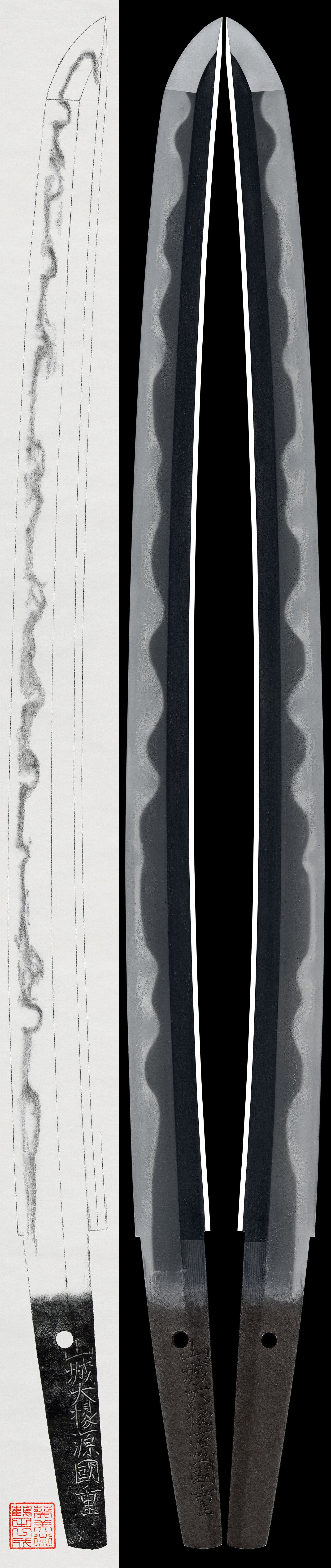
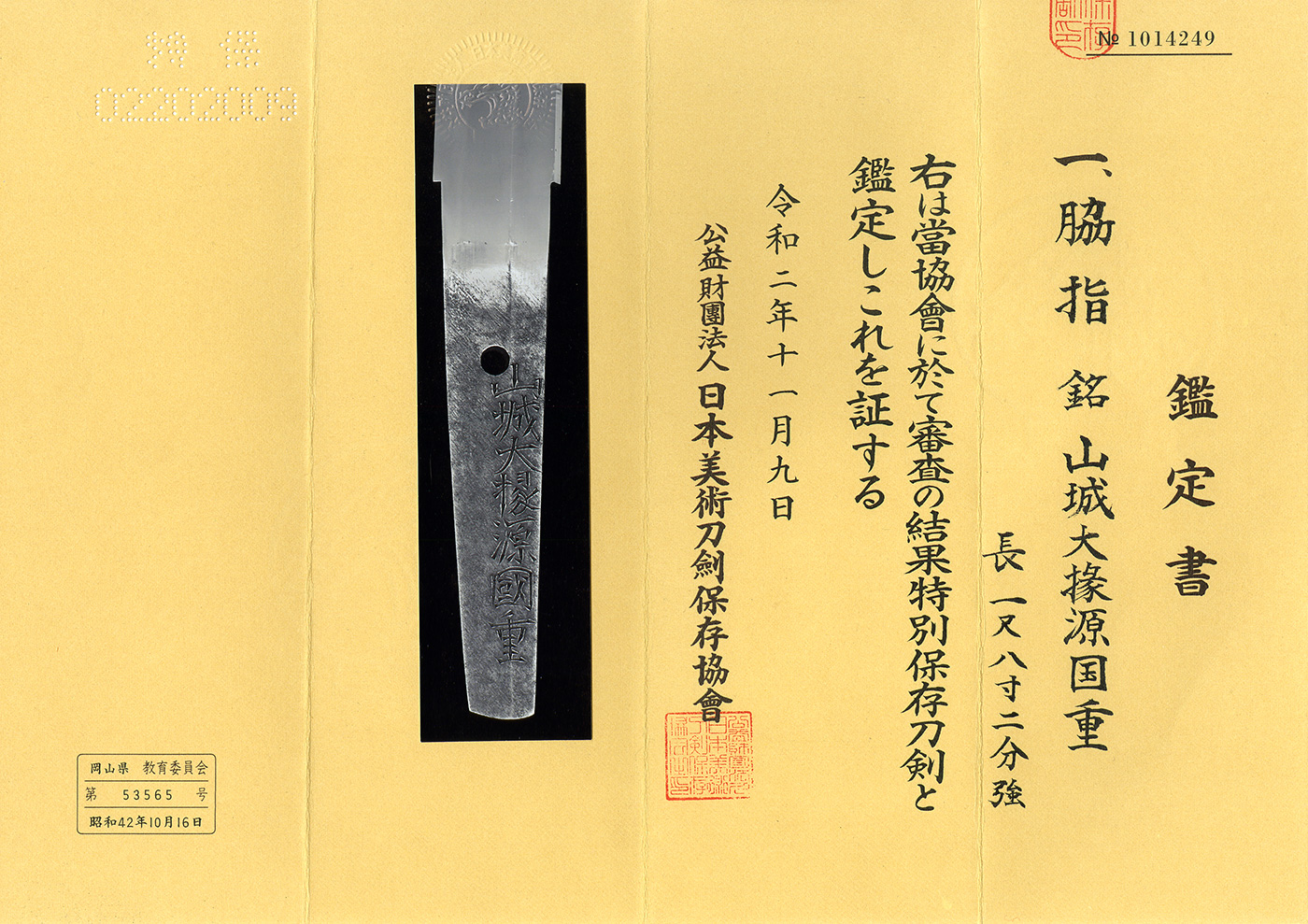
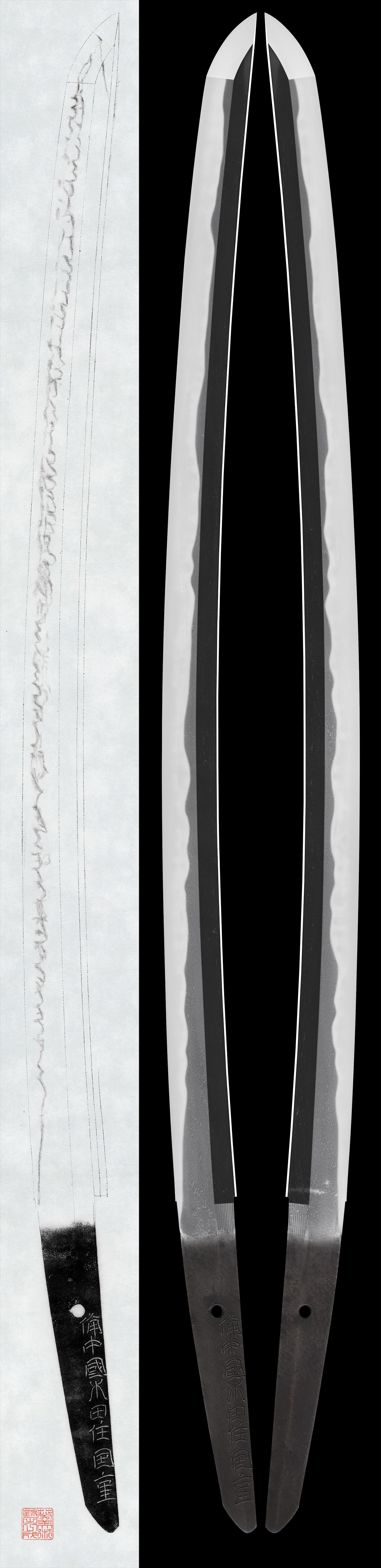
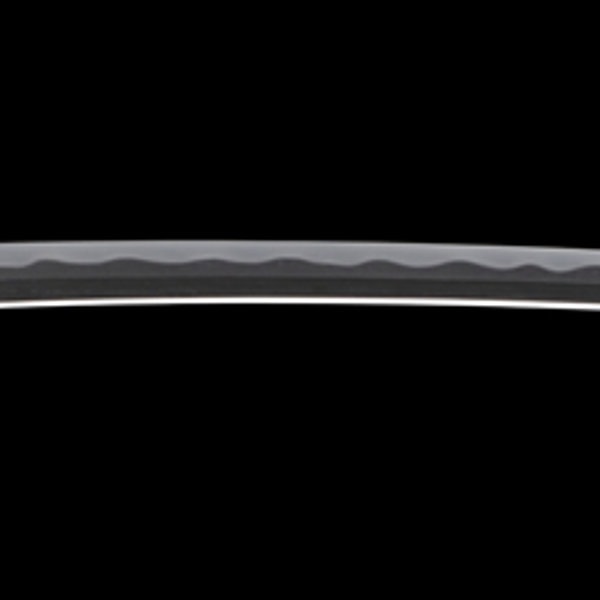
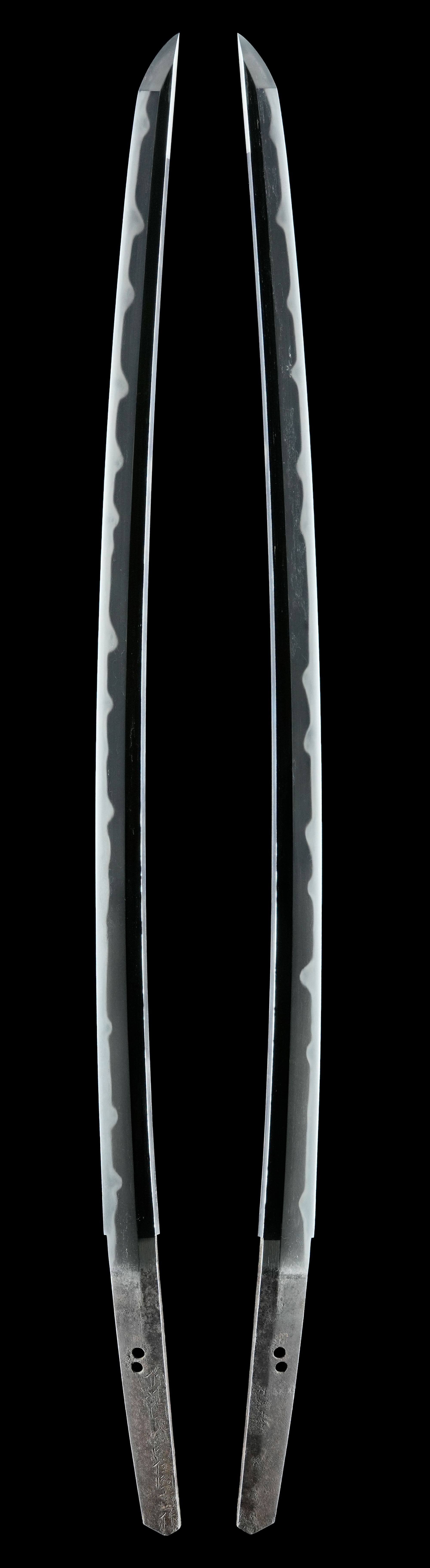
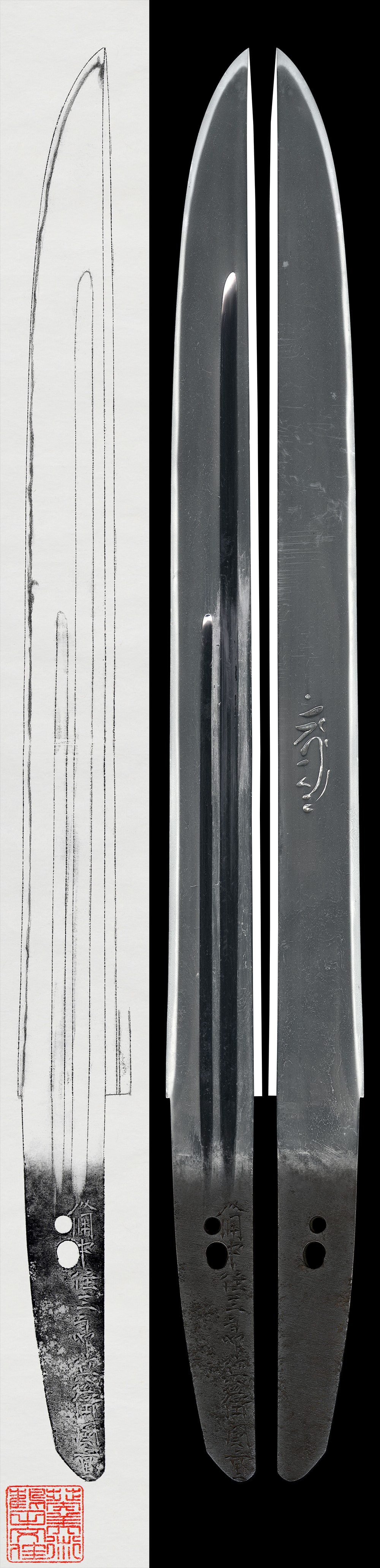
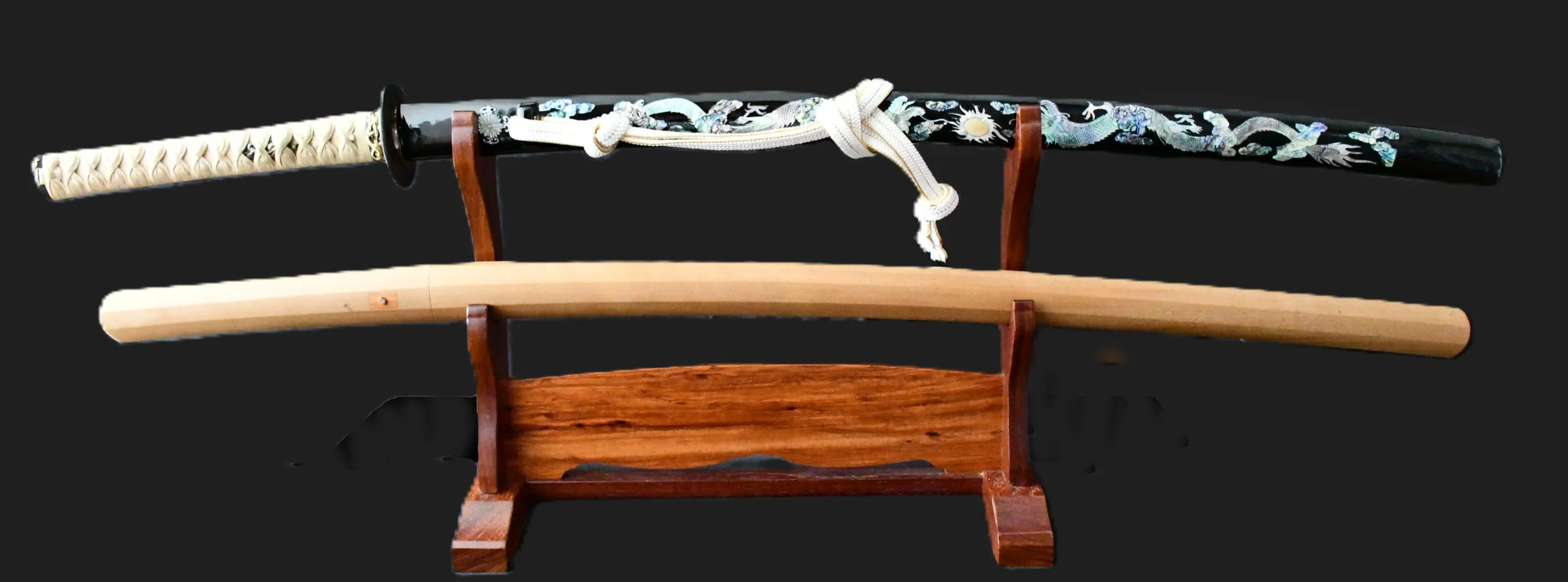
In Bitchū Province at the close of the Muromachi period, the Mizuta group emerged at the village of that name, and successive generations took the name Kunishige. The setsumei trace their work across Matsuyama, Toribe, Ihara, Ebara, and Niimi, with their vitality carrying into the shintō era. The smiths the records cover form a recognizable line: Ko-Mizuta Kunishige, whose dated blade reaches Tenshō 20 (1592); the Niimi Saburōzaemon no Jō Kunishige, said by signature references (meikan) to have come from Bingo into the Niimi estate and afterward to have served the Mimura family, lords of Matsuyama Castle; Kunishige of Ihara, who signed "Bitchū no kuni Ihara-jū Kunishige saku"; Kunishige styled Ōtsukiyo Goemon, recorded as forging also at Fukuyama in Bingo and at Kawanami; and Ōtsuki Yogorō Kunishige, abbreviated "Daiyogo," son of Ōtsuki Saburōbei Kunishige, who came after the old Mizuta period and worked from the Kan'ei years. So many smiths bore the name Kunishige that the setsumei call the group's reliance on it overwhelming. The shared vocabulary is consistent across the entries. The jigane is itame, sometimes flowing and sometimes standing out, with ji-nie adhering and chikei entering; utsuri is visible on the older pieces. The hamon of the shintō hand rests on a notare or ko-notare base mixed with gunome, deep in nioi, with nie forming vigorously and at times breaking into coarse ara-nie; sunagashi and kinsuji run through, and muneyaki recurs frequently. On the Daiyogo katana the temper rises until the upper half is nearly hitatsura, an ō-midare in notare style with the bōshi burning down long toward the mune-machi.
The bōshi elsewhere goes midare-komi with hakikake, taking a flame-like (kaen) cast or becoming ichimai-like. The Niimi blade adds yakidaka composition with angular and yahazu-like elements. These are the marks of the hand: a strong nie-laden Sōshū bearing on a serviceable, iori-mune shinogi-zukuri build, the signatures cut long toward the mune. For kantei the records single out the notare foundation worked with gunome and intense nie, the yahazu shapes and ichimai bōshi the setsumei name as "the highlights of the Mizuta manner," and the ha-agari kurijiri tang that rises markedly toward the edge. The shintō smiths are read by their pronounced Sōshū emphasis, the kotō-period Ko-Mizuta by a busier (kosekose) gunome-midare carrying ko-chōji and a tight nioiguchi. The setsumei describe these as cutting, utilitarian blades, and the Ihara daishō carries elaborate carving, including kurikara, "Marishiten," and the Nine Syllables. Named pieces anchor the line: the Niimi Kunishige is published in the Kōzan Oshigata and, by the record on its old scabbard, once served as the camp sword (jin-tō) of Bunjō-in, Tokugawa Ienobu, the sixth shōgun. Of Daiyogo the setsumei say few signed works survive, the loss attributed to mei being removed or blades shortened and reworked, yet they name him the leading master of the group and credit the school's spread through the Edo period to smiths of his ability. Learn more →