NihontoWatch Mon

NihontoWatch

MarketAuctions
Encyclopedia
NihontoWatch Mon

NihontoWatch

MarketAuctions
Encyclopedia

Description

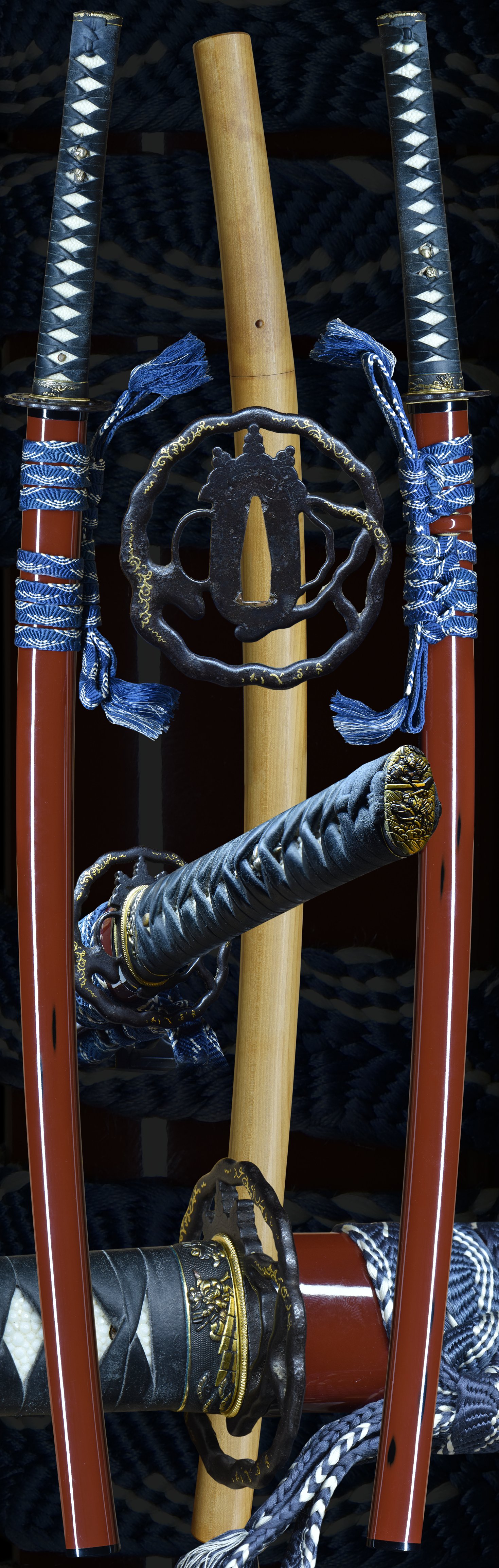
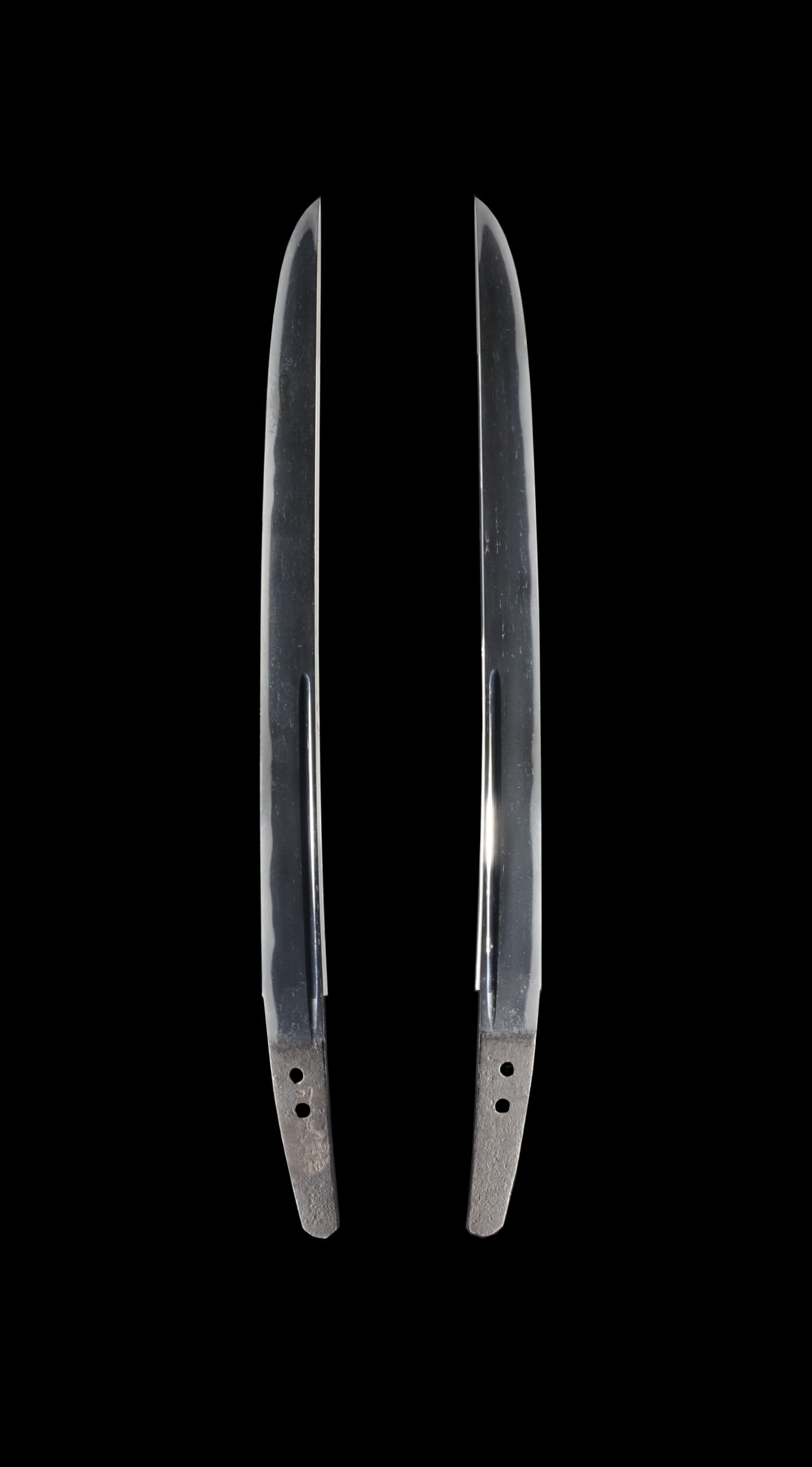
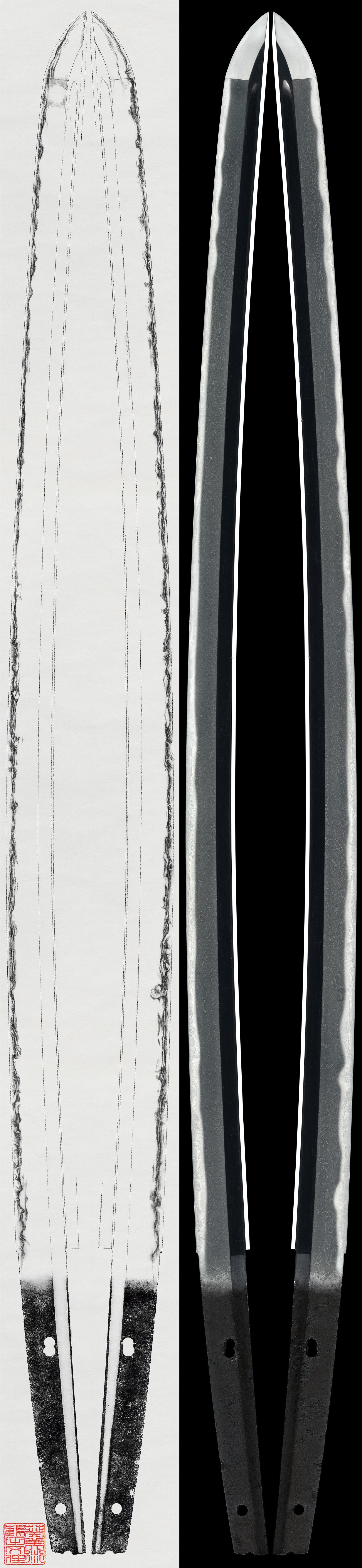
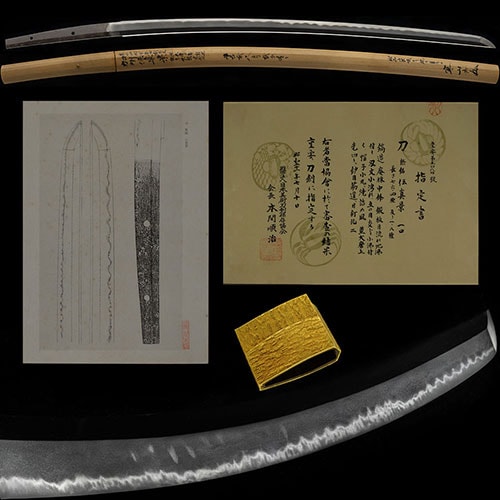
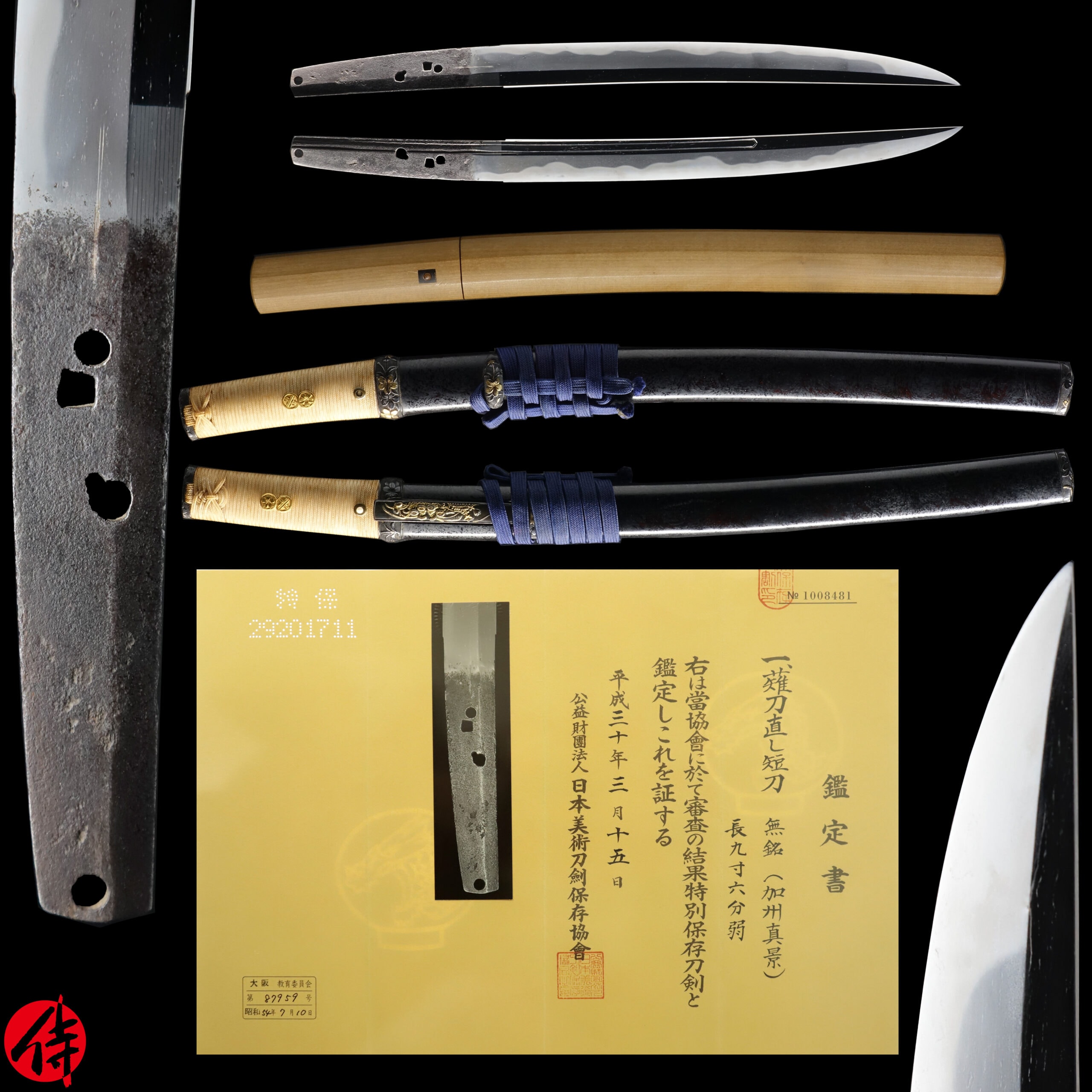
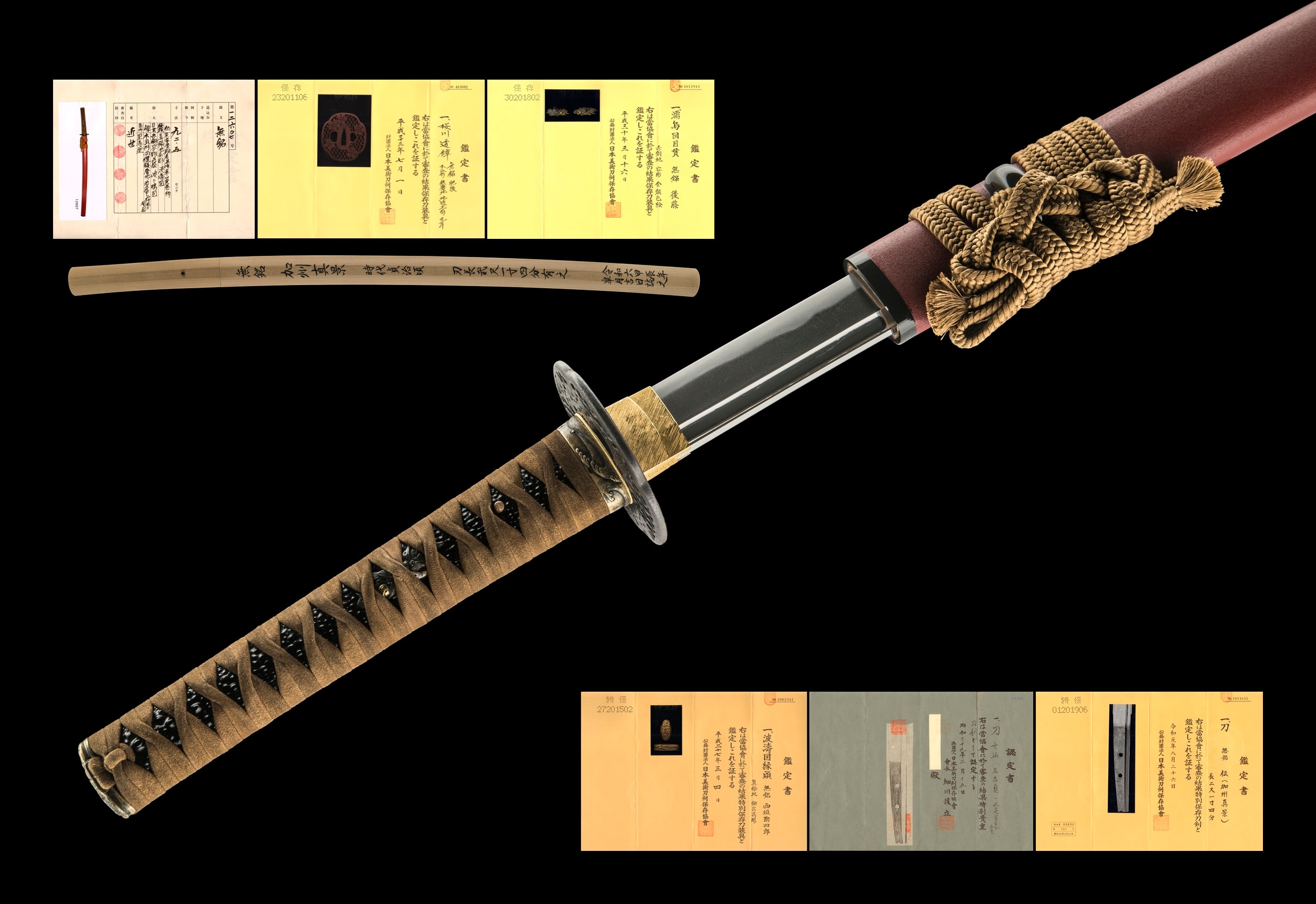
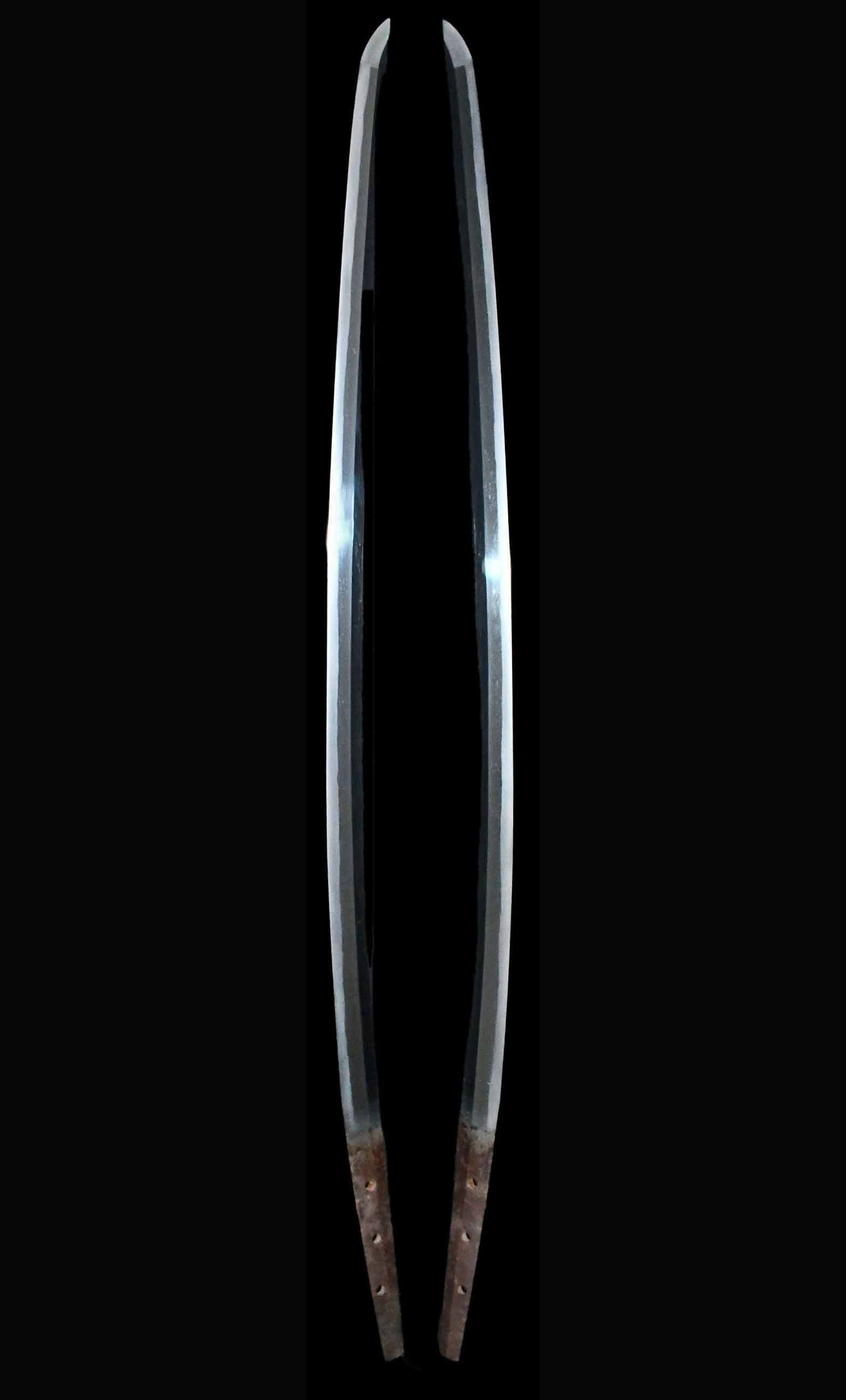
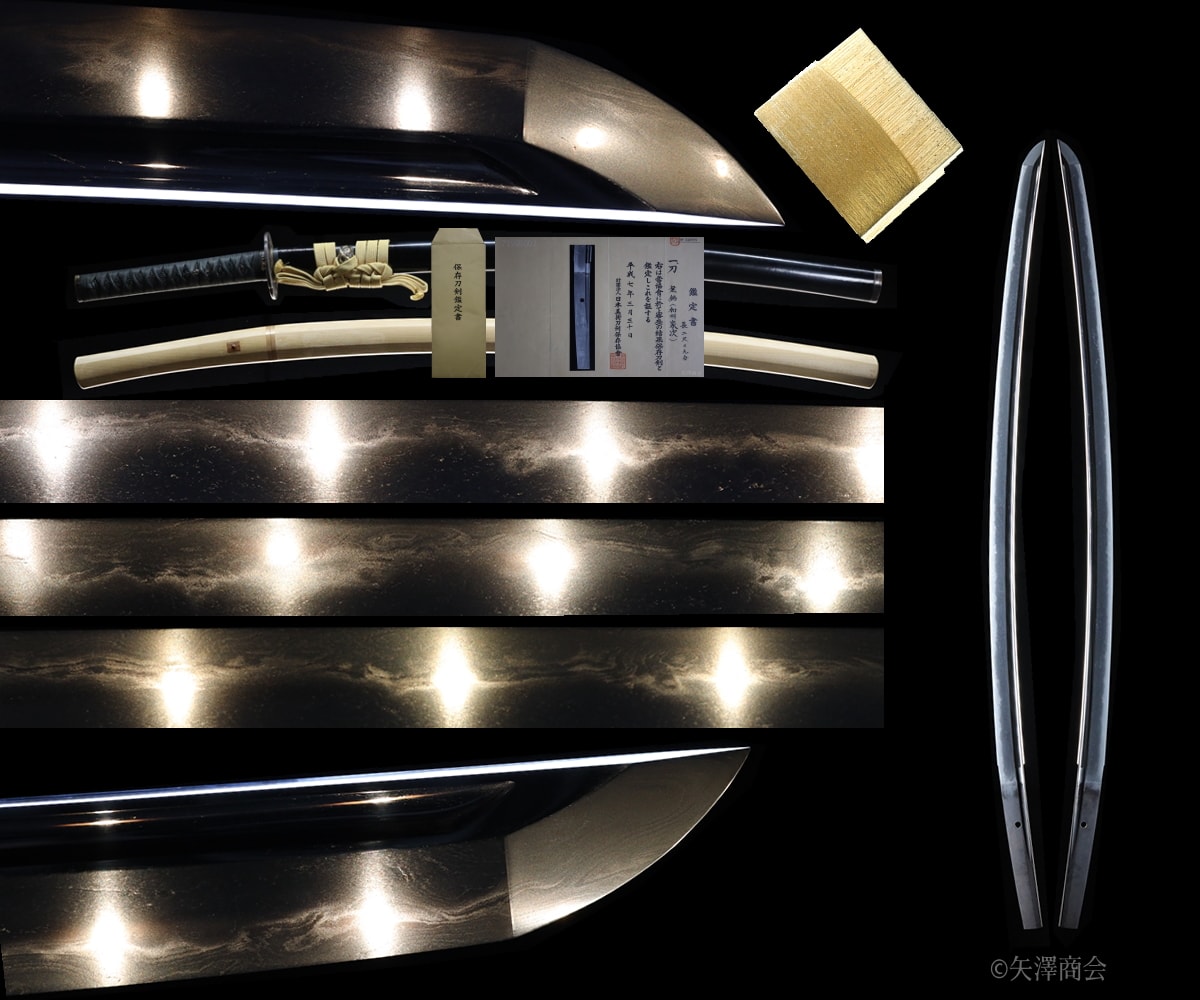
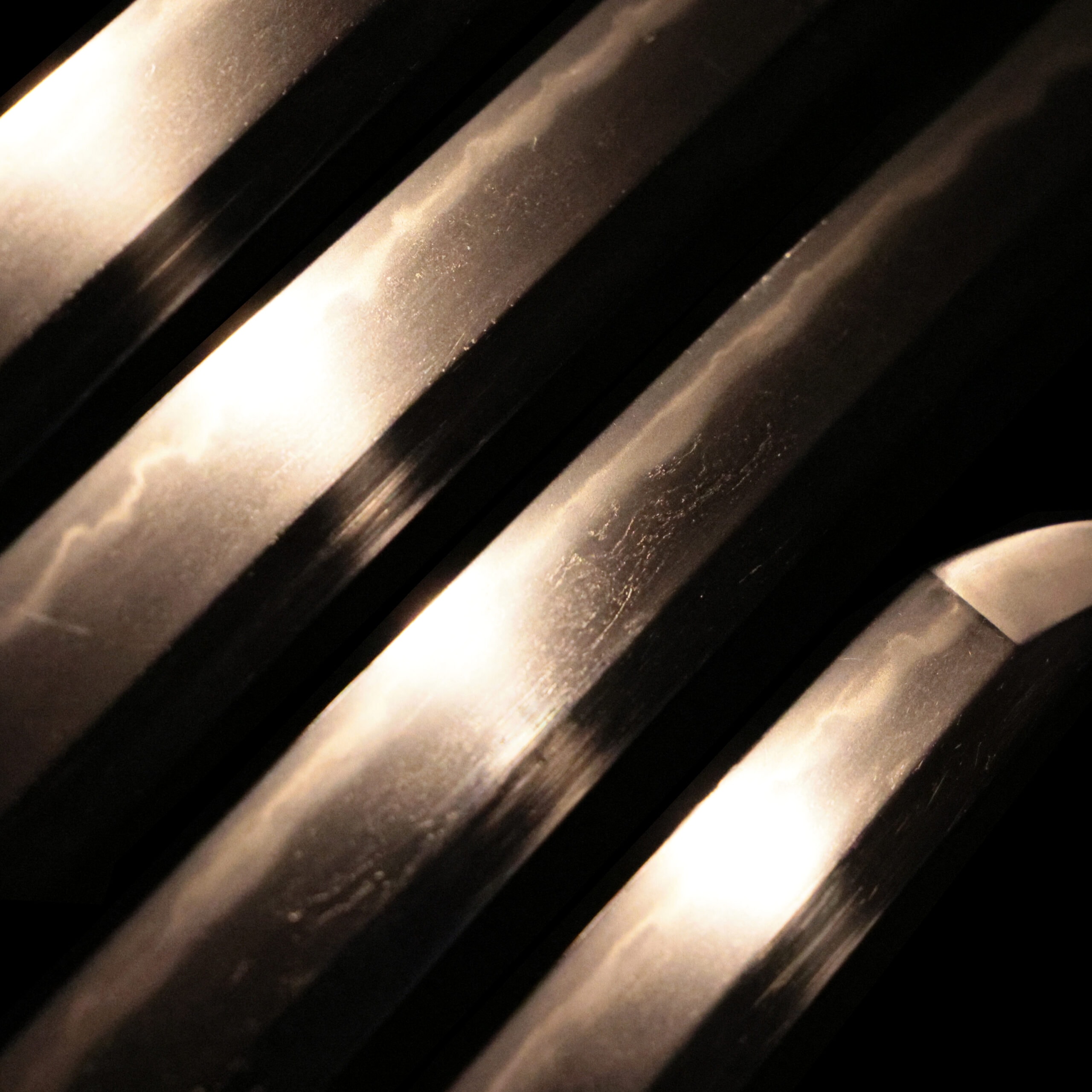
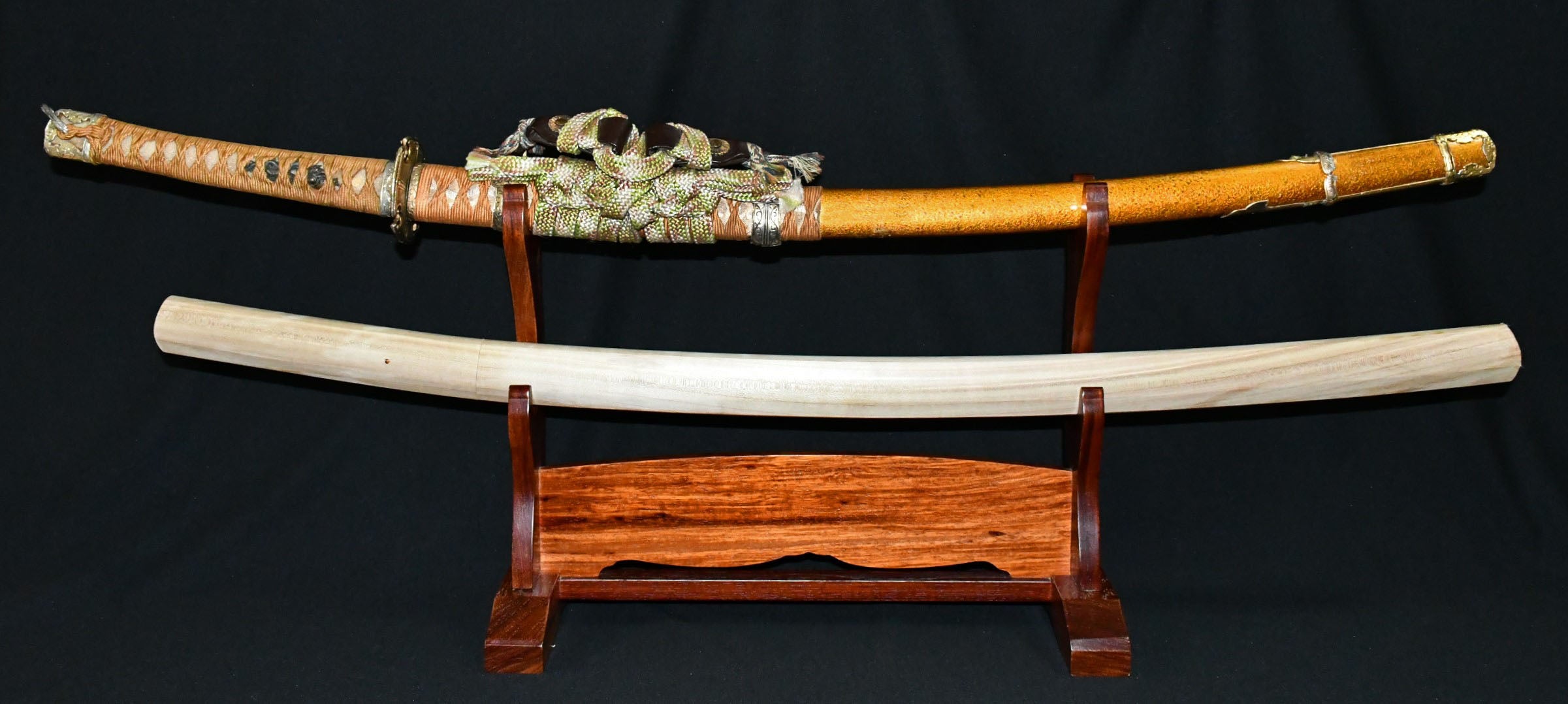
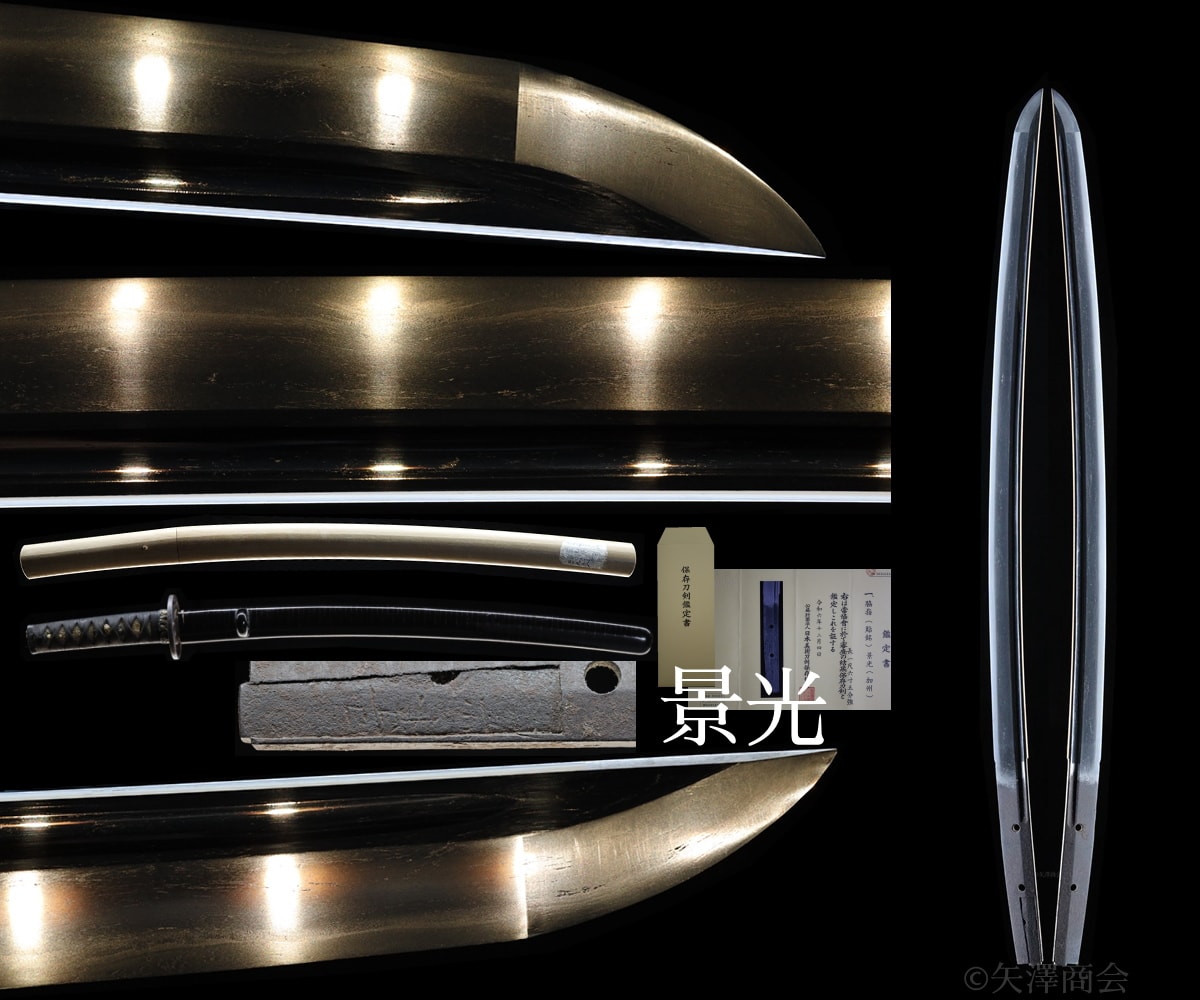
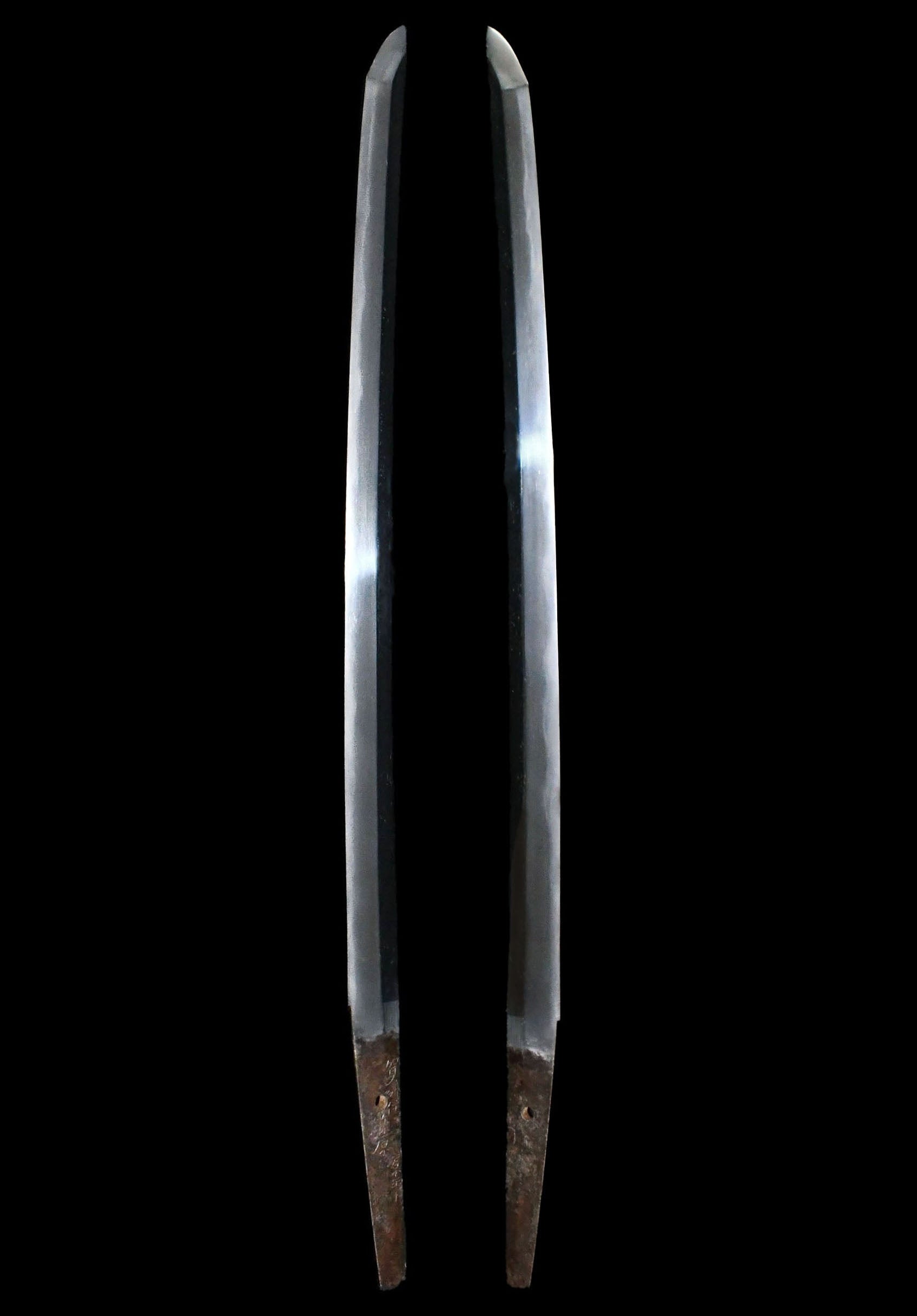
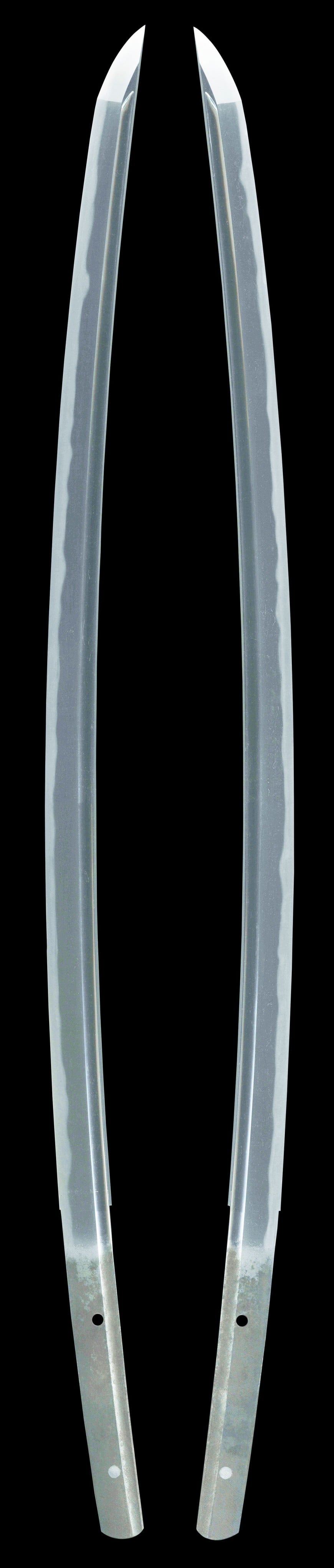
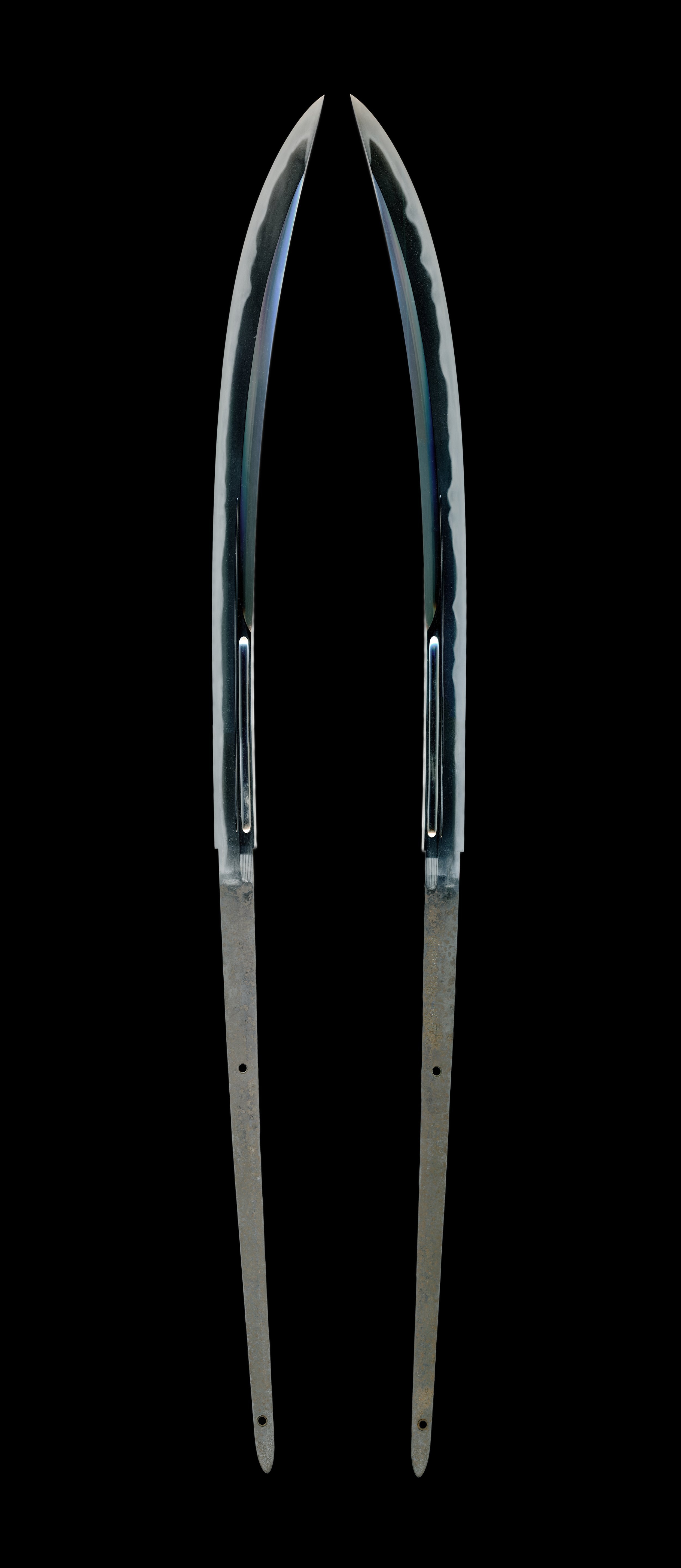
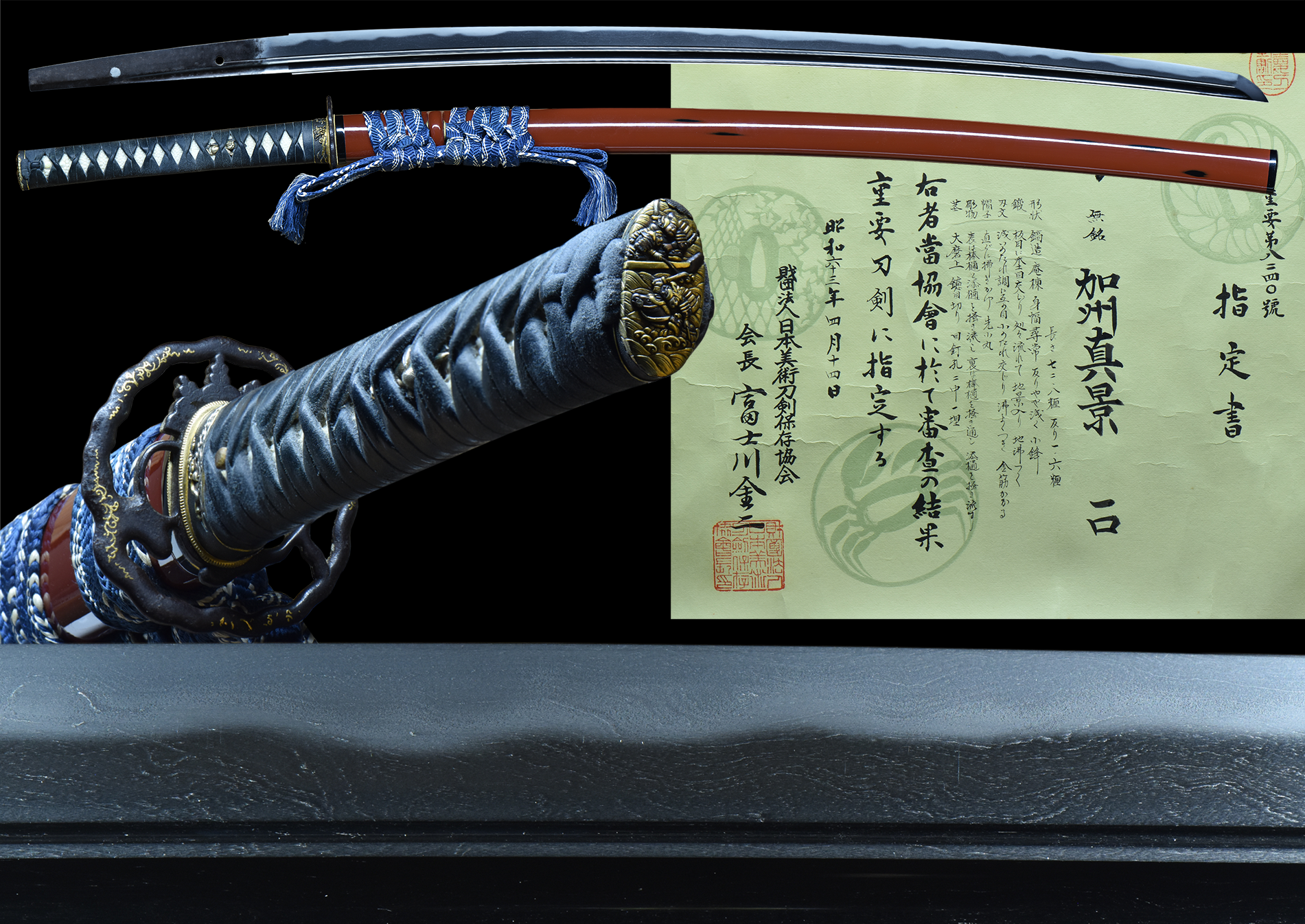
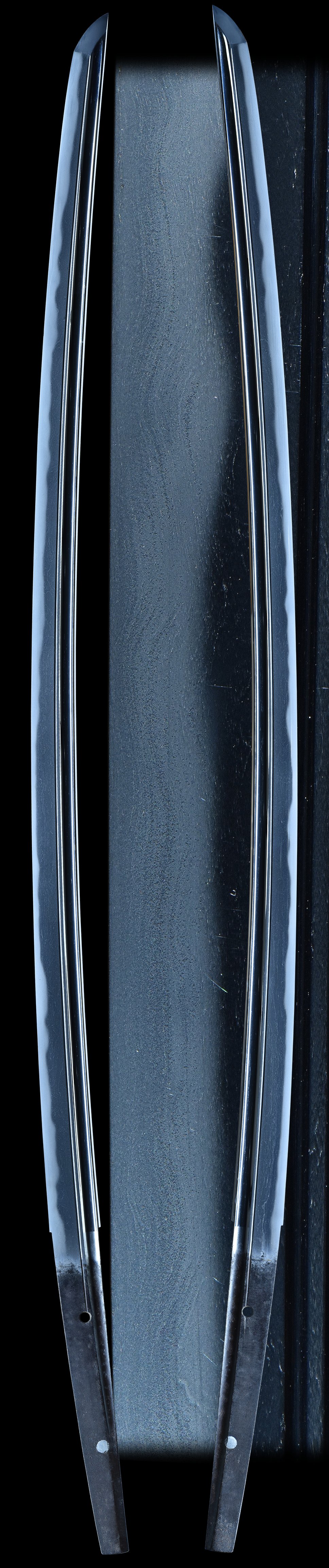
This is a katana made by Sanekage from Kaga province during the Nanbokucho period, around 1350. Sanekage was a student of Norishige from the Masamune Juttetsu line. The blade features Soshu-den workmanship and has Juyo Token papers and full Koshirai.

NBTHK Setsumei

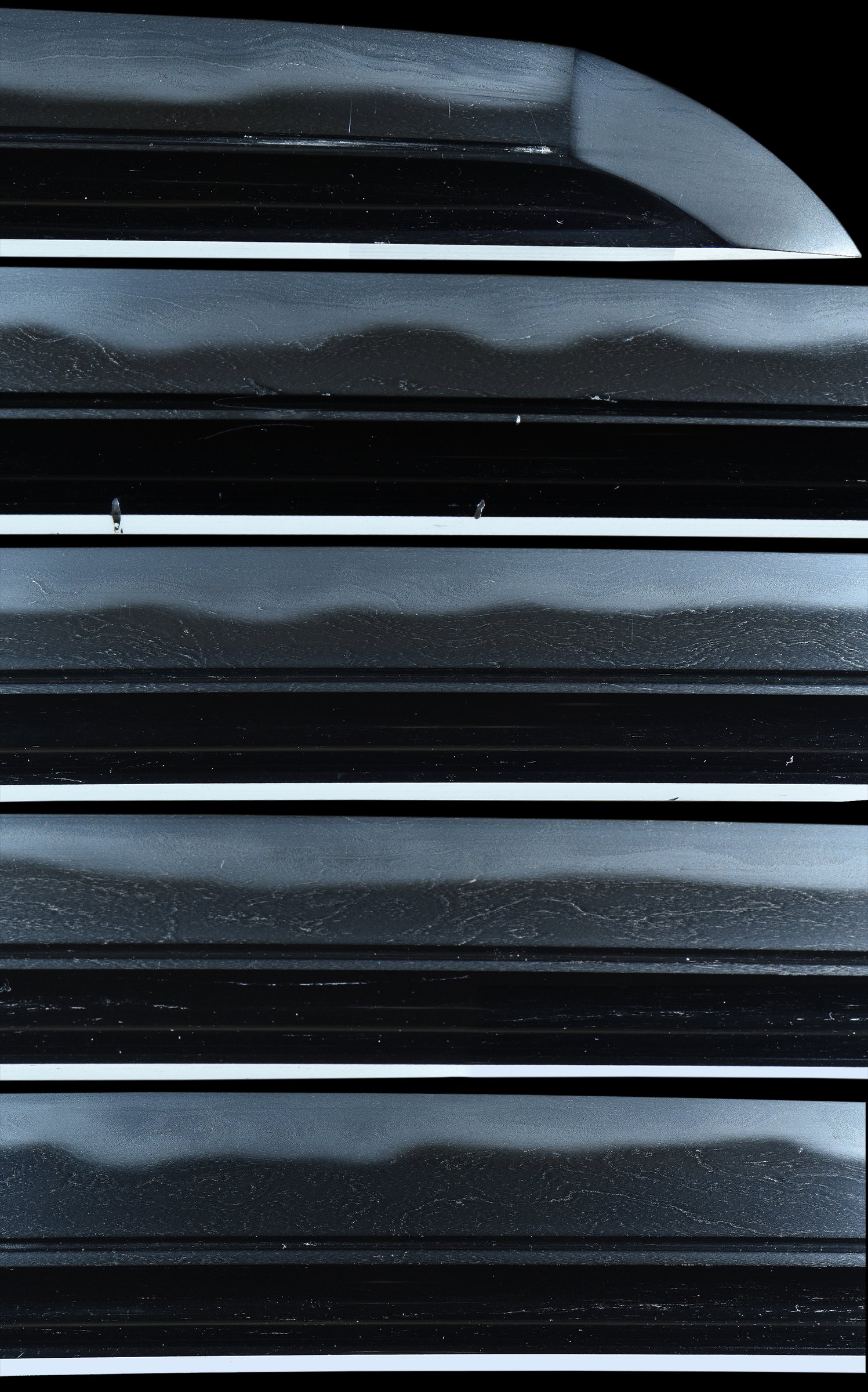
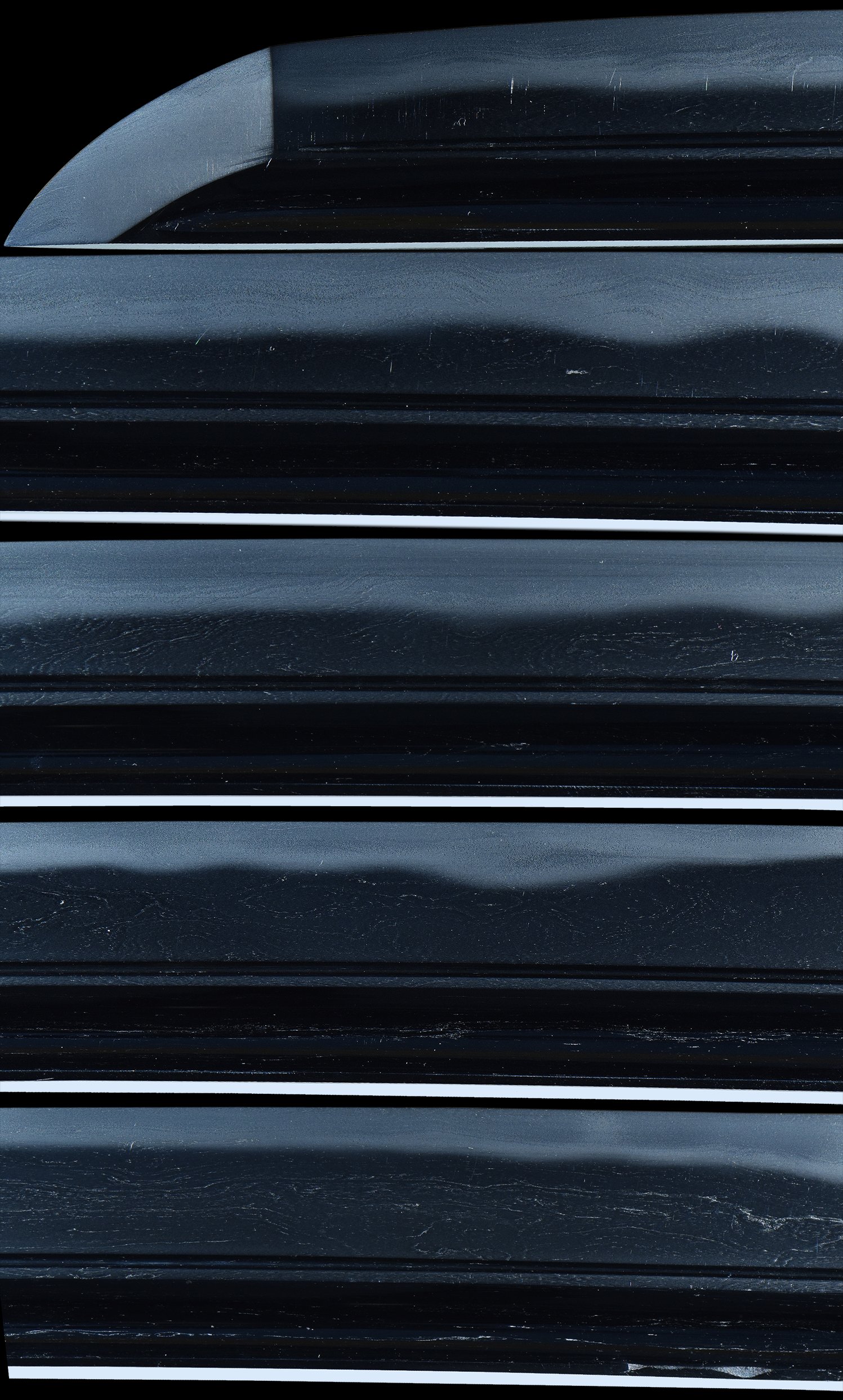
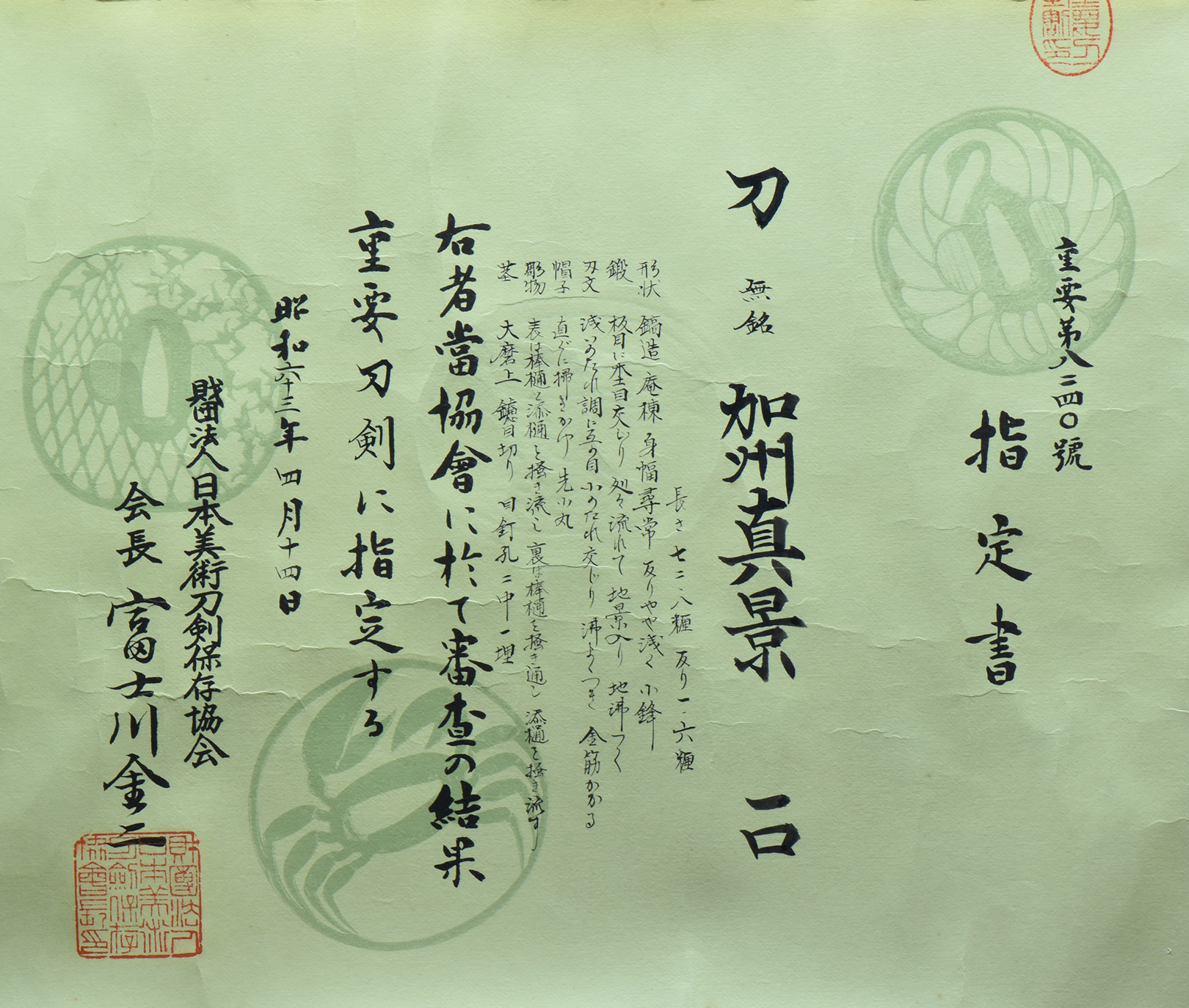
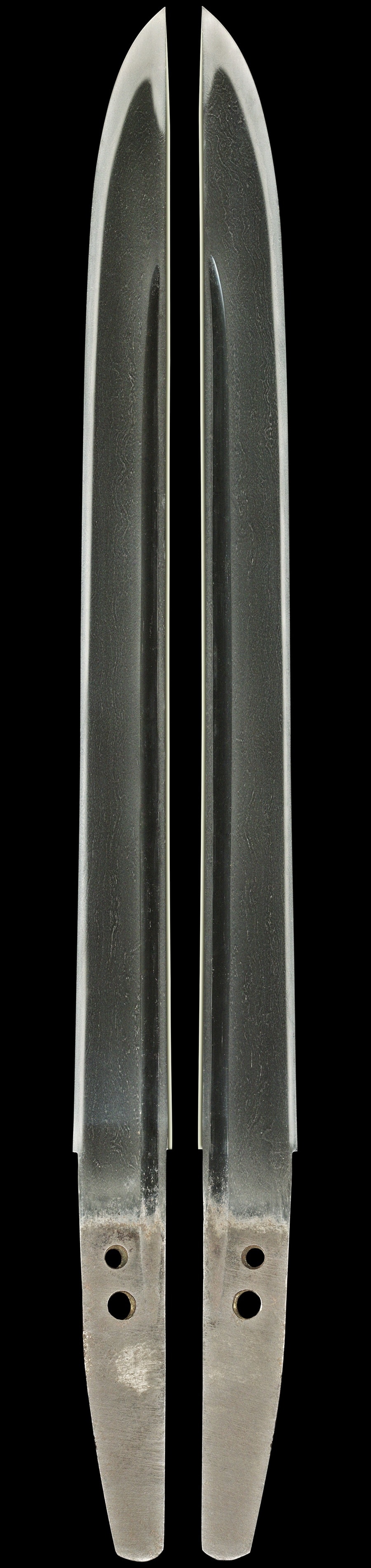
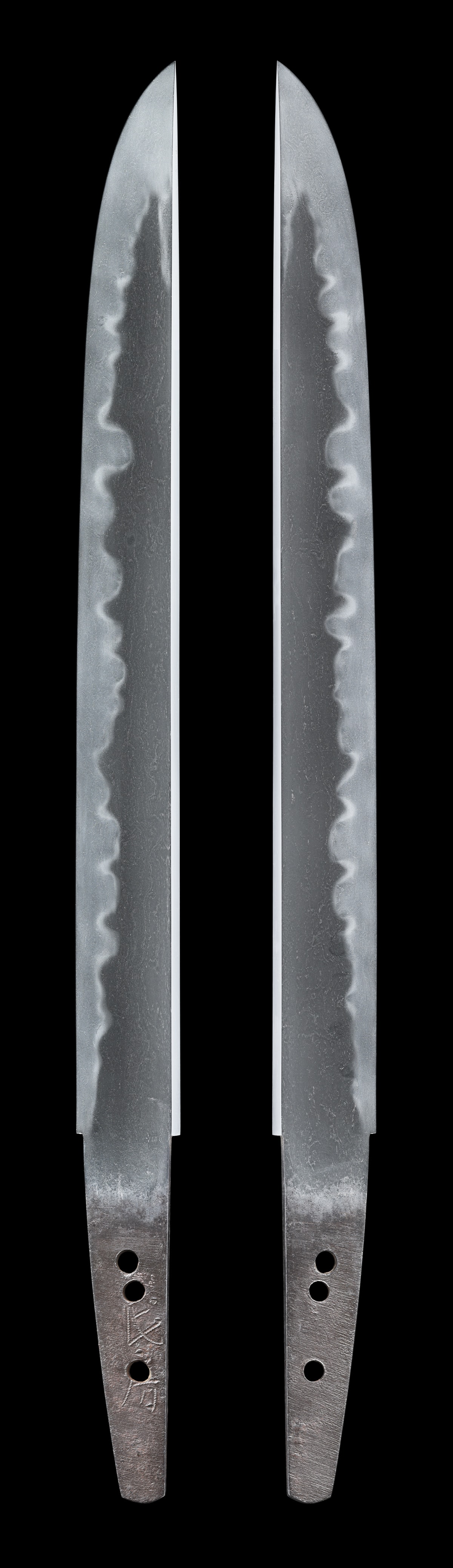
Jūyō-Tōken, 34th Session — Designated April 14, 1988 Katana, mumei: Kashū Sanekage (加州真景) Measurements Nagasa 72.8 cm, sori 1.6 cm, motohaba 3.0 cm, sakihaba 1.9 cm, kissaki-nagasa 2.5 cm, nakago-nagasa 19.0 cm, nakago-sori extremely slight Description Keijō: Shinogi-zukuri, iori-mune; standard mihaba; slightly shallow sori; ko-kissaki. Kitae: Itame-hada mixed with mokume; flowing in places; chikei enters; ji-nie adheres. Hamon: Shallow notare-chō mixed with gunome, ko-gunome, and small notare; ashi enters; nie adheres well; kinsuji appears. Bōshi: Sugu with hakikake; tip in ko-maru. Horimono: Omote: bō-hi and soe-bi carved kaki-nagashi; ura: bō-hi carved kaki-tōshi, with soe-bi carved kaki-nagashi. Nakago: Ō-suriage; tip kiri; file marks kiri; two mekugi-ana, one plugged; unsigned. Artisan Kashū Sanekage (加州真景) Era Nanbokuchō period (inferred) Explanation This is an ō-suriage, unsigned katana that is attributed to Kashū Sanekage. Sanekage is traditionally said to have been a student of Etchū Norishige, and later to have moved to Kaga Province; among extant works there is a tantō dated Sadaharu 6 (1367). In terms of style, the jihada displays conspicuous chikei, with ji-nie adhering well. The hamon is notare-based with mixed gunome; it is nie-laden and shows sunagashi and kinsuji. At first glance it calls to mind the manner of Norishige; however, the jihada is not as strongly standing as Norishige’s, and in comparison with works of Sagami’s homeland Sōshū masters it gives an impression of being somewhat less saeru (clear). This blade is kenzen (sound and well-preserved) in both ji and ha, and the traditional attribution to Sanekage is appropriate.

NihontoWatch MonNihontoWatch
MarketAuctionsEncyclopedia
Swords›Mino-den›Kaga›Sanekage›Katana: Kashu Sanekage - 34th NBTHK Juyo Papers
katanaJūyō
Kaga Sanekage

Katana: Kashu Sanekage - 34th NBTHK Juyo Papers

mumei · Teiji (1362-1368) ND · nagasa 73.3cm · sori 1.6cm

SOLD
Kaga Sanekage — 1 of 7
Kaga Sanekage — 2 of 7
Kaga Sanekage — 3 of 7
Kaga Sanekage — 4 of 7
Kaga Sanekage — 5 of 7
Kaga Sanekage — 6 of 7
Kaga Sanekage — 7 of 7
1 / 7
1 / 7
Kaga Sanekage — 1 of 7Kaga Sanekage — 2 of 7Kaga Sanekage — 3 of 7Kaga Sanekage — 4 of 7Kaga Sanekage — 5 of 7Kaga Sanekage — 6 of 7Kaga Sanekage — 7 of 7
Measurements & details
Smith
Kaga Sanekage
Type
Katana
School
Kaga
Period
Around 1362–1368(Teiji ND)
Province
Kaga
Signature
Unsigned(15% of this smith's designated works are signed)
Measurements
Nagasa 73.3cmSori 1.6cmMotohaba 3.05cmSakihaba 1.88cmKasane 0.75cm
Description

This is a katana made by Sanekage from Kaga province during the Nanbokucho period, around 1350. Sanekage was a student of Norishige from the Masamune Juttetsu line. The blade features Soshu-den workmanship and has Juyo Token papers and full Koshirai.

NBTHK Zufu Commentary

Juyo #34

AI translation — may contain errors

-, 34th Session — Designated April 14, 1988

, : Kashū Sanekage (加州真景)

Measurements 72.8 cm, 1.6 cm, 3.0 cm, 1.9 cm, 2.5 cm, 19.0 cm, extremely slight

Description Keijō: , ; standard ; slightly shallow ; . : mixed with ; flowing in places; enters; adheres. : Shallow -chō mixed with , , and small ; enters; adheres well; appears. : with ; tip in . : : and carved kaki-nagashi; : carved , with carved kaki-nagashi. : ; tip ; file marks ; two , one plugged; unsigned.

Artisan Kashū Sanekage (加州真景)

Era period (inferred)

Explanation This is an , unsigned that is attributed to Kashū Sanekage. Sanekage is traditionally said to have been a student of Norishige, and later to have moved to Province; among extant works there is a dated Sadaharu 6 (1367).

In terms of style, the displays conspicuous , with adhering well. The is -based with mixed ; it is -laden and shows and . At first glance it calls to mind the manner of Norishige; however, the is not as strongly standing as Norishige’s, and in comparison with works of ’s homeland masters it gives an impression of being somewhat less (clear).

This blade is (sound and well-preserved) in both and , and the traditional attribution to Sanekage is appropriate.

About the maker

Sanekage

真景

Kaga (Hokurikudo Soshu-den, the Norishige line) · Kaga · around 1362-1368

Fujishiro Jo-jo saku · Tōken Taikan top 11%

3 pieces on the market now

›

Only one of Sanekage's signatures carries a date, and it settles almost everything known about him: a hira-zukuri tanto inscribed Fujiwara Sanekage on the omote and Joji 6, second month on the ura, the year 1367, a blade that became an Important Cultural Property and that fixes both his province and his period. Sanekage worked in Kaga in the Nanbokucho years, and the published sources count him in the line of Etchu Norishige, the smith who had carried the Soshu tradition north out of Sagami a generation or two before. They transmit him as Norishige's pupil who later moved to Kaga, but they qualify the link on the dates: Norishige's own signed works fall in the Showa and Gen'o eras at the end of the Kamakura period, while Sanekage signs Joji, two reigns later. The gap is too wide for direct discipleship, and the judges read the connection as an inherited manner rather than a master-and-student bond, a smith who took up the Norishige hand at one or two removes and made it the leading Soshu-den style of his province.

His is a nie-laden hand built on a standing itame. Over a forging of itame, often mixed with mokume and large grain, the surface stands out rather than lying flat, with thick ji-nie gathered on it and chikei entering well, the dark lines of steel that mark the Norishige descent. Onto that jigane he sets a notare mixed with gunome, the nie strong and deep, and through the temper run long sunagashi, often layered several deep, with kinsuji breaking through, hotsure fraying the habuchi, and uchinoke and yubashiri scattered along it. The boshi turns in midare-komi with frequent hakikake, finishing in a small round or sweeping to a yakizume point. It is the activity that the published sources keep naming as his tell, and they describe one greatly shortened katana as showing 「則重に直結する出来を示している」[[c:1]], workmanship connecting directly to Norishige.

The jigane is where his province speaks. The steel runs dark, whitish in the grain over a blackened underlying tone, a color the judges name again and again as a northern-country feeling. It is the half-step that separates him from his model: his itame does not stand as strongly as Norishige's, and against the work of the Sagami homeland the judges find his blade wanting in clarity, writing of one katana that 「相州本国の作に比してはどこか野趣が感じられる」[[c:2]], that compared with the works of the Soshu heartland a certain rusticity is felt in it. That rusticity is not a fault in their account but a fingerprint. The same commentary that calls his manner 「いわゆる則重風を見せている」[[c:3]], showing the so-called Norishige style, sets it down as the work of a country hand who inherited a great tradition and kept its vigor while losing its polish.

Two registers run through his record. The great body of it is the o-suriage mumei katana, shinogi-zukuri blades shortened from longer Nanbokucho tachi, shallow in sori, the kissaki a chu-kissaki or an o-kissaki, attributed to him from the ji and ha alone. Against these stand his rare signed pieces, all tanto and a single wakizashi, hira-zukuri and slightly sun-nobi, the long four- and five-character signatures cut with a fine chisel, several carrying devotional carving, bonji with suken or with gomabashi at the base. A few of the signed tanto are tempered instead in a purely executed narrow suguha with ko-ashi, the calm manner that sits beside his more flamboyant nie work. From the signatures themselves the judges separate generations: a first hand who signs finely and dates to Joji, and a second-generation Fujiwara Sanekage cut with a thicker chisel, judged a skilled smith second only to the first, so the one name probably spans more than a single lifetime.

What sets Sanekage apart is exactly the distance the published sources measure between him and Norishige. He is held to the Etchu master by the standing hada, the thick ji-nie, the chikei and the nie-laden notare, and he is held away from him by the darker steel and the northern cast, the rusticity that the heartland work does not have. The published commentary on his Important Cultural Property tanto draws the balance plainly, naming in it 「則重伝を継承した加州真景の特色」[[c:4]], the features of Kashu Sanekage as an inheritor of the Norishige tradition. He is not the source of that tradition but its provincial continuation, the hand through which the Soshu-den of Norishige became the nie-based style of Kaga.

For the collector Sanekage is a rare and well-defined northern name. Fujishiro grades him Jo-jo saku. He has no National Treasures; his record runs through one Important Cultural Property, the Joji 6 tanto, and through the Tokubetsu Juyo and Juyo tiers, where forty-seven of his blades are recorded across many sessions, one greatly shortened katana reaching the Tokubetsu Juyo. The dated tanto, the judges note, is of exceptionally high documentary value because so few signed works survive, and his manner is rich in 「野趣に富み, 覇気に溢れる作域」[[c:5]], a workmanship full of rustic spirit and martial energy. His blades carry provenance to the Maeda, the lords of his own province of Kaga, with the dated tanto recorded in the Maeda Toshinari collection, and to the Nakagawa house. Signed Sanekage is among the scarcer things a collector of Soshu-den might hope to meet, the mumei katana coming to light from time to time and a dated signature only very rarely, a document of how the Norishige tradition lived on in the north.

Historical importance

Where Sanekage stands among comparable artisans: across all of nihontō, and within tradition, era, and period. The tiers (Foremost · Leading · Major · Notable) weigh official designations from the NBTHK and Japan's Agency for Cultural Affairs, together with historical honors of lasting repute such as the Sansaku and Meibutsu-chō.

随一
Foremost
屈指
Leading
有数
Major
著名
Notable

Select a lens to see how it's measured.

Designation record
47 designated works
Jūyō Bunkazai
1
Jūyō Bijutsuhin
1
Jūyō
45
3 works by Sanekage on the market→
Sanekage — full profileKaga (Hokurikudo Soshu-den, the Norishige line) school

Dated Works

Years he was demonstrably active, proven by signed-and-dated blades

Active period
1367Editorial estimate: 1362–1368
1 of 6 designated works carry a date
About the school

Kaga

加賀

Mino-den · Kaga

25 pieces on the market now

›

The Kaga inlay tradition (Kaga zōgan) emerged in Kaga Province during the early Edo period, centered on the castle town of Kanazawa under the patronage of the Maeda clan. This distinctive form of hira-zōgan is said to have developed when craftsmen specializing in stirrup decoration (abumi-shi) adapted their metalworking techniques to tsuba and other sword fittings, flourishing from the early seventeenth century through the Kyōhō era (1716–1736). Learn more →

5 recorded smiths61 designated works
Leading smiths
SmithEraDesignated
Sanekage真景1362-136847
Takahira高平1621-16449
Kagemitsu景光1362-13683
Ietsugu家次1528-15581
Kagehira景平1661-16731
Explore the Kaga school →
NBTHK Certificate
Jūyō Tōken重要刀剣
Important Sword
›

A blade of top-grade workmanship and condition, formally judged to rank with a nationally recognized Important Art Object (Jūyō Bijutsuhin). Awarded only at the NBTHK’s competitive annual examination.

Of Japan’s roughly 2.5 million registered swords, only 12,307 (about 1 in 203) have ever attained Jūyō.

About the NBTHK›

The NBTHK (Nihon Bijutsu Tōken Hozon Kyōkai, the Society for the Preservation of Japanese Art Swords) is a public-interest incorporated foundation founded in 1948 and supervised by Japan’s Agency for Cultural Affairs (Bunkachō); it is based at the Japanese Sword Museum in Tokyo. Its expert panels physically examine each submitted work (shinsa) and issue a certificate (kanteishō) ranking it by artistic and historical merit. NBTHK papers are the most widely recognized standard of authentication for Japanese swords and fittings.

NBTHK official site→
Seller
N
Nihonto Antiques
🇺🇸Ships from United States
›
✓Verified dealernihontoantiques.com
✓English support
Return policy

We offer a 48 hour inspection period for all Antique items shipped within the United States only. If the item is not to your satisfaction, we will gladly refund your money less any shipping and handling fees. All sales are final after the 48 hour inspection period. Please note that all discounted items are a final sale and not returnable.

View all of Nihonto Antiques’s listings→View this item on the dealer’s site→

More works by Kaga Sanekage

View all →
Nihonto Australia
Katana - by Kaga Sanekage - Sanekage - Koto Nambokucho periodKatana - by Kaga Sanekage - Sanekage - Koto Nambokucho period

Katana

ByKaga Sanekage
¥8,500
Samurai Museum
Tokuho
Wakizashi - Tokuho - by Kaga Sanekage - Antique Japanese Sword Wakizashi Attributed to Kashu Sanekage NBTHK Tokubetsu Hozon CertificateWakizashi - Tokuho - by Kaga Sanekage - Antique Japanese Sword Wakizashi Attributed to Kashu Sanekage NBTHK Tokubetsu Hozon Certificate

Wakizashi

ByKaga Sanekage
¥4,699
Nihonto Australia
Jūyō
Katana - Jūyō - by Kaga Sanekage - SanekageKatana - Jūyō - by Kaga Sanekage - Sanekage

Katana

ByKaga Sanekage
Ask

Previously sold by Kaga Sanekage

Choshuya
Katana - by Kaga Sanekage - Mumei, Attributed to Kashu SanekageKatana - by Kaga Sanekage - Mumei, Attributed to Kashu Sanekage
Sold

Katana

ByKaga Sanekage
SOLD
Aoi Art
Jūyō
Katana - Jūyō - by Kaga Sanekage - Mumei (Kashu Sanekage) - 37th NBTHK Juyo TokenKatana - Jūyō - by Kaga Sanekage - Mumei (Kashu Sanekage) - 37th NBTHK Juyo Token
Sold

Katana

ByKaga Sanekage
SOLD
Samurai Museum
Tokuho
Tanto - Tokuho - by Kaga Sanekage - Nanbokucho Tanto attributed to Kashu SanekageTanto - Tokuho - by Kaga Sanekage - Nanbokucho Tanto attributed to Kashu Sanekage
Sold

Tantō

ByKaga Sanekage
SOLD
Kusanagi
Tokuho
Katana - Tokuho - by Kaga Sanekage - Samonji’s son "Sa Yoshisada" Tokubetsu Kicho Token, Kanzan Sayagaki; Norishige’s high disciple "Kashu Sanekage" Tokubetsu Hozon Token, Daimyo Registration.Katana - Tokuho - by Kaga Sanekage - Samonji’s son "Sa Yoshisada" Tokubetsu Kicho Token, Kanzan Sayagaki; Norishige’s high disciple "Kashu Sanekage" Tokubetsu Hozon Token, Daimyo Registration.
Sold

Katana

ByKaga Sanekage
SOLD
Eirakudo
Jūyō
Katana - Jūyō - by Kaga Sanekage - Sanekage - Juyo TokenKatana - Jūyō - by Kaga Sanekage - Sanekage - Juyo Token
Sold

Katana

ByKaga Sanekage
SOLD
Nipponto
Tokuho
Wakizashi - Tokuho - by Kaga Sanekage - 伝加州真景 Den Kashu SanekageWakizashi - Tokuho - by Kaga Sanekage - 伝加州真景 Den Kashu Sanekage
Sold

Wakizashi

ByKaga Sanekage
SOLD
Unique Japan
Tokuho
Katana - Tokuho - by Kaga Sanekage - SanekageKatana - Tokuho - by Kaga Sanekage - Sanekage
Sold

Katana

ByKaga Sanekage
SOLD
Eirakudo
Tokuho
Katana - Tokuho - by Kaga Sanekage - Sanekage - Tokubetsu Hozon TokenKatana - Tokuho - by Kaga Sanekage - Sanekage - Tokubetsu Hozon Token
Sold

Katana

ByKaga Sanekage
SOLD

More from the Kaga school

View all →
Touken Matsumoto
Tokuho
Wakizashi - Tokuho - by Kaga Ietsugu - IetsuguWakizashi - Tokuho - by Kaga Ietsugu - Ietsugu

Wakizashi

ByKaga Ietsugu
¥400,000
Toyuukai
Hozon
Katana - Hozon - by Kaga School - Kasyu Kagemitsu (No signature) - NBTHK HozonKatana - Hozon - by Kaga School - Kasyu Kagemitsu (No signature) - NBTHK Hozon

Katana

ByKaga School
¥500,000
Toyuukai
Hozon
Wakizashi - Hozon - by Kaga Kagehira - Kasyusumi Fujiwara Kagehira - NBTHK HozonWakizashi - Hozon - by Kaga Kagehira - Kasyusumi Fujiwara Kagehira - NBTHK Hozon

Wakizashi

ByKaga Kagehira
¥350,000
Yazawa Shokai
Hozon
Kodachi - Hozon - by Kaga School - Trade-in Item: Kodachi, Hozon (Kagemitsu), with Koshirae, Tsunami as a bonus, Blade length 50.3cm, Sori 0.9cmKodachi - Hozon - by Kaga School - Trade-in Item: Kodachi, Hozon (Kagemitsu), with Koshirae, Tsunami as a bonus, Blade length 50.3cm, Sori 0.9cm

Kodachi

ByKaga School
¥500,000
Toushin
Hozon
Wakizashi - Hozon - by Kaga Kagehira - Kashu Fujiwara KagehiraWakizashi - Hozon - by Kaga Kagehira - Kashu Fujiwara Kagehira

Wakizashi

ByKaga Kagehira
¥440,000
Katana Yamadaiya
Tokuho
Wakizashi - Tokuho - by Kaga Takahira - Tokubetsu Hozon Token: Kaga Dewanokami Fujiwara TakahiraWakizashi - Tokuho - by Kaga Takahira - Tokubetsu Hozon Token: Kaga Dewanokami Fujiwara Takahira

Wakizashi

ByKaga Takahira
Ask
Toyuukai
Hozon
Katana - Hozon - by Kaga School - Mumei (Kasyu Ietsugu, Early Muromachi Period) - NBTHK Hozon CertificateKatana - Hozon - by Kaga School - Mumei (Kasyu Ietsugu, Early Muromachi Period) - NBTHK Hozon Certificate

Katana

ByKaga School
¥800,000
Yazawa Shokai
Hozon
Katana - Hozon - by Kaga Ietsugu - Masterpiece Sword: Beautiful Katana by Kaga Ietsugu, Nagasa 63.4cm, Sori 1.9cmKatana - Hozon - by Kaga Ietsugu - Masterpiece Sword: Beautiful Katana by Kaga Ietsugu, Nagasa 63.4cm, Sori 1.9cm

Katana

ByKaga Ietsugu
¥800,000

More from the Mino tradition

View all →
Shoubudou
Hozon
Katana - Hozon - by Kanemoto - Kanemoto (Magoroku)Katana - Hozon - by Kanemoto - Kanemoto (Magoroku)

Katana

ByKanemoto
¥5,000,000
Aoi Art
Tokuho
Katana - Tokuho - by Yamato Shizu School - Yamato Shizu Kaneuji (with gold-inlaid attribution) Hon'ami (kao) (Koson)Katana - Tokuho - by Yamato Shizu School - Yamato Shizu Kaneuji (with gold-inlaid attribution) Hon'ami (kao) (Koson)

Katana

ByYamato Shizu School
¥2,300,000
Giheiya
Hozon
Katana - Hozon - by Zensho Yoshimasa - Hozon Token Wazamono: Kozuke Daijo Minamoto Yoshimasa (Musashi, around Jōkyō era) - 71.5cm Katana with Koshirae and ShirasayaKatana - Hozon - by Zensho Yoshimasa - Hozon Token Wazamono: Kozuke Daijo Minamoto Yoshimasa (Musashi, around Jōkyō era) - 71.5cm Katana with Koshirae and Shirasaya

Katana

ByZensho Yoshimasa
¥530,000
Samurai Museum
Tokuho
Katana - Tokuho - by Seki Daido - Antique Japanese Sword Katana Signed by Mutsu no Kami Omichi NBTHK Tokubetsu Hozon CertificateKatana - Tokuho - by Seki Daido - Antique Japanese Sword Katana Signed by Mutsu no Kami Omichi NBTHK Tokubetsu Hozon Certificate

Katana

BySeki Daido
¥12,531
Samurai Nippon
Jūyō
Katana - Jūyō - by Shizu Kaneuji - Shizu (Mumei)Katana - Jūyō - by Shizu Kaneuji - Shizu (Mumei)

Katana

ByShizu Kaneuji
¥9,500,000
Samurai Shokai
Tokuho
Katana - Tokuho - by Kanesada School - Nodagoro Fujiwara Kaneasada (Mino, Genroku Period)Katana - Tokuho - by Kanesada School - Nodagoro Fujiwara Kaneasada (Mino, Genroku Period)

Katana

ByKanesada School
¥850,000
Sanmei
Tokuho
Tanto - Tokuho - by Seki Kanefusa - Tanto signed Kanefusa with Black Lacquered Samegawa-Polished Scabbard Chisa-katana KoshiraeTanto - Tokuho - by Seki Kanefusa - Tanto signed Kanefusa with Black Lacquered Samegawa-Polished Scabbard Chisa-katana Koshirae

Tantō

BySeki Kanefusa
¥700,000
Samurai Museum
Tokuho
Katana - Tokuho - by Kanemoto - Antique Japanese Sword Katana Signed by Kanemoto (Magoroku) NBTHK Tokubetsu Hozon CertificateKatana - Tokuho - by Kanemoto - Antique Japanese Sword Katana Signed by Kanemoto (Magoroku) NBTHK Tokubetsu Hozon Certificate

Katana

ByKanemoto
¥38,556

Swords

  • Katana
  • Wakizashi
  • Tantō
  • Tachi
  • Naginata
  • Yari

Fittings

  • Tsuba
  • Fuchi-Kashira
  • Kozuka
  • Menuki

By Certification

  • Tokujū
  • Jūyō
  • Tokuho
  • Hozon

Resources

  • Dealer Directory
  • Artist Directory
  • Glossary
  • Browse All
Nihontowatch© 2026
TermsPrivacyCookiesAbout

Description

This is a katana made by Sanekage from Kaga province during the Nanbokucho period, around 1350. Sanekage was a student of Norishige from the Masamune Juttetsu line. The blade features Soshu-den workmanship and has Juyo Token papers and full Koshirai.

NBTHK Setsumei

Jūyō-Tōken, 34th Session — Designated April 14, 1988 Katana, mumei: Kashū Sanekage (加州真景) Measurements Nagasa 72.8 cm, sori 1.6 cm, motohaba 3.0 cm, sakihaba 1.9 cm, kissaki-nagasa 2.5 cm, nakago-nagasa 19.0 cm, nakago-sori extremely slight Description Keijō: Shinogi-zukuri, iori-mune; standard mihaba; slightly shallow sori; ko-kissaki. Kitae: Itame-hada mixed with mokume; flowing in places; chikei enters; ji-nie adheres. Hamon: Shallow notare-chō mixed with gunome, ko-gunome, and small notare; ashi enters; nie adheres well; kinsuji appears. Bōshi: Sugu with hakikake; tip in ko-maru. Horimono: Omote: bō-hi and soe-bi carved kaki-nagashi; ura: bō-hi carved kaki-tōshi, with soe-bi carved kaki-nagashi. Nakago: Ō-suriage; tip kiri; file marks kiri; two mekugi-ana, one plugged; unsigned. Artisan Kashū Sanekage (加州真景) Era Nanbokuchō period (inferred) Explanation This is an ō-suriage, unsigned katana that is attributed to Kashū Sanekage. Sanekage is traditionally said to have been a student of Etchū Norishige, and later to have moved to Kaga Province; among extant works there is a tantō dated Sadaharu 6 (1367). In terms of style, the jihada displays conspicuous chikei, with ji-nie adhering well. The hamon is notare-based with mixed gunome; it is nie-laden and shows sunagashi and kinsuji. At first glance it calls to mind the manner of Norishige; however, the jihada is not as strongly standing as Norishige’s, and in comparison with works of Sagami’s homeland Sōshū masters it gives an impression of being somewhat less saeru (clear). This blade is kenzen (sound and well-preserved) in both ji and ha, and the traditional attribution to Sanekage is appropriate.

NihontoWatch MonNihontoWatch
MarketAuctionsEncyclopedia
Swords›Mino-den›Kaga›Sanekage›Katana: Kashu Sanekage - 34th NBTHK Juyo Papers
katanaJūyō
Kaga Sanekage

Katana: Kashu Sanekage - 34th NBTHK Juyo Papers

mumei · Teiji (1362-1368) ND · nagasa 73.3cm · sori 1.6cm

SOLD
Kaga Sanekage — 1 of 7
Kaga Sanekage — 2 of 7
Kaga Sanekage — 3 of 7
Kaga Sanekage — 4 of 7
Kaga Sanekage — 5 of 7
Kaga Sanekage — 6 of 7
Kaga Sanekage — 7 of 7
1 / 7
1 / 7
Kaga Sanekage — 1 of 7Kaga Sanekage — 2 of 7Kaga Sanekage — 3 of 7Kaga Sanekage — 4 of 7Kaga Sanekage — 5 of 7Kaga Sanekage — 6 of 7Kaga Sanekage — 7 of 7
Measurements & details
Smith
Kaga Sanekage
Type
Katana
School
Kaga
Period
Around 1362–1368(Teiji ND)
Province
Kaga
Signature
Unsigned(15% of this smith's designated works are signed)
Measurements
Nagasa 73.3cmSori 1.6cmMotohaba 3.05cmSakihaba 1.88cmKasane 0.75cm
Description

This is a katana made by Sanekage from Kaga province during the Nanbokucho period, around 1350. Sanekage was a student of Norishige from the Masamune Juttetsu line. The blade features Soshu-den workmanship and has Juyo Token papers and full Koshirai.

NBTHK Zufu Commentary

Juyo #34

AI translation — may contain errors

-, 34th Session — Designated April 14, 1988

, : Kashū Sanekage (加州真景)

Measurements 72.8 cm, 1.6 cm, 3.0 cm, 1.9 cm, 2.5 cm, 19.0 cm, extremely slight

Description Keijō: , ; standard ; slightly shallow ; . : mixed with ; flowing in places; enters; adheres. : Shallow -chō mixed with , , and small ; enters; adheres well; appears. : with ; tip in . : : and carved kaki-nagashi; : carved , with carved kaki-nagashi. : ; tip ; file marks ; two , one plugged; unsigned.

Artisan Kashū Sanekage (加州真景)

Era period (inferred)

Explanation This is an , unsigned that is attributed to Kashū Sanekage. Sanekage is traditionally said to have been a student of Norishige, and later to have moved to Province; among extant works there is a dated Sadaharu 6 (1367).

In terms of style, the displays conspicuous , with adhering well. The is -based with mixed ; it is -laden and shows and . At first glance it calls to mind the manner of Norishige; however, the is not as strongly standing as Norishige’s, and in comparison with works of ’s homeland masters it gives an impression of being somewhat less (clear).

This blade is (sound and well-preserved) in both and , and the traditional attribution to Sanekage is appropriate.

About the maker

Sanekage

真景

Kaga (Hokurikudo Soshu-den, the Norishige line) · Kaga · around 1362-1368

Fujishiro Jo-jo saku · Tōken Taikan top 11%

3 pieces on the market now

›

Only one of Sanekage's signatures carries a date, and it settles almost everything known about him: a hira-zukuri tanto inscribed Fujiwara Sanekage on the omote and Joji 6, second month on the ura, the year 1367, a blade that became an Important Cultural Property and that fixes both his province and his period. Sanekage worked in Kaga in the Nanbokucho years, and the published sources count him in the line of Etchu Norishige, the smith who had carried the Soshu tradition north out of Sagami a generation or two before. They transmit him as Norishige's pupil who later moved to Kaga, but they qualify the link on the dates: Norishige's own signed works fall in the Showa and Gen'o eras at the end of the Kamakura period, while Sanekage signs Joji, two reigns later. The gap is too wide for direct discipleship, and the judges read the connection as an inherited manner rather than a master-and-student bond, a smith who took up the Norishige hand at one or two removes and made it the leading Soshu-den style of his province.

His is a nie-laden hand built on a standing itame. Over a forging of itame, often mixed with mokume and large grain, the surface stands out rather than lying flat, with thick ji-nie gathered on it and chikei entering well, the dark lines of steel that mark the Norishige descent. Onto that jigane he sets a notare mixed with gunome, the nie strong and deep, and through the temper run long sunagashi, often layered several deep, with kinsuji breaking through, hotsure fraying the habuchi, and uchinoke and yubashiri scattered along it. The boshi turns in midare-komi with frequent hakikake, finishing in a small round or sweeping to a yakizume point. It is the activity that the published sources keep naming as his tell, and they describe one greatly shortened katana as showing 「則重に直結する出来を示している」[[c:1]], workmanship connecting directly to Norishige.

The jigane is where his province speaks. The steel runs dark, whitish in the grain over a blackened underlying tone, a color the judges name again and again as a northern-country feeling. It is the half-step that separates him from his model: his itame does not stand as strongly as Norishige's, and against the work of the Sagami homeland the judges find his blade wanting in clarity, writing of one katana that 「相州本国の作に比してはどこか野趣が感じられる」[[c:2]], that compared with the works of the Soshu heartland a certain rusticity is felt in it. That rusticity is not a fault in their account but a fingerprint. The same commentary that calls his manner 「いわゆる則重風を見せている」[[c:3]], showing the so-called Norishige style, sets it down as the work of a country hand who inherited a great tradition and kept its vigor while losing its polish.

Two registers run through his record. The great body of it is the o-suriage mumei katana, shinogi-zukuri blades shortened from longer Nanbokucho tachi, shallow in sori, the kissaki a chu-kissaki or an o-kissaki, attributed to him from the ji and ha alone. Against these stand his rare signed pieces, all tanto and a single wakizashi, hira-zukuri and slightly sun-nobi, the long four- and five-character signatures cut with a fine chisel, several carrying devotional carving, bonji with suken or with gomabashi at the base. A few of the signed tanto are tempered instead in a purely executed narrow suguha with ko-ashi, the calm manner that sits beside his more flamboyant nie work. From the signatures themselves the judges separate generations: a first hand who signs finely and dates to Joji, and a second-generation Fujiwara Sanekage cut with a thicker chisel, judged a skilled smith second only to the first, so the one name probably spans more than a single lifetime.

What sets Sanekage apart is exactly the distance the published sources measure between him and Norishige. He is held to the Etchu master by the standing hada, the thick ji-nie, the chikei and the nie-laden notare, and he is held away from him by the darker steel and the northern cast, the rusticity that the heartland work does not have. The published commentary on his Important Cultural Property tanto draws the balance plainly, naming in it 「則重伝を継承した加州真景の特色」[[c:4]], the features of Kashu Sanekage as an inheritor of the Norishige tradition. He is not the source of that tradition but its provincial continuation, the hand through which the Soshu-den of Norishige became the nie-based style of Kaga.

For the collector Sanekage is a rare and well-defined northern name. Fujishiro grades him Jo-jo saku. He has no National Treasures; his record runs through one Important Cultural Property, the Joji 6 tanto, and through the Tokubetsu Juyo and Juyo tiers, where forty-seven of his blades are recorded across many sessions, one greatly shortened katana reaching the Tokubetsu Juyo. The dated tanto, the judges note, is of exceptionally high documentary value because so few signed works survive, and his manner is rich in 「野趣に富み, 覇気に溢れる作域」[[c:5]], a workmanship full of rustic spirit and martial energy. His blades carry provenance to the Maeda, the lords of his own province of Kaga, with the dated tanto recorded in the Maeda Toshinari collection, and to the Nakagawa house. Signed Sanekage is among the scarcer things a collector of Soshu-den might hope to meet, the mumei katana coming to light from time to time and a dated signature only very rarely, a document of how the Norishige tradition lived on in the north.
Historical importance

Where Sanekage stands among comparable artisans: across all of nihontō, and within tradition, era, and period. The tiers (Foremost · Leading · Major · Notable) weigh official designations from the NBTHK and Japan's Agency for Cultural Affairs, together with historical honors of lasting repute such as the Sansaku and Meibutsu-chō.

随一
Foremost
屈指
Leading
有数
Major
著名
Notable

Select a lens to see how it's measured.

Designation record
47 designated works
Jūyō Bunkazai
1
Jūyō Bijutsuhin
1
Jūyō
45
3 works by Sanekage on the market→
Sanekage — full profileKaga (Hokurikudo Soshu-den, the Norishige line) school

Dated Works

Years he was demonstrably active, proven by signed-and-dated blades

Active period
1367Editorial estimate: 1362–1368
1 of 6 designated works carry a date
About the school

Kaga

加賀

Mino-den · Kaga

25 pieces on the market now

›

The Kaga inlay tradition (Kaga zōgan) emerged in Kaga Province during the early Edo period, centered on the castle town of Kanazawa under the patronage of the Maeda clan. This distinctive form of hira-zōgan is said to have developed when craftsmen specializing in stirrup decoration (abumi-shi) adapted their metalworking techniques to tsuba and other sword fittings, flourishing from the early seventeenth century through the Kyōhō era (1716–1736). Learn more →

5 recorded smiths61 designated works
Leading smiths
SmithEraDesignated
Sanekage真景1362-136847
Takahira高平1621-16449
Kagemitsu景光1362-13683
Ietsugu家次1528-15581
Kagehira景平1661-16731
Explore the Kaga school →
NBTHK Certificate
Jūyō Tōken重要刀剣
Important Sword
›

A blade of top-grade workmanship and condition, formally judged to rank with a nationally recognized Important Art Object (Jūyō Bijutsuhin). Awarded only at the NBTHK’s competitive annual examination.

Of Japan’s roughly 2.5 million registered swords, only 12,307 (about 1 in 203) have ever attained Jūyō.

About the NBTHK›

The NBTHK (Nihon Bijutsu Tōken Hozon Kyōkai, the Society for the Preservation of Japanese Art Swords) is a public-interest incorporated foundation founded in 1948 and supervised by Japan’s Agency for Cultural Affairs (Bunkachō); it is based at the Japanese Sword Museum in Tokyo. Its expert panels physically examine each submitted work (shinsa) and issue a certificate (kanteishō) ranking it by artistic and historical merit. NBTHK papers are the most widely recognized standard of authentication for Japanese swords and fittings.

NBTHK official site→
Seller
N
Nihonto Antiques
🇺🇸Ships from United States
›
✓Verified dealernihontoantiques.com
✓English support
Return policy

We offer a 48 hour inspection period for all Antique items shipped within the United States only. If the item is not to your satisfaction, we will gladly refund your money less any shipping and handling fees. All sales are final after the 48 hour inspection period. Please note that all discounted items are a final sale and not returnable.

View all of Nihonto Antiques’s listings→View this item on the dealer’s site→

More works by Kaga Sanekage

View all →
Nihonto Australia
Katana - by Kaga Sanekage - Sanekage - Koto Nambokucho periodKatana - by Kaga Sanekage - Sanekage - Koto Nambokucho period

Katana

ByKaga Sanekage
¥8,500
Samurai Museum
Tokuho
Wakizashi - Tokuho - by Kaga Sanekage - Antique Japanese Sword Wakizashi Attributed to Kashu Sanekage NBTHK Tokubetsu Hozon CertificateWakizashi - Tokuho - by Kaga Sanekage - Antique Japanese Sword Wakizashi Attributed to Kashu Sanekage NBTHK Tokubetsu Hozon Certificate

Wakizashi

ByKaga Sanekage
¥4,699
Nihonto Australia
Jūyō
Katana - Jūyō - by Kaga Sanekage - SanekageKatana - Jūyō - by Kaga Sanekage - Sanekage

Katana

ByKaga Sanekage
Ask

Previously sold by Kaga Sanekage

Choshuya
Katana - by Kaga Sanekage - Mumei, Attributed to Kashu SanekageKatana - by Kaga Sanekage - Mumei, Attributed to Kashu Sanekage
Sold

Katana

ByKaga Sanekage
SOLD
Aoi Art
Jūyō
Katana - Jūyō - by Kaga Sanekage - Mumei (Kashu Sanekage) - 37th NBTHK Juyo TokenKatana - Jūyō - by Kaga Sanekage - Mumei (Kashu Sanekage) - 37th NBTHK Juyo Token
Sold

Katana

ByKaga Sanekage
SOLD
Samurai Museum
Tokuho
Tanto - Tokuho - by Kaga Sanekage - Nanbokucho Tanto attributed to Kashu SanekageTanto - Tokuho - by Kaga Sanekage - Nanbokucho Tanto attributed to Kashu Sanekage
Sold

Tantō

ByKaga Sanekage
SOLD
Kusanagi
Tokuho
Katana - Tokuho - by Kaga Sanekage - Samonji’s son "Sa Yoshisada" Tokubetsu Kicho Token, Kanzan Sayagaki; Norishige’s high disciple "Kashu Sanekage" Tokubetsu Hozon Token, Daimyo Registration.Katana - Tokuho - by Kaga Sanekage - Samonji’s son "Sa Yoshisada" Tokubetsu Kicho Token, Kanzan Sayagaki; Norishige’s high disciple "Kashu Sanekage" Tokubetsu Hozon Token, Daimyo Registration.
Sold

Katana

ByKaga Sanekage
SOLD
Eirakudo
Jūyō
Katana - Jūyō - by Kaga Sanekage - Sanekage - Juyo TokenKatana - Jūyō - by Kaga Sanekage - Sanekage - Juyo Token
Sold

Katana

ByKaga Sanekage
SOLD
Nipponto
Tokuho
Wakizashi - Tokuho - by Kaga Sanekage - 伝加州真景 Den Kashu SanekageWakizashi - Tokuho - by Kaga Sanekage - 伝加州真景 Den Kashu Sanekage
Sold

Wakizashi

ByKaga Sanekage
SOLD
Unique Japan
Tokuho
Katana - Tokuho - by Kaga Sanekage - SanekageKatana - Tokuho - by Kaga Sanekage - Sanekage
Sold

Katana

ByKaga Sanekage
SOLD
Eirakudo
Tokuho
Katana - Tokuho - by Kaga Sanekage - Sanekage - Tokubetsu Hozon TokenKatana - Tokuho - by Kaga Sanekage - Sanekage - Tokubetsu Hozon Token
Sold

Katana

ByKaga Sanekage
SOLD

More from the Kaga school

View all →
Touken Matsumoto
Tokuho
Wakizashi - Tokuho - by Kaga Ietsugu - IetsuguWakizashi - Tokuho - by Kaga Ietsugu - Ietsugu

Wakizashi

ByKaga Ietsugu
¥400,000
Toyuukai
Hozon
Katana - Hozon - by Kaga School - Kasyu Kagemitsu (No signature) - NBTHK HozonKatana - Hozon - by Kaga School - Kasyu Kagemitsu (No signature) - NBTHK Hozon

Katana

ByKaga School
¥500,000
Toyuukai
Hozon
Wakizashi - Hozon - by Kaga Kagehira - Kasyusumi Fujiwara Kagehira - NBTHK HozonWakizashi - Hozon - by Kaga Kagehira - Kasyusumi Fujiwara Kagehira - NBTHK Hozon

Wakizashi

ByKaga Kagehira
¥350,000
Yazawa Shokai
Hozon
Kodachi - Hozon - by Kaga School - Trade-in Item: Kodachi, Hozon (Kagemitsu), with Koshirae, Tsunami as a bonus, Blade length 50.3cm, Sori 0.9cmKodachi - Hozon - by Kaga School - Trade-in Item: Kodachi, Hozon (Kagemitsu), with Koshirae, Tsunami as a bonus, Blade length 50.3cm, Sori 0.9cm

Kodachi

ByKaga School
¥500,000
Toushin
Hozon
Wakizashi - Hozon - by Kaga Kagehira - Kashu Fujiwara KagehiraWakizashi - Hozon - by Kaga Kagehira - Kashu Fujiwara Kagehira

Wakizashi

ByKaga Kagehira
¥440,000
Katana Yamadaiya
Tokuho
Wakizashi - Tokuho - by Kaga Takahira - Tokubetsu Hozon Token: Kaga Dewanokami Fujiwara TakahiraWakizashi - Tokuho - by Kaga Takahira - Tokubetsu Hozon Token: Kaga Dewanokami Fujiwara Takahira

Wakizashi

ByKaga Takahira
Ask
Toyuukai
Hozon
Katana - Hozon - by Kaga School - Mumei (Kasyu Ietsugu, Early Muromachi Period) - NBTHK Hozon CertificateKatana - Hozon - by Kaga School - Mumei (Kasyu Ietsugu, Early Muromachi Period) - NBTHK Hozon Certificate

Katana

ByKaga School
¥800,000
Yazawa Shokai
Hozon
Katana - Hozon - by Kaga Ietsugu - Masterpiece Sword: Beautiful Katana by Kaga Ietsugu, Nagasa 63.4cm, Sori 1.9cmKatana - Hozon - by Kaga Ietsugu - Masterpiece Sword: Beautiful Katana by Kaga Ietsugu, Nagasa 63.4cm, Sori 1.9cm

Katana

ByKaga Ietsugu
¥800,000

More from the Mino tradition

View all →
Shoubudou
Hozon
Katana - Hozon - by Kanemoto - Kanemoto (Magoroku)Katana - Hozon - by Kanemoto - Kanemoto (Magoroku)

Katana

ByKanemoto
¥5,000,000
Aoi Art
Tokuho
Katana - Tokuho - by Yamato Shizu School - Yamato Shizu Kaneuji (with gold-inlaid attribution) Hon'ami (kao) (Koson)Katana - Tokuho - by Yamato Shizu School - Yamato Shizu Kaneuji (with gold-inlaid attribution) Hon'ami (kao) (Koson)

Katana

ByYamato Shizu School
¥2,300,000
Giheiya
Hozon
Katana - Hozon - by Zensho Yoshimasa - Hozon Token Wazamono: Kozuke Daijo Minamoto Yoshimasa (Musashi, around Jōkyō era) - 71.5cm Katana with Koshirae and ShirasayaKatana - Hozon - by Zensho Yoshimasa - Hozon Token Wazamono: Kozuke Daijo Minamoto Yoshimasa (Musashi, around Jōkyō era) - 71.5cm Katana with Koshirae and Shirasaya

Katana

ByZensho Yoshimasa
¥530,000
Samurai Museum
Tokuho
Katana - Tokuho - by Seki Daido - Antique Japanese Sword Katana Signed by Mutsu no Kami Omichi NBTHK Tokubetsu Hozon CertificateKatana - Tokuho - by Seki Daido - Antique Japanese Sword Katana Signed by Mutsu no Kami Omichi NBTHK Tokubetsu Hozon Certificate

Katana

BySeki Daido
¥12,531
Samurai Nippon
Jūyō
Katana - Jūyō - by Shizu Kaneuji - Shizu (Mumei)Katana - Jūyō - by Shizu Kaneuji - Shizu (Mumei)

Katana

ByShizu Kaneuji
¥9,500,000
Samurai Shokai
Tokuho
Katana - Tokuho - by Kanesada School - Nodagoro Fujiwara Kaneasada (Mino, Genroku Period)Katana - Tokuho - by Kanesada School - Nodagoro Fujiwara Kaneasada (Mino, Genroku Period)

Katana

ByKanesada School
¥850,000
Sanmei
Tokuho
Tanto - Tokuho - by Seki Kanefusa - Tanto signed Kanefusa with Black Lacquered Samegawa-Polished Scabbard Chisa-katana KoshiraeTanto - Tokuho - by Seki Kanefusa - Tanto signed Kanefusa with Black Lacquered Samegawa-Polished Scabbard Chisa-katana Koshirae

Tantō

BySeki Kanefusa
¥700,000
Samurai Museum
Tokuho
Katana - Tokuho - by Kanemoto - Antique Japanese Sword Katana Signed by Kanemoto (Magoroku) NBTHK Tokubetsu Hozon CertificateKatana - Tokuho - by Kanemoto - Antique Japanese Sword Katana Signed by Kanemoto (Magoroku) NBTHK Tokubetsu Hozon Certificate

Katana

ByKanemoto
¥38,556

Swords

  • Katana
  • Wakizashi
  • Tantō
  • Tachi
  • Naginata
  • Yari

Fittings

  • Tsuba
  • Fuchi-Kashira
  • Kozuka
  • Menuki

By Certification

  • Tokujū
  • Jūyō
  • Tokuho
  • Hozon

Resources

  • Dealer Directory
  • Artist Directory
  • Glossary
  • Browse All
Nihontowatch© 2026
TermsPrivacyCookiesAbout
NihontoWatch Mon

NihontoWatch

MarketAuctions
Encyclopedia
NihontoWatch Mon

NihontoWatch

MarketAuctions
Encyclopedia