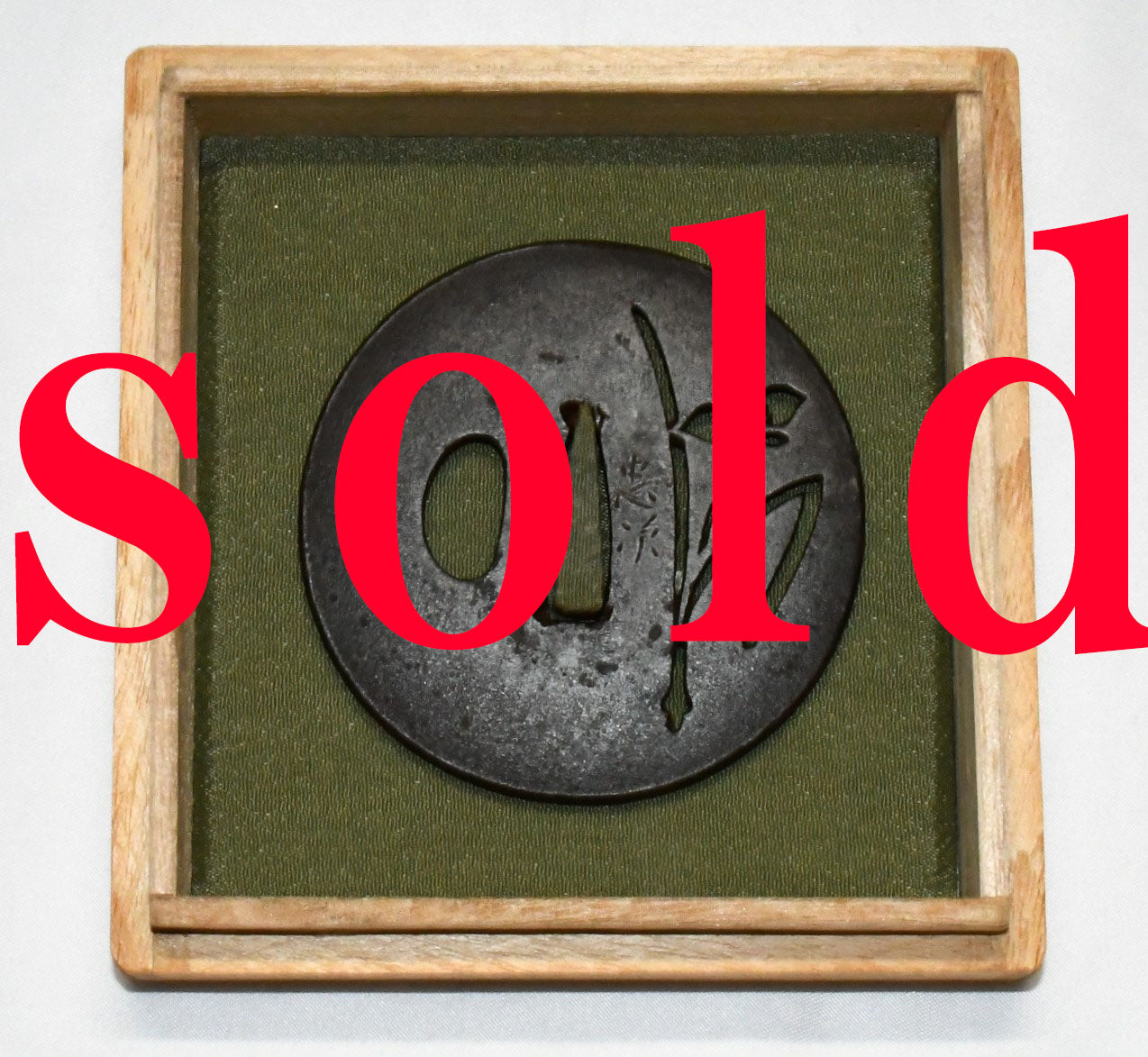
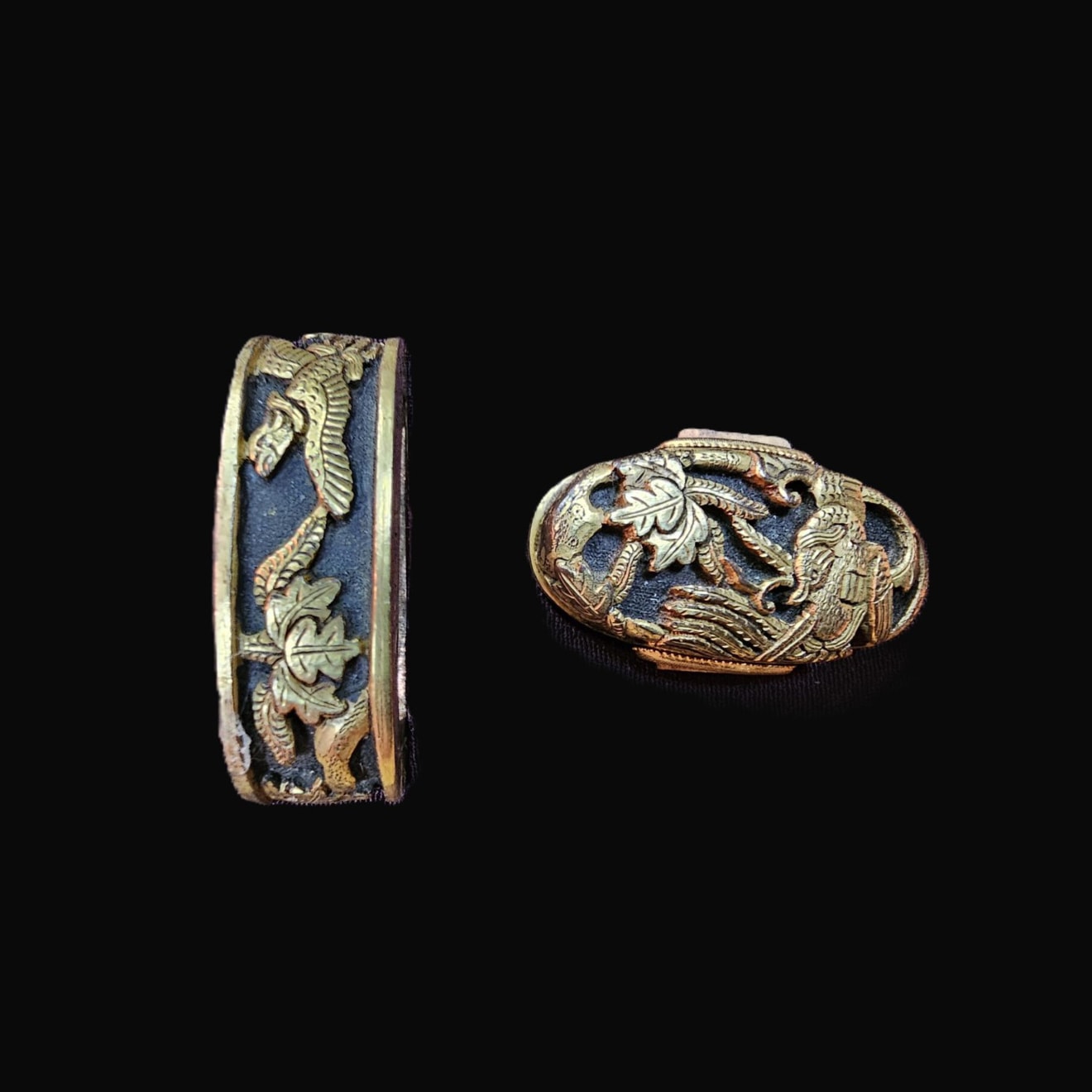
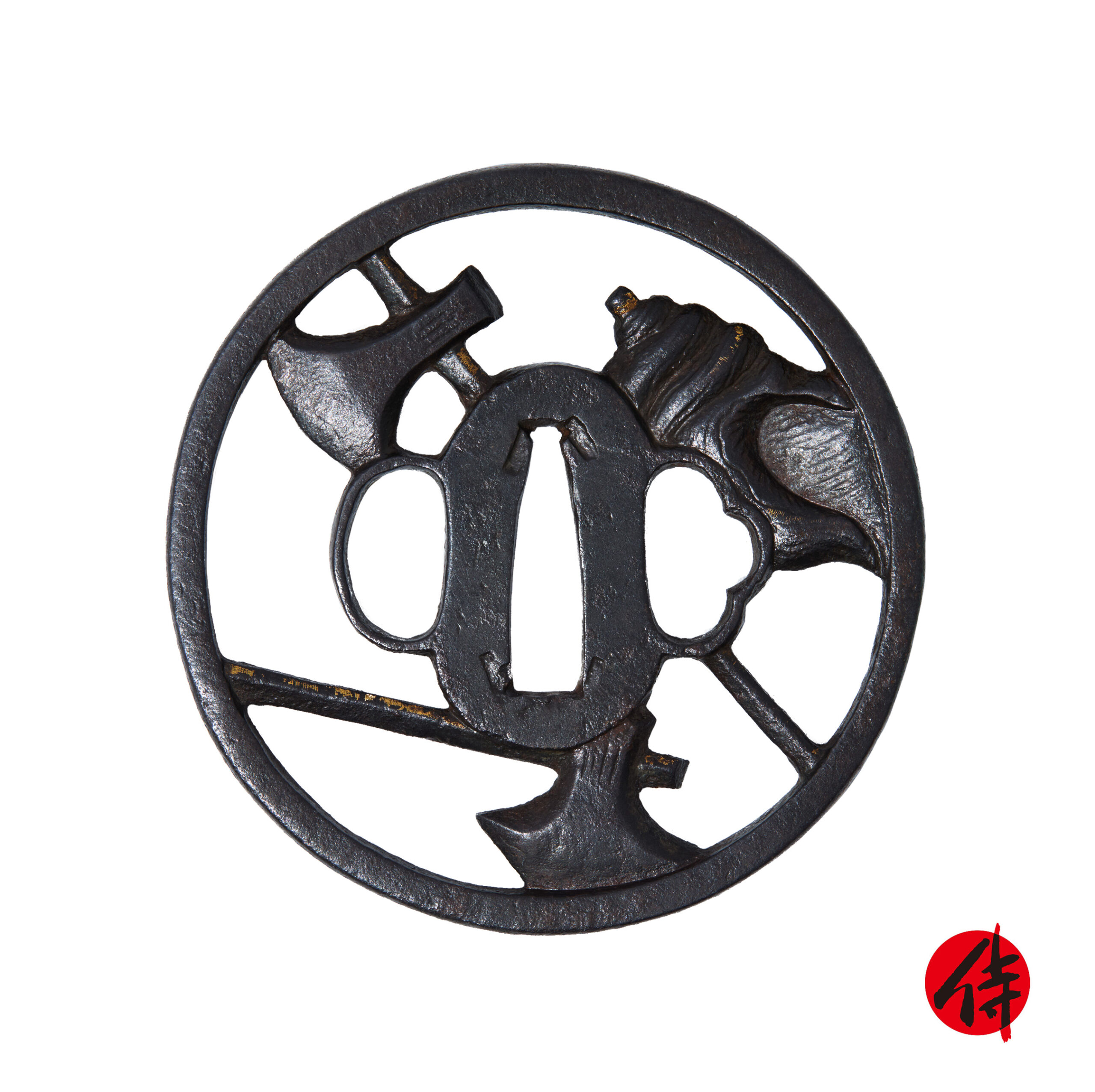
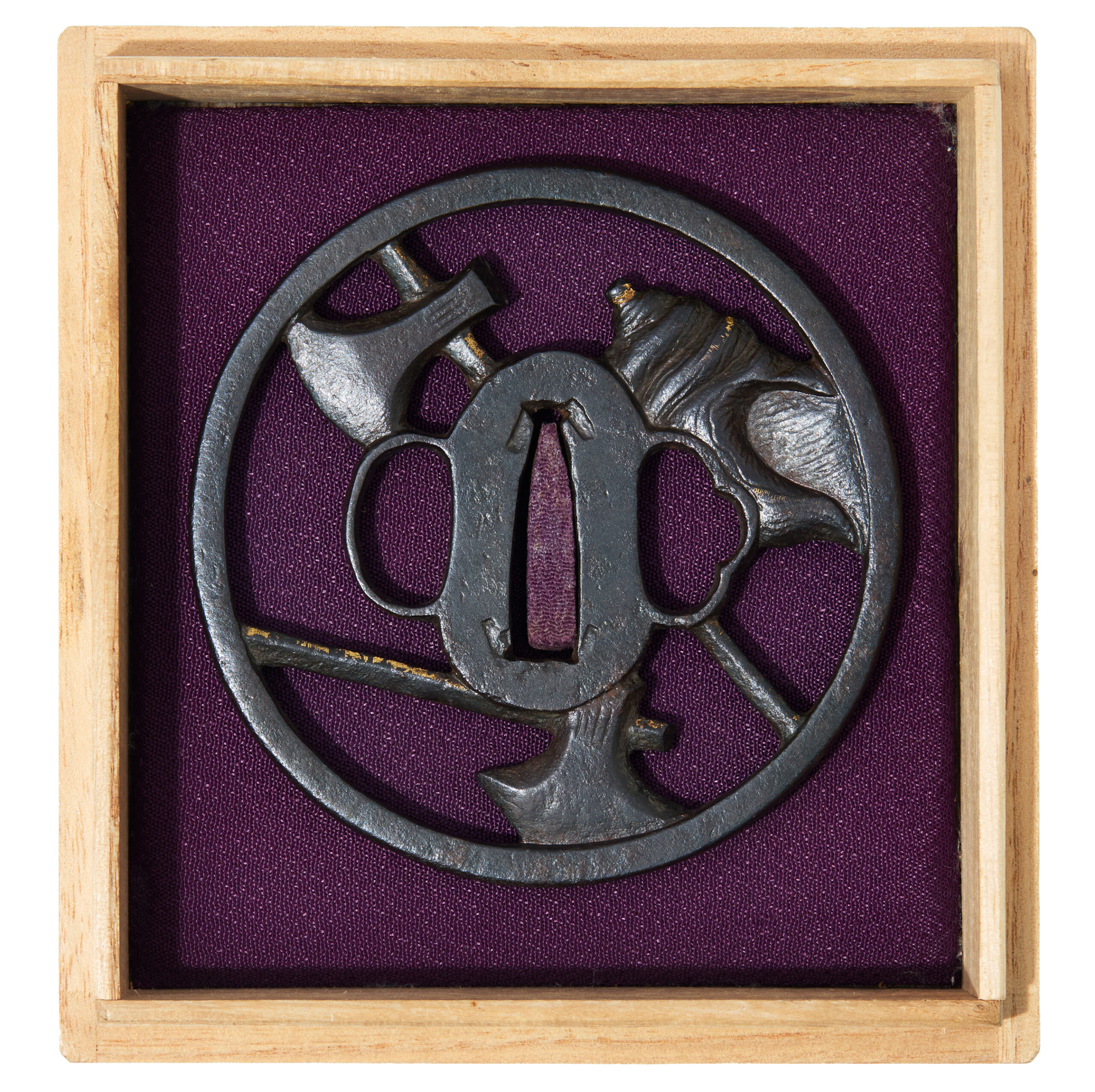
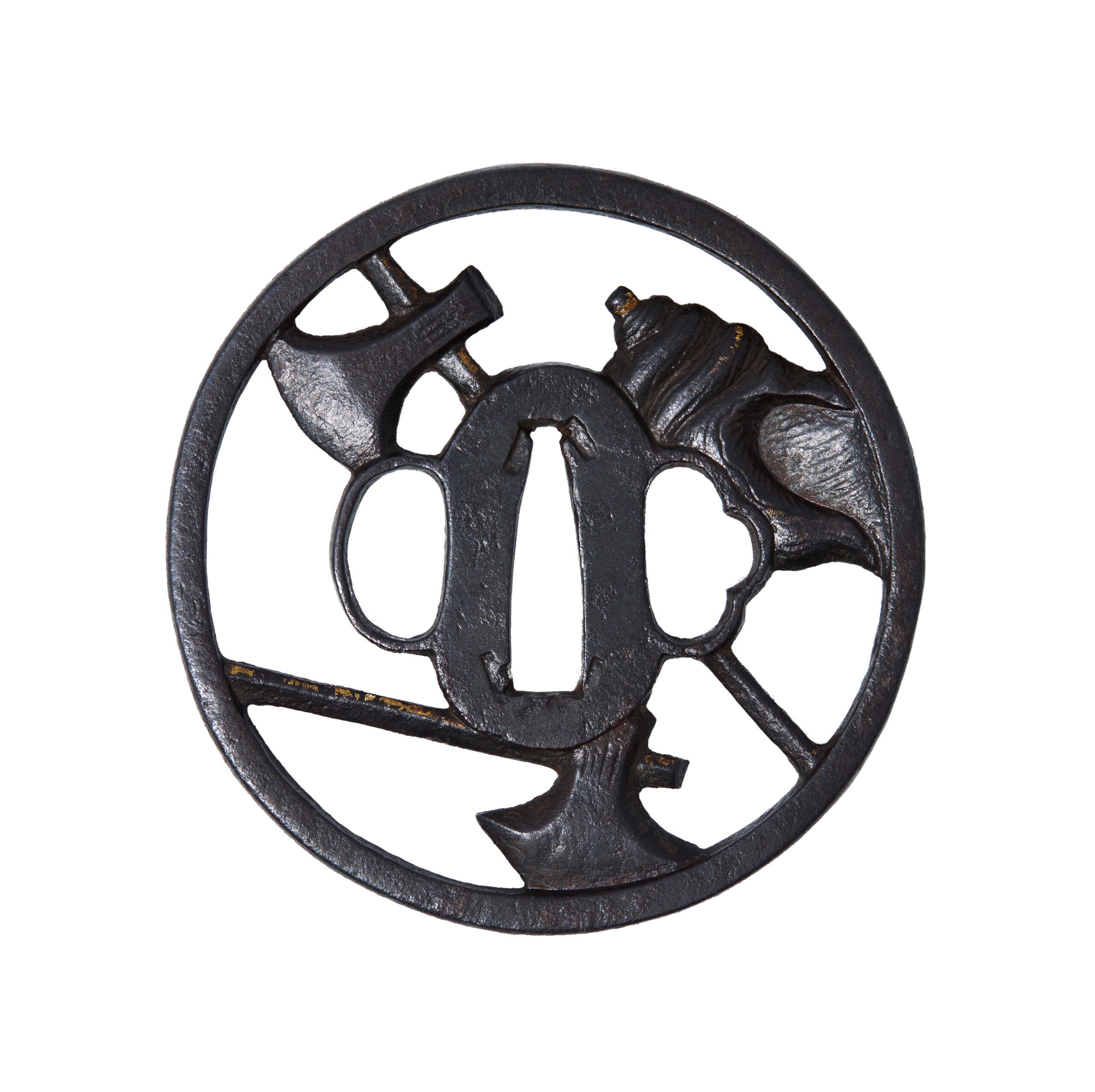
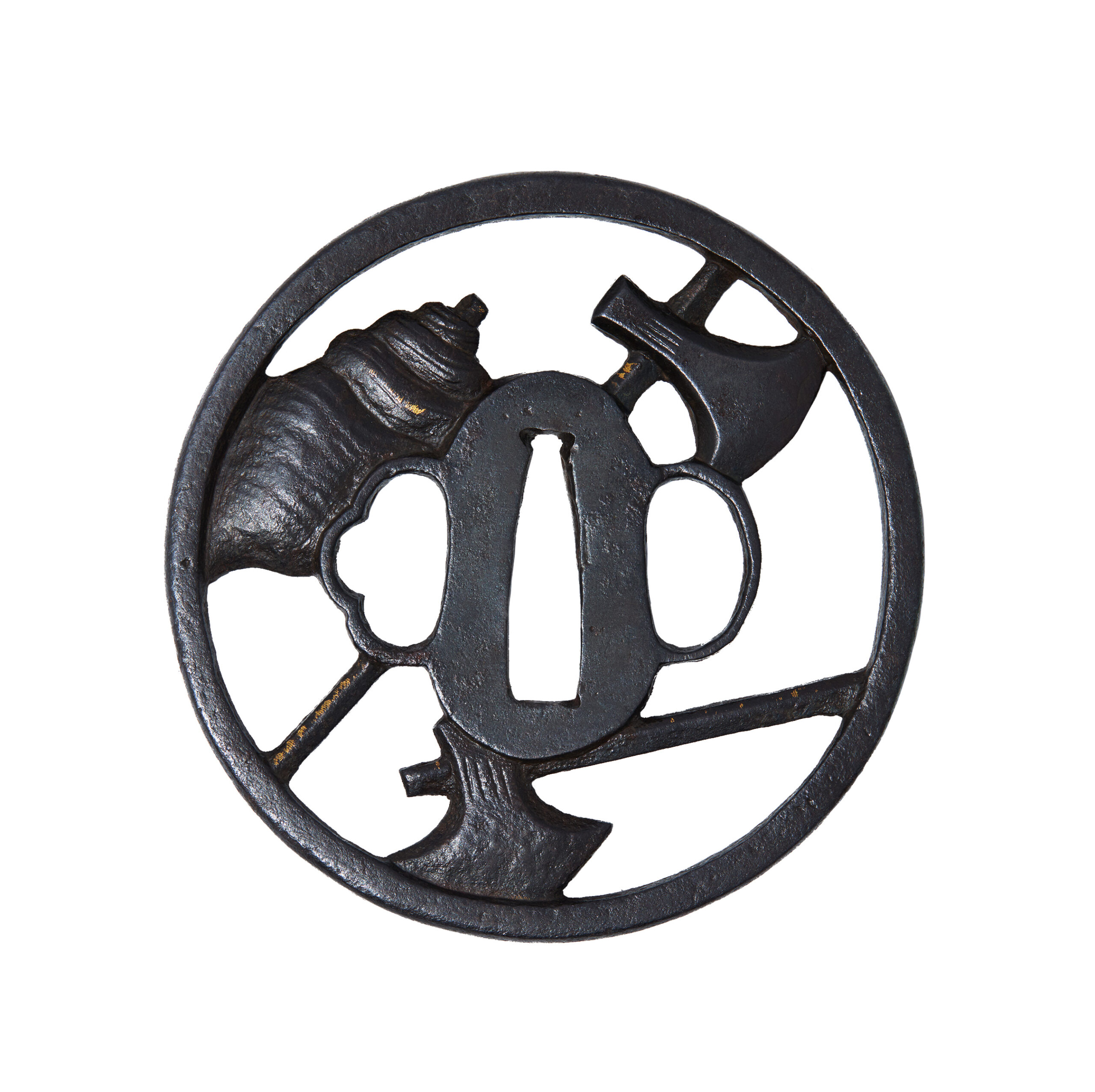
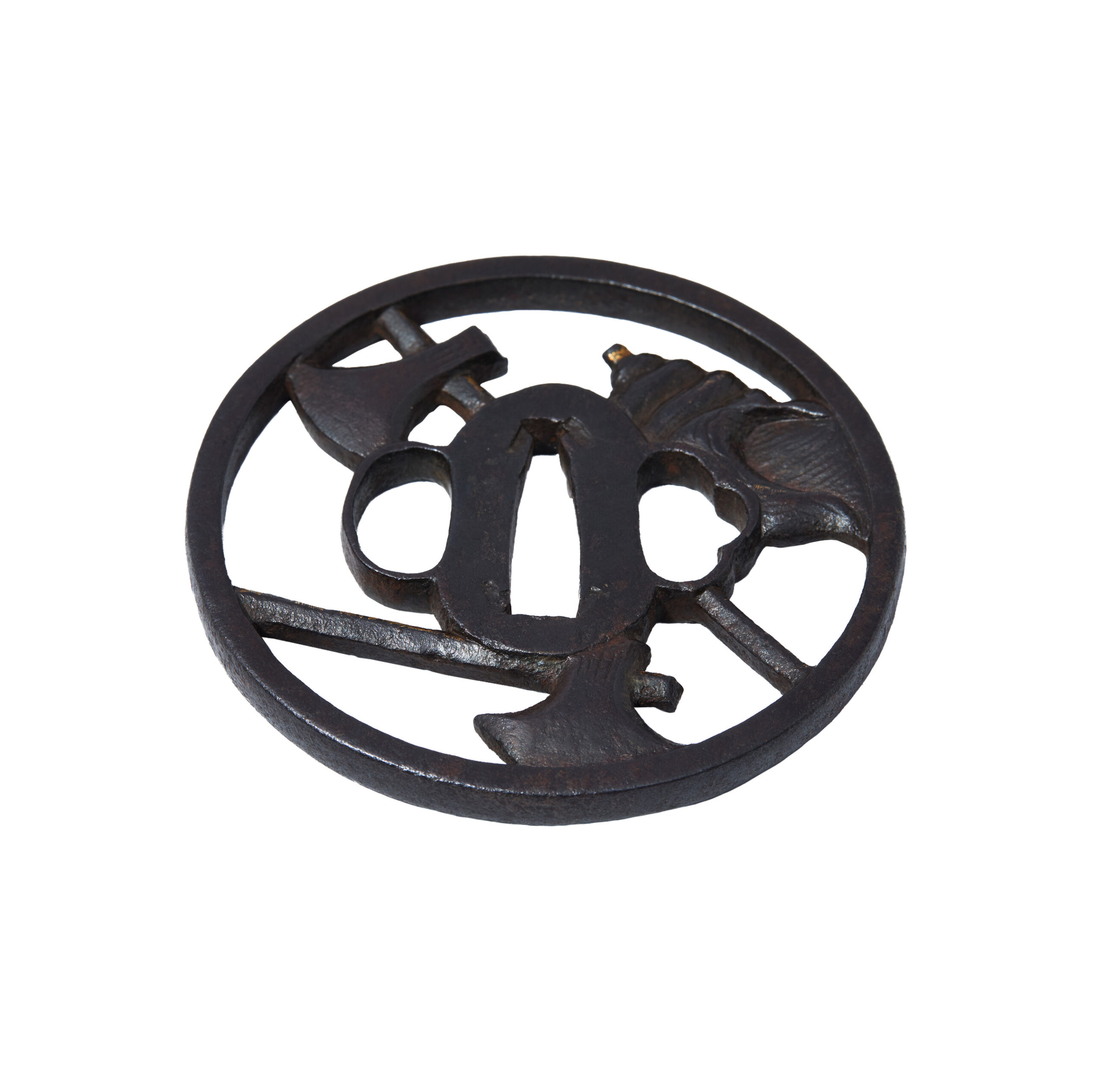
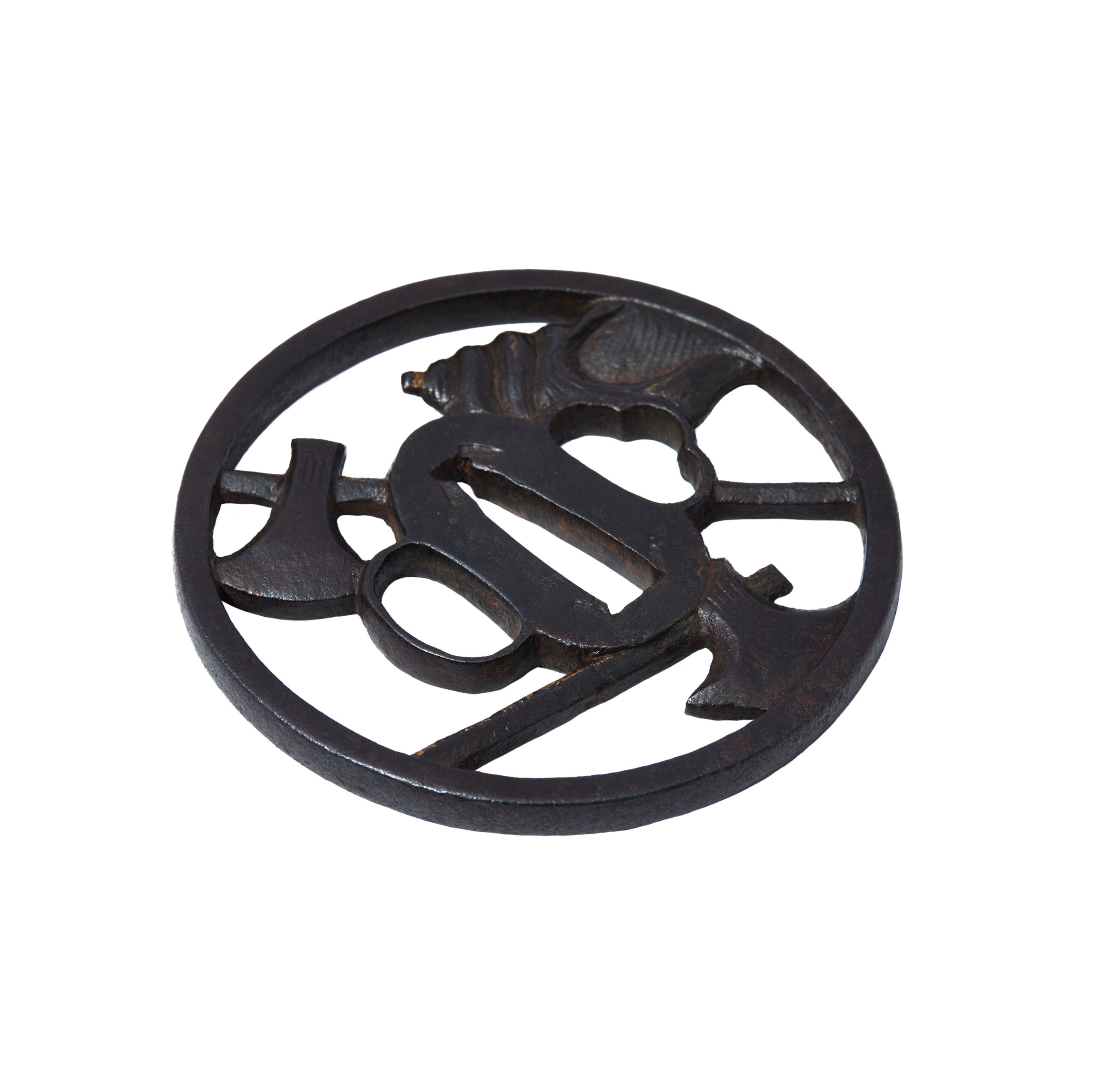
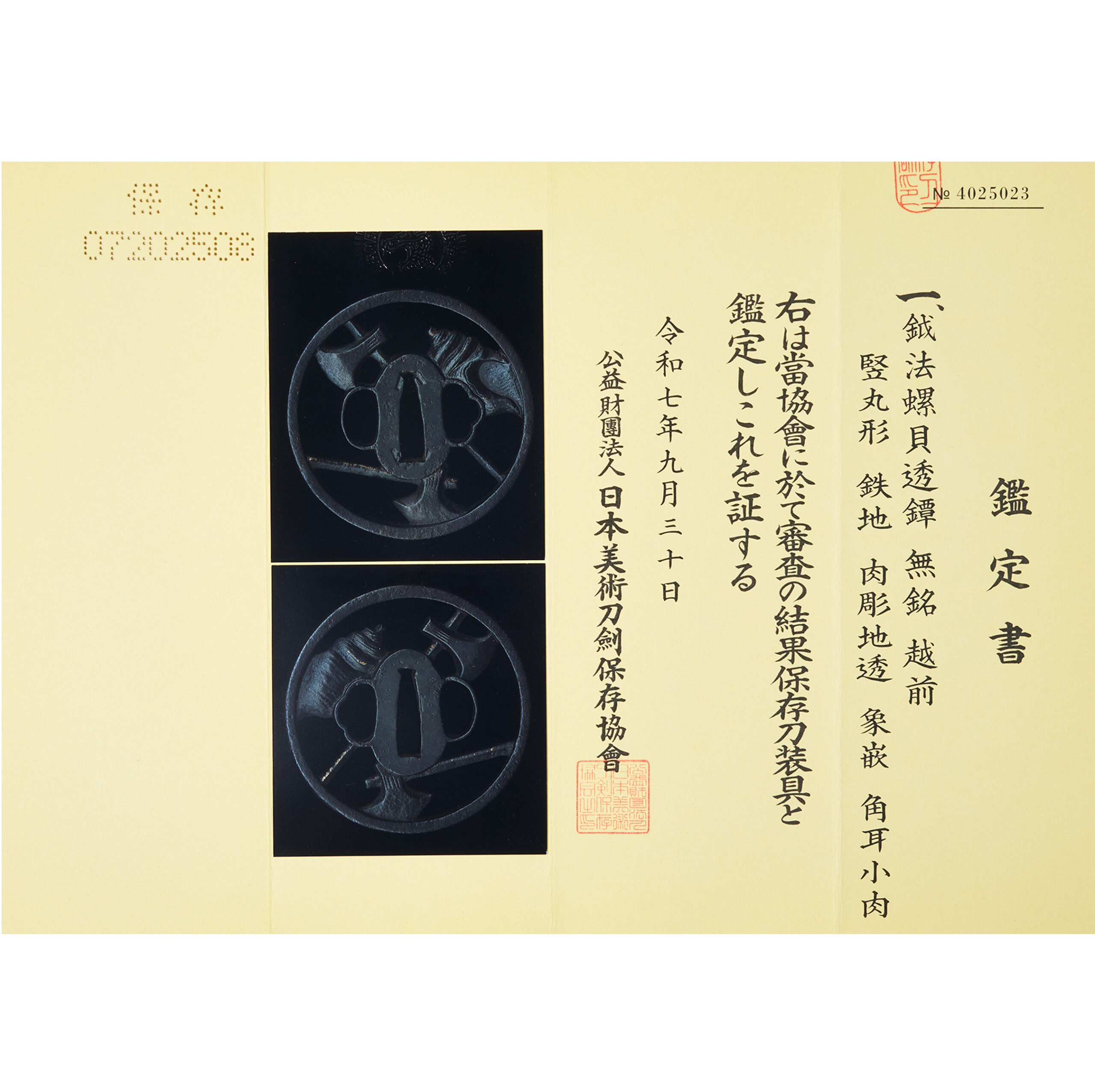
This iron tsuba features a Masakari Horagai Zu design, depicting a hatchet and conch shell in takabori (raised relief) and sukashi (openwork) with kinnunome zougan (gold inlay) accents. It is unsigned and dates to the Edo period. The tsuba comes with an NBTHK Hozon certificate, authenticating its quality and historical significance.
Certificate reading — 無銘(越前)
 NihontoWatch
mumei · Showa (1312-1317)
Echizen Rai
Shōwa
Unsigned
Hozon (NBTHK)
Yamashiro-den · Sanuki · around 1312-1317
3 pieces on the market now
Shodai Echizen Yasutsugu was born in Shimosaka-gō, Sakata District, Ōmi Province, where he styled himself Shimosaka Ichizaemon. He later moved to Echizen and entered the service of Yūki Hideyasu. In his early phase he signed "Higo Daijō Shimosaka," but between Keichō 10 and 11 (1605–1606) he was summoned to Edo, where he forged swords in the presence of both shoguns Ieyasu and Hidetada. In recognition of this distinction, he was granted the hollyhock crest (aoi-mon) and the character yasu, after which he adopted the name Yasutsugu. This direct patronage by the Tokugawa house placed him among the most politically elevated smiths of the early shintō period.
His forging is characteristically dense itame-hada mixed with mokume, exhibiting extremely fine ji-nie and well-entering chikei; overall the steel tends toward a dark tone, producing what is termed Echizen-gane. His hamon is typically based on a medium suguha or shallow notare, accompanied by linked ko-gunome; ko-ashi enter well, nie adheres thickly, and fine kinsuji and sunagashi appear in places. The nioiguchi frequently shows a shizumi tendency, lending a deep, savoury quality. His bōshi commonly rises in a suguha tone with a pointed tip in a Jizō-like manner, with vigorous hakikake and a long turnback. Notably, his finest works display a tightly forged ko-itame of excellent quality with a bright nioiguchi, departing from the more usual standing grain. His horimono are deeply cut and forceful, rendered in characteristic kinai-bori, with triad compositions of Fudō Myōō with the two dōji attendants appearing as a signature motif.
Shodai Yasutsugu occupies a foundational position in the Echizen tradition and among the official smiths of the Tokugawa shogunate. His works combine the powerful, dignified sugata of the Keichō era — wide mihaba, thick kasane, and elongated proportions — with a subdued depth of nie and surface activity that rewards close appreciation. His distinctive steel quality, intentional variation of tempering patterns, and superb sculptural carving together distinguish him as one of the preeminent smiths of early shintō swordmaking.
Where Echizen stands among comparable artisans: across all of nihontō, and within tradition, era, and period. The tiers (Foremost · Leading · Major · Notable) weigh official designations from the NBTHK and Japan's Agency for Cultural Affairs, together with historical honors of lasting repute such as the Sansaku and Meibutsu-chō.
Select a lens to see how it's measured.
Yamashiro-den · Echizen
5 pieces on the market now
| Smith | Era | Designated |
|---|---|---|
| Echizen越前 | 1312-1317 | 1 |
Certifies a genuine fitting worth preserving: a correct signature, or, if unsigned, an identifiable era and school, with recognized artistic and craft value.
The NBTHK (Nihon Bijutsu Tōken Hozon Kyōkai, the Society for the Preservation of Japanese Art Swords) is a public-interest incorporated foundation founded in 1948 and supervised by Japan’s Agency for Cultural Affairs (Bunkachō); it is based at the Japanese Sword Museum in Tokyo. Its expert panels physically examine each submitted work (shinsa) and issue a certificate (kanteishō) ranking it by artistic and historical merit. NBTHK papers are the most widely recognized standard of authentication for Japanese swords and fittings.
NBTHK official siteReturns/exchanges limited to defects caused by shipping (except willful misconduct or gross negligence by the company); customers must contact within 72 hours of receiving the product.
¥140,000