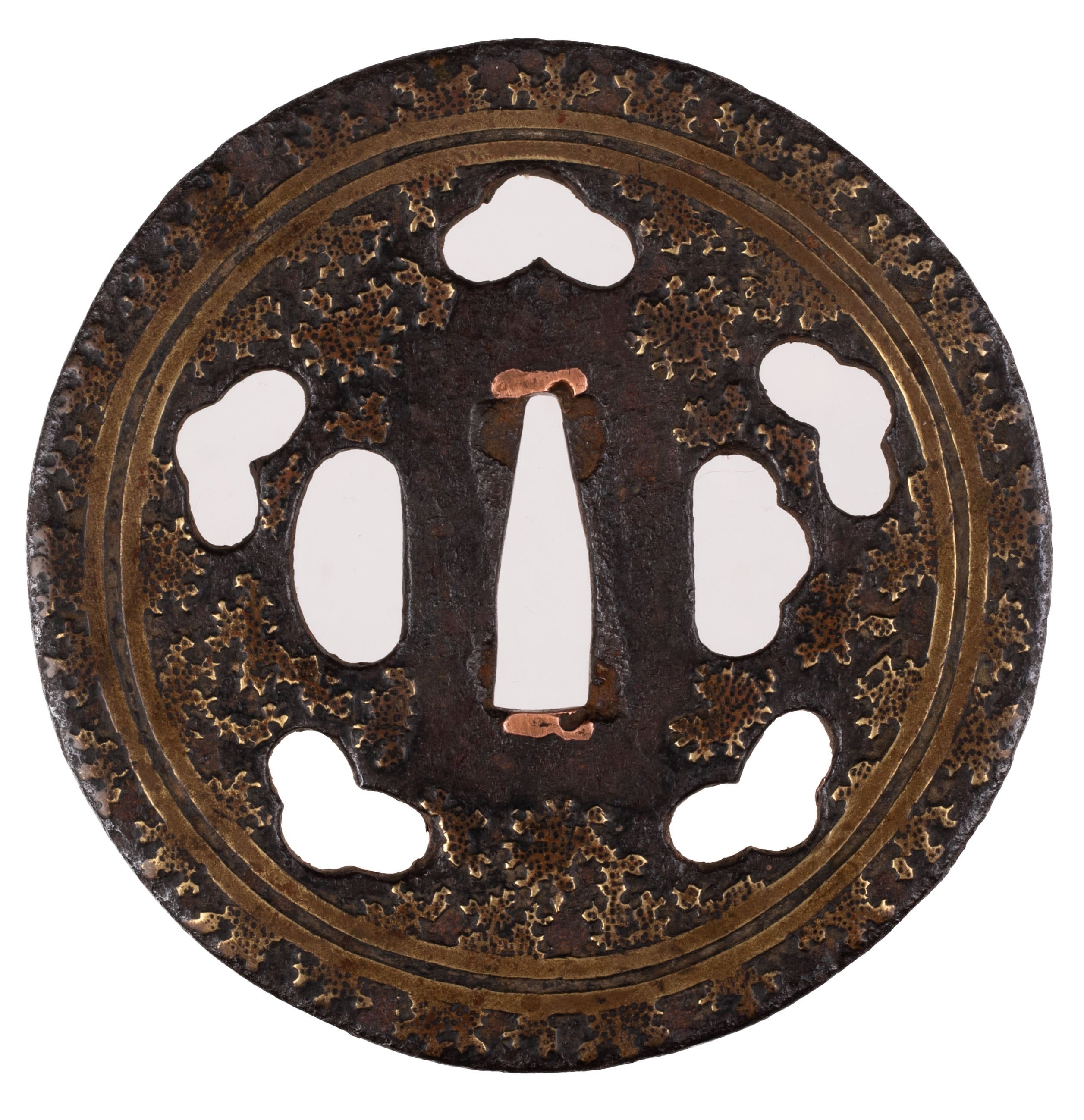
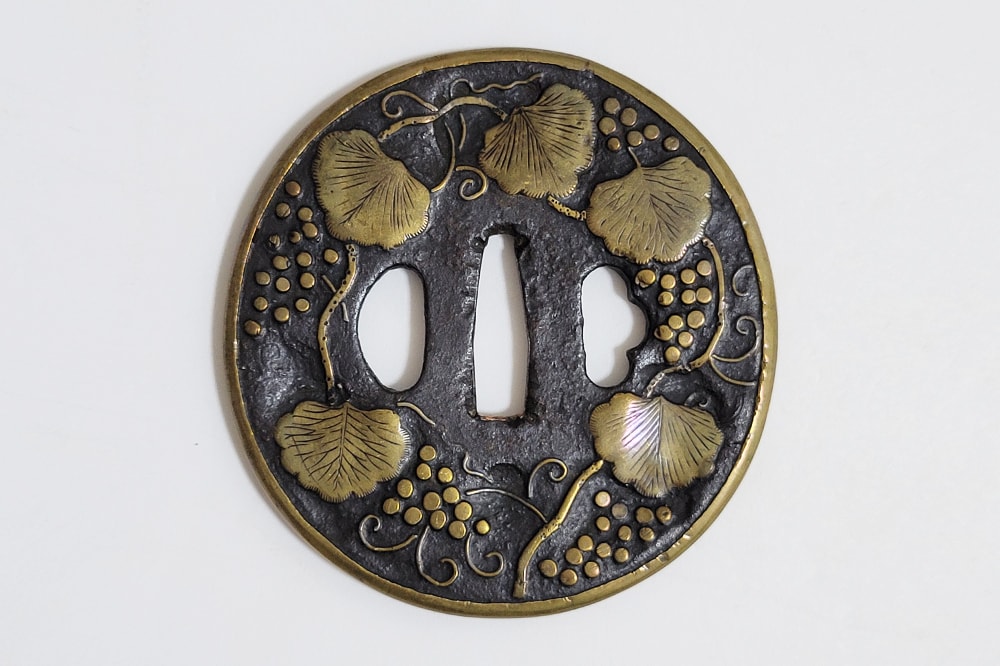
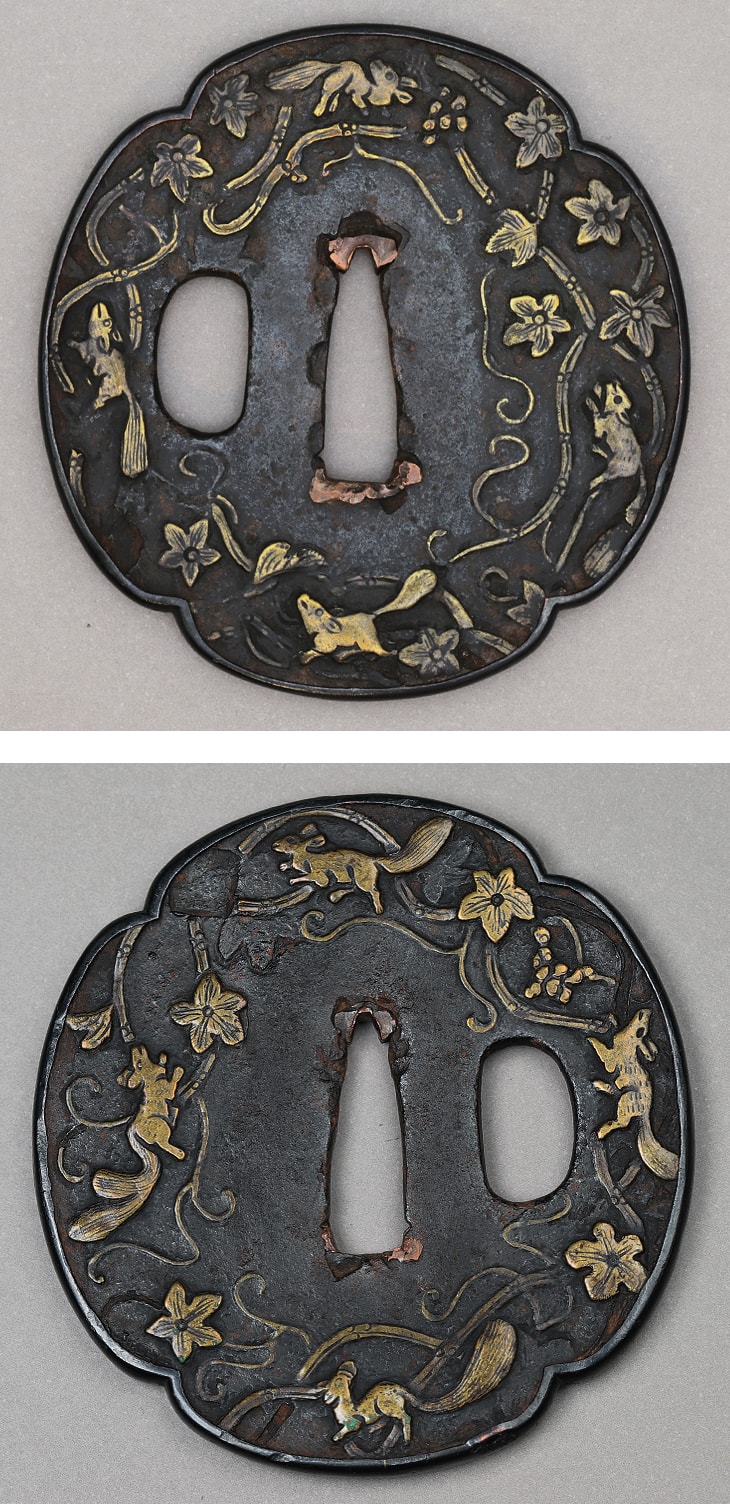
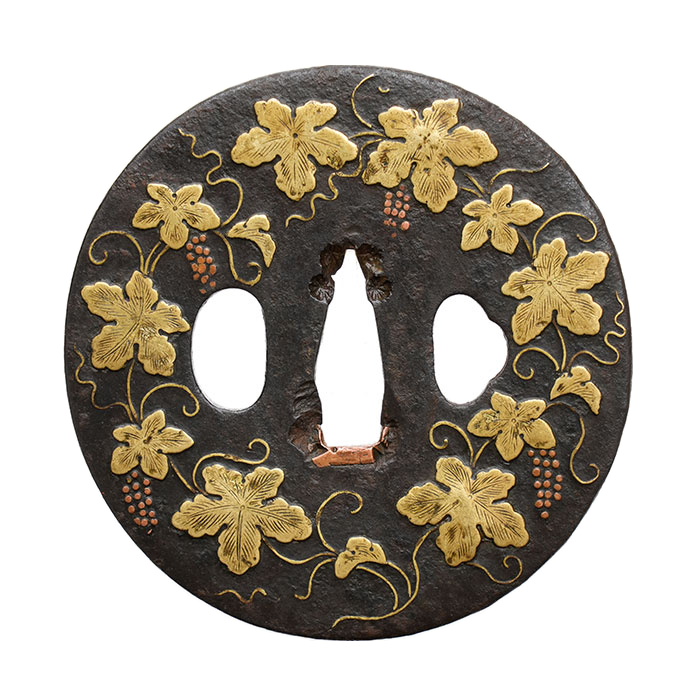
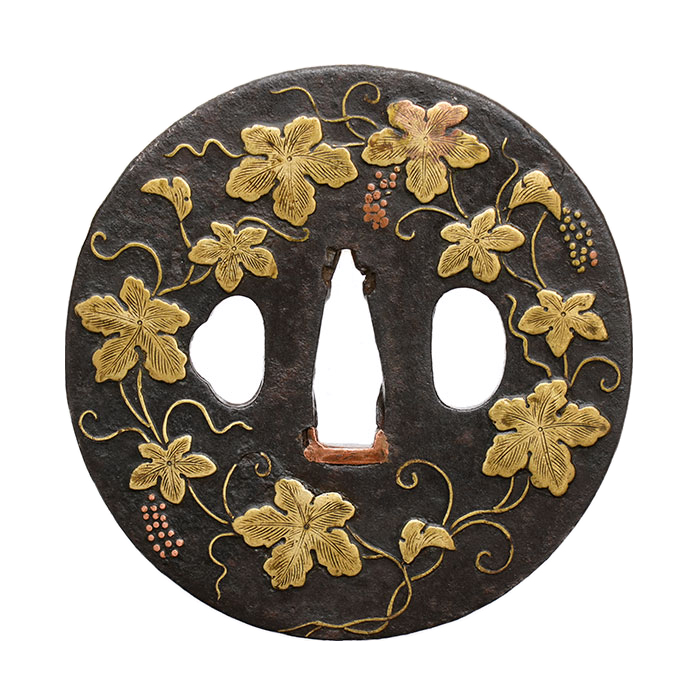
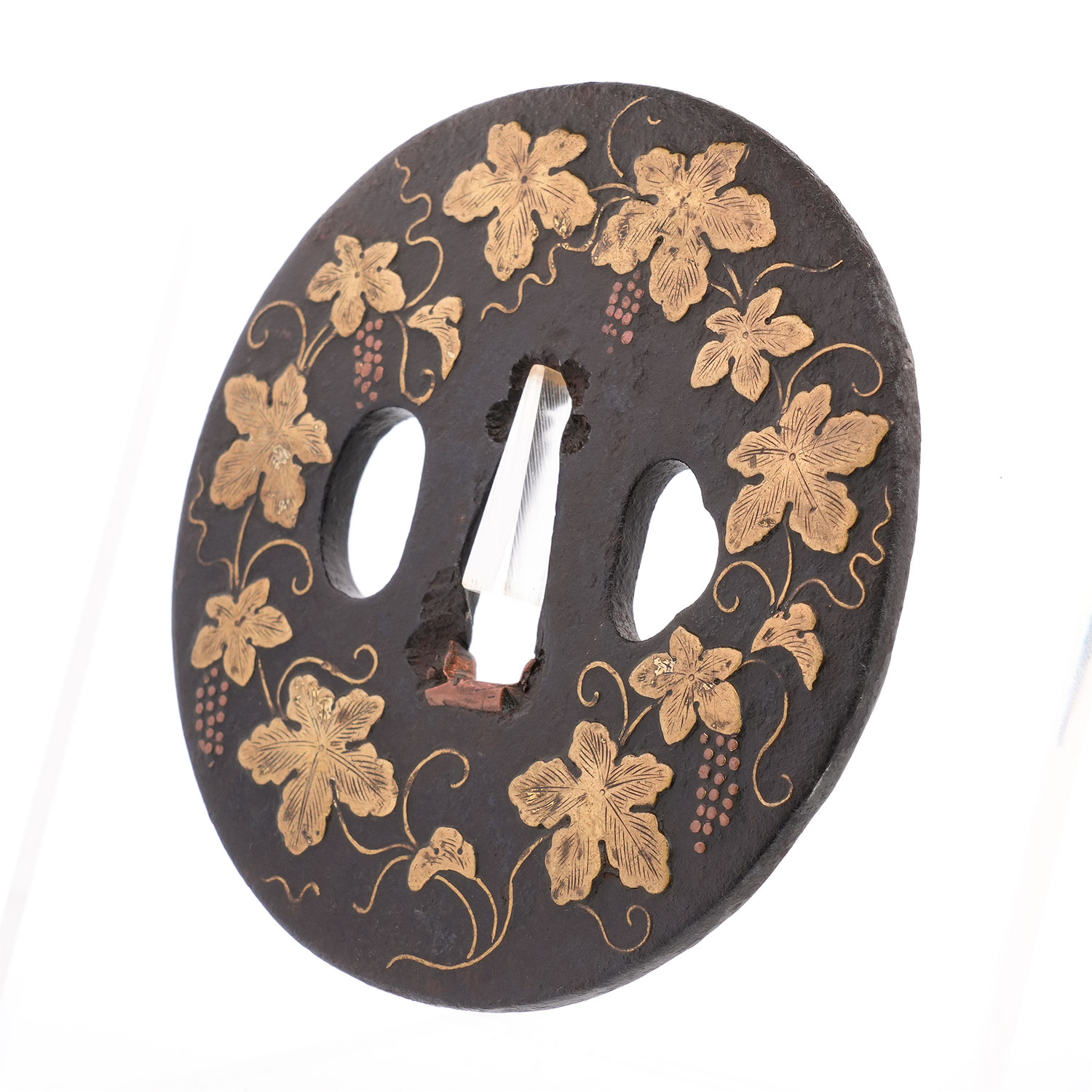
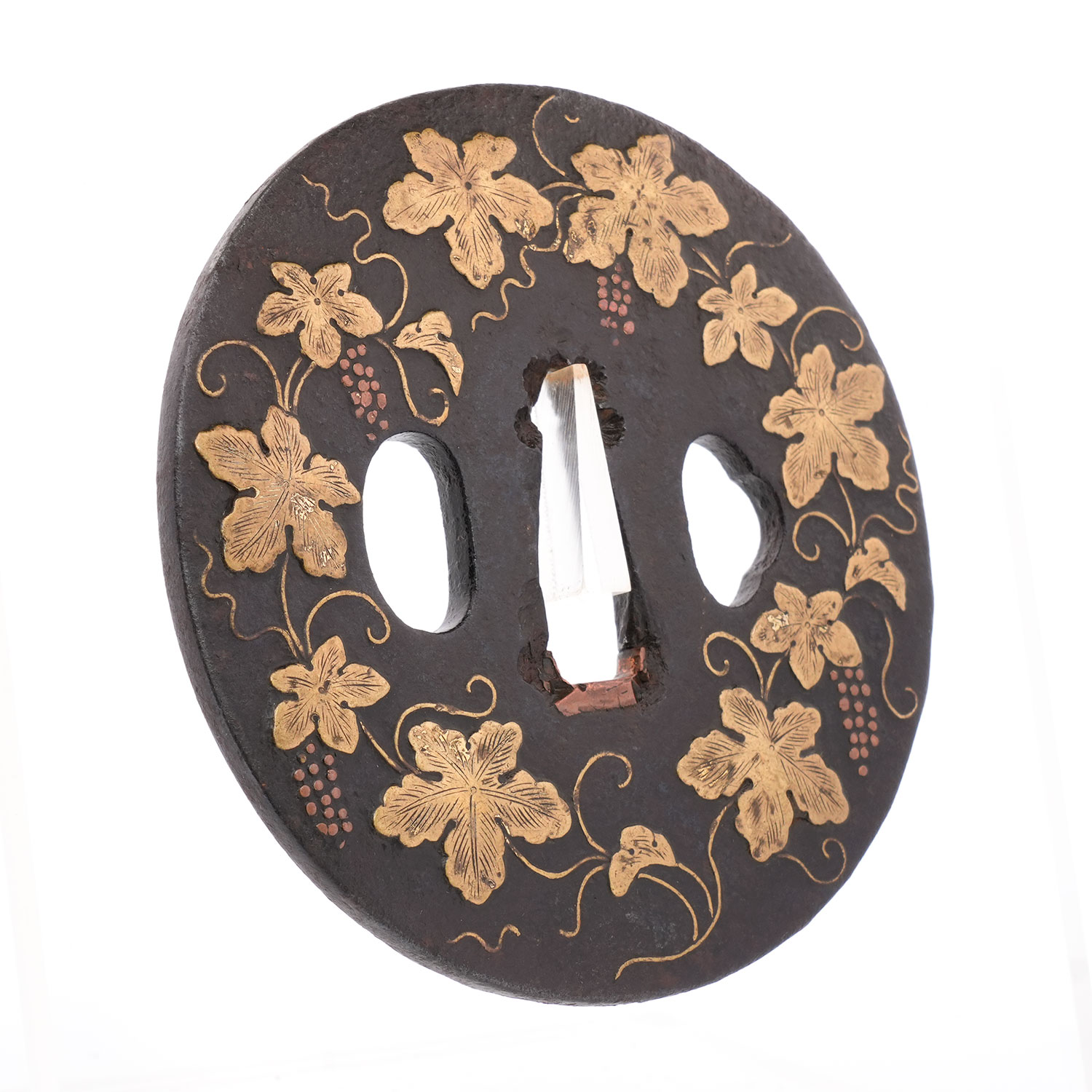
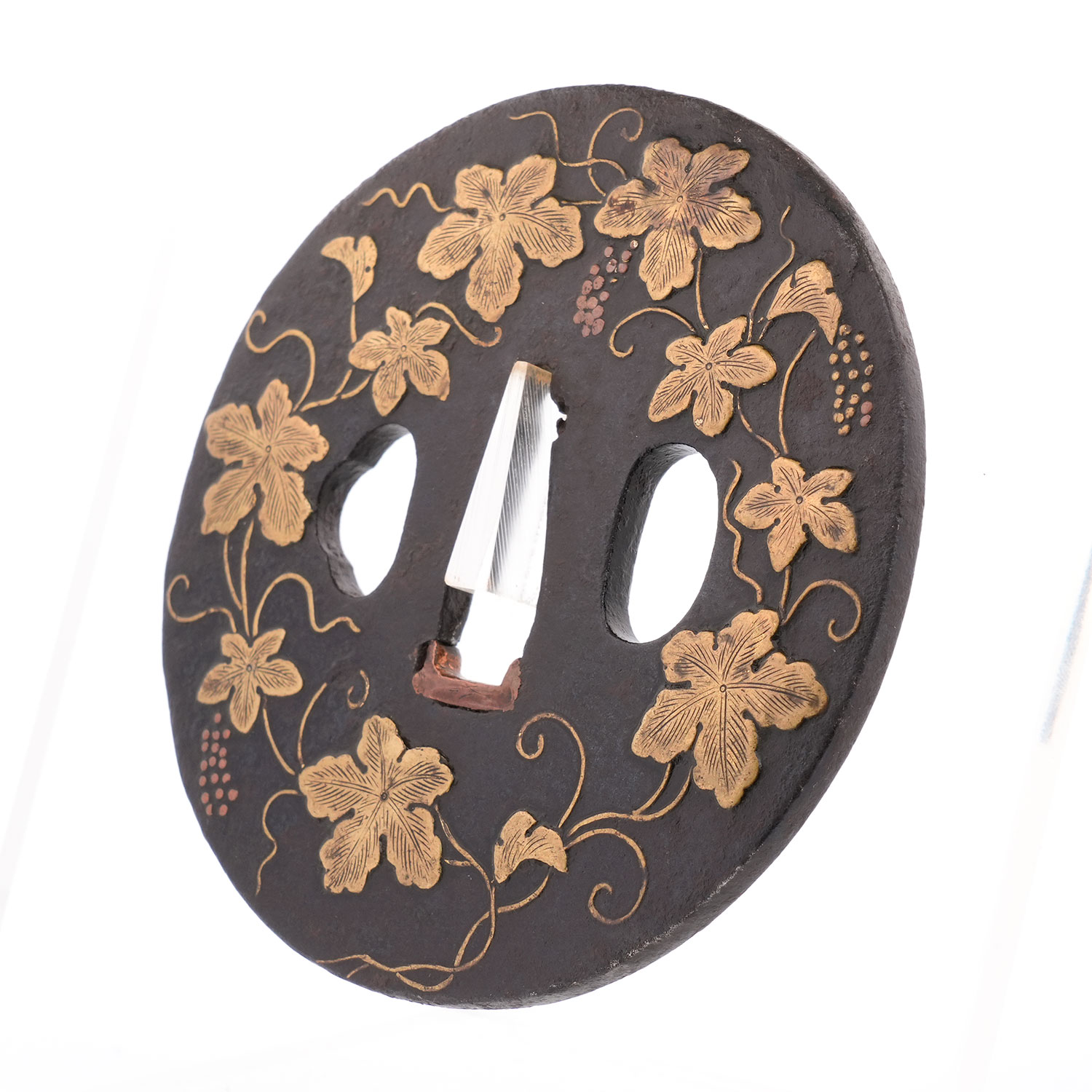
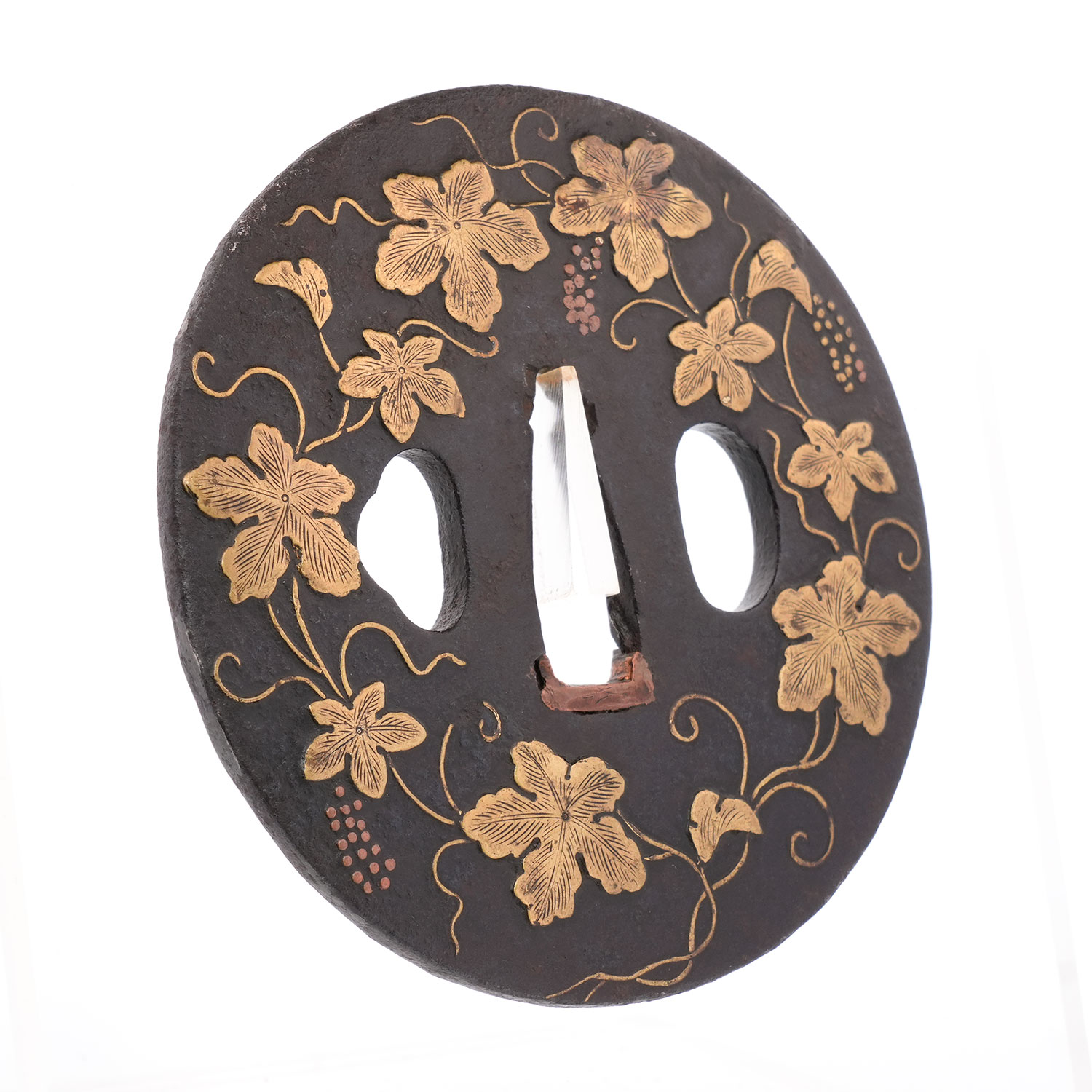
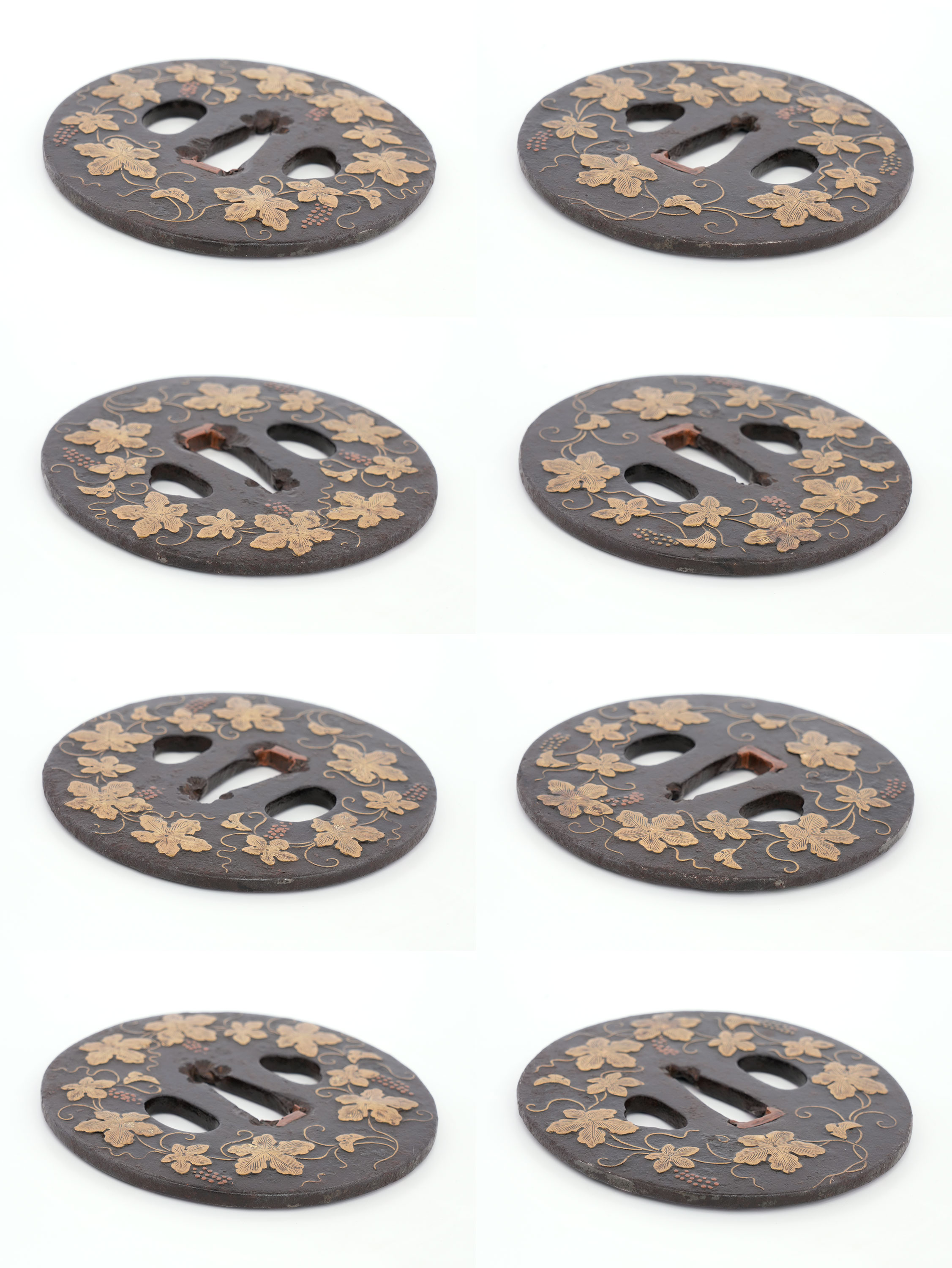
This tsuba features a striking grape design, characteristic of Heianjo Zogan fittings which inherited techniques from Ounin tsuba of the Muromachi period. While early Heianjo pieces used only brass inlay, later works, like this one, incorporated gold, silver, and copper for a more vibrant expression. The design, with its fresh grapes and leaves, is considered auspicious, as 'budou' (grape) sounds similar to 'budou' (martial arts), making it a favored motif among samurai.
 NihontoWatch
mumei · Heianjo · Edo
Yamashiro-den · Kyoto
13 pieces on the market now
The Heianjō school (平安城) of swordsmiths represents the principal lineage of Kyōto sword production during the Muromachi period. "Heianjō" is the classical name for Kyōto (Heian-kyō), and the school's smiths — resident in the Sanjō district of the capital — signed variously with the 平安城 (Heianjō) and 三条 (Sanjō) prefixes, a usage that has often caused them to be confused with the far earlier Sanjō school of Munechika. They are an entirely distinct, late group: its two representative masters, Heianjō Nagayoshi (平安城長吉, also read Chōkichi) and Sanjō Yoshinori (三条吉則, of the Fuse 布施 family), are counted as the leading makers of Muromachi-period Kyō-mono (Kyoto-made blades), carrying forward the capital's swordmaking after the Nanbokuchō-period Nobukuni and Hasebe lineages. Both names continued through several generations from the late Nanbokuchō era into the sixteenth century, and the smiths are known to have travelled to forge (desaku) in provinces such as Izumi, Mikawa, and Echizen during the late Muromachi period. The Heianjō style is dominated by a flamboyant hitatsura (full-temper) idiom adopted from Sōshū tradition: a foundation of large gunome-midare mixed with chōji, togariba, and yahazu-ba, with abundant tobiyaki and muneyaki spreading temper across the entire blade surface, nie adhering strongly, and sunagashi and kinsuji coursing through a bright, clear nioiguchi.
The finest examples are so accomplished that they are difficult to distinguish from late Sōshū (Sue-Sōshū) work. A quieter suguha- and ko-notare-based mode close to the Nobukuni tradition is also seen. High-quality horimono — kurikara, bonji, suken, and gomabashi — frequently accompany the blades. The school is not to be confused with the unrelated Heianjō-zōgan (平安城象嵌) inlay tradition of tōsōgu makers. Learn more →
| Smith | Era | Designated |
|---|---|---|
| Nagayoshi長吉 | 1469-1492 | 15 |
| Yoshinori吉則 | 1469-1487 | 3 |
| Chokichi長吉 | 1384-1394 | 1 |
| Kunitsugu國次 | 1648-1652 | 2 |
| Yoshinori吉則 | 1362-1368 | 1 |
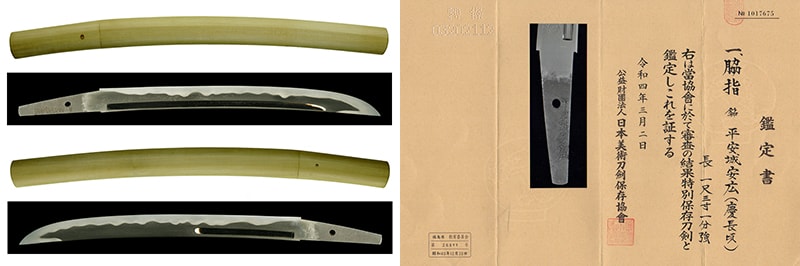
We could not find an authenticity certificate on the seller’s listing. Japanese swords and fittings are normally papered by the NBTHK (or the NTHK). Without one, the attribution is the seller’s own assessment and has not been independently verified — treat it with caution and ask the dealer about certification before buying.
Returns accepted within 3 days of delivery for defective items or significant discrepancies; customer bears return shipping and bank fees.
¥132,000
This tsuba features a striking grape design, characteristic of Heianjo Zogan fittings which inherited techniques from Ounin tsuba of the Muromachi period. While early Heianjo pieces used only brass inlay, later works, like this one, incorporated gold, silver, and copper for a more vibrant expression. The design, with its fresh grapes and leaves, is considered auspicious, as 'budou' (grape) sounds similar to 'budou' (martial arts), making it a favored motif among samurai.
NihontoWatchmumei · Heianjo · Edo
Yamashiro-den · Kyoto
13 pieces on the market now
The Heianjō school (平安城) of swordsmiths represents the principal lineage of Kyōto sword production during the Muromachi period. "Heianjō" is the classical name for Kyōto (Heian-kyō), and the school's smiths — resident in the Sanjō district of the capital — signed variously with the 平安城 (Heianjō) and 三条 (Sanjō) prefixes, a usage that has often caused them to be confused with the far earlier Sanjō school of Munechika. They are an entirely distinct, late group: its two representative masters, Heianjō Nagayoshi (平安城長吉, also read Chōkichi) and Sanjō Yoshinori (三条吉則, of the Fuse 布施 family), are counted as the leading makers of Muromachi-period Kyō-mono (Kyoto-made blades), carrying forward the capital's swordmaking after the Nanbokuchō-period Nobukuni and Hasebe lineages. Both names continued through several generations from the late Nanbokuchō era into the sixteenth century, and the smiths are known to have travelled to forge (desaku) in provinces such as Izumi, Mikawa, and Echizen during the late Muromachi period. The Heianjō style is dominated by a flamboyant hitatsura (full-temper) idiom adopted from Sōshū tradition: a foundation of large gunome-midare mixed with chōji, togariba, and yahazu-ba, with abundant tobiyaki and muneyaki spreading temper across the entire blade surface, nie adhering strongly, and sunagashi and kinsuji coursing through a bright, clear nioiguchi.
The finest examples are so accomplished that they are difficult to distinguish from late Sōshū (Sue-Sōshū) work. A quieter suguha- and ko-notare-based mode close to the Nobukuni tradition is also seen. High-quality horimono — kurikara, bonji, suken, and gomabashi — frequently accompany the blades. The school is not to be confused with the unrelated Heianjō-zōgan (平安城象嵌) inlay tradition of tōsōgu makers. Learn more →
| Smith | Era | Designated |
|---|---|---|
| Nagayoshi長吉 | 1469-1492 | 15 |
| Yoshinori吉則 | 1469-1487 | 3 |
| Chokichi長吉 | 1384-1394 | 1 |
| Kunitsugu國次 | 1648-1652 | 2 |
| Yoshinori吉則 | 1362-1368 | 1 |
We could not find an authenticity certificate on the seller’s listing. Japanese swords and fittings are normally papered by the NBTHK (or the NTHK). Without one, the attribution is the seller’s own assessment and has not been independently verified — treat it with caution and ask the dealer about certification before buying.
Returns accepted within 3 days of delivery for defective items or significant discrepancies; customer bears return shipping and bank fees.
¥132,000