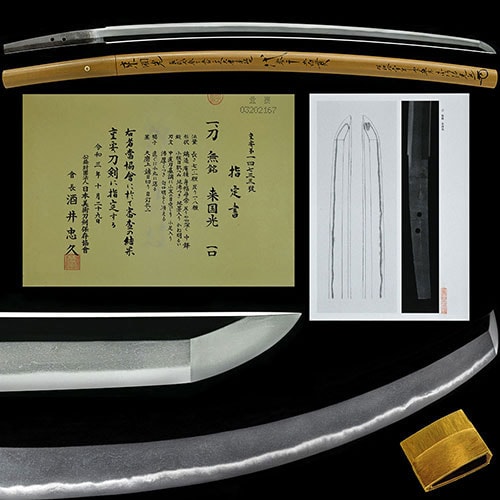
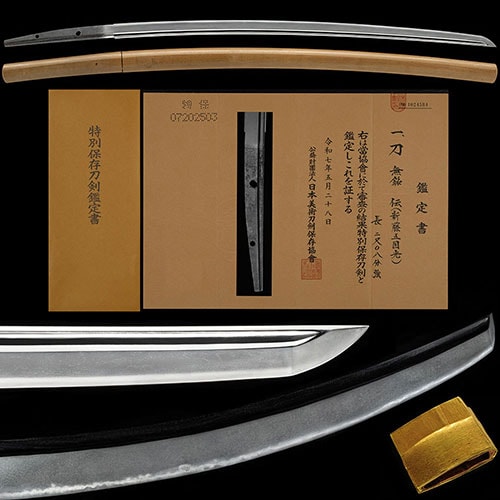
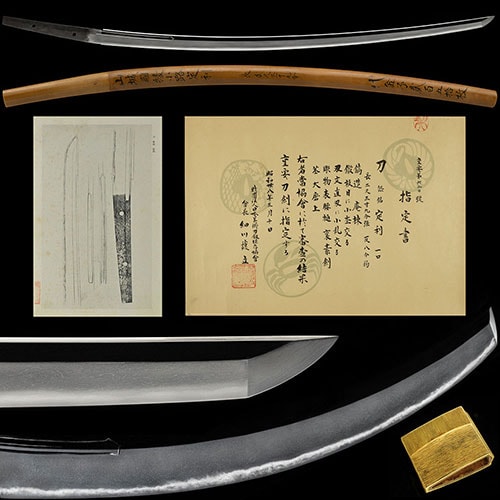
Yasutsugu was born in Shimosaka-gō, Sakata District, Ōmi Province, where he styled himself Shimosaka Ichizaemon. He later moved to and entered the service of Yūki Hideyasu. In his early phase he signed " Daijō Shimosaka," but between Keichō 10 and 11 (1605–1606) he was summoned to , where he forged swords in the presence of both shoguns Ieyasu and Hidetada. In recognition of this distinction, he was granted the hollyhock crest () and the character , after which he adopted the name Yasutsugu. This direct patronage by the Tokugawa house placed him among the most politically elevated smiths of the early period.
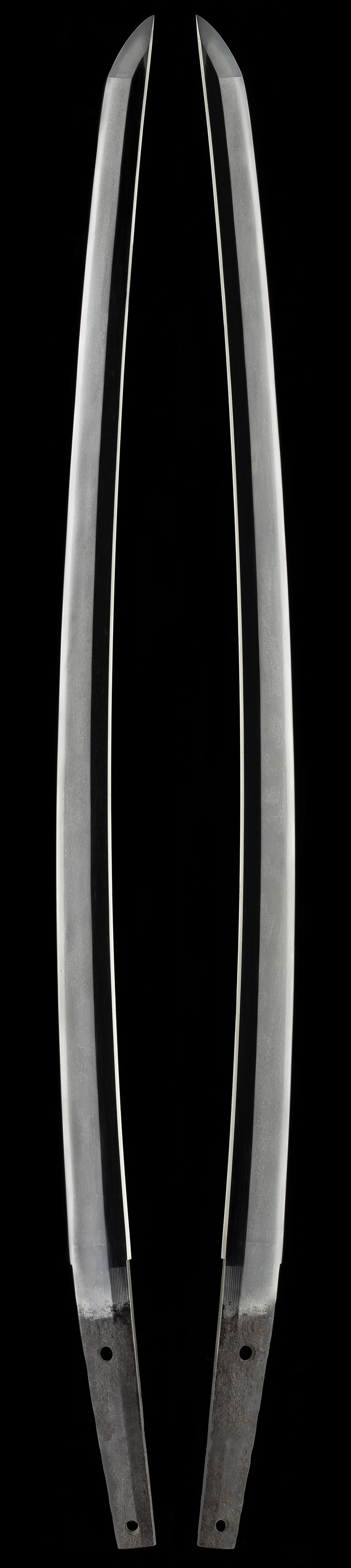
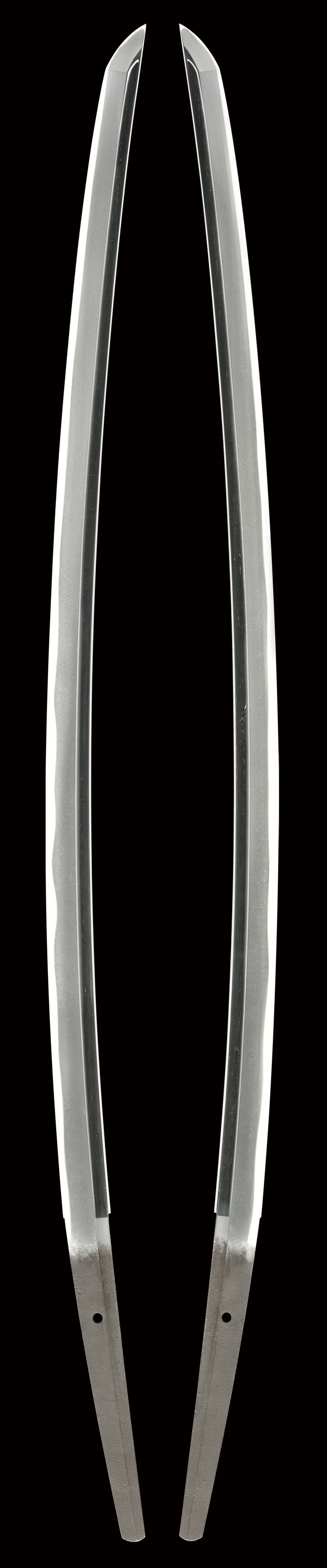
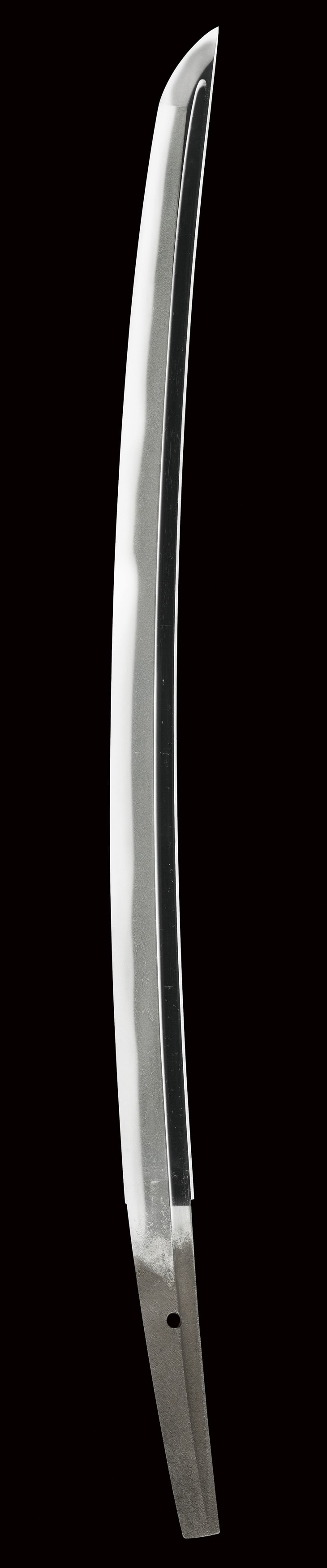
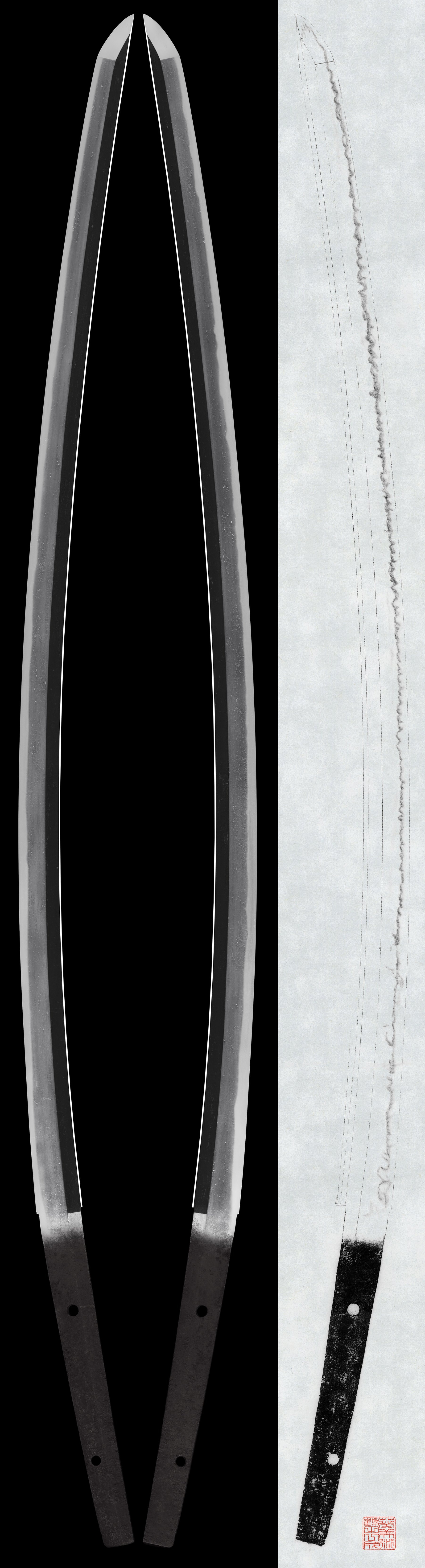
His forging is characteristically dense mixed with , exhibiting extremely fine and well-entering ; overall the steel tends toward a dark tone, producing what is termed . His is typically based on a medium or shallow , accompanied by linked ; enter well, adheres thickly, and fine and appear in places. The frequently shows a tendency, lending a deep, savoury quality. His commonly rises in a tone with a pointed tip in a Jizō-like manner, with vigorous and a long turnback. Notably, his finest works display a tightly forged of excellent quality with a bright , departing from the more usual standing grain. His are deeply cut and forceful, rendered in characteristic kinai-bori, with triad compositions of Fudō Myōō with the two dōji attendants appearing as a signature motif.
Yasutsugu occupies a foundational position in the tradition and among the official smiths of the Tokugawa shogunate. His works combine the powerful, dignified of the Keichō era — wide , thick , and elongated proportions — with a subdued depth of and surface activity that rewards close appreciation. His distinctive steel quality, intentional variation of tempering patterns, and superb sculptural carving together distinguish him as one of the preeminent smiths of early swordmaking.