 NihontoWatchNihontoWatch
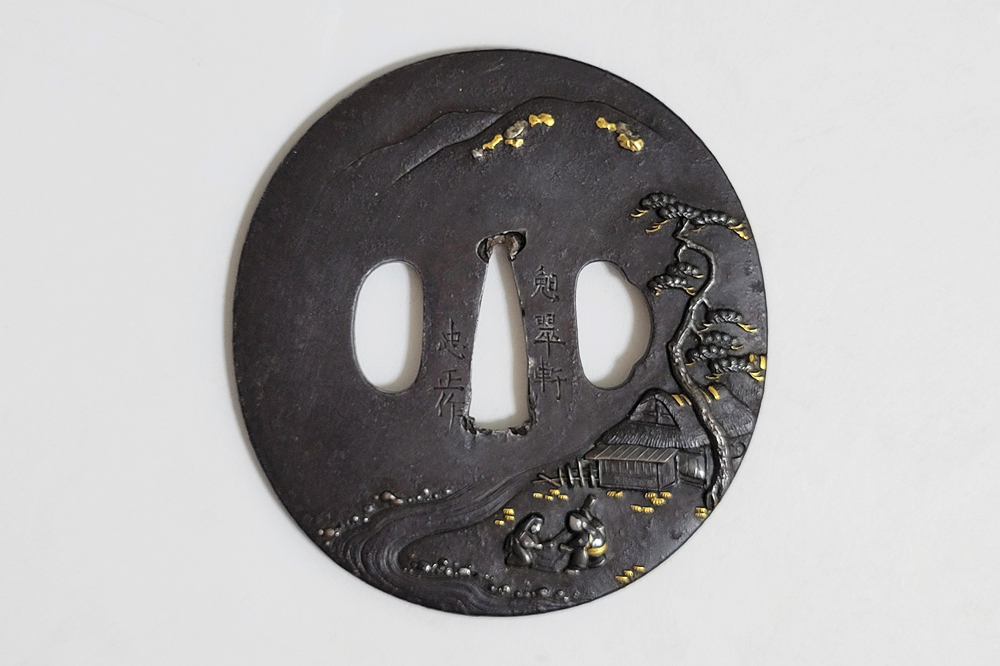
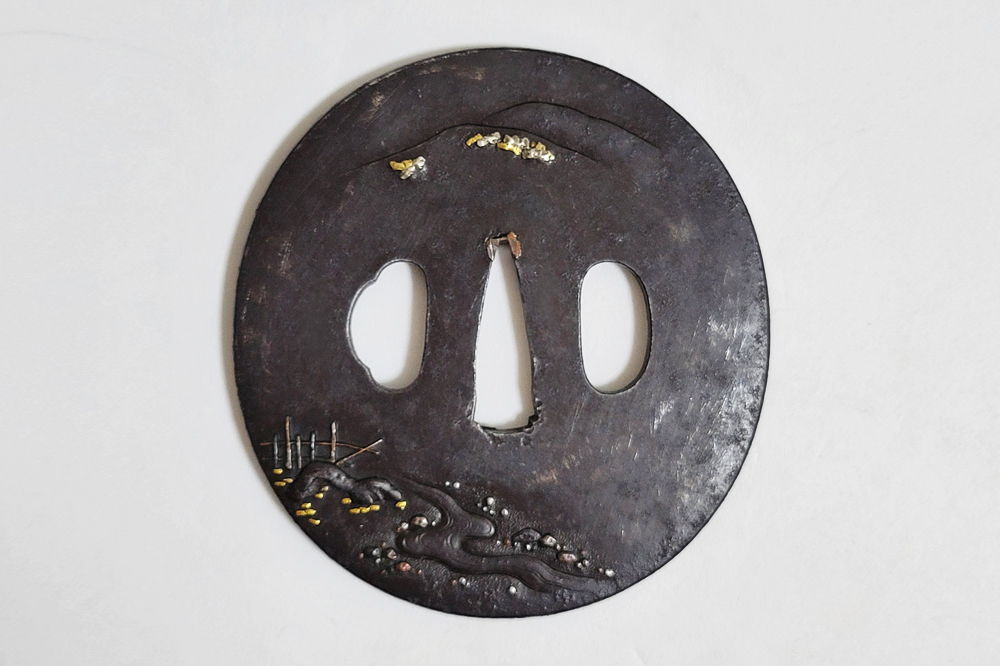
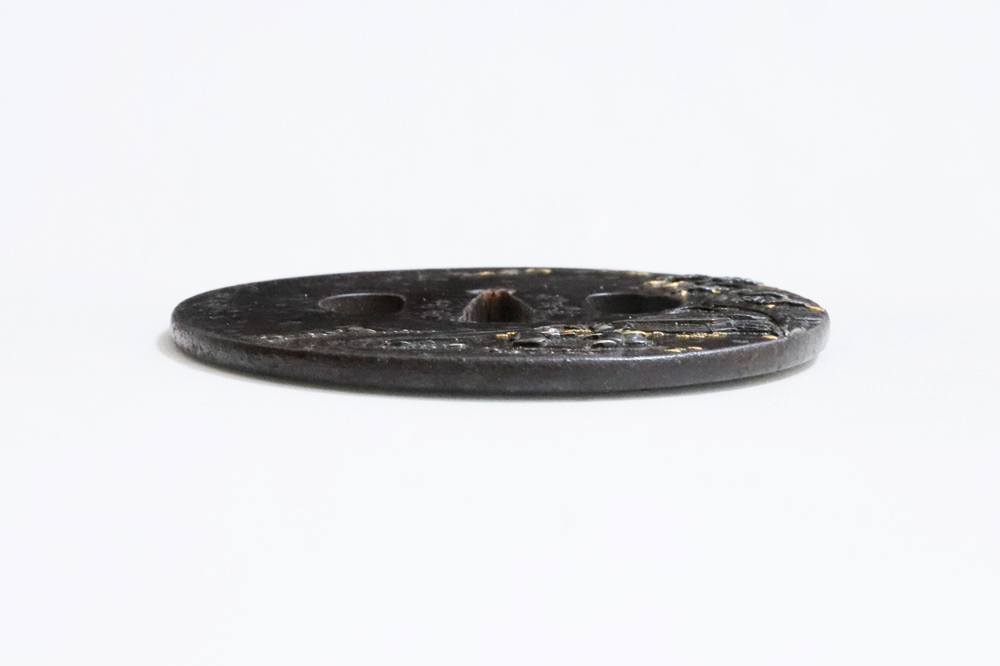
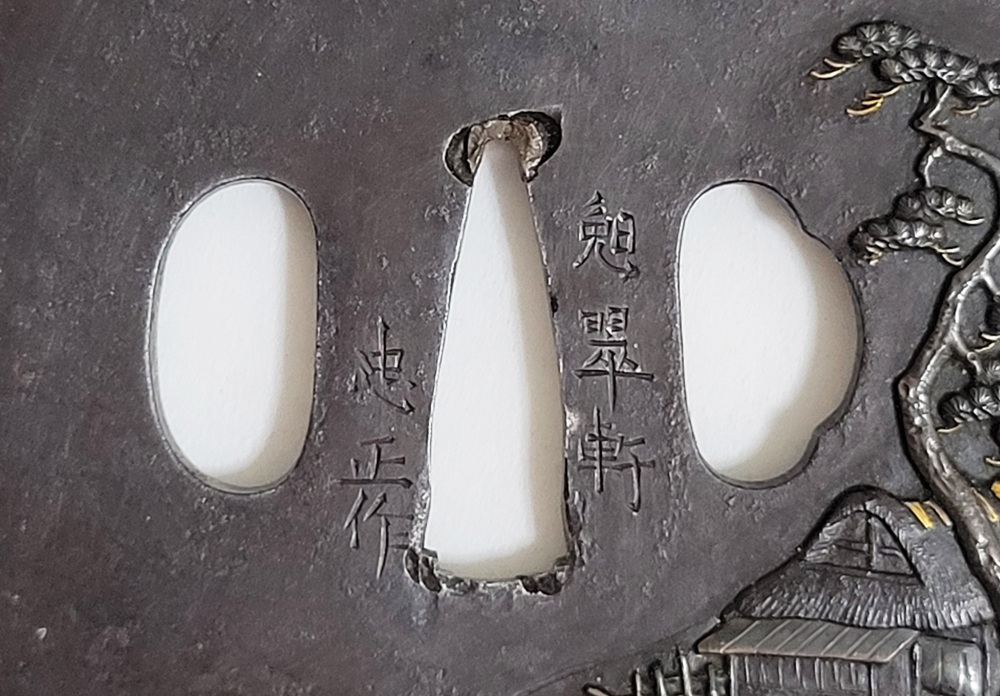
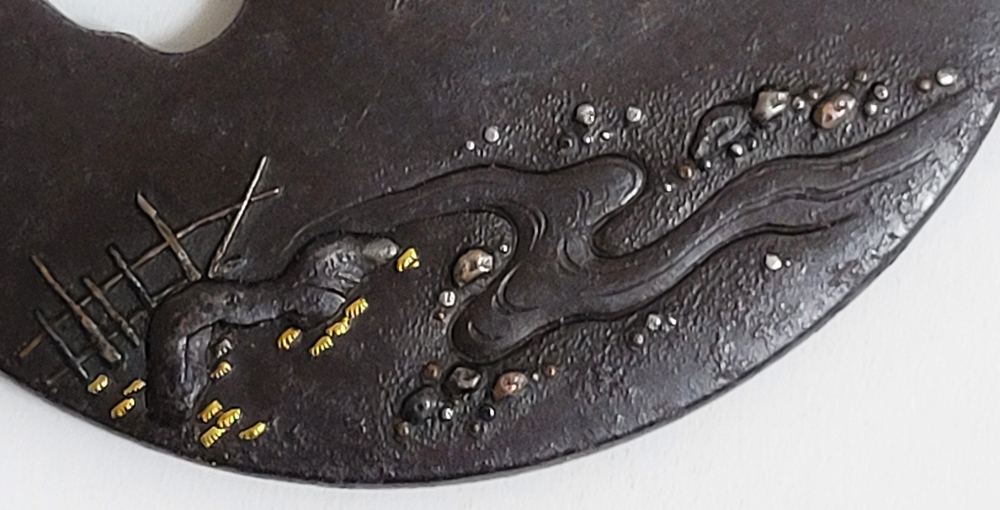
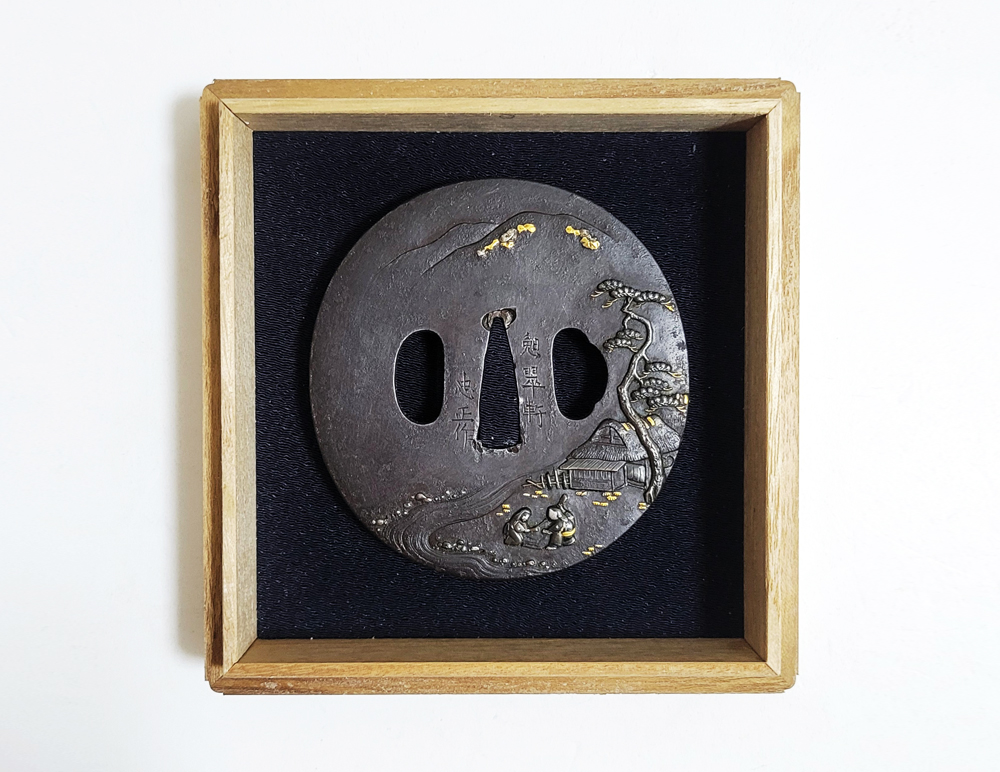
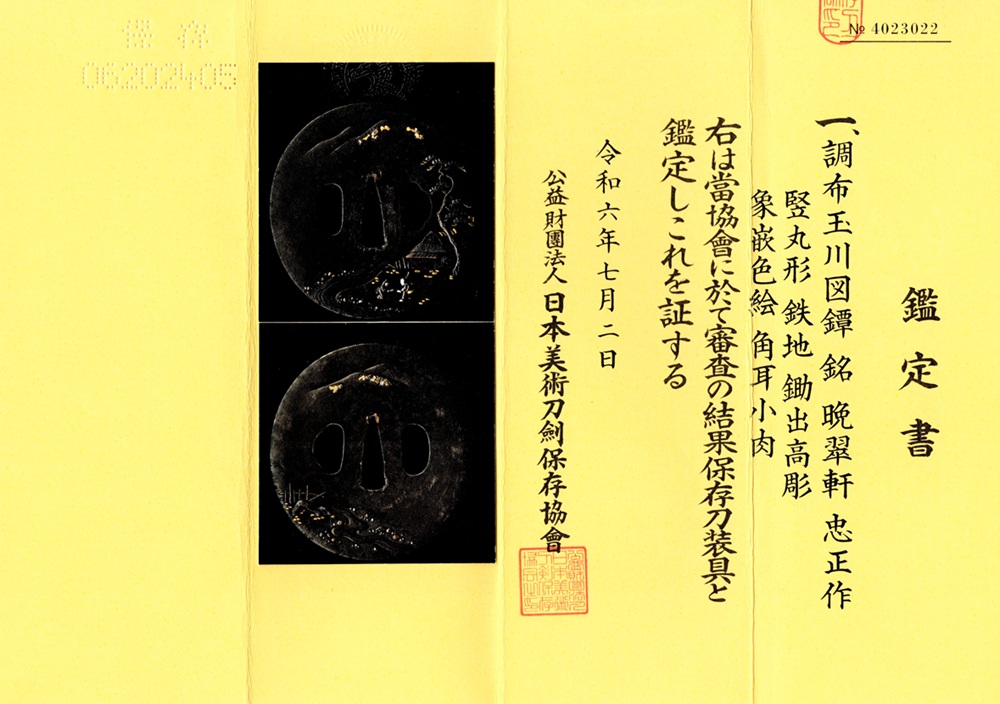
A tsuba by Bansuiken Tadamasa titled "Chofu Tamagawa-zu" in the Hozon Kanteisho. The Chofu Tamagawa-zu depicts a scene where figures beat and bleach cloth by the banks of the Tamagawa (a beautiful river, specifically the Tama River in Musashi Province), as Chofu was originally a place where cloth to be presented to the Imperial Court was produced. It originates from an Azuma-uta poem included in the Man'yoshu: "Tamagawa ni sarasu tezukuri no sarasara ni niso kono ko no kokoda kanashiki (A poem composed about the beauty of a woman bleaching cloth in the Tama River and the passionate love of a man who finds her so dear)." The maker, Bansuiken Tadamasa, was an Aizu kinko from Mutsu Province in the mid-Edo period. Passed the 2024 Hozon Tosogu Shinsa.
NihontoWatchOffered by Touken Matsumoto
This piece has sold
6 on the market
Get an email when new Aizu School work hits the market.

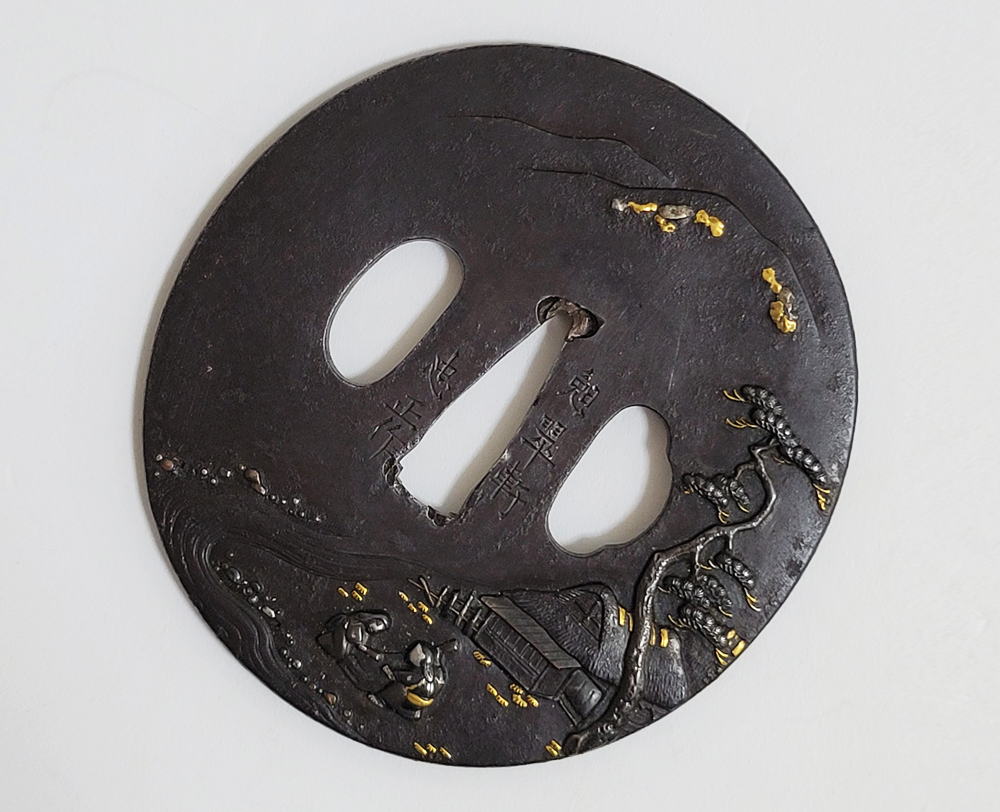
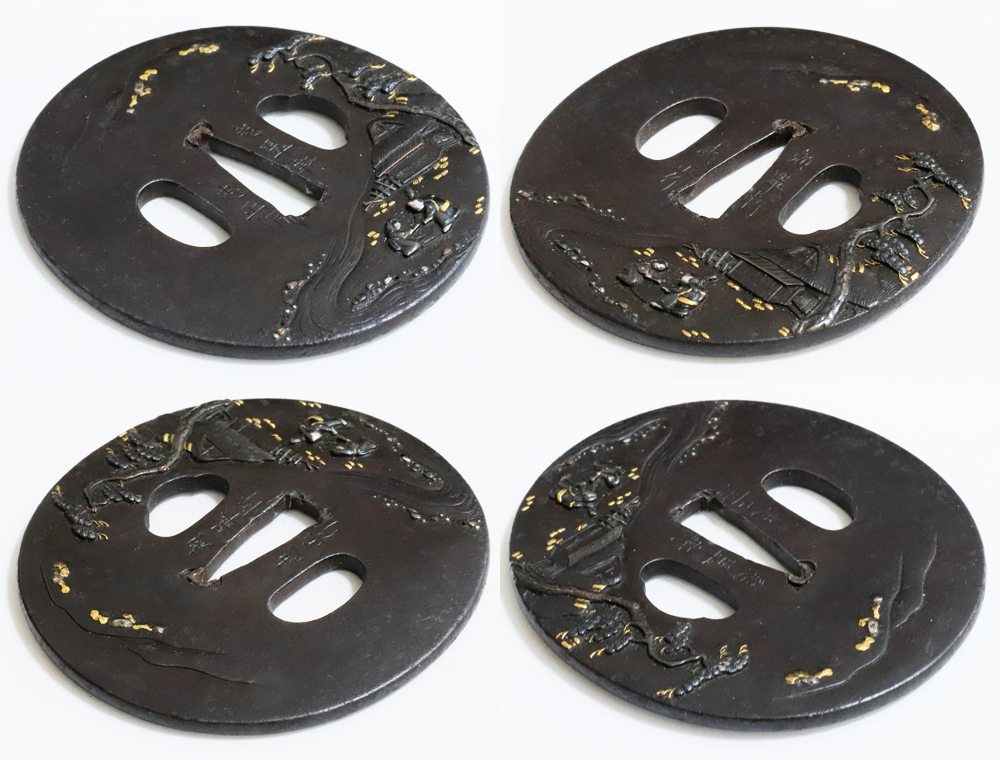
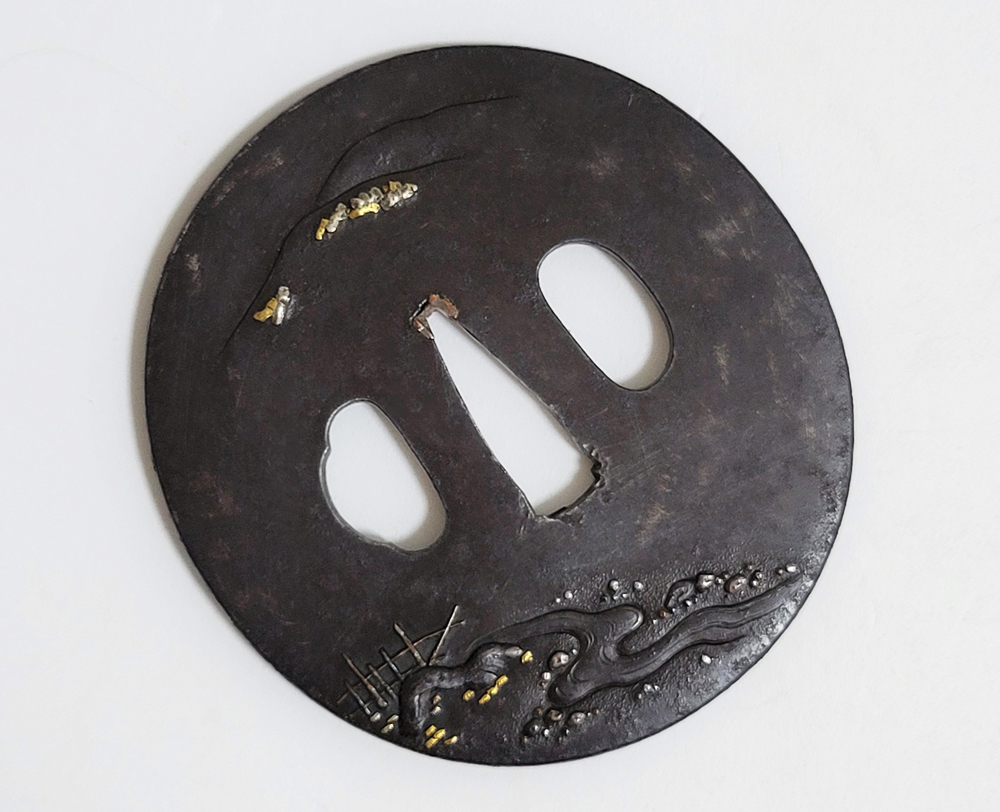
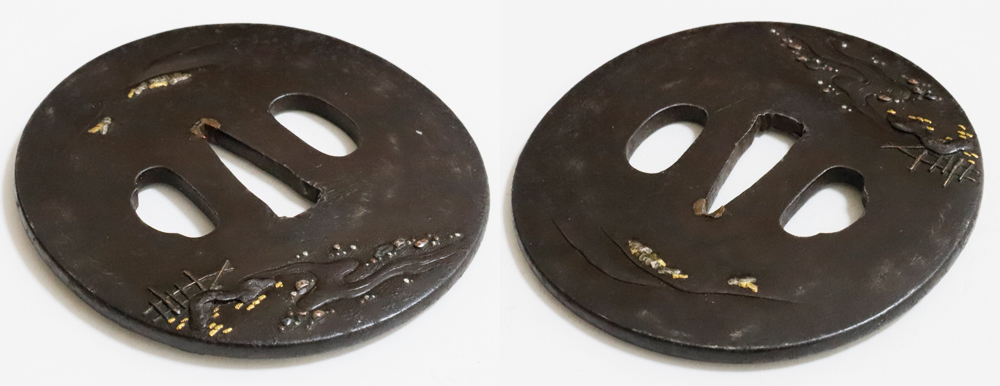
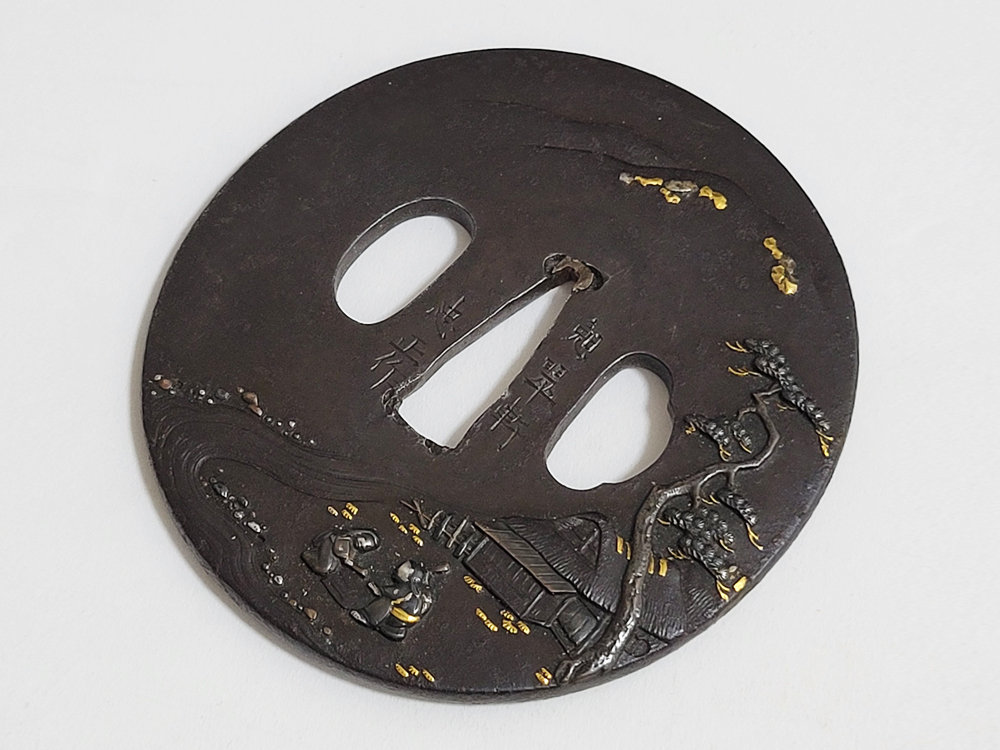
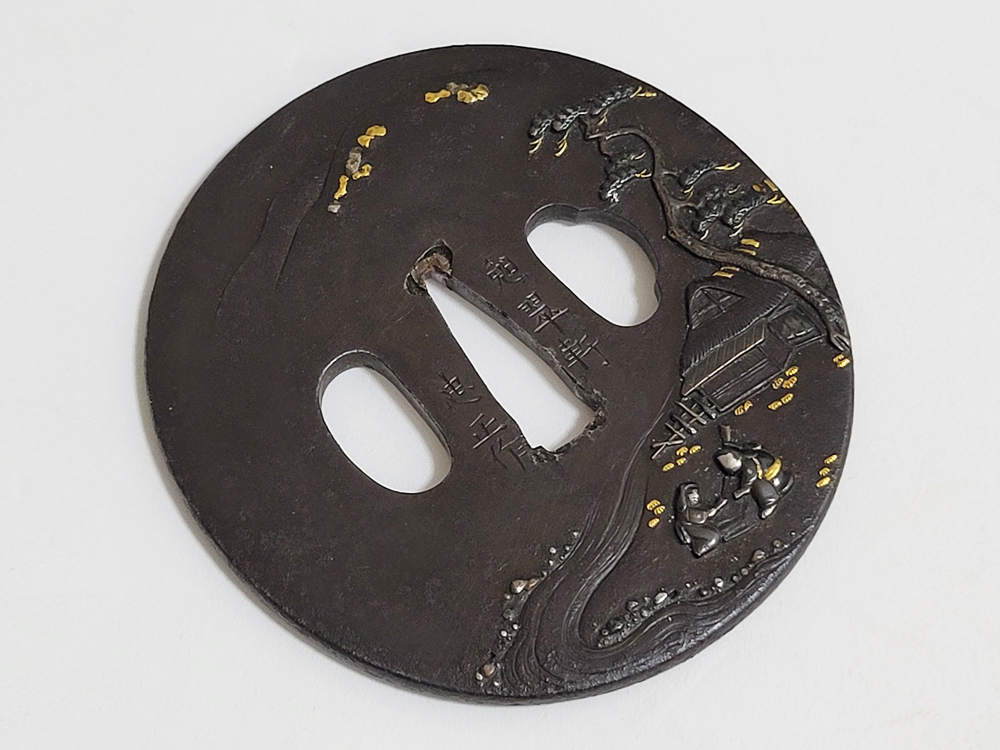
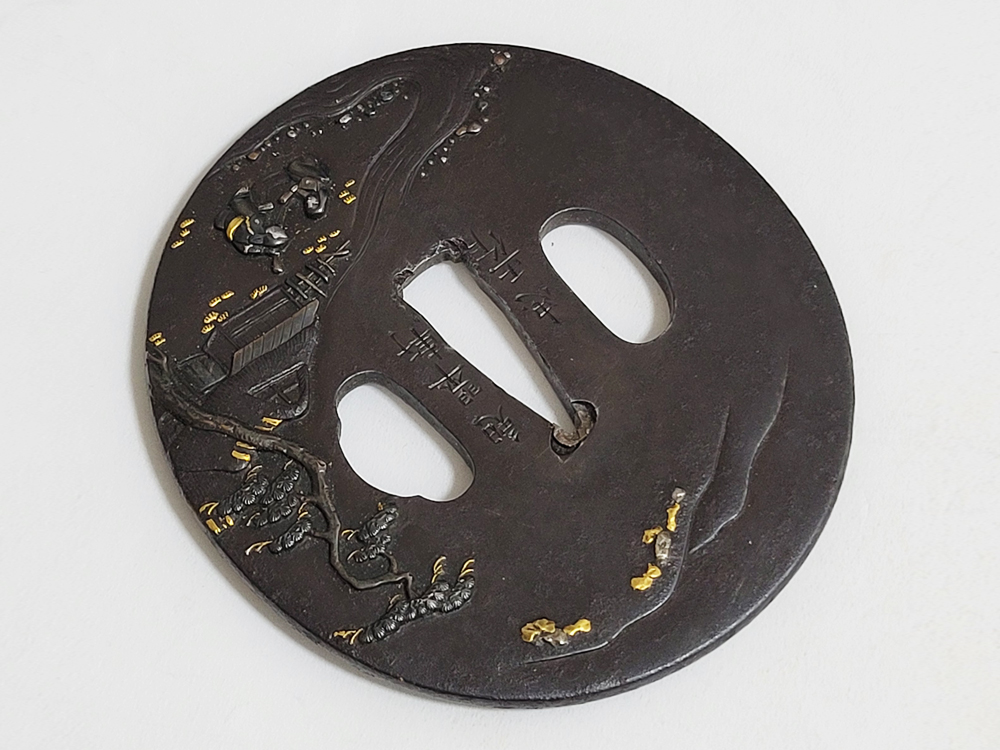
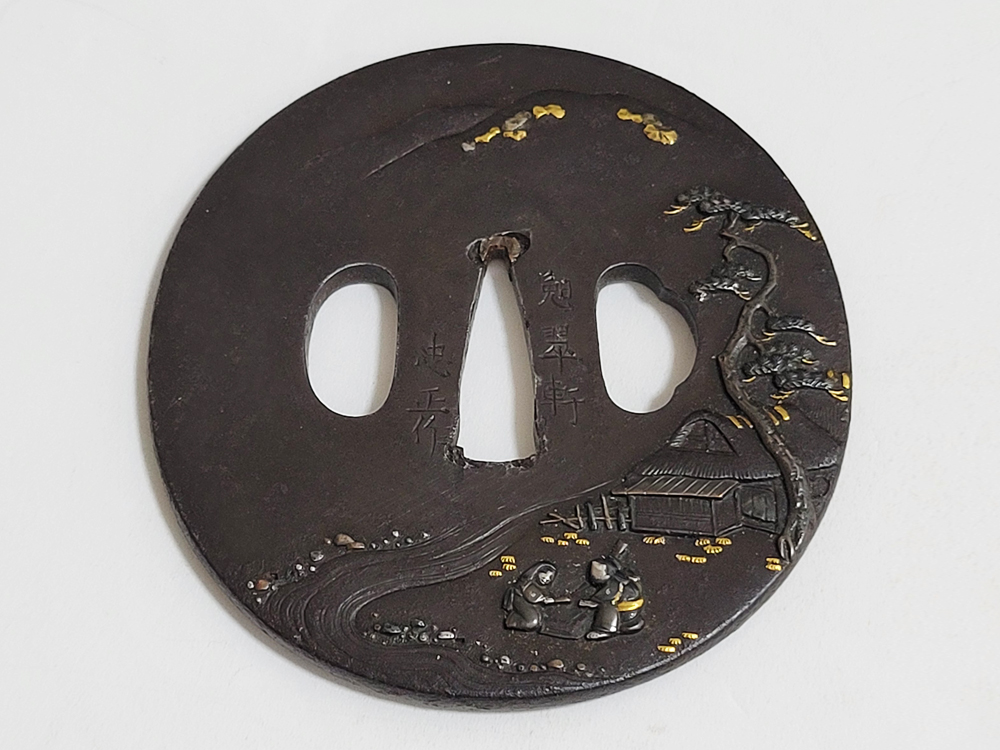
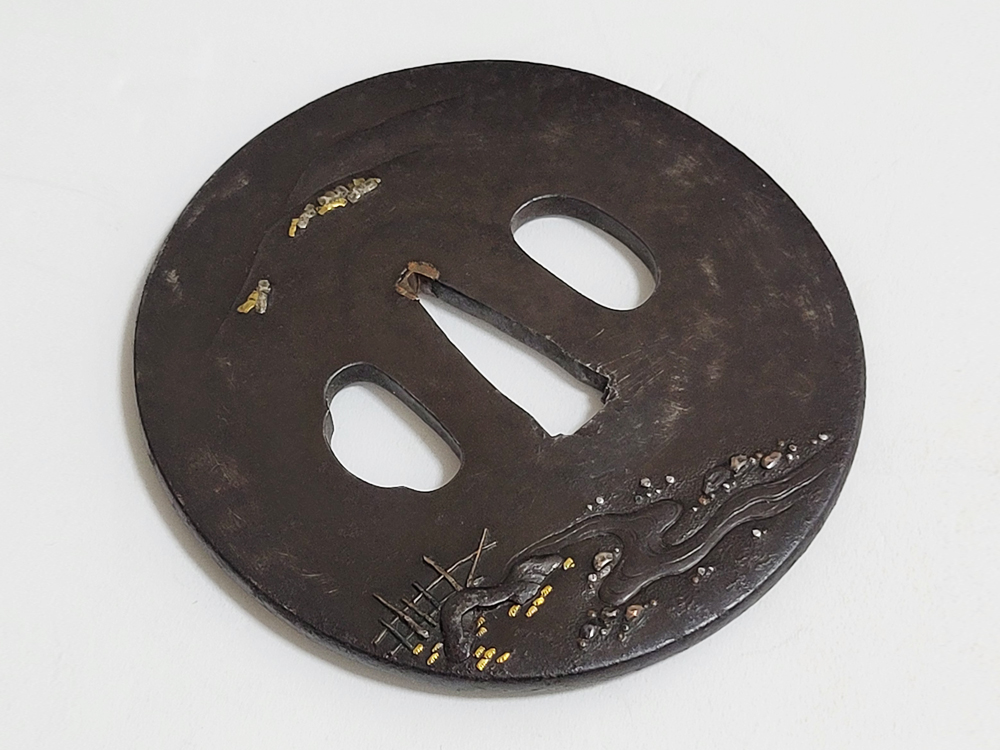
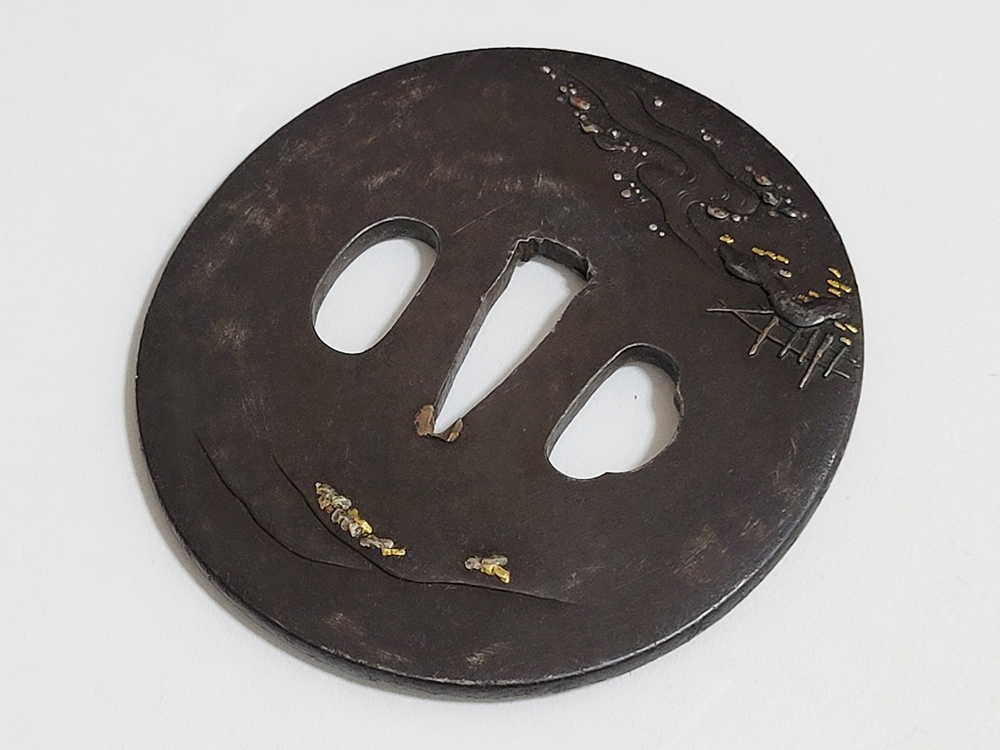
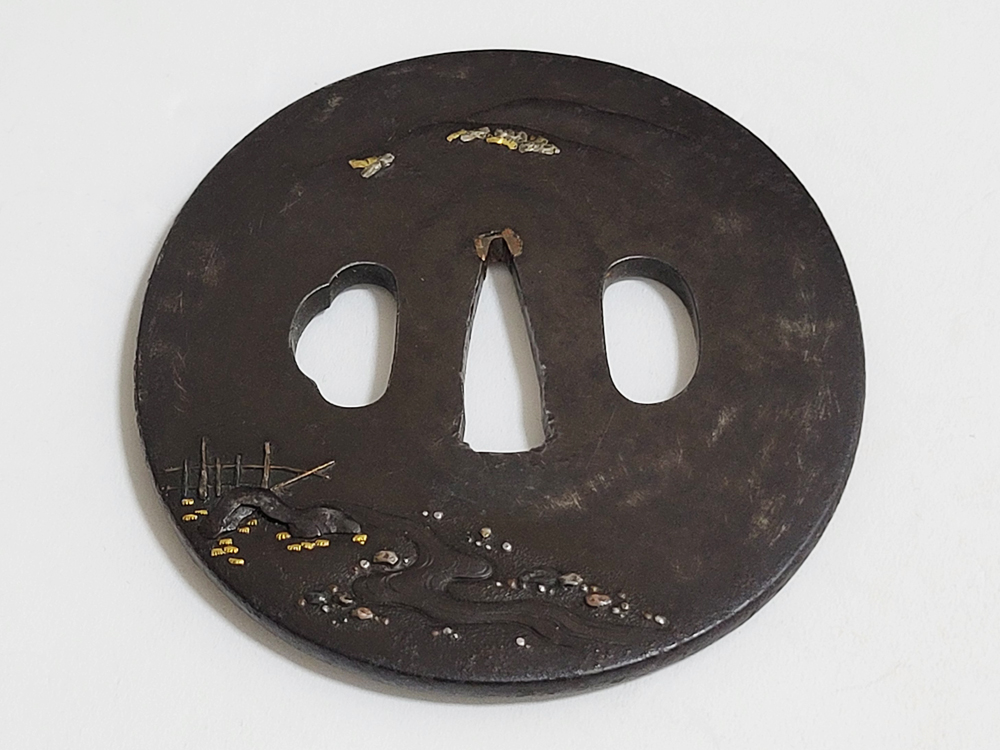
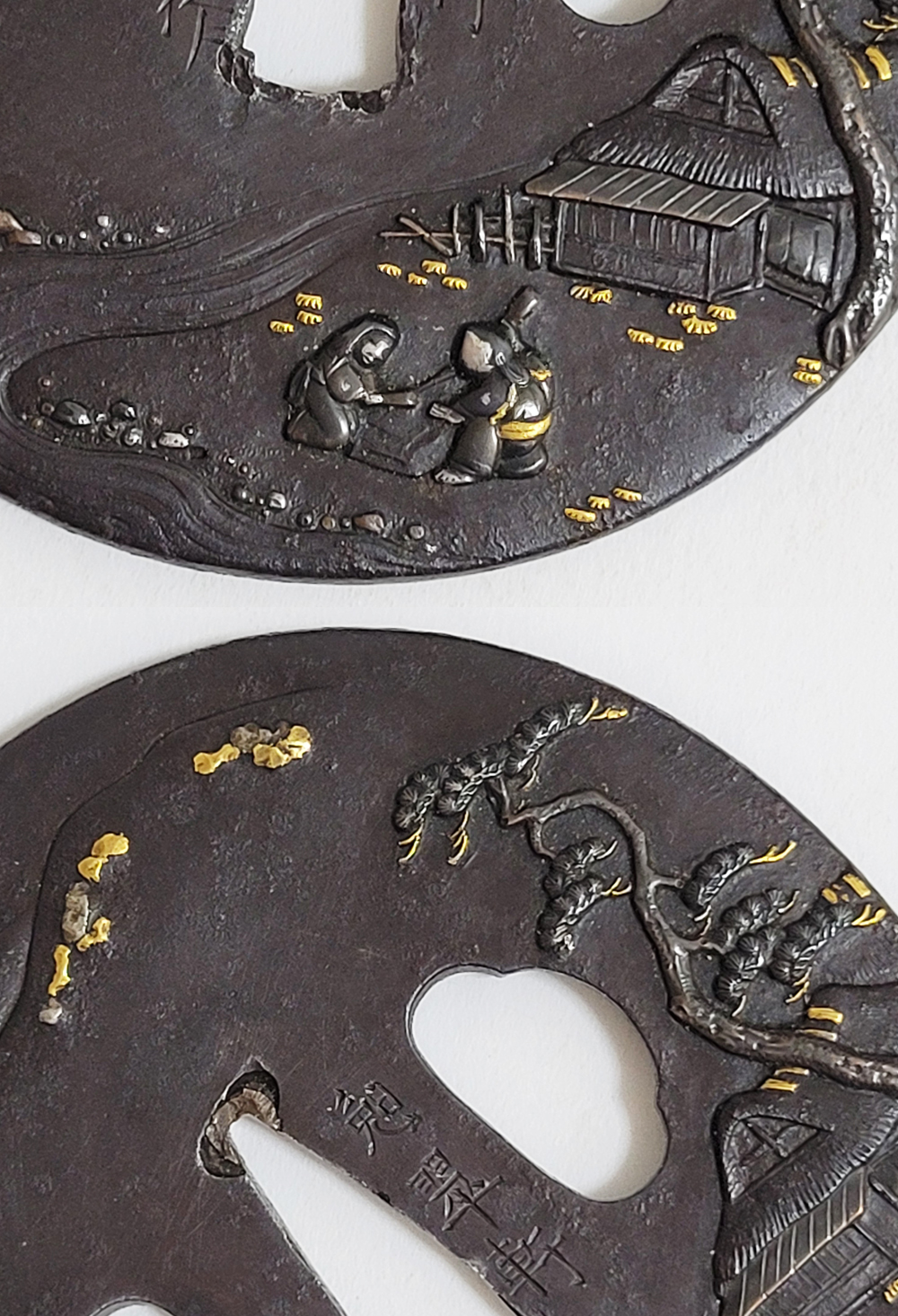
Machine translation from the shop's Japanese · may contain errors ·
Iron-tsuba · Mutsu
6 pieces on the market now
| Smith | Era | Designated |
|---|---|---|
| Akiyoshi明義 | 1670 | 1 |
Certifies a genuine fitting worth preserving: a correct signature, or, if unsigned, an identifiable era and school, with recognized artistic and craft value.
The NBTHK (Nihon Bijutsu Tōken Hozon Kyōkai, the Society for the Preservation of Japanese Art Swords) is a public-interest incorporated foundation founded in 1948 and supervised by Japan’s Agency for Cultural Affairs (Bunkachō); it is based at the Japanese Sword Museum in Tokyo. Its expert panels physically examine each submitted work (shinsa) and issue a certificate (kanteishō) ranking it by artistic and historical merit. NBTHK papers are the most widely recognized standard of authentication for Japanese swords and fittings.
NBTHK official siteReturns within 7 days of the item's arrival. Returns are not possible if (1) the item has been altered, or (2) for overseas transactions.