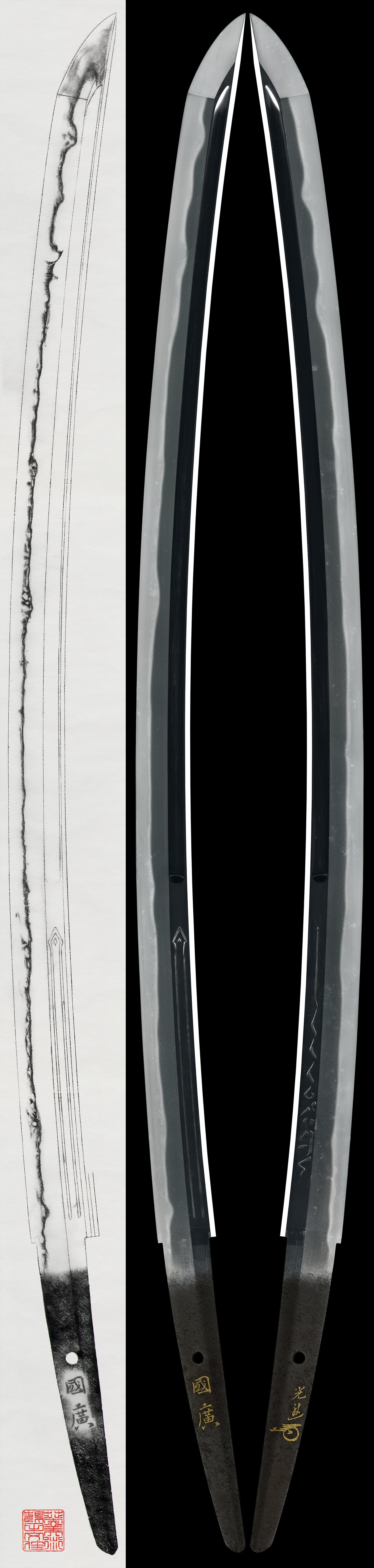
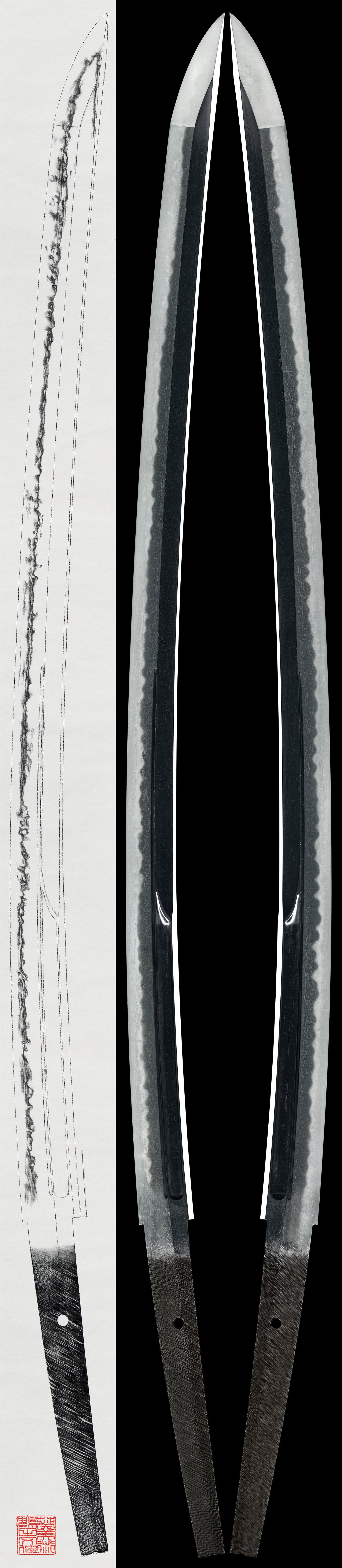
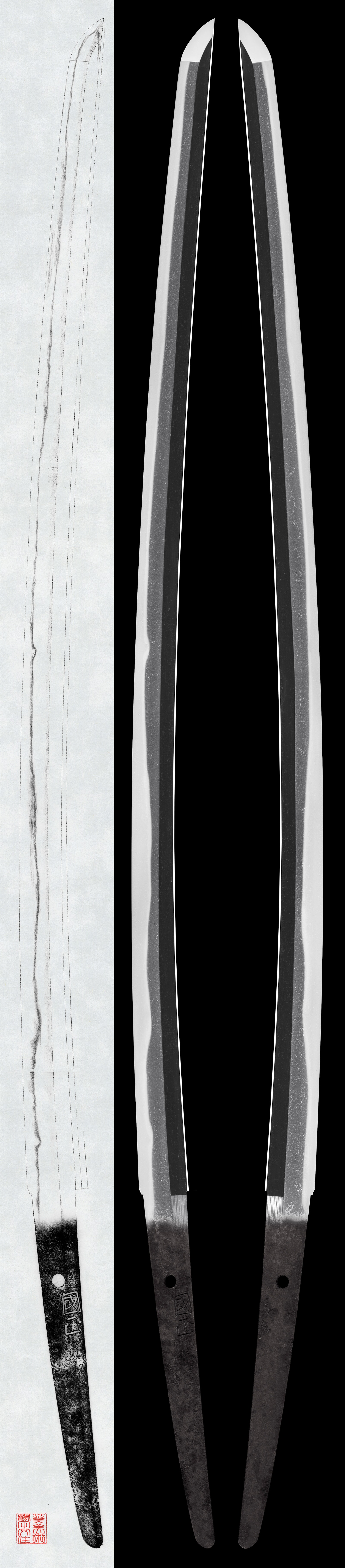
徳川の泰平のもと、大小は法度の定める身分の制服となり、需要は城下町、とりわけ江戸に集まった。工芸は二つに分かれる。目利きのための華やかな鑑賞の作と、截断の結果を金象嵌に刻む実証の刀である。
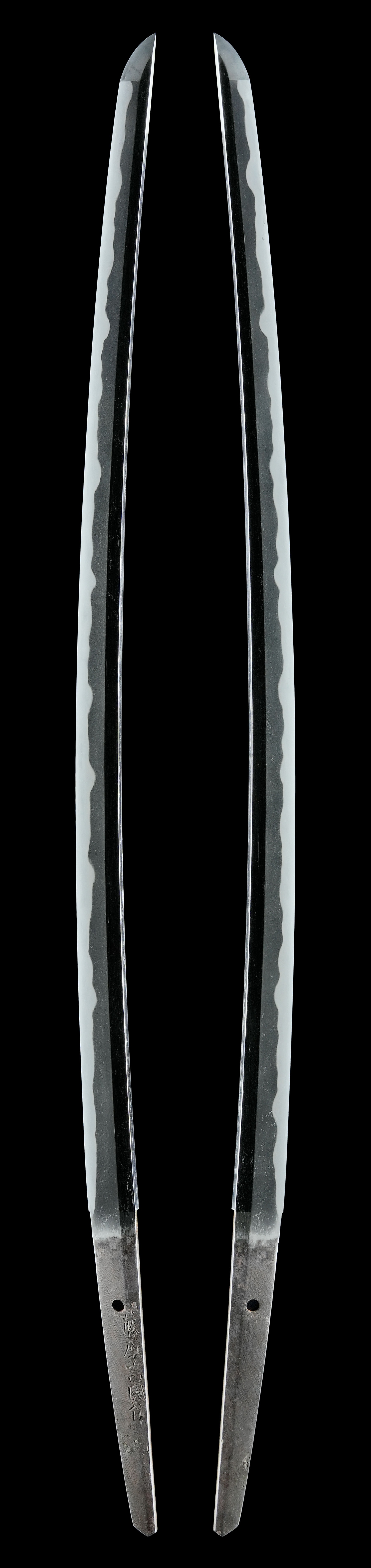
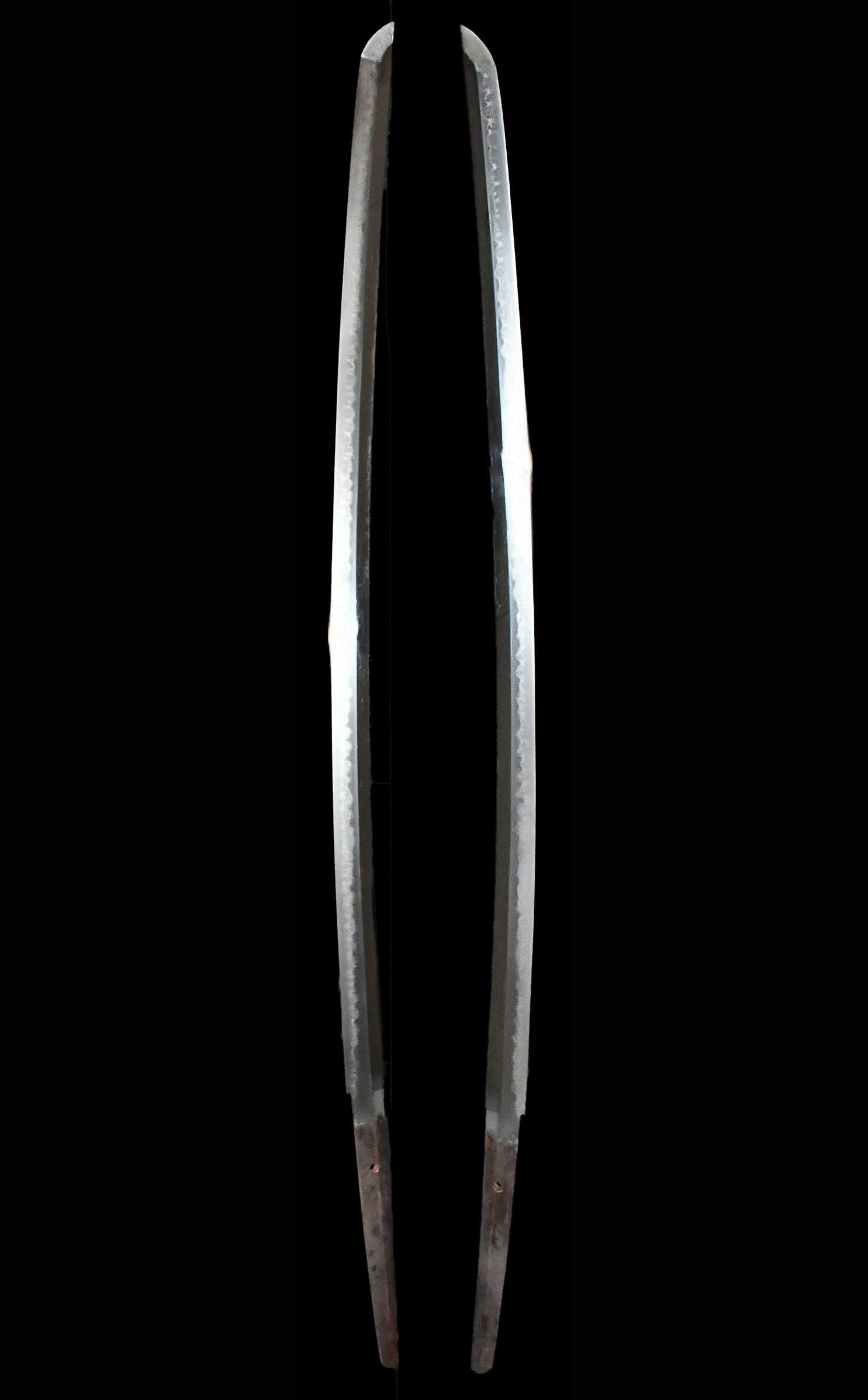
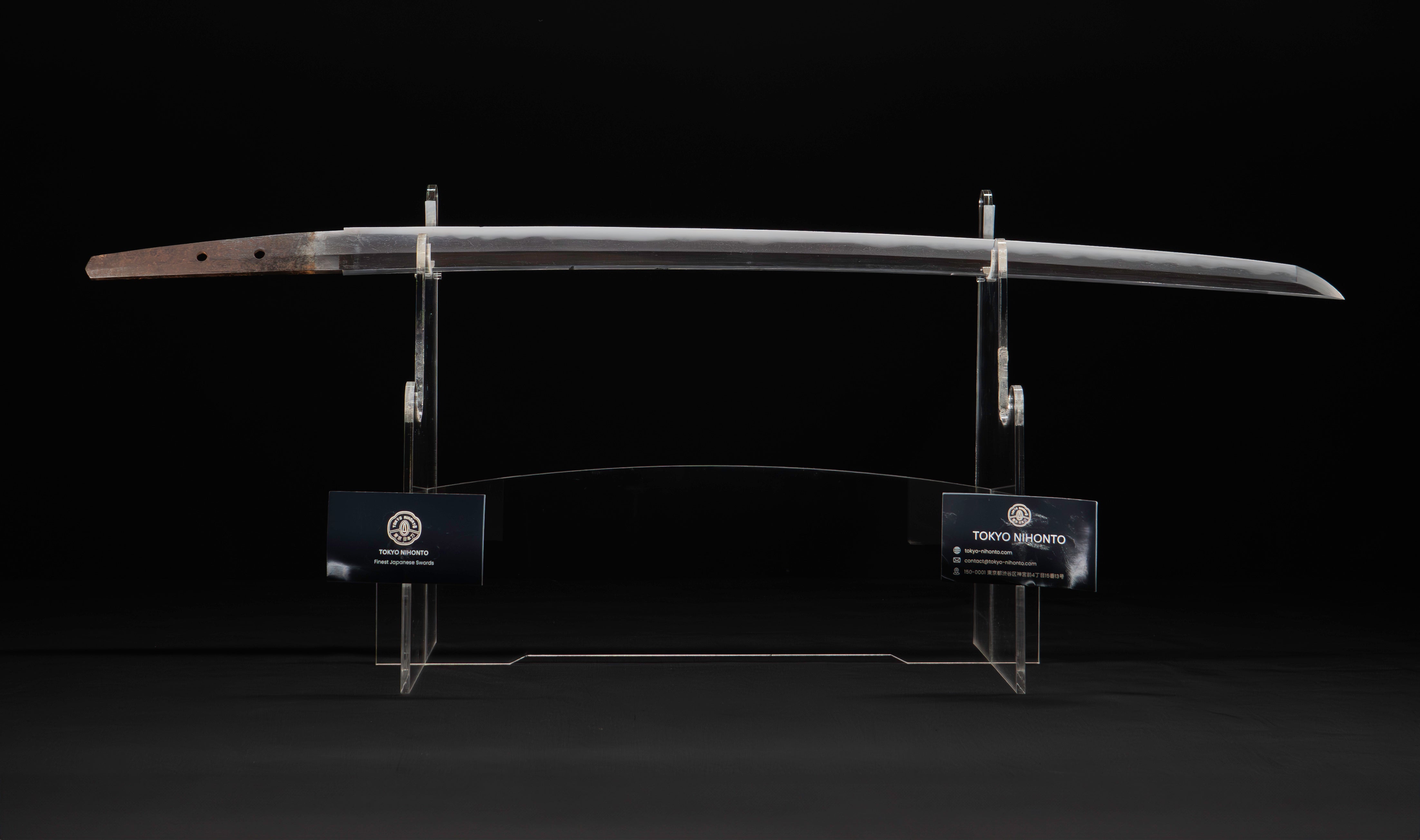
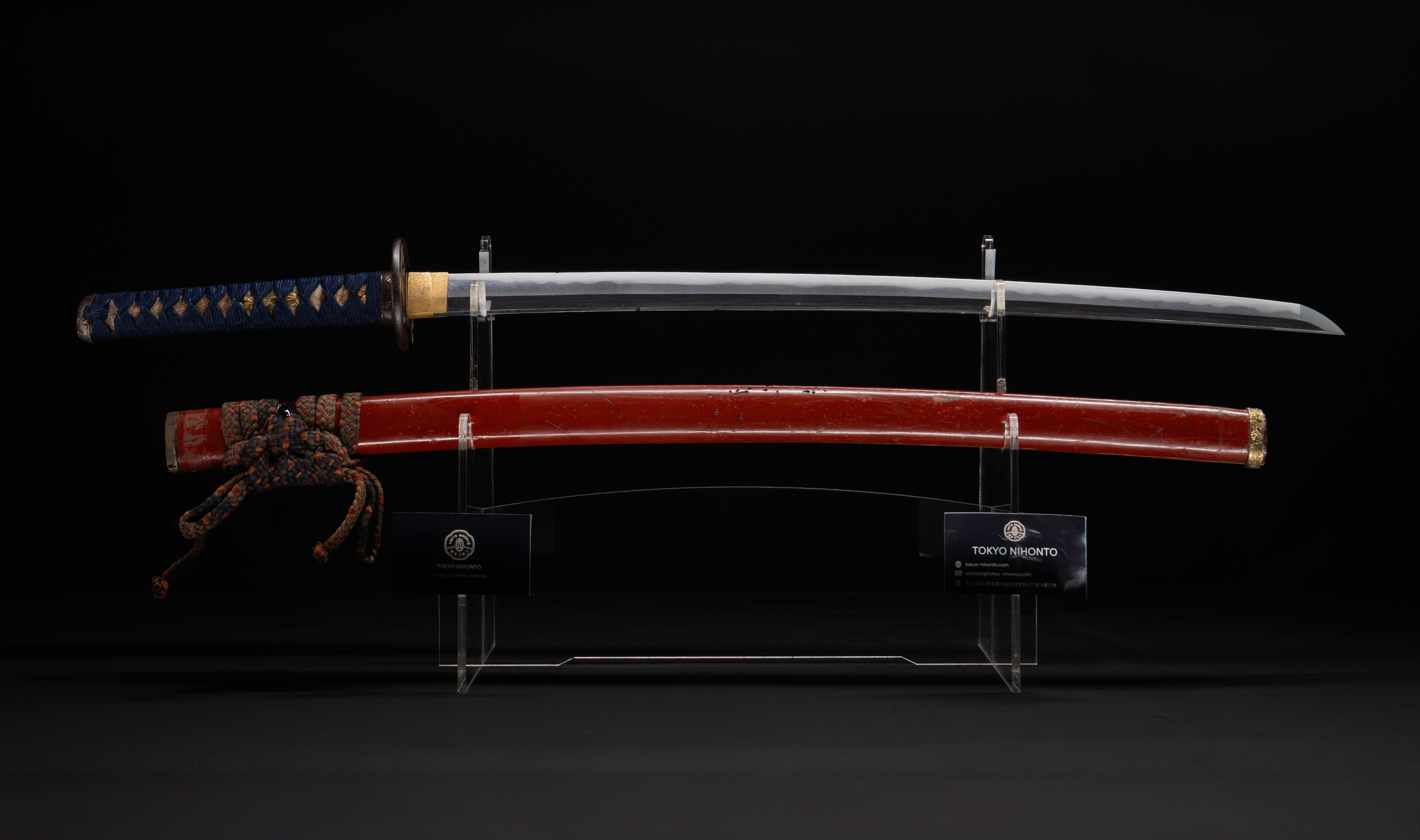
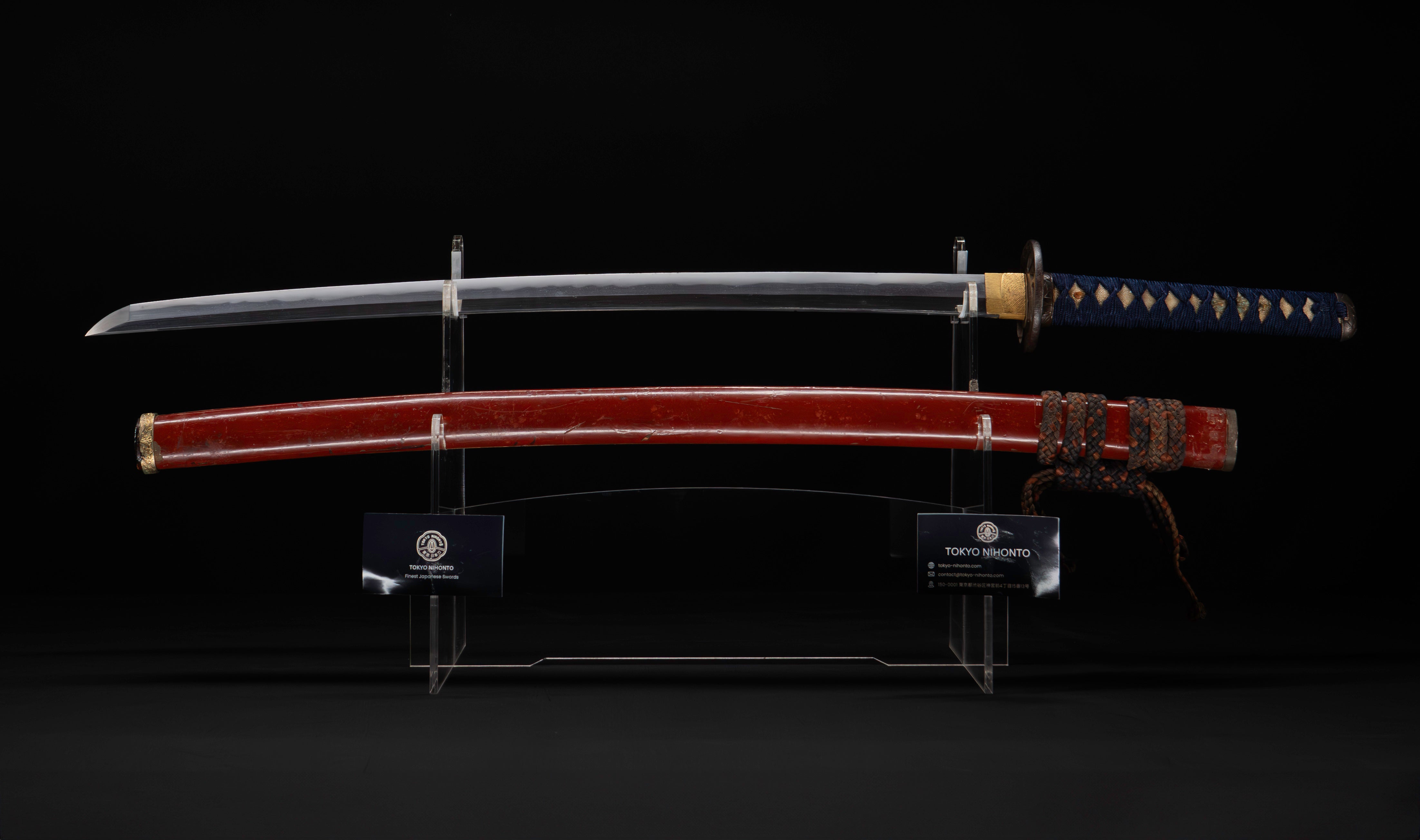
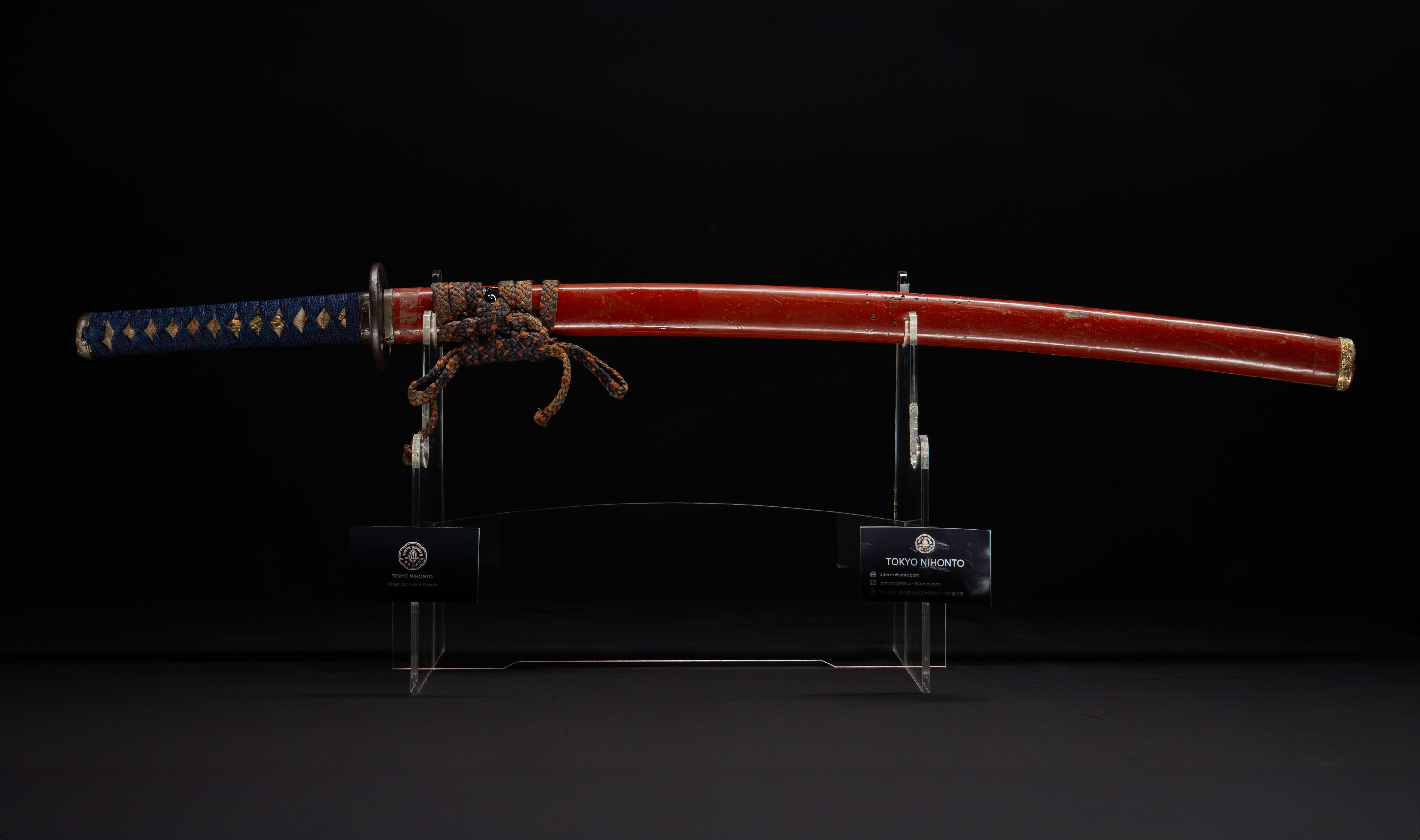
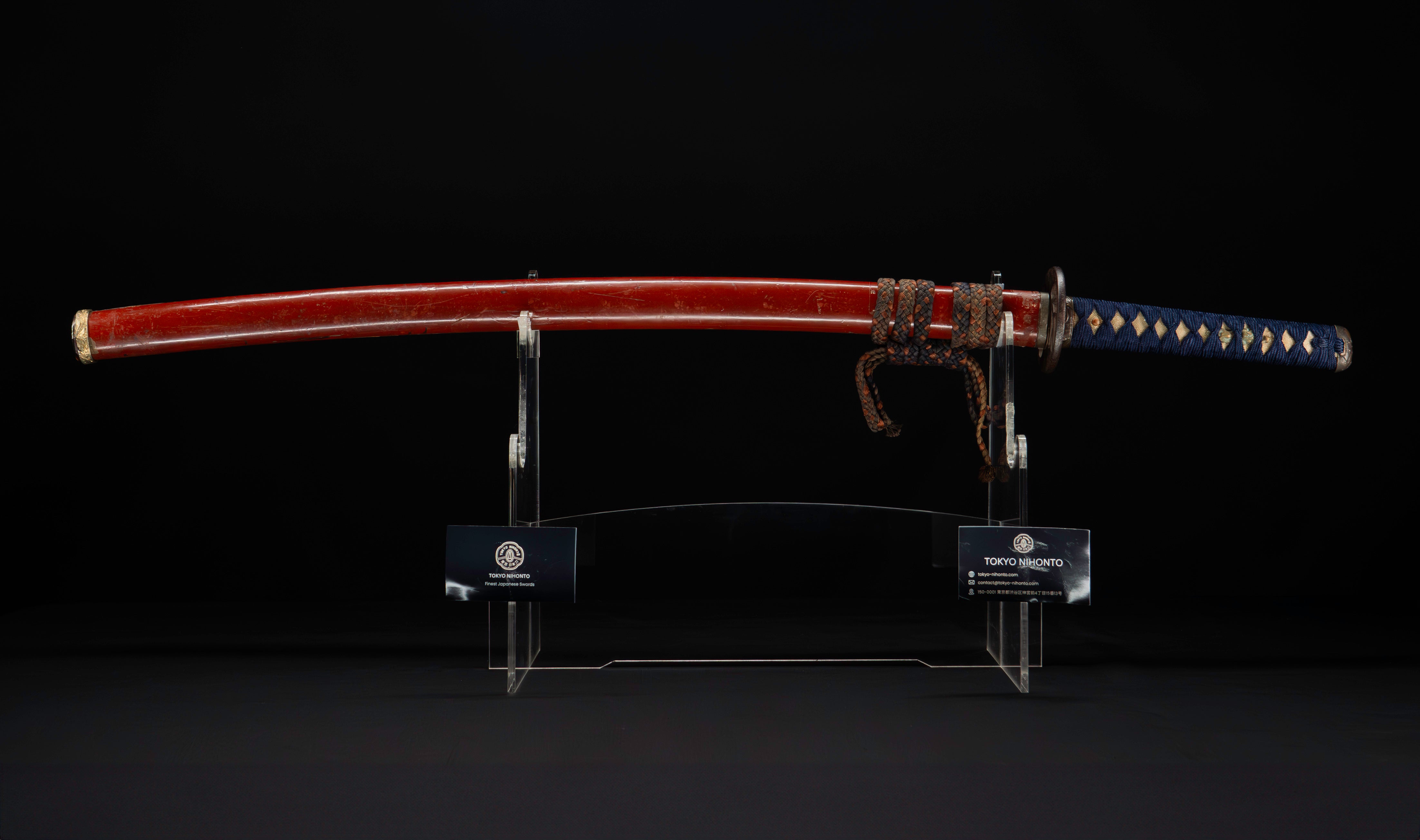
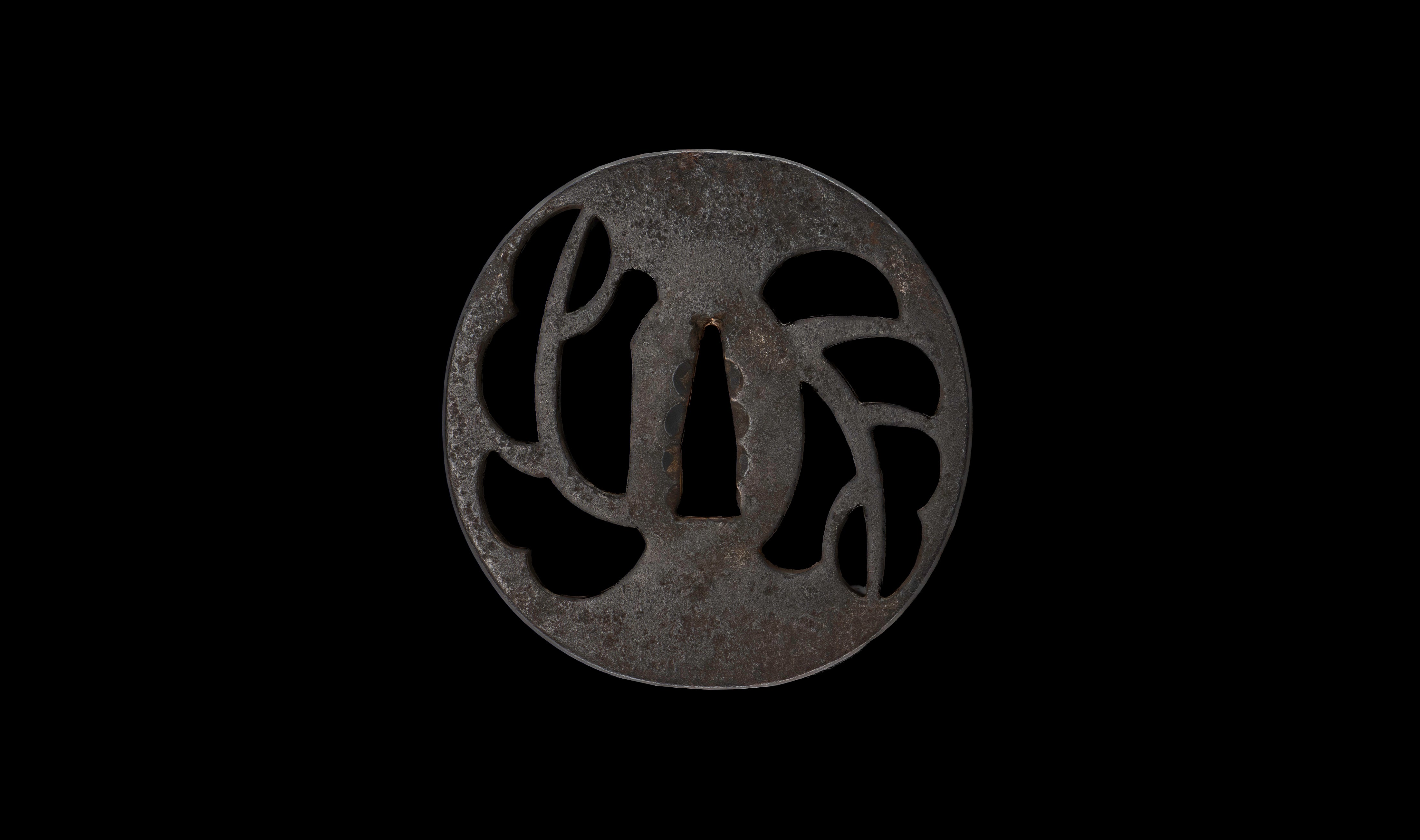
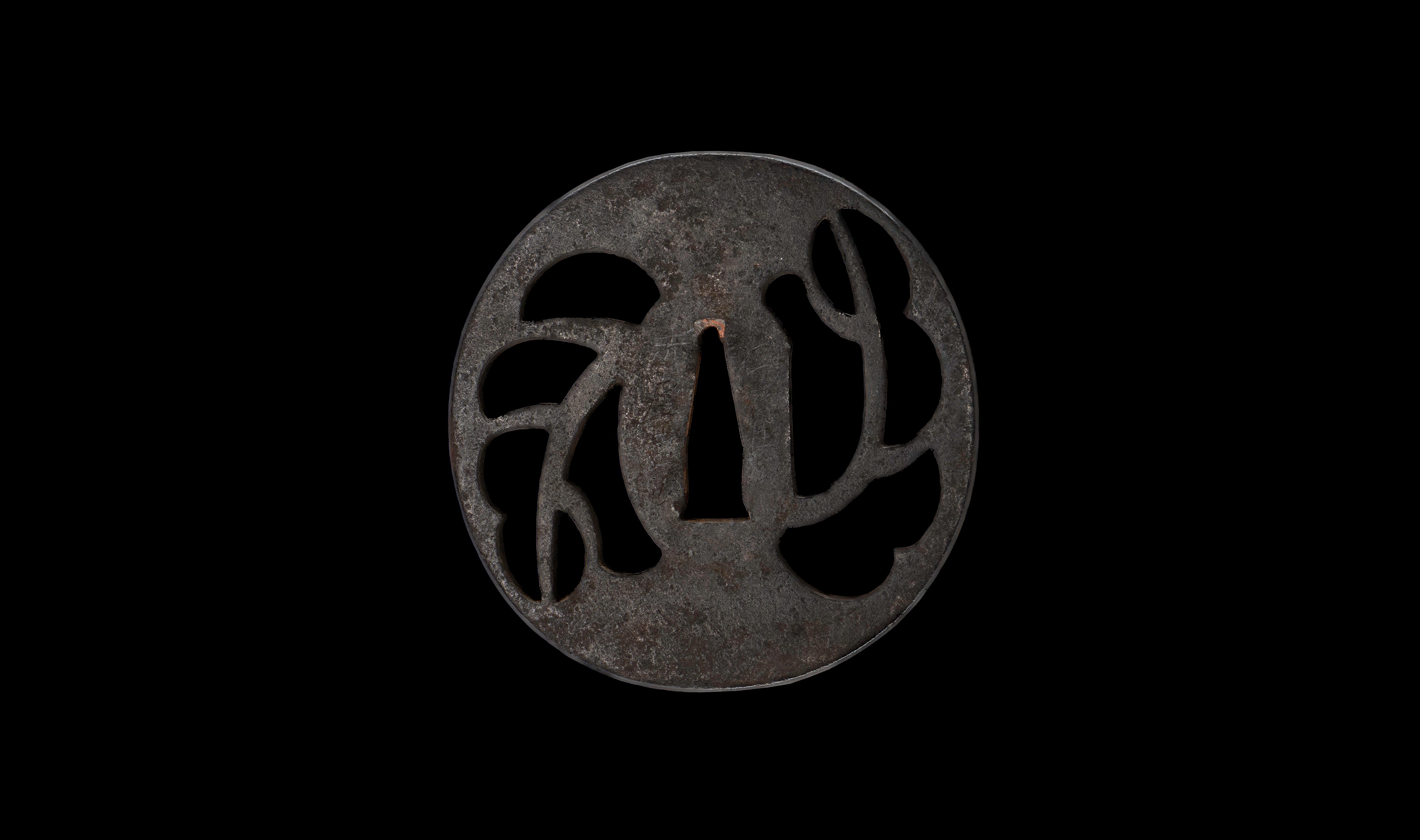
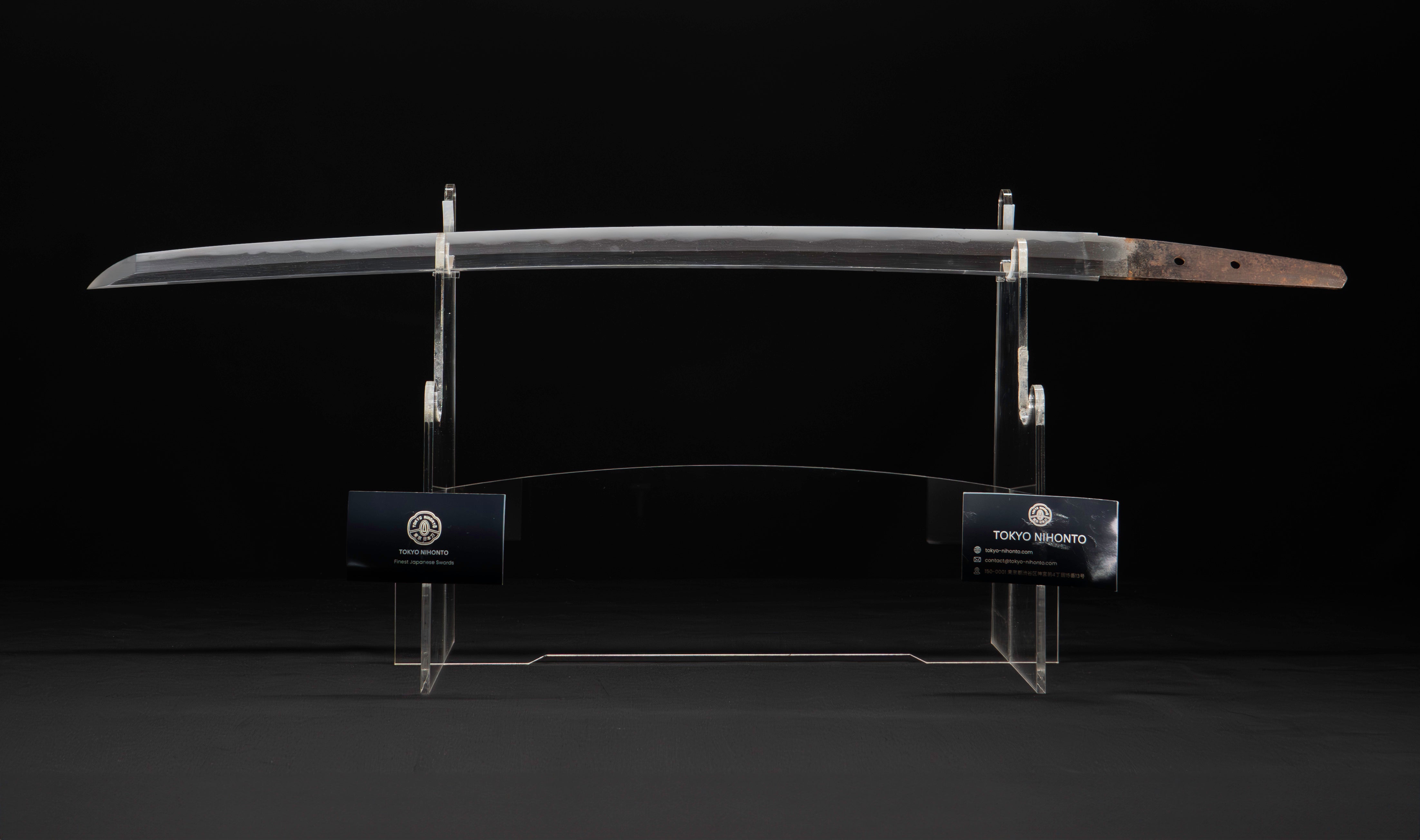
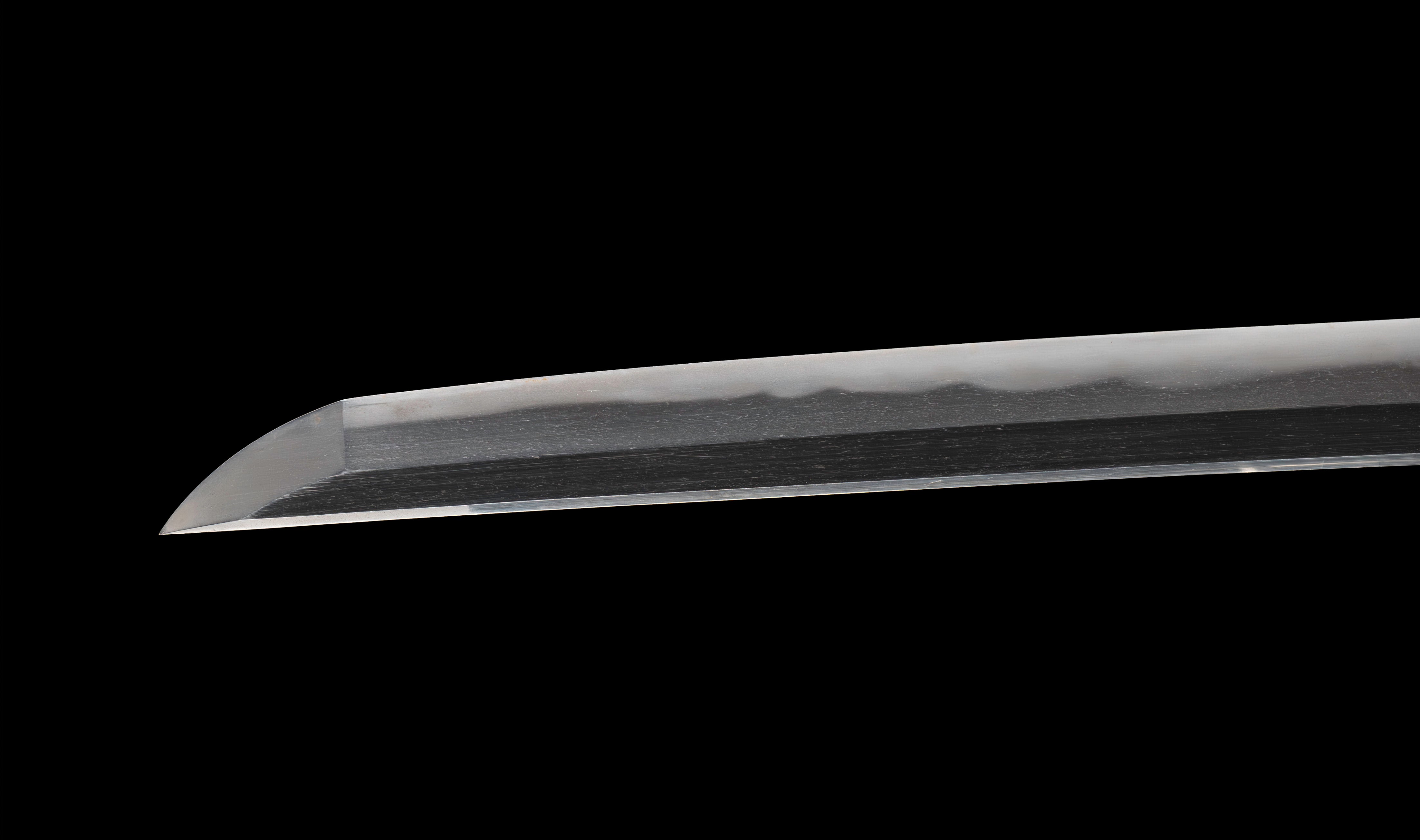
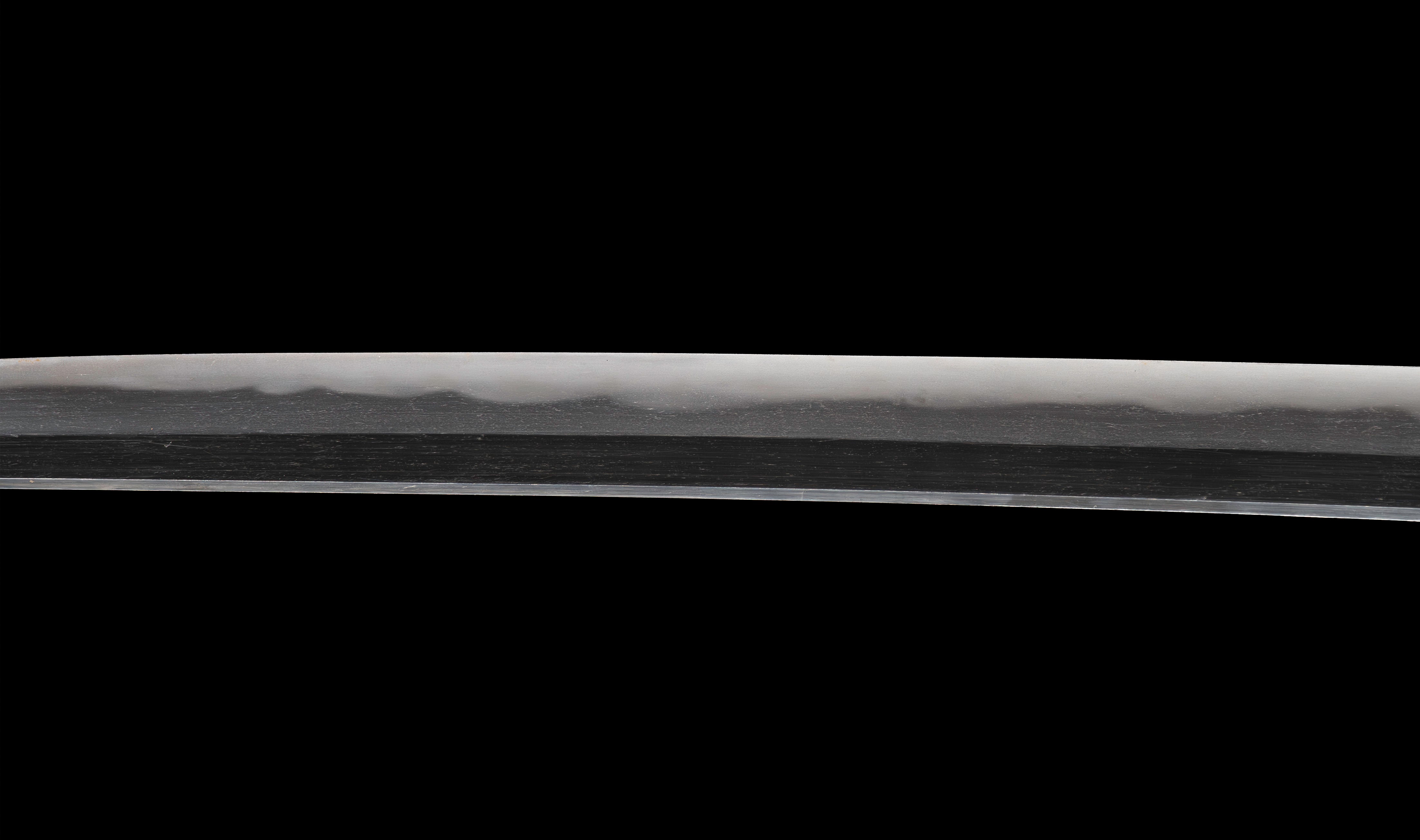
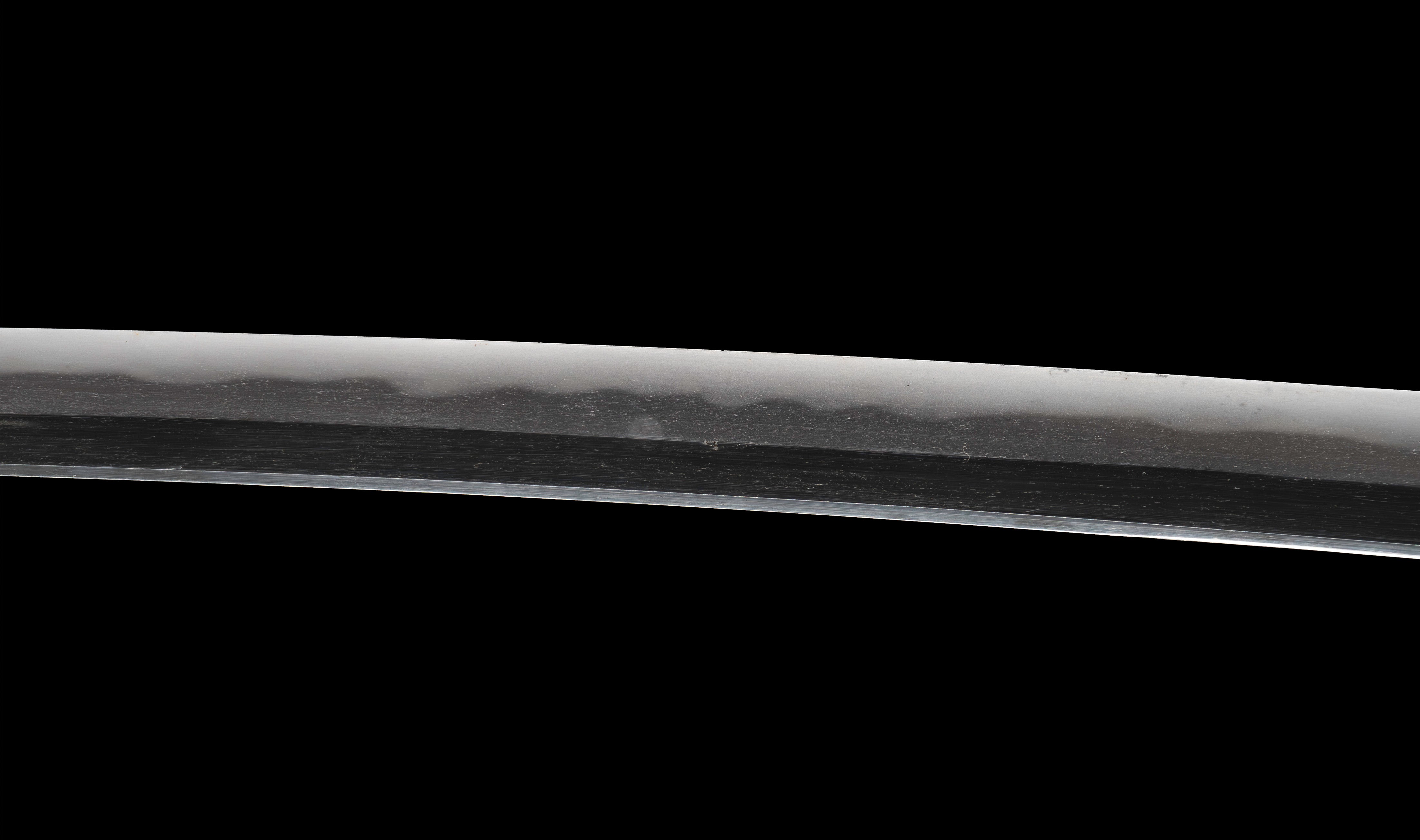
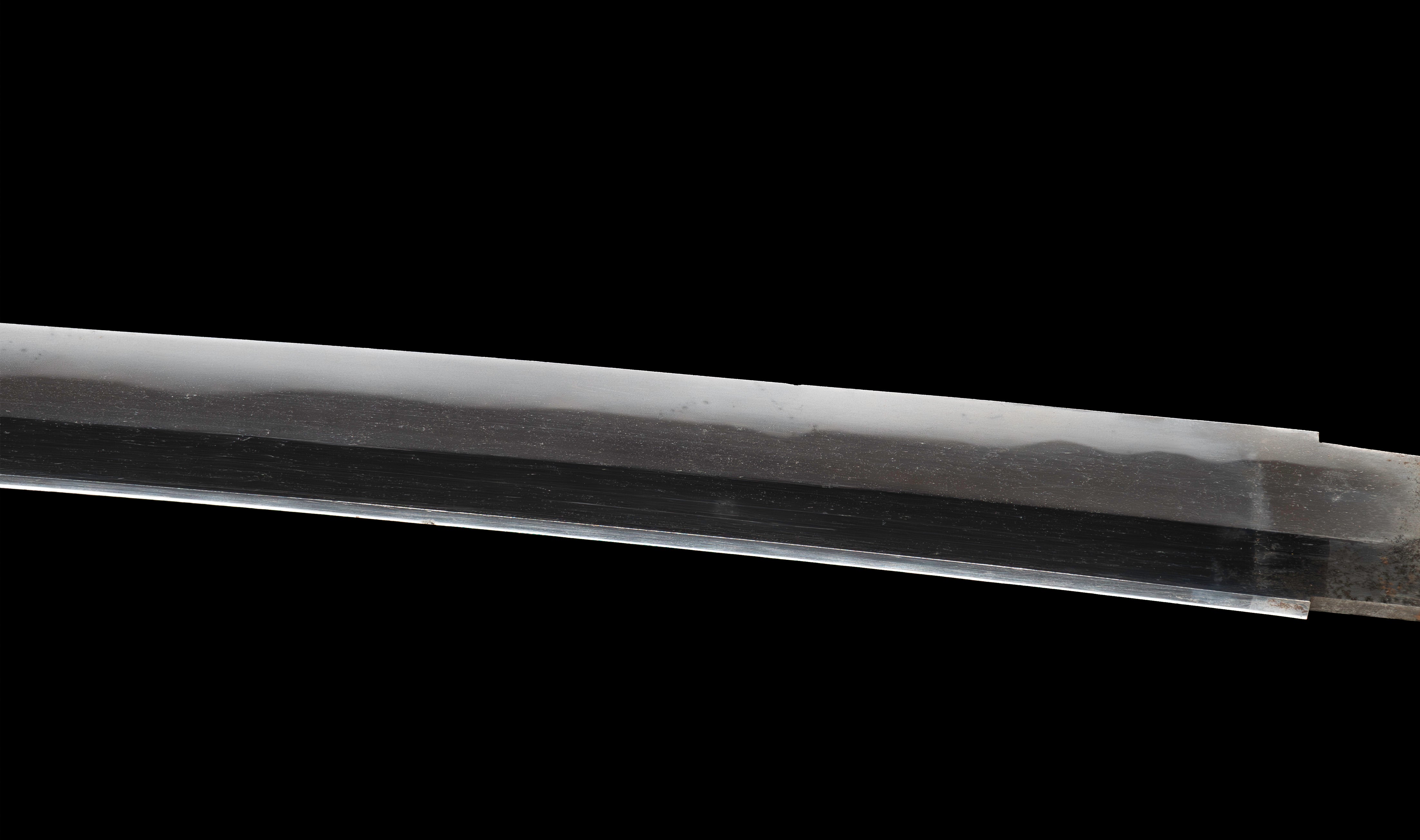
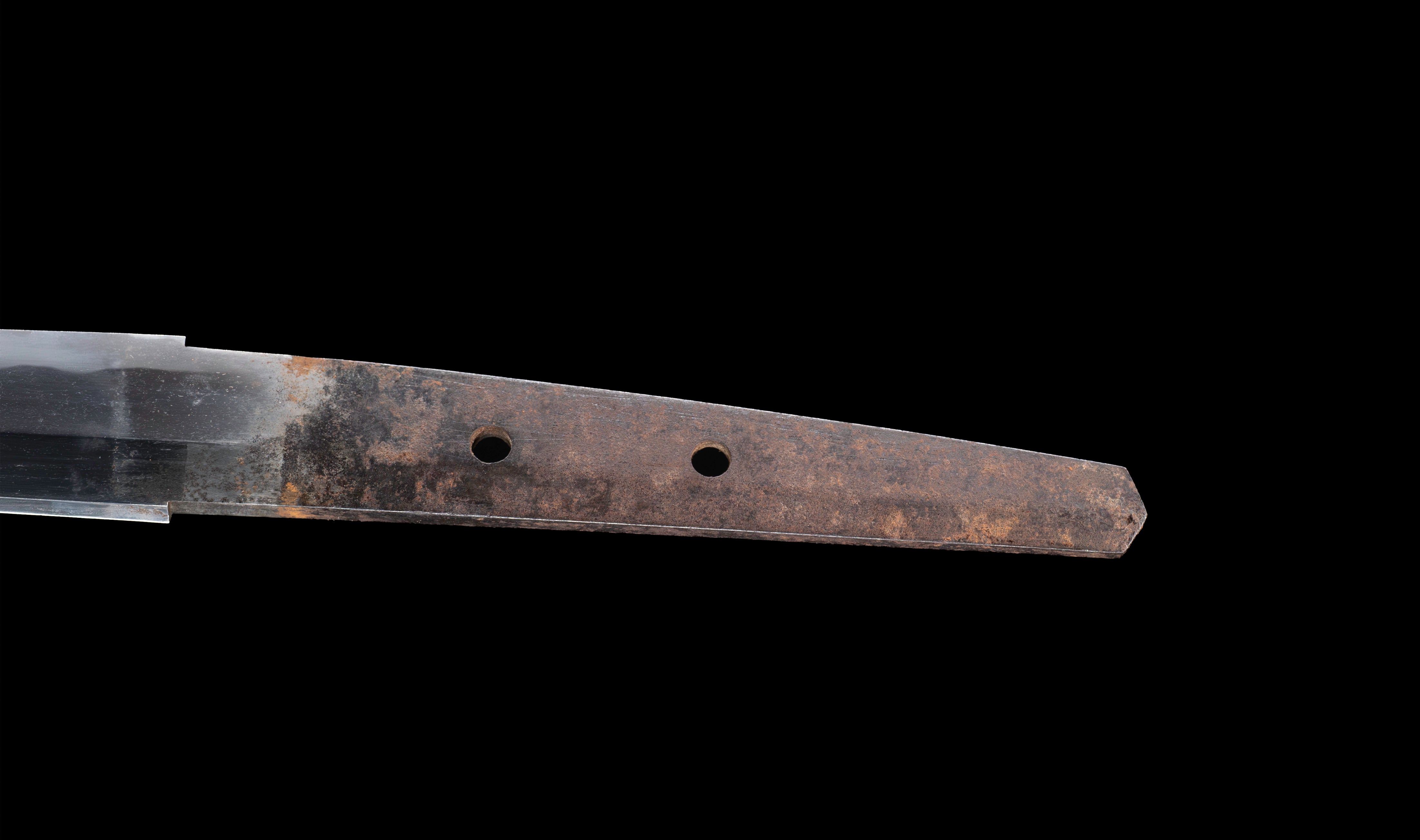
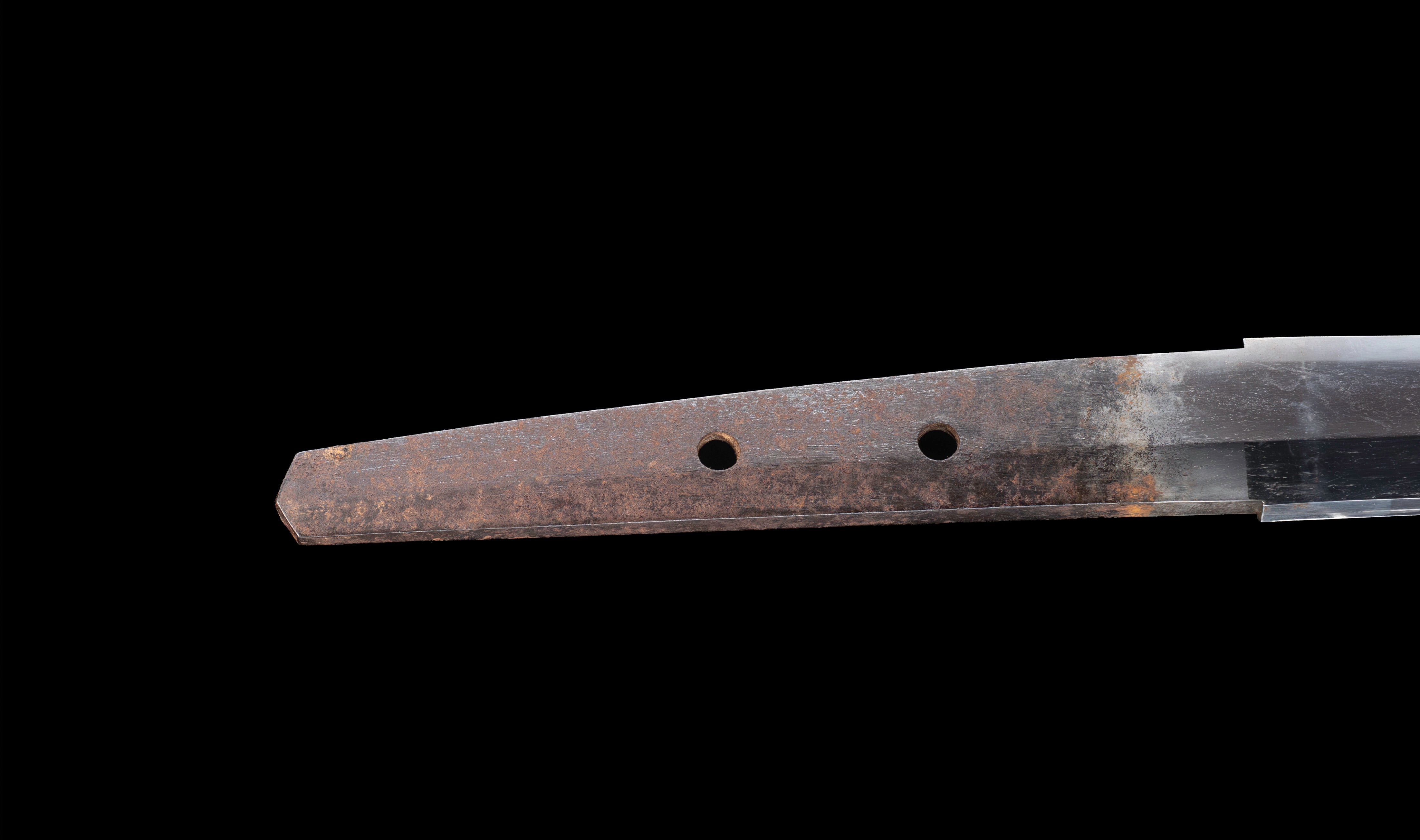
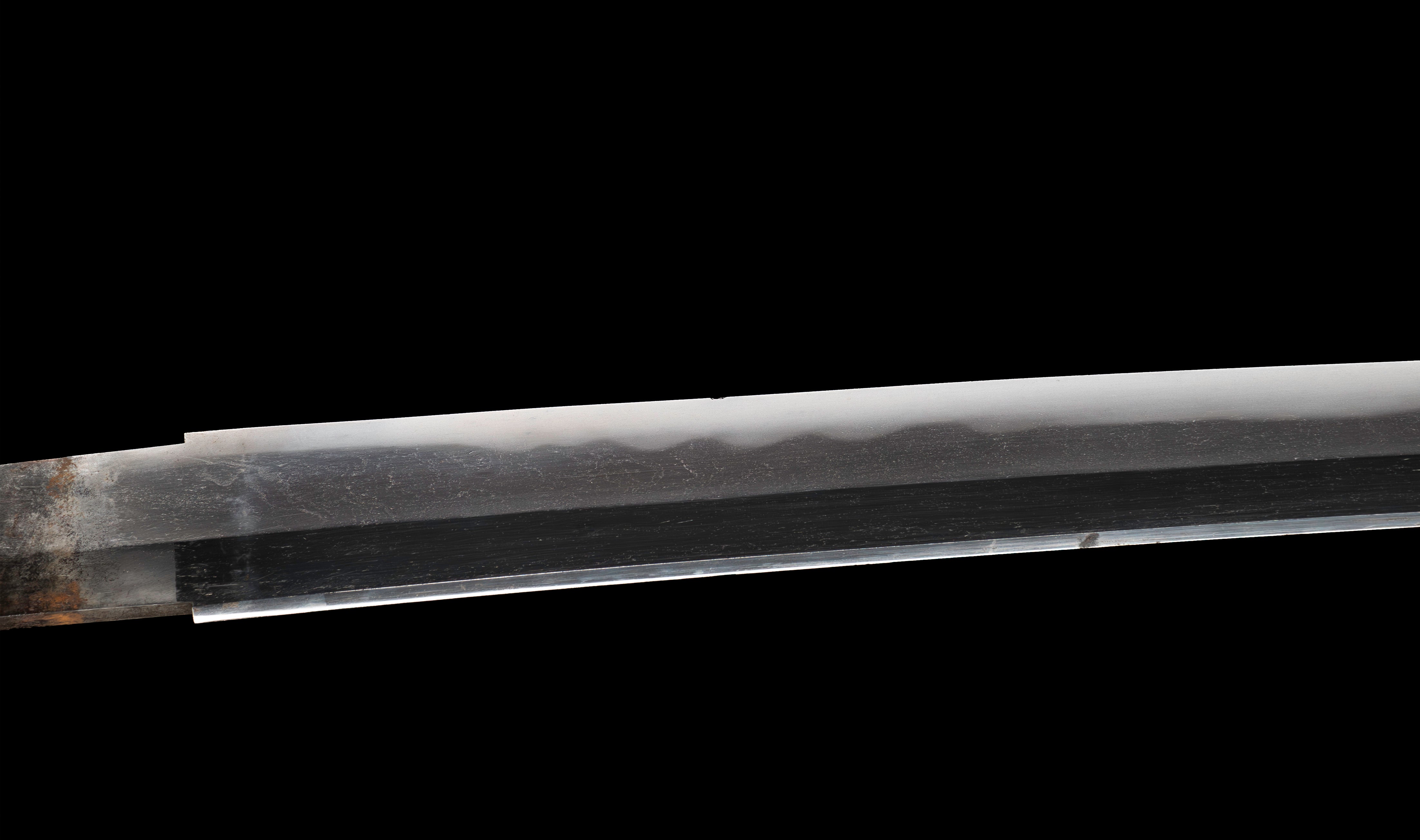
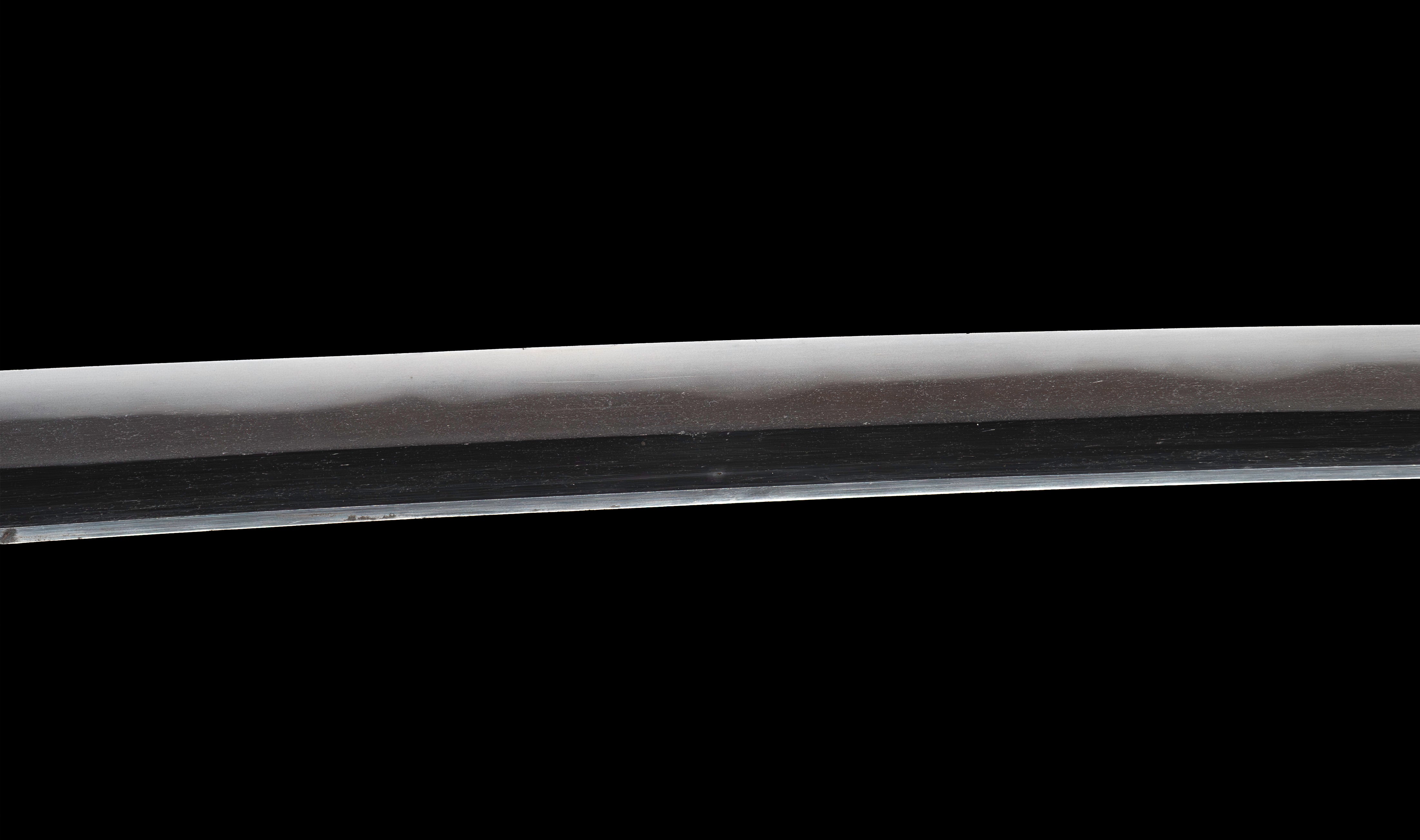
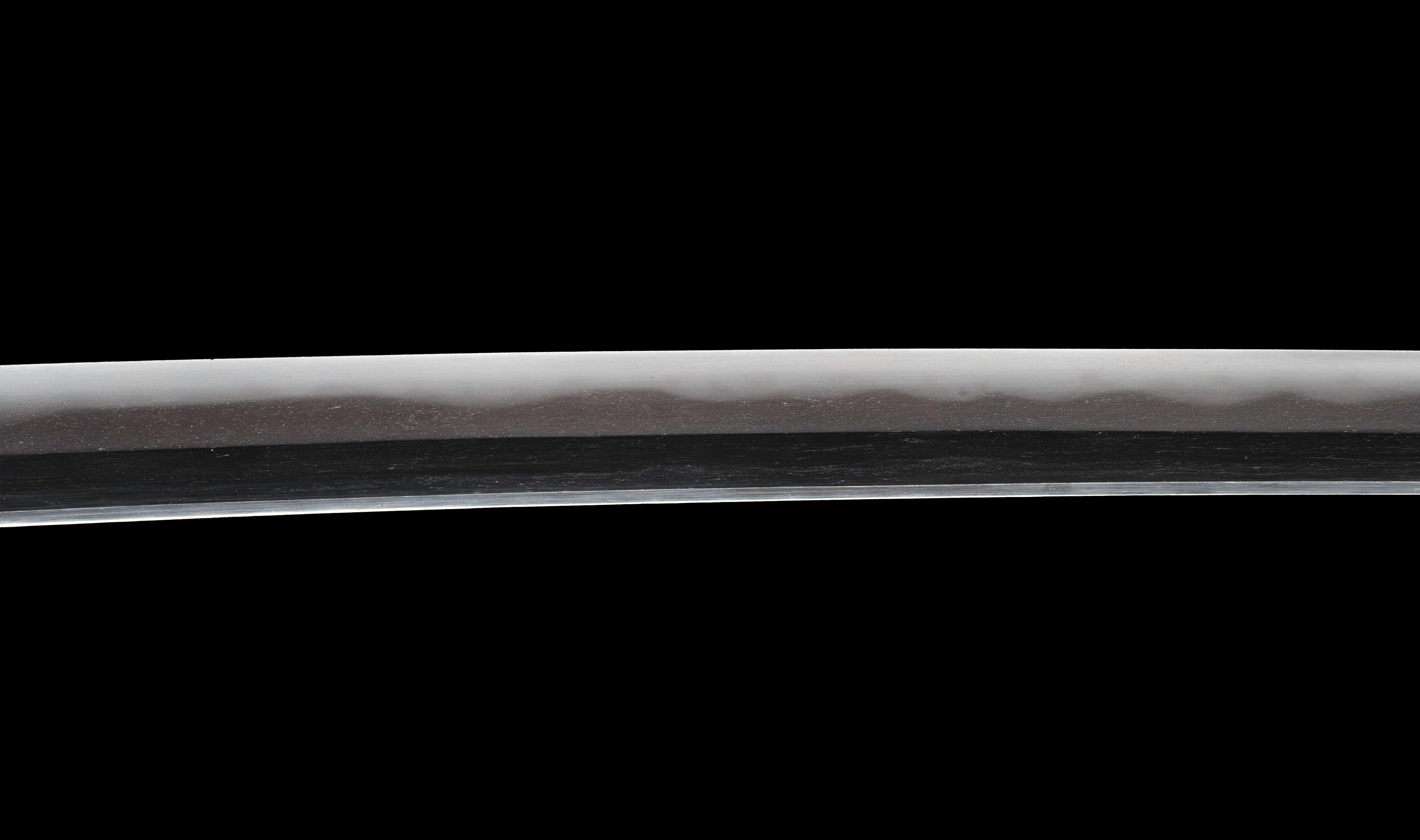
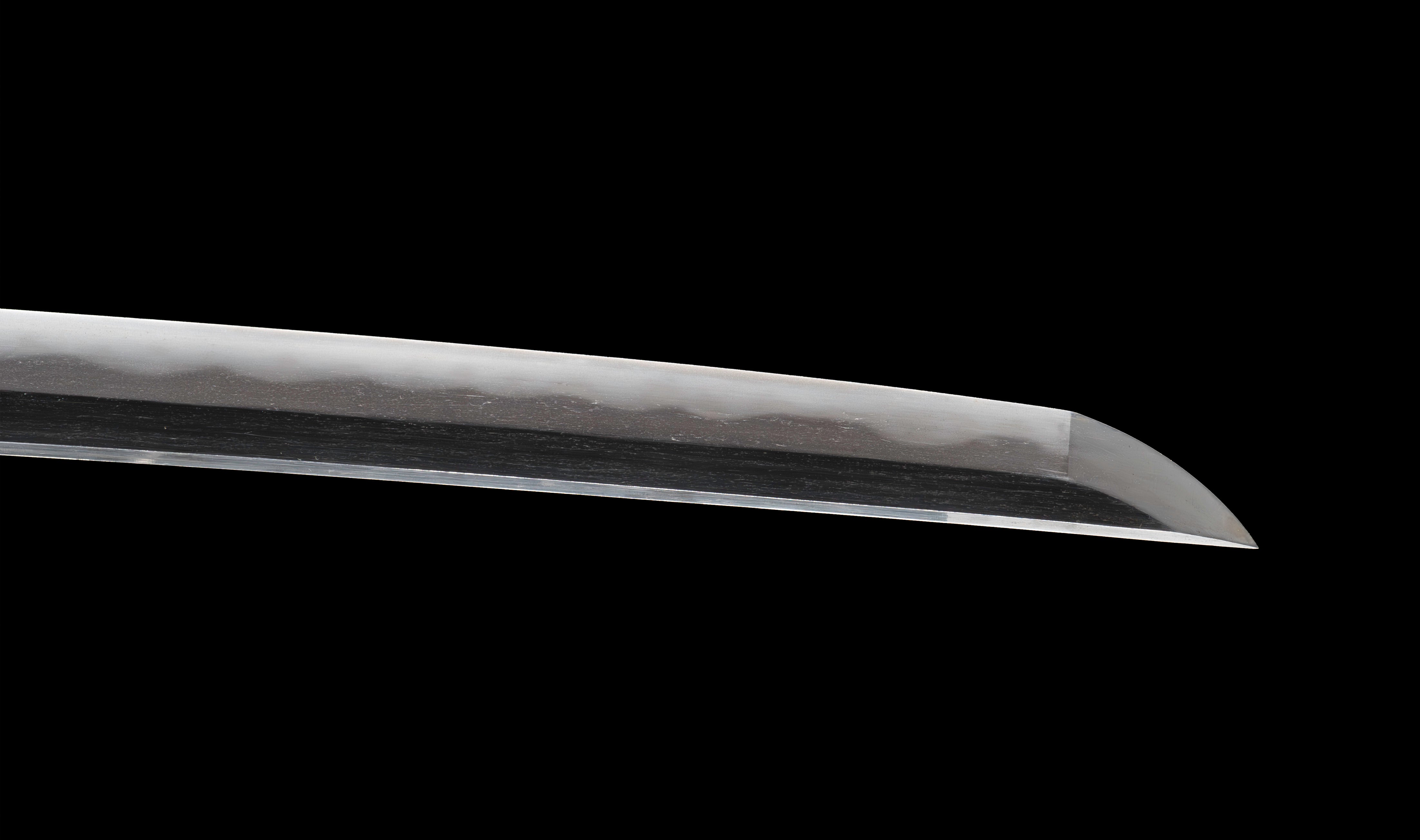
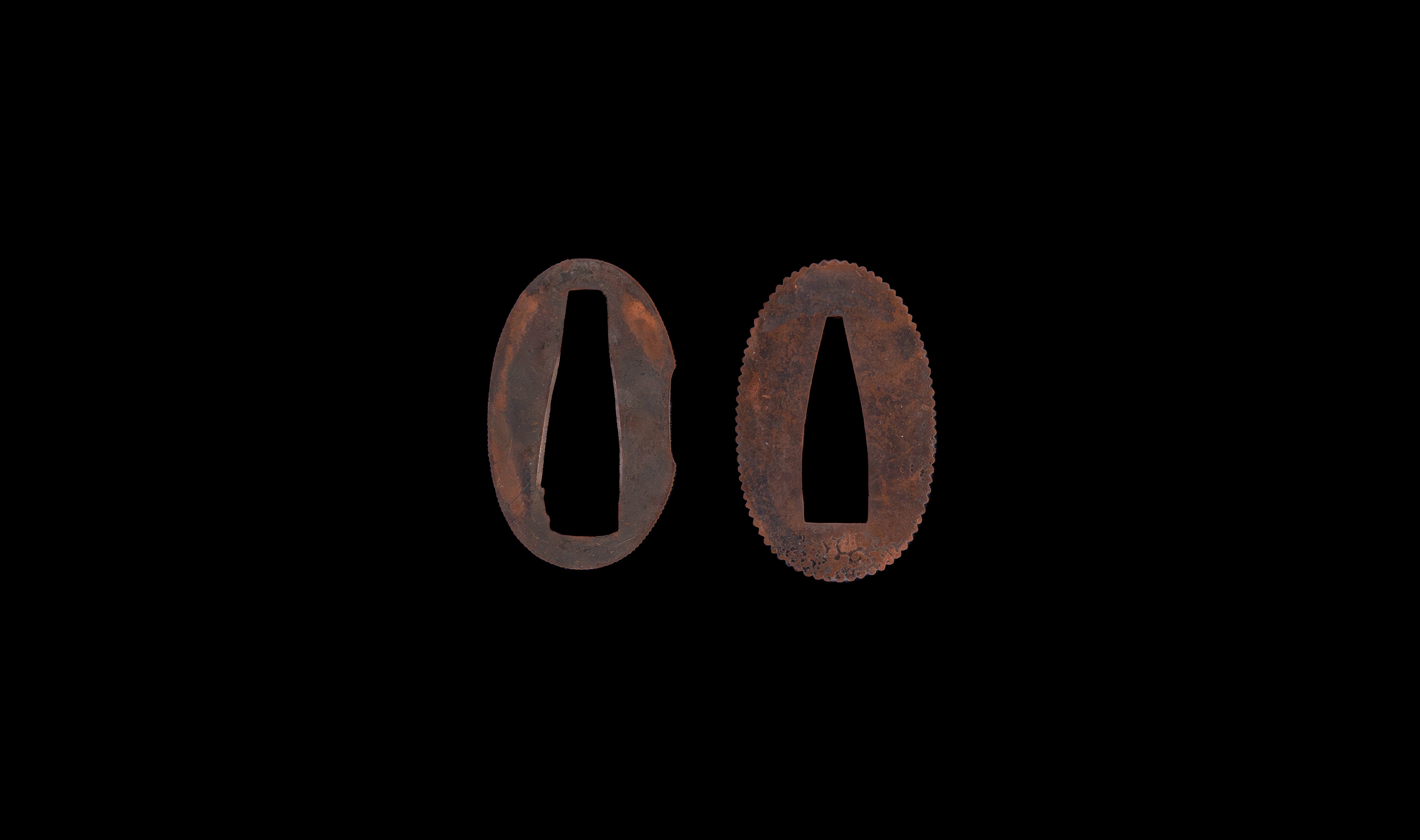
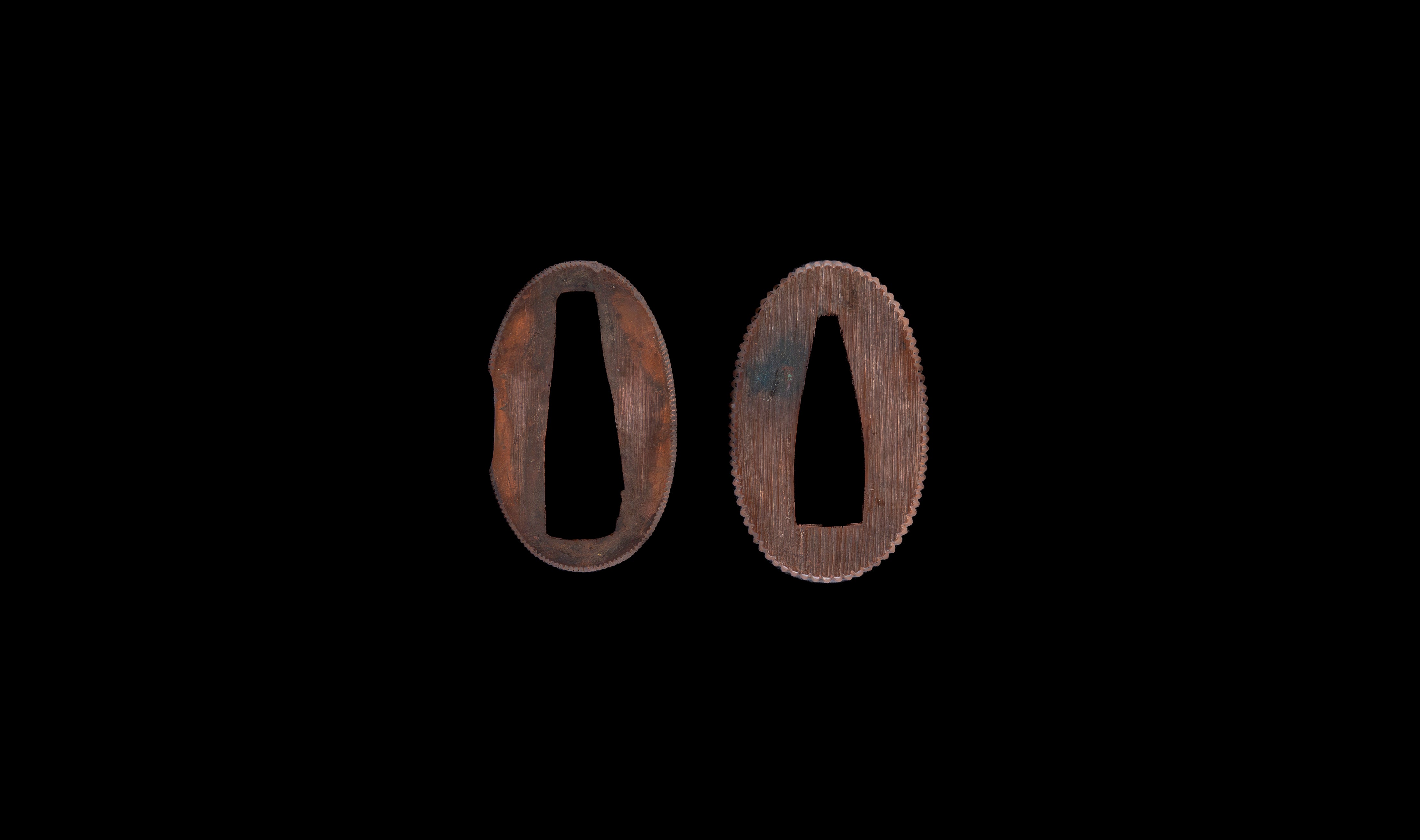
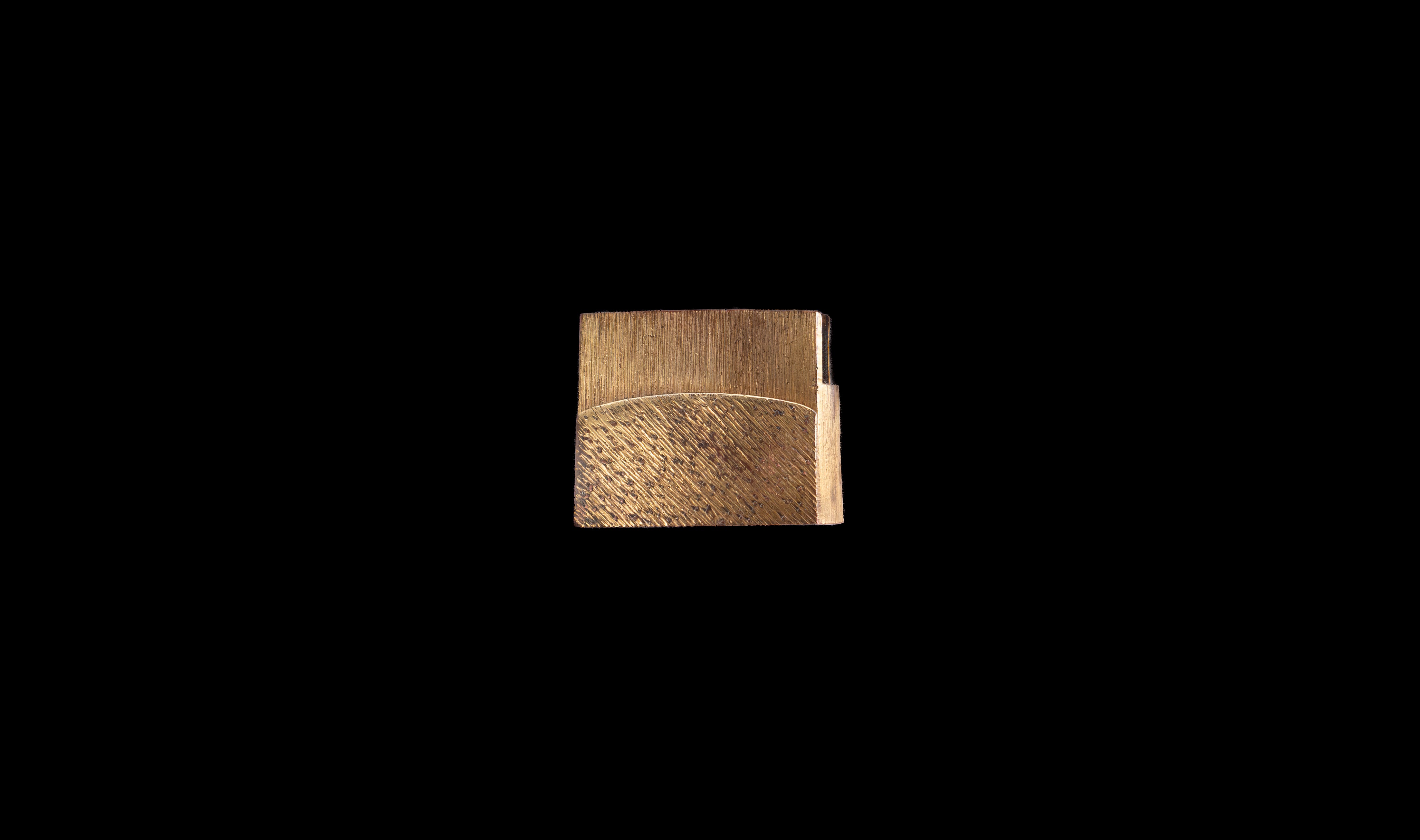
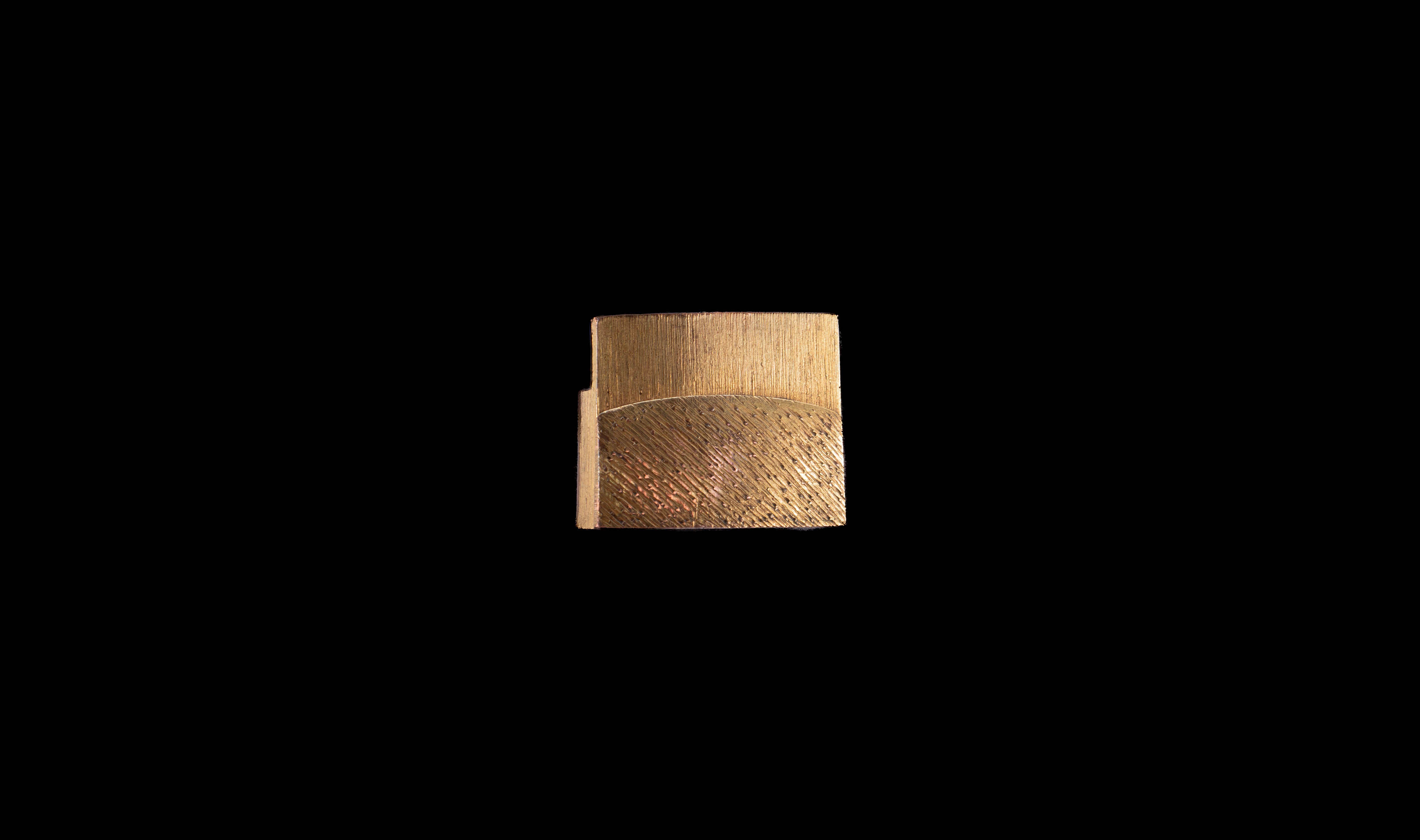
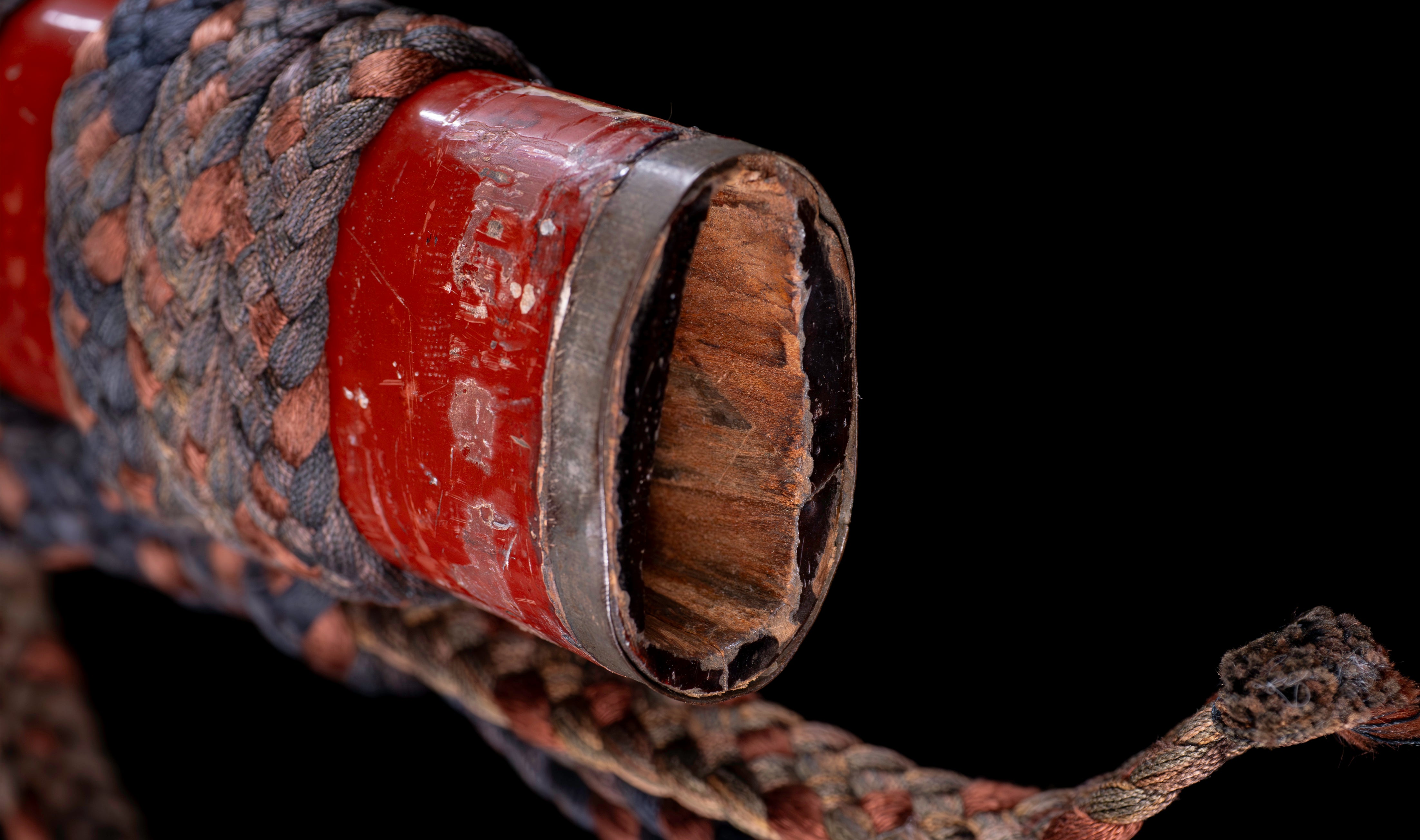
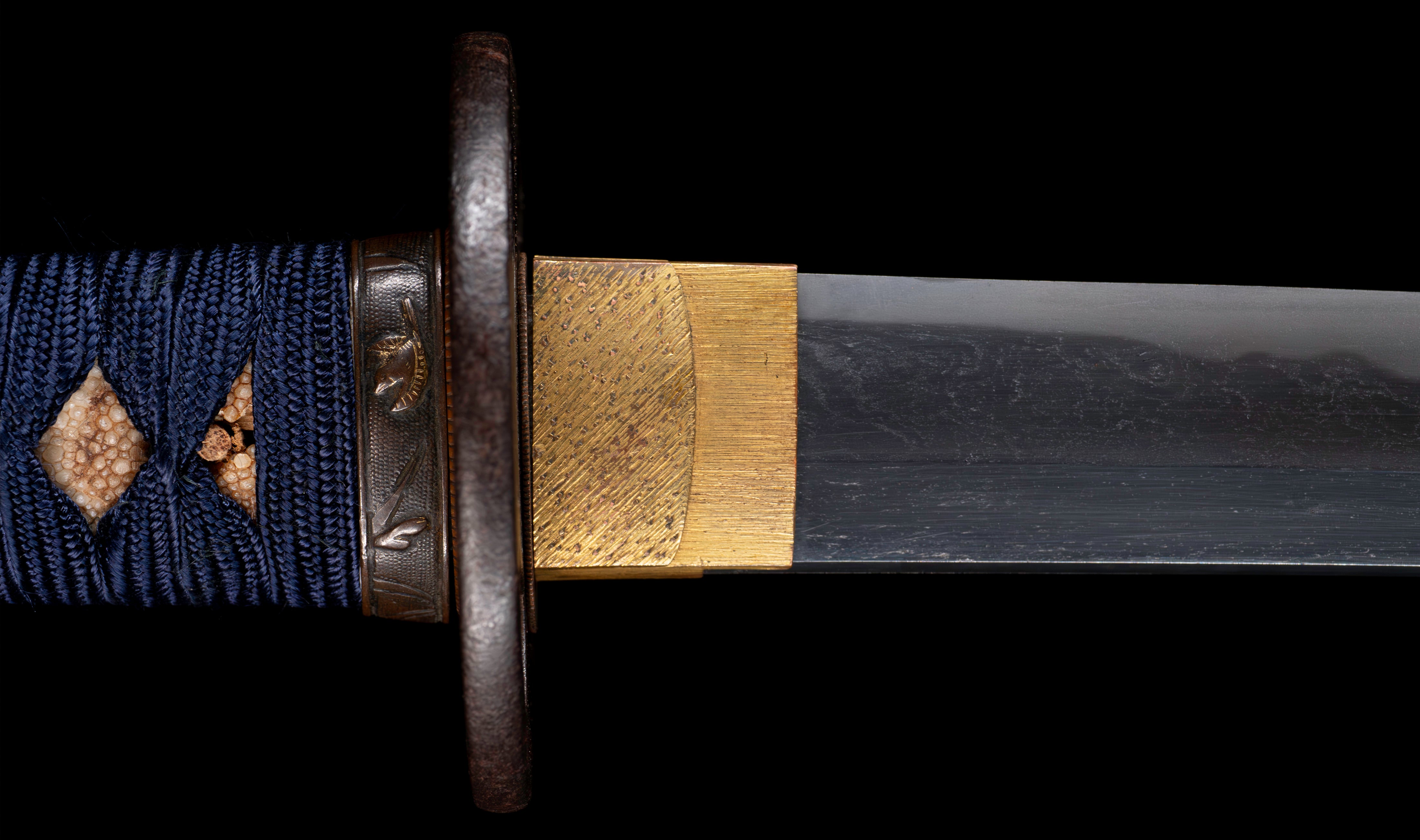
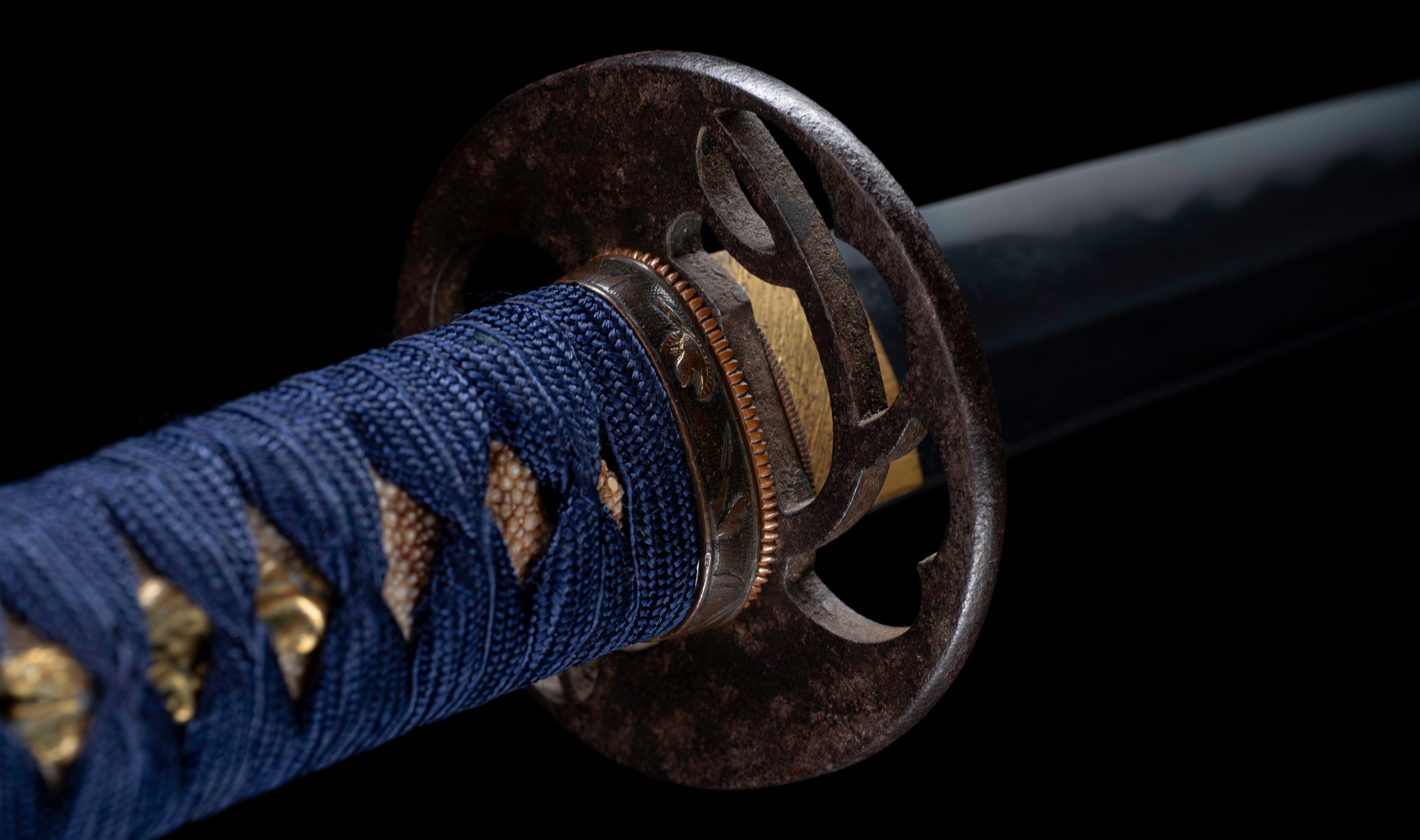
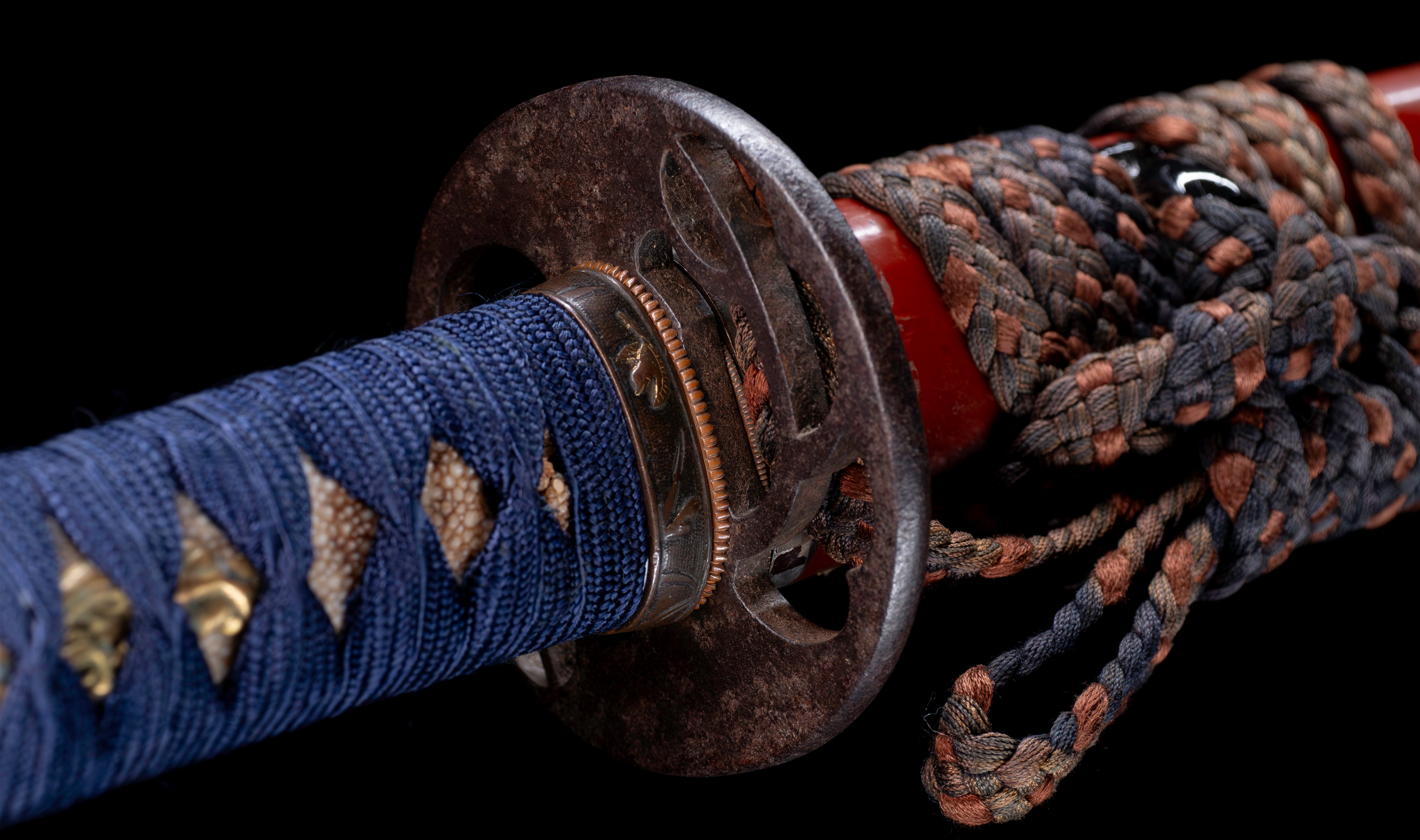
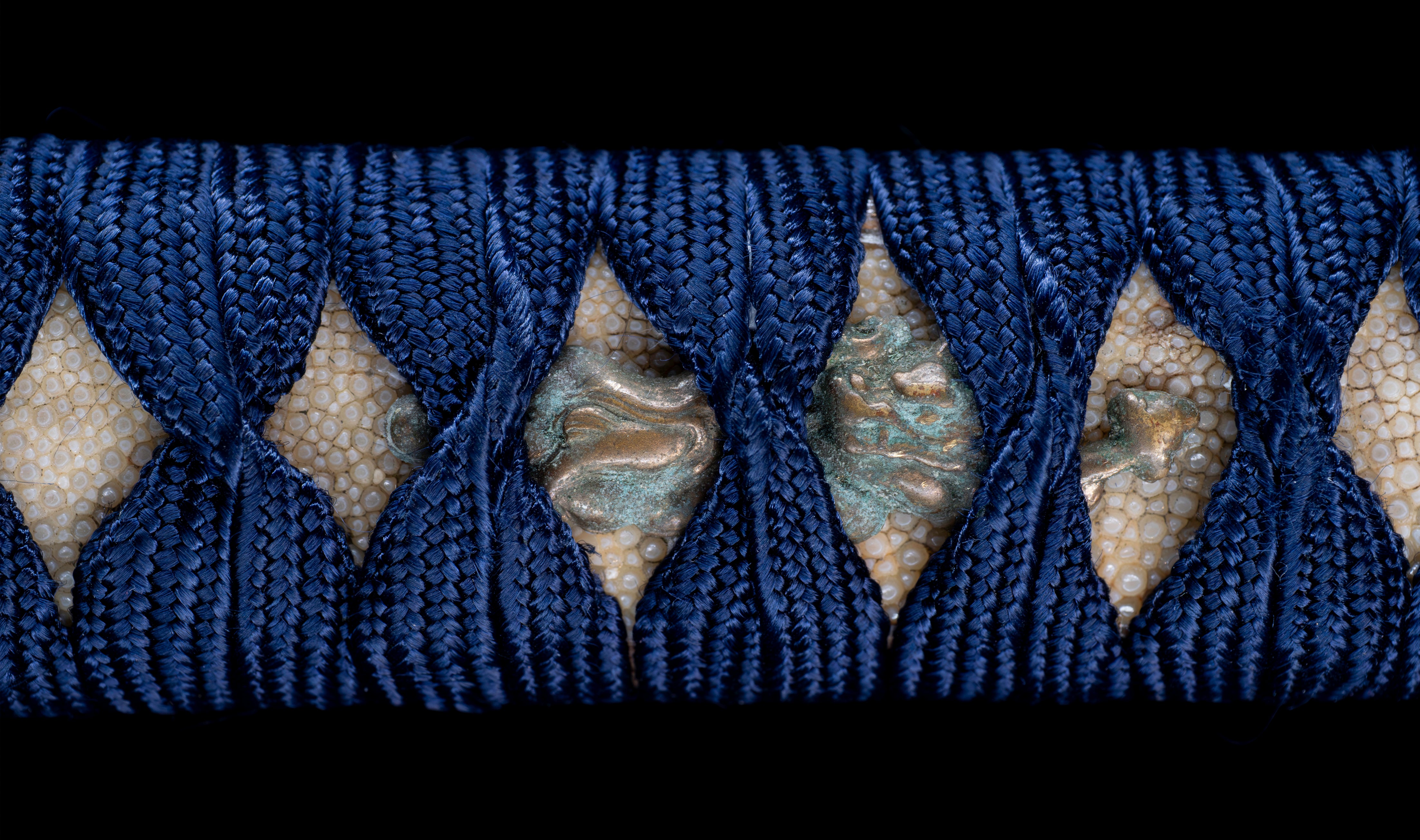
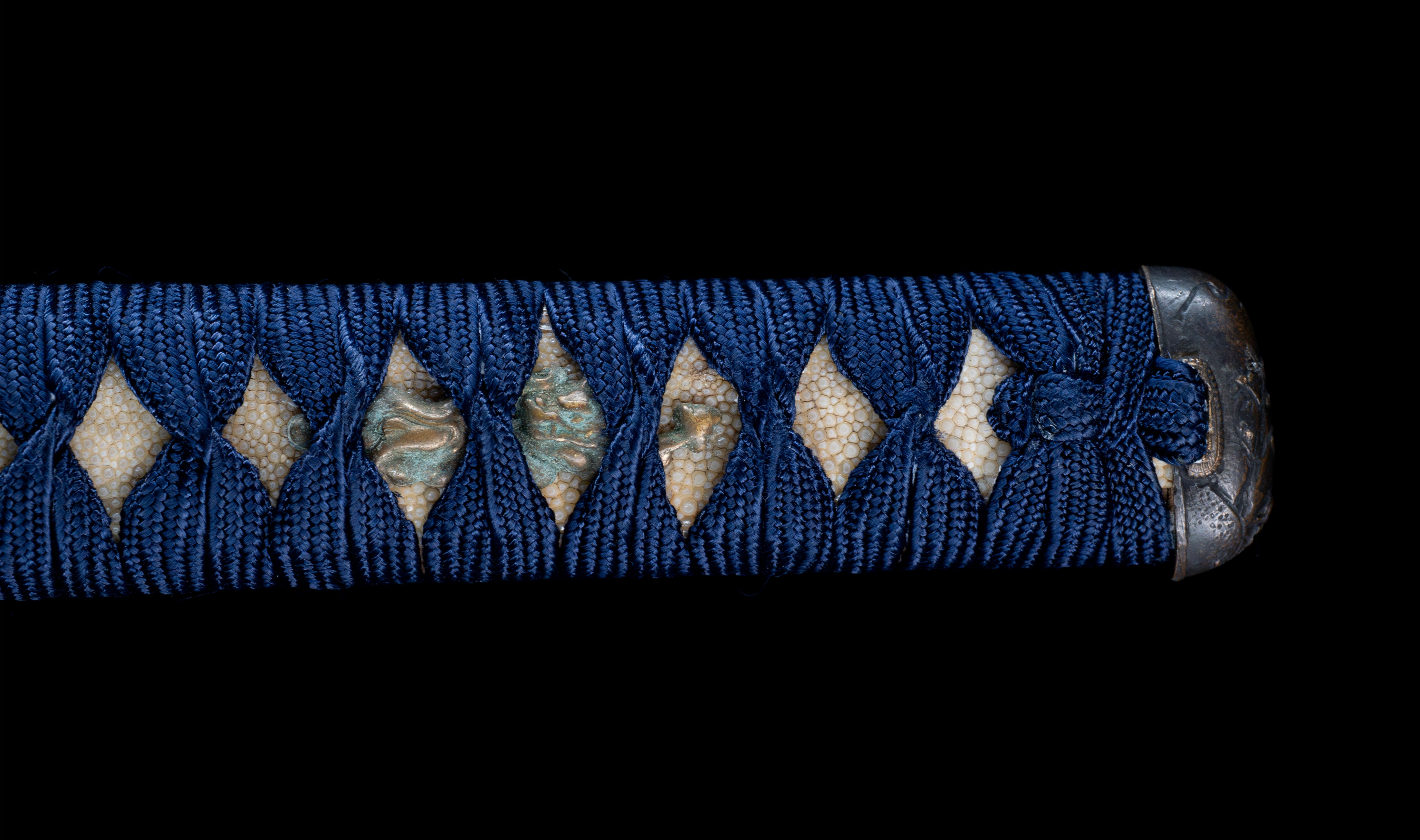
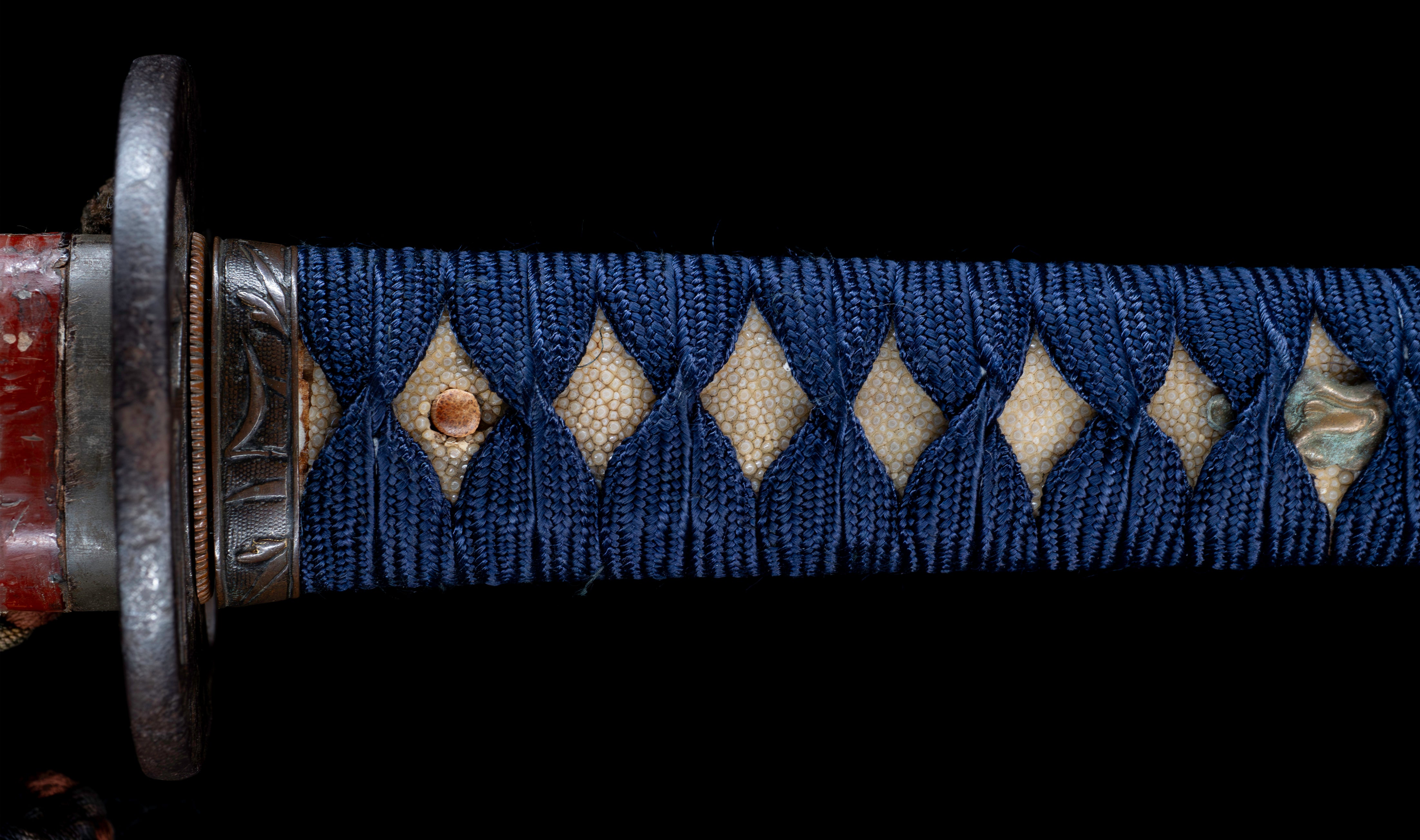
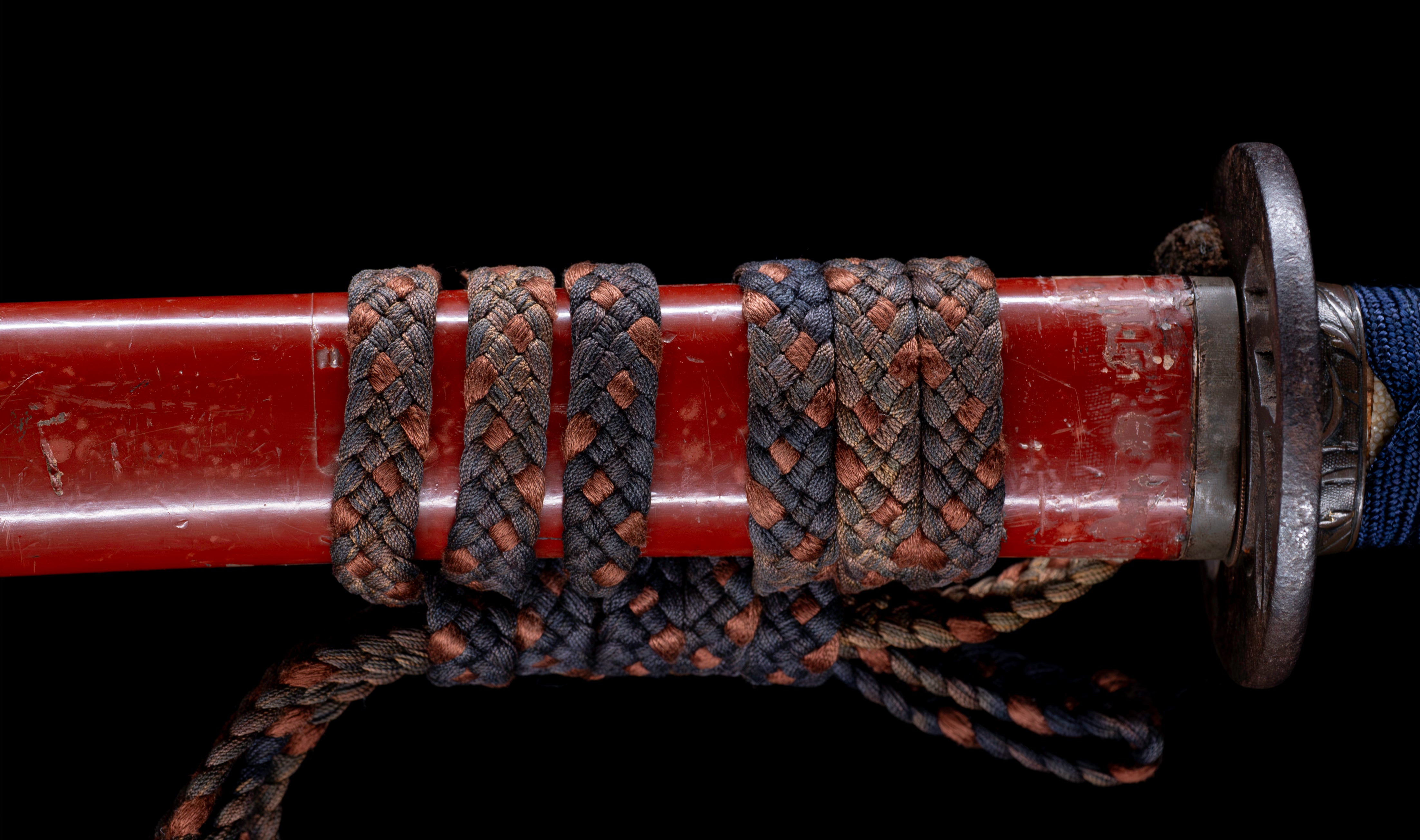
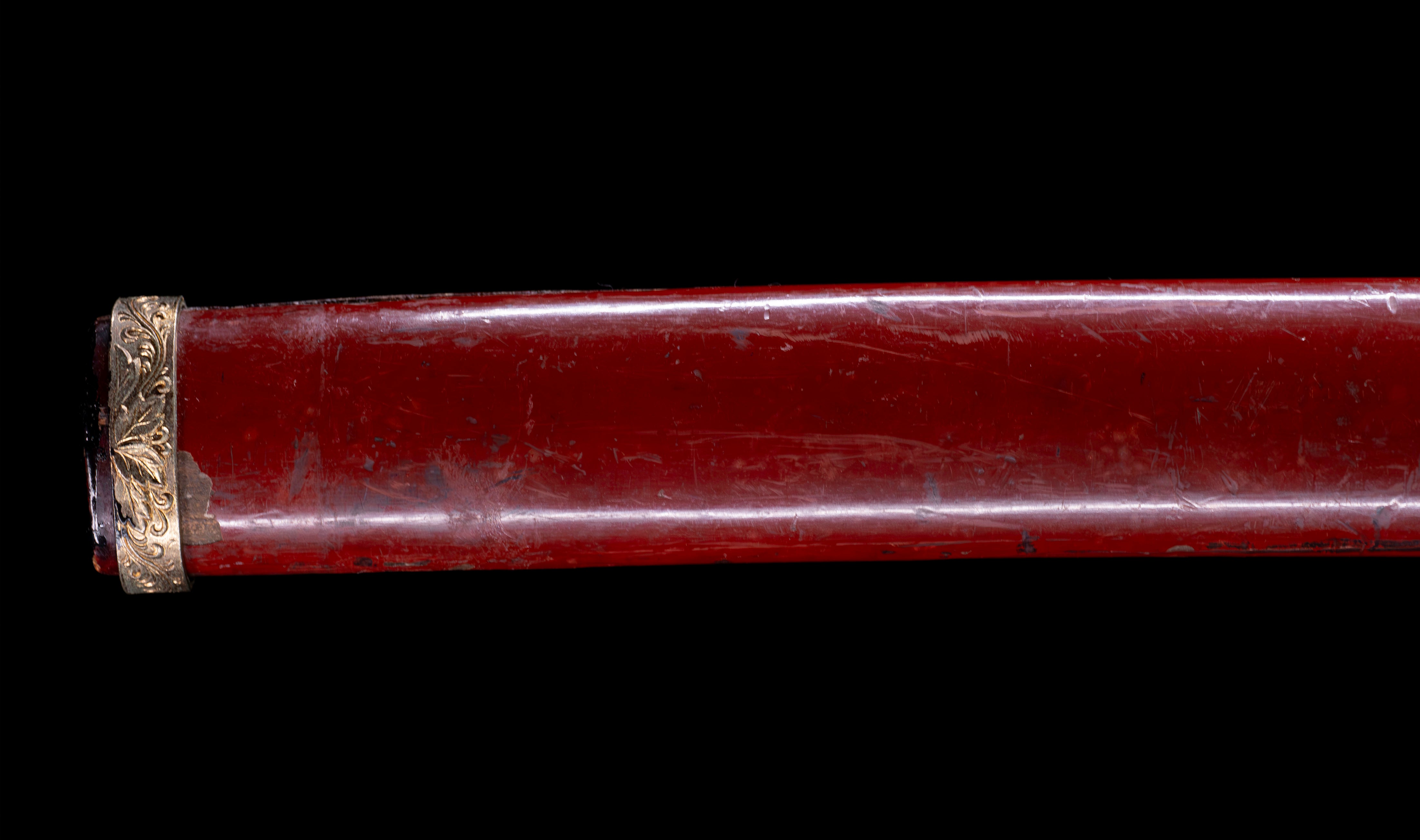
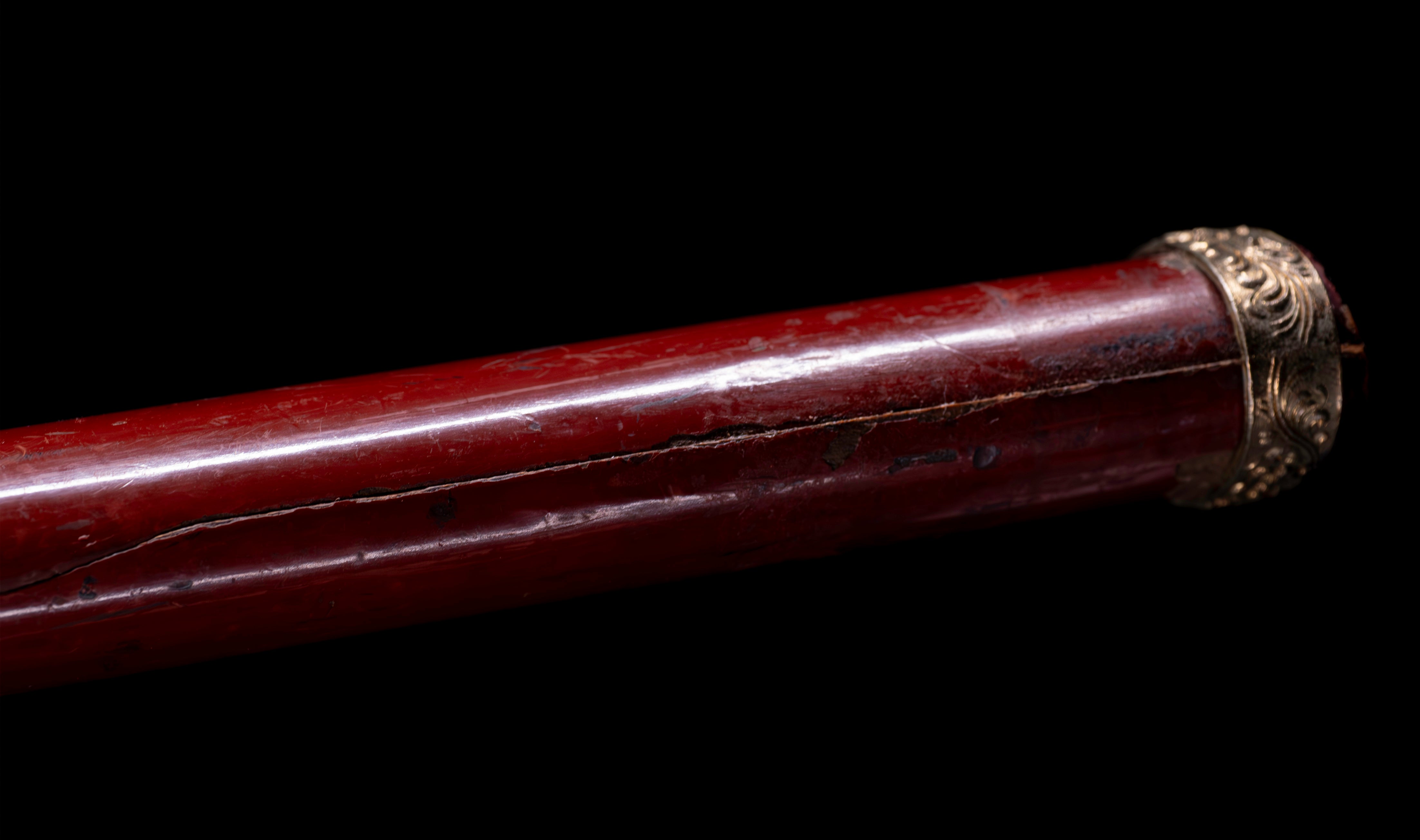
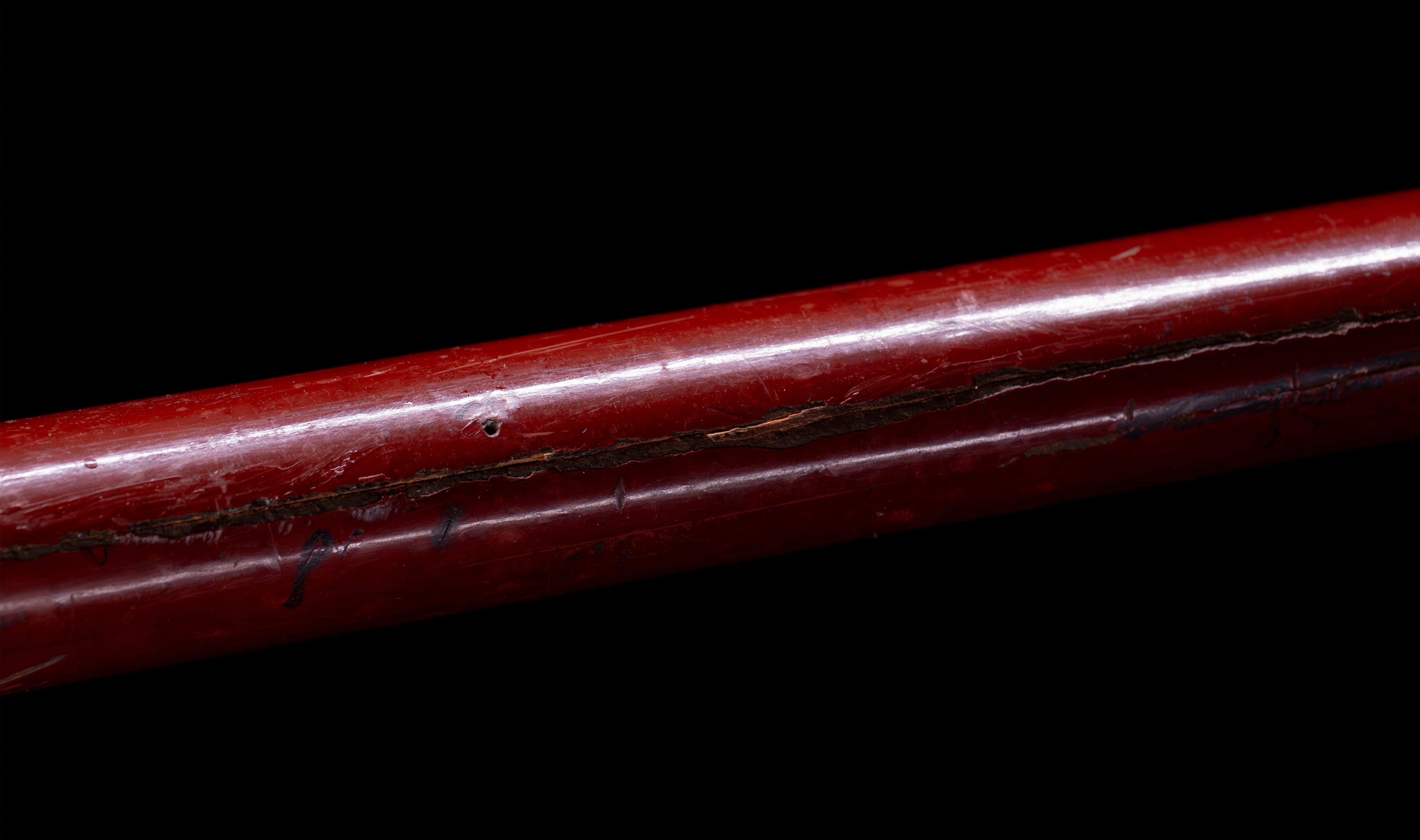
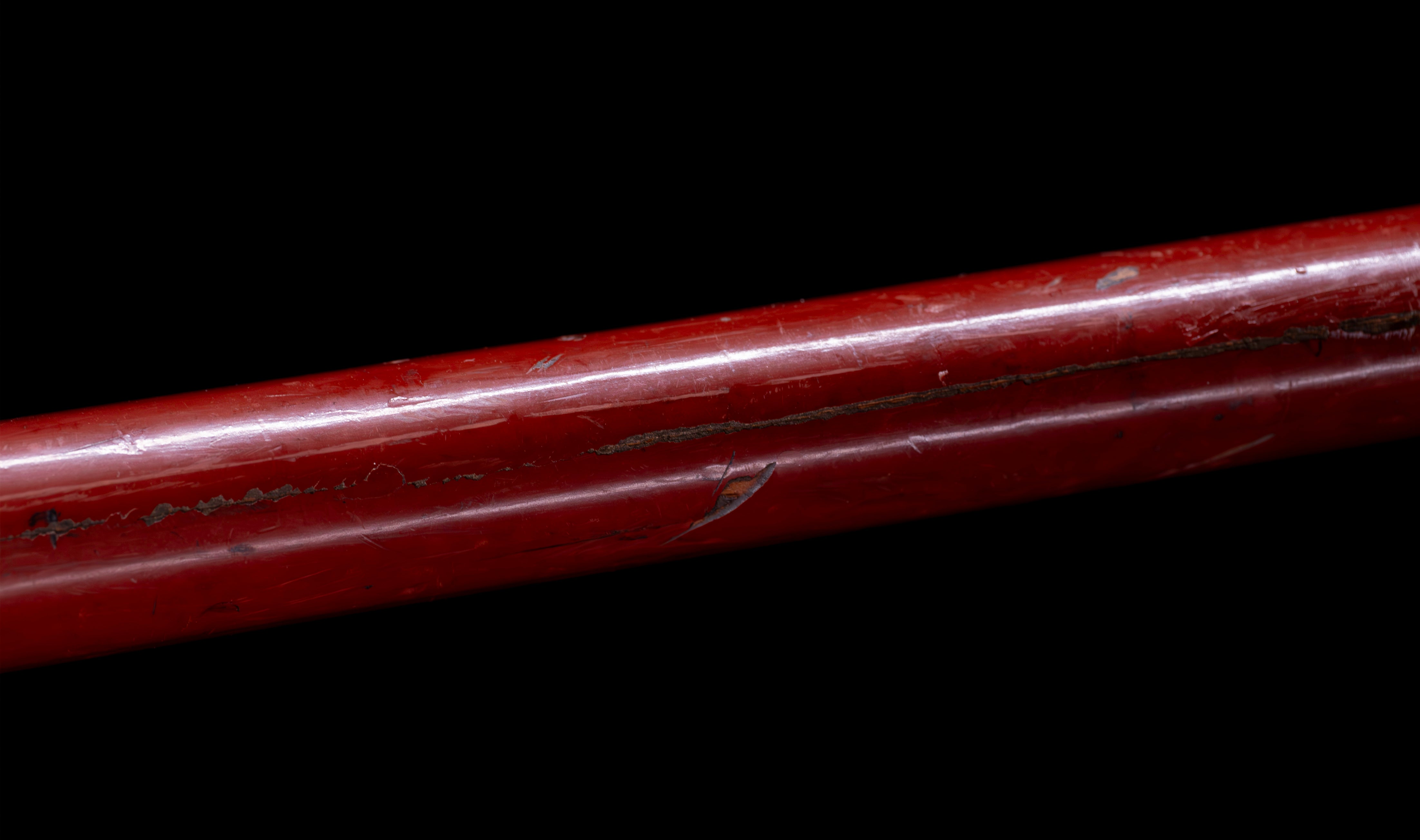
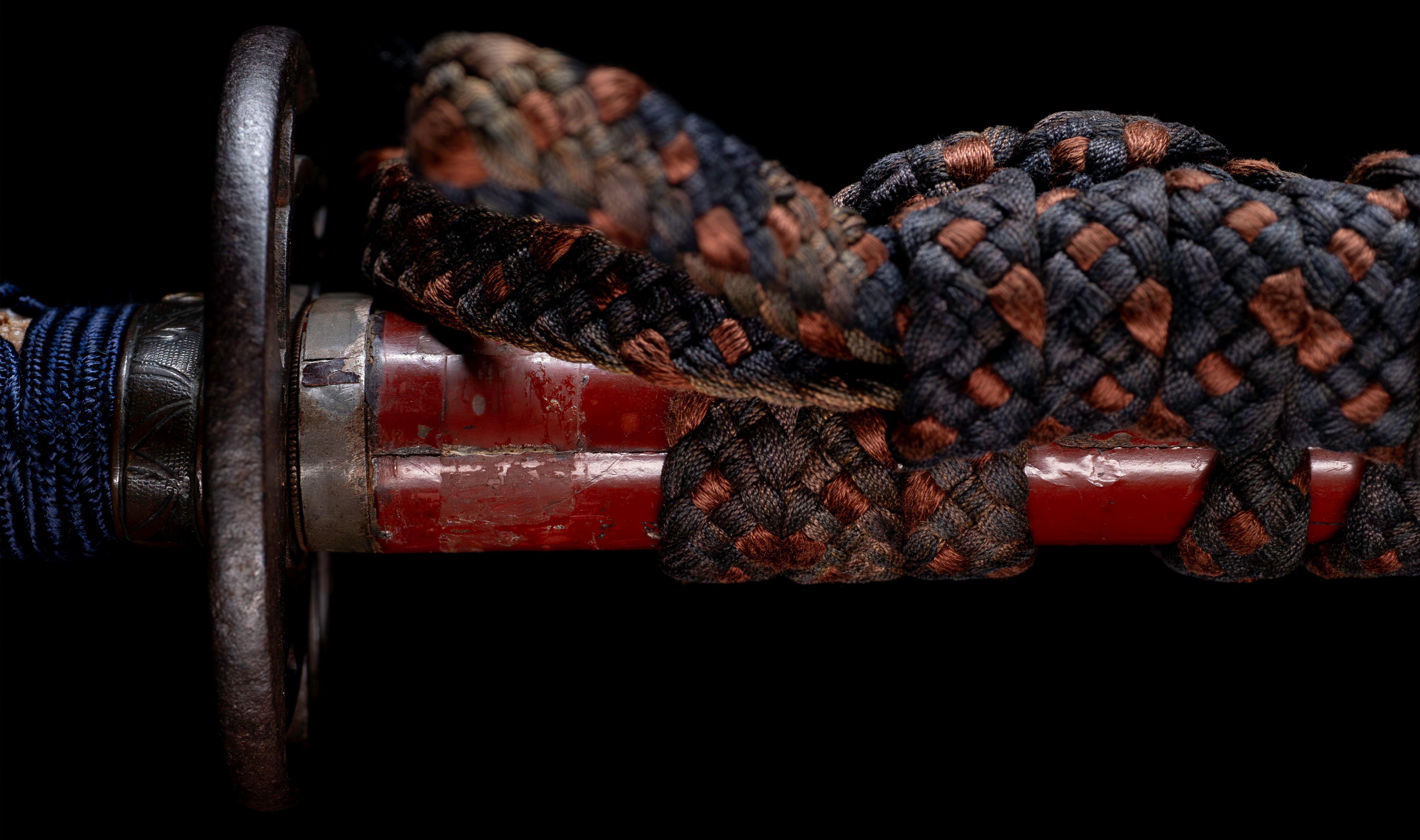
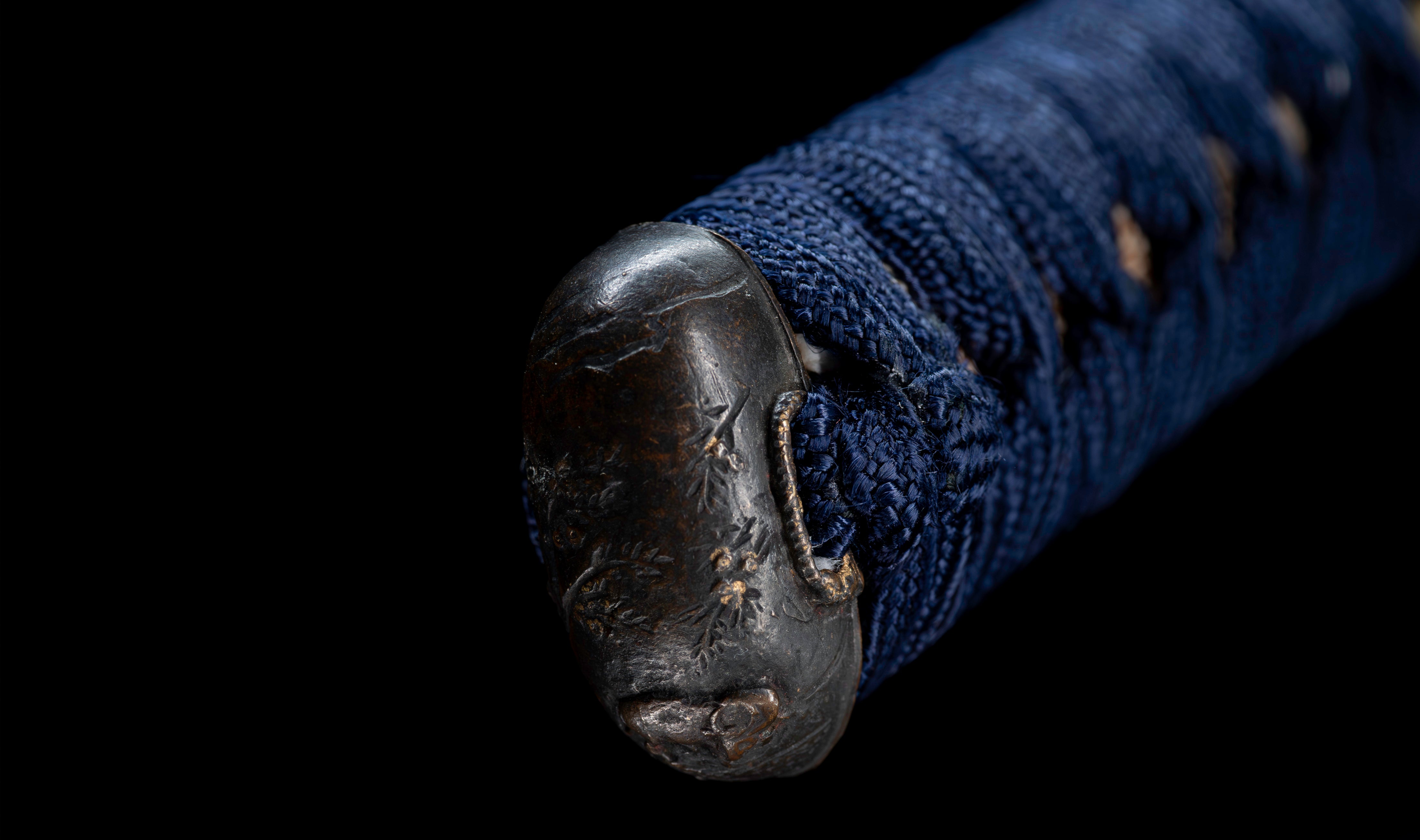
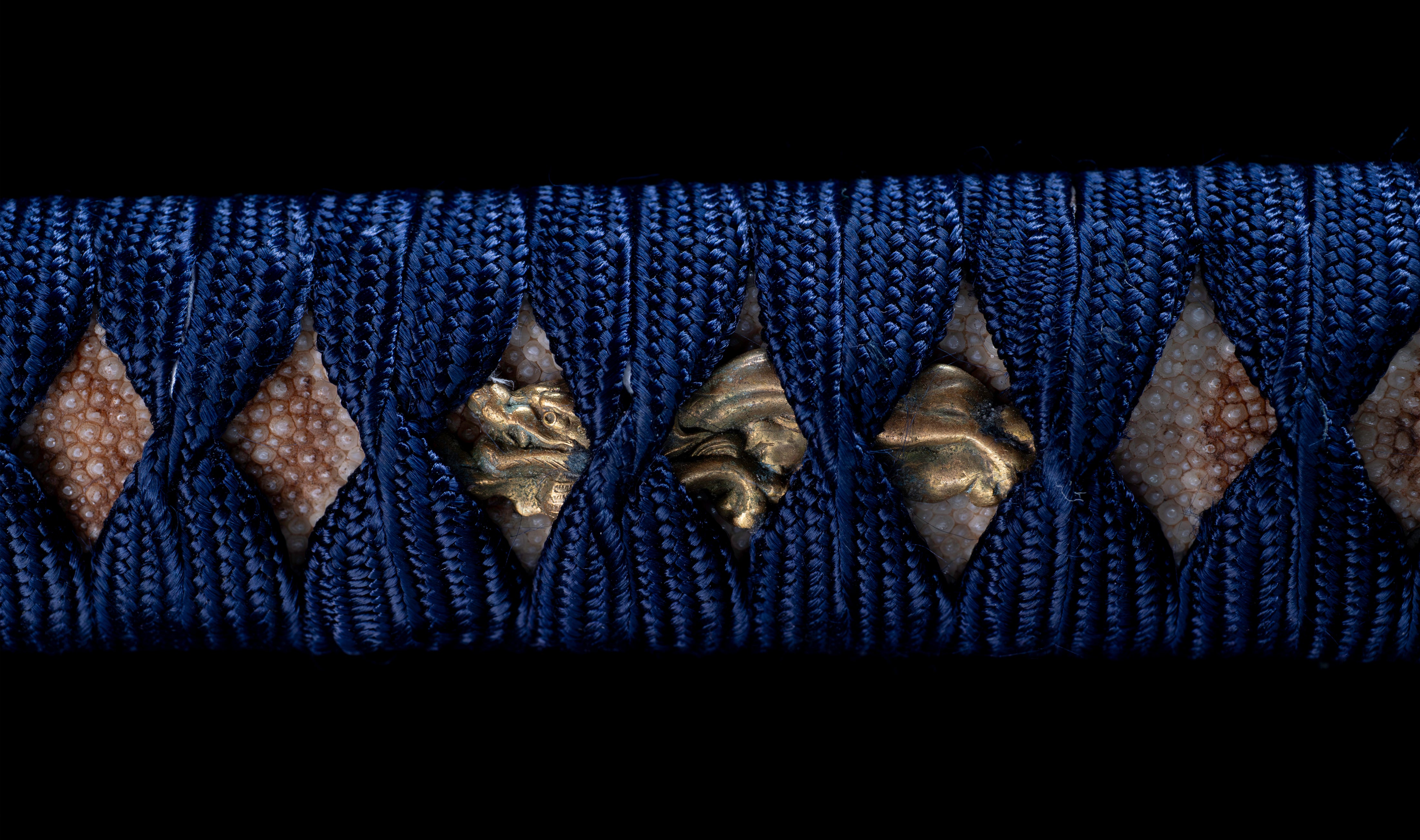
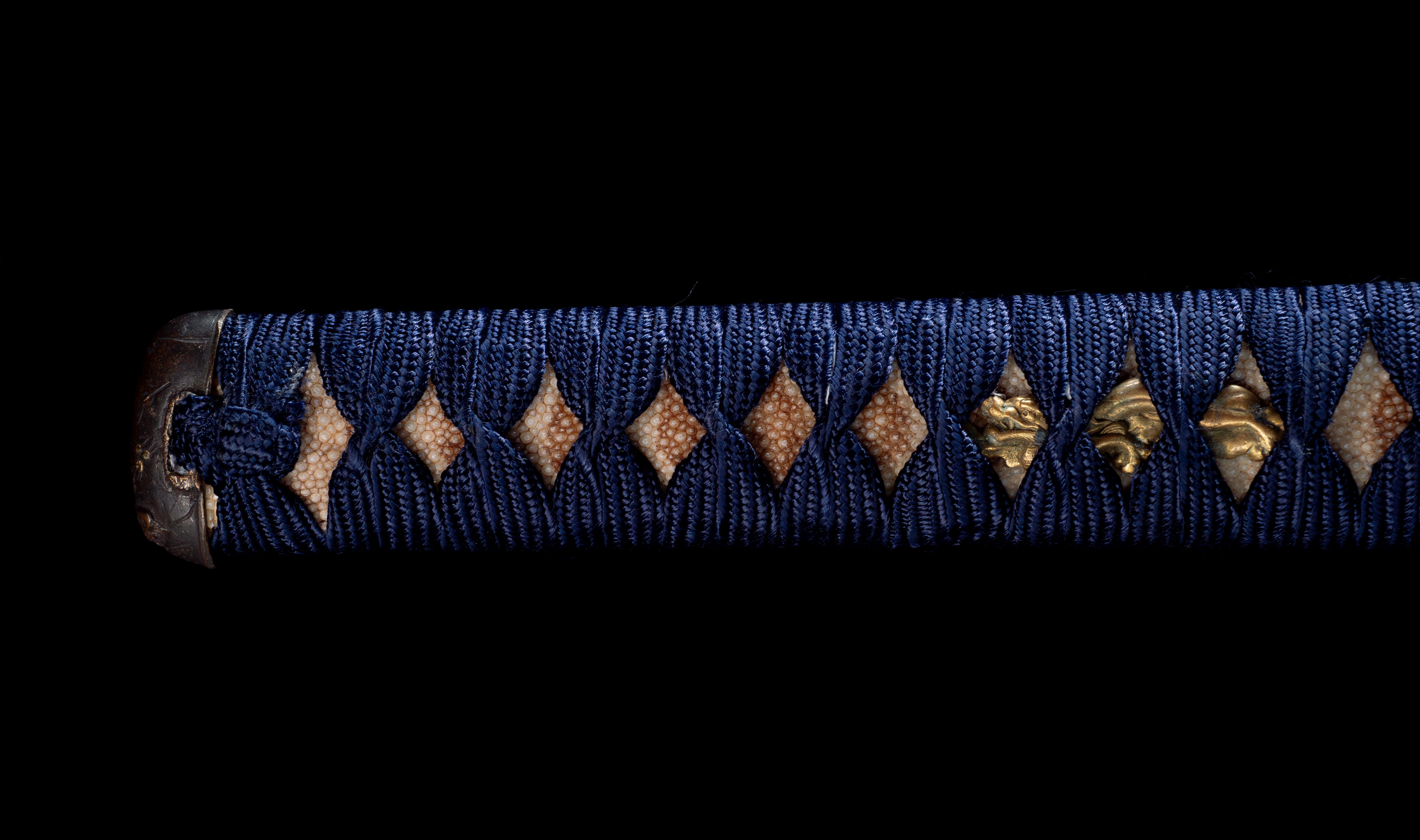
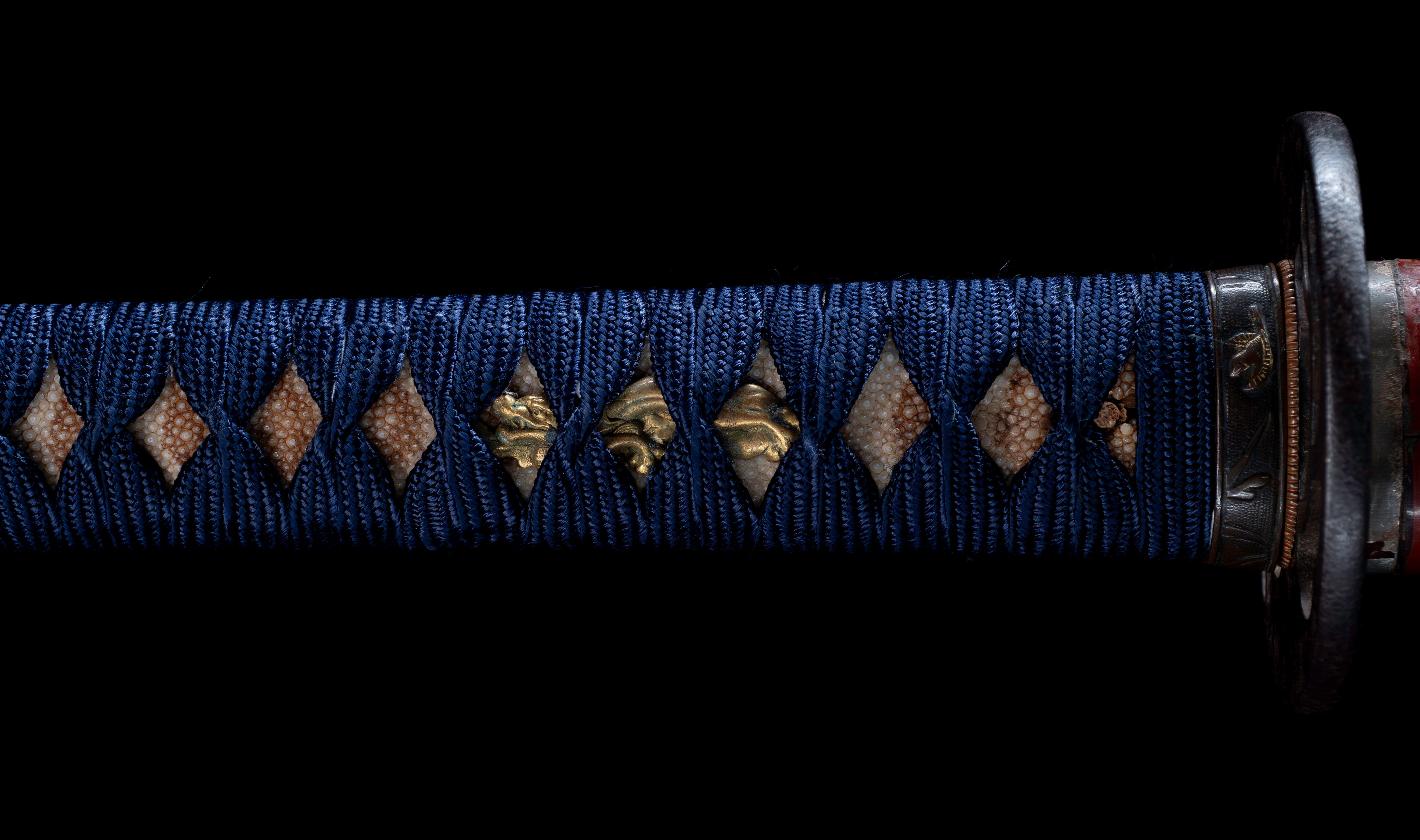
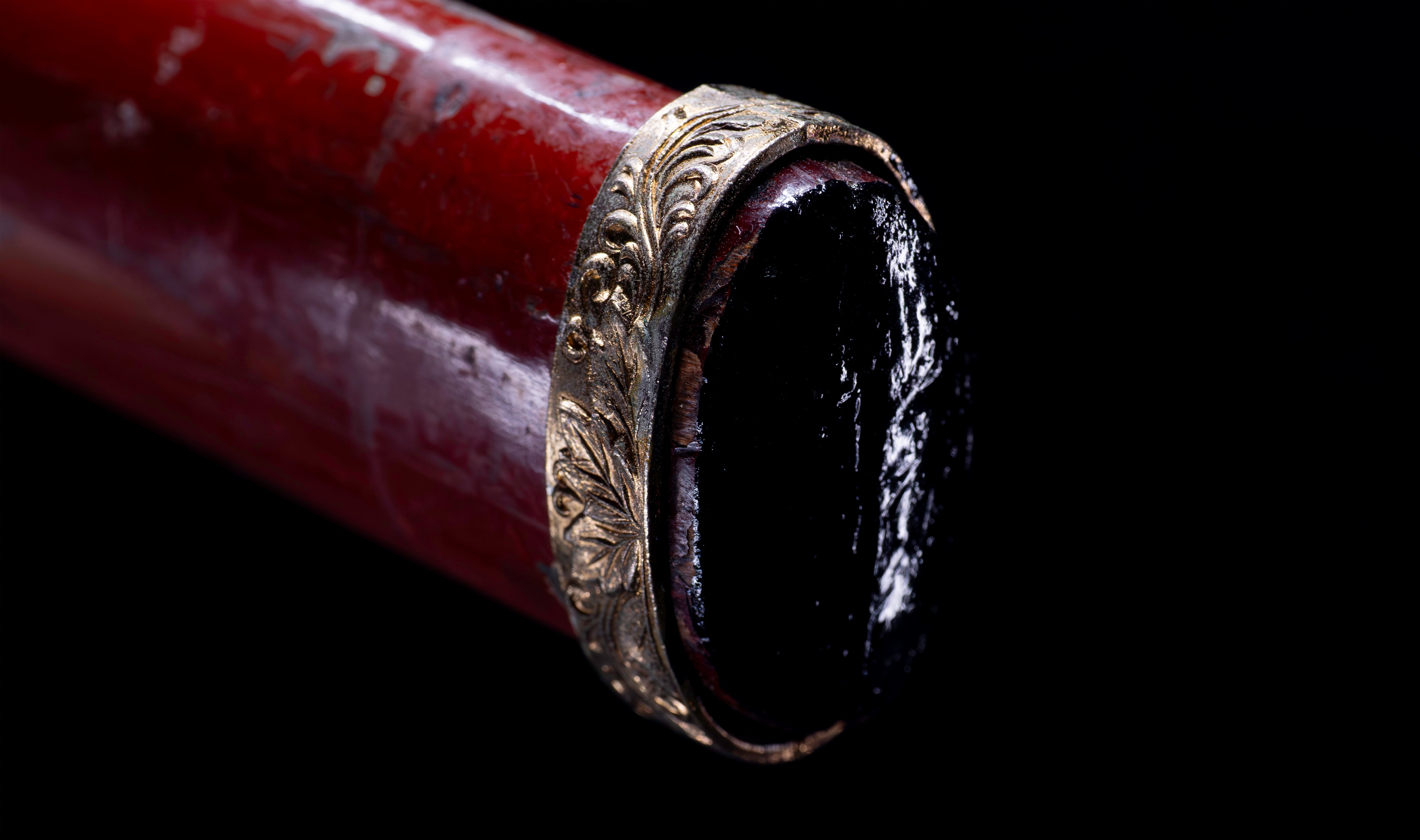
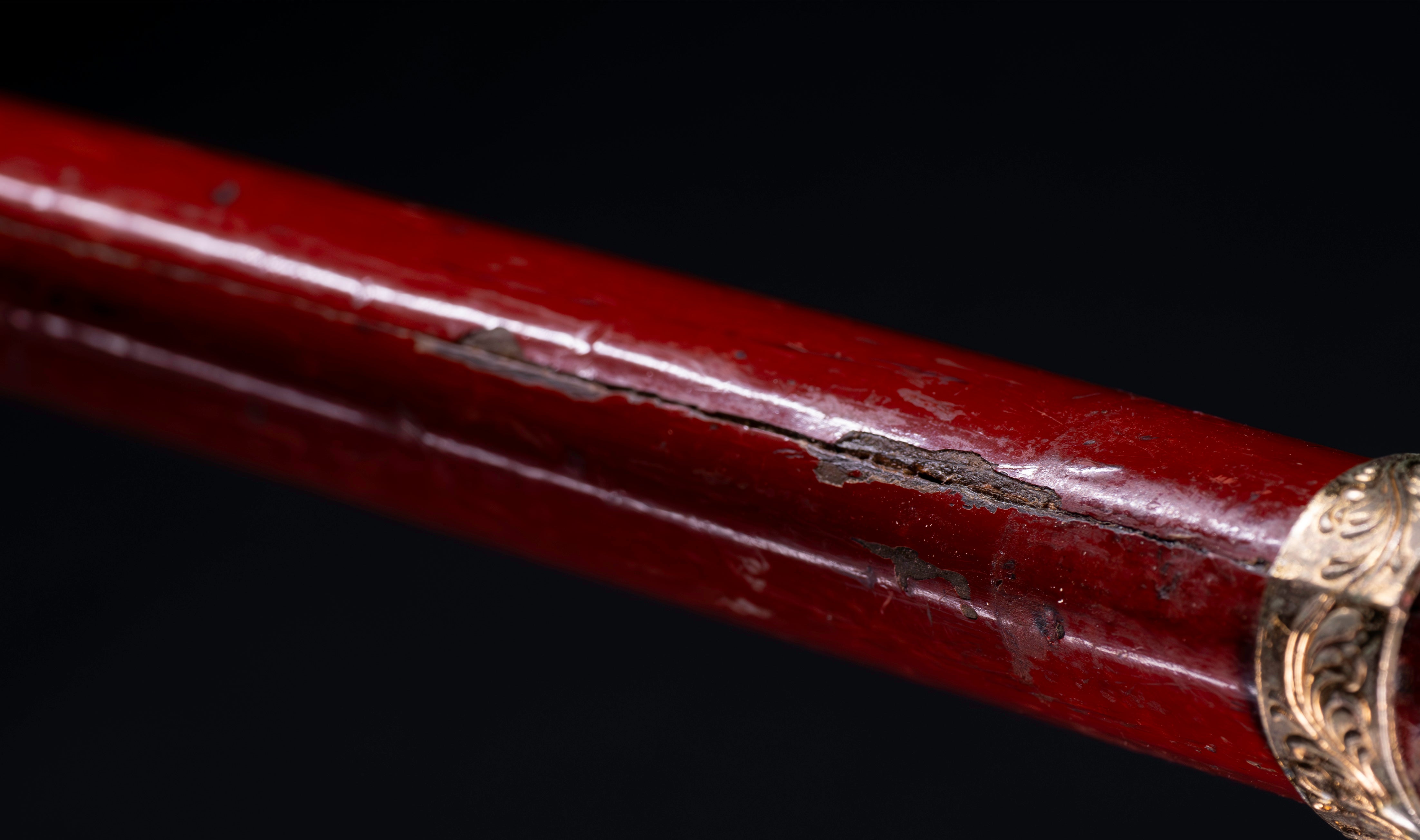
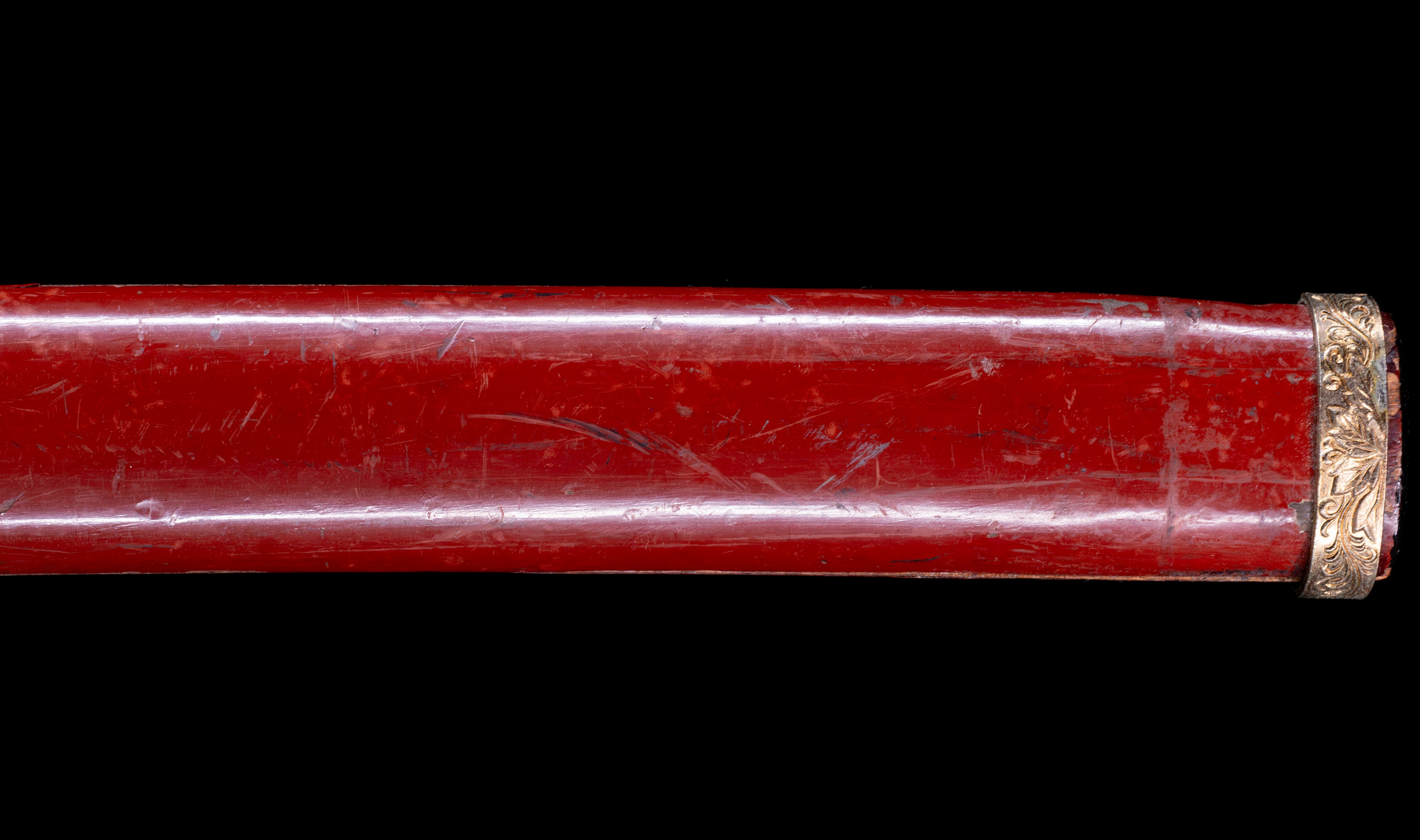
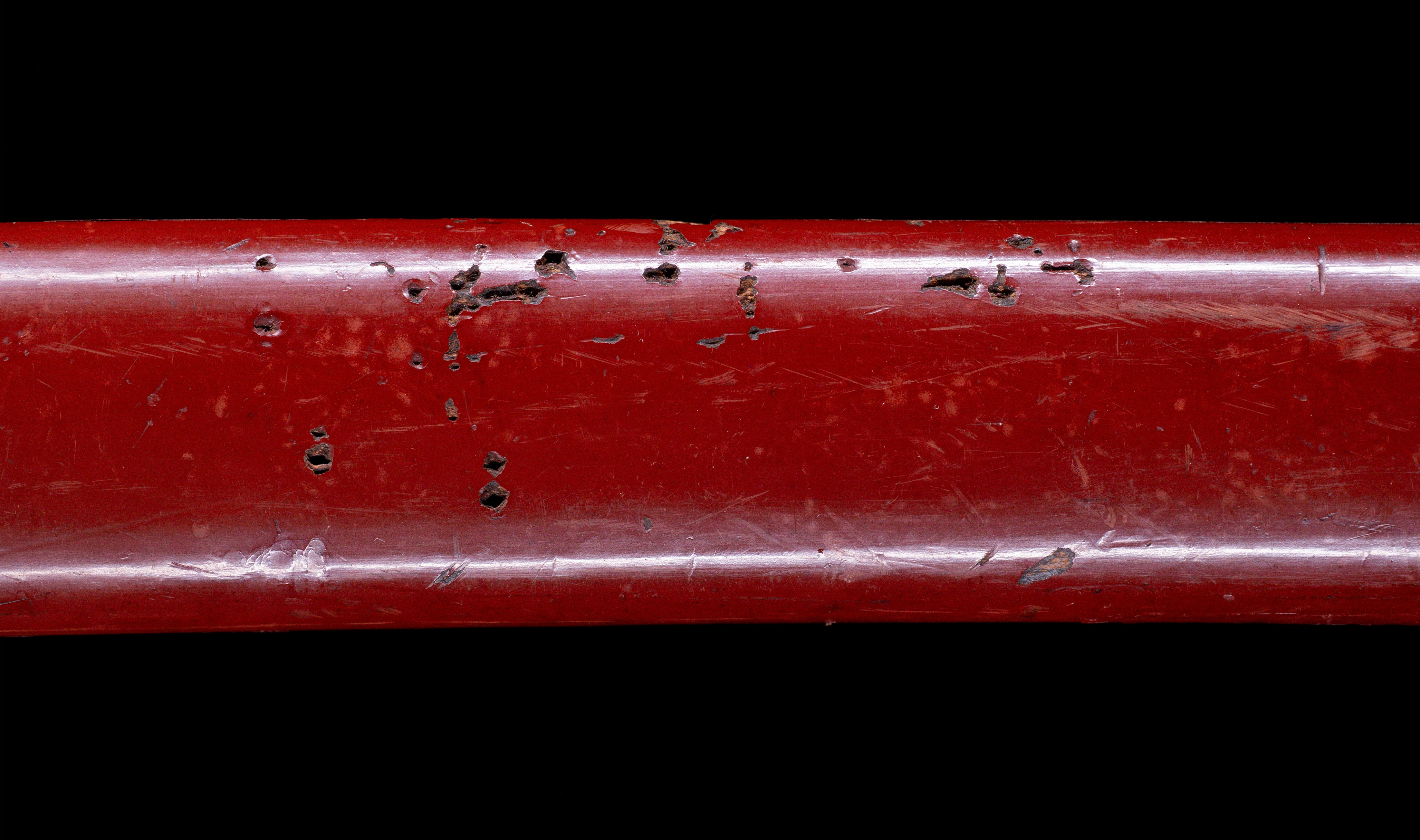
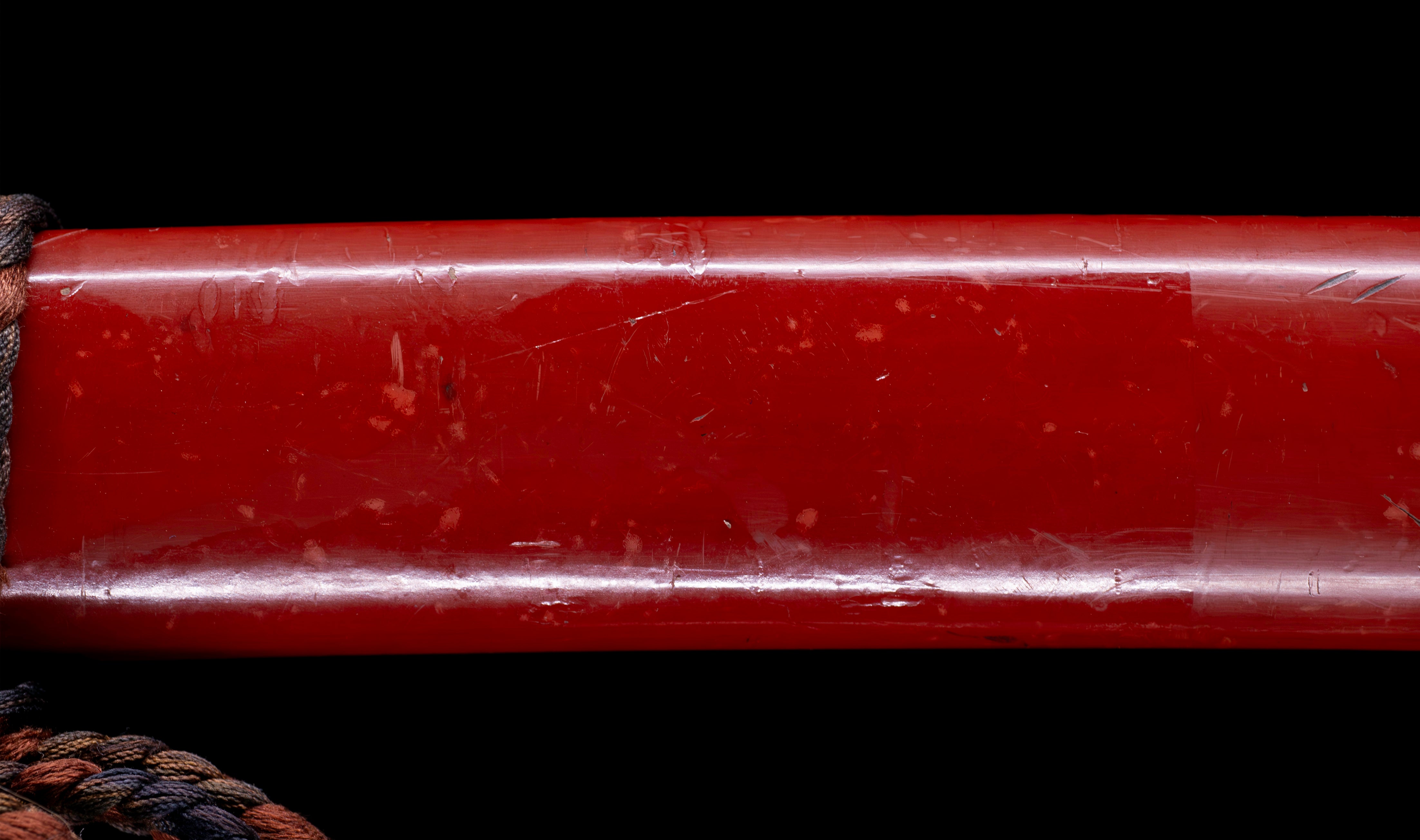
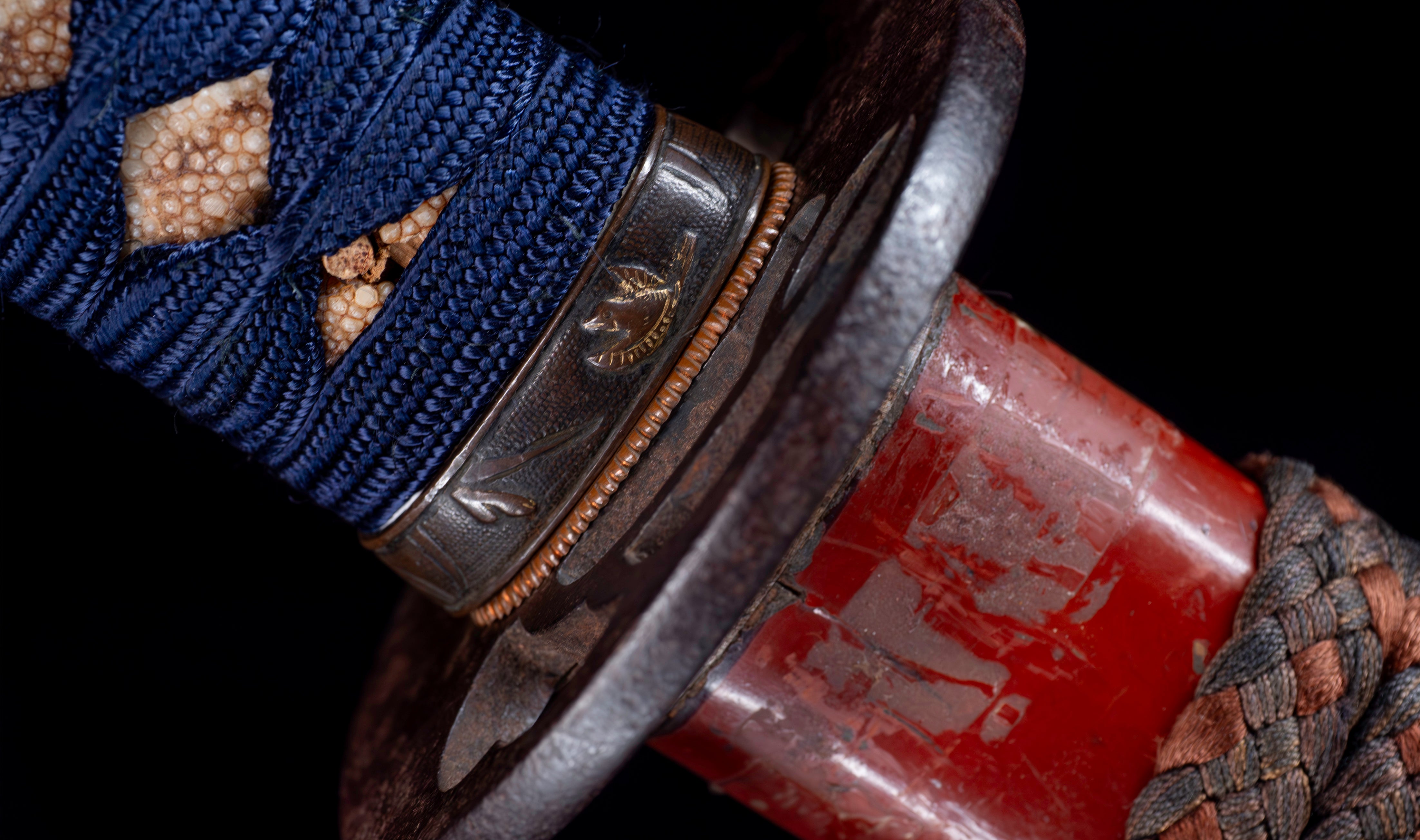
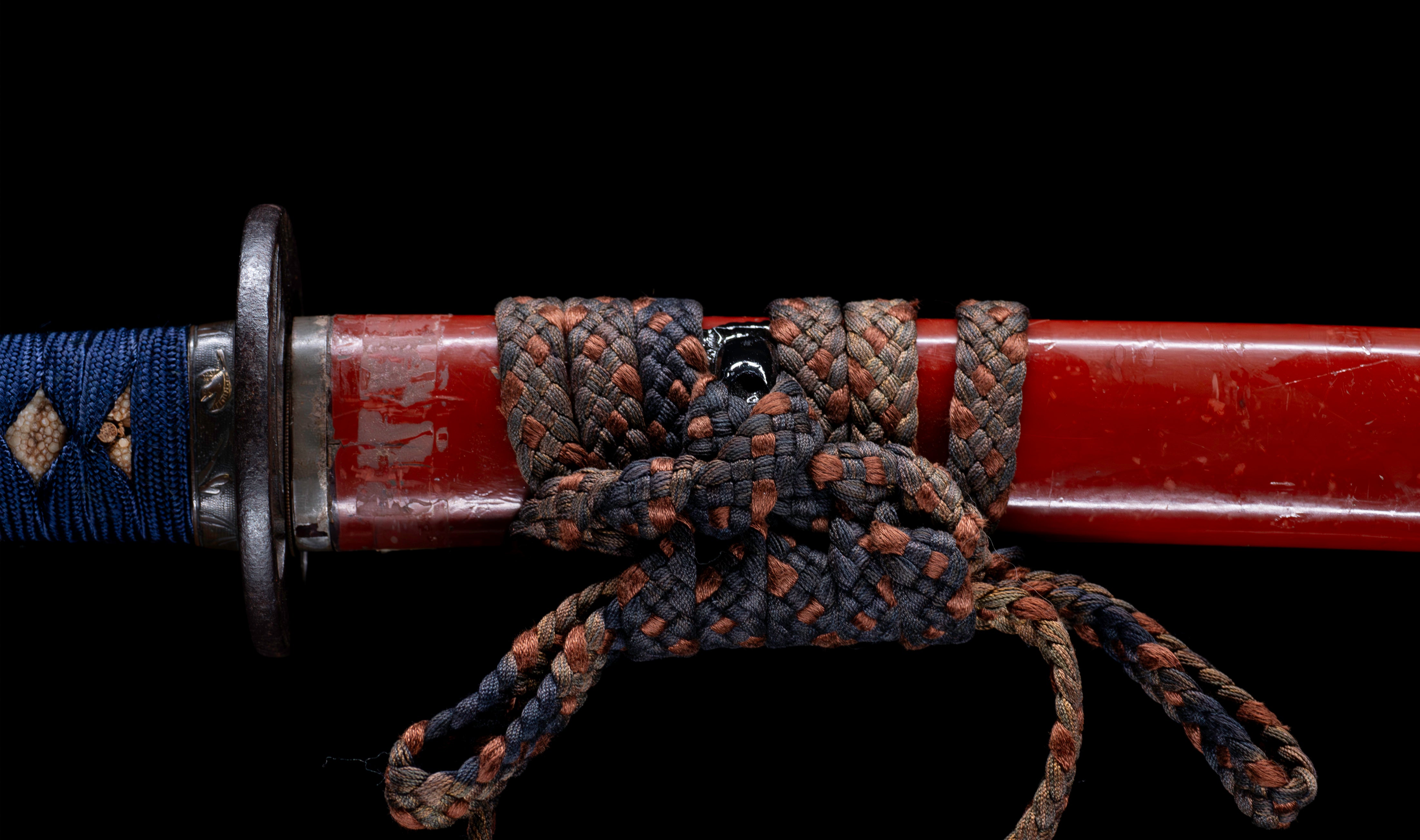
Signature (Mei): Mumei , unsigned Nakago: Unshortened, tapering naturally to a crisply cut kengyo point, deep brown-black patina Swordsmith: Unknown. The blade carries no shinsa paper School / Tradition: Not attributed Period: Early Edo , seventeenth century. The proportions are those of Kanbun shinto Registration: Japanese torokusho Tokyo no. 135604, issued 15 June 1967 Certificate: None. The blade has never been submitted to shinsa Mounting: Complete katana koshirae with vermilion lacquer saya , iron openwork tsuba , sparrow fuchi-kashira and gilt menuki Blade Length (Nagasa): 63.3 cm Curvature (Sori): 1.2 cm Mekugi-ana: 2 Shape (Sugata): Shinogi-zukuri , iori-mune , chu-kissaki , shallow curvature Jihada: Itame mixed with mokume , tightly forged Hamon: Shallow notare carrying ko-gunome , settling at intervals into a wavering suguha , nioi-deki Boshi: Sugu to shallow midare-komi , ko-maru turnback, healthy with width remaining Habaki: Single-piece copper, filed in two zones Polish: Older polish, now tired This is an unsigned katana of 63.3 cm with 1.2 cm of sori , registered in Japan under torokusho Tokyo no. 135604 of 15 June 1967 and dated to the early Edo period . Those two measurements are the whole story. A blade of barely sixty-three centimetres carrying almost no curve is the signature proportion of Kanbun shinto , the style that dominated Japanese sword-making between roughly 1660 and 1680, and it is a shape that exists because of peace rather than war. Two generations after Sekigahara there were no more battlefields. A samurai still wore two swords every day of his life, but he wore them through the streets of a castle town, and if he ever drew one it would be indoors: in a corridor, in a room floored with tatami, at conversational distance. Long, deeply curved blades made for cutting from horseback were useless in that world. What replaced them was this: short, nearly straight, thick through the spine, and faster out of the scabbard than anything that ca
 NihontoWatch
無銘 · 江戸 · 長さ 63.3cm · 反り 1.2cm
江戸時代
徳川の泰平のもと、大小は法度の定める身分の制服となり、需要は城下町、とりわけ江戸に集まった。工芸は二つに分かれる。目利きのための華やかな鑑賞の作と、截断の結果を金象嵌に刻む実証の刀である。
販売店の出品ページで鑑定書を確認できませんでした。日本刀および刀装具は通常、NBTHK(または NTHK)の鑑定を受けます。鑑定書がない場合、極めは販売店の見解にとどまり、第三者による確認は行われていません。ご購入前に販売店へ鑑定書の有無をお問い合わせのうえ、慎重にご判断ください。
Returns/exchanges only for manufactured defects or incorrect products; notify within 72 hours of delivery. Cancellation only within 2 hours of placing. Customer pays return shipping. Refund within 3 business days of package arrival.
$3,200
Signature (Mei): Mumei , unsigned Nakago: Unshortened, tapering naturally to a crisply cut kengyo point, deep brown-black patina Swordsmith: Unknown. The blade carries no shinsa paper School / Tradition: Not attributed Period: Early Edo , seventeenth century. The proportions are those of Kanbun shinto Registration: Japanese torokusho Tokyo no. 135604, issued 15 June 1967 Certificate: None. The blade has never been submitted to shinsa Mounting: Complete katana koshirae with vermilion lacquer saya , iron openwork tsuba , sparrow fuchi-kashira and gilt menuki Blade Length (Nagasa): 63.3 cm Curvature (Sori): 1.2 cm Mekugi-ana: 2 Shape (Sugata): Shinogi-zukuri , iori-mune , chu-kissaki , shallow curvature Jihada: Itame mixed with mokume , tightly forged Hamon: Shallow notare carrying ko-gunome , settling at intervals into a wavering suguha , nioi-deki Boshi: Sugu to shallow midare-komi , ko-maru turnback, healthy with width remaining Habaki: Single-piece copper, filed in two zones Polish: Older polish, now tired This is an unsigned katana of 63.3 cm with 1.2 cm of sori , registered in Japan under torokusho Tokyo no. 135604 of 15 June 1967 and dated to the early Edo period . Those two measurements are the whole story. A blade of barely sixty-three centimetres carrying almost no curve is the signature proportion of Kanbun shinto , the style that dominated Japanese sword-making between roughly 1660 and 1680, and it is a shape that exists because of peace rather than war. Two generations after Sekigahara there were no more battlefields. A samurai still wore two swords every day of his life, but he wore them through the streets of a castle town, and if he ever drew one it would be indoors: in a corridor, in a room floored with tatami, at conversational distance. Long, deeply curved blades made for cutting from horseback were useless in that world. What replaced them was this: short, nearly straight, thick through the spine, and faster out of the scabbard than anything that ca
NihontoWatch無銘 · 江戸 · 長さ 63.3cm · 反り 1.2cm
江戸時代
徳川の泰平のもと、大小は法度の定める身分の制服となり、需要は城下町、とりわけ江戸に集まった。工芸は二つに分かれる。目利きのための華やかな鑑賞の作と、截断の結果を金象嵌に刻む実証の刀である。
販売店の出品ページで鑑定書を確認できませんでした。日本刀および刀装具は通常、NBTHK(または NTHK)の鑑定を受けます。鑑定書がない場合、極めは販売店の見解にとどまり、第三者による確認は行われていません。ご購入前に販売店へ鑑定書の有無をお問い合わせのうえ、慎重にご判断ください。
Returns/exchanges only for manufactured defects or incorrect products; notify within 72 hours of delivery. Cancellation only within 2 hours of placing. Customer pays return shipping. Refund within 3 business days of package arrival.
$3,200