説明
Title:
Koushi Seuyu Sukashi
Description
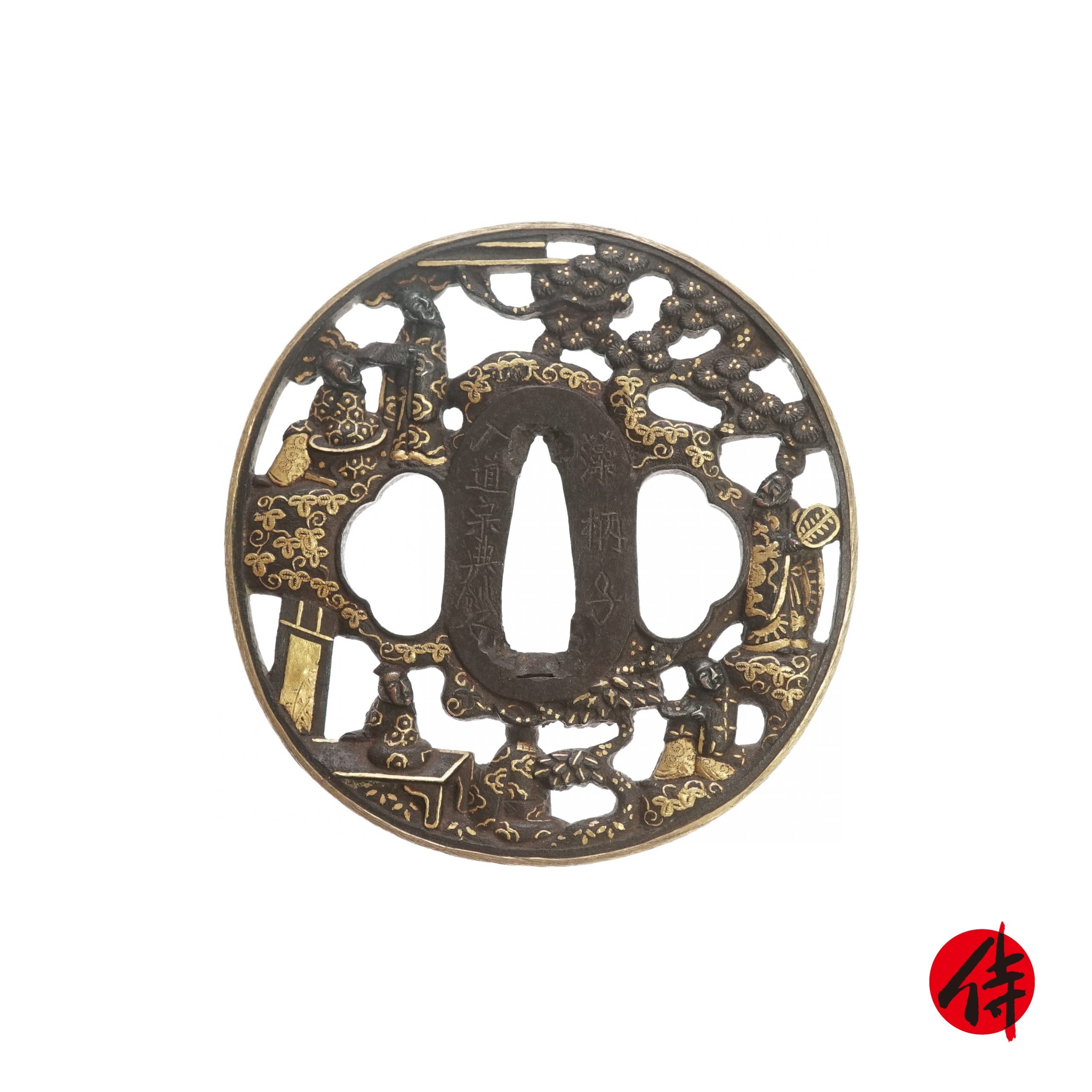
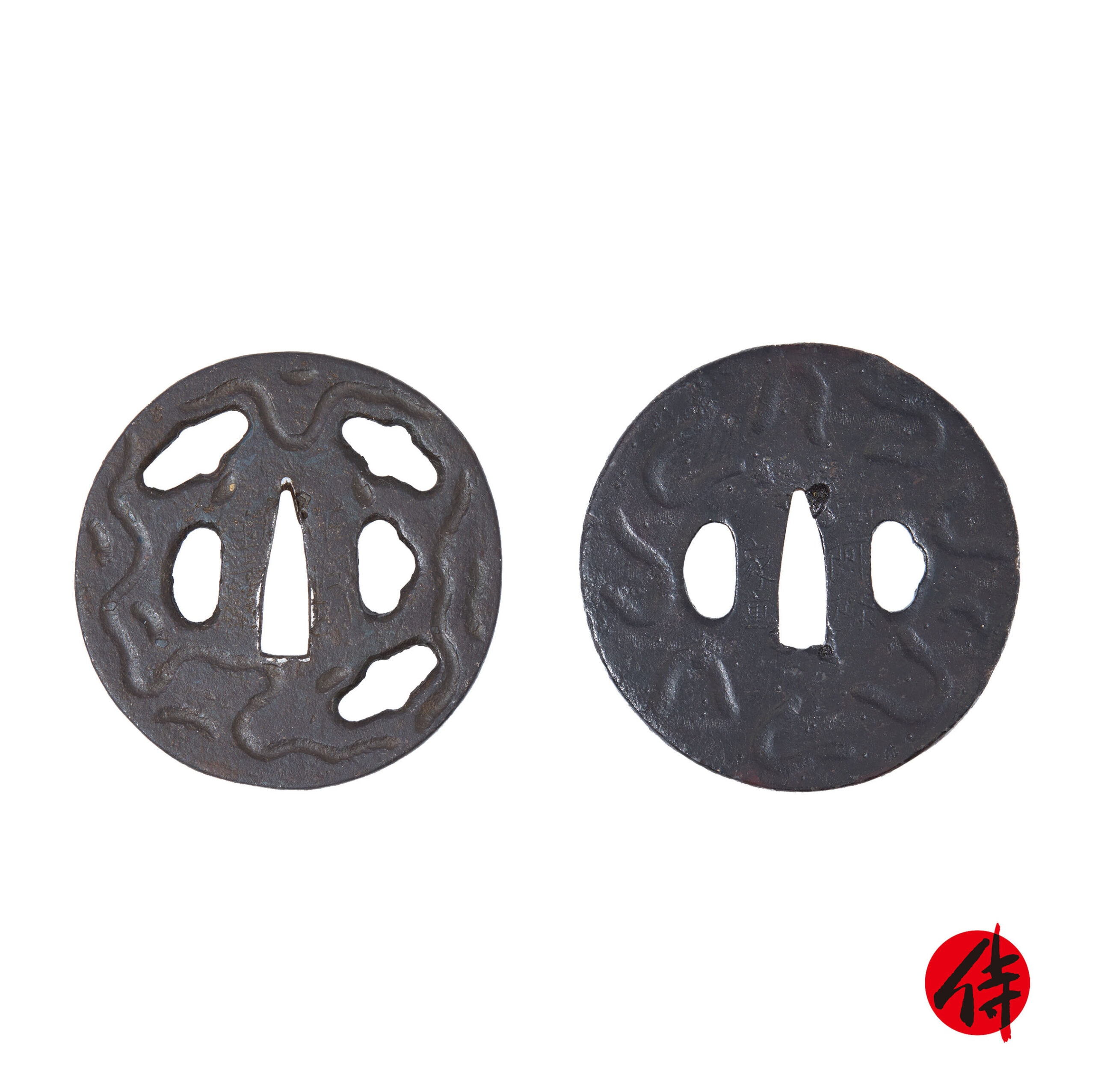
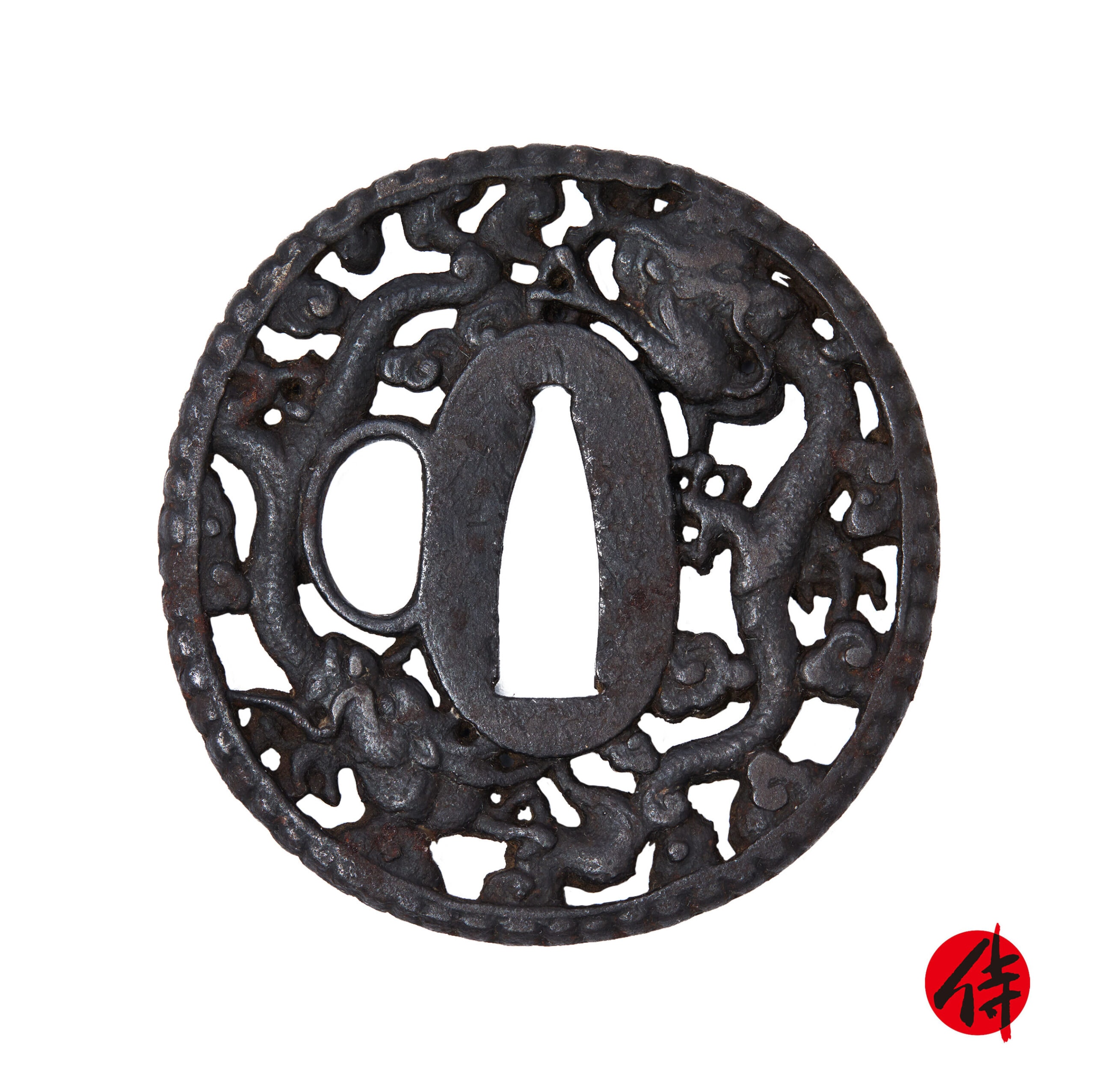
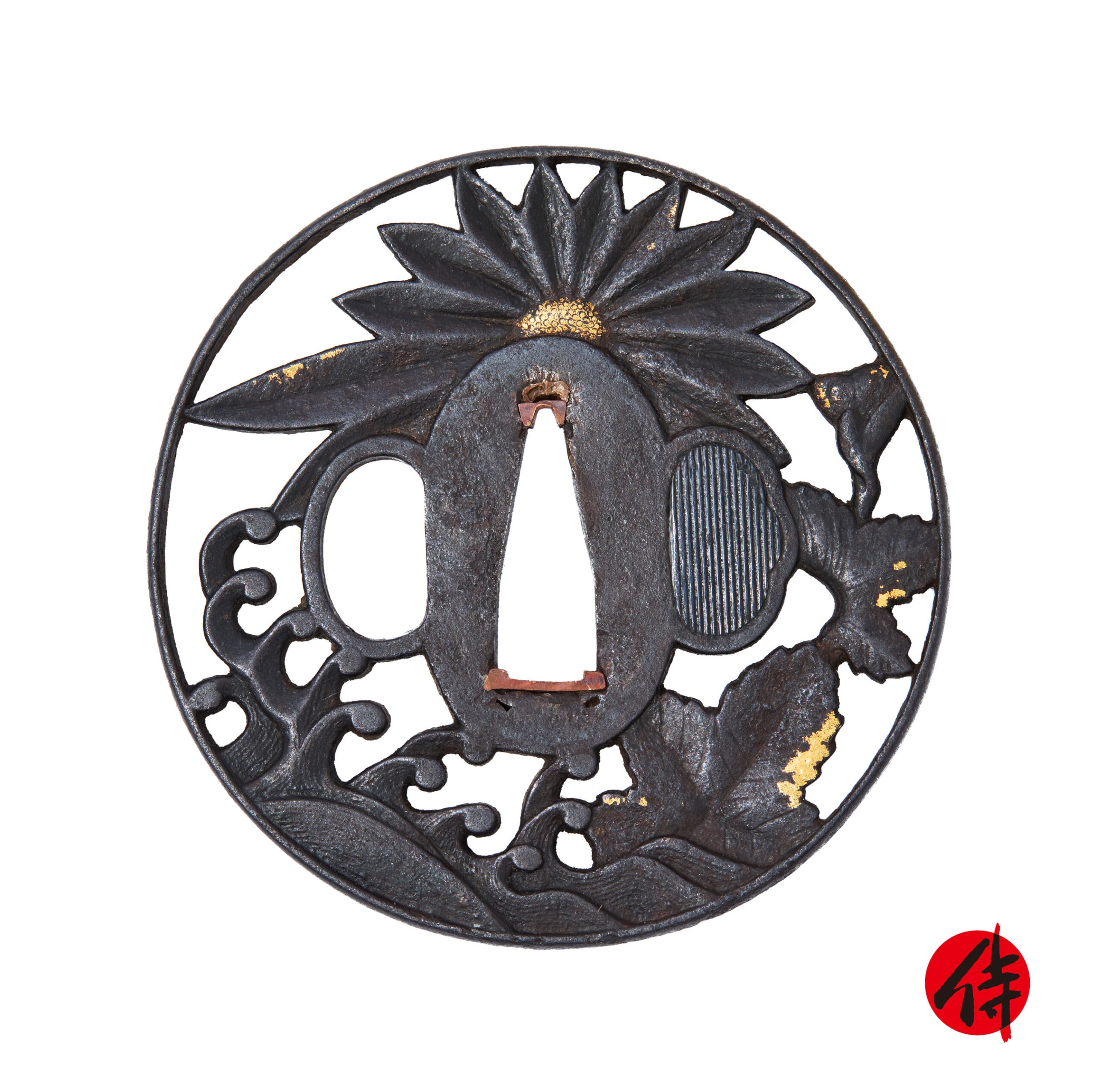
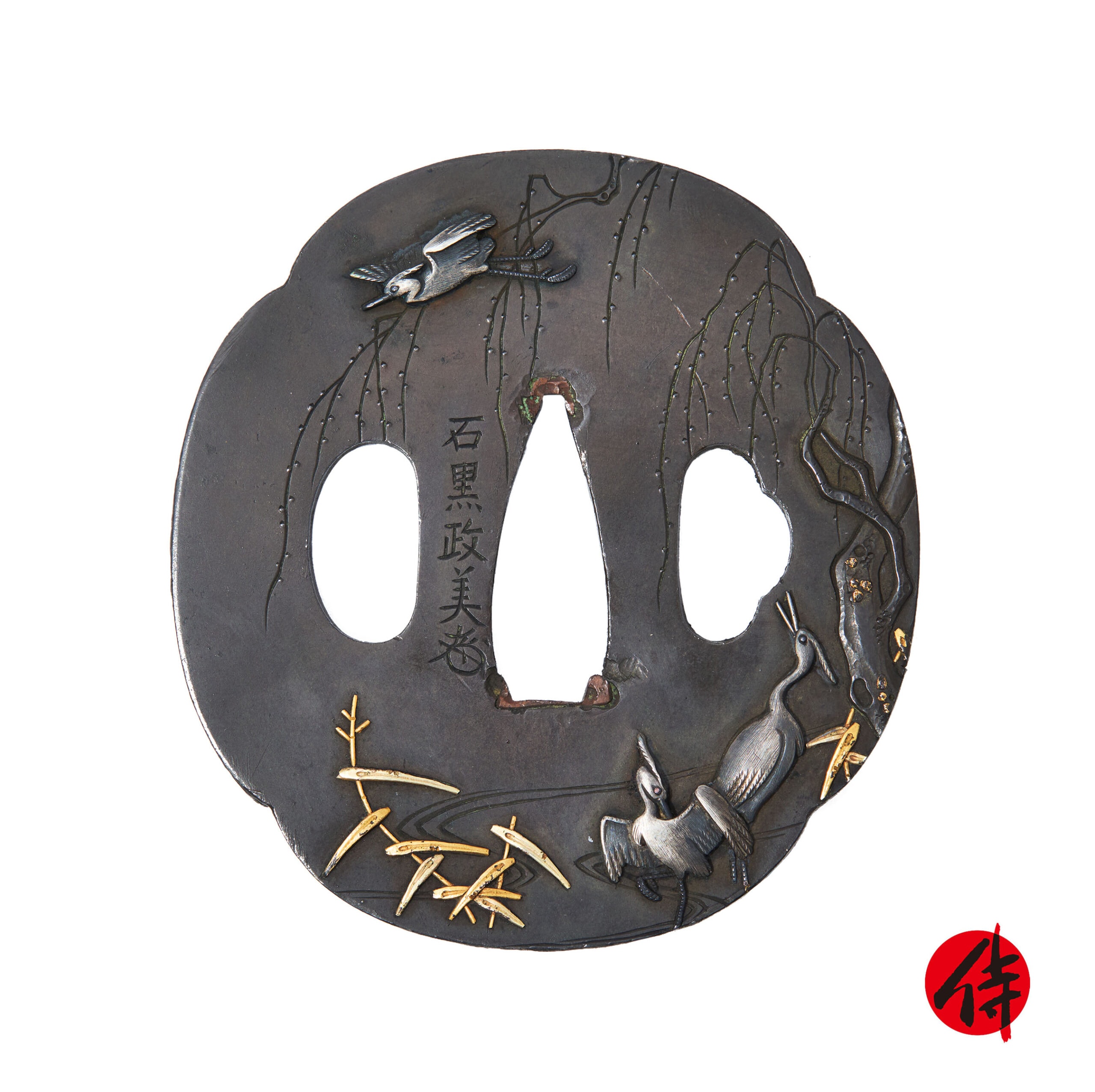
An Iron Tsuba circle shape with two holes
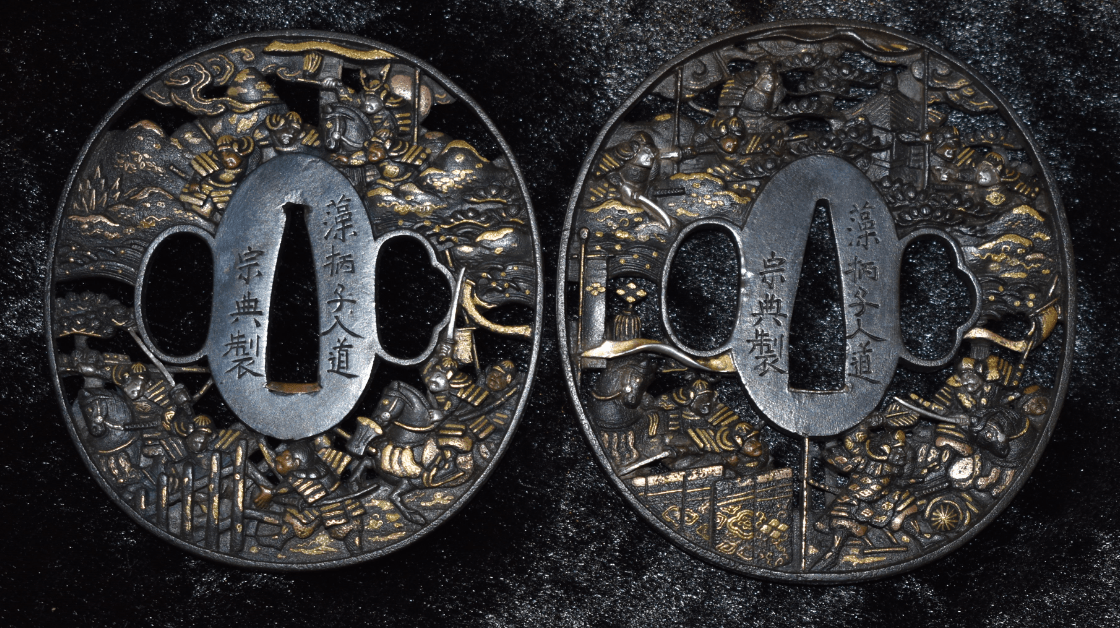
Mogarashi Nyudo Soten is the son of the first Soten, who was a famous metalworker in the middle of the Edo period. He was excellent at the same type of engraving technique as his father. This Tsuba describes “Koushi Seiyu Zu” with openwork. It is a popular motif that has been designed since ancient times. Koushi means an honorable person, and Seiyu means to travel. It would be a longing for sages to indulge in hobbies and arts in nature, far away from the world. Each wise person’s face is clearly engraved. Trees, clouds, cloths and blank space are inlaid with gold. You will appreciate its stunning beauty. It is his notable technique.
For example, if you focus on sage’s clothes pattern, you will find be able to find a kind of good-luck pattern. Please look at men who wear clothes that are designed with
the Kikkou
pattern.
Kikkou
means a turtle’s shell. It’s a continuous geometric pattern connecting regular hexagons up and down. The turtle lives a long life; therefore, turtle and turtle’s shell pattern represent longevity.
Kikkou
pattern has been familiar to people for a long time ago.
Another example to check his high-quality inlay technique is the dragon pattern inlaid on the sage cloth, which is engraved on the right side of the surface. Dragon is a very famous and popular motif. It is a beast that is a symbol of auspicious signs. Its body is likened nine animals: antlers are deer, the head is a camel, eyes are demons, the neck is a snake, belly is
Mizuchi
(mythical animal in Japan which looks like a snake and have a horn and four legs), scales are fish, claws are falcons, palms are tigers, and ears are cows. It was thought that Dragon would reign at the top of all animals because of its odd-looking appearance. It is treated as the all-purpose auspicious pattern.
This Tsuba is recognized by The Society for Preservation of Japanese Art Swords, which is known as NBTHK.
*As this item is an antique, please check each photo and ensure its condition.
What is Tsuba?
Tsuba is the hand-guard of the Japanese sword. High-class Samurai wore his katana sword with its beautiful sword mountings such as Tsuba. Tsuba’s front design tends to be more decorative as this part was often seen by other Samurais when he was walking on the streets.
Why is it that the sword mounting was important for Samurai?
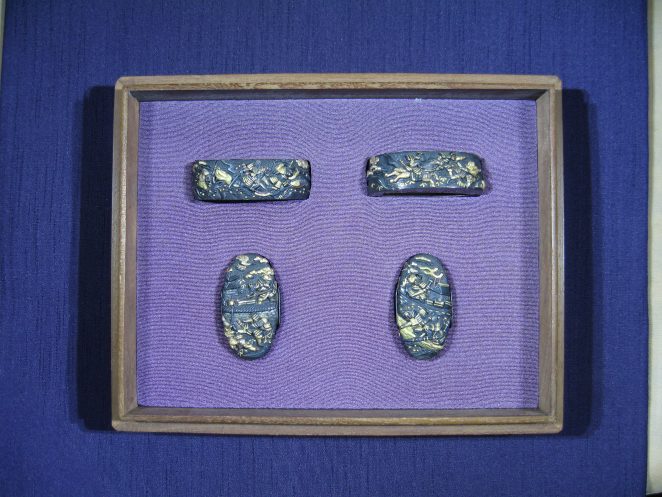
The sword mountings of the Japanese sword have many kinds of decorations such as handguards (Tsuba), sword hilt (Menuki), pommel (Fuchi Kashira). The sword mountings of the Japanese sword have many kinds of decorations such as handguards (Tsuba), sword hilt (Menuki), pommel (Fuchi Kashira). The Japanese sword worked as a weapon and as an object to show who he was. For example, it shows their personalities and beliefs. You could say that it is like decorations for smartphones today. We recommend you zoom in on the pictures of the sword fittings. When you do so, you can see the skill of Japanese metal engraving techniques. They are mainly made of iron and copper with inlays of gold, silver, and bronze. When it comes to handguard (Tsuba), each one has a different outline and weight. These sword fittings that have lived with Japanese swords of the same age might be worth as much as the Japanese swords. They are inconspicuous parts of the Japanese sword. Nevertheless, if you are knowledgeable or particular about it, you will become a connoisseur of the Samurai.
—————————————————————————————————————
About us
Samurai Museum is located in Tokyo, Japan, exhibiting antique artifacts related to the Samurai history. Samurai Museum Shop is the place for those who are interested in Japanese culture and craftsmanship. We deal with antique Samurai swords/armor, original Japanese sword mounting, traditional crafts made in Japan and so on.
Payment method
We accept payment through Stripe (Credit card) or Paypal. If you prefer other payment method, please contact us. You can either pay