説明
Title: Ujigawa Senjin Sukashi
Description
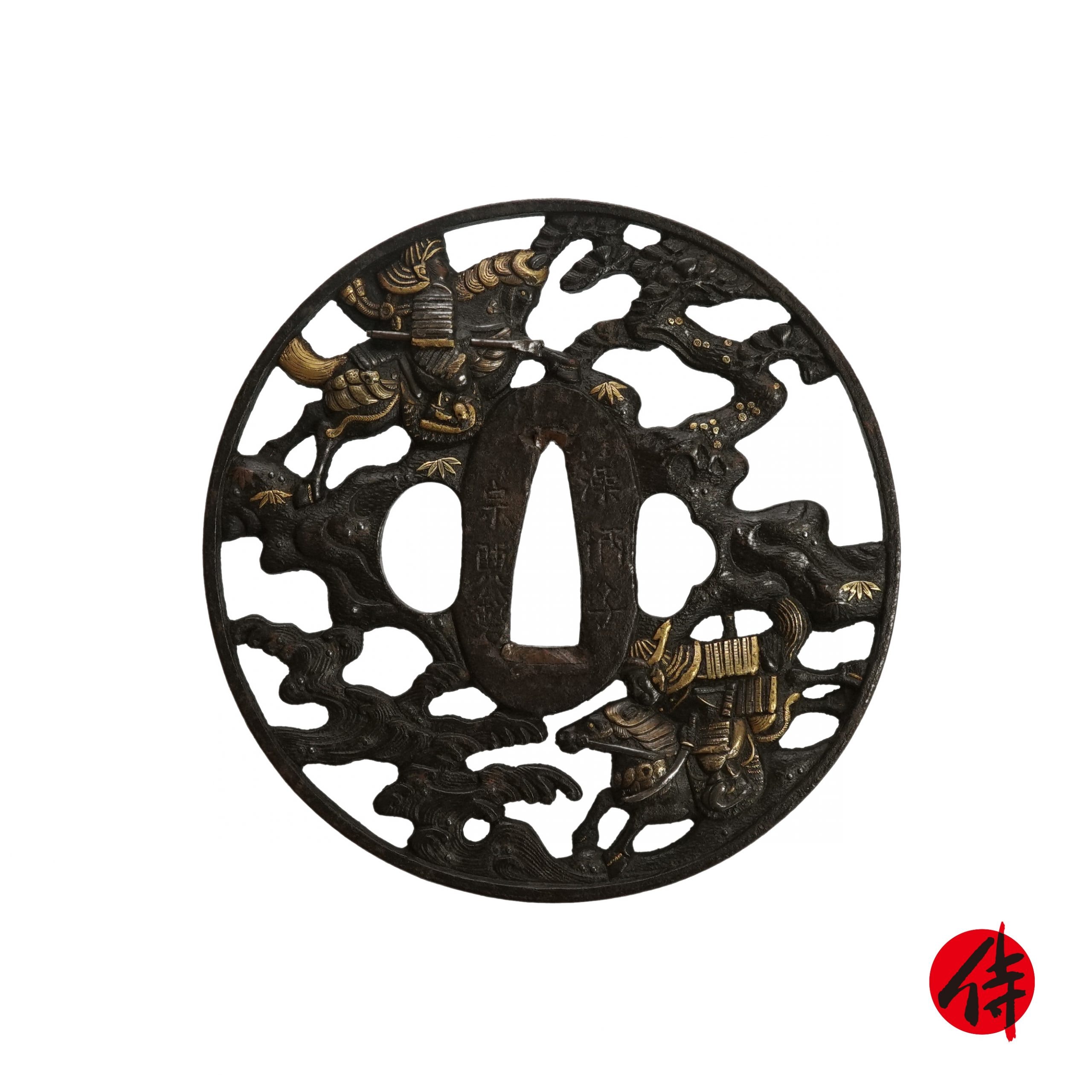
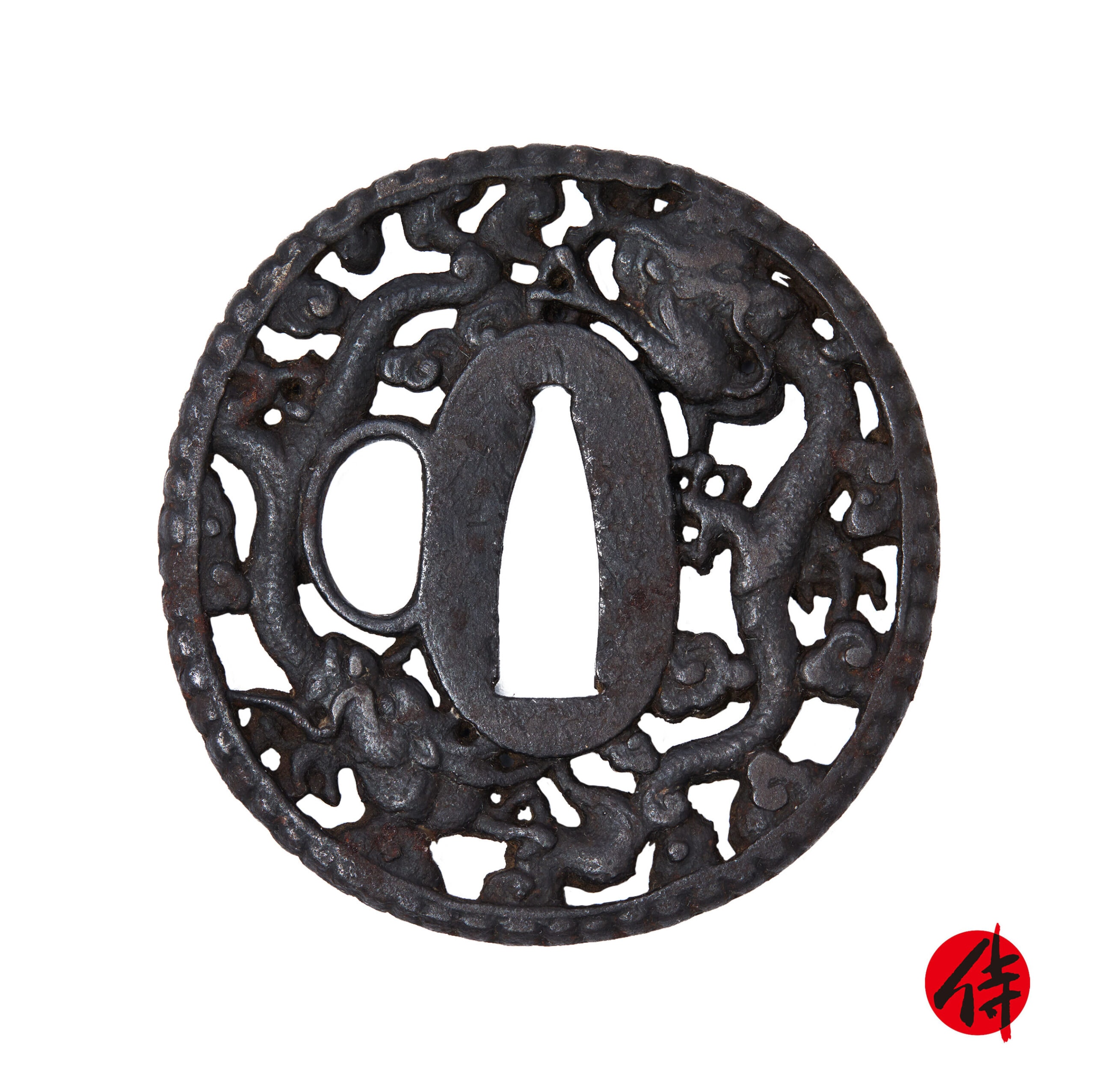
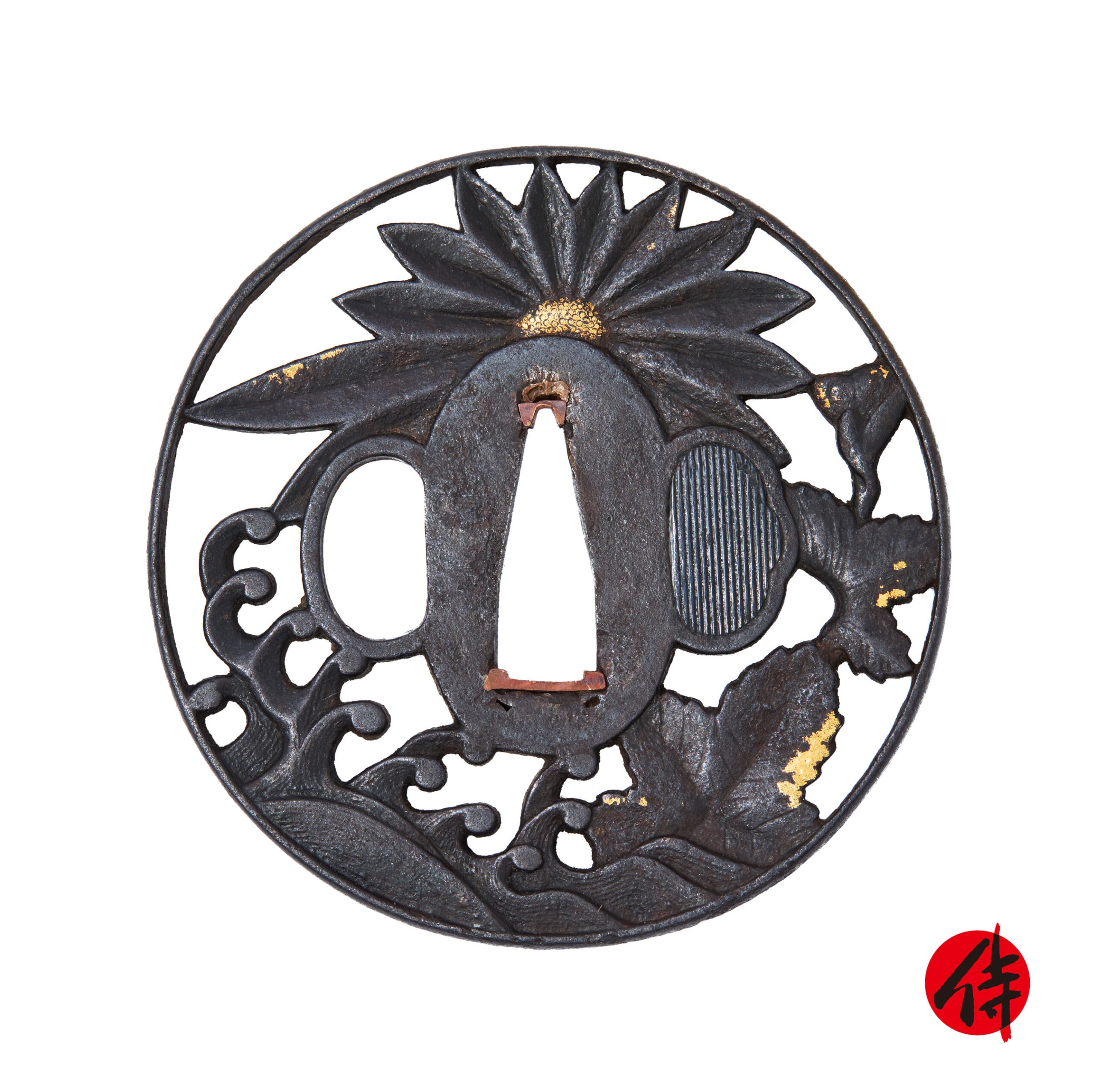
An Iron Tsuba circle shape with two holes
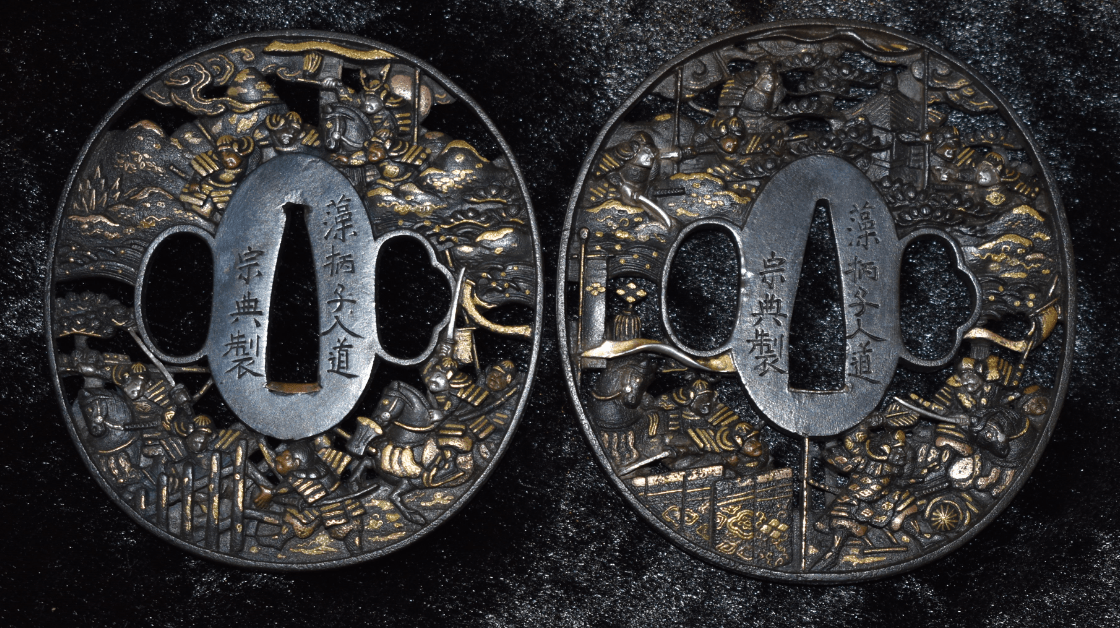
Mogarashi Nyudo Soten is the son of the first Soten, a famous metal artist in the middle of the Edo period. He was excellent at the same type of engraving technique with his father.
Ujigawa battle happened in 1184. This battle is the fight between Kiso Yoshinaka side and Minamoto no Yoritomo side (mainly, Minamoto no Yoshitsune and Minamoto no Noriyori). Yoritomo commanded Yoshitsune to defeat Yoshinaka, and they fought at the Uji River. There is a famous episode which is called Ujigawa Senjin battle. This fight is the motif of this Tsuba.
Two Samurai, Sasaki Takatsuna, and Kajiwara Keiki were Yoshitsune’s subordinates, so they worked for the Minamoto side. Yoritomo gave them excellent cavalry charges. They were making desperate efforts to distinguish themselves in the war. They tried to cross the Uji river first of all. While they were running, Takatsuna told Keiki that his horse’s belt was coming loose. Keiki was surprised and took the time to check it. However, it was a lie to outwit Keiki. Takatsuna beat Keiki, and eventually, Takatsuna succeeded in charging at the enemy first. They attacked dauntlessly to contribute to Yoshitsune’s victory. This competition to be first was named Ujigawa Senjin battle.
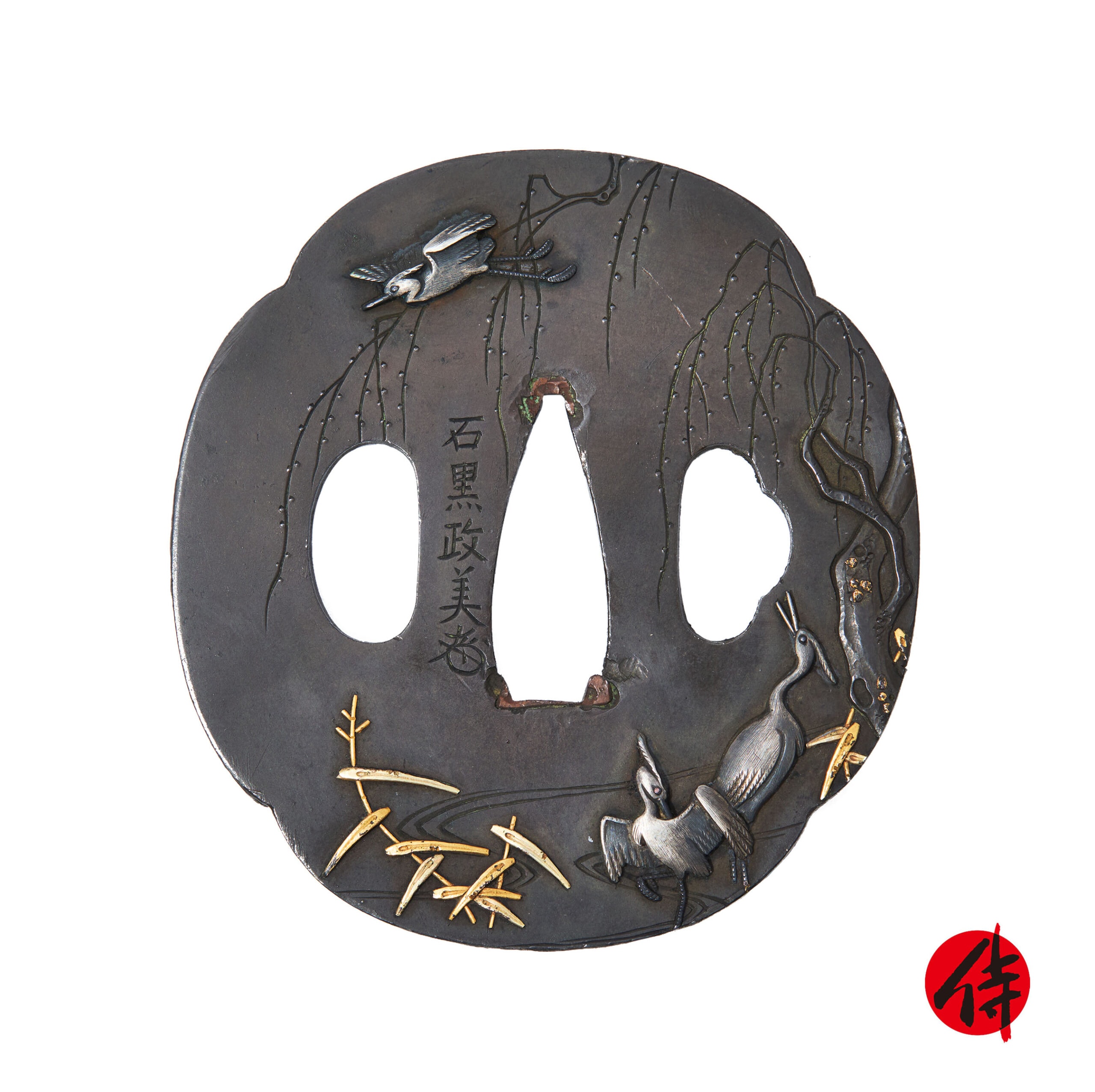
This Tsuba’s gold inlay is extraordinal. Decorations of armors, pine trees, and even horses’ manes are inlaid elaborately. Please strain your eyes into details. You would enjoy his incredible technique.
This Tsuba is recognized by The Society for Preservation of Japanese Art Swords, which is known as NBTHK.
*As this item is an antique, please check each photo and ensure its condition.
What is Tsuba?
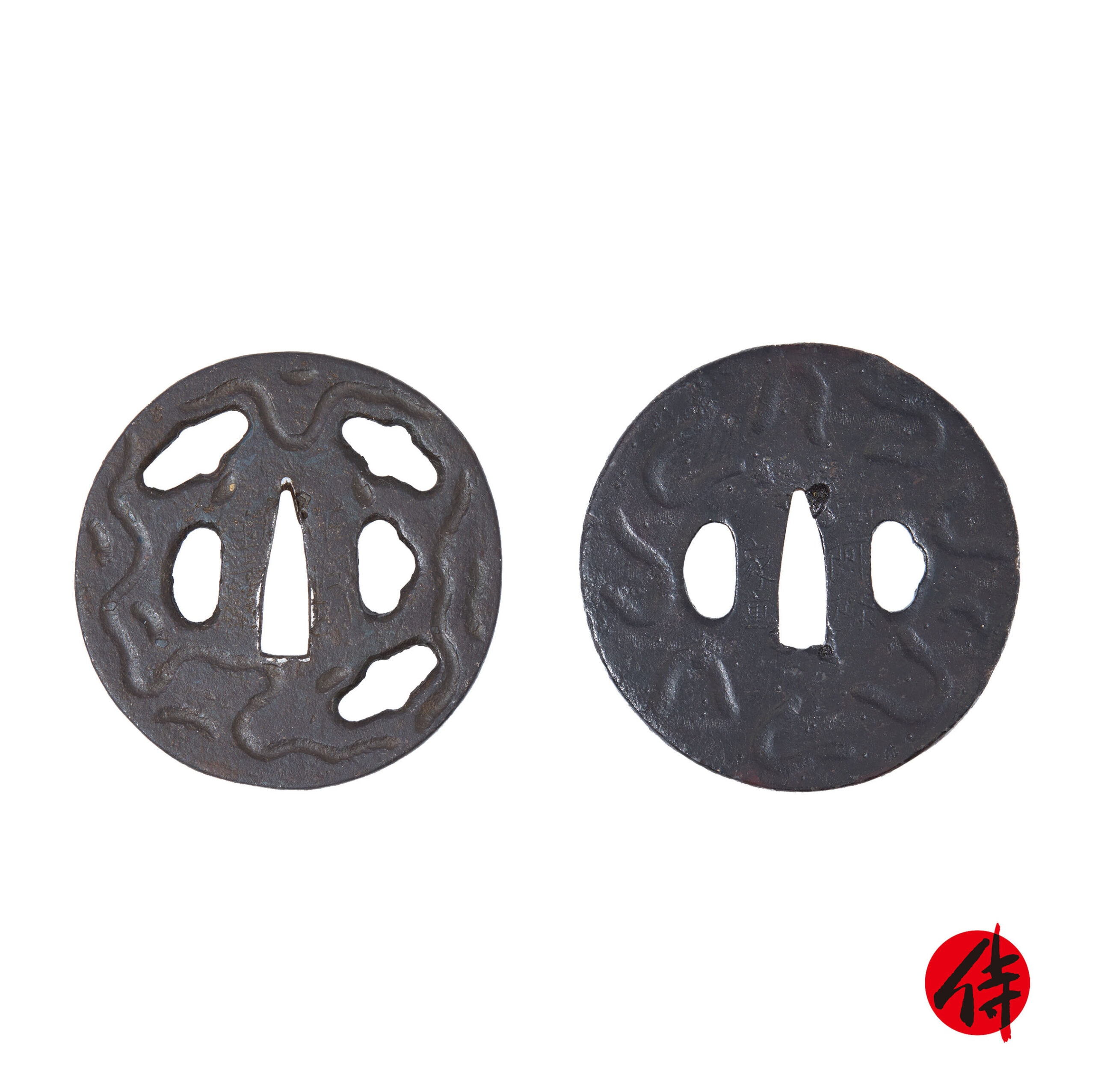
Tsuba is the hand-guard of the Japanese sword. High-class Samurai wore his katana sword with its beautiful sword mountings such as Tsuba. Tsuba’s front design tends to be more decorative as this part was often seen by other Samurais when he was walking on the streets.
Why is it that the sword mounting was important for Samurai?
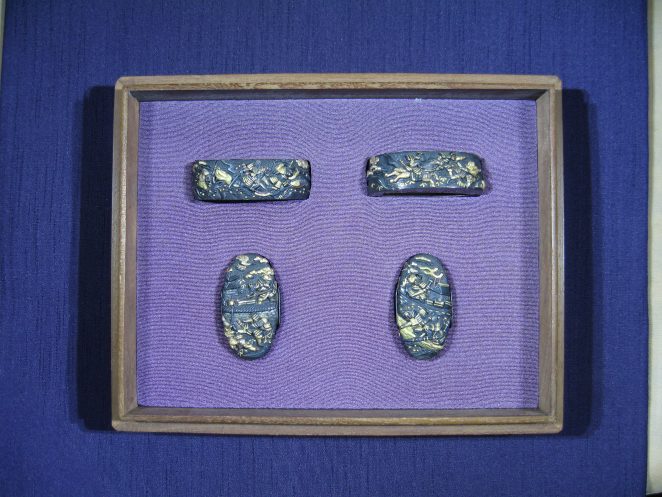
The sword mountings of the Japanese sword have many kinds of decorations such as handguards (Tsuba), sword hilt (Menuki), pommel (Fuchi Kashira). The sword mountings of the Japanese sword have many kinds of decorations such as handguards (Tsuba), sword hilt (Menuki), pommel (Fuchi Kashira). The Japanese sword worked as a weapon and as an object to show who he was. For example, it shows their personalities and beliefs. You could say that it is like decorations for smartphones today. We recommend you zoom in on the pictures of the sword fittings. When you do so, you can see the skill of Japanese metal engraving techniques. They are mainly made of iron and copper with inlays of gold, silver, and bronze. When it comes to handguard (Tsuba), each one has a different outline and weight. These sword fittings that have lived with Japanese swords of the same age might be worth as much as the Japanese swords. They are inconspicuous parts of the Japanese sword. Nevertheless, if you are knowledgeable or particular about it, you will become a connoisseur of the Samurai.
—————————————————————————————————————
About us
Samurai Museum is located in Tokyo, Japan, exhibiting antique artifacts related to the Samurai history. Samurai Museum Shop is the place for those who are interested in Japanese culture and craftsmanship. We deal with antique Samurai swords/armor, original Japanese sword mounting, traditional crafts made in Japan and so on.
Payment method
We accept payment through Stripe (Credit card) or Paypal. If you prefer other payment method, please contact us. You can either pay in Japanese Yen or US Dollars. The price is decided in Japanese Yen. The price in US dollar is calculated automatically based on an exchange rate.
Shipping Duration
We normally ship via EMS (Express Mail Service) provided by Japan Post. It usually takes at least 5-14 days to deliver the package after you place an order. We will use DHL instead for those who orde