説明
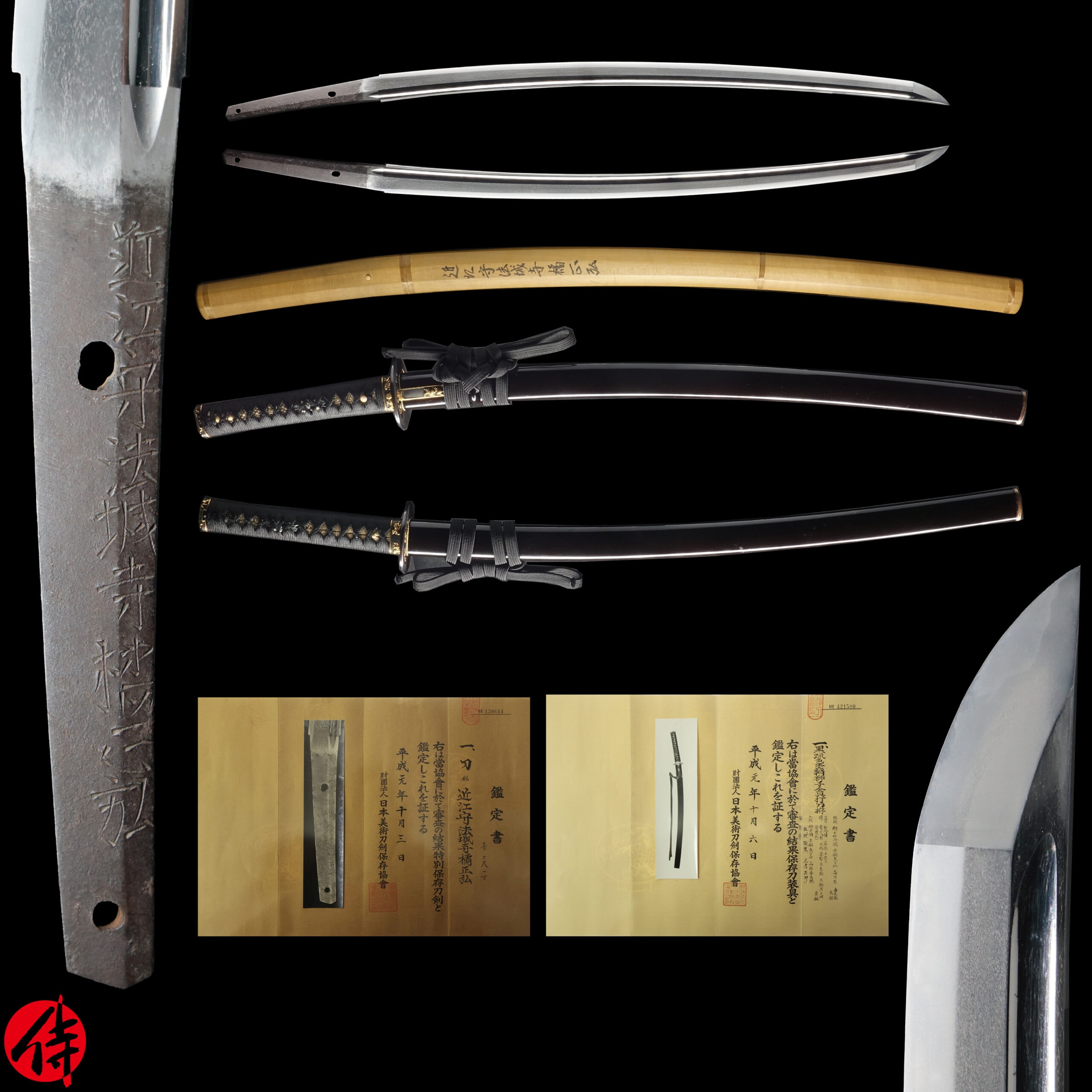
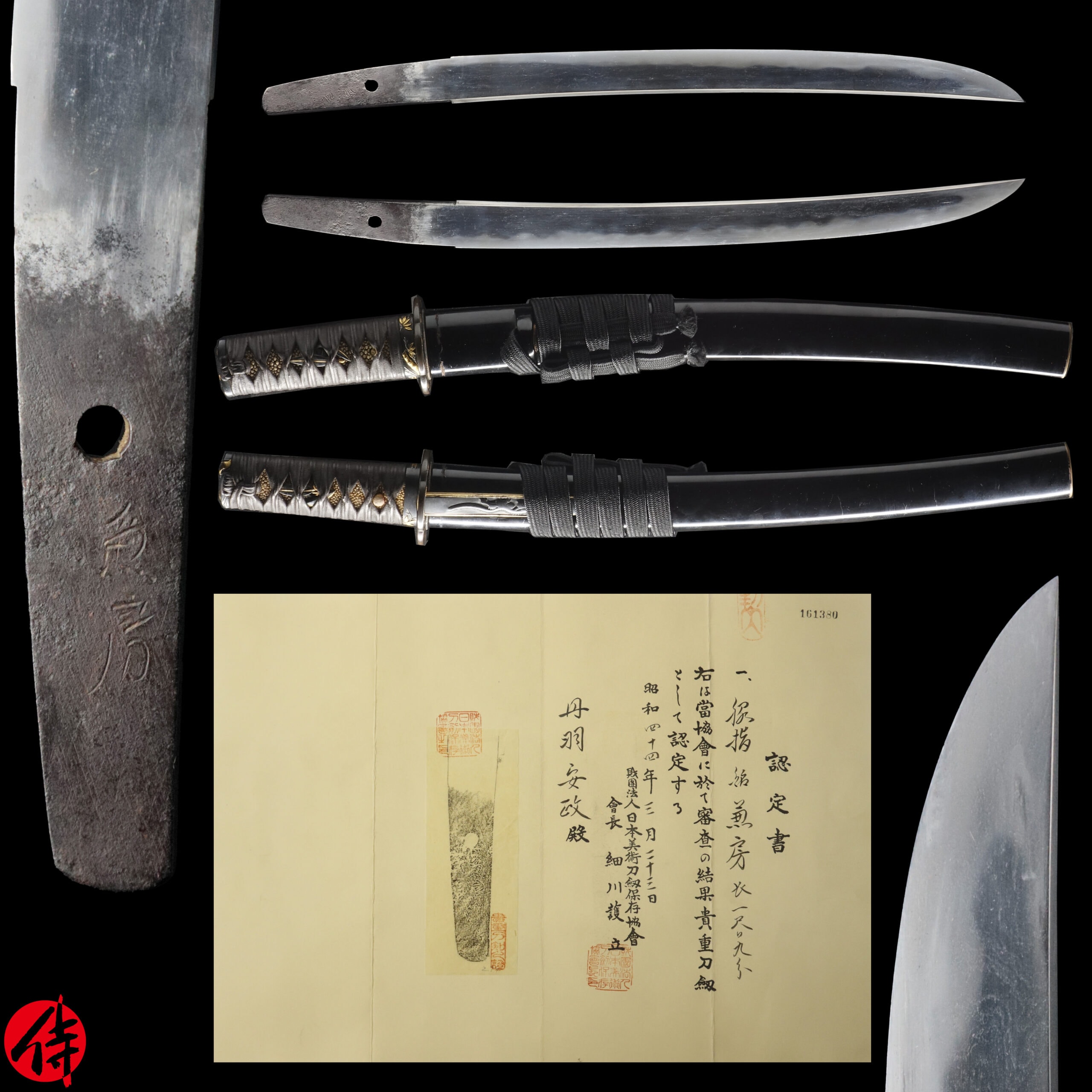
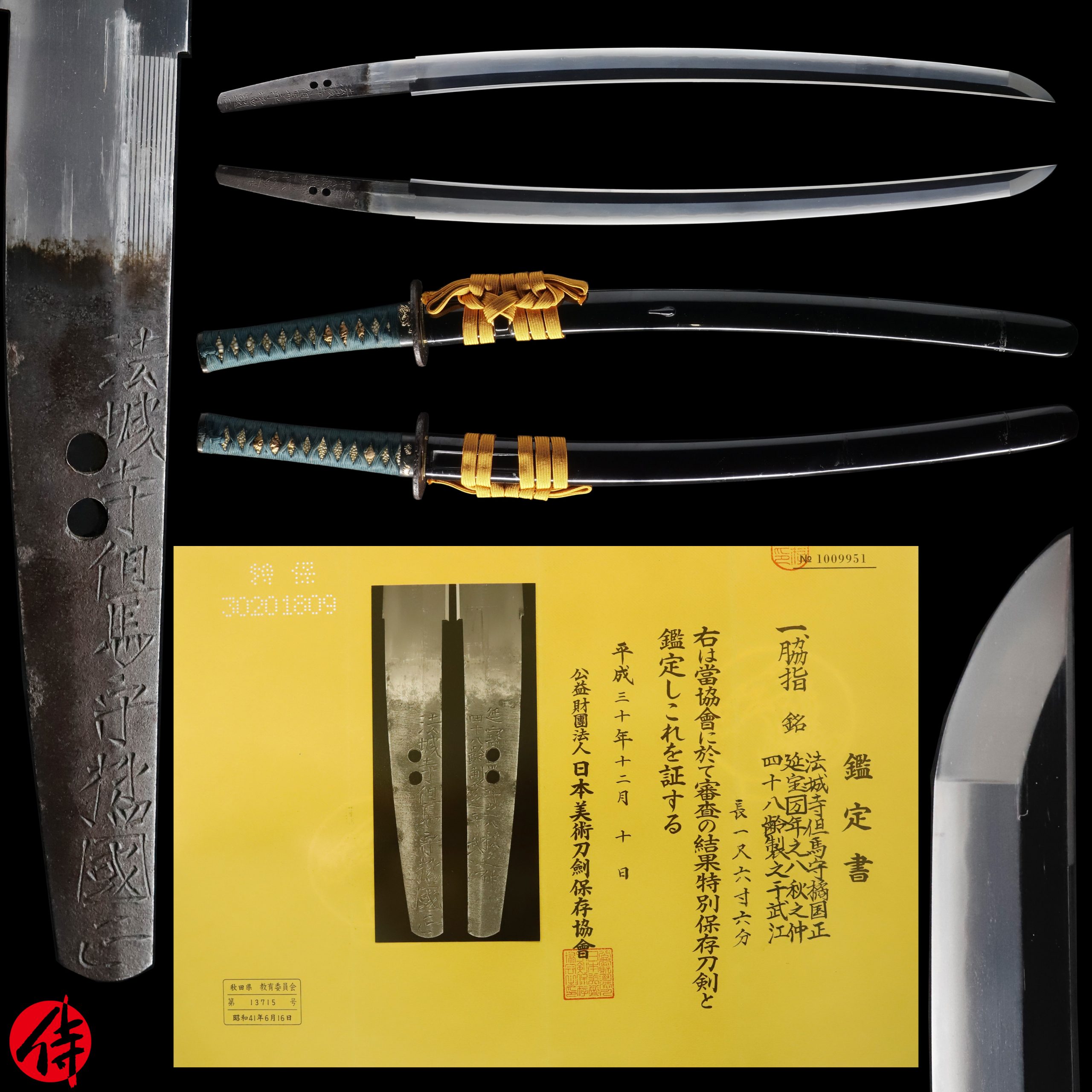
Antique Japanese Sword Wakizashi Signed by Kunimasa with NBTHK
Tokubestsu
Hozon
Certificate
【Description】
This blade was signed by Hojoji Tajima no Kami Tachibana Kunimasa (法城寺但馬盛橘国正). Hojoji is the name of the prestigious school he was part of, and Tajima no Kami is an honorable official title for his excellent craftsmanship. Tachibana is his last name.
He was active during the early Edo period (
1673-1688
) and one of the most prominent figures in the school in Edo city (Today’s Tokyo). Since Kunimasa was a highly regarded swordsmith, this blade might have been made for a high-class Samurai who resided in Edo. Based on the back of the signature, this blade was created when he was 48 years old when he mastered a high level of craftsmanship.
Hojoji school was founded by Hojyoji Kunimitsu, a renowned swordsmith in Tajima no Kuni (Today’s Hyogo prefecture) during the late Nanbokucho-Muromachi period. It is said that Kunimitsu was one of three apprentices of Sadamune, who was one of the most prominent makers in Soshu province (Today’s Kanagawa prefecture).
Hojyoji Masahiro (法城寺正弘), an offspring of Kunimitsu, is the one who moved to Edo city and established the Edo Hojyoji school during the early Edo period. He brought his apprentices, including Kunimasa from Tajima no Kuni, based on available records. And those who came to Edo city with Masahiro received the last name of Tachibana.
The blades forged by members of Edo Hojyoji swordsmiths closely resemble Kotetsu, one of the most famous swordsmiths. Other renowned swordsmiths who belonged to this school are Kaneshige, Sadakuni, and Yoshitsugu. The school was prosperous during the Edo period and forged many blades for the Edo government. The founder, Masahiro, once resided in Mito domain (today’s Ibaraki prefecture) to forge swords for Tokugawa Mitsukuni.
This blade is appraised as a
Tokubetsu Hozon Token
(特別保存刀剣) issued by NBTHK(Nihon Bijutsu Touken Hozon Kyokai:日本美術刀剣保存協会). This authentication paper was only given to authentic Japanese swords, especially well preserved and high quality with artistic value.
*Please keep in mind that there is one relatively noticeable Kitae Kizu on this blade. If you like to see the detailed condition, please feel free to contact us.
【Blade】
Cutting Edge Length(Nagasa)
:
52.1 cm (
20.5 inches)
Curvature(Sori)
:
1.6
cm ( 0.62 inches)
Hamon
:
The crystalline structure which forms along the cutting edge of a blade as a result of the hardening process
Jimon(Jihada)
:
visible steel surface pattern created by folding and hammering during forging process
Nakago
:
Nakago is the tang of the Japanese sword.
Japanese swordsmiths left the black rust on the tang because it prevents red rust while the tang is in its handle. And the discoloration of the tang was created over time, and it is a great indicator for a Japanese sword specialist to estimate when the sword was forged.
Koshirae:
Koshirae is the mounting of the Japanese sword. There are several parts that consist of Koshirae such as Saya(Scabbard), Tsuka(Handle), Tsuba(Handguard).
Fuchi-Kashira
:
A pair of matching sword fittings that cover the upper and bottom parts of its sword hilt.
On the Kashira part, you would find an Ebi (海老, shrimp). According to a theory, Japanese people already ate shrimp in the Heian period (794-1185). However, it was expensive for ordinary citizens, so only the nobility and high-class people could enjoy it. Today, shrimp is an indispensable ingredient for Japanese New Year’s cuisine. People started using shrimp as a good-omen pattern and appreciated designing it for their family crests in the Muromachi period (1336-1573). In the Samurai society, as shrimp is covered with a hard shell, it was thought that the shrimp represents the figure of a brave Samurai who wears the armor. Shrimp has been likened to an older adult because of its long feelers. Also, shrimps actively jump even though they are bowed. That is the reason why the shrimp pattern is treated as a symbol of perpetual

![盛岡住義次(新刀)阿掲多設羝 主多光□多麻□尼 保存刀剣鑑定書 Wakizashi(Morioka-sumi Yoshitsugu)[NBTHK:Hozon] 品番:WA006](/_next/image?url=https%3A%2F%2Fitbhfhyptogxcjbjfzwx.supabase.co%2Fstorage%2Fv1%2Fobject%2Fpublic%2Flisting-images%2Ftoyuukai%2FL398996%2F00.jpg&w=2560&q=90)