説明
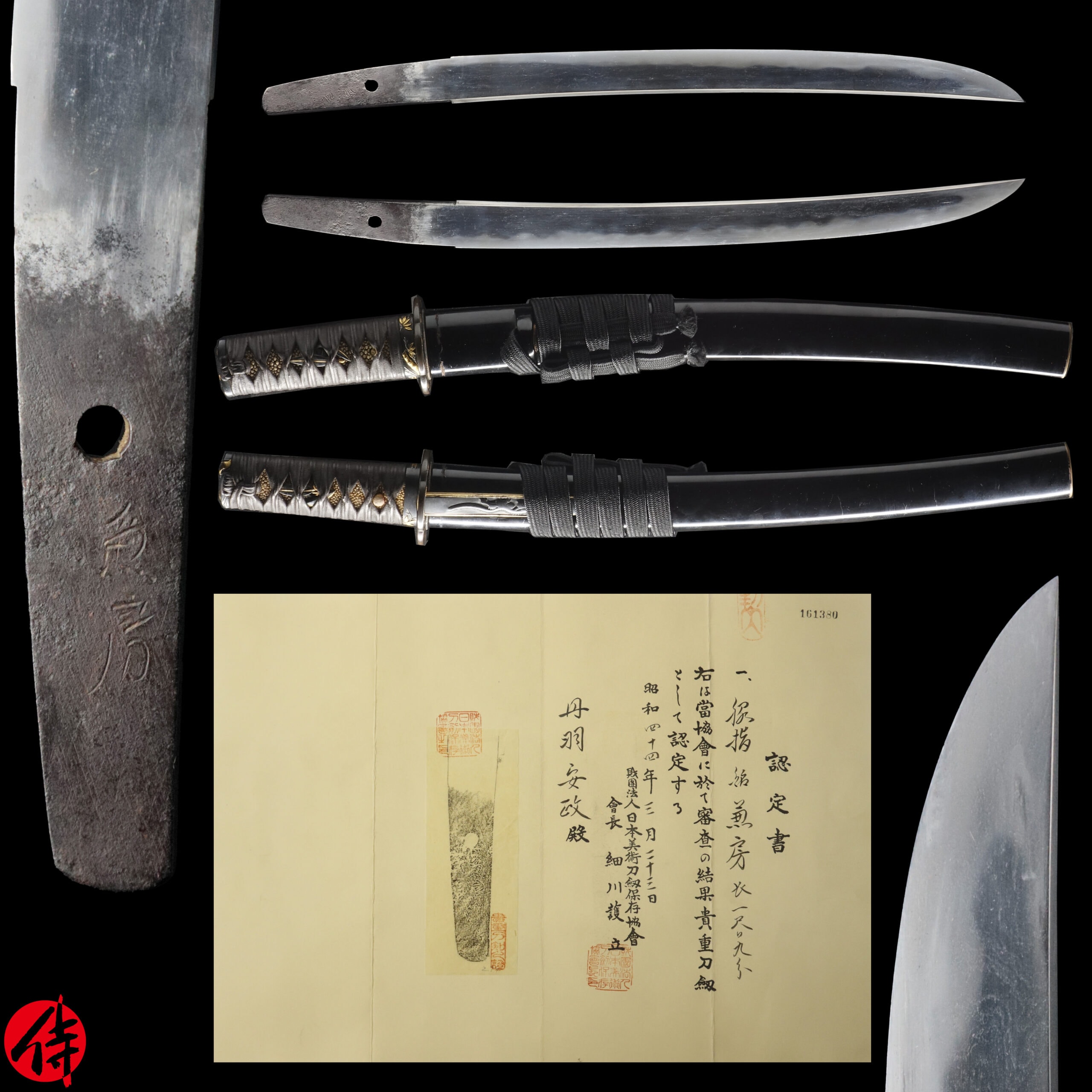
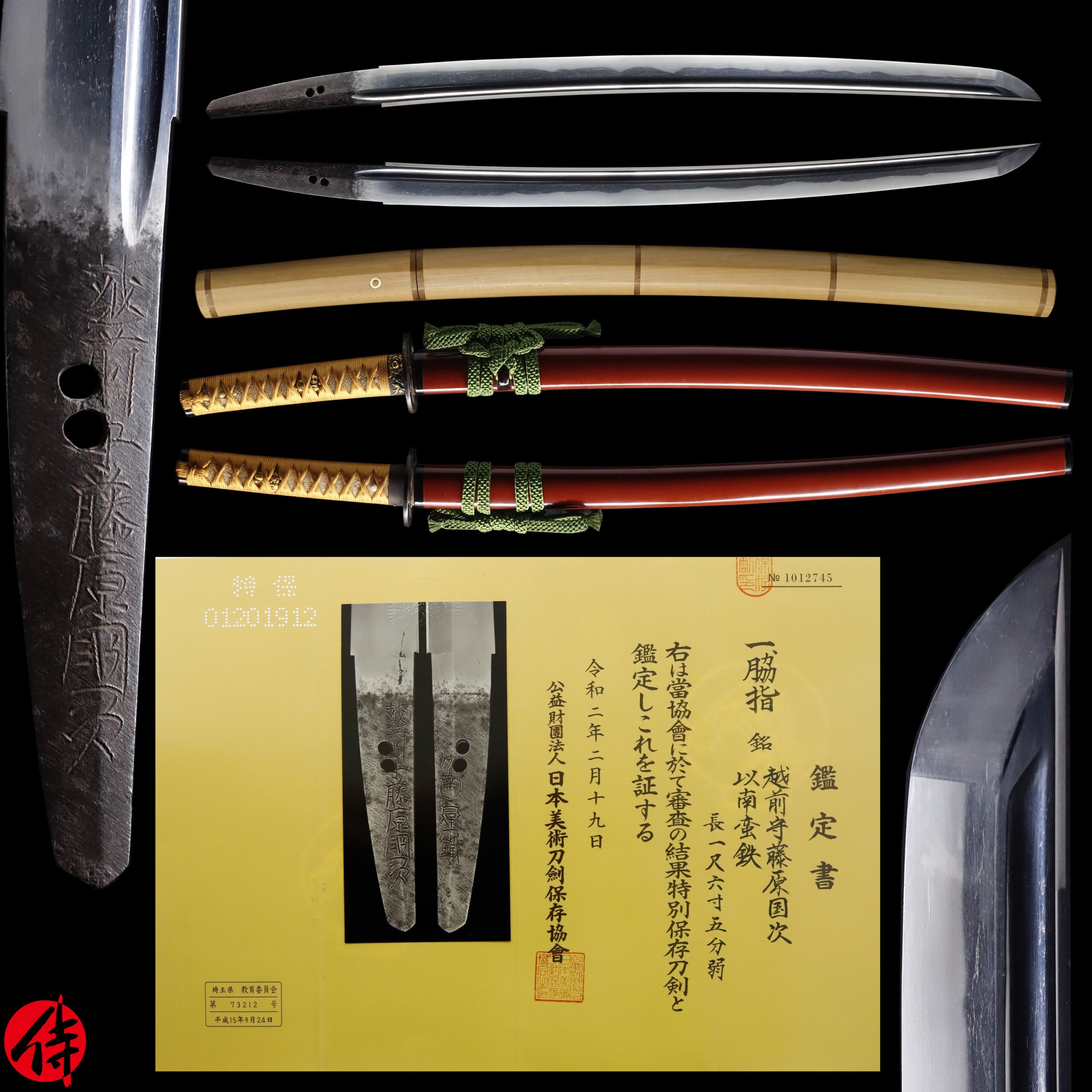
Antique Japanese Sword Wakizashi Signed by Fujiwara Kunitsugu with NBTHK
Tokubestsu
Hozon
Certificate
【Description】
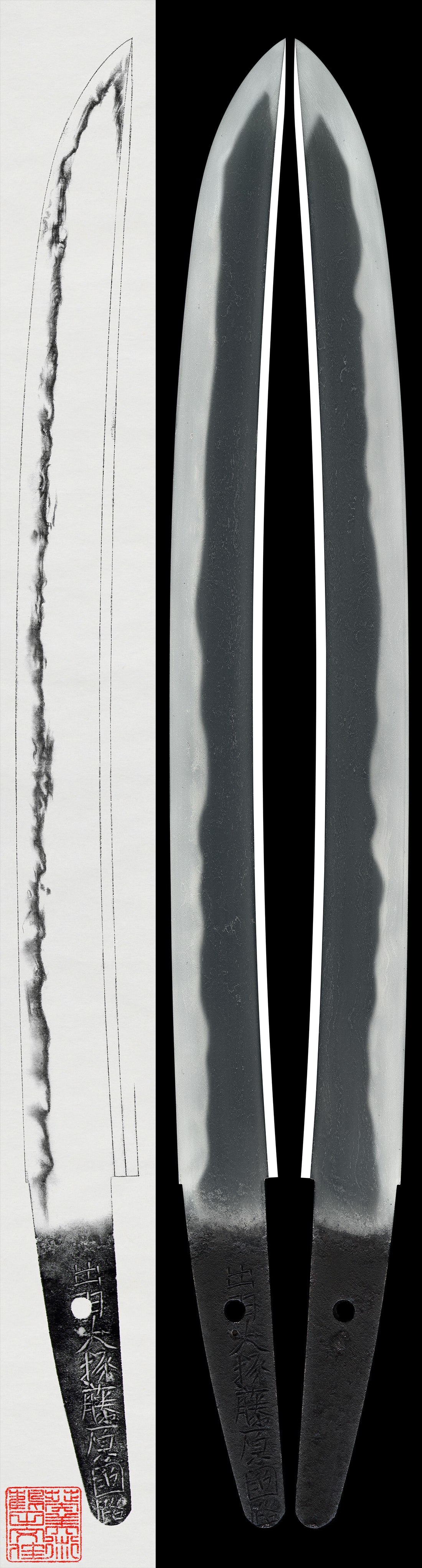
This blade was signed by Echizen no Kami Fujiwara Kunitsugu (越前守藤原国次) during the early Edo period (Kan-Ei era:
1624-1644
).
The back side of the signature says that it was made of western carbon steel (Nanbantetsu). During the early Edo period, it was common to use newly imported western carbon steel to forge Japanese swords among skilled swordsmiths.
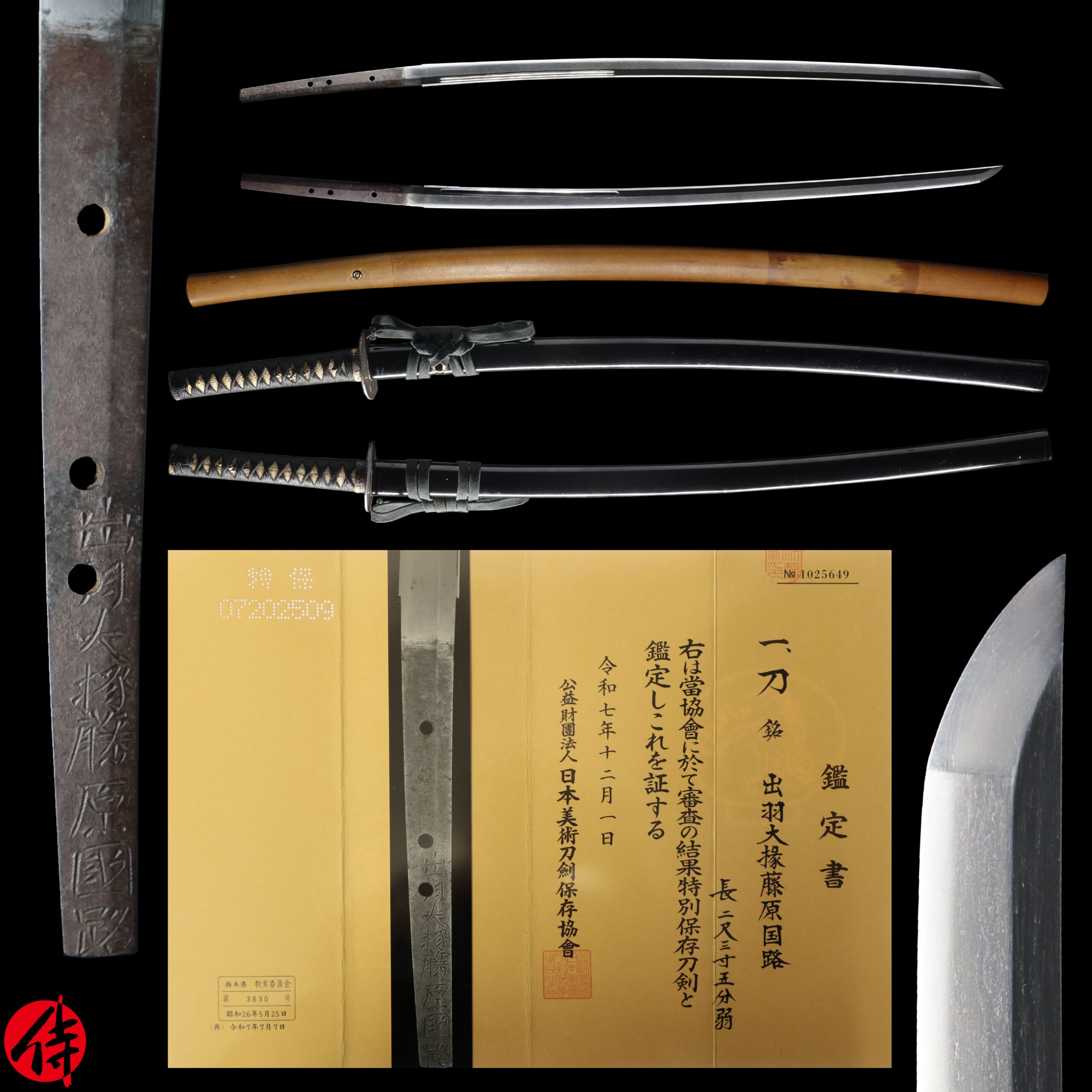
Kunitsugu was known as an apprentice for Dewa Daijo Kunimichi (出羽大掾国路), one of the most renowned swordsmiths in Yamashiro province (Today’s Kyoto) during the early Edo period.
Kunitsugu was born in Echizen province (Today’s Fukui prefecture) but moved to Yamashiro province to become an apprentice for
Kunimichi. They both belonged to Horikawa school, one of the most prestigious schools back then. It was founded by Horikawa Kunihiro.
Kunimichi (his master) and Kunitsugu also collaborated to make blades, which is called Gassaku. It is said that Kunitsugu regularly did Daisaku for Kunimichi. Daisaku is a regular act where an apprentice or a child of the swordsmith signs his master’s name with his master’s permission or forges a blade on behalf of the master. That means that his master highly acknowledged Kunitsugu’s craftsmanship. That is also why there aren’t many remaining blades signed by Kunitsugu, who dedicated his career to helping his master.
Considering the fact that they forged blades together and Kunitsugu did Daisaku for Kunimichi, they must have had a very close relationship and trusted each other.
Kunitsugu received an honorable official title of Echizen Daijo in the 11th year of the Kan-Ei era (1634) and was promoted to Echizen no Kami by the 14th year of the Kan-Ei era (1637). Daijo or Kami was given by the emperor for one’s excellent craftsmanship.
Later in his career, he moved to Higo province (Today’s Kumamoto prefecture) with one of his apprentices to teach sword-forging techniques there.
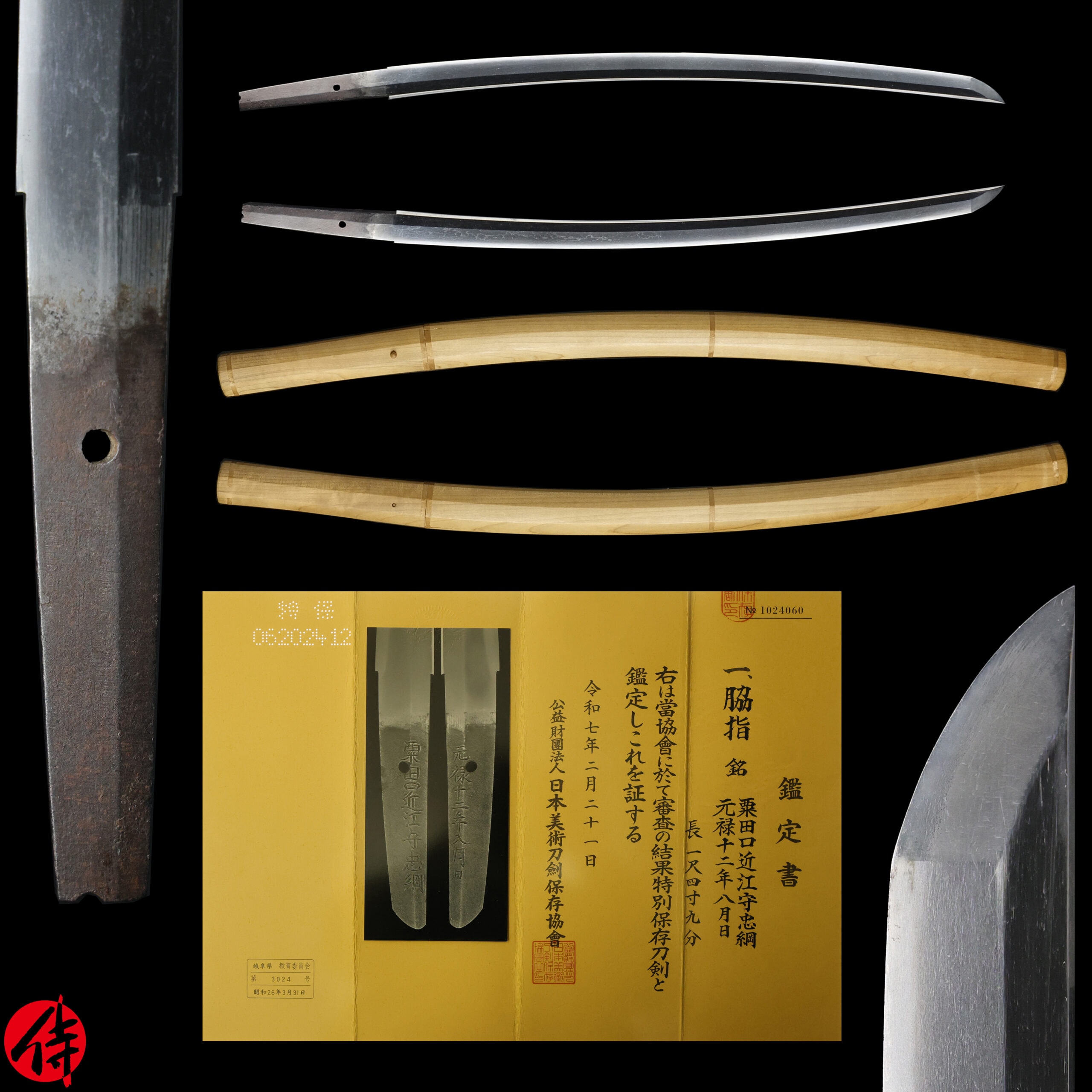
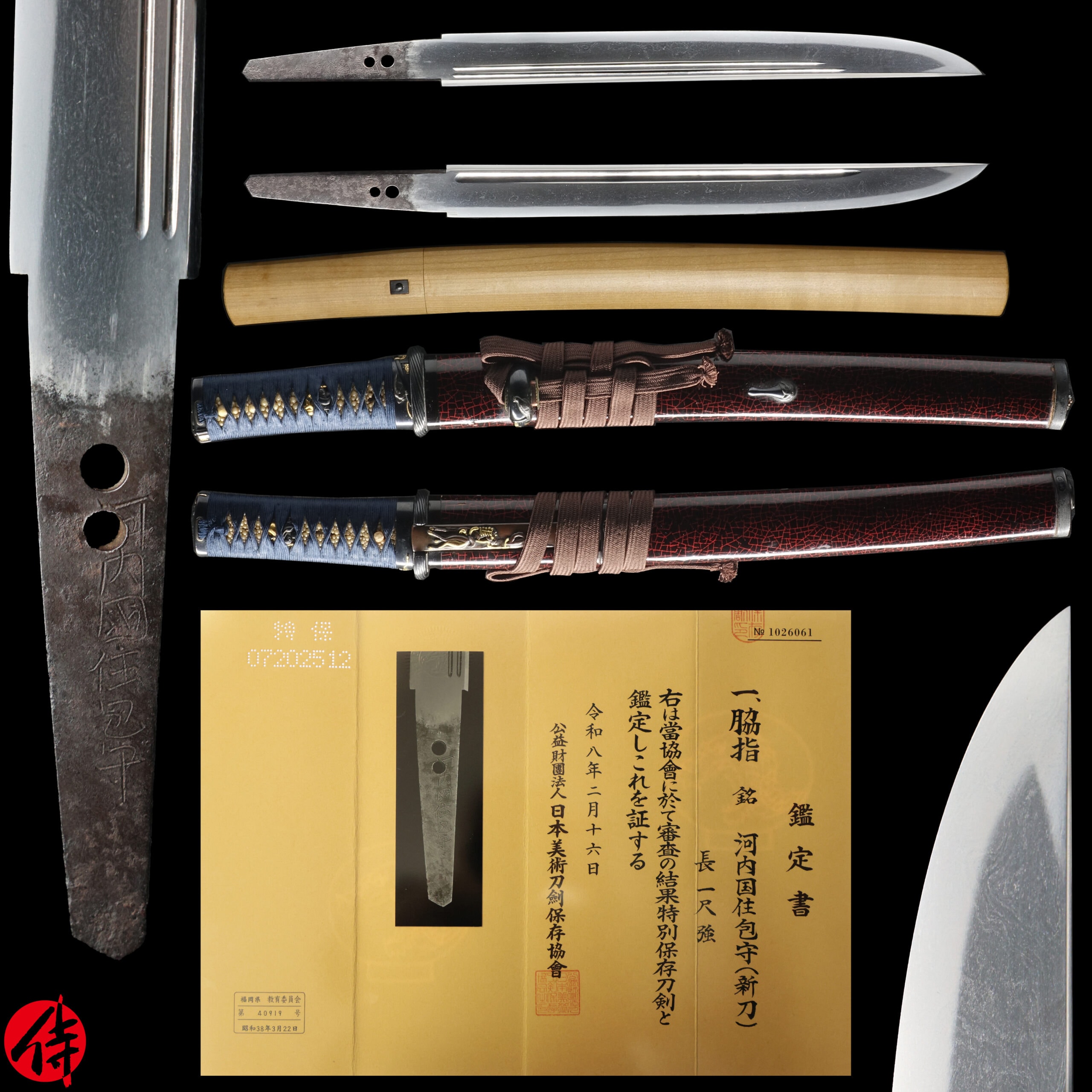
This blade is appraised as a
Tokubetsu Hozon Token
(特別保存刀剣) issued by NBTHK(Nihon Bijutsu Touken Hozon Kyokai:日本美術刀剣保存協会). This authentication paper was only given to authentic Japanese swords, especially well preserved and high quality with artistic value.
*Please keep ind mind that there are are couple of noticeable Kitae Kizu on this blade. If you like to know the detail, please contact us.
【Blade】
Cutting Edge Length(Nagasa)
:
50.0 cm (
19.6 inches)
Curvature(Sori)
:
0.9
cm ( 0.35 inches)
Hamon
:
The crystalline structure which forms along the cutting edge of a blade as a result of the hardening process
Jimon(Jihada)
:
visible steel surface pattern created by folding and hammering during forging process
Nakago
:
Nakago is the tang of the Japanese sword.
Japanese swordsmiths left the black rust on the tang because it prevents red rust while the tang is in its handle. And the discoloration of the tang was created over time, and it is a great indicator for a Japanese sword specialist to estimate when the sword was forged.
Koshirae:
Koshirae is the mounting of the Japanese sword. There are several parts that consist of Koshirae such as Saya(Scabbard), Tsuka( Handle), Tsuba(Handguard).
Fuchi-Kashira
:
A pair of matching sword fittings that cover the upper and bottom parts of its sword hilt.
The Fuchi and Kashira each part has different tastes. Firstly, the Kashira part has a simple look. It has a form and design specializing in practicality, completely eliminating decorations such as gold, silver, and brass that add glamor to its appearance.
On the other hand, the Fuchi part has an ornamental look. Its surface is decorated with the Nanako-Ji (魚子地) technique, and a large peony flower is elegantly engraved. Golden paint is applied to the petals and leaves of peonies. Peony represents happiness, wealth, nobleness, and gorgeousness. This flower pattern has been treated as a kind of good-omen motif; people regarded it as a rich harvest sign.
If you focus on the side of Fuc

![Wakizashi [Yamashiro-no-kami Fujiwara Kunikiyo][N.B.T.H.K] Tokubetsu Hozon Token](/_next/image?url=https%3A%2F%2Fitbhfhyptogxcjbjfzwx.supabase.co%2Fstorage%2Fv1%2Fobject%2Fpublic%2Flisting-images%2Fworld-seiyudo%2FL407161%2F00.jpg&w=2560&q=90)