説明
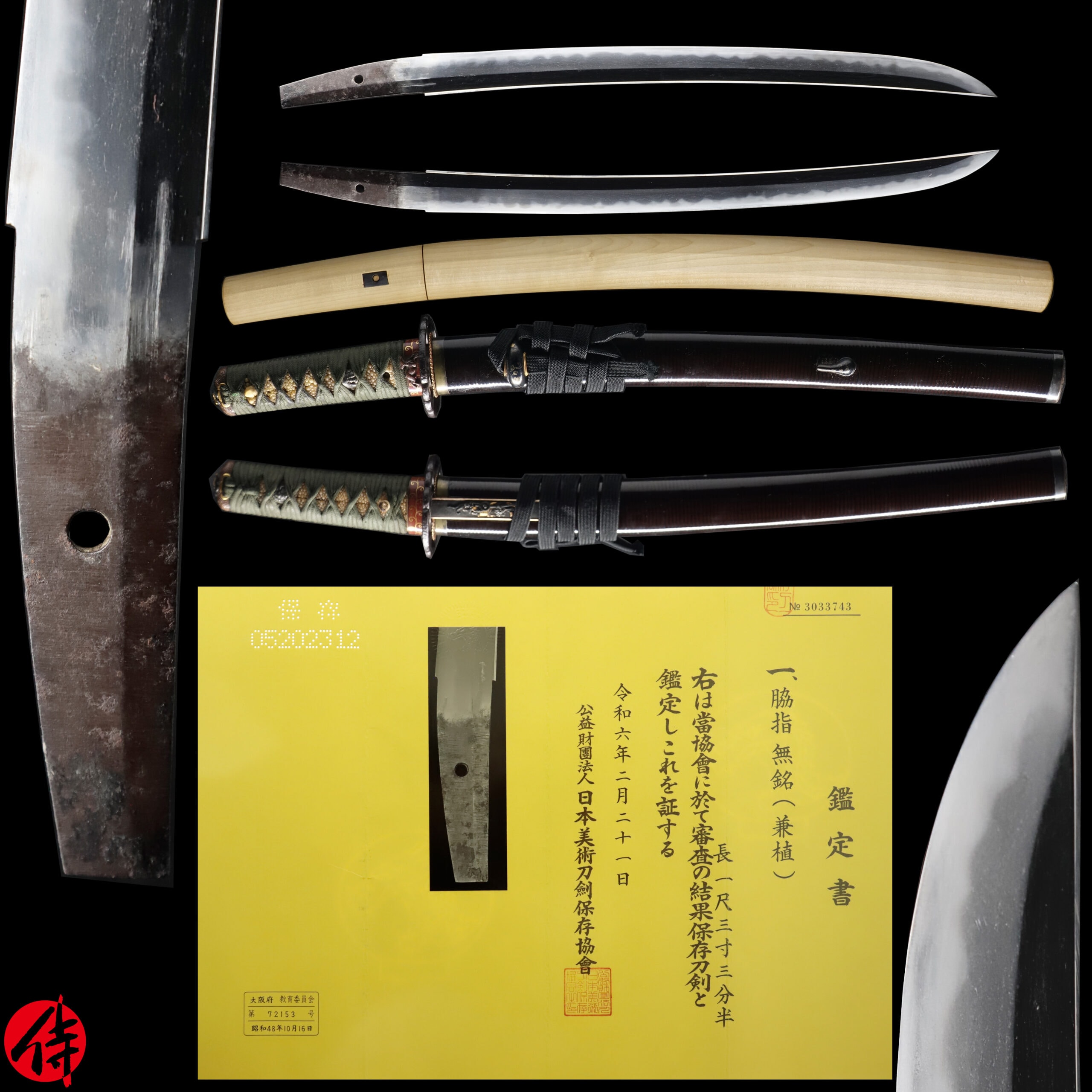
Antique Japanese Sword Wakizashi Attributed to Kanetane with NBTHK
Hozon
Certificate
【Description】
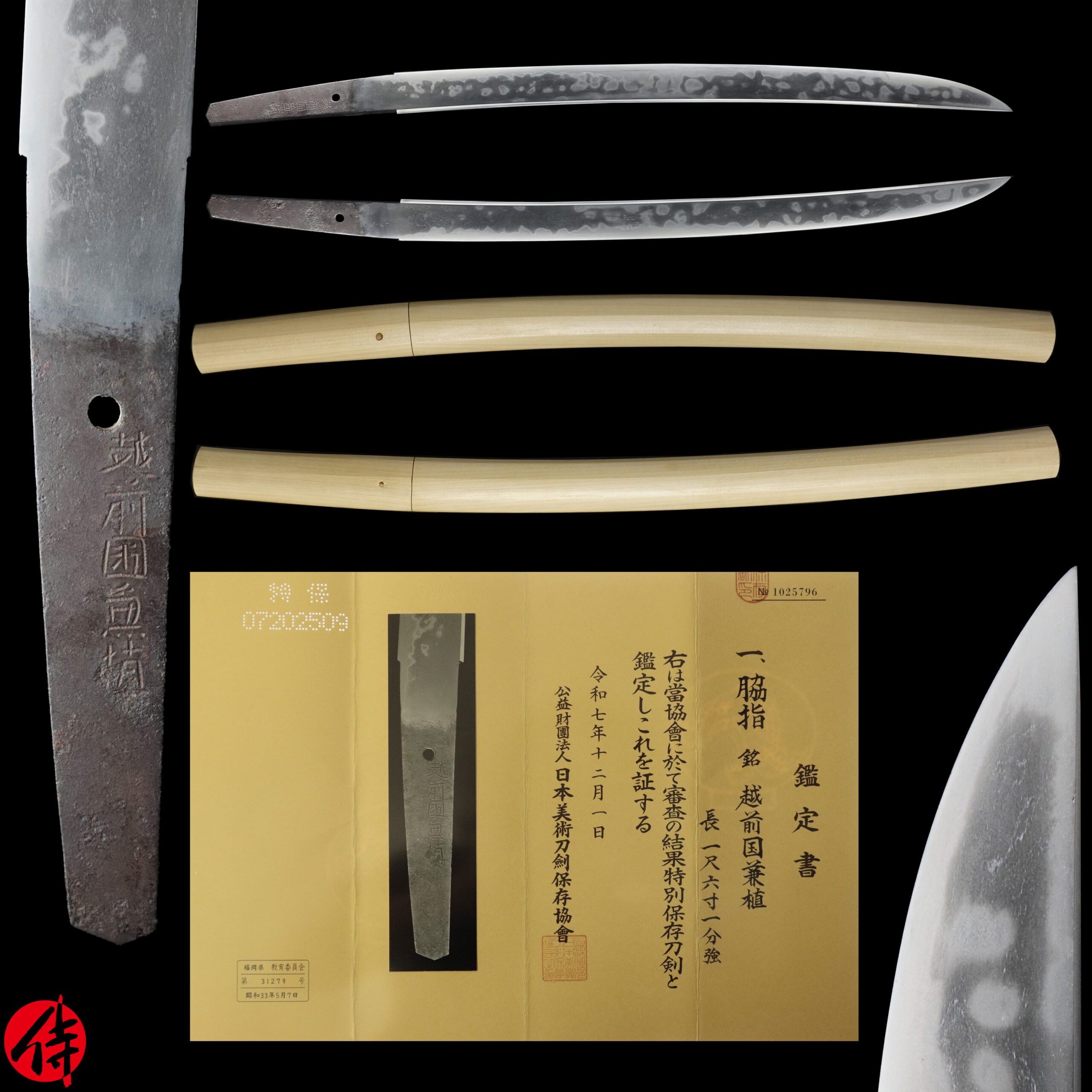
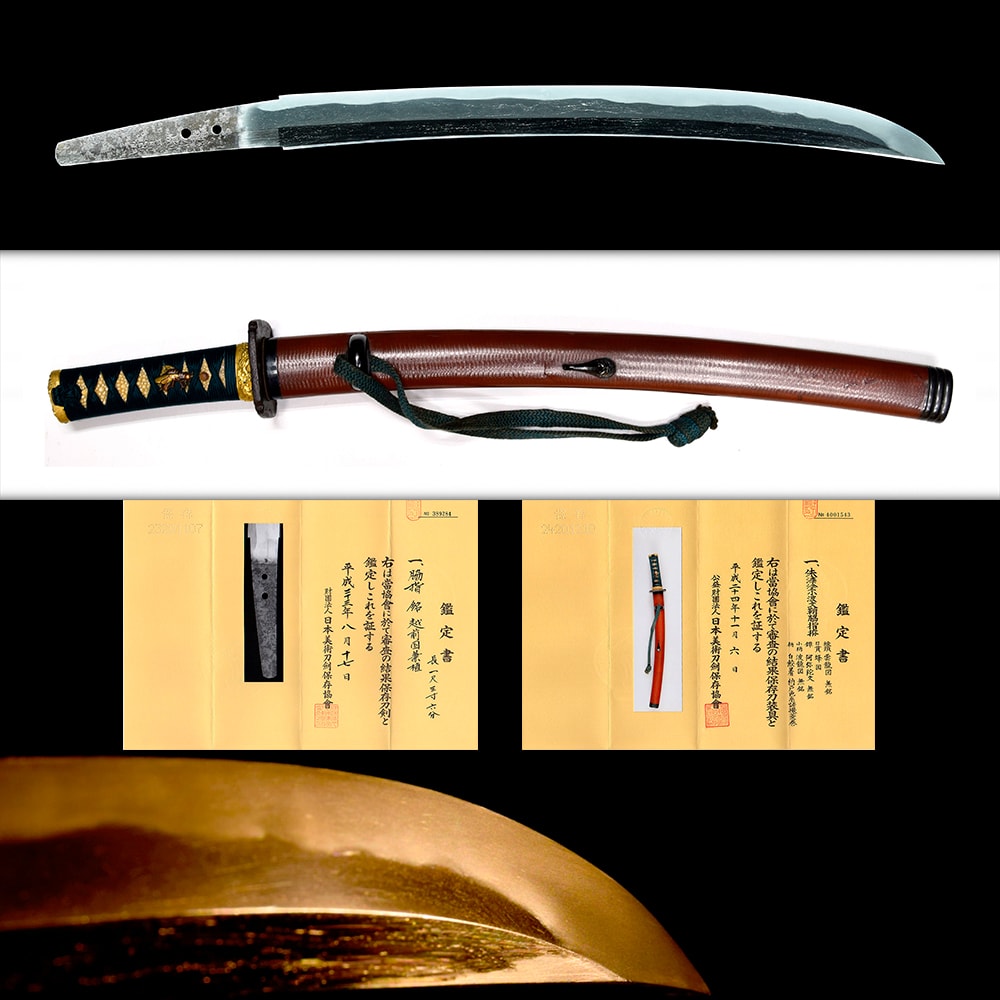
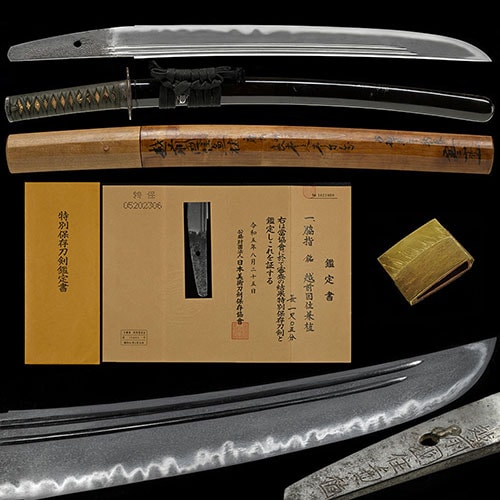
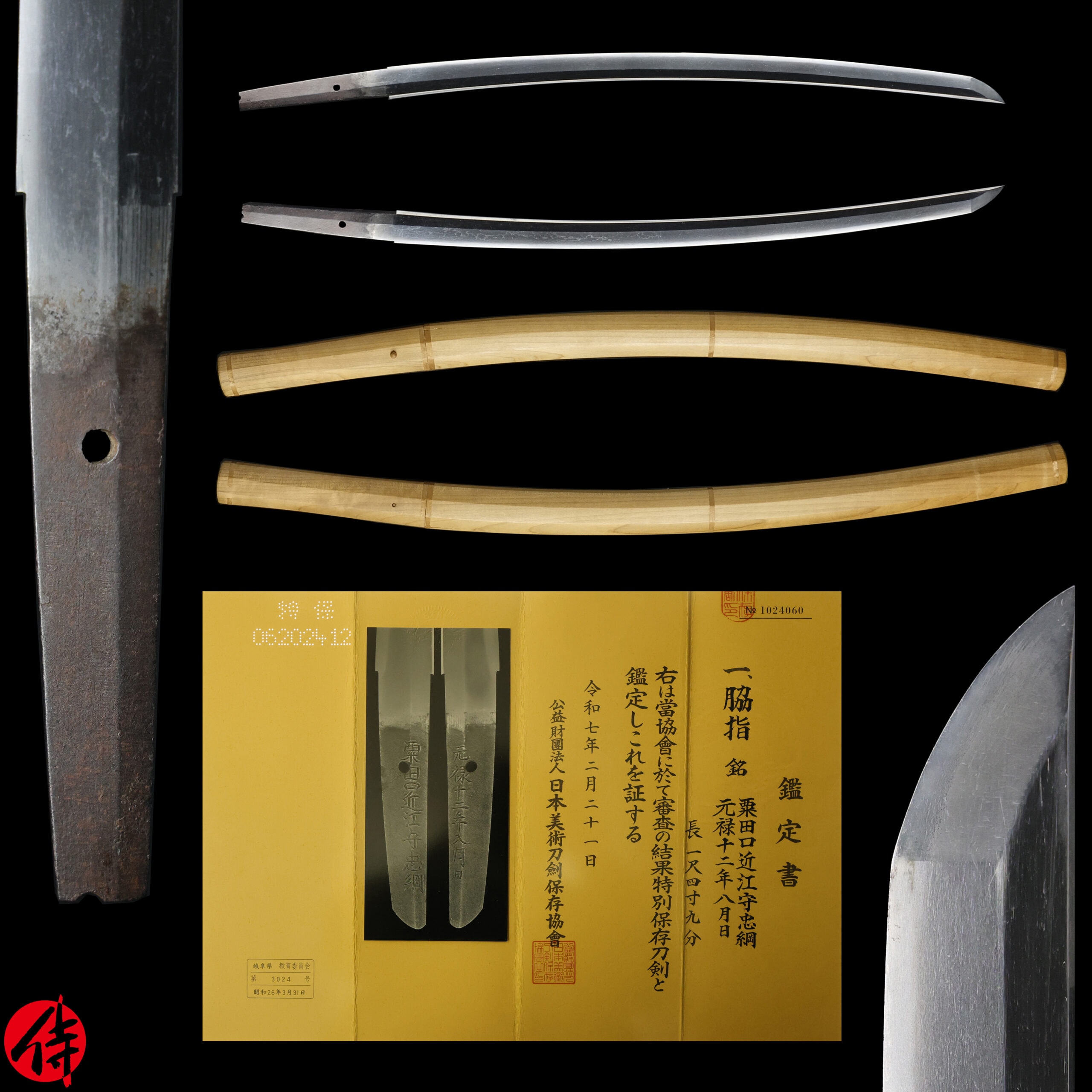
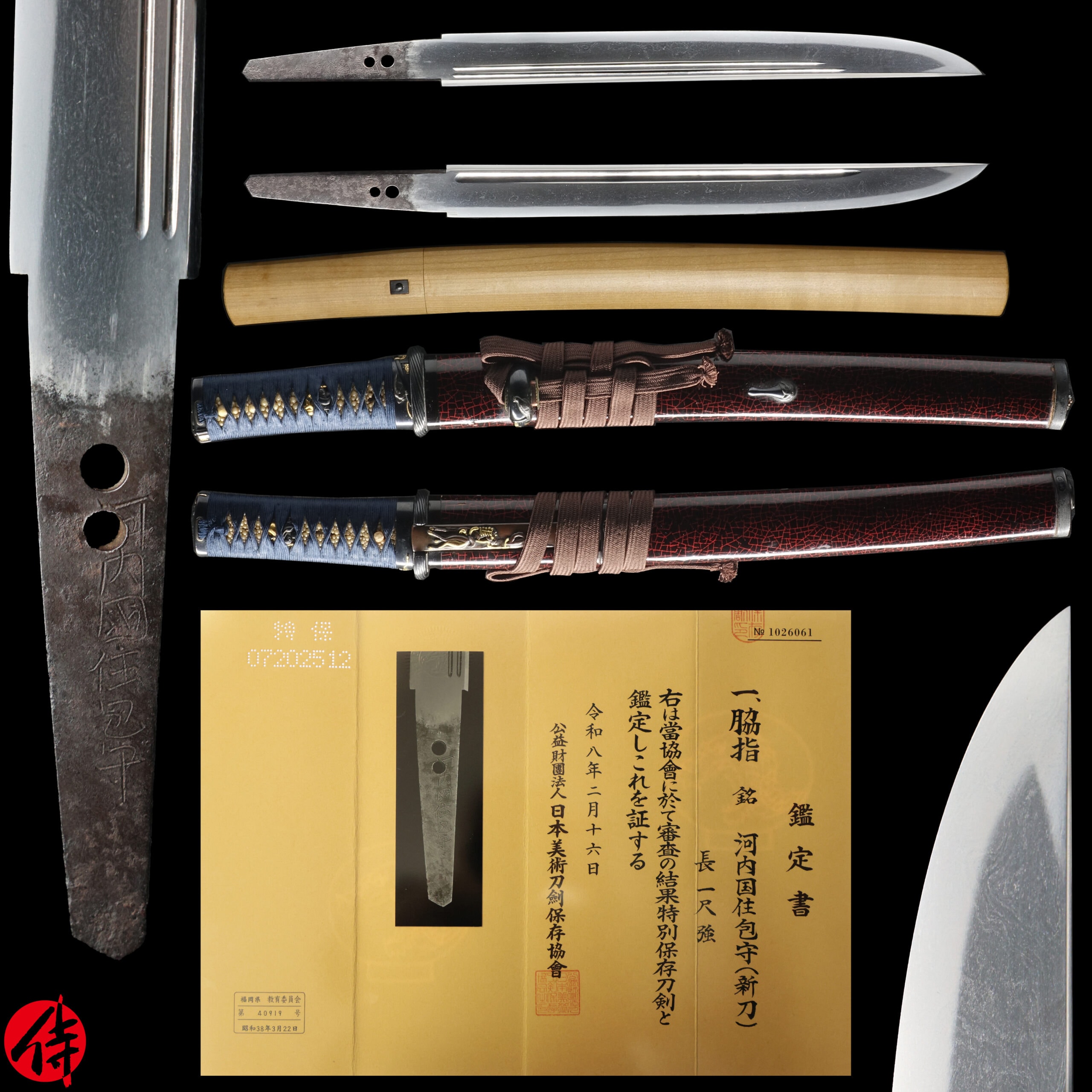
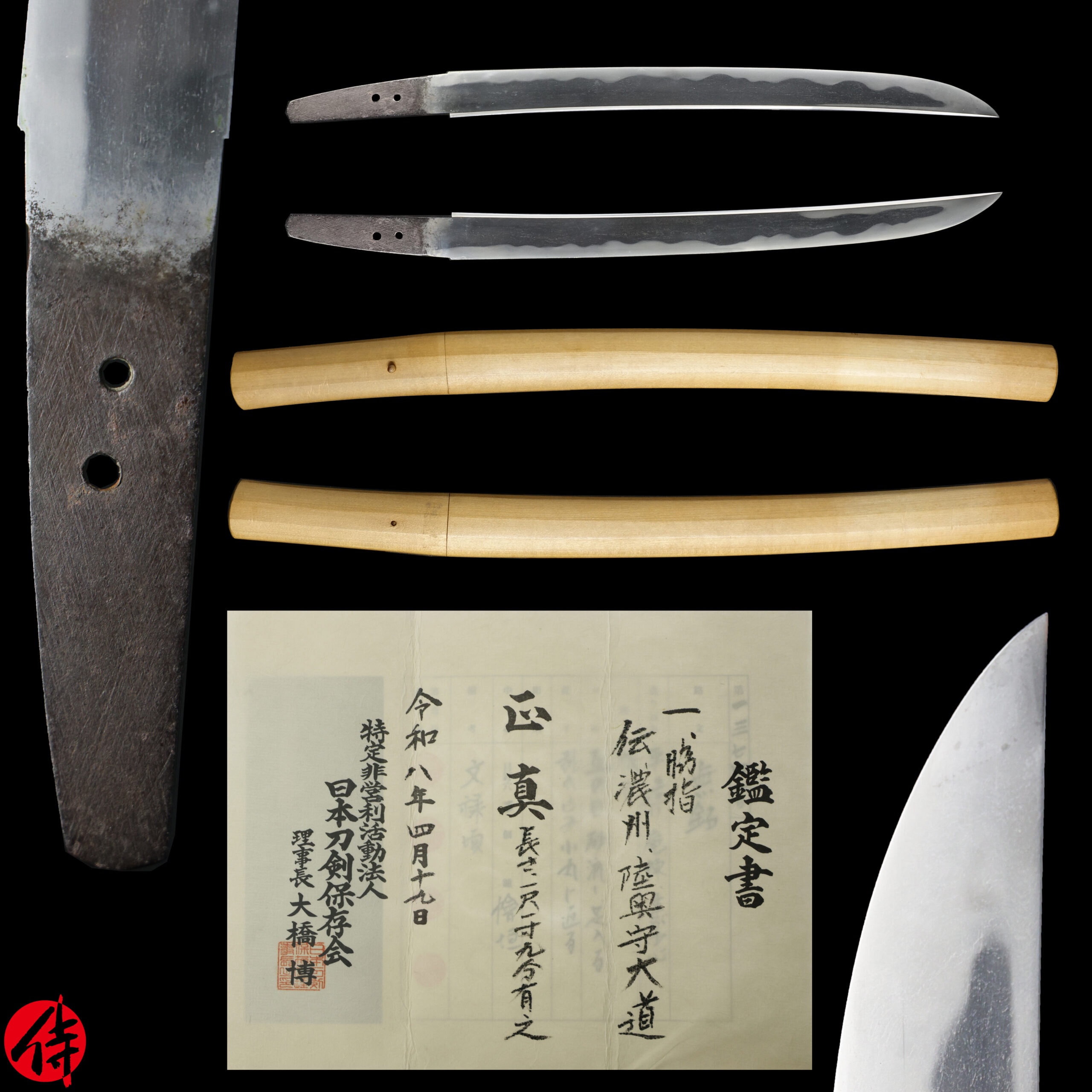
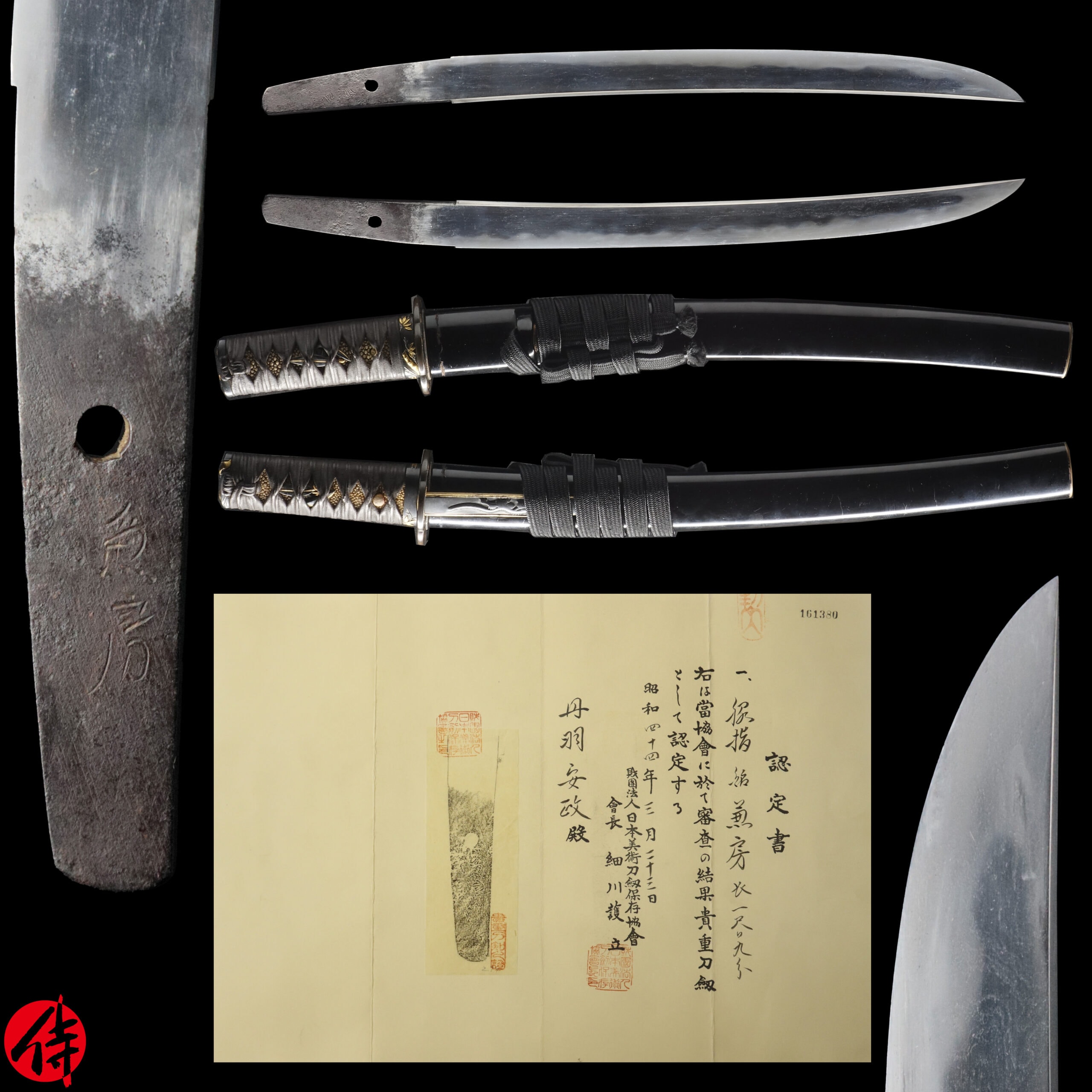
This blade is attributed to Kanetane (兼植), who was active during the early Edo period (Early 17th century). The maker’s name Kanetane lasted three generations, and we assume it was created by the first-gen Kanetane. Kanetane was an apprentice of Echizen Kanenori. The blades forged by Kanetane were famous for their sharpness.
The first-gen Kanetane was originally from Mino province (美濃: today’s Gifu prefecture). He moved from Mino province to Echizen province by being invited by Asakura clan. And, Kanetane founded his school and trained many apprentices. Echizen province was prosperous during the Edo period, being ruled by the Echizen Matsudaira clan, a direct retainer of the Tokugawa clan who ruled the Edo government. Many skilled swordsmiths moved to Echizen from different regions because of the high demand among Samurai. Many renowned swordsmiths were originally from the Mino province (Gifu prefecture). They are called Echizen Seki swordsmiths.
The second-gen Kanetane also forged blades in Kaga province (Today’s Ishikawa prefecture), and the third-gen lived in Edo and Echigo province. One of the blades created by the third-gen Kanetane was owned by Takeda Kanryusai, a member of Shinsengumi, a military unit that bodyguarded the Tokugawa Shogunate at the end of the Edo period.
This blade is appraised as a Hozon Token (保存刀剣) issued by NBTHK (Nihon Bijutsu Touken Hozon Kyokai:日本美術刀剣保存協会). This authentication paper was only given to authentic Japanese swords, well preserved with artistic value.
【Blade】
Cutting Edge Length(Nagasa)
:
40.5 cm (15.9
inches)
Curvature(Sori)
:
1.0
cm (0.39 inches)
Hamon
:
The crystalline structure which forms along the cutting edge of a blade as a result of the hardening process
Jimon(Jihada)
:
visible steel surface pattern created by folding and hammering during forging process
Kissaki
:
Kissaki is the tip of the Japanese sword.
Nakago
:
Nakago is the tang of the Japanese sword.
Japanese swordsmiths left the black rust on the tang because it prevents red rust while the tang is in its handle. And the discoloration of the tang was created over time, and it is a great indicator for a Japanese sword specialist to estimate when the sword was forged.
Koshirae
:Koshirae is the mounting of the Japanese sword. There are several parts that consist of Koshirae such as Saya(Scabbard), Tsuka( Handle), Tsuba(Handguard).
Fuchi-Kashira
:
A pair of matching sword fittings that cover the upper and bottom parts of its sword hilt.
The theme of this Kashira is the Ume (梅: Japanese apricot blossom) and it is decorated with the Sayagata (紗綾形) pattern. Also, as the theme of this Fuchi, the deer (鹿: Shika) and Karakusa (唐草) pattern are depicted.
Japanese apricot blossoms begin to bloom in winter when snow still covers its tree. Therefore, people thought this flower tells the arrival of spring. Same as cherry blossom, it has been appreciated for a long time in Japan. People enjoy its adorable petal shape and scent, and gracefully branched tree, and compose many poems. As it comes out in the cold season, it symbolizes the power of perseverance and vitality.
The Sayagata (紗綾形) pattern is a design pattern of Manji (万字
). Sayagata is one of the auspicious designs meaning “longevity and prosperity” because the pattern representing a large number such as 万, which means ten thousand, connected to each other is said to bring good luck. According to a theory, this motif was brought from a foreign country to Japan in the Momoyama period (1568-1600). In the Edo period, it was commonly used on figured satin and combined with designs that featured Japanese apricot blossoms, chrysanthemums, bamboos, or orchids.
As for the deer, people once thought they were gods’ vehicles, so that this animal represents longevity.
Also, the Karakusa (唐草) pattern is a pattern in which stems and leaves of vines are twined and make curves. Since ivy has a stron