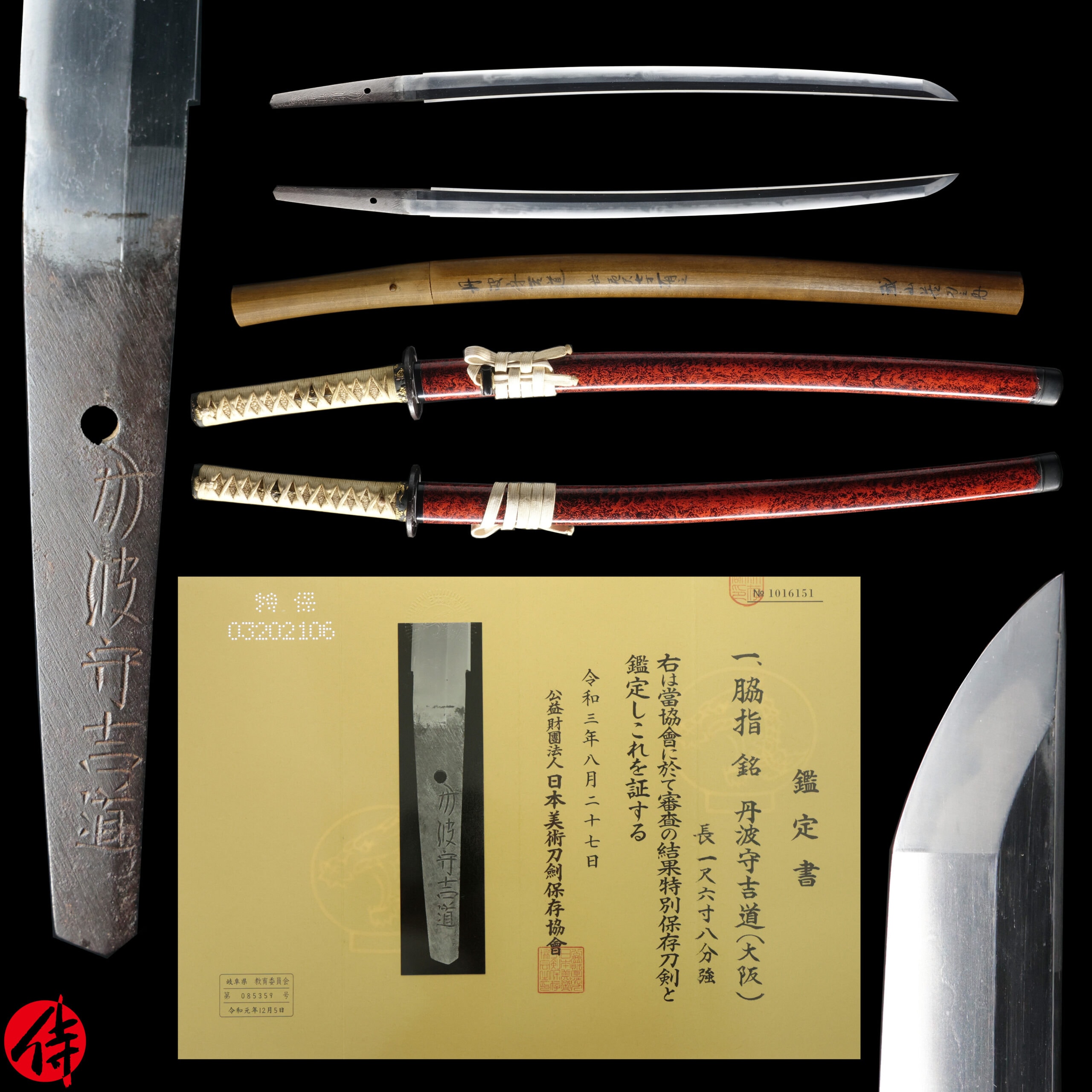
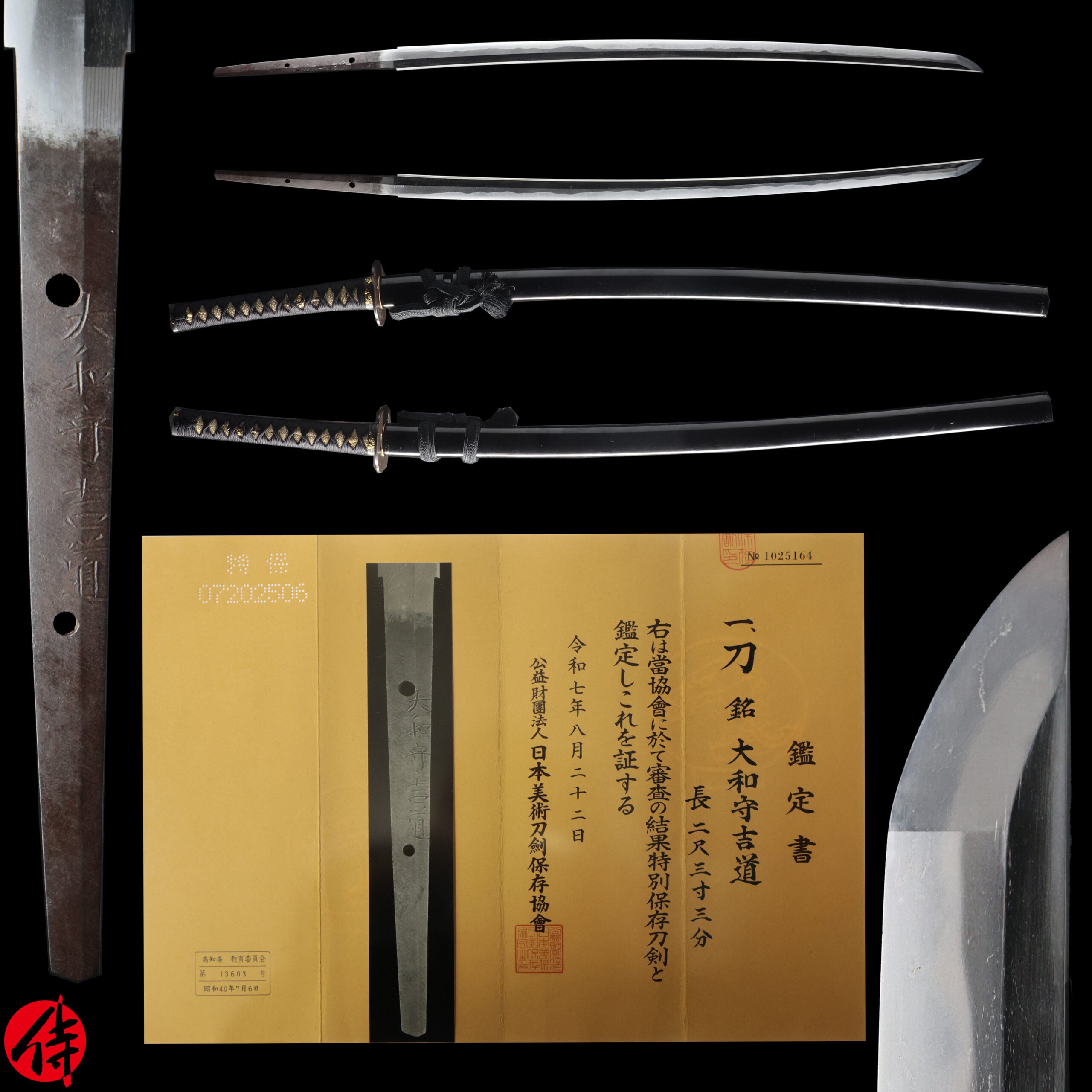
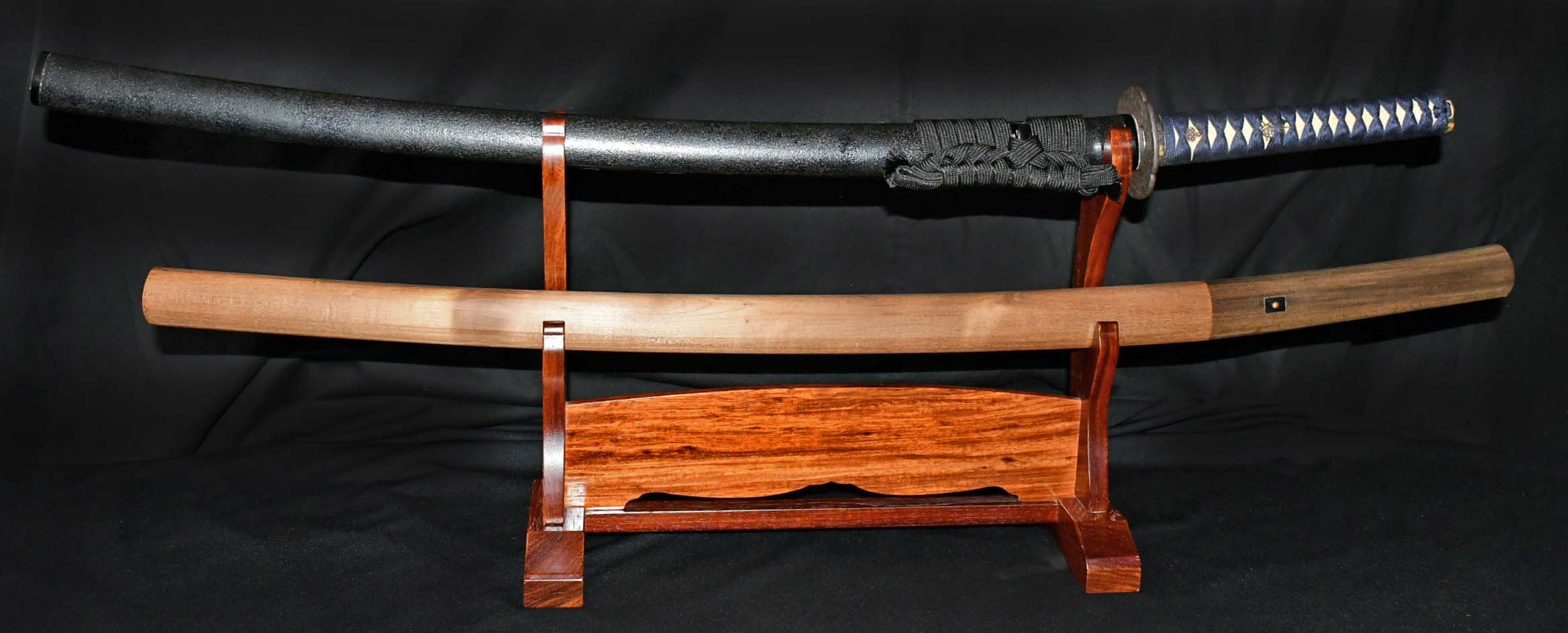
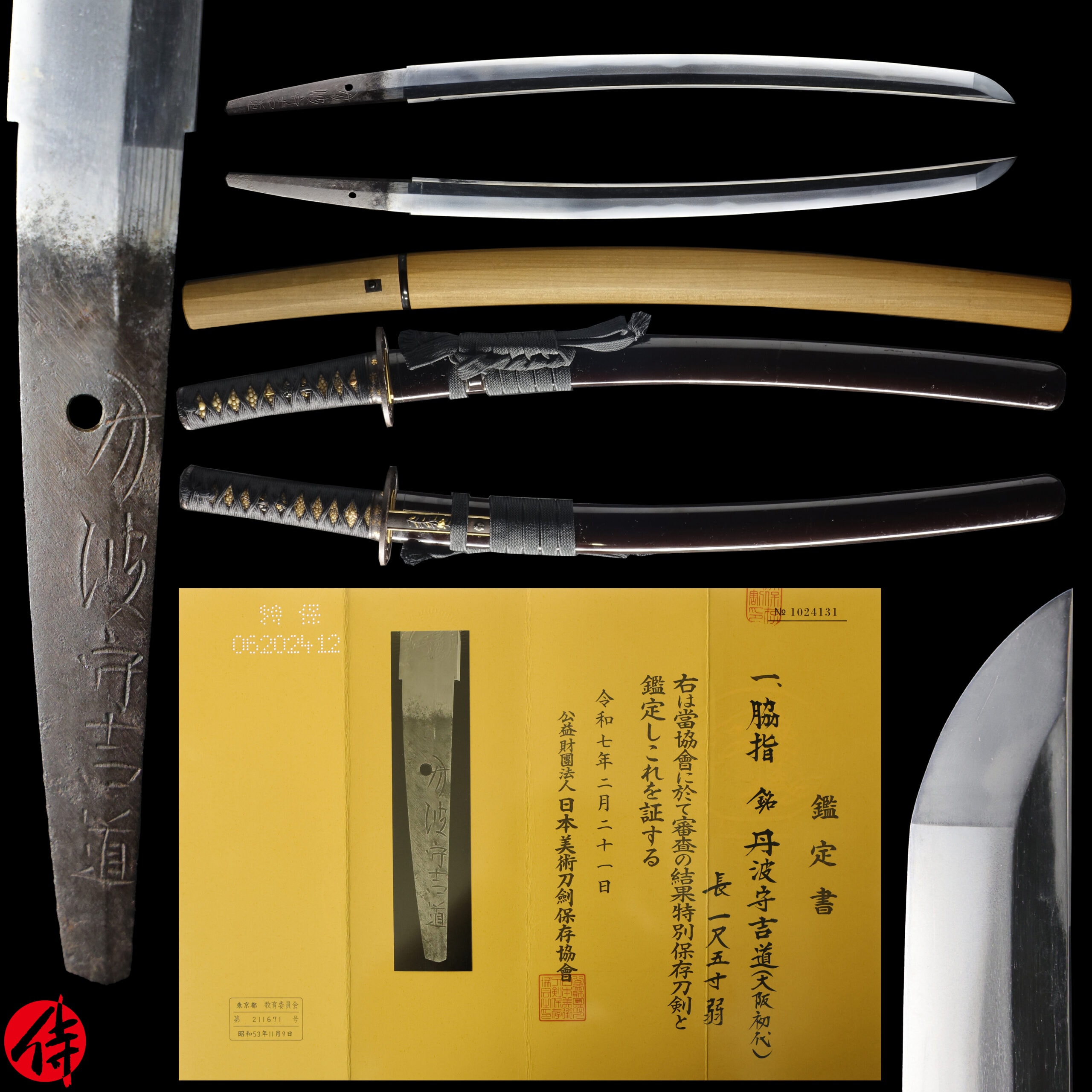
説明
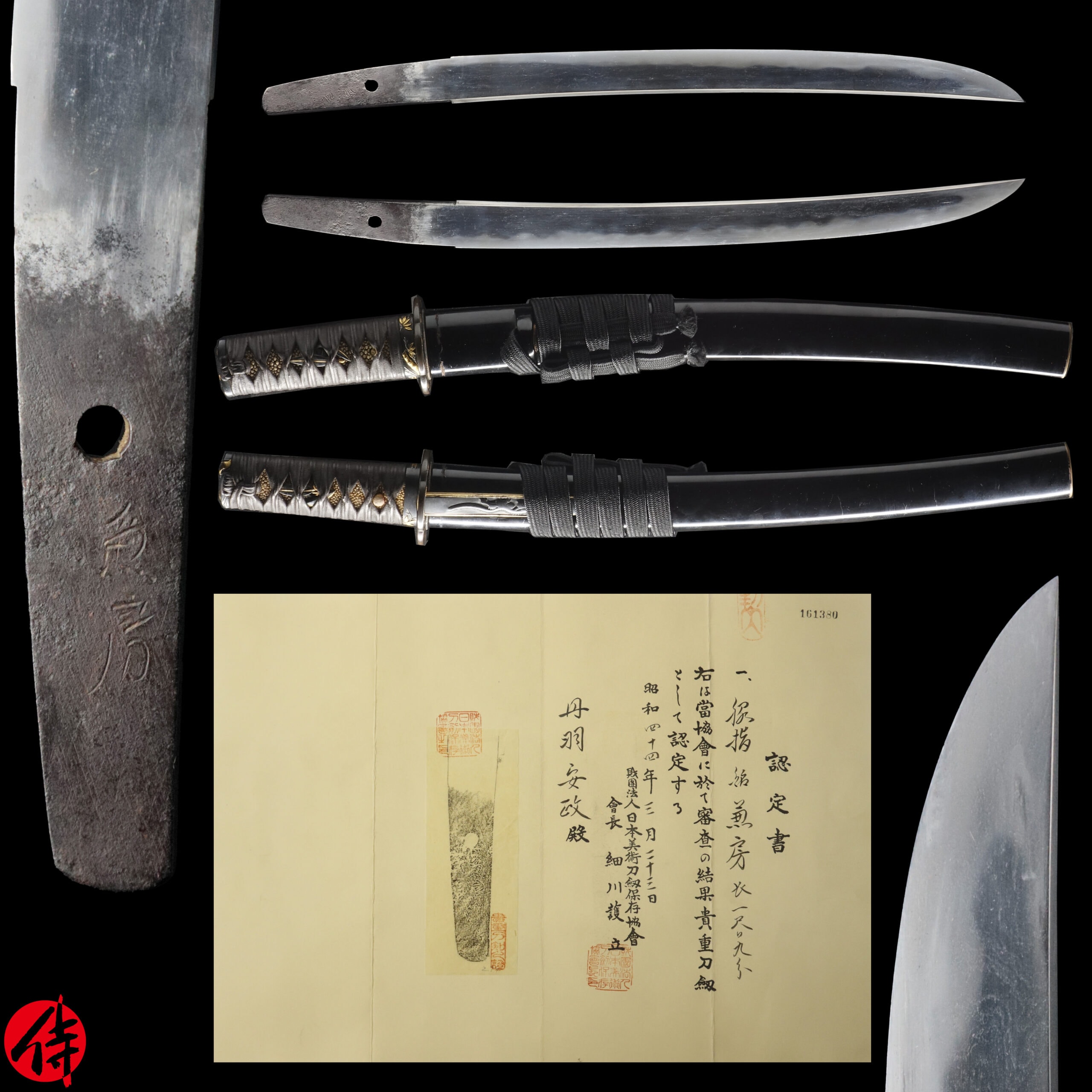
Antique Japanese Sword Wakizashi Signed by Yoshimichi
with NBTHK
Tokubestsu
Hozon
Certificate
【Description】
This blade was signed by
Tanba no Kami Yoshimichi (丹波守吉道), whose real name was Mishina Kinuemon (三品金右衛門). He was active in sword-forging during the early Edo period (Mid-Late 17th century ) in Osaka. He belonged to Osaka Mishina school, one of the most prestigious schools back then.
The swordsmith Yoshimichi prospered in Osaka and Kyoto for generations during the Edo period. And to distinguish the two Yoshimichi, The one in Osaka is called Osaka Yoshimichi, and the other one is called Kyo Yoshimichi. And, this blade was forged by the first-gen Osaka Yoshimichi.
The first-gen Osaka Yoshimichi was born in the third year of the Keicho era (1598) as the second son of the first-gen Kyo Tanba no Kami Yoshimichi in Kyoto. His father was one of the most skilled sword makers in Kyoto city, and Yoshimichi learned sword-forging skills from him first. Later, he received the honorable official title Tanba no Kami and moved to Osaka city during the Seiho era (1644-1648). He was especially active in sword-forging during the Jo-Ou era (1652-1655). He became an independent swordsmith in Osaka city and made the fame of Mishina school spread in Osaka.
His father developed a unique Hamon pattern (tempering line) called Sudareba (簾刃). Sudare means traditional screens or blinds in Japanese. The Hamon pattern he invented resembles its appearance to Sudare. This blade has a beautiful Sudareba Hamon. This special characteristic was passed down to the first-gen Osaka Yoshimichi.
Mishina School
The first-gen Kyo Tanba no Kami Yoshimichi belonged to Kyoto Mishina school and was one of the sons of the Mishina school’s founder. Mishina school was created by the first-gen Mutsu no Kami Omichi (陸奥守大道), also known as Kanemichi. It is said that initially, Kanemichi was from Mino province, exclusively forging blades for Shingen Takeda, a famous feudal lord. Later on, he moved to Kyoto by bringing his four sons and founded his school in Kyoto. Five sons were Iga no Kami Kinmichi (伊賀守金道)、Izumi no Kami Rai Kinmichi (和泉守来金道),
Tanba no Kami Yoshimichi (丹波守吉道)
and Echu no kami Masatoshi (越中守正俊). His sons were known as Kyoto Gokaji (京都五鍛冶), prestigious swordsmiths forging in Kyoto in the early Edo period.
Osaka Shinto
The blades forged by Tanba no Kami Yoshimichi are categorized as Osaka Shinto. Shinto is Japanese Sword terminology that refers to the swords forged during 1596-1781. The blades made in the Osaka area during this period are called Osaka Shinto. There are many famous swordsmiths in this Osaka Shinto era. After Hideyoshi Toyotomi built Osaka castle, Osaka city flourished as a castle town and became the business center. Many swordsmiths moved to Osaka to look for better opportunities. They not only forged swords for those Samurai who lived in Osaka but also for feudal lords nationwide.
One of the most notable characteristics of Osaka Shinto is its beauty in Jigane. Jigane is a visible steel surface pattern created by folding and hammering during the forging process, which made it possible by the location of Osaka. Osaka had close access to the Tamahagane (special carbon steel to make Japanese swords) production sites. The swordsmiths residing in Osaka were able to get high-quality carbon steel from these sites.
This blade is appraised as a
Tokubetsu Hozon Token
(特別保存刀剣) issued by NBTHK (Nihon Bijutsu Touken Hozon Kyokai:日本美術刀剣保存協会). This authentication paper was only given to authentic Japanese swords, especially well preserved and high quality with artistic value.
*Please keep in mind that there is a small Kitae Kizu on the blade. If you would like to know the detailed condition, please feel free to contact us.
【Blade】
Cutting Edge Length(Nagasa)
:
51.1
cm (20.1
inches)
Curvature(Sori)
:
0.9 cm (0.35 inches)
Hamon
:
The crystalline structure which forms along the cutting edge of a blade as a result of the hardening process
Jimon(Jihada)
:
visible ste