説明
Antique Japanese Sword Katana Signed by Shigemune with NBTHK
Tokubetsu Hozon
Certificate
【Description】
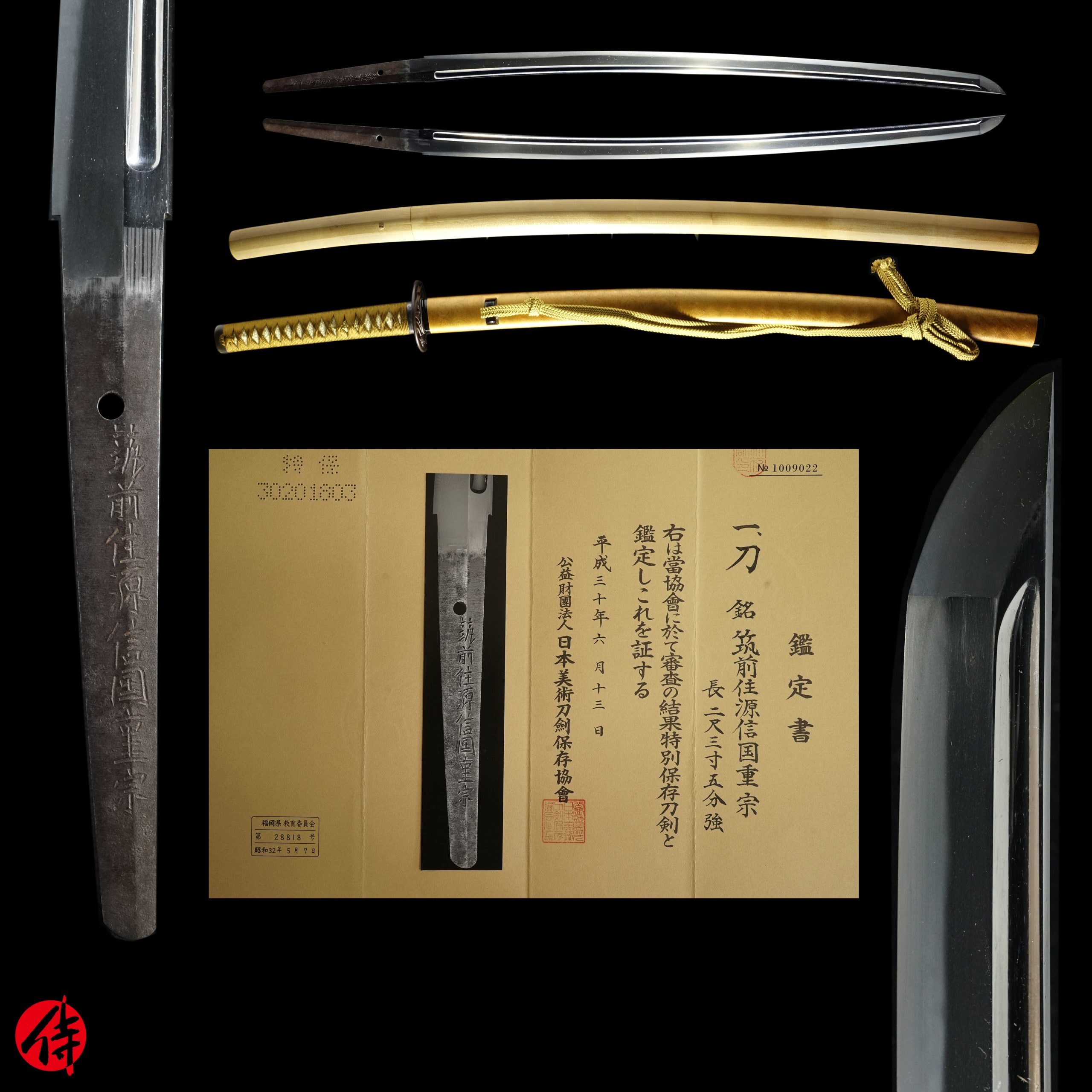
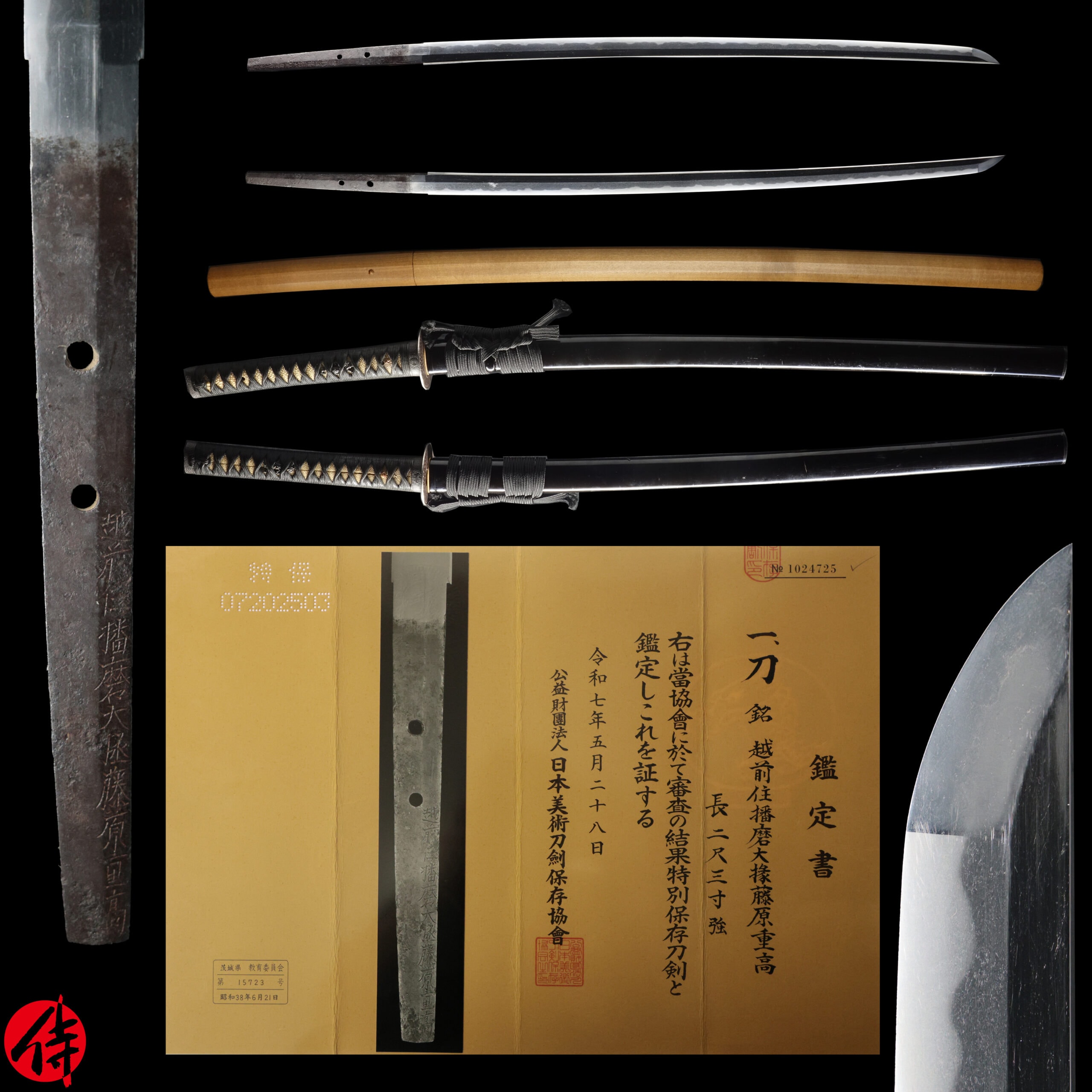
This sword was signed by Chikuzen Jyu Minamoto Nobukuni Shigemune(筑前住源信邦重宗) in the middle of the Edo Period. Chikuzen is the name of the province located in Fukuoka today. Jyu means living. Minamoto Nobukuni is the name of his school, and Shigemune is his maker’s name. Those who belonged to Nobukuni School in Chikuzen province were called Tsukushi Nobukuni, one of the most prospered sword forging schools in Kyushu island.
The Nobukuni school was initially founded by the first generation Nobukuni in Kyoto. The school stayed there for a few generations. However, the 4th generation Nobukuni Sadamitsu had to leave Kyoto city as the battle between the south emperor court and north emperor court became severe, and the Kyoto city was burned(the late 1300’s ). We called this battle Nanbokucho war when the Japanese imperial court was separated into two.Nobukuni Sadamitsu managed to arrive at Usaha(Ohita prefecture)to serve the Ajimu clan. However, after Ajimu clan was destroyed, The 12th generation Nobukuni Yoshisada moved to Chikuzen(Fukuoka prefecture)to work for Kuroda Nagamasa, a famous feudal lord(1602).
The son of 12th generation Nobukuni was the first generation Yoshimasa. This blade was forged by the third generation Yoshimasa in around 1688-1703 A.D. (in the middle of the Edo period. Shigemune was the name used by the third generation Nobukuni Yoshimasa at the end of his career as a swordsmith. It was common for some swordsmiths to change his name, especially when they got a new title from the emperor or took over the school from their masters.
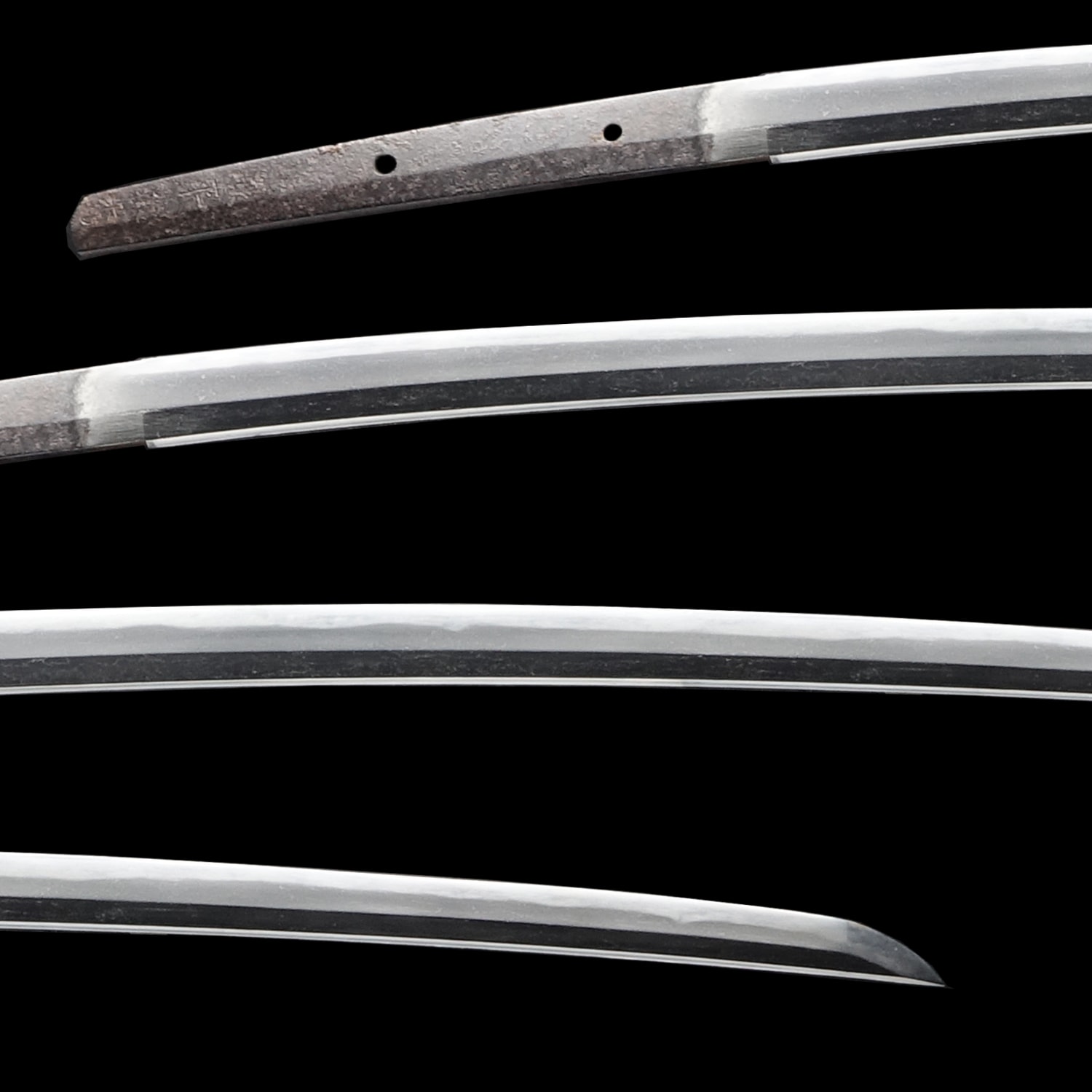
This sword has a Tokubetsu Hozon certificate issued by NBTHK. This authentication paper was only given to Japanese swords, especially worth preserving by Nihon Bijutsu Touken Hozon Kyokai(the Society for the Preservation of the Japan Art Sword). This blade is in excellent condition, and the Suguha Hamon is beautiful to observe. It comes with Gold color Saya(sword case).
【 Blade】
Cutting Edge Length(Nagasa)
:
68.2 cm(26.9 inches)
Curvature(Sori)
:
1.4
cm(0.6 inches)
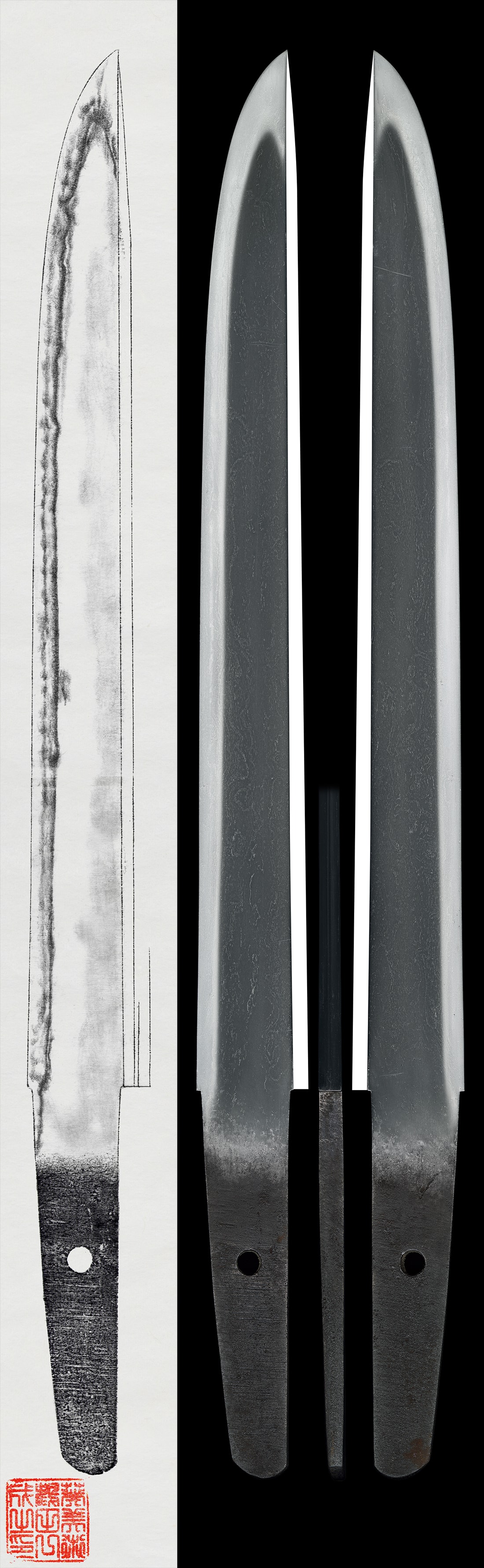
Hamon
:
The blade pattern created by the tempering process.
Jimon
:
Visible surface pattern on the steel
Nakago
:
It has a signature that says 筑前住源信国重宗(Chikuzen Jyu Minamoto Nobukuni Shigemune)
Fuchi-Kashira
:
A pair of matching sword fittings that cover the upper and bottom parts of its sword hilt.
The faint pattern of a creature that looks like a bird can be seen at Kashira. It might be Houou (鳳凰, Fenghuang) a member of four fantasy animals which is called “Shirei (四霊)” with Kirin (麒麟, Qilin), Kame (亀, Turtle) and Ryu (龍, Dragon). It is a god beast that looks like a combination of chicken and peacock. It is believed Houou would show up when the brilliant emperor appeared. People appreciate its graceful shape in Japan.
Tsuka and Menuki
:
Tsuka is the handle of the Japanese sword and Menuki is its decoration.
Grape design is sculptured. The grape pattern symbolizes fertility, a plentiful harvest, longevity, and prosperity for descendants.
Tsuba and Habaki
:
Tsuba is the handguard for the Japanese Sword and Habaki is the equipment to make the blade not touch its scabbard inside.It prevents the blade from getting rusty and chipped.
It has the openwork of eight bridges, and Japanese iris are engraved. Japanese iris is called “Shoubu” in Japanese, and another word “Shoubu” means battle in Japanese. These two words have the same pronunciation; therefore, lots of Samurai loved this flower pattern. Shoubu was also used for spells of longevity, and people believed Shoubu would protect them from evil spirits.
Saya
:
Saya is the scabbard for the Japanese sword.
Authentication Paper
:
NBTHK TOKUBETSU Hozon Certificate for the blade
NBTHK, also known as Nihon Bijutsu Touken Hozon Kyokai (the Society for the Preservation of the Japan Art Sword), is one of the oldest Japanese sword appraising organizations in modern-day Japan. They authen