説明
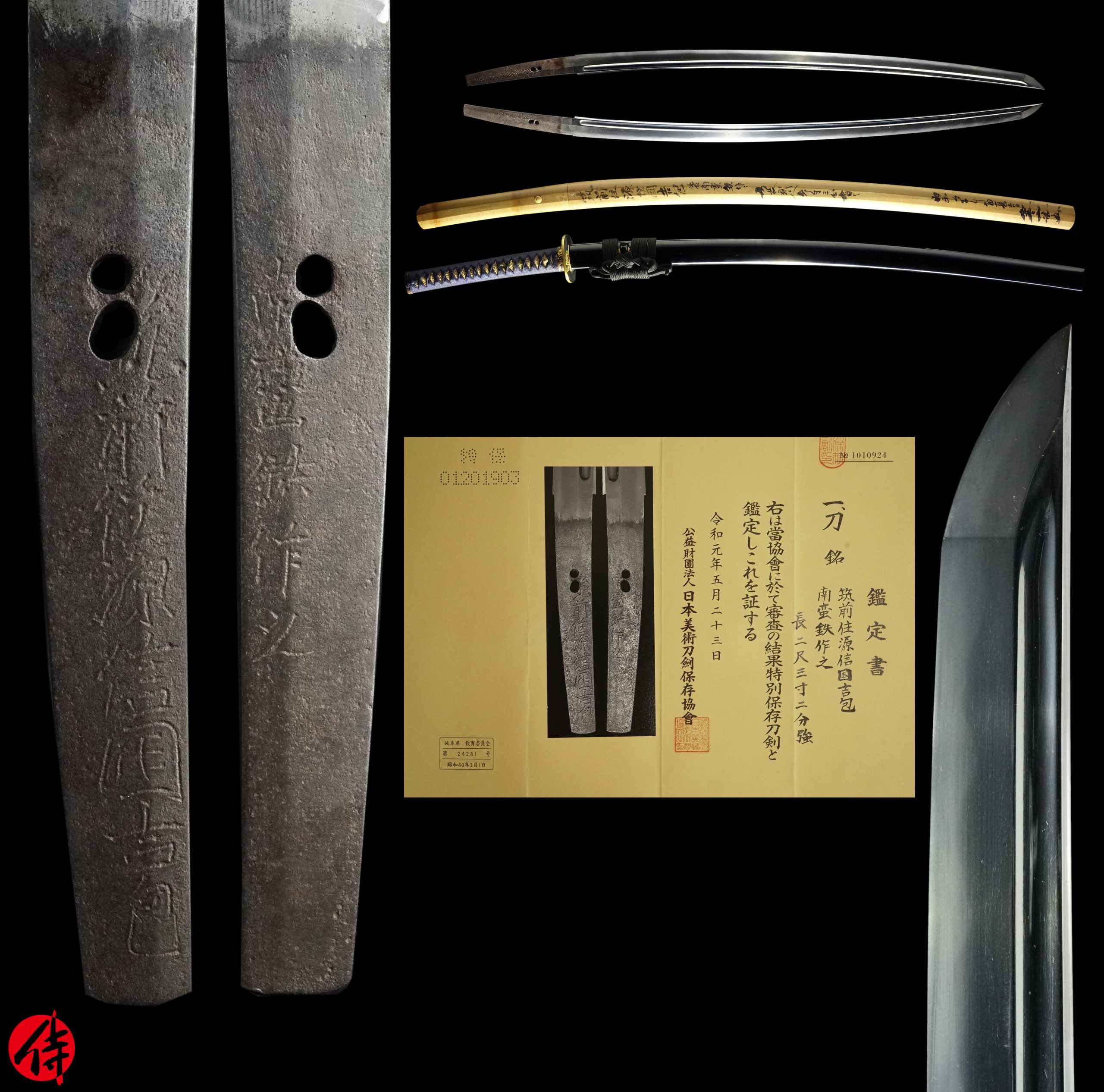
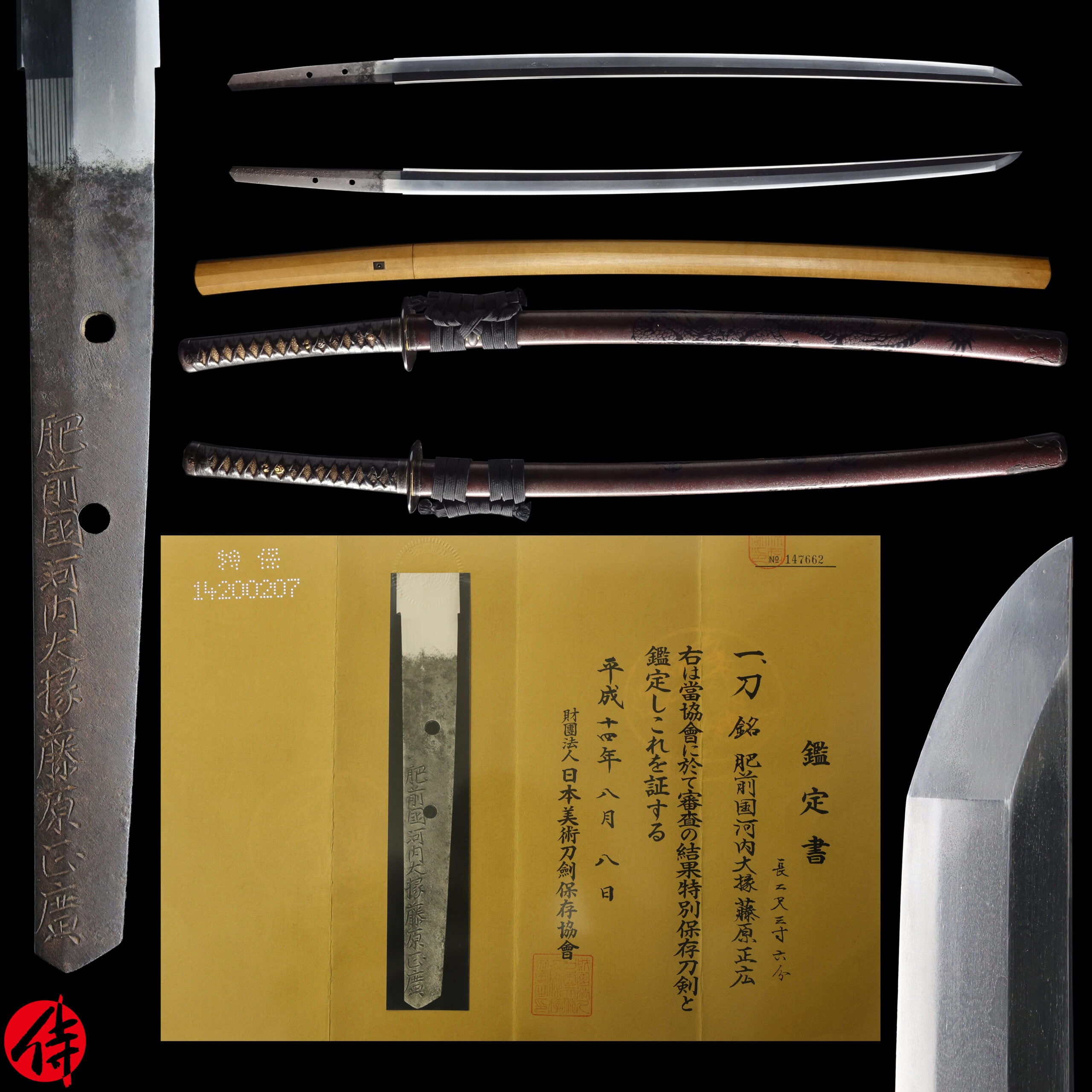
Antique Japanese Sword Katana Signed by Yoshikane with NBTHK
Tokubetsu Hozon
Certificate
【Description】
Chikuzen Jyu Minamoto Nobukuni YOSHIKANE(筑前住源信国吉包) signed this sword in the middle of the Edo Period. Chikuzen is the name of the province located in Fukuoka today. Jyu means living. Minamoto Nobukuni is the name of his school, and YOSHIKANE is his maker’s name. Those who belonged to Nobukuni School in Chikuzen province were called Tsukushi Nobukuni, one of the most prospered sword forging schools in Kyushu island.
The Nobukuni school was initially founded by the first generation Nobukuni in Kyoto. The school stayed there for a few generations. However, the 4th generation Nobukuni SADAMITSU had to leave Kyoto city as the battle between the south emperor court and the north emperor court became severe. And, as a result, Kyoto city was burnt(the late 1300’s). We called this battle Nanbokucho war when the Japanese imperial court was separated into two.
Nobukuni Sadamitsu managed to escape and arrive at Usaha(Ohita prefecture)to serve the Ajimu clan. However, after the Ajimu clan was destroyed, The 12th generation Nobukuni YOSHISADA moved to Chikuzen(Fukuoka prefecture)to serve Kuroda Nagamasa, a famous feudal lord(1602). YOSHISADA was a grandfather of YOSHIKANE(14th generation Nobukuni)
The swords forged by Nobukuni school weren’t probably as famous as Chikuzen Sekido school because they were only allowed to sell within the Kuroda clan, not to other clans.
YOSHIKANE was the father of SHIGEKANE, who served 8th generation Shogun Tokugawa Yoshimune. His son, Shigemune, was selected as one of four swordsmiths who were allowed to inscribe hollyhock emblem, representing Tokugawa shogunate family crest.
The signature also says it was forged from Nanban Tetsu(Western carbon steel). Chikuzen province had easy access to western carbon steel as Fukuoka city was one of the biggest hubs for trading in Japan.
This sword has a Tokubetsu Hozon certificate issued by NBTHK. This authentication paper was only given to Japanese swords, especially worth preserving by Nihon Bijutsu Touken Hozon Kyokai(the Society for the Preservation of the Japan Art Sword). This blade is in excellent condition, and comes with beautiful set of sword mountings.
【 Blade】
Cutting Edge Length(Nagasa)
:
70.5
cm(27.75 inches)
Curvature(Sori)
:
1.9
cm(0.75 inches)
Hamon
:
The blade pattern created by the tempering process.
Jimon
:
Visible surface pattern on the steel
Nakago
:
Nakago is the tang of the Japanese sword. The signature(Chikuzen Jyu Minamoto Nobukuni Yoshikane) is inscribed on the front and the other side says the blade was made of western carbon steel(Nanban-Tetsu.)
Japanese swordsmiths left the black rust on the tang because it prevents red rust while the tang is in its handle. And the discoloration of the tang was created over time, and it is a great indicator for a Japanese sword specialist to estimate when the sword was forged.
Fuchi-Kashira
:
A pair of matching sword fittings that cover the upper and bottom parts of its sword hilt. Gold inlay was applied on them.
Samurai, who wears gold armor, is designed on the Kashira. Waves and pine trees are engraved on the Fuchi. Also, a horse is seen on the opposite side (Please check the picture of Tsuka). This Fuchi Kashira might describe a scene of a battle at the water’s edge.
Tsuka and Menuki
:
Tsuka is the handle of the Japanese sword and Menuki is its decoration.
Tsuka is coiled with the Hishi-Maki technique, which is a general way to cover the Tsuka.
Tsuba and Habaki
:
Tsuba is the handguard for the Japanese Sword and Habaki is the equipment to make the blade not touch its scabbard inside.It prevents the blade from getting rusty and chipped.
Lions are engraved and inlaid with gold on both sides of Tsuba. Their bodies are covered with curly hair. Initially, Makige-Mon (巻き毛文, curly hair pattern) symbolized the sun by its shape. As people regarded lions have the power of the sun, Makige-Mon was started to use fo