徳川の泰平のもと、大小は法度の定める身分の制服となり、需要は城下町、とりわけ江戸に集まった。工芸は二つに分かれる。目利きのための華やかな鑑賞の作と、截断の結果を金象嵌に刻む実証の刀である。
 NihontoWatchNihontoWatch
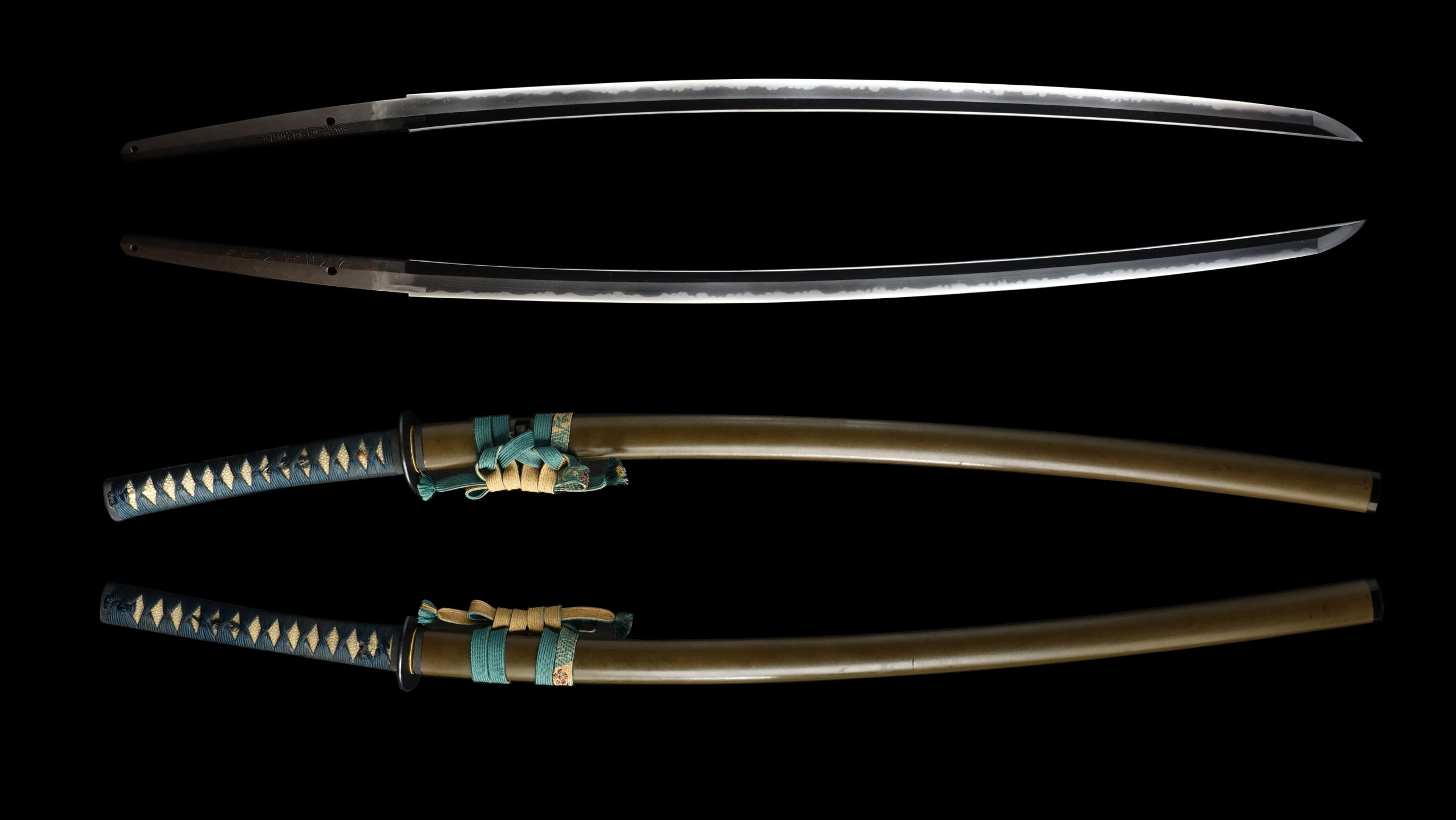
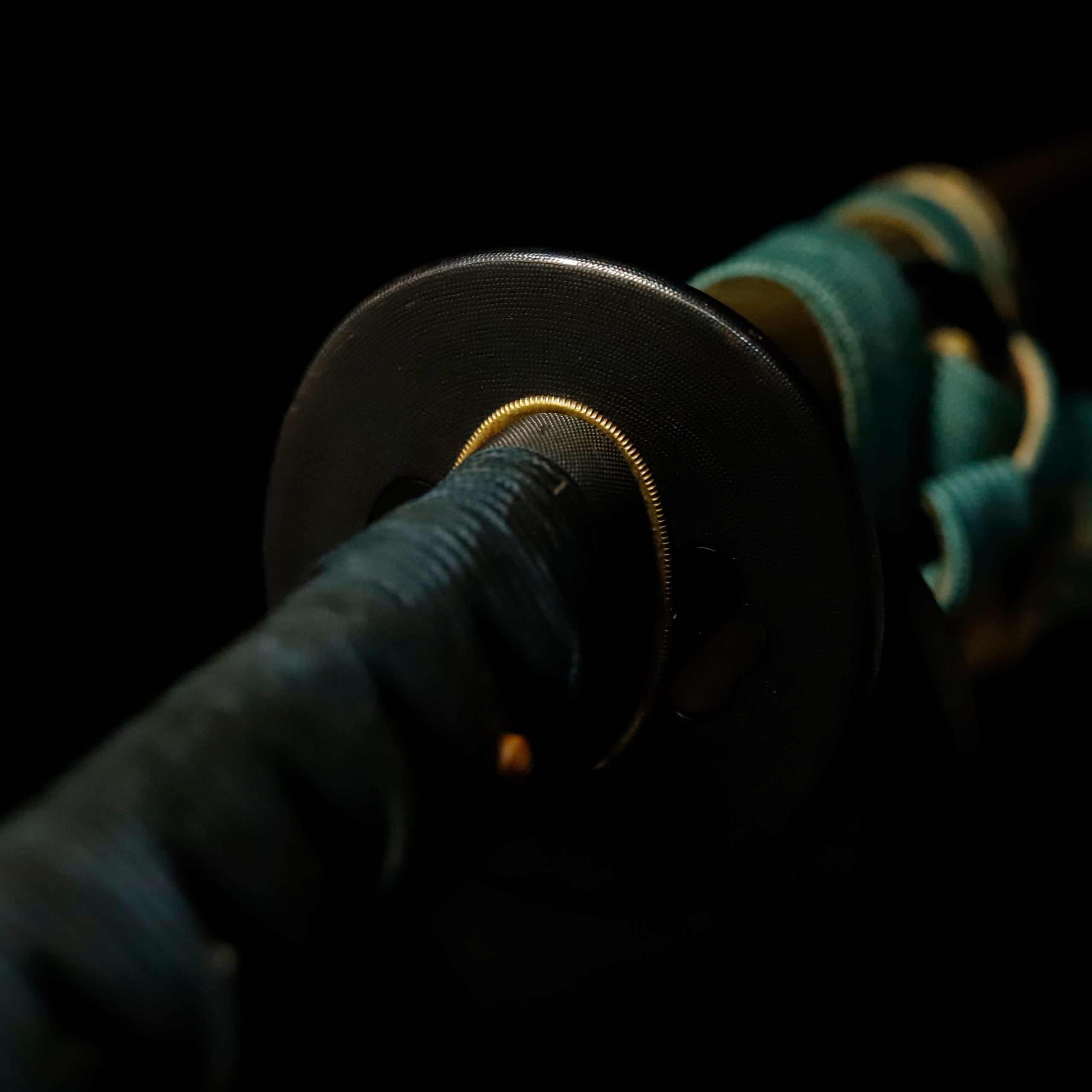
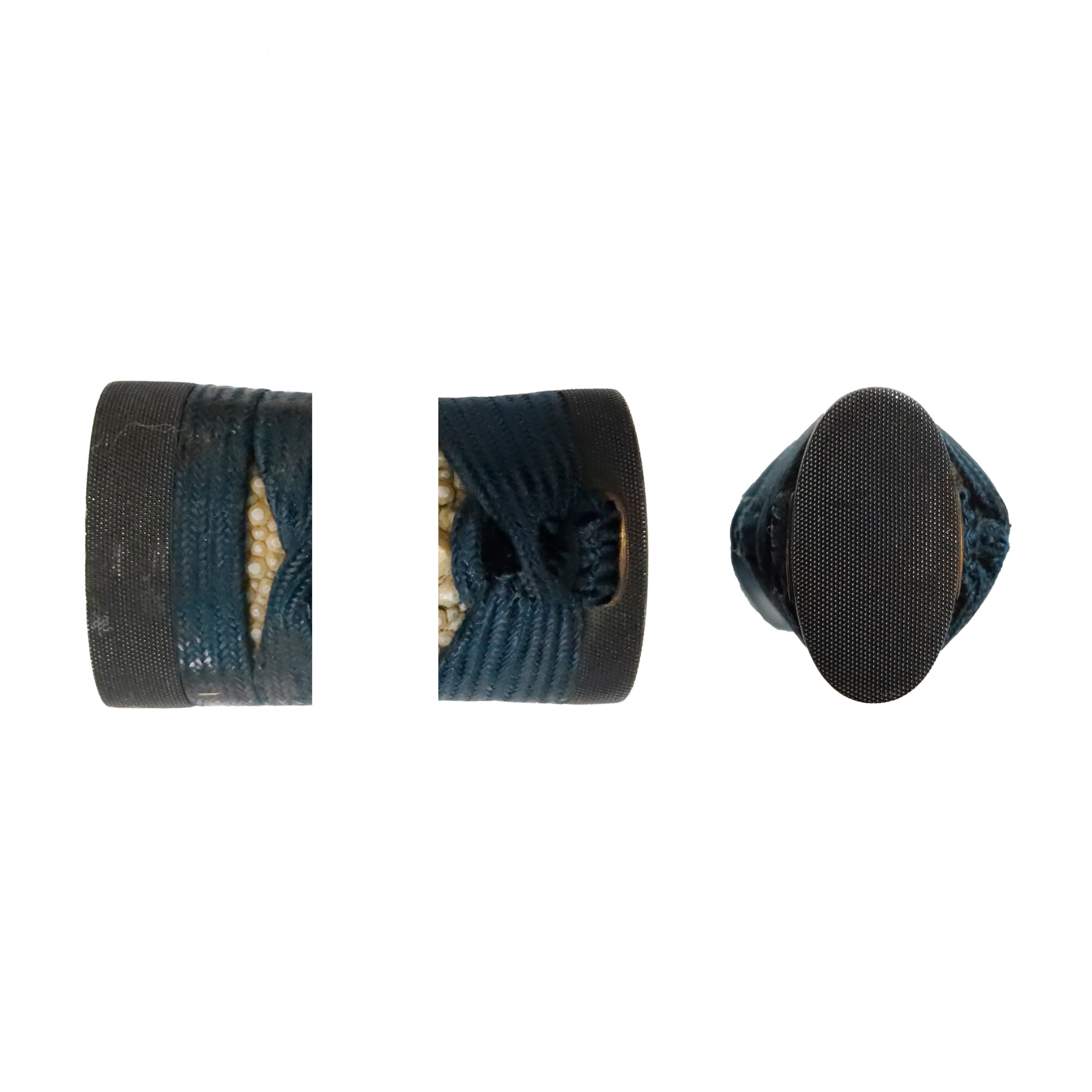
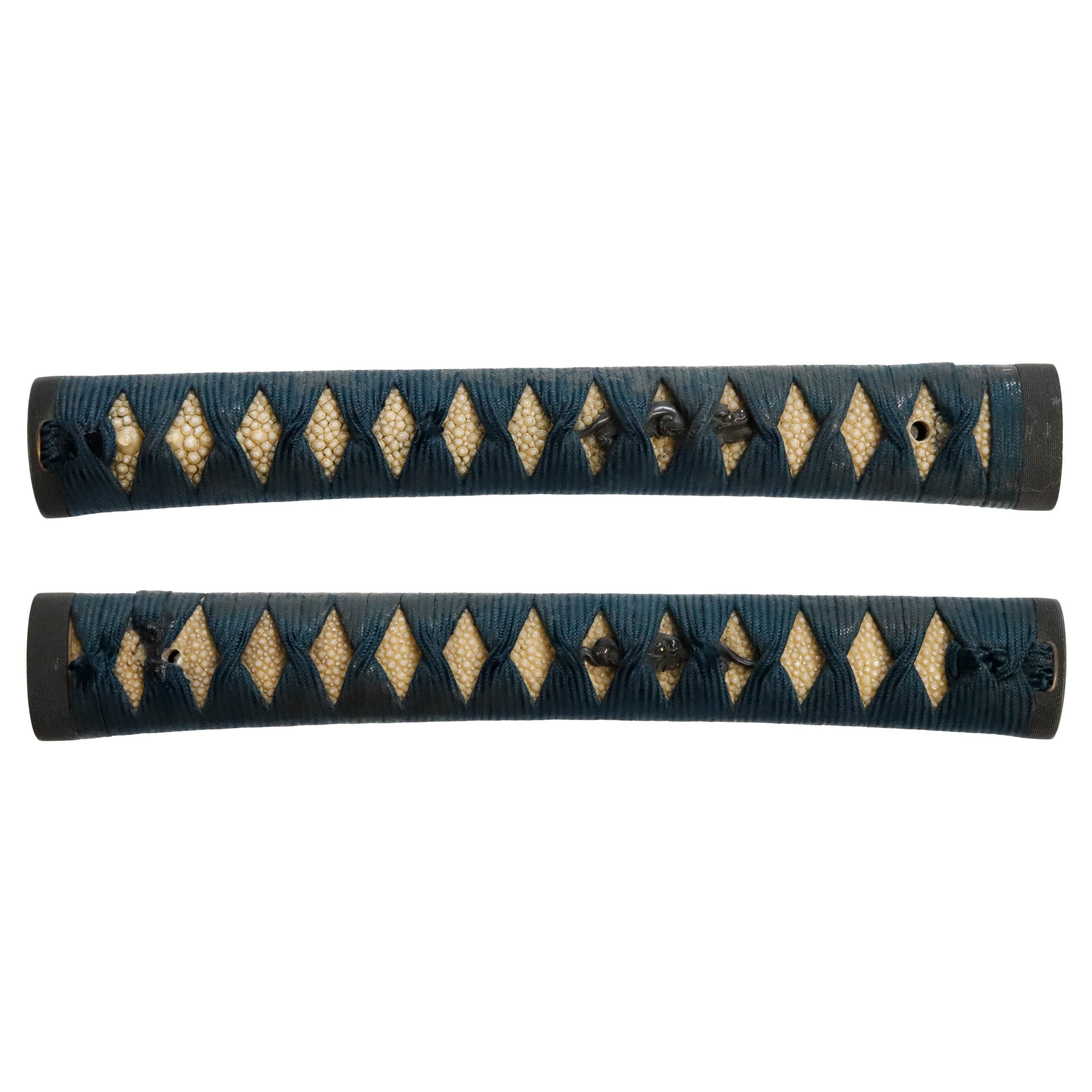
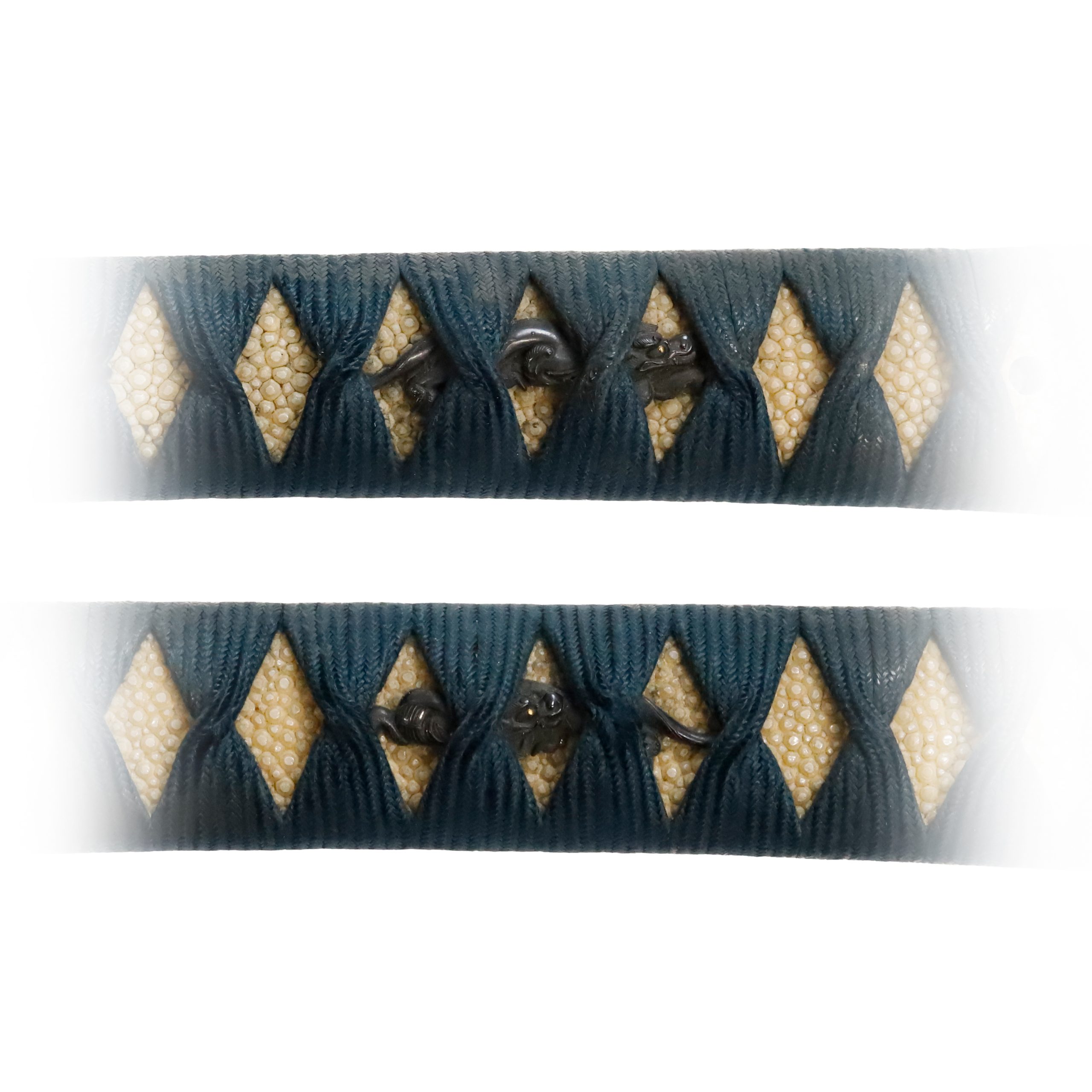
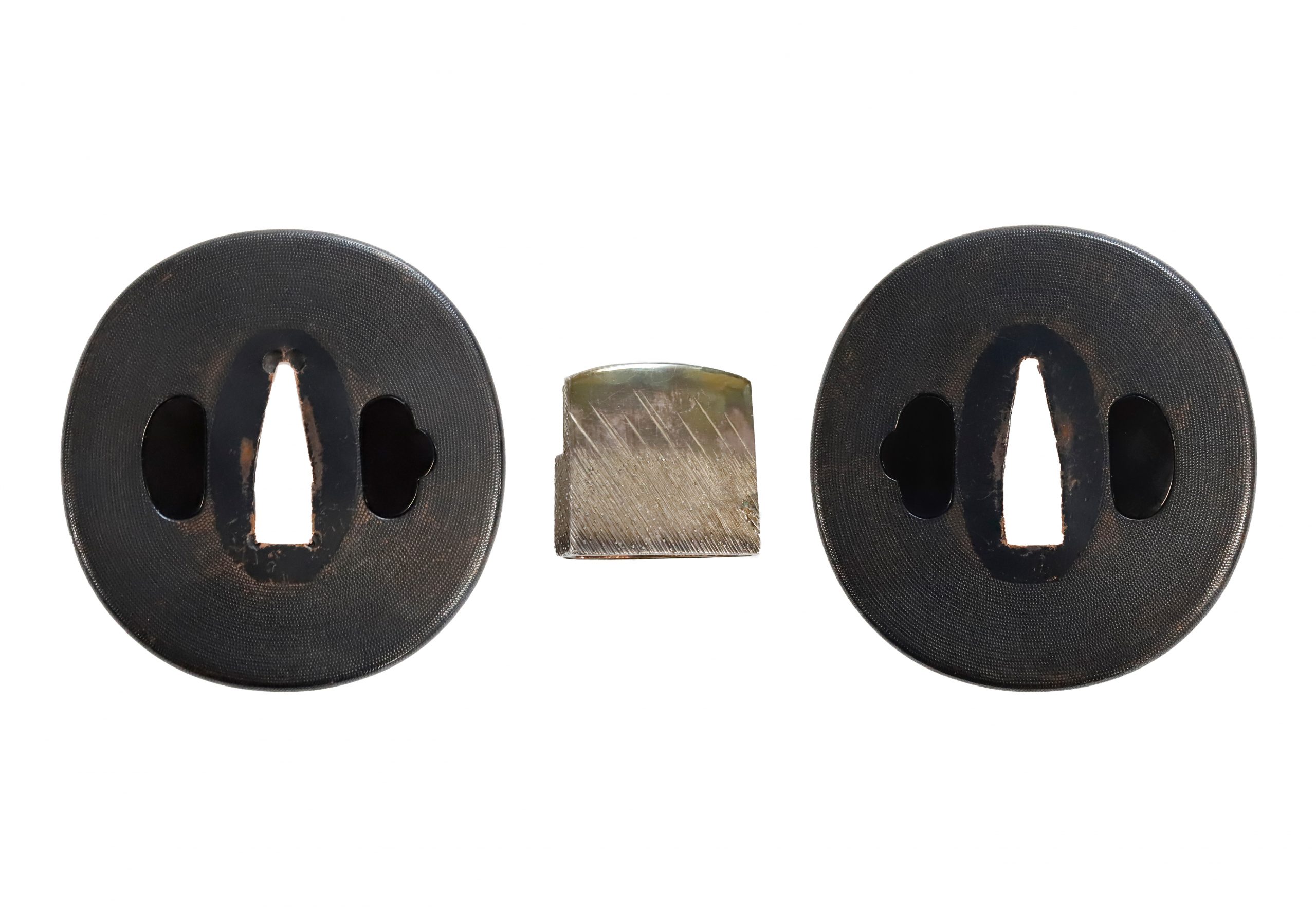
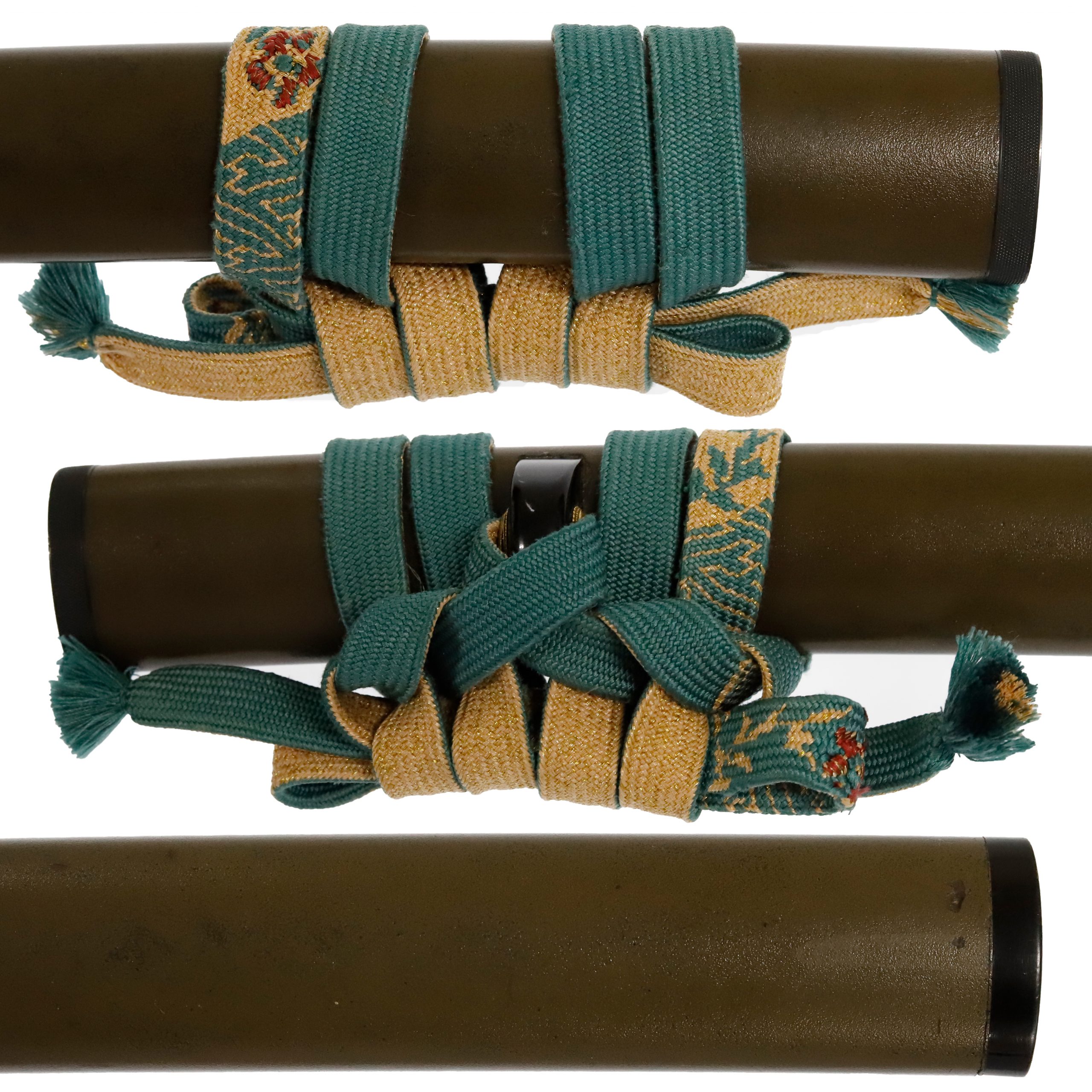
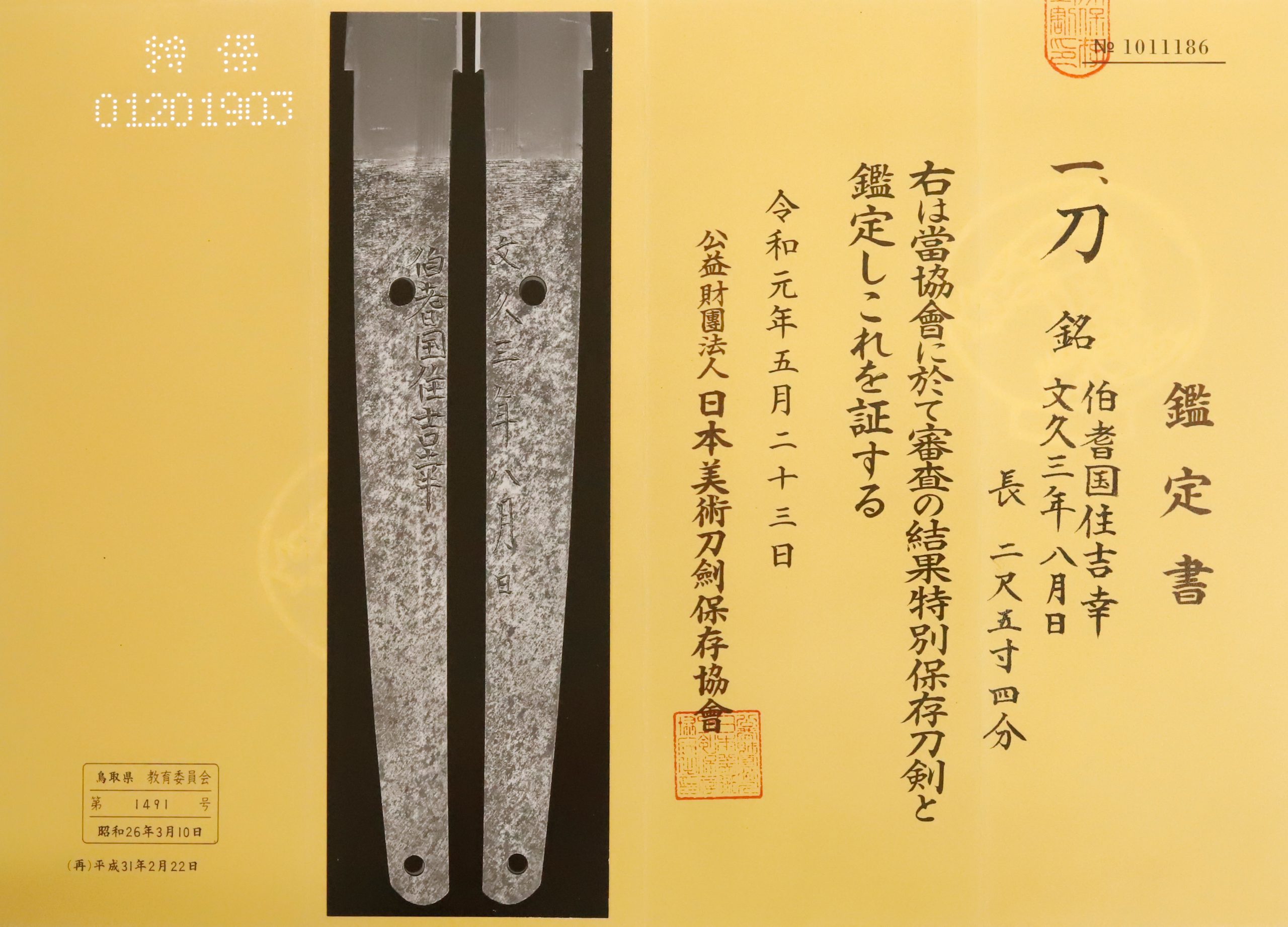
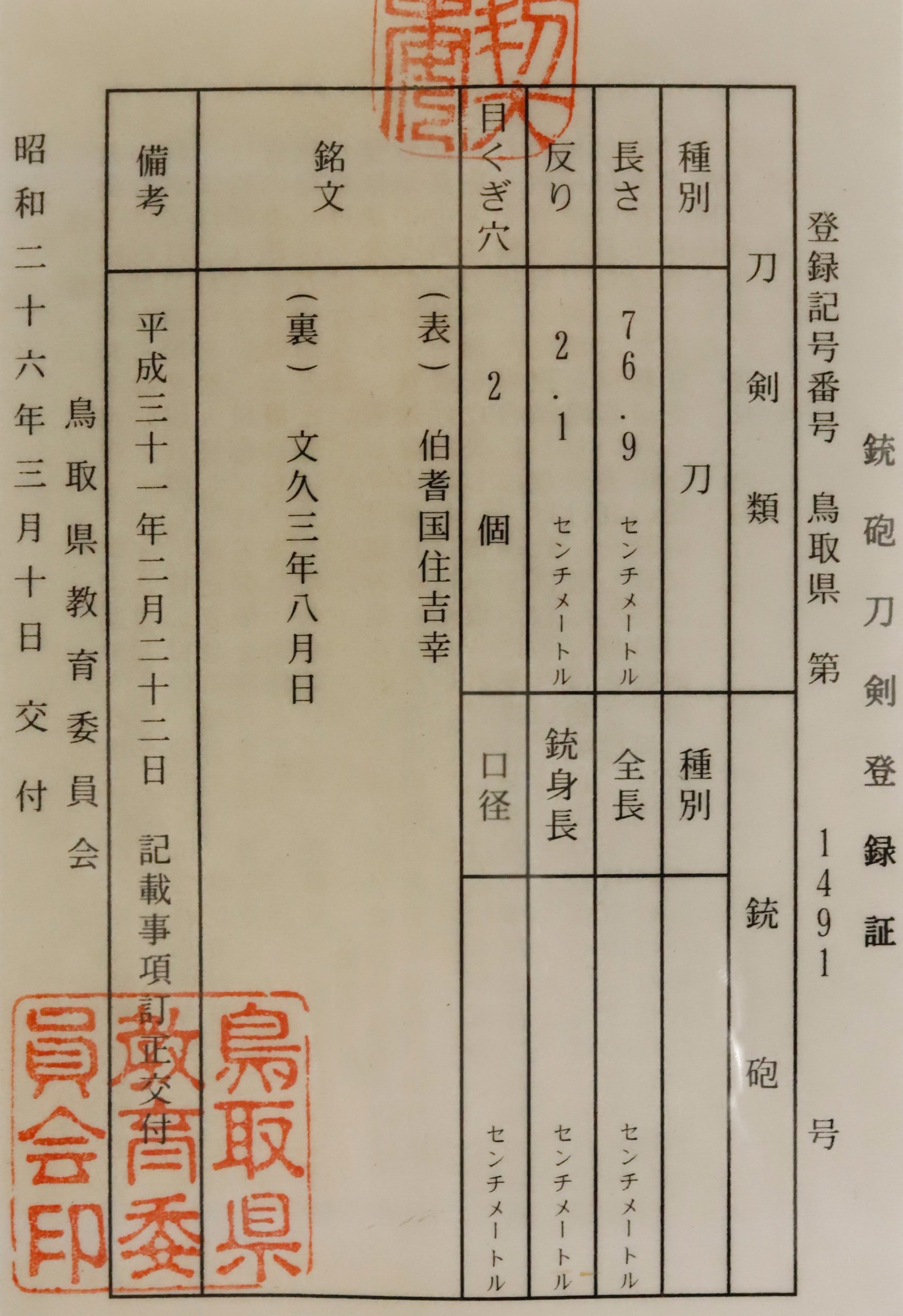
This blade was forged by Hoki Koku Jyu Yoshiyuki(伯耆国住吉幸) in August, the seventh year of Bunkyu era(1863: late Edo period), judging from the signature and NBTHK authentication paper. He lived in Hokikoku(Today’s Tottori prefecture) when he created this blade. Yoshiyuki(吉幸) was born as the son of Yamazaki Heiemon Yoshihiro(山崎平右衛門吉広) in Izumo Koku(Today’s Shimane prefecture). Later on, he moved to Yonago city in Hokikoku to serve a swordsmith named Shimizu Masayoshi(清水正吉). His master eventually adopted Yoshiyuki. In his career, he mainly forged swords in Yonago city, but there are also records where he made blades in Izumo koku(his birthplace). Izumo Koku and Hokikoku were neighboring provinces. He first signed as Yoshiyuki(吉行) but changed it to Yoshiyuki(吉幸) while its pronunciation was the same. In his career, he served the Izumo domain as both Samurai and swordsmith. Izumo is the most famous place for producing Tamahagane, special carbon steel used to make Japanese swords. We assume Yoshiyuki had easy access to refined, high-quality steel because of where he lived. We are confident you can appreciate Yoshiyuki’s superb craftsmanship in this blade. Based on his remaining work, he was active at sword-forging from the Ansei era to the early Meiji period (1855-1876). He died at the age of 75 in the 19th year of the Meiji period(1886). This blade is appraised as Tokubetsu Hozon certificate issued by NBTHK. This authentication paper was only given to Japanese swords, especially worth preserving by Nihon Bijutsu Touken Hozon Kyokai(the Society for the Preservation of the Japan Art Sword). And based on the style of the sword mountings, they are categorized as DENCHU KOSHIRAE(Sword mountings for entering a castle), which is very formal style of the mountings. Curvature(Sori) For more detailed measurement of the blade/sword mounting Fuchi-Kashira The Nanako-Ji (魚子地) technique decorates this Fuchi Kashira. Its surface was hit by the Nanako-Ji Tagane (魚子地鏨, chisel used for this technique). It makes delicate fish egg-shaped protrusions on the entire surface of the Tsuba. The Nanako-Ji with the same size of particles lined up regularly makes us feel the maker’s expert skill. Although this Fuchi Kashira does not have ornamental decoration such as gold or silver inlay, you would enjoy the texture of the material itself. Tsuka and Menuki The dragon is the motif of this Menuki. Its eyes are colored with golden metal (probably gold or brass). Initially, a dragon is an imaginary creature found in ancient traditions or myths. Furthermore, it is a symbolic beast of auspicious signs. Its body is likened to nine animals: antlers are deer, the head is a camel, eyes are demons, the neck is a snake, belly is Mizuchi (蛟, mythical animal in Japan which looks like a snake and have a horn and four legs), scales are fish, claws are falcons, palms are tigers, and ears are cows. It was thought that the dragon would reign at the top of all animals because of its odd-looking appearance. Tsuba and Habaki Oval-shaped Tsuba that has Kozuka and Kougai holes. The glossy black-colored metal is applied to these holes. Same as Fuchi Kashira, this Tsuba is also ornamented with the Nanako-Ji technique. By applying the same design, a sense of unity is created in the overall decoration. Saya If you prefer black Sageo(Code on the scabbard), we can arrange it without additional charge. Authentication Paper They authenticated the blade on Nov 9th in the first year of Reiwa (2019). They appraised it as Tokubetsu Hozon Touken, the blade especially worth preserving for Japanese society.

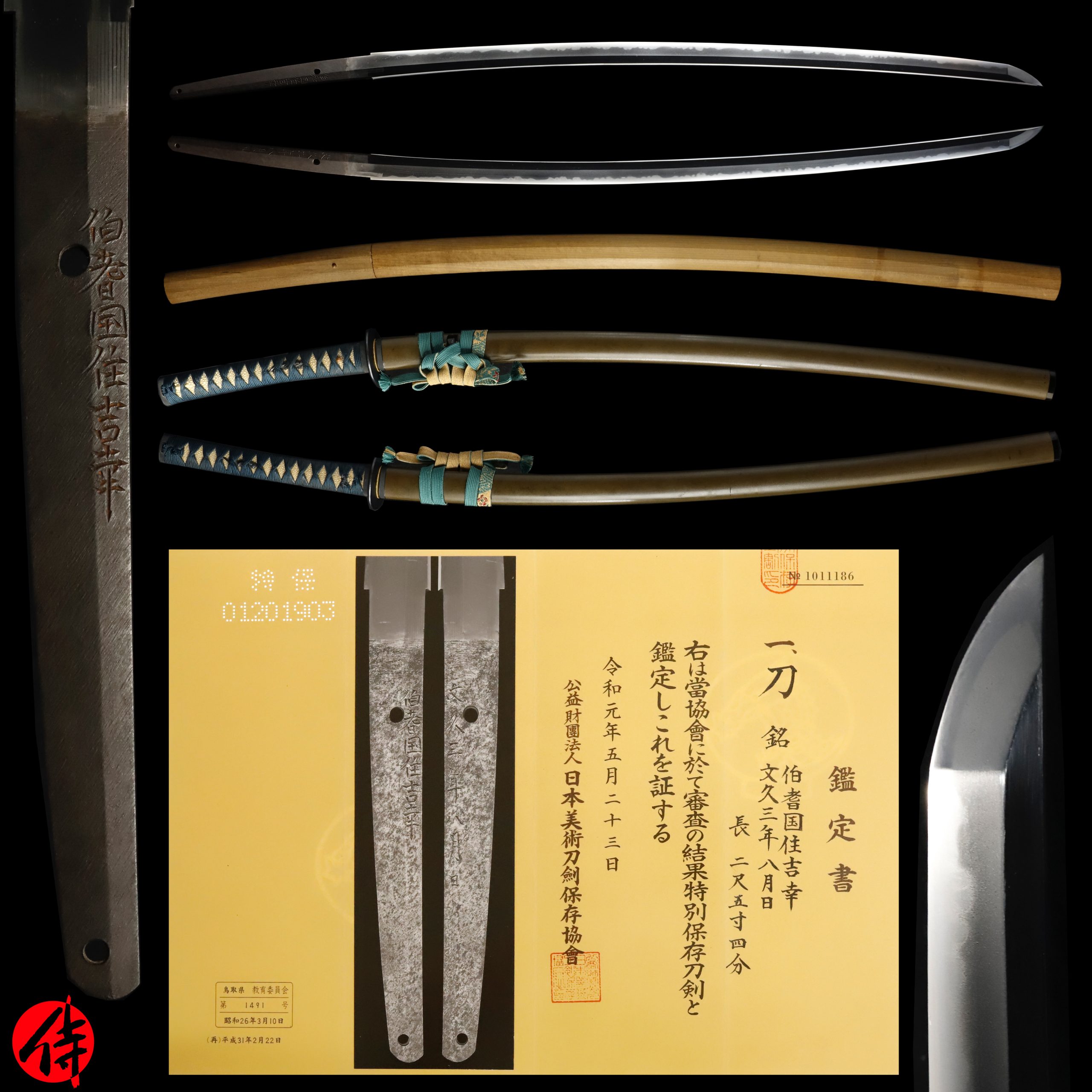
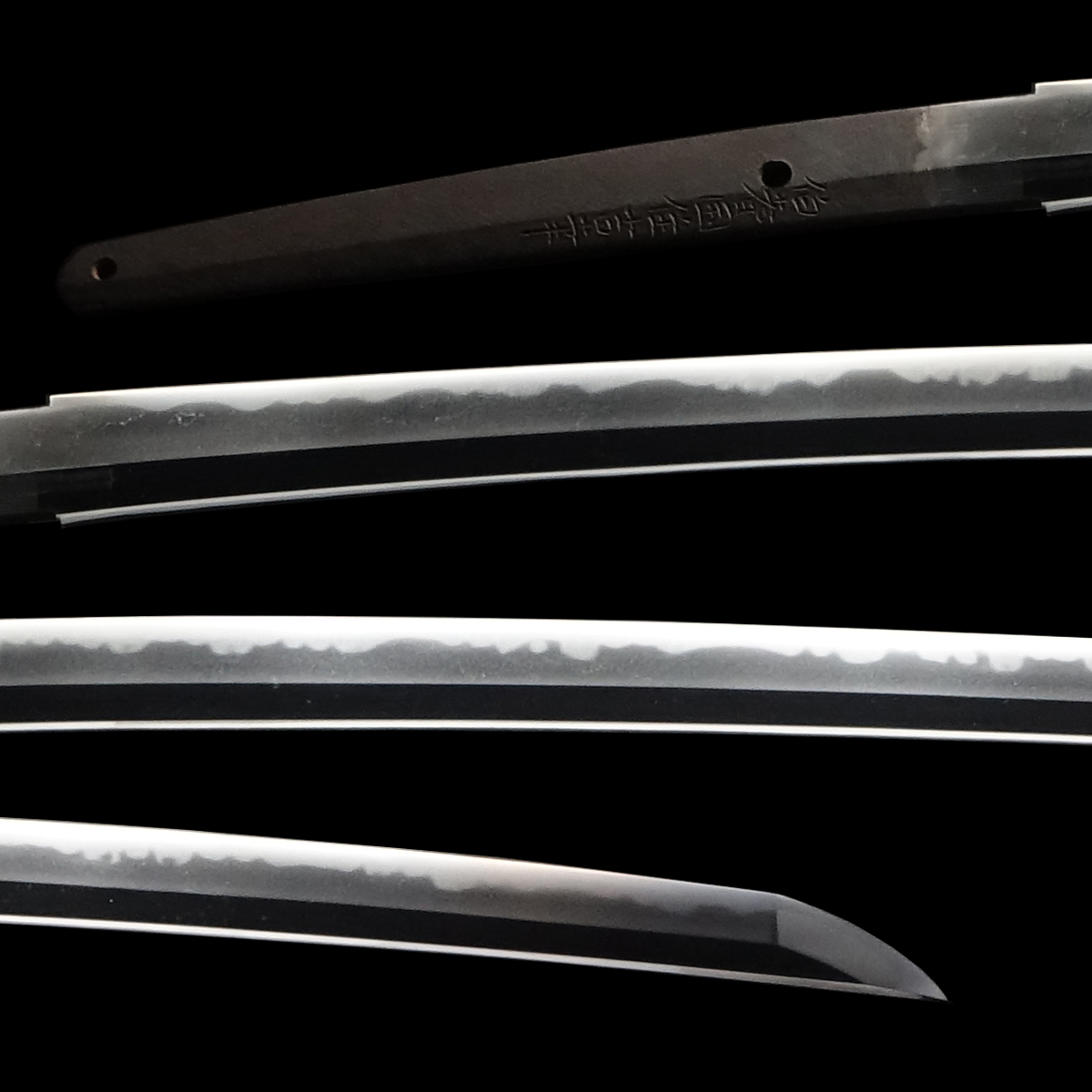
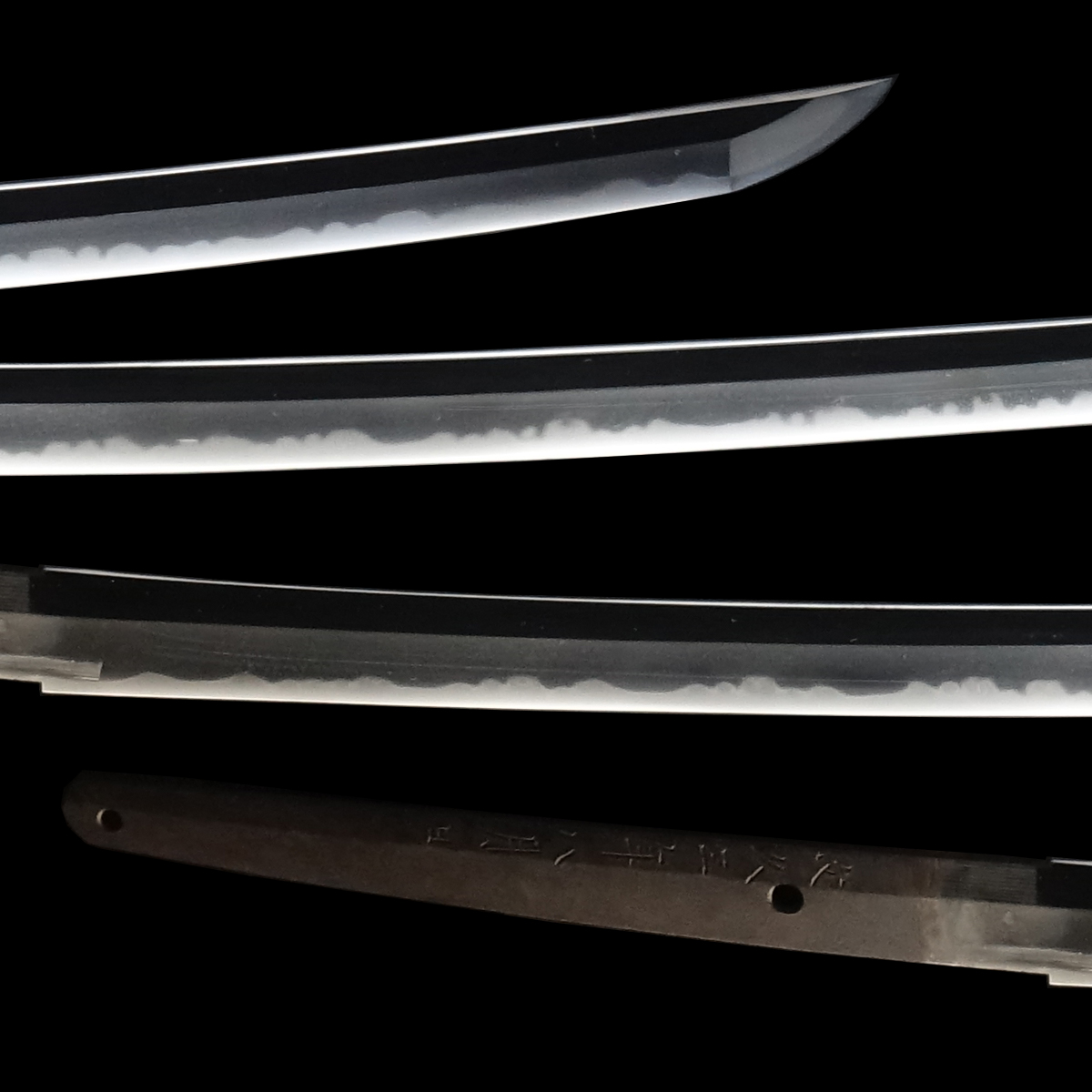
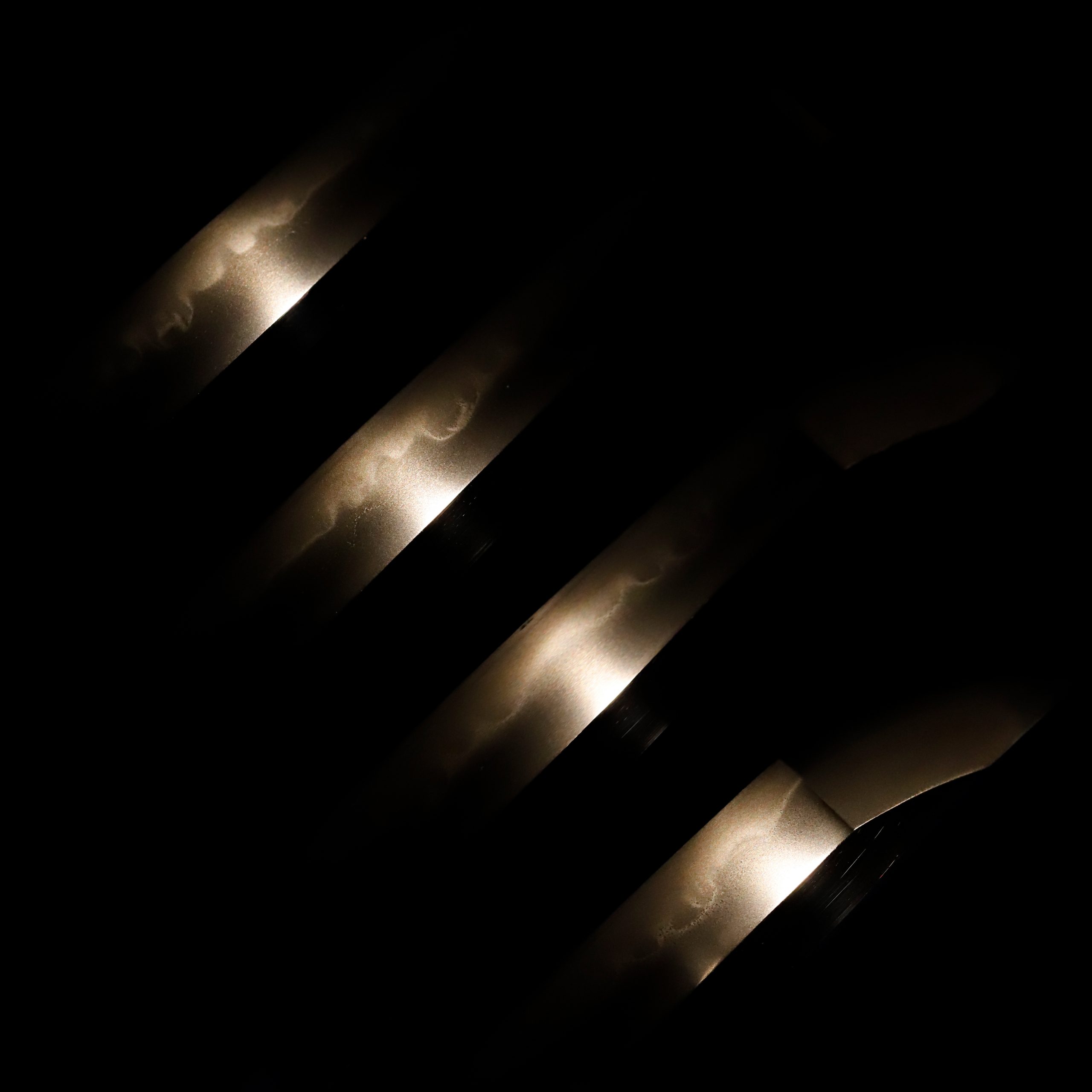
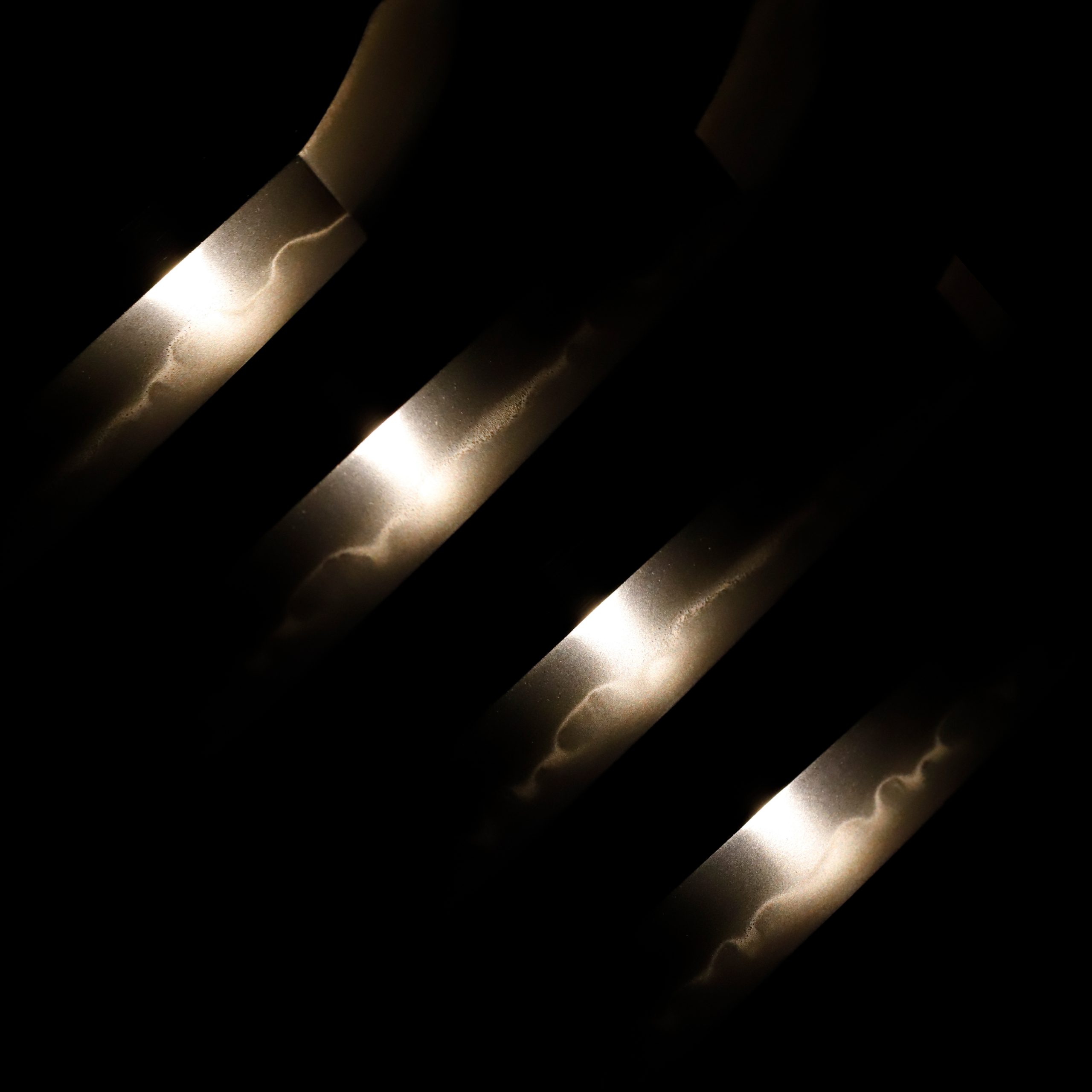
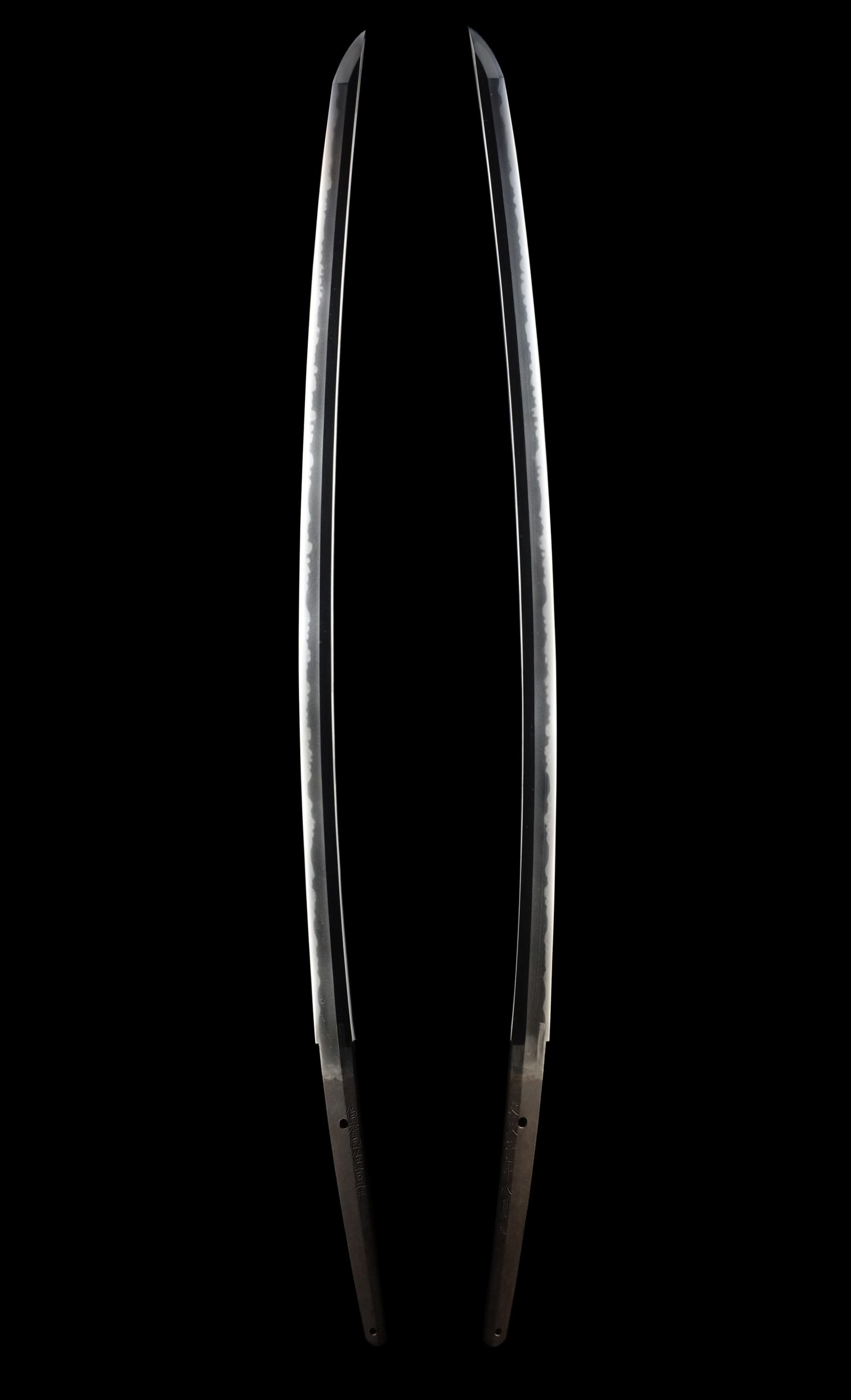
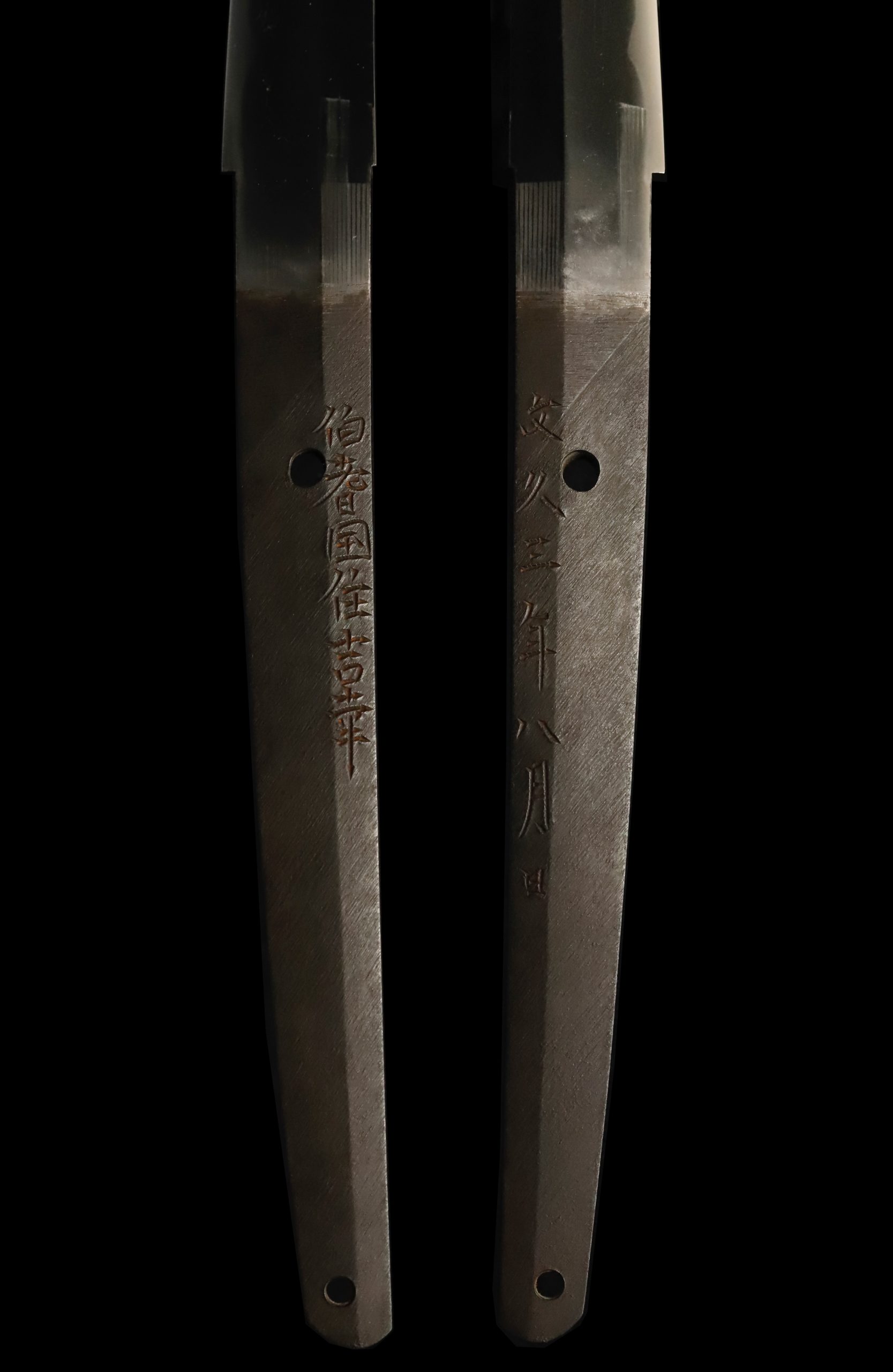
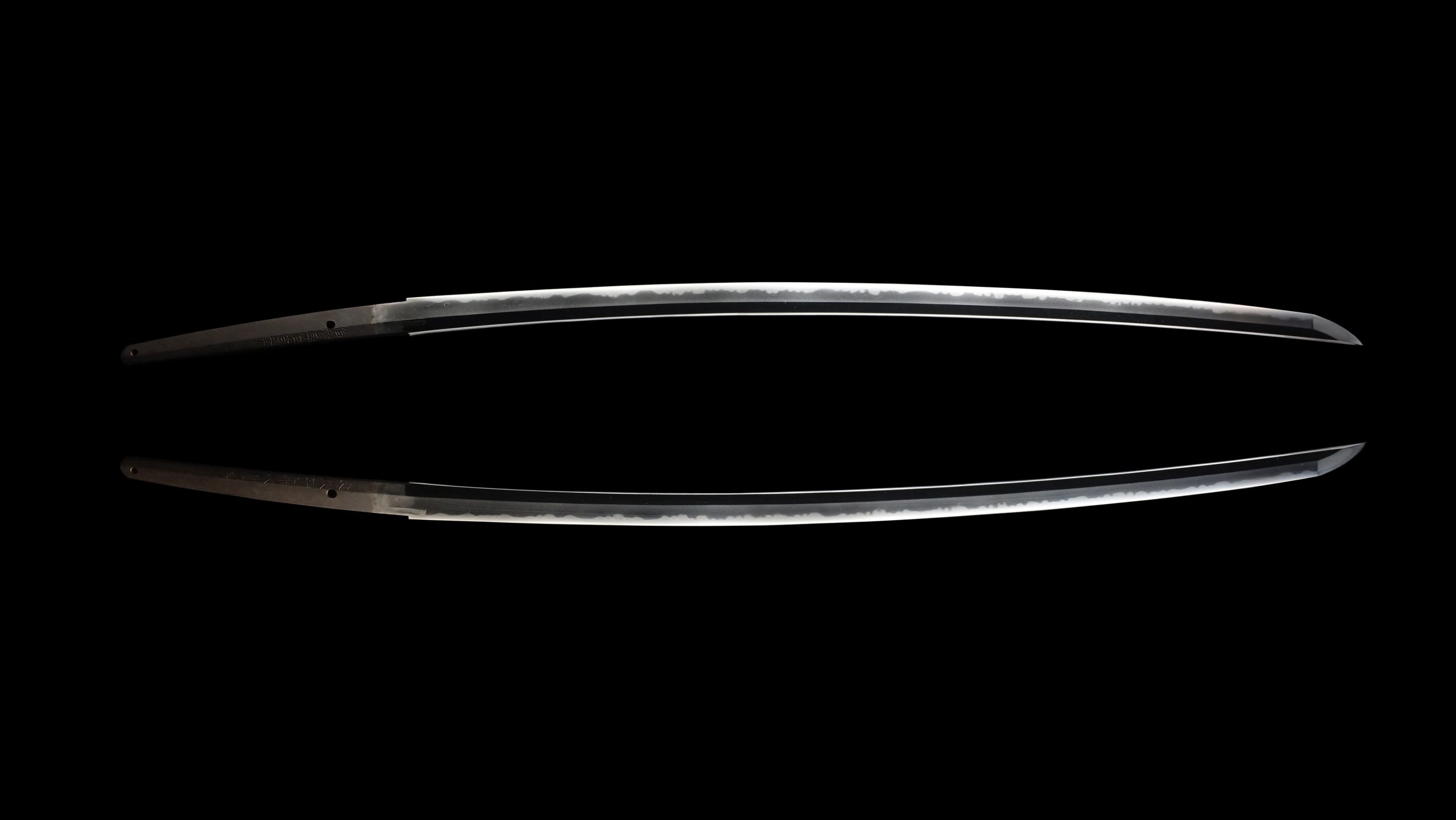
販売店の記載のまま
伯耆 · 1848-1854頃
藤代 中作 · 刀剣大鑑 上位95%
現在1点販売中
江戸時代
徳川の泰平のもと、大小は法度の定める身分の制服となり、需要は城下町、とりわけ江戸に集まった。工芸は二つに分かれる。目利きのための華やかな鑑賞の作と、截断の結果を金象嵌に刻む実証の刀である。
保存刀剣のうち、出来が一層優れ、保存状態も良好と認められたものです。再刃や、室町・江戸期の多くの無銘作は対象外となり、保存刀剣より高い基準が課されます。
日本美術刀剣保存協会(NBTHK)は、1948年に設立され、文化庁の監督を受ける公益財団法人で、東京・刀剣博物館に本部を置きます。専門の審査員が出品作を直接審査し、美術的・歴史的価値に応じた鑑定書を発行します。NBTHKの鑑定書は、日本刀および刀装具の真正性を示す最も広く認知された基準です。
NBTHK公式サイトReturns/exchanges limited to defects caused by shipping (except willful misconduct or gross negligence by the company); customers must contact within 72 hours of receiving the product.