説明
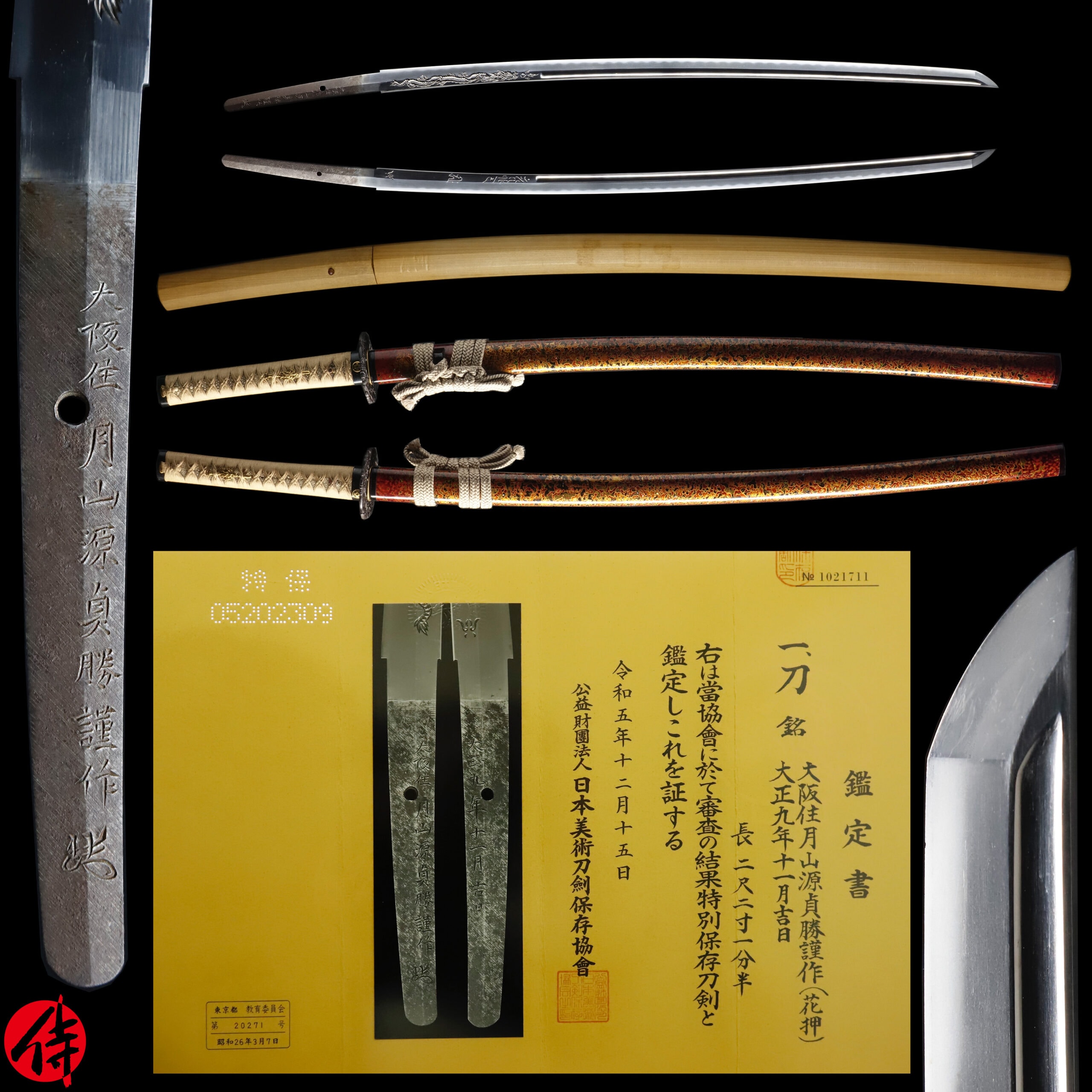
Modern Japanese Sword Katana Signed by Gassan Sadakatsu with
Tokubetsu Hozon
Certificate
【Description】
Summary
This blade was signed by Osaka Jyunin Gassan Sadakatsu (大阪住月山貞勝) in Nov the 9th year of the Taisho era (1920). Osaka Jyu means that he lived in Osaka when he forged this blade. Gassan is the name of a prestigious school.
Gassan Sadakatsu was born in Osaka in the second year of the Meiji era (1869) as the son of Gassan Sadakazu and grandson of
Gassan Sadayoshi, two of the most famous swordsmiths during the late Edo-early Meiji period.
Sadakatsu learned sword-forging techniques from his father in his childhood. You can barely find the blades signed by him before the 7th year of the Taisho era (1918) because he dedicated himself to assisting his father. In that sense, this blade is very rare one. From the 10th year of the Taiso era (1920), his craftsmanship was highly recognized by Ichiki Kitokuro, Minister of the Imperial House. And, Sadakatsu was assigned to forge blades for the imperial family members. Sadakatsu also forged many blades for the Japanese navy/army generals.
After his father, Gassan Sadakazu, deceased, Sadakatsu took over Gassan school and trained many skilled apprentices. Gassan Sadakazu, his third son, and Takahashi Sadatugu, his apprentice, became the national treasures of Japan in their career. Sadakatsu died on December 24th, 1943.
Gassan School
Gassan is the name of the school he belonged to. It was initially founded during the Heian period(late 12th century). It is said that the school name “Gassan” (月山) came from the fact that they forged swords near the mountain called Gassan in Dewakoku.
Gassan Sadakazu (His father) & Gassan Sadayoshi (His grandfather)
Sadakazu was born as the son of the Tsukamoto family in Omi province(today’s Shiga prefecture) in 1836. Sadakazu was adopted by Gassan Sadayoshi(月山貞吉), one of the most famous swordsmiths in Osaka prefecture when he was seven years. Sadakazu started his training under Gassan Sadayoshi when he was 11 years old. And at incredible speed, he was able to master a lot of complex techniques. According to available records, his first blade was created in 1851 when he was 16 years old.
Gassan Sadayoshi founded Gassan school in Osaka in 1833. While Gassan school had been known as one of the most prestigious schools from the Kamakura period(late 12th century), its presence faded in the early-mid Edo period. However, after Sadayoshi became a highly-regarded swordsmith at the end of the Edo period, the whole school flourished again because of his continuous effort and superb craftsmanship.
Gassan Sadakazu supported Sadayoshi, and they spent many years researching traditional Gassan-style swords and finally made Ayasugihada, the signature design of Gassan school. Ayasguhihada looks undulating grain pattern in the Jihada(steel surface), which resembles a Japanese cedar grain. Sadakatsu also mastered creating Ayasugiha and you can see this grain pattern on this blade.
Horimono (Engraving)
A dragon is beautifully engraved on one side. Initially, the dragon was an imaginary creature found in ancient foreign traditions or myths. Furthermore, it is regarded as a symbol of auspicious signs. Its body is likened to nine animals: antlers are deer, the head is a camel, eyes are demons, the neck is a snake, belly is the Mizuchi (蛟, a mythical animal in Japan that looks like a snake and has a horn and four legs), scales are fish, claws are falcons, palms are tigers, and ears are cows. It was thought that the dragon would reign at the top of all animals because of its odd-looking appearance. And, the other side shows (梵字, Sanskrit letter)。
This blade is appraised as a
Tokubetsu Hozon Token
(特別保存刀剣) issued by NBTHK(Nihon Bijutsu Touken Hozon Kyokai:日本美術刀剣保存協会). This authentication paper was only given to authentic Japanese swords, especially well preserved and high quality with artistic value.
*Please keep in mind that there is partial chip near the Monouchi area slight belo


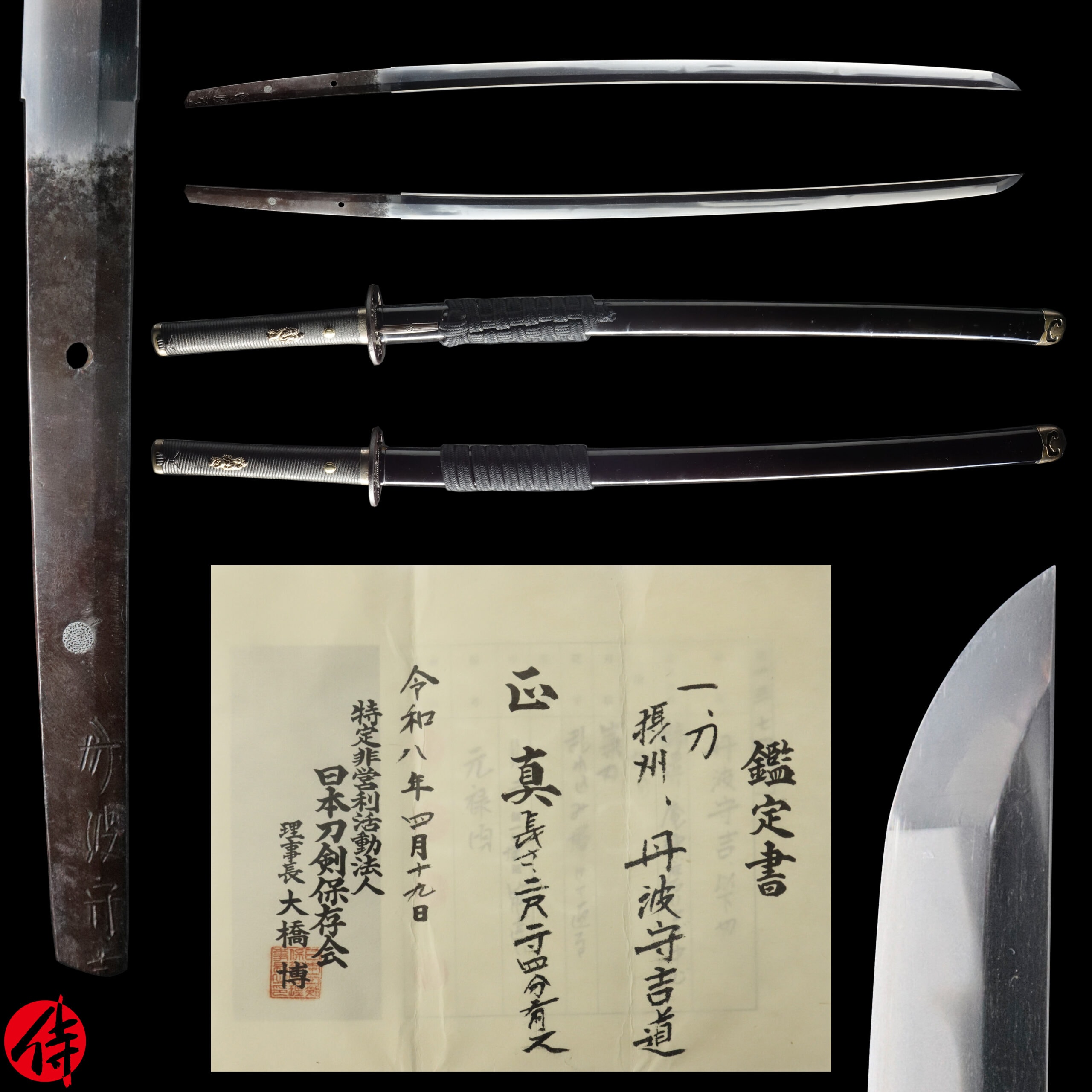
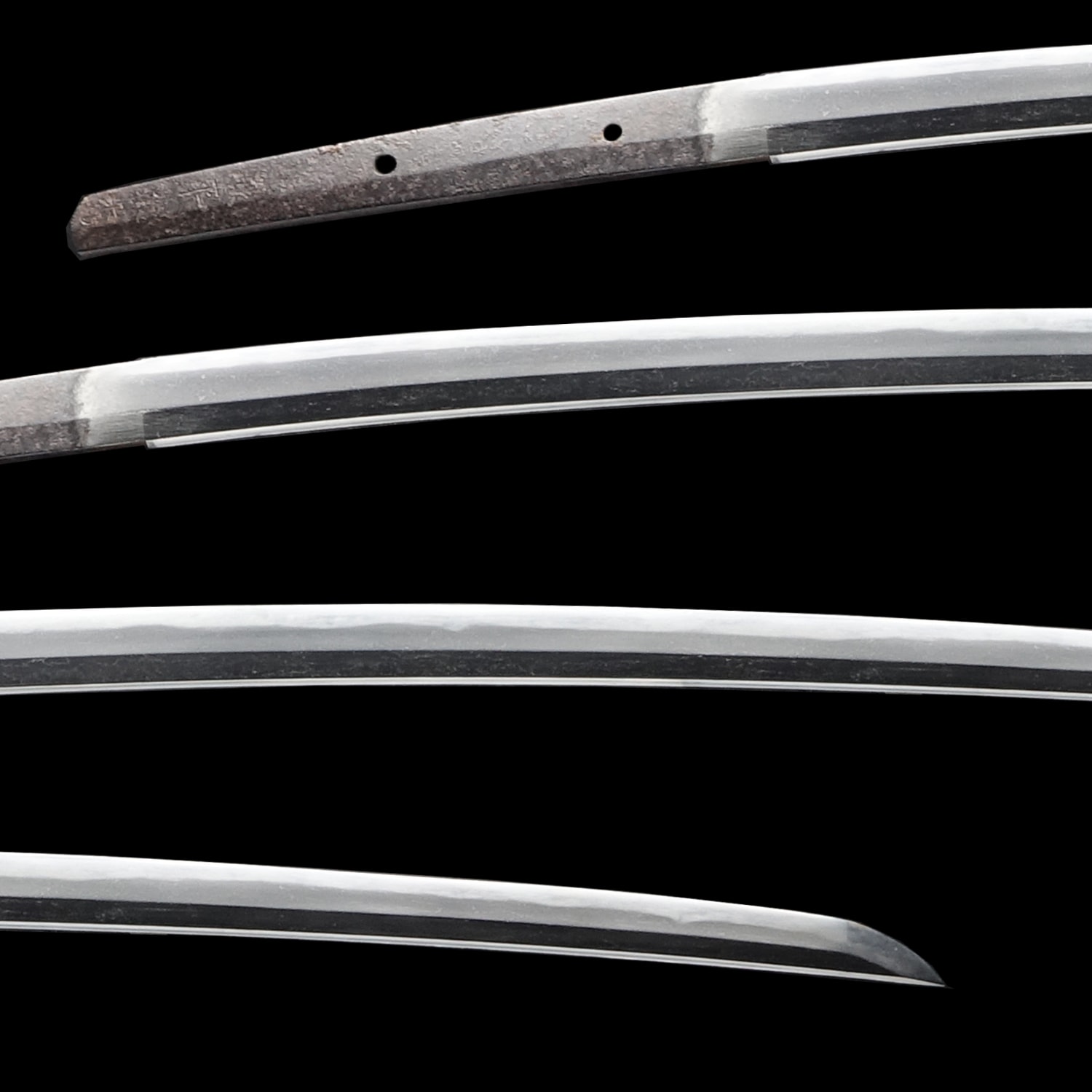
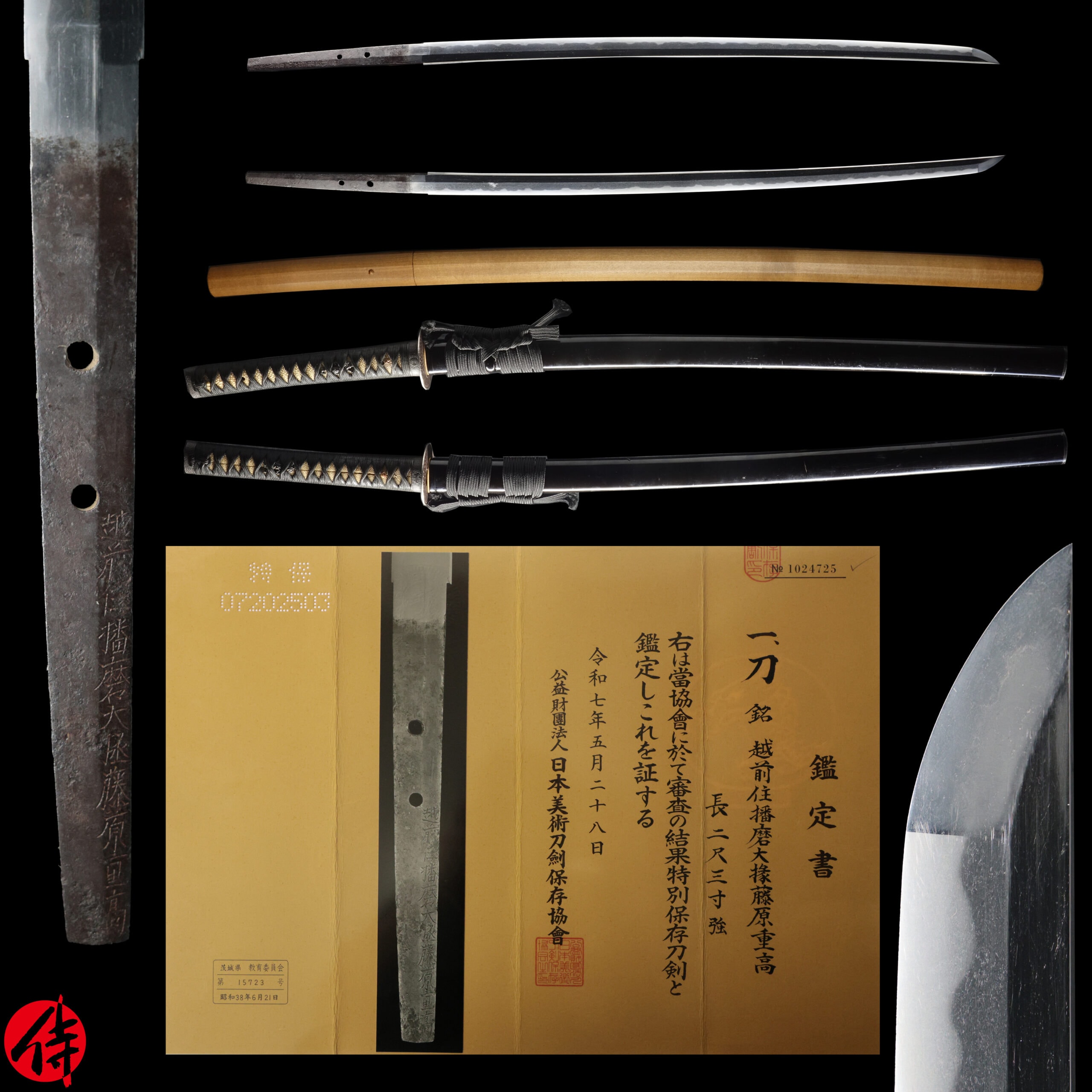
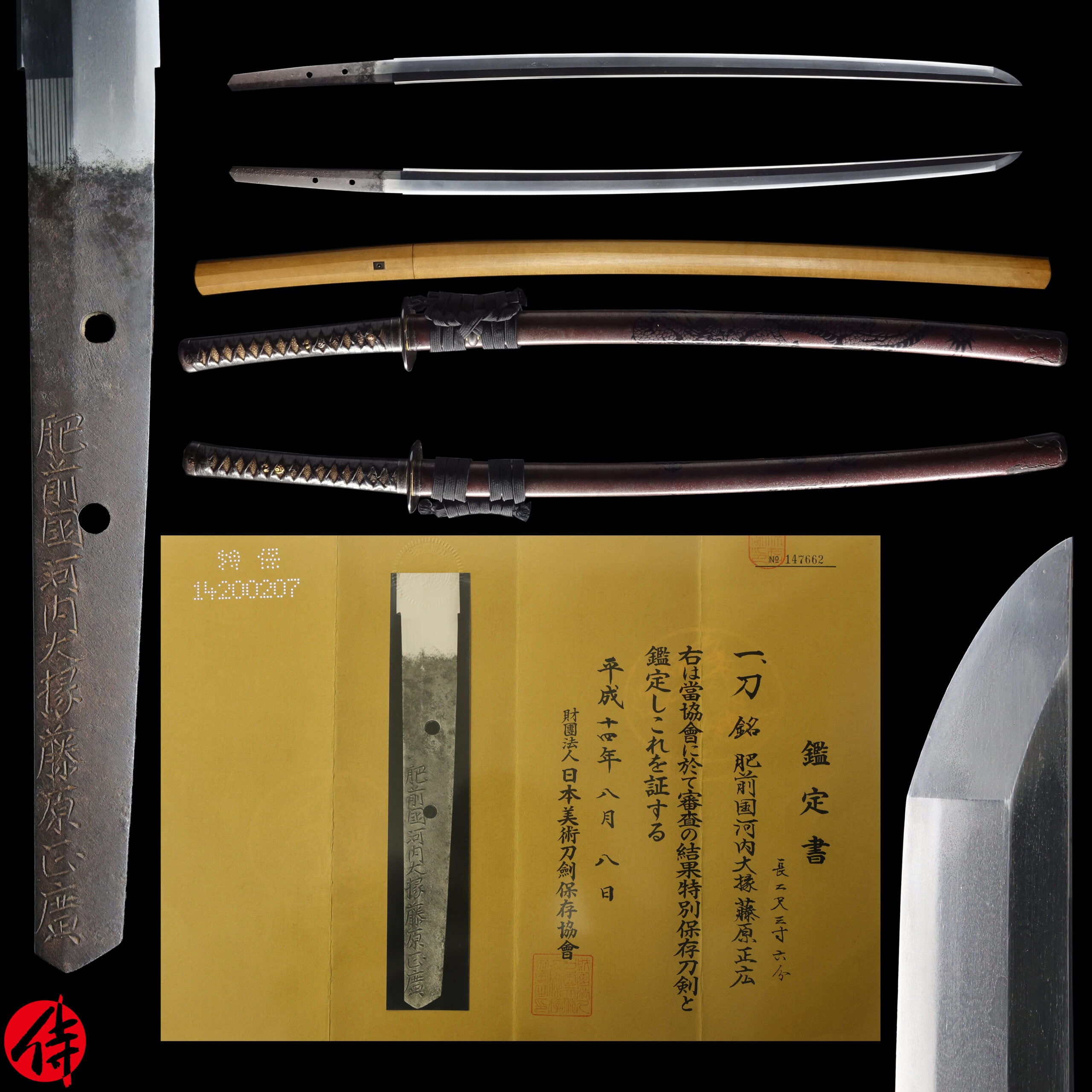
![刀 無銘(月山)保存刀剣鑑定書 Katana No signature Gassan [ NBTHK : Hozon ]](/_next/image?url=https%3A%2F%2Fitbhfhyptogxcjbjfzwx.supabase.co%2Fstorage%2Fv1%2Fobject%2Fpublic%2Flisting-images%2Ftoyuukai%2FL488207%2F00.jpg&w=2560&q=90)
![脇指 羽州村山郡月山弥八郎貞吉 於牛込造之 保存刀剣鑑定書 WAKIZASHI Ushu Murayama-gun Gassan Yahachirou Sadakichi Oite Ushigome tsukurikore [ NBTHK : Hozon ]](/_next/image?url=https%3A%2F%2Fitbhfhyptogxcjbjfzwx.supabase.co%2Fstorage%2Fv1%2Fobject%2Fpublic%2Flisting-images%2Ftoyuukai%2FL441228%2F00.jpg&w=2560&q=90)