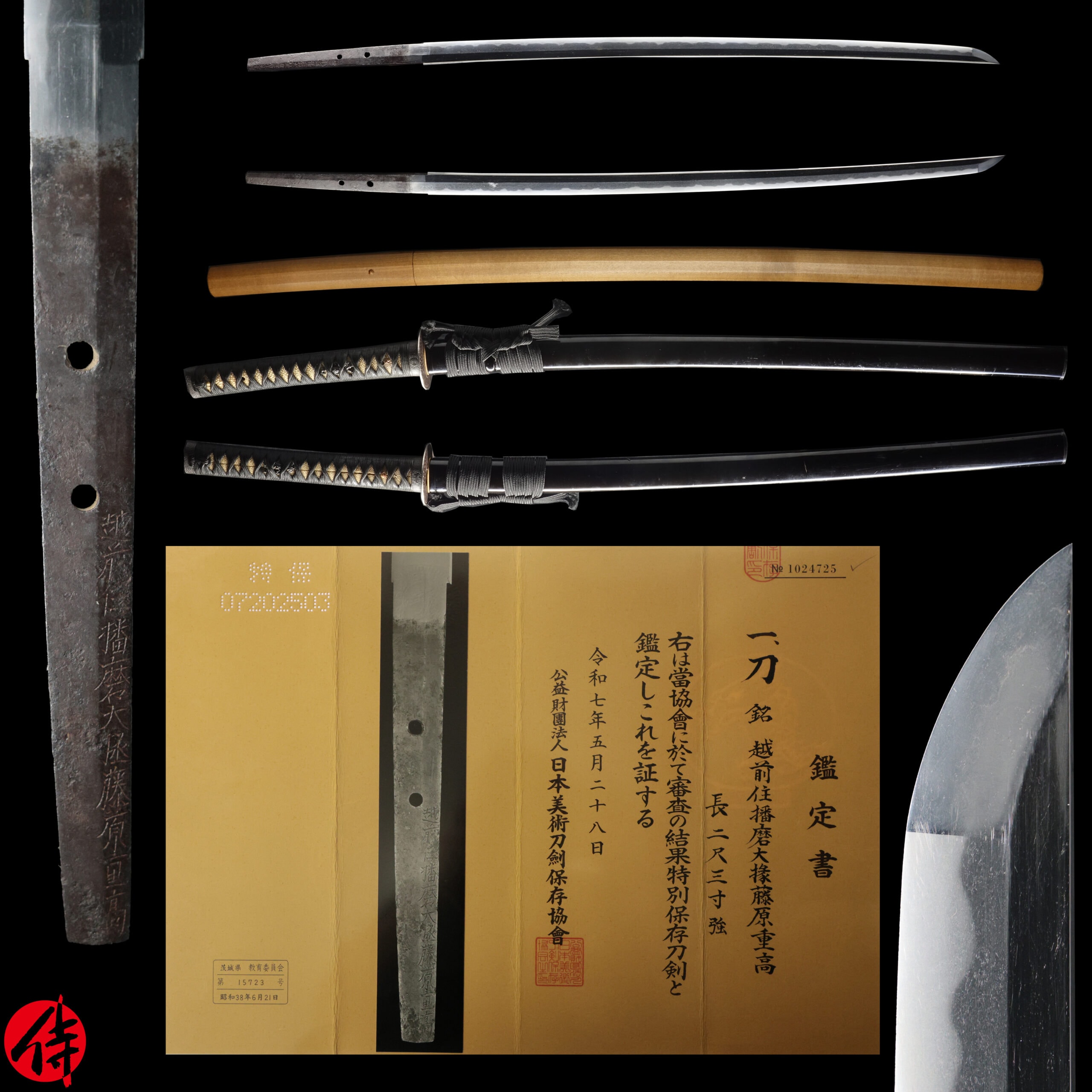
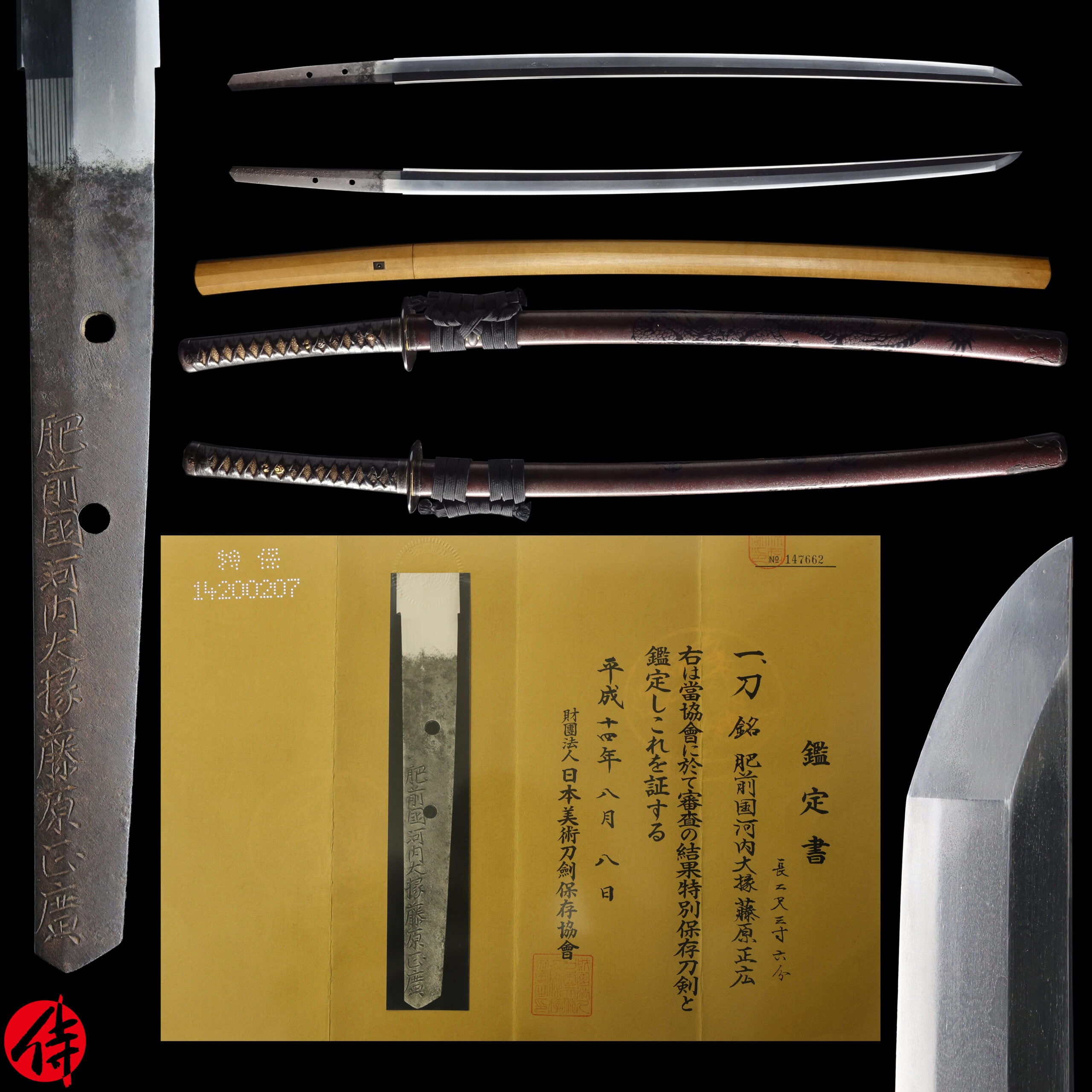
説明
Antique Japanese Sword Katana Signed by Kunisada with NBTHK
Hozon
Certificate
【Description】
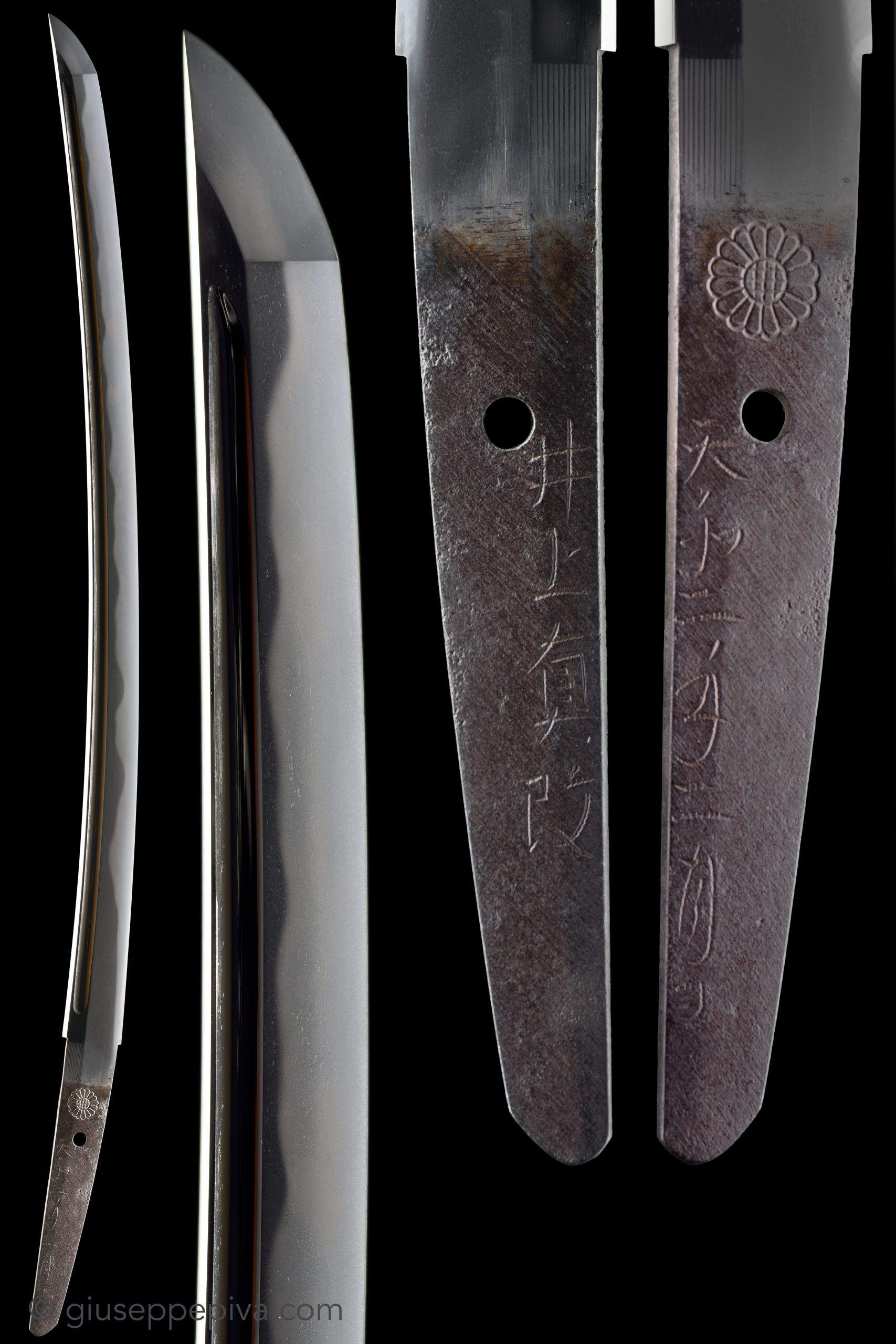
Kunisada, also known as Inoue Yoshihiro, was born in the 17th year of Tensho era(1589) in the southern part of Miyazaki prefecture(Kyushu island). Later on, he moved to Kyoto and became an apprentice of Horikawa Kunihiro, one of the most famous swordsmiths in the early Edo period(early 17th century). He also learned the sword-forging technique from a senior apprentice, Echigo no Kami Kunitomo. Kunisada moved to Osaka in 1620 after his master, Kunihiro, was deceased. He became an independent swordsmith in Osaka city.
He was trusted by the third-gen head of Obi domain(Miyazaki prefecture), Ito Sukehisa, and Kunisada was able to receive the title of Izuminoakami in 1623 because of Sukehisa’s support.
He is known as one of the most influential swordsmiths to make Osaka a famous place for sword-forging in the early Edo period. Osaka was the center of business back then. Many renowned swordsmiths moved to Osaka to meet the demand from high-class Samurais.
His son Inoue Shinkai is also a well-respected swordsmith and trained many apprentices who later became famous swordsmiths. Inoue Shinkai also signed Kunisada at the beginning of his career. To distinguish Kunisada and his son, the first-gen is called Oya Kunisada(Father Kunisada). The second-gen is called Shinkai Kunisada. He died at the age of 63 in 1652.
His blades are known as Owazamono, extremely sharp blades. He is one of the most famous swordsmiths in Osaka during the early Edo period. It is said that Horibe Yasube(堀部保兵衛), one of famous 47 Ronin used one of Kunisada’s work.
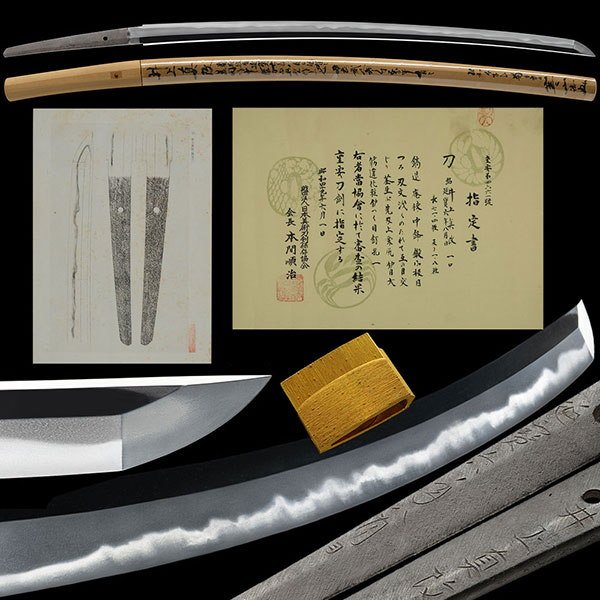
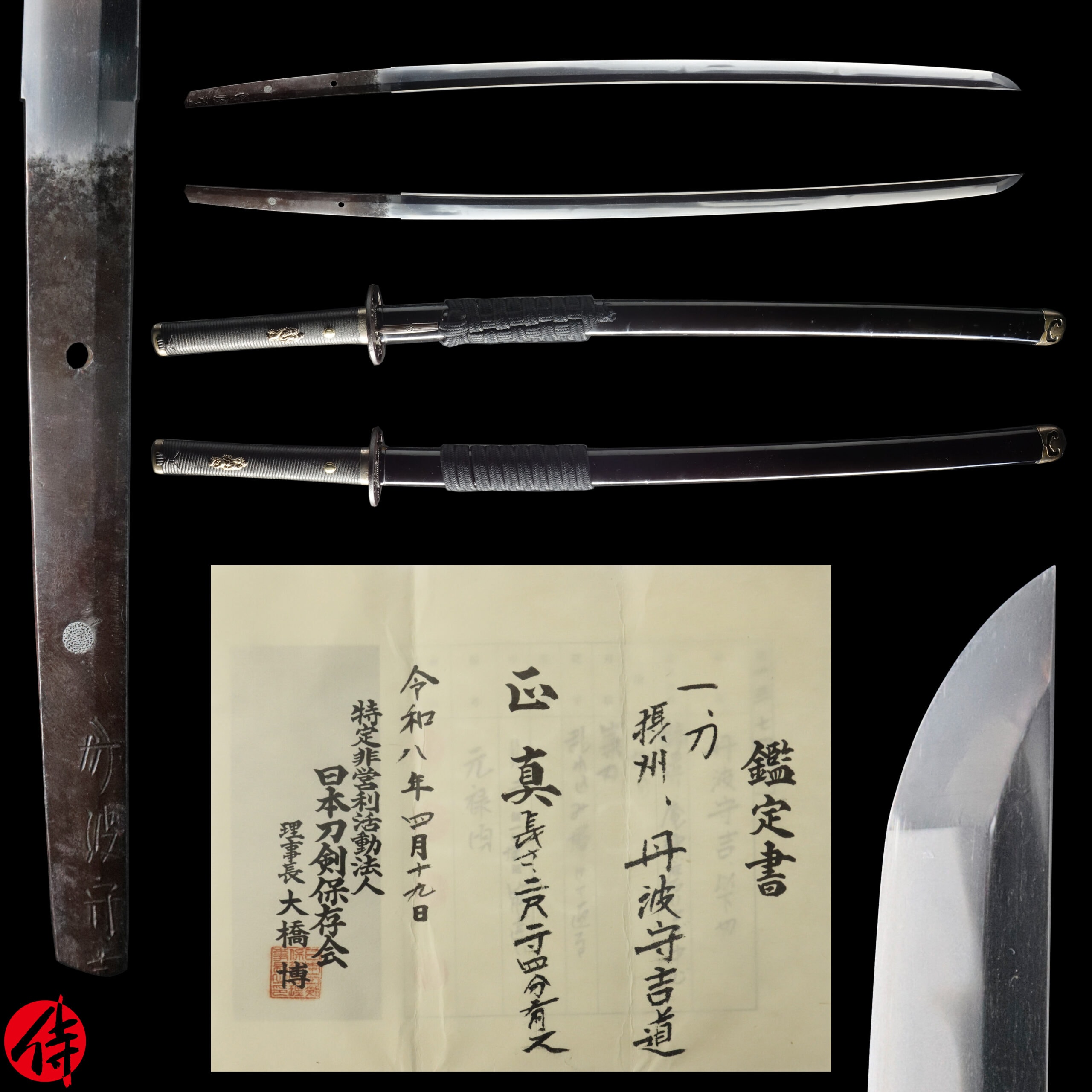
This sword has a Hozon certificate issued by NBTHK. This authentication paper was only given to Japanese swords, worth preserving by Nihon Bijutsu Touken Hozon Kyokai(the Society for the Preservation of the Japan Art Sword). The blade also comes with a beautiful set of Katana style Koshirae.
【Blade】
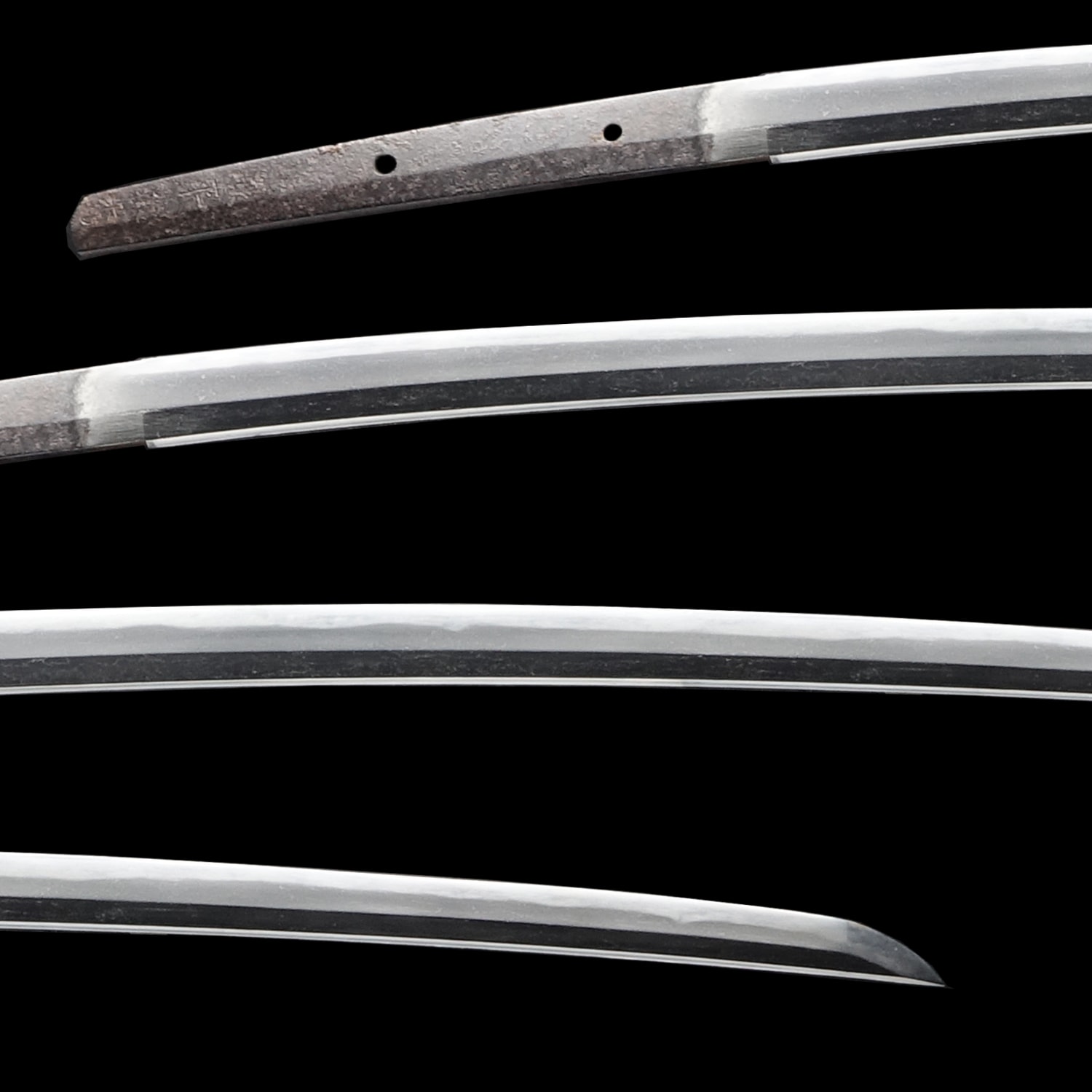
Cutting Edge Length(Nagasa)
:
62.4 cm(
24.56 inches)
Curvature(Sori)
:
1.4
cm(0.55 inches)
For more detailed measurement of the blade/sword mounting
Hamon
:
The crystalline structure which forms along the cutting edge of a blade as a result of the hardening process
Jimon(Jihada)
:
visible steel surface pattern created by folding and hammering during forging process
Nakago
:
Nakago is the tang of the Japanese sword.
Japanese swordsmiths left the black rust on the tang on purpose to prevent red rust while the tang is in its handle. And the discoloration of the tang was created over time, which is a great indicator for a Japanese sword specialist to estimate when the sword was forged.
【Other Details】
Koshirae:
Koshirae is the mounting of the Japanese sword. There are several parts that consist of Koshirae such as Saya(Scabbard), Tsuka(Handle), Tsuba(Handguard).
Fuchi-Kashira
:
A pair of matching sword fittings that cover the upper and bottom parts of its sword hilt.
This Fuchi Kashira’s motif is the dragonfly. Dragonflies have been inhabiting since a long time ago in Japan. As they bag preys quickly, its heroic figure was sometimes the object of belief. During the Warring States period, a dragonfly was called “Kachimushi (勝ち虫)” because of its fearless character; it moves only forward, not backward. Above all, people appreciate the dragonfly pattern with the iris flower or the arrow. Allow was one of the Samurai’s primary weapons, so that this motif might have had reminded Samurais of the battles. Iris flower is called “Shoubu (菖蒲)” in Japanese, and there is the word “Shoubu (勝負),” which means battle. So, “Shoubu” (菖蒲, iris flower) and “Shoubu” (勝負, fight) those two wards have the same pronunciation; therefore, the iris flower pattern reminds Samurai battle.
Tsuka and Menuki
:
Tsuka is the handle of the Japanese sword and Menuki is its decoration.
It is challenging the whole part of this Menuki; however, it looks humans and demons are fighting each other. Since they are holding and pulling a thick string (might be a rope),