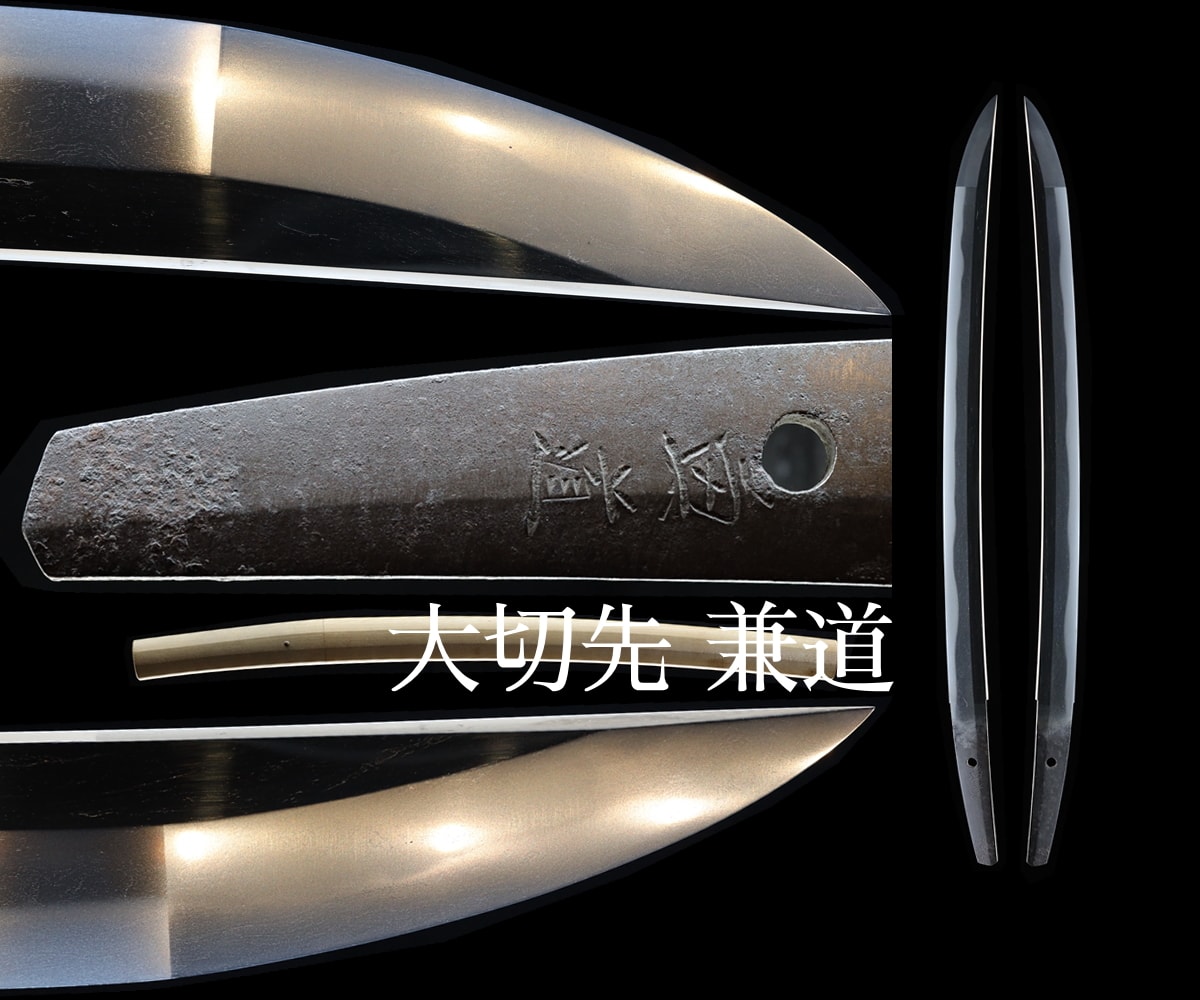
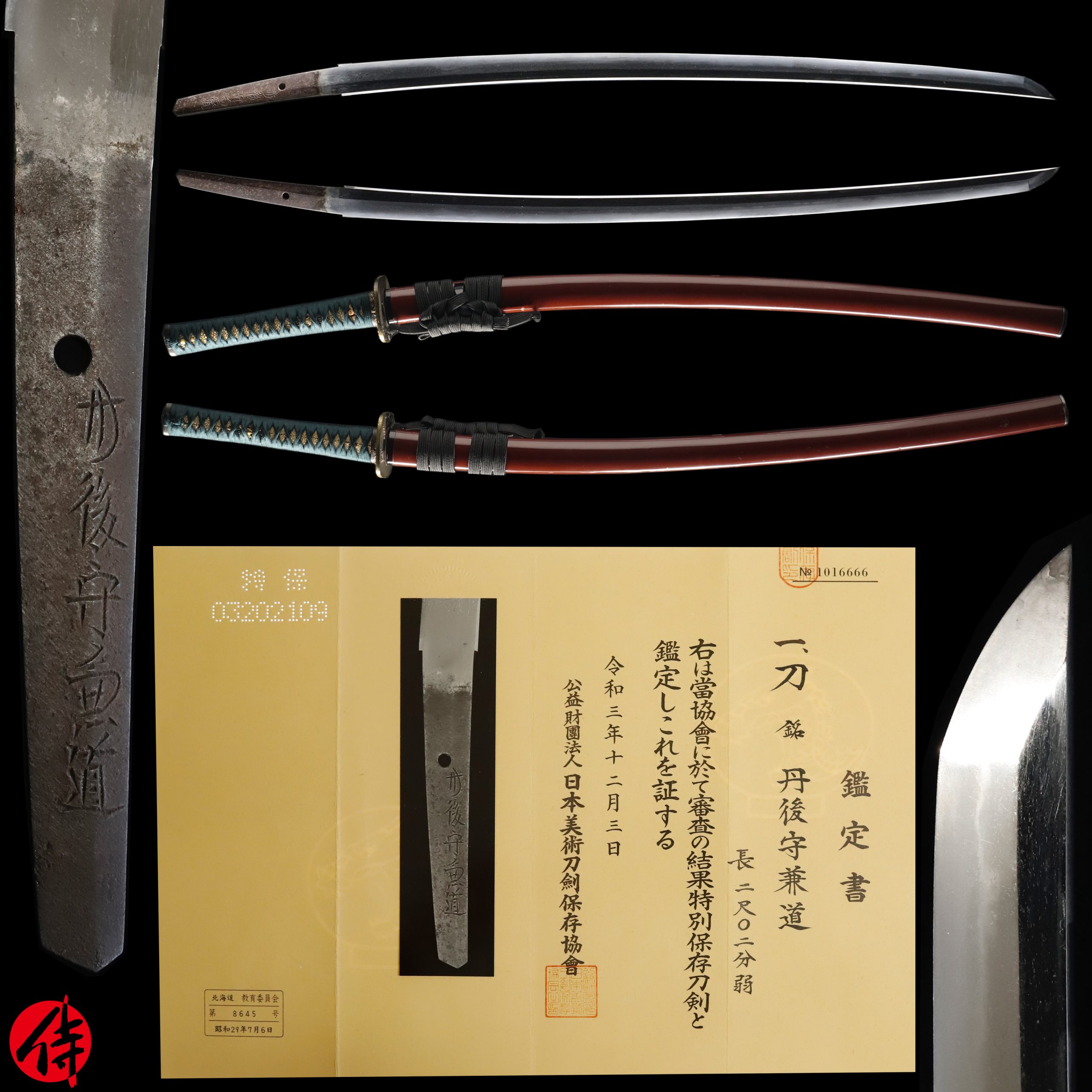
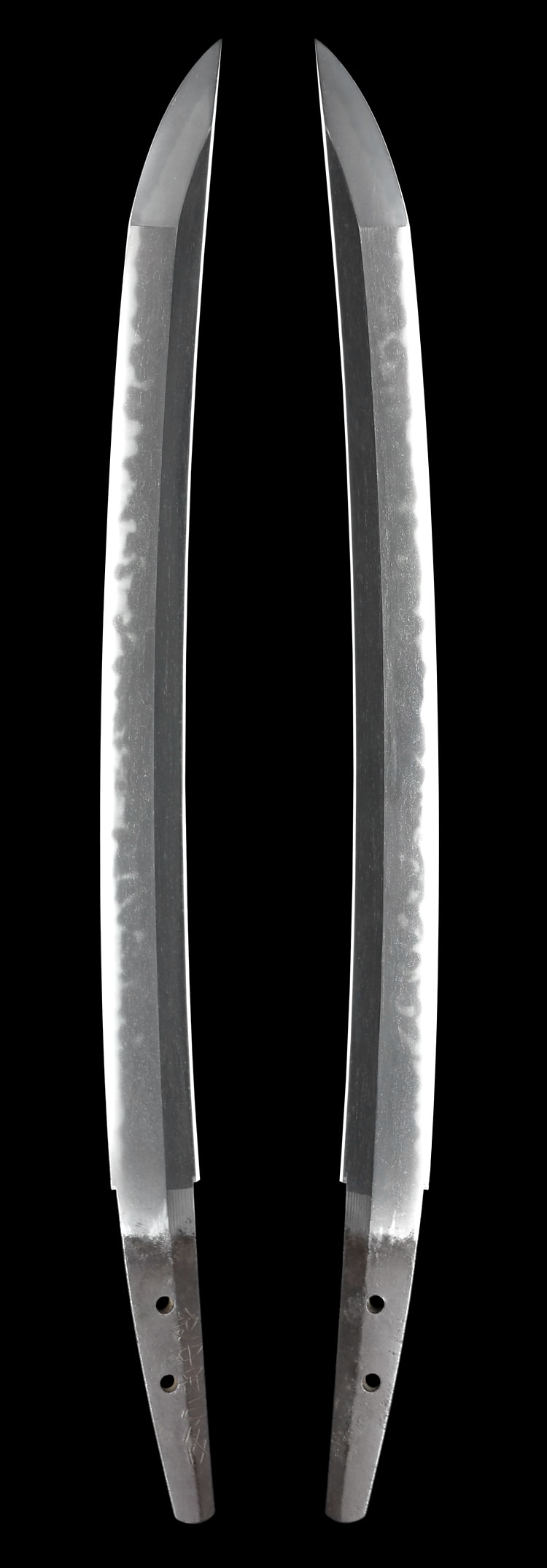
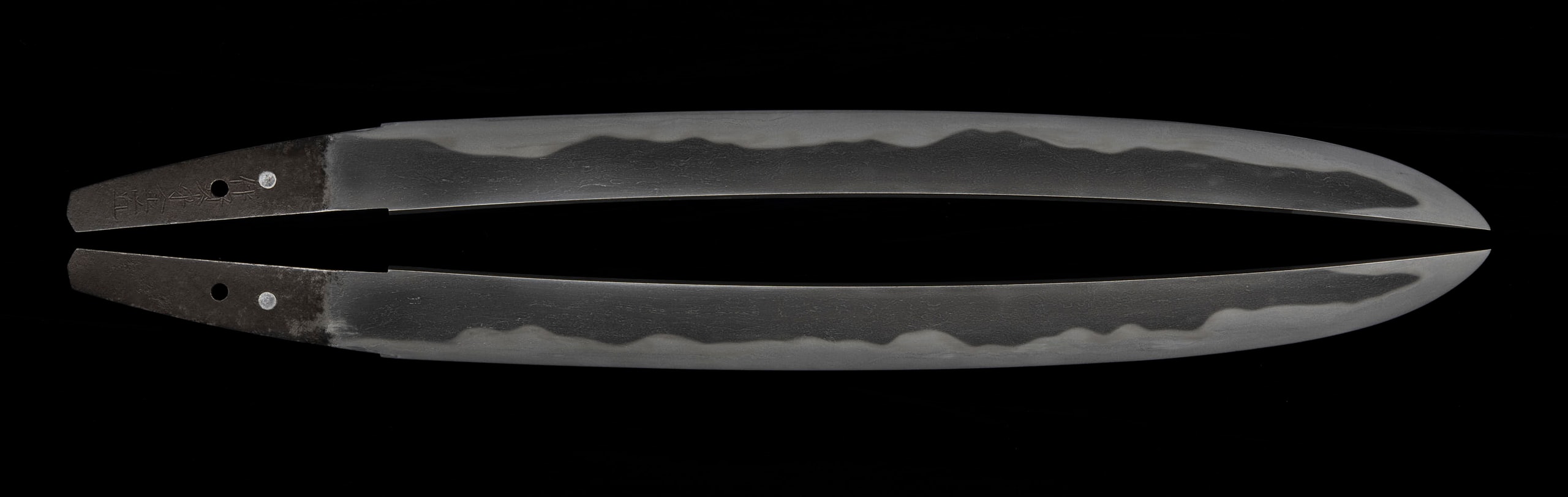
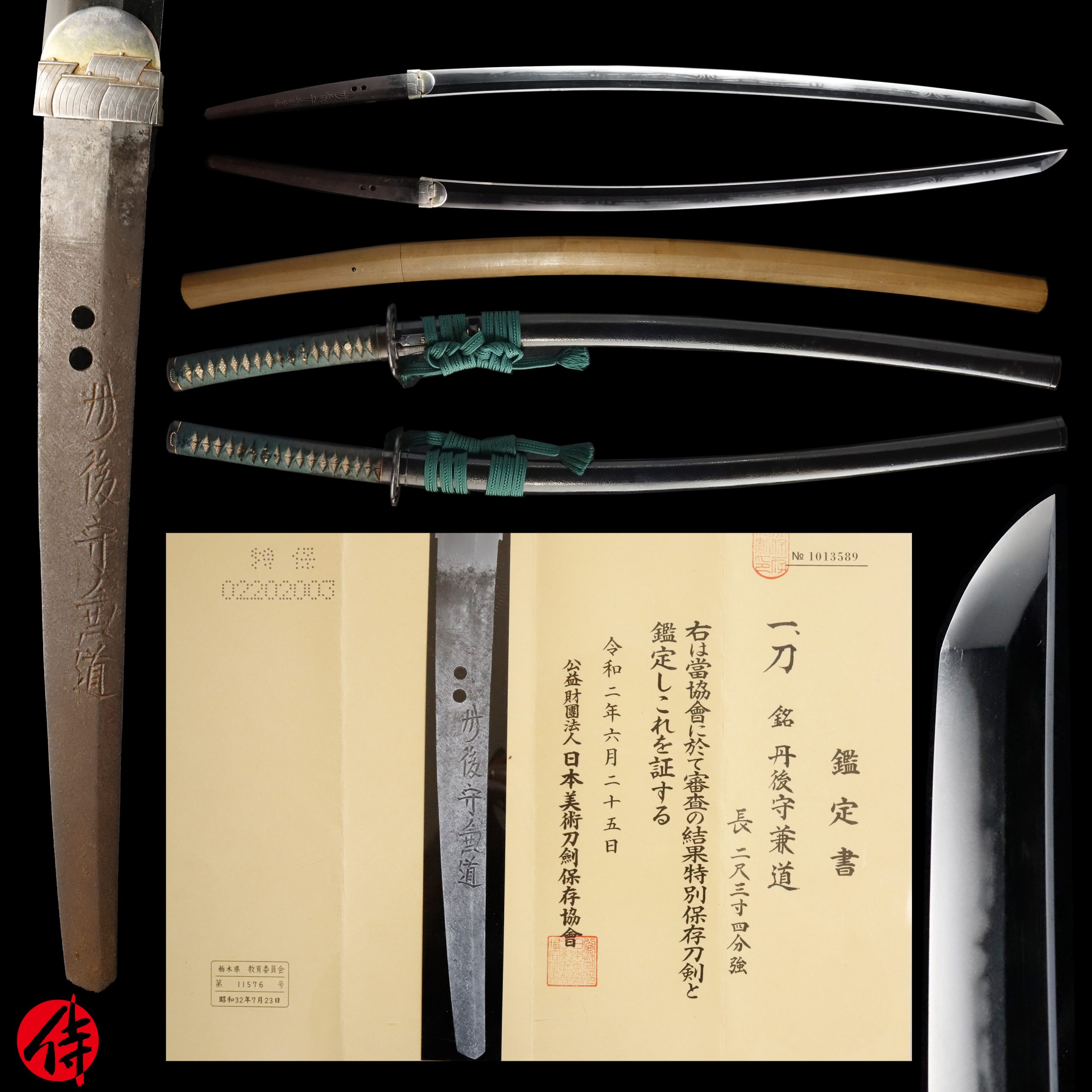
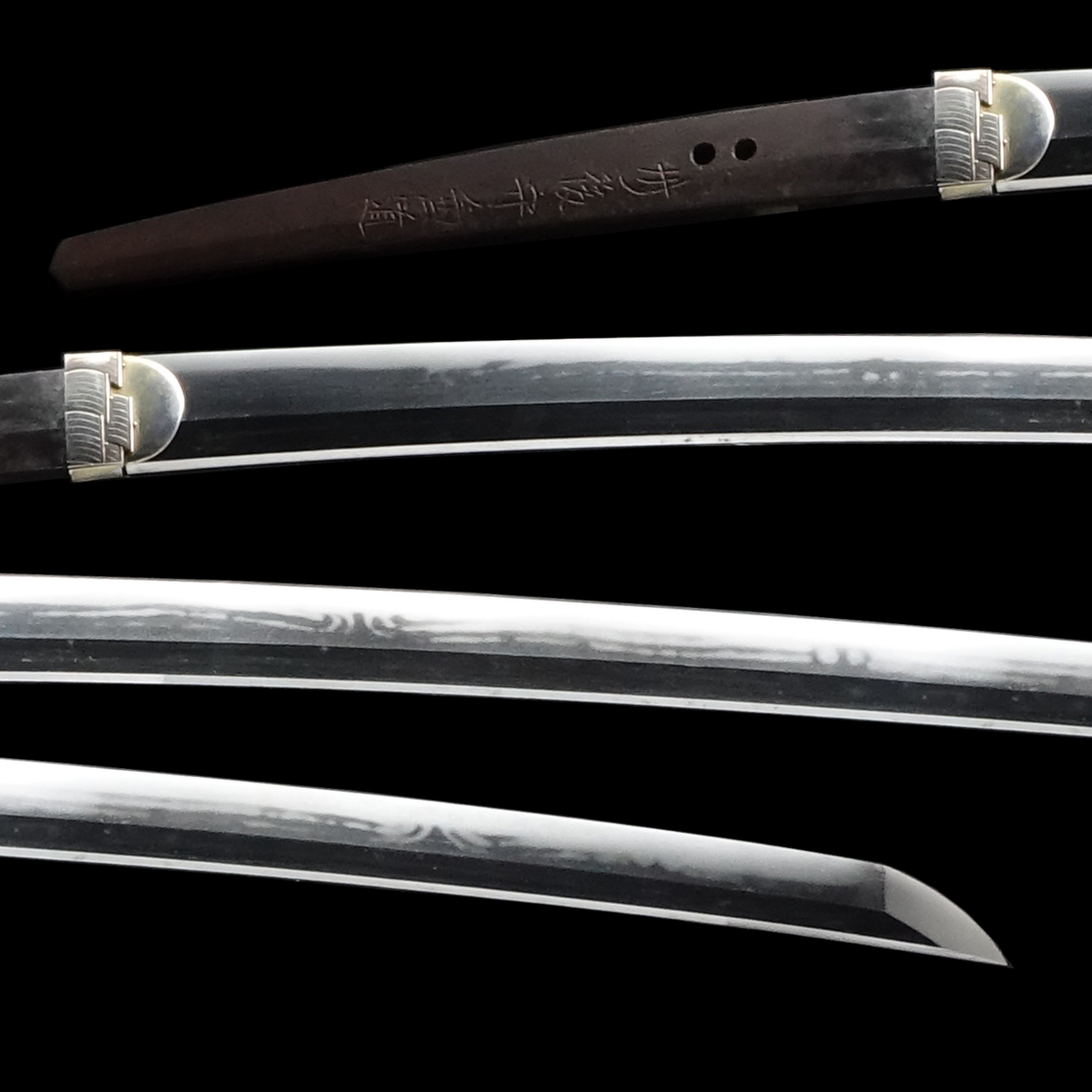
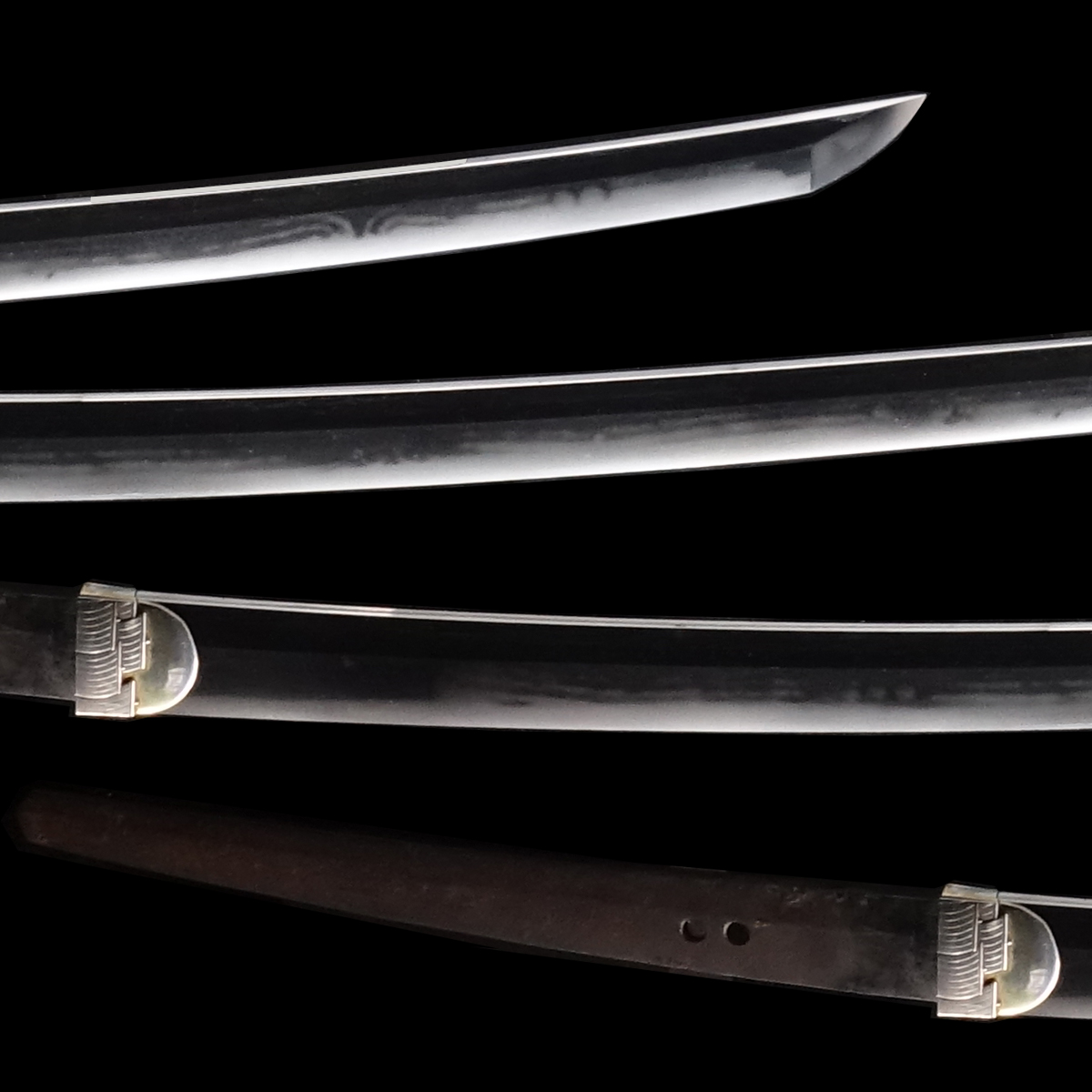
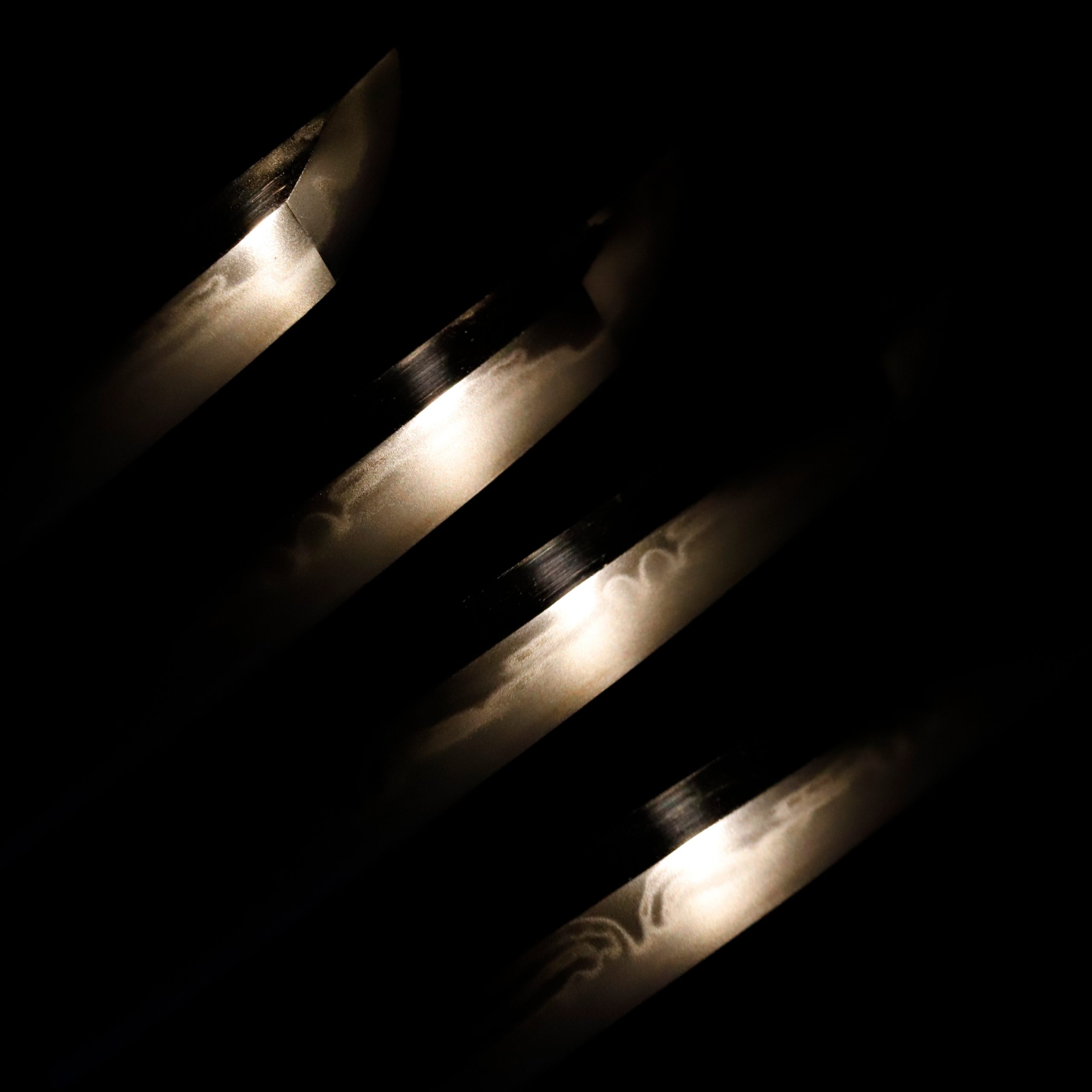
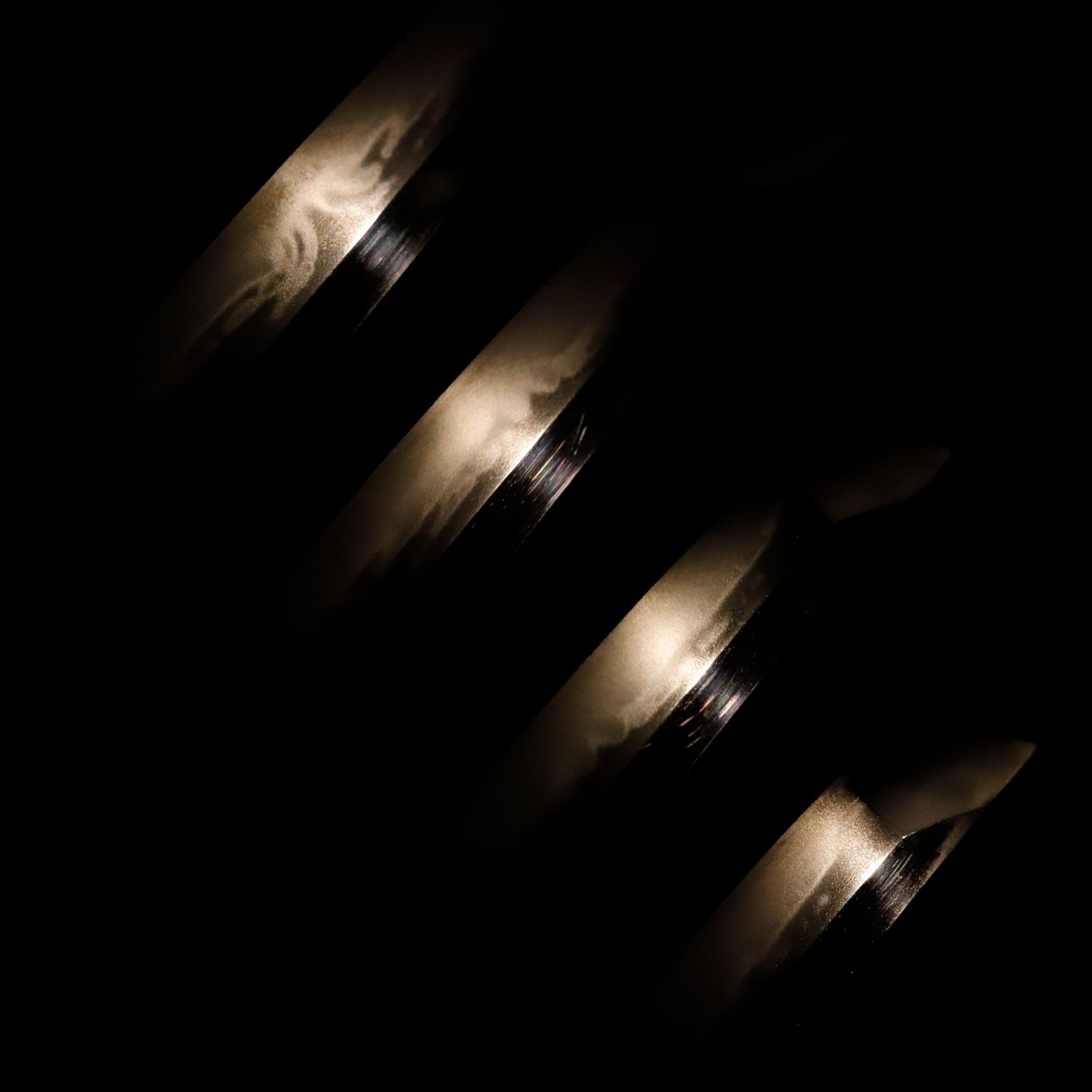
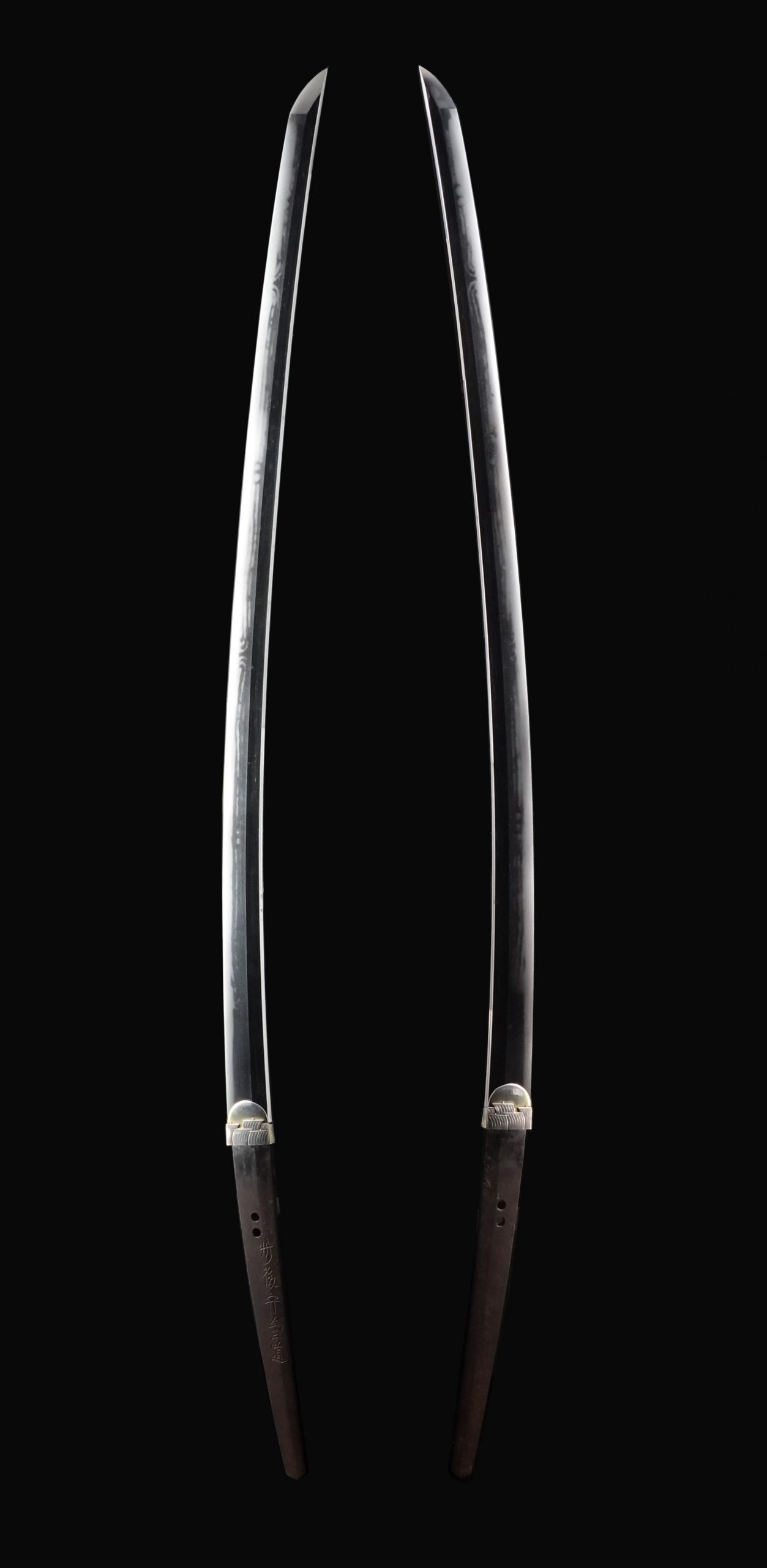
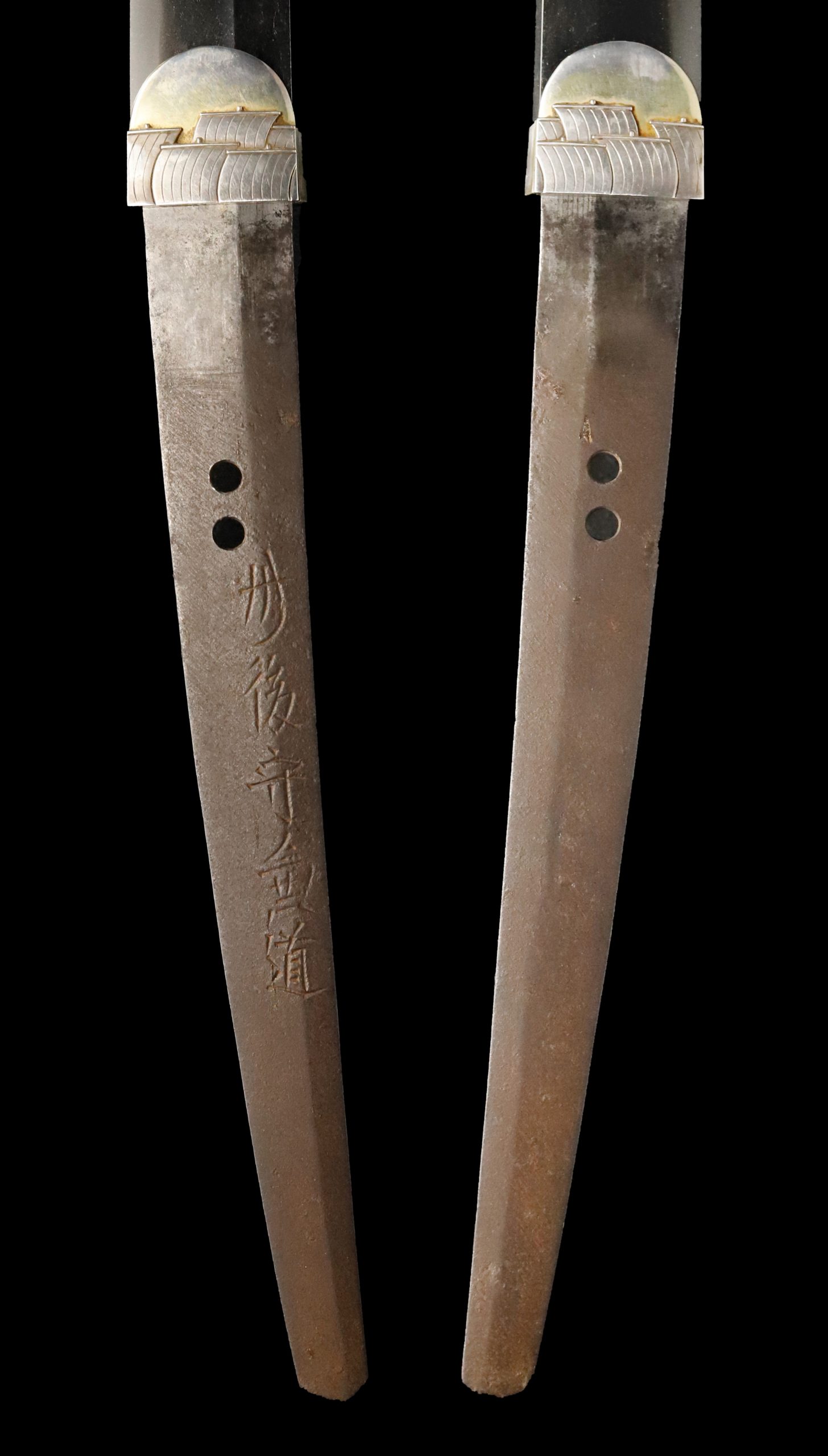
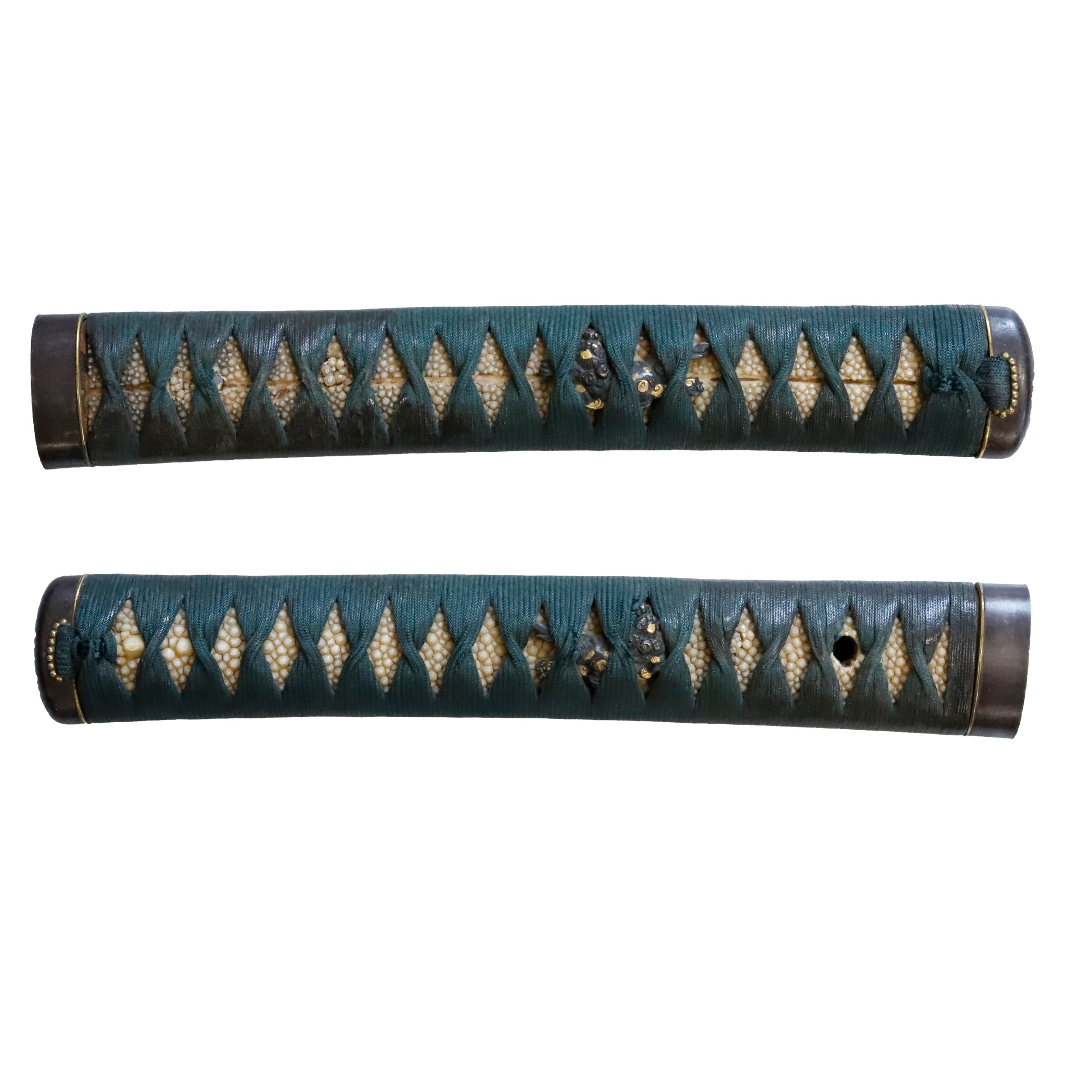
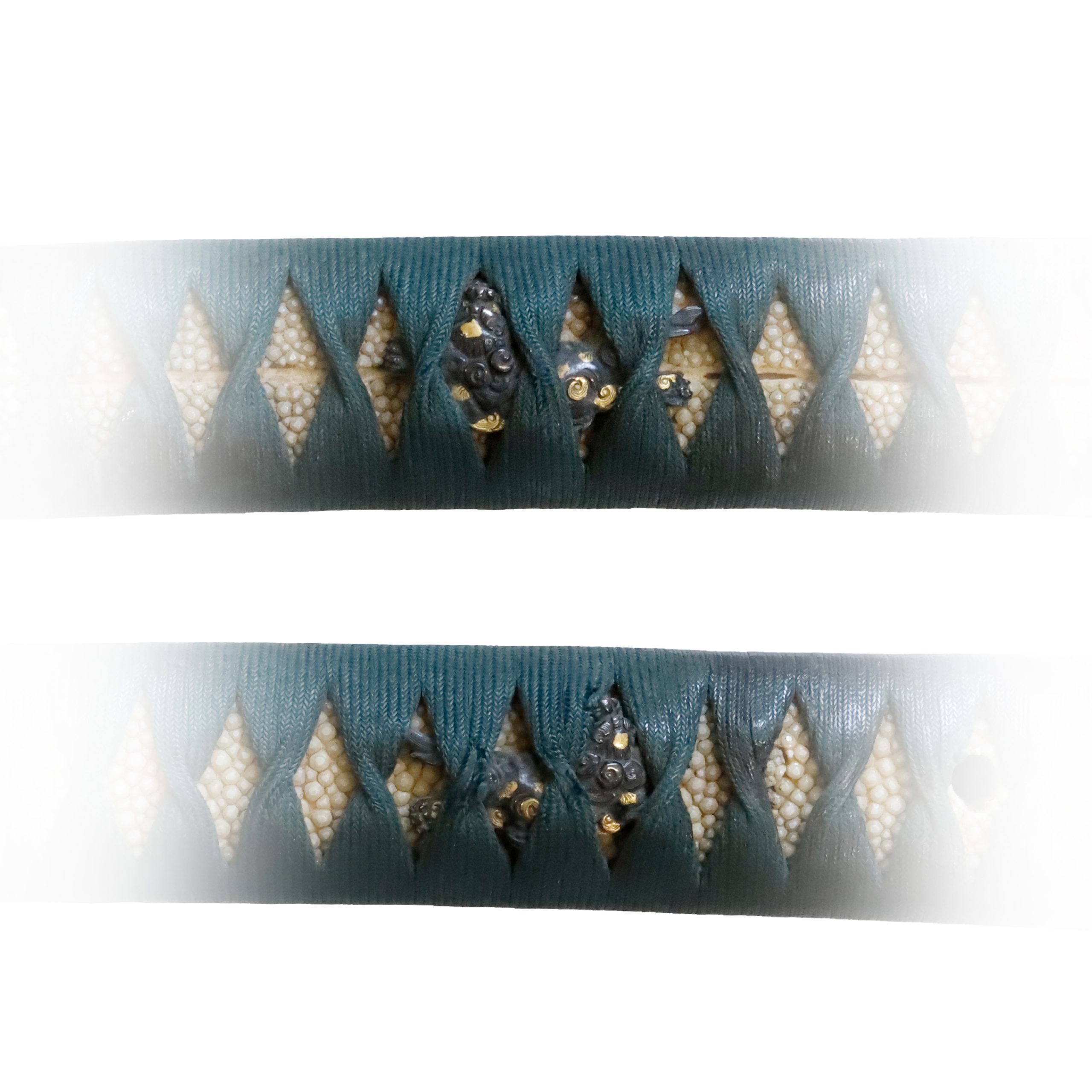
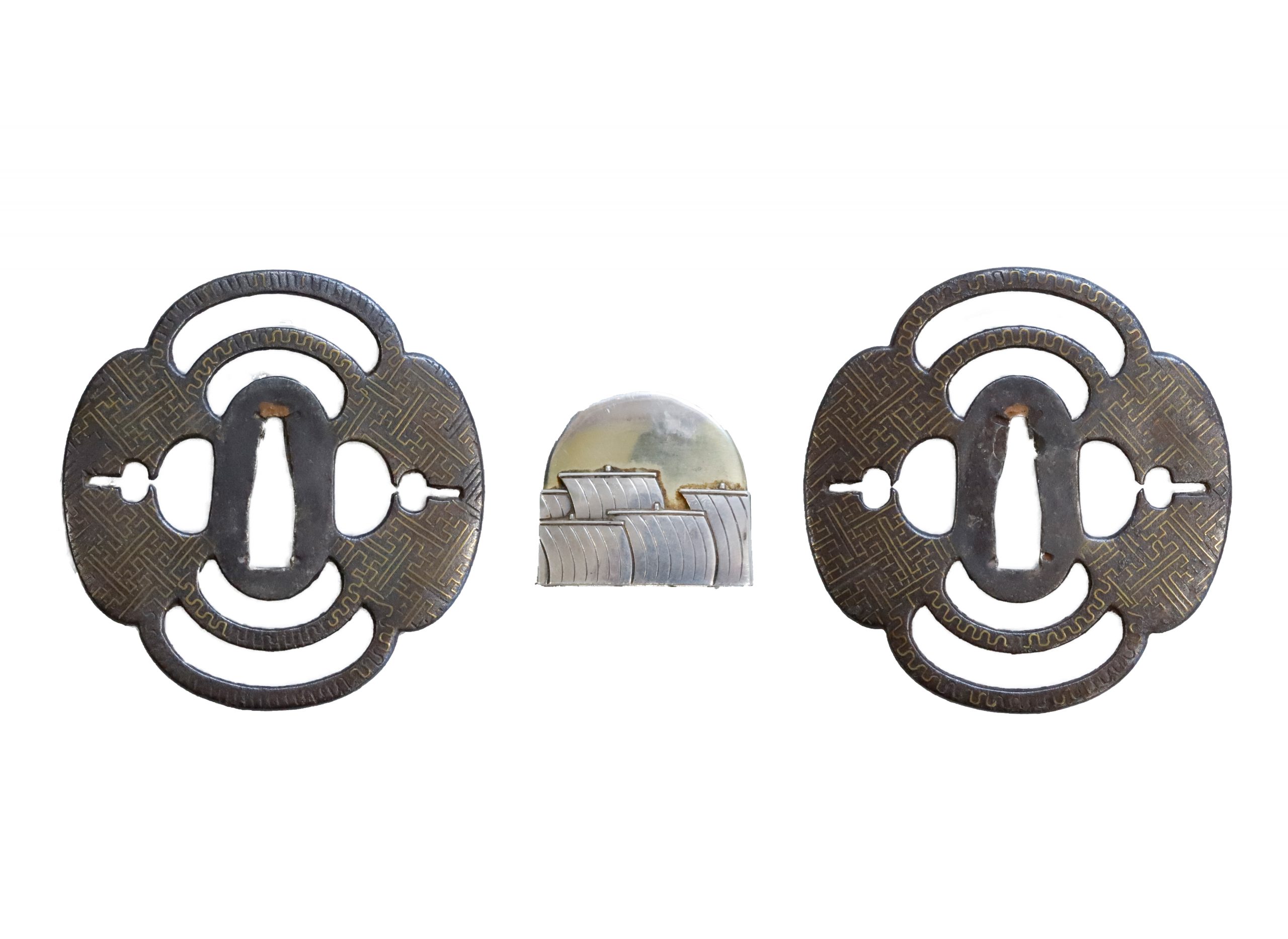
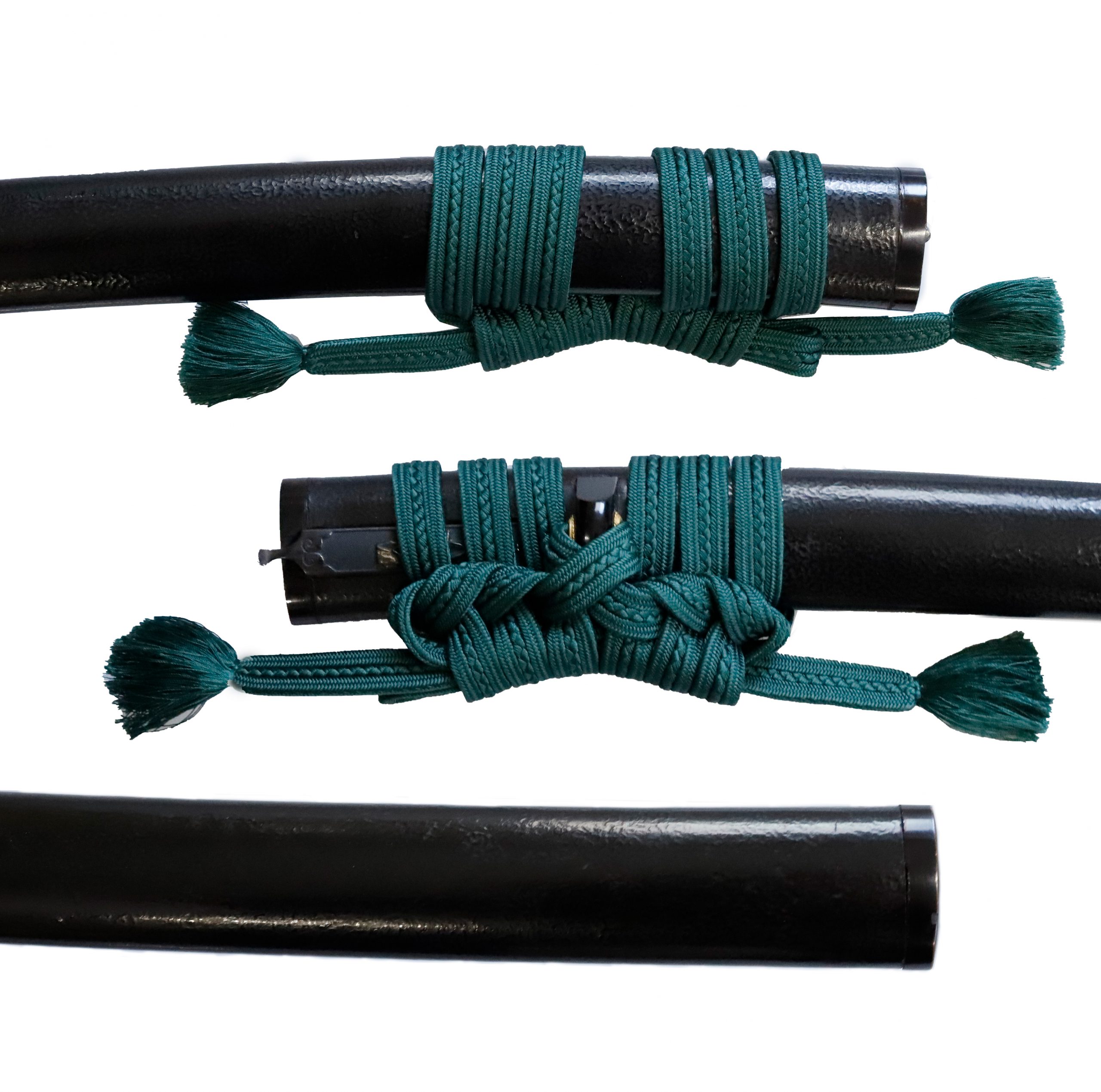
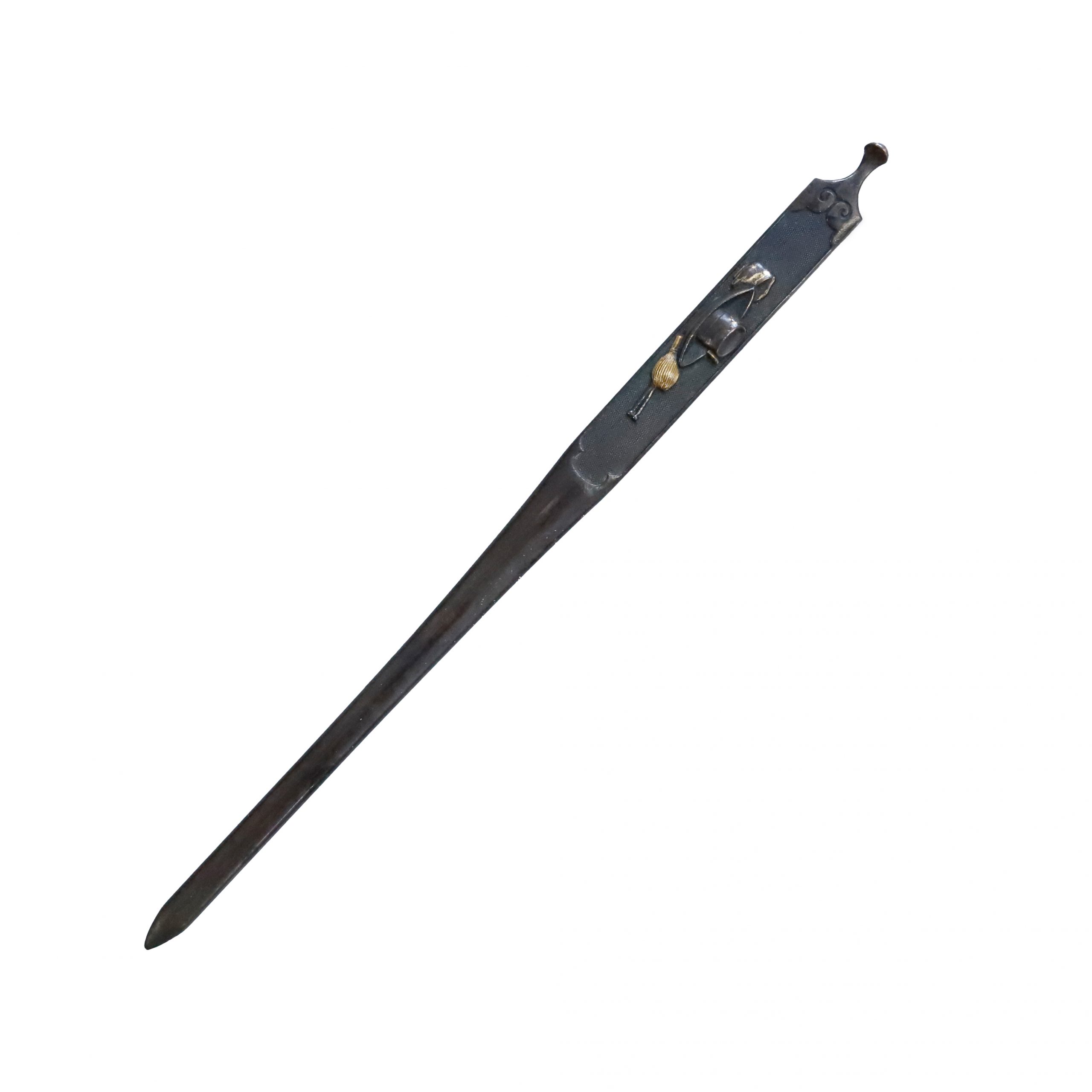
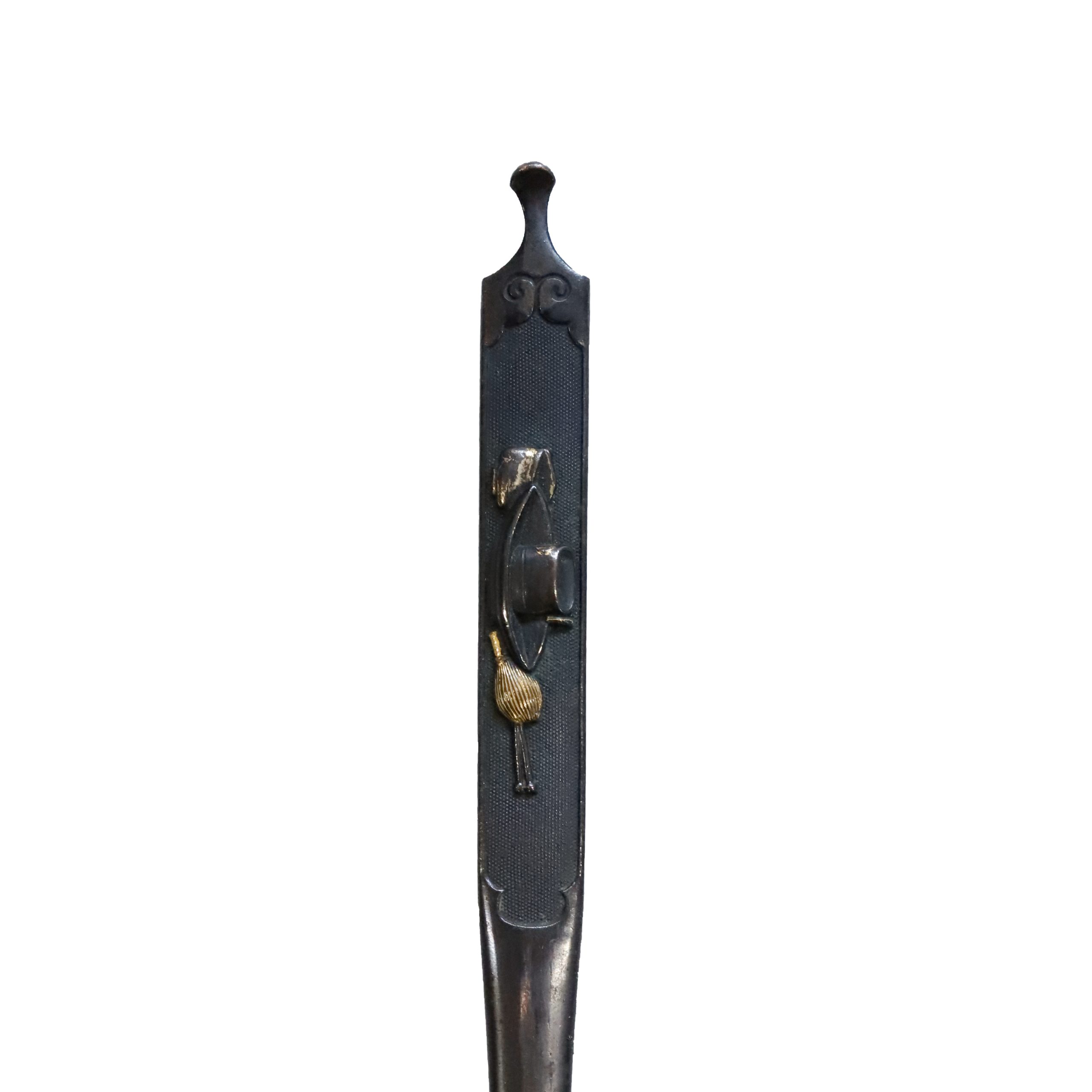
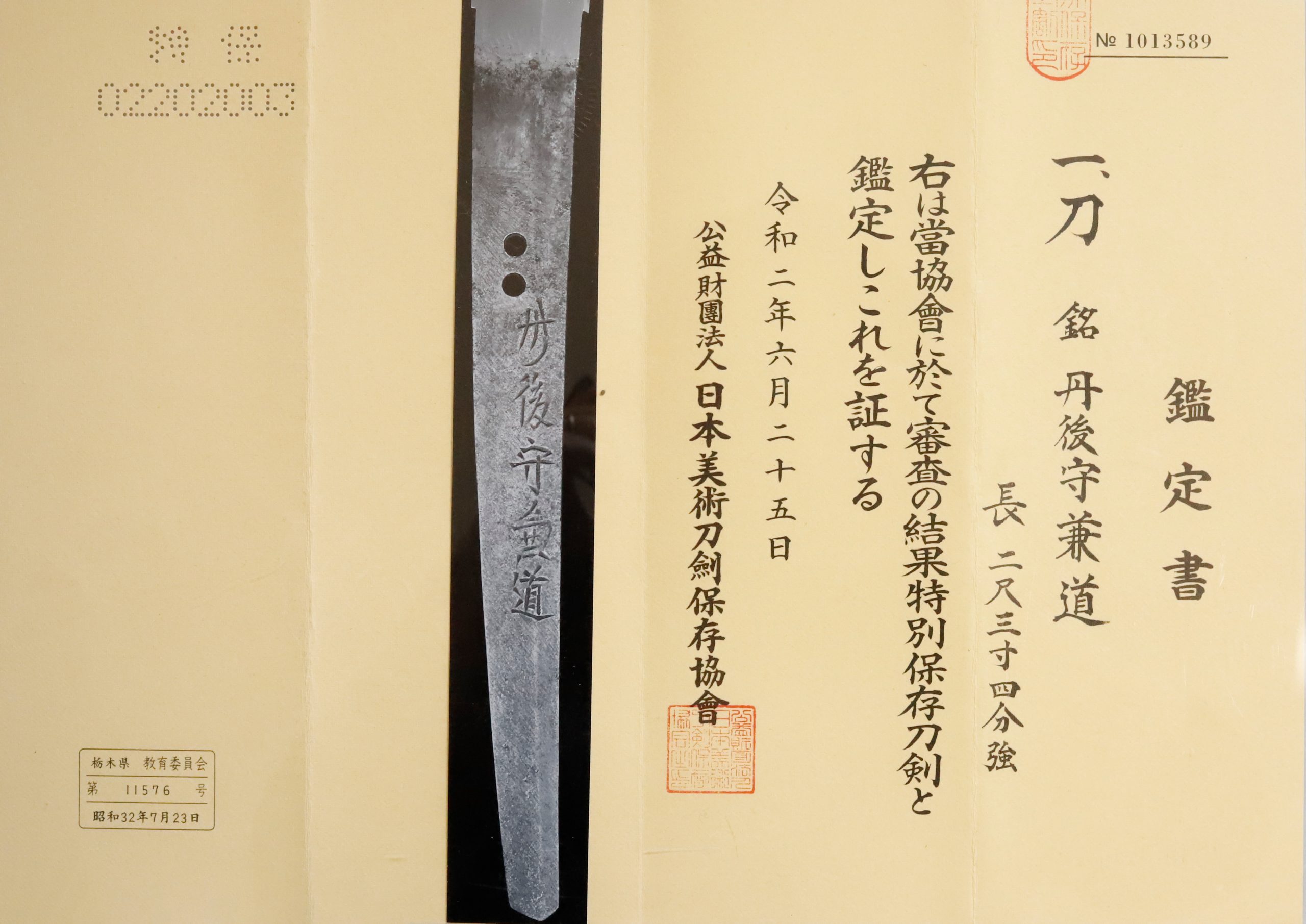
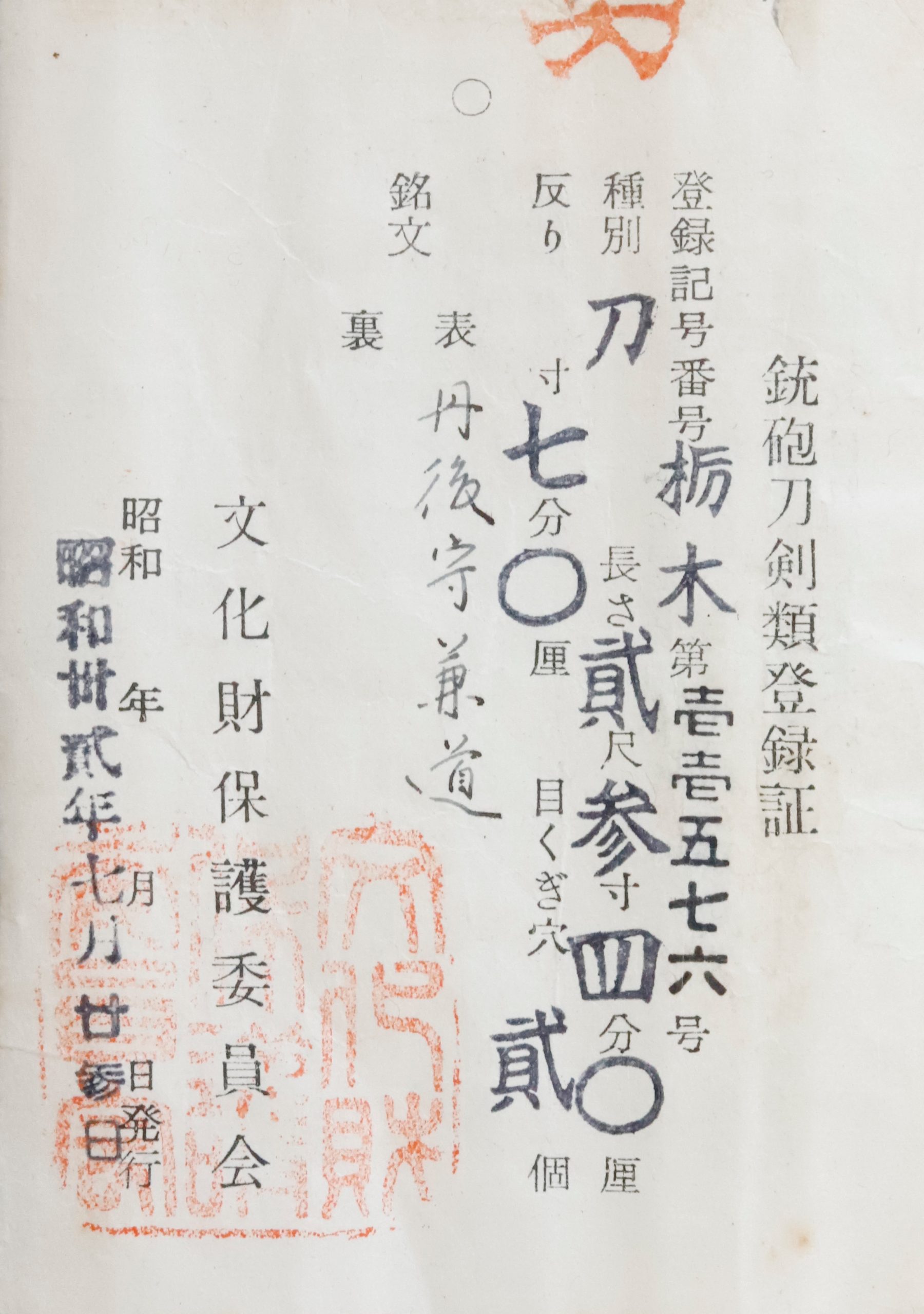
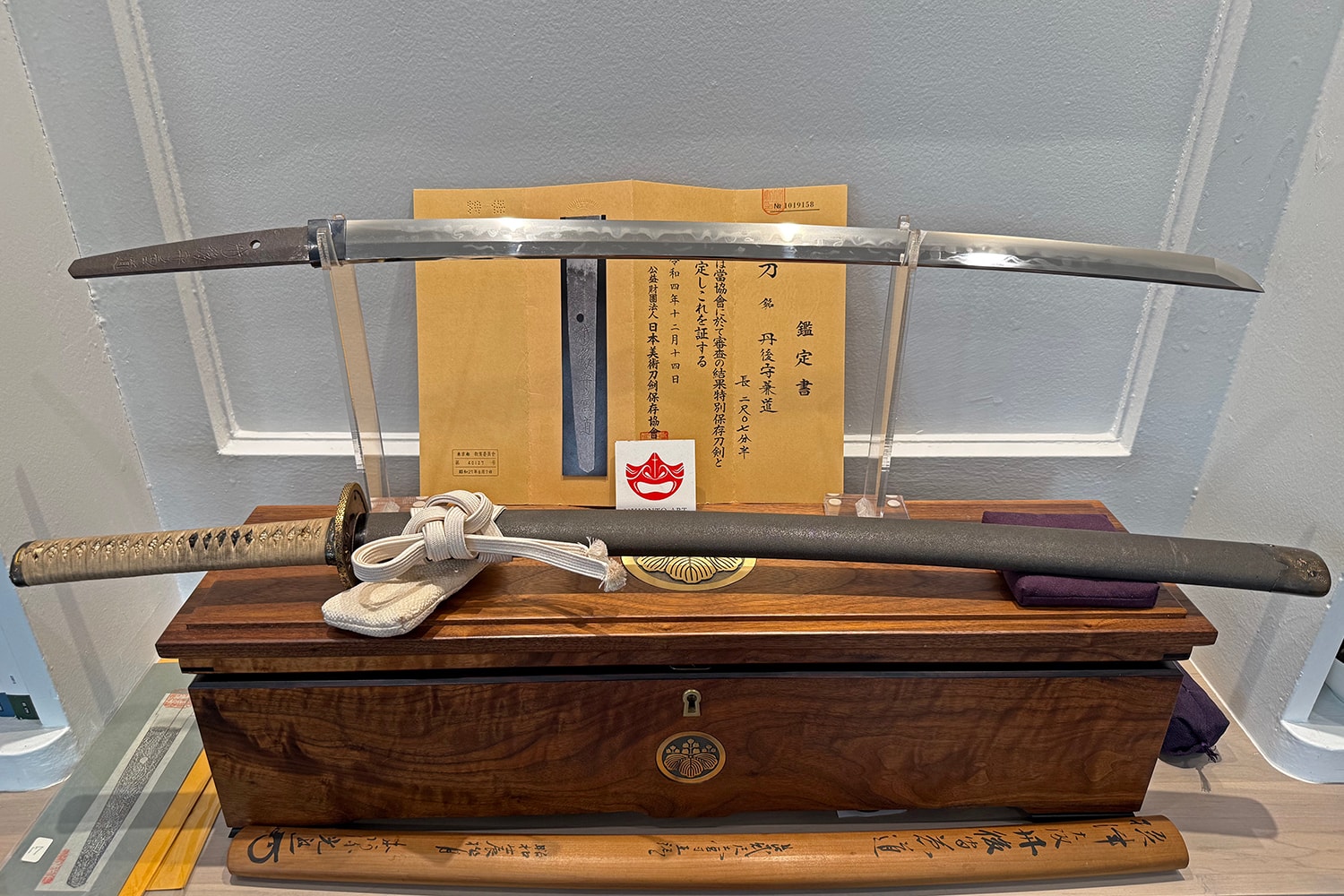
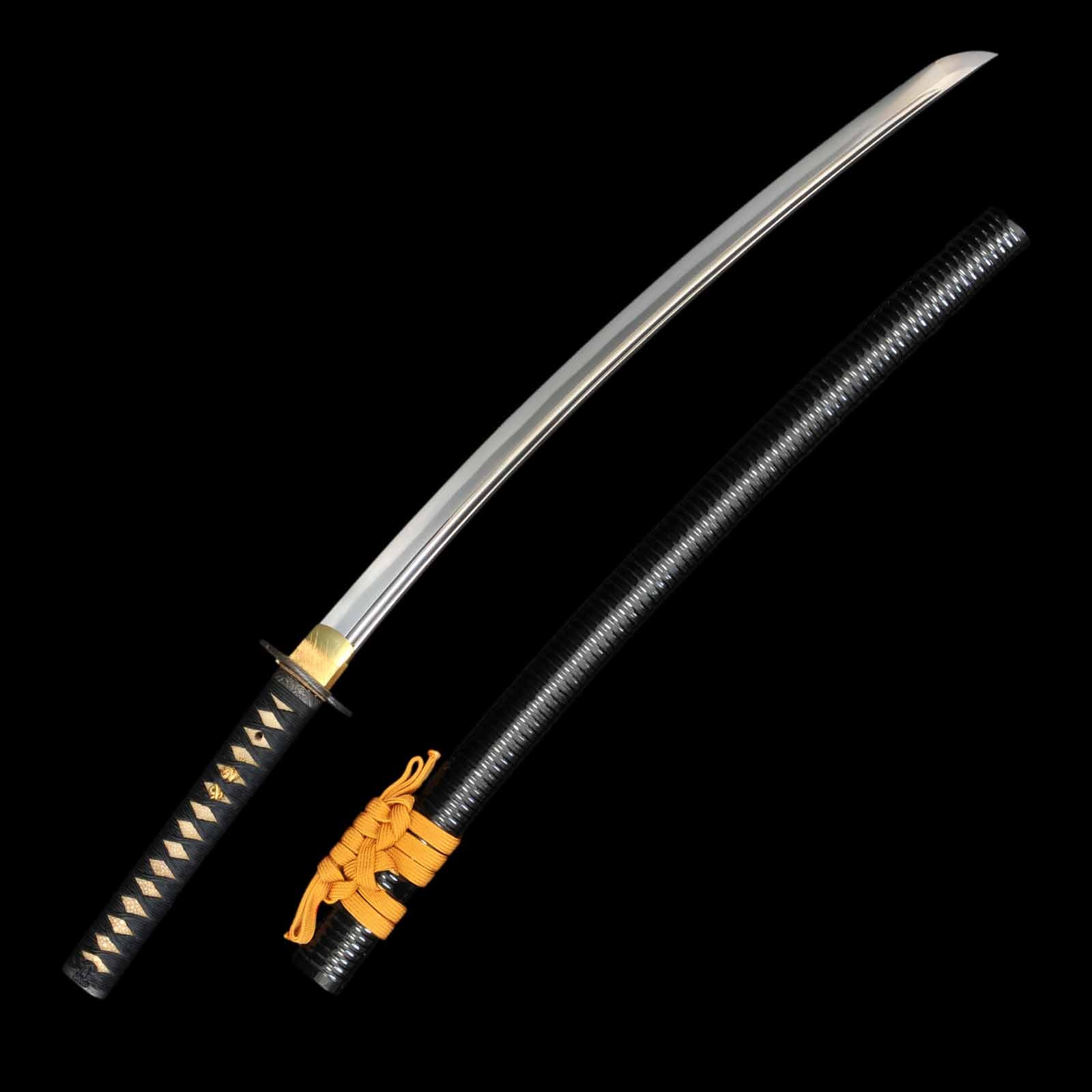
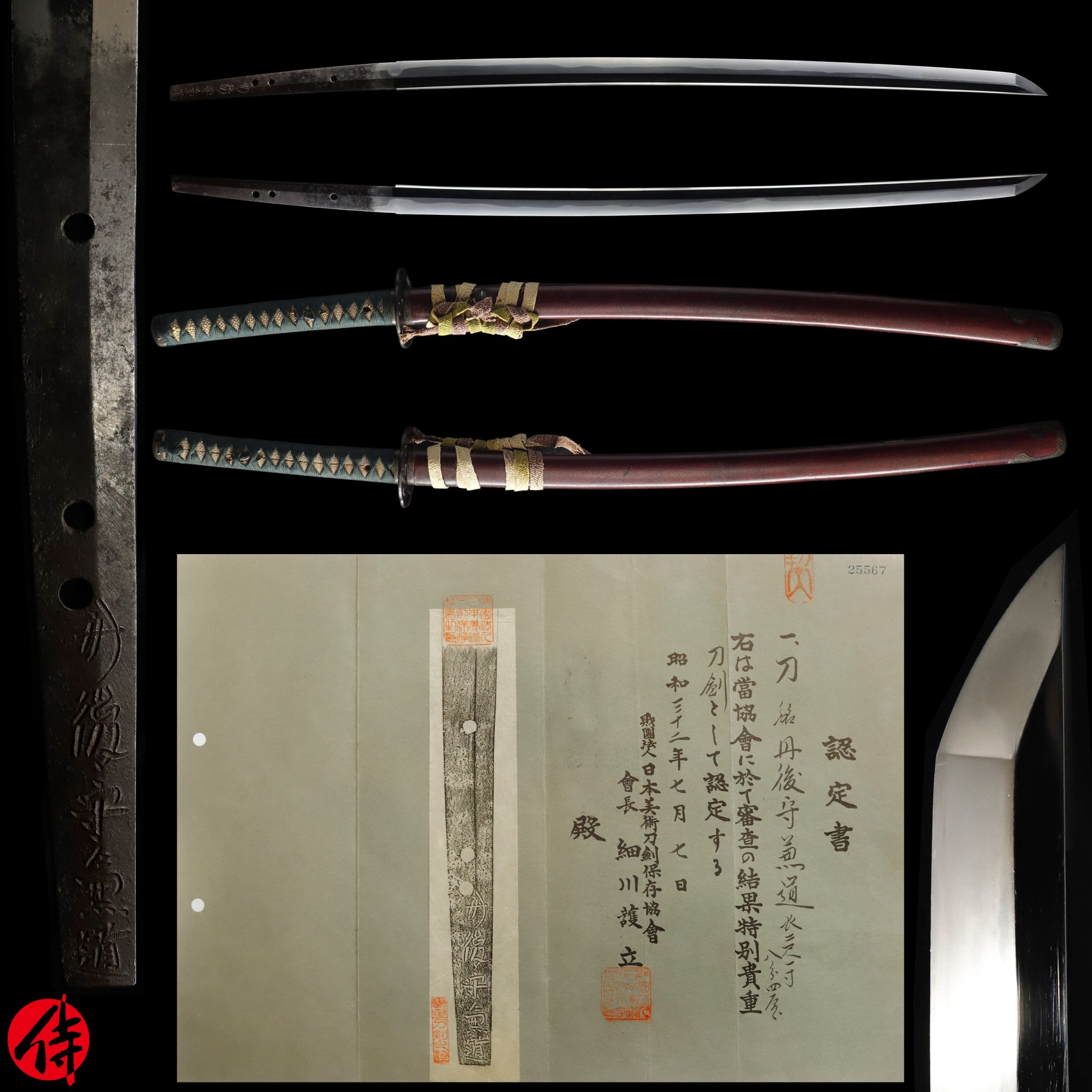
Antique Japanese Sword Katana Signed by Tango no Kami Kanemichi with NBTHK Tokubetsu Hozon Certificate 【Description】 This blade was signed by Tango no Kami Kanemichi(丹後守兼道). We believe it was forged by second-gen Kanemichi, judging from its characteristics and signature. The second-gen Kanemichi mainly worked in Osaka during the early Edo period(Late 17th century). He was especially active in sword-forging during 1681-1688. There is also the record of him living in Edo city and Harima province(Hyogo prefecture) in his career. The first-gen Tango no Kami Kanemichi (丹後守兼道) was the second son of the first-gen Tanba no Kami Yoshimichi(丹波守吉道). Tanba no Kami Yoshimichi belonged to Kyoto Mishina school. Mishina school’s founder was originally from Mino province, exclusively forging blades for Shingen Takeda, a famous feudal lord. Later on, he moved to Kyoto by bringing his four sons and founded his school in Kyoto. Yoshimichi was one of his sons. The first-gen Yoshimichi was known as Kyoto Gokaji(京都五鍛冶), five prestigious swordsmiths forging in Kyoto in the early Edo period. Yoshimichi, father of the first-gen Tango no Kami Kanemichi, developed a unique Hamon pattern(tempering line) called Sudareba(簾刃). Sudare means traditional screens or blinds in Japanese. The Hamon pattern he invented resembles its appearance to Sudare. This blade has a beautiful Sudareba Hamon. This special characteristic was passed down to the first-gen Tanba no Kami Kanemichi and was taught among Kamichi swordsmiths for generations. It takes time to comprehend this intricate, fascinating Hamon design on this blade. The first-gen Kanemichi received the title of Tango no Kami in the second year of Kanei(1625) and moved to Osaka. He founded Osaka Mishina school and flourished for generations d uring the Edo period. We believe the son of the first-gen Kanemichi also forged this blade in Osaka in the early Edo period. The second-gen also mastered excellent craftsmanship from his father. The blades forged by the second-gen Kanemichi are categorized as Osaka Shinto. Shinto is Japanese Sword terminology that refers to the swords forged during 1596-1781. The blades made in the Osaka area during this period are called Osaka Shinto. There are many famous swordsmiths in this Osaka Shinto era. After Hideyoshi Toyotomi built Osaka castle, Osaka city flourished as a castle town and became the business center. Many swordsmiths moved to Osaka to look for better opportunities. They not only forged swords for those Samurai who lived in Osaka but also for feudal lords nationwide. One of the most notable characteristics of Osaka Shinto is its beauty in Jigane. Jigane is a visible steel surface pattern created by folding and hammering during the forging process), which made it possible by the location of Osaka. Osaka had close access to the Tamahagane(special carbon steel to make Japanese swords) production sites. The swordsmiths residing in Osaka were able to get high-quality carbon steel from these sites. The Habaki of this blade might have made at the same time as the blade was forged. A sailing ship is depicted in this Habaki. The way Kanemichi inscribed the letter “丹” (TAN) is quite distinctive, and it is almost like the letter “舟” (FUNE), which means a sailing ship in Japanese. The Habaki designer might have been influenced by how Tanba no Kami Kaemichi signed his “丹” (TAN) letter. This blade is appraised as a Tokubetsu Hozon Token (特別保存刀剣) issued by NBTHK(Nihon Bijutsu Touken Hozon Kyokai:日本美術刀剣保存協会). This authentication paper was only given to authentic Japanese swords, especially well preserved and high quality with artistic value. 【 Blade】 Cutting Edge Length(Nagasa) : 70.9 cm( 27.9 inches) Curvature(Sori) : 2.1 cm( 0.83 inches) Hamon : The crystalline structure which forms along the cutting edge of a blade as a result of the hardening process Jimon(Jihada) : visible steel surface pattern created by folding and hammering during forging process Nakago : Nakago is the tan
 NihontoWatch
在銘 · Mishina · 江戸 · 長さ 70.9cm · 反り 2.1cm
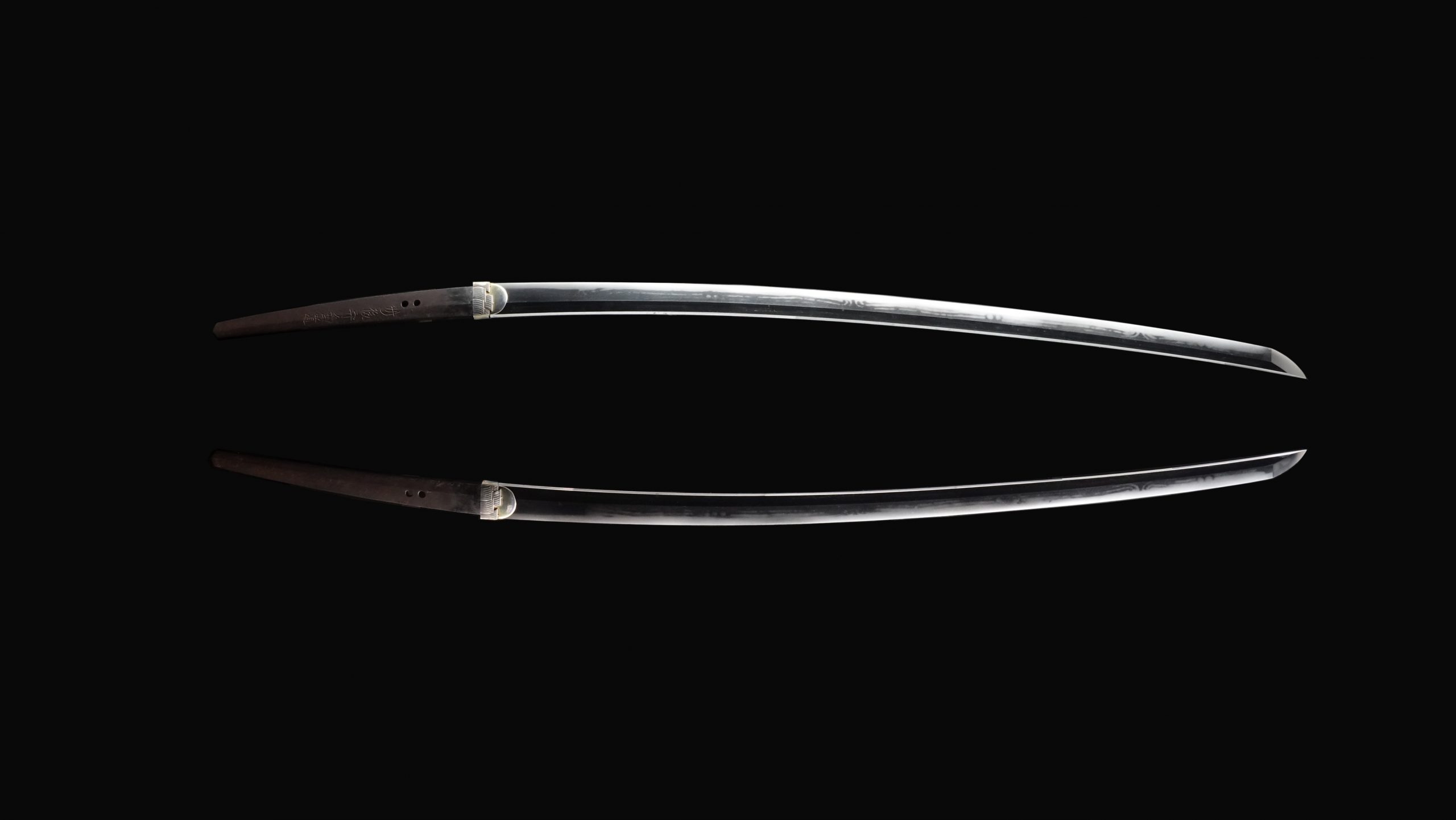
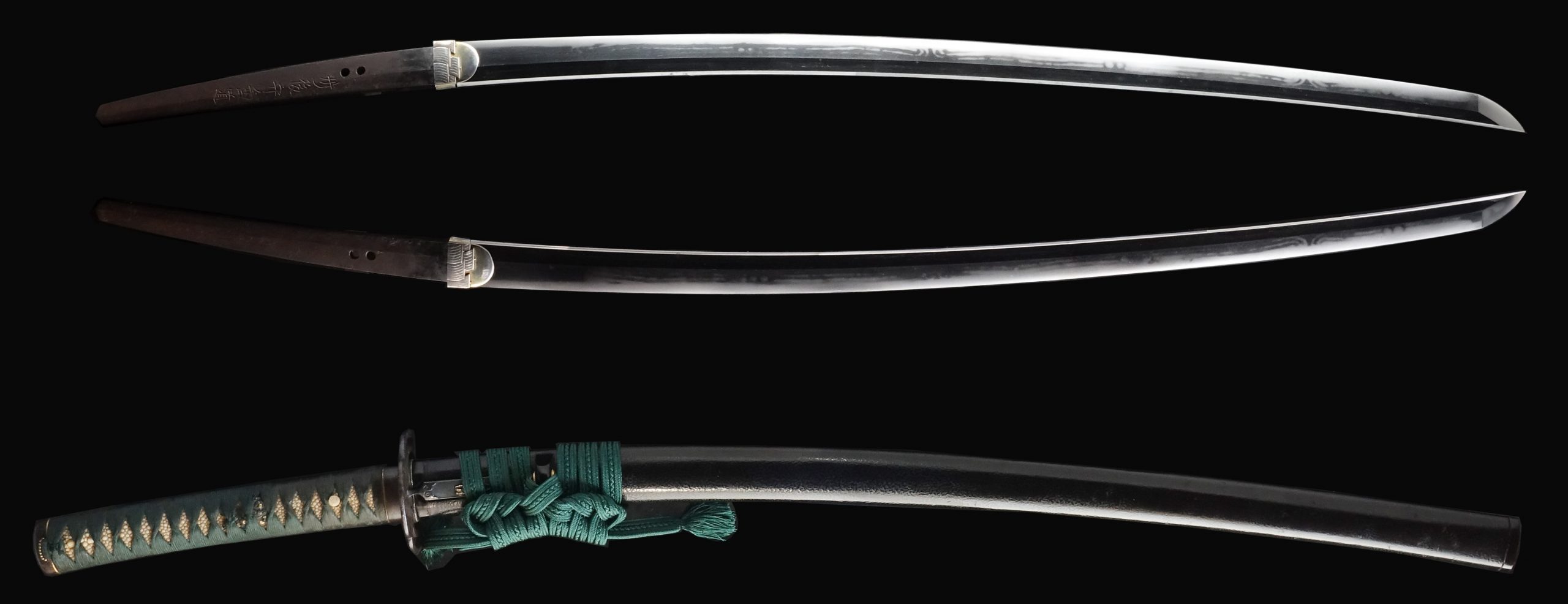
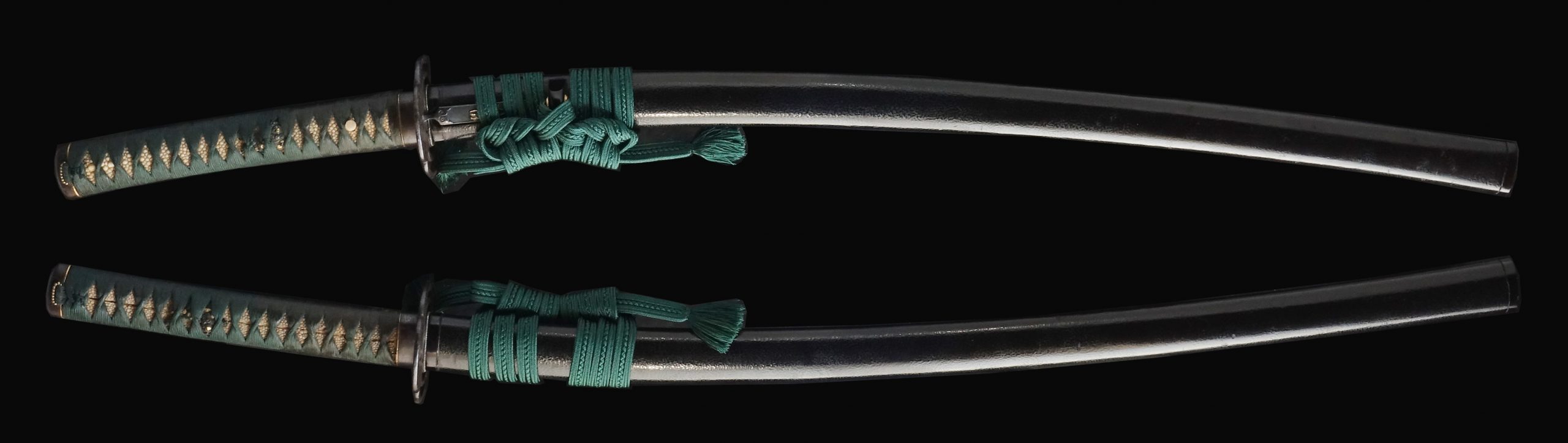
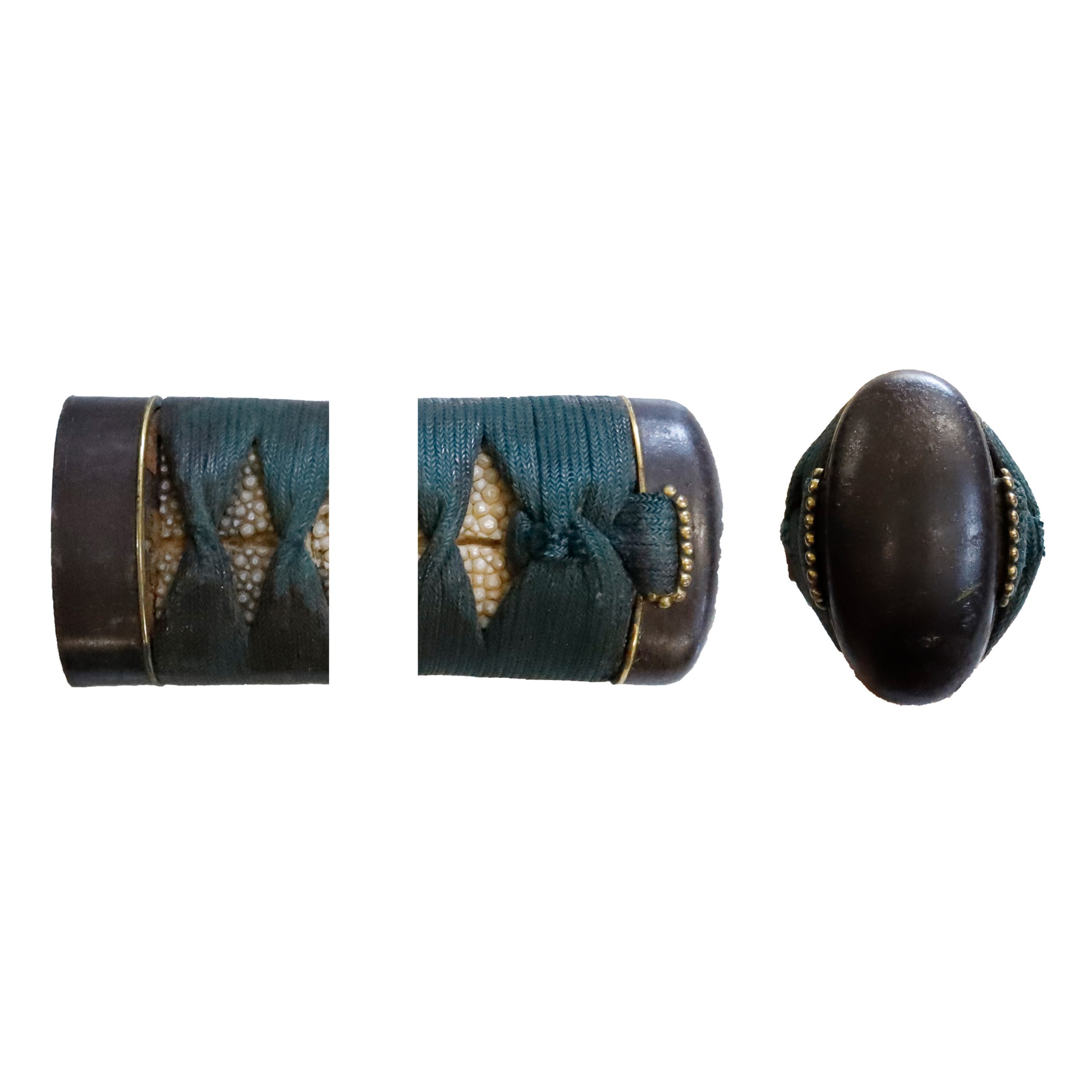
兼道
江戸
摂津
在銘
特別保存 (NBTHK)
Mishina school, Osaka (Tango-no-kami Kanemichi line, second generation) · 摂津 · 1681-1704頃
藤代 Chu-jo saku · 刀剣大鑑 上位76%
現在2点販売中
第四十一回重要刀剣の一刀は、茎裏に「丹後守兼道」の大振りな五字銘を切り、「元禄十四年二月日」[[c:1]]の年紀を添えており、年紀作の僅少なこの工にあって、その活躍期を辛うじて定める数少ない一口である。これが丹後守兼道の二代、通称喜平次であり、大阪に住して元禄・宝永頃に活躍し、江戸でも作刀したと伝えられる。説明書はこれを初代丹後守兼道の子とし、初代は通説に京二代丹波守吉道の二男といわれ、すなわち美濃関の兼道が京に伝えた三品派の一支であって、金道・吉道らの兄弟が新刀初期の京に大いに枝を張った一門である。初代丹後守は三品吉兵衛と称し初銘を直道とし、大阪に住して、御家芸の簾刃や丁子ごころを交えた互の目で知られた。その子が意図して異なる道を取ったこと、その分かれ目こそが、作の上のこの工の核である。
初代が御家芸ともいうべき簾刃や丁子ごころを交えた互の目を焼いたのに対し、二代は丁子を離れ、当時の大坂新刀の流行を映す華やかな濤瀾風の大互の目に転ずる。その最も特徴的な見どころは、装飾ではなく構成にある。彼は刃の上半と下半にわたって、互の目の二つ連れた刃と三つ連れた刃とを交互に組み、相互に繰り返して濤瀾そのものに変化を生む。ある一刀について説明書は「互の目の二つ連れた刃と三つ連れた刃とが相互に交じる点に大きな特色が見られる」[[c:2]]と記し、また刀と脇指で連れ刃の組み方を反対にした大小揃については、その変化に「彼の工夫の跡」が窺われるとする。この焼刃に足太くよく入り、匂深く、沸厚く処々荒く、砂流し・金筋かかり、飛焼を交えて棟を焼き、匂口は明るい。
この華やかな焼刃の下の地鉄は、静かで清い、まさに大坂の鉄である。小板目をよくつめ、地沸が微塵につき、地景が細かに入り、肌は立つよりむしろつむ。美濃に発する古い三品の肌立つ板目に対して二代を分かつ地である。焼刃は常に区元の直ぐの焼出しから起こり、濤瀾へと開く。これは二様いずれもが立ち上がる大坂新刀の基調である。帽子は刃に応じて小丸に、やや深めに返り、掃きかけ、幅広の作では僅かに尖りごころをおびる。彫物は、ある場合には丸留めの棒樋に添樋を添える。姿は元禄の気風を映して豪壮で、身幅広く、重ね厚く、身幅の割に鎬幅広く、踏張りごころがあり、反り深く、中鋒延びる。説明書はこの種の体配が貞享・元禄頃の刀工によく経眼するものと記す。
説明書はその作を二様に分かつ。主調は右に述べた濤瀾風の大互の目であり、この工の見どころが最もよく現れ、当時の大坂の作風に直結する手である。第二は静かな貌、しかも説明書が初代作には見られないと注意して記す、匂の深い直刃調である。直ぐの焼出しが焼幅広い直刃調に開き、浅くのたれ、足さかんに入り、匂深く、沸厚くやや荒めの沸を交え、上半に二段刃風を呈し、金筋・砂流しよくかかる。この貌の一口について説明書は「真改風の作柄をあらわしている」[[c:3]]と記し、その擬えは的確である。すなわちこの静かな面が最も近づくのは、大坂の大家・井上真改の匂深く沸のよくついた直刃なのである。二様は時代の前後ではなく一つの幅であり、同じ大坂の手が一度は華やかに、一度は抑えて述べられたものである。
この工を位置づけるのは、説明書が両代の間に慎重に引く区別であり、その区別自体が鑑定そのものである。初代丹後守は作の多くに区下に菊紋と「一」の字を切り、御家芸の簾刃や丁子ごころを交えた互の目に傾く。二代は菊紋も「一」の字も切らず、匂深の直刃調や、時代の流行を映す濤瀾風の大互の目に転ずる。ゆえにその特色は父の作によってではなく、彼自身の確かな手によって引くのがよい。交互に連れる濤瀾の互の目、真改に擬えられる匂深く明るい焼刃、清く微塵に締まった小板目、そして大坂の直ぐの焼出しが、三品の系の中でも、また彼自身の家の中でも、この工を分かつ。大互の目の作について説明書は端的に「この工の特徴」がその刃形に現れると説く。彼は当時の大坂の語法に忠実でありながら、紛れもなく彼自身の構成上の工夫を営む、堅実にして個性ある二代として立つ。
兼道は藤代の格付で中上作とされ、七口が重要刀剣に列し、いずれも在銘で、国宝・重要文化財はない。その記録は、国を代表する大名というより、堅実にして個性ある大坂新刀の上手のものである。この指定の格に現存する一群は小さく、ほぼ全てが在銘で、これは新刀工にとってそれ自体が資料的な美点であり、極めではなく銘によって名が定まっている。一刀は大坂城代青山家の伝来で、説明書はこれを「大坂城代青山家伝来の一口」[[c:4]]とし、同家舊蔵の新刀にこの種の長寸のものをまま経眼するとして、おそらく同家からの注文によるものと推する。彼が仕えた都市に作を結ぶ大名伝来の一筋である。二代の大小揃もまた現存し、説明書はこれを極めて珍しく資料的にも貴重とする。蒐集の上では、その作は大坂新刀の上手の中ではむしろ求めやすい部類に属し、指定作の多くは重要刀剣の格にとどまって秘蔵されるわけではない。手とその年を共に定める元禄十四年紀の在銘の一刀のような作こそ、より稀で望ましく、時折世に現れて、辛抱に応える一口である。
兼道の位置づけを、日本刀全体および伝統・時代・時期ごとに示します。各位(随一・屈指・有数・著名)は、NBTHK および文化庁による指定に加え、三作や名物帳などの歴史的栄誉を加味したものです。
各項目を選ぶと評価方法が表示されます。
在銘年紀作が示す、確実に活動していた年代
新刀 · 山城
現在71点販売中
三品派は、美濃国関の兼道を源流とし、その子らが京へ上って興した新刀の一門である。説明書は、兼道の四子すなわち長兄伊賀守金道、来金道、丹波守吉道、末弟越中守正俊が父と共に美濃より上京し、西洞院夷川に住して三品派の名を大いに高めたと記す。長兄金道は京五鍛冶の頭領にして、その家は刀工の受領を朝廷に推薦する権を世襲し、銘に「日本鍛冶宗匠」と添えて幕末に及んだ。やがて一門は京にとどまらず大坂へも枝を張り、京初代丹波守吉道の子が大坂に移って大坂丹波の祖となり、その周囲に大和守吉道が連なり、丹後守兼道のごとく大坂に住して元禄頃に活躍した工も出た。末関の量産地に発しながら、堀川派と並ぶ京新刀の一大勢力に育ち、さらに大坂へと展開した点に、この一門の歩みがある。 作風を貫くのは、工と世代の差を越えて繰り返される三品の共通語法である。地鉄は板目に杢や流れ肌を交えて棟寄りに強く流れ、刃寄りで柾がかって肌立ち、地沸微塵に厚くつき地景のよく入るもので、美濃関の継承を京の作にまで伝える。京の古い手が肌立つ板目を見せるのに対し、大坂の系では小板目をよくつめ清く澄んだ地に転ずる差がある。刃文は美濃由来の互の目と尖り刃を基調に、これを京風に洗練して小のたれの大乱れに展開し、沸が強く時に荒くむら立ち、砂流しさかんに金筋長く入る。最も明快な見どころは帽子で、のたれ込みに先尖って掃きかける三品帽子は一門の標識をなし、末弟正俊にことに顕著である。いま一つの標識が丹波守吉道の創案した簾刃で、湯走り・飛焼・砂流しが幾重にも縞がかって簾の如く焼かれる。金道と正俊が志津風を共に得意として作域広く、吉道はこの簾刃の一手に己を結び、大坂の系はその簾刃を最もよく継いだ。同じ語法のうちに、各工の手が読み分けられる。 収集の観点では、三品派は新刀草創の格と明快な鑑定の勘所をあわせ持つ一門である。先尖って掃きかける三品帽子と、縞がかって平行に焼かれる簾刃の二つの見どころは、地と刃のいずれにも紛れなく現れて工と作域を定める手懸りとなり、大坂の直ぐで均一の焼出しは京の手と分かつ目印となる。主要工の格は説明書の評にそのまま現れ、初代伊賀守金道は一派中最も優れた手とされ、初代丹波守吉道は初期新刀屈指の名工に数えられ、末弟正俊は器用さ兄弟中第一と評される。一門の作はおおむね在銘で、銘そのものが時の標識となり、由緒の確かさをもって賞翫される。来歴の知られる作は谷干城の愛刀、佐竹家、織田有楽斎、北野天満宮、皇室、大坂城代青山家の蔵を経て伝わり、一口は京都国立博物館に納まる。最上手の在銘作が市に現れるのは折々のことで容易ではないが、一たび相見えれば、三品派が美濃関より京・大坂へいかに展開したかを語る確かな証となる。 詳しく見る →
保存刀剣のうち、出来が一層優れ、保存状態も良好と認められたものです。再刃や、室町・江戸期の多くの無銘作は対象外となり、保存刀剣より高い基準が課されます。
日本美術刀剣保存協会(NBTHK)は、1948年に設立され、文化庁の監督を受ける公益財団法人で、東京・刀剣博物館に本部を置きます。専門の審査員が出品作を直接審査し、美術的・歴史的価値に応じた鑑定書を発行します。NBTHKの鑑定書は、日本刀および刀装具の真正性を示す最も広く認知された基準です。
NBTHK公式サイトReturns/exchanges limited to defects caused by shipping (except willful misconduct or gross negligence by the company); customers must contact within 72 hours of receiving the product.
Antique Japanese Sword Katana Signed by Tango no Kami Kanemichi with NBTHK Tokubetsu Hozon Certificate 【Description】 This blade was signed by Tango no Kami Kanemichi(丹後守兼道). We believe it was forged by second-gen Kanemichi, judging from its characteristics and signature. The second-gen Kanemichi mainly worked in Osaka during the early Edo period(Late 17th century). He was especially active in sword-forging during 1681-1688. There is also the record of him living in Edo city and Harima province(Hyogo prefecture) in his career. The first-gen Tango no Kami Kanemichi (丹後守兼道) was the second son of the first-gen Tanba no Kami Yoshimichi(丹波守吉道). Tanba no Kami Yoshimichi belonged to Kyoto Mishina school. Mishina school’s founder was originally from Mino province, exclusively forging blades for Shingen Takeda, a famous feudal lord. Later on, he moved to Kyoto by bringing his four sons and founded his school in Kyoto. Yoshimichi was one of his sons. The first-gen Yoshimichi was known as Kyoto Gokaji(京都五鍛冶), five prestigious swordsmiths forging in Kyoto in the early Edo period. Yoshimichi, father of the first-gen Tango no Kami Kanemichi, developed a unique Hamon pattern(tempering line) called Sudareba(簾刃). Sudare means traditional screens or blinds in Japanese. The Hamon pattern he invented resembles its appearance to Sudare. This blade has a beautiful Sudareba Hamon. This special characteristic was passed down to the first-gen Tanba no Kami Kanemichi and was taught among Kamichi swordsmiths for generations. It takes time to comprehend this intricate, fascinating Hamon design on this blade. The first-gen Kanemichi received the title of Tango no Kami in the second year of Kanei(1625) and moved to Osaka. He founded Osaka Mishina school and flourished for generations d uring the Edo period. We believe the son of the first-gen Kanemichi also forged this blade in Osaka in the early Edo period. The second-gen also mastered excellent craftsmanship from his father. The blades forged by the second-gen Kanemichi are categorized as Osaka Shinto. Shinto is Japanese Sword terminology that refers to the swords forged during 1596-1781. The blades made in the Osaka area during this period are called Osaka Shinto. There are many famous swordsmiths in this Osaka Shinto era. After Hideyoshi Toyotomi built Osaka castle, Osaka city flourished as a castle town and became the business center. Many swordsmiths moved to Osaka to look for better opportunities. They not only forged swords for those Samurai who lived in Osaka but also for feudal lords nationwide. One of the most notable characteristics of Osaka Shinto is its beauty in Jigane. Jigane is a visible steel surface pattern created by folding and hammering during the forging process), which made it possible by the location of Osaka. Osaka had close access to the Tamahagane(special carbon steel to make Japanese swords) production sites. The swordsmiths residing in Osaka were able to get high-quality carbon steel from these sites. The Habaki of this blade might have made at the same time as the blade was forged. A sailing ship is depicted in this Habaki. The way Kanemichi inscribed the letter “丹” (TAN) is quite distinctive, and it is almost like the letter “舟” (FUNE), which means a sailing ship in Japanese. The Habaki designer might have been influenced by how Tanba no Kami Kaemichi signed his “丹” (TAN) letter. This blade is appraised as a Tokubetsu Hozon Token (特別保存刀剣) issued by NBTHK(Nihon Bijutsu Touken Hozon Kyokai:日本美術刀剣保存協会). This authentication paper was only given to authentic Japanese swords, especially well preserved and high quality with artistic value. 【 Blade】 Cutting Edge Length(Nagasa) : 70.9 cm( 27.9 inches) Curvature(Sori) : 2.1 cm( 0.83 inches) Hamon : The crystalline structure which forms along the cutting edge of a blade as a result of the hardening process Jimon(Jihada) : visible steel surface pattern created by folding and hammering during forging process Nakago : Nakago is the tan
NihontoWatch在銘 · Mishina · 江戸 · 長さ 70.9cm · 反り 2.1cm
兼道
江戸
摂津
在銘
特別保存 (NBTHK)
Mishina school, Osaka (Tango-no-kami Kanemichi line, second generation) · 摂津 · 1681-1704頃
藤代 Chu-jo saku · 刀剣大鑑 上位76%
現在2点販売中
第四十一回重要刀剣の一刀は、茎裏に「丹後守兼道」の大振りな五字銘を切り、「元禄十四年二月日」[[c:1]]の年紀を添えており、年紀作の僅少なこの工にあって、その活躍期を辛うじて定める数少ない一口である。これが丹後守兼道の二代、通称喜平次であり、大阪に住して元禄・宝永頃に活躍し、江戸でも作刀したと伝えられる。説明書はこれを初代丹後守兼道の子とし、初代は通説に京二代丹波守吉道の二男といわれ、すなわち美濃関の兼道が京に伝えた三品派の一支であって、金道・吉道らの兄弟が新刀初期の京に大いに枝を張った一門である。初代丹後守は三品吉兵衛と称し初銘を直道とし、大阪に住して、御家芸の簾刃や丁子ごころを交えた互の目で知られた。その子が意図して異なる道を取ったこと、その分かれ目こそが、作の上のこの工の核である。
初代が御家芸ともいうべき簾刃や丁子ごころを交えた互の目を焼いたのに対し、二代は丁子を離れ、当時の大坂新刀の流行を映す華やかな濤瀾風の大互の目に転ずる。その最も特徴的な見どころは、装飾ではなく構成にある。彼は刃の上半と下半にわたって、互の目の二つ連れた刃と三つ連れた刃とを交互に組み、相互に繰り返して濤瀾そのものに変化を生む。ある一刀について説明書は「互の目の二つ連れた刃と三つ連れた刃とが相互に交じる点に大きな特色が見られる」[[c:2]]と記し、また刀と脇指で連れ刃の組み方を反対にした大小揃については、その変化に「彼の工夫の跡」が窺われるとする。この焼刃に足太くよく入り、匂深く、沸厚く処々荒く、砂流し・金筋かかり、飛焼を交えて棟を焼き、匂口は明るい。
この華やかな焼刃の下の地鉄は、静かで清い、まさに大坂の鉄である。小板目をよくつめ、地沸が微塵につき、地景が細かに入り、肌は立つよりむしろつむ。美濃に発する古い三品の肌立つ板目に対して二代を分かつ地である。焼刃は常に区元の直ぐの焼出しから起こり、濤瀾へと開く。これは二様いずれもが立ち上がる大坂新刀の基調である。帽子は刃に応じて小丸に、やや深めに返り、掃きかけ、幅広の作では僅かに尖りごころをおびる。彫物は、ある場合には丸留めの棒樋に添樋を添える。姿は元禄の気風を映して豪壮で、身幅広く、重ね厚く、身幅の割に鎬幅広く、踏張りごころがあり、反り深く、中鋒延びる。説明書はこの種の体配が貞享・元禄頃の刀工によく経眼するものと記す。
説明書はその作を二様に分かつ。主調は右に述べた濤瀾風の大互の目であり、この工の見どころが最もよく現れ、当時の大坂の作風に直結する手である。第二は静かな貌、しかも説明書が初代作には見られないと注意して記す、匂の深い直刃調である。直ぐの焼出しが焼幅広い直刃調に開き、浅くのたれ、足さかんに入り、匂深く、沸厚くやや荒めの沸を交え、上半に二段刃風を呈し、金筋・砂流しよくかかる。この貌の一口について説明書は「真改風の作柄をあらわしている」[[c:3]]と記し、その擬えは的確である。すなわちこの静かな面が最も近づくのは、大坂の大家・井上真改の匂深く沸のよくついた直刃なのである。二様は時代の前後ではなく一つの幅であり、同じ大坂の手が一度は華やかに、一度は抑えて述べられたものである。
この工を位置づけるのは、説明書が両代の間に慎重に引く区別であり、その区別自体が鑑定そのものである。初代丹後守は作の多くに区下に菊紋と「一」の字を切り、御家芸の簾刃や丁子ごころを交えた互の目に傾く。二代は菊紋も「一」の字も切らず、匂深の直刃調や、時代の流行を映す濤瀾風の大互の目に転ずる。ゆえにその特色は父の作によってではなく、彼自身の確かな手によって引くのがよい。交互に連れる濤瀾の互の目、真改に擬えられる匂深く明るい焼刃、清く微塵に締まった小板目、そして大坂の直ぐの焼出しが、三品の系の中でも、また彼自身の家の中でも、この工を分かつ。大互の目の作について説明書は端的に「この工の特徴」がその刃形に現れると説く。彼は当時の大坂の語法に忠実でありながら、紛れもなく彼自身の構成上の工夫を営む、堅実にして個性ある二代として立つ。
兼道は藤代の格付で中上作とされ、七口が重要刀剣に列し、いずれも在銘で、国宝・重要文化財はない。その記録は、国を代表する大名というより、堅実にして個性ある大坂新刀の上手のものである。この指定の格に現存する一群は小さく、ほぼ全てが在銘で、これは新刀工にとってそれ自体が資料的な美点であり、極めではなく銘によって名が定まっている。一刀は大坂城代青山家の伝来で、説明書はこれを「大坂城代青山家伝来の一口」[[c:4]]とし、同家舊蔵の新刀にこの種の長寸のものをまま経眼するとして、おそらく同家からの注文によるものと推する。彼が仕えた都市に作を結ぶ大名伝来の一筋である。二代の大小揃もまた現存し、説明書はこれを極めて珍しく資料的にも貴重とする。蒐集の上では、その作は大坂新刀の上手の中ではむしろ求めやすい部類に属し、指定作の多くは重要刀剣の格にとどまって秘蔵されるわけではない。手とその年を共に定める元禄十四年紀の在銘の一刀のような作こそ、より稀で望ましく、時折世に現れて、辛抱に応える一口である。
兼道の位置づけを、日本刀全体および伝統・時代・時期ごとに示します。各位(随一・屈指・有数・著名)は、NBTHK および文化庁による指定に加え、三作や名物帳などの歴史的栄誉を加味したものです。
各項目を選ぶと評価方法が表示されます。
在銘年紀作が示す、確実に活動していた年代
新刀 · 山城
現在71点販売中
三品派は、美濃国関の兼道を源流とし、その子らが京へ上って興した新刀の一門である。説明書は、兼道の四子すなわち長兄伊賀守金道、来金道、丹波守吉道、末弟越中守正俊が父と共に美濃より上京し、西洞院夷川に住して三品派の名を大いに高めたと記す。長兄金道は京五鍛冶の頭領にして、その家は刀工の受領を朝廷に推薦する権を世襲し、銘に「日本鍛冶宗匠」と添えて幕末に及んだ。やがて一門は京にとどまらず大坂へも枝を張り、京初代丹波守吉道の子が大坂に移って大坂丹波の祖となり、その周囲に大和守吉道が連なり、丹後守兼道のごとく大坂に住して元禄頃に活躍した工も出た。末関の量産地に発しながら、堀川派と並ぶ京新刀の一大勢力に育ち、さらに大坂へと展開した点に、この一門の歩みがある。 作風を貫くのは、工と世代の差を越えて繰り返される三品の共通語法である。地鉄は板目に杢や流れ肌を交えて棟寄りに強く流れ、刃寄りで柾がかって肌立ち、地沸微塵に厚くつき地景のよく入るもので、美濃関の継承を京の作にまで伝える。京の古い手が肌立つ板目を見せるのに対し、大坂の系では小板目をよくつめ清く澄んだ地に転ずる差がある。刃文は美濃由来の互の目と尖り刃を基調に、これを京風に洗練して小のたれの大乱れに展開し、沸が強く時に荒くむら立ち、砂流しさかんに金筋長く入る。最も明快な見どころは帽子で、のたれ込みに先尖って掃きかける三品帽子は一門の標識をなし、末弟正俊にことに顕著である。いま一つの標識が丹波守吉道の創案した簾刃で、湯走り・飛焼・砂流しが幾重にも縞がかって簾の如く焼かれる。金道と正俊が志津風を共に得意として作域広く、吉道はこの簾刃の一手に己を結び、大坂の系はその簾刃を最もよく継いだ。同じ語法のうちに、各工の手が読み分けられる。 収集の観点では、三品派は新刀草創の格と明快な鑑定の勘所をあわせ持つ一門である。先尖って掃きかける三品帽子と、縞がかって平行に焼かれる簾刃の二つの見どころは、地と刃のいずれにも紛れなく現れて工と作域を定める手懸りとなり、大坂の直ぐで均一の焼出しは京の手と分かつ目印となる。主要工の格は説明書の評にそのまま現れ、初代伊賀守金道は一派中最も優れた手とされ、初代丹波守吉道は初期新刀屈指の名工に数えられ、末弟正俊は器用さ兄弟中第一と評される。一門の作はおおむね在銘で、銘そのものが時の標識となり、由緒の確かさをもって賞翫される。来歴の知られる作は谷干城の愛刀、佐竹家、織田有楽斎、北野天満宮、皇室、大坂城代青山家の蔵を経て伝わり、一口は京都国立博物館に納まる。最上手の在銘作が市に現れるのは折々のことで容易ではないが、一たび相見えれば、三品派が美濃関より京・大坂へいかに展開したかを語る確かな証となる。 詳しく見る →
保存刀剣のうち、出来が一層優れ、保存状態も良好と認められたものです。再刃や、室町・江戸期の多くの無銘作は対象外となり、保存刀剣より高い基準が課されます。
日本美術刀剣保存協会(NBTHK)は、1948年に設立され、文化庁の監督を受ける公益財団法人で、東京・刀剣博物館に本部を置きます。専門の審査員が出品作を直接審査し、美術的・歴史的価値に応じた鑑定書を発行します。NBTHKの鑑定書は、日本刀および刀装具の真正性を示す最も広く認知された基準です。
NBTHK公式サイトReturns/exchanges limited to defects caused by shipping (except willful misconduct or gross negligence by the company); customers must contact within 72 hours of receiving the product.


![Katana - Tokuho - by Mishina Kanemichi - 刀[丹後守兼道][日本美術刀剣保存協会]特別保存刀剣](/_next/image?url=https%3A%2F%2Fitbhfhyptogxcjbjfzwx.supabase.co%2Fstorage%2Fv1%2Fobject%2Fpublic%2Flisting-images%2Fworld-seiyudo%2FL32084%2F00.jpg&w=2560&q=90)