1853年のペリー来航は徳川の泰平をほどき、二世紀ぶりに実用刀の大量需要を生んだ。四谷正宗と呼ばれた清麿はその前夜に世を去り、宗次や行秀が最後の好況を担った。
 NihontoWatchNihontoWatch
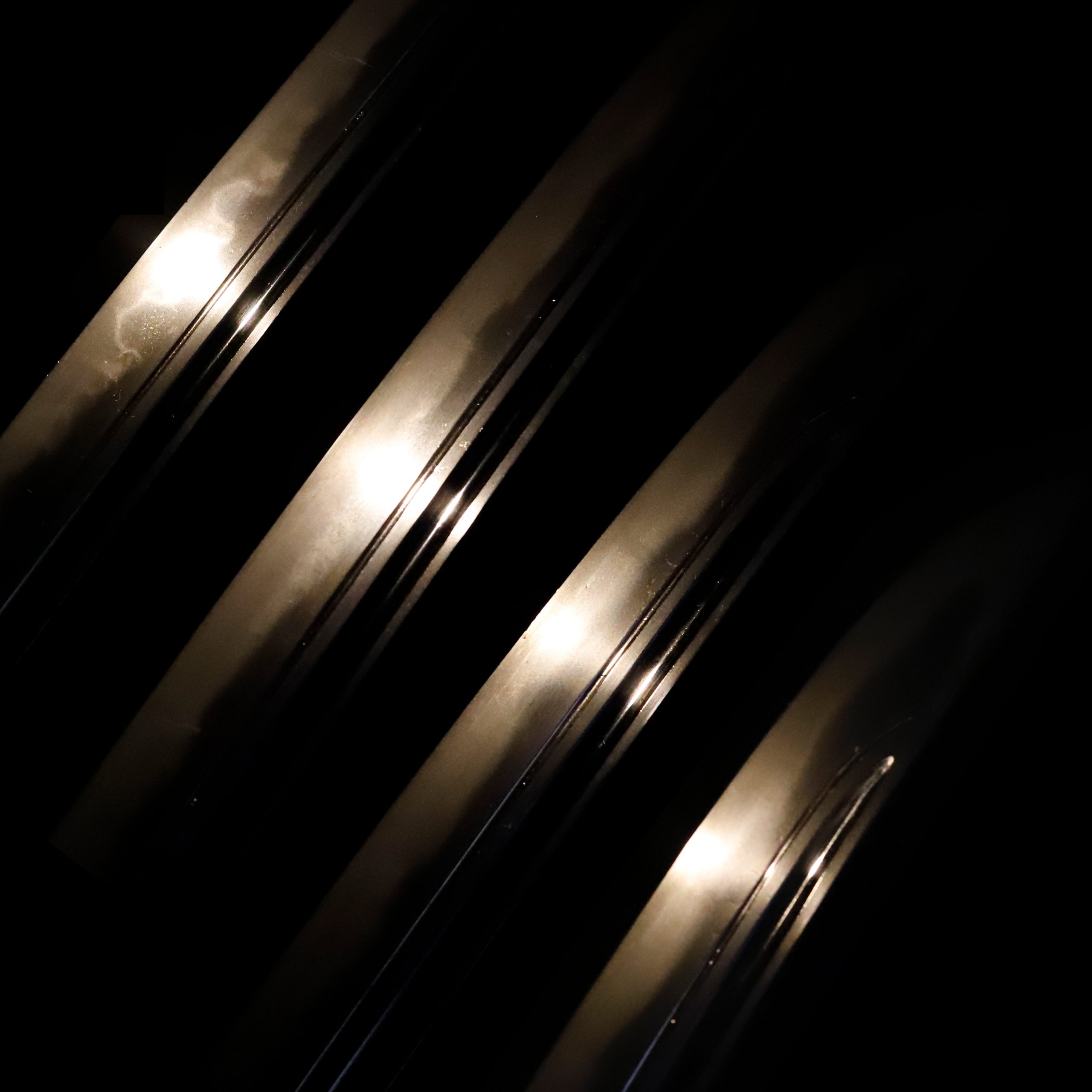
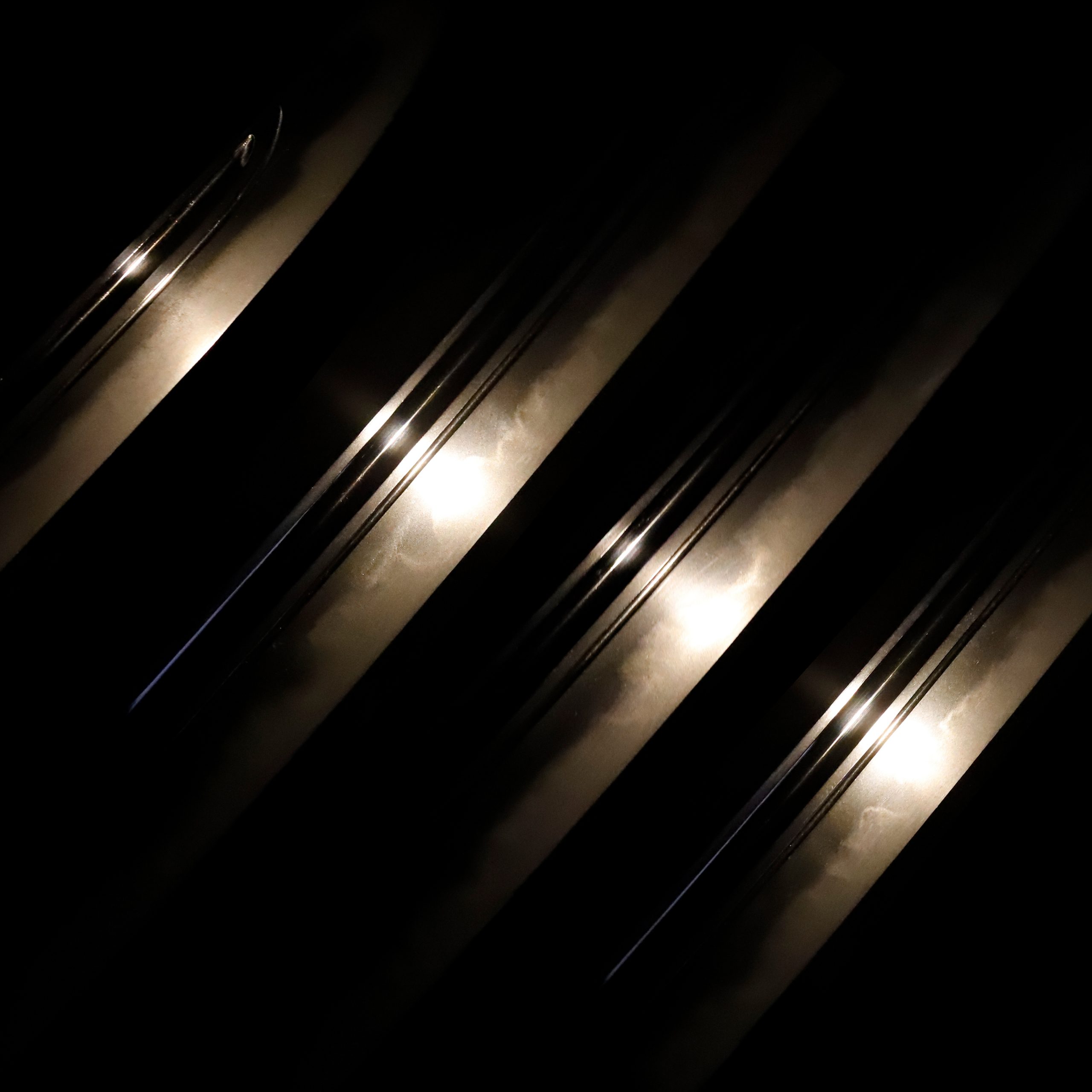
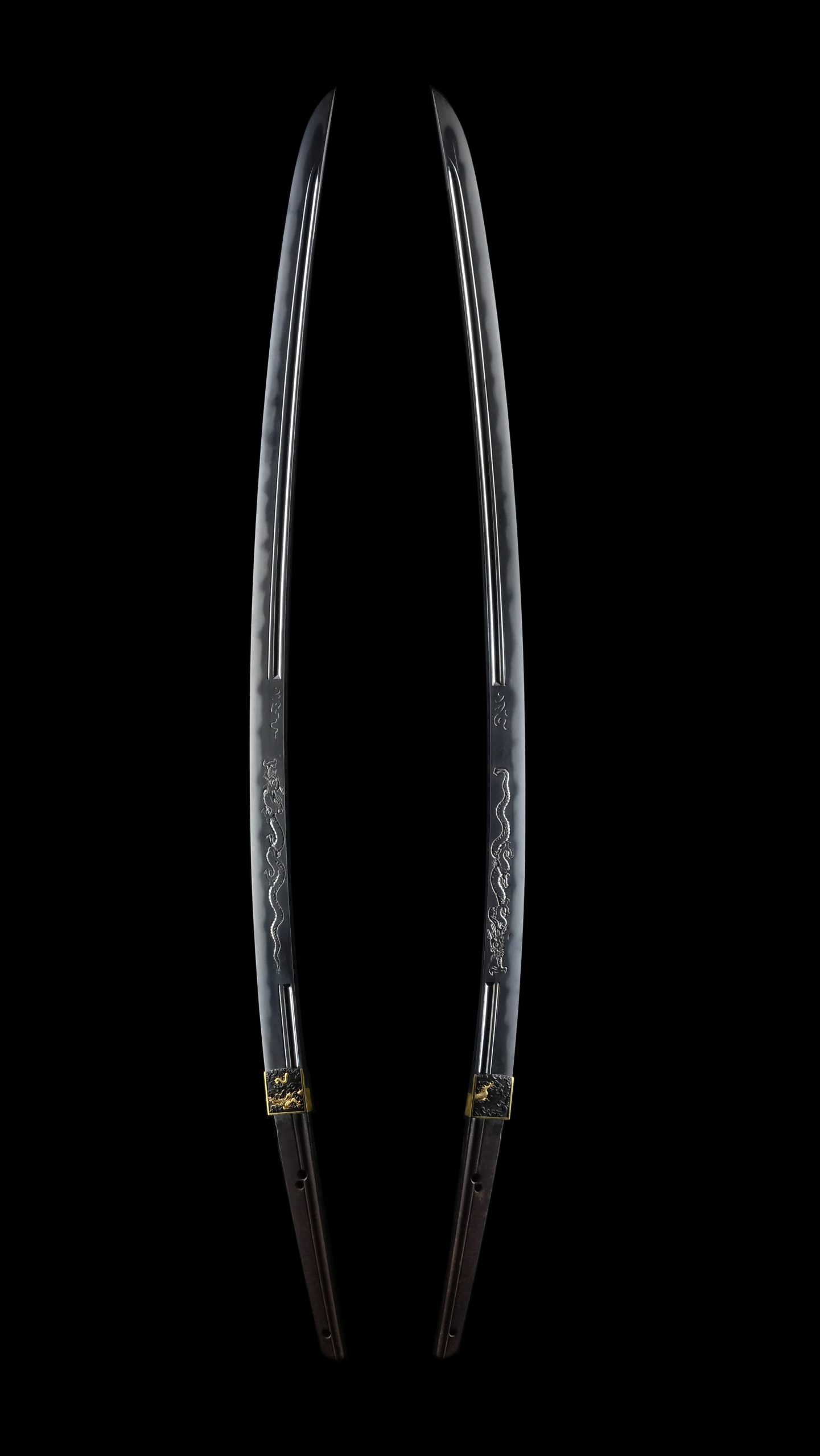
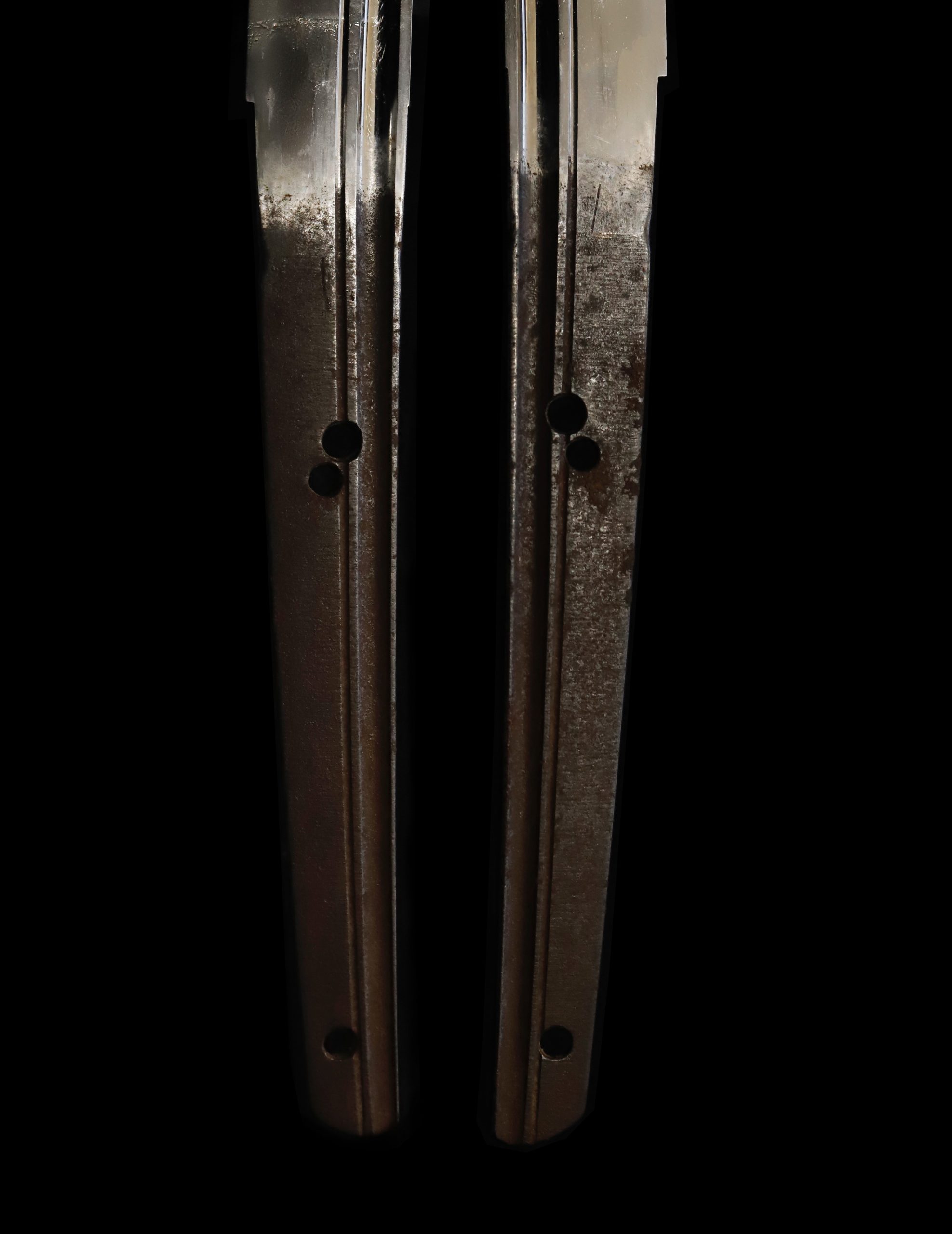
This blade is attributed to the work of Gassan Sadayoshi(月山貞吉) by NBTHK, one of the most reputable Japanese sword appraising organizations. Gassan Sadayoshi’s real name is Gassan Yahachiro. He was born in Dewakoku(Yamagata prefecture today) in 1781. Gassan is the name of the school he belonged. It was initially founded during the Heian period(late 12th century). It is said that the school name “Gassan” (月山) came from the fact that they forged swords near the mountain called Gassan. In Sadayoshi’s early career, he learned sword forging technique from his father, Okuyama Yasaburo Sadachika(山弥三郎貞近), who is said to have been a descendant of O-Shu Gassan school (奥州月山), one of the oldest Gassan schools. When Sadayoshi became about 20 years old, he went to Edo city(today’s Tokyo) to serve Suishinshi Masahide(水心子正秀) as an apprentice. Sushinshi Masahide is known as one of the most skilled and famous swordsmiths at the end of the Edo period(150-200 years ago). After ten years of apprenticeship under Masahide, Sadayoshi mastered excellent craftsmanship. And he moved to Osaka in 1833 when he was 30 years old. He founded Osaka Gassan school there, improving his sword-forging technique even more and eventually settled there. He also trained many apprentices, who later became notable swordsmiths at the end of the Edo period. While Gassan school was known as one of the most prestigious schools from the Kamakura period(late 12th century), its presence faded in the early-mid Edo period. However, after Sadayoshi became a highly-regarded swordsmith at the end of the Edo period, the whole school revitalized and flourished again because of his continuous effort. Sadayoshi adopted a son from Tsukamoto family and named him Sadakazu, who later became one of the most famous swordsmiths in the post Samurai period(Meiji era). Father and son spent many years researching traditional Gassan style swords and finally made Ayasugihada, the signature design of Gassan school. Ayasguhihada looks undulating grain pattern in the Jihada(steel surface), which resembles a Japanese cedar grain. Gassan Sadayoshi also forged other styles of swords aside from Ayasugi Hada Jihada. Gassan Sadayoshi died at the age of 71 in the third year of the Meiji era(1870). His son, Sadakazu, preserved the tradition of Gassan, and he passed it down to Sadakatsu. The Gassan school has been running for the 6th generation. The current Gassan alive is Gassan Kazutoshi, and his son is Gassan Sadanobu.They still keep forging traditional Japanese swords in Nara prefecture. We are confident you will appreciate this gorgeous long blade with beautiful engraving on the blade. This blade is appraised as a Hozon Token(保存刀剣) issued by NBTHK(Nihon Bijutsu Touken Hozon Kyokai:日本美術刀剣保存協会). Horimono Horimono is an inscription or sculpture on Japanese swords. The history of the Horimono (彫り物, blade sculpture) in Japan is old; it goes back about 1,300 years ago. Japanese swords initially had the Chokutou (直刀, straight blade) shape. And it changed its form to the Wantou (湾刀, curved blade) shape in the age when Samurais appeared. Samurais fought on the battlefields for their life. Japanese sword was the integral weapon that divided the life and death of the warrior. They expressed their wishes for divine protection by applying their religious objects to the Horimono. Originally, people enjoyed decorativeness for the Horimono as a symbol of authority. However, Samurais attached importance to its practicality and religiousness. One theory says decorative elements have been strengthened again in the Horimono since the Edo period, which was peaceful times, and characters such as auspicious animal or plant designs and Japanese poems. By inquiring into the history of the Horimono, you would notice that the demand of Japanese sword changed as the times changed. Habaki Dragons and cloud are designed on this Habaki. Initially, the dragon is an imaginary creature found in ancient traditions or myths. Furthermore, it is regarded as a symbolic beast of auspicious signs. Its body is likened to nine animals: antlers are deer, the head is a camel, eyes are demons, the neck is a snake, belly is the Mizuchi (蛟, mythical animal in Japan which looks like a snake and have a horn and four legs), scales are fish, claws are falcons, palms are tigers, and ears are cows. It was thought that the dragon would reign at the top of all animals because of its odd-looking appearance. Authentication Paper They authenticated the blade on June 25th in the second year of Reiwa (2020). They appraised it as Hozon Touken, the blade worth preserving for Japanese society.

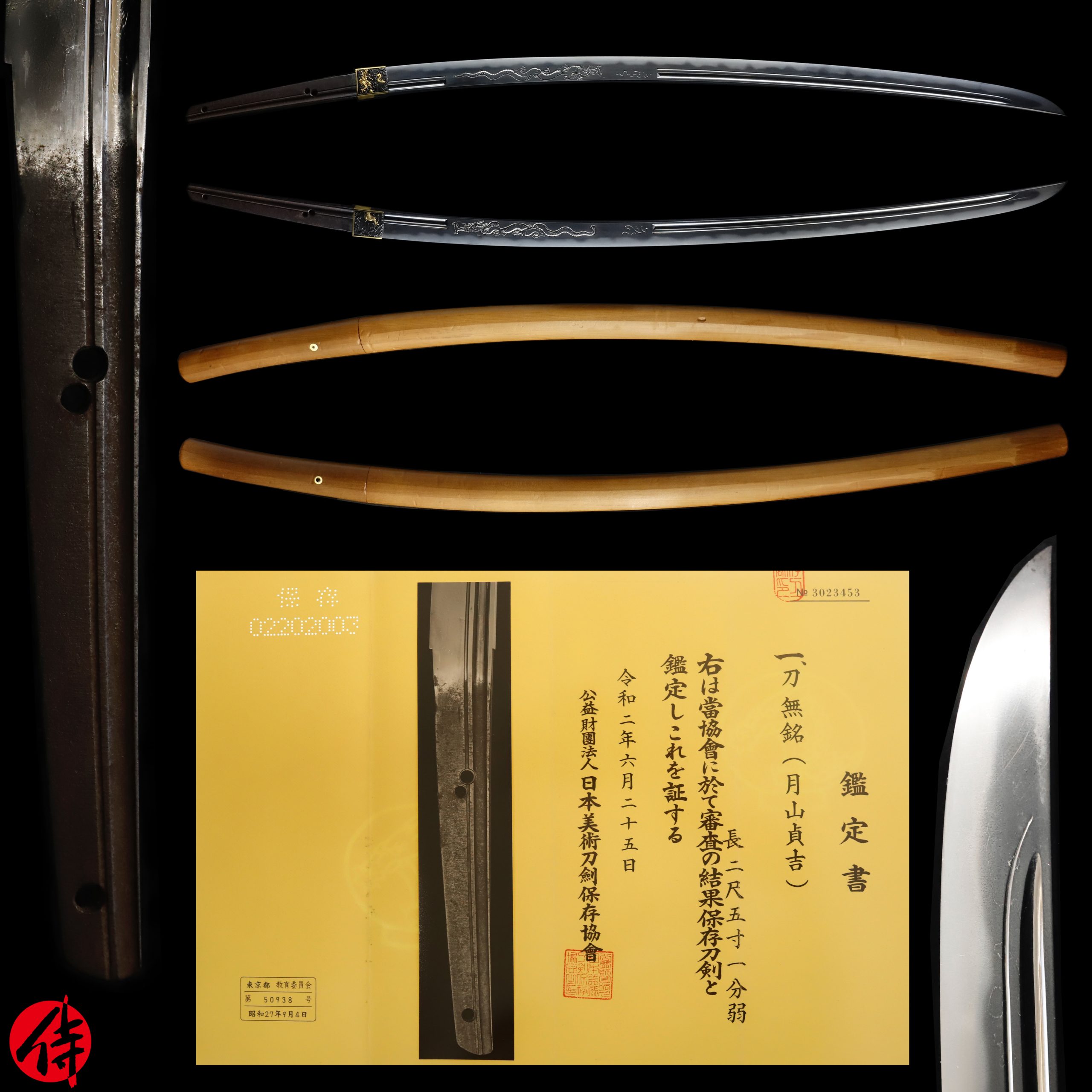
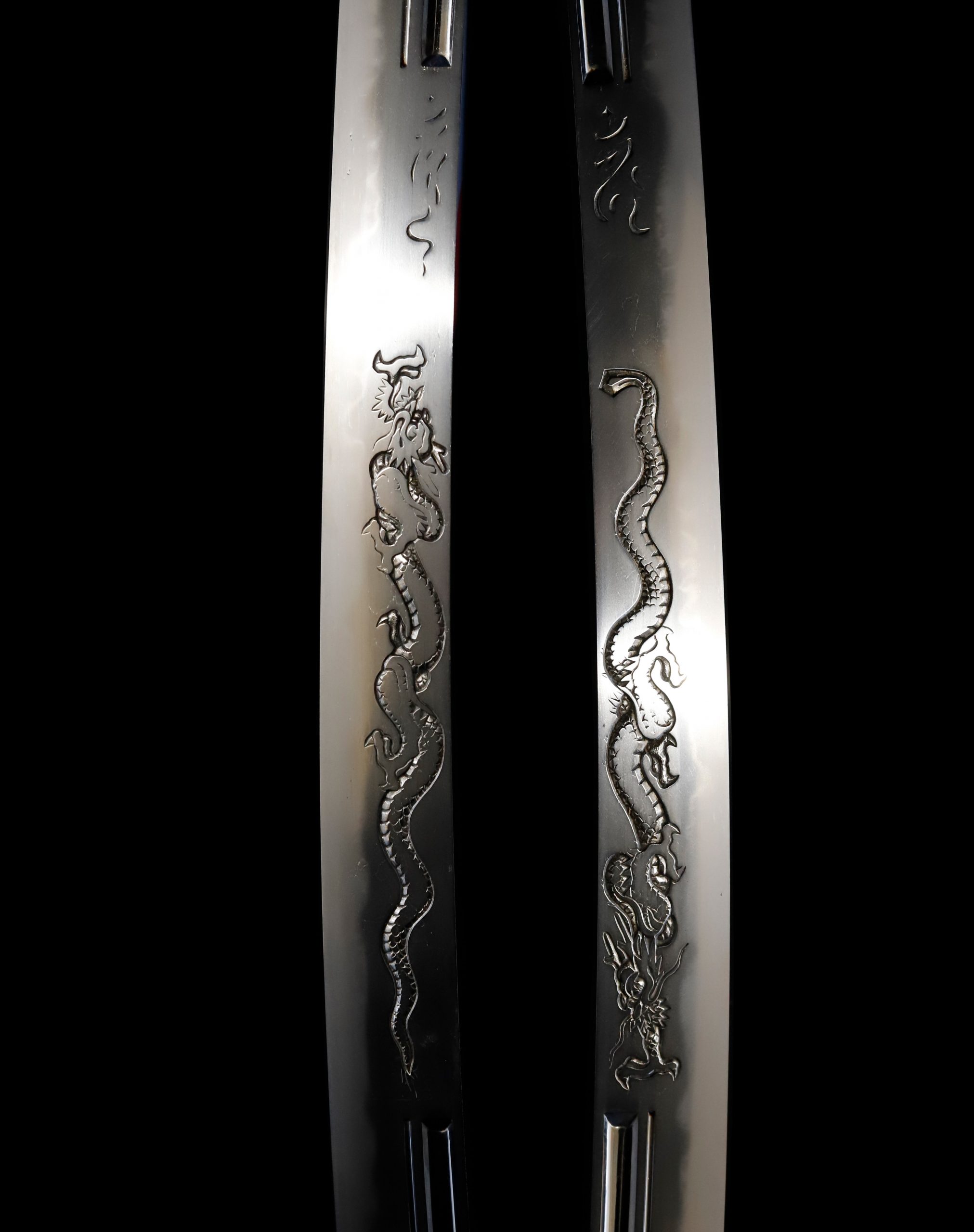
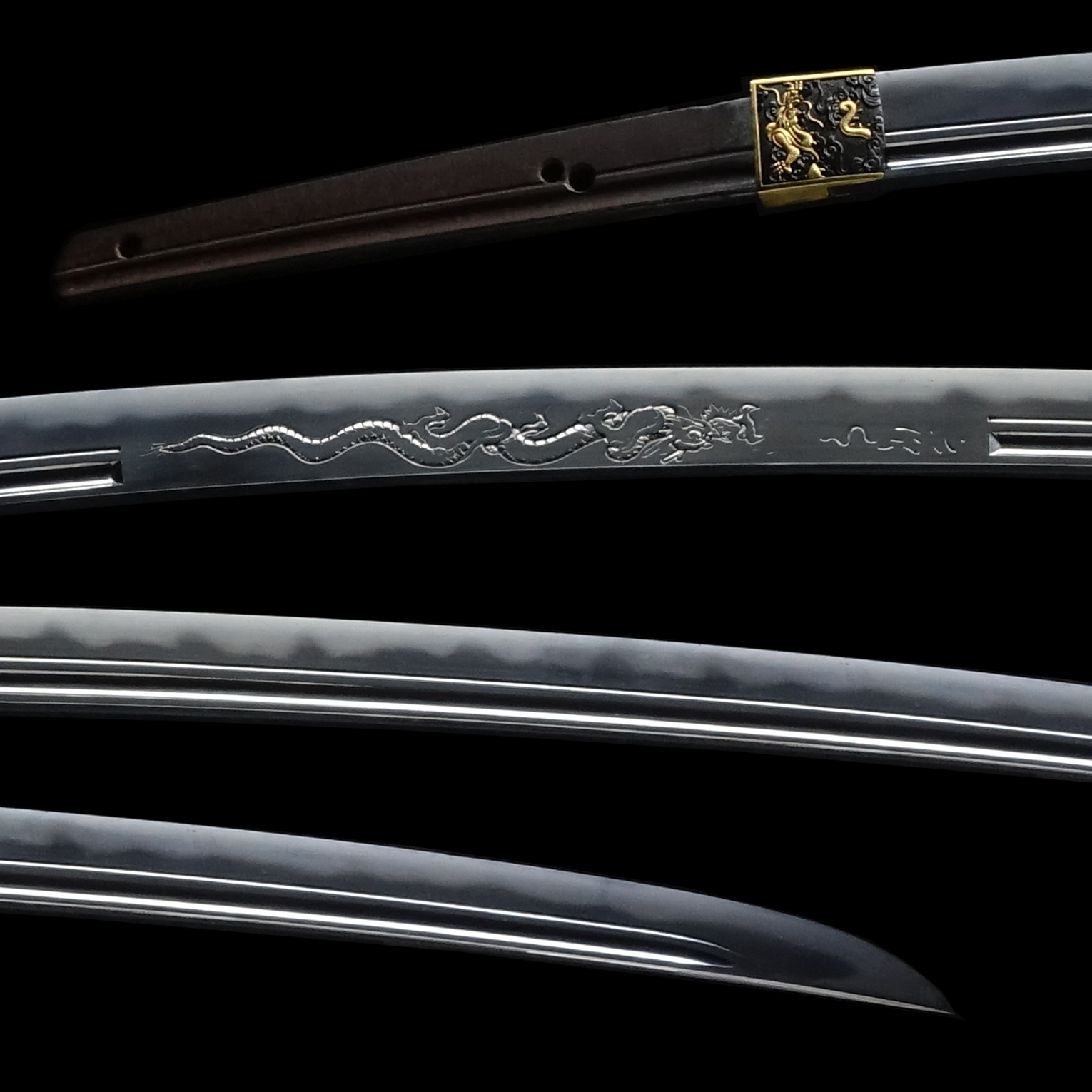
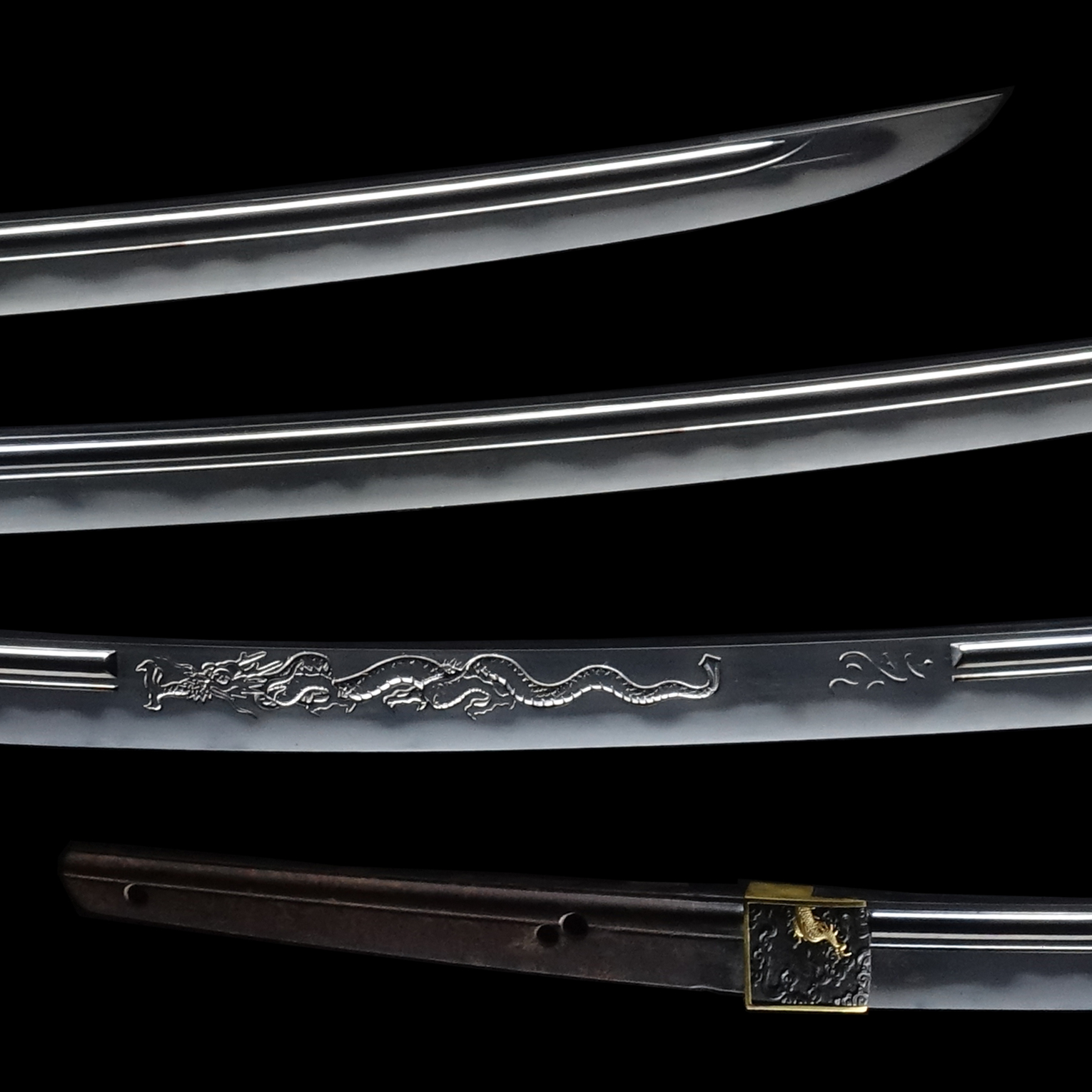
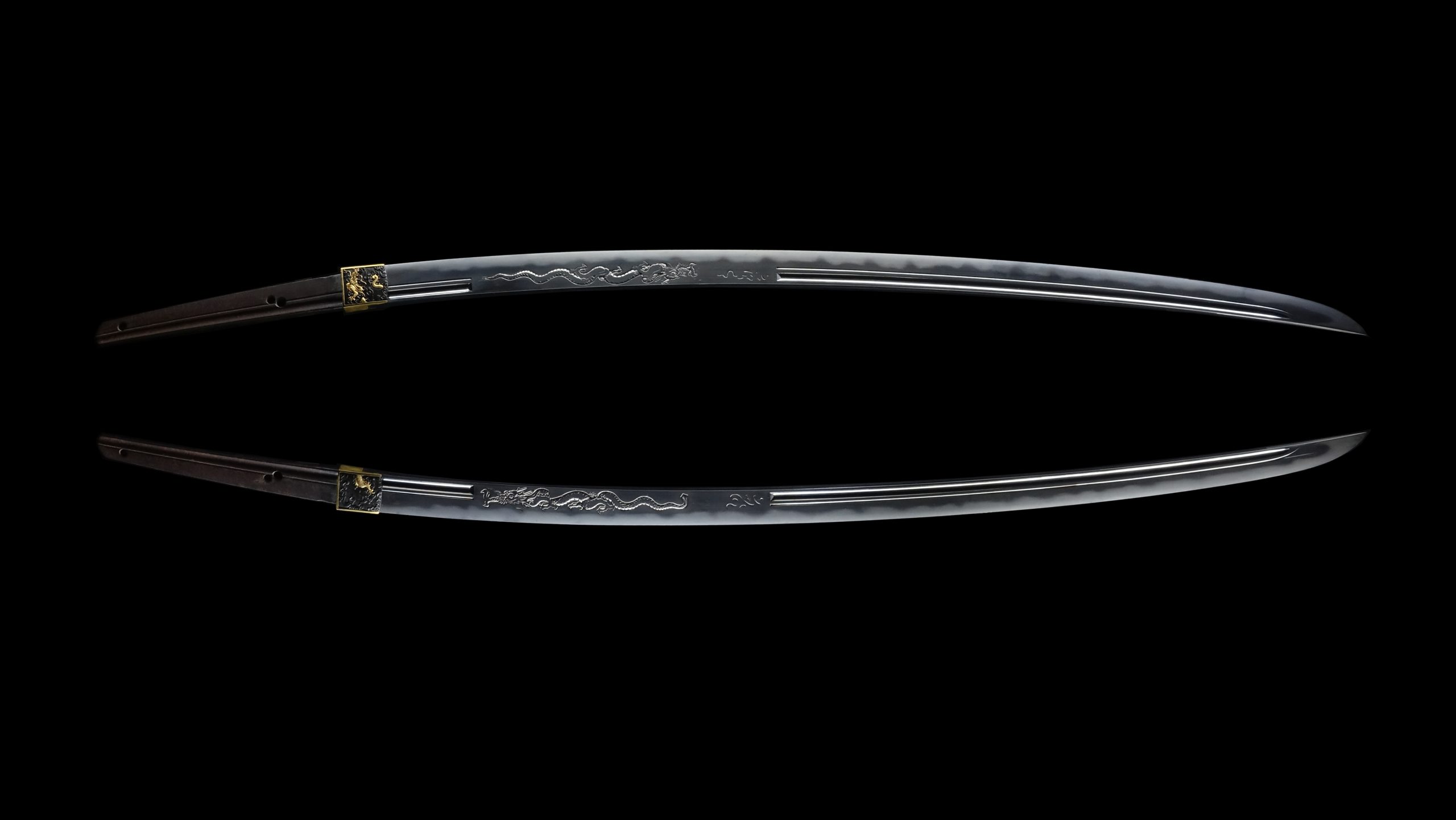
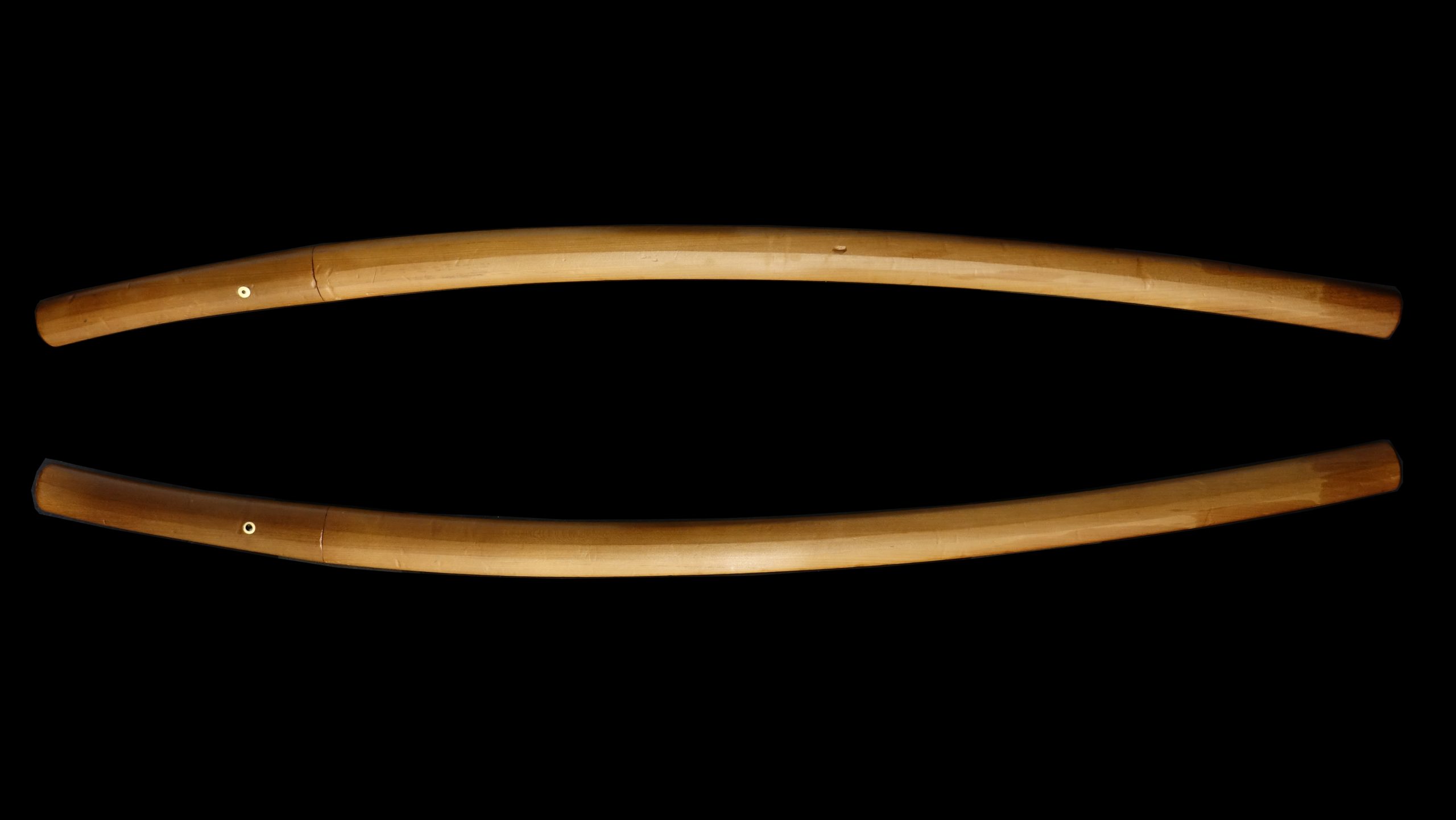
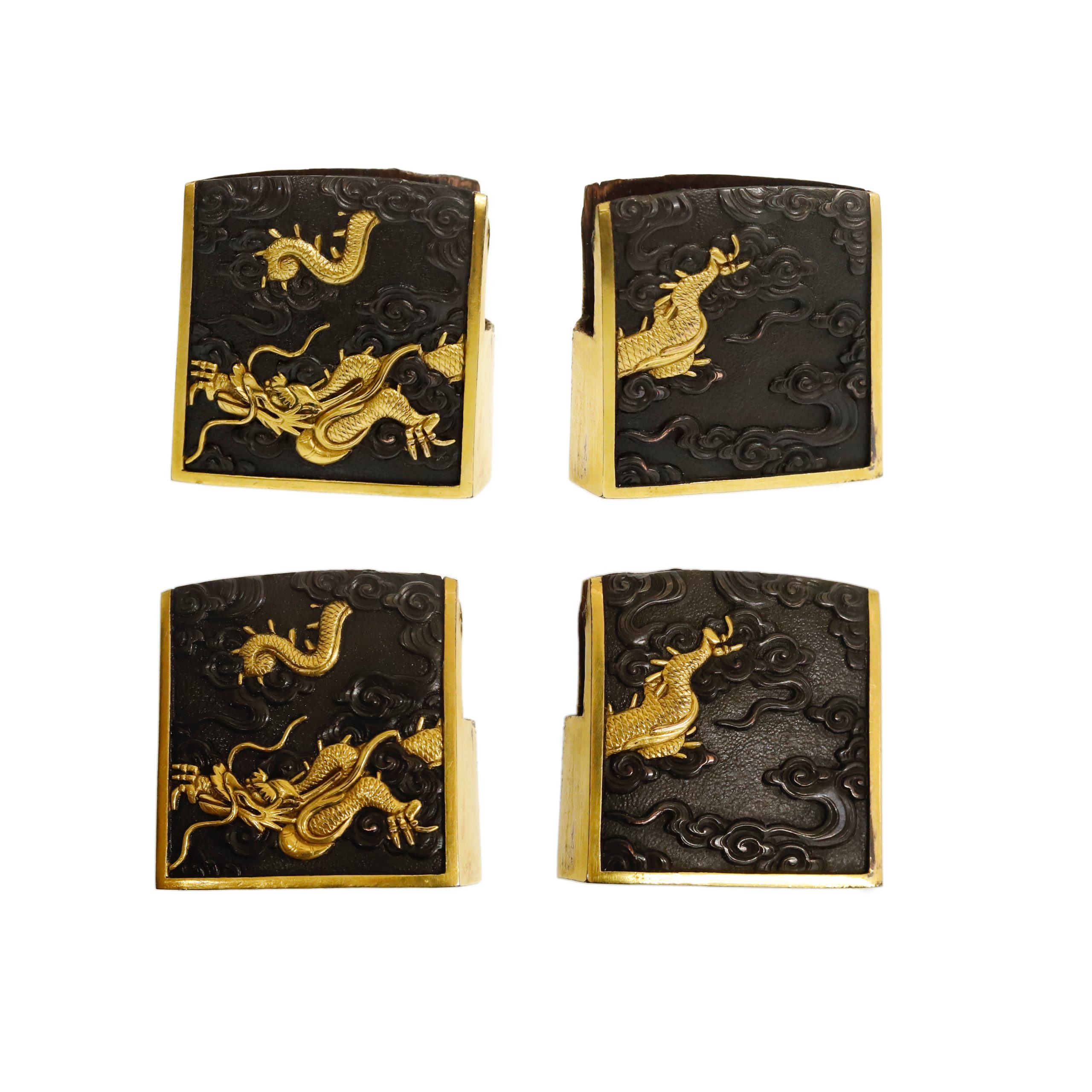
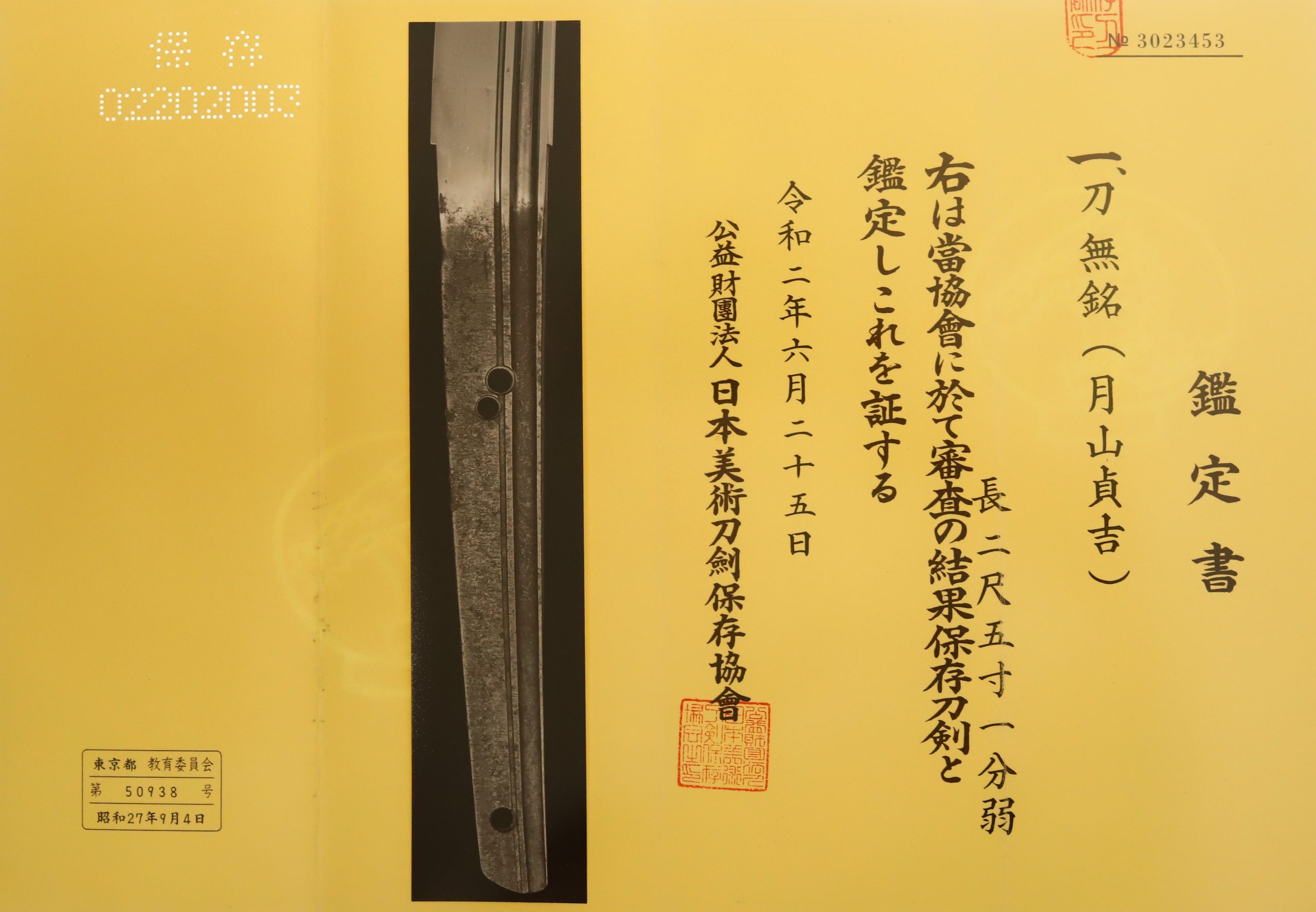
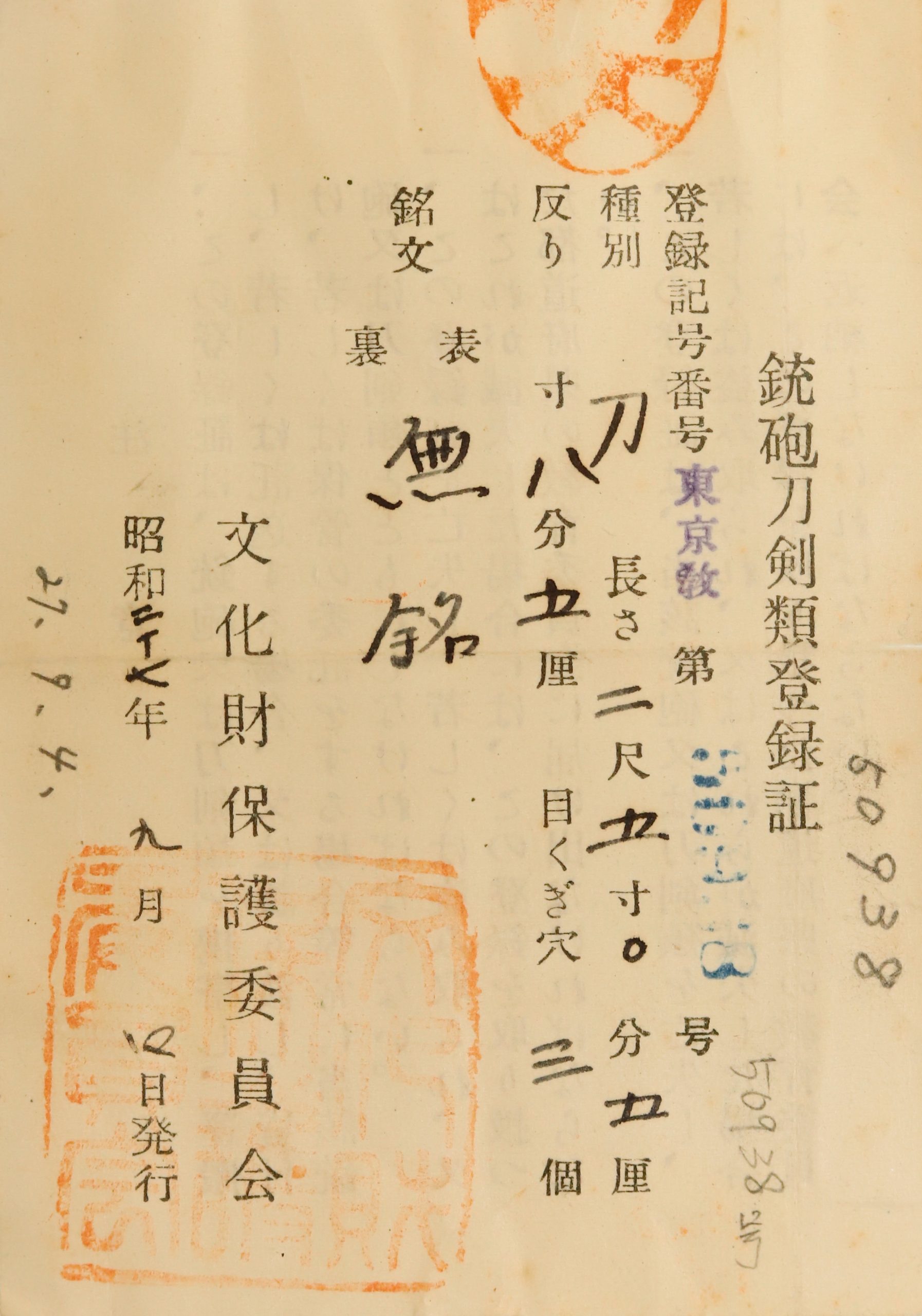
販売店の記載のまま
新々刀 · 摂津 · 1830-1863頃
藤代 上作 · 刀剣大鑑 上位49%
現在1点販売中
新々刀 · 摂津
現在28点販売中
幕末 最後の需要
1853年のペリー来航は徳川の泰平をほどき、二世紀ぶりに実用刀の大量需要を生んだ。四谷正宗と呼ばれた清麿はその前夜に世を去り、宗次や行秀が最後の好況を担った。
銘が正しい、または無銘でも年代・国・系統を確実に指摘できる、保存に値する真正の作と鑑定されたものです。
日本美術刀剣保存協会(NBTHK)は、1948年に設立され、文化庁の監督を受ける公益財団法人で、東京・刀剣博物館に本部を置きます。専門の審査員が出品作を直接審査し、美術的・歴史的価値に応じた鑑定書を発行します。NBTHKの鑑定書は、日本刀および刀装具の真正性を示す最も広く認知された基準です。
NBTHK公式サイトReturns/exchanges limited to defects caused by shipping (except willful misconduct or gross negligence by the company); customers must contact within 72 hours of receiving the product.