説明
Antique Japanese Sword Katana Signed by Kurihara Nobuhide with NBTHK
Tokubetsu Hozon
Certificate
【Description】
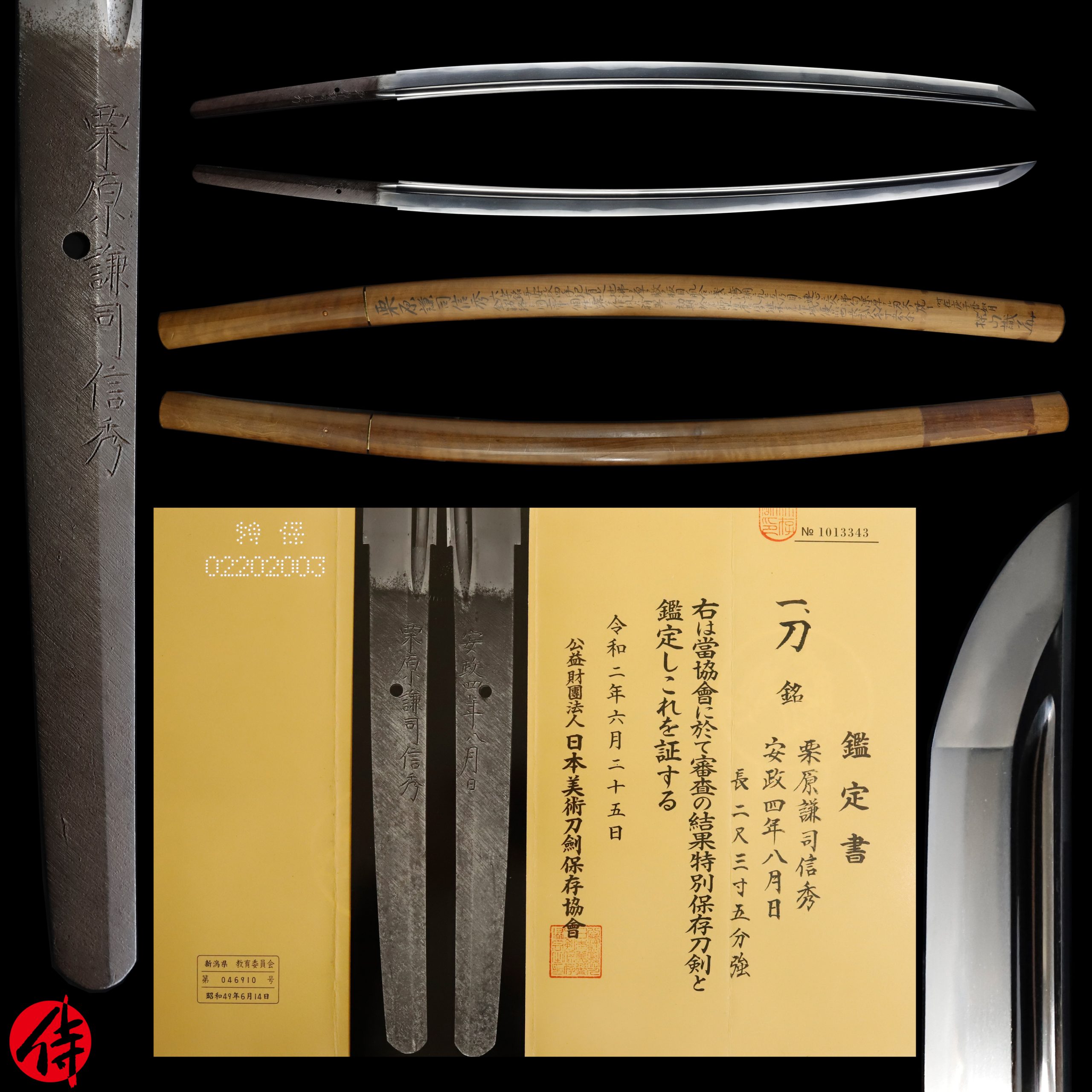
This blade was signed by Kurihara Kenji Nobuhide (栗原謙司信秀) in the 4th year of the Ansei era (
1857
: The end of the Edo period).
Nobuhide was born in Echigo province (today’s Nigata prefecture) in the 12th year of the Bunka era (1815).
In the 12th year of the Bunsei era (1829), he moved to Kyoto and became a famous mirror craftsman. Eventually, he relocated to Edo city (today’s Tokyo) to become an apprentice of Kiyomaro in the third year of the Ka-Ei era (1850). Nobuhide was about 34-35 years old when he first studied sword-forging techniques from Kiyamaro, one of the most skilled and renowned swordsmiths at the end of the Edo period. Kiyomaro was just two years older than Nobuhide back then.
He was so talented that he mastered superb craftsmanship from Kiyomaro in less than three years. Nobuhide was treated as Kiyomaro’s No1 apprentice.
Nobuhide became an independent swordsmith in the fifth year of the Ka-Ei era (1852). In the first year of the Keio era (1865), he received an honorable official title Chikuzen no Kami (筑前守) from the emperor Komei. He stayed in Sagami province (today’s Kanagawa prefecture) during 1853-1854. And he resided in Osaka between 1864-1867.
In his early career, he signed Nobuhide (信秀) and then changed it to Kurihara Kenji Nobuhide (栗原謙司信秀). And lastly, he signed Taira Nobuhide (平信秀).
Nobuhide was active between 1852-1877 (the 5th year of Ka-Ei~10th year of the Meiji era). He is known as one of the three masters of the sword-forging at the end of the Edo period. The other two are Gassan Sadakazu and Honjo Yoshitane. Nobuhide is considered one of the top-tier swordsmiths among Japanese sword experts and collectors.
Even after the Samurai era ended in 1868, Nobuhide kept forging swords. And in the second year of the Meiji era (1869: post Samurai era), he was requested by the emperor Meiji to forge a ceremonial sword, which was considered one of the highest honors for any swordsmiths.
The Meiji government also ordered him to create three divine mirrors and a holy blade for a newly built shrine called Shokonsha (today’s Yasukuni shrine).
Shokonsha was built to honor the spirits of those who died during the civil war at the end of the Edo period. This fact suggests that Nobuhide was one of Japan’s most respected and acknowledged swordsmiths. He finished this project in the 7th year of the Meiji era (1874). And,
he came back to Echigo province and restarted making mirrors for shrines. He died at the of 66 in his house in Tokyo.
We are confident you will appreciate his exceptionally high level of craftsmanship from this blade.
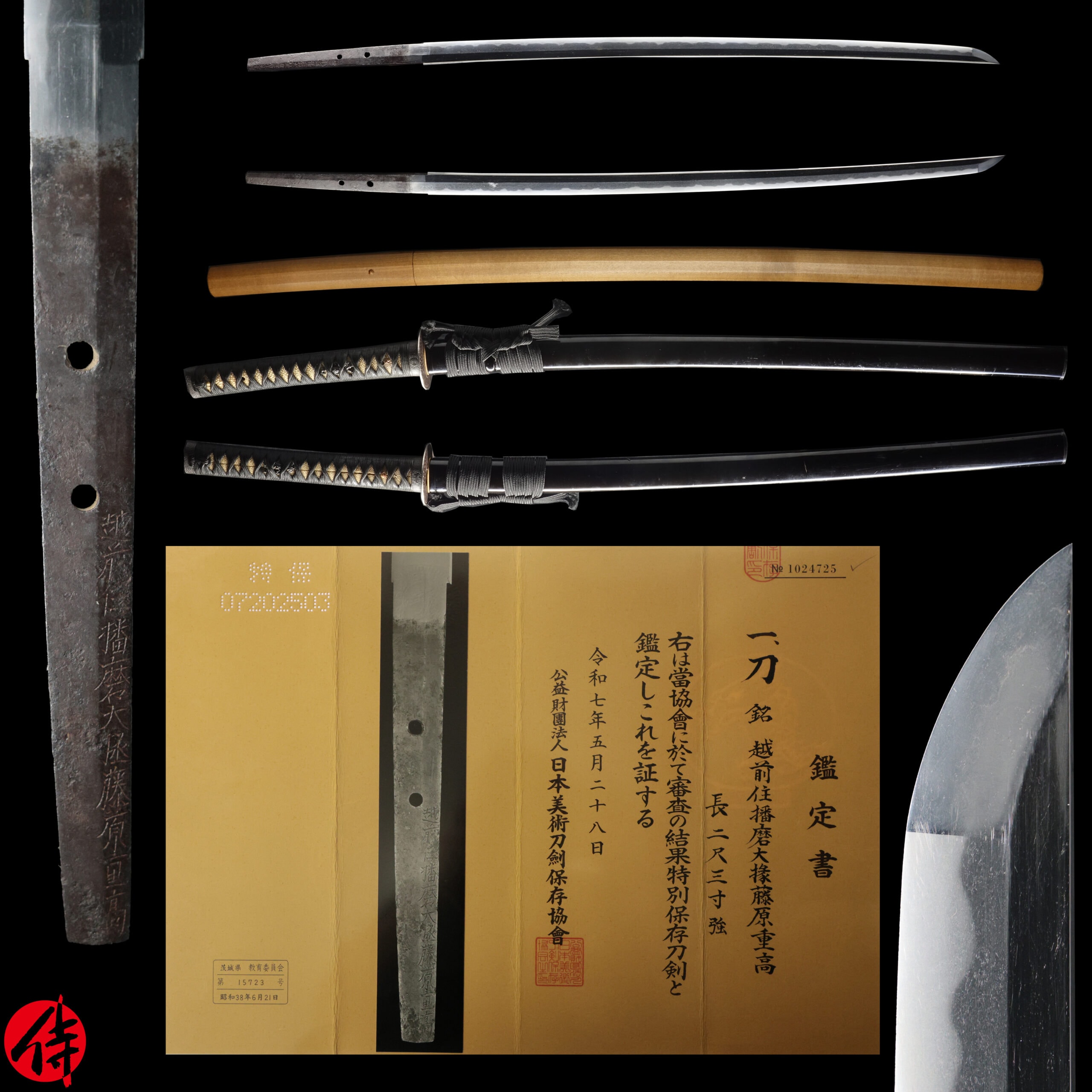
This blade is appraised as a
Tokubetsu Hozon Token
(特別保存刀剣) issued by NBTHK(Nihon Bijutsu Touken Hozon Kyokai:日本美術刀剣保存協会). This authentication paper was only given to authentic Japanese swords, especially well preserved and high quality with artistic value.
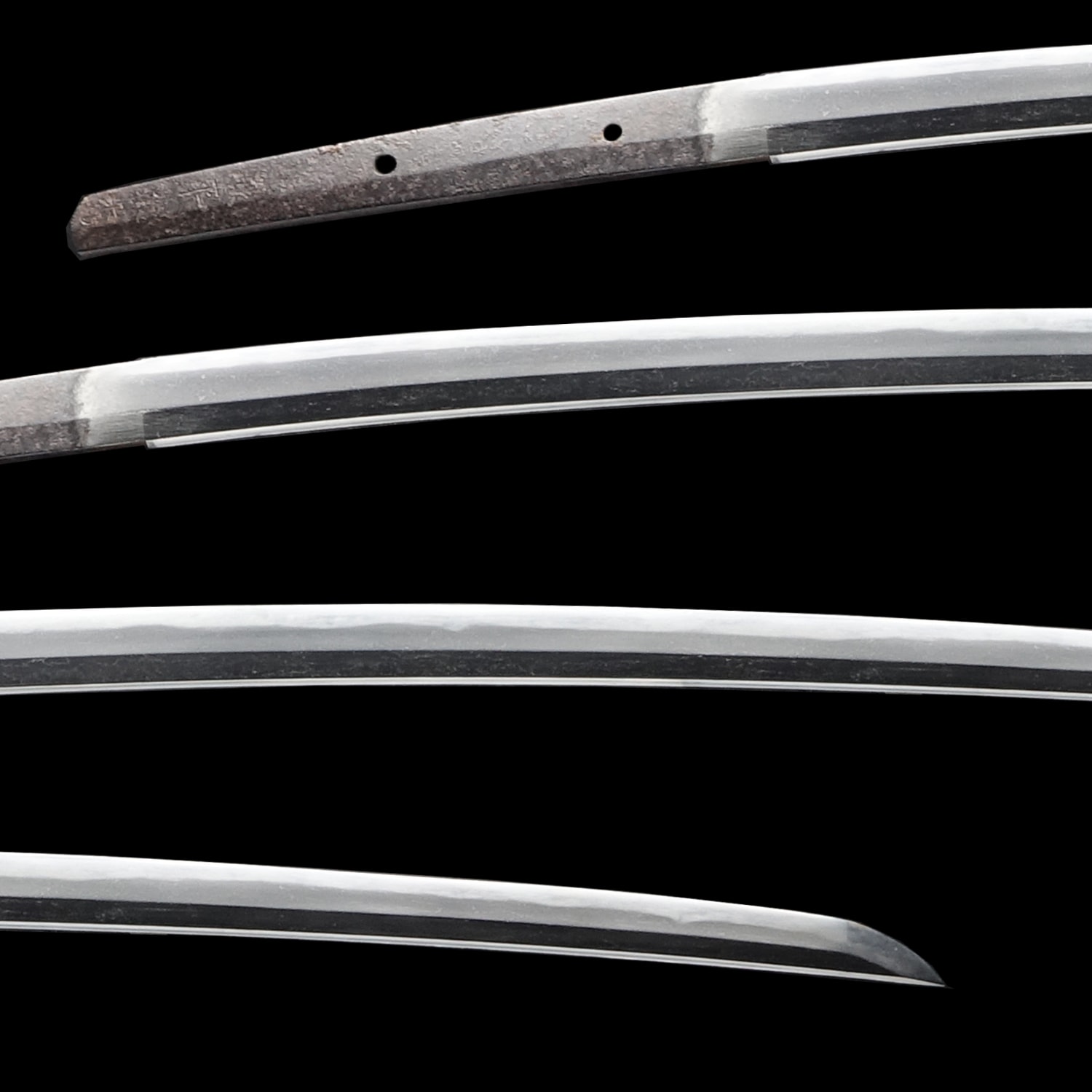
【 Blade】
Cutting Edge Length(Nagasa)
:
71.3 cm( 28.0 inches)
Curvature(Sori)
:
2.0 cm( 0.79
inches)
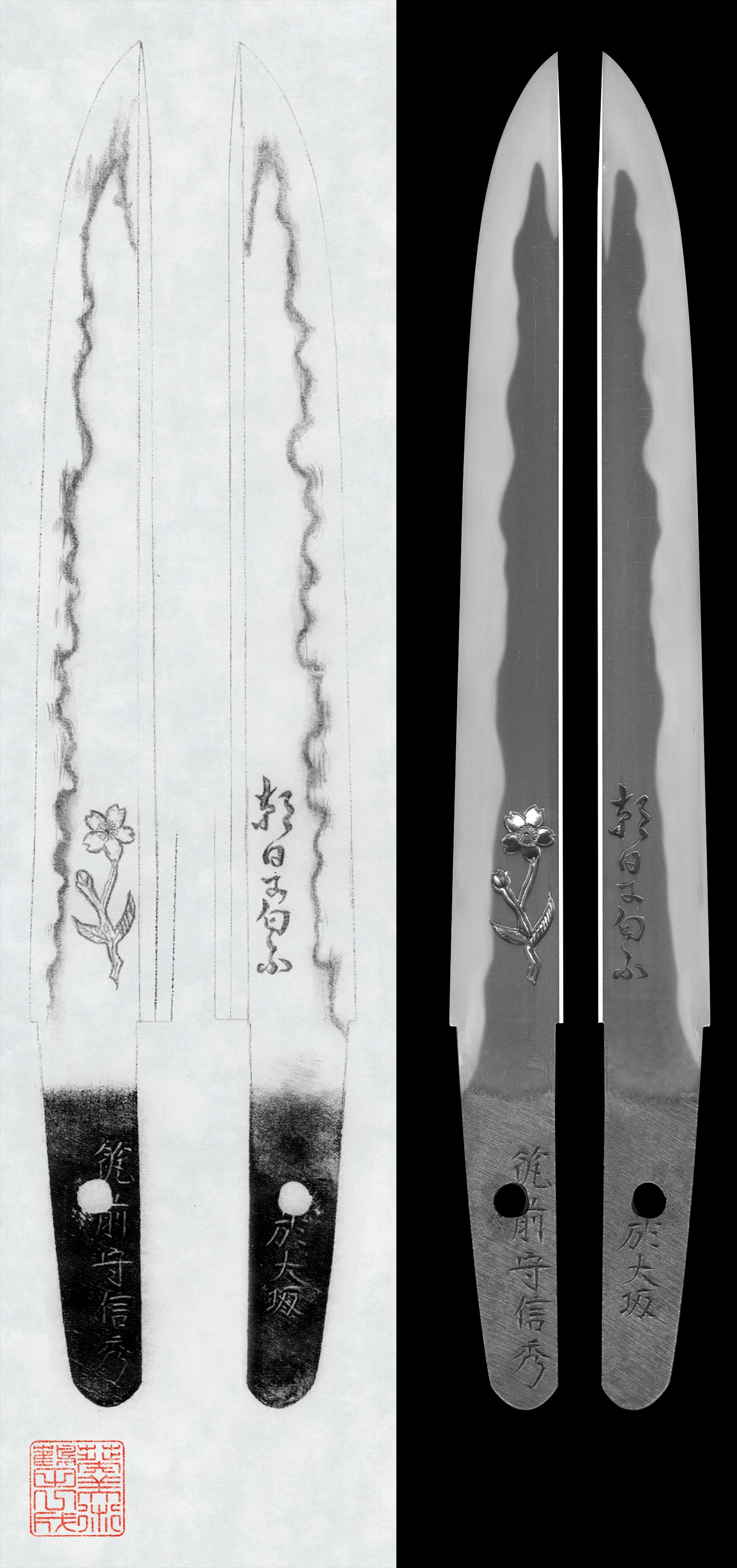
Hamon
:
The crystalline structure which forms along the cutting edge of a blade as a result of the hardening process
Jimon(Jihada)
:
visible steel surface pattern created by folding and hammering during forging process
Nakago
:
Nakago is the tang of the Japanese sword.
Japanese swordsmiths left the black rust on the tang because it prevents red rust while the tang is in its handle. And the discoloration of the tang was created over time, and it is a great indicator for a Japanese sword specialist to estimate when the sword was forged.
Habaki
:
Habaki is the equipment to make the blade not touch its scabbard inside. It prevents the blade from getting rusty and chipped.
Authentication Paper
:
NBTHK TOKUBETSU Hozon Certificate for the blade (No. 1013343)
NBTHK
, also known as Nihon Bijutsu Touken Hozon Kyokai (the Society for the Preservation of the Japan Art Sword), is one of the oldest Japanese sword appraising organizations i