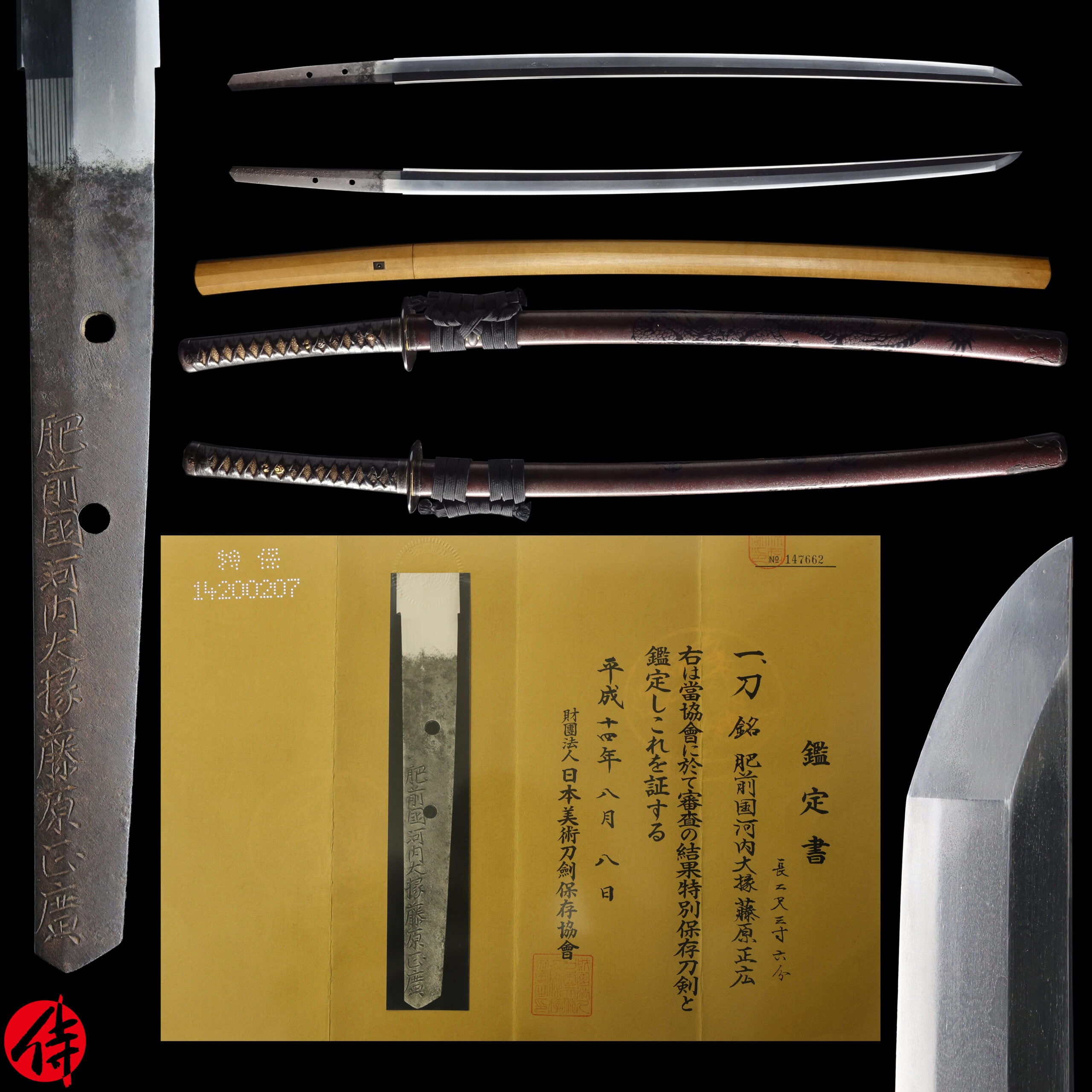
説明
Antique Japanese Sword Katana Signed by Tadahiro with
Hozon
Certificate
【Description】
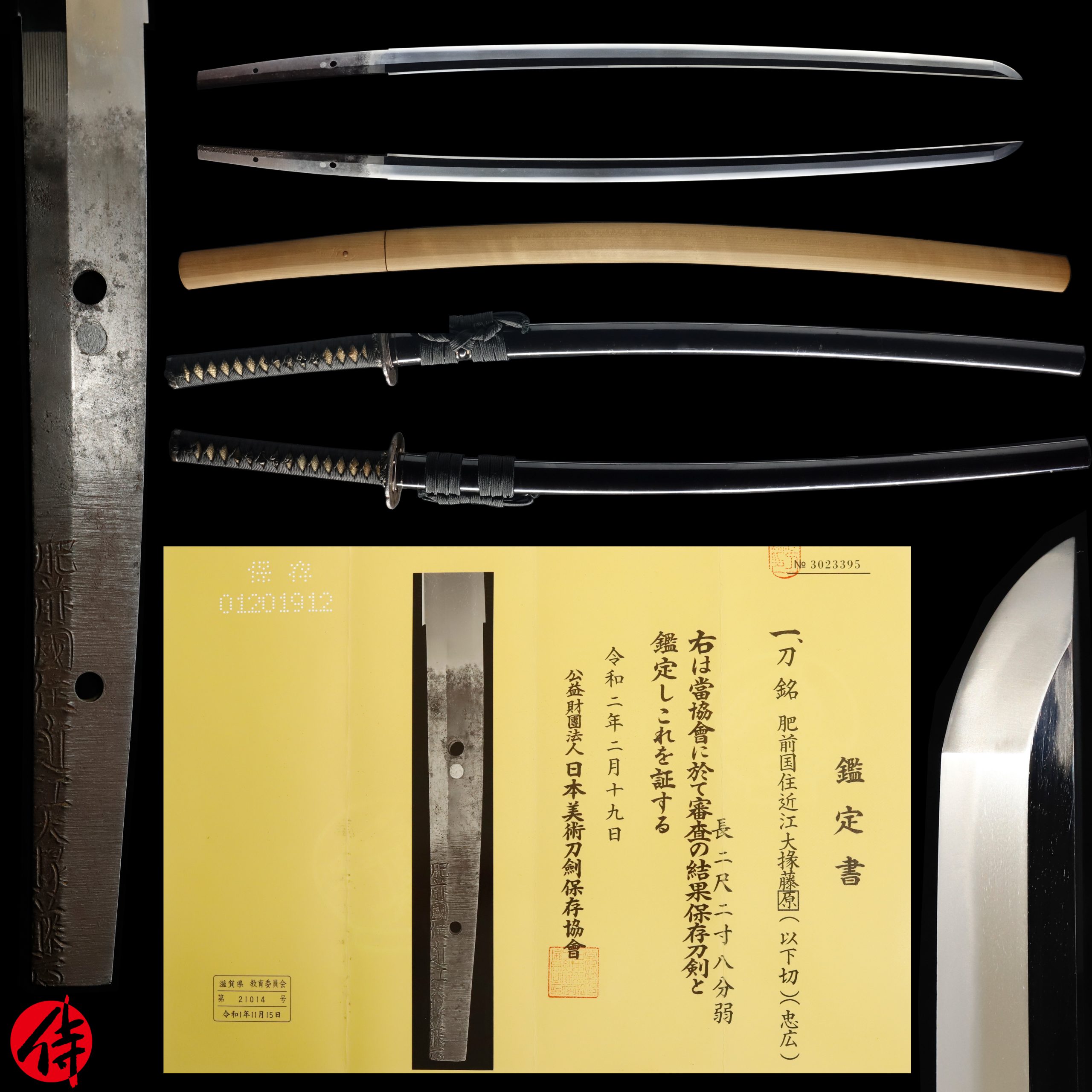
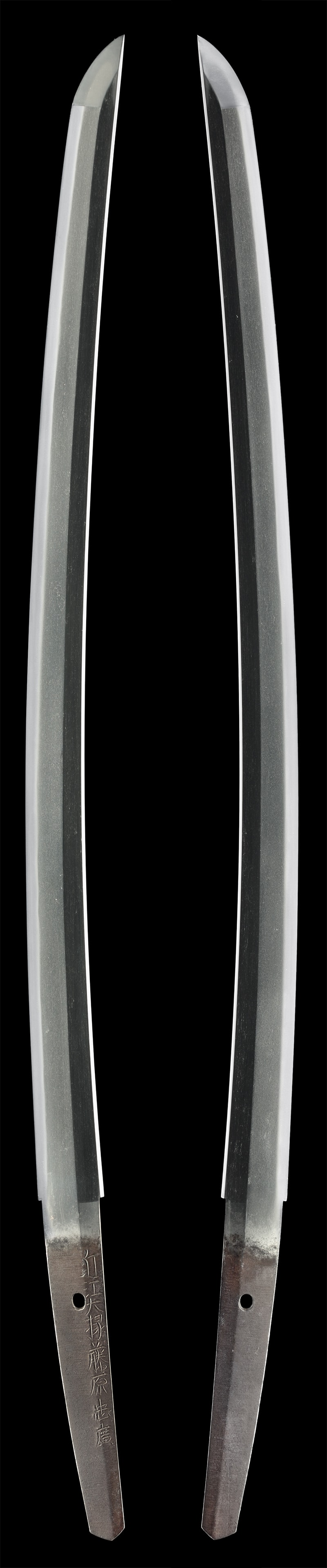
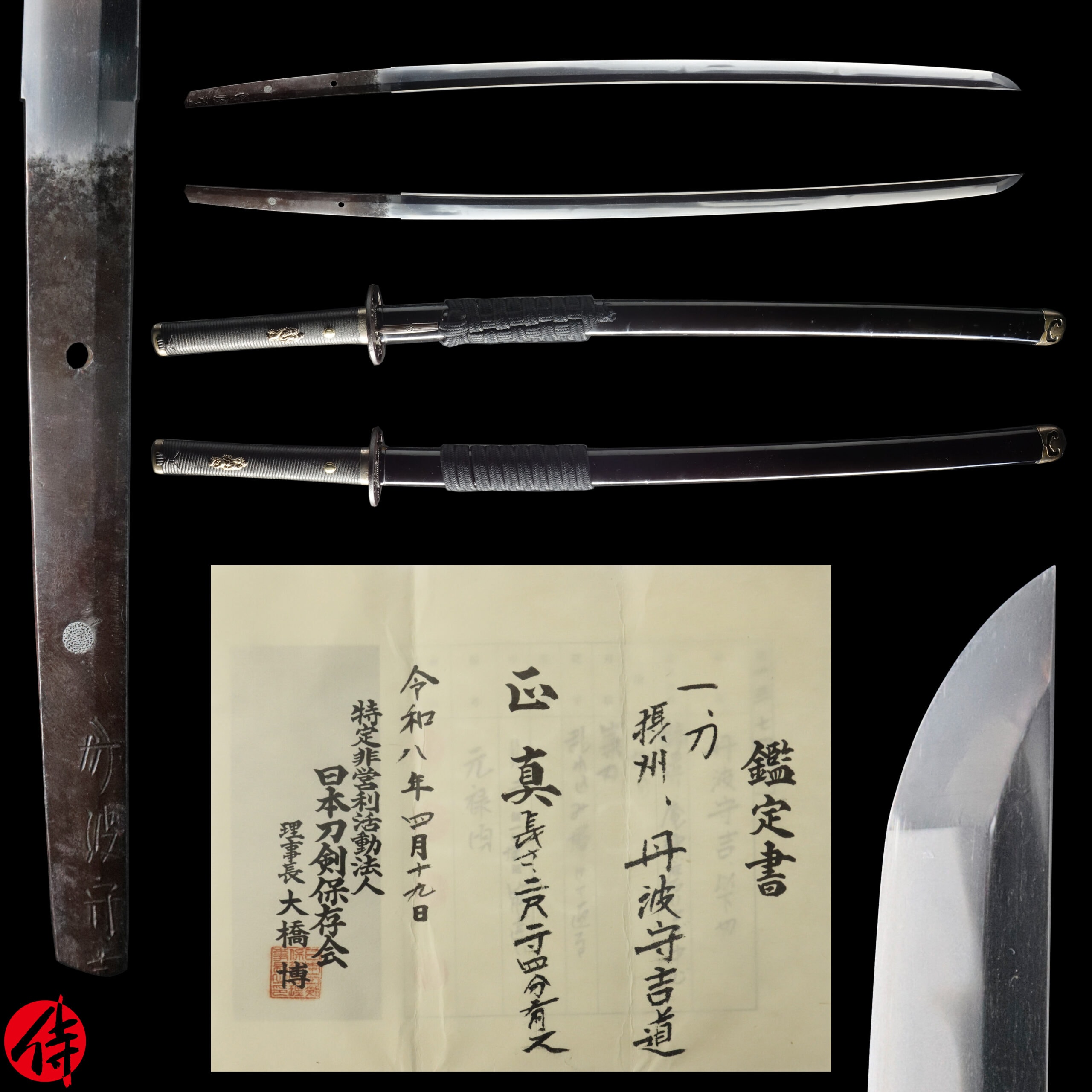
This blade was signed by Omi no Daijyo Fujiwara Tadahiro(近江大掾藤原忠広) , who is the first son of the first-gen Tadayoshi according to NBTHK Hozon certificate. While the signature of Tadahiro part was cut due to Suriage (size adjustment) in the past, NBTHK appraised it as a work of Tadahiro based on the characteristic of the blade. It is said that he was active in sword-forging during
1624-1688
.
Tadayoshi(Father) is one of the most famous swordsmiths in the early Edo period and made Hizeon province(today’s Fukuoka prefecture) a prominent sword-forging place back then. Tadahiro learned sword-forging techniques under his father’s supervision until Tadayoshi died in 1632 (9th year of the Kan-Ei era).
Tadahiro took over the school his father ran when he was only 19 years old, and he started to make a sword in the same year. This fact indicates that he was excellent at making swords, and the apprentices of his father(Tadayoshi) supported him to run the school. Tadahiro received the title of Omi Daijyo in 1641 (the sixth year of the Genroku era). He kept forging swords for almost 60 years for the Nabeshima clan, strong feudal lords.
Tadahiro died at the age of 81 in 1693 and left a large number of excellent swords before his decease.He had many famous apprentices, such as the third-gen Mutsu Daijyo Tadayoshi, Harima Daijyo Tadakuni, and Kawachi Daijyo Masahiro.
Fujiwara Tadahiro and other swordsmiths in the Hizen province worked under the auspices of Nabeshima clan. The swordsmiths in Hizen province were able to produce beautiful Jigane-patterned blades, also known as Hizen To, using and mixing carbon steel made in Netherland.
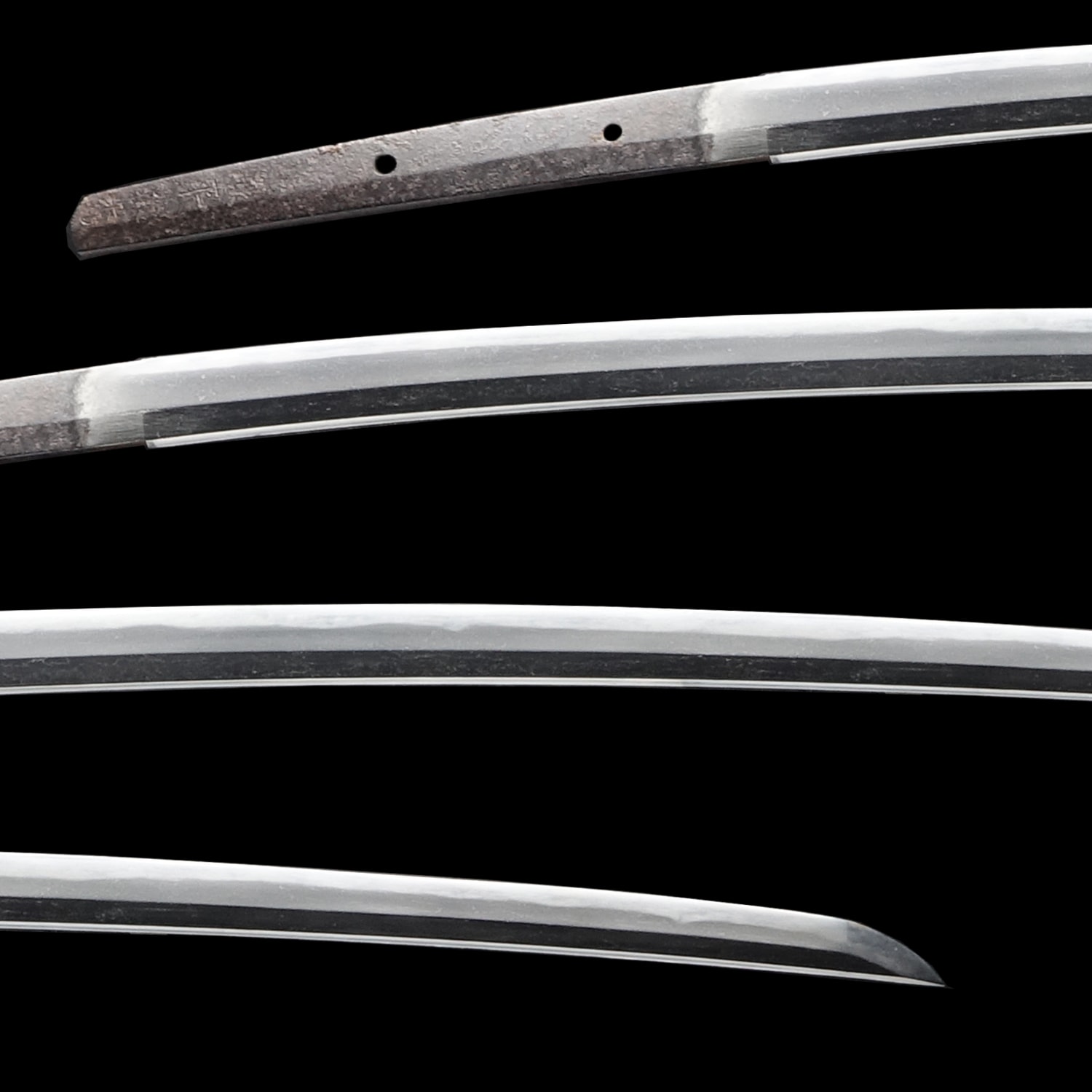
Most of Tadahiro’s work has Hamon types of Suguha and Chojimidare. These blades have Suguha Hamon, and you can see beautiful Jigane, which is famous for blades made in Hizen province. Swords forged by Tadahiro are also famous among Japanese sword collectors because of his exquisite craftsmanship and history.
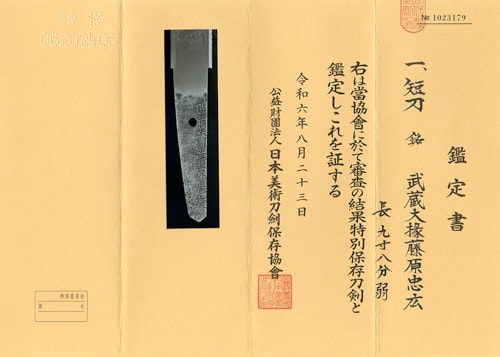
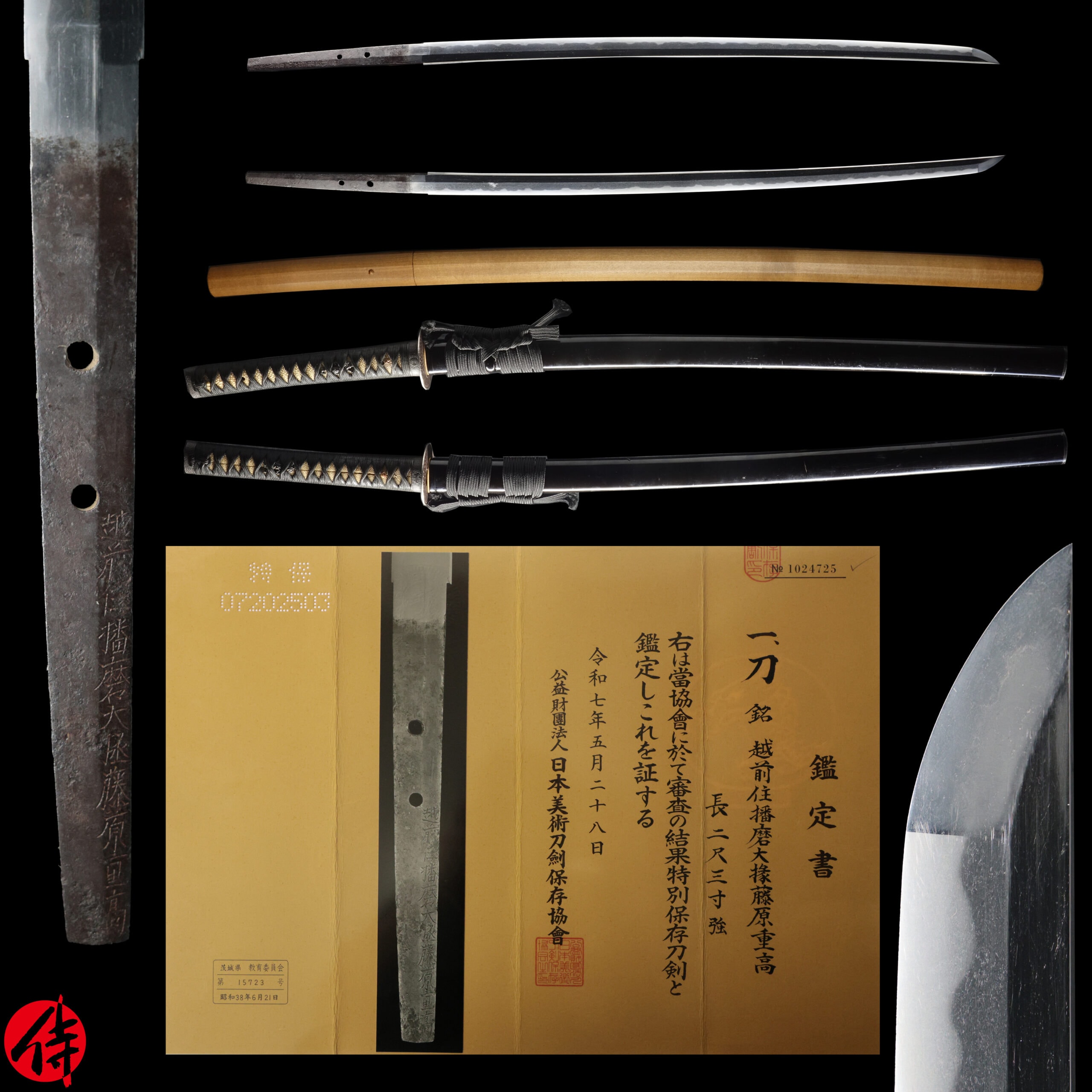
This blade is appraised as a Hozon Token(保存刀剣) issued by NBTHK(Nihon Bijutsu Touken Hozon Kyokai:日本美術刀剣保存協会). This authentication paper was only given to authentic Japanese swords, well preserved with artistic value.
【 Blade】
Cutting Edge Length(Nagasa)
:
69.2 cm(27.2 inches)
Curvature(Sori)
:
1.1 cm( 0.43 inches)
Hamon
:
The crystalline structure which forms along the cutting edge of a blade as a result of the hardening process
Jimon(Jihada)
:
visible steel surface pattern created by folding and hammering during forging process
Nakago
:
Nakago is the tang of the Japanese sword.
Japanese swordsmiths left the black rust on the tang because it prevents red rust while the tang is in its handle. And the discoloration of the tang was created over time, and it is a great indicator for a Japanese sword specialist to estimate when the sword was forged.
Koshirae:
Koshirae is the mounting of the Japanese sword. There are several parts that consist of Koshirae such as Saya(Scabbard), Tsuka( Handle), Tsuba(Handguard).
Fuchi-Kashira
:
A pair of matching sword fittings that cover the upper and bottom parts of its sword hilt.
Dragons are designed for this Fuchi Kashira. It looks some parts were initially colored with golden paint. Originally, the dragon is an imaginary creature found in ancient Chinese traditions or myths. Furthermore, it is regarded as a symbolic beast of auspicious signs. Its body is likened to nine animals: antlers are deer, the head is a camel, eyes are demons, the neck is a snake, belly is the Mizuchi (蛟, mythical animal in Japan which looks like a snake and have a horn and four legs), scales are fish, claws are falcons, palms are tigers, and ears are cows. It was thought that the dragon would reign at the top of all animals because of its odd-looking appearance.
Tsuka and Menuki
:
Tsuka is the handle of the Japanese sword and Menuki is its decoration.
Same as the Fuchi Kashira, this Menuki’s motif is also the dragon.