説明
Antique Japanese Sword Katana Attributed to Yoshikage (Shumei) with
Tokubetsu Hozon
Certificate
【Description】
Summary
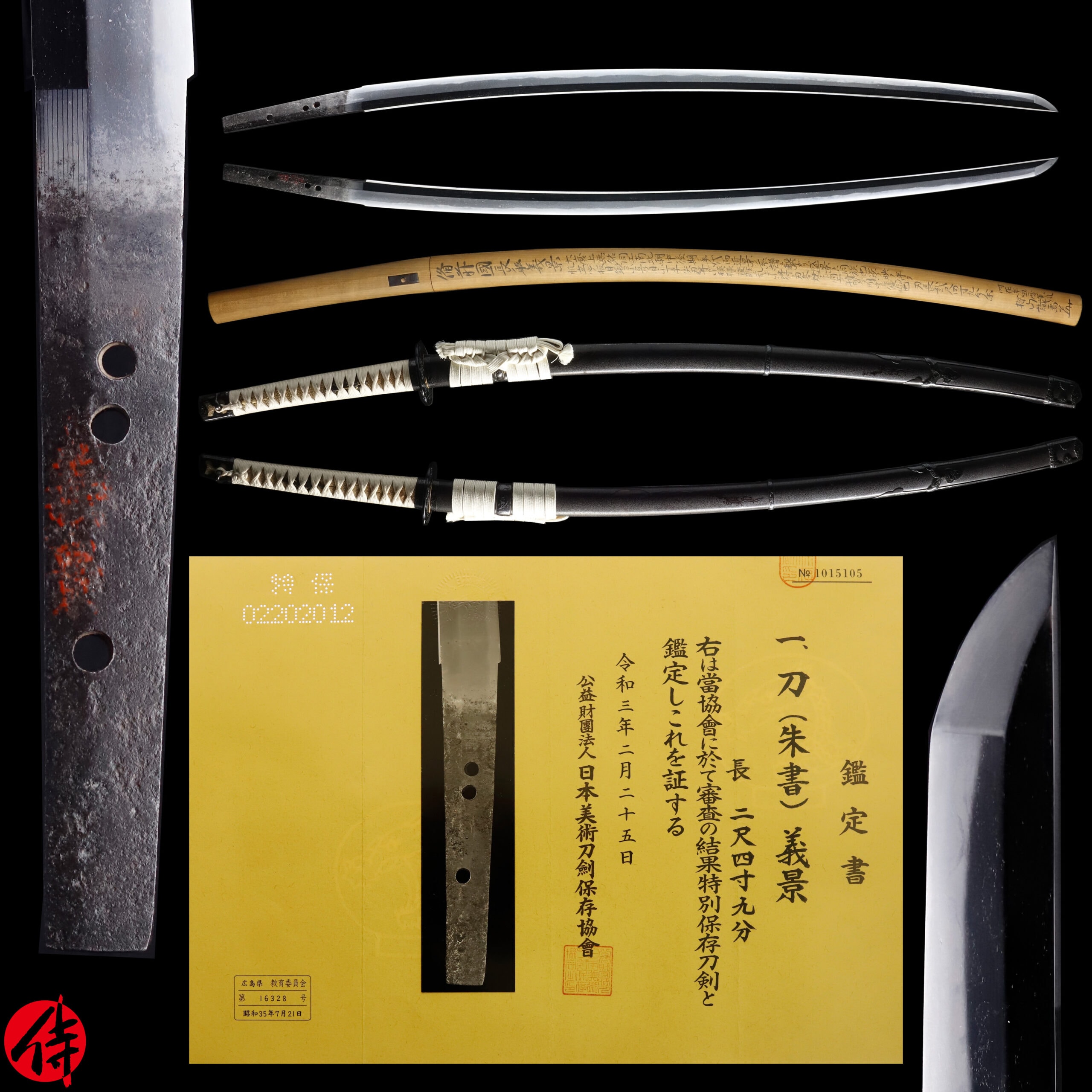
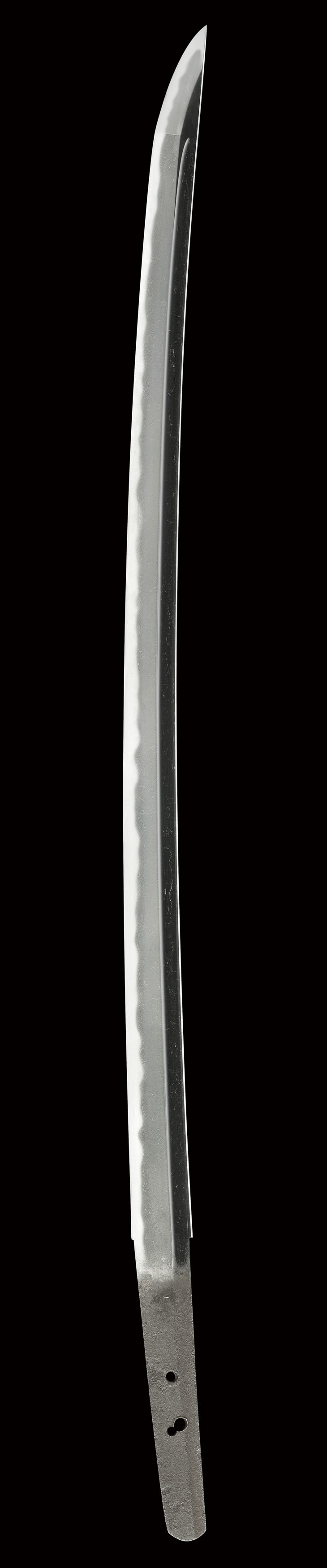
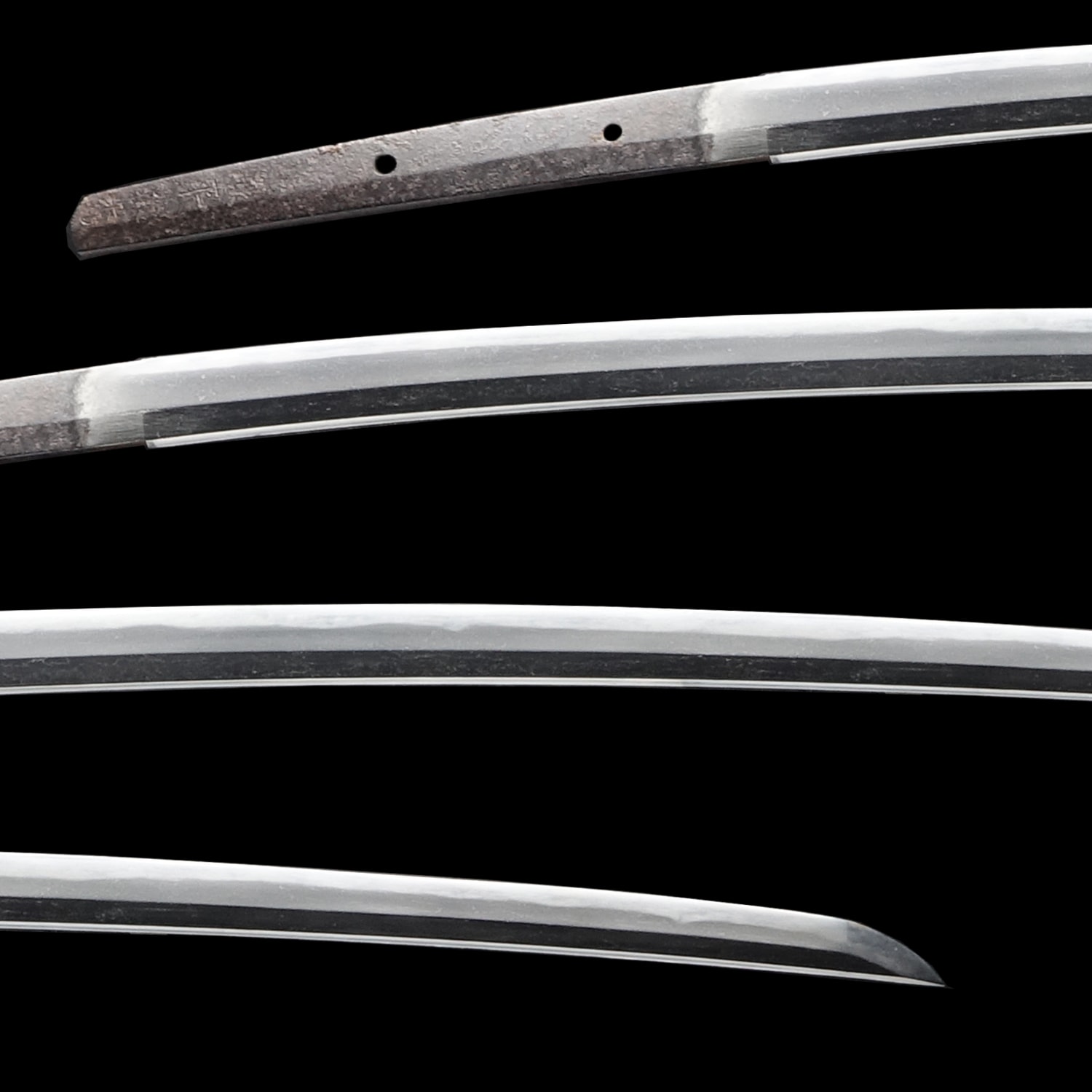
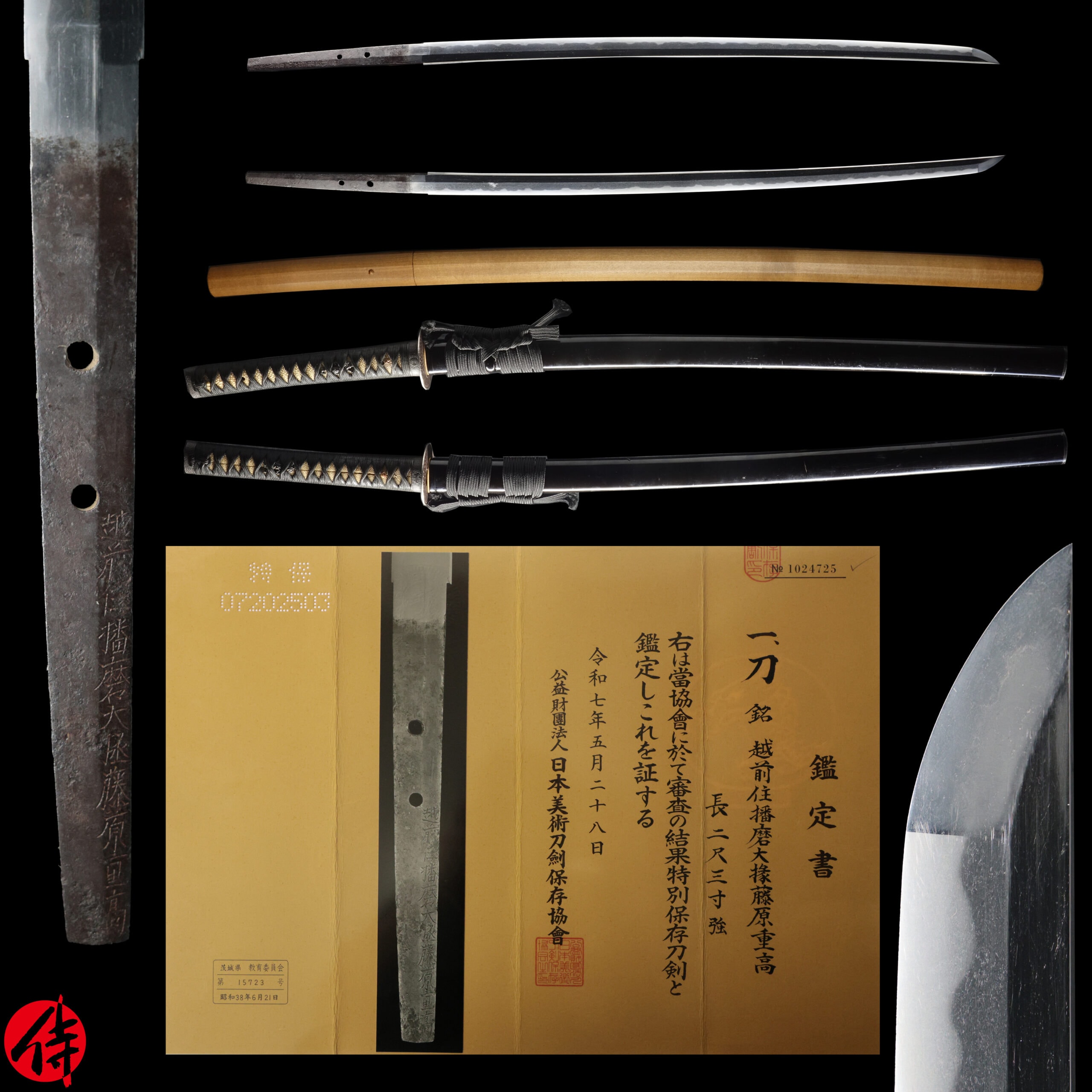
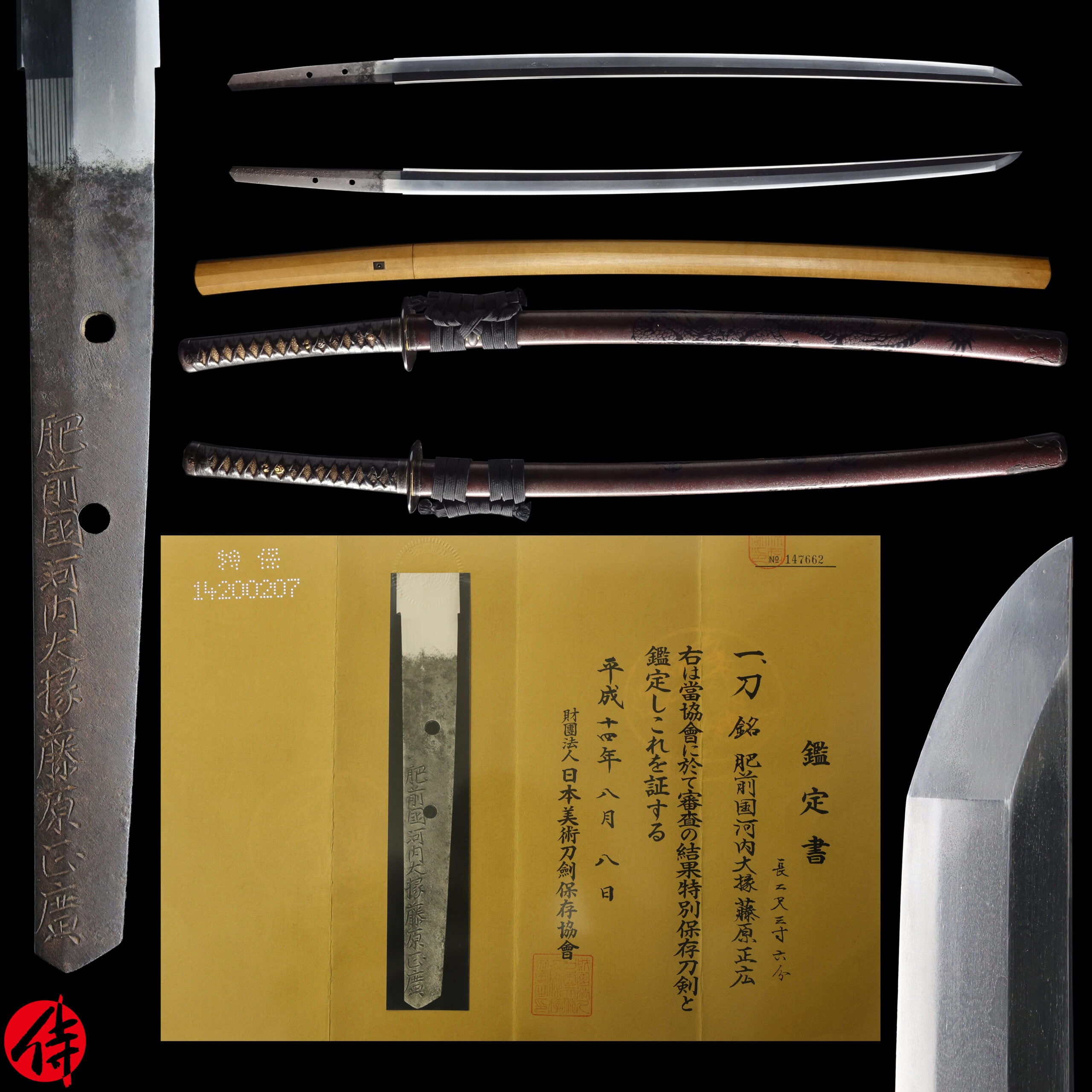
This blade was attributed to Yoshikage (義景), who was active during the mid-late Nabokucho period (Mid-Late 14th century) in Bizen province (Today’s Okayama prefecture).
There is a remaining *Shumei on the tang, which says Yoshikage (義景). There are many theories as to which he belonged to, among many Osafune schools. One of the most recent studies says that Yoshikage belonged to Osafune Chikakage (長船近景) school.
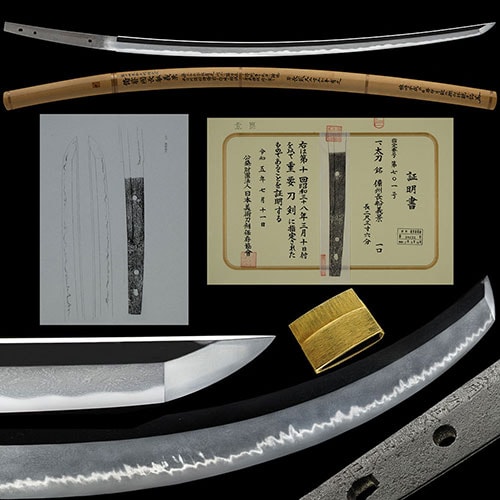
Osafune Chikakage was the head of the school and an apprentice of Nagamitsu, one of the most famous swordsmiths in Bizen province. There aren’t many remaining works created by Yoshikage because he dedicated his career to supporting his master. Nonetheless, Yoshikage’s artistry has been highly appreciated among Japanese sword experts, and one of the swords he signed is designated as an important cultural property of Japan. Yoshikage mastered *Soden Bizen traditions, a particular sword-forging technique. The maker’s name Yoshikage lasted two generations.
Osafune Chikakage school was active at around the same time as Kanemitsu school, one of the most famous branches among Osafune schools.
Kanetmisu invented the unique Japanese sword-forging technique called Soden Bizen, a combination of SOSHU Den and BIZEN DEN. The swords forged in Soden Bizen were very popular among Samurai back then. It is said that the swordsmiths who belonged to Chikakage school also mastered this unique technique.
When this blade was forged, Japan had a tumultuous time called the Nanbokucho period. The imperial court was split into two sides(south and north). There were so many conflicts, and the trend in battlefields among Samurai was to use a surprisingly long sword. This blade is long enough as it is but we assume it used to be quite a long sword based on the tang’s shape.
About Shumei
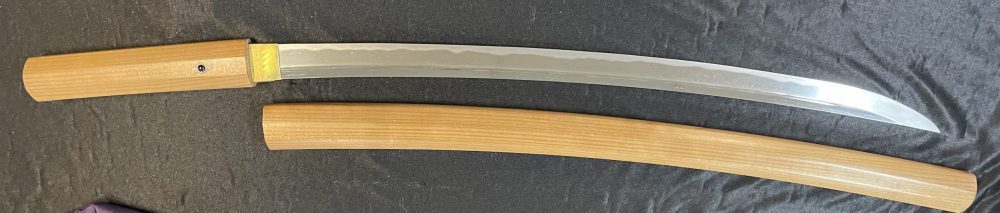
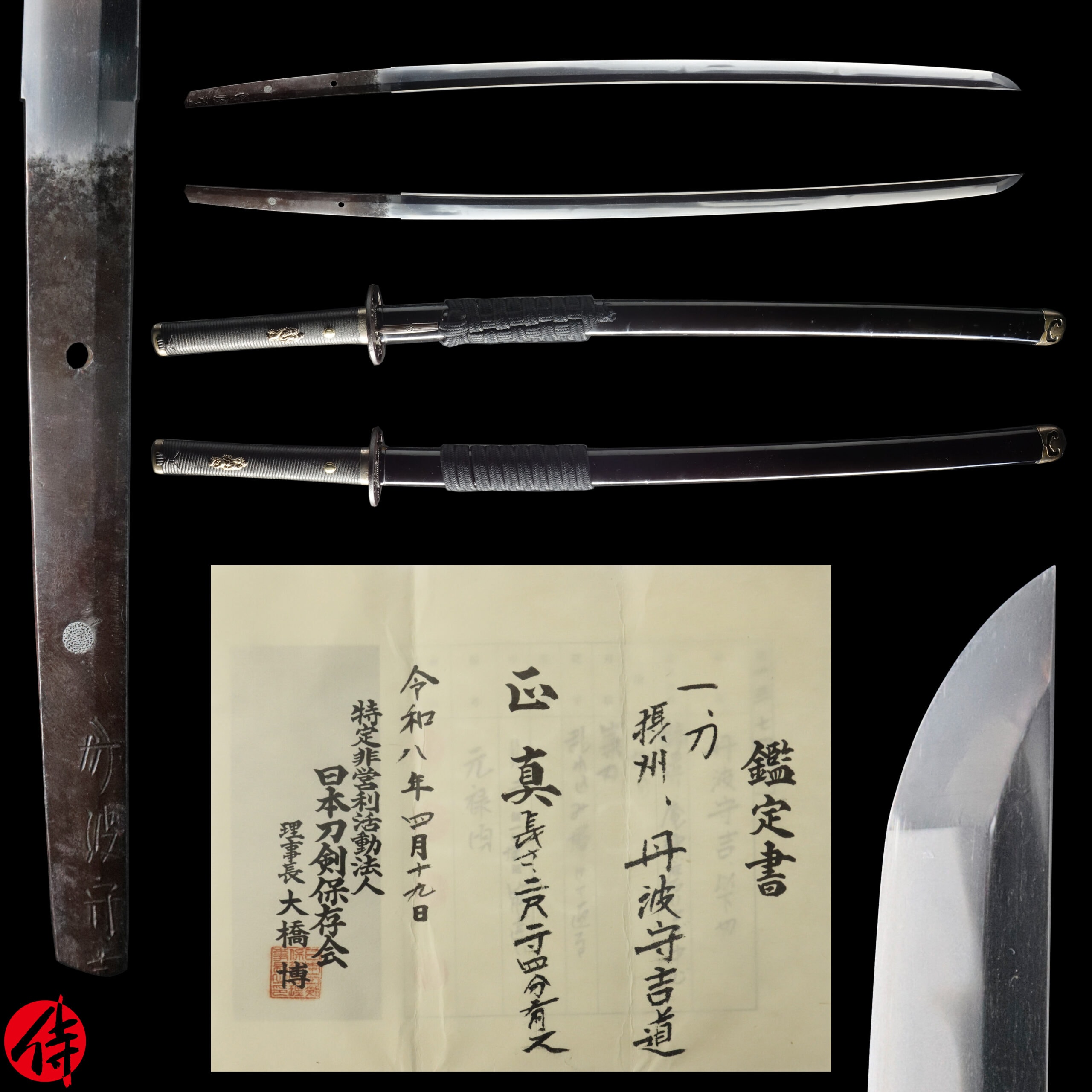
Shumei Mei is a signature made by an appraiser of Japanese swordsmiths during the Samurai era, especially during the Edo period. The appraiser painted the swordsmith’s name he attributed to an unsigned blade in red. Shu means Japanese red and Mei means signature. NBTHK agreed with this Shumei and issued a Tokubetsu Hozon paper. There is also a Sayagaki, another form of authentication on a Shirasaya (plain wooden case).
This History of Bizen Osafune School
It is said that Osafune school was founded by Mitsutada (光忠), who was active during the mid-Kamakura period. Bizen Osafune school was the biggest one of all other schools in Bizen province, and they received many orders from feudal lords or renowned Samurai. They were called Osafunemono and beloved by Samurai warriors.
Among the swordsmiths who belonged to this school, Nagamitsu, Sanenaga, and Kagemitsu are known as Osafune Sansaku, the three renowned Osafune swordsmiths. There are also four other prominent swordsmiths who were from Bizen Osafune school. They are called Osafune Shiten-no, the four masters of Osafune school. Their names are Nagamitsu, Kanemitsu, Nagayoshi, and Motoshige.
BIZEN is located near the Chugoku Mountains, where iron sands, one of the essential materials for making Japanese swords, were abundant. Furthermore, BIZEN swordsmiths had close access to Yoshi River, where they could find water and charcoal. This geological location contributed to the swordsmiths forging high-quality refined blades. We presume BIZEN was quite active in sword-forging from ancient times. It is said that BIZEN DEN was created by groups of swordsmiths there during the late Heian era (Late 12th century ). These ancient swordsmiths in Bizen province are called Ko-Bizen (Old Bizen) swordsmiths. By inheriting the sword forging techniques from Ko-Bizen swordsmiths, the Bizen Osafune school flourished from the mid-Kamakura period.
This blade comes with a beautiful Handachi Koshirae (half Tachi style sword mounting). We are confident this Koshirae will enhance an experience of appreciating this magnificent blad