二十世紀は二度この工芸を殺しかけた。戦時の歪みと、占領下の禁令である。1948年の日刀保設立と1953年の作刀再開が刀を美術として再建し、人間国宝と無鑑査がその頂に立つ。
 NihontoWatchNihontoWatch
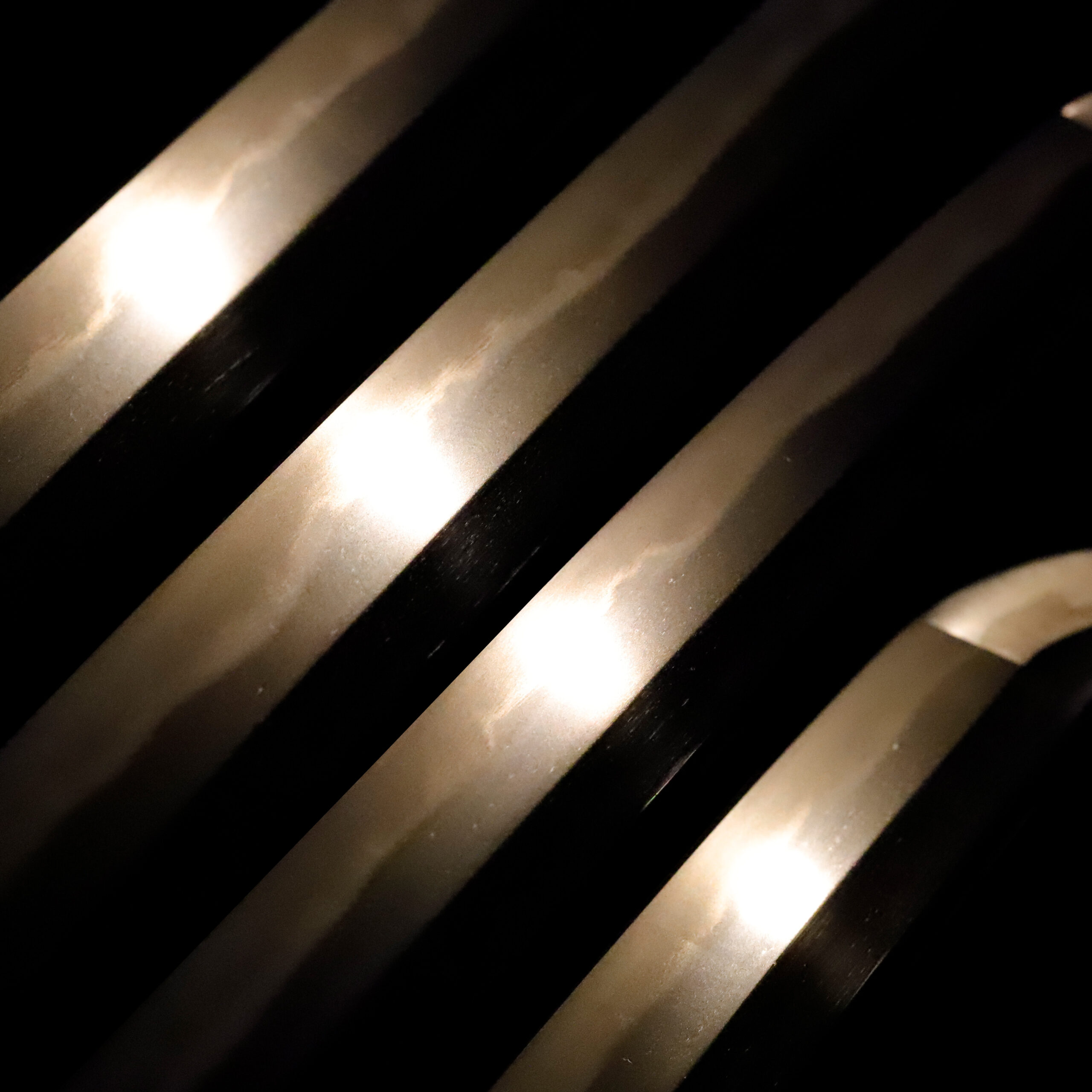
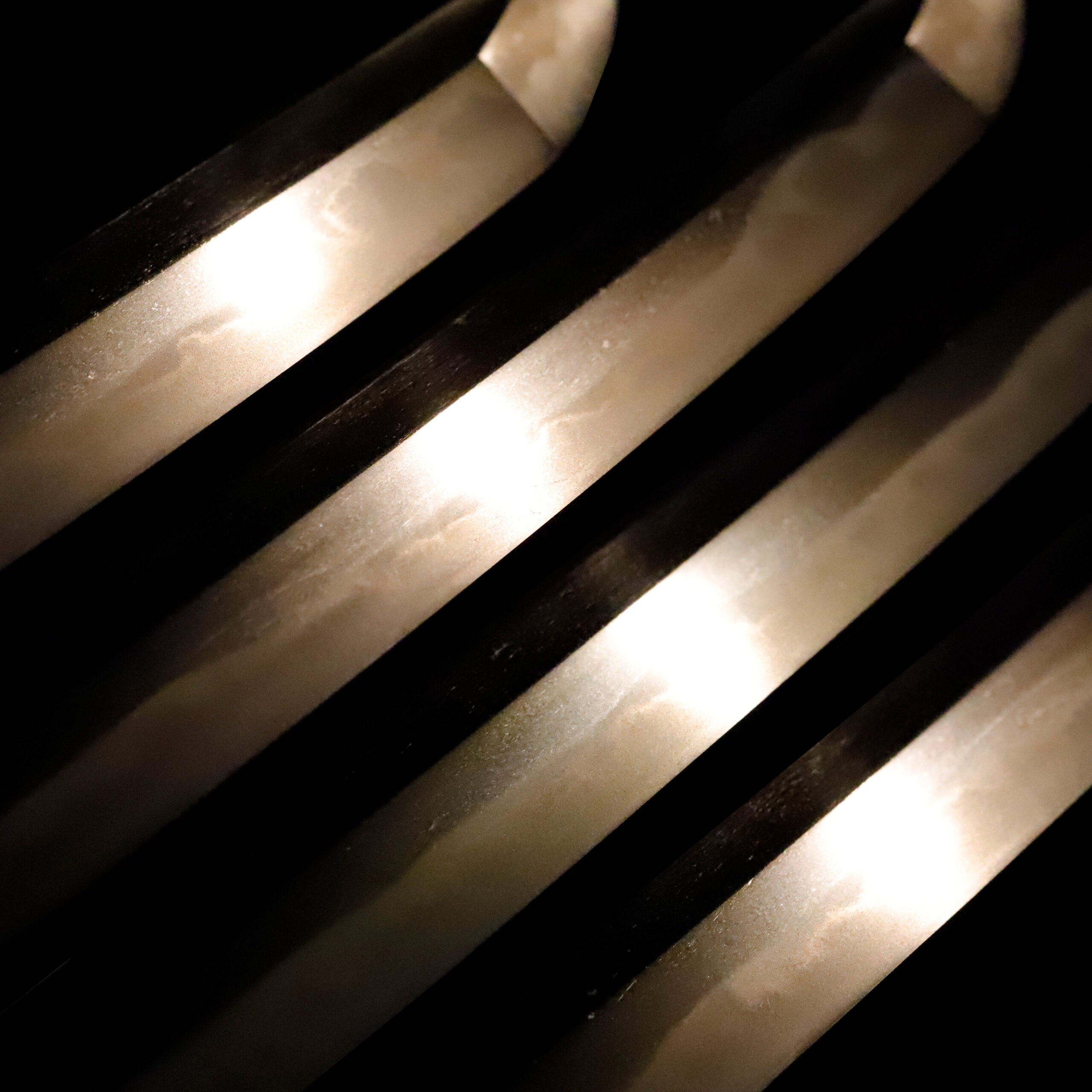
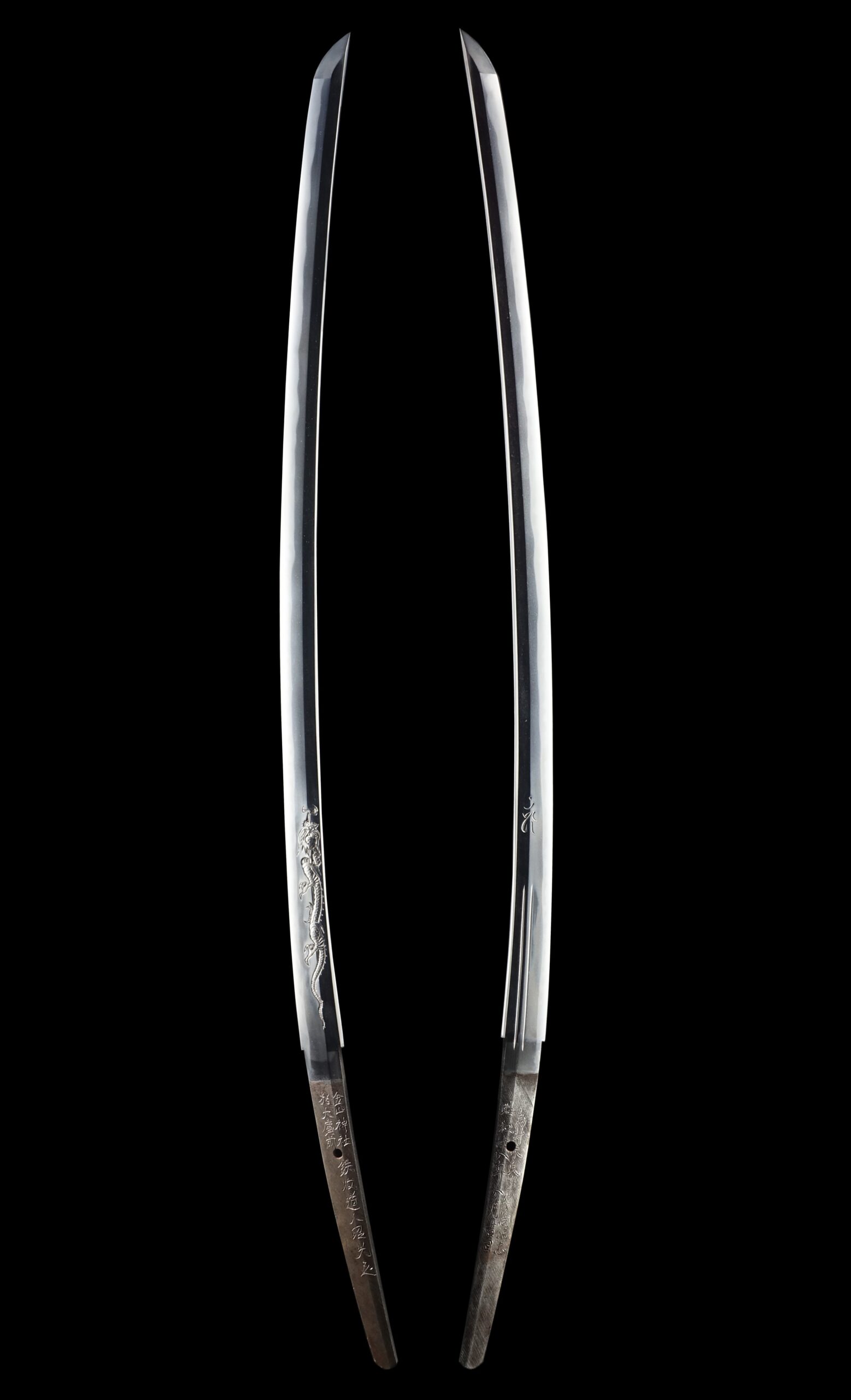
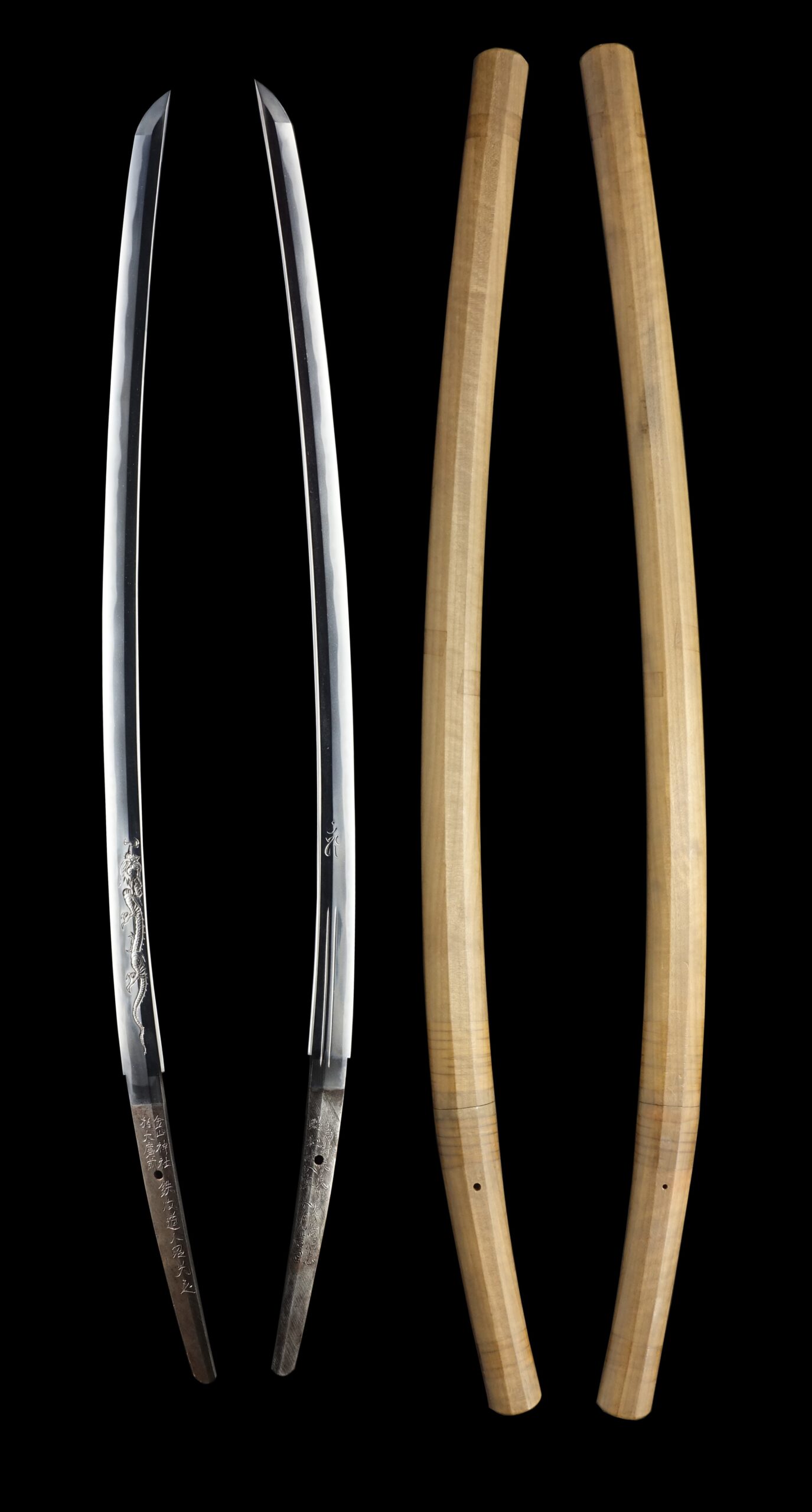
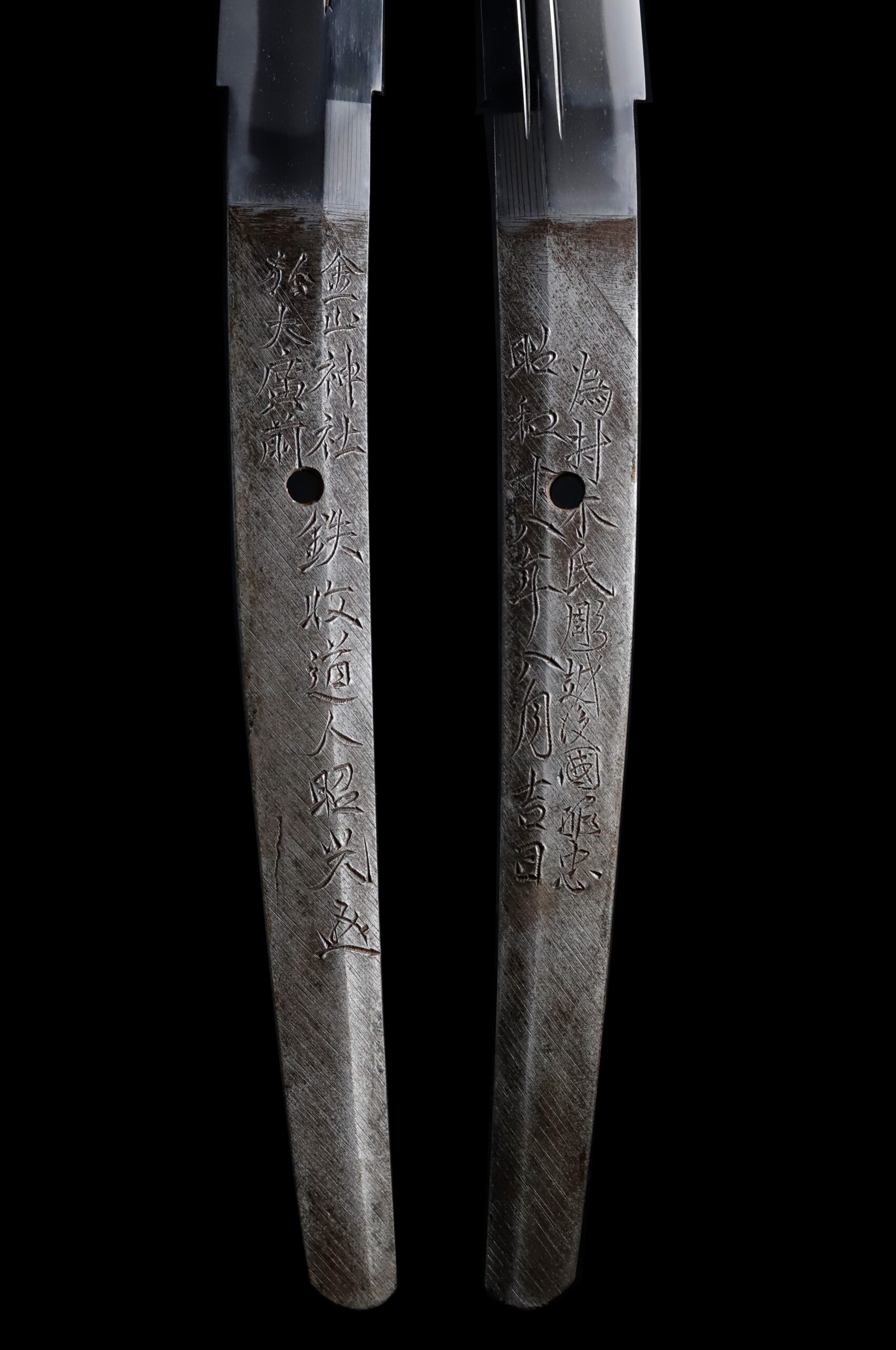
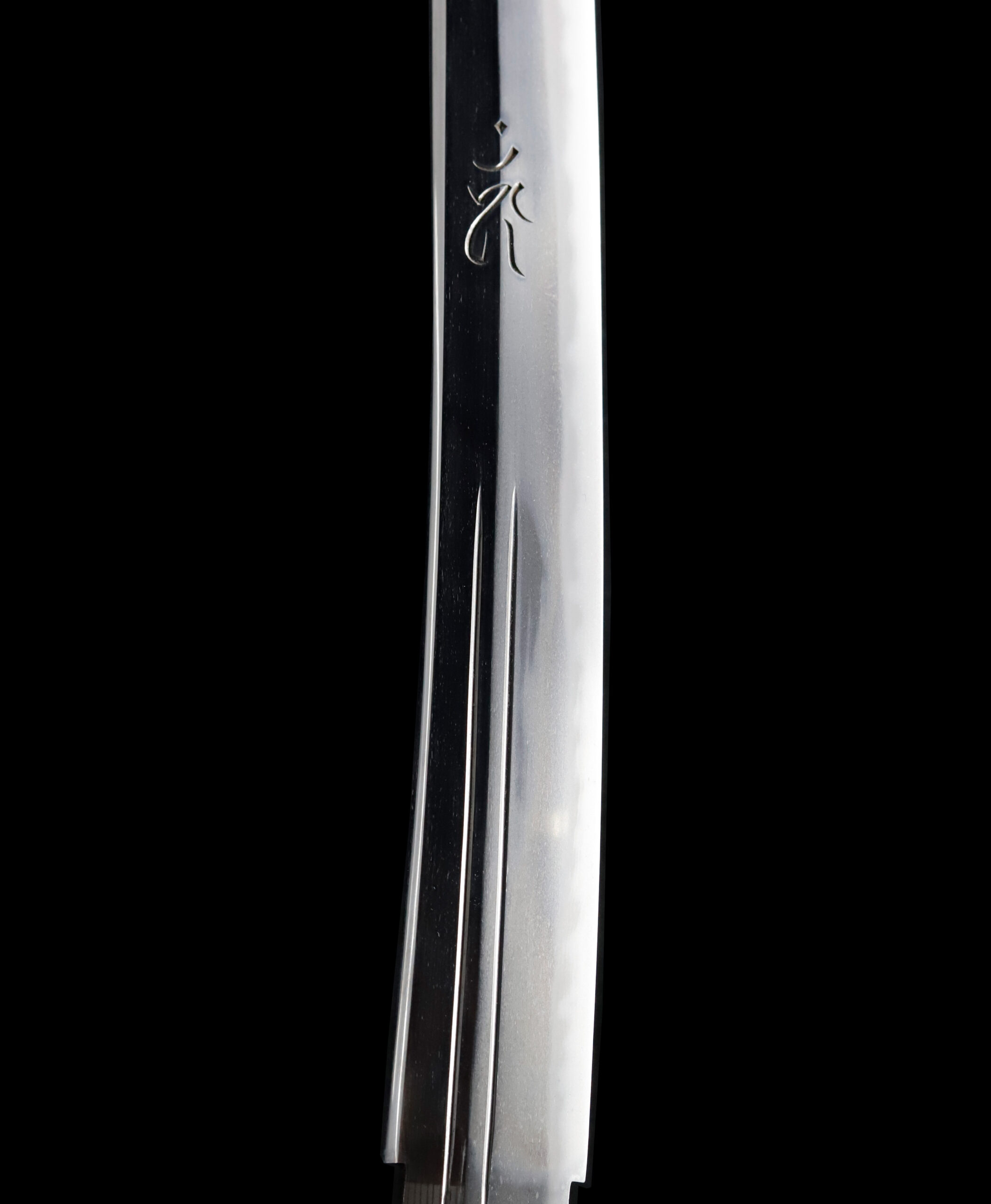
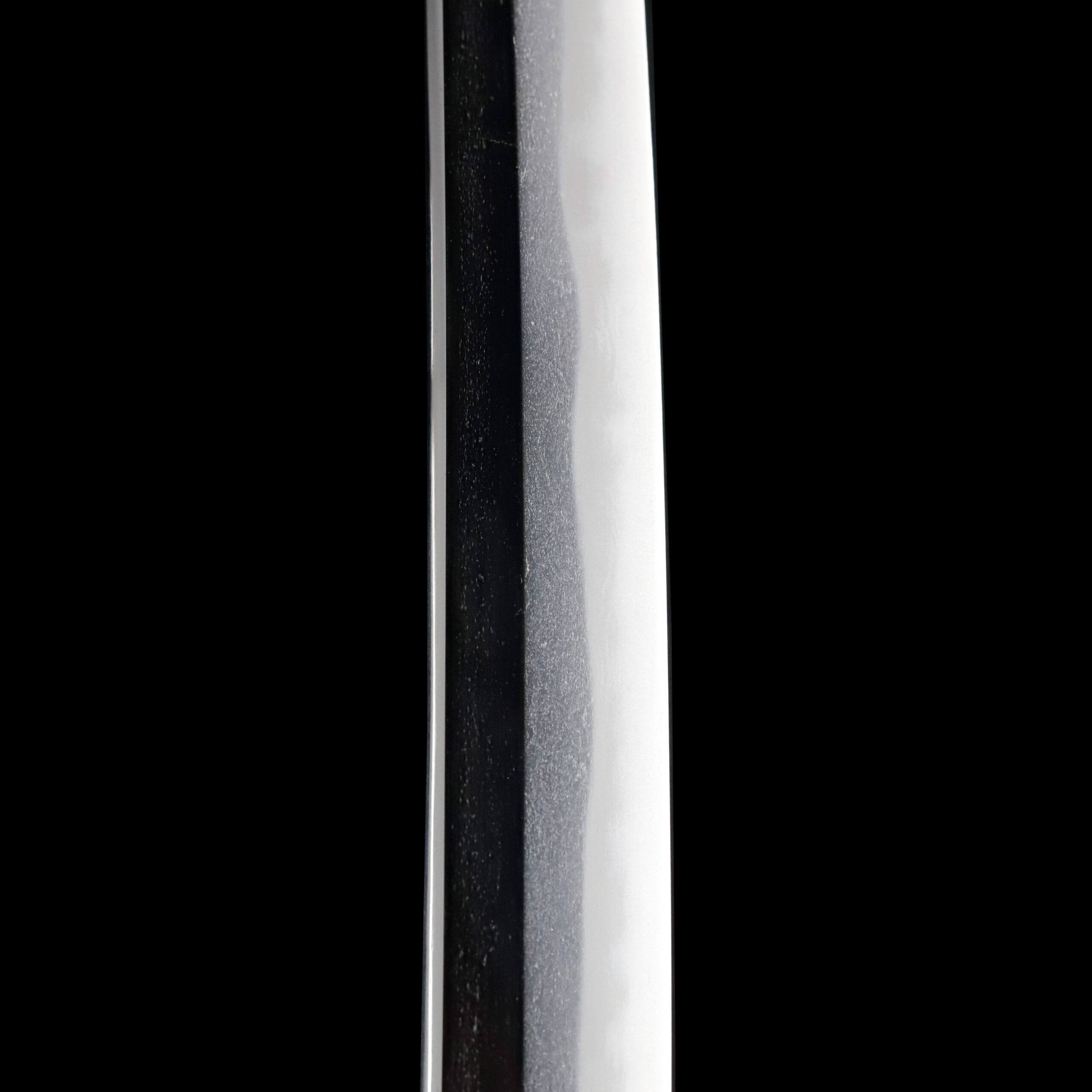
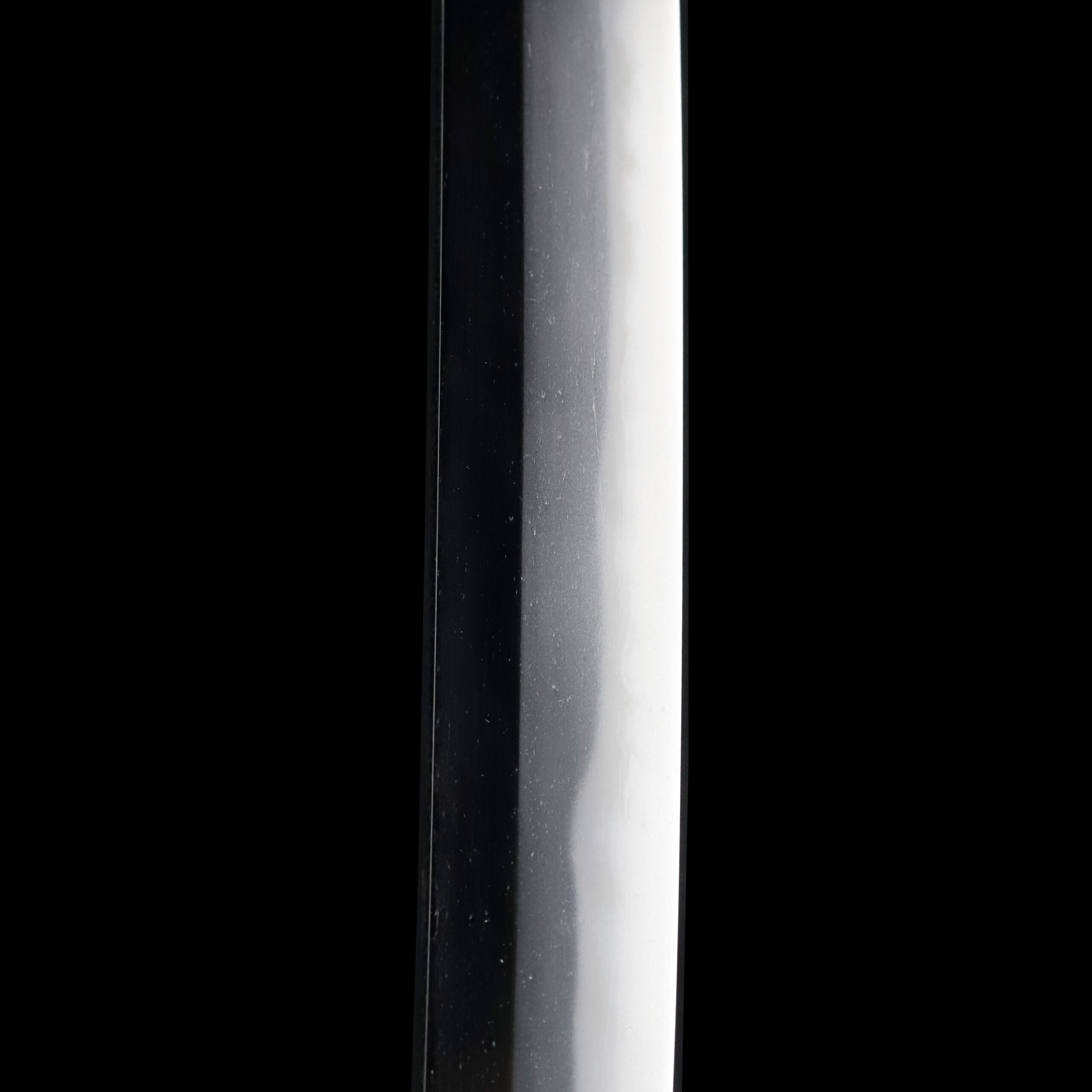
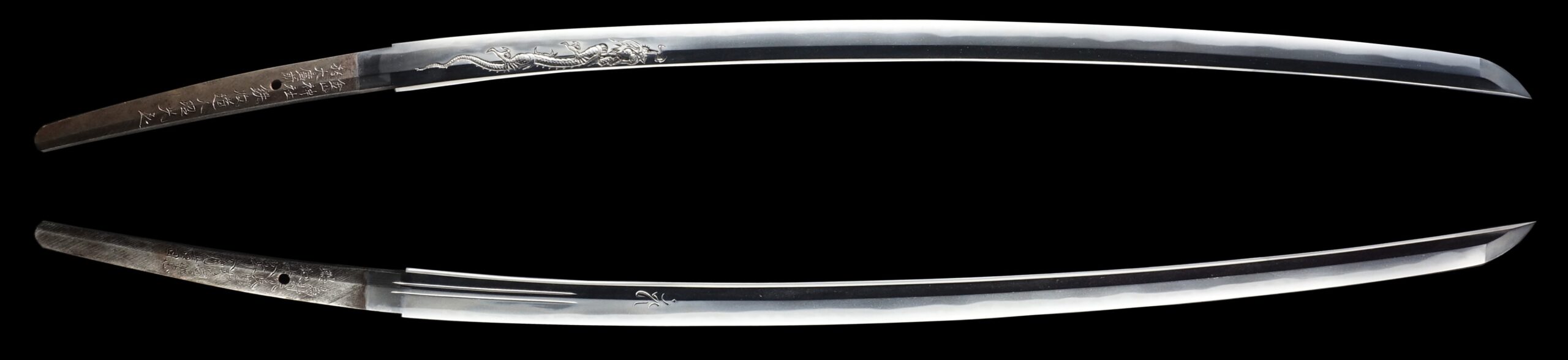
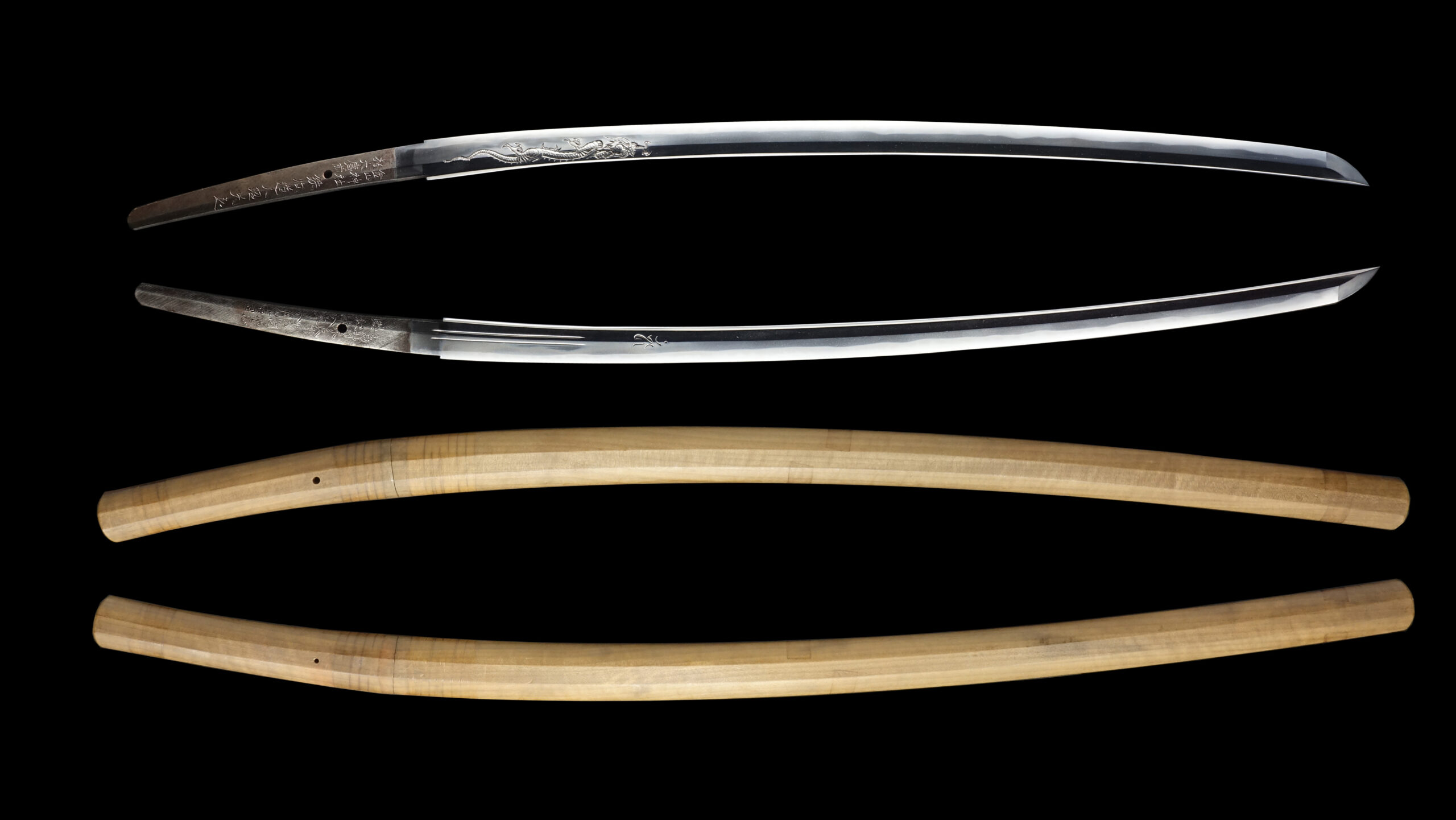
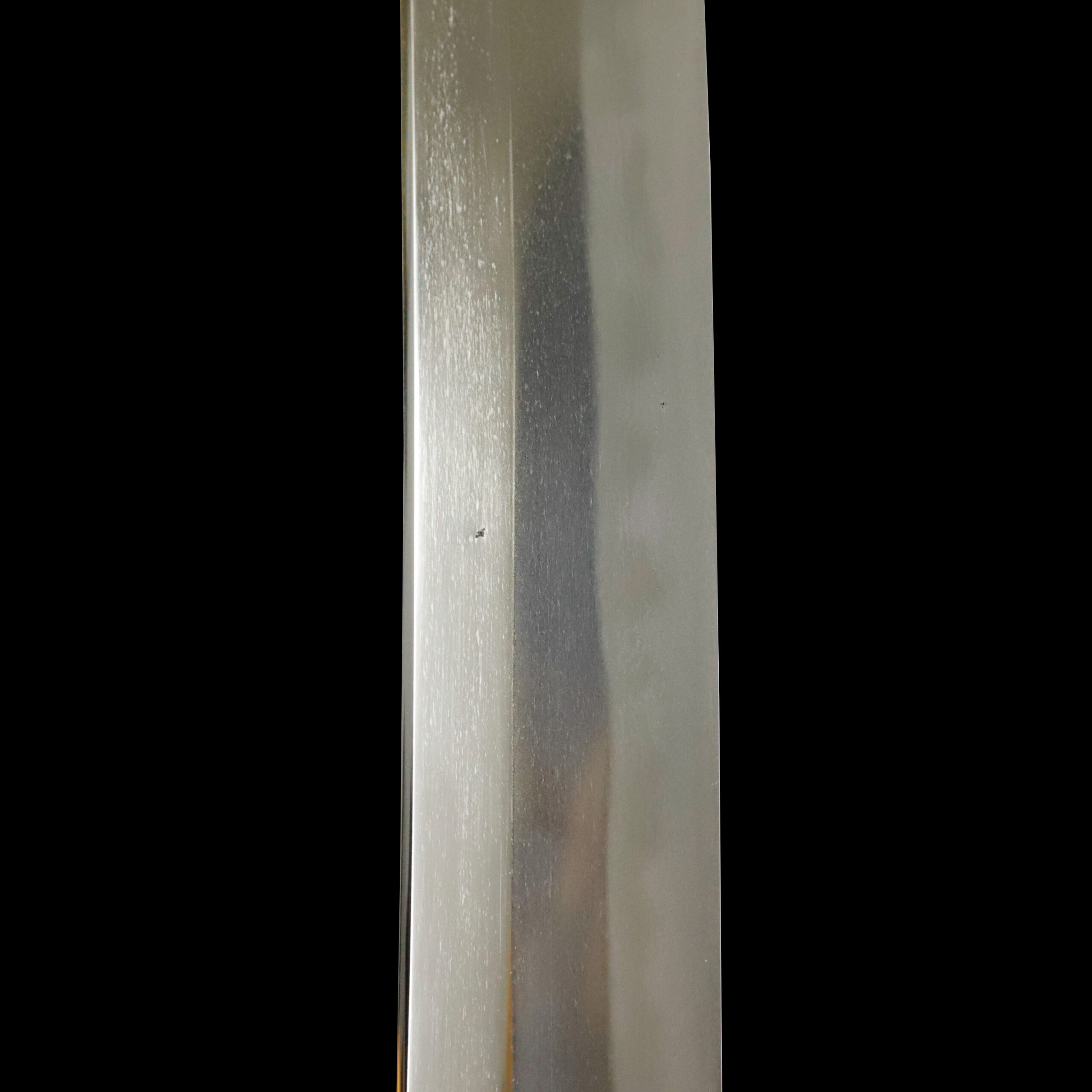
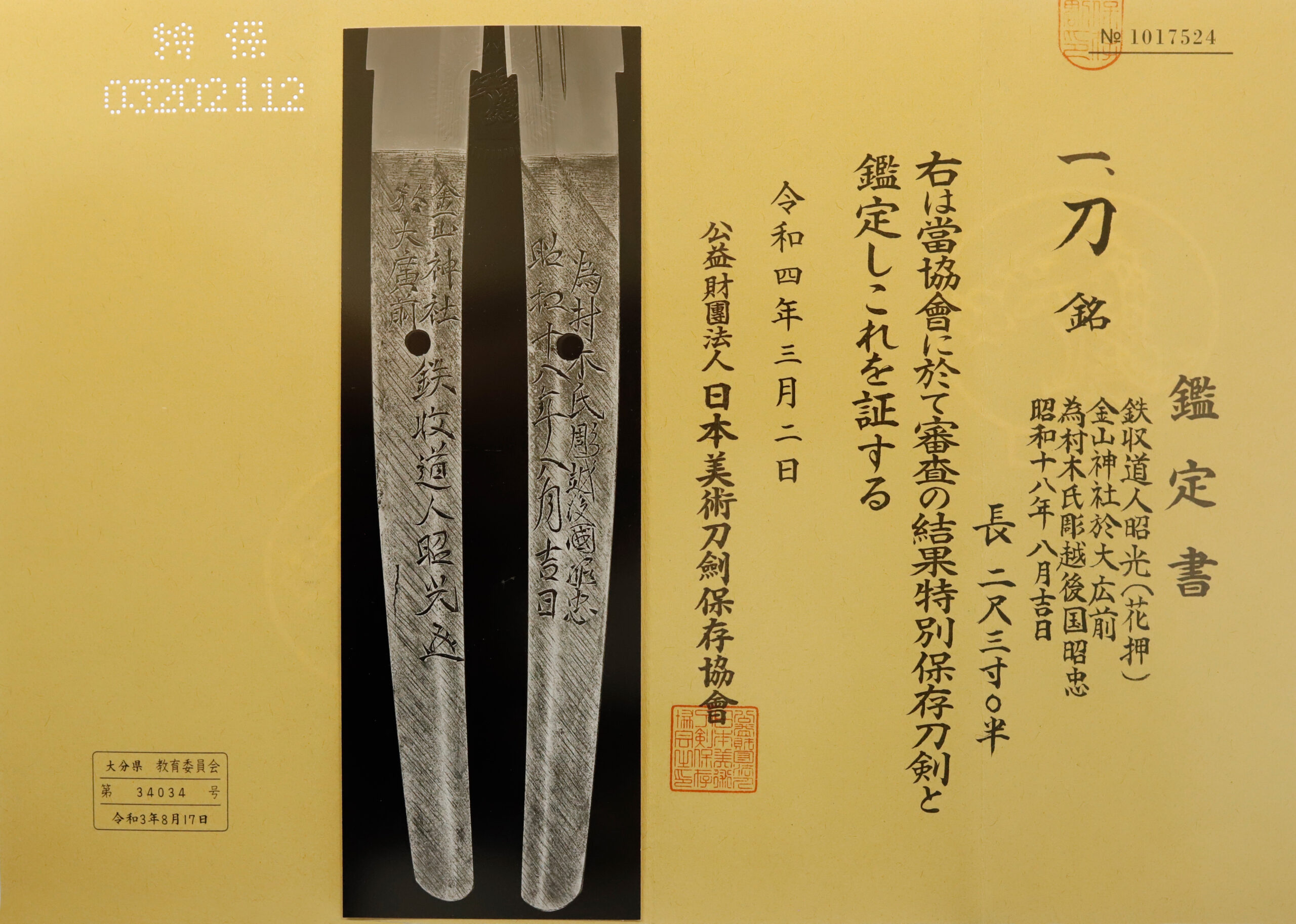
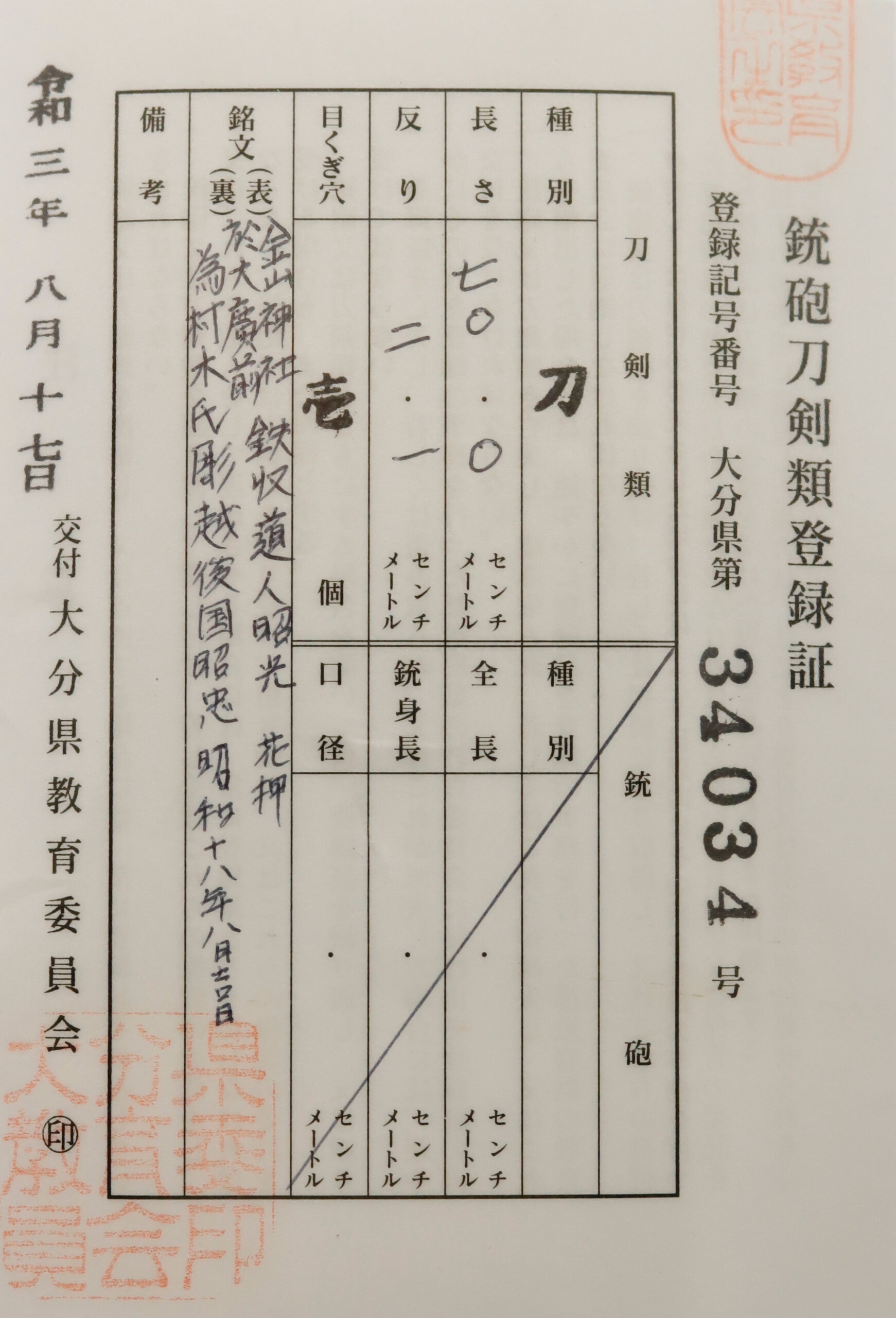
Summary This blade was signed by Tesshū Dōjin Akimitsu (鉄収道昭光) in the 18th year of the Showa era (1943). While Akimitsu forged the blade, the engraving was done by Echizen Koku Akitada (越前国昭忠). They worked for the same master named Kurihara Hikosaburo Akihide. And they collaborated often in their career. Akitada was famous for creating intricate Horimono (engraving) and Tsubas (handguards for the Japanese sword). Akimitsu was born in Niigata prefecture in the 38th year of the Meiji era (1905). His birth name was Igarashi Masaji. He was one of the most renowned modern swordsmiths in the early Showa era. Before World War Ⅱ, he received multiple awards for his excellent craftsmanship. During World War Ⅱ, he worked as Rikugun Jyumei Tosho(陸軍受命刀匠), which was the title given by the Japanese military to skilled Japanese swordsmiths during Taisho-the early Showa period. To receive this title, a swordsmith forged two swords and submitted them to the governmental agency that produced weapons. After passing the particular and rigorous exam there, the swordsmith would be acknowledged as Rikugun Jyumei Tosho. We assumed he primarily forged swords for the Japanese military before and during World War Ⅱ. Horimono (Engraving) A dragon is beautifully engraved on one side. Initially, the dragon was an imaginary creature found in ancient foreign traditions or myths. Furthermore, it is regarded as a symbol of auspicious signs. Its body is likened to nine animals: antlers are deer, the head is a camel, eyes are demons, the neck is a snake, belly is the Mizuchi (蛟, a mythical animal in Japan that looks like a snake and has a horn and four legs), scales are fish, claws are falcons, palms are tigers, and ears are cows. It was thought that the dragon would reign at the top of all animals because of its odd-looking appearance. The other side also has Horimono(the inscription) of Sanscrit letter that means Fudo Myo-O, who is one of the objects of worship in Buddhism. According to a theory, it is the incarnation of Dainichi Nyorai (大日如来, Mahāvairocana, the principal image of esoteric Buddhism). This blade is appraised as a Tokubetsu Hozon Token(特別保存刀剣) issued by NBTHK(Nihon Bijutsu Touken Hozon Kyokai:日本美術刀剣保存協会). Authentication Paper They authenticated the blade on March 2nd in the 4th year of Reiwa (2022). They appraised it as Tokubetsu Hozon Touken, the blade especially worth preserving for Japanese society.

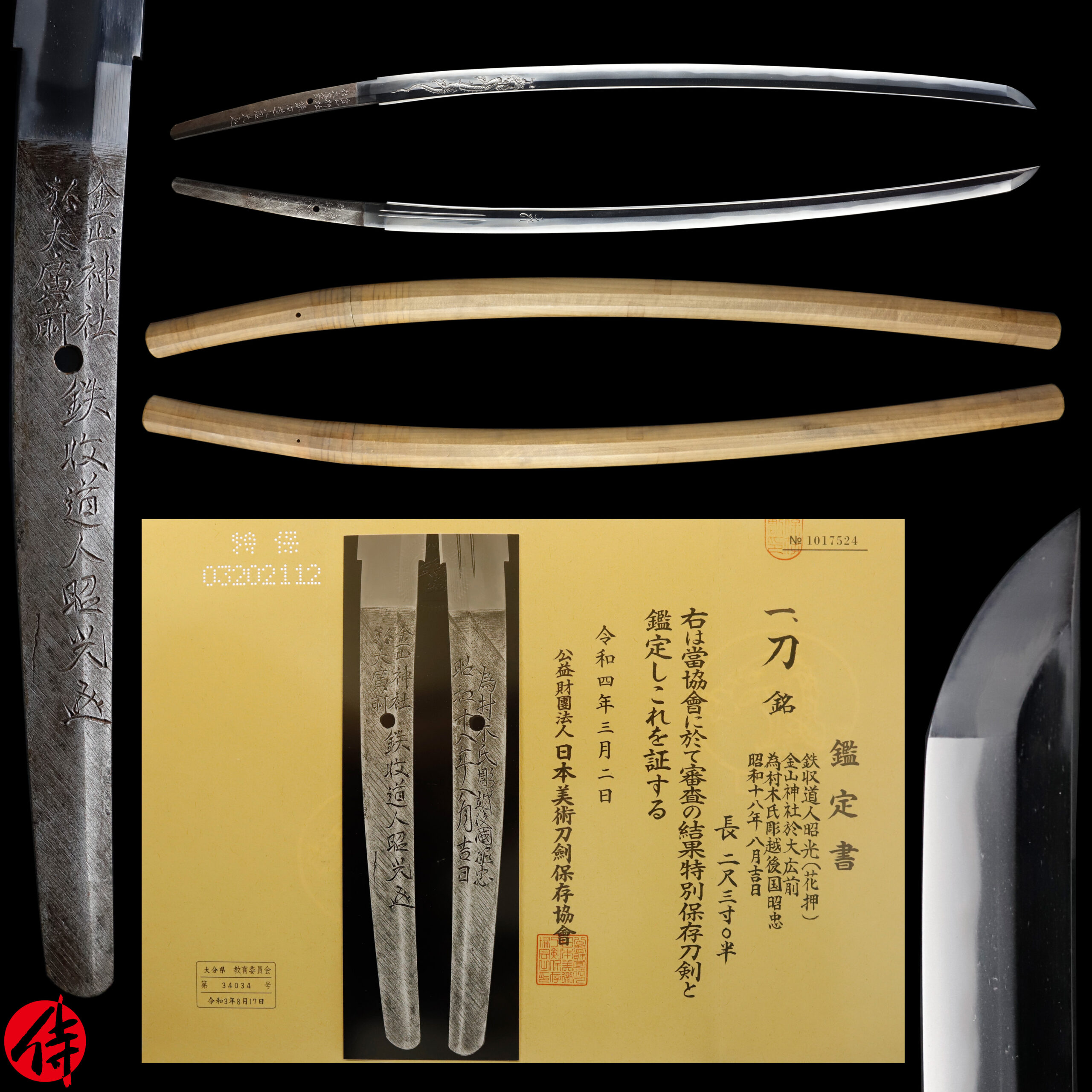
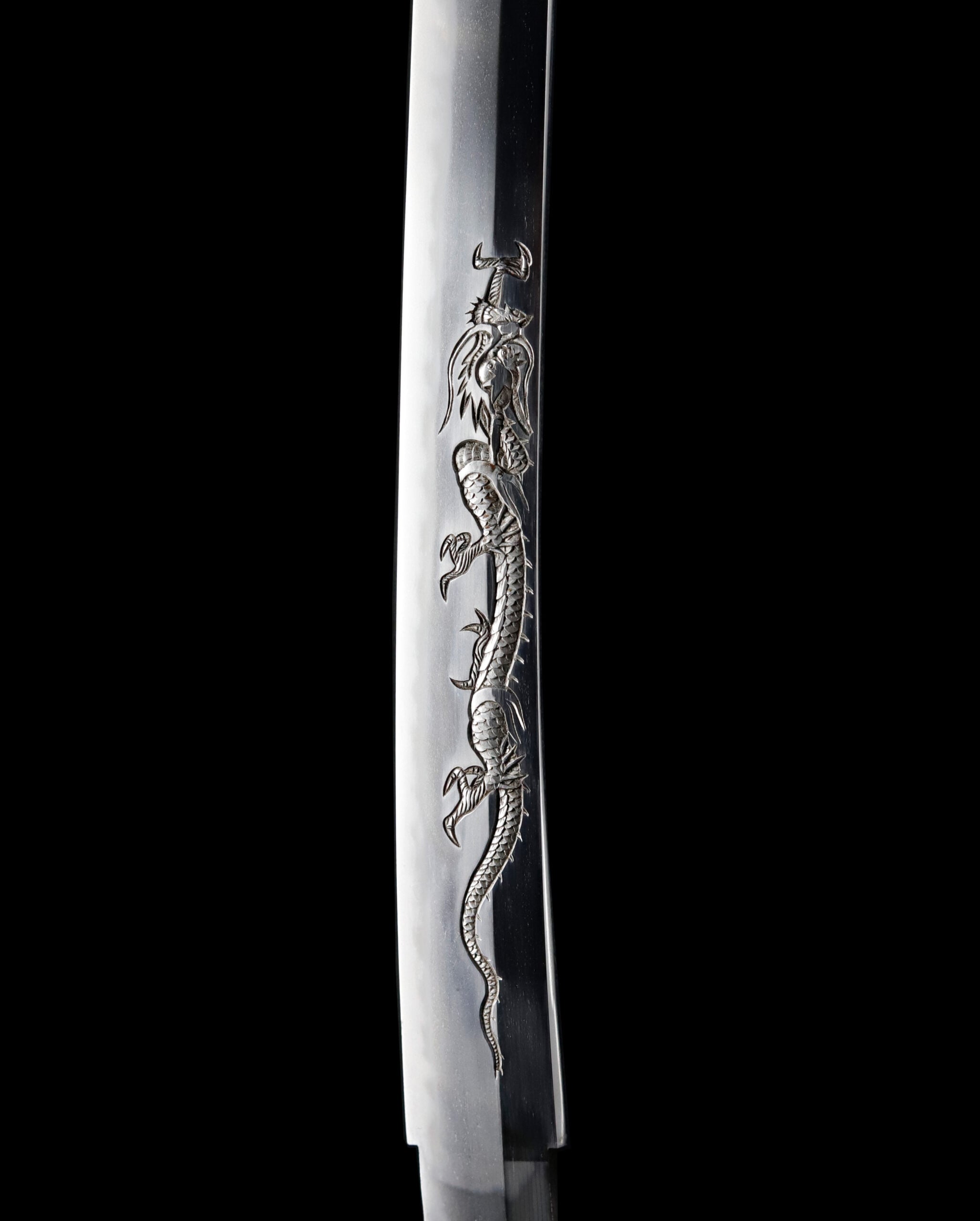
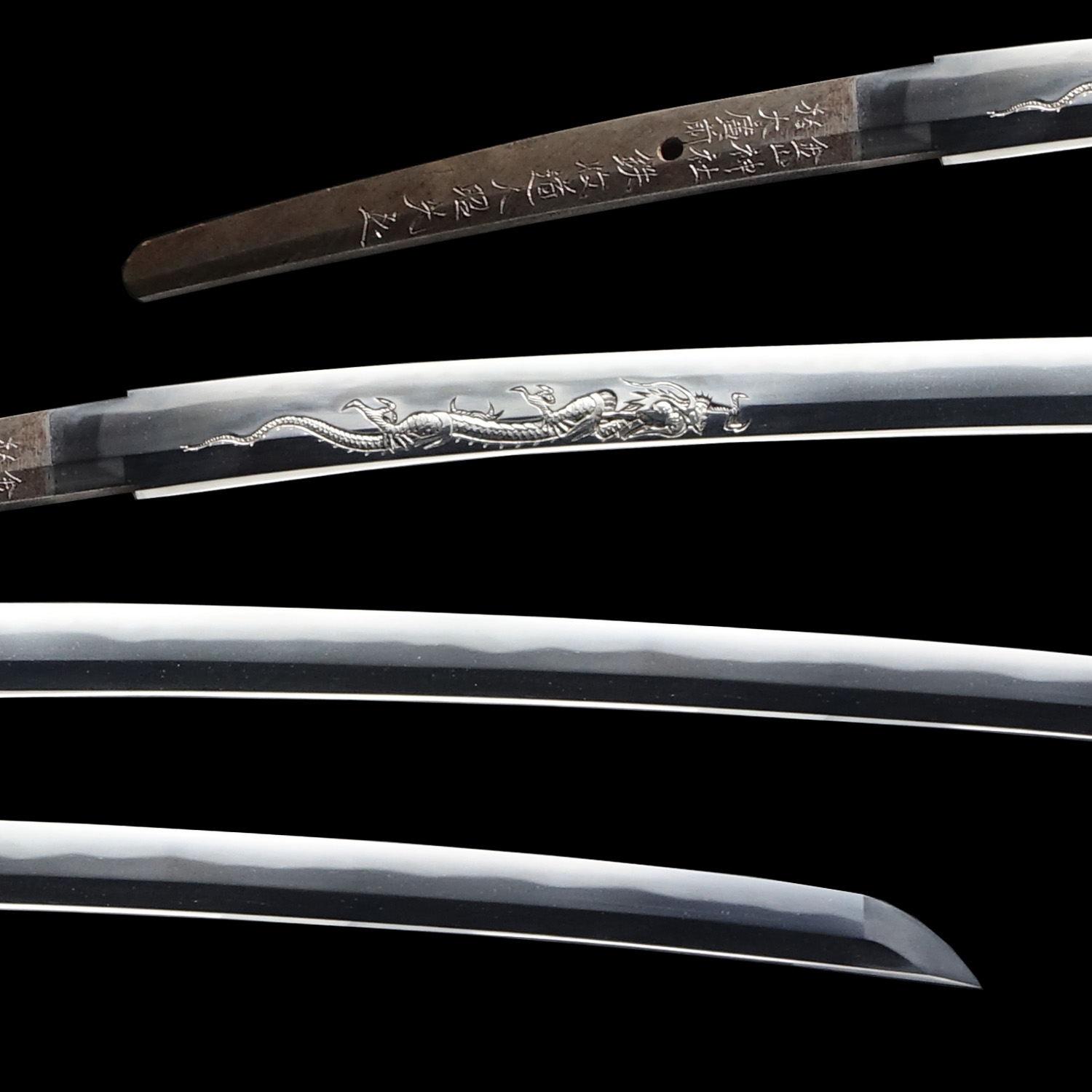
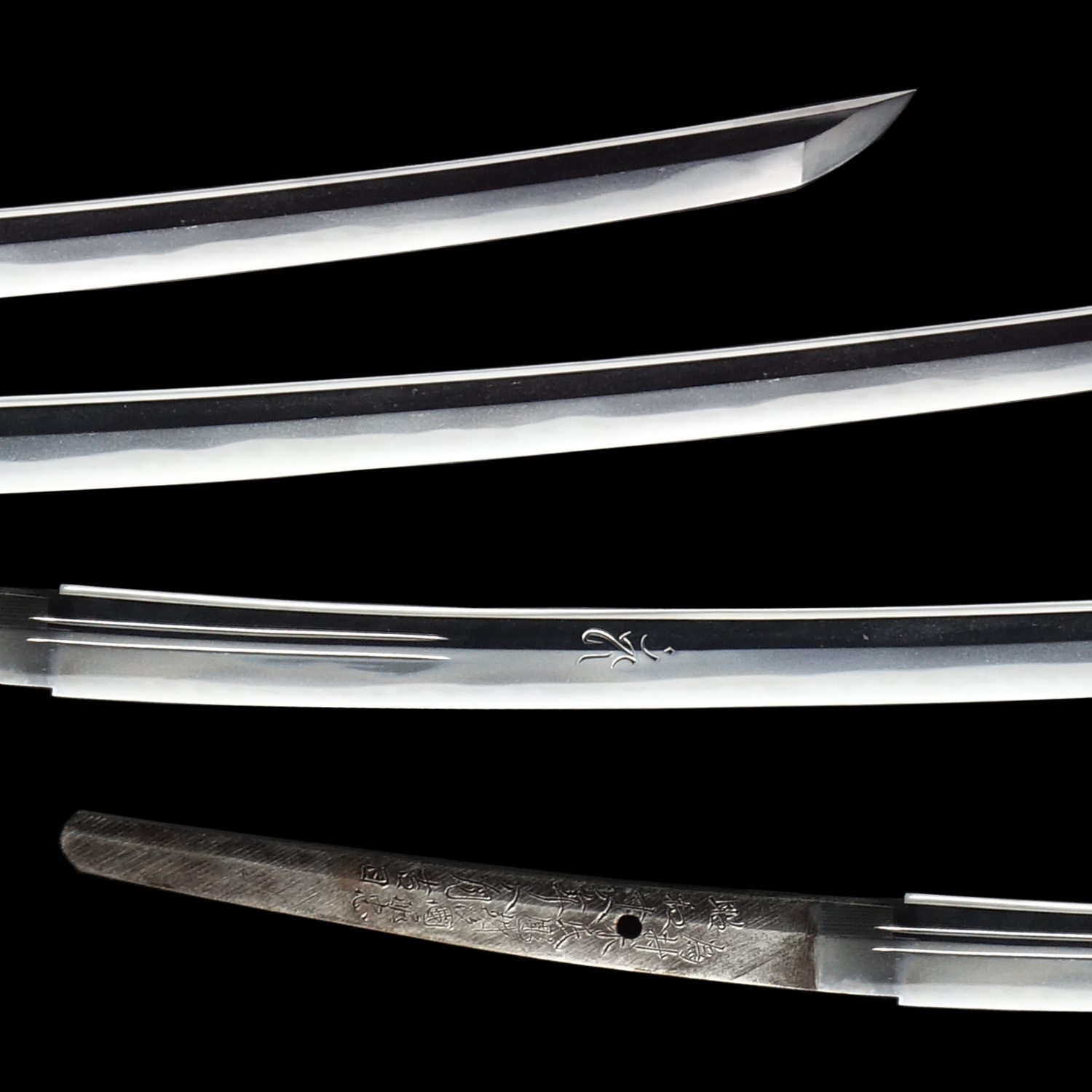
販売店の記載のまま
Niigata · 1926-1989頃
刀剣大鑑 上位100%
現在1点販売中
昭和から現代へ 断絶と再生
二十世紀は二度この工芸を殺しかけた。戦時の歪みと、占領下の禁令である。1948年の日刀保設立と1953年の作刀再開が刀を美術として再建し、人間国宝と無鑑査がその頂に立つ。
保存刀剣のうち、出来が一層優れ、保存状態も良好と認められたものです。再刃や、室町・江戸期の多くの無銘作は対象外となり、保存刀剣より高い基準が課されます。
日本美術刀剣保存協会(NBTHK)は、1948年に設立され、文化庁の監督を受ける公益財団法人で、東京・刀剣博物館に本部を置きます。専門の審査員が出品作を直接審査し、美術的・歴史的価値に応じた鑑定書を発行します。NBTHKの鑑定書は、日本刀および刀装具の真正性を示す最も広く認知された基準です。
NBTHK公式サイトReturns/exchanges limited to defects caused by shipping (except willful misconduct or gross negligence by the company); customers must contact within 72 hours of receiving the product.