説明
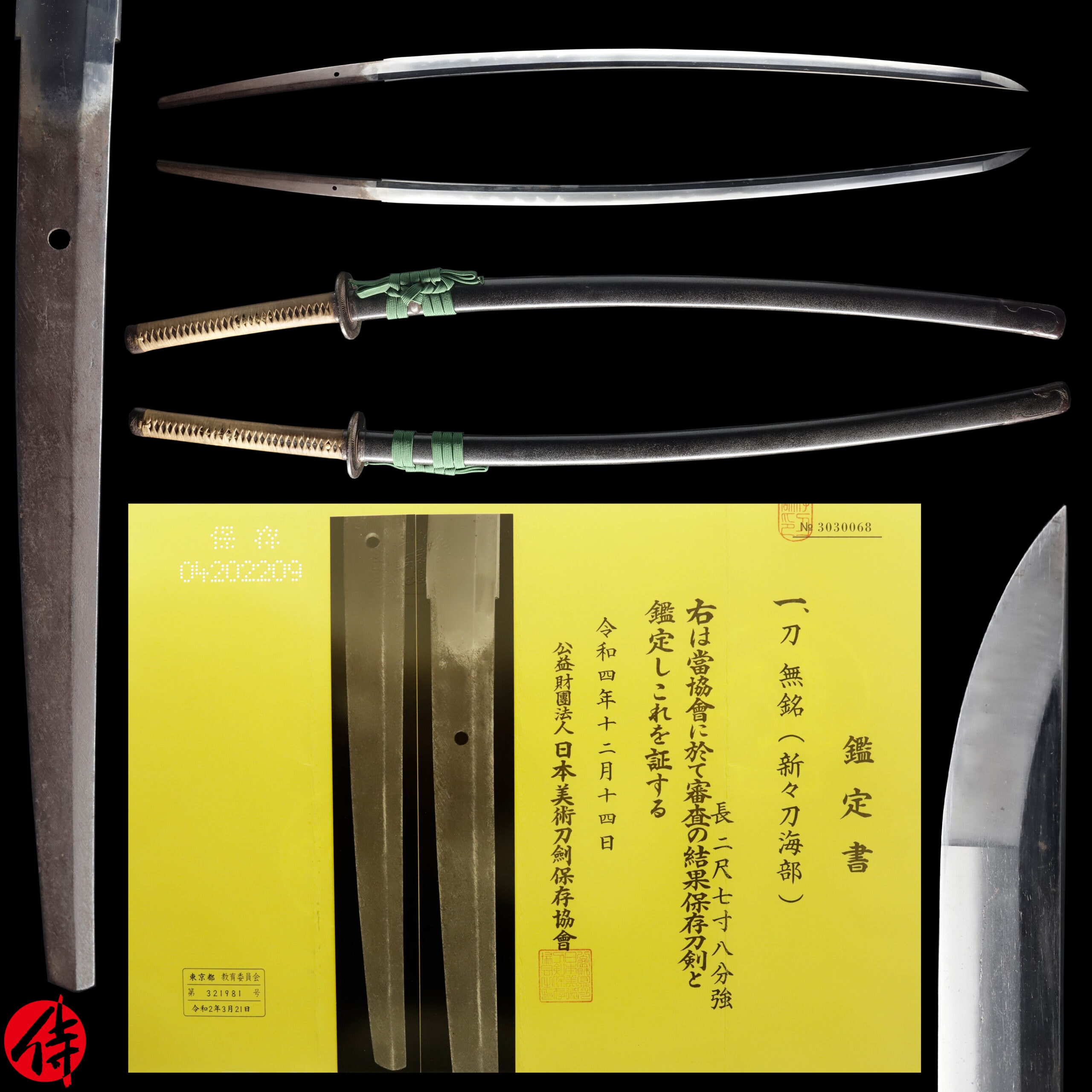
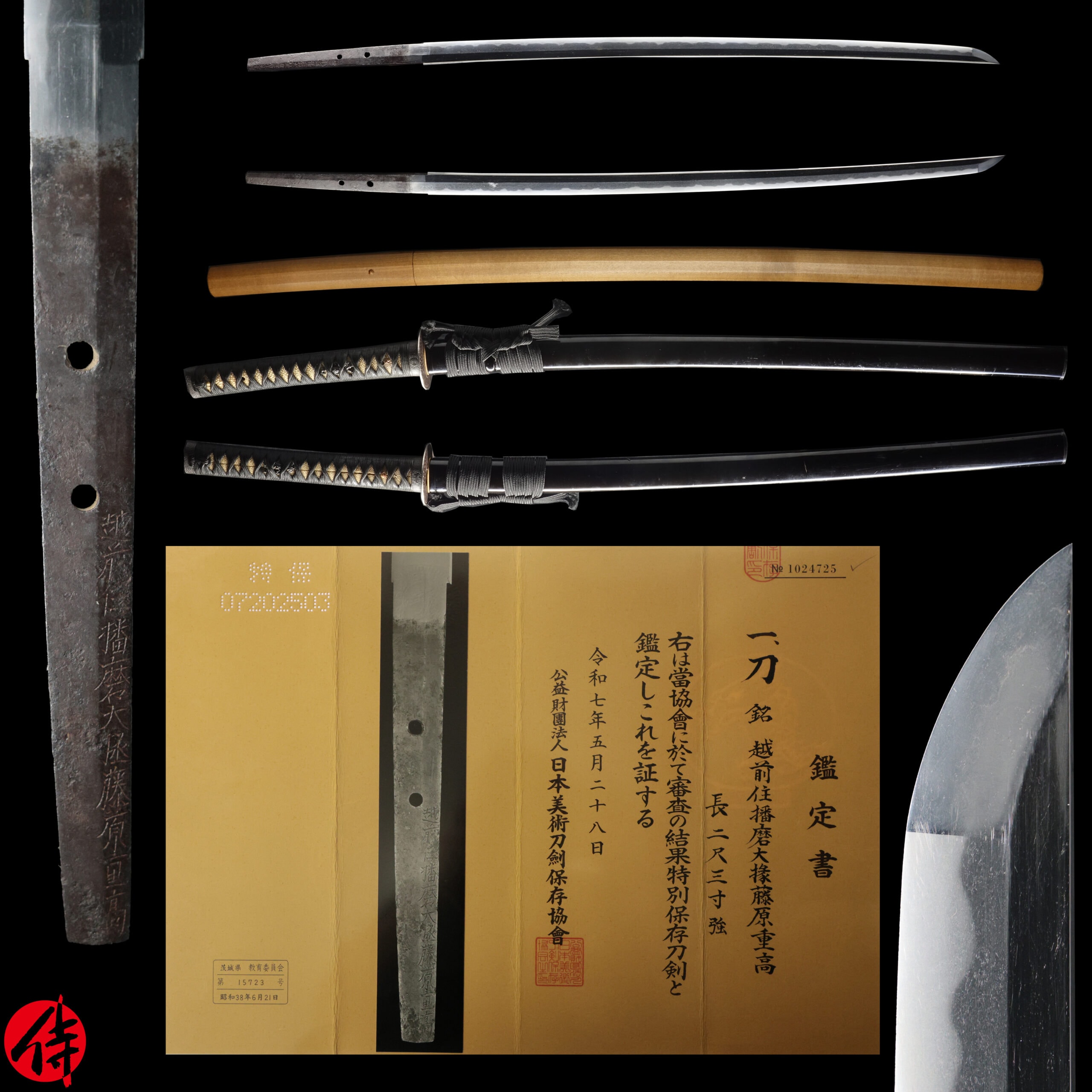
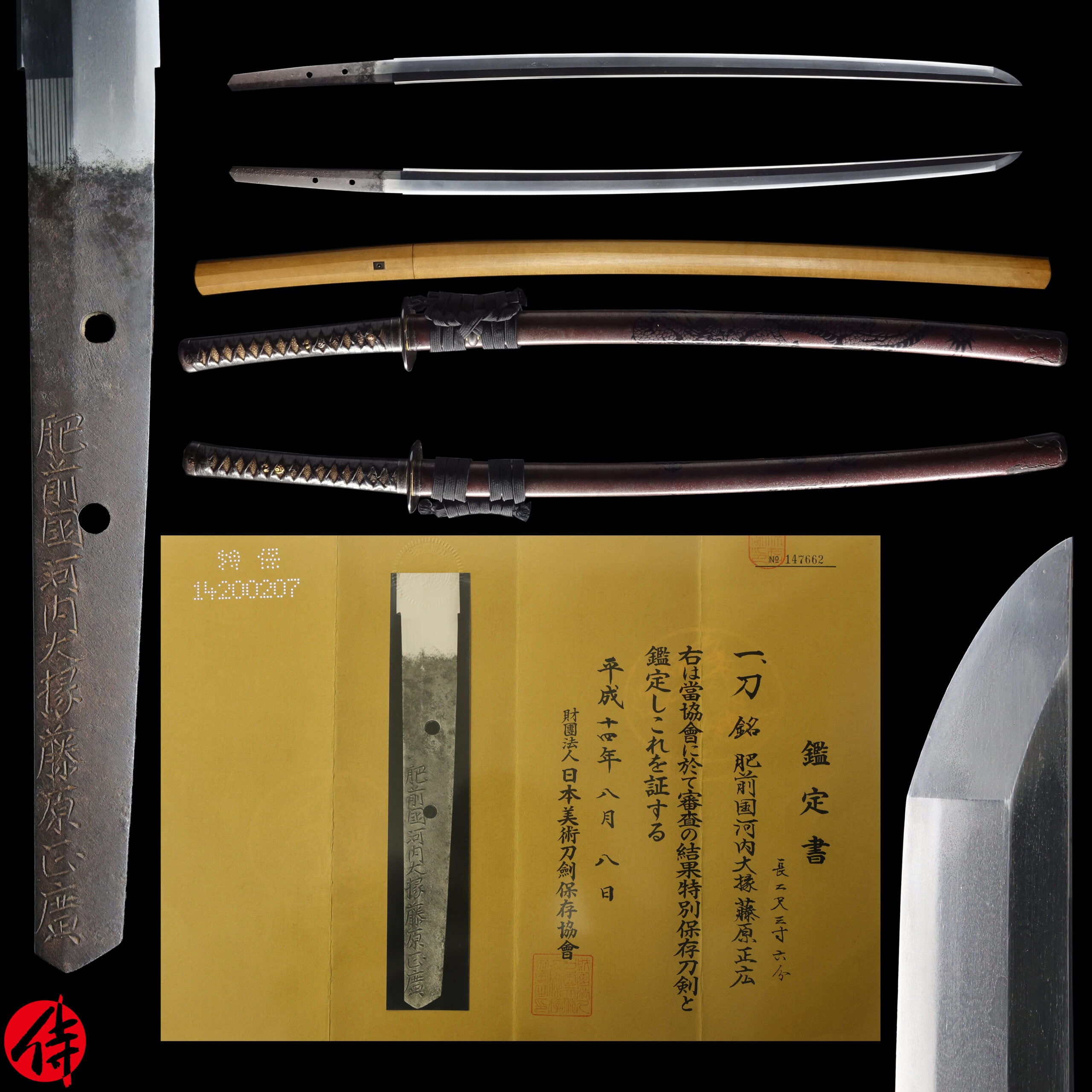
Antique Japanese Sword Katana attributed to Kaifu with NBTHK
Hozon
Certificate
【Description】
This blade is attributed to Kaifu (海部) during the SHIN SHIN TO era. SHIN SHIN TO era refers to the Japanese blades forged from the early 1760s to the beginning of the Meiji period. Kaifu is the name of the clan and school that ruled Awa province (Today’s Tokushima prefecture). From the beginning of the Kamakura period (late 12th century), they started sword-forging by taking advantage of its geographical location where iron sand was abundant near th
e Kaifu River. Their sword-forging was active and reached its heyday during the Sengoku Jidai (Warring state period in the late 15th-early 16th century). Kaifu clan was destroyed by Chosokabe Motochika in 1575. After the event, the school’s presence was hindered in the region. However, when the Hachisuka clan took control of Awa province, the clan invited the members of the Kaifu school and let them live near the Tokushima castle, forging blades for the clan. The school continued at the end of the Edo period.
The Background History
Japan enjoyed a relatively peaceful time from the early Edo period to the mid-Edo period(the 1600s-1760s) because of the stable economy and the powerful government run by Tokugawa Shogun. Samurai didn’t have many opportunities to utilize his Katana sword in public or on battlefields during this time. Thus, they carried their swords more as a symbol of their social status. The demand for weapons decreased accordingly compared to the previous Warring state period called Sengoku Jidai (1467-1600).
However, toward the end of the Edo period(1764-1876), the Japanese sword’s role changed dramatically. With the poverty spreading in Japan, there were so many riots initiated by the civilians. Japanese sword started to play an essential role in maintaining public safety.
Pressure from foreign countries to open Japanese borders also forced Samurai to order strong-looking swords to survive this tumultuous time. We believe many swordsmiths, made great efforts to forged high-quality, practical blades for their masters to prepare for battles.
There was a civil war between Tokugawa’s military government and the new Meiji government at the end of the Edo period. That means the original owner of this Katana might have seen the moment when Samurai’s life changed forever. This blade has a strong looking and must have been practical to use in that demanding time.
This blade is appraised as a
Hozon Touken
(保存刀剣) issued by NBTHK (Nihon Bijutsu Touken Hozon Kyokai: 日本美術刀剣保存協会). This authentication paper was only given to authentic Japanese swords, well preserved and high quality with artistic value.
*Please keep in mind that there are a few black rust spots on this blade. If you like to know more detailed condition, please contact us before placing an order.
【Blade】
Cutting Edge Length (Nagasa)
:
84.3 cm ( 33.2 inches)
Curvature (Sori)
:
2.4 cm (0.94 inches)
Hamon
:
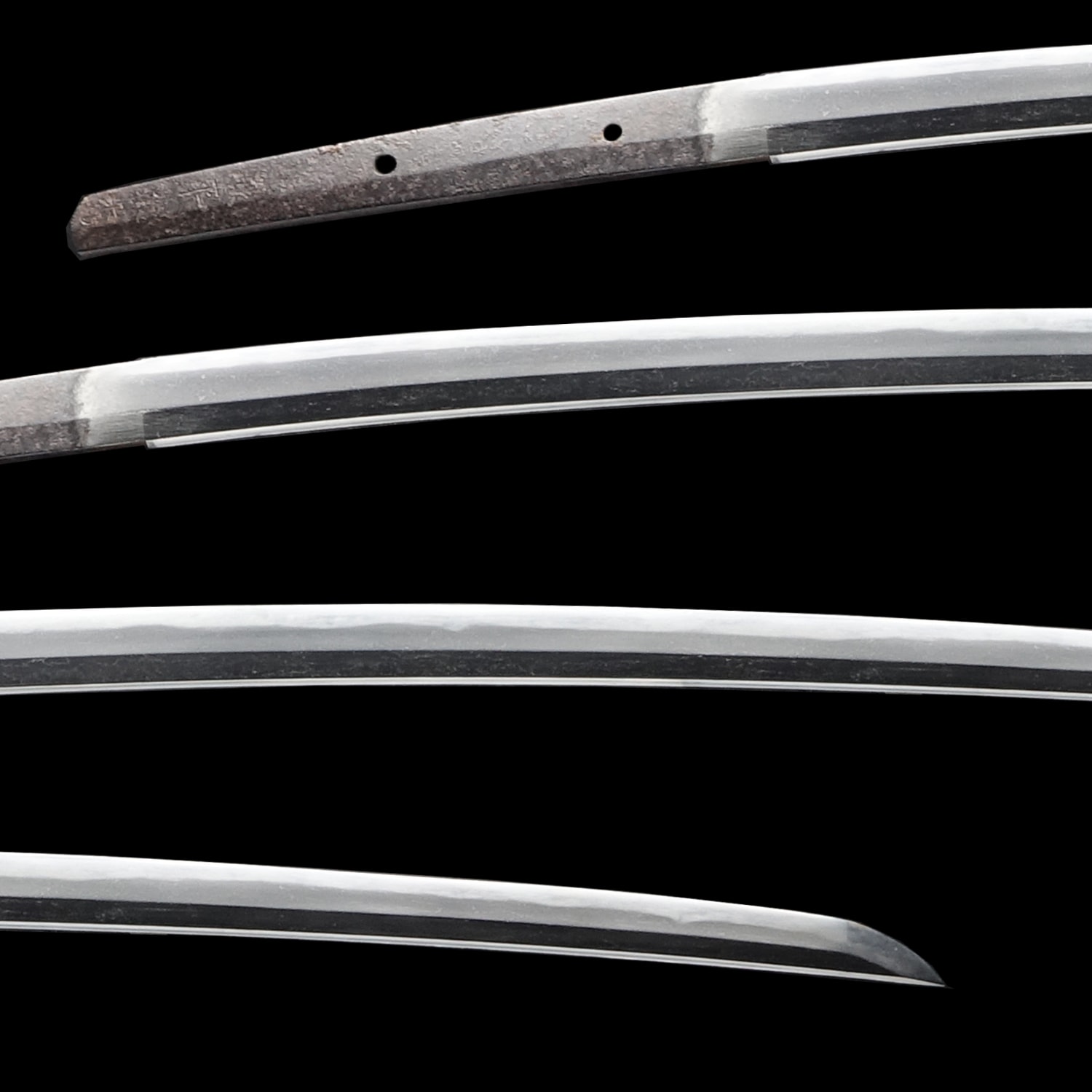
The crystalline structure which forms along the cutting edge of a blade as a result of the hardening process.
Jimon (Jihada)
:
Visible steel surface pattern created by folding and hammering during forging process.
Nakago
:
Nakago is the tang of the Japanese sword.
Japanese swordsmiths left the black rust on the tang because it prevents red rust while the tang is in its handle. And the discoloration of the tang was created over time, and it is a great indicator for a Japanese sword specialist to estimate when the sword was forged.
Koshirae
:
Koshirae is the mounting of the Japanese sword. There are several parts that consist of Koshirae such as Saya (Scabbard), Tsuka (Handle), Tsuba (Handguard).
Fuchi-Kashira
:
A pair of matching sword fittings that cover the upper and bottom parts of its sword hilt.
Tsuka and Menuki
:
Tsuka is the handle of the Japanese sword and Menuki is its decoration.
Tsuba and Habaki
:
Tsuba is the handguard for the Japanese Sword and Habaki is the equipment to make the blade not touch its scabbard insid