1333年に鎌倉は落ちたが、一派の最大の時代はその後に来た。師の水準で鍛える貞宗、皆焼を大成した広光と秋広。相州風は軍勢とともに広がり、一時は国じゅうの様式となった。
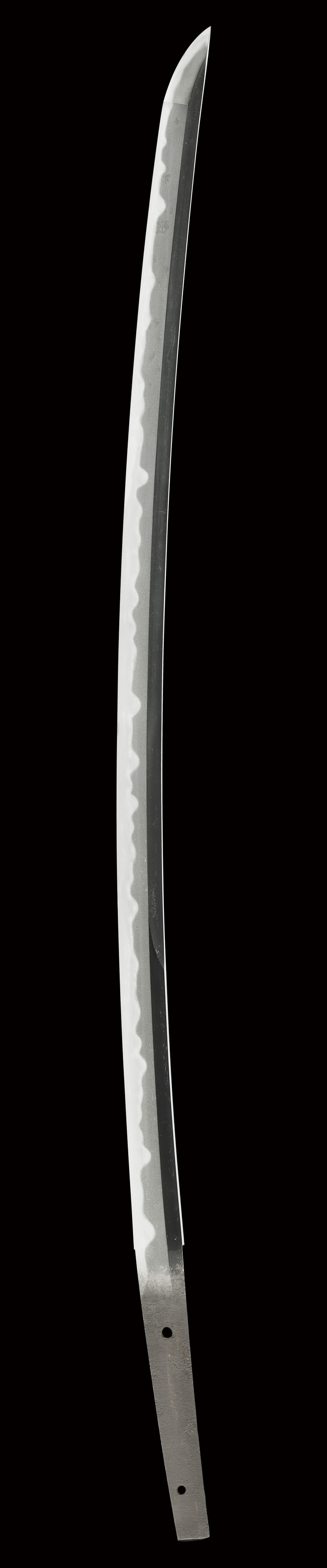
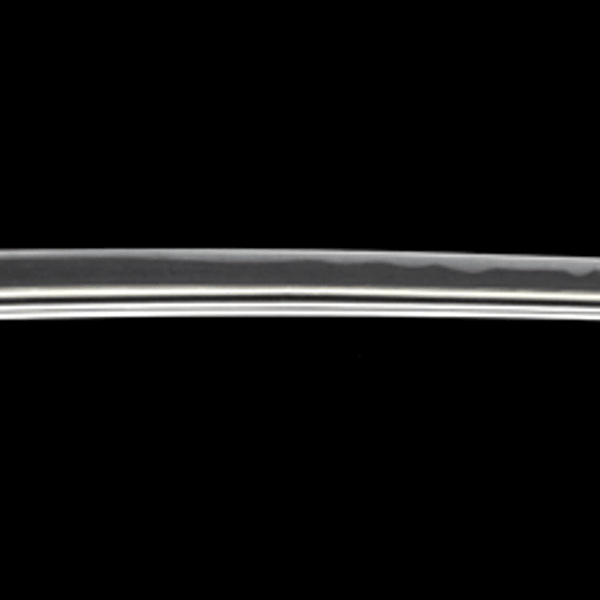
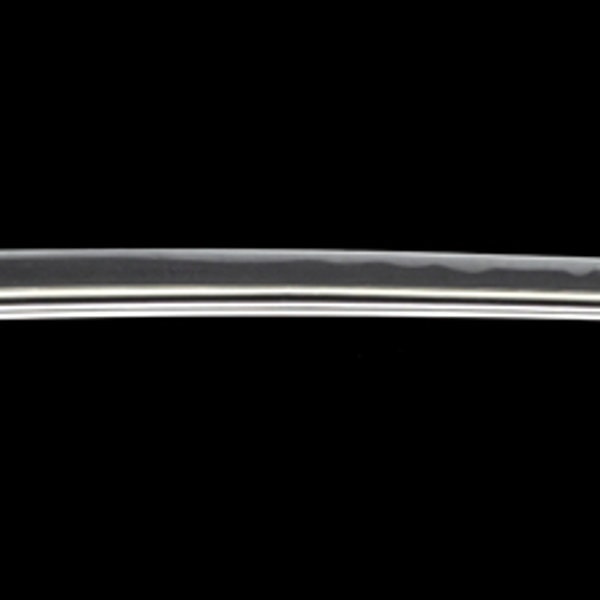
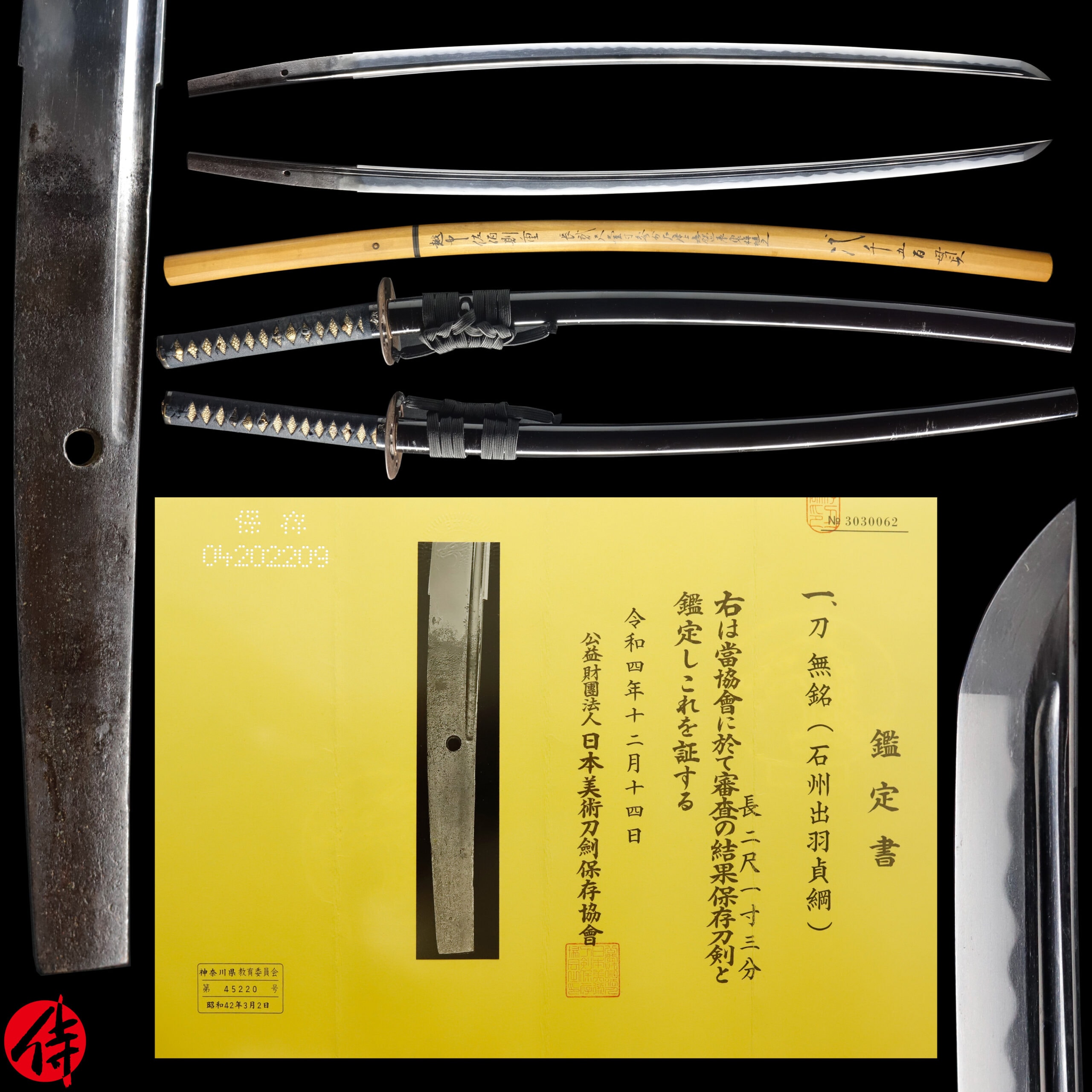
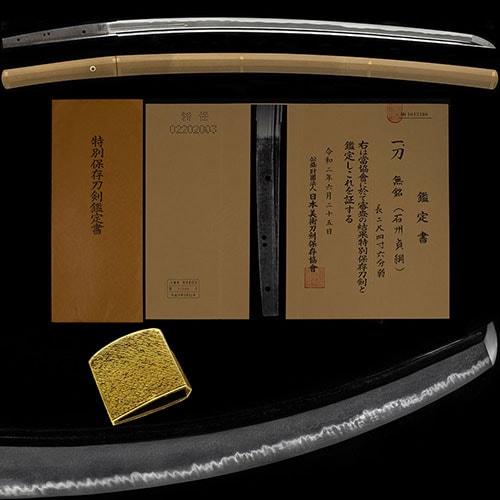
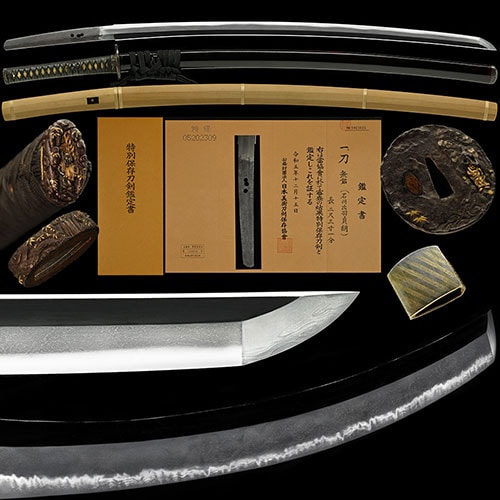
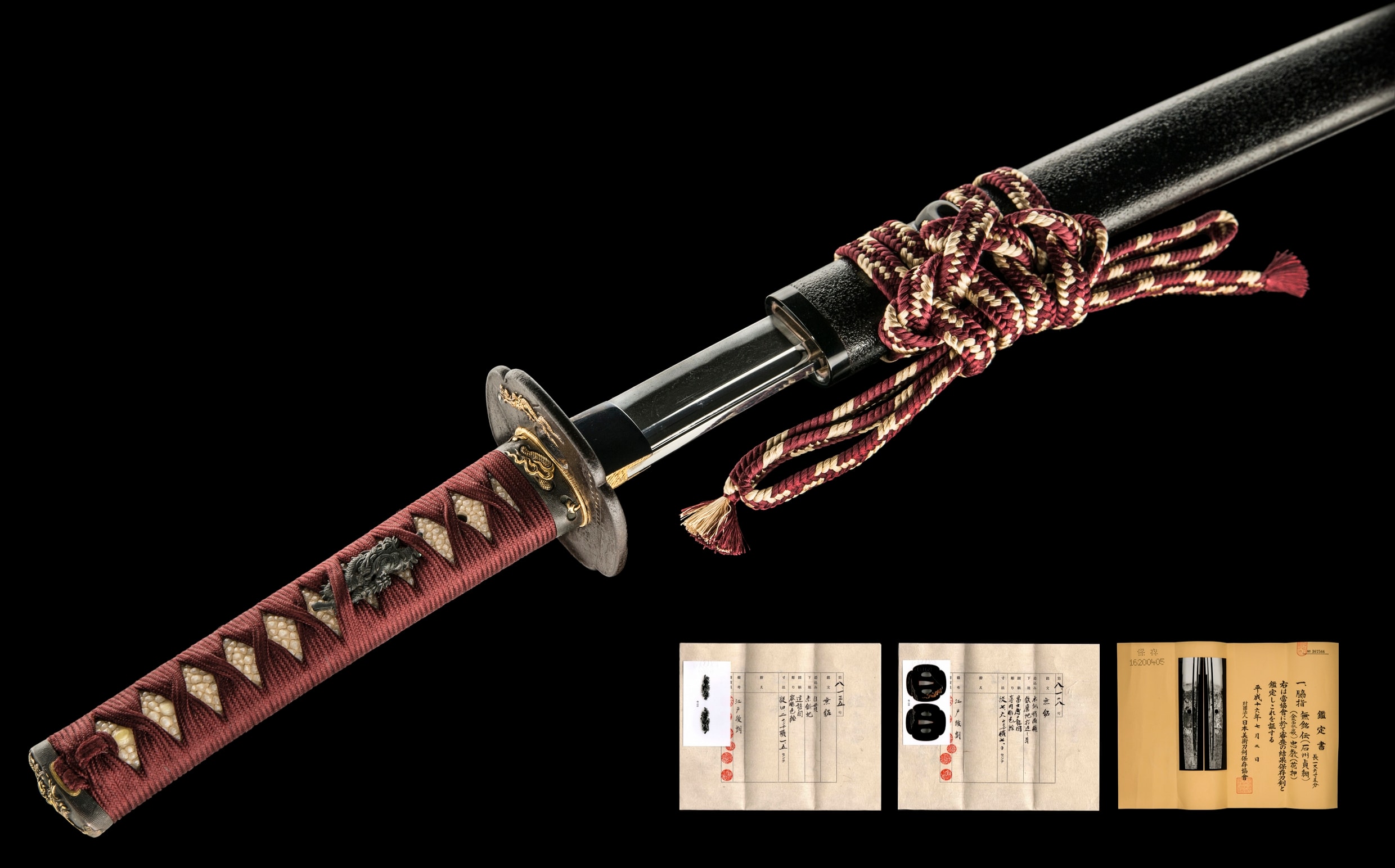
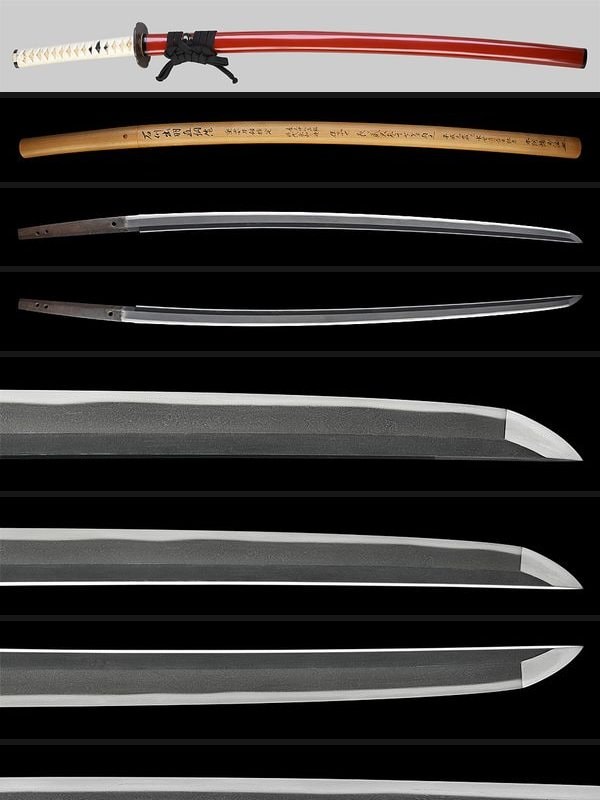
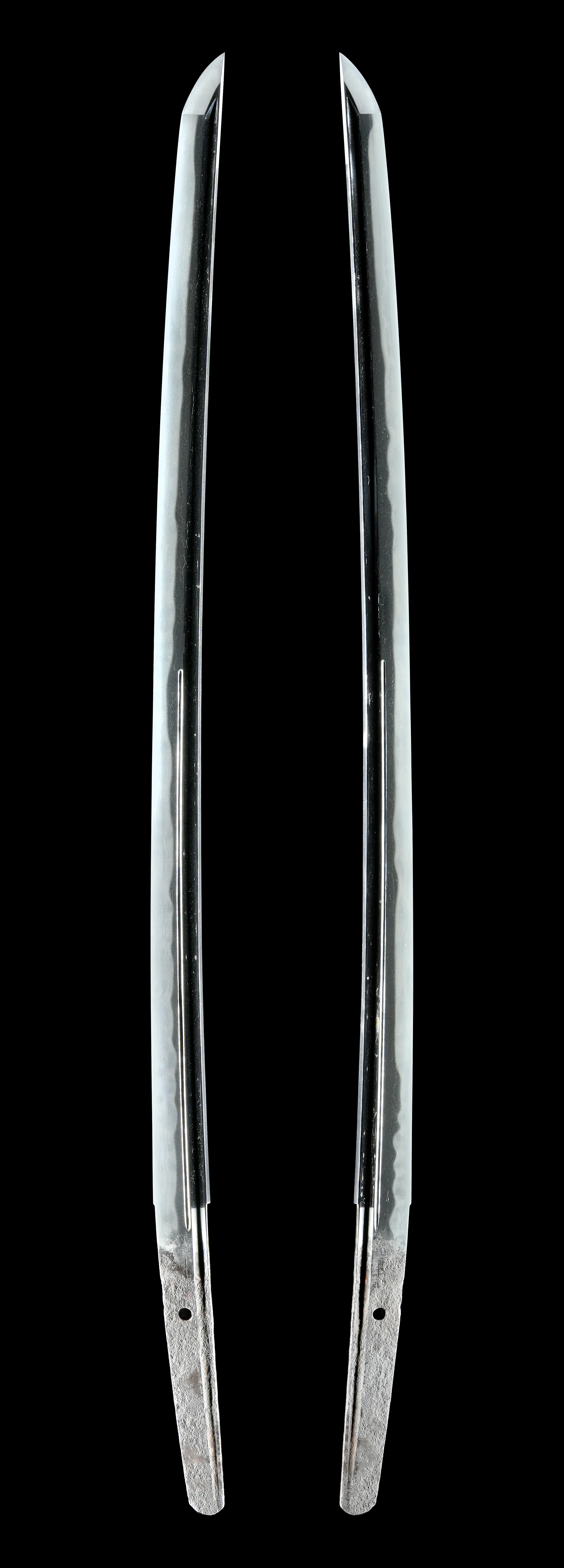
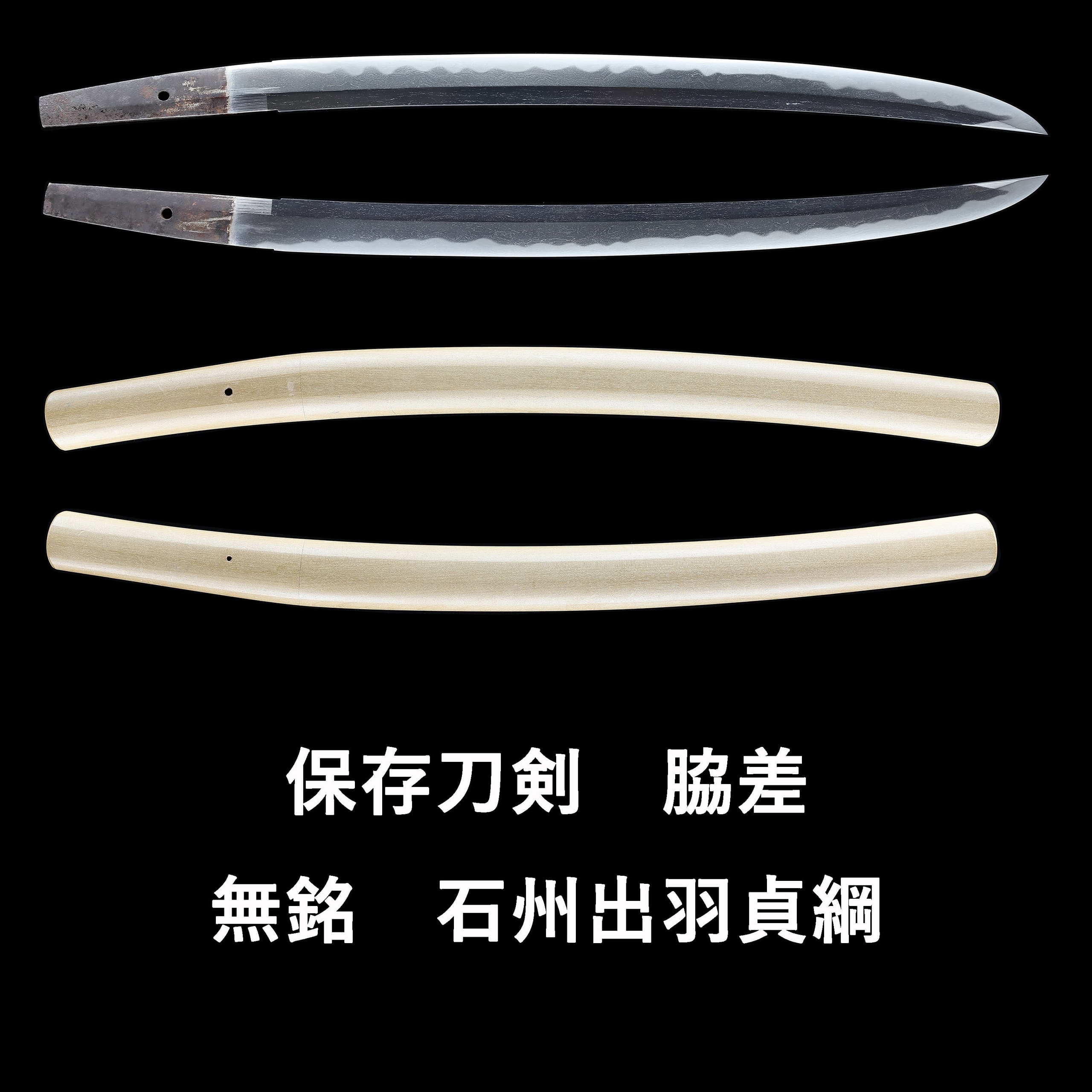
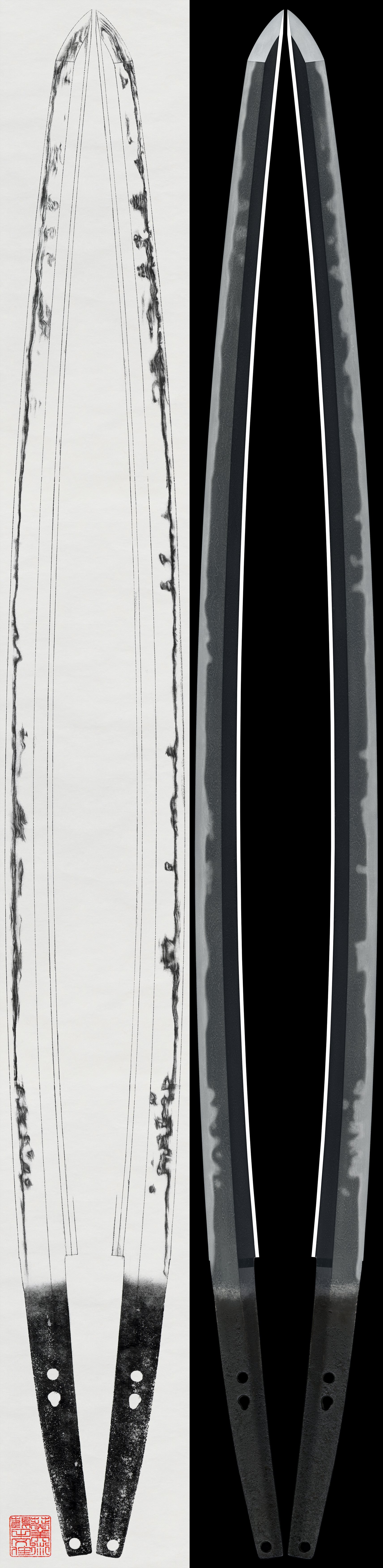
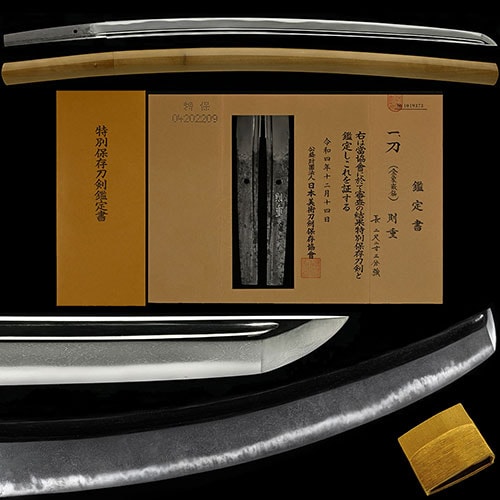
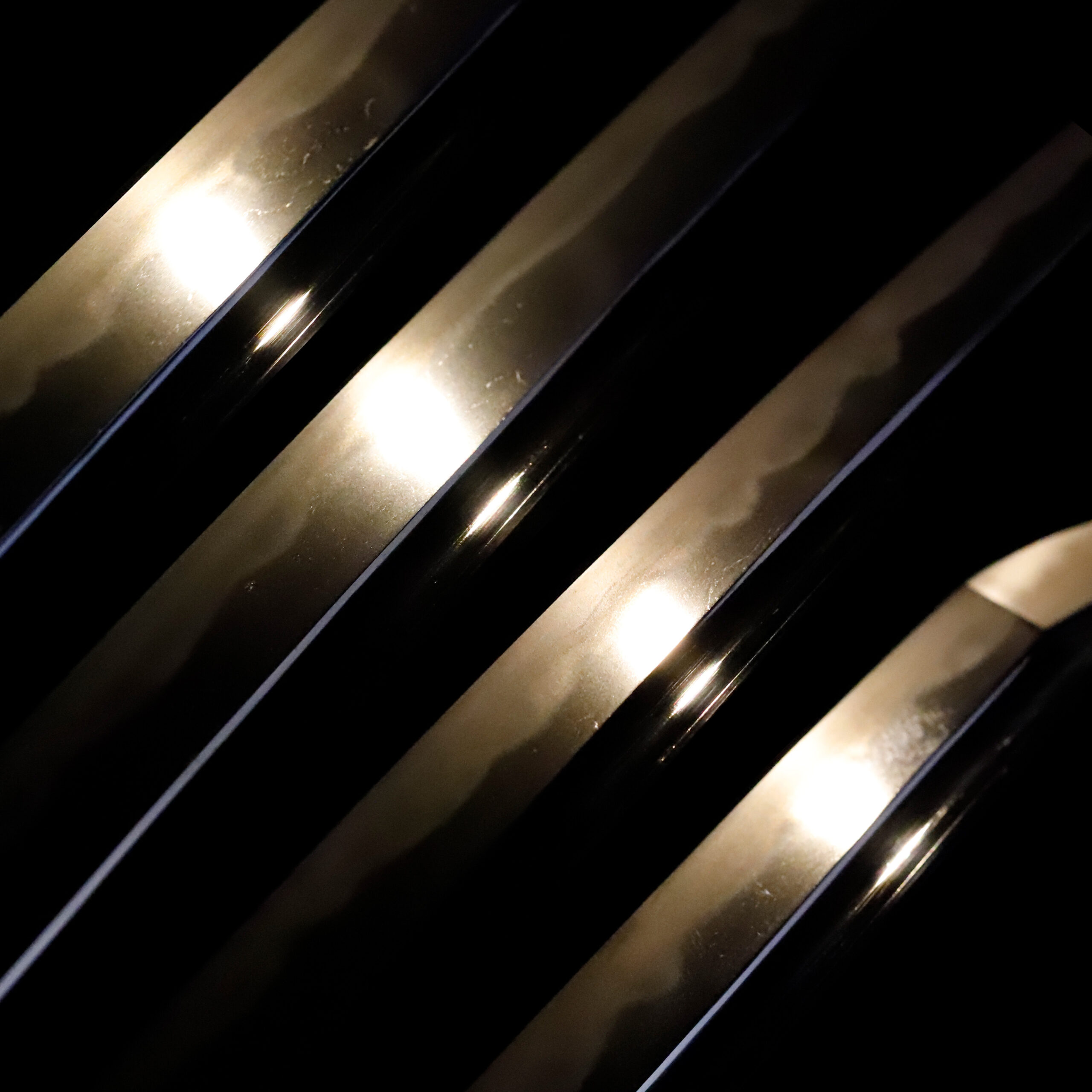
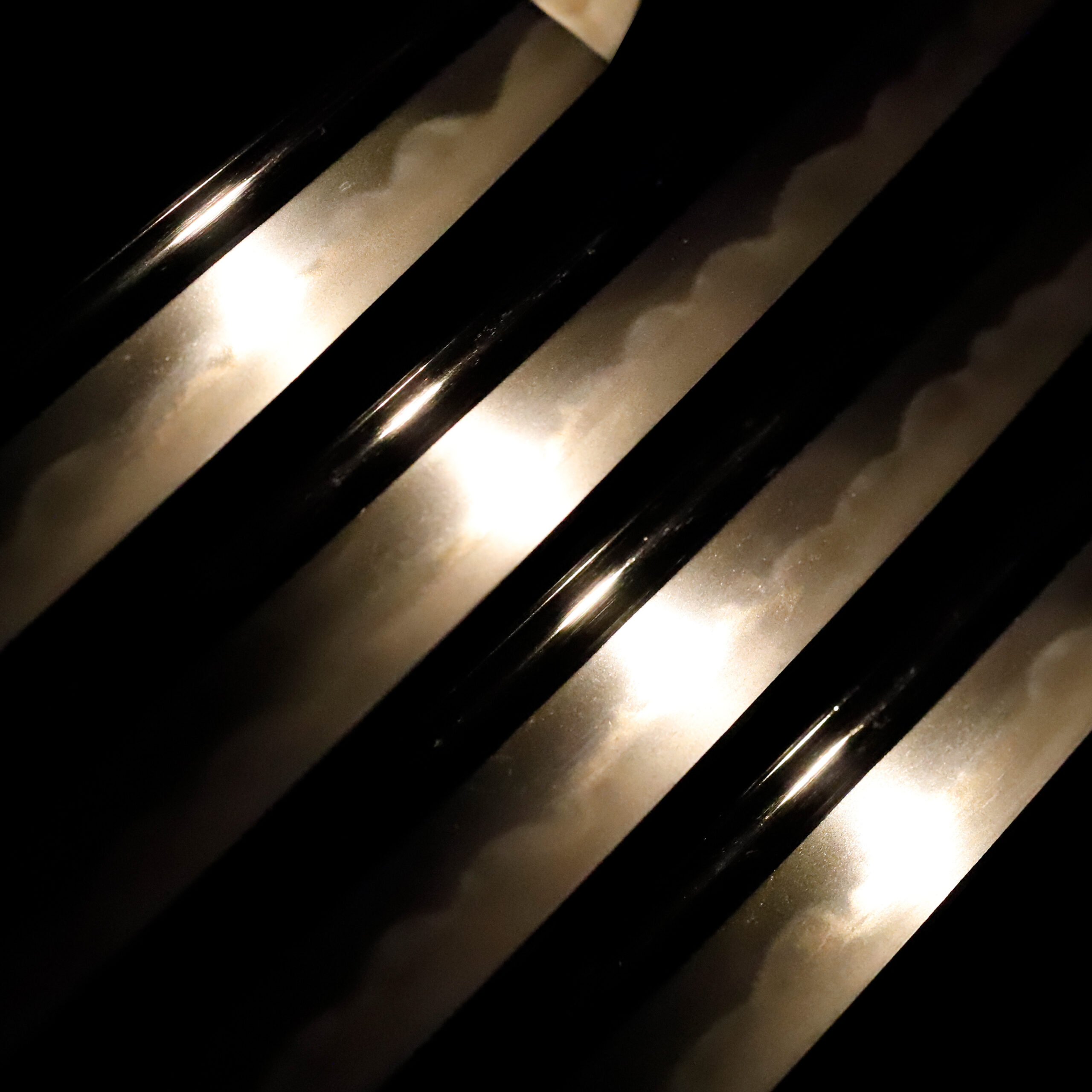
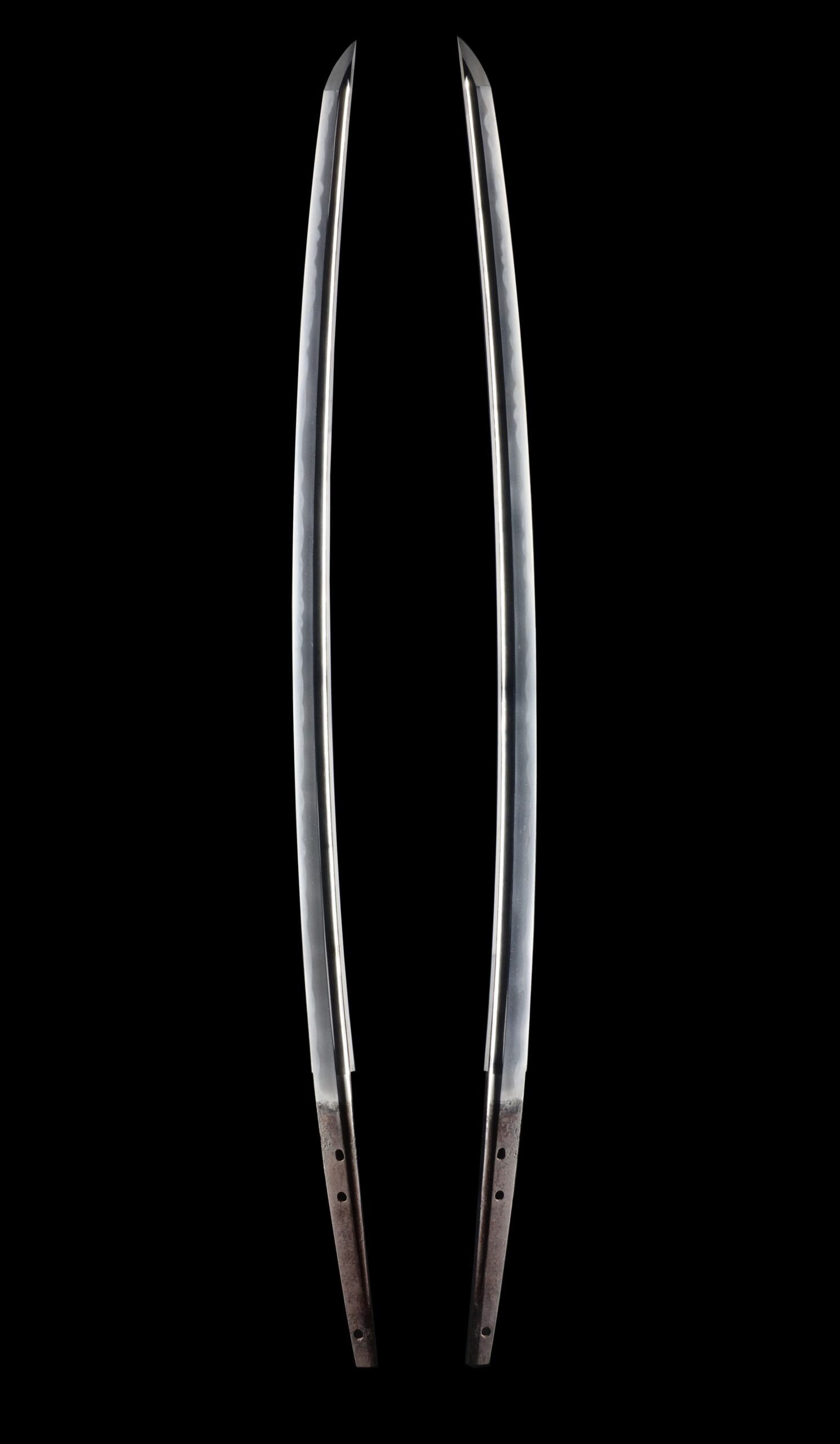
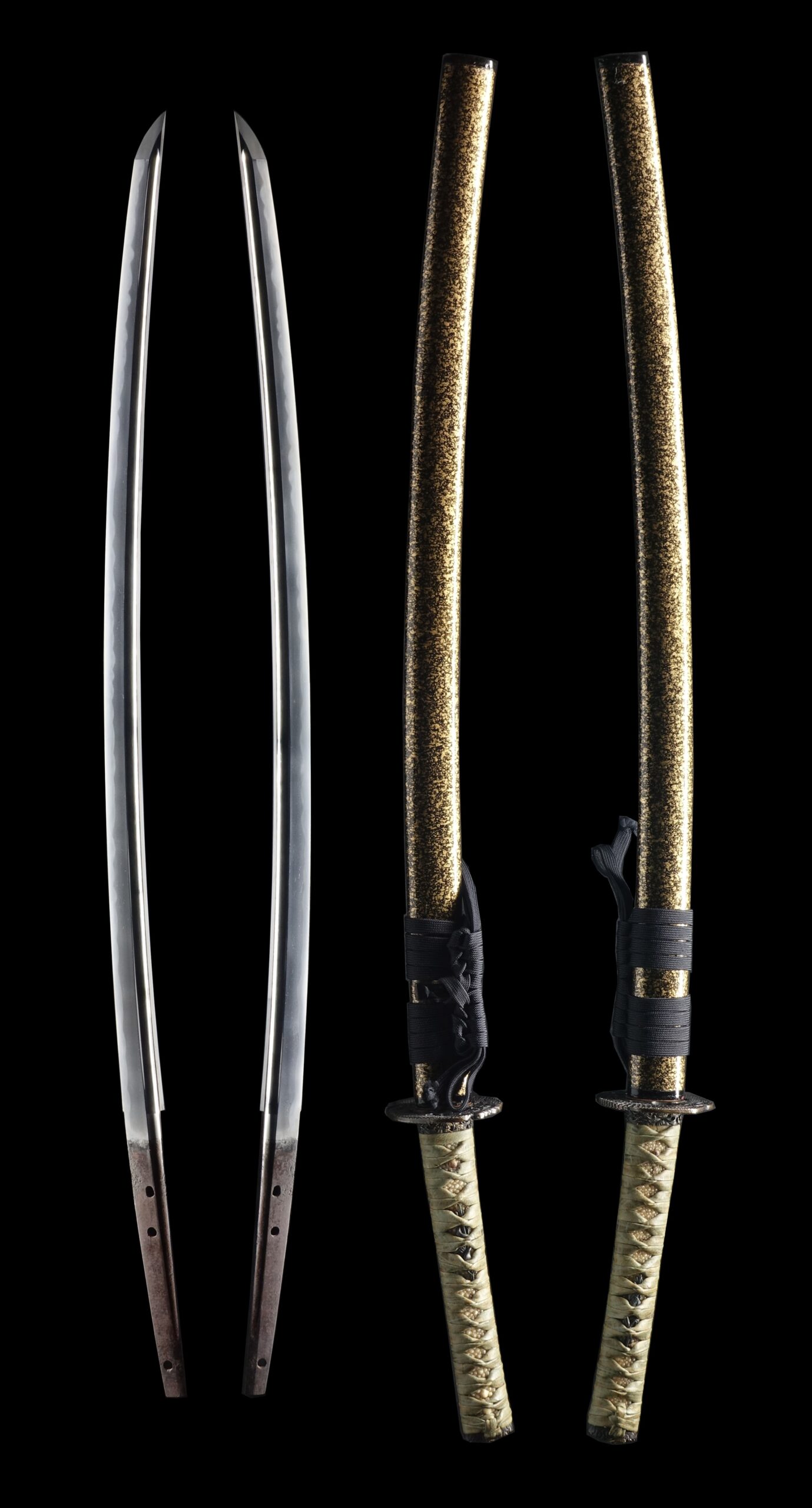
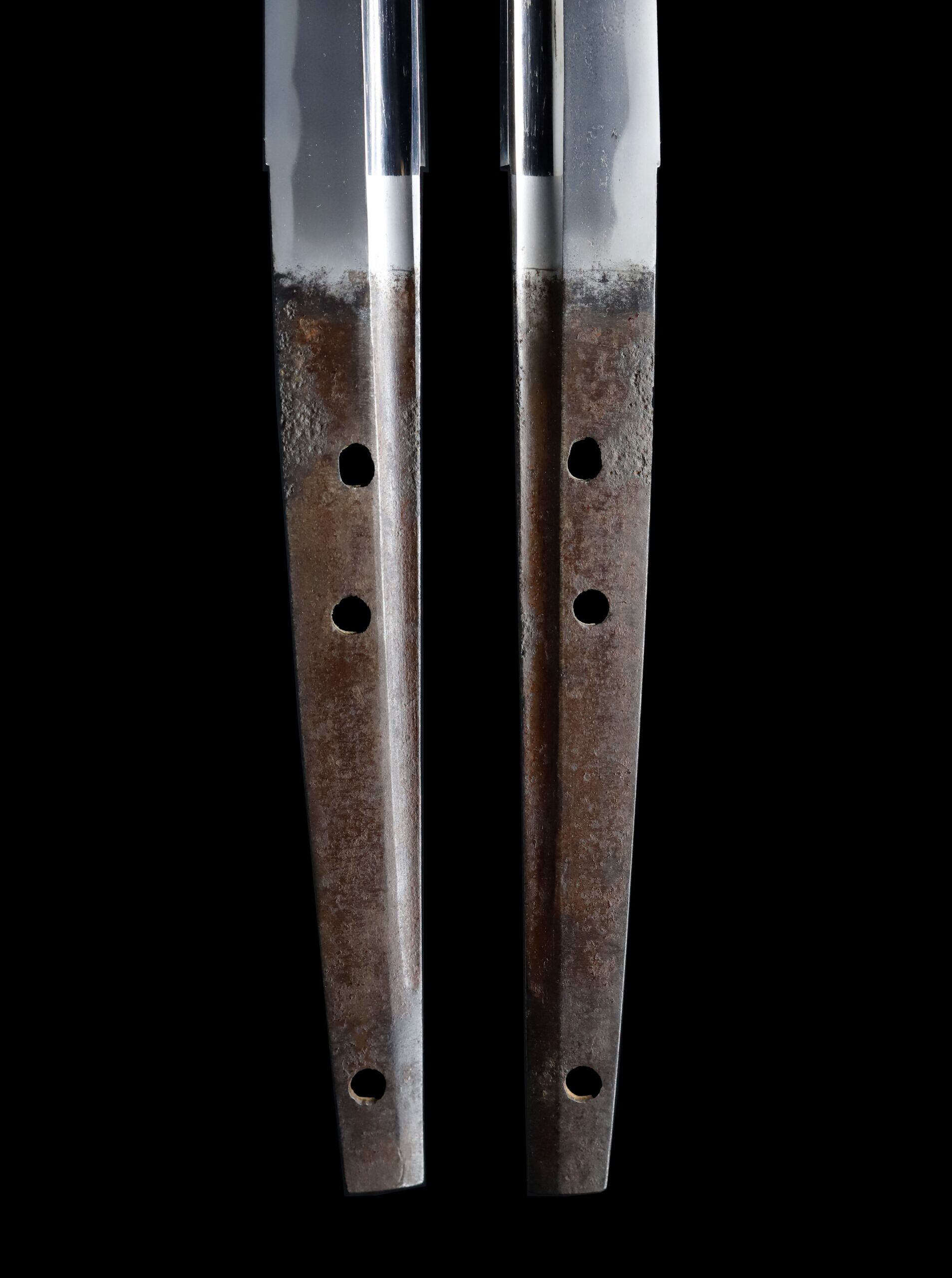
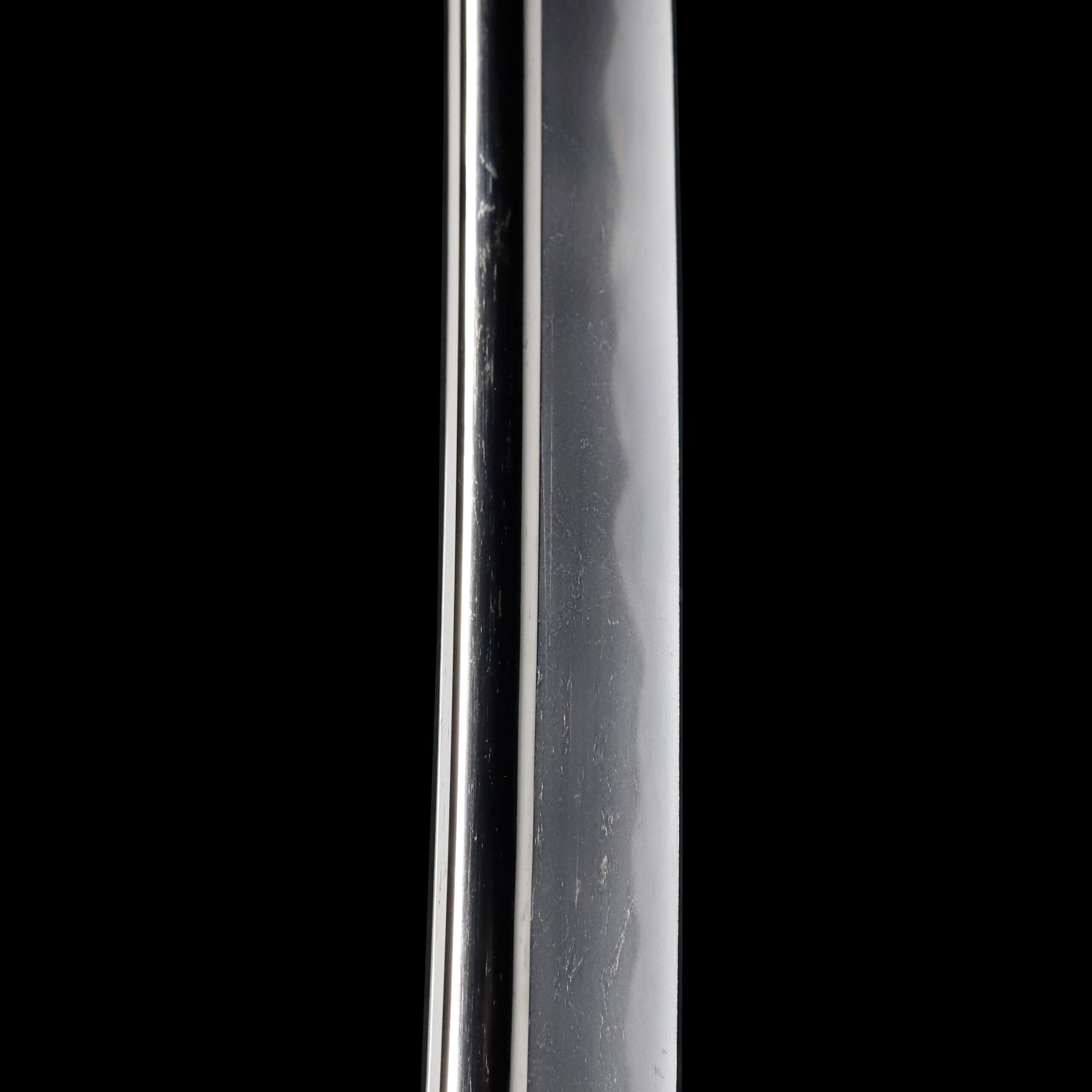
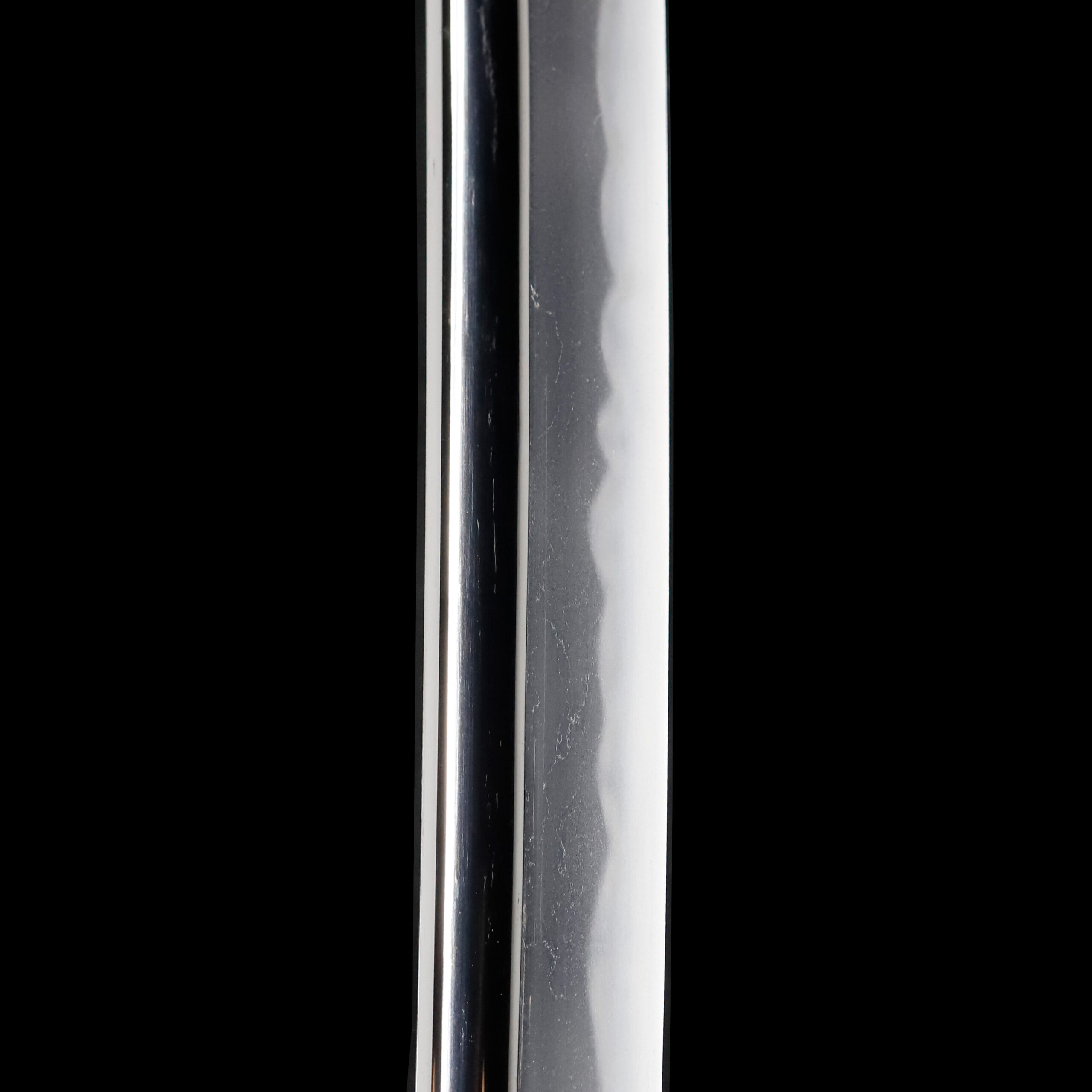
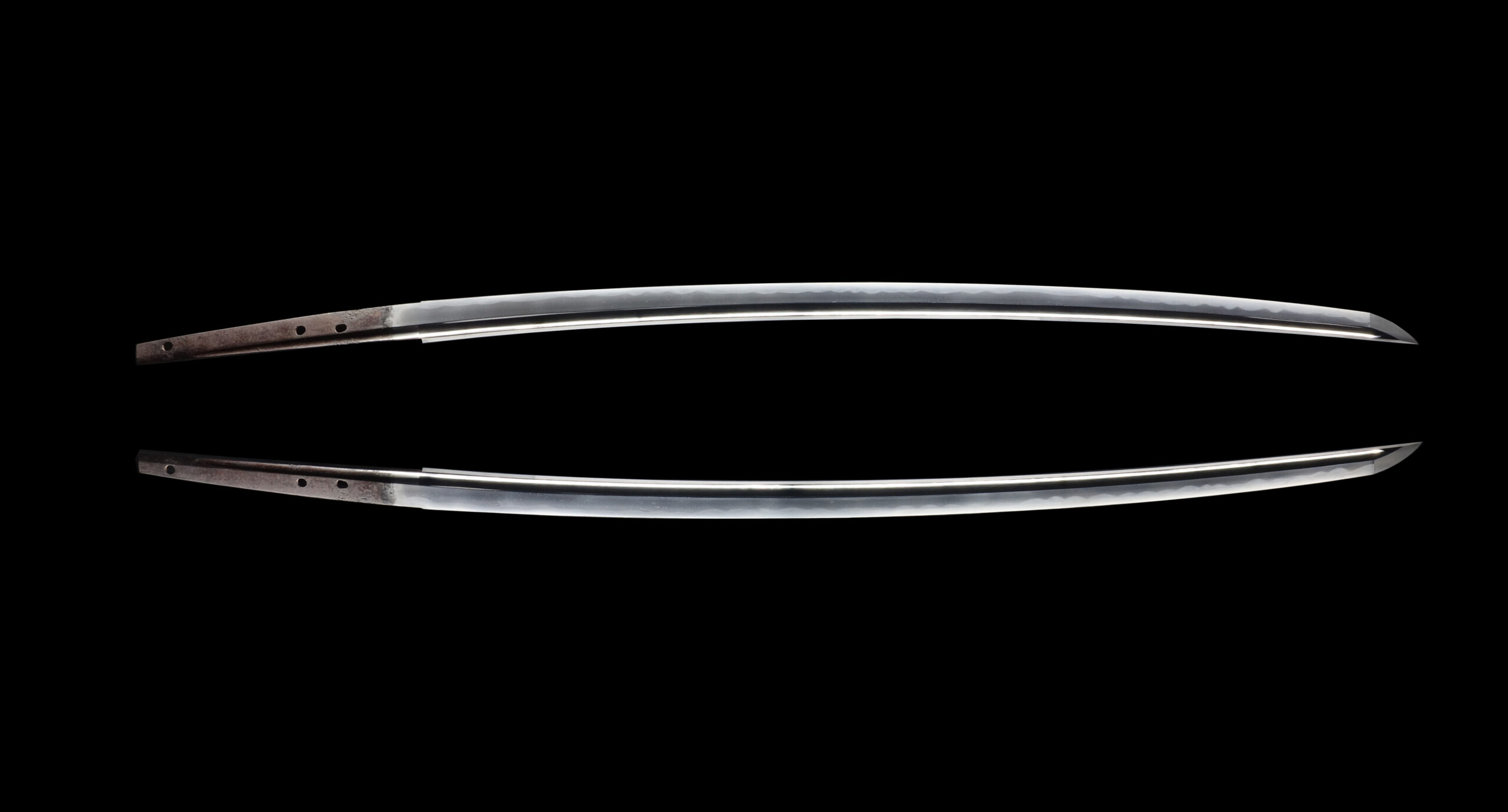
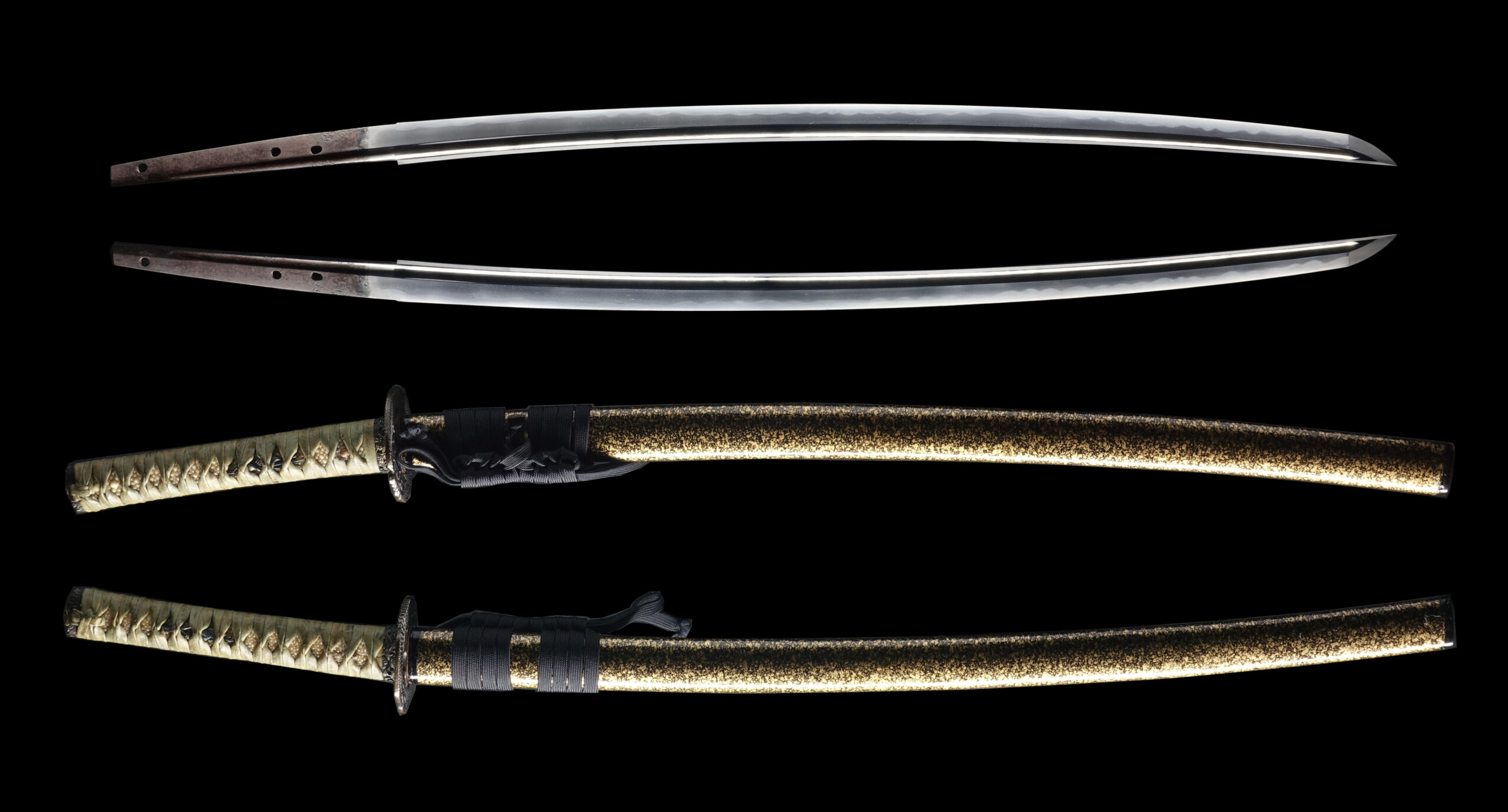
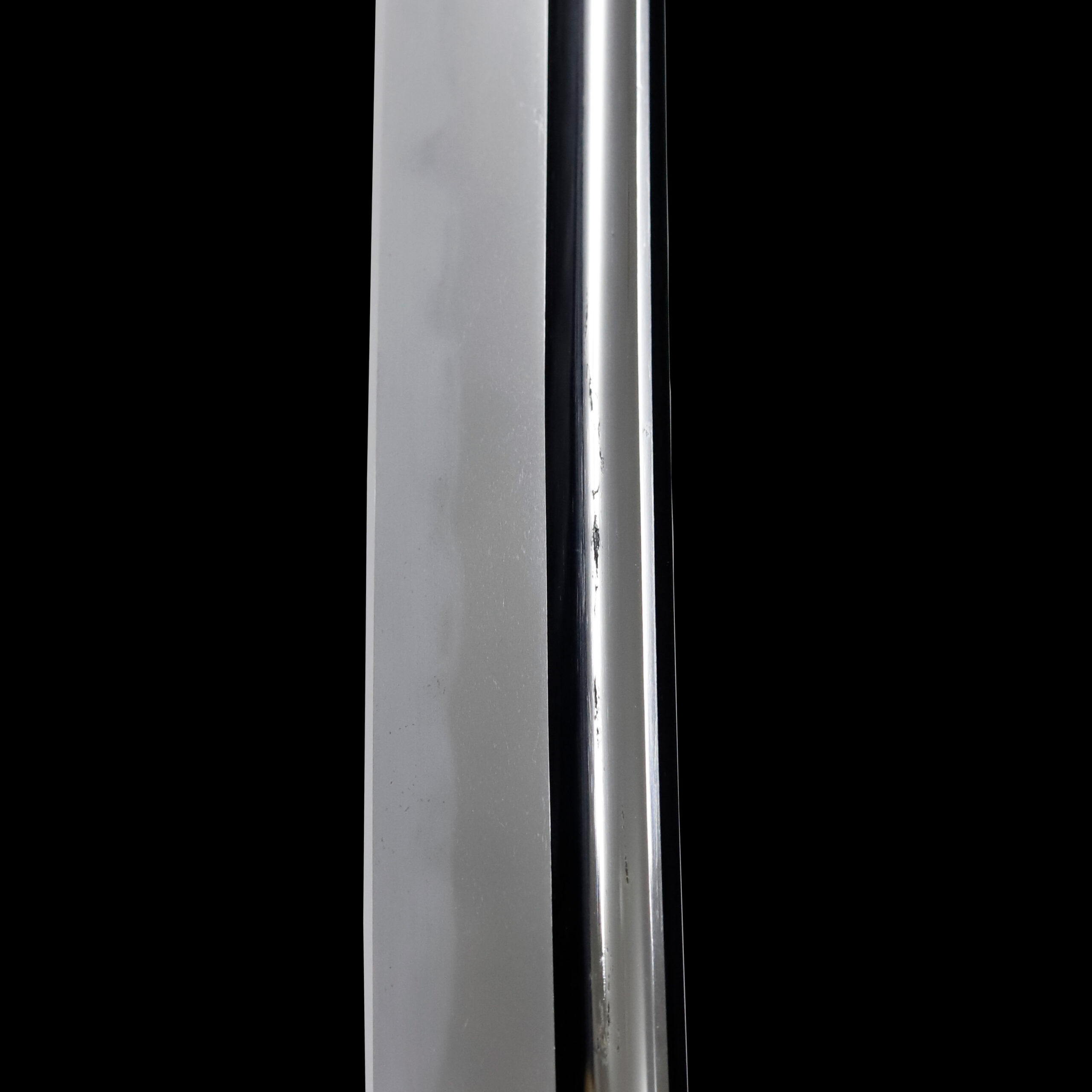
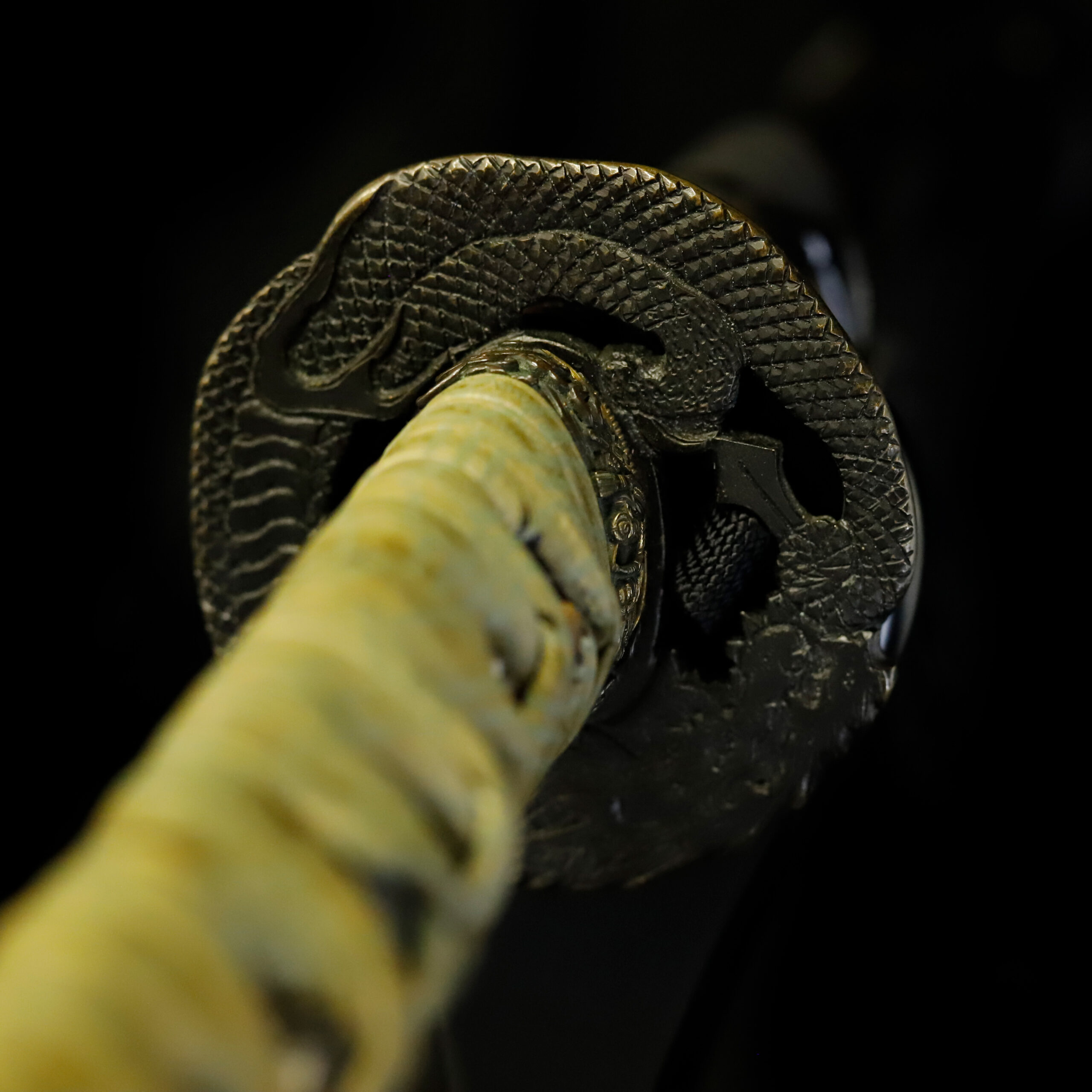
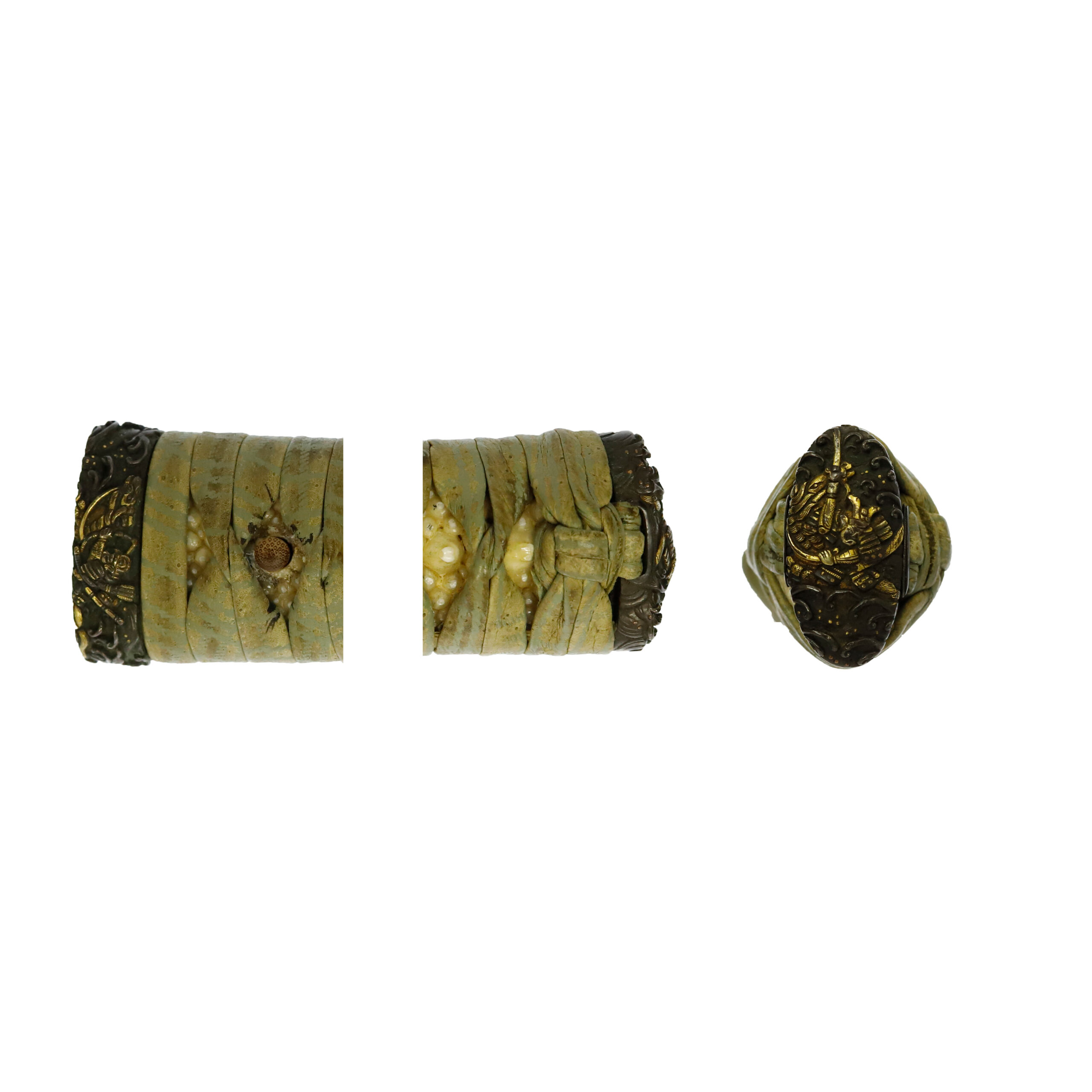
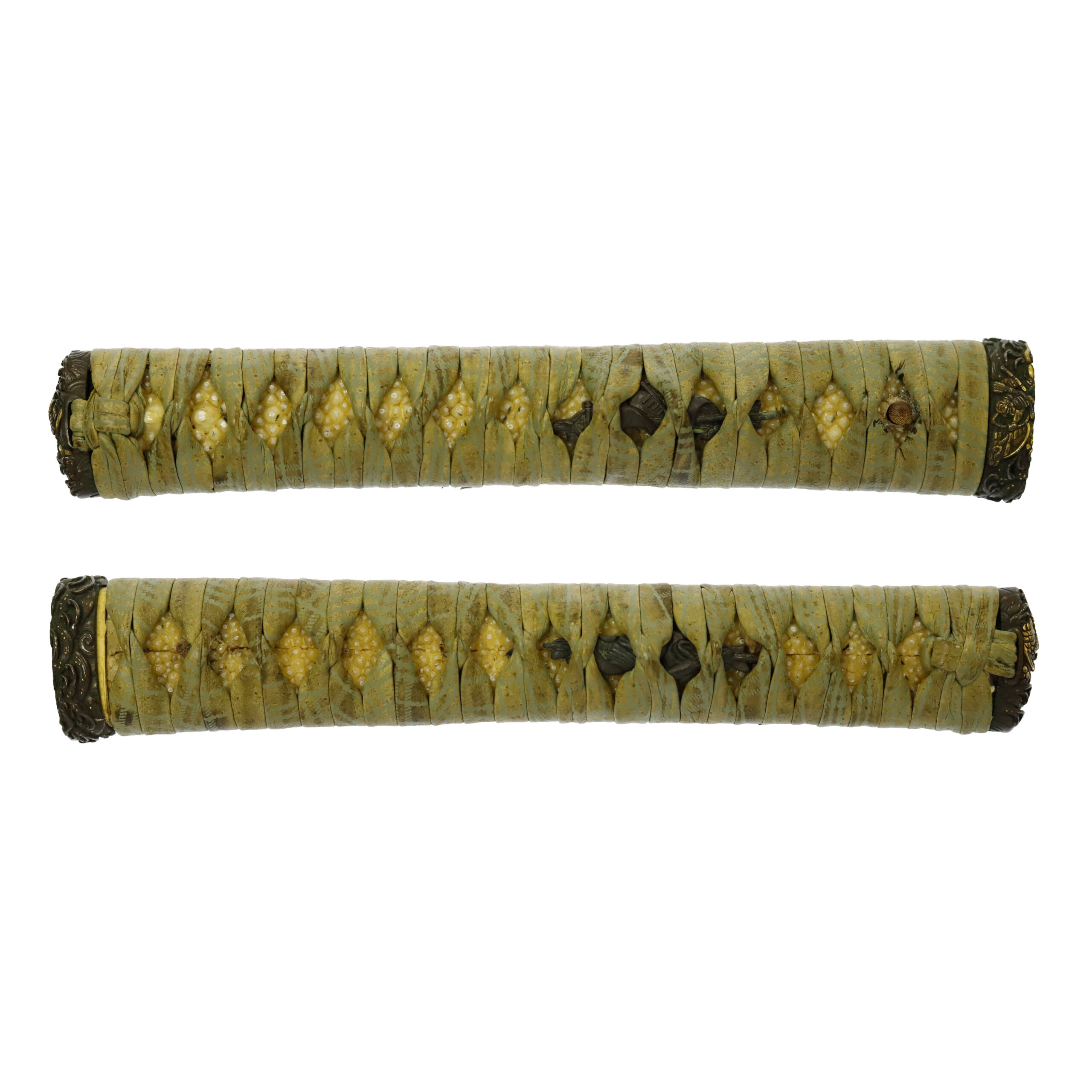
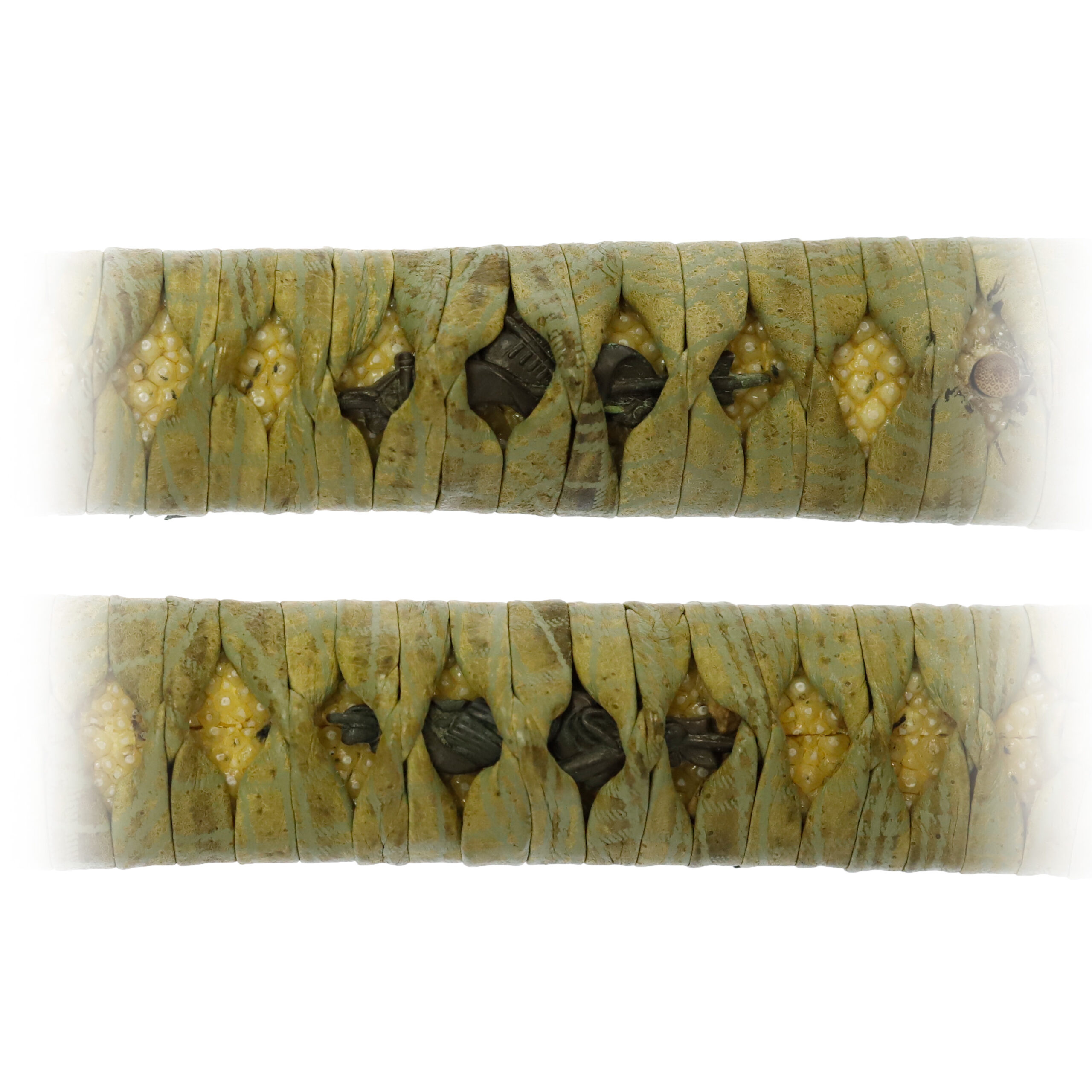
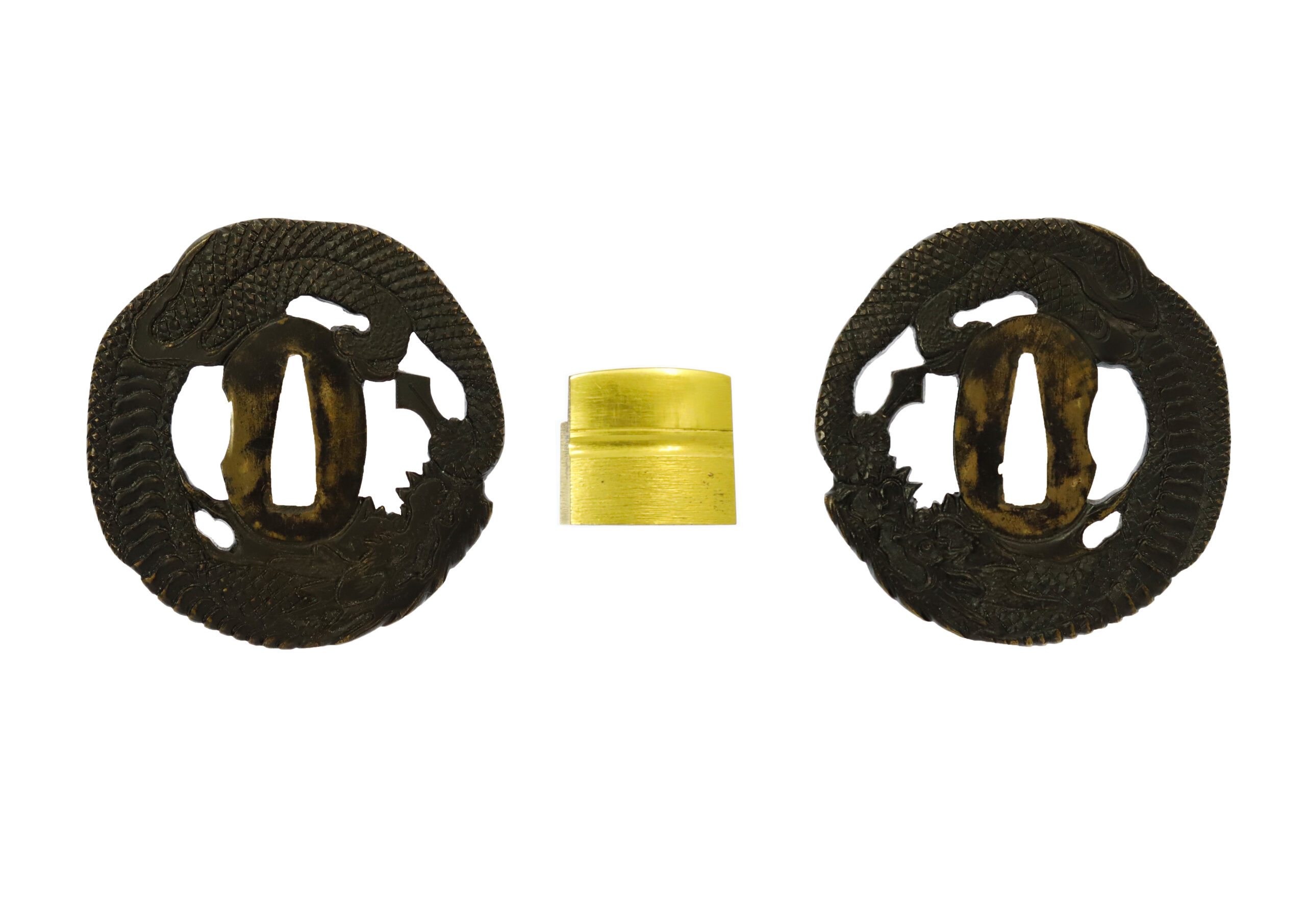
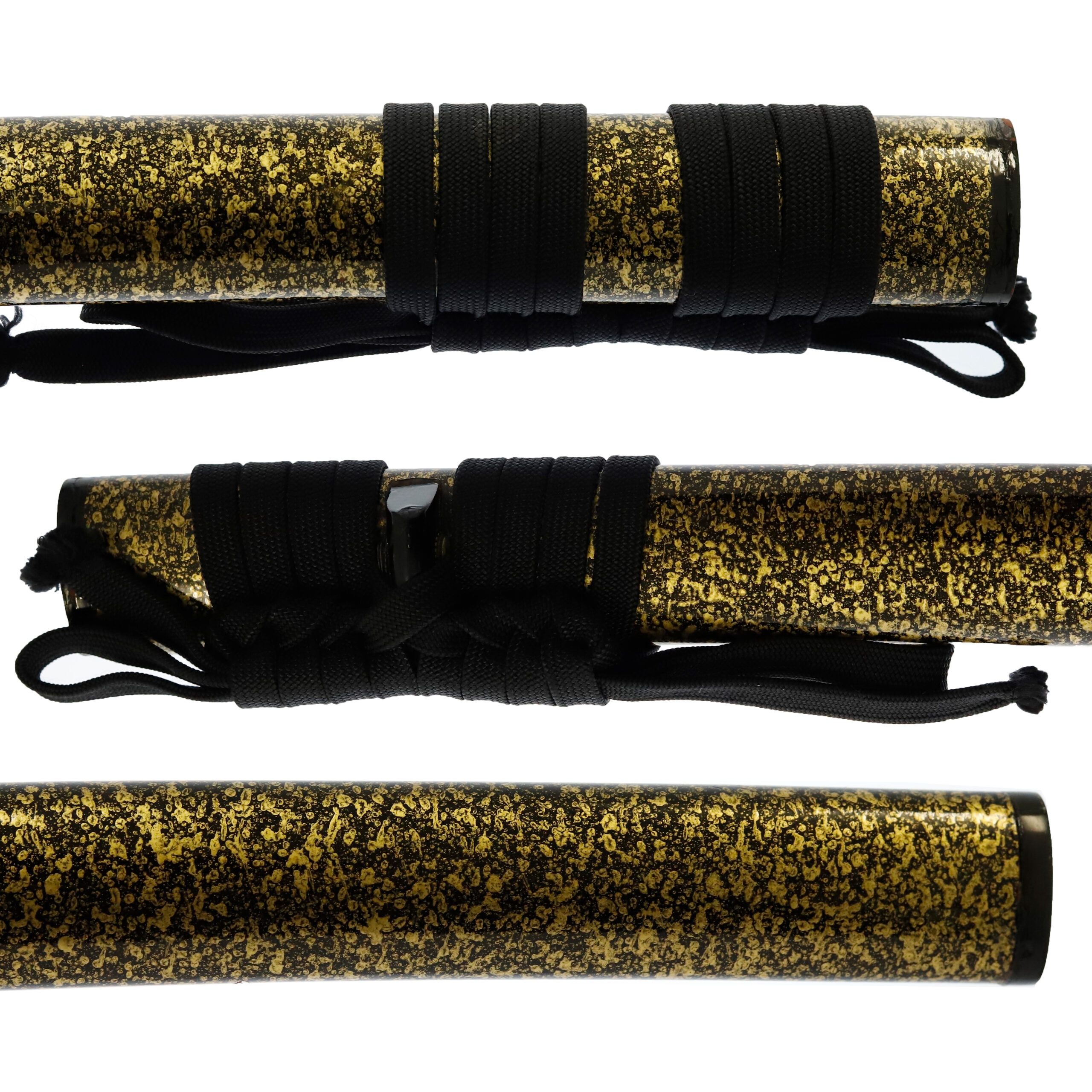
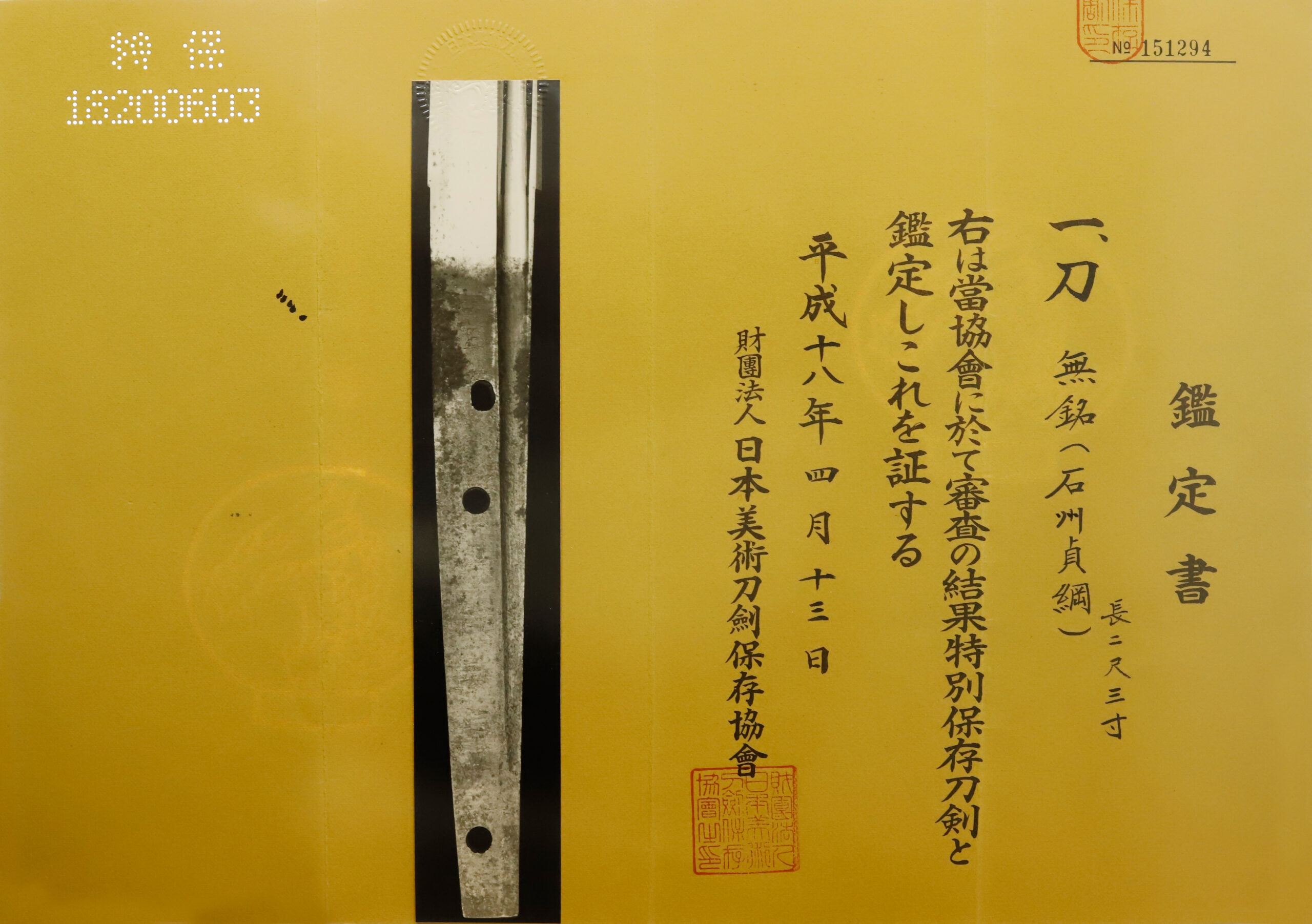
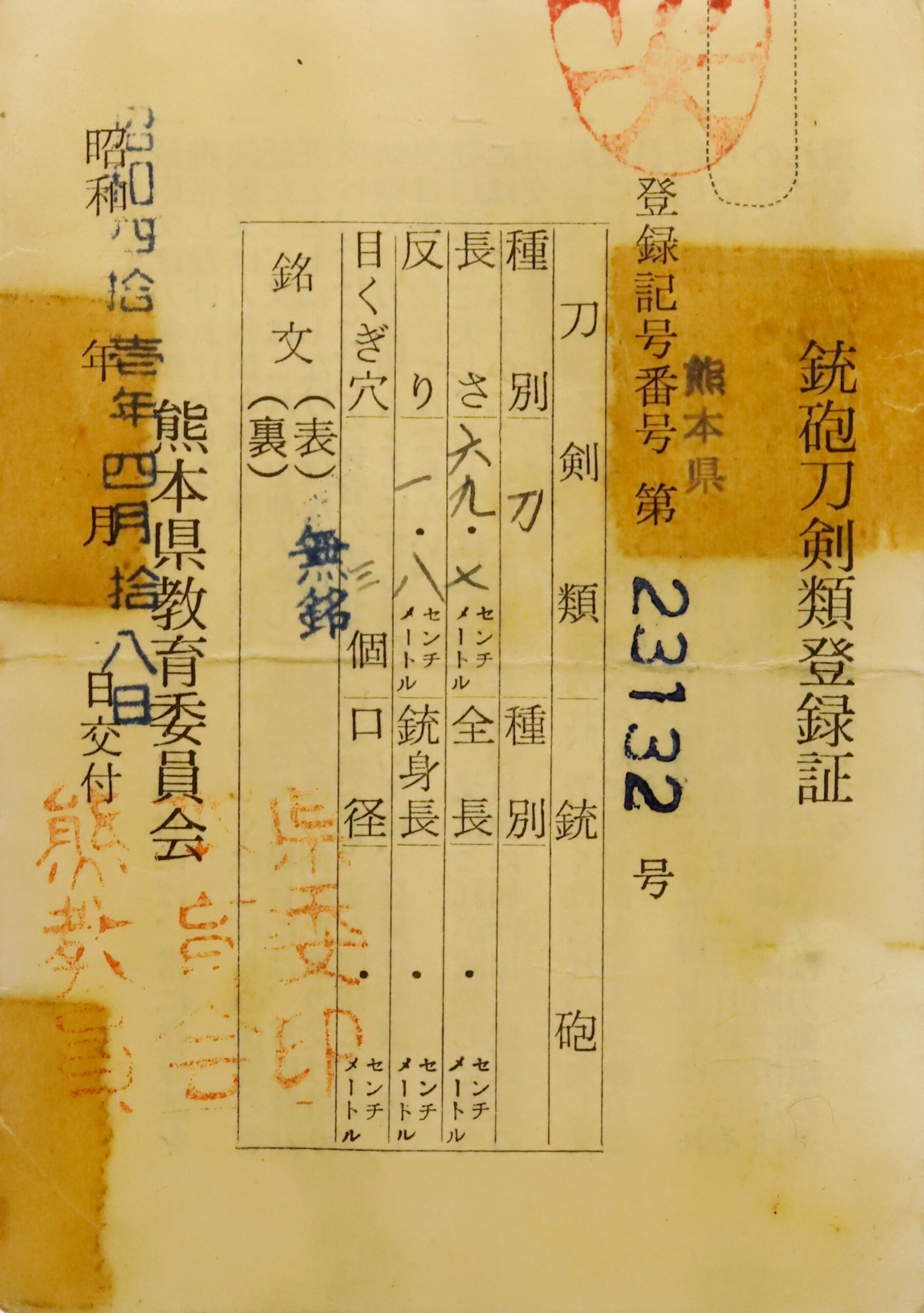
石州貞綱(特別保存刀剣鑑定書付) 【解説】 本作は、南北朝時代中期から後期(文和・康応頃:1352-1390年)にかけて活躍した石州出羽貞綱(せきしゅうでわさだつな)と極められた一振りです。貞綱の名は三代にわたり継承されていますが、本作は日本美術刀剣保存協会(NBTHK)により初代の手によるものと鑑定されています。「石州」は現在の島根県にあたり、「出羽」は当時の村の名に由来します。 貞綱は、相州正宗の門下として名高い「正宗十哲」の一人、初代直綱の子です。父である直綱は、相模国(現在の神奈川県)にて正宗に師事し、相州伝の奥義を極めた後、石州へと移住しました。直綱の名もまた、四代にわたって受け継がれています。 貞綱が活躍した南北朝時代は、朝廷が南北に分かれ、日本全土が動乱の渦中にあった時代です。多くの武士が戦場へと赴く中、貞綱は実戦に耐えうる強靭で質の高い刀剣を打つことに心血を注いだことでしょう。 石州(石見国)は古来より良質な鉄の産地として知られており、貞綱はこの優れた素材を背景に、数々の名刀を生み出しました。 本作は、日本美術刀剣保存協会(NBTHK)より「特別保存刀剣」に指定されています。これは、保存状態が極めて良好であり、かつ美術的価値が高い真作の日本刀にのみ与えられる格付けです。 ※樋(ひ)の中に僅かな鍛え傷が見受けられます。詳細については、お気軽にお問い合わせください。 【法量・形状】 長さ(Nagasa):69.7 cm 反り(Sori):1.8 cm 刃文(Hamon):焼入れによって刃先に現れる結晶構造 地文(Jihada):折り返し鍛錬によって現れる鋼の表面模様 茎(Nakago): 日本刀の柄に収まる部分です。職人が意図的に残した「黒錆」は、柄内部での赤錆の発生を防ぐ役割を果たします。経年による茎の変色は、専門家が製作年代を特定する際の重要な指標となります。 【外装(Koshirae)】 拵(こしらえ)とは、鞘、柄、鍔などを含めた刀装一式を指します。 縁頭(Fuchi-Kashira): 柄の両端を保護し、装飾する一対の金具です。 本作の縁頭は「合戦図」を題材としており、水辺で戦う武士の姿が精緻に彫り描かれています。豪華な甲冑を纏い、騎馬で戦う様子から、身分の高い武士を描いたものと推察されます。 合戦図は屏風絵などにも多く見られる画題ですが、江戸時代以降に制作されたものの多くは、必ずしも史実を忠実に再現したものではなく、権威の象徴や政治的な意図を含んで描かれることがありました。 柄・目貫(Tsuka / Menuki): 柄は刀を握る部分であり、目貫はその装飾を兼ねた手溜まりです。 柄巻の隙間から覗く目貫は、武具に関連した意匠と推察されます。布の付いた長い棒状のものは「旗印(はたじるし)」と思われ、戦場において自らの所属や家紋を示すために用いられたものです。
 NihontoWatch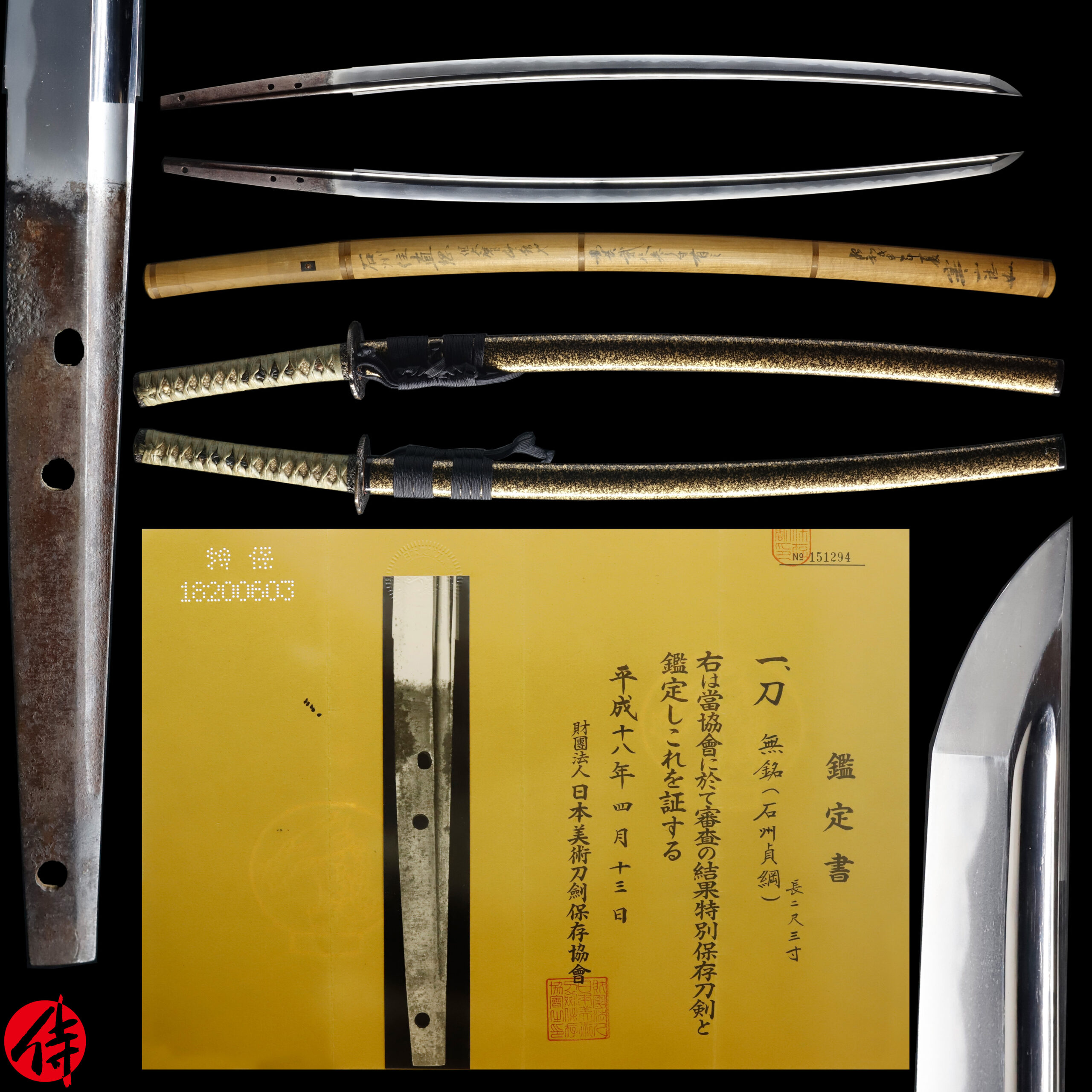
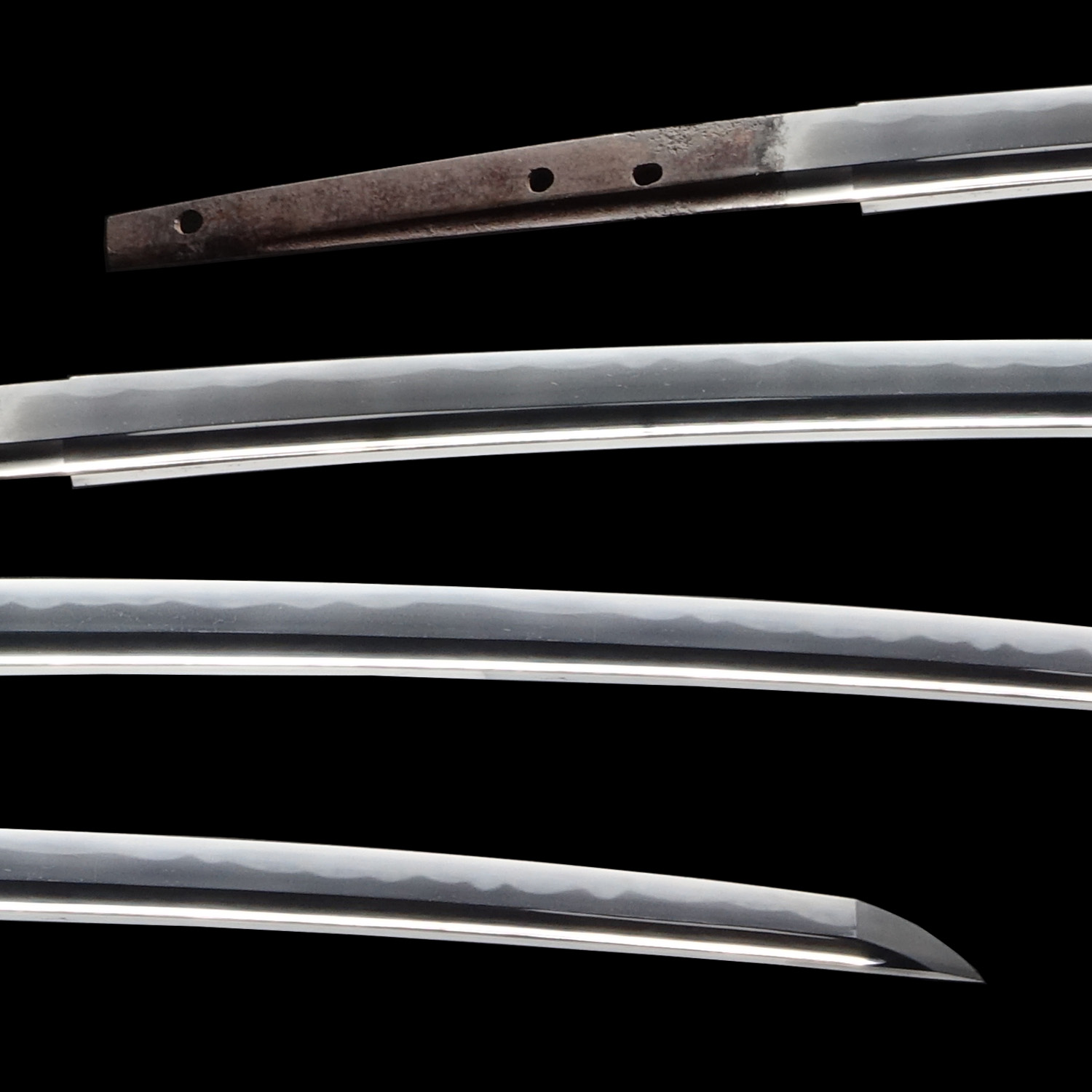
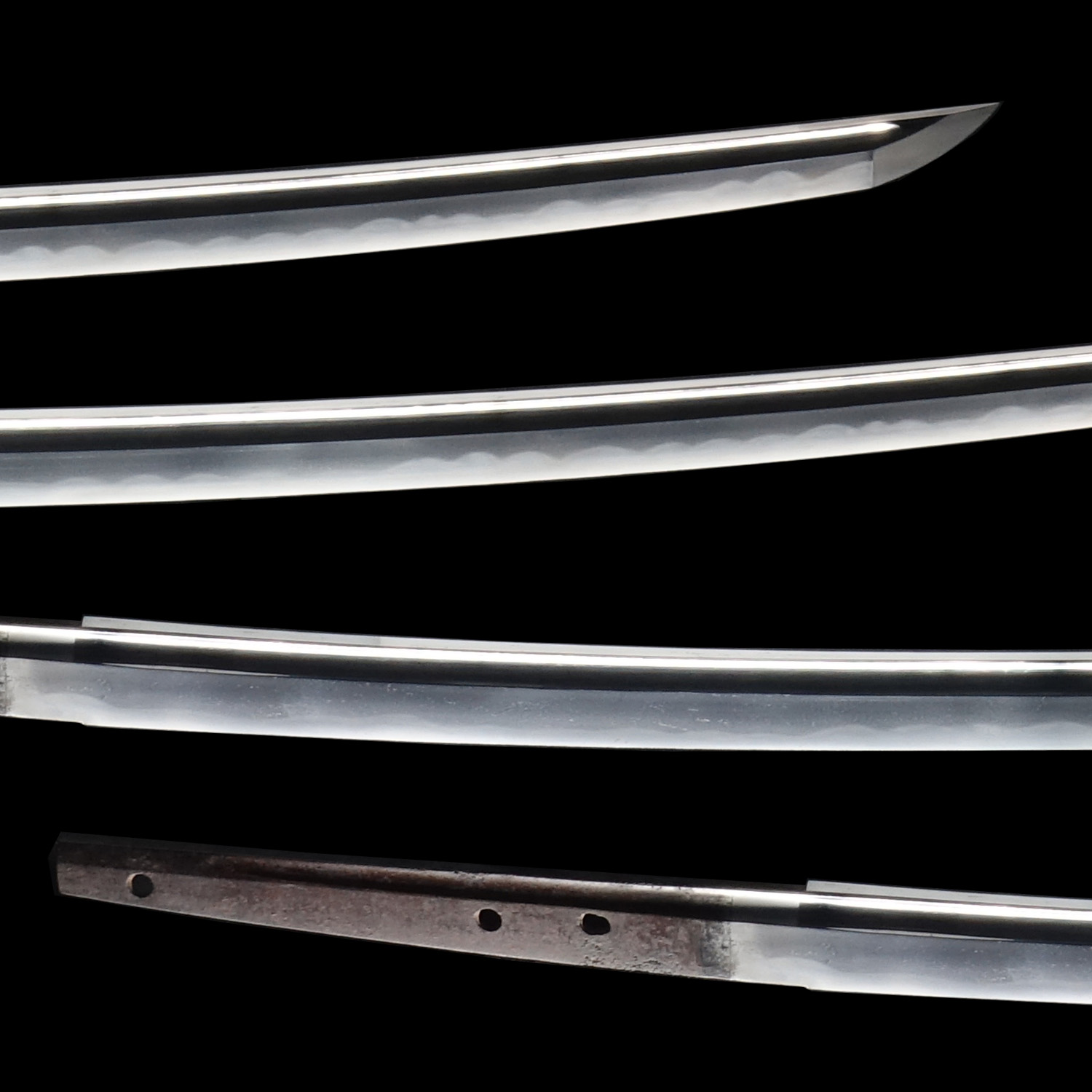
Sekishu Naotsuna school (Iwami, Soshu-den) · 石見 · 1352-1356頃
藤代 Jo saku · 刀剣大鑑 上位26%
現在1点販売中
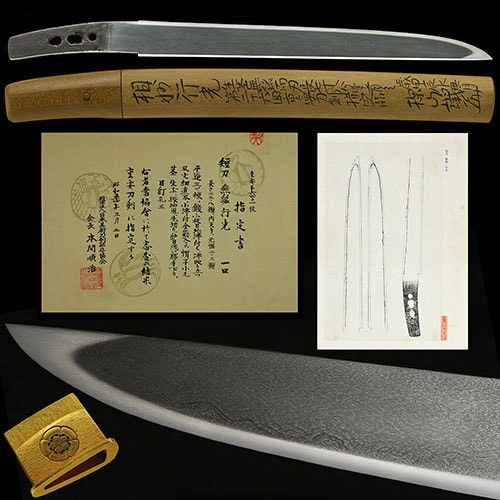
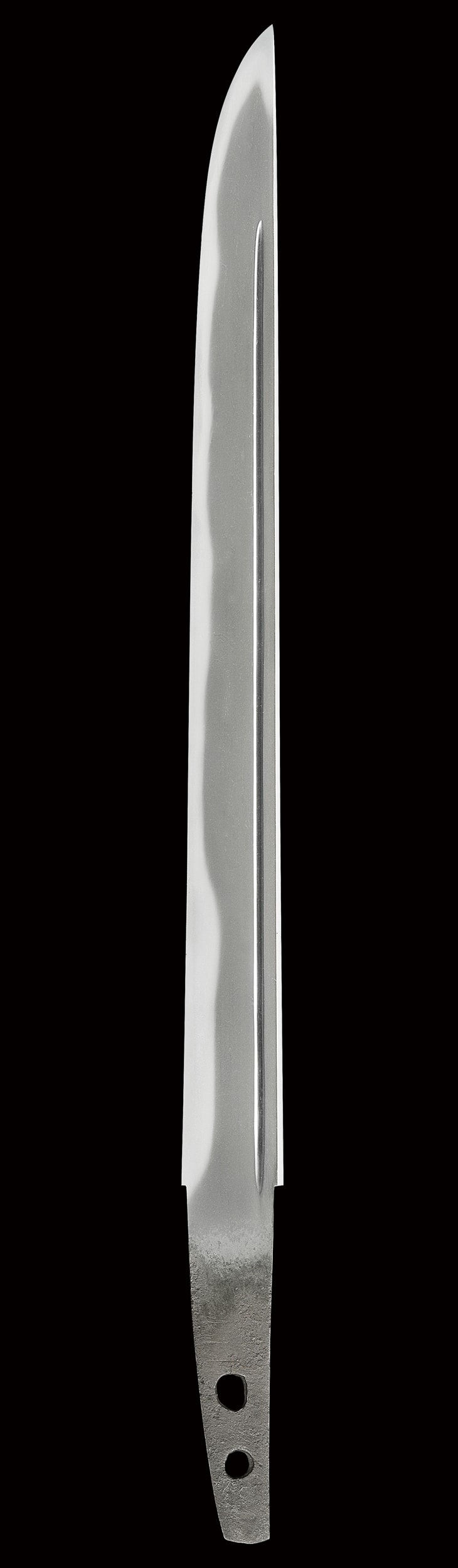
第五十回重要刀剣の在銘短刀は、第二目釘孔にかけて「石州出羽貞綱」の大振りな六字銘を切っており、この稀な完存の長銘がこの工を確かに繋ぎ止めている。貞綱は南北朝後期、石見国出羽に住し、説明書はこれを初代直綱の子と伝える。直綱は正宗の門人に数えられる石見の刀工で、相州伝を山陰の地に伝えた工である。銘鑑はこの名を三、四代に挙げ、初代を正平頃とし、以下を明徳・応永・康正に置く。在銘の現存作はほぼ室町に入って以降のもので、南北朝期の作は殆んど見ないため、初期作は銘ではなく地刃の様相より鑑せられる。指定作の多くが無銘の太刀・刀として貞綱に極められる所以である。
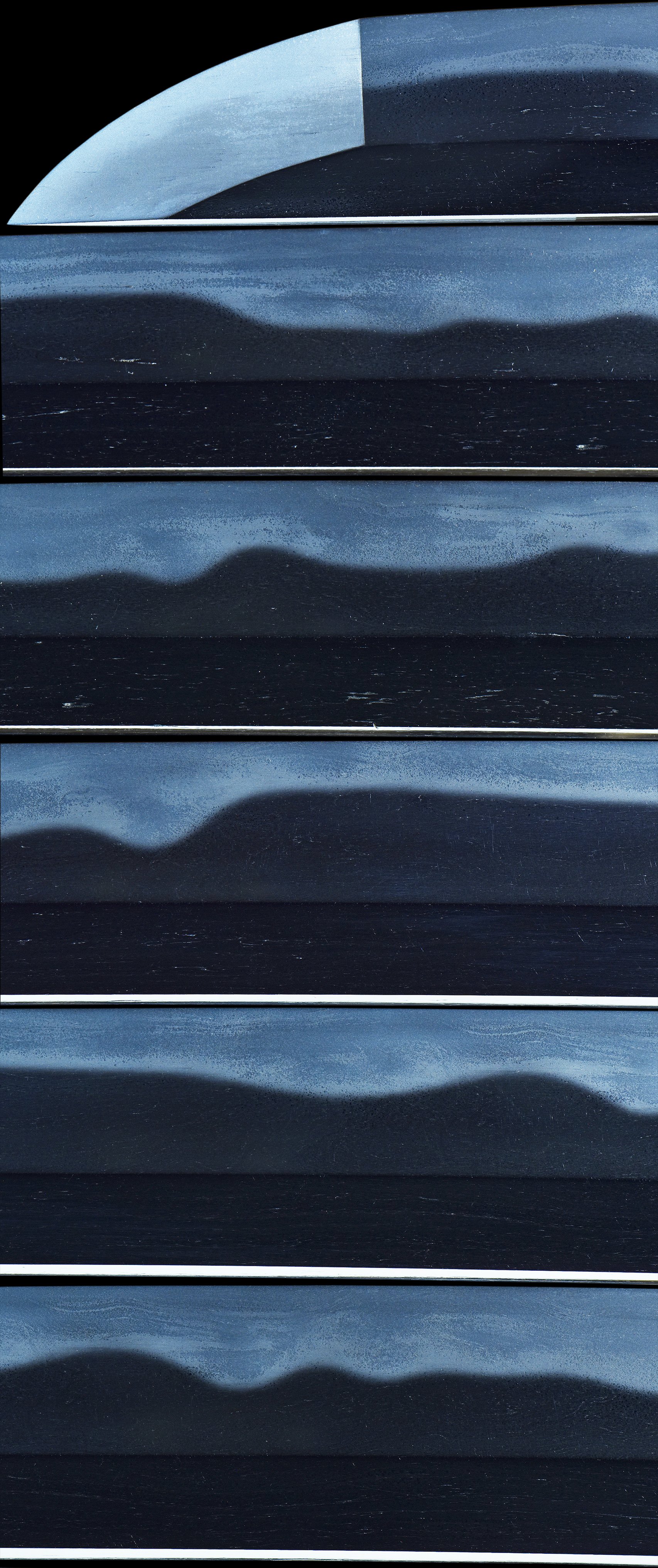
指定作に繰り返される見立ては、直綱に似ながら互の目をやや小さく焼くという点にある。刃文は全作に互の目乱れを基調とし、連れて乱れ、尖りごころ・角がかった刃を交え、時に頭の丸い互の目や僅かな丁子ごころを見せる。足入り、匂深く、沸が強くつき、処々荒めの沸を交える。この刃中を金筋・砂流しが盛んに働き、処々湯走りを交えて、刃の働きはむしろ賑やかである。最も明瞭な見どころは帽子にあり、多くの作で掃きかけ、焼詰め風となり、あるいは尖りごころをおびて小丸に返り、返りを長く焼く。相州伝の継承が最もよく現れるのはこの鋒であり、沸が掃きかけて横手を越えてゆく。
地鉄は杢と流れ肌を交えた肌立つ板目で、肌が締まるよりむしろ開き、説明書はその緩く粗い肌をザングリと評する。これに地沸がよくつき、しばしば微塵となり、地景が入り、かねはかな色に黒味をおびる。模した相州本場の緊んで明るい地鉄に対し、一門を分かつ石見の地方の地である。短刀では下半に地斑調の肌合がまじり、地沸が微塵に厚くつく。脇物に多い白けごころは初期の一太刀に見えるが常ではなく、より典型的なのは、刃中の金筋・砂流しを際立たせる黒く働きのある地である。
説明書はその作を二様に分ける。貞綱には互の目調のものと小のたれ調のものがあり、いずれも沸がよくつき、砂流しが盛んにかかると明記する。互の目調が主であり、角がかり尖る要素を交えた連れる乱れに、強く時に荒い沸をつける。小のたれ調は互の目に浅いのたれ・小のたれを交え、匂口は沈みごころとなり、金筋・砂流しを長く引き、とりわけ幅広・寸延びで重ね厚く反りの極く浅い平造短刀にこの貌が担われる。姿は時代を映し、磨上の刀は黒みがかる地に肌立つ板目を見せ、二字銘の細身・深い反り・小鋒の一太刀は古典的な鎌倉の姿を保つが、沸の強い刃文が直綱一門を語る。
この工を位置づけるのは系そのものである。説明書はその手を相州伝をあらわす石州直綱一門の作風とし、直綱門下の貞綱とする極めは正にこの点において首肯できると説く。最初の指定太刀については、強い沸・頻りの砂流し・交じる湯走りをもって「相州伝が認められ、直綱に通じるものがある」[[c:1]]と記す。作ごとにほぼ同文で繰り返される工レベルの評は「直綱に似て、互の目調のものと小のたれ調のものを見る」[[c:2]]というものである。貞綱は開祖から一歩退いた一門の手であり、相州の語法に忠実ながらこれを小さく、暗く、地方的に営み、その後流とされる長浜の祥末・祥貞・林祥らの上に立つ。
貞綱は藤代の格付で上作とされ、八口が重要刀剣に列するが、国宝・重要文化財はなく、その記録は名工というより堅実な地方の上手のものである。在銘の短刀の一口を説明書は「貞綱の見どころがよくあらわれている」[[c:3]]とし、同作中の佳品で迫力のある一口と評する。一刀は延宝七年(一六七九)本阿弥光常の折紙を伴って伝来し、貞綱と極めており、黒みがかる板目と小沸のよくついた連れる互の目によって現代の説明書もこれを首肯する。来歴は他に乏しく、大名家も美術館も記録されないため、率直には私蔵に静かに伝えられた一群と言うべきである。蒐集の上では相州伝の影響を受けた地方の上手の中ではむしろ求めやすい部類に属し、指定作の多くは重要刀剣の格にとどまって秘蔵されるわけではない。名を確かに定める在銘の一口こそ、より稀で望ましく、時折、辛抱強く待つことで世に現れる。
貞綱の位置づけを、日本刀全体および伝統・時代・時期ごとに示します。各位(随一・屈指・有数・著名)は、NBTHK および文化庁による指定に加え、三作や名物帳などの歴史的栄誉を加味したものです。
各項目を選ぶと評価方法が表示されます。
相州伝 · 石見
現在6点販売中
石州直綱は石見国に住した刀工で、同名数工の存在が知られ、古伝書の多くは初代を建武、二代を永和、三代を応永と記している。厳密な代別についてはなお研究すべき点が残されているが、初代直綱は相州正宗の門人と伝え、いわゆる正宗十哲の一人に数えられる。もっとも、年代的にみて正宗との直接の繋がりにはやや無理があるように思われ、その明確な当否は今後の研究に委ねられている。山陰の地にあって相州伝の作域を示す一派であり、南北朝期、わけても延文・貞治の頃を中心に活躍した。直綱の子には真綱があって南北朝より室町にかかり、また貞綱が出て石見国出羽に住し、時代が降ると同国長浜の地に祥末・祥貞・林祥らの後流を生じ、貞綱の子を初代とする末貞も室町に数代続いた。 姿形は身幅広く、元先の幅差さまで目立たず、反りやや深く、中鋒延びごころから大鋒に至るものが多く、延文・貞治体配を明瞭に示す堂々たる作り込みを身上とする。鍛えは板目に杢を交え、流れ肌をまじえて肌立ちごころとなり、地沸厚くつき、地景がよく入り、鉄色は総じて黒みをおびて、ときに淡く映り立ち、あるいは白気風を見せる。刃文は互の目を主体とし、角ばる互の目が連れ、小互の目・小のたれ・尖りごころの刃・丁子ごころの刃などを交え、足・葉よく入り、沸厚くついて金筋・砂流しが頻りにかかり、湯走り・飛焼・棟焼や二重刃風を交えるなど、相州伝の覇気に富む。総じて互の目が連れて乱れる態と、よく沸づいて働きの豊かな刃中に直綱を見分ける要点があり、その作風は相州伝の志津・左文字に一脈相通じるところがある。子の貞綱は直綱に似て、互の目調のものと小のたれ調のものとを見るが、いずれも沸がよくつき、砂流しが盛んにかかる点に共通する。 鑑定にあたっては、黒みをおびた板目鍛えに地沸・地景の発達した地鉄と、互の目を主調とした変化に富む乱れ刃、刃中に頻りに看取される金筋・砂流しの働きを併せ見て、直綱と極められるものが多い。在銘の作は遺例に乏しく、額銘の刀や二字銘の太刀がわずかに伝わるほか、有銘の太刀には重要美術品に認定された一口が現存して、その銘振りは比較の基準となる。無銘ながら延文・貞治の豪壮な体配によく相州伝の作域を映した優品が伝存し、薙刀を磨り上げて刀・脇指に仕立て直したものも見られる。南北朝の山陰にあって相州伝を継承し、正宗十哲の名のもとに伝えられてきた点に、この一派の位置づけがある。 詳しく見る →
南北朝時代の相州
1333年に鎌倉は落ちたが、一派の最大の時代はその後に来た。師の水準で鍛える貞宗、皆焼を大成した広光と秋広。相州風は軍勢とともに広がり、一時は国じゅうの様式となった。
保存刀剣のうち、出来が一層優れ、保存状態も良好と認められたものです。再刃や、室町・江戸期の多くの無銘作は対象外となり、保存刀剣より高い基準が課されます。
日本美術刀剣保存協会(NBTHK)は、1948年に設立され、文化庁の監督を受ける公益財団法人で、東京・刀剣博物館に本部を置きます。専門の審査員が出品作を直接審査し、美術的・歴史的価値に応じた鑑定書を発行します。NBTHKの鑑定書は、日本刀および刀装具の真正性を示す最も広く認知された基準です。
NBTHK公式サイトReturns/exchanges limited to defects caused by shipping (except willful misconduct or gross negligence by the company); customers must contact within 72 hours of receiving the product.
石州貞綱(特別保存刀剣鑑定書付) 【解説】 本作は、南北朝時代中期から後期(文和・康応頃:1352-1390年)にかけて活躍した石州出羽貞綱(せきしゅうでわさだつな)と極められた一振りです。貞綱の名は三代にわたり継承されていますが、本作は日本美術刀剣保存協会(NBTHK)により初代の手によるものと鑑定されています。「石州」は現在の島根県にあたり、「出羽」は当時の村の名に由来します。 貞綱は、相州正宗の門下として名高い「正宗十哲」の一人、初代直綱の子です。父である直綱は、相模国(現在の神奈川県)にて正宗に師事し、相州伝の奥義を極めた後、石州へと移住しました。直綱の名もまた、四代にわたって受け継がれています。 貞綱が活躍した南北朝時代は、朝廷が南北に分かれ、日本全土が動乱の渦中にあった時代です。多くの武士が戦場へと赴く中、貞綱は実戦に耐えうる強靭で質の高い刀剣を打つことに心血を注いだことでしょう。 石州(石見国)は古来より良質な鉄の産地として知られており、貞綱はこの優れた素材を背景に、数々の名刀を生み出しました。 本作は、日本美術刀剣保存協会(NBTHK)より「特別保存刀剣」に指定されています。これは、保存状態が極めて良好であり、かつ美術的価値が高い真作の日本刀にのみ与えられる格付けです。 ※樋(ひ)の中に僅かな鍛え傷が見受けられます。詳細については、お気軽にお問い合わせください。 【法量・形状】 長さ(Nagasa):69.7 cm 反り(Sori):1.8 cm 刃文(Hamon):焼入れによって刃先に現れる結晶構造 地文(Jihada):折り返し鍛錬によって現れる鋼の表面模様 茎(Nakago): 日本刀の柄に収まる部分です。職人が意図的に残した「黒錆」は、柄内部での赤錆の発生を防ぐ役割を果たします。経年による茎の変色は、専門家が製作年代を特定する際の重要な指標となります。 【外装(Koshirae)】 拵(こしらえ)とは、鞘、柄、鍔などを含めた刀装一式を指します。 縁頭(Fuchi-Kashira): 柄の両端を保護し、装飾する一対の金具です。 本作の縁頭は「合戦図」を題材としており、水辺で戦う武士の姿が精緻に彫り描かれています。豪華な甲冑を纏い、騎馬で戦う様子から、身分の高い武士を描いたものと推察されます。 合戦図は屏風絵などにも多く見られる画題ですが、江戸時代以降に制作されたものの多くは、必ずしも史実を忠実に再現したものではなく、権威の象徴や政治的な意図を含んで描かれることがありました。 柄・目貫(Tsuka / Menuki): 柄は刀を握る部分であり、目貫はその装飾を兼ねた手溜まりです。 柄巻の隙間から覗く目貫は、武具に関連した意匠と推察されます。布の付いた長い棒状のものは「旗印(はたじるし)」と思われ、戦場において自らの所属や家紋を示すために用いられたものです。
NihontoWatchSekishu Naotsuna school (Iwami, Soshu-den) · 石見 · 1352-1356頃
藤代 Jo saku · 刀剣大鑑 上位26%
現在1点販売中
第五十回重要刀剣の在銘短刀は、第二目釘孔にかけて「石州出羽貞綱」の大振りな六字銘を切っており、この稀な完存の長銘がこの工を確かに繋ぎ止めている。貞綱は南北朝後期、石見国出羽に住し、説明書はこれを初代直綱の子と伝える。直綱は正宗の門人に数えられる石見の刀工で、相州伝を山陰の地に伝えた工である。銘鑑はこの名を三、四代に挙げ、初代を正平頃とし、以下を明徳・応永・康正に置く。在銘の現存作はほぼ室町に入って以降のもので、南北朝期の作は殆んど見ないため、初期作は銘ではなく地刃の様相より鑑せられる。指定作の多くが無銘の太刀・刀として貞綱に極められる所以である。
指定作に繰り返される見立ては、直綱に似ながら互の目をやや小さく焼くという点にある。刃文は全作に互の目乱れを基調とし、連れて乱れ、尖りごころ・角がかった刃を交え、時に頭の丸い互の目や僅かな丁子ごころを見せる。足入り、匂深く、沸が強くつき、処々荒めの沸を交える。この刃中を金筋・砂流しが盛んに働き、処々湯走りを交えて、刃の働きはむしろ賑やかである。最も明瞭な見どころは帽子にあり、多くの作で掃きかけ、焼詰め風となり、あるいは尖りごころをおびて小丸に返り、返りを長く焼く。相州伝の継承が最もよく現れるのはこの鋒であり、沸が掃きかけて横手を越えてゆく。
地鉄は杢と流れ肌を交えた肌立つ板目で、肌が締まるよりむしろ開き、説明書はその緩く粗い肌をザングリと評する。これに地沸がよくつき、しばしば微塵となり、地景が入り、かねはかな色に黒味をおびる。模した相州本場の緊んで明るい地鉄に対し、一門を分かつ石見の地方の地である。短刀では下半に地斑調の肌合がまじり、地沸が微塵に厚くつく。脇物に多い白けごころは初期の一太刀に見えるが常ではなく、より典型的なのは、刃中の金筋・砂流しを際立たせる黒く働きのある地である。
説明書はその作を二様に分ける。貞綱には互の目調のものと小のたれ調のものがあり、いずれも沸がよくつき、砂流しが盛んにかかると明記する。互の目調が主であり、角がかり尖る要素を交えた連れる乱れに、強く時に荒い沸をつける。小のたれ調は互の目に浅いのたれ・小のたれを交え、匂口は沈みごころとなり、金筋・砂流しを長く引き、とりわけ幅広・寸延びで重ね厚く反りの極く浅い平造短刀にこの貌が担われる。姿は時代を映し、磨上の刀は黒みがかる地に肌立つ板目を見せ、二字銘の細身・深い反り・小鋒の一太刀は古典的な鎌倉の姿を保つが、沸の強い刃文が直綱一門を語る。
この工を位置づけるのは系そのものである。説明書はその手を相州伝をあらわす石州直綱一門の作風とし、直綱門下の貞綱とする極めは正にこの点において首肯できると説く。最初の指定太刀については、強い沸・頻りの砂流し・交じる湯走りをもって「相州伝が認められ、直綱に通じるものがある」[[c:1]]と記す。作ごとにほぼ同文で繰り返される工レベルの評は「直綱に似て、互の目調のものと小のたれ調のものを見る」[[c:2]]というものである。貞綱は開祖から一歩退いた一門の手であり、相州の語法に忠実ながらこれを小さく、暗く、地方的に営み、その後流とされる長浜の祥末・祥貞・林祥らの上に立つ。
貞綱は藤代の格付で上作とされ、八口が重要刀剣に列するが、国宝・重要文化財はなく、その記録は名工というより堅実な地方の上手のものである。在銘の短刀の一口を説明書は「貞綱の見どころがよくあらわれている」[[c:3]]とし、同作中の佳品で迫力のある一口と評する。一刀は延宝七年(一六七九)本阿弥光常の折紙を伴って伝来し、貞綱と極めており、黒みがかる板目と小沸のよくついた連れる互の目によって現代の説明書もこれを首肯する。来歴は他に乏しく、大名家も美術館も記録されないため、率直には私蔵に静かに伝えられた一群と言うべきである。蒐集の上では相州伝の影響を受けた地方の上手の中ではむしろ求めやすい部類に属し、指定作の多くは重要刀剣の格にとどまって秘蔵されるわけではない。名を確かに定める在銘の一口こそ、より稀で望ましく、時折、辛抱強く待つことで世に現れる。
貞綱の位置づけを、日本刀全体および伝統・時代・時期ごとに示します。各位(随一・屈指・有数・著名)は、NBTHK および文化庁による指定に加え、三作や名物帳などの歴史的栄誉を加味したものです。
各項目を選ぶと評価方法が表示されます。
相州伝 · 石見
現在6点販売中
石州直綱は石見国に住した刀工で、同名数工の存在が知られ、古伝書の多くは初代を建武、二代を永和、三代を応永と記している。厳密な代別についてはなお研究すべき点が残されているが、初代直綱は相州正宗の門人と伝え、いわゆる正宗十哲の一人に数えられる。もっとも、年代的にみて正宗との直接の繋がりにはやや無理があるように思われ、その明確な当否は今後の研究に委ねられている。山陰の地にあって相州伝の作域を示す一派であり、南北朝期、わけても延文・貞治の頃を中心に活躍した。直綱の子には真綱があって南北朝より室町にかかり、また貞綱が出て石見国出羽に住し、時代が降ると同国長浜の地に祥末・祥貞・林祥らの後流を生じ、貞綱の子を初代とする末貞も室町に数代続いた。 姿形は身幅広く、元先の幅差さまで目立たず、反りやや深く、中鋒延びごころから大鋒に至るものが多く、延文・貞治体配を明瞭に示す堂々たる作り込みを身上とする。鍛えは板目に杢を交え、流れ肌をまじえて肌立ちごころとなり、地沸厚くつき、地景がよく入り、鉄色は総じて黒みをおびて、ときに淡く映り立ち、あるいは白気風を見せる。刃文は互の目を主体とし、角ばる互の目が連れ、小互の目・小のたれ・尖りごころの刃・丁子ごころの刃などを交え、足・葉よく入り、沸厚くついて金筋・砂流しが頻りにかかり、湯走り・飛焼・棟焼や二重刃風を交えるなど、相州伝の覇気に富む。総じて互の目が連れて乱れる態と、よく沸づいて働きの豊かな刃中に直綱を見分ける要点があり、その作風は相州伝の志津・左文字に一脈相通じるところがある。子の貞綱は直綱に似て、互の目調のものと小のたれ調のものとを見るが、いずれも沸がよくつき、砂流しが盛んにかかる点に共通する。 鑑定にあたっては、黒みをおびた板目鍛えに地沸・地景の発達した地鉄と、互の目を主調とした変化に富む乱れ刃、刃中に頻りに看取される金筋・砂流しの働きを併せ見て、直綱と極められるものが多い。在銘の作は遺例に乏しく、額銘の刀や二字銘の太刀がわずかに伝わるほか、有銘の太刀には重要美術品に認定された一口が現存して、その銘振りは比較の基準となる。無銘ながら延文・貞治の豪壮な体配によく相州伝の作域を映した優品が伝存し、薙刀を磨り上げて刀・脇指に仕立て直したものも見られる。南北朝の山陰にあって相州伝を継承し、正宗十哲の名のもとに伝えられてきた点に、この一派の位置づけがある。 詳しく見る →
南北朝時代の相州
1333年に鎌倉は落ちたが、一派の最大の時代はその後に来た。師の水準で鍛える貞宗、皆焼を大成した広光と秋広。相州風は軍勢とともに広がり、一時は国じゅうの様式となった。
保存刀剣のうち、出来が一層優れ、保存状態も良好と認められたものです。再刃や、室町・江戸期の多くの無銘作は対象外となり、保存刀剣より高い基準が課されます。
日本美術刀剣保存協会(NBTHK)は、1948年に設立され、文化庁の監督を受ける公益財団法人で、東京・刀剣博物館に本部を置きます。専門の審査員が出品作を直接審査し、美術的・歴史的価値に応じた鑑定書を発行します。NBTHKの鑑定書は、日本刀および刀装具の真正性を示す最も広く認知された基準です。
NBTHK公式サイトReturns/exchanges limited to defects caused by shipping (except willful misconduct or gross negligence by the company); customers must contact within 72 hours of receiving the product.