説明

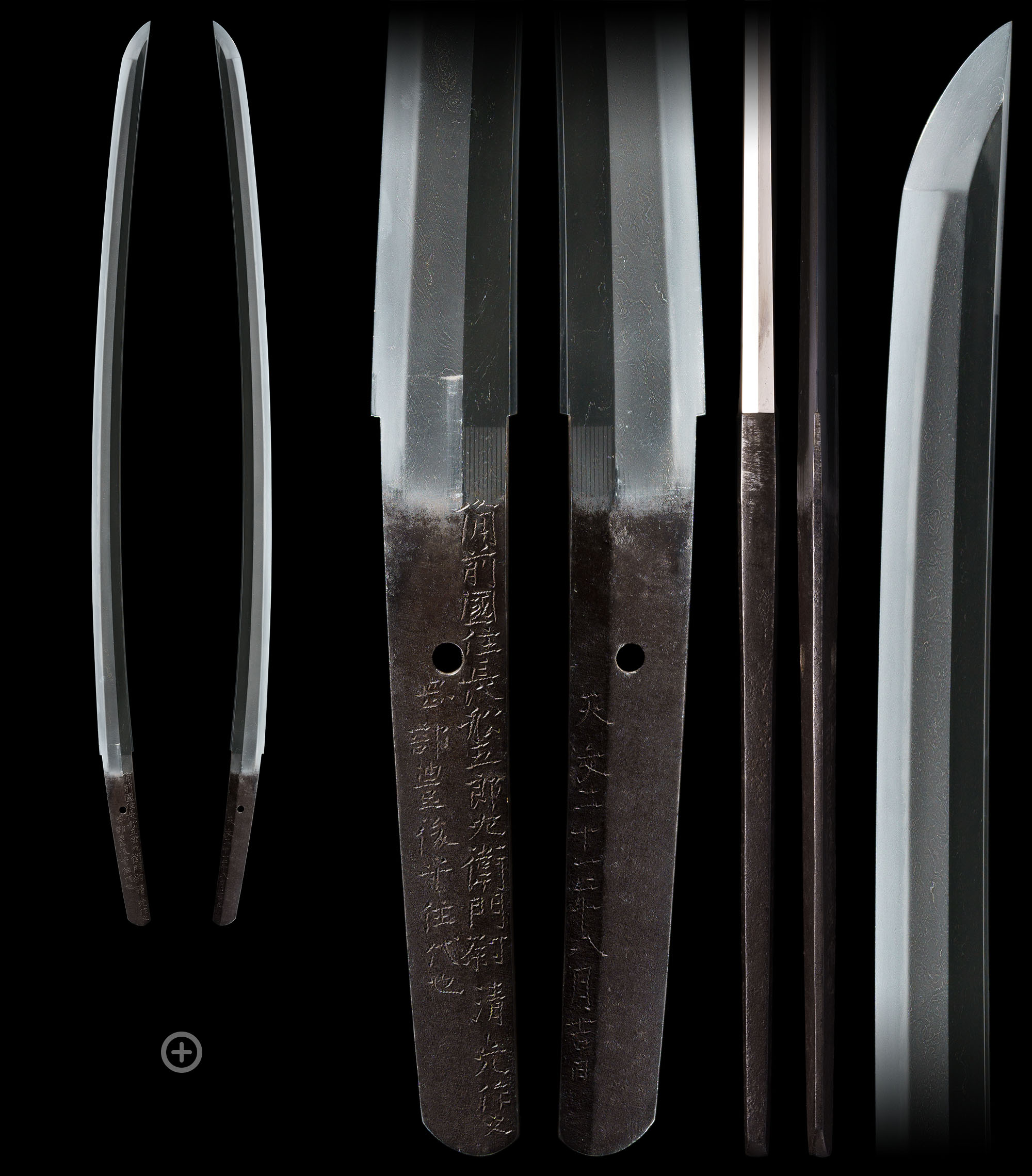
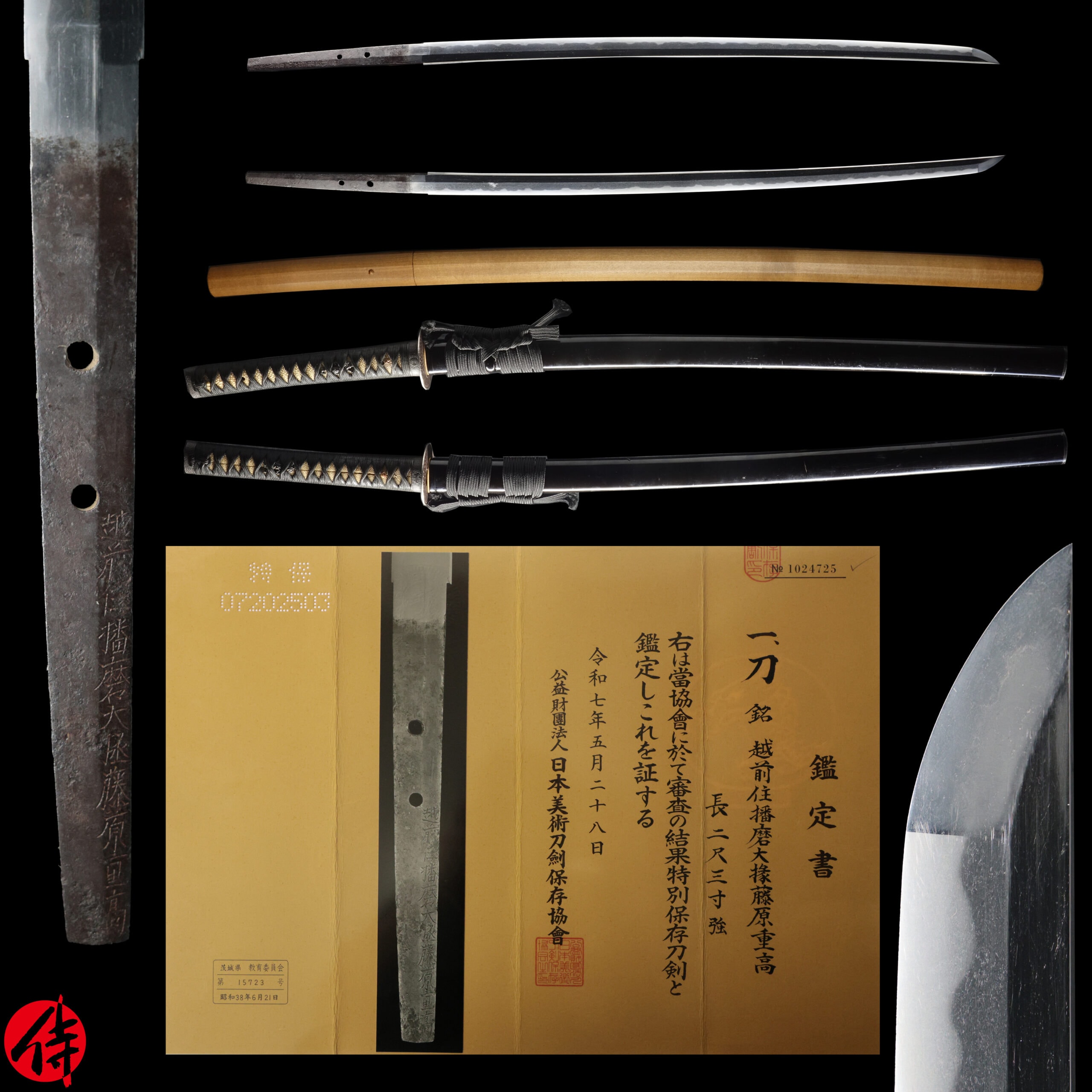
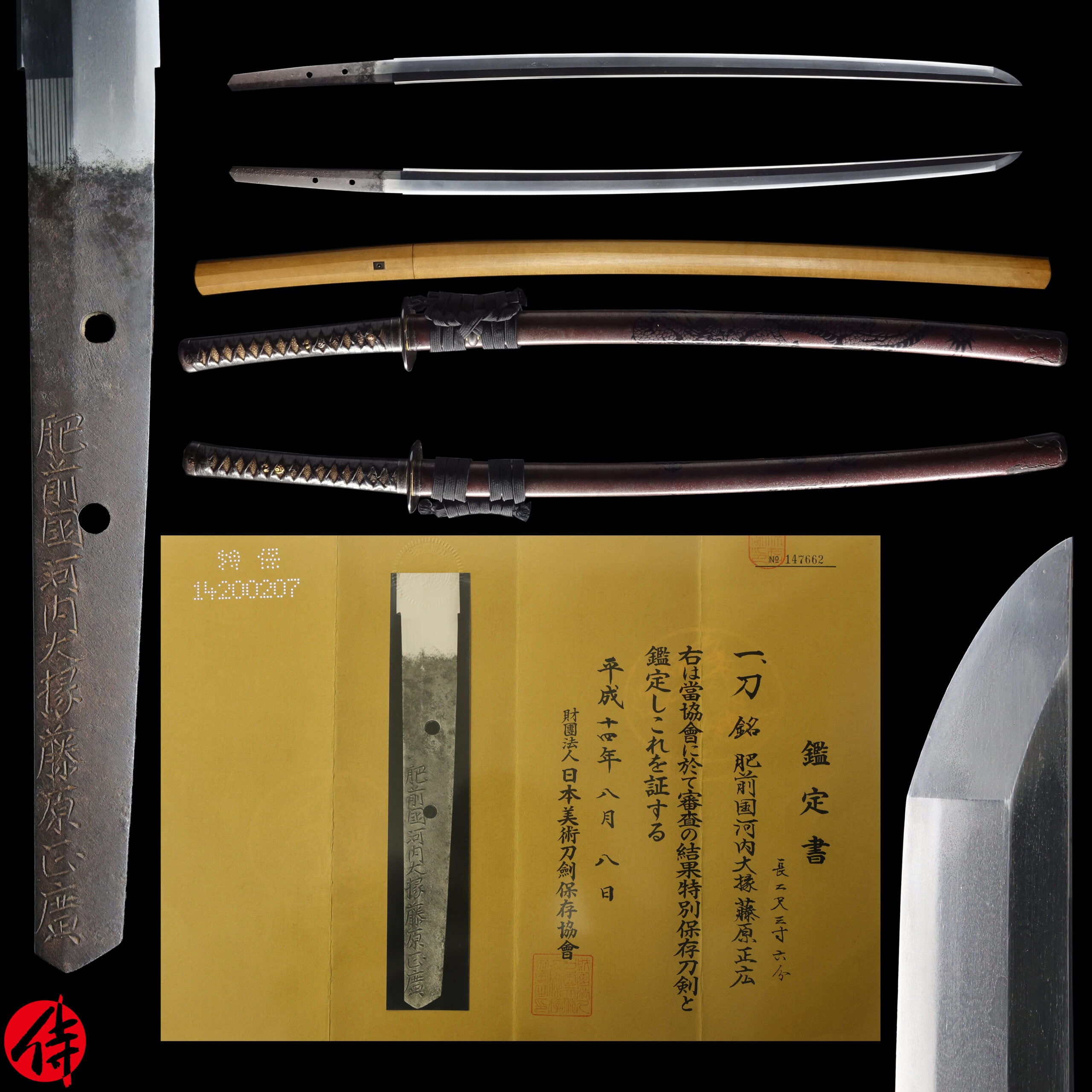
Antique Japanese Sword Katana attributed to Den Osafune Magouemon Nojyou Kiyomitsu with NBTHK Hozon Certificate 【Description】 This blade is attributed to Den Osafune Magouemon Nojyou Kiyomitsu (伝 長船孫右衛門尉清光) during the late Muromachi period (1532-1558). The maker’s name, Kiyomitsu, lasted a few generations. Magouemon Nojyou Kiyomitsu is one of the most famous ones among other generations. Kiyomitsu belonged to Bizen Osafune school. Those who forged swords in the Bizen province(Okayama prefecture) at the end of the Muromachi Period(1492-1569 A.D) are called Matsu Bizen(Matsu means the end). Kiyomitsu was one of the most famous figures, and this hereditary name was passed down through generations in Bizen Osafune school. The swordsmiths in Bizen produced many swords during the Muromachi period because it was in the middle of the Sengoku period (Warring state period). The demand for weapons increased among strong feudal lords. It would be nice to have a piece forged in the warring state period when there was so much rivalry between warlords. It is possible that this blade was ordered by a high-class Samurai. This History of Bizen Osafune School It is said that Osafune school was founded by Mitsutada (光忠), who was active during the mid-Kamakura period. Bizen Osafune school was the biggest one of all other schools in Bizen province, and they received many orders from feudal lords or renowned Samurai. They were called Osafunemono and were beloved by Samurai warriors. Among the swordsmiths who belonged to this school, Nagamitsu, Sanenaga, and Kagemitsu are known as Osafune Sansaku, the three renowned Osafune swordsmiths. There are also four other prominent swordsmiths who were from Bizen Osafune school. They are called Osafune Shiten-no, the four masters of Osafune school. Their names are Nagamitsu, Kanemitsu, Nagayoshi, and Motoshige. BIZEN is located near the Chugoku Mountains, where iron sands, one of the essential materials for making Japanese swords, were abundant. Furthermore, BIZEN swordsmiths had close access to the Yoshi River, where they could find water and charcoal. This geological location contributed to the swordsmiths forging high-quality refined blades. We presume BIZEN was quite active in sword-forging from ancient times. It is said that BIZEN DEN was created by groups of swordsmiths there during the late Heian era (Late 12th century ). These ancient swordsmiths in Bizen province are called Ko-Bizen (Old Bizen) swordsmiths. By inheriting the sword forging techniques from Ko-Bizen swordsmiths, the Bizen Osafune school flourished from the mid-Kamakura period. This blade is appraised as a Hozon Touken (保存刀剣) issued by NBTHK (Nihon Bijutsu Touken Hozon Kyokai: 日本美術刀剣保存協会). This authentication paper was only given to authentic Japanese swords, well preserved and high quality with artistic value. *Please keep in mind that there are a couple of noticeable Kitae Kizu on this blade. If you like to see the detailed condition, please feel free to contact us. 【Blade】 Cutting Edge Length (Nagasa) : 73.2 cm (28.8 inches) Curvature (Sori) : 2.5 cm (0.98 inches) Hamon : The crystalline structure which forms along the cutting edge of a blade as a result of the hardening process. Jimon (Jihada) : Visible steel surface pattern created by folding and hammering during forging process. Kissaki : Kissaki is the tip of the Japanese sword. Nakago : Nakago is the tang of the Japanese sword. Japanese swordsmiths left the black rust on the tang because it prevents red rust while the tang is in its handle. And the discoloration of the tang was created over time, and it is a great indicator for a Japanese sword specialist to estimate when the sword was forged. Koshirae : Koshirae is the mounting of the Japanese sword. There are several parts that consist of Koshirae such as Saya (Scabbard), Tsuka (Handle), Tsuba (Handguard). The theme of the Fuchi Kashira and Menuki is tiger. And, we believe the motif of the Tsuba and Kojiri is dragon. The tiger i

Antique Japanese Sword Katana attributed to Den Osafune Magouemon Nojyou Kiyomitsu NBTHK Hozon Certificate
売切れ
Hozon売切れ

Antique Japanese Sword Katana attributed to Den Osafune Magouemon Nojyou Kiyomitsu NBTHK Hozon Certificate

売却済

世界81社の刀剣商を横断追跡 · 価格履歴 · 売却アーカイブ

仕様

長さ

73.2 cm

反り

2.5 cm

作者について

Kiyomitsu清光

1 特別重要刀剣18 重要刀剣

清光を本録に据える一口は、天文二十三年(一五五四)紀の刀で、「備前国住長船清光作之」と長銘に切り、平成二十六年に特別重要刀剣に上げられた、身幅広く反りの深い打刀である。俗名はないが、説明書はその「銘振りよりして、五郎左衛門尉と鑑せられる」とする。清光は室町時代末期の長船鍛冶、汎称して末備前と呼ばれる工房群とその作を代表する名の一つで、この数多い名の中にあって本工はほぼ余すところなく知られる。本録の作はいずれも生ぶ茎に長銘と年紀を有し、その大半が天文年間(一五三二〜一五五五)に集中する。説明書はこの期に清光を名乗る刀工を早見出では十人もの数に掲げ、五郎左衛門尉・孫右衛門尉・与三左衛門尉・彦兵衛・孫兵衛の俗名を挙げて、中でも五郎左衛門尉と孫右衛門尉を上工とする。本録を満たすのは天文年紀のその五郎左衛門尉であり、説明書は彼を一線の頭に置き、同名の二代が永禄・天正年間に続くとする。 本工の評価はまず*直刃*にある。説明書は本工を忠光と並ぶ末備前の直刃の名手とし(「忠光と並んで直刃の名手」)、その広直刃を清光家の看板そのものとする(「清光家の看板であるところの広直刃」)。典型の刀は身幅広く重ね厚く、鎬高く、先反りのつく頑健な打刀で、中鋒やや延びごころとなり、これに小互の目・小丁子を交えた広直刃を焼く。刃中に*足*・*葉*よく入り、説明書が本工の典型の見どころとする葉が盛んに働き、細かに*金筋*・*砂流し*かかり、*匂口*明るく冴える。頑健な姿にこの手を焼き、刃の働きよく匂口の冴えたものを、説明書は「直刃を得意とする清光の真骨頂」と評する。 その刃を支える地鉄もまた、本工の見どころの一半をなす。よくつんだ*板目*・*小板目*に*杢*を交え、*地沸*微塵につき、*地景*入り、淡く*映り*が立つ。説明書は本工の地鉄を、忠光や与三左衛門尉祐定の作に比してやや肌立つ傾向のもの、杢の交じる板目とし、常の作では三者のうちやや肌の開いた一人とする。例外がかえって常態を語る。最上手の作、特別重要刀剣の刀などでは、同じ説明書がその地鉄を常の作に比して肌のつんだ精良な肌合と評し、地鉄の出来がこれらの一口を他から抜きん出させている。*帽子*は小丸に*掃きかけ*、直刃の作では直ぐに小丸となり、処々先尖り、あるいは裏が二重刃風となる。 この静かな作域に対し、本工はより華やかな二つの手を焼き、説明書はこれを逸脱ではなく本工の典型として扱う。第一は*互の目乱れ*で、その見どころは腰の開いた*互の目*、小丁子・小互の目を交えて中直刃を基調に*足*・*葉*よく入り*砂流し*かかるもので、説明書はこれをもって与三左衛門尉祐定に近いものとする(「与三左衛門尉祐定に近い」)。第二は*皆焼*で、焼を高く取り、丁子乱れに互の目・小丁子を交え、*飛焼*が入り*棟焼*が盛んにかかって総体に皆焼状となり、*沸*強くつき*砂流し*かかる。ここで説明書は造込みの見どころを挙げる。末備前は概して重ね厚いが、「皆焼を焼いた場合は必ず重ねが薄くなる」のであり、その削いだ造込みそのものが見どころで、同派にまま経眼する*丸棟*を伴う場合もある。同じ華やかさは菖蒲造の一口や幅広の*短刀*にも現れ、造込みは変わっても手は一定である。 末備前の中で五郎左衛門尉を際立たせるものは、対比によってではなく本工自身の作によって読まれる。葉のよく入る明るい広直刃は説明書が本工の名に結びつける手であり、三作域中もっとも静かなもので、一方の腰の開いた互の目と飛焼・棟焼の皆焼は、その作域を祐定の方へ、また末備前の華やかな好みの方へと広げる。忠光は直刃を共にするが皆焼を共にせず、祐定は互の目を共にするが幅いっぱいに保った直刃を共にしない。本工の作には在りし日を時と所に定める注文者銘を帯びるものが幾口かあり、播州龍野の城下で鍛えた一口は説明書が本工の動向を知る資料として貴重とし、注文者政秀は浦上一門の武将であった。戦乱の世のために打たれた幅広で反りの深い姿そのものが読みの一部であり、説明書は幅広の両刃造短刀について「戦国時代の気風が姿にもよくあらわれて」いると記す。 その名に負う指定の重みは、広大ではないが堅実である。一口が特別重要刀剣に達し、十八口が重要刀剣であって、国宝・重要文化財の域に及ぶものはなく、指定の頂ではなくその中上層に築かれた記録である。*刀工大鑑*は本工を長船の名工の中位に値付ける。来歴は、知られる限りでは重き家を経る。一口は「忍の松平家伝来」であり、また一口は刀剣の学者でもある正秀の手に渡った。確かな在銘・年紀の五郎左衛門尉清光の作は末備前の名としては相応の数が遺り、説明書がその手の傑出した作とする生ぶ茎在銘の一口は、待つ収集家にとって末備前の大家の中ではなお出会い得る側にある。重要刀剣の域は折にふれて現れ、ただ一口の特別重要刀剣は、現れればそれが一つの画期となる。

刀剣商

サムライミュージアム

samuraimuseum.jp

売切れ