説明
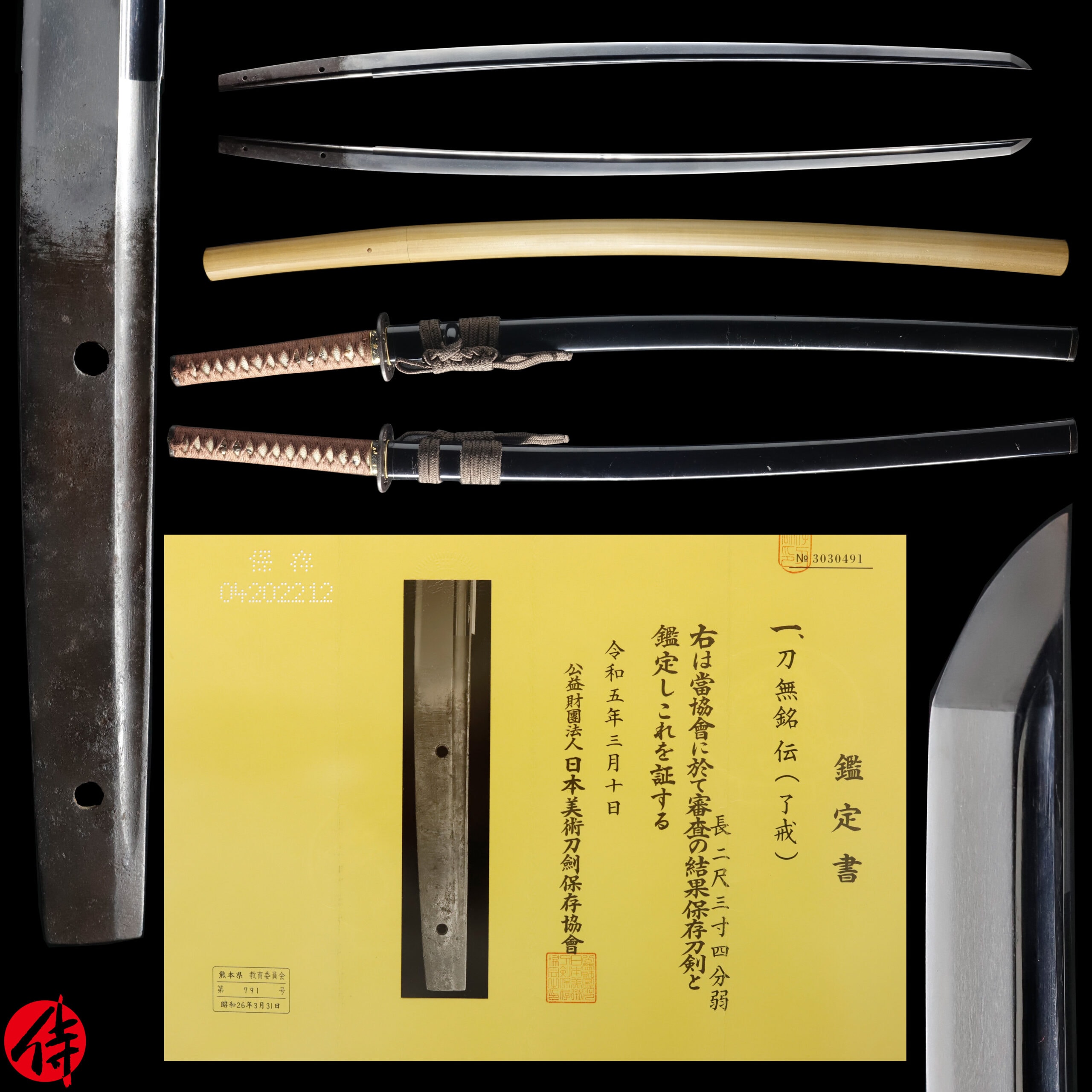
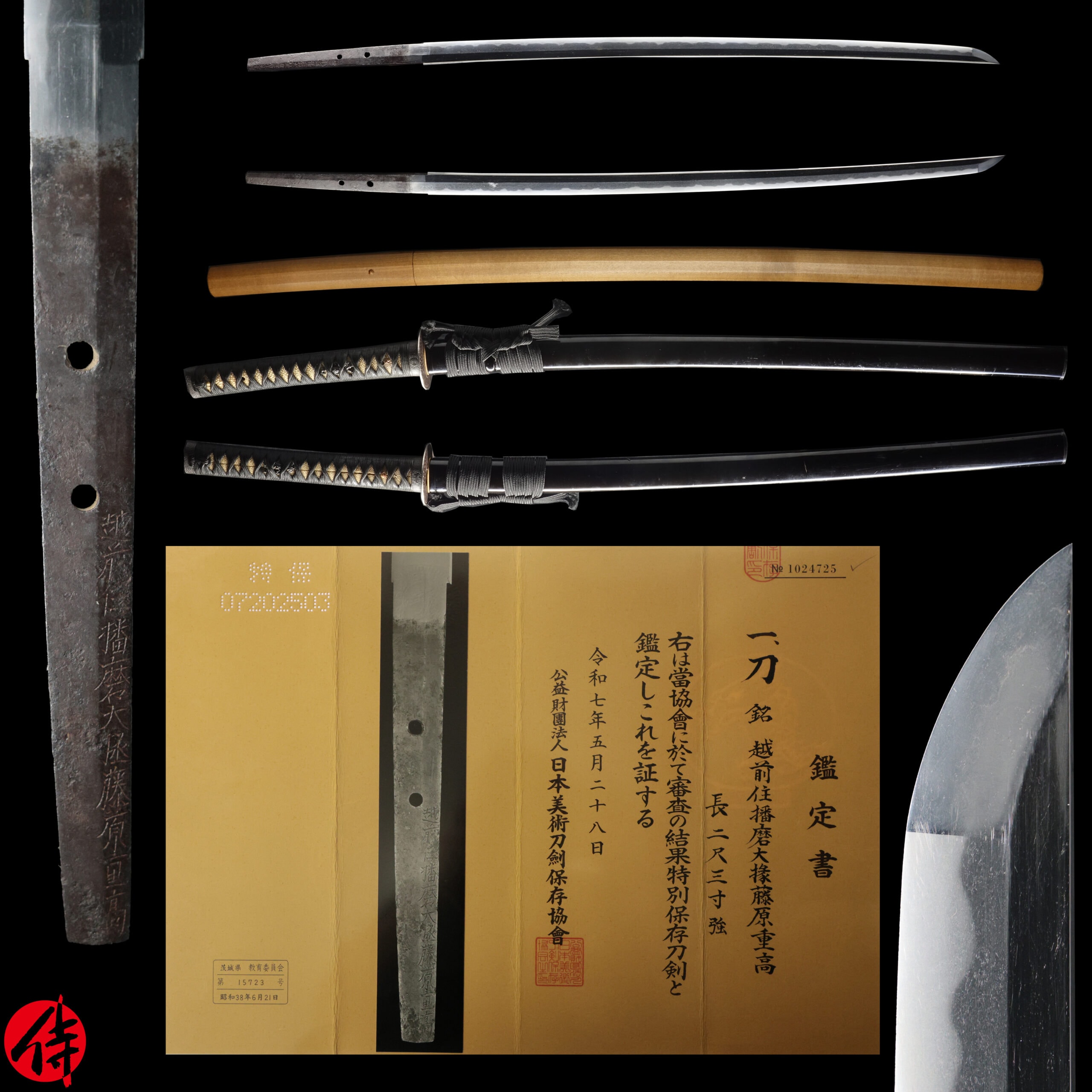
Antique Japanese Sword Katana attributed to Ryokai with NBTHK
Hozon
Certificate
【Description】
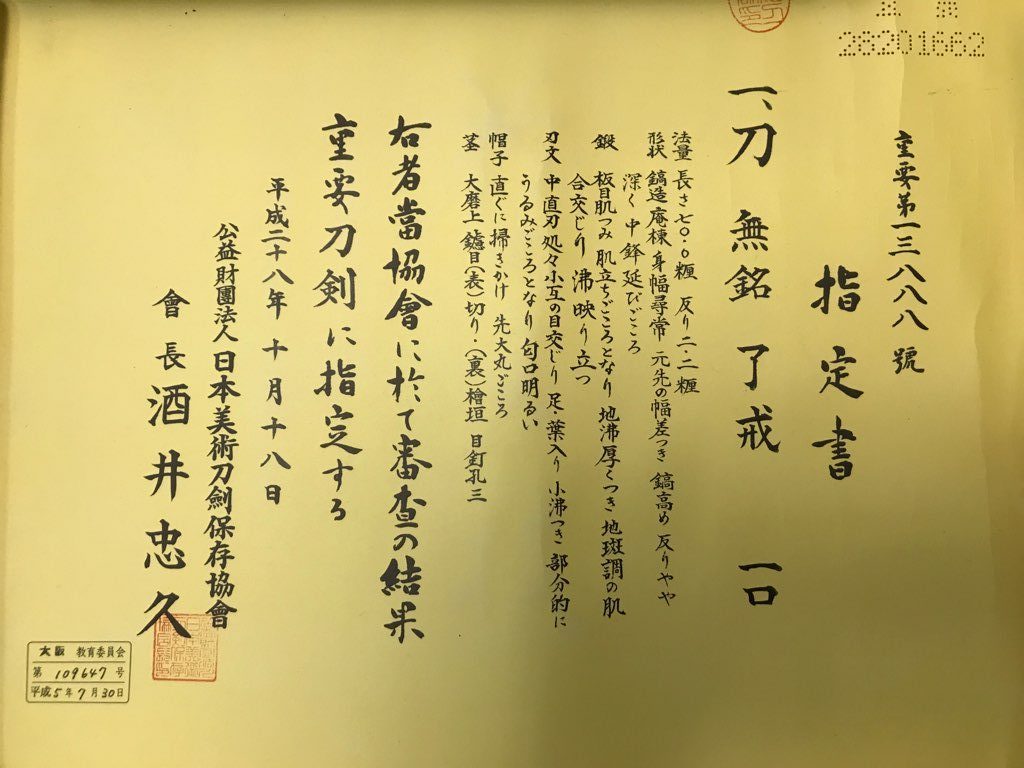
This blade is attributed to Ryokai (了戒), who was active during the late Kamakura period in Yamashiro Province (Today’s Kyoto). It is said that he was a son of Rai Kuniyuki (来国行) and a younger brother of Rai Kunitoshi (来国俊). Both of them are renowned swordsmiths throughout Samurai history.
Ryokai founded his own school, and the apprentices were allowed to use Ryokai in their maker’s names. Ryokai’s son was Ryokai Hisanobu, who took over the school. And his apprentice Ryokai Yoshisada also run the school after Hisanobu.
However, Ryokai Yoshisda had to evacuate Yamashiro province during the late 14th century because the battle between the south emperor court and the north emperor court became severe. And as a result, Kyoto city was burnt(the late 1300’s). We called it the Nanbokucho war when the Japanese imperial court was separated into two.
Ryokai Yoshisda managed to escape and arrive in Kyushu island at Tsukushi Province (Today’s Fukuoka prefecture), looking for better opportunities.
And, Yoshisada founded Tsukushi Ryokai school there. Among Japanese sword experts, Ryokai school in Tsukushi province is called Tsukushi Ryokai to distinguish it from the Ryokai school in Yamashiro province.
Yamashiro Den
Yamashiro province was famous for its sword-making style called YAMASHIRO-DEN. YAMASHIRO-DEN’s origin dates back to the Heian period(794 A.D) when the capital city was moved from Nara to Kyoto. The swordsmiths in Yamashiro province initially prospered by forging swords for court nobles and imperial families. Later on, they also forged swords for feudal lords after Samurai military government took control of Japan. There are so many renowned swordsmiths from this region.
It is said that the founder of YAMASHIRO-DEN was Sanjo Munechika. And there are four prestigious main branches in this region. They are Sanjo, Rai, Nobukuni, and Awataguchi.
One of the characteristics of YAMASHIRO-DEN is its elegant design and beautiful Jigane (steel surface pattern). This blade represents a great trait of YAMASHIRO-DEN.
This blade is appraised as a
Hozon Touken
(保存刀剣) issued by NBTHK (Nihon Bijutsu Touken Hozon Kyokai: 日本美術刀剣保存協会). This authentication paper was only given to authentic Japanese swords, well preserved and high quality with artistic value.
【Blade】
Cutting Edge Length (Nagasa)
:
70.7
cm ( 27.8 inches)
Curvature (Sori)
:
1.36 cm (0.53 inches)
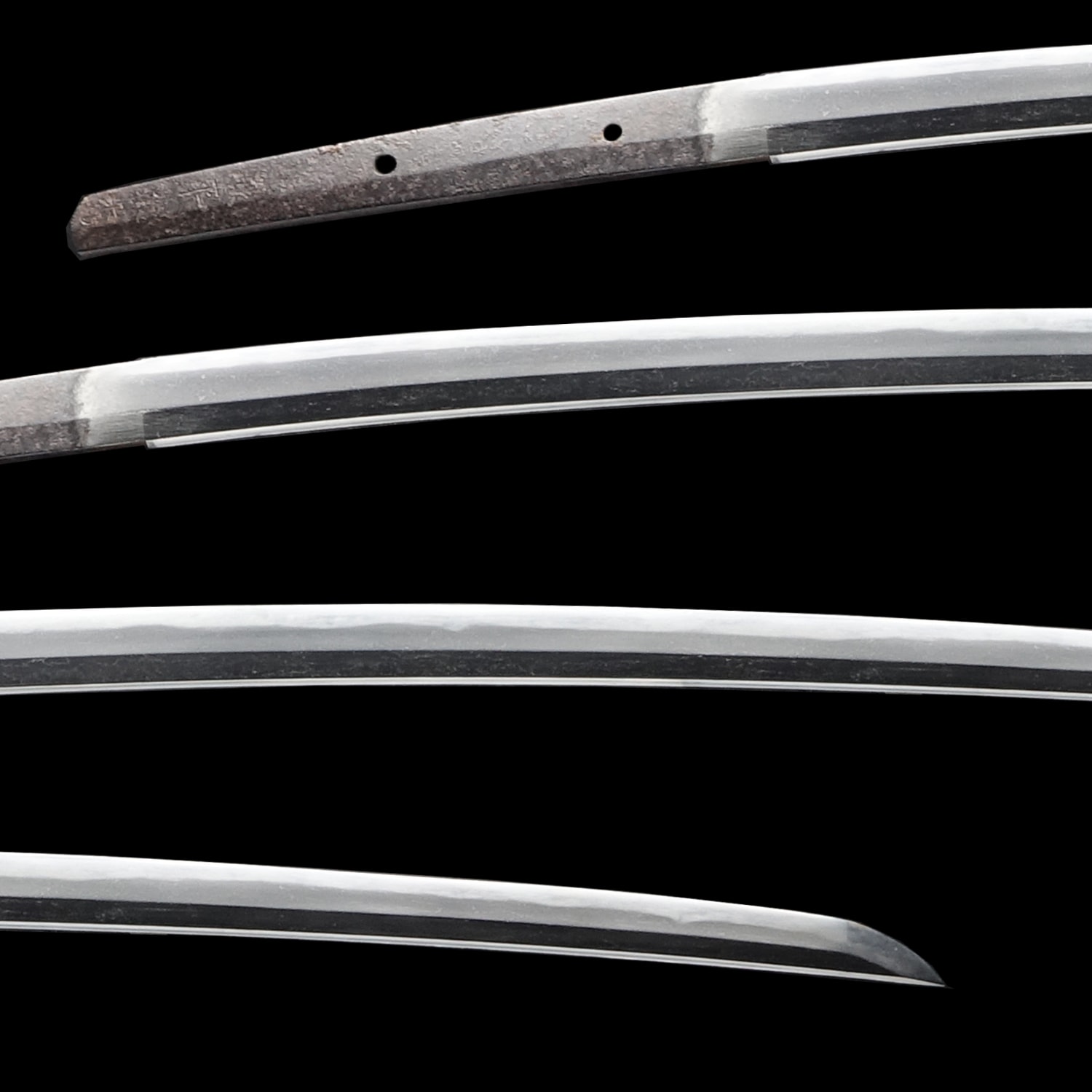
Hamon
:
The crystalline structure which forms along the cutting edge of a blade as a result of the hardening process.
Jimon (Jihada)
:
Visible steel surface pattern created by folding and hammering during forging process.
Nakago
:
Nakago is the tang of the Japanese sword.
Japanese swordsmiths left the black rust on the tang because it prevents red rust while the tang is in its handle. And the discoloration of the tang was created over time, and it is a great indicator for a Japanese sword specialist to estimate when the sword was forged.
Koshirae
:
Koshirae is the mounting of the Japanese sword. There are several parts that consist of Koshirae such as Saya (Scabbard), Tsuka (Handle), Tsuba (Handguard).
Fuchi-Kashira
:
A pair of matching sword fittings that cover the upper and bottom parts of its sword hilt.
The motif engraved on this Tsuba is probably a pine tree. Although it is pretty simplified, it is probably this plant pattern. Since pine trees keep their green color throughout the years by withstanding severe heat and cold, people thought this plant pattern represents eternal youth. Furthermore, its color is called Tokiwa-Iro (常盤色, evergreen trees’ dark green color with brown), and pine trees have another name, Tokiwa-Gi (常盤木). Tokiwa means immutability, so Tokiwa-Iro is a color that praises green with a wish for longevity and prosperity. It is said this color was appreciated, especially in the Edo period, as a good-luck color. The pine tree design gives us an elegant and noble impression; it might