説明

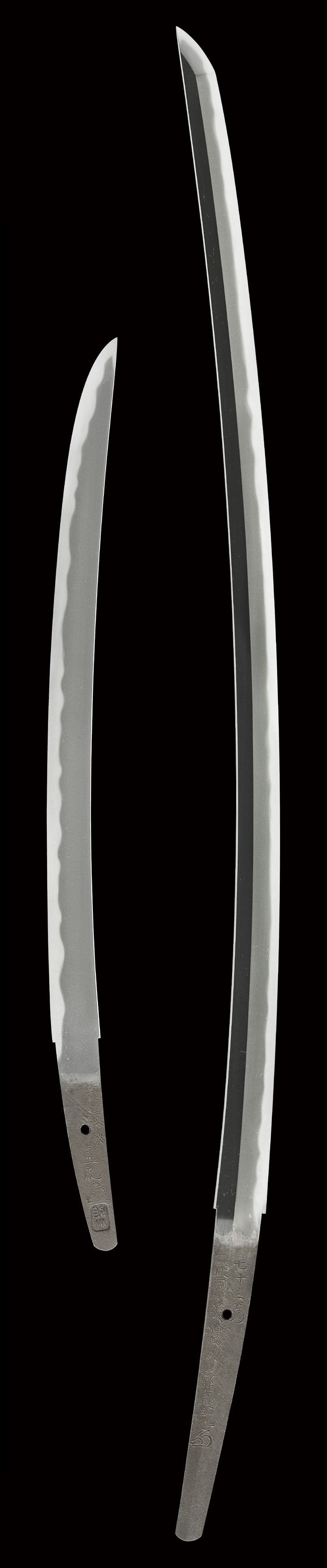
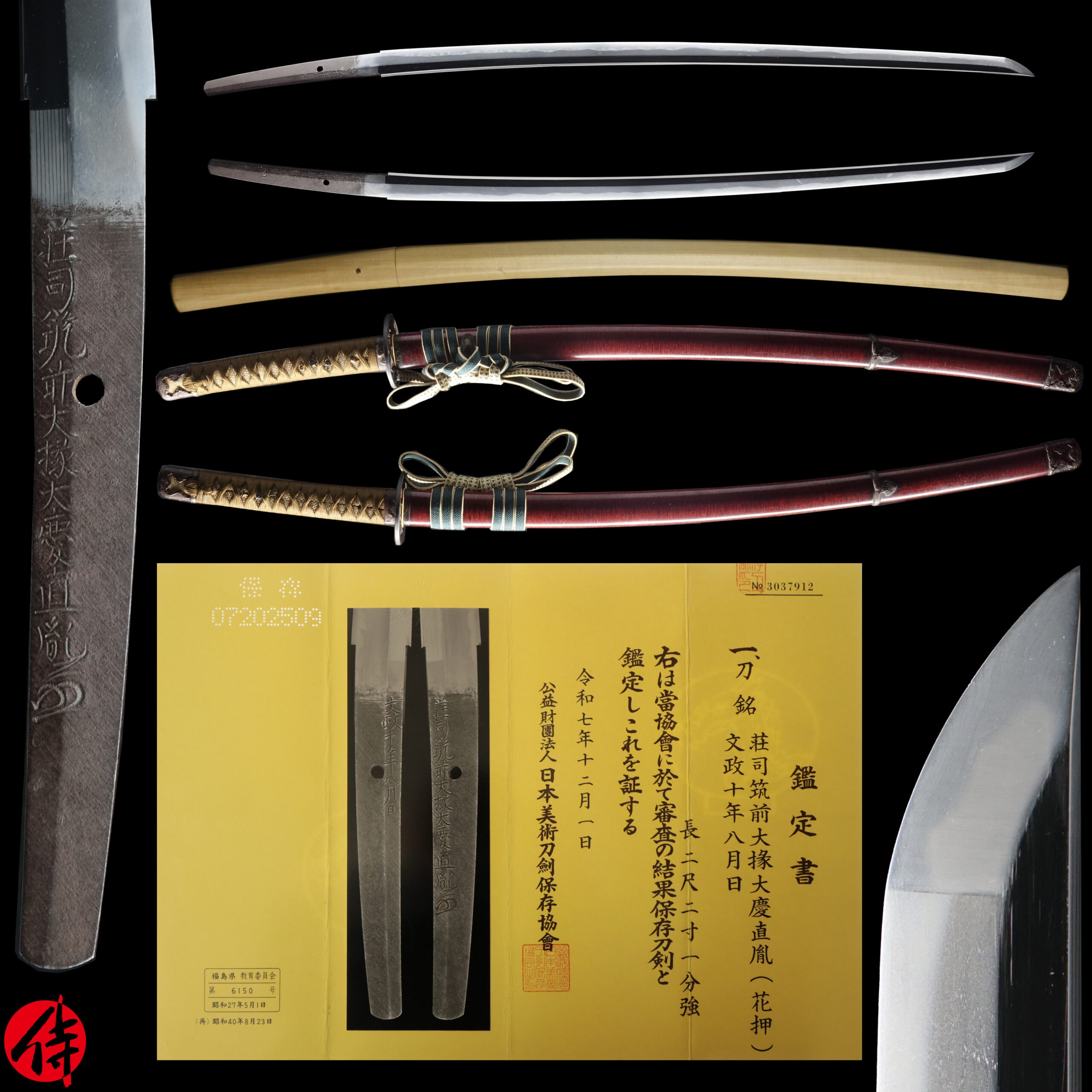
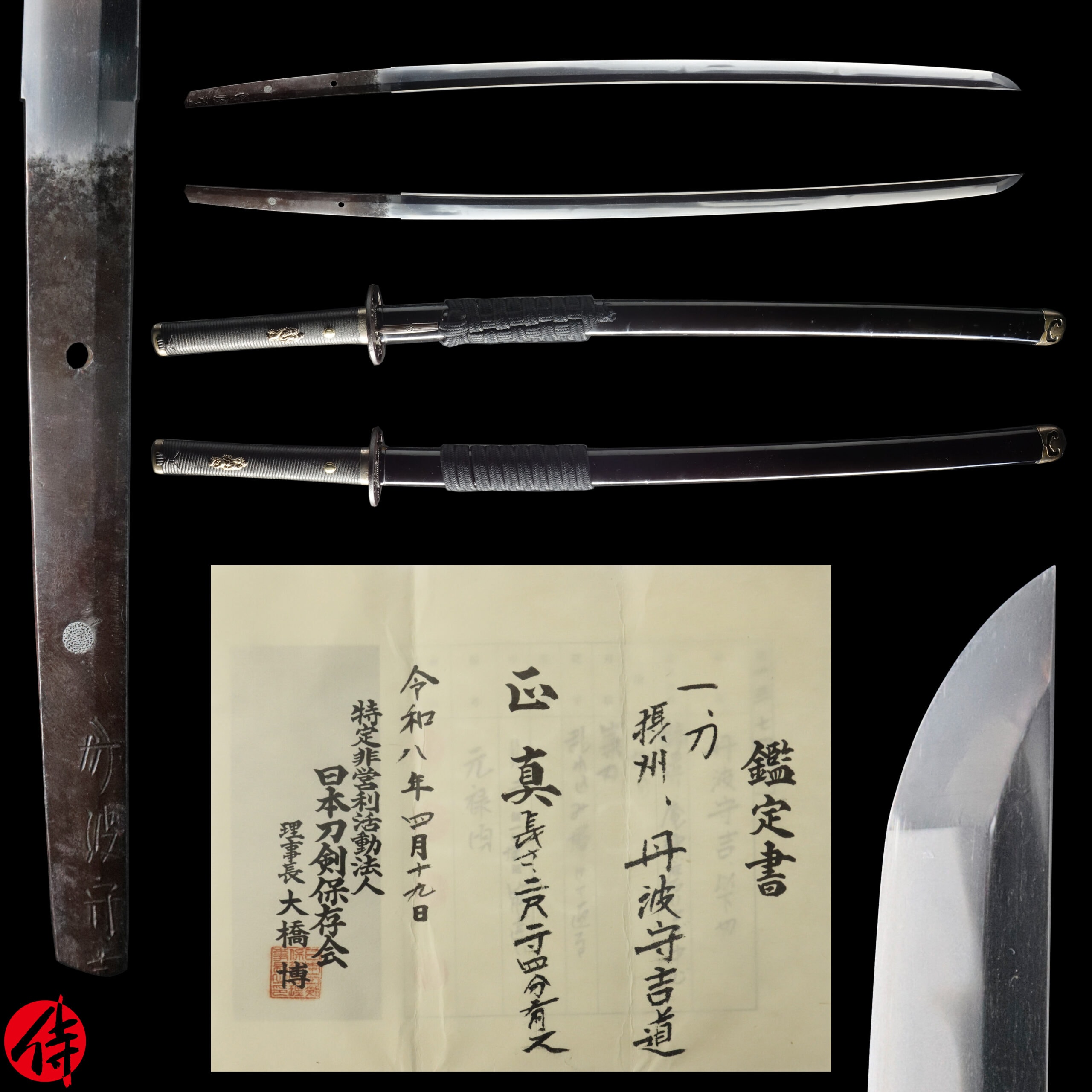
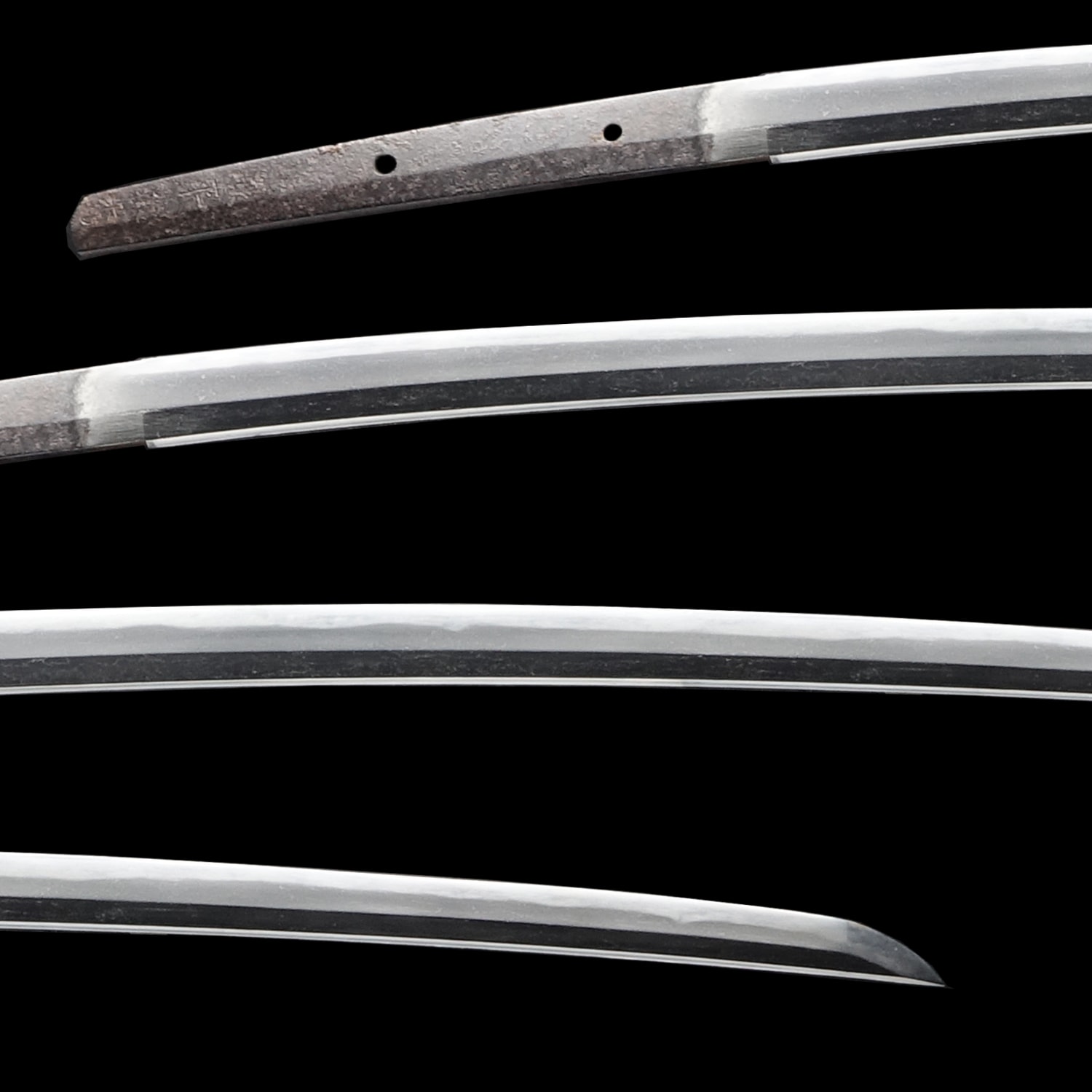
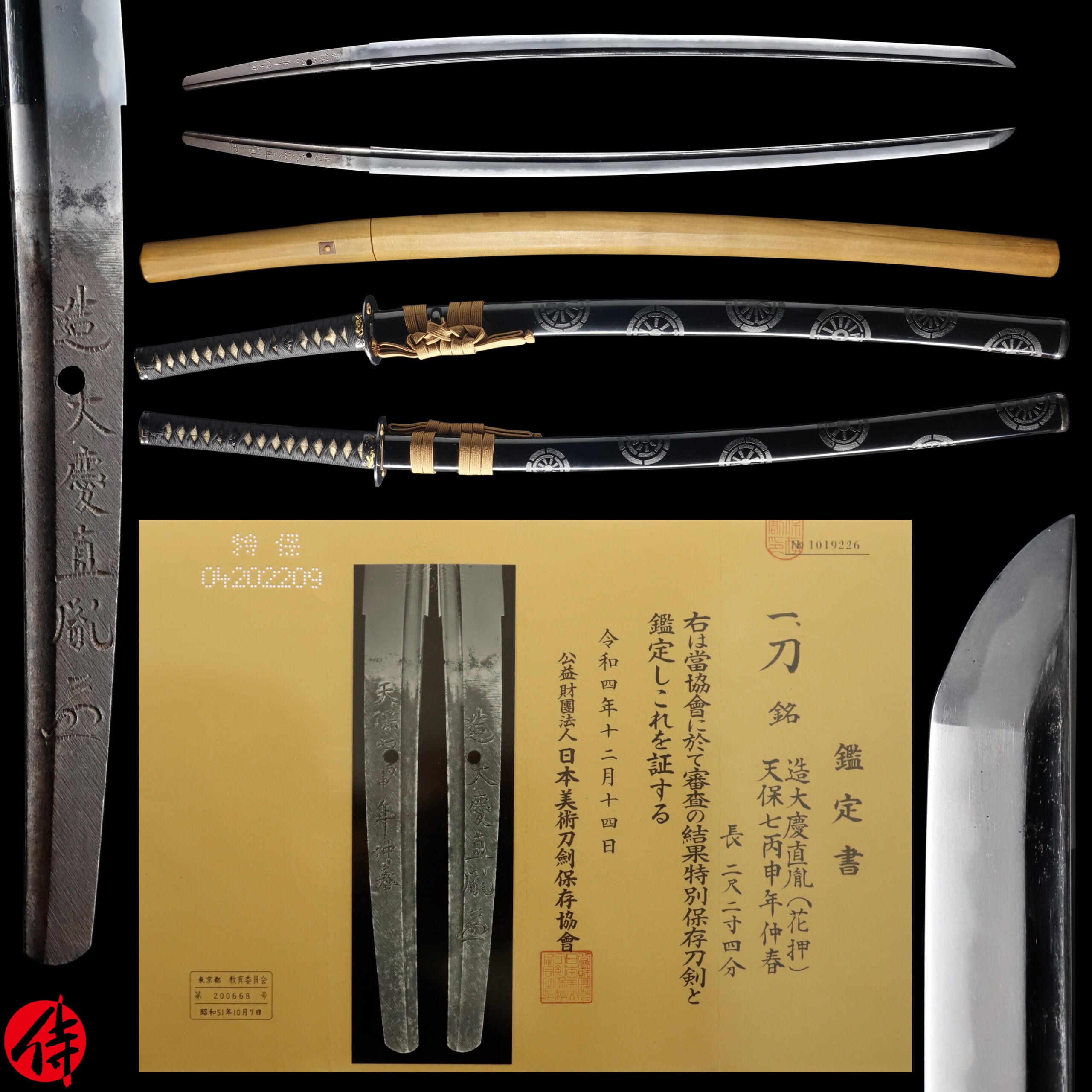
Antique Japanese Sword Katana Signed by Naotane with Tokubetsu Hozon Certificate 【Description】 This blade was signed by Taikei Naotane (大慶直胤) in the 7th year of the Tenpo era (1836). Taikei Naotane is considered one of the three most renowned swordsmiths during the late Edo period. The other two are Suishinshi Masahide and Minamoto Kiyomaro. Naotane is also known as Shoji Minobe (荘司箕兵衛), which was his birth name. Natane was born in the seventh year of the Anei era (1778) into a family that made sickles, a farming tool, for living in Dewa Koku (Today’s Yamagata prefecture). From a younger age, he got interested in becoming a swordsmith while learning blacksmithing skills. During the late Kansei era (1789-1801), he left his hometown and moved to Edo City to become an apprentice for Suishinshi Masahide, one of the most reputable swordsmiths in Edo during that time. He learned excellent craftsmanship from Masahide in a house owned by Akimoto family, which was the head of Dewa Koku. It is said that Naotane became an independent swordsmith in 1801. He started to serve Akimoto family in 1812 through the introduction from Suishinshi Masahide. And he received the honorable official title of Chikuzen Daijo (筑前大掾) in 1822. In 1848, he visited Kyoto and forged a Tachi blade for Takatsuka family, one of the imperial lineage, and received another title called Minosuke (美濃介). The more Naotane gained fame, the more often he was invited by a feudal lord or high-class Samurai in other provinces to forge blades. He created swords nationwide in his late career. The works of Naotane have been highly appreciated because he played an essential role in Japanese sword history at the end of the Edo period. It is said that he mastered all the five Japanese sword traditions called Gokaten (五箇伝). They are Bizen DEN, Mino Den, Soshu Den, Yamashiro Den and Yamato Den. It is said that he was especially excellent at Bizen and Soshu Den. His master, Suishinshi Masahide, was the proponent of revitalizing old sword-forging traditions. This movement is called Token Futsuko Ron (刀剣復古論). Naotane followed suit and mastered superb craftsmanship. Natotane trained many famous swordsmiths, and one of them was Jiro Taro Naokatsu, who was active during 1805-1858. Naotane died at the age of 79 in 1857. It is appraised as a Tokubetsu Hozon Touken (特別保存刀剣) issued by NBTHK (Nihon Bijutsu Touken Hozon Kyokai: 日本美術刀剣保存協会). This authentication paper was only given to authentic Japanese swords, especially well preserved and high quality with artistic value. *Please keep in mind that there are a couple of visible Kitae Kizu on this blade. If you like to know the detailed condition, please feel free to contact us. We will send you additional images. 【 Blade】 Cutting Edge Length (Nagasa) : 68.0 cm (27.8 inches) Curvature (Sori) : 1.6 cm (0.82 inches) Hamon : the crystalline structure which forms along the cutting edge of a blade as a result of the hardening process Jimon(Jihada) : visible steel surface pattern created by folding and hammering during forging process Kissaki : Kissaki is the tip of the Japanese sword. Nakago : Nakago is the tang of the Japanese sword. Japanese swordsmiths left the black rust on the tang because it prevents red rust while the tang is in its handle. And the discoloration of the tang was created over time, and it is a great indicator for a Japanese sword specialist to estimate when the sword was forged. Koshirae : Koshirae is the mounting of the Japanese sword. There are several parts that consist of Koshirae such as Saya (Scabbard), Tsuka (Handle), Tsuba (Handguard). Fuchi-Kashira : A pair of matching sword fittings that cover the upper and bottom parts of its sword hilt. The sword mountings of this handle have the same beast motif. On this Fuchi Kashira, you would find the two types of dragons’ figures. On the Fuchi part, the dragon is swimming in the water. On the other hand, the figure of a flying dragon peeks out from between the clouds. In this way

Antique Japanese Sword Katana Signed by Naotane| Samurai Museum Shop
売切れ
Tokuho売切れ

Antique Japanese Sword Katana Signed by Naotane| Samurai Museum Shop

売却済

世界81社の刀剣商を横断追跡 · 価格履歴 · 売却アーカイブ

仕様

長さ

68 cm

反り

1.6 cm

作者について

Suishinshi Masahide Naotane直胤

3 重要美術品1 御物1 特別重要刀剣35 重要刀剣

大慶直胤は水心子正秀第一の門人にして、師に次ぐ新々刀の中心的存在である。安永に出羽国山形に生まれ、通称を庄司箕兵衛、号を大慶といい、若年の折に江戸に出て正秀の門に入り、師同様に秋元侯に仕え、細川正義と共に水心子門下の逸材となった。二十三歳の作刀に「庄司直胤」と寛政十三年の年紀があることから、説明書は入門をこれより数年前、独立を文化初年頃とする。文政四年頃に筑前大掾を受領し、嘉永元年に上洛して美濃介に転じ、約五十年に亘る作刀ののち安政四年七十九歳で歿した。正秀が復古刀論の理論家であったのに対し、直胤はその実践者であり、説明書はその技術が師を凌ぐに至ったと評し、ある相州伝の刀について「その技術が師を凌ぐと評せられた」と記す。 本工の本領は備前伝で、説明書はこれを彼の得意とするところとし、端的に「丁子乱れの巧みさは新々刀第一の定評がある」と述べる。よくつんだ小板目、時に梨子地風の地に丁子乱れを焼き、これに角張った角互の目・尖り刃・互の目を交え、足は長く、しばしば刃先に抜けるほどに入る。総体に後期長船の逆がかりを示して丁子も逆足も寝かせ、匂勝ちに小沸つき、匂口明るく冴える。姿は鎌倉の太刀を彷彿とさせ、腰反りないしやや高く中鋒となり、説明書はその角がかった刃と逆がかりを、鎌倉後期長船の景光・兼光を意識した範と読む。 この刃の下にあって終始変わらぬのが地鉄である。よくつんだ小板目に地沸つき、最上の備前伝では腰元に乱れ映りが鮮明に立ち、上作では映りが刃の焼頭に繋がる。新々刀には本来の古刀の映りはなく、ゆえに乱れ映りを意図して甦らせたこと自体が古備前への遡りの証で、説明書はこれを長船をねらいとした証として特筆する。同時に、これが古刀ではなく新々刀である所以についても明快で、兼光・景光に倣ったと極められた備前伝の刀について「純然たる匂出来ではな」く、全体に沸づくとし、これを「古作と新々刀との相達」と評する。帽子は乱れ込んで先尖りごころに掃きかけ返り、あるいは直ぐに小丸となる。 直胤は古刀各伝を手がけ、その記録は明瞭な調子に分かれる。賞される第二の手は相州伝で、備前伝より稀にして正宗・貞宗・志津に範を求める。流れて大杢目を交えた板目、上作では独特の渦巻肌を交えた地に、説明書がこれを相伝の見どころとする地に、湾れに互の目を交え、地沸厚く地景入り、沸荒めに叢となり、砂流し・沸筋縞がかって金筋長く入る。ある相州伝の脇指を説明書は放胆として、その叢づく沸と頻りなる掃きかけに「野趣が感ぜら」れるとする。第三の小調子として、より穏やかな大和の手と直刃が残る。ある天保の刀を本工に比較的珍しいとし、直刃調を浅くのたれて小互の目を交えるとし、真田家伝来の大小では大を大和伝の総柾鍛えに相州伝の湾れ・互の目を加味したものとして、一刀に二伝を交える。在銘にして年紀の多い工ゆえ、直胤における鑑定の問題は極めにあらず、その位置にある。 彼を分かつのは、極めの自ら言うところである。明るい乱れ映り、角互の目と逆足を伴う逆がかりの丁子、そして意図的な長船写しが、映りも逆がかりも持たぬ一般の新々刀から彼の備前伝を分かち、相州伝は独特の渦巻肌と叢づき縞がかる沸の働きによって示される。彼は正秀の直下に立ち、自らの門人の先に立つ。刀身の彫物はしばしば水心子門下の彫物師本庄義胤の手になり、高弟澤原重胤らがその大慶の作風を幕末へと伝える。説明書はその上作を同工の筆頭に置き、ある備前伝の刀を「彼の備前伝の作中の筆頭に置くべきものである」とし、茎に和歌を切った一刀を傑作中の傑作と称え、天保の相州伝の刀を同工の右翼として師の相州伝をも凌ぐとする。 収集の観点では、直胤は新々刀復古の在銘の大名跡である。藤代の極めは最上作、刀剣銘鑑の位列もその上位近くにある。国宝・重要文化財はなく、その指定は戦前の重要美術品と現代の特別重要刀剣・重要刀剣を通じ、約四十口の指定作がいずれも在銘で文化から嘉永の年紀をもって残る。その作は来歴と銘文の確かな名家に伝わる。真田家伝来の大小、太政殿下の台命により造られて皇室に伝わる御太刀の副作、津藩の渡辺脩が注文した刀、そして製鉄業の太田政恭のために良質の原材料を吟味して鍛えられ、説明書が「会心の一口」と称える一刀がある。戦前の重要美術品には井手慶四郎・須藤宗次郎・鈴木清助の旧蔵がある。指定文化財として封じられた作はなく、また作刀が多いため、在銘の直胤は古刀の大名跡よりは世に出やすいが、その最上の特別重要刀剣・重要刀剣はなお取引されるより秘蔵されることが多い。私蔵の一口が収集家の前に現れるのは時折のことであり、説明書が新々刀第一とする備前伝の確かな傑作ともなれば、世に出れば一個の画期である。


刀剣商

サムライミュージアム

samuraimuseum.jp

売切れ