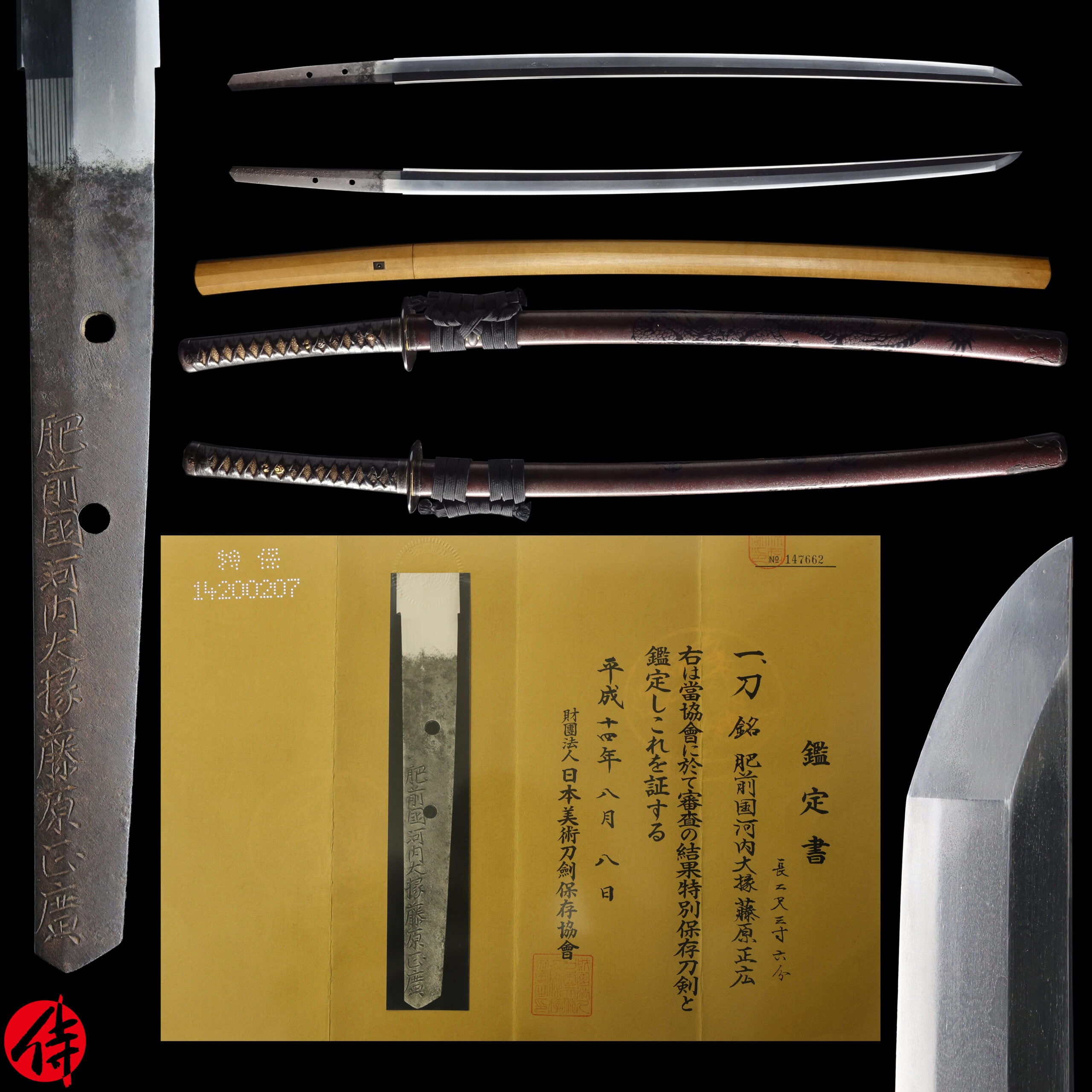
説明
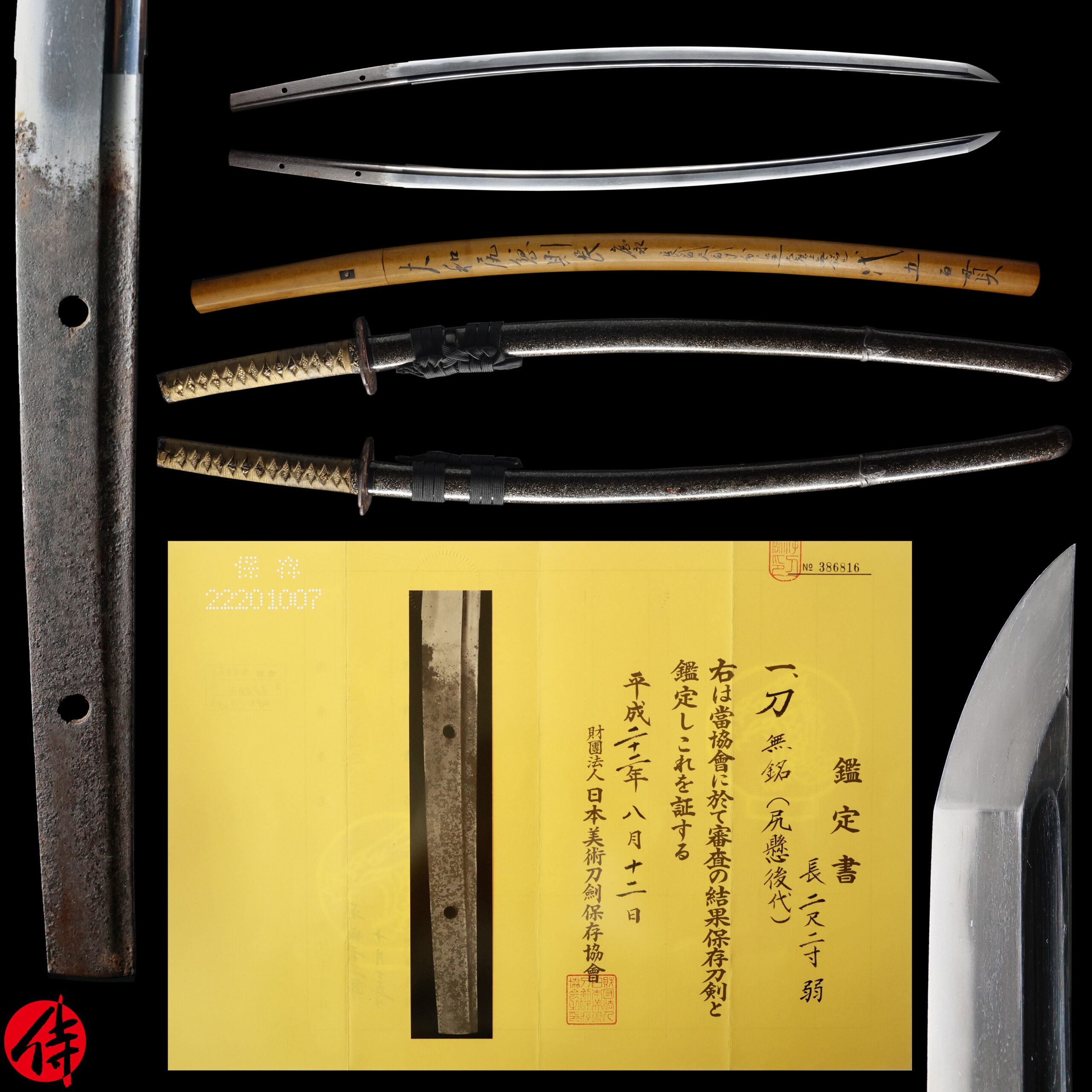
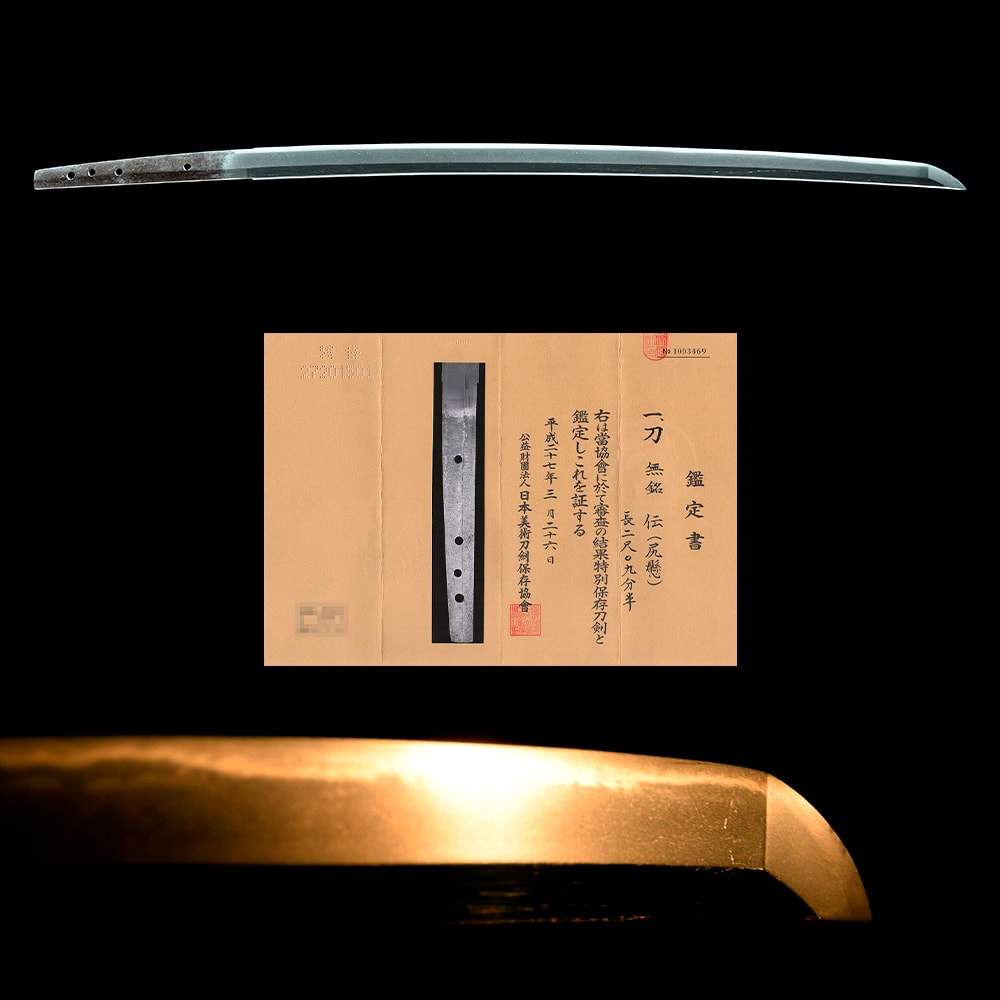
Antique Japanese Sword Katana attributed to Late-gen Shikkake with NBTHK
Hozon
Certificate
【Description】
Summary
This blade is attributed to a work of the late-gen Shikkake school during early Muromachi period (Approx. 600 years old).
Shikkake school was founded by Norinaga (則長) in Yamato region (Today’s Nara prefecture) during the Bunpo era (1317-1319: Late Kamakura period). It is said that swords forged by Norinaga were known for their sharpness and made a lot of long Tachi swords. Therefore, most of the remaining work has been shortened so dramatically that the signatures were cut.
The school prospered during the late Kamakura period-Muromachi period. There were five prestigious schools, including Shikkake school during the Kamakura-Nanbokucho period. They are called Yamato Goha (大和五派); Senjyuin (千手院), Tegai(手掻), Taima (当麻), Hosho (保昌) and Shikkake school. They served politically powerful monks and temples in Nara, such as Todaiji temples. They were initially forging swords for military monks who became powerful due to the government’s policy back then. Monks needed many weapons as there were many political rivalries between influential temples, and they need strong weapons like swords to protect themselves. During this time, Shikkake school or other Yamato sword schools met the requests from monks. They also forged blades for Samurai hired by those monks during their heyday.
Shikkake school belonged to YAMATO DEN, which has the longest history among GOKADEN, five traditions of Japanese sword forging techniques. The blades forged by swordsmiths residing in Yamato region are generally called Yamato Mono. And, Koudai Shikkake, or Late-gen are referred to Shikkake swordsmiths from the Muromachi period.
The name Shikkake came from the district where this school forged swords. The district’s name used to be called Shirikake, but it changed its pronunciation over time and became Shikkake. They called themselves Shikkake swordsmiths. Shikkake school forged swords near Todaiji temple, one of the most famous temples in Japan. The name Shikkake came from the ritual in festivals taking place near Todaiji temple.Those who carried mikoshi, a portable shrine on their shoulders during the festivals, took a rest at the district, and they sat there. In Japanese, Shikkake(尻懸) means sitting down. That is how this district was named.
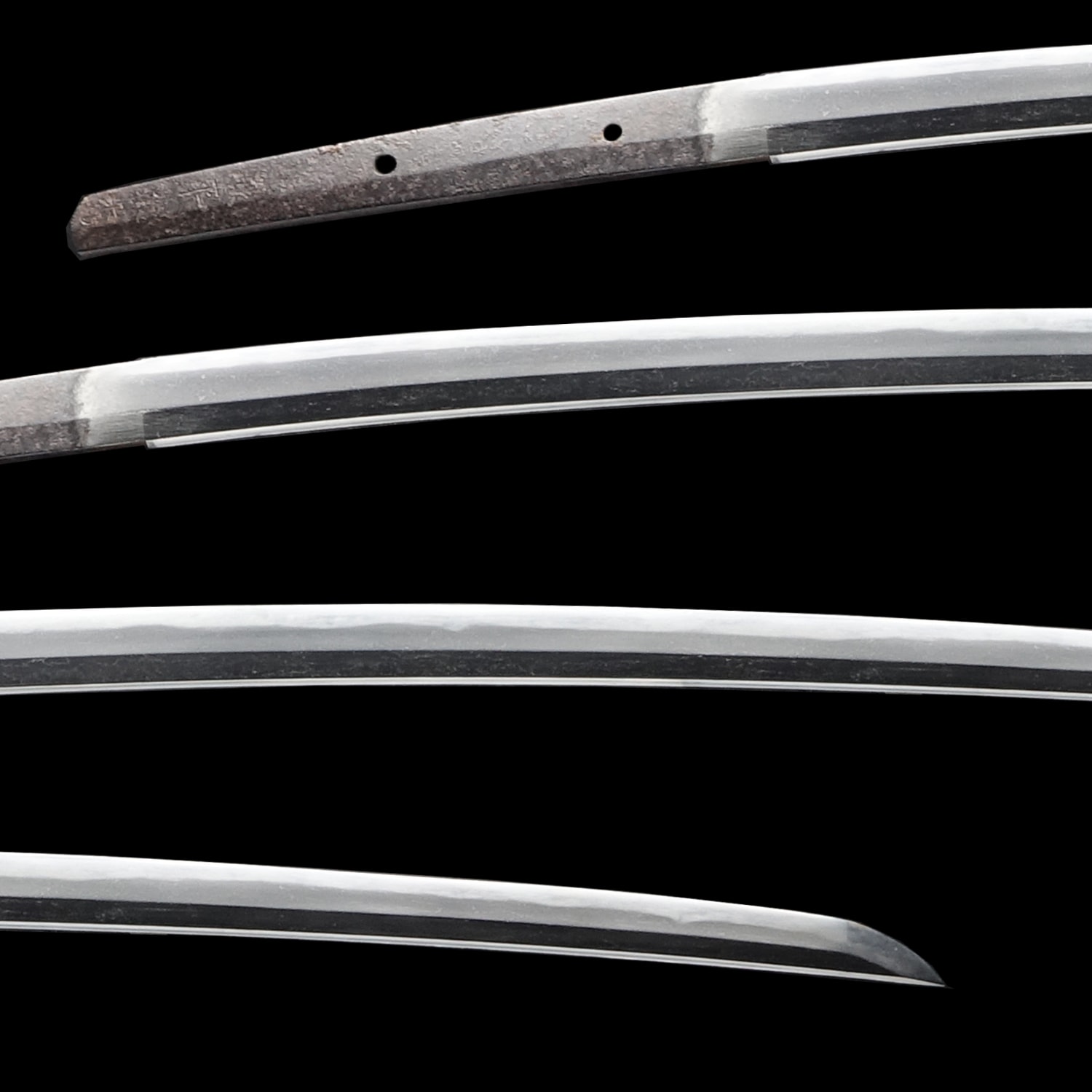
The swords forged in Yamato regions are famous for their beautiful Jigane, steel surface, and straight tempering line(Suguha). This blade has a beautiful Jigane with a Suguha tempering line, which shows an outstanding characteristic of the Yamato sword. Based on the shape of Nakago(Tang), it was shortened in the past. We assume its original length was much longer than it is now.
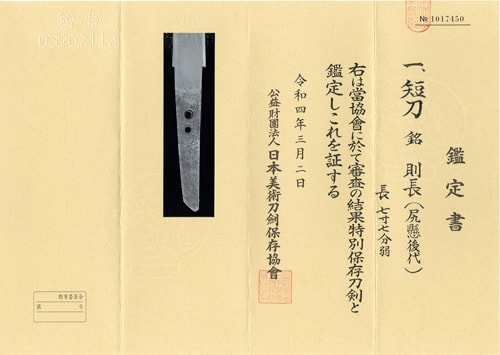
This blade is appraised as a
Hozon Touken
(保存刀剣) issued by NBTHK (Nihon Bijutsu Touken Hozon Kyokai: 日本美術刀剣保存協会). This authentication paper was only given to authentic Japanese swords, well preserved and high quality with artistic value.
*Please keep in mind that there are a few Kitae Kizu on the blade. If you like to see the detailed condition, please feel free to contact us.
【Blade】
Cutting Edge Length (Nagasa)
:
66.5 cm (26.2 inches)
Curvature (Sori)
:
2.2 cm (0.86 inches)
Hamon
:
The crystalline structure which forms along the cutting edge of a blade as a result of the hardening process.
Jimon (Jihada)
:
Visible steel surface pattern created by folding and hammering during forging process.
Kissaki
:
Kissaki is the tip of the Japanese sword.
Nakago
:
Nakago is the tang of the Japanese sword.
Japanese swordsmiths left the black rust on the tang because it prevents red rust while the tang is in its handle. And the discoloration of the tang was created over time, and it is a great indicator for a Japanese sword specialist to estimate when the sword was forged.
Koshirae
:
Koshirae is the mounting of the Japanese sword. There are several parts that consist of Koshirae such as Saya (Scabbard), Tsuka (Handle), Tsuba (Handguard).
Fuchi-Kashira