二十世紀は二度この工芸を殺しかけた。戦時の歪みと、占領下の禁令である。1948年の日刀保設立と1953年の作刀再開が刀を美術として再建し、人間国宝と無鑑査がその頂に立つ。
 NihontoWatchNihontoWatch
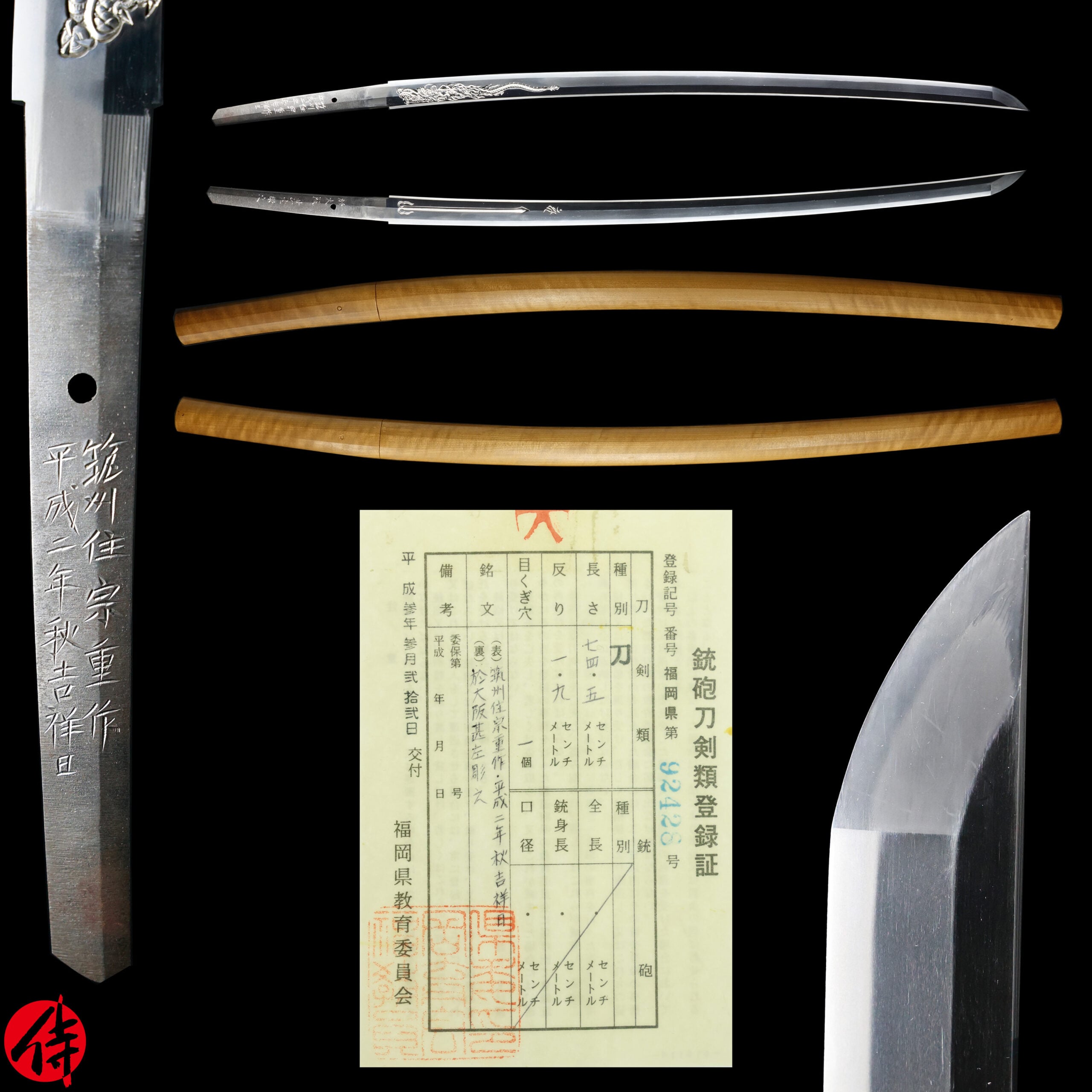
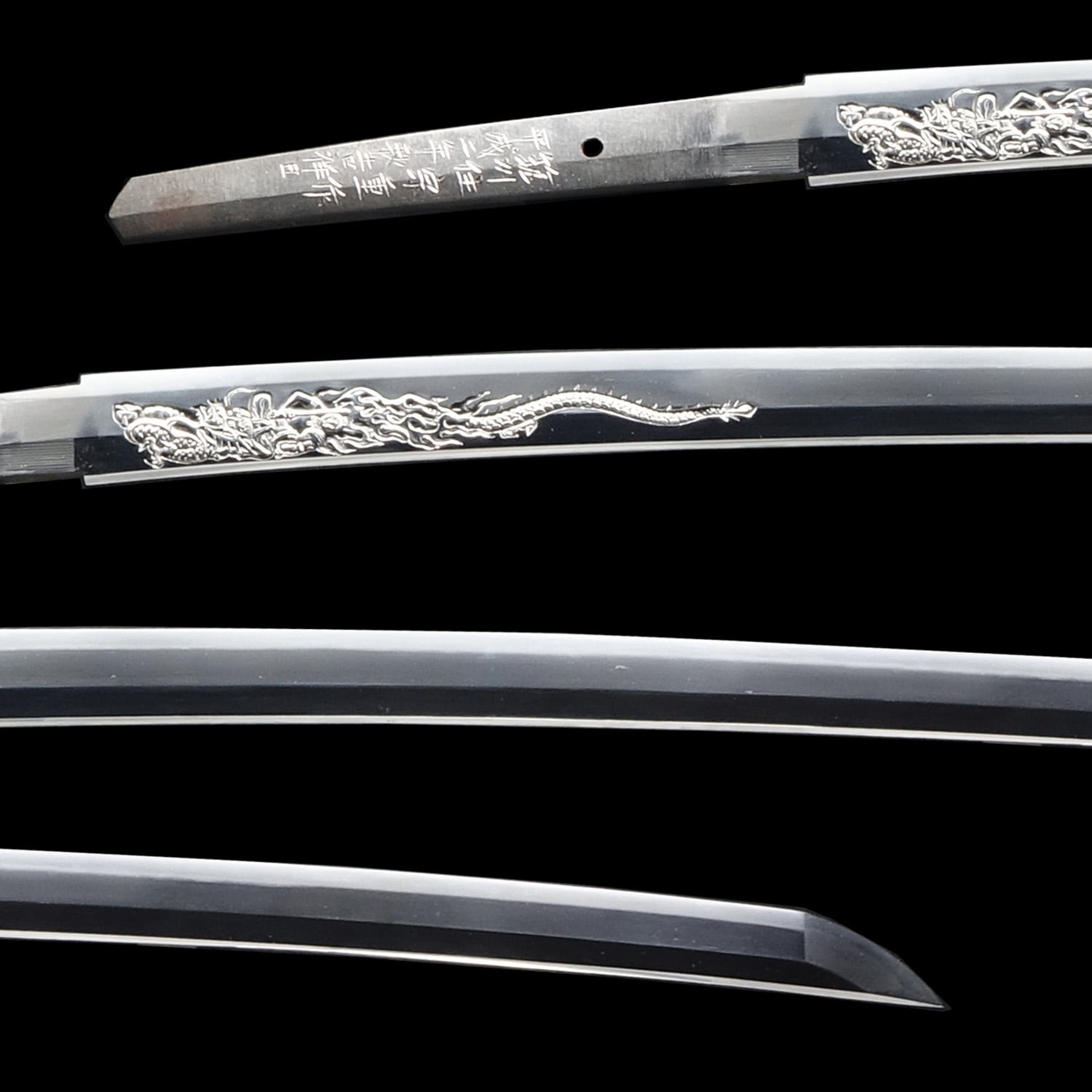
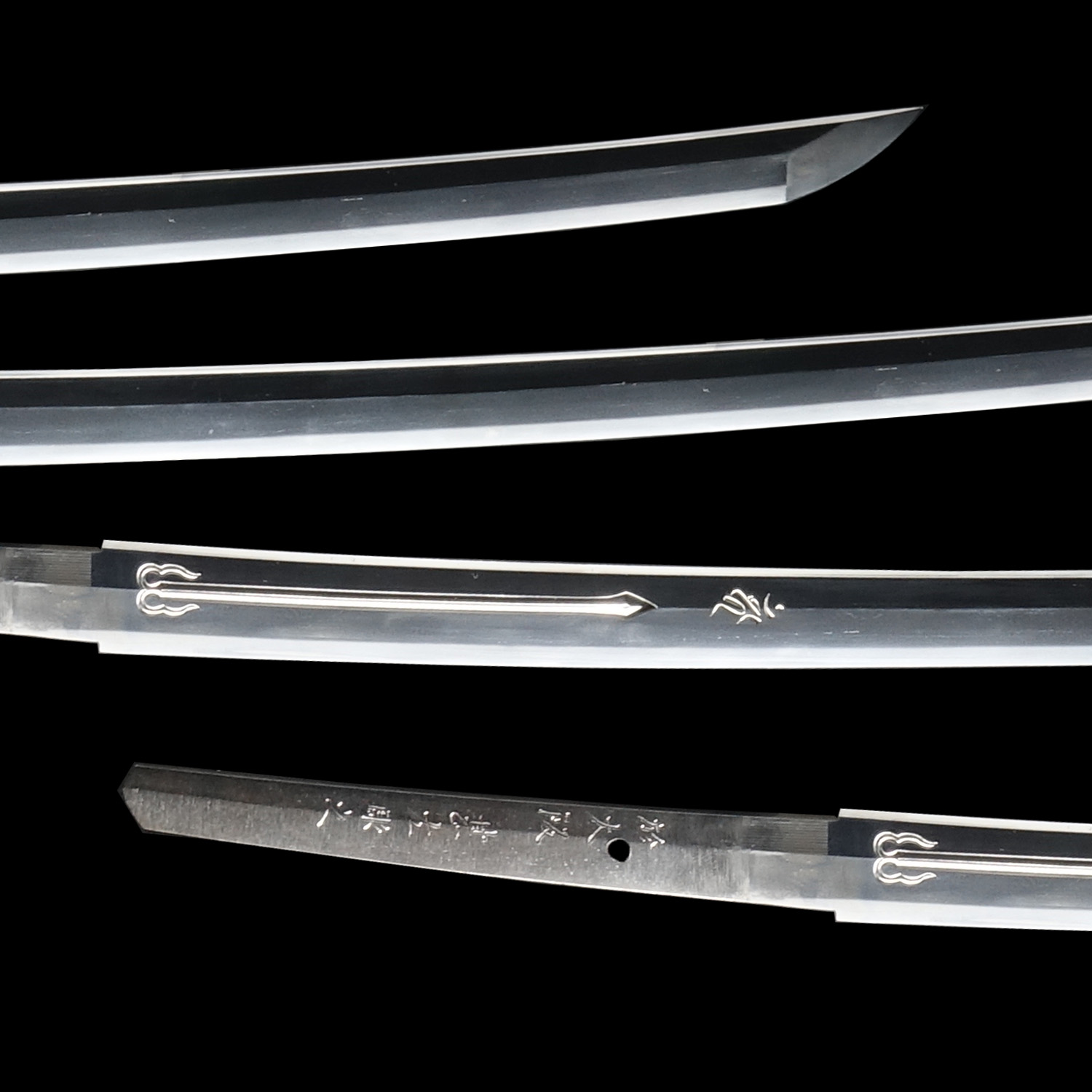
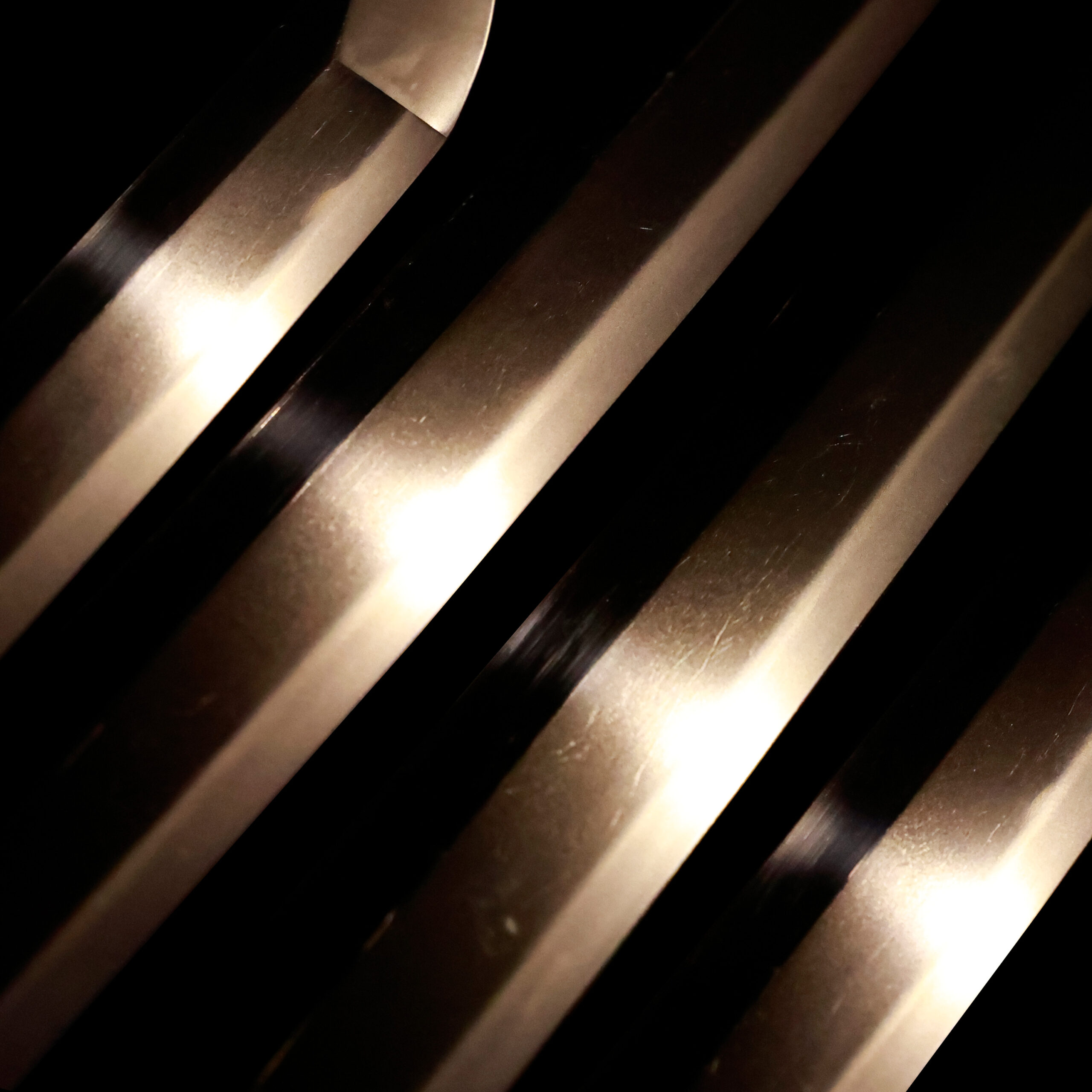
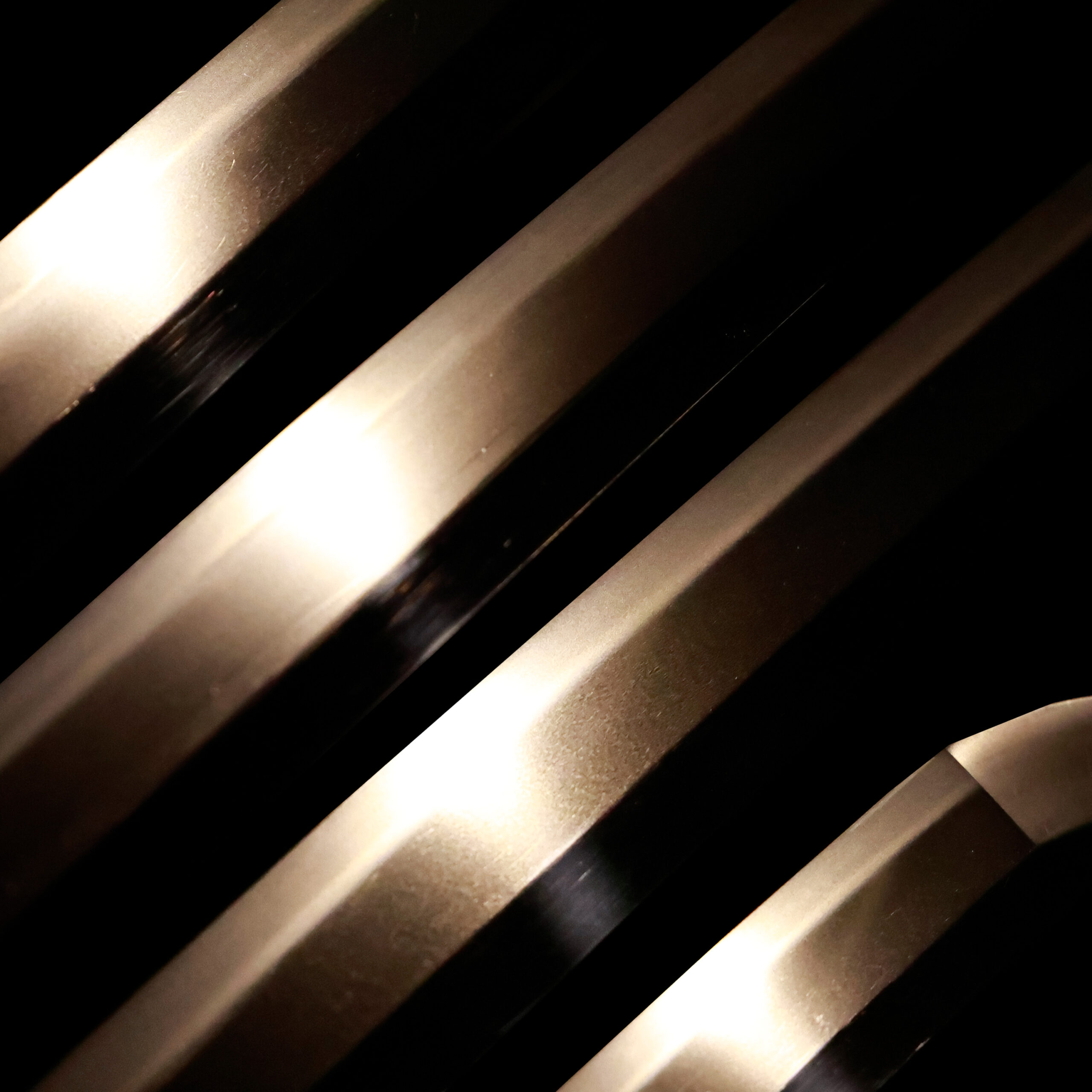
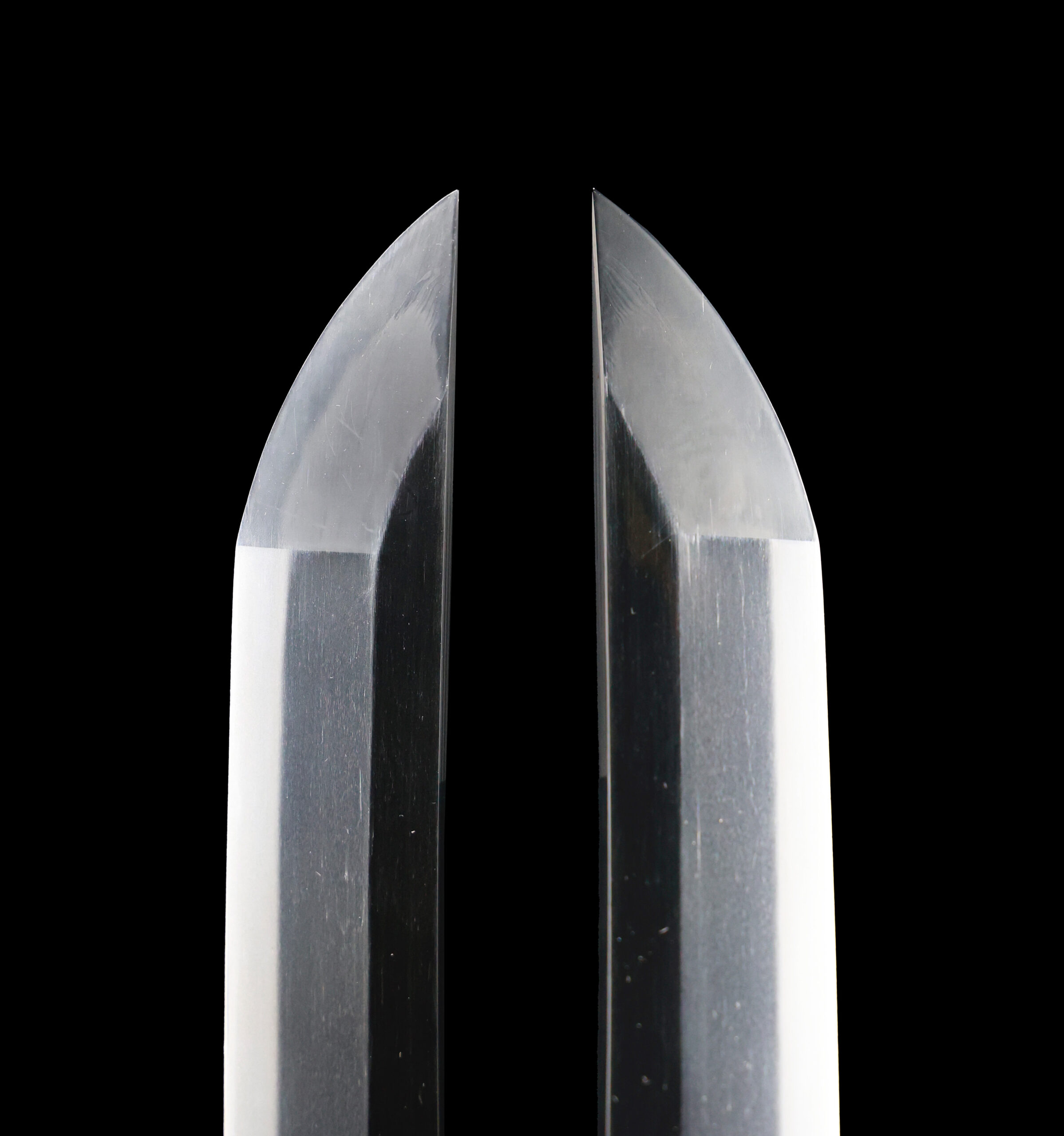
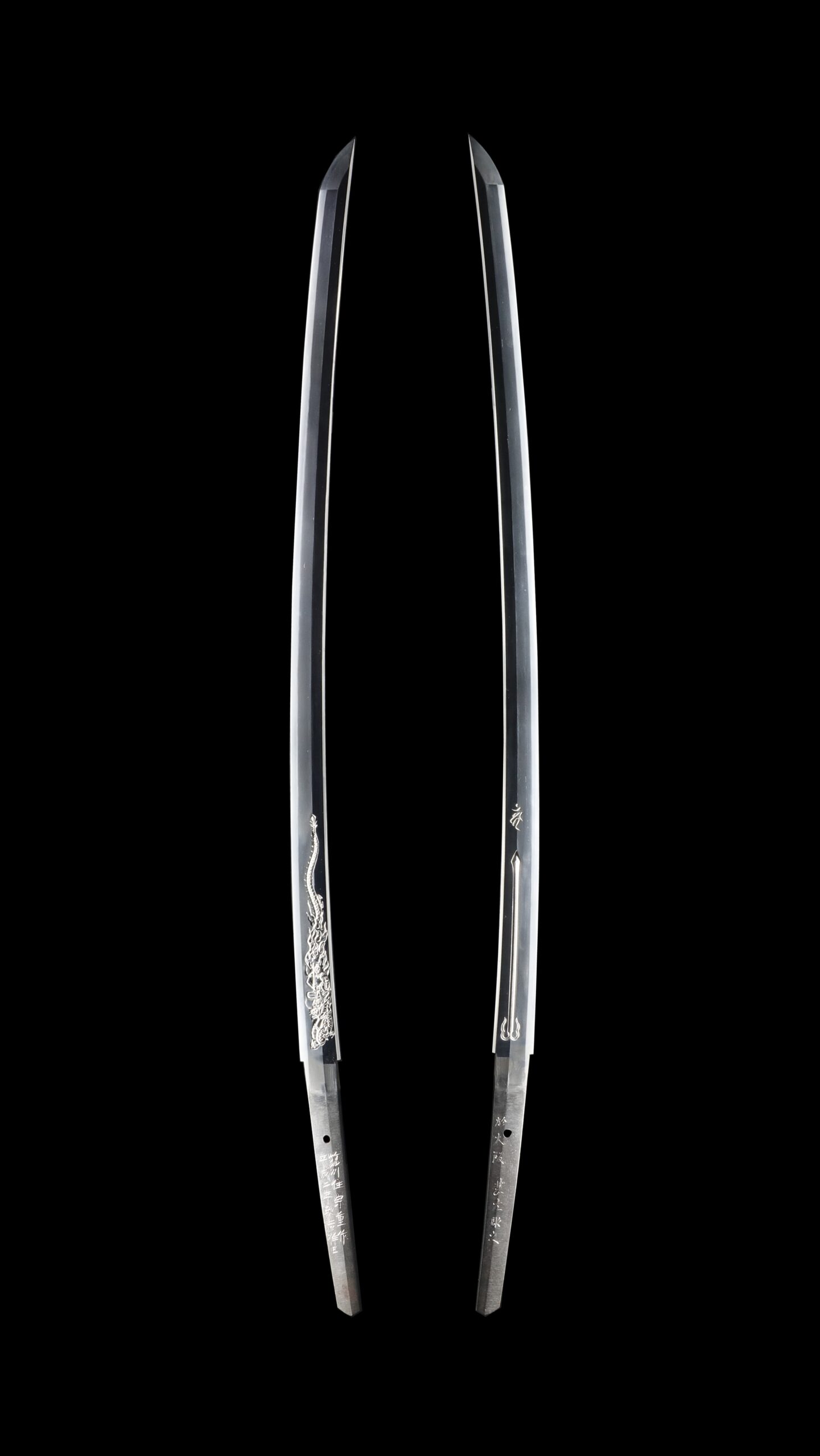
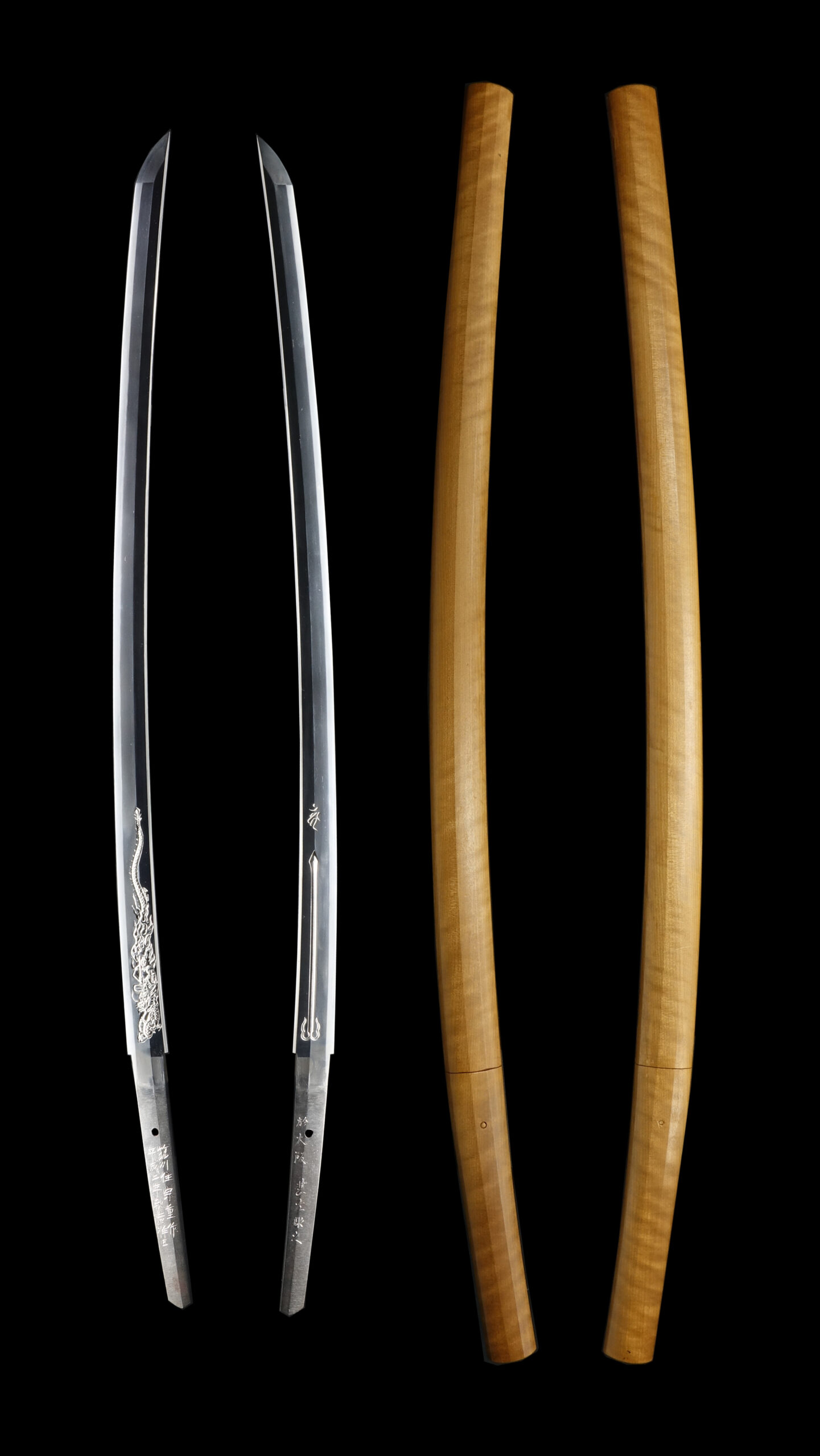
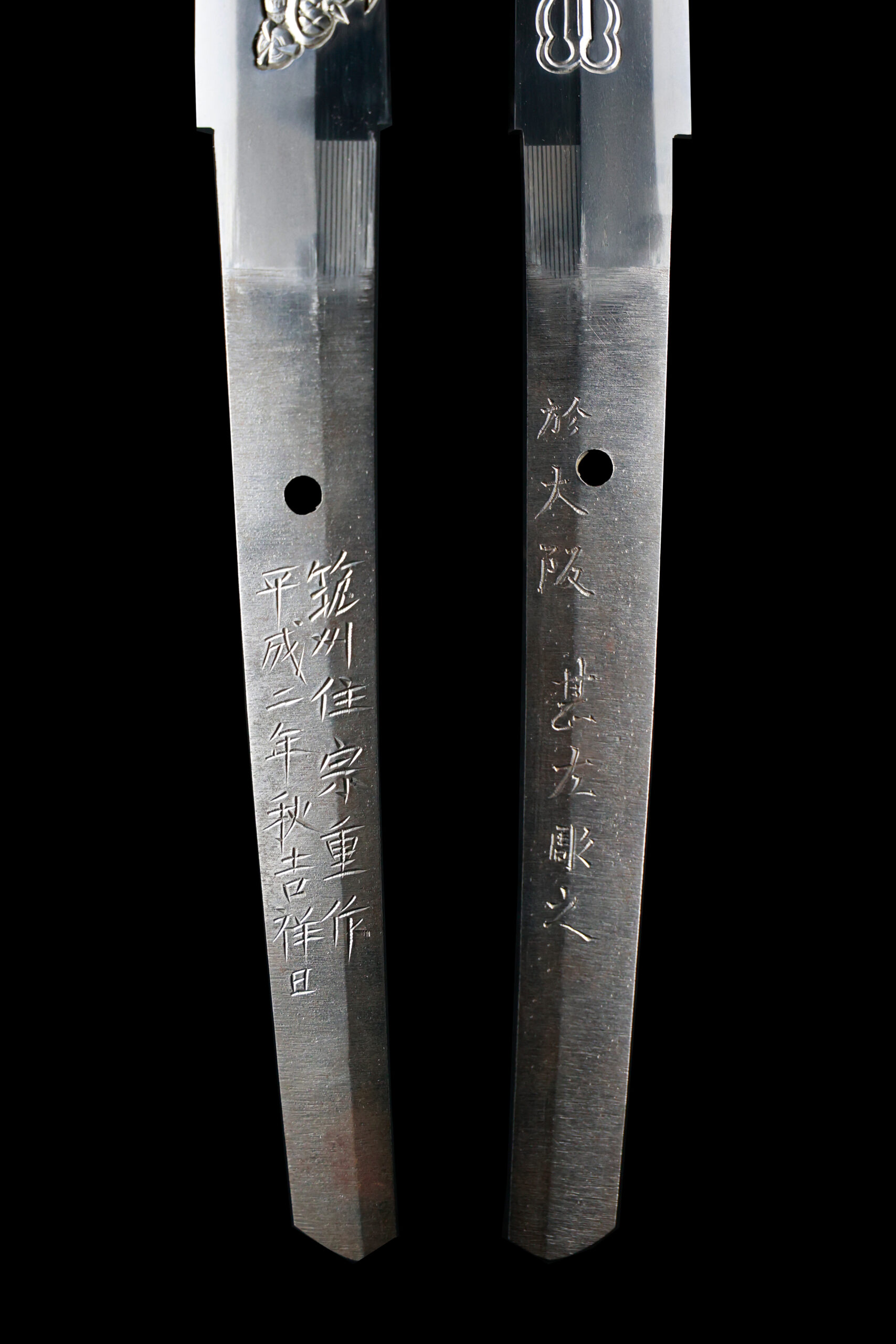
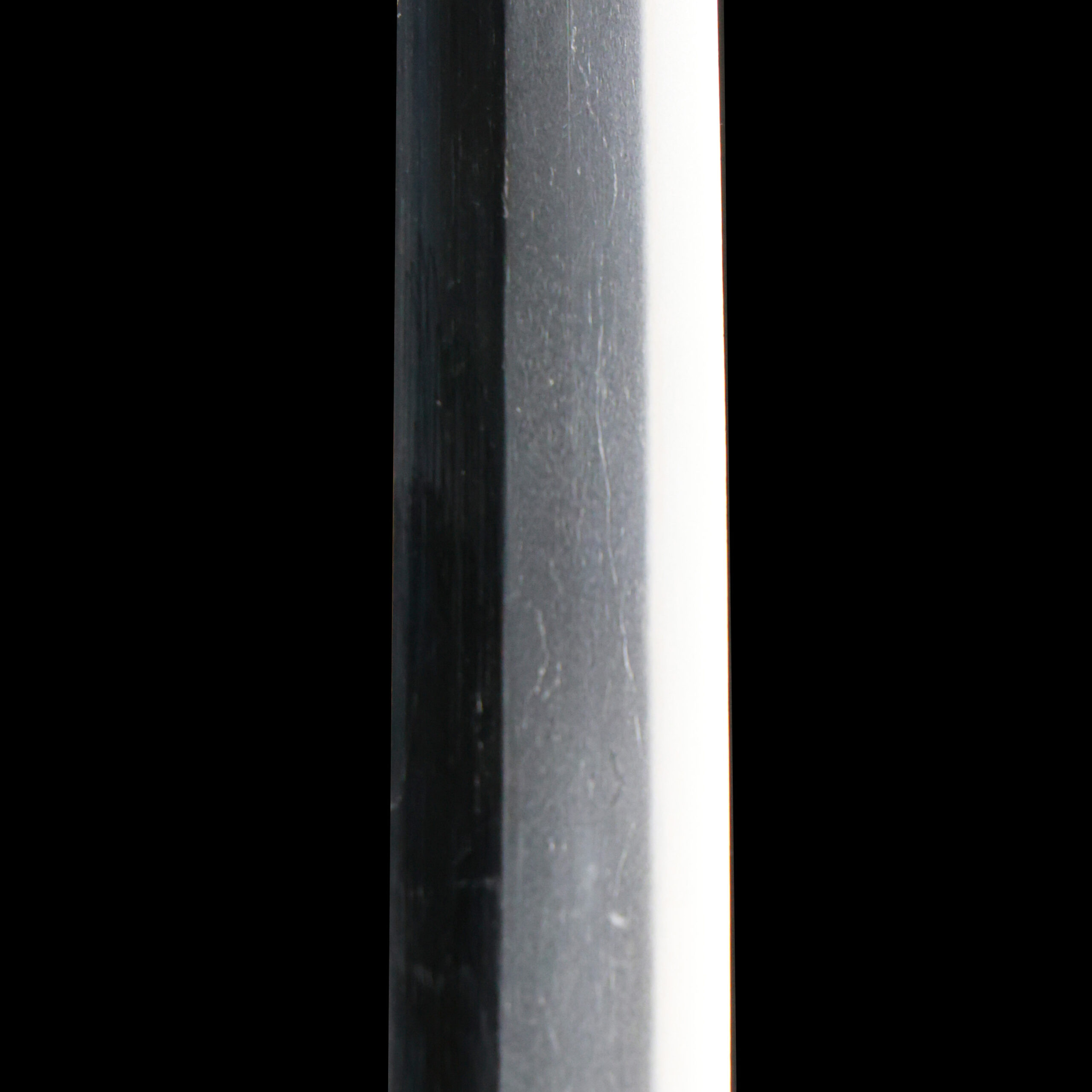
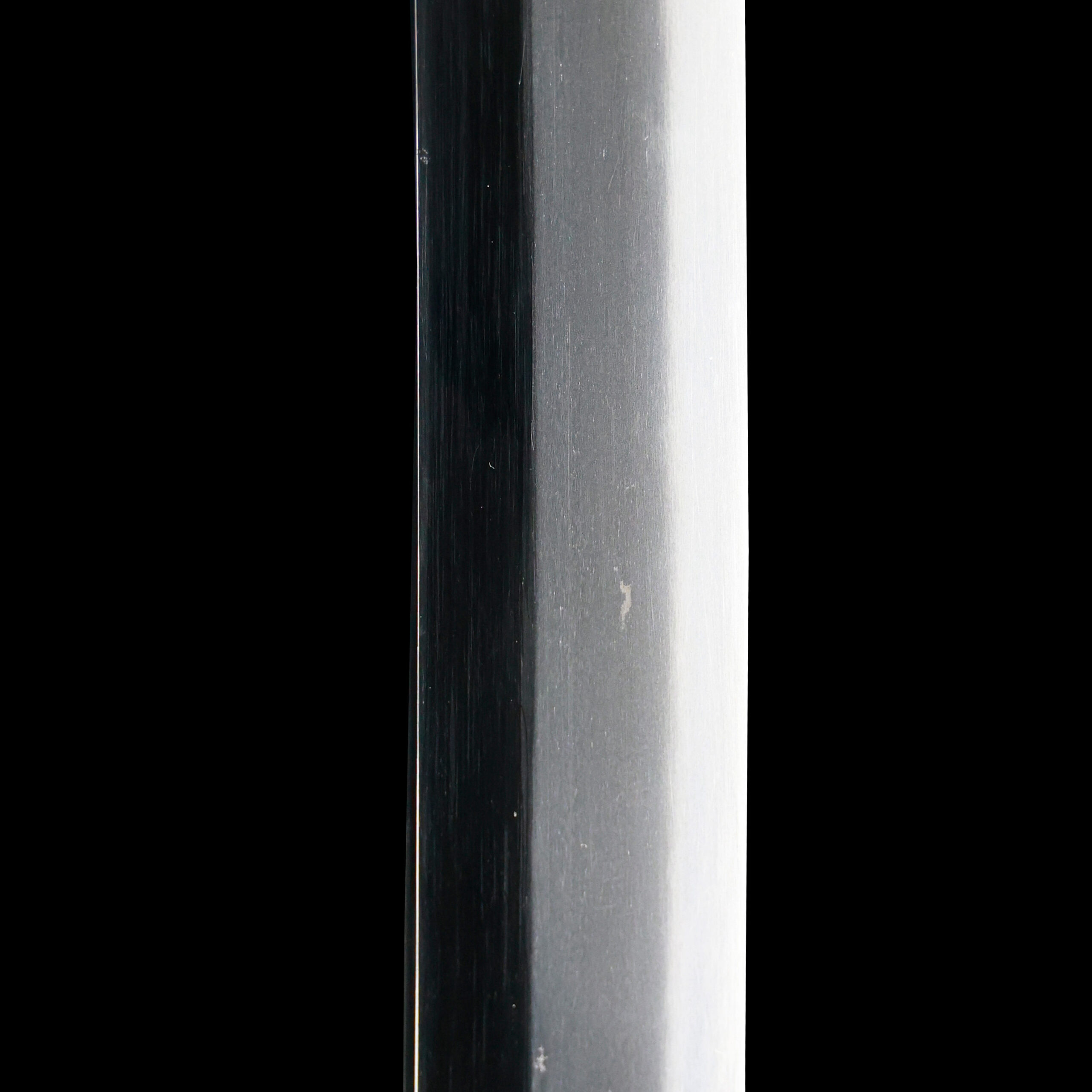
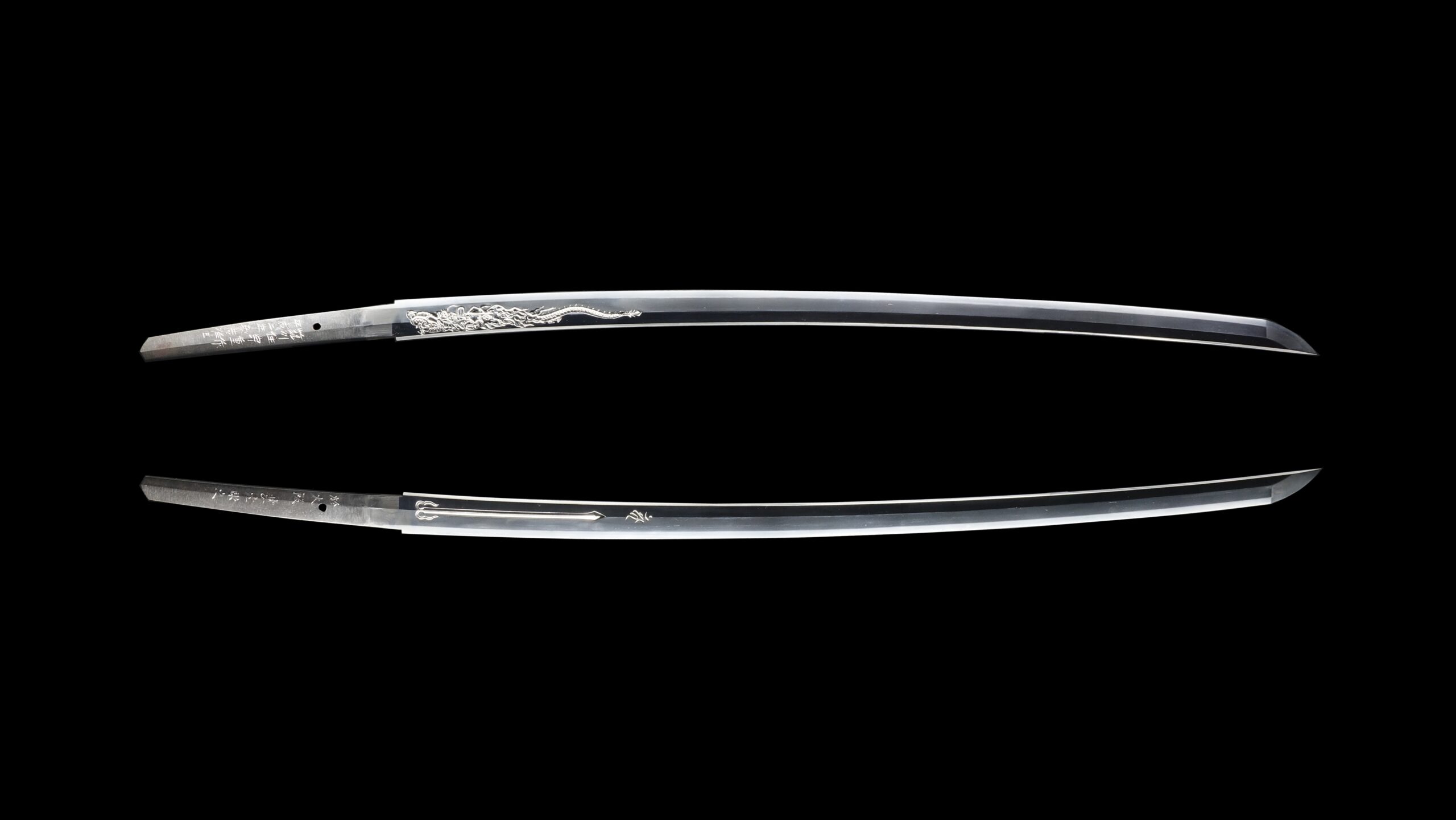
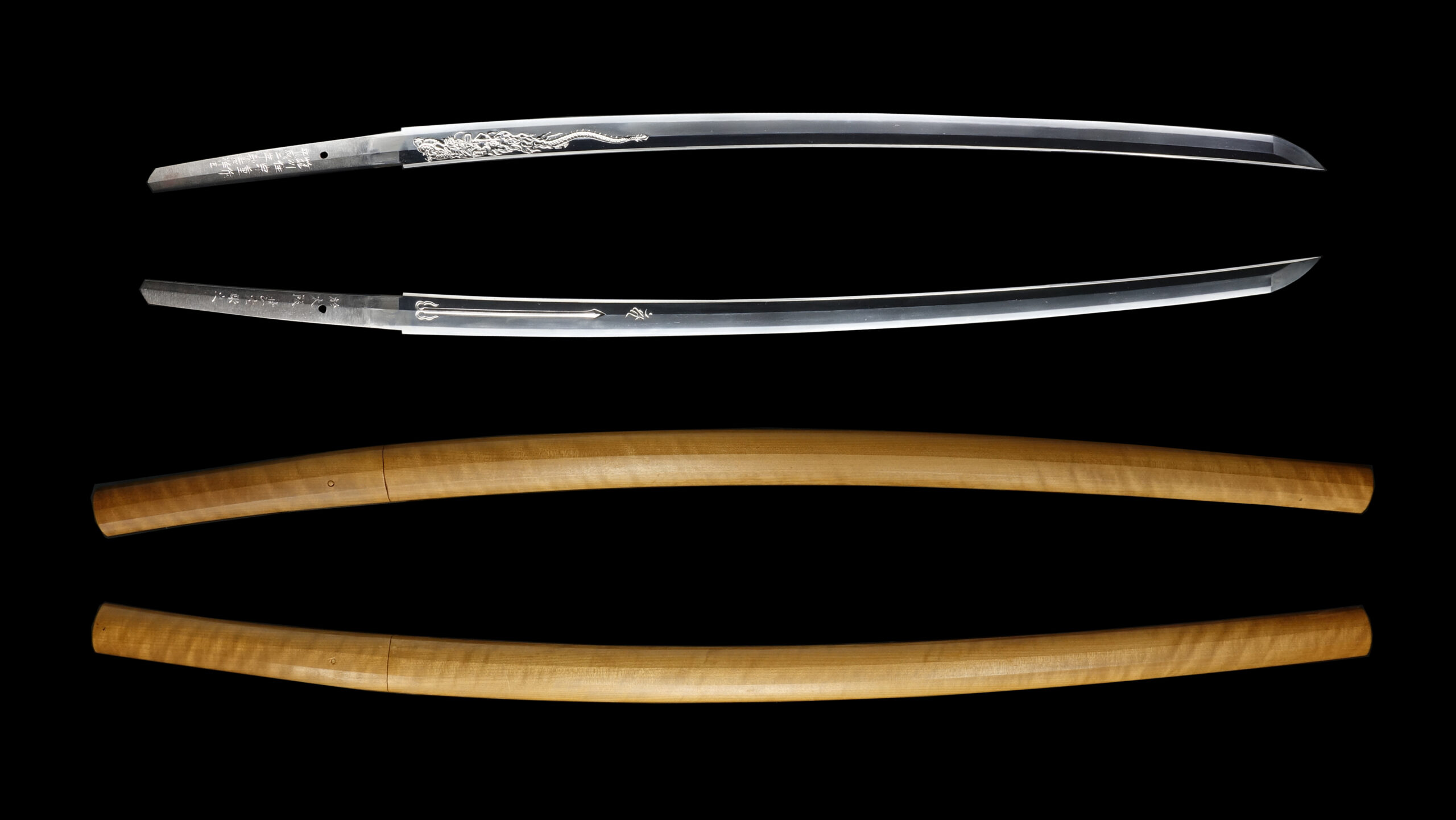
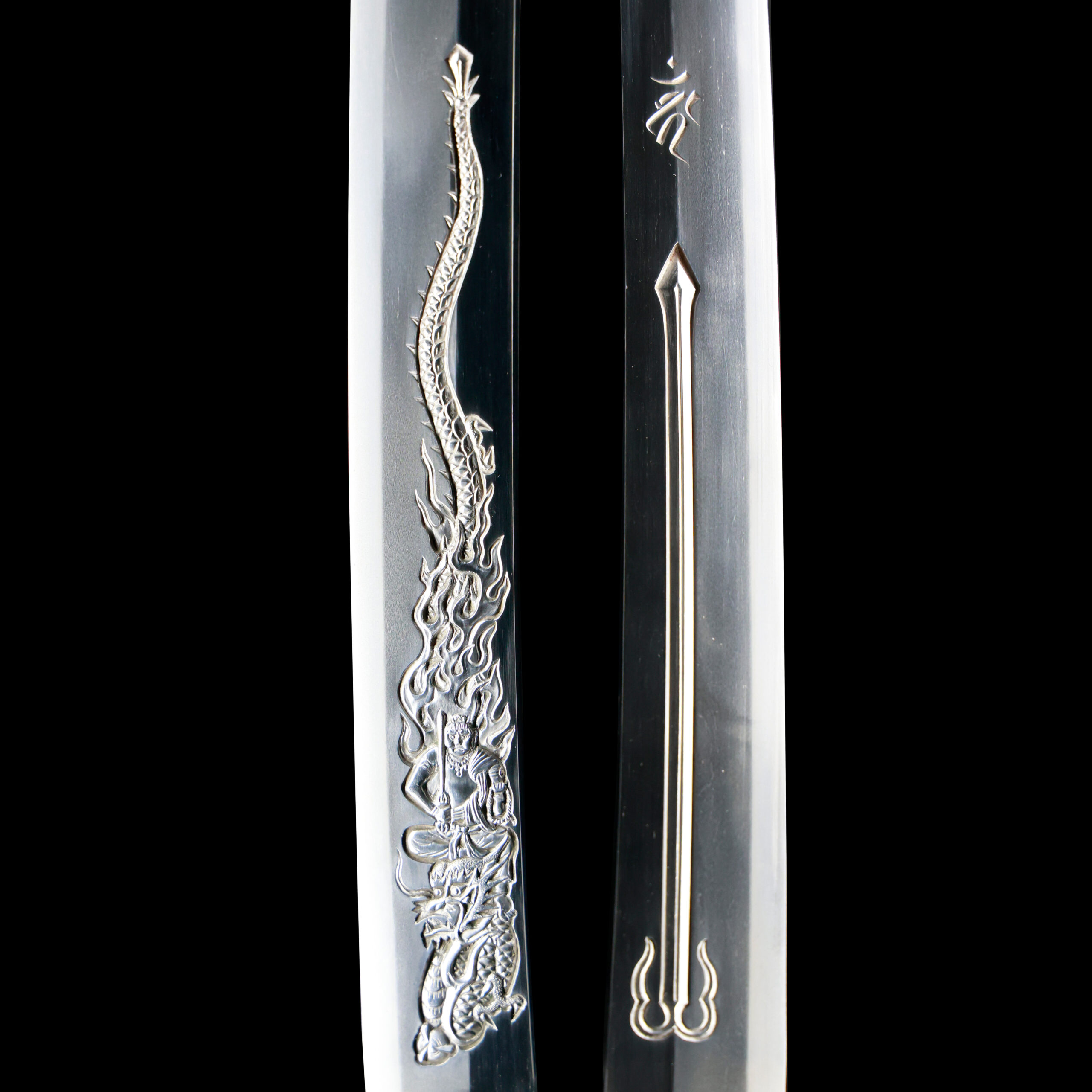
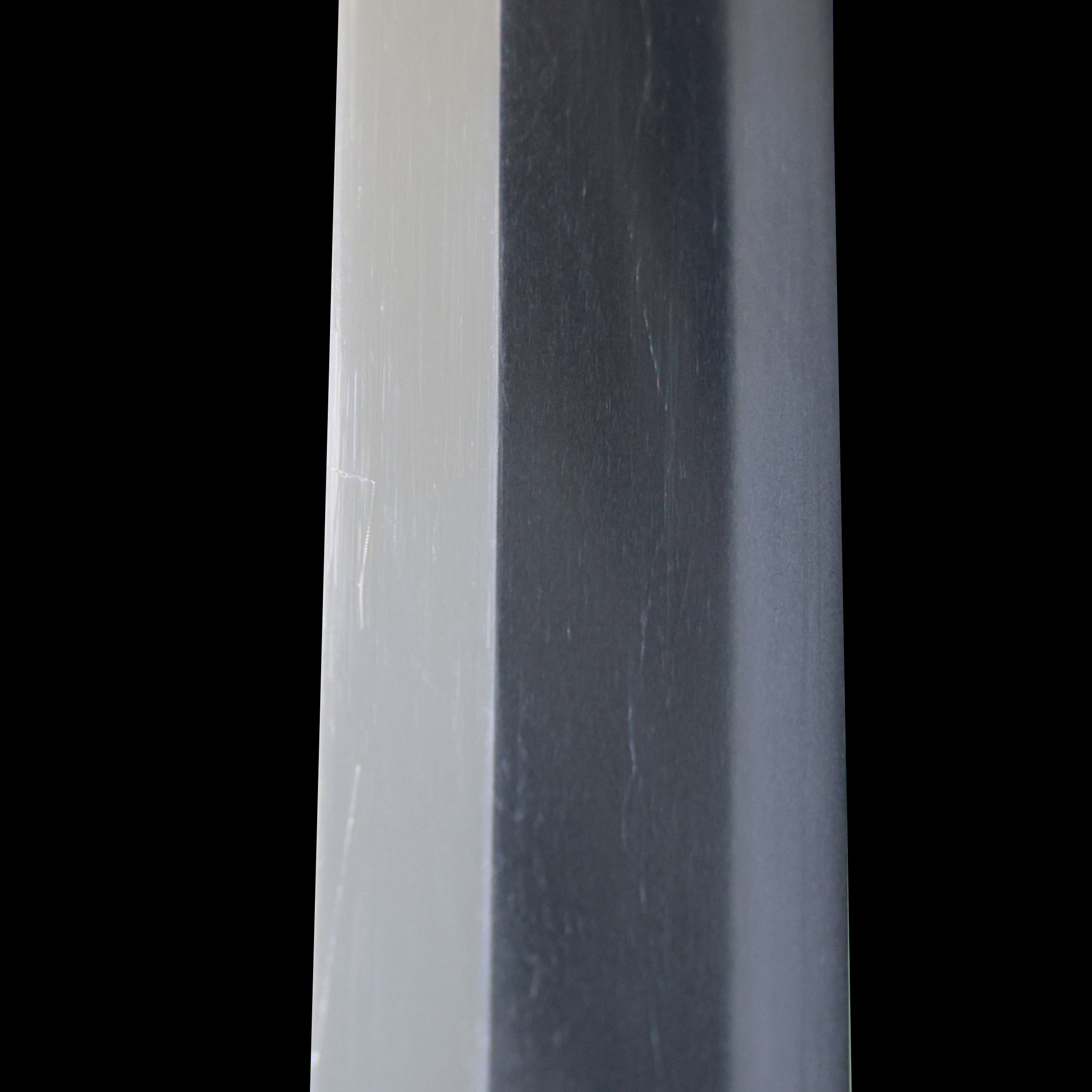
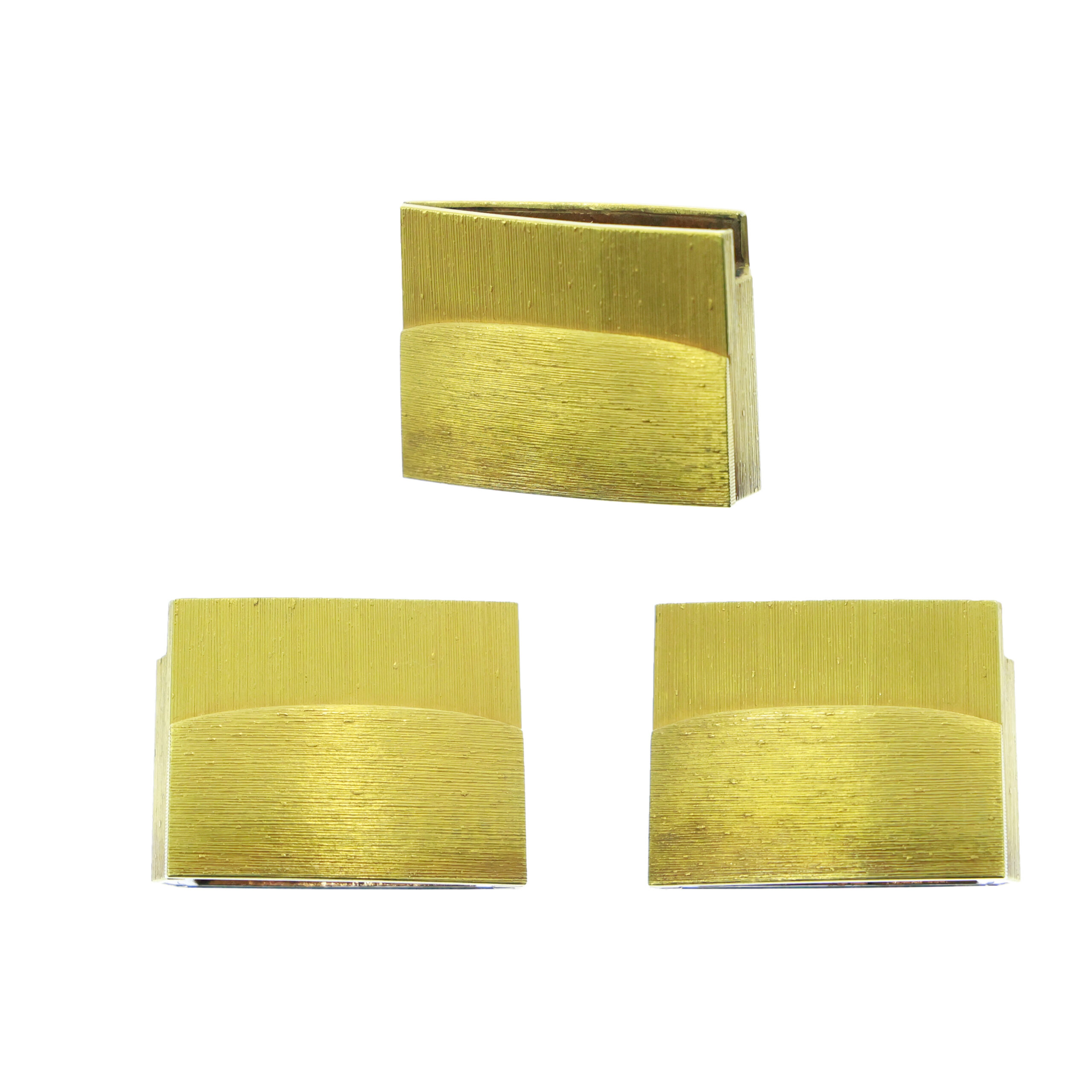
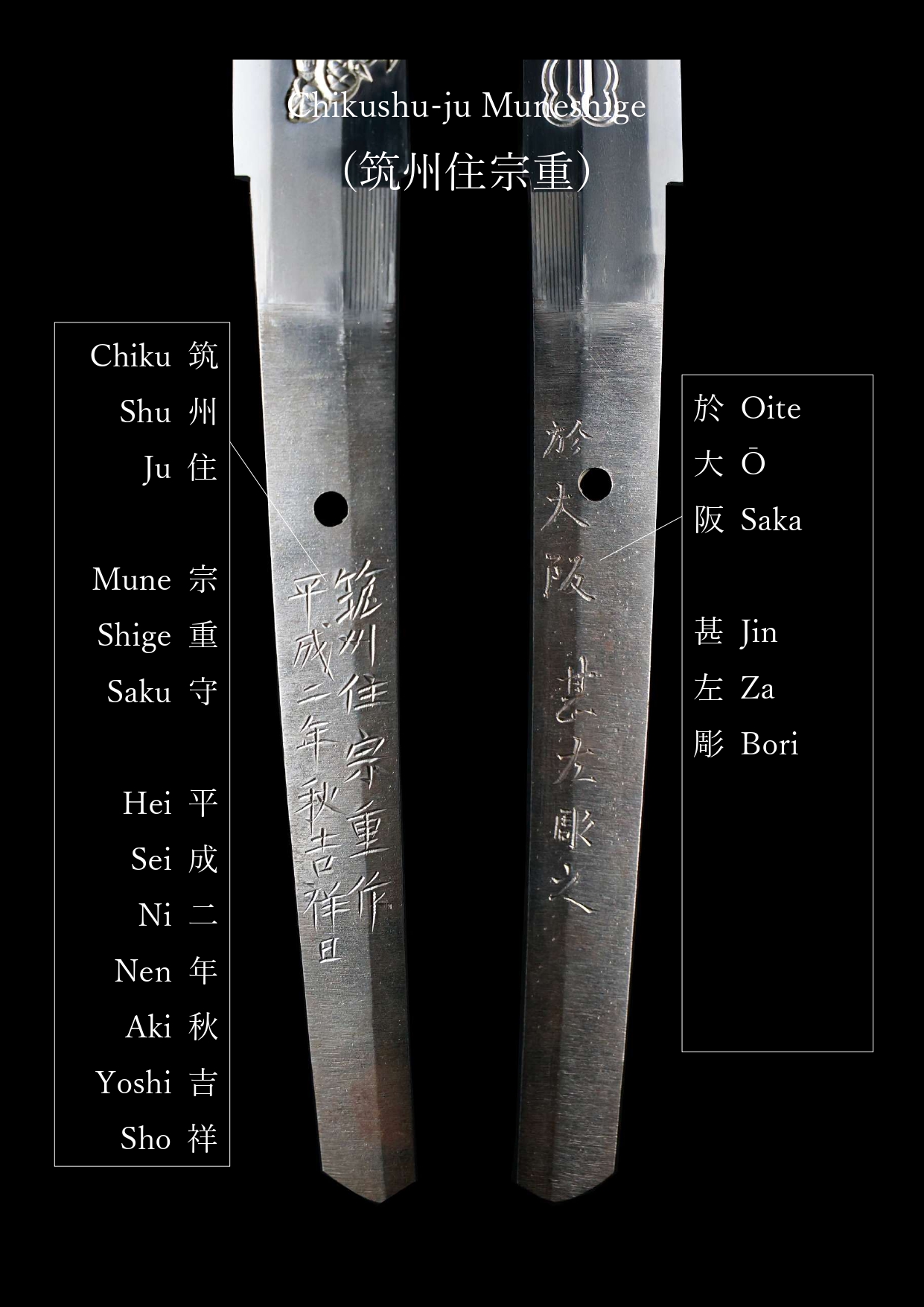
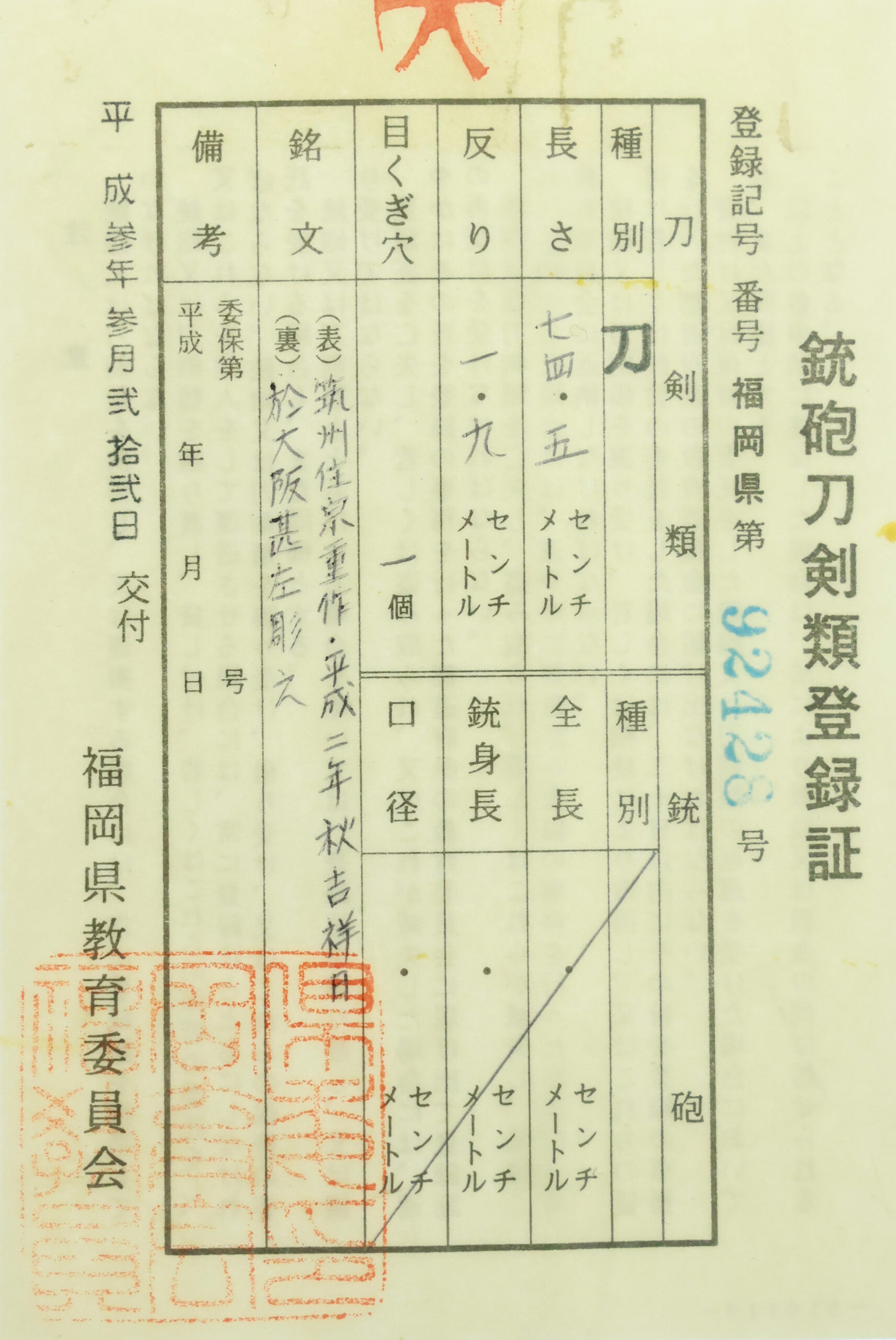
This blade was signed by Chikushu-ju Muneshige (筑州住宗重) in the second year of the Heisei era (1990) . His birth name was Kojō Shigeaki (古城重昭), and he was born in Fukuoka Prefecture in 1932. He learned sword-forging from his father, Munihiro (宗弘), and has won numerous awards in Japan. His work is highly regarded for its exceptional sharpness. He often inscribed his signature as Chikushu Jyu Muneshige (筑州住宗重). It is often a case with swordsmiths in modern/ancient period that they signed their maker’s name with where they lived. The works of Muneshige was known for their sharpness. Horimono (Engraving) This blade features exquisite engravings (Horimono, 彫り物) on both sides of the blade. On one side, an intricate carving of Fudō Myō-ō riding a dragon (倶利伽羅不動, Kurikara Fudō) is depicted. Fudō Myō-ō is a guardian deity in esoteric Buddhism, known as the “Immovable One.” He is revered for his role in repelling evil and guiding people toward the righteous path, making him especially venerated by samurai warriors. The dragon depicted in this engraving is known as Kurikara Ryū-ō (倶利伽羅龍王), a dragon deity considered an incarnation of Fudō Myō-ō himself. Kurikara Ryū-ō is believed to be a divine protector, enveloped in blazing flames that burn away all obstacles and evil. While dragons are traditionally seen as powerful mythical creatures, Kurikara Ryū-ō embodies the very power of Fudō Myō-ō, cutting through ignorance and purging worldly desires. The image of Fudō Myō-ō riding atop the dragon symbolizes his absolute control over chaotic forces, guiding them toward justice and enlightenment. Above Fudō Myō-ō, a Bonji (梵字) inscription is engraved. Bonji are Sanskrit characters used in esoteric Buddhism to represent Buddhas and Bodhisattvas, and the inscription on this blade is believed to invoke the divine protection of Fudō Myō-ō. On the other side of the blade, an engraving of the Kurikara-ken (倶利伽羅剣) is featured. The Kurikara-ken is the sacred sword wielded by Fudō Myō-ō and is often depicted entwined with a dragon, symbolizing the power to cut through ignorance and evil. This esoteric Buddhist emblem was believed to provide protection and spiritual strength, and samurai warriors often incorporated such motifs into their swords as a source of mental and spiritual support. The design of this Kurikara-ken follows the form of the Sanko-tsuka-ken (三鈷柄剣, Three-pronged Vajra Sword), a sacred tool in esoteric Buddhism used in rituals, prayers, and for warding off evil. About Modern Swordsmith There are around 150-200 swordsmiths in Japan today. To legally produce Japanese swords, one needs to pass the national exam given by the Agency for Cultural Affairs(Bunka-Cho) and receive the license. Before taking the exam, one must finish his or her apprenticeship under a licensed master for more than five years. Those who practice Iaido(居合道) tend to use those modern swords, and there are modern Japanese sword collectors nationwide. Modern Japanese sword makers are researching old ways to forge swords and trying to recreate ancient-style swords. They are the ones who keep the tradition of Japanese history alive. *Please keep in mind that there are a couple of Kitae Kizu on the Katana blade. Registration Number It is called Jyu Hou Touken Rui Torokusho (銃砲刀剣類登録証).

販売店の記載のまま
筑前 · 1989-2019頃
現在3点販売中
昭和から現代へ 断絶と再生
二十世紀は二度この工芸を殺しかけた。戦時の歪みと、占領下の禁令である。1948年の日刀保設立と1953年の作刀再開が刀を美術として再建し、人間国宝と無鑑査がその頂に立つ。
Returns/exchanges limited to defects caused by shipping (except willful misconduct or gross negligence by the company); customers must contact within 72 hours of receiving the product.