説明
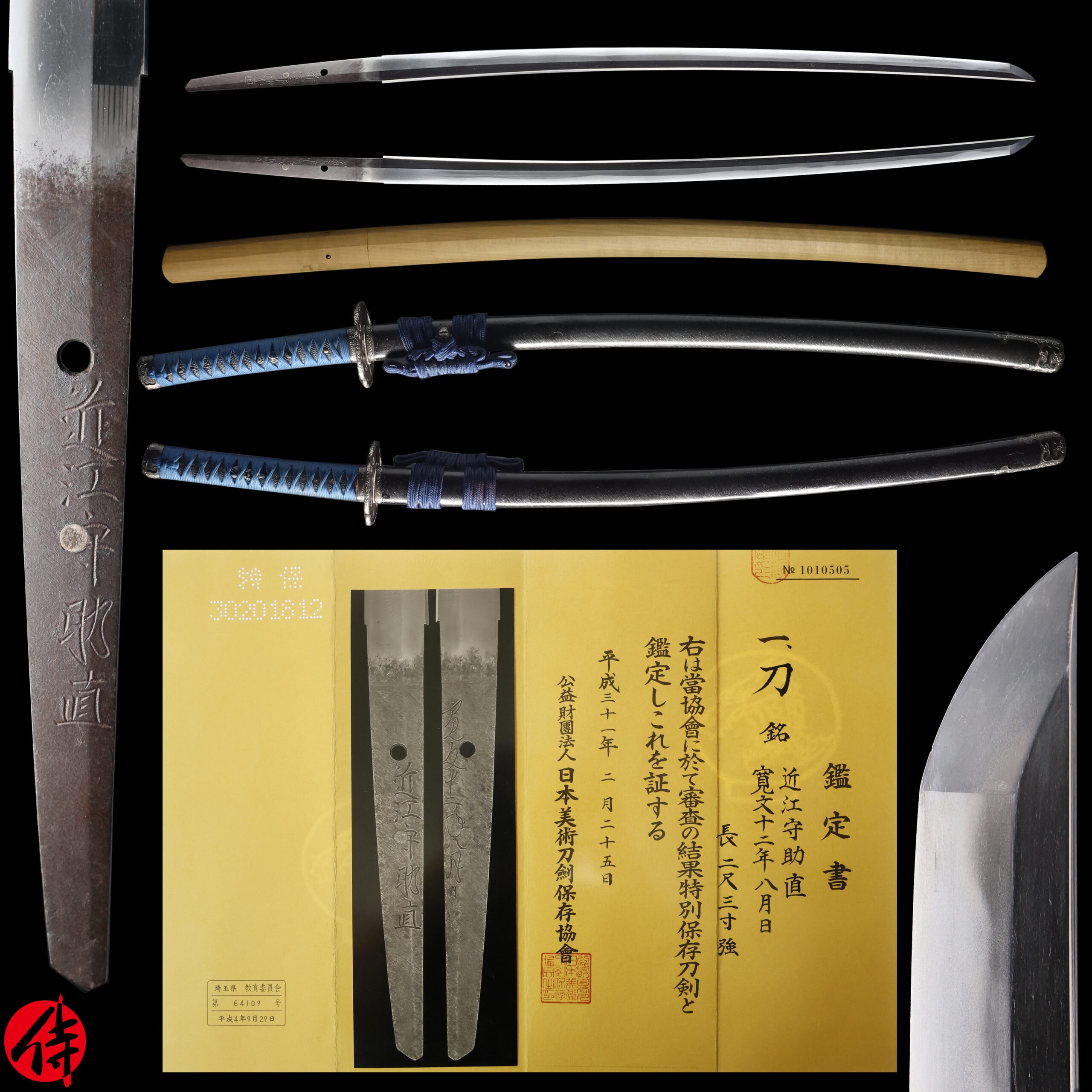
Antique Japanese Sword Katana Signed by Sukenao with
Tokubetsu Hozon
Certificate
【Description】
This blade was signed by Omi no Kami Sukenao (近江守助直) in the 12th year of the Kanbun era (1672: Early Edo period). He was an apprentice of Tsuda Echizen no Kami Sukehiro (津田越前守助広), one of the most famous swordsmiths during the early Edo period in Osaka.
Sukenao, born in the 16th year of the Kan-Ei era (1639) in Omi province (Today’s Shiga prefecture), learned the art of sword-forging from Sukehiro. In 1675, he married Sukehiro’s daughter and was given the Tsuda family name. Returning to Omi province, he continued to forge blades. However, after Sukehiro’s passing in 1682, he moved back to Osaka and took over Sukehiro’s school. It is said that he was active by the end of the 17th century. His exceptional craftsmanship was recognized by the imperial court, and he was honored with the title of Omi no Kami, adding to the prestige of this signed blade.
Osaka Shinto
The blades forged by Sukenao are categorized as Osaka Shinto. Shinto is Japanese Sword terminology that refers to the swords forged during 1596-1781. The blades made in the Osaka area during this period are called Osaka Shinto. There are many famous swordsmiths in this Osaka Shinto era. After Hideyoshi Toyotomi built Osaka Castle, Osaka City flourished as a castle town and became a business center. Many swordsmiths moved to Osaka to look for better opportunities. They not only forged swords for those Samurai who lived in Osaka but also for feudal lords nationwide. Ikanshi Tadatsuna (Awataguchi Omi no Kami Tadatsuna), Inoue Shinkai (his son), and Tsuda Sukehiro are the most famous among many swordsmiths.
One of the most striking features of Osaka Shinto swords is the beauty of their Jigane, a visible steel surface pattern created by folding and hammering during the forging process. This beauty was made possible by the unique geographical advantage of Osaka. The city had direct access to the Tamahagane production sites, which provided the high-quality carbon steel necessary for crafting these exceptional swords. This proximity to the source of their raw materials speaks to the resourcefulness and ingenuity of the swordsmiths of Osaka.
It is appraised as a
Tokubetsu Hozon Token
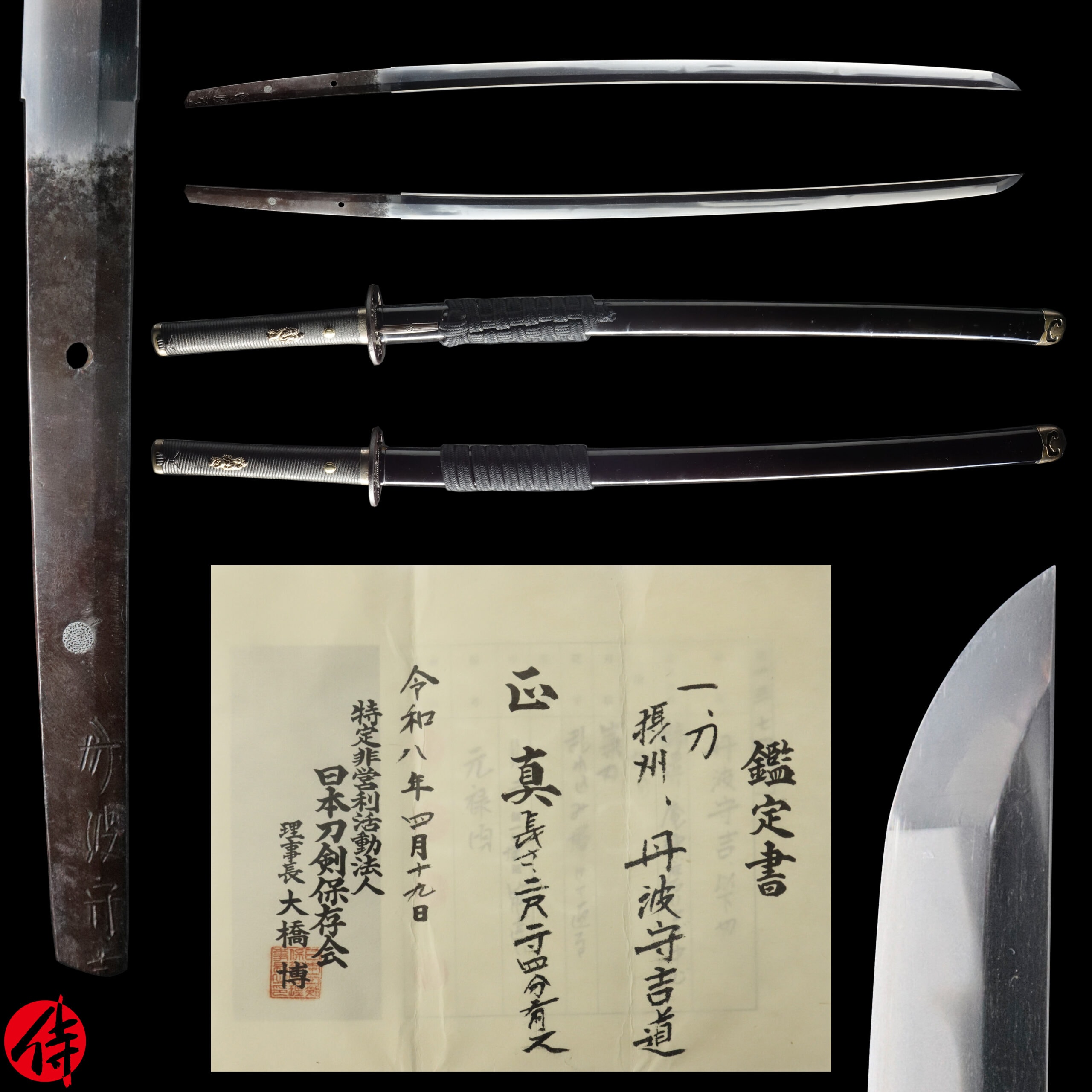
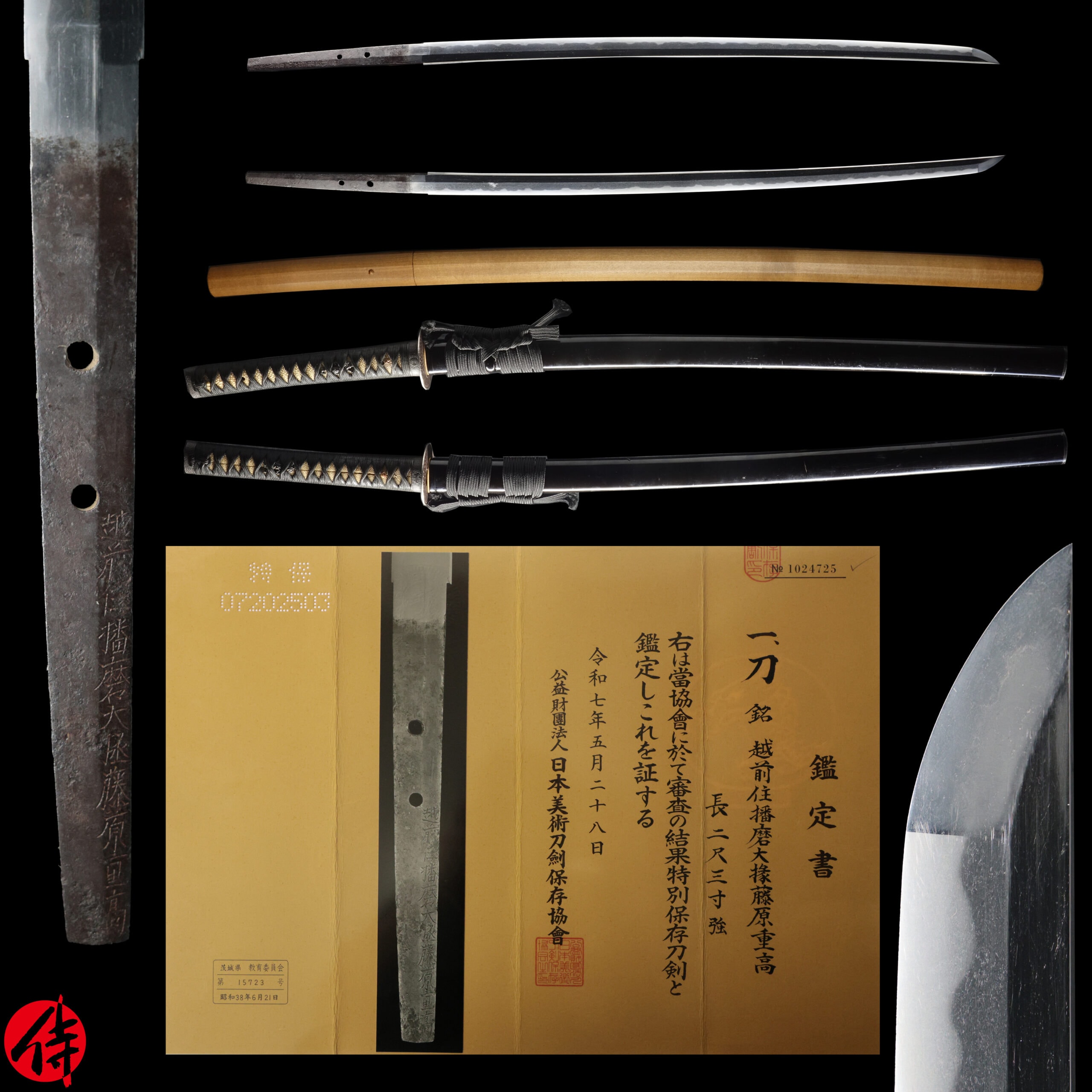
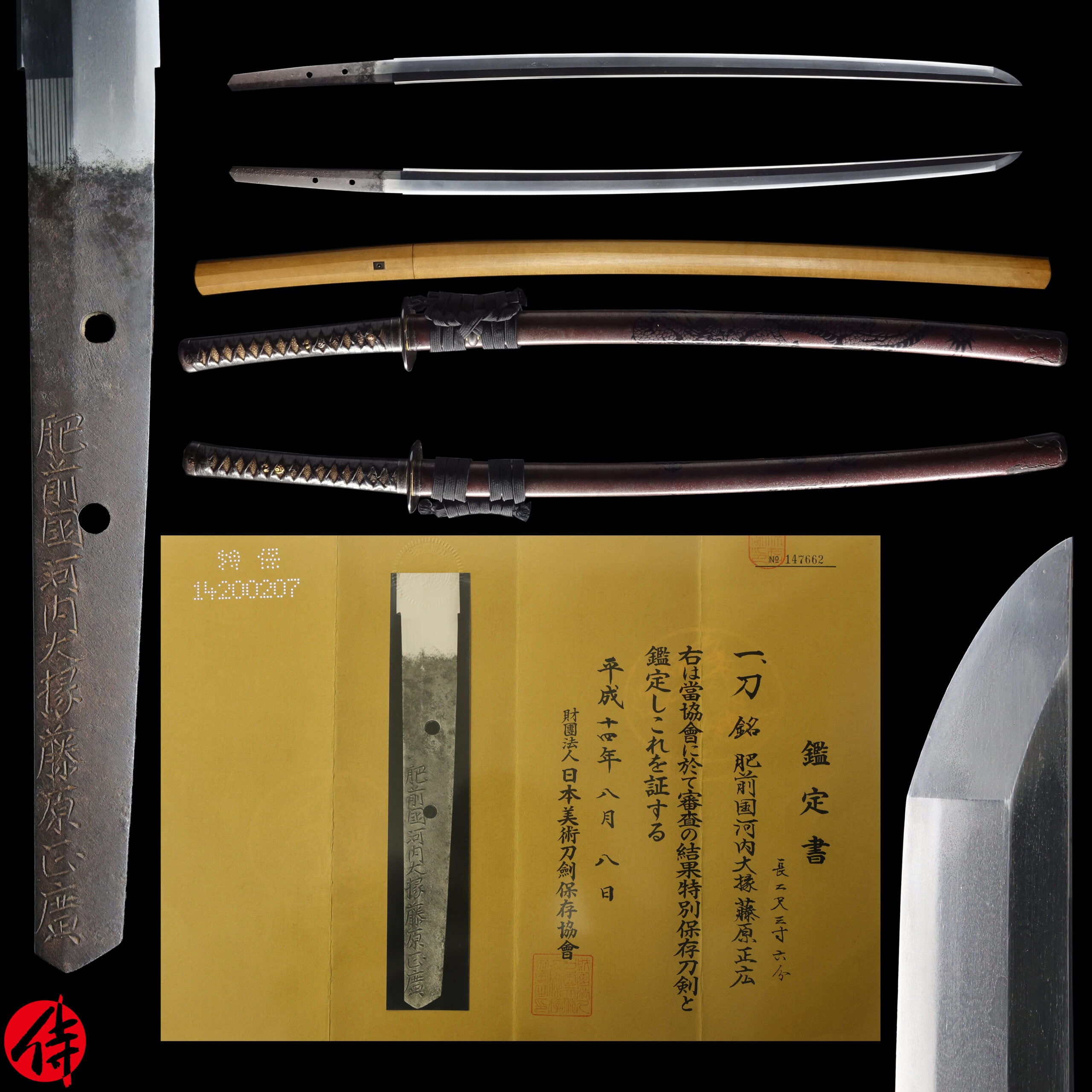
(特別保存刀剣) issued by NBTHK (Nihon Bijutsu Touken Hozon Kyokai:日本美術刀剣保存協会). This authentication paper was only given to authentic Japanese swords, especially well preserved and high quality with artistic value.
*Please keep in mind that there is a couple of tiny chips on this blade as well as small Kitae Kizu on the Mune (backbone of the blade). If you like to know the detailed condition, please feel free to contact us.
【Blade】
Cutting Edge Length(Nagasa)
:
69.9
cm (27.5 inches)
Curvature(Sori)
:
1.4 cm (0.55 inches)
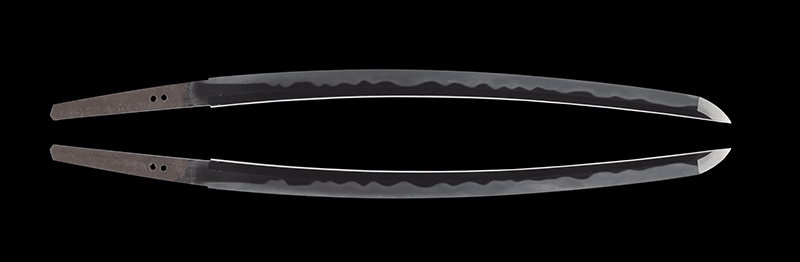
Hamon
:
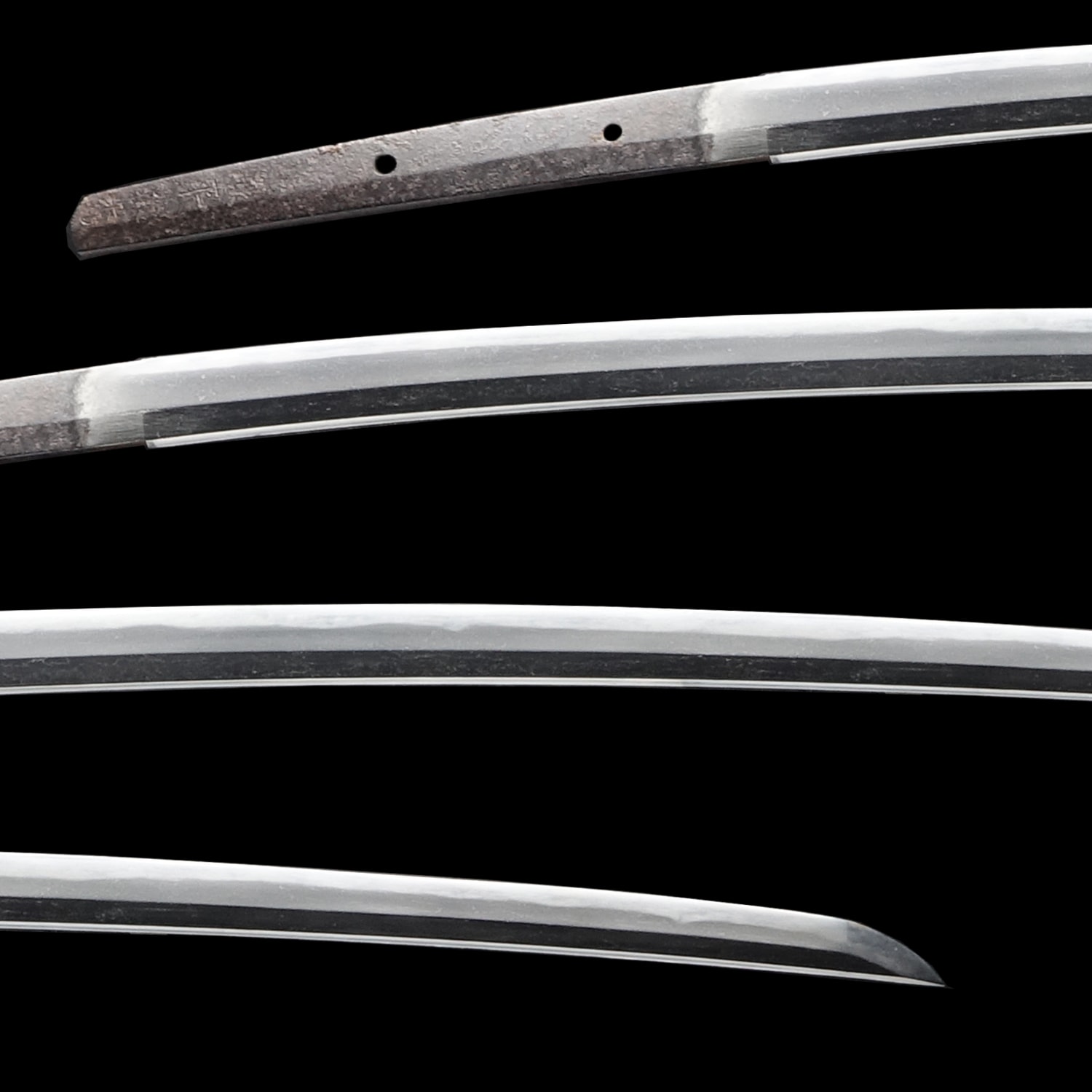
The crystalline structure which forms along the cutting edge of a blade as a result of the hardening process
Jimon(Jihada)
:
visible steel surface pattern created by folding and hammering during forging process
Kissaki
:
Kissaki is the tip of the Japanese sword.
Nakago
:
Nakago is the tang of the Japanese sword.
Japanese swordsmiths left the black rust on the tang because it prevents red rust while the tang is in its handle. And the discoloration of the tang was created over time, and it is a great indicator for a Japanese sword specialist to estimate when the sword was forged.
Koshirae
:Koshirae is the mounting of the Japanese sword. There are several parts that consist of Koshirae such as Saya (Scabbard), Tsuka (Handle), Tsuba (Handguard).
Fuchi-Kashira
:
A pair of matching sword fittings that cover the upper and bottom parts of its sword hilt.
The theme of this Fuchi-Kashira is Arabesque (唐草, Karakusa). It is a pattern in which stems and leaves of vines are twined and make curves. Since ivy has a strong vitality and grows up without interruption, people regarded this design as a symbol of prosperity and longevity. Vine is called Tsuru (蔓) in Japanese, and it has another pronunciation;

![Wakizashi [Tsuda omi-no-kami Sukenao(Yoki-Wazamono)] [N.B.T.H.K] Tokubetsu Hozon Token](/_next/image?url=https%3A%2F%2Fitbhfhyptogxcjbjfzwx.supabase.co%2Fstorage%2Fv1%2Fobject%2Fpublic%2Flisting-images%2Fworld-seiyudo%2FL261741%2F00.jpg&w=2560&q=90)