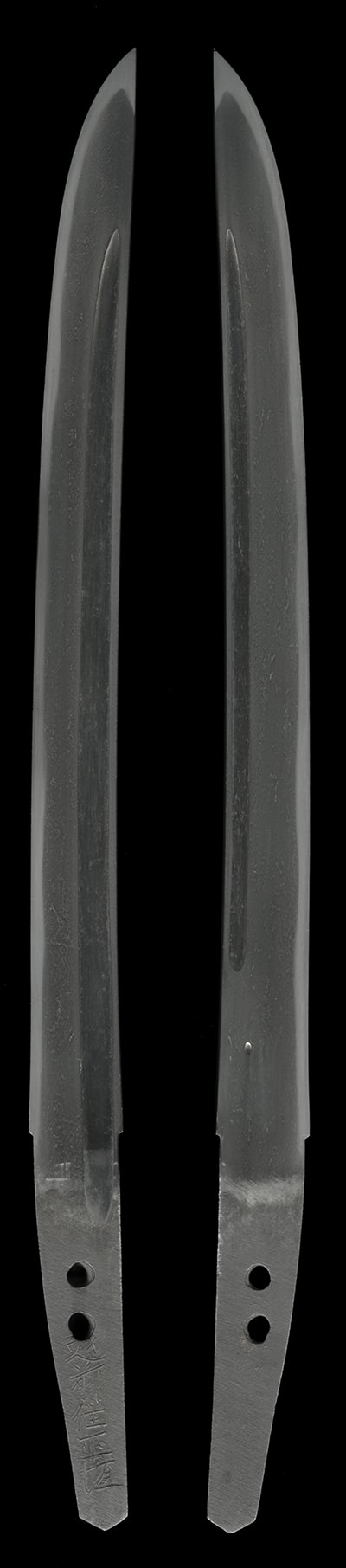
徳川の泰平のもと、大小は法度の定める身分の制服となり、需要は城下町、とりわけ江戸に集まった。工芸は二つに分かれる。目利きのための華やかな鑑賞の作と、截断の結果を金象嵌に刻む実証の刀である。
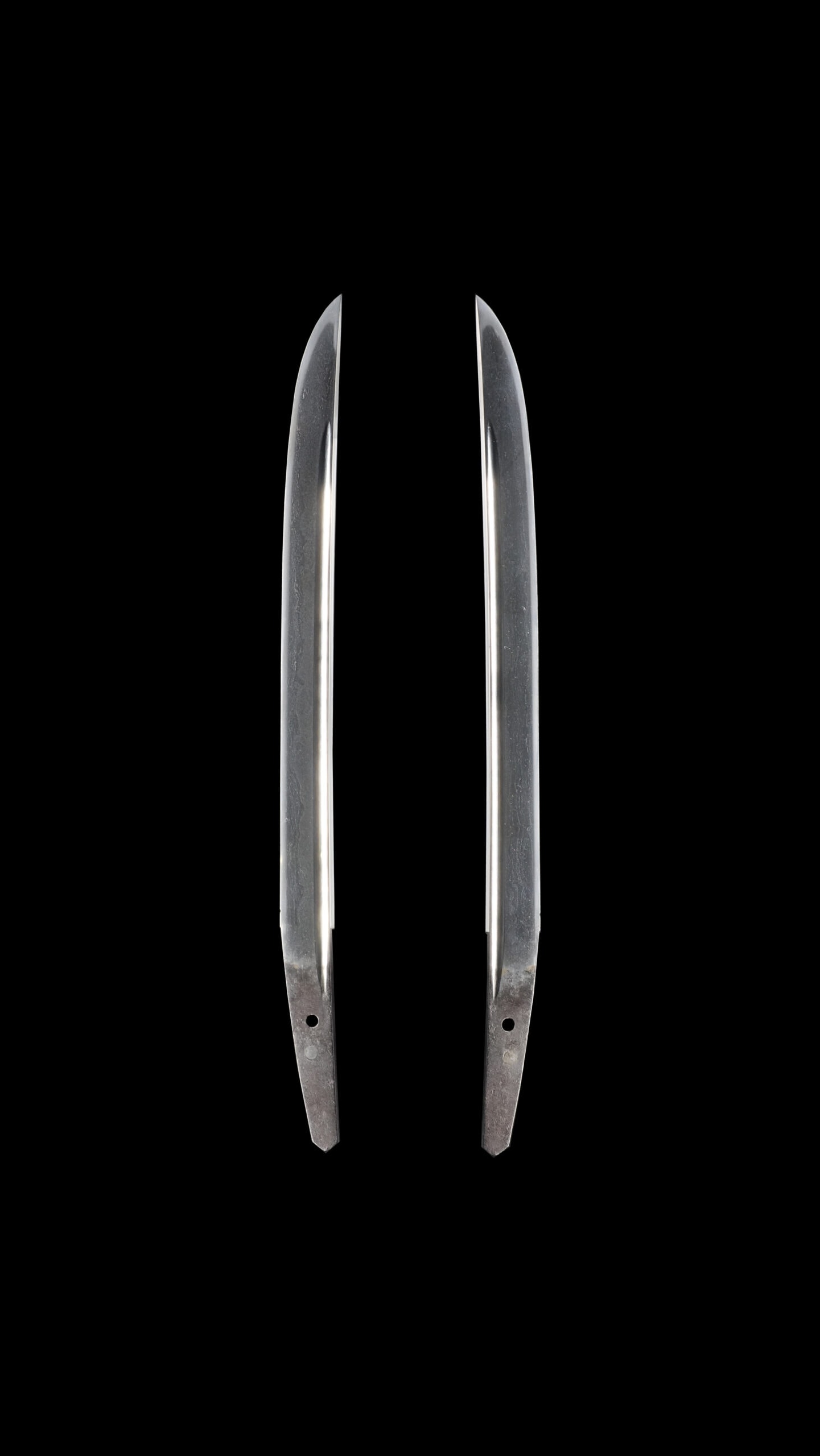
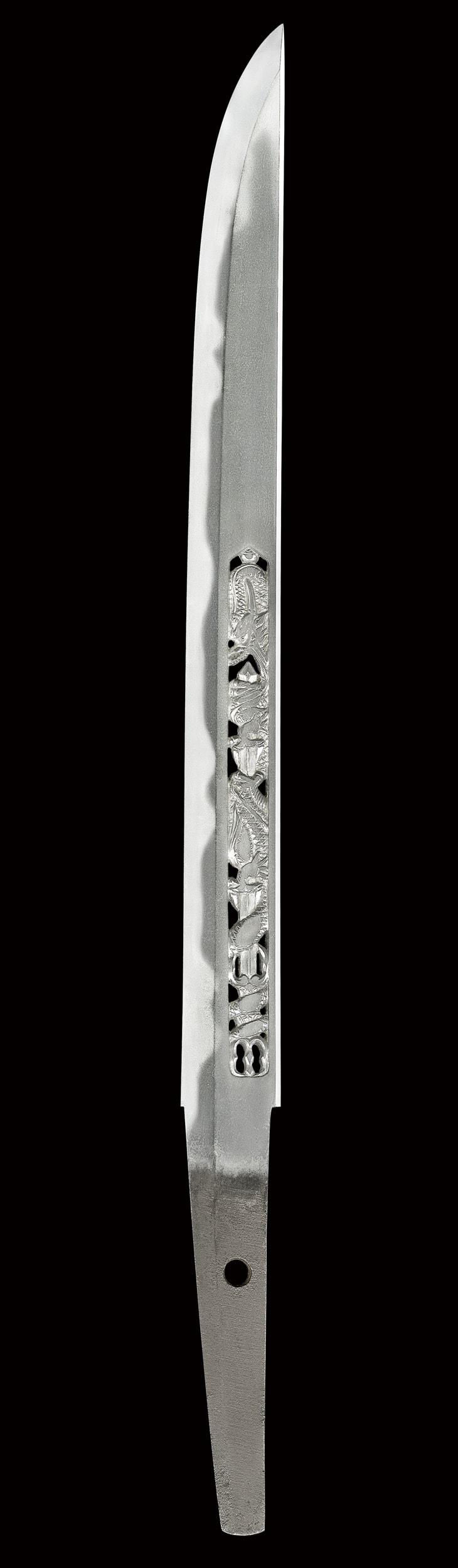
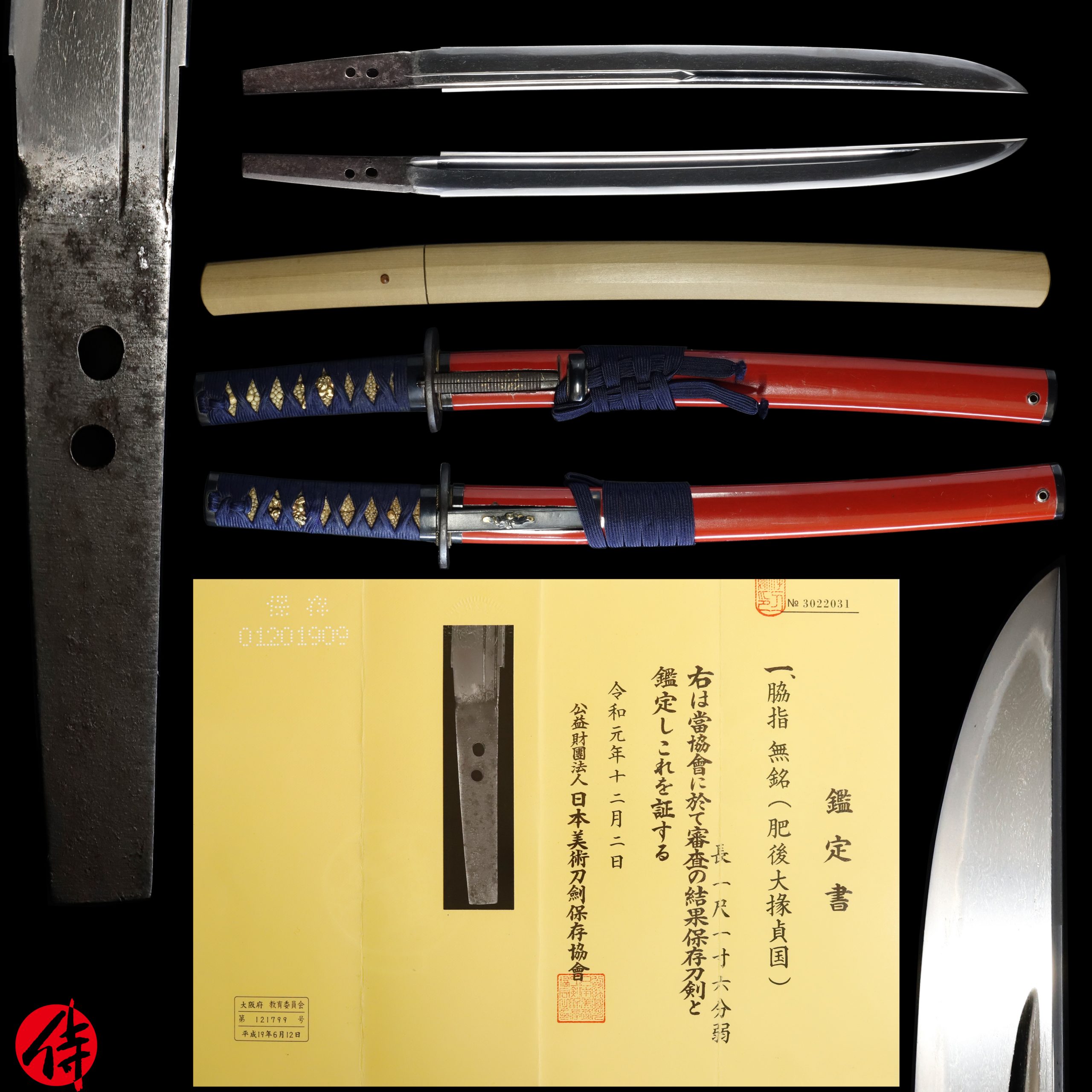
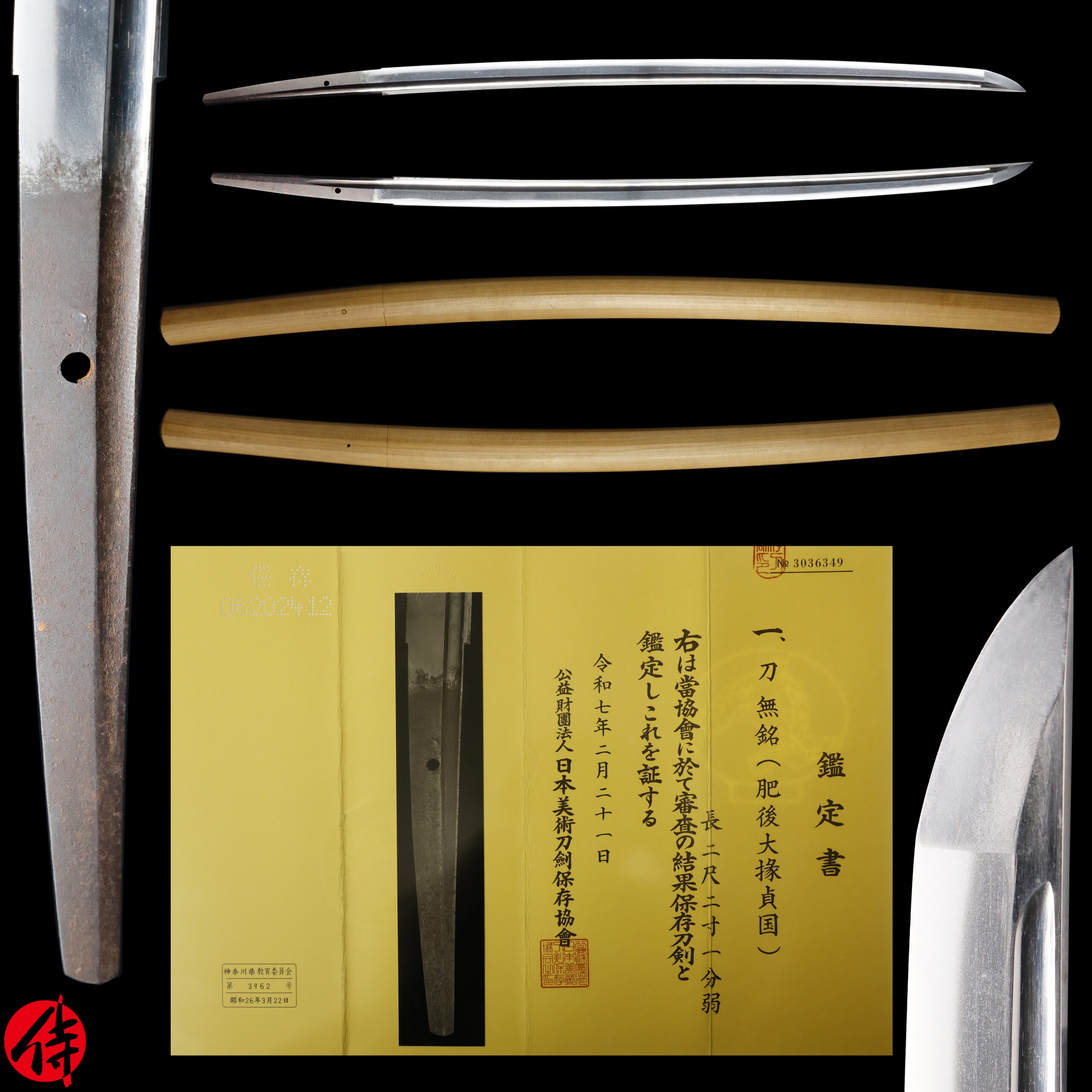
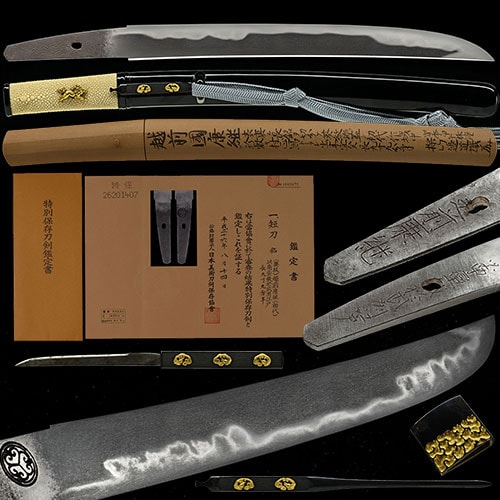
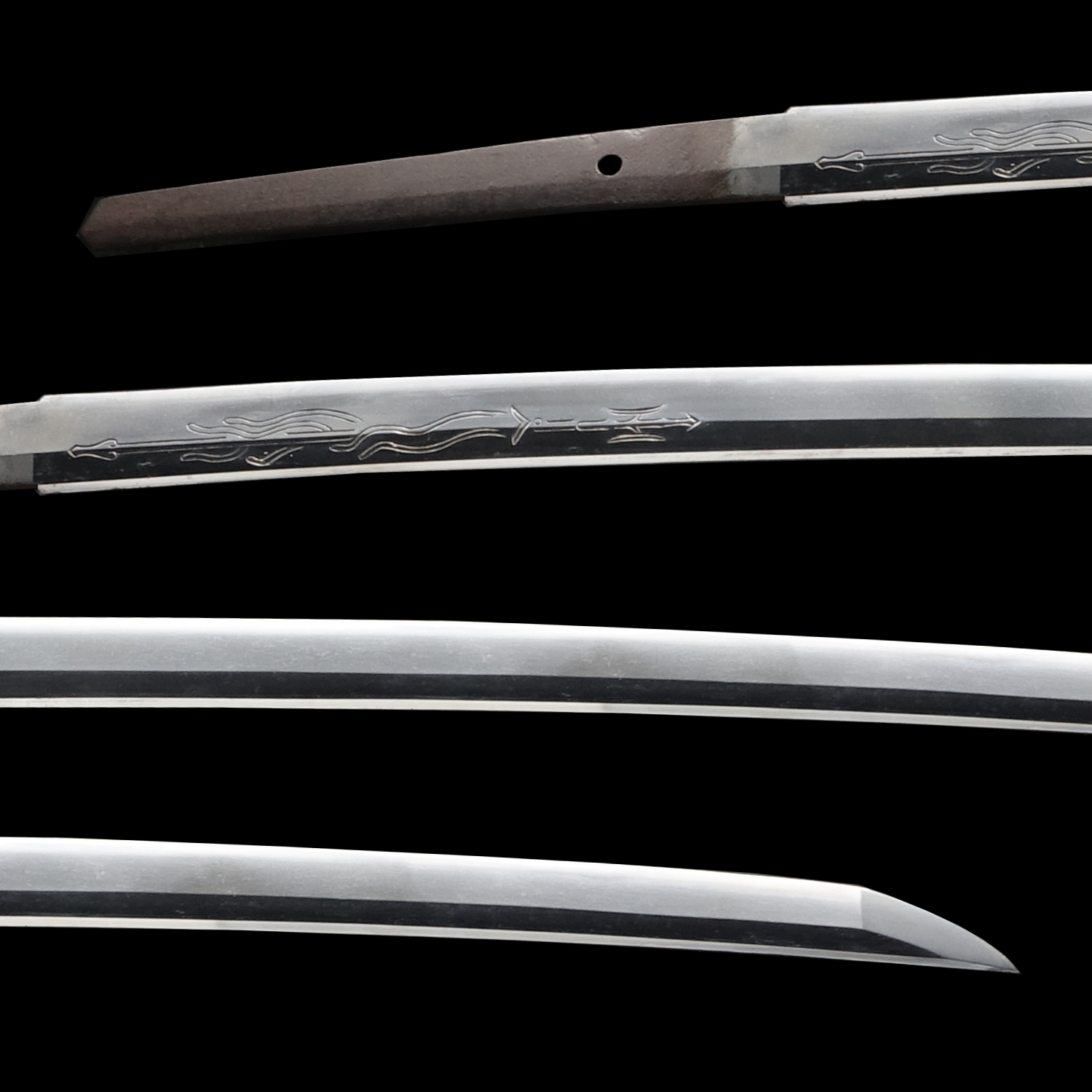
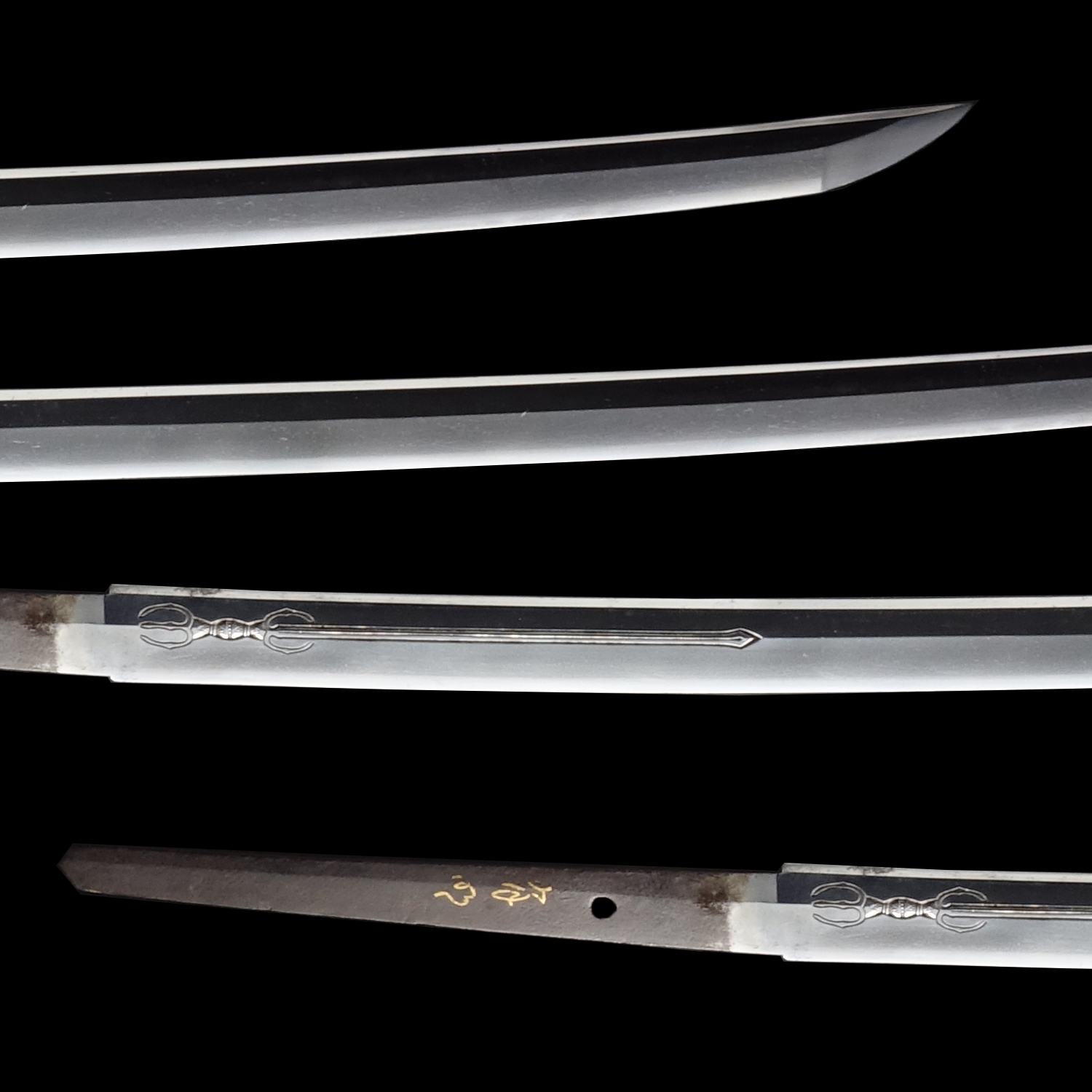
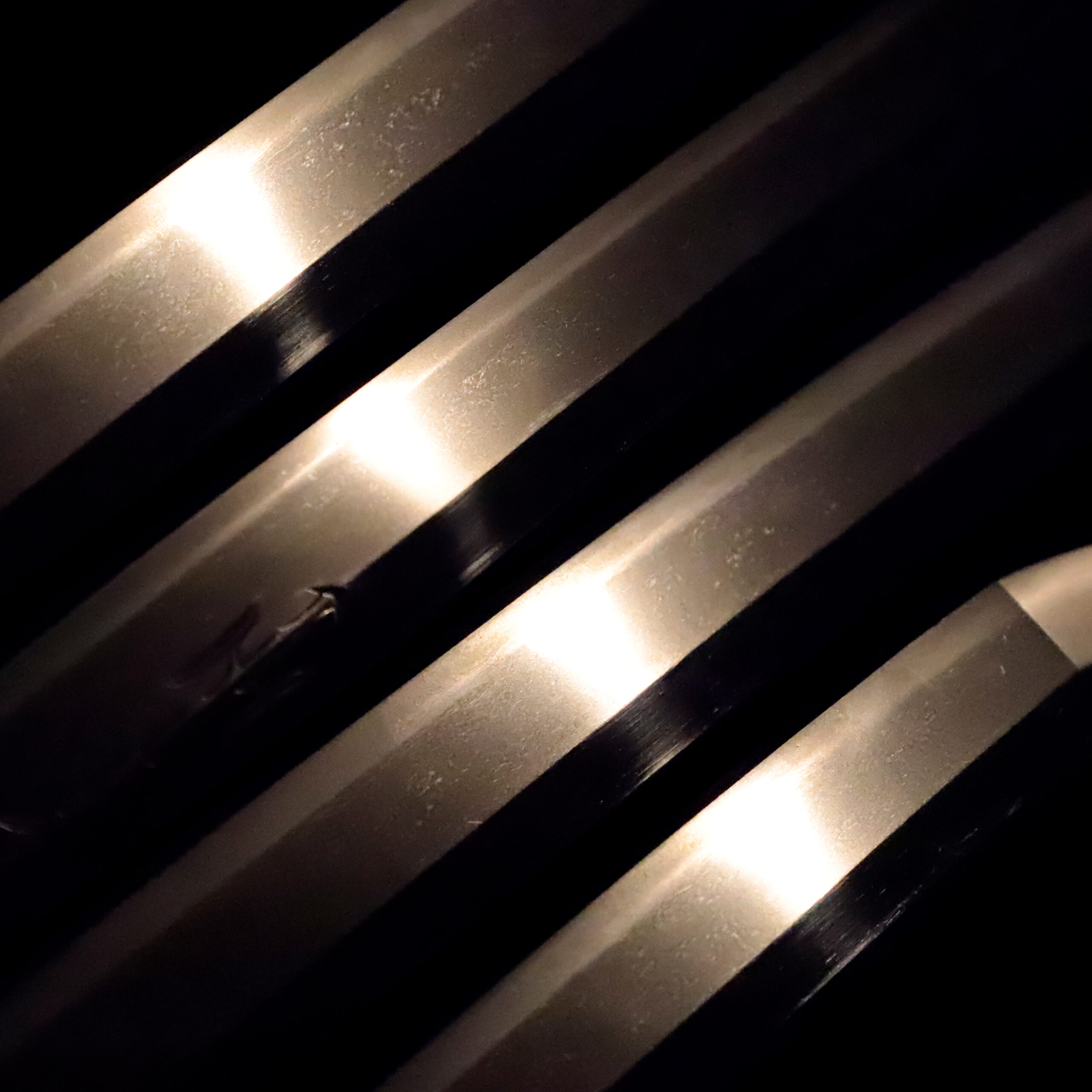
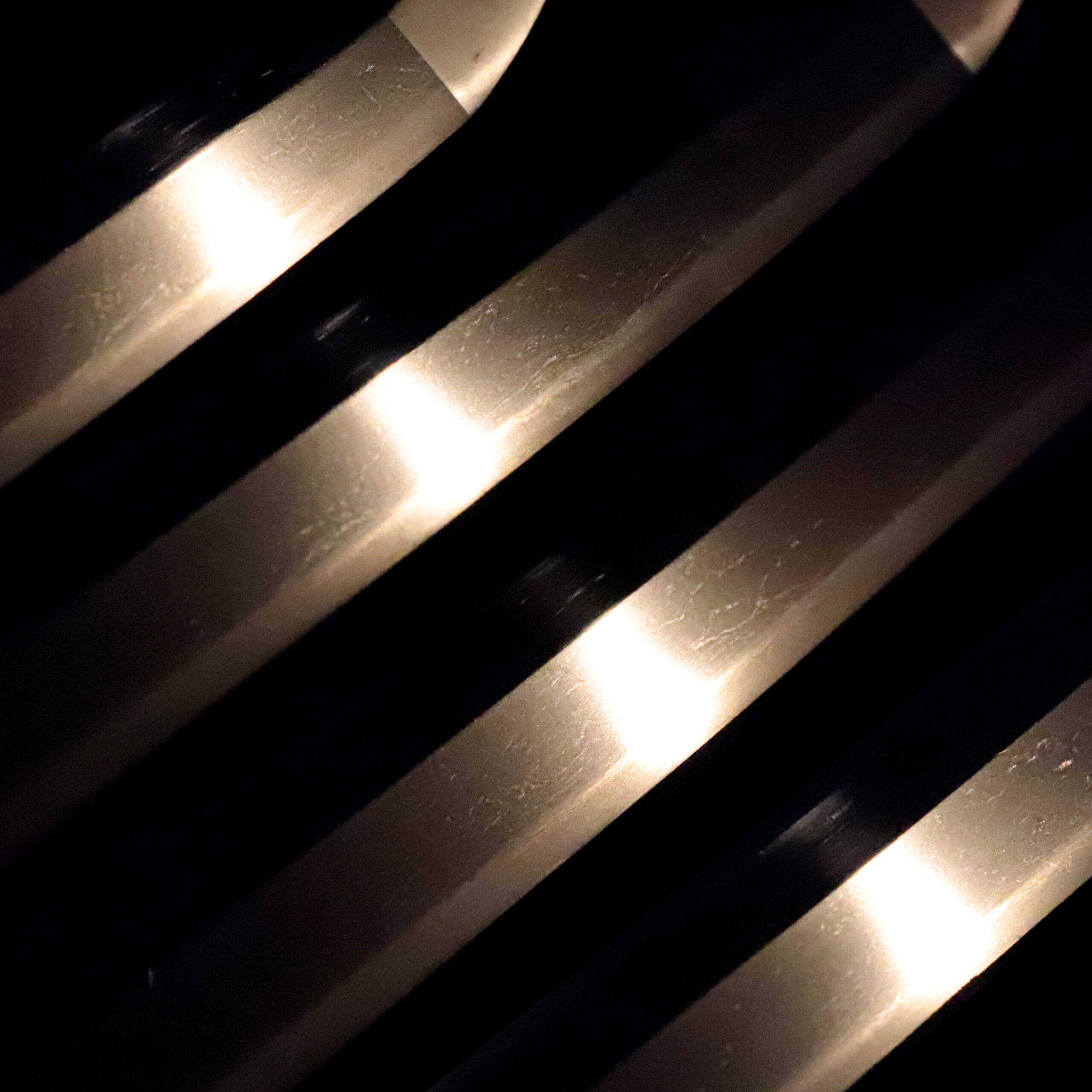
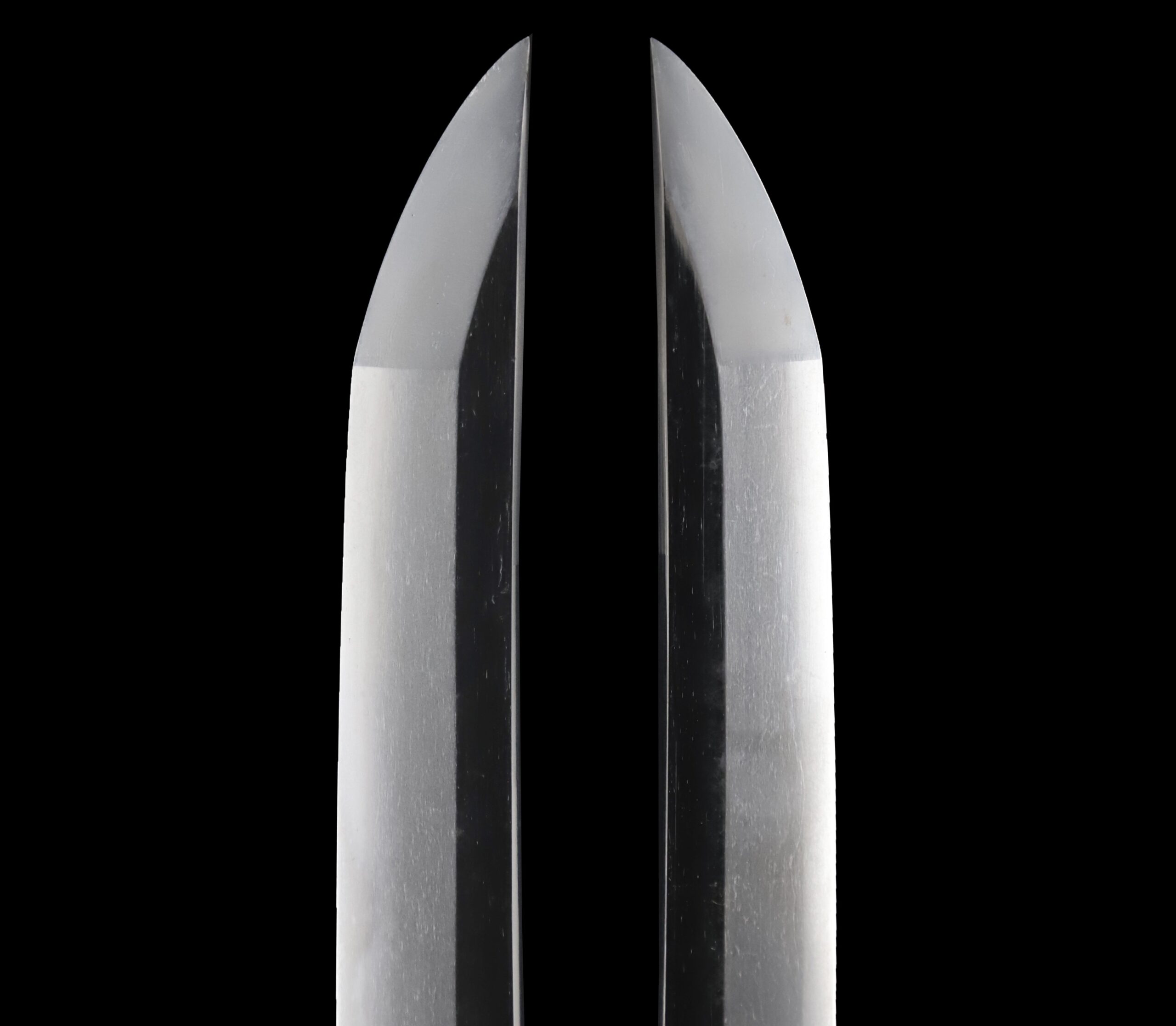
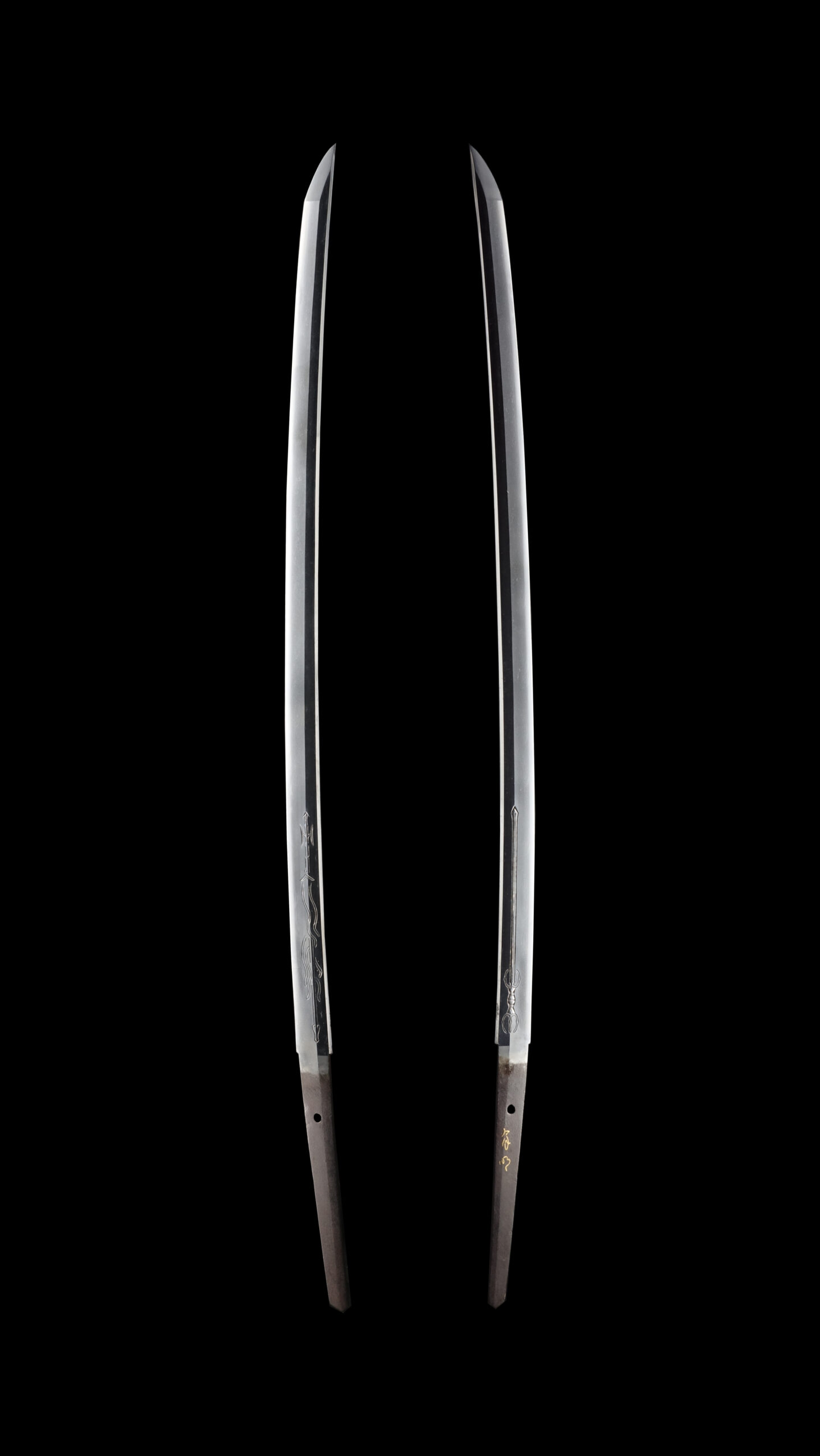
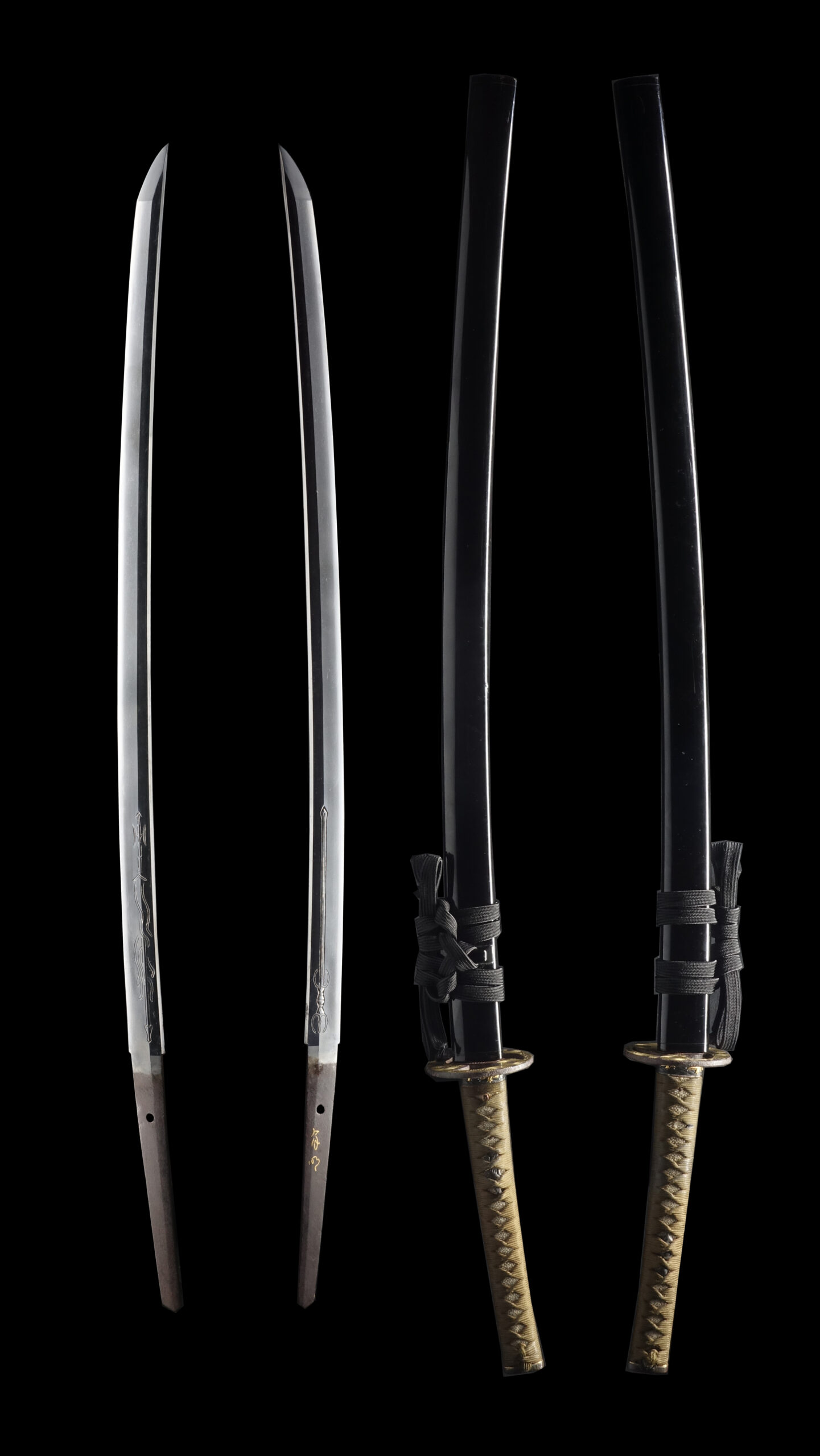
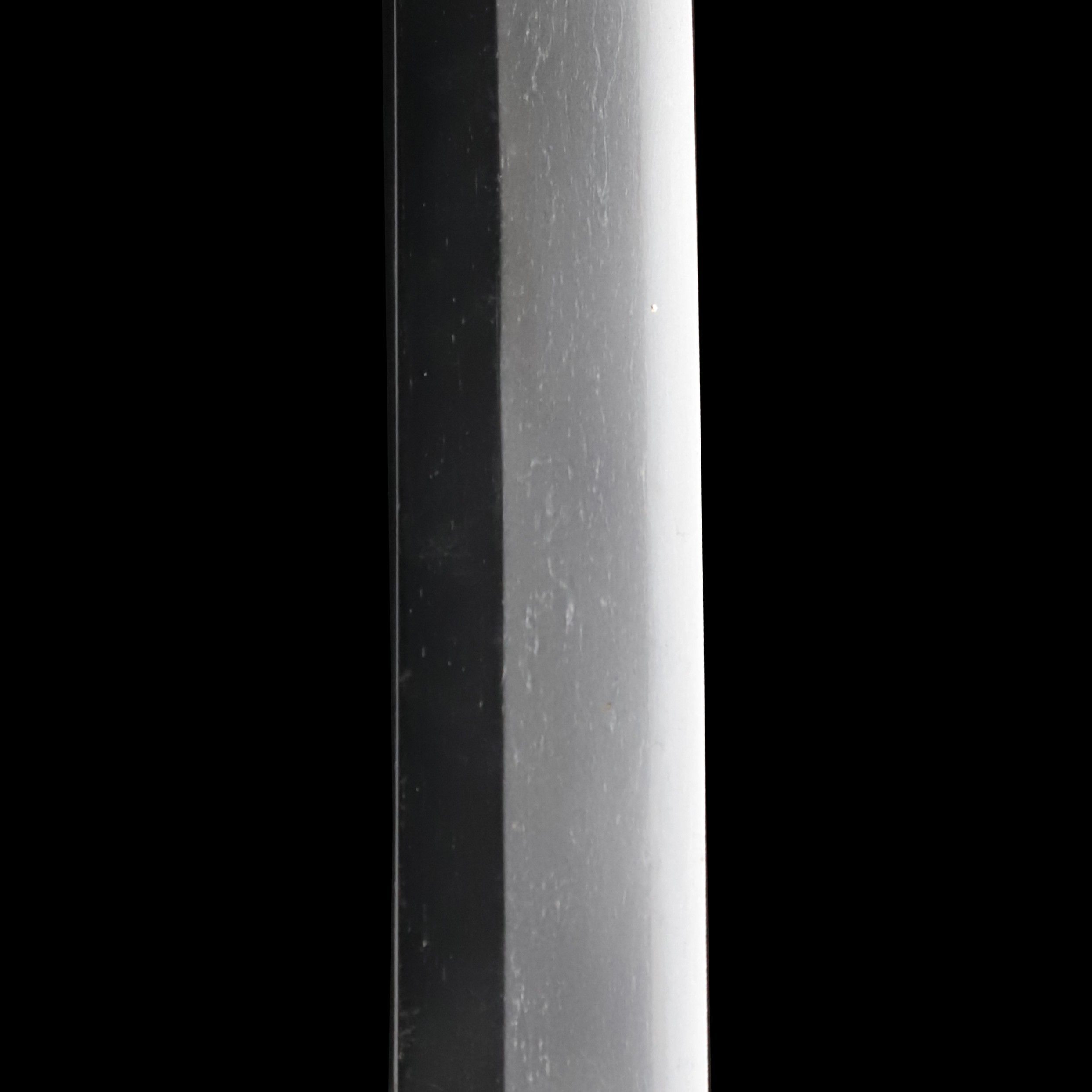
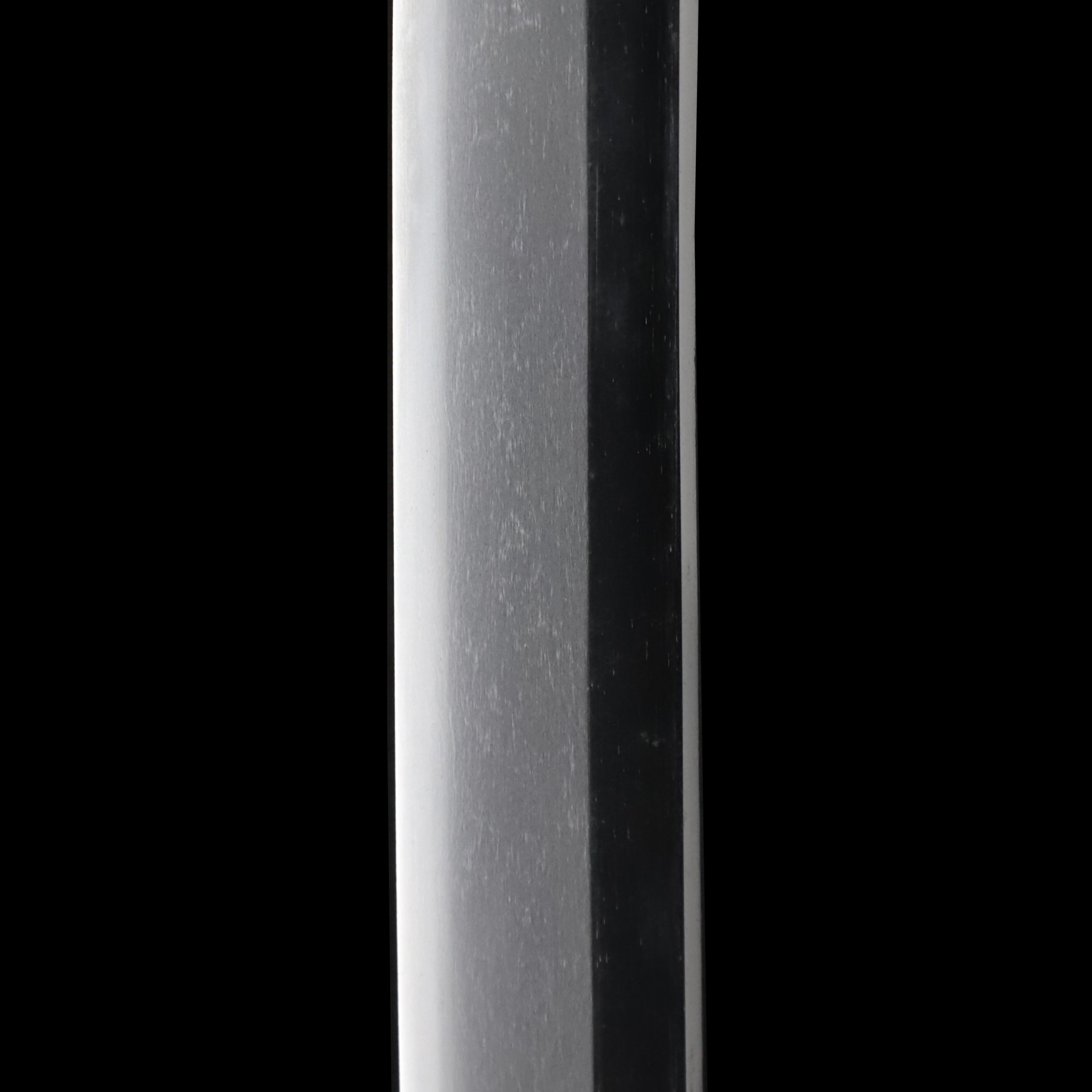
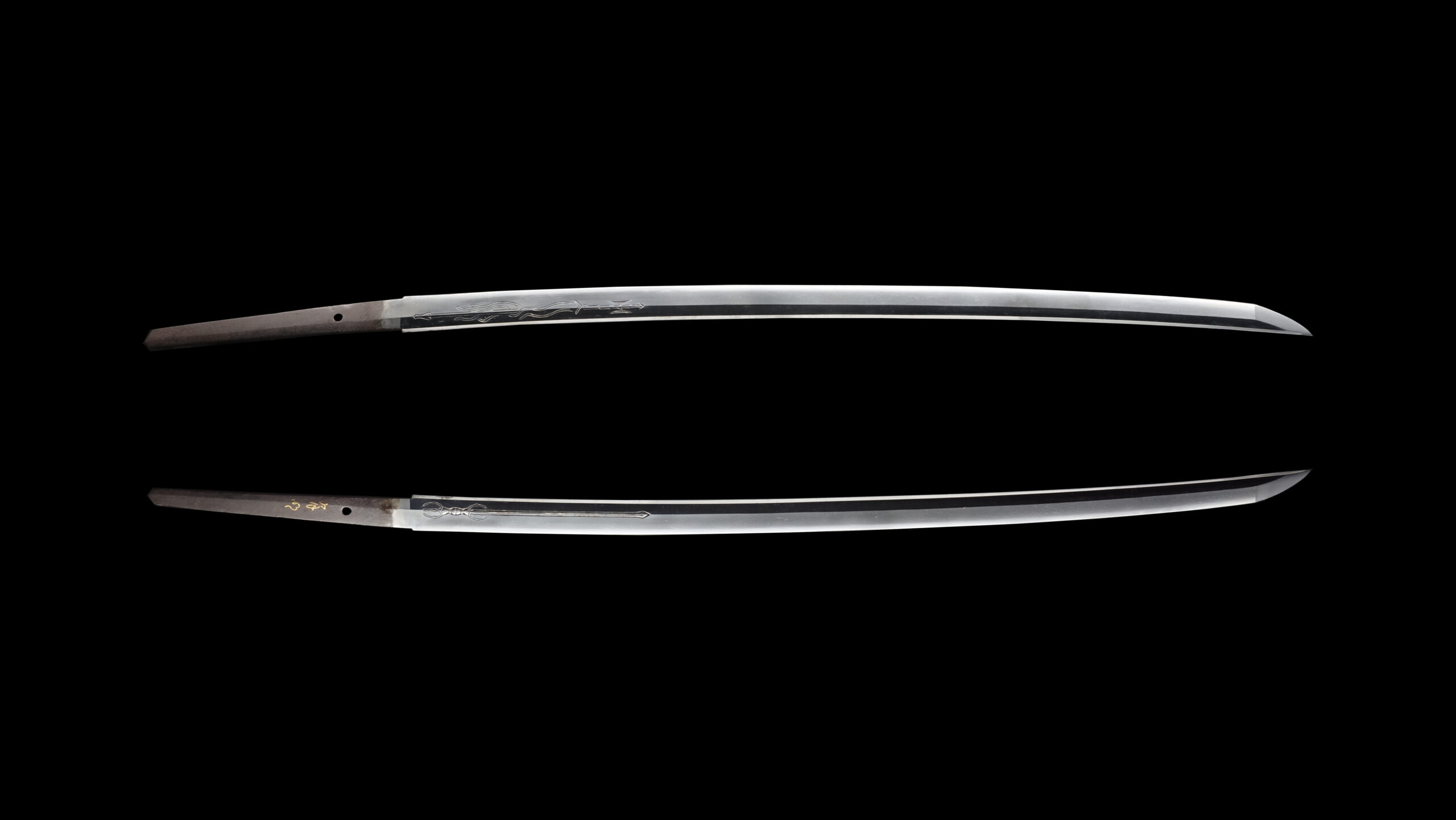
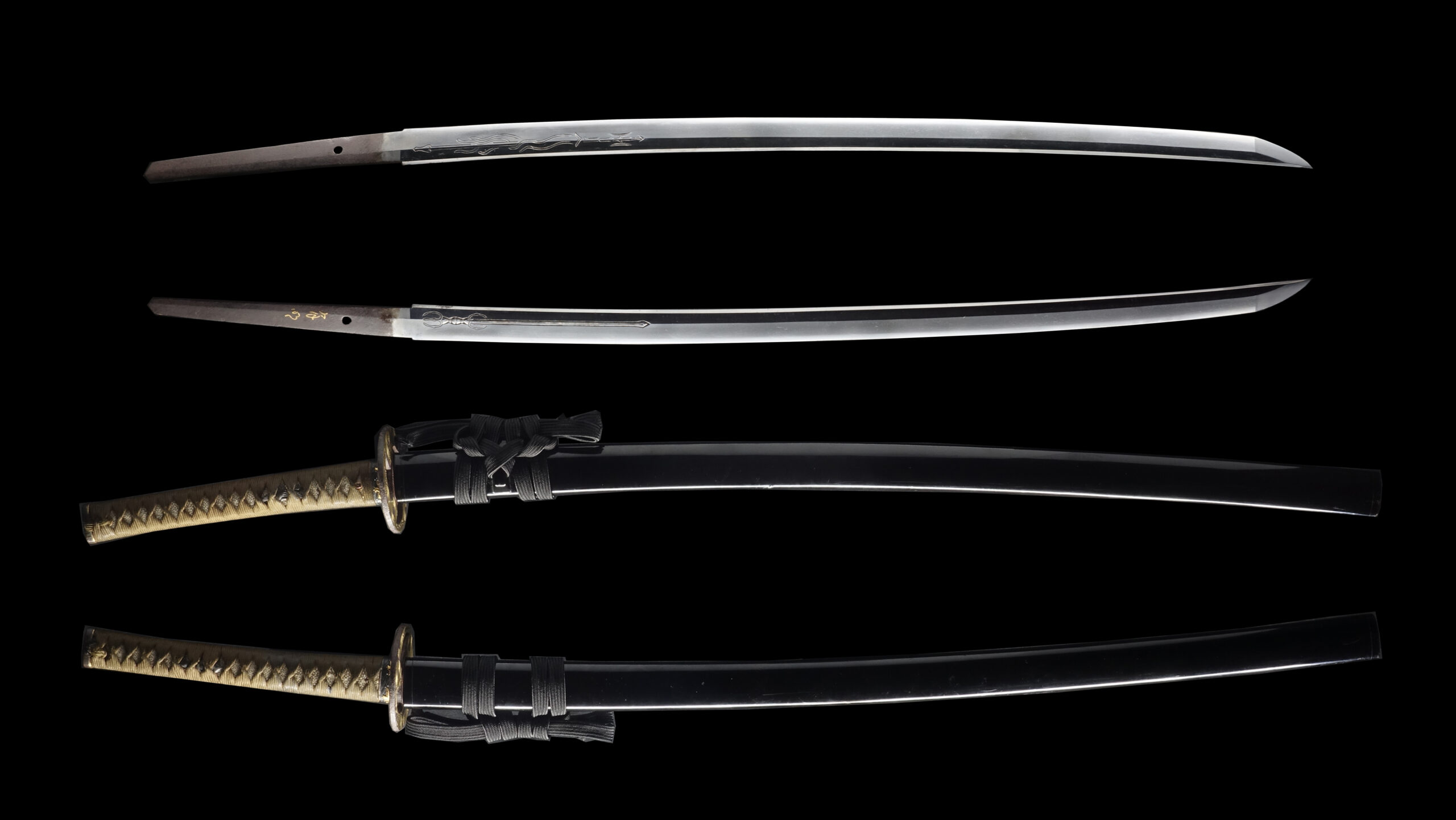
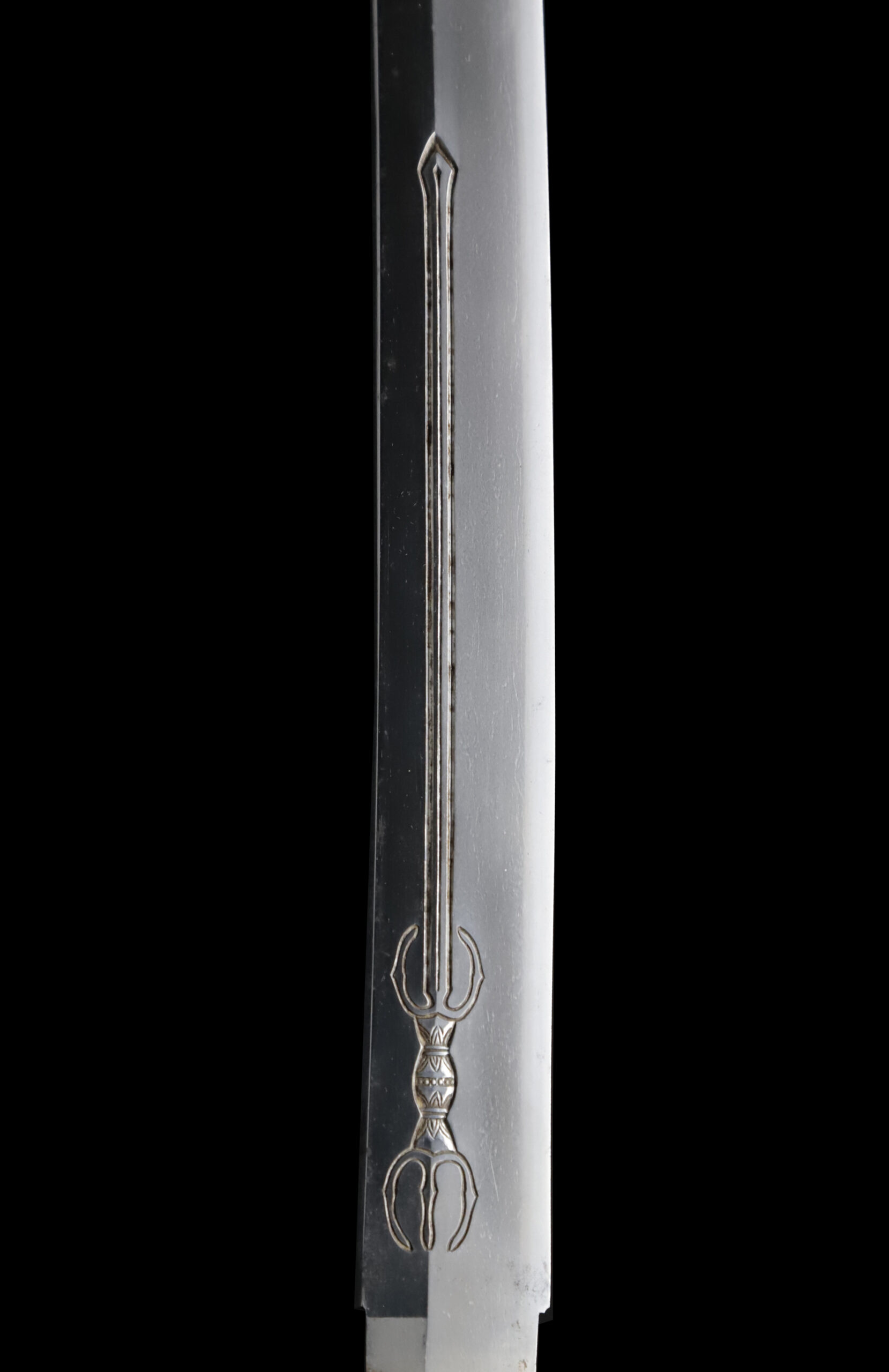
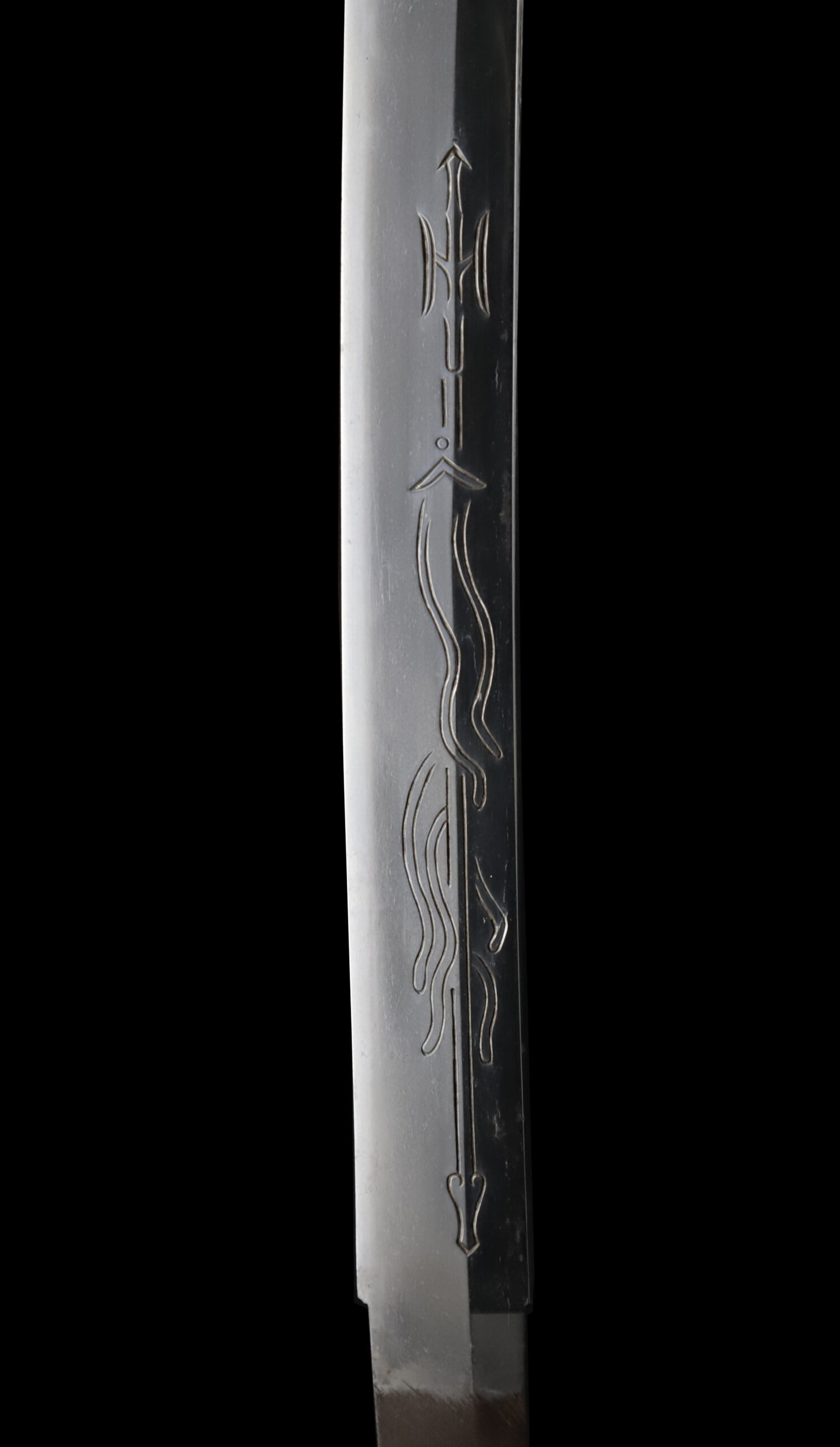
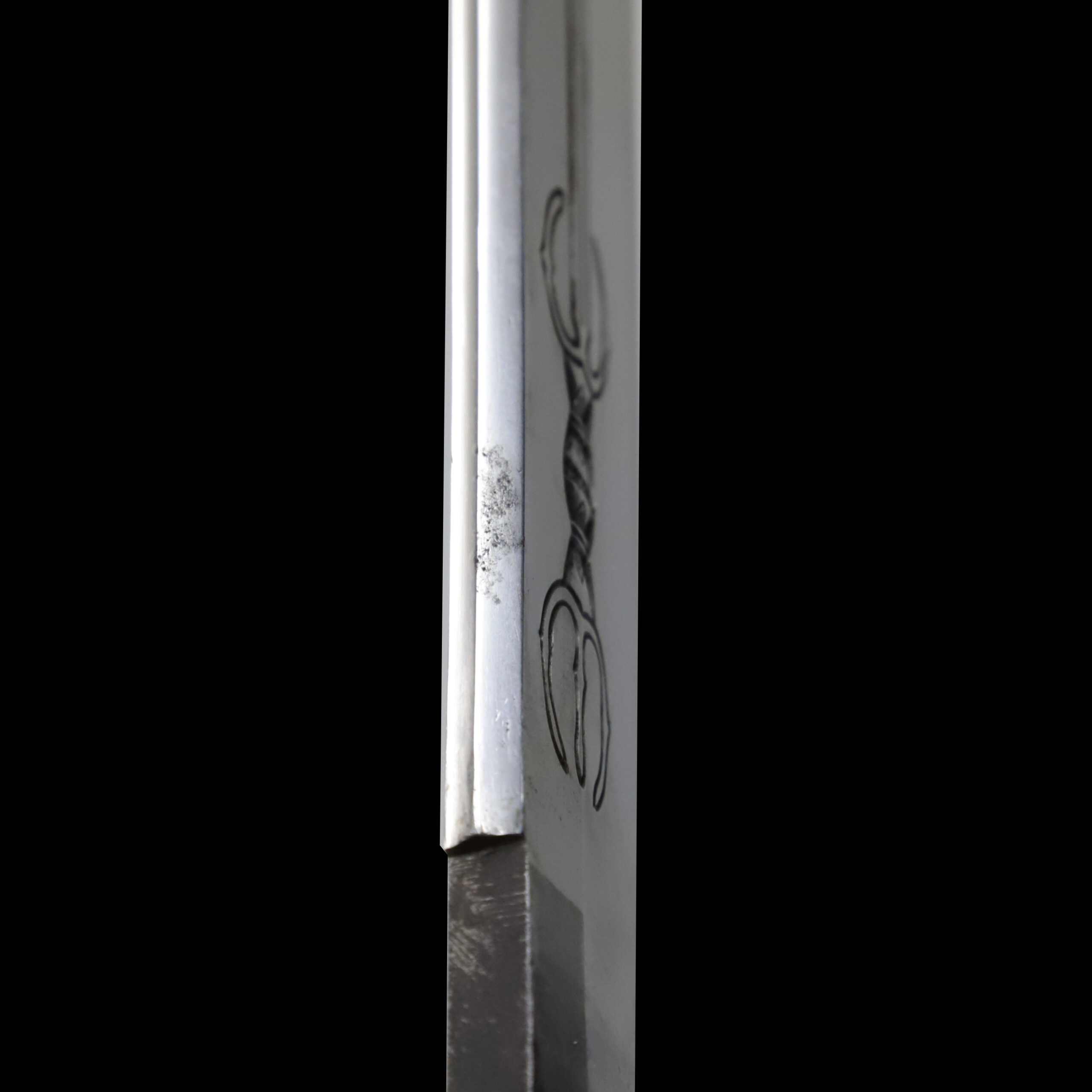
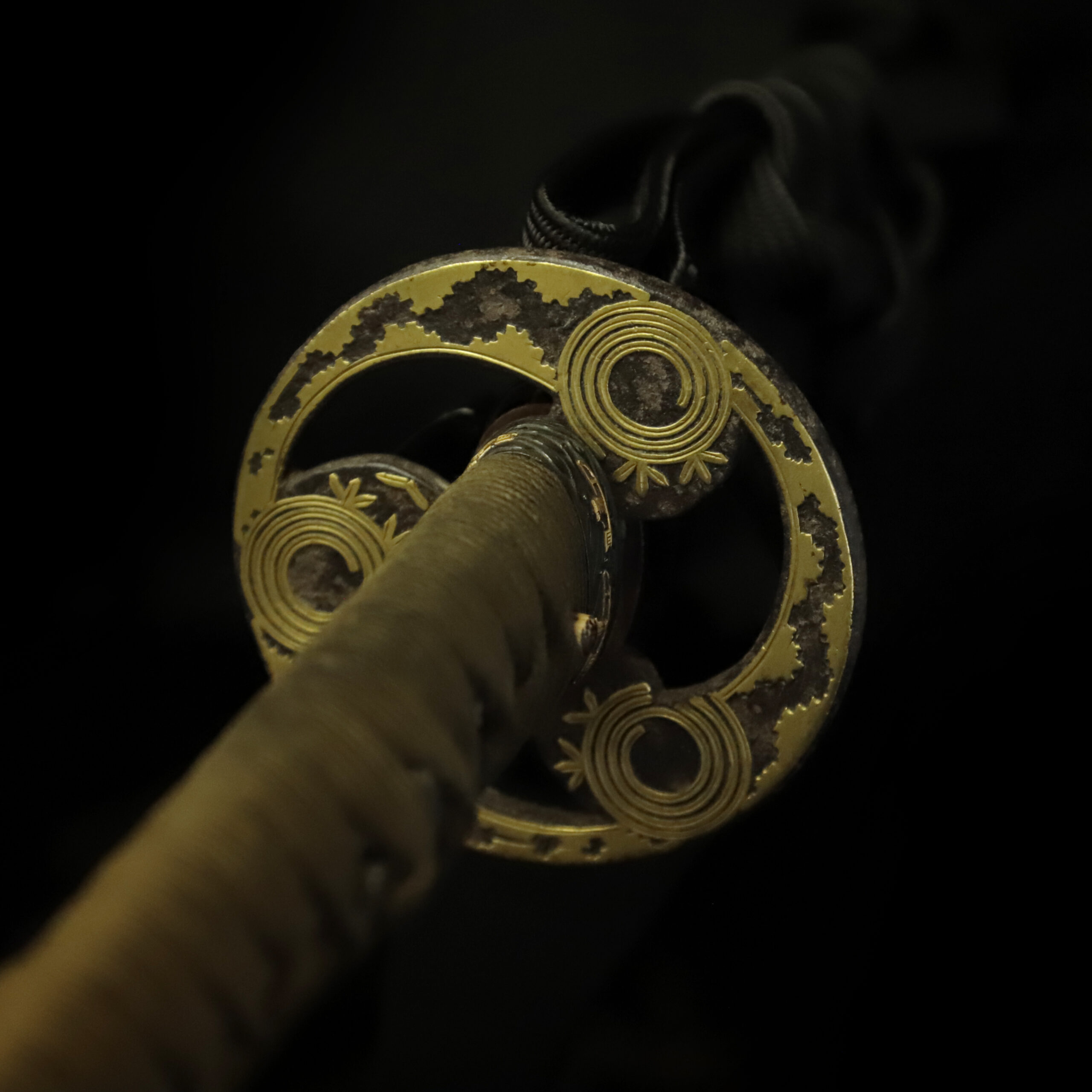
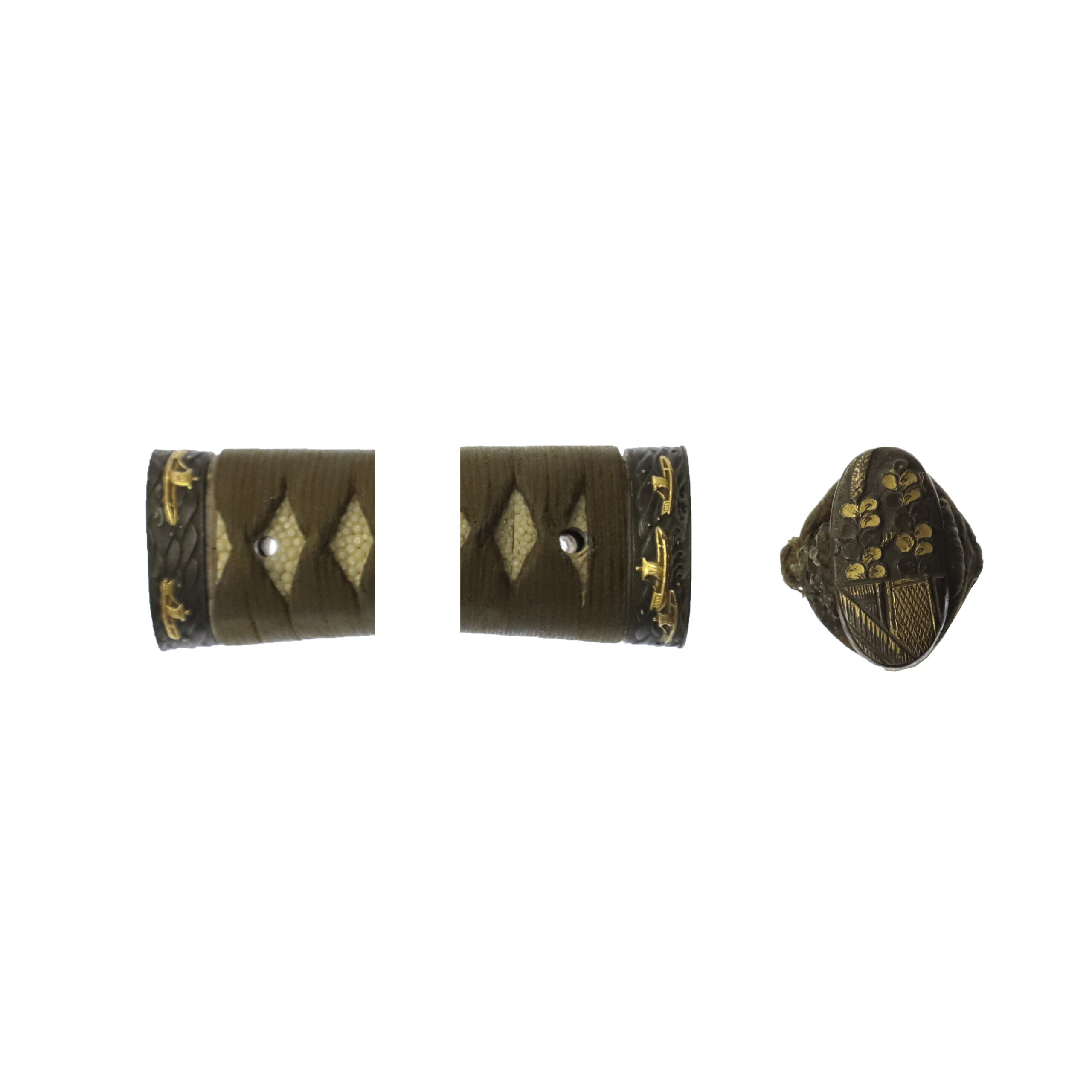
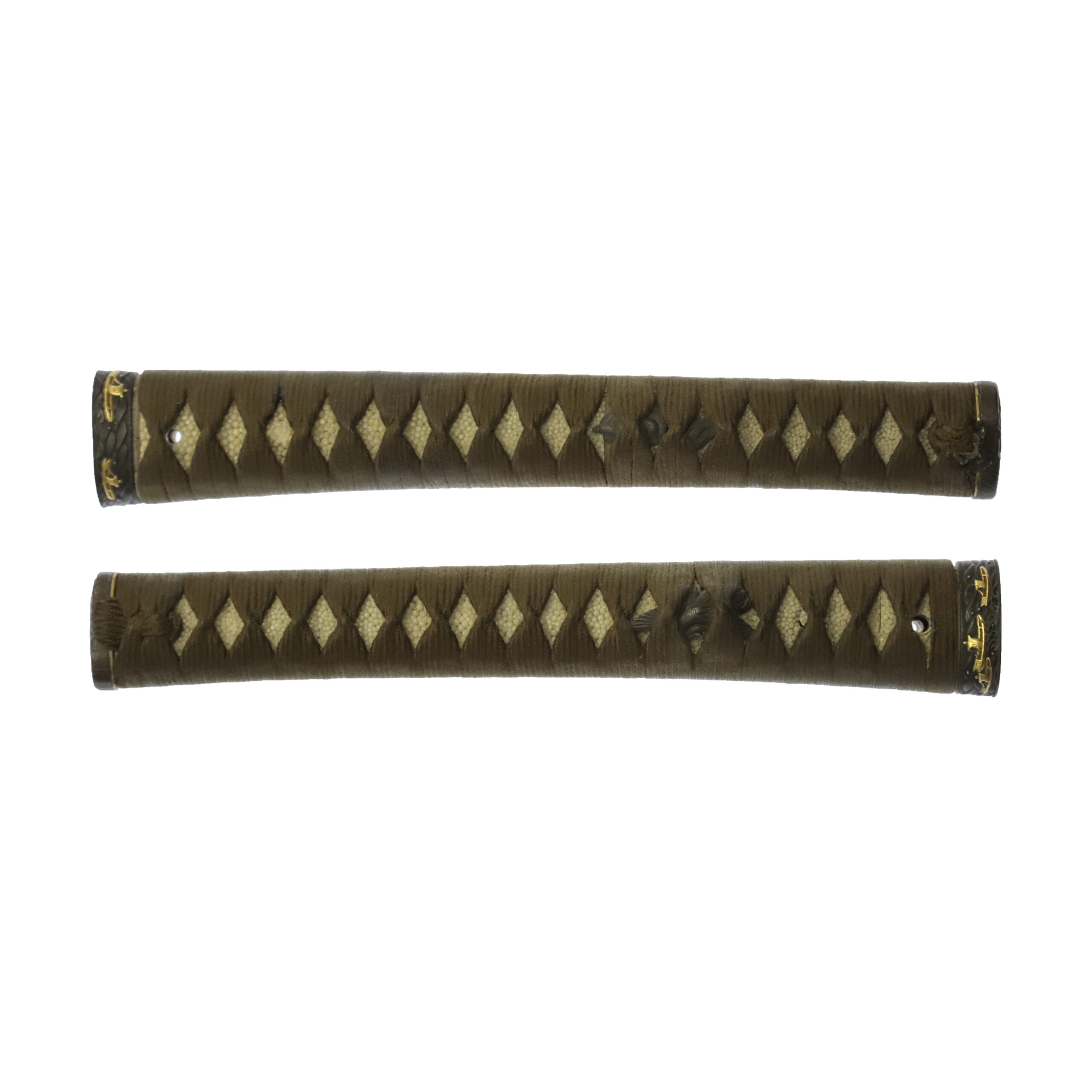
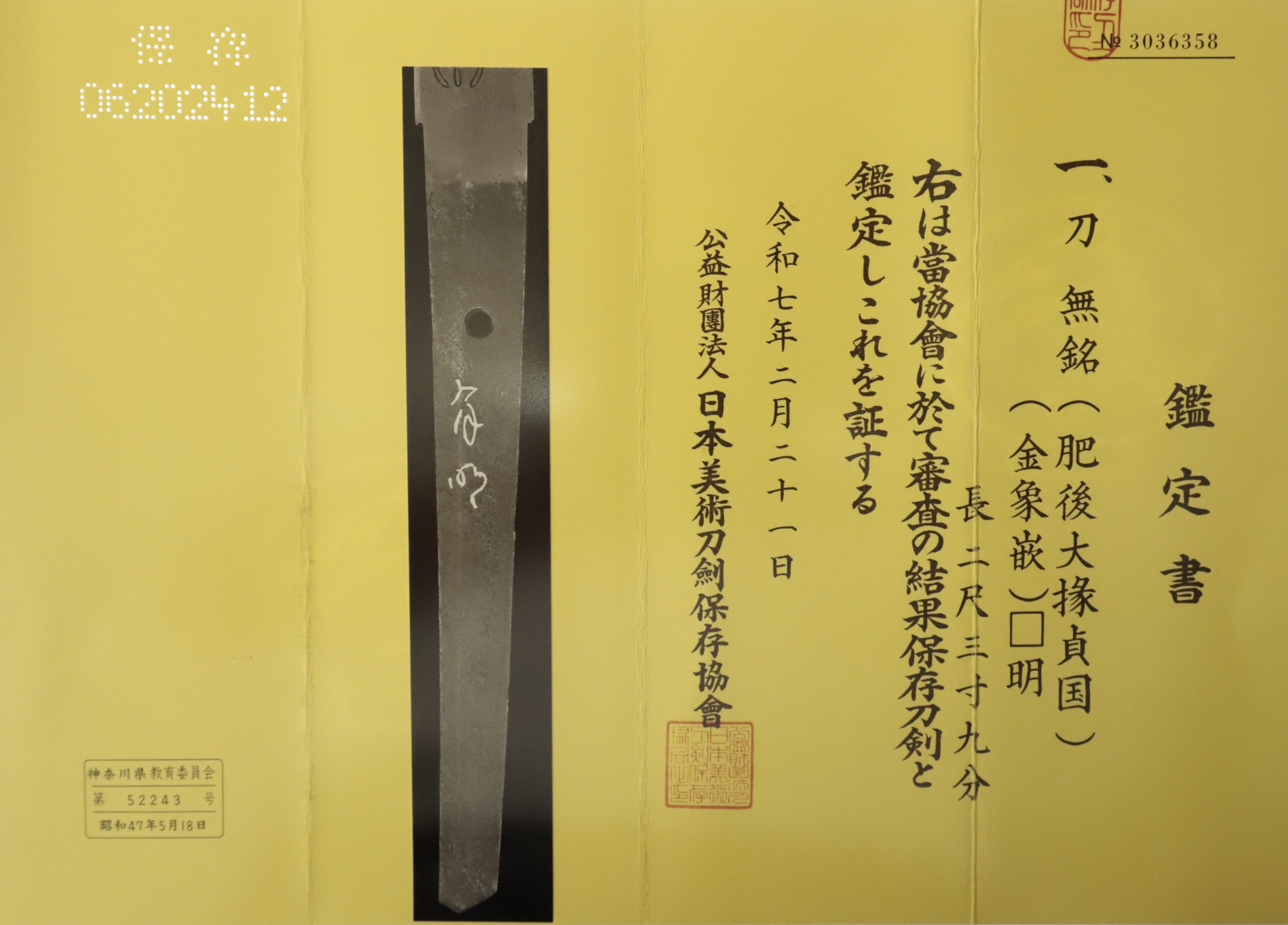
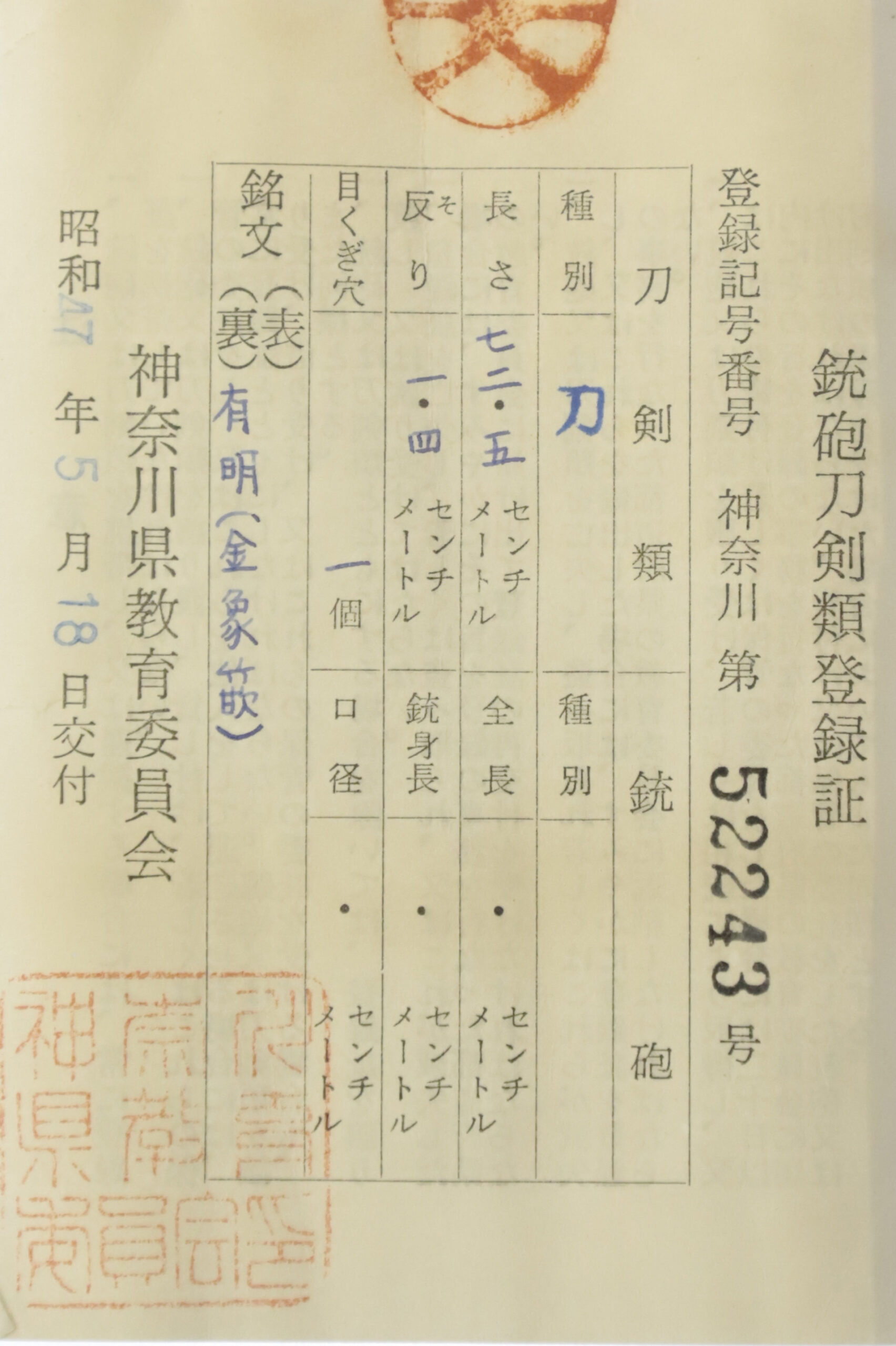
日本刀 刀 肥後大掾貞国(鑑定) 保存刀剣鑑定書付属 【解説】 概要 本作は、慶長年間(1596-1615年:江戸時代初期)に越前国(現在の福井県)で活躍した肥後大掾貞国(ひごだいじょうさだくに)の極めが付いた一振りです。貞国は江戸時代の越前を代表する名門、越前下坂派に属し、その中心的な役割を担いました。一説には同派の祖である初代康継の弟とも伝えられています。また、名工として名高い「虎徹」に彫物の技術を伝授した師としても知られています。「大掾」とは、当時優れた技量を持つ刀工にのみ与えられた受領銘です。 越前下坂派について 越前下坂派の祖は初代康継とされています。康継は室町時代末期(16世紀後半)に近江国下坂(滋賀県)に生まれ、慶長初期まで同地で活動していましたが、仕えていた主君の転封に伴い越前国へ移住しました。その後、徳川家康の三男であり、江戸初期の越前藩主であった結城秀康の知遇を得て、その庇護を受けることとなります。 秀康の支援により、初代康継は越前下坂派を確立し、その名は全国に轟きました。さらに秀康の推挙により、徳川将軍家の御抱え鍛冶となり、初代家康・二代秀忠の両公からその技量を認められました。 初代康継は徳川家康より「康」の一字を賜って名を改め、茎(なかご)に徳川家の家紋である「葵紋」を刻むことを許されました。同派は江戸時代を通じて隆盛を極め、多くの門弟を育成しましたが、貞国はその中でも越前を代表する屈指の名工として知られています。 越前国について 越前国は、鋭い切れ味と実用性に優れた刀剣を産出することで知られていました。江戸時代を通じて、徳川幕府からも多くの注文が寄せられた土地です。越前には、日本刀の五箇伝の一つである「美濃伝」の流れを汲む刀工が数多く移住し、独自の作風を築き上げました。 彫物について 本刀の両面には見事な彫物が施されています。片面には「梵字」、もう片面には「素剣」が彫り込まれています。 「梵字」は仏教の神仏を表すサンスクリット文字で、刀身に彫ることで神仏の加護を祈念する意味があります。刀剣の彫物には不動明王やその化身が描かれることが多く、梵字も不動明王を表すものが多用されます。不動明王は数ある仏の中でも、特に武士の間で深く信仰されました。一説には大日如来の化身とも言われています。刀身に彫られる梵字で最も一般的なのは、不動明王を意味する「カーン」や、それに「マン」を組み合わせた「カンマーン」などです。武士が甲冑や兜に宗教的な意匠を取り入れたのと同様に、刀身の彫物もまた、自らの信仰心を表現する手段でした。 「素剣(すけん)」は、不動明王が持つ「三鈷柄剣(さんこづかけん)」を簡略化した意匠です。これは密教において祈祷や瞑想、浄化、魔除けに用いられる法具であり、邪悪なものを打ち払う力があると信じられています。 本作は、日本美術刀剣保存協会(NBTHK)により「保存刀剣」に鑑定されています。
 NihontoWatch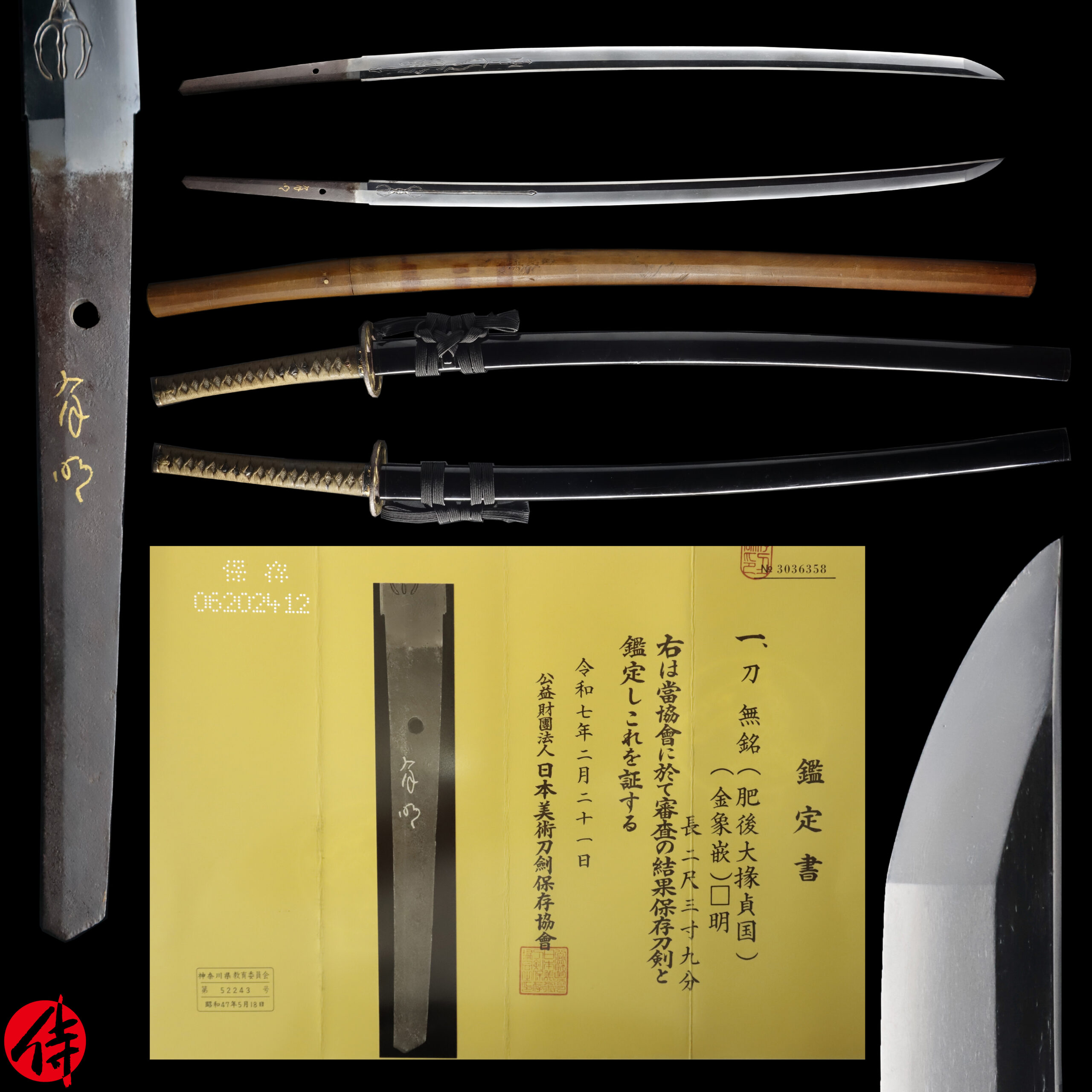
Shimosaka (Echizen, Shinto) · 越前 · 1596-1615頃
藤代 Jo saku · 刀剣大鑑 上位23%
現在1点販売中
唯一の年紀作が、肥後大掾貞国の活躍期を定めている。慶長十四年紀の短刀、それが現存する彼の唯一の年紀作であり、ここから慶長新刀期の作刀が読み取られる。彼は越前下坂一派、すなわち康継の工房の刀工であり、説明書はこれを康継その人に最も密接な下坂の手と判ずる。その近さは、かつて文字通りに受け取られすぎた。江戸時代以来の刀剣書及び銘鑑には貞国の記載が殆どなく、たまたま載せるものでも康継同人とすることがあり、彼もまた肥後大掾を受領している点がその同一視を助けた。今日の見立ては両者を分かちつつ近くに置く。すなわち康継のもとに働く下坂の刀工であり、肥後大掾藤原貞国と切り、裏に越前住と添え、最初期作はなお下坂の家名を残して越前国下坂貞国と銘するものと解される。
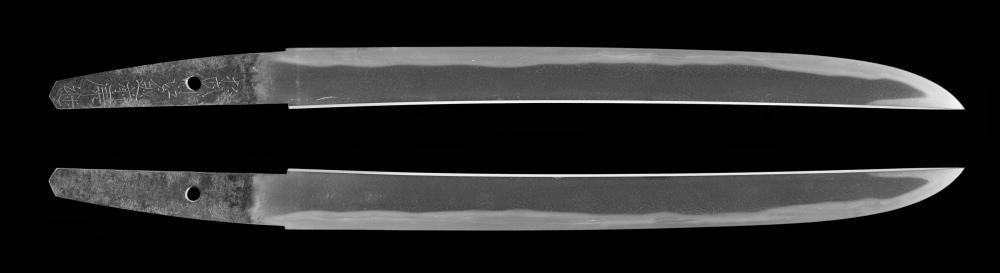
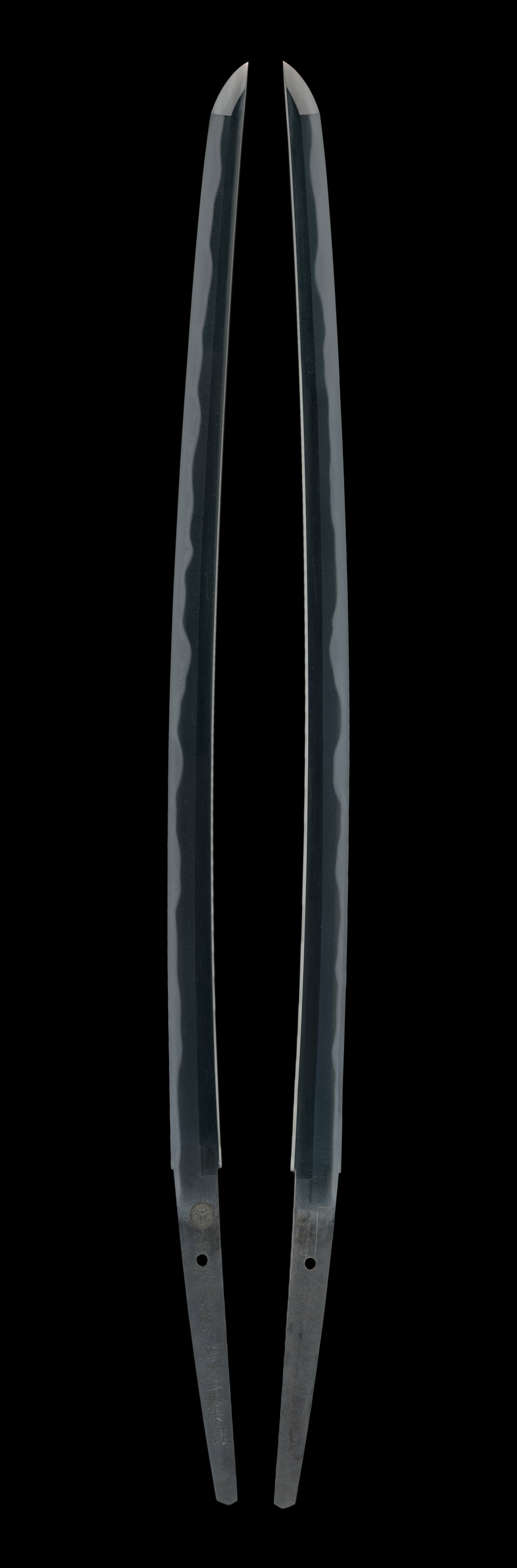
彼の手は、何よりもまず直刃の手である。説明書は端的に、彼が「直刃を得意として」[[c:1]]乱刃の作は殆んどないと記す。焼くのは、僅かに小湾れ・小互の目を交えるほどの動きを伴った、穏やかな直刃ないし直刃調であり、足が入り、刃縁は小さくほつれる。沸は小づき静かで、匂口は冴えるよりも沈み、この沈みごころは作を貫いて繰り返し記され、細い砂流しと折々の金筋を交える。これは抑えた、ほとんど枯れた刃であり、その作の最も揺るがぬ標である。帽子はこれに応じ、直ぐに先小丸へ掃きかけ、時に長く焼下げ、折々先尖りごころとなる。
地鉄は第二の標であり、説明書が彼を師から分かつために用いる特徴である。流れごころの板目に杢を交え、鎬地は柾がかり、肌は幾分立って地沸がよくつく。康継に対する差は、欠如と精緻として語られる。康継にしばしば見える黒ずんだ杢肌が乏しく、鍛えは概ねつむ。ある説明書の言うとおり「黒ずんだ杢肌などは少なく」[[c:2]]、地鉄はよくつみ、地刃ともに沸は穏やかな感を呈する。最上の作では説明書はさらに踏み込み、常の越前物に比べ地がつんで精美であるとし、これをこの工の見どころと名指す。
その静かな常の内に、数口の脇指が作域の広さを示し、説明書はこれを留意すべき例外として扱う。一口は、つんで精美な地に焼の低い小湾れと互の目を交えたもので、貞国が「古作の貞宗や信国に範をとった」[[c:3]]作と読まれ、渋い味わいの一口、すなわち「貞国会心の一口」と評される。今一口は彼の常を全く離れる。焼幅広めの丁子乱れに互の目・頭の丸い互の目・尖りごころの刃を交え、足長く頻りに入り、沸厚く荒目を交えて棟を焼く。説明書はこの華やかな手を「最も丁子の目立つ日向大掾貞次」[c:4]に通ずるとし、直刃調の穏やかな作域を通例とする工がこれほど冴えた乱刃を焼いた点を注目すべきとして、その結果を「同作中抜群の出来映え」[[c:5]]とし、技量の高さを察せしめると説く。これらは概ね身幅広く寸延びて殆んど無反りの脇指、慶長新刀の特徴的な姿であり、その地にこそ華やかな手があらわれる。
彫物は彼の個性の第三の筋であり、おそらく最初の筋である。刀身には越前彫が施され、櫃中の不動明王、真の倶利迦羅、護摩箸と長梵字、梅と竹が、深く力強く彫られる。説明書はその一彫を「越前彫の典型であり」[[c:6]]、恐らくは自身彫であろうと判ずる。参考書はさらに、貞国が初代康継の作刀に当初彫物を供したと伝え、彼の得意とする梅竹の図様が越前彫の源流に立つかもしれないとし、その後は生涯越前に留まったとする。師弟は詳らかでない。詳らかなのは彫の手であり、それは刃と同じく明瞭に刀身に在る。
現存の指定作は小さく、ほぼすべて重要刀剣であり、九口を数えるが、その中に国宝も重要文化財もない。ゆえに収集家が貞国に出会うのは、国家の文化財として封じられた領域ではなく重要刀剣の段においてである。その幾口かは細鏨の長銘を備え、唯一の年紀作たる慶長十四年紀の短刀が一群の資料的重みを担う。彼の短刀二口は宮内庁の御物として伝えられ、これは記録される所在の中で最も格高く、その静かな作がいかに尊ばれたかを示す。藤代は彼を上作と位し、頂ではなく堅実な上位であるが、これは彼にふさわしい。名高い名ではなく、丹念で個性的な名、すなわち直刃と越前彫が熟視に報いる下坂の刀工である。彼の作が市場に現れるのは折々のことで、重要刀剣の短刀ないし脇指が時に出るのみであり、在銘かつ年紀のある一口こそ最も待つに値する。
貞國の位置づけを、日本刀全体および伝統・時代・時期ごとに示します。各位(随一・屈指・有数・著名)は、NBTHK および文化庁による指定に加え、三作や名物帳などの歴史的栄誉を加味したものです。
各項目を選ぶと評価方法が表示されます。
在銘年紀作が示す、確実に活動していた年代
新刀 · 越前
現在54点販売中
茎にきられた黒い鉄こそ、この一門の最も確かな標である。鍛えは板目に杢が目立って交じり、刃寄り棟寄りに流れて肌立ち、地沸厚く、地景細かに入って、かねが総じて黒みをおびる。説明書はこれを繰り返し「越前がねの特色」と名指し、初代康継から重高・貞国・貞次に至るまで終始変わらぬ見どころとする。この一団は近江国坂田郡下坂郷を本貫とし、新刀初頭の越前にあって「下坂」を商標として用いた幾人かの鍛冶の集まりであって、説明書は一人の刀工とみるよりは一団とみるのが妥当とし、初期は康継をその代表者とする。初代康継は下坂市左衛門と称して越前に移り結城秀康に仕え、初め肥後大掾下坂と銘した。慶長十年から十一年にかけて江戸に召され、家康・秀忠両将軍の御前で鍛刀した褒賞として「康」の一字と三つ葉葵紋を茎にきることを許されて康継と改名し、葵下坂・御紋康継の名はこれに発する。以後は将軍家の御抱工として越前と江戸を隔年に勤め、本国打には越前住、江戸打には於武州江戸と切り添え、南蛮鉄を以南蛮鉄と添えた。肥後大掾藤原下坂の康継前銘は貞国・兼法・国康らと鏨運びも筆意も酷似し、今日なお銘振りによってしか分かち得ぬほど近い。 この一門の手は静かで、同時代の備前・美濃の華やかな新刀の多くに対置される。刃文は浅いのたれ・中直刃を基調に小互の目を連れて交え、小足・葉入り、沸厚く、荒めの沸がむらにつき、本工らしいばさけを生じて、金筋・砂流しが長くかかり、棟焼・飛焼さかんに、時に皆焼風となり、匂口は沈みごころとなる。帽子は浅くのたれて先尖りごころに三品風を呈し、掃きかけて長く返る。姿は身幅広く元先の幅差少なく重ね厚め反り浅い慶長新刀体配で、平造脇指は幅広寸延びとなる。彫物がいま一つの恒常で、彫口深く力強い越前彫・記内彫が一門の手を示し、不動三体仏・倶利迦羅・梵字・護摩箸・素剣を巧みに彫る。記内ら越前の彫物師の手によるこの深い浮彫は、説明書が地方の特色と名指すものである。一門が最も称えられる作域は相州写しであって、初代・二代ともに大坂落城に焼失した名物の再刃を試み、中でも貞宗写しを最も得意とし、各写しに自らの作風を加えて徒らに模倣せぬところに特色がある。手は系統と目的とで分かれ、貞国は直刃を得意として地がつんで精美に、貞次は越前関の系譜を引いて丁子の目立つ明るい現れを示し、重高は茎尻を栗尻とする点で一門の剣形と分かたれる。 収集家がこの一門の作に向かうべき所以は、その見分けやすさにある。黒く肌立った越前がね、ばさけた刃縁、縞がかる砂流し、長く掃きかける小丸の返り、そして深い記内彫が併さって、写した古作によってではなく一門自らの語法によって読まれる。中心に立つのは初代康継で、駿府滞在中の駿州打や名物写しを残し、駿府御分物の一刀は紀州徳川家に、号風雷神の刀は越前松平家に伝来した。嫡子二代康継は父風を忠実に継ぎ、継の字形以外では殆ど区別し難く、晩年は初代に劣らぬ域に達した。二代の後、家は江戸三代を右馬助、越前家を四郎右衛門が継いで両系に分かれ、同名は幕末まで両地に栄えた。江戸三代は鍛えがつんで綺麗に、匂口は明るく、直ぐの焼出しを置いて法城寺一派など当時の江戸物に近づく。後援者本多飛騨守成重の立葵紋が貞次や康継一門の優品に多くきられ、截断銘がその伝来を彩る。藤代は上々作から上作に位し、一門は名だたる蔵伝よりも在銘の指定刀を通して出会われる。市に現れるのは葵紋を切った在銘の康継、あるいは下坂貞国・貞次・重高の在銘作であって、根気をもって待てば折にふれ世に現れ、現れれば家康の葵紋下賜に発する越前下坂の確かな一口となる。 詳しく見る →
江戸時代
徳川の泰平のもと、大小は法度の定める身分の制服となり、需要は城下町、とりわけ江戸に集まった。工芸は二つに分かれる。目利きのための華やかな鑑賞の作と、截断の結果を金象嵌に刻む実証の刀である。
銘が正しい、または無銘でも年代・国・系統を確実に指摘できる、保存に値する真正の作と鑑定されたものです。
日本美術刀剣保存協会(NBTHK)は、1948年に設立され、文化庁の監督を受ける公益財団法人で、東京・刀剣博物館に本部を置きます。専門の審査員が出品作を直接審査し、美術的・歴史的価値に応じた鑑定書を発行します。NBTHKの鑑定書は、日本刀および刀装具の真正性を示す最も広く認知された基準です。
NBTHK公式サイトReturns/exchanges limited to defects caused by shipping (except willful misconduct or gross negligence by the company); customers must contact within 72 hours of receiving the product.
日本刀 刀 肥後大掾貞国(鑑定) 保存刀剣鑑定書付属 【解説】 概要 本作は、慶長年間(1596-1615年:江戸時代初期)に越前国(現在の福井県)で活躍した肥後大掾貞国(ひごだいじょうさだくに)の極めが付いた一振りです。貞国は江戸時代の越前を代表する名門、越前下坂派に属し、その中心的な役割を担いました。一説には同派の祖である初代康継の弟とも伝えられています。また、名工として名高い「虎徹」に彫物の技術を伝授した師としても知られています。「大掾」とは、当時優れた技量を持つ刀工にのみ与えられた受領銘です。 越前下坂派について 越前下坂派の祖は初代康継とされています。康継は室町時代末期(16世紀後半)に近江国下坂(滋賀県)に生まれ、慶長初期まで同地で活動していましたが、仕えていた主君の転封に伴い越前国へ移住しました。その後、徳川家康の三男であり、江戸初期の越前藩主であった結城秀康の知遇を得て、その庇護を受けることとなります。 秀康の支援により、初代康継は越前下坂派を確立し、その名は全国に轟きました。さらに秀康の推挙により、徳川将軍家の御抱え鍛冶となり、初代家康・二代秀忠の両公からその技量を認められました。 初代康継は徳川家康より「康」の一字を賜って名を改め、茎(なかご)に徳川家の家紋である「葵紋」を刻むことを許されました。同派は江戸時代を通じて隆盛を極め、多くの門弟を育成しましたが、貞国はその中でも越前を代表する屈指の名工として知られています。 越前国について 越前国は、鋭い切れ味と実用性に優れた刀剣を産出することで知られていました。江戸時代を通じて、徳川幕府からも多くの注文が寄せられた土地です。越前には、日本刀の五箇伝の一つである「美濃伝」の流れを汲む刀工が数多く移住し、独自の作風を築き上げました。 彫物について 本刀の両面には見事な彫物が施されています。片面には「梵字」、もう片面には「素剣」が彫り込まれています。 「梵字」は仏教の神仏を表すサンスクリット文字で、刀身に彫ることで神仏の加護を祈念する意味があります。刀剣の彫物には不動明王やその化身が描かれることが多く、梵字も不動明王を表すものが多用されます。不動明王は数ある仏の中でも、特に武士の間で深く信仰されました。一説には大日如来の化身とも言われています。刀身に彫られる梵字で最も一般的なのは、不動明王を意味する「カーン」や、それに「マン」を組み合わせた「カンマーン」などです。武士が甲冑や兜に宗教的な意匠を取り入れたのと同様に、刀身の彫物もまた、自らの信仰心を表現する手段でした。 「素剣(すけん)」は、不動明王が持つ「三鈷柄剣(さんこづかけん)」を簡略化した意匠です。これは密教において祈祷や瞑想、浄化、魔除けに用いられる法具であり、邪悪なものを打ち払う力があると信じられています。 本作は、日本美術刀剣保存協会(NBTHK)により「保存刀剣」に鑑定されています。
NihontoWatchShimosaka (Echizen, Shinto) · 越前 · 1596-1615頃
藤代 Jo saku · 刀剣大鑑 上位23%
現在1点販売中
唯一の年紀作が、肥後大掾貞国の活躍期を定めている。慶長十四年紀の短刀、それが現存する彼の唯一の年紀作であり、ここから慶長新刀期の作刀が読み取られる。彼は越前下坂一派、すなわち康継の工房の刀工であり、説明書はこれを康継その人に最も密接な下坂の手と判ずる。その近さは、かつて文字通りに受け取られすぎた。江戸時代以来の刀剣書及び銘鑑には貞国の記載が殆どなく、たまたま載せるものでも康継同人とすることがあり、彼もまた肥後大掾を受領している点がその同一視を助けた。今日の見立ては両者を分かちつつ近くに置く。すなわち康継のもとに働く下坂の刀工であり、肥後大掾藤原貞国と切り、裏に越前住と添え、最初期作はなお下坂の家名を残して越前国下坂貞国と銘するものと解される。
彼の手は、何よりもまず直刃の手である。説明書は端的に、彼が「直刃を得意として」[[c:1]]乱刃の作は殆んどないと記す。焼くのは、僅かに小湾れ・小互の目を交えるほどの動きを伴った、穏やかな直刃ないし直刃調であり、足が入り、刃縁は小さくほつれる。沸は小づき静かで、匂口は冴えるよりも沈み、この沈みごころは作を貫いて繰り返し記され、細い砂流しと折々の金筋を交える。これは抑えた、ほとんど枯れた刃であり、その作の最も揺るがぬ標である。帽子はこれに応じ、直ぐに先小丸へ掃きかけ、時に長く焼下げ、折々先尖りごころとなる。
地鉄は第二の標であり、説明書が彼を師から分かつために用いる特徴である。流れごころの板目に杢を交え、鎬地は柾がかり、肌は幾分立って地沸がよくつく。康継に対する差は、欠如と精緻として語られる。康継にしばしば見える黒ずんだ杢肌が乏しく、鍛えは概ねつむ。ある説明書の言うとおり「黒ずんだ杢肌などは少なく」[[c:2]]、地鉄はよくつみ、地刃ともに沸は穏やかな感を呈する。最上の作では説明書はさらに踏み込み、常の越前物に比べ地がつんで精美であるとし、これをこの工の見どころと名指す。
その静かな常の内に、数口の脇指が作域の広さを示し、説明書はこれを留意すべき例外として扱う。一口は、つんで精美な地に焼の低い小湾れと互の目を交えたもので、貞国が「古作の貞宗や信国に範をとった」[[c:3]]作と読まれ、渋い味わいの一口、すなわち「貞国会心の一口」と評される。今一口は彼の常を全く離れる。焼幅広めの丁子乱れに互の目・頭の丸い互の目・尖りごころの刃を交え、足長く頻りに入り、沸厚く荒目を交えて棟を焼く。説明書はこの華やかな手を「最も丁子の目立つ日向大掾貞次」[c:4]に通ずるとし、直刃調の穏やかな作域を通例とする工がこれほど冴えた乱刃を焼いた点を注目すべきとして、その結果を「同作中抜群の出来映え」[[c:5]]とし、技量の高さを察せしめると説く。これらは概ね身幅広く寸延びて殆んど無反りの脇指、慶長新刀の特徴的な姿であり、その地にこそ華やかな手があらわれる。
彫物は彼の個性の第三の筋であり、おそらく最初の筋である。刀身には越前彫が施され、櫃中の不動明王、真の倶利迦羅、護摩箸と長梵字、梅と竹が、深く力強く彫られる。説明書はその一彫を「越前彫の典型であり」[[c:6]]、恐らくは自身彫であろうと判ずる。参考書はさらに、貞国が初代康継の作刀に当初彫物を供したと伝え、彼の得意とする梅竹の図様が越前彫の源流に立つかもしれないとし、その後は生涯越前に留まったとする。師弟は詳らかでない。詳らかなのは彫の手であり、それは刃と同じく明瞭に刀身に在る。
現存の指定作は小さく、ほぼすべて重要刀剣であり、九口を数えるが、その中に国宝も重要文化財もない。ゆえに収集家が貞国に出会うのは、国家の文化財として封じられた領域ではなく重要刀剣の段においてである。その幾口かは細鏨の長銘を備え、唯一の年紀作たる慶長十四年紀の短刀が一群の資料的重みを担う。彼の短刀二口は宮内庁の御物として伝えられ、これは記録される所在の中で最も格高く、その静かな作がいかに尊ばれたかを示す。藤代は彼を上作と位し、頂ではなく堅実な上位であるが、これは彼にふさわしい。名高い名ではなく、丹念で個性的な名、すなわち直刃と越前彫が熟視に報いる下坂の刀工である。彼の作が市場に現れるのは折々のことで、重要刀剣の短刀ないし脇指が時に出るのみであり、在銘かつ年紀のある一口こそ最も待つに値する。
貞國の位置づけを、日本刀全体および伝統・時代・時期ごとに示します。各位(随一・屈指・有数・著名)は、NBTHK および文化庁による指定に加え、三作や名物帳などの歴史的栄誉を加味したものです。
各項目を選ぶと評価方法が表示されます。
在銘年紀作が示す、確実に活動していた年代
新刀 · 越前
現在54点販売中
茎にきられた黒い鉄こそ、この一門の最も確かな標である。鍛えは板目に杢が目立って交じり、刃寄り棟寄りに流れて肌立ち、地沸厚く、地景細かに入って、かねが総じて黒みをおびる。説明書はこれを繰り返し「越前がねの特色」と名指し、初代康継から重高・貞国・貞次に至るまで終始変わらぬ見どころとする。この一団は近江国坂田郡下坂郷を本貫とし、新刀初頭の越前にあって「下坂」を商標として用いた幾人かの鍛冶の集まりであって、説明書は一人の刀工とみるよりは一団とみるのが妥当とし、初期は康継をその代表者とする。初代康継は下坂市左衛門と称して越前に移り結城秀康に仕え、初め肥後大掾下坂と銘した。慶長十年から十一年にかけて江戸に召され、家康・秀忠両将軍の御前で鍛刀した褒賞として「康」の一字と三つ葉葵紋を茎にきることを許されて康継と改名し、葵下坂・御紋康継の名はこれに発する。以後は将軍家の御抱工として越前と江戸を隔年に勤め、本国打には越前住、江戸打には於武州江戸と切り添え、南蛮鉄を以南蛮鉄と添えた。肥後大掾藤原下坂の康継前銘は貞国・兼法・国康らと鏨運びも筆意も酷似し、今日なお銘振りによってしか分かち得ぬほど近い。 この一門の手は静かで、同時代の備前・美濃の華やかな新刀の多くに対置される。刃文は浅いのたれ・中直刃を基調に小互の目を連れて交え、小足・葉入り、沸厚く、荒めの沸がむらにつき、本工らしいばさけを生じて、金筋・砂流しが長くかかり、棟焼・飛焼さかんに、時に皆焼風となり、匂口は沈みごころとなる。帽子は浅くのたれて先尖りごころに三品風を呈し、掃きかけて長く返る。姿は身幅広く元先の幅差少なく重ね厚め反り浅い慶長新刀体配で、平造脇指は幅広寸延びとなる。彫物がいま一つの恒常で、彫口深く力強い越前彫・記内彫が一門の手を示し、不動三体仏・倶利迦羅・梵字・護摩箸・素剣を巧みに彫る。記内ら越前の彫物師の手によるこの深い浮彫は、説明書が地方の特色と名指すものである。一門が最も称えられる作域は相州写しであって、初代・二代ともに大坂落城に焼失した名物の再刃を試み、中でも貞宗写しを最も得意とし、各写しに自らの作風を加えて徒らに模倣せぬところに特色がある。手は系統と目的とで分かれ、貞国は直刃を得意として地がつんで精美に、貞次は越前関の系譜を引いて丁子の目立つ明るい現れを示し、重高は茎尻を栗尻とする点で一門の剣形と分かたれる。 収集家がこの一門の作に向かうべき所以は、その見分けやすさにある。黒く肌立った越前がね、ばさけた刃縁、縞がかる砂流し、長く掃きかける小丸の返り、そして深い記内彫が併さって、写した古作によってではなく一門自らの語法によって読まれる。中心に立つのは初代康継で、駿府滞在中の駿州打や名物写しを残し、駿府御分物の一刀は紀州徳川家に、号風雷神の刀は越前松平家に伝来した。嫡子二代康継は父風を忠実に継ぎ、継の字形以外では殆ど区別し難く、晩年は初代に劣らぬ域に達した。二代の後、家は江戸三代を右馬助、越前家を四郎右衛門が継いで両系に分かれ、同名は幕末まで両地に栄えた。江戸三代は鍛えがつんで綺麗に、匂口は明るく、直ぐの焼出しを置いて法城寺一派など当時の江戸物に近づく。後援者本多飛騨守成重の立葵紋が貞次や康継一門の優品に多くきられ、截断銘がその伝来を彩る。藤代は上々作から上作に位し、一門は名だたる蔵伝よりも在銘の指定刀を通して出会われる。市に現れるのは葵紋を切った在銘の康継、あるいは下坂貞国・貞次・重高の在銘作であって、根気をもって待てば折にふれ世に現れ、現れれば家康の葵紋下賜に発する越前下坂の確かな一口となる。 詳しく見る →
江戸時代
徳川の泰平のもと、大小は法度の定める身分の制服となり、需要は城下町、とりわけ江戸に集まった。工芸は二つに分かれる。目利きのための華やかな鑑賞の作と、截断の結果を金象嵌に刻む実証の刀である。
銘が正しい、または無銘でも年代・国・系統を確実に指摘できる、保存に値する真正の作と鑑定されたものです。
日本美術刀剣保存協会(NBTHK)は、1948年に設立され、文化庁の監督を受ける公益財団法人で、東京・刀剣博物館に本部を置きます。専門の審査員が出品作を直接審査し、美術的・歴史的価値に応じた鑑定書を発行します。NBTHKの鑑定書は、日本刀および刀装具の真正性を示す最も広く認知された基準です。
NBTHK公式サイトReturns/exchanges limited to defects caused by shipping (except willful misconduct or gross negligence by the company); customers must contact within 72 hours of receiving the product.