NihontoWatch MonNihontoWatch
マーケット
事典
鑑定
NihontoWatch MonNihontoWatch
マーケット
事典
鑑定

説明

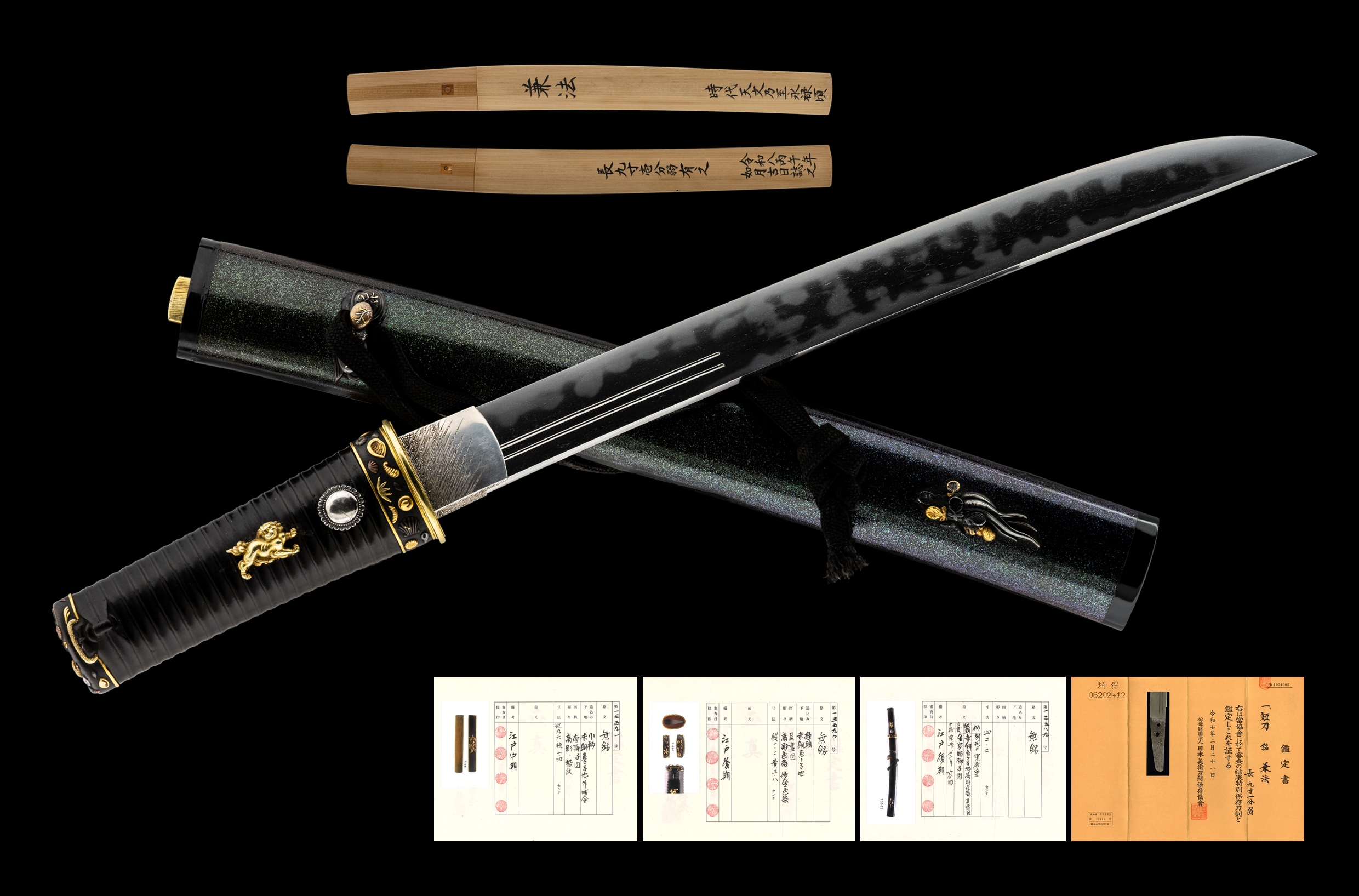
Skip to content ITEM# UJTA069 – Sold A Kanenori Tantô (兼法) This tanto is signed by Shodai Kanenori , a master Mino-den smith working in the Sue-Seki tradition during the turbulent late Muromachi period. In 1536 he travelled from Mino to Echizen at the special invitation of the daimyô Asakura Takakage , settling at Ichijôdani and going on to found the Echizen-Seki school – one of the two principal sword-forging streams of Echizen in the years that followed. The Mino-den tradition itself traces back to Yamato, its character shifting decisively after Shizu Saburô Kaneuji , a student of Masamune , carried Sôshû-den influence into the province in the early Nanbokuchô period. That dual inheritance is plainly visible here. The jigane is a tough mokume-hada blended with nagare-hada, threaded with sparkling chikei and a layer of icy ji-nie. Above it runs a spectacular Sôshû-inspired hitatsura hamon: a bright gunome-midare scattered with broad islands of tobiyaki that harden the full width of the blade, animated further by kinsuji and sweeping sunagashi. The effect is extraordinary, the hamon mirroring itself across much of the surface so the whole blade seems to come alive in the light. Carved goma-hashi and koshi-bi horimono point back to the ancestral Yamato-den tradition and its Buddhist associations. The koshirae matches the quality of the blade and is consistent with daimyô ownership. The scabbard is finished in luxurious aogai-mijin-nuri using finely selected green mother-of-pearl, fitted with a kurikata worked as a seashell and a saguri in the form of a radish. The hilt is carved and lacquered black rather than silk-wrapped, mounted with golden shisa lion menuki, while a silver habaki over a copper ground completes the line. Gotô-school kozuka and Shôami-school shakudô fuchi-kashira – both NTHK-NPO certified – confirm a piece intended for private, high-ranking use. All told, this is a wonderful and historically rich Mino-den tanto that will delight its new caretaker e

NihontoWatch MonNihontoWatch
MarketEncyclopediaKantei
刀剣›兼法›A KANENORI TANTO (兼法)
短刀特別保存
兼法

A KANENORI TANTO (兼法)

在銘 · Seki (sue-Seki) · 明応 · 長さ 27.6cm · 反り 0.2cm

売却済
兼法 · Seki (sue-Seki) · 明応販売中 1点 →
短刀
刀身だけで刀工を見抜けますか? 本日の鑑定 →
兼法 — 1 of 1
兼法 — 1 of 1
兼法 · Seki (sue-Seki) · 明応販売中 1点 →
短刀
刀身だけで刀工を見抜けますか? 本日の鑑定 →
法量・詳細
刀工
兼法
種別
短刀
活動期
1492–1501年頃(明応)
国
美濃
銘
在銘
法量
長さ 27.6cm反り 0.2cm元幅 2.39cm重ね 0.46cm重量 150g
説明

Skip to content ITEM# UJTA069 – Sold A Kanenori Tantô (兼法) This tanto is signed by Shodai Kanenori , a master Mino-den smith working in the Sue-Seki tradition during the turbulent late Muromachi period. In 1536 he travelled from Mino to Echizen at the special invitation of the daimyô Asakura Takakage , settling at Ichijôdani and going on to found the Echizen-Seki school – one of the two principal sword-forging streams of Echizen in the years that followed. The Mino-den tradition itself traces back to Yamato, its character shifting decisively after Shizu Saburô Kaneuji , a student of Masamune , carried Sôshû-den influence into the province in the early Nanbokuchô period. That dual inheritance is plainly visible here. The jigane is a tough mokume-hada blended with nagare-hada, threaded with sparkling chikei and a layer of icy ji-nie. Above it runs a spectacular Sôshû-inspired hitatsura hamon: a bright gunome-midare scattered with broad islands of tobiyaki that harden the full width of the blade, animated further by kinsuji and sweeping sunagashi. The effect is extraordinary, the hamon mirroring itself across much of the surface so the whole blade seems to come alive in the light. Carved goma-hashi and koshi-bi horimono point back to the ancestral Yamato-den tradition and its Buddhist associations. The koshirae matches the quality of the blade and is consistent with daimyô ownership. The scabbard is finished in luxurious aogai-mijin-nuri using finely selected green mother-of-pearl, fitted with a kurikata worked as a seashell and a saguri in the form of a radish. The hilt is carved and lacquered black rather than silk-wrapped, mounted with golden shisa lion menuki, while a silver habaki over a copper ground completes the line. Gotô-school kozuka and Shôami-school shakudô fuchi-kashira – both NTHK-NPO certified – confirm a piece intended for private, high-ranking use. All told, this is a wonderful and historically rich Mino-den tanto that will delight its new caretaker e

作者について

兼法

美濃 · 1492-1501頃

刀剣大鑑 上位60%

現在1点販売中

›
兼法の作 1点が現在販売中→
兼法 — 詳細

この作者について学ぶ →

歴史的背景

室町時代

›

応仁の乱が足利の体制を砕いた後、戦国の一世紀はほとんどすべての国を武装させた。この時代は選ぶ目に報いる。並の作は多いが、その傍らには第一級の注文打ちが立っている。

室町時代 →

NBTHK鑑定書
特別保存刀剣Tokubetsu Hozon Tōken
›

保存刀剣のうち、出来が一層優れ、保存状態も良好と認められたものです。再刃や、室町・江戸期の多くの無銘作は対象外となり、保存刀剣より高い基準が課されます。

NBTHKについて›

日本美術刀剣保存協会(NBTHK)は、1948年に設立され、文化庁の監督を受ける公益財団法人で、東京・刀剣博物館に本部を置きます。専門の審査員が出品作を直接審査し、美術的・歴史的価値に応じた鑑定書を発行します。NBTHKの鑑定書は、日本刀および刀装具の真正性を示す最も広く認知された基準です。

NBTHK公式サイト→
販売店
U
Unique Japan
創業 2006年 · 業歴20年
🇯🇵日本から発送
›
✓認証販売店uniquejapan.com
✓海外発送可✓英語対応銀行振込
返品ポリシー

All swords come with a three-day inspection period beginning from the date of delivery. If not satisfied, the sword may be returned within this period for a full refund of the purchase price. Outside of this period, all sales are final. Swords purchased on a layaway payment plan are not eligible for the three-day inspection period.

Unique Japanの出品一覧を見る→販売店サイトでこの商品を見る→

兼法の他の作

すべて見る →
刀剣杉田
特別保存
Katana - Tokuho - 作 兼法 - 濃州関住藤原奥州守兼法 (美濃)(東山道)Katana - Tokuho - 作 兼法 - 濃州関住藤原奥州守兼法 (美濃)(東山道)

刀

作兼法
71.8cm·室町
¥1,750,000

兼法の売約済み

すべて見る →
銀座長州屋
Wakizashi - 作 兼法 - 銘 兼法Wakizashi - 作 兼法 - 銘 兼法
売切れ

脇差

作兼法
室町
売却済
サムライミュージアム
保存
Wakizashi - Hozon - 作 兼法 - 日本刀 脇差 伝兼則 日本美術刀剣保存協会 保持審査合格(保存刀剣)鑑定書付Wakizashi - Hozon - 作 兼法 - 日本刀 脇差 伝兼則 日本美術刀剣保存協会 保持審査合格(保存刀剣)鑑定書付
売切れ

脇差

作兼法
55.2cm·室町
売却済

刀剣

  • 刀
  • 脇差
  • 短刀
  • 太刀
  • 薙刀
  • 槍
  • 日本刀の販売
  • サムライソード

刀装具

  • 鍔
  • 縁頭
  • 小柄
  • 目貫
  • 鍔(ソードガード)

甲冑武具

  • 兜
  • 甲冑
  • 甲冑・武具一覧

鑑定別

  • 特重
  • 重要
  • 特別保存
  • 保存

リソース

  • 刀剣商一覧
  • 刀工一覧
  • 誌上鑑定
  • すべて見る
Nihontowatch© 2026
利用規約プライバシーCookie運営者情報
売切れ

説明

Skip to content ITEM# UJTA069 – Sold A Kanenori Tantô (兼法) This tanto is signed by Shodai Kanenori , a master Mino-den smith working in the Sue-Seki tradition during the turbulent late Muromachi period. In 1536 he travelled from Mino to Echizen at the special invitation of the daimyô Asakura Takakage , settling at Ichijôdani and going on to found the Echizen-Seki school – one of the two principal sword-forging streams of Echizen in the years that followed. The Mino-den tradition itself traces back to Yamato, its character shifting decisively after Shizu Saburô Kaneuji , a student of Masamune , carried Sôshû-den influence into the province in the early Nanbokuchô period. That dual inheritance is plainly visible here. The jigane is a tough mokume-hada blended with nagare-hada, threaded with sparkling chikei and a layer of icy ji-nie. Above it runs a spectacular Sôshû-inspired hitatsura hamon: a bright gunome-midare scattered with broad islands of tobiyaki that harden the full width of the blade, animated further by kinsuji and sweeping sunagashi. The effect is extraordinary, the hamon mirroring itself across much of the surface so the whole blade seems to come alive in the light. Carved goma-hashi and koshi-bi horimono point back to the ancestral Yamato-den tradition and its Buddhist associations. The koshirae matches the quality of the blade and is consistent with daimyô ownership. The scabbard is finished in luxurious aogai-mijin-nuri using finely selected green mother-of-pearl, fitted with a kurikata worked as a seashell and a saguri in the form of a radish. The hilt is carved and lacquered black rather than silk-wrapped, mounted with golden shisa lion menuki, while a silver habaki over a copper ground completes the line. Gotô-school kozuka and Shôami-school shakudô fuchi-kashira – both NTHK-NPO certified – confirm a piece intended for private, high-ranking use. All told, this is a wonderful and historically rich Mino-den tanto that will delight its new caretaker e

NihontoWatch MonNihontoWatch
MarketEncyclopediaKantei
刀剣›兼法›A KANENORI TANTO (兼法)
短刀特別保存
兼法

A KANENORI TANTO (兼法)

在銘 · Seki (sue-Seki) · 明応 · 長さ 27.6cm · 反り 0.2cm

売却済
兼法 · Seki (sue-Seki) · 明応販売中 1点 →
短刀
刀身だけで刀工を見抜けますか? 本日の鑑定 →
兼法 — 1 of 1
兼法 — 1 of 1
兼法 · Seki (sue-Seki) · 明応販売中 1点 →
短刀
刀身だけで刀工を見抜けますか? 本日の鑑定 →
法量・詳細
刀工
兼法
種別
短刀
活動期
1492–1501年頃(明応)
国
美濃
銘
在銘
法量
長さ 27.6cm反り 0.2cm元幅 2.39cm重ね 0.46cm重量 150g
説明

Skip to content ITEM# UJTA069 – Sold A Kanenori Tantô (兼法) This tanto is signed by Shodai Kanenori , a master Mino-den smith working in the Sue-Seki tradition during the turbulent late Muromachi period. In 1536 he travelled from Mino to Echizen at the special invitation of the daimyô Asakura Takakage , settling at Ichijôdani and going on to found the Echizen-Seki school – one of the two principal sword-forging streams of Echizen in the years that followed. The Mino-den tradition itself traces back to Yamato, its character shifting decisively after Shizu Saburô Kaneuji , a student of Masamune , carried Sôshû-den influence into the province in the early Nanbokuchô period. That dual inheritance is plainly visible here. The jigane is a tough mokume-hada blended with nagare-hada, threaded with sparkling chikei and a layer of icy ji-nie. Above it runs a spectacular Sôshû-inspired hitatsura hamon: a bright gunome-midare scattered with broad islands of tobiyaki that harden the full width of the blade, animated further by kinsuji and sweeping sunagashi. The effect is extraordinary, the hamon mirroring itself across much of the surface so the whole blade seems to come alive in the light. Carved goma-hashi and koshi-bi horimono point back to the ancestral Yamato-den tradition and its Buddhist associations. The koshirae matches the quality of the blade and is consistent with daimyô ownership. The scabbard is finished in luxurious aogai-mijin-nuri using finely selected green mother-of-pearl, fitted with a kurikata worked as a seashell and a saguri in the form of a radish. The hilt is carved and lacquered black rather than silk-wrapped, mounted with golden shisa lion menuki, while a silver habaki over a copper ground completes the line. Gotô-school kozuka and Shôami-school shakudô fuchi-kashira – both NTHK-NPO certified – confirm a piece intended for private, high-ranking use. All told, this is a wonderful and historically rich Mino-den tanto that will delight its new caretaker e

作者について

兼法

美濃 · 1492-1501頃

刀剣大鑑 上位60%

現在1点販売中

›
兼法の作 1点が現在販売中→
兼法 — 詳細

この作者について学ぶ →

歴史的背景

室町時代

›

応仁の乱が足利の体制を砕いた後、戦国の一世紀はほとんどすべての国を武装させた。この時代は選ぶ目に報いる。並の作は多いが、その傍らには第一級の注文打ちが立っている。

室町時代 →

NBTHK鑑定書
特別保存刀剣Tokubetsu Hozon Tōken
›

保存刀剣のうち、出来が一層優れ、保存状態も良好と認められたものです。再刃や、室町・江戸期の多くの無銘作は対象外となり、保存刀剣より高い基準が課されます。

NBTHKについて›

日本美術刀剣保存協会(NBTHK)は、1948年に設立され、文化庁の監督を受ける公益財団法人で、東京・刀剣博物館に本部を置きます。専門の審査員が出品作を直接審査し、美術的・歴史的価値に応じた鑑定書を発行します。NBTHKの鑑定書は、日本刀および刀装具の真正性を示す最も広く認知された基準です。

NBTHK公式サイト→
販売店
U
Unique Japan
創業 2006年 · 業歴20年
🇯🇵日本から発送
›
✓認証販売店uniquejapan.com
✓海外発送可✓英語対応銀行振込
返品ポリシー

All swords come with a three-day inspection period beginning from the date of delivery. If not satisfied, the sword may be returned within this period for a full refund of the purchase price. Outside of this period, all sales are final. Swords purchased on a layaway payment plan are not eligible for the three-day inspection period.

Unique Japanの出品一覧を見る→販売店サイトでこの商品を見る→

兼法の他の作

すべて見る →
刀剣杉田
特別保存
Katana - Tokuho - 作 兼法 - 濃州関住藤原奥州守兼法 (美濃)(東山道)Katana - Tokuho - 作 兼法 - 濃州関住藤原奥州守兼法 (美濃)(東山道)

刀

作兼法
71.8cm·室町
¥1,750,000

兼法の売約済み

すべて見る →
銀座長州屋
Wakizashi - 作 兼法 - 銘 兼法Wakizashi - 作 兼法 - 銘 兼法
売切れ

脇差

作兼法
室町
売却済
サムライミュージアム
保存
Wakizashi - Hozon - 作 兼法 - 日本刀 脇差 伝兼則 日本美術刀剣保存協会 保持審査合格(保存刀剣)鑑定書付Wakizashi - Hozon - 作 兼法 - 日本刀 脇差 伝兼則 日本美術刀剣保存協会 保持審査合格(保存刀剣)鑑定書付
売切れ

脇差

作兼法
55.2cm·室町
売却済

刀剣

  • 刀
  • 脇差
  • 短刀
  • 太刀
  • 薙刀
  • 槍
  • 日本刀の販売
  • サムライソード

刀装具

  • 鍔
  • 縁頭
  • 小柄
  • 目貫
  • 鍔(ソードガード)

甲冑武具

  • 兜
  • 甲冑
  • 甲冑・武具一覧

鑑定別

  • 特重
  • 重要
  • 特別保存
  • 保存

リソース

  • 刀剣商一覧
  • 刀工一覧
  • 誌上鑑定
  • すべて見る
Nihontowatch© 2026
利用規約プライバシーCookie運営者情報
売切れ
NihontoWatch MonNihontoWatch
マーケット
事典
鑑定
NihontoWatch MonNihontoWatch
マーケット
事典
鑑定