徳川の泰平のもと、大小は法度の定める身分の制服となり、需要は城下町、とりわけ江戸に集まった。工芸は二つに分かれる。目利きのための華やかな鑑賞の作と、截断の結果を金象嵌に刻む実証の刀である。
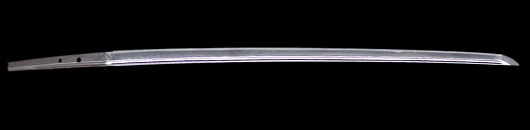
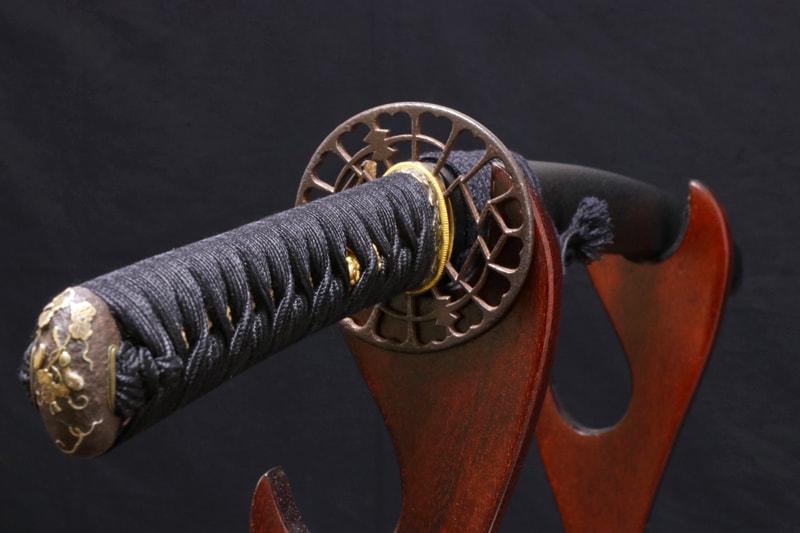
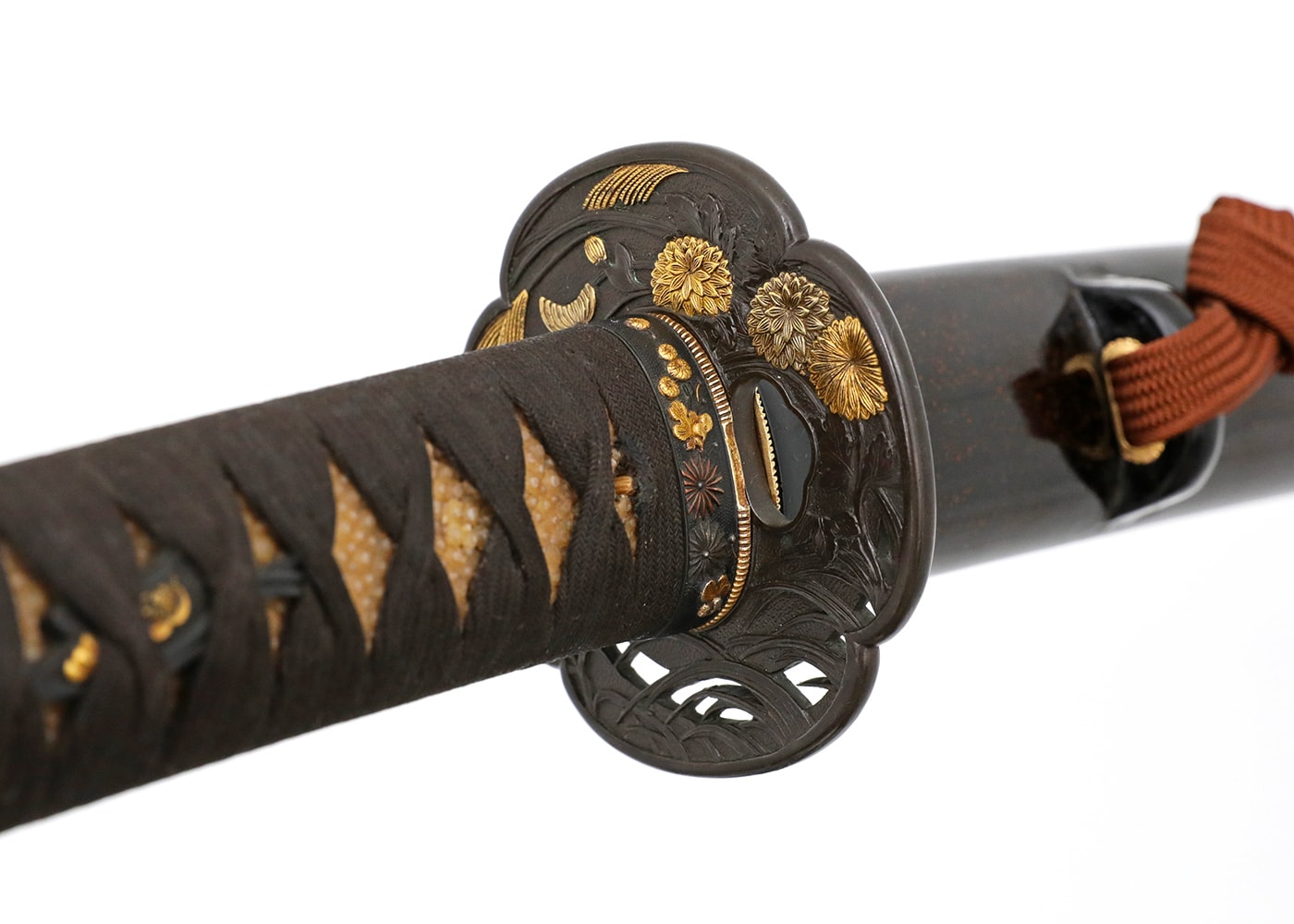
Skip to content ITEM# UJKA386 – Catalogue 36 – Sold An Etchû Kiyomitsu Katana (越中清光) Kiyomitsu was the son of Koshirô Shigekiyo and was given the name Gorôzaemon , with some sources listing his first name as Yaroku . He worked during the Kanbun to Enpô eras (c. 1661-1681) and lived in Etchû province – modern-day Toyama prefecture, a picturesque coastal city on Japan’s main island, Honshû. His blades carry a lovely darkish jigane characteristic of swords forged along the Sea of Japan coast, and the rounded burl grain of the mokume-hada stands out with particular clarity towards the base of the blade. He signed this sword as Kashû jû Kiyomitsu – a resident of Kashû (Kaga) province – suggesting he produced many swords for elite samurai of the neighbouring and wealthy Kaga domain. The bottom of the nakago is shaped in the distinctive Kashû-nakago-jiri style, a short flat area moving into an acute angle that pays tribute to this important provincial relationship. The blade itself is a model of Shintô-period refinement. The chû-suguha hamon runs bright and even from base to point, its kuichigaiba – the area where the nioguchi overlaps for a noticeable distance along the upper third – marking this as a sword forged firmly within the Yamato tradition. Dark lines of chikei are woven beautifully into the expertly forged mokume-hada, lending the steel a depth and movement rarely seen at this price point. Kiyomitsu is aptly ranked jô-saku and wazamono, a superior swordsmith with a strong reputation for producing extra-sharp blades. The late Edo uchigatana-koshirae is wrapped in a brocade saya depicting the mythical phoenix ( hôô ) – a symbol of the Japanese imperial household representing fire, the sun, justice, obedience and fidelity. The shikunshi (‘four gentlemen’) motifs of orchid, bamboo, chrysanthemum and plum blossom on the NTHK-NPO certified tsuba, attributed to the third generation Sunagawa Masayoshi , resonate with Confucian and Zen ideals of purity and perseverance.
 NihontoWatch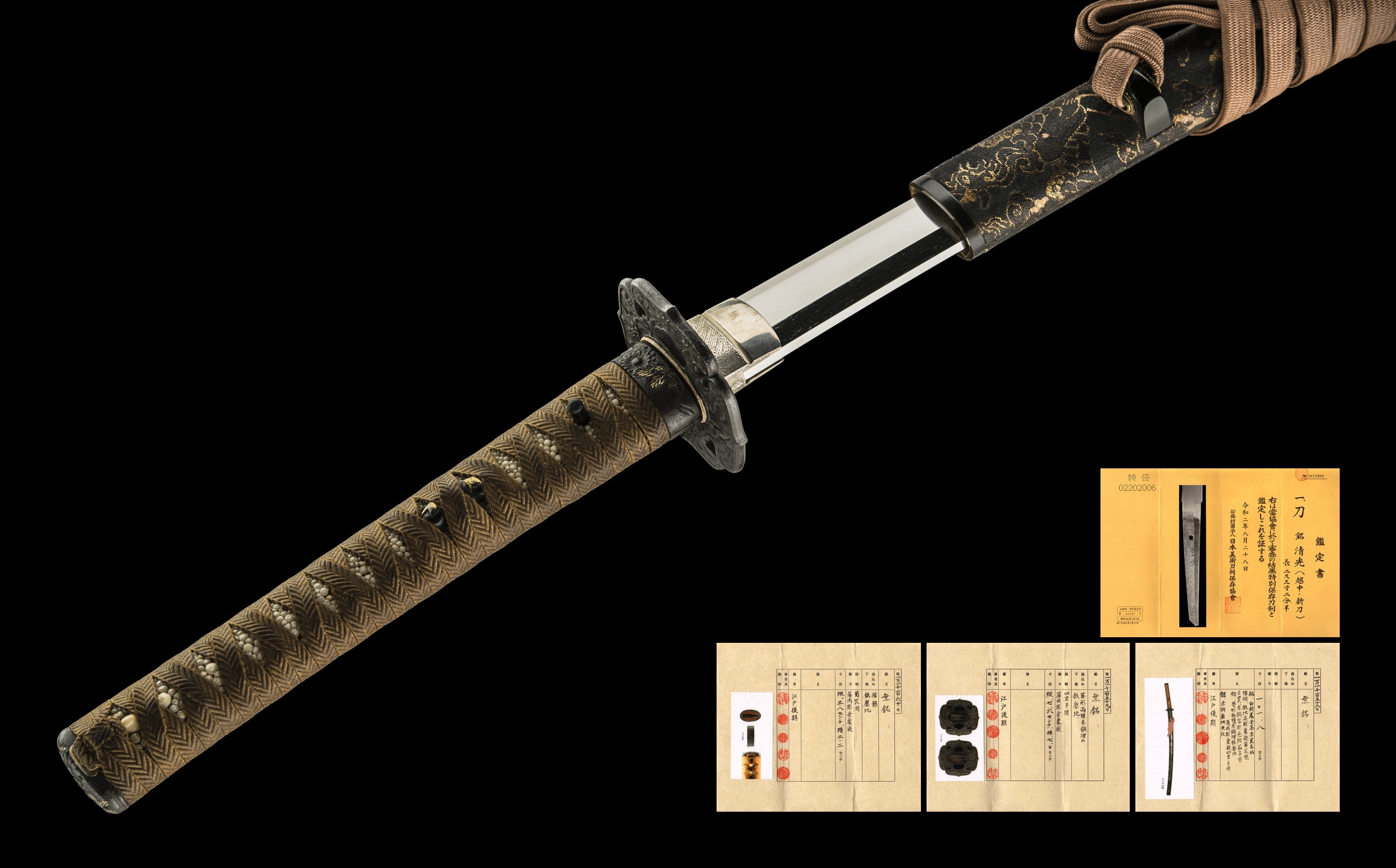
加賀 · 1661-1673頃
現在2点販売中
江戸時代
徳川の泰平のもと、大小は法度の定める身分の制服となり、需要は城下町、とりわけ江戸に集まった。工芸は二つに分かれる。目利きのための華やかな鑑賞の作と、截断の結果を金象嵌に刻む実証の刀である。
保存刀剣のうち、出来が一層優れ、保存状態も良好と認められたものです。再刃や、室町・江戸期の多くの無銘作は対象外となり、保存刀剣より高い基準が課されます。
日本美術刀剣保存協会(NBTHK)は、1948年に設立され、文化庁の監督を受ける公益財団法人で、東京・刀剣博物館に本部を置きます。専門の審査員が出品作を直接審査し、美術的・歴史的価値に応じた鑑定書を発行します。NBTHKの鑑定書は、日本刀および刀装具の真正性を示す最も広く認知された基準です。
NBTHK公式サイトAll swords come with a three-day inspection period beginning from the date of delivery. If not satisfied, the sword may be returned within this period for a full refund of the purchase price. Outside of this period, all sales are final. Swords purchased on a layaway payment plan are not eligible for the three-day inspection period.