徳川の泰平のもと、大小は法度の定める身分の制服となり、需要は城下町、とりわけ江戸に集まった。工芸は二つに分かれる。目利きのための華やかな鑑賞の作と、截断の結果を金象嵌に刻む実証の刀である。
 NihontoWatchNihontoWatch
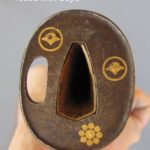
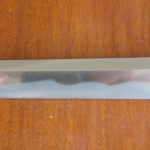
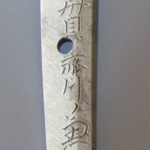
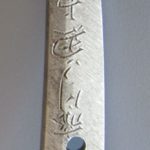
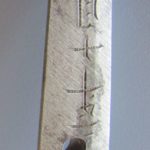
K86. Yoroi doshi tanto signed Ikansai Kanetora and dated Ansei Ni Nen Ju gatsu Hi (October of 1855). Nagasa: 8 7/8″ 22.6 cm. Sori: None, slight uchizori at the tip Moto haba: 2.5 cm. Moto kasane: .9 cm. Nakago nagasa: 4 3/16″ 10.7 cm. Overall in koshirae: 16 1/2″ 41.5 cm. Unokubi zukuri with iore mune. The hada is ko itame with a touch of ko mokume and masame. The hamon is notare midare worked in a bright and consistant nioi guchi covered in ko-nie, with ashi and other hataraki. The boshi is jizo with a long kaeri. The blade is ubu, one hole, in polish, flawless, and mounted with a copper habaki. The koshirae is en suite and of the Higo School (Hosokawa mon all over), all of iron with gold & silver mon. The tsuba has been permanently mounted with the saya; it is meant to be this way. There are nicks and dings to the saya lacquer; there is a sleeve in the saya for a umabari but none is present. The seppa is gold foil. Other than for the dings in the lacquer, condition of the koshirae is excellent. Ikansai Kanetora was the son of Saneo who was the brother of Kiyomaro (the Shinshinto Masamune). Kanetora did for a time study with his uncle Kiyomaro. This is a very nice tanto in fine and unique koshirae; one of you should be quite pleased to own it. 1 pound, 6 ounces.
NihontoWatchこの作品は売約済みです
兼虎の新しい作品が市場に出ると、メールが届きます。
信濃 · 1848-1854頃
藤代 中上作 · 刀剣大鑑 上位37%
江戸時代
徳川の泰平のもと、大小は法度の定める身分の制服となり、需要は城下町、とりわけ江戸に集まった。工芸は二つに分かれる。目利きのための華やかな鑑賞の作と、截断の結果を金象嵌に刻む実証の刀である。
3-day return window from receipt.