室町は刀剣業を産業に変えた。徒歩の集団戦とともに打刀が興り、長船と関は数打ち物と注文打ちを並行して産し、勘合貿易は日本刀を数万振の単位で海外へ運んだ。
 NihontoWatchNihontoWatch
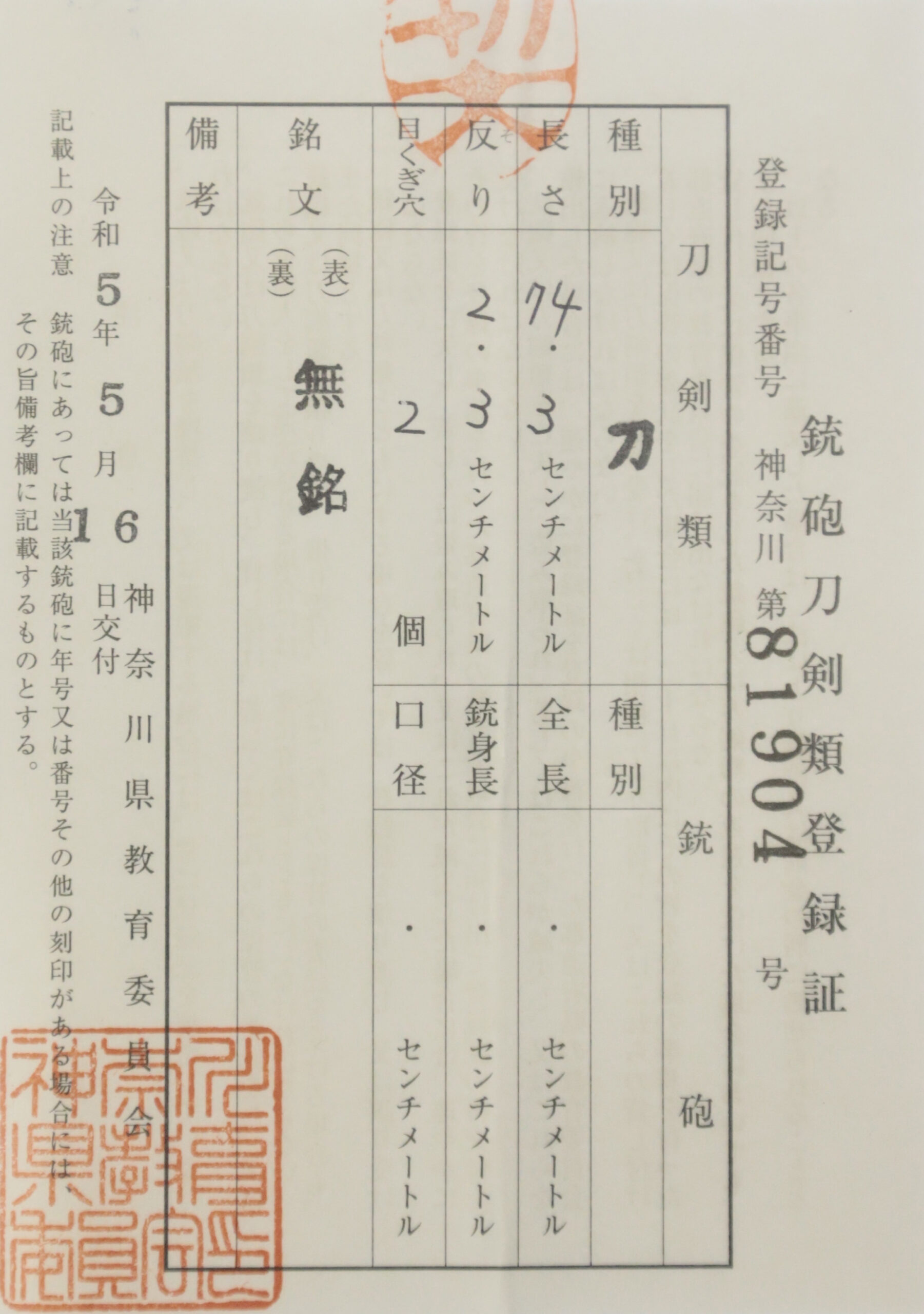
Summary This blade is attributed to the Uda school, as authenticated by the NBTHK (Society for the Preservation of Japanese Art Swords). Although the certificate does not specify the exact forging date, the NBTHK appraises it as being made in the early to mid-Muromachi period (approx. 1394–1491). The Uda school was a prestigious swordsmith group that flourished from the Nanbokuchō to the mid-Muromachi period (approx. 1334–1491). It was founded by Kunimitsu (国光) in the late Kamakura period, originally from Yamato Uda-gun (大和宇多郡) in today’s Nara prefecture. Kunimitsu later moved to Etchū province (modern-day Toyama prefecture) with his apprentices, including Kunifusa (国房) and Kunimune (国宗). The school became known for producing highly practical blades, which were in great demand during the constant warfare of the Nanbokuchō–Muromachi eras. Among the schools in the Hokuriku region (northwestern Honshu), the Uda school was the most prominent. The Uda school became widely known for forging practical and durable blades, which were highly valued during the turbulent Nanbokucho and Muromachi periods—a time when Japan was divided between rival imperial courts and marked by constant warfare. During this era, extra-long swords became popular among warriors. Works of the Uda school are generally classified into two categories: Ko-Uda (“Old Uda”), made from the late Kamakura to the Nanbokuchō period, and Uda, produced during the Muromachi period. This blade falls into the latter category. This blade is appraised as a Hozon Token (保存刀剣) issued by NBTHK(Nihon Bijutsu Touken Hozon Kyokai:日本美術刀剣保存協会). *Please keep in mind that there are a few Kitae Kizu, rust on this blade. Fuchi-Kashira A Koi (鯉, domestic carp) and waves are designed for this Fuchi-Kashira. Based on an ancient foreign story, many fish tried to climb the waterfall called the Ryumon (竜門, dragon gate) in the rapid stream of the Yellow River. As a result, only Koi climbed up and became a dragon and ran through the sky. This is the reason why “Koi-no Taki Nobori” (鯉の滝昇り, domestic carp climbing waterfall) became a symbol of success in life. The Ryumon legend is associated with this story. By living confidently and making efforts, people hoped for their children to grow up to become magnificent people. Samurai families then might have used this fish motif wishing their sons to be promoted to high-ranked Samurai. Tsuba and Habaki This tsuba features a chrysanthemum openwork design (菊透かし鐔, Kiku-Sukashi Tsuba). A long time ago, the chrysanthemum was used as a medicine for obtaining a long life in China, and it was brought to Japan with this thought in the Nara period (648-781). Chrysanthemum is one of the flowers which symbolizes fall, and people appreciate it very much since ancient times. As its petals form radially, the chrysanthemum has been likened to the sun. That is why this flower pattern is treated as the symbol of perpetual youth and longevity or good health. “Kiku no Gomon (菊の御紋)” is a kind of chrysanthemum pattern, and it has been used as the crest of the Emperor and the royal family in Japan so that it is well-known as a noble pattern. Saya This saya is finished with a leather-covered scabbard style known as Kawa-zutsumi Saya (革包鞘). Authentication Paper They authenticated the blade on February 21st in the 7th year of Reiwa (2025). They appraised it as Hozon Touken, the blade worth preserving for Japanese society.

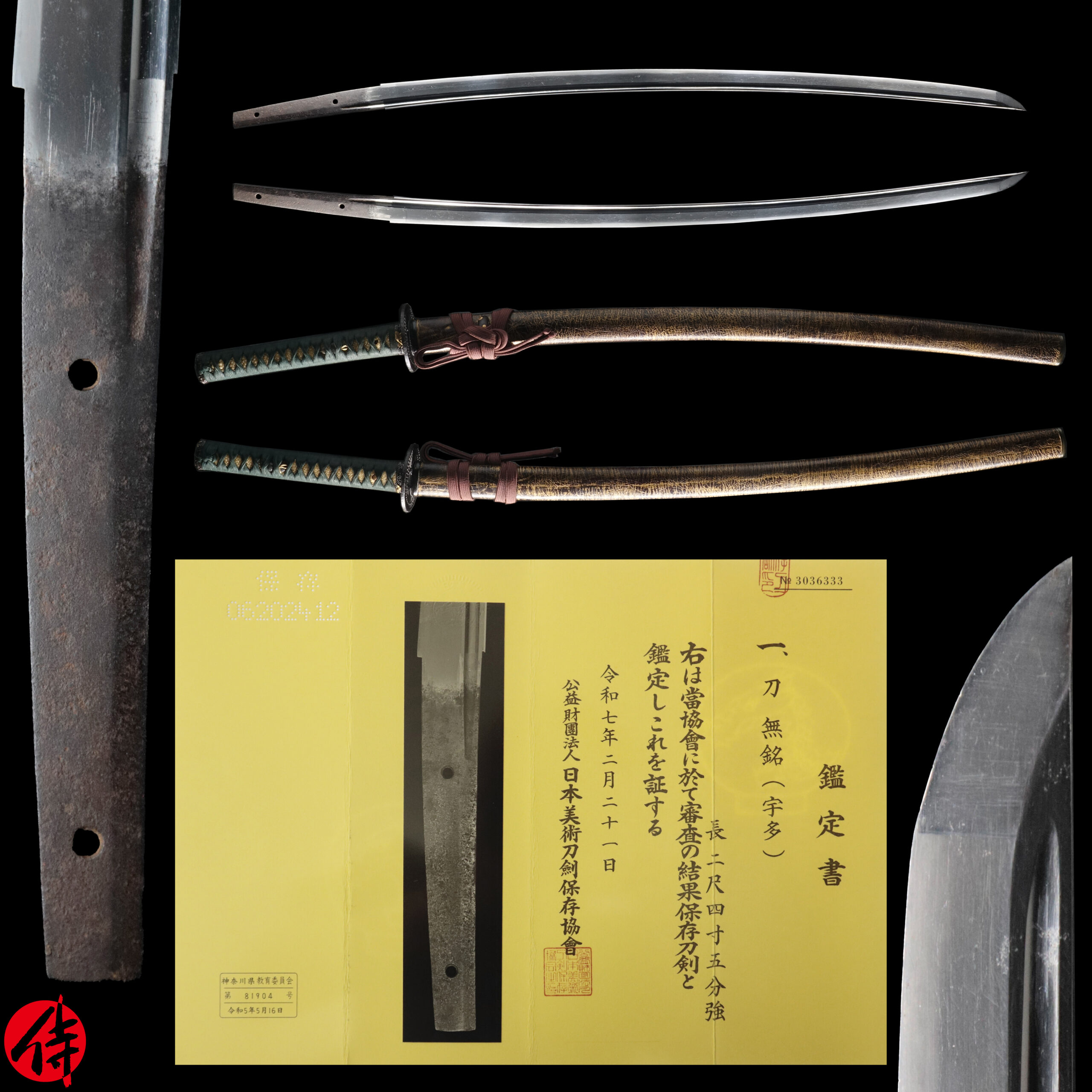
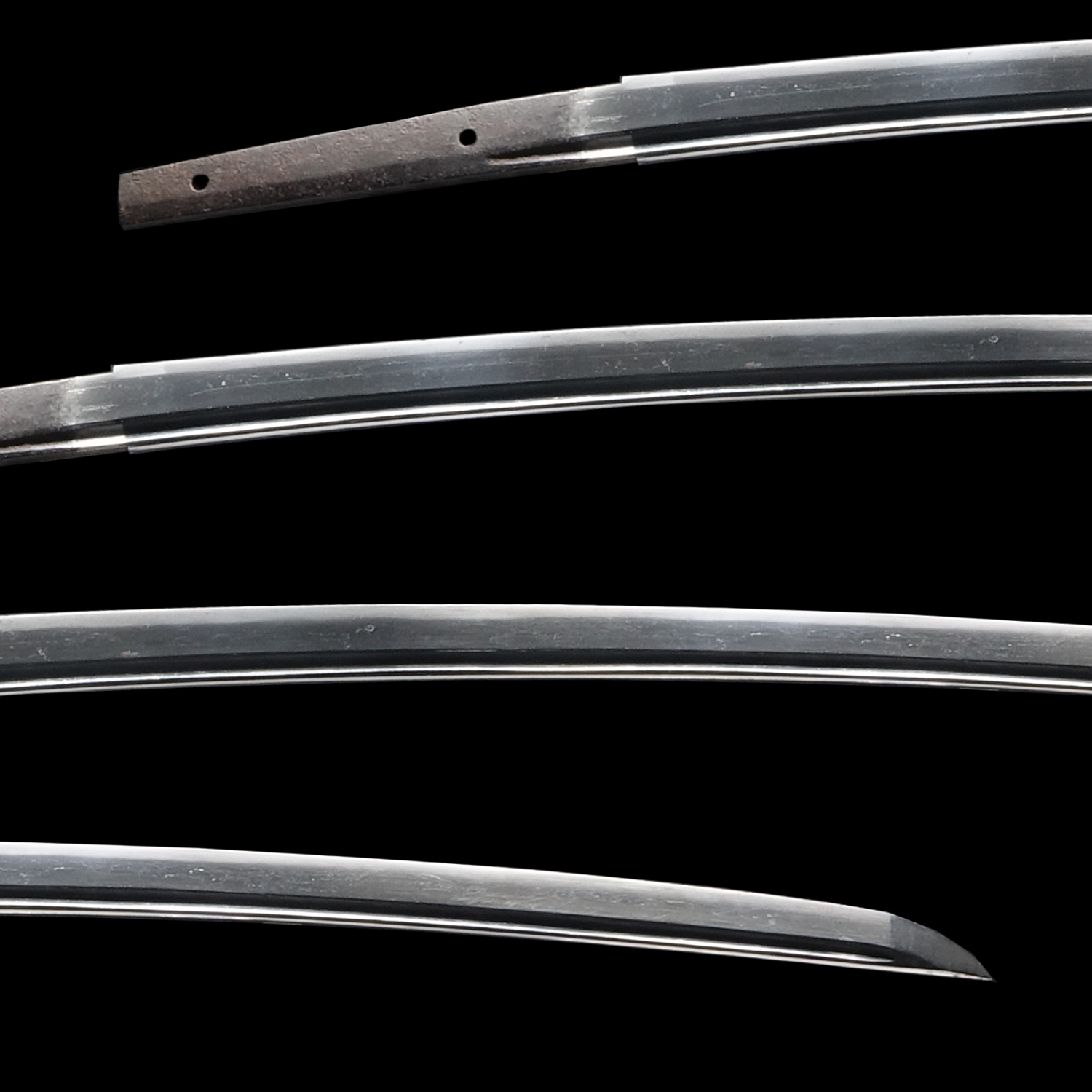
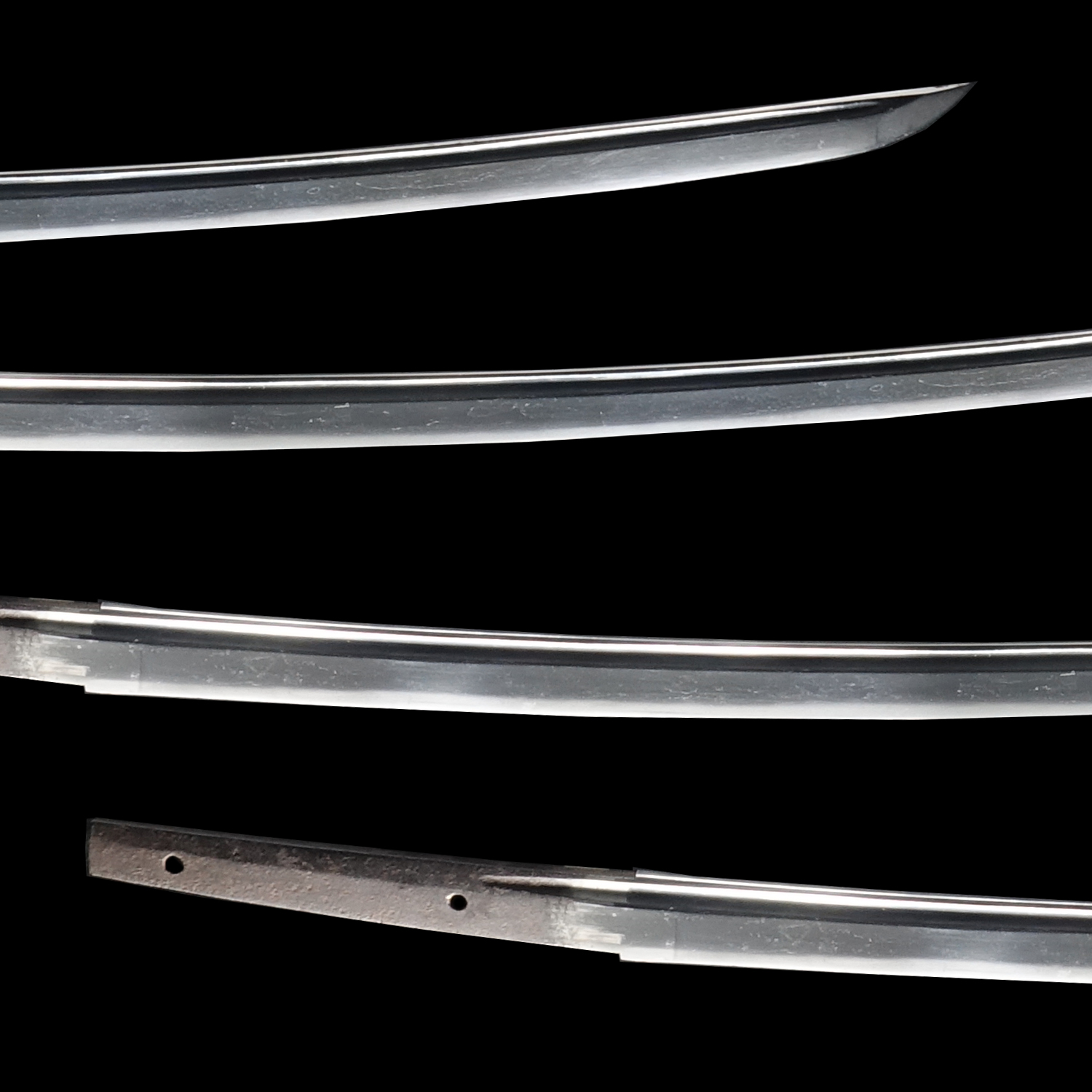
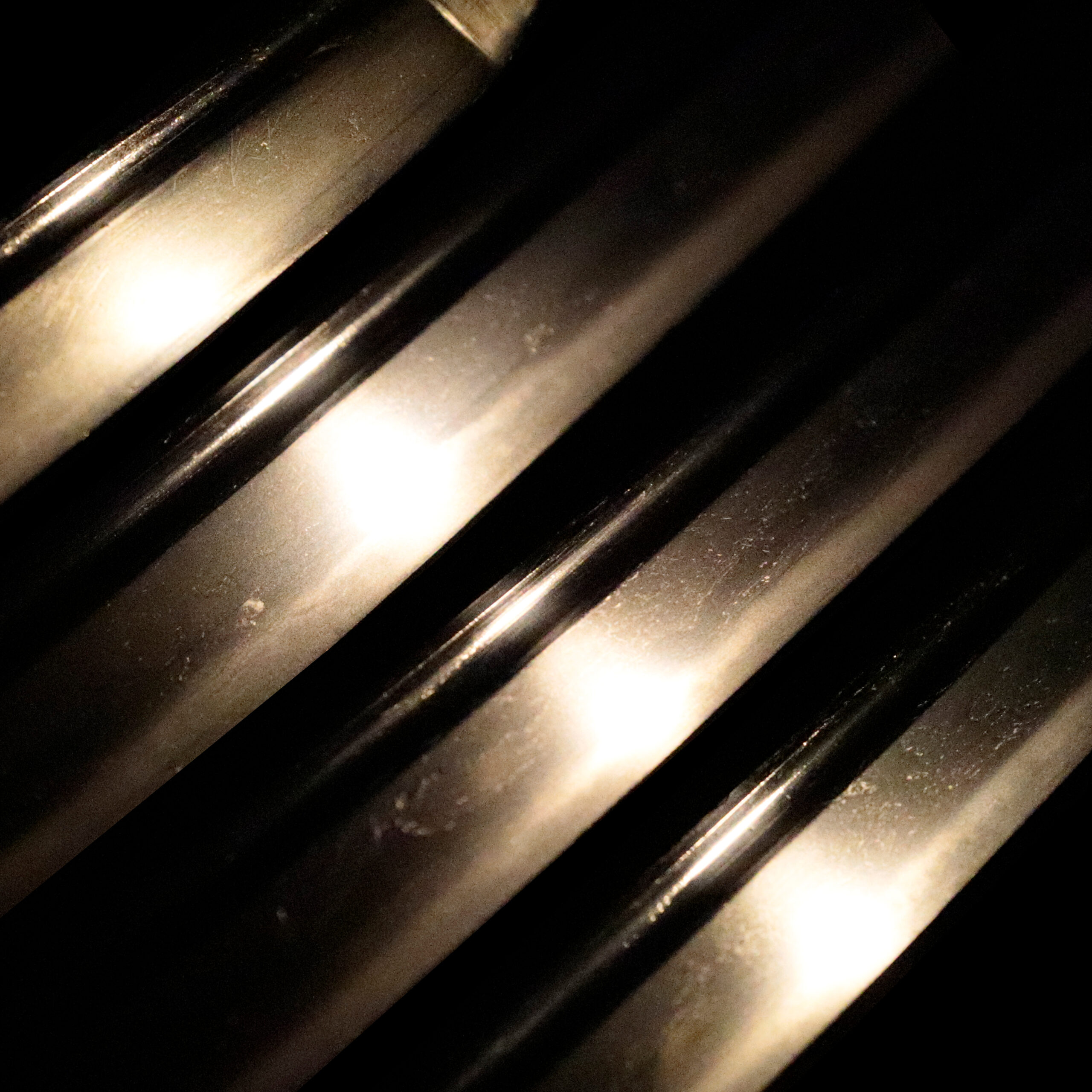
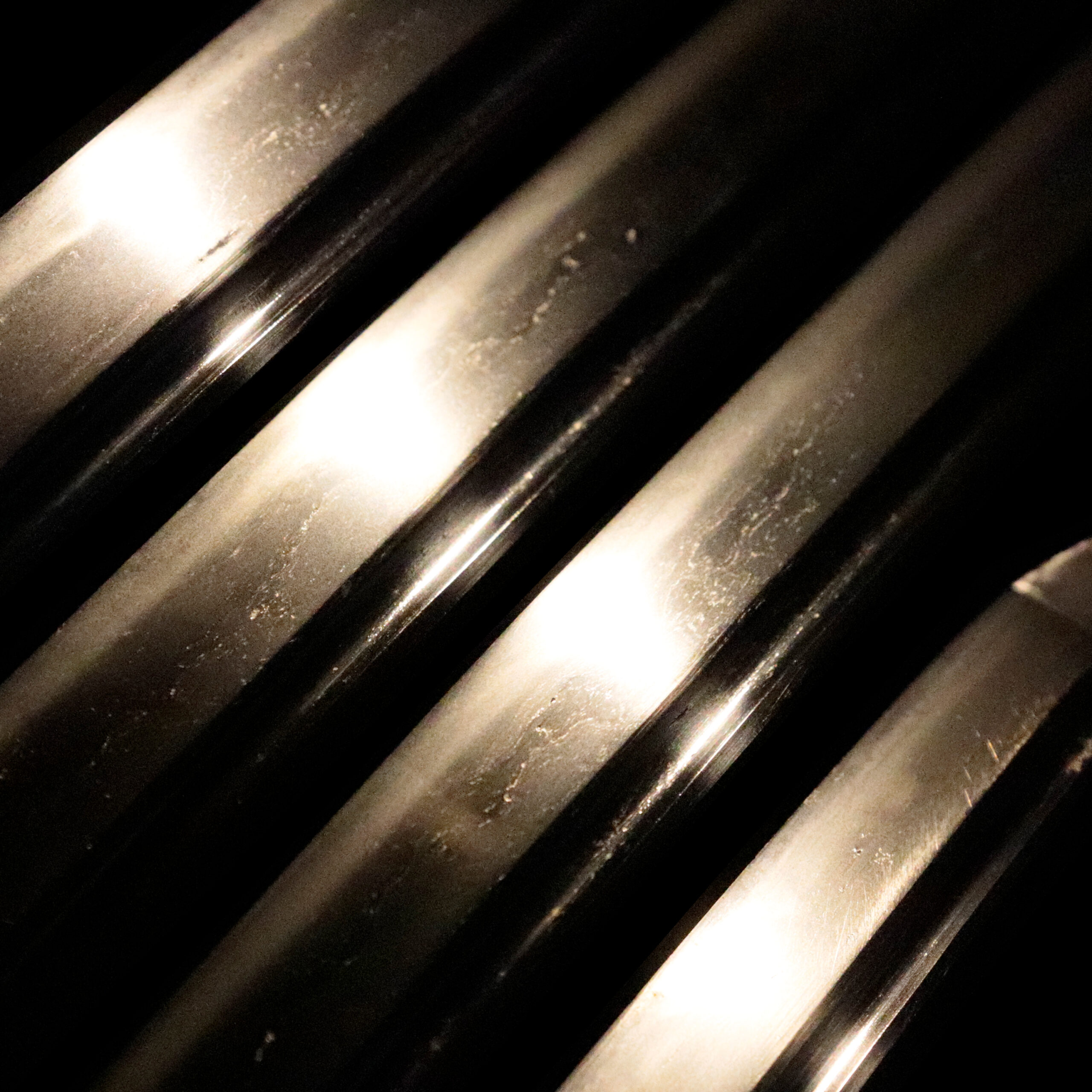
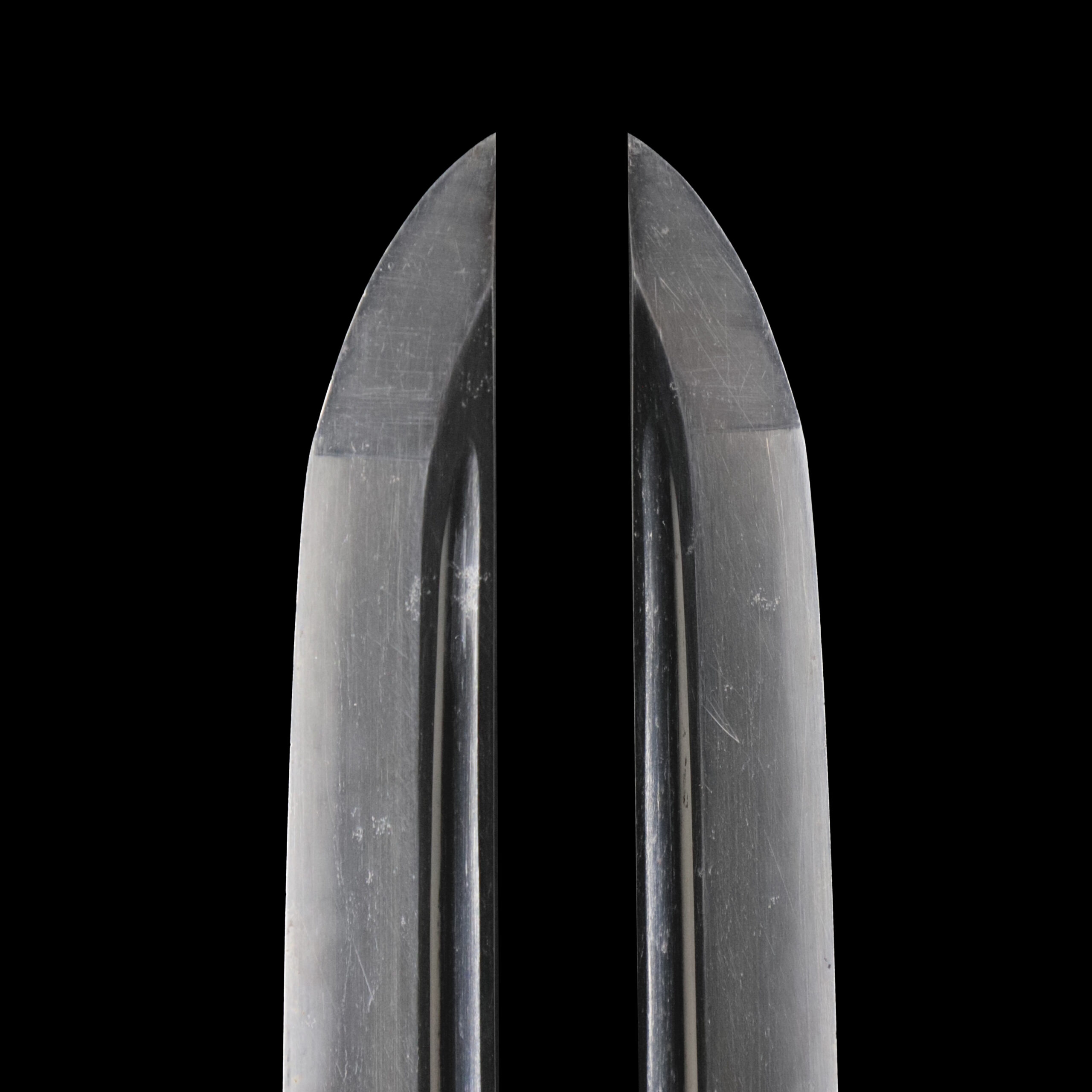
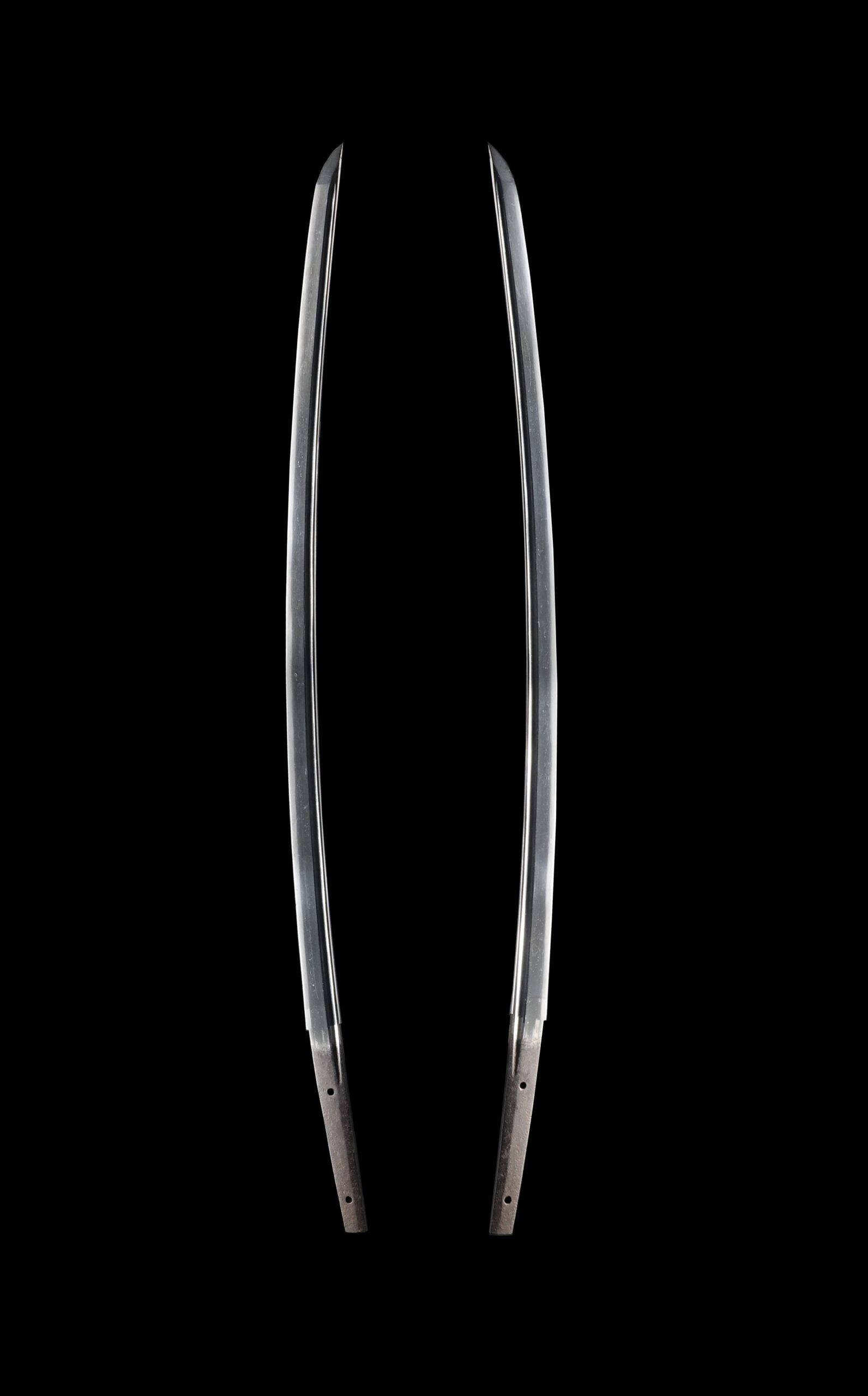
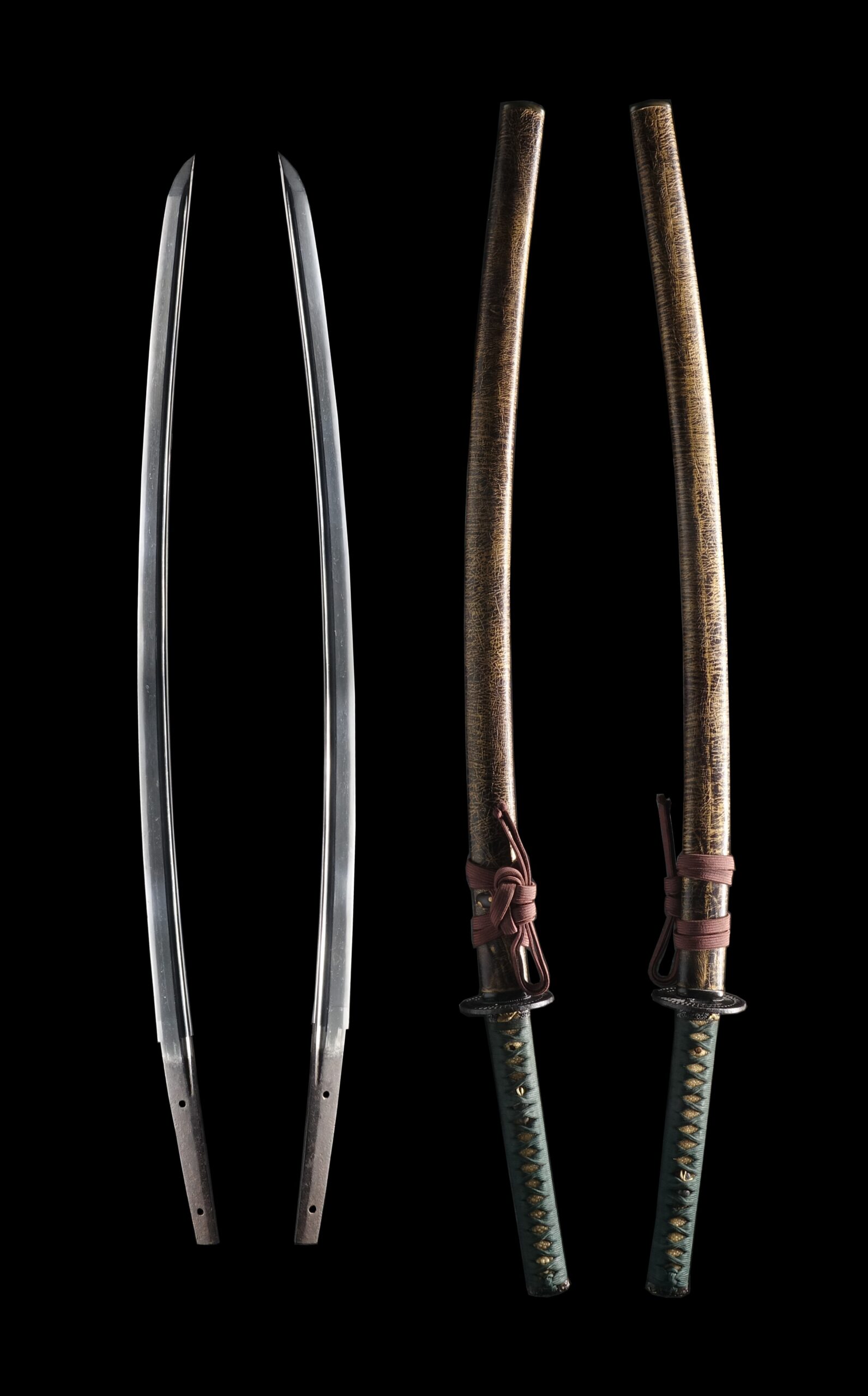
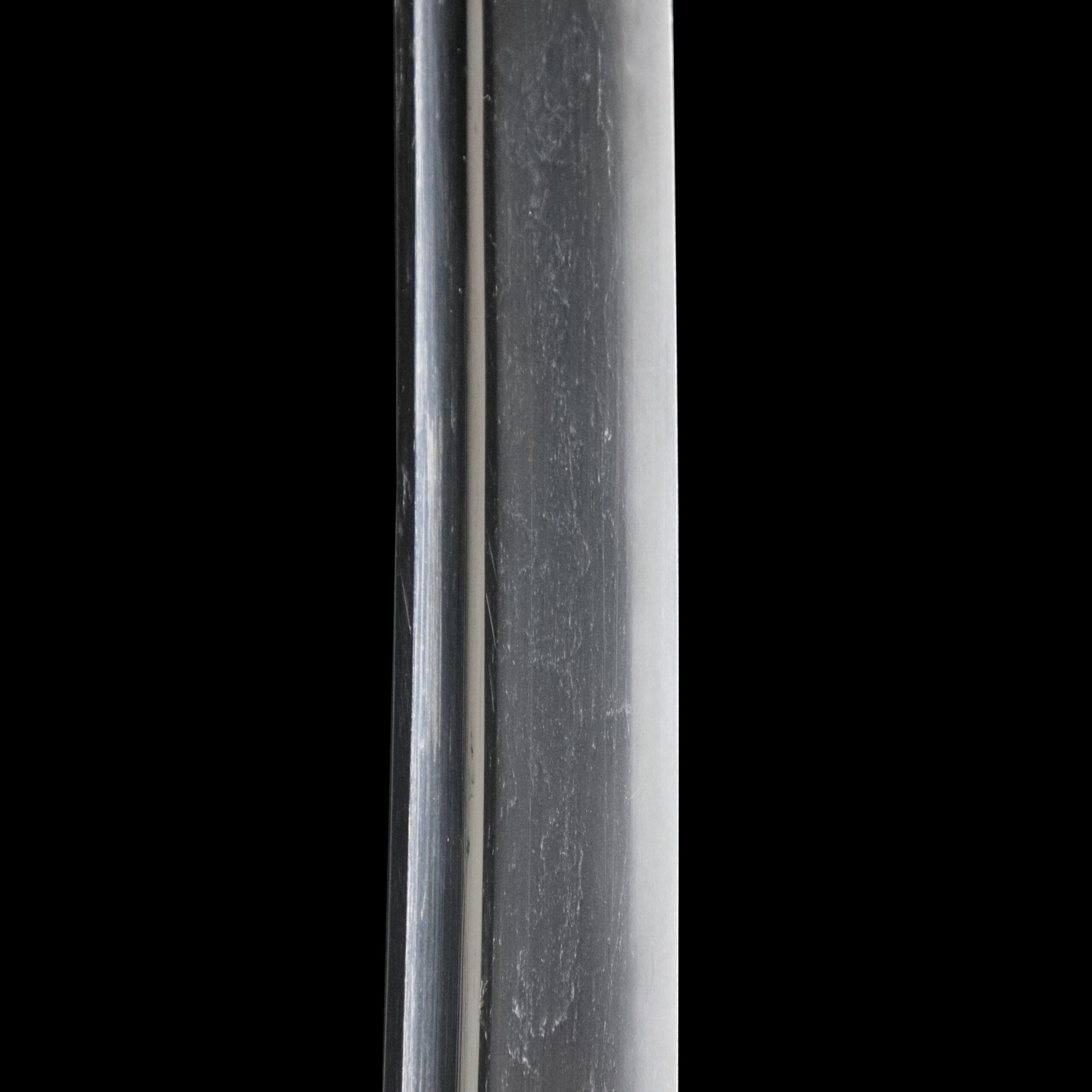
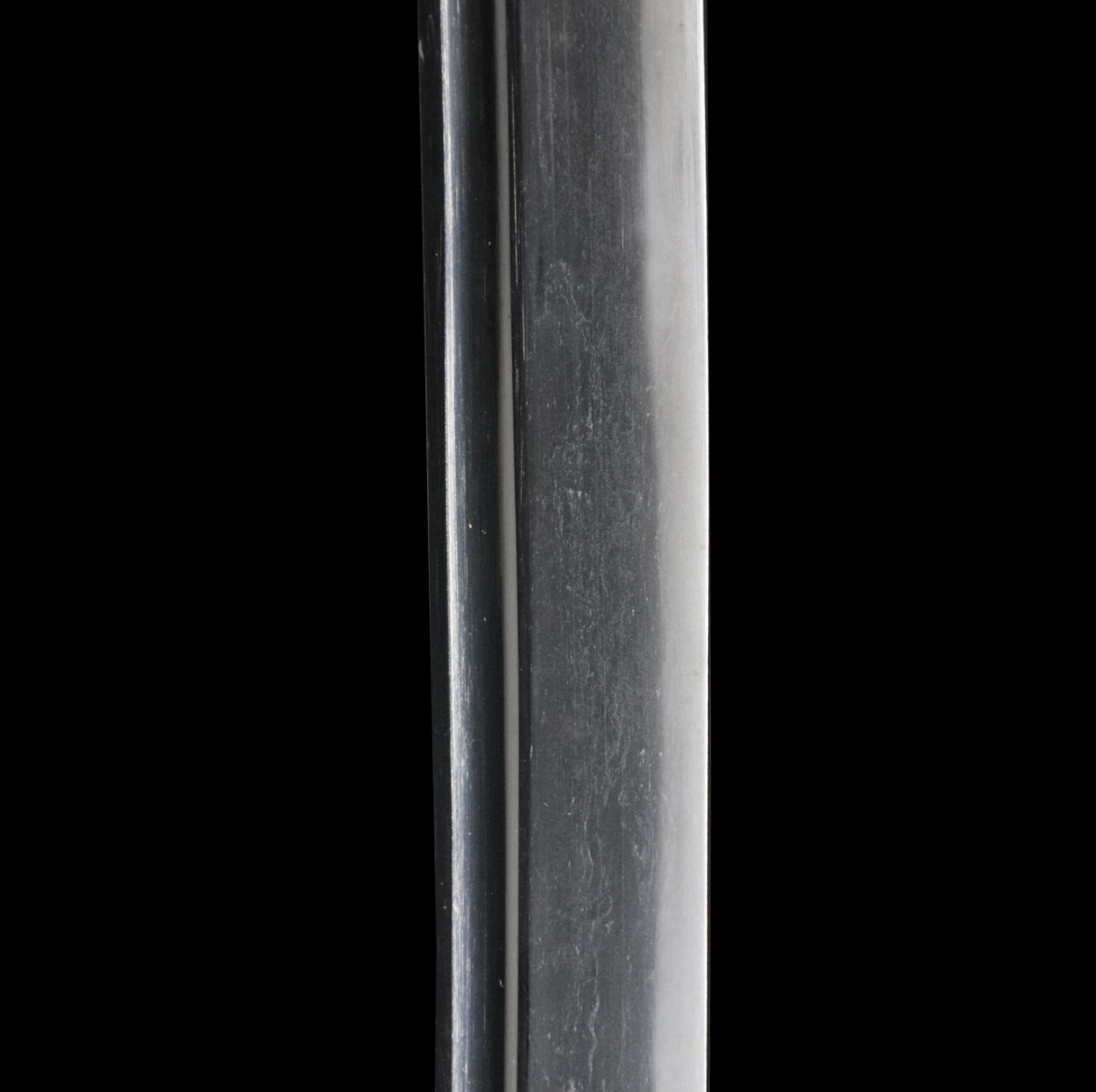
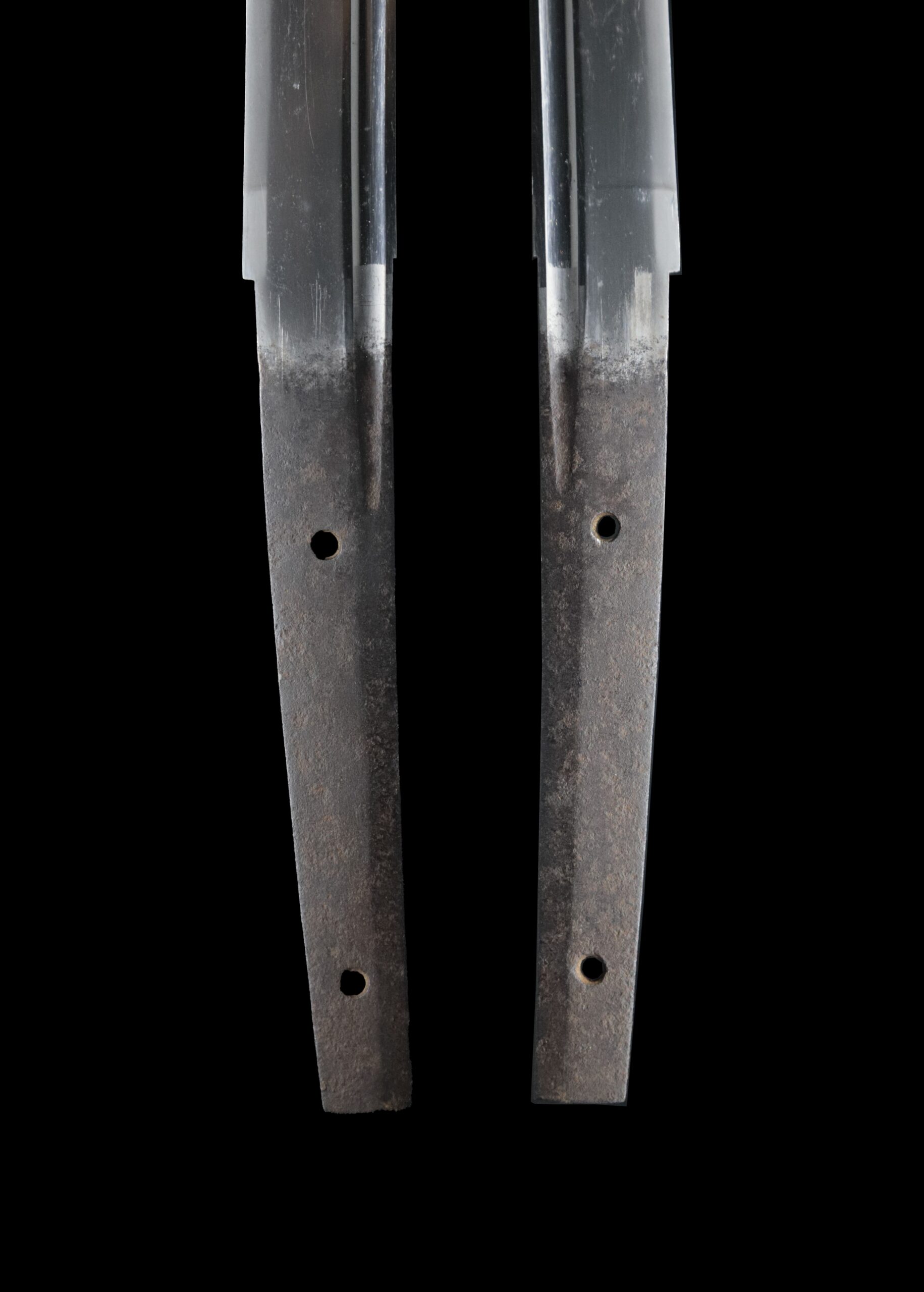
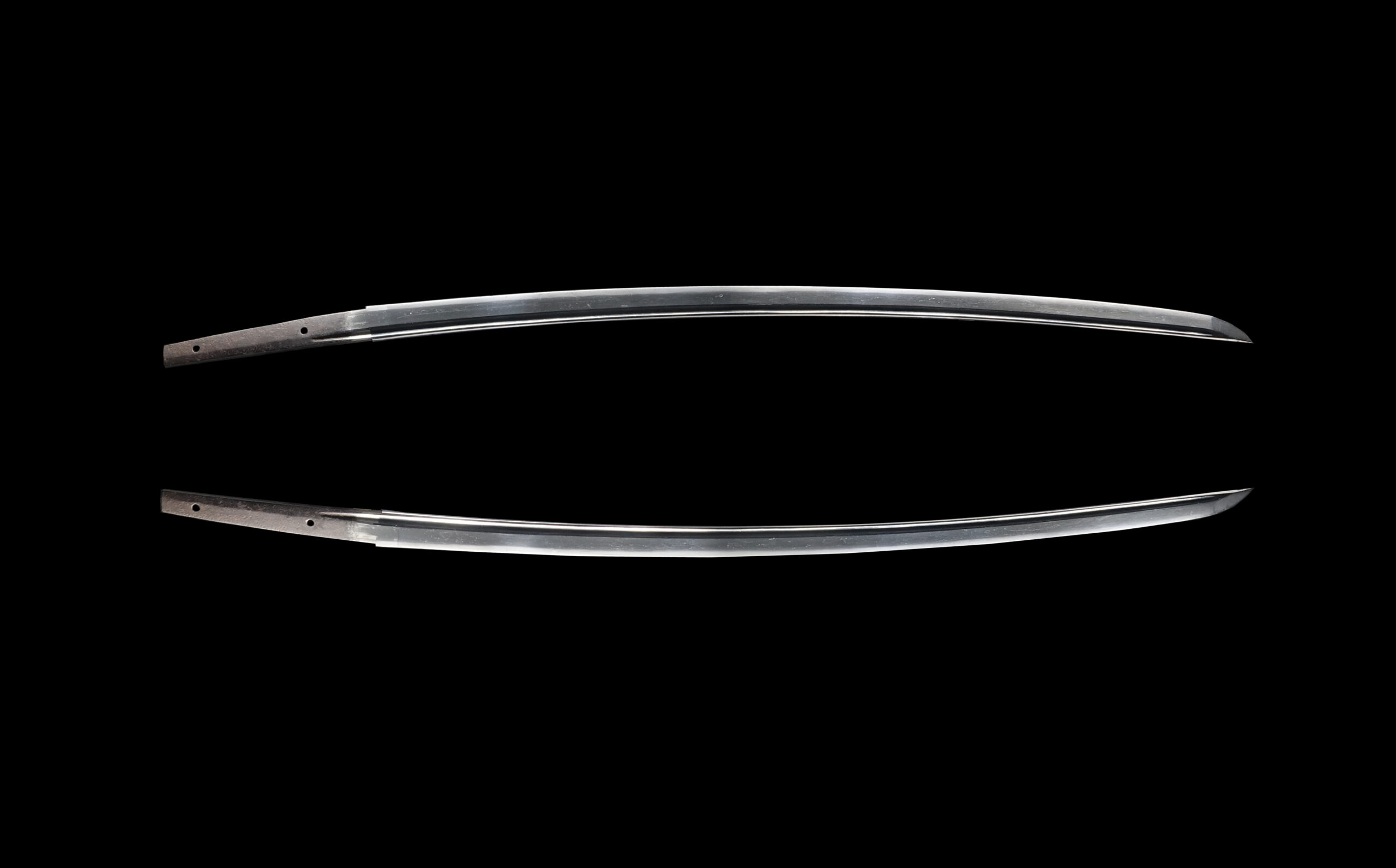
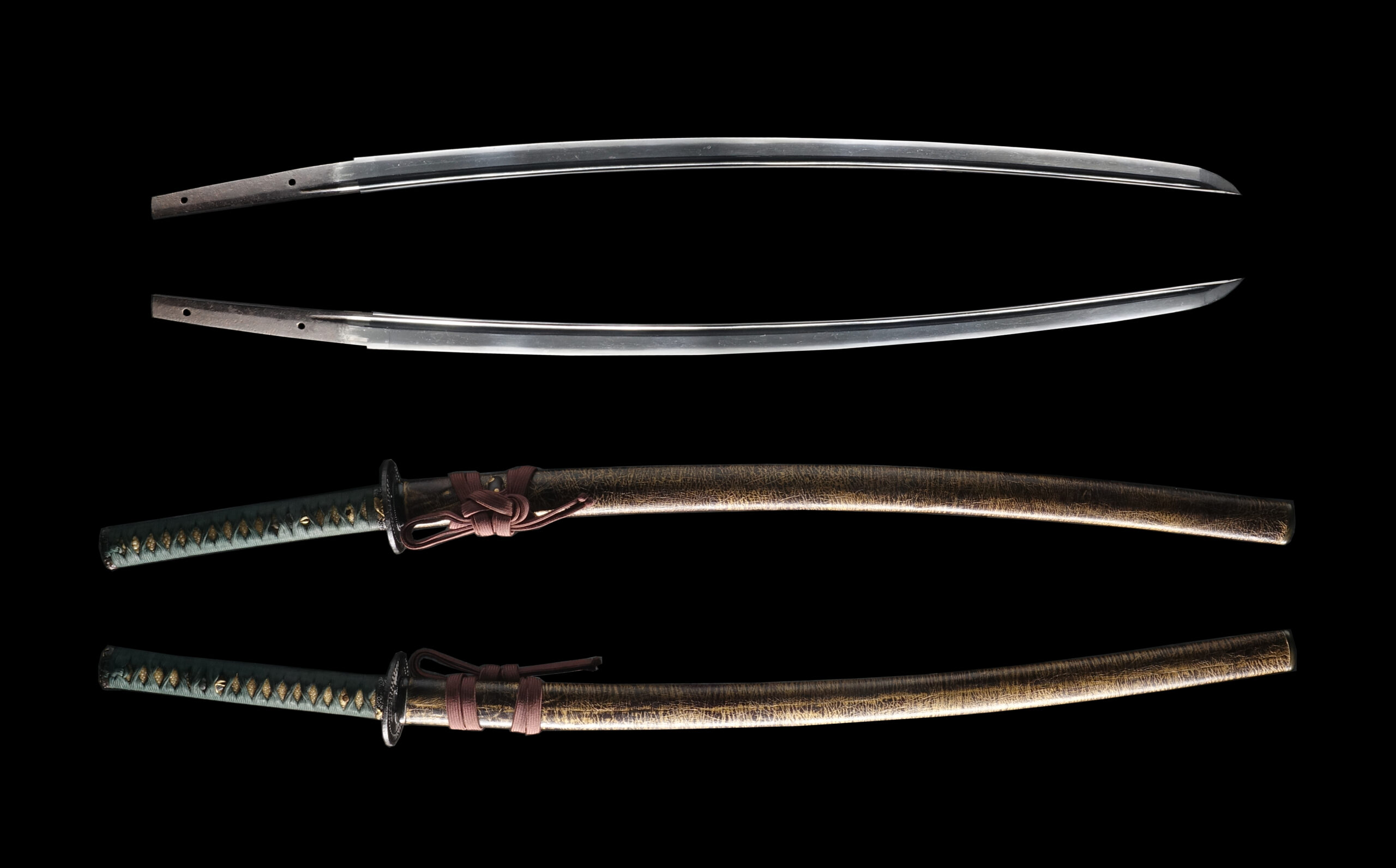
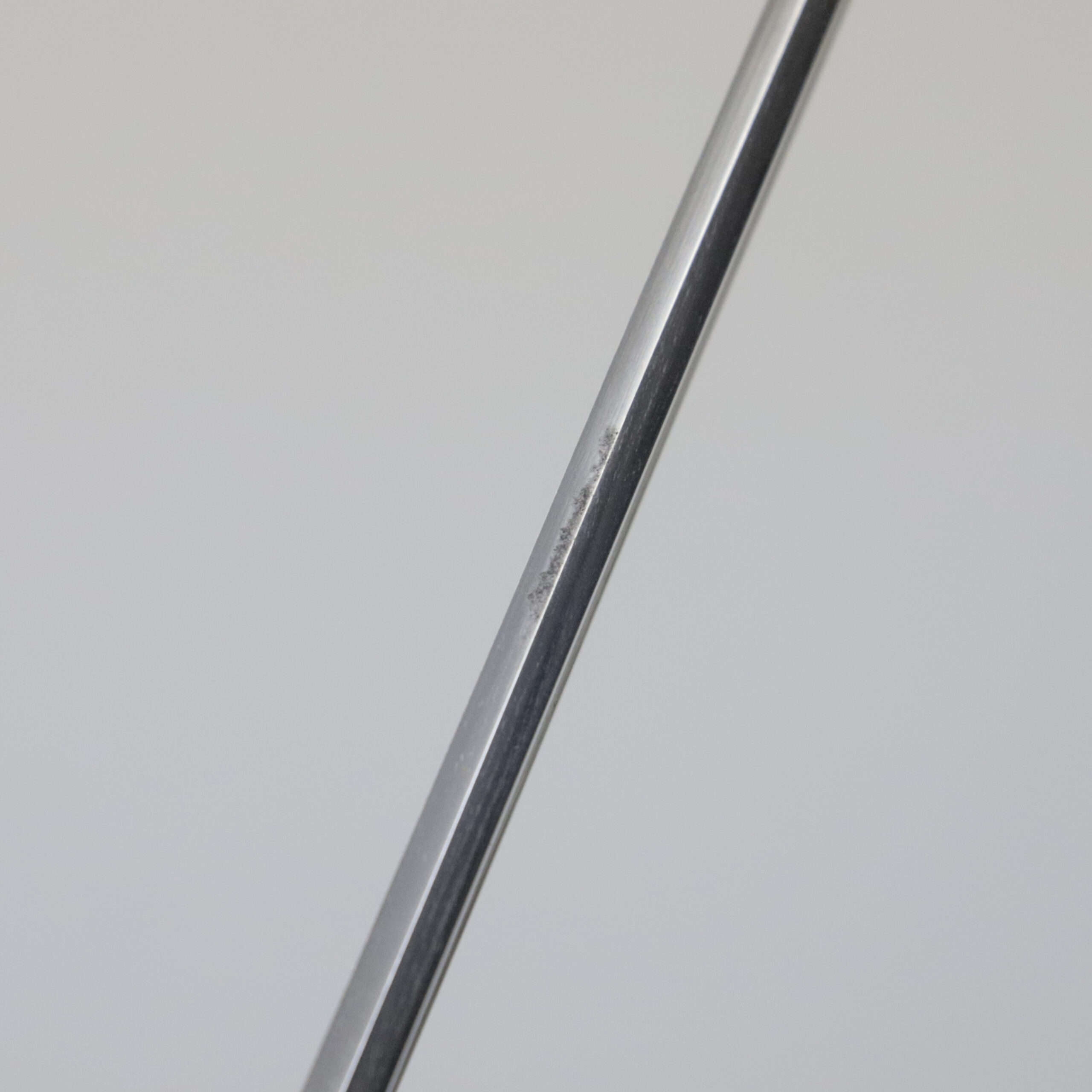
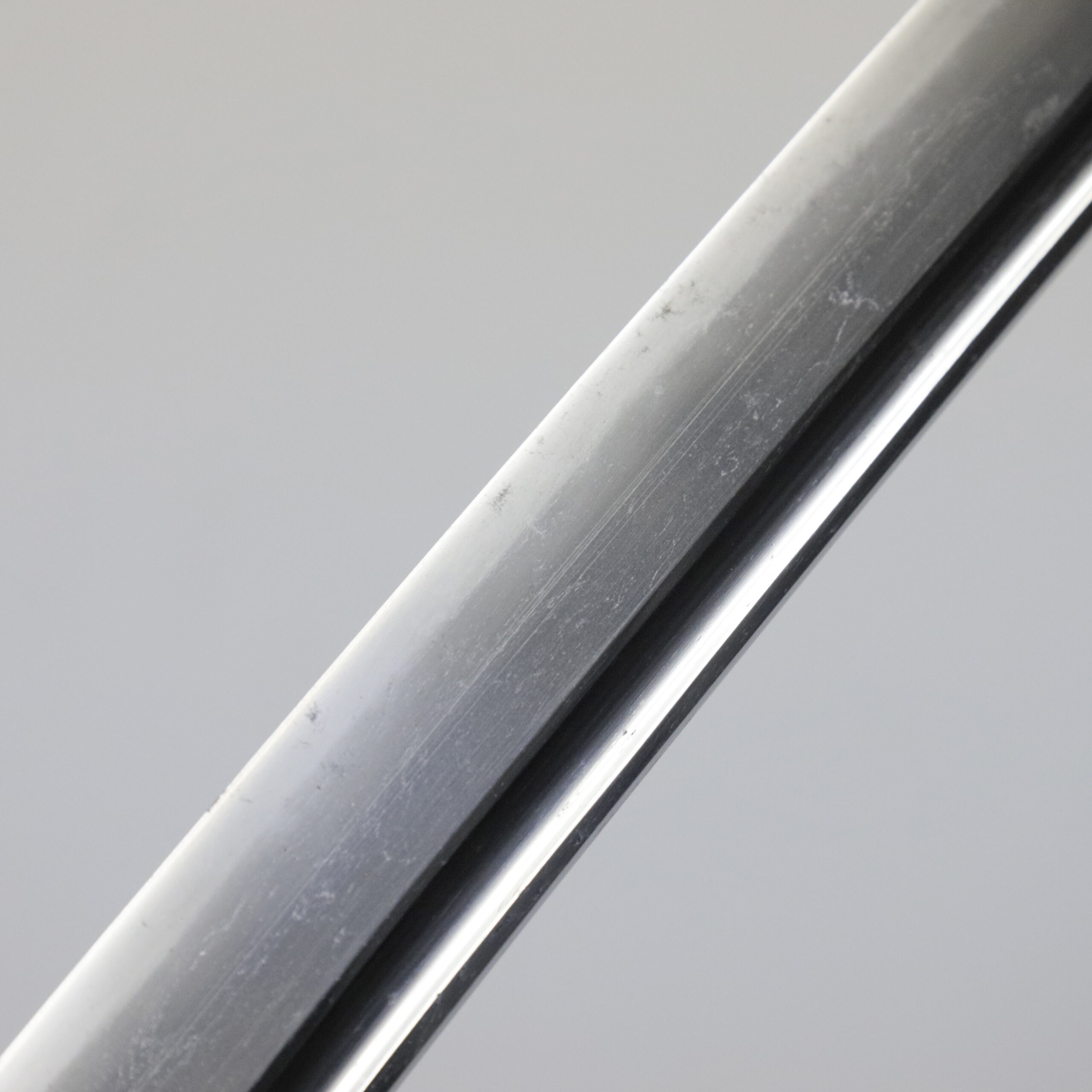
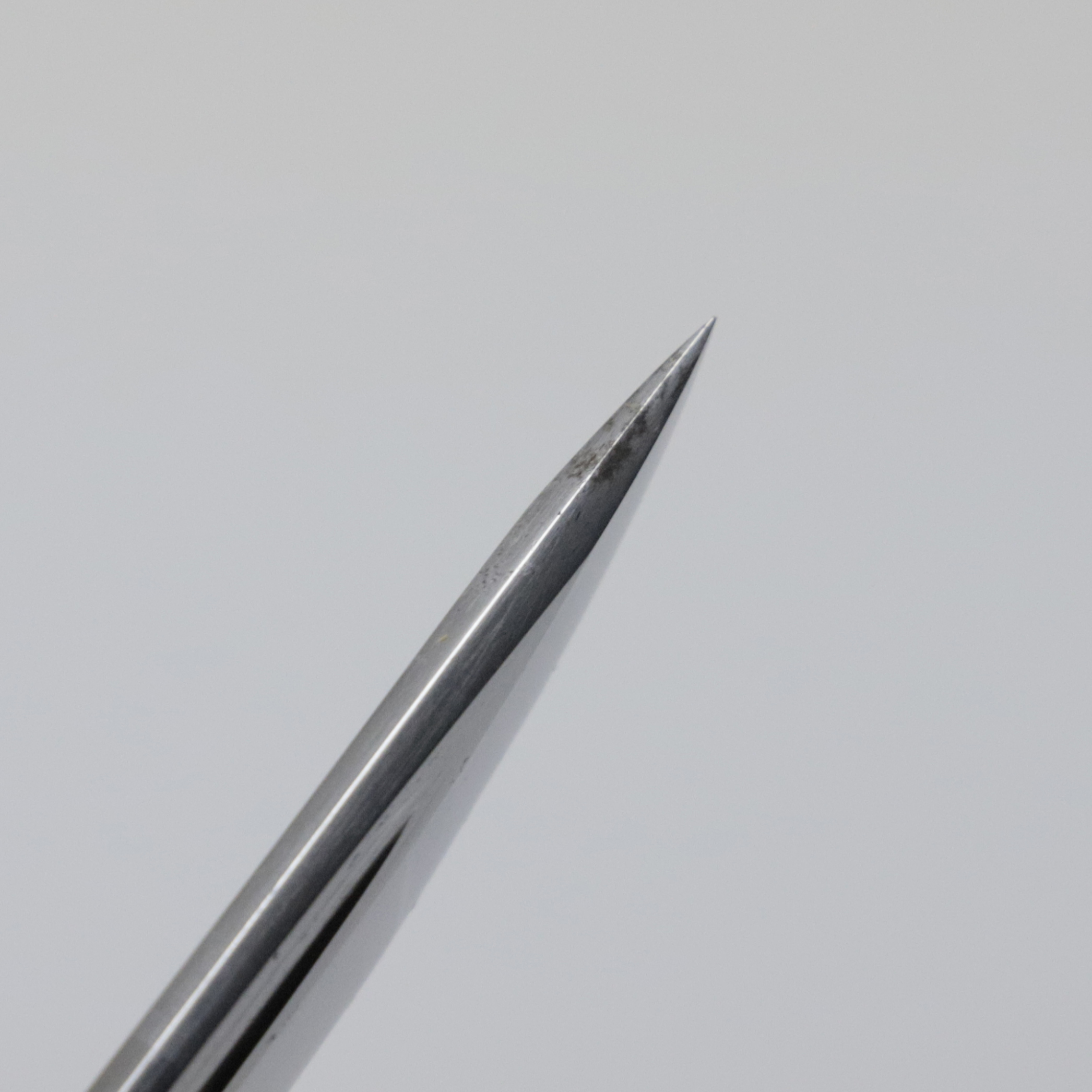
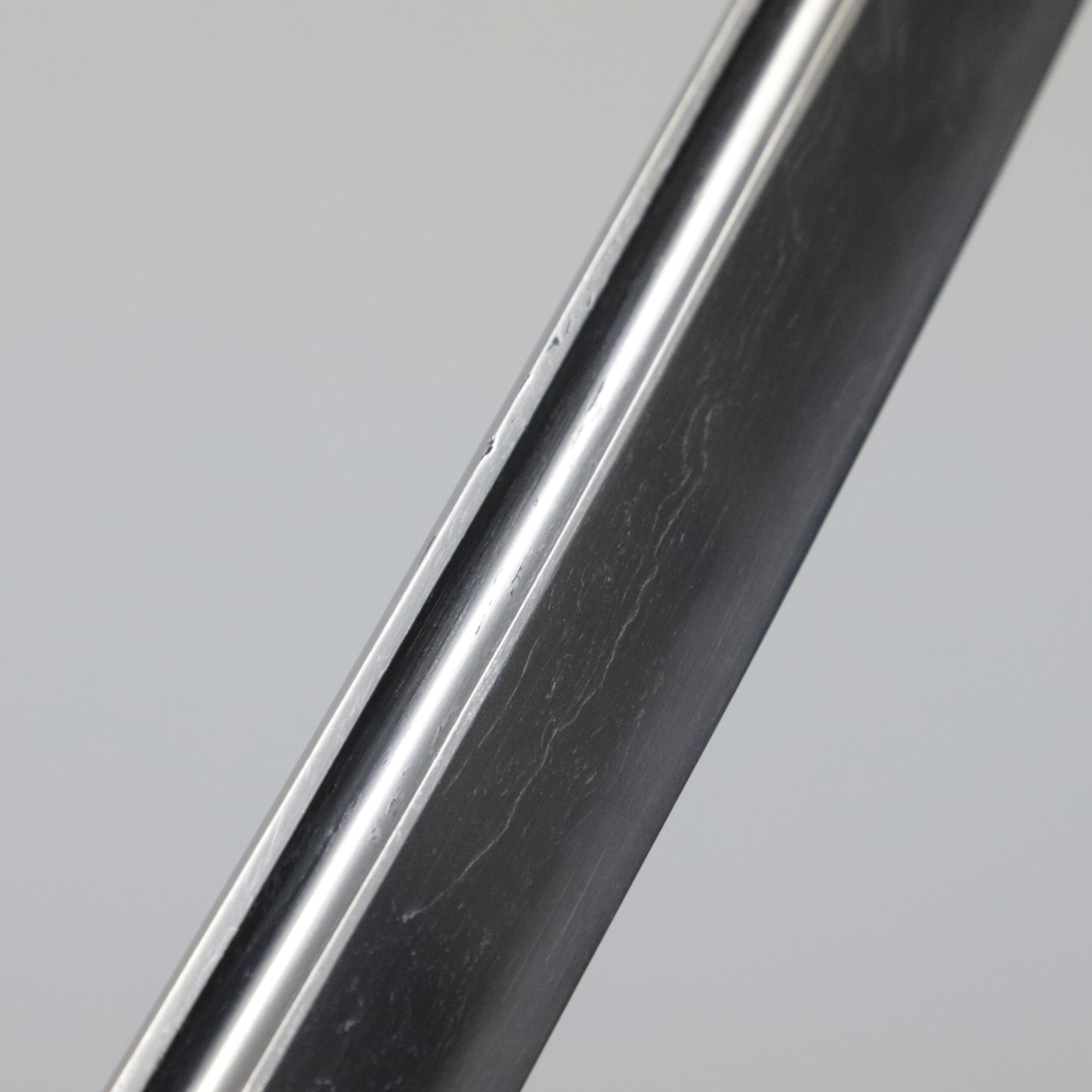
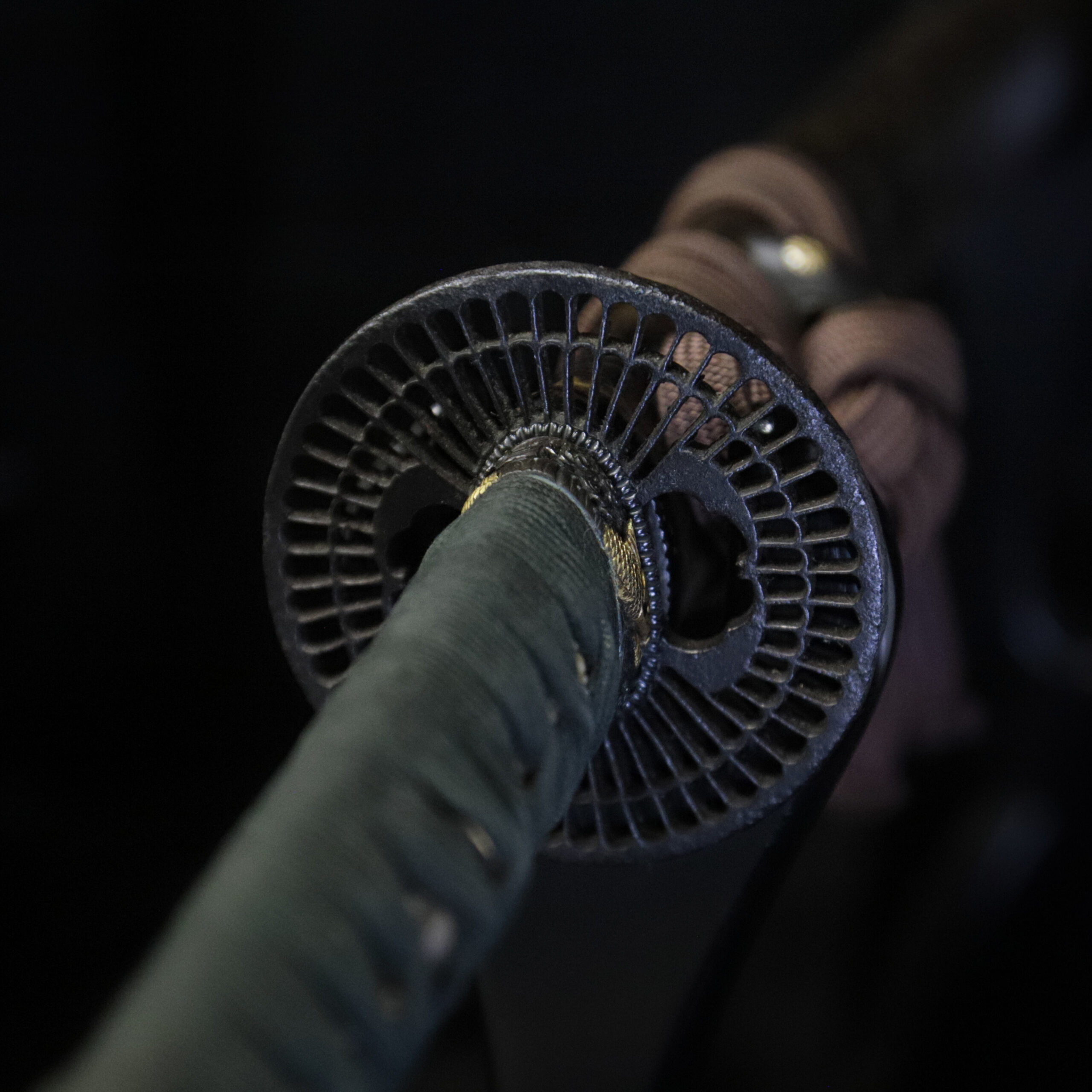
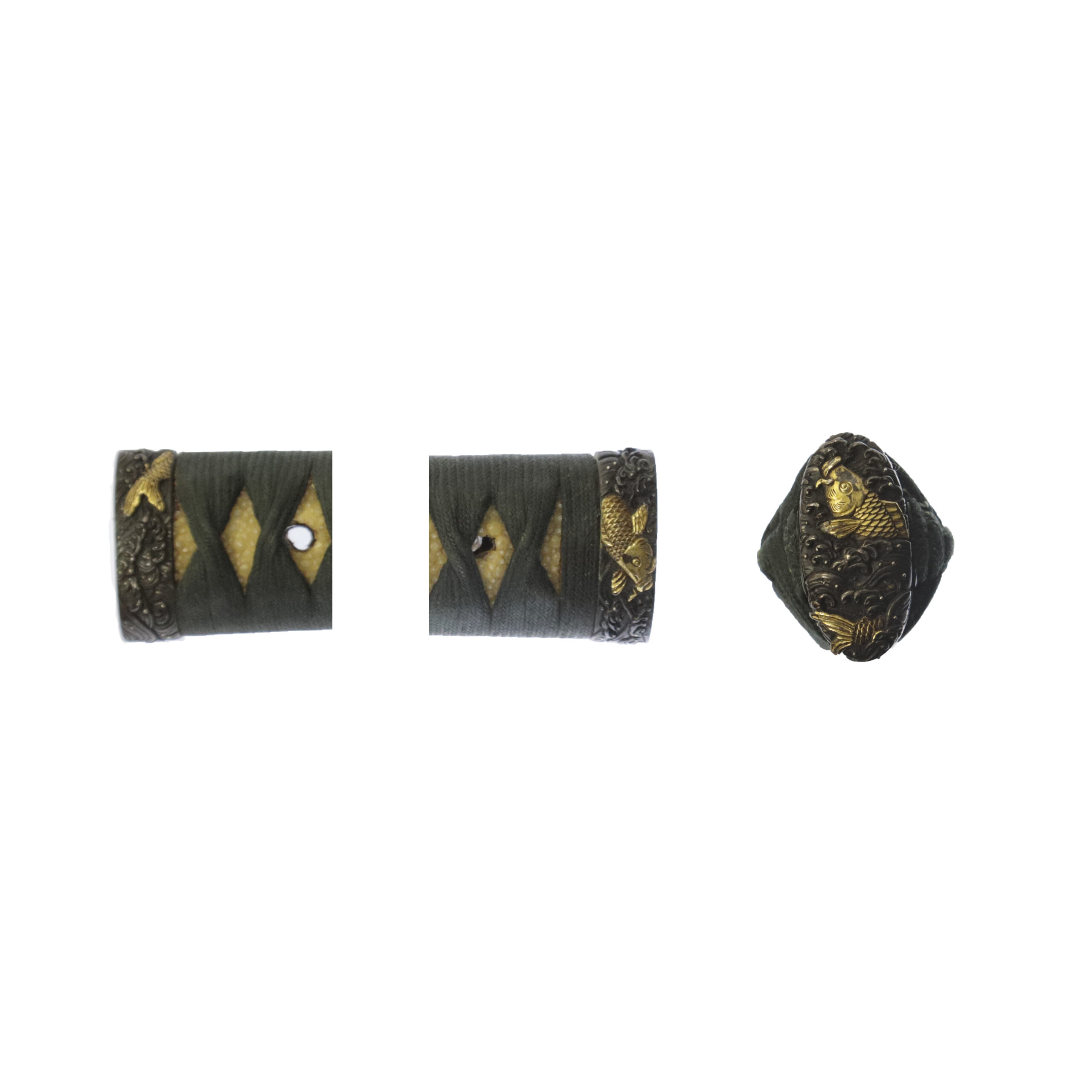
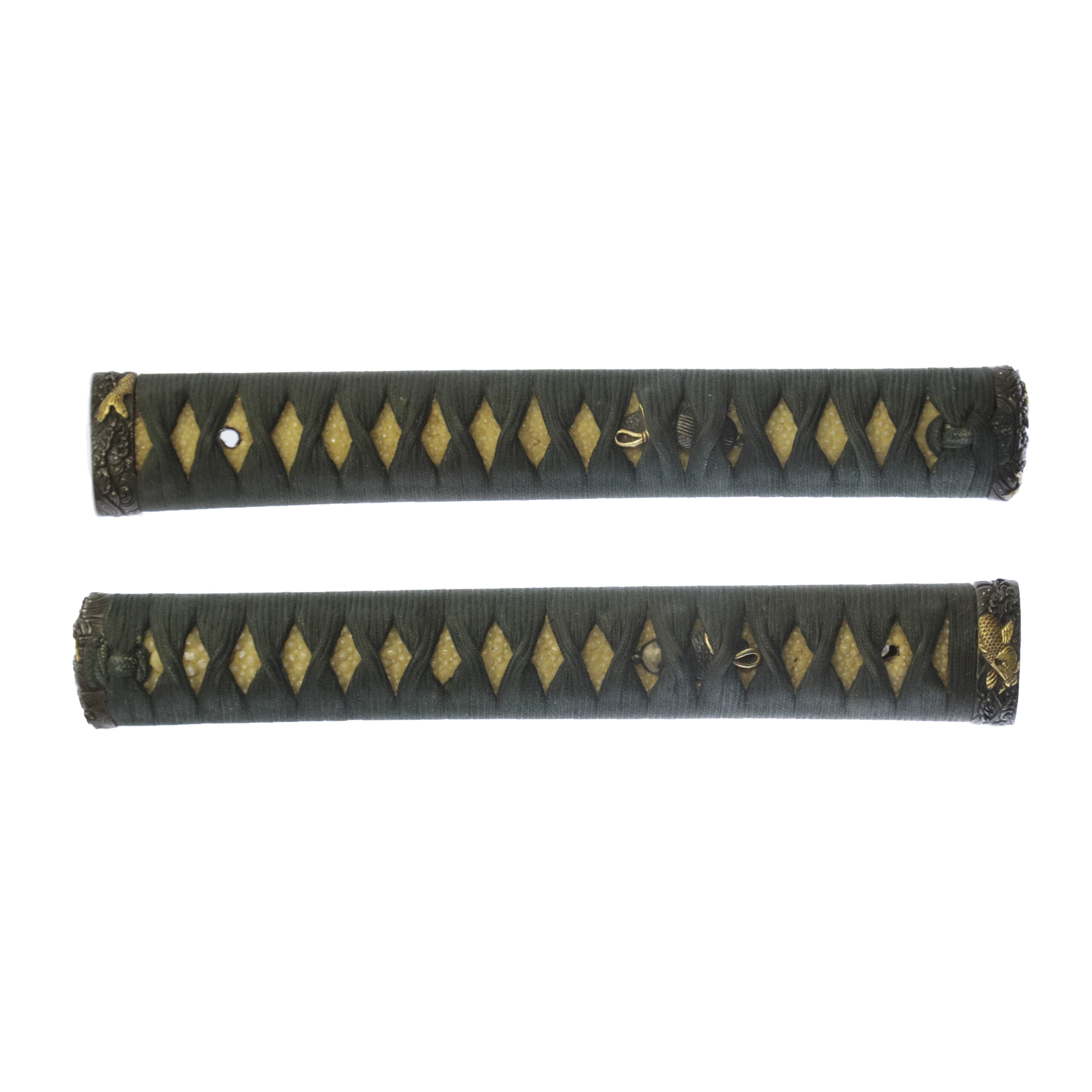
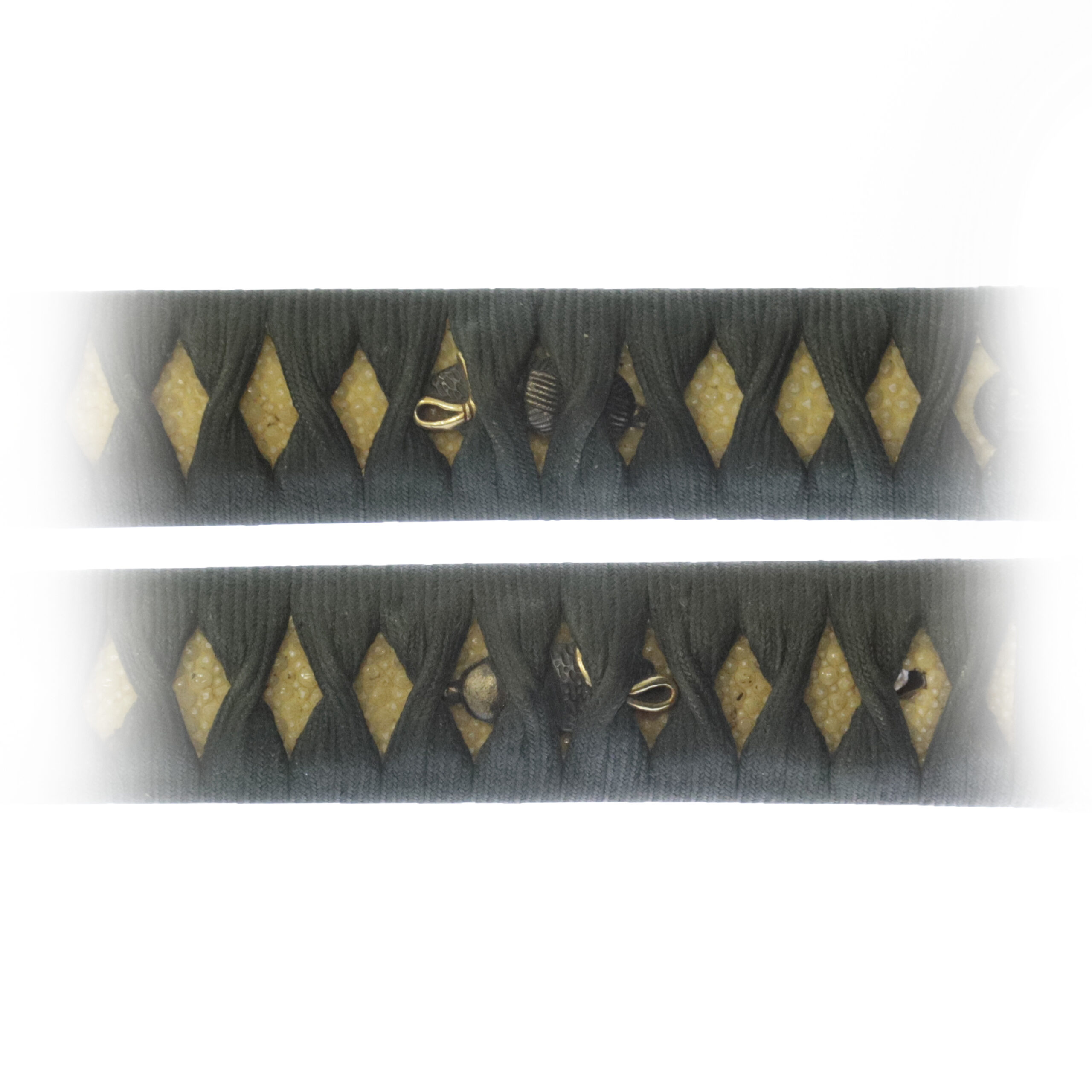
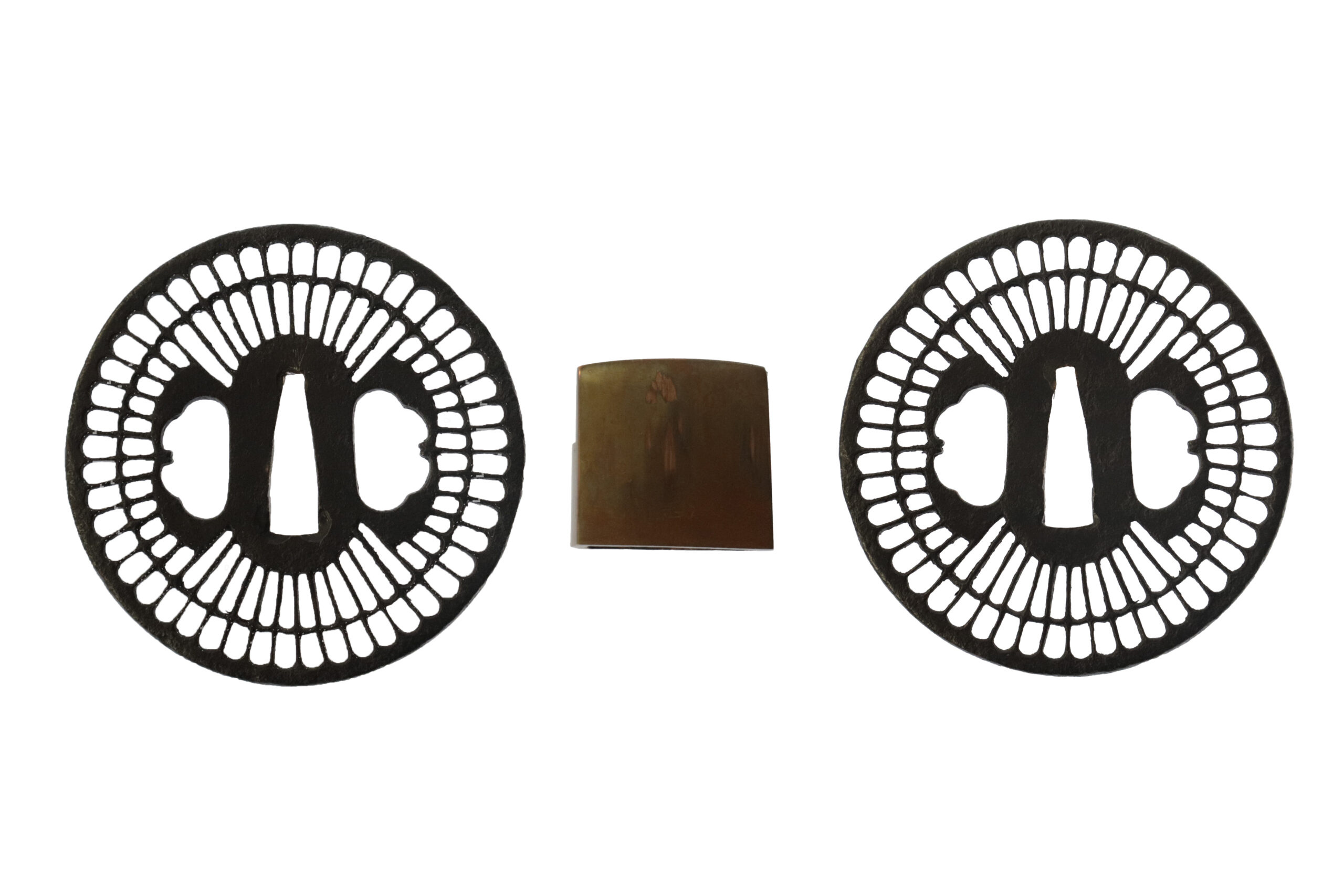
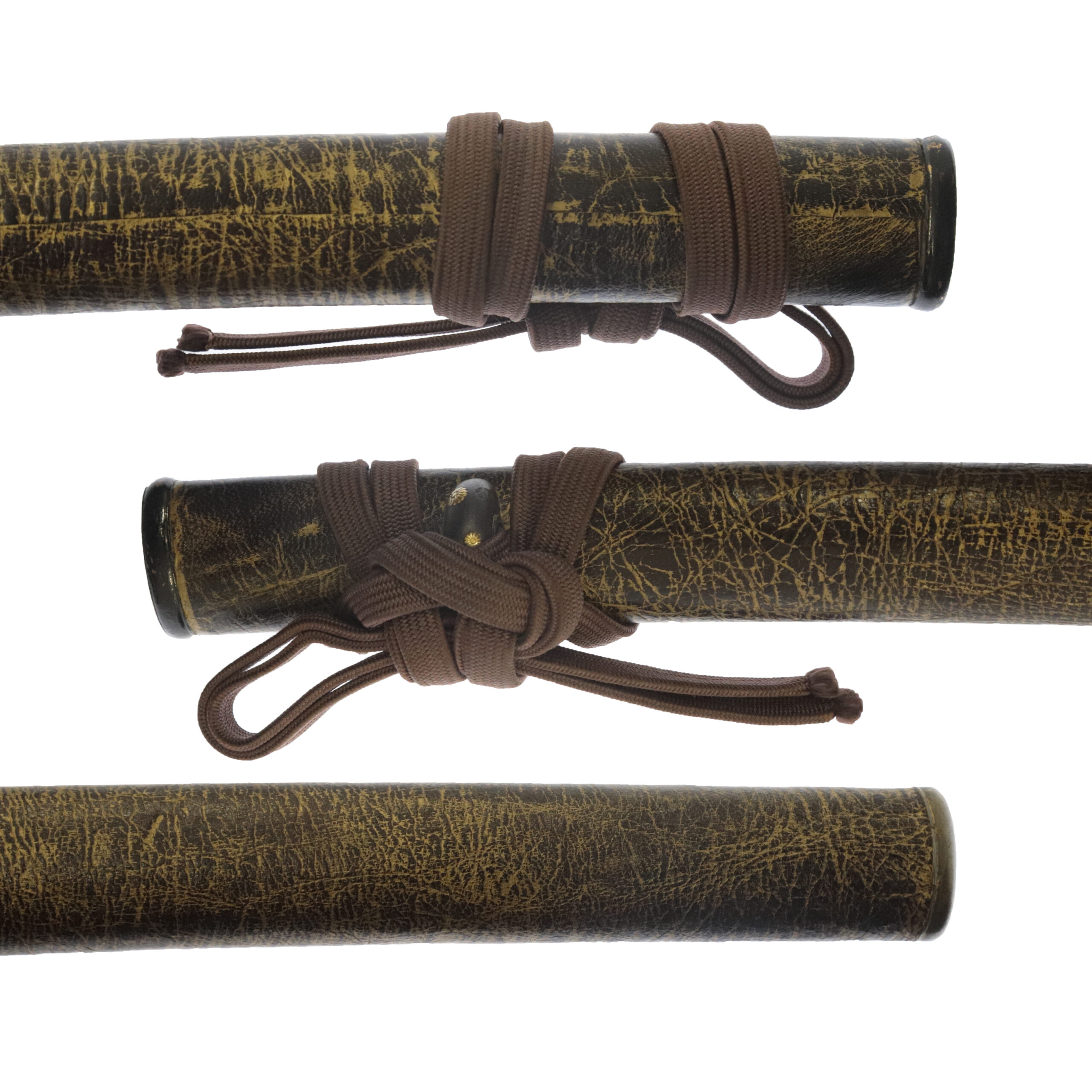
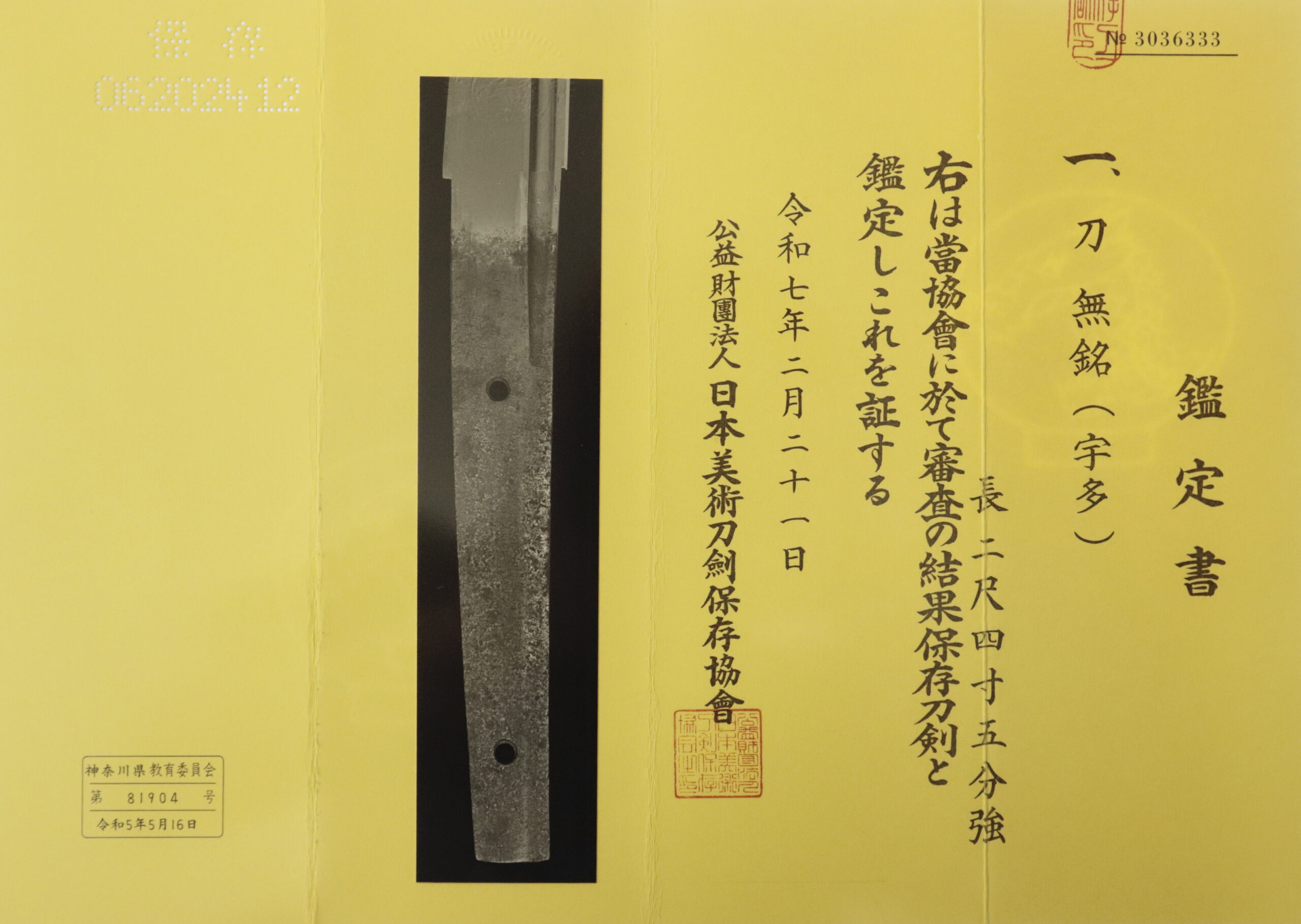
販売店の記載のまま
脇物 · 越中
現在22点販売中
宇多派は、鎌倉時代末期の文保年間(一三一七~一三一九)頃、大和国宇陀郡から越中国に移住した古入道国光を祖とする刀工集団である。国光の子と伝える国房を筆頭に、南北朝時代には国宗、国次、国光と同名が相継いで活躍し、室町時代末期まで栄えた。このうち、南北朝時代を下らぬ作品を特に「古宇多」と汎称している。元来大和国宇陀郡の出身であることから、自然に大和気質の強い作風が多くみられるが、同時に越中の先達である則重や江に倣ったとみられる相州伝風の作品も存在する。 古宇多の作風は、板目に杢目や流れ肌を交え、肌立ちごころとなり、地沸が厚くつき、地景が頻りに入る鍛えに、地鉄が黒みをおび、処々肌目が粕立つ点に北国気質が顕著に表れている。刃文は直刃調に浅く小のたれ、小互の目や小乱れを交え、匂深く沸がよくつき、刃縁がほつれて、金筋や砂流しが頻りにかかり、匂口が沈みごころとなる特色を示す。帽子は小丸に返り、頻りに掃きかけて焼き詰めごころとなるものが多い。一見すると相州上工の作を想わせる覇気に満ちた出来口であるが、黒みをおびた地鉄には北国物特有の肌合いの特色が看て取れ、また刃縁がほつれて砂流しが激しくかかる点に古宇多と鑑すべき要素がある。処々に荒めの沸が交じり、湯走りや打のけ、二重刃風の働きを交えるものもあり、地刃ともに変化に富む。 南北朝時代の典型的な姿を呈し、身幅広く重ね厚く、反りやや深く、中鋒延びごころまたは大鋒となる豪壮な体配のものが多い。地刃ともに健全で、覇気に満ちた出来口を示す作品が多く、同派極めの中でも優品とされるものが数多く残されている。越後中条家伝来の黒漆革巻太刀拵のように、南北朝時代を下らぬ貴重な太刀拵が完存する例も知られている。鎌倉末期から南北朝期にかけての越中における刀工集団として、大和気質と相州伝風を融合させた独自の作風を確立し、後世に大きな影響を与えた。 詳しく見る →
室町時代
室町は刀剣業を産業に変えた。徒歩の集団戦とともに打刀が興り、長船と関は数打ち物と注文打ちを並行して産し、勘合貿易は日本刀を数万振の単位で海外へ運んだ。
銘が正しい、または無銘でも年代・国・系統を確実に指摘できる、保存に値する真正の作と鑑定されたものです。
日本美術刀剣保存協会(日刀保)は、1948年に設立され、文化庁の監督を受ける公益財団法人で、東京・刀剣博物館に本部を置きます。専門の審査員が出品作を直接審査し、美術的・歴史的価値に応じた鑑定書を発行します。日刀保の鑑定書は、日本刀および刀装具の真正性を示す最も広く認知された基準です。
日刀保公式サイトReturns/exchanges limited to defects caused by shipping (except willful misconduct or gross negligence by the company); customers must contact within 72 hours of receiving the product.