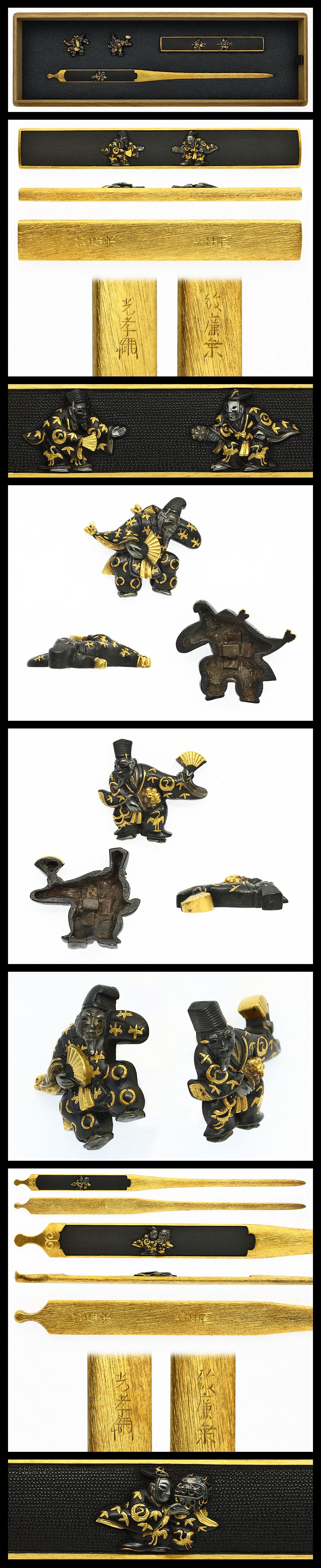
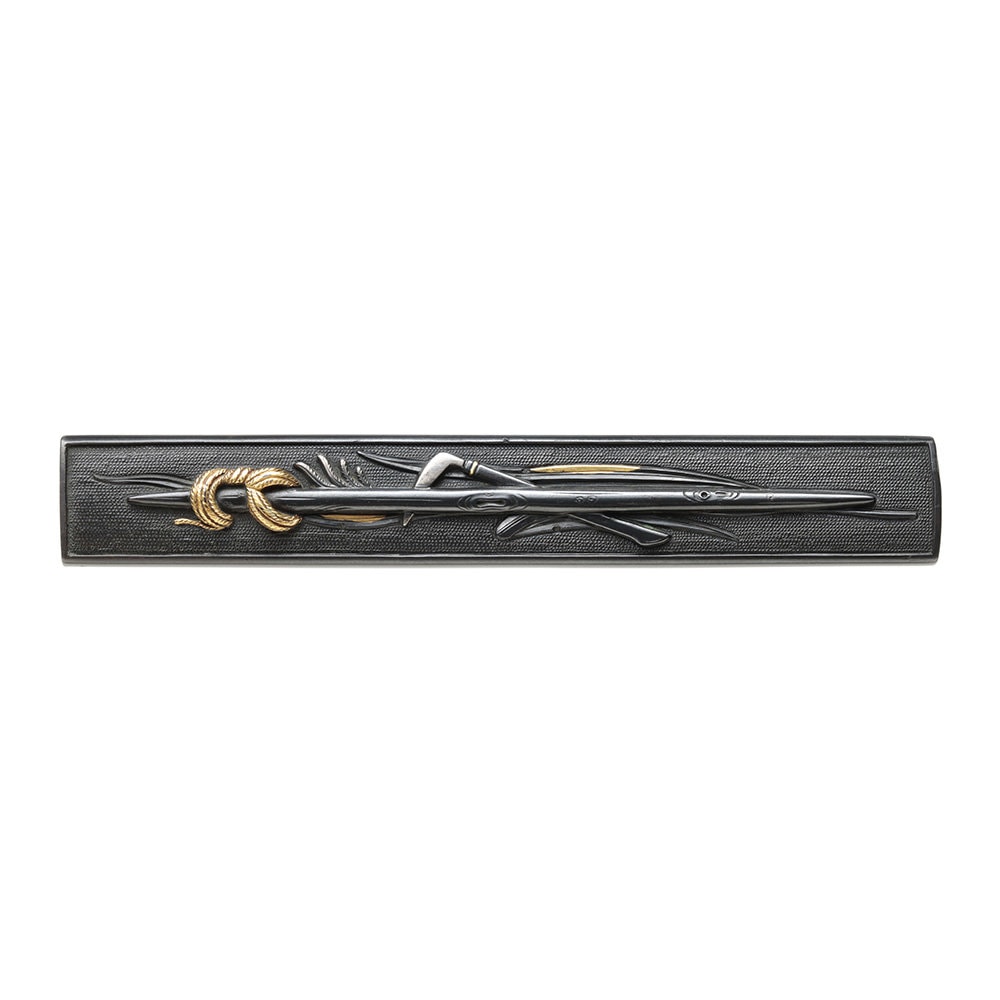
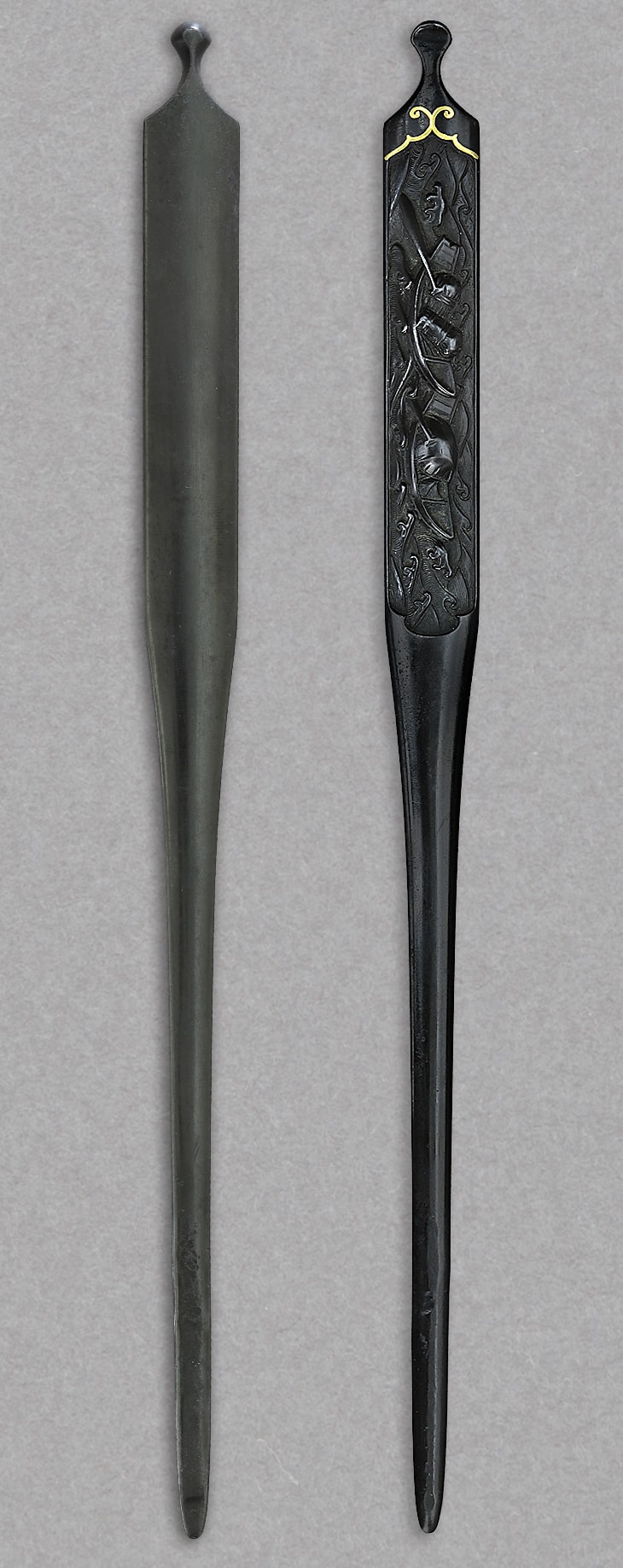
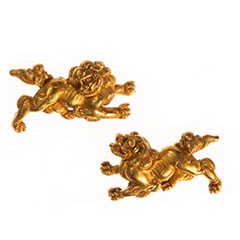
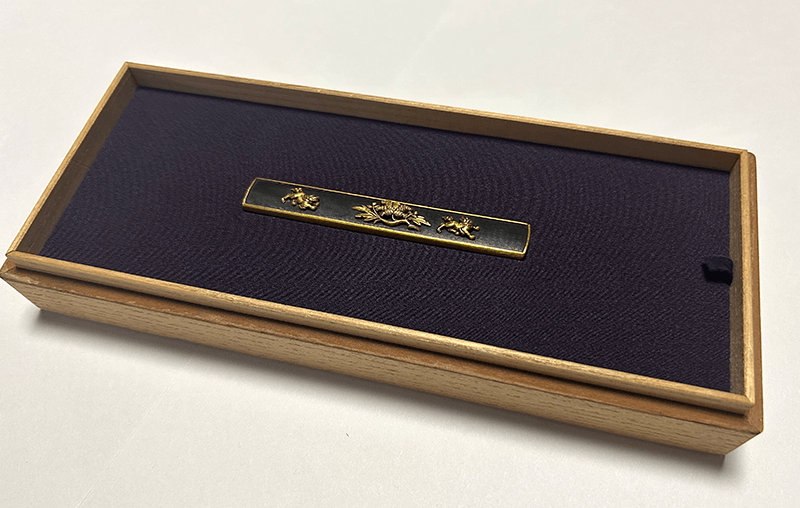
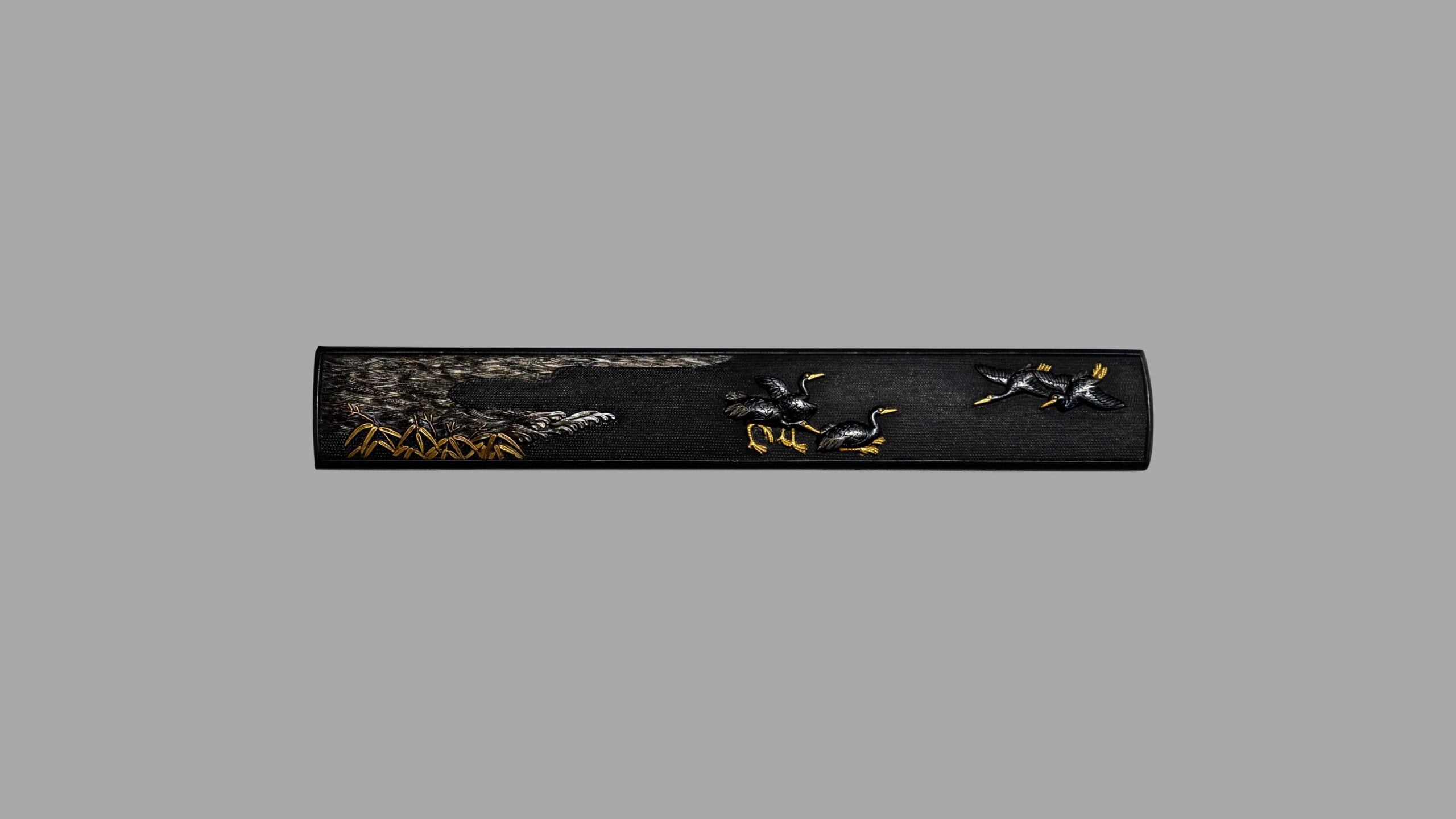
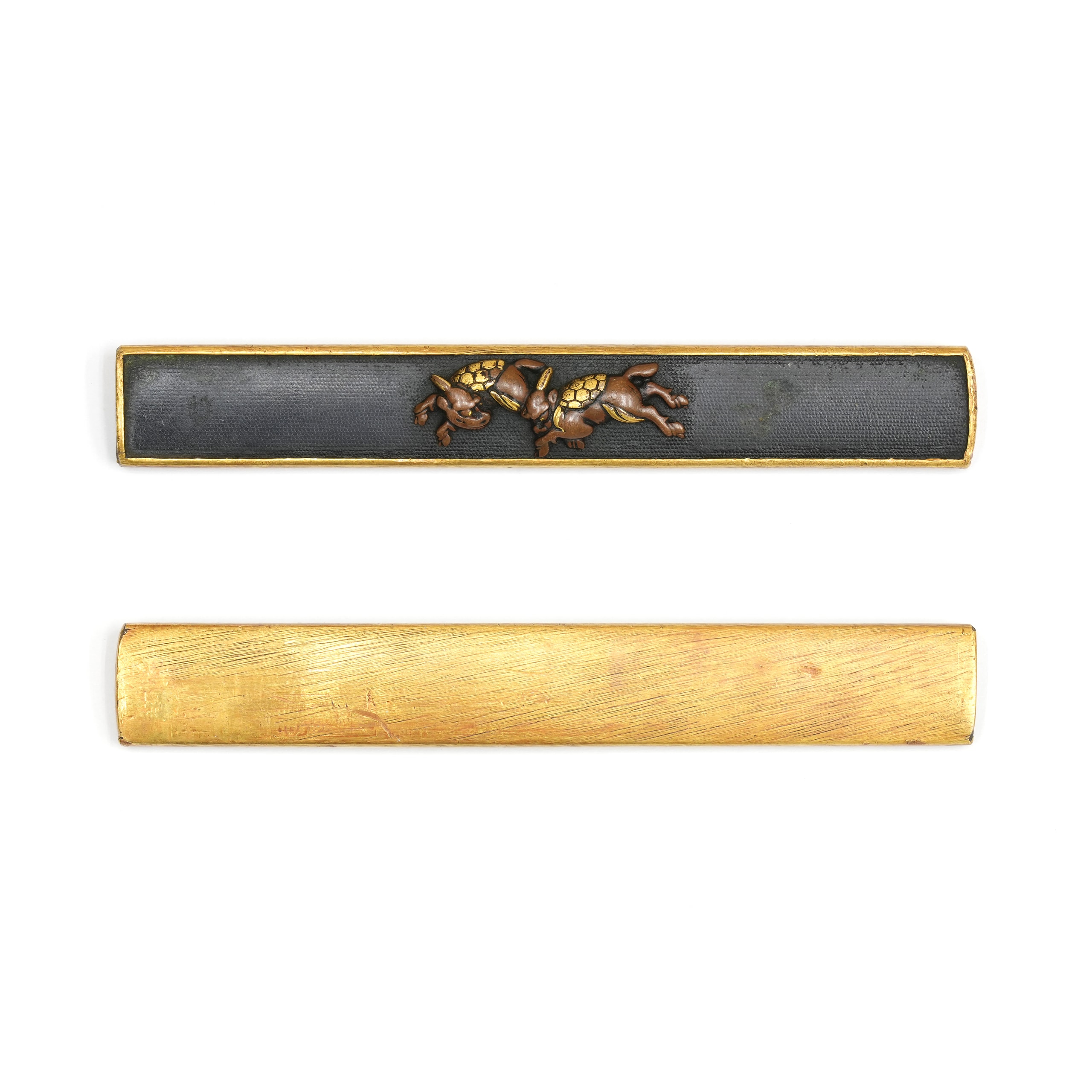
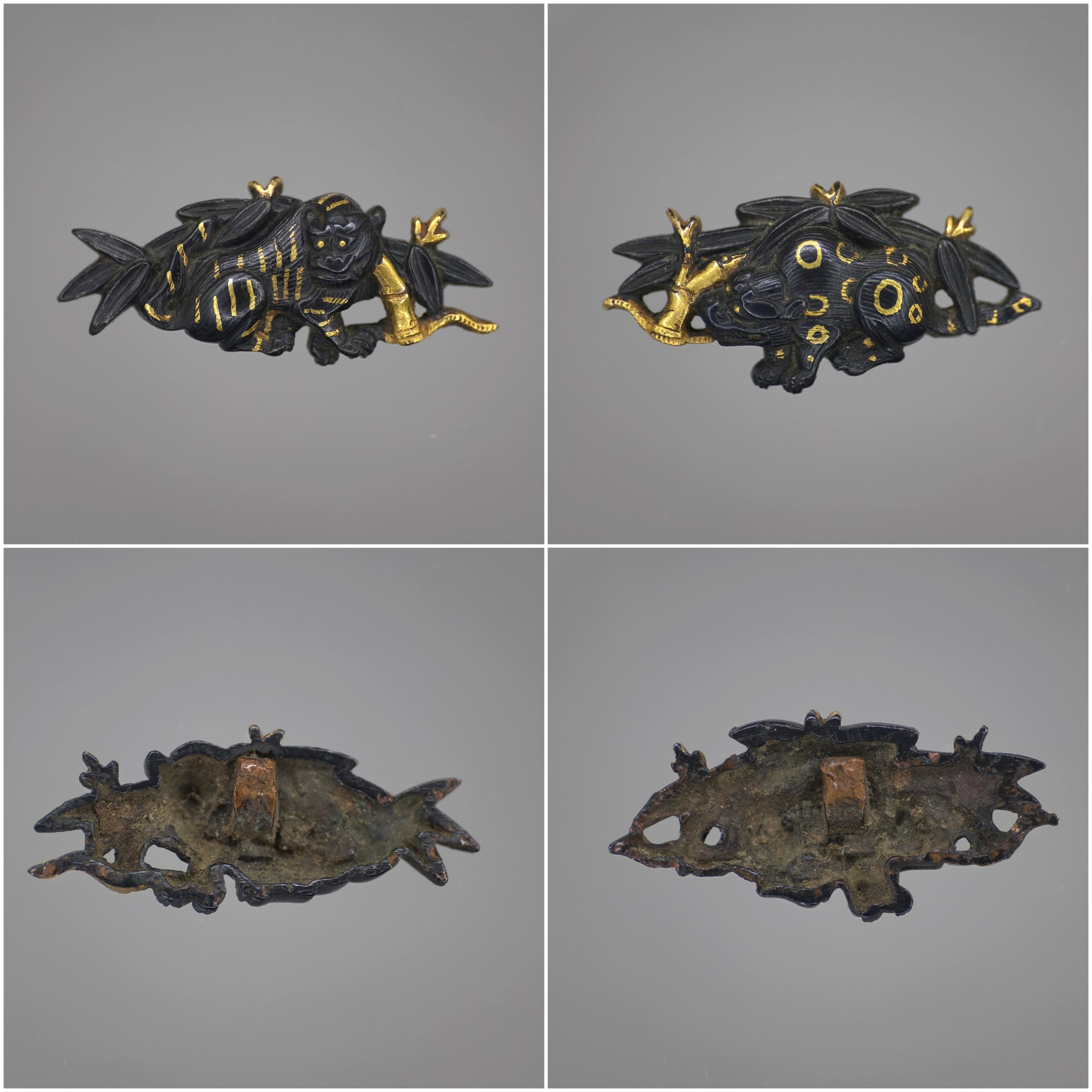
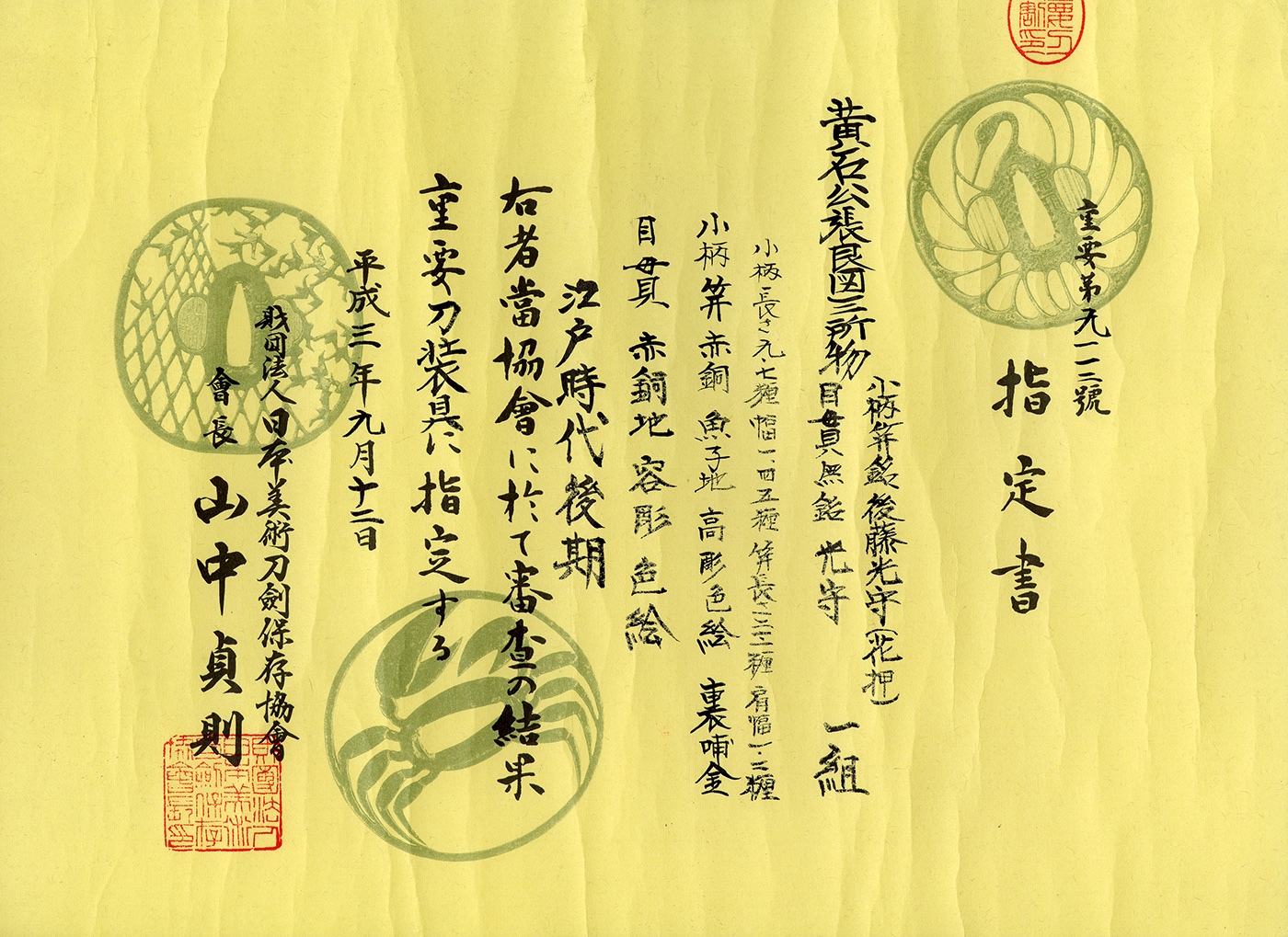
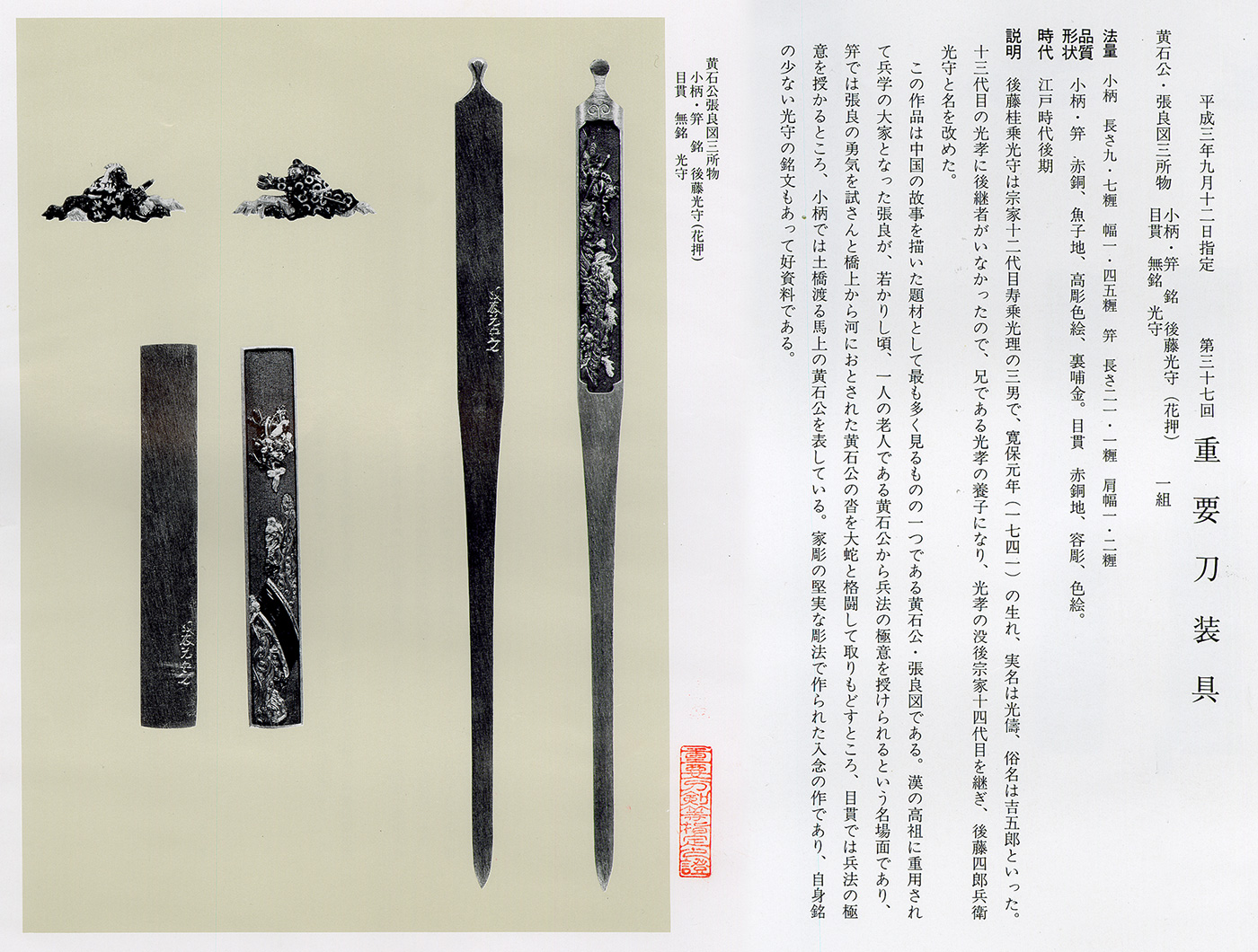
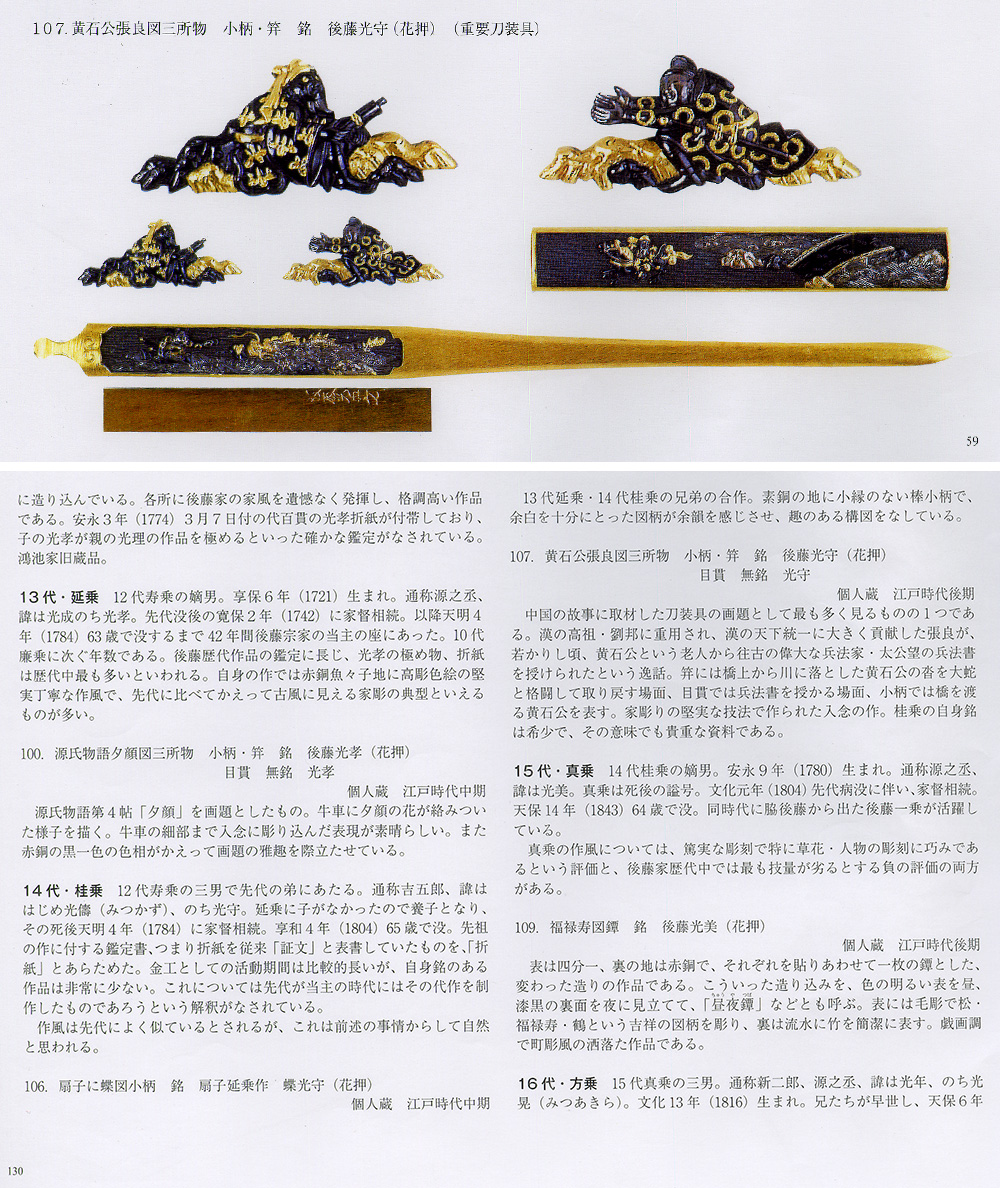
注文番号:F26084 三所物(小柄・笄・目貫):黄石公張良図(第37回重要刀装具) 銘: 小柄・笄:後藤光守(花押) 目貫:無銘(光守帰信) 笄: 長さ:21.5 cm × 1.25 cm 小柄: 長さ:9.75 cm × 1.46 cm 目貫: 1:3.75 cm × 1.57 cm 2:3.74 cm × 1.57 cm 特徴: 赤銅魚子地に黄石公張良の図を高彫(目貫は容彫)とし、色絵を施した三所物です。 説明: 後藤桂乗光守は、後藤家12代寿乗光匡の三男として寛保元年(1741年)に生まれました。本名を光端、通称を吉五郎と称します。 13代延乗光孝に継嗣がなかったため、兄である光孝の養子となり、光孝没後に後藤宗家14代を継承。後藤四郎兵衛光守と改名しました。 本作の題材である「黄石公張良」は、中国の故事に基づいた刀装具の代表的な画題の一つです。後に漢の高祖に仕え軍師として名を馳せる若き日の張良が、老仙人・黄石公から兵法の極意を伝授される場面を描いています。 笄には、黄石公が張良の度量を試すために橋の上から川へ落とした靴を、張良が大蛇と戦いながら拾い上げる劇的な場面が、目貫には張良が兵法書を授かる場面、そして小柄には土橋の上を馬で渡る黄石公の姿が精緻に表現されています。 後藤宗家らしい格調高く堅実な彫り口が際立つ秀作です。光守の在銘品は比較的少なく、資料的価値も極めて高い一揃いといえます。 時代:江戸時代 桐箱入 葵美術鑑定書 重要刀装具指定品
後藤桂乗光守は宗家十二代目寿乗光理の三男で、 寛保元年(一七四一)の生れ、実名は光儔、俗名は吉五郎といった。 十三代目の光孝に後継者がいなかったので、兄である光孝の養子になり、光孝の没後宗家十四代目を継ぎ、後藤四郎兵衛 光守と名を改めた。 この作品は中国の故事を描いた題材として最も多く見るものの一つである黄石公・張良図である。漢の高祖に重用され 兵学の大家となった張良が、若かりし頃、一人の老人である黄石公から兵法の極意を授けられるという名場面であり、 笄では張良の勇気を試さんと橋上から河におとされた黄石公の沓を大蛇と格闘して取りもどすところ、目貫では兵法の極 意を授かるところ、小柄では土橋渡る馬上の黄石公を表している。 家彫の堅実な彫法で作られた入念の作であり、自身銘 の少ない光守の銘文もあって好資料である。
Certificate reading — 銘 小柄 笄 銘 後藤光守(花押) / 目貫 無銘 光守
 NihontoWatch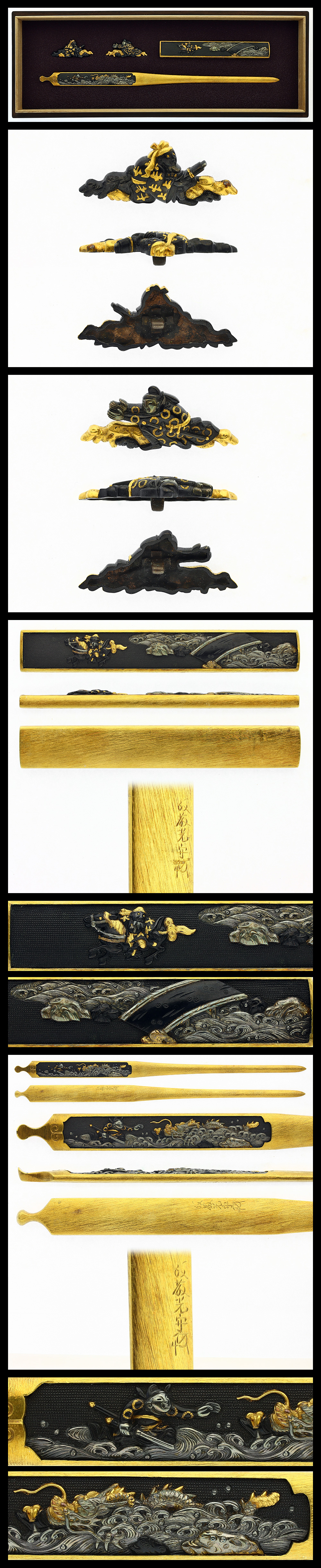
後藤桂乗
江戸
在銘
重要 #37 (NBTHK)
後藤桂乗光守は宗家十二代目寿乗光理の三男で、 寛保元年(一七四一)の生れ、実名は光儔、俗名は吉五郎といった。 十三代目の光孝に後継者がいなかったので、兄である光孝の養子になり、光孝の没後宗家十四代目を継ぎ、後藤四郎兵衛 光守と名を改めた。 この作品は中国の故事を描いた題材として最も多く見るものの一つである黄石公・張良図である。漢の高祖に重用され 兵学の大家となった張良が、若かりし頃、一人の老人である黄石公から兵法の極意を授けられるという名場面であり、 笄では張良の勇気を試さんと橋上から河におとされた黄石公の沓を大蛇と格闘して取りもどすところ、目貫では兵法の極 意を授かるところ、小柄では土橋渡る馬上の黄石公を表している。 家彫の堅実な彫法で作られた入念の作であり、自身銘 の少ない光守の銘文もあって好資料である。
家彫 · 山城 · 1741-1804頃
現在2点販売中
後藤桂乗(諱は光守)は正統後藤家の十四代当主で、十二代寿乗光理の三男、寛保元年(一七四一)の生まれである。実名を光儔、俗名は吉五郎と称した。兄である十三代光孝(延乗)に後継者がいなかったので、その養子となり、光孝歿後に家督を相続して宗家十四代目となり、名を四郎兵衛光守と改めた。その子が十五代真乗光美である。自身銘を切る当主で、諱を冠した「後藤光守(花押)」と読み、目貫では同じ諱が無銘ながら彼の作と極められる。その画題は、家の正格の倶利迦羅・宝尽に中国故事の黄石公・張良図、麒麟図や蝶図の薩摩拵金具、さらに富嶽図のような絵風のものまでを、正統の赤銅魚子地の家地に濃やかで肉置の良い彫口に運ぶ。自身銘の作は少なく、その代表作に数えられる。説明は、自身銘の少ない光守の銘文は好資料であるとする。極めを行う当主の一人として、その裸の光名「光守」が上代の品を極めた極め銘にも現れ、彼自身の自身銘の作と区別しなければならない。
後藤桂乗の位置づけを、日本刀全体および伝統・時代・時期ごとに示します。各位(随一・屈指・有数・著名)は、NBTHK および文化庁による指定に加え、三作や名物帳などの歴史的栄誉を加味したものです。
各項目を選ぶと評価方法が表示されます。
家彫 · 山城
時期区分: 後藤宗家· 1573–1900
現在325点販売中
特別保存刀剣の中から、特に出来が優れ、国認定の重要美術品に準ずると判断された名品です。年に一度の重要刀剣審査で選ばれます。
極めて選別的で、日本に登録された約250万口の刀剣のうち、重要刀剣に達したものは12,307口(約203口に1口)にすぎません。
日本美術刀剣保存協会(NBTHK)は、1948年に設立され、文化庁の監督を受ける公益財団法人で、東京・刀剣博物館に本部を置きます。専門の審査員が出品作を直接審査し、美術的・歴史的価値に応じた鑑定書を発行します。NBTHKの鑑定書は、日本刀および刀装具の真正性を示す最も広く認知された基準です。
NBTHK公式サイト返品をご希望の場合、お客様が受領されてから3日以内にお知らせください。この期間を過ぎますとキャンセルはお受けできかねますので何卒ご了承ください。なお当社へのご返送は、5営業日以内の発送をお願いしております。なおキャンセルは販売した当時の状態がそのまま保持されている事が条件となりますのでお取り扱いには十分ご注意下さい。
¥3,500,000
注文番号:F26084 三所物(小柄・笄・目貫):黄石公張良図(第37回重要刀装具) 銘: 小柄・笄:後藤光守(花押) 目貫:無銘(光守帰信) 笄: 長さ:21.5 cm × 1.25 cm 小柄: 長さ:9.75 cm × 1.46 cm 目貫: 1:3.75 cm × 1.57 cm 2:3.74 cm × 1.57 cm 特徴: 赤銅魚子地に黄石公張良の図を高彫(目貫は容彫)とし、色絵を施した三所物です。 説明: 後藤桂乗光守は、後藤家12代寿乗光匡の三男として寛保元年(1741年)に生まれました。本名を光端、通称を吉五郎と称します。 13代延乗光孝に継嗣がなかったため、兄である光孝の養子となり、光孝没後に後藤宗家14代を継承。後藤四郎兵衛光守と改名しました。 本作の題材である「黄石公張良」は、中国の故事に基づいた刀装具の代表的な画題の一つです。後に漢の高祖に仕え軍師として名を馳せる若き日の張良が、老仙人・黄石公から兵法の極意を伝授される場面を描いています。 笄には、黄石公が張良の度量を試すために橋の上から川へ落とした靴を、張良が大蛇と戦いながら拾い上げる劇的な場面が、目貫には張良が兵法書を授かる場面、そして小柄には土橋の上を馬で渡る黄石公の姿が精緻に表現されています。 後藤宗家らしい格調高く堅実な彫り口が際立つ秀作です。光守の在銘品は比較的少なく、資料的価値も極めて高い一揃いといえます。 時代:江戸時代 桐箱入 葵美術鑑定書 重要刀装具指定品
後藤桂乗光守は宗家十二代目寿乗光理の三男で、 寛保元年(一七四一)の生れ、実名は光儔、俗名は吉五郎といった。 十三代目の光孝に後継者がいなかったので、兄である光孝の養子になり、光孝の没後宗家十四代目を継ぎ、後藤四郎兵衛 光守と名を改めた。 この作品は中国の故事を描いた題材として最も多く見るものの一つである黄石公・張良図である。漢の高祖に重用され 兵学の大家となった張良が、若かりし頃、一人の老人である黄石公から兵法の極意を授けられるという名場面であり、 笄では張良の勇気を試さんと橋上から河におとされた黄石公の沓を大蛇と格闘して取りもどすところ、目貫では兵法の極 意を授かるところ、小柄では土橋渡る馬上の黄石公を表している。 家彫の堅実な彫法で作られた入念の作であり、自身銘 の少ない光守の銘文もあって好資料である。
Certificate reading — 銘 小柄 笄 銘 後藤光守(花押) / 目貫 無銘 光守
NihontoWatch後藤桂乗
江戸
在銘
重要 #37 (NBTHK)
後藤桂乗光守は宗家十二代目寿乗光理の三男で、 寛保元年(一七四一)の生れ、実名は光儔、俗名は吉五郎といった。 十三代目の光孝に後継者がいなかったので、兄である光孝の養子になり、光孝の没後宗家十四代目を継ぎ、後藤四郎兵衛 光守と名を改めた。 この作品は中国の故事を描いた題材として最も多く見るものの一つである黄石公・張良図である。漢の高祖に重用され 兵学の大家となった張良が、若かりし頃、一人の老人である黄石公から兵法の極意を授けられるという名場面であり、 笄では張良の勇気を試さんと橋上から河におとされた黄石公の沓を大蛇と格闘して取りもどすところ、目貫では兵法の極 意を授かるところ、小柄では土橋渡る馬上の黄石公を表している。 家彫の堅実な彫法で作られた入念の作であり、自身銘 の少ない光守の銘文もあって好資料である。
家彫 · 山城 · 1741-1804頃
現在2点販売中
後藤桂乗(諱は光守)は正統後藤家の十四代当主で、十二代寿乗光理の三男、寛保元年(一七四一)の生まれである。実名を光儔、俗名は吉五郎と称した。兄である十三代光孝(延乗)に後継者がいなかったので、その養子となり、光孝歿後に家督を相続して宗家十四代目となり、名を四郎兵衛光守と改めた。その子が十五代真乗光美である。自身銘を切る当主で、諱を冠した「後藤光守(花押)」と読み、目貫では同じ諱が無銘ながら彼の作と極められる。その画題は、家の正格の倶利迦羅・宝尽に中国故事の黄石公・張良図、麒麟図や蝶図の薩摩拵金具、さらに富嶽図のような絵風のものまでを、正統の赤銅魚子地の家地に濃やかで肉置の良い彫口に運ぶ。自身銘の作は少なく、その代表作に数えられる。説明は、自身銘の少ない光守の銘文は好資料であるとする。極めを行う当主の一人として、その裸の光名「光守」が上代の品を極めた極め銘にも現れ、彼自身の自身銘の作と区別しなければならない。
後藤桂乗の位置づけを、日本刀全体および伝統・時代・時期ごとに示します。各位(随一・屈指・有数・著名)は、NBTHK および文化庁による指定に加え、三作や名物帳などの歴史的栄誉を加味したものです。
各項目を選ぶと評価方法が表示されます。
家彫 · 山城
時期区分: 後藤宗家· 1573–1900
現在325点販売中
特別保存刀剣の中から、特に出来が優れ、国認定の重要美術品に準ずると判断された名品です。年に一度の重要刀剣審査で選ばれます。
極めて選別的で、日本に登録された約250万口の刀剣のうち、重要刀剣に達したものは12,307口(約203口に1口)にすぎません。
日本美術刀剣保存協会(NBTHK)は、1948年に設立され、文化庁の監督を受ける公益財団法人で、東京・刀剣博物館に本部を置きます。専門の審査員が出品作を直接審査し、美術的・歴史的価値に応じた鑑定書を発行します。NBTHKの鑑定書は、日本刀および刀装具の真正性を示す最も広く認知された基準です。
NBTHK公式サイト返品をご希望の場合、お客様が受領されてから3日以内にお知らせください。この期間を過ぎますとキャンセルはお受けできかねますので何卒ご了承ください。なお当社へのご返送は、5営業日以内の発送をお願いしております。なおキャンセルは販売した当時の状態がそのまま保持されている事が条件となりますのでお取り扱いには十分ご注意下さい。
¥3,500,000