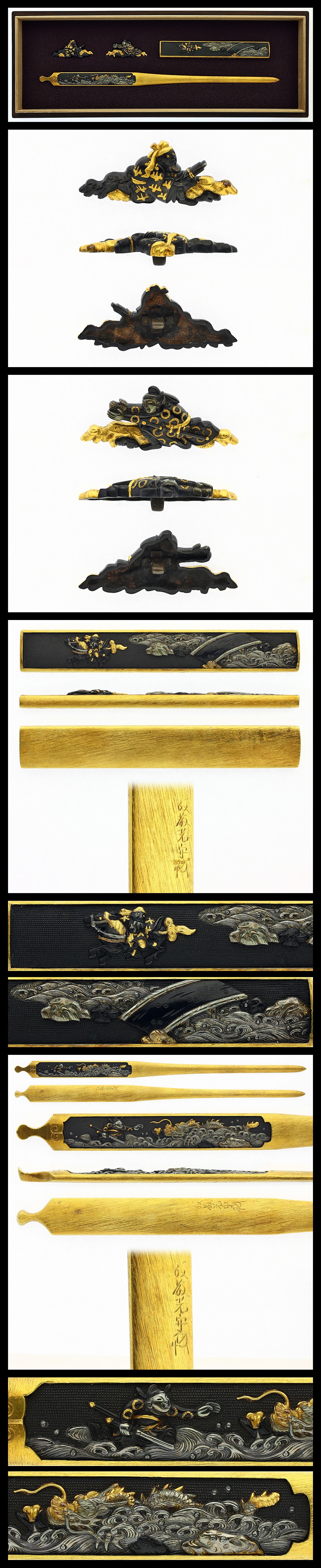
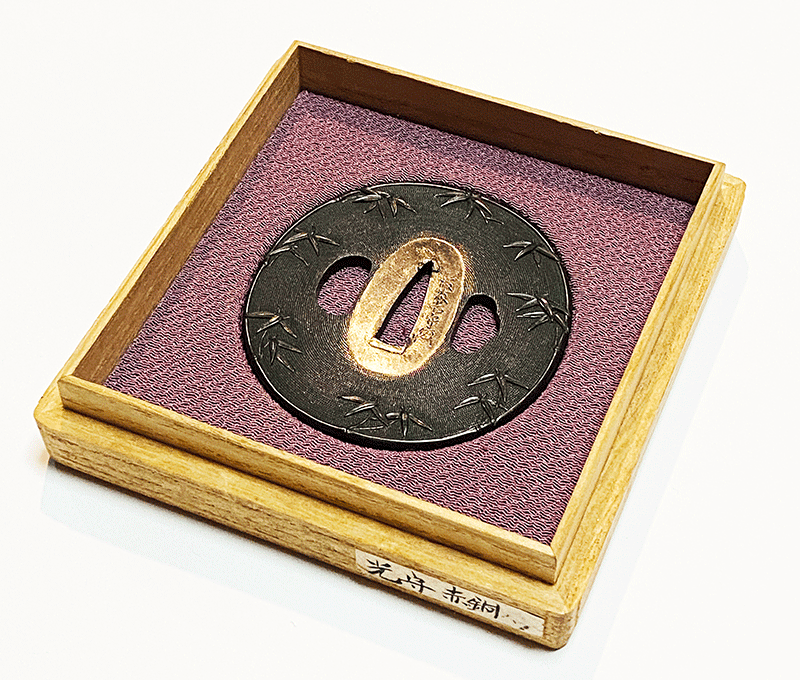
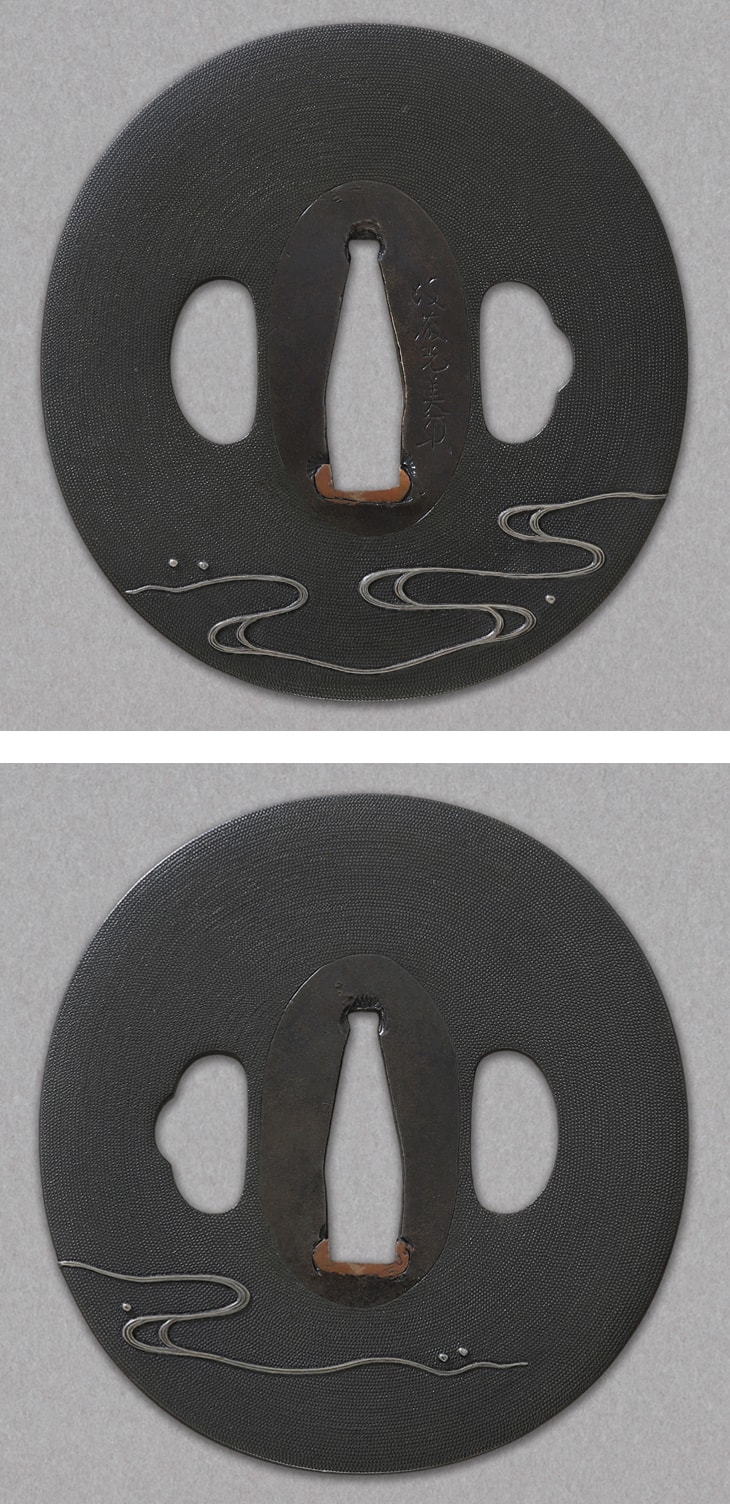
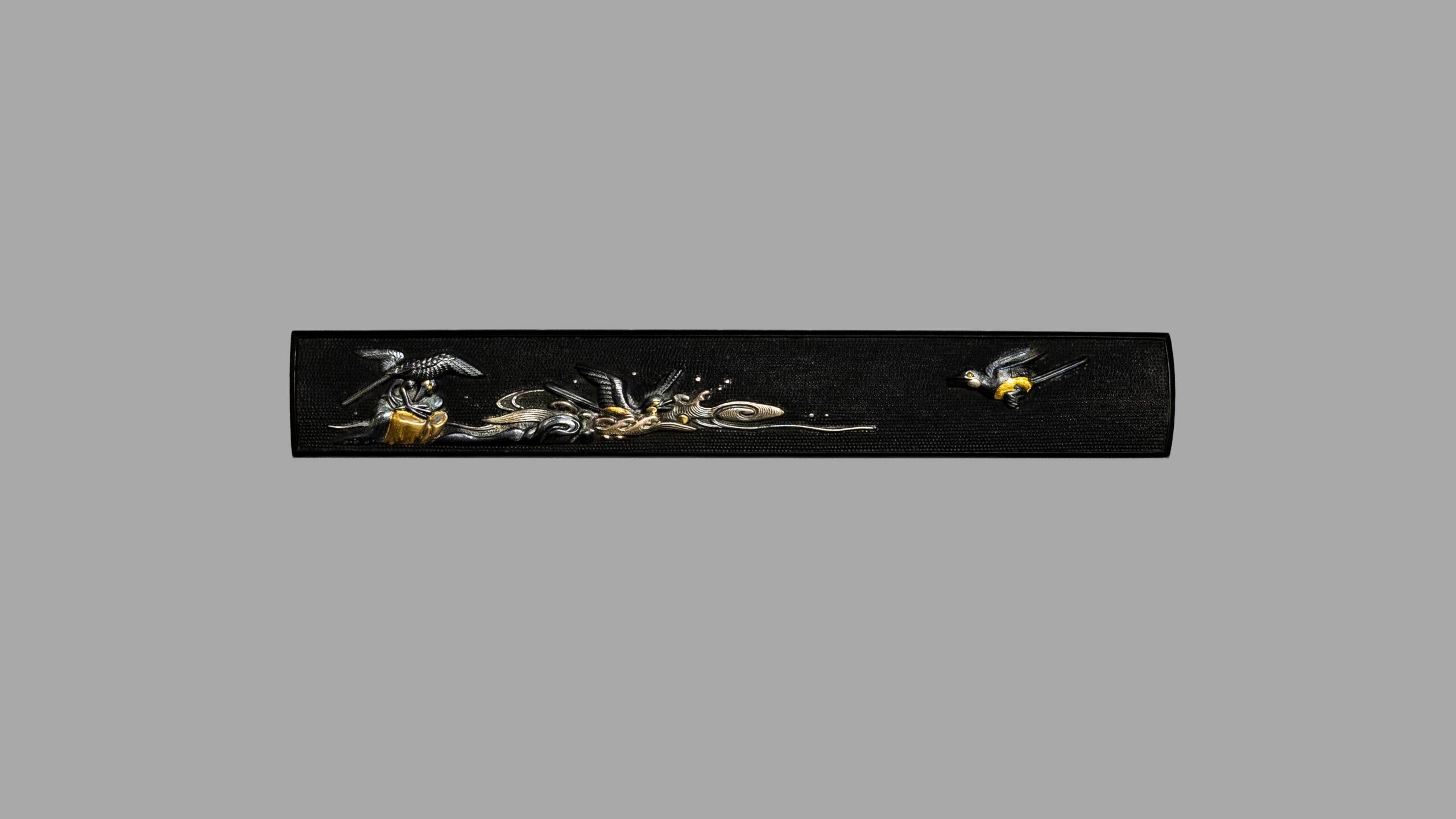
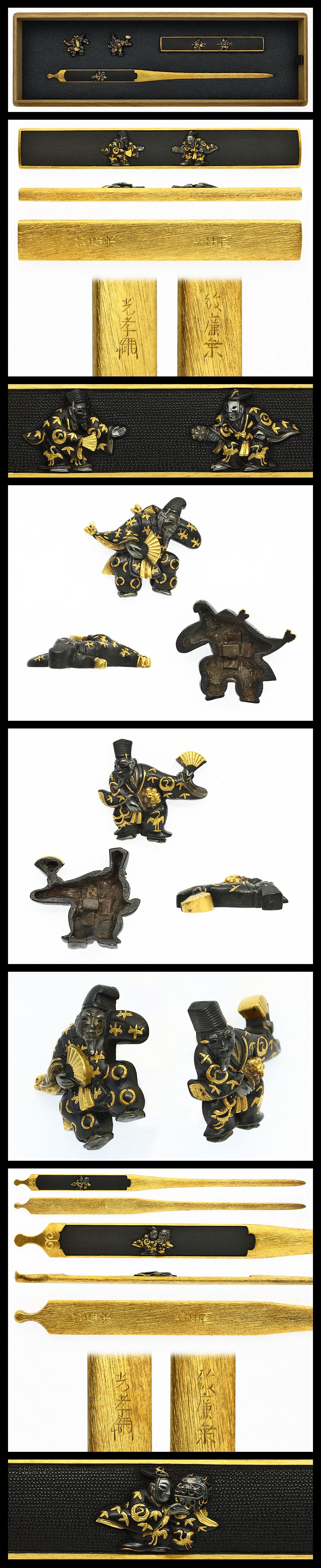
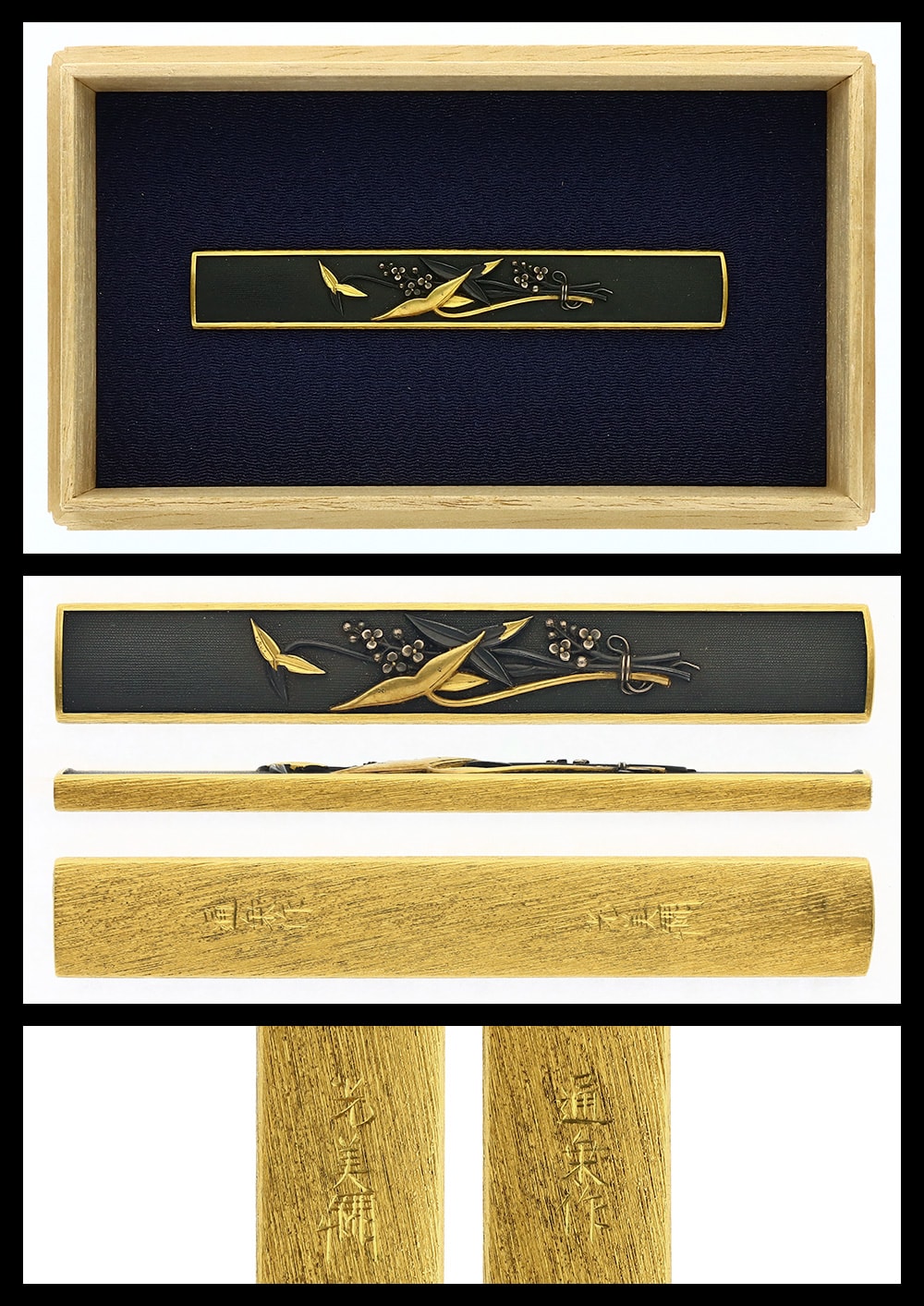
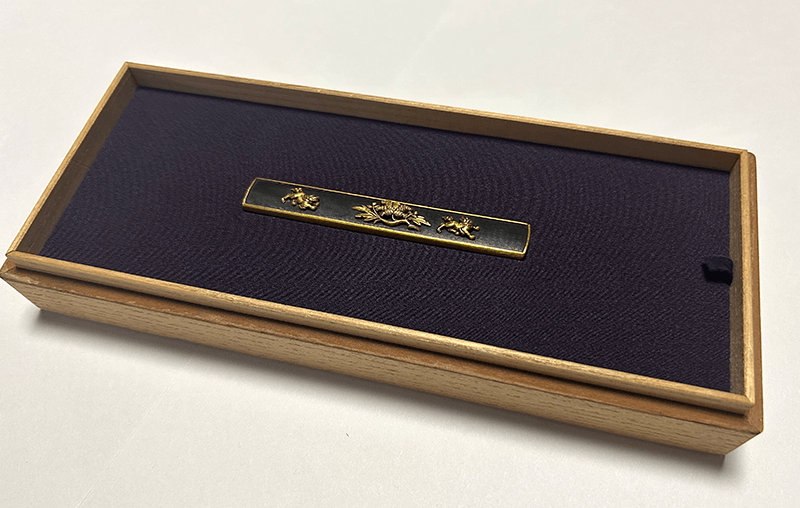
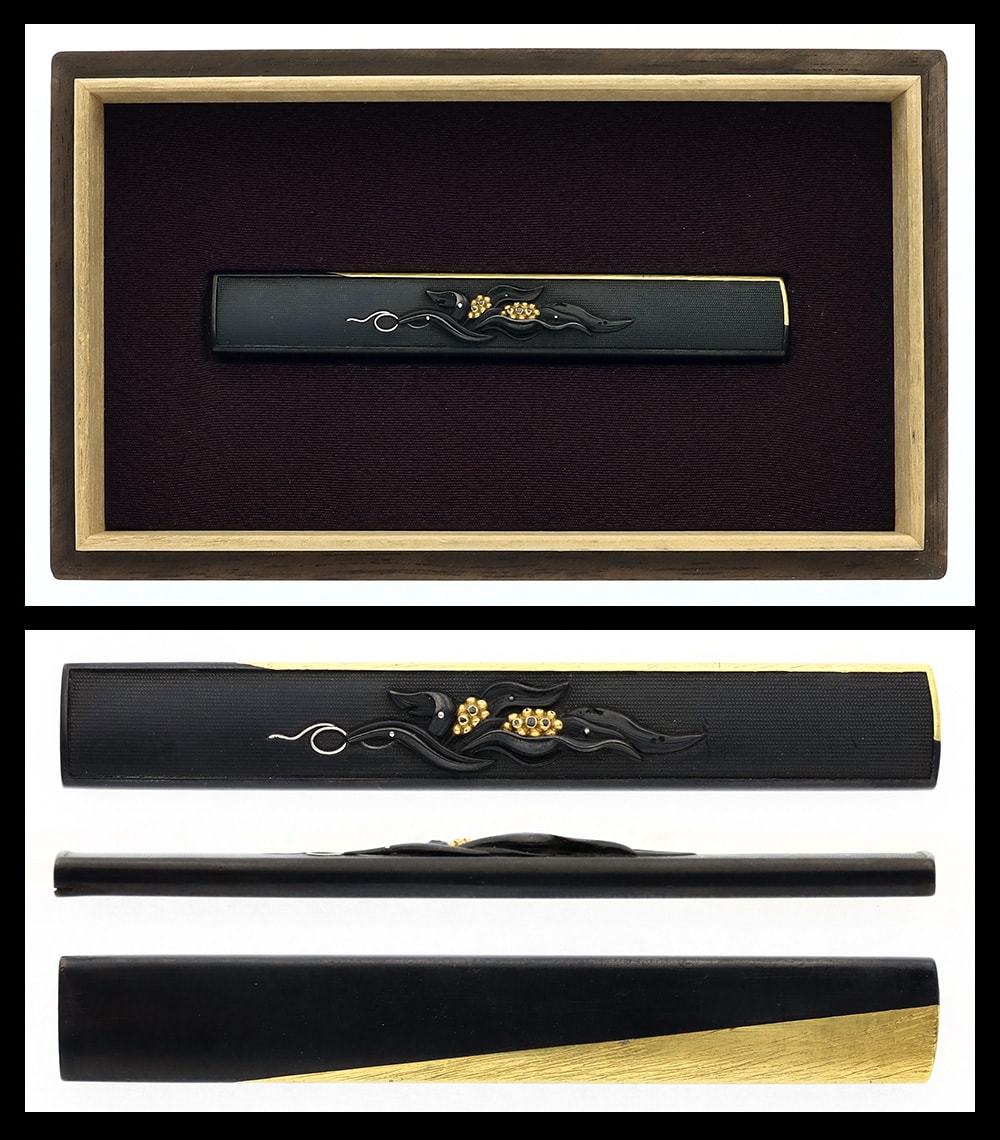
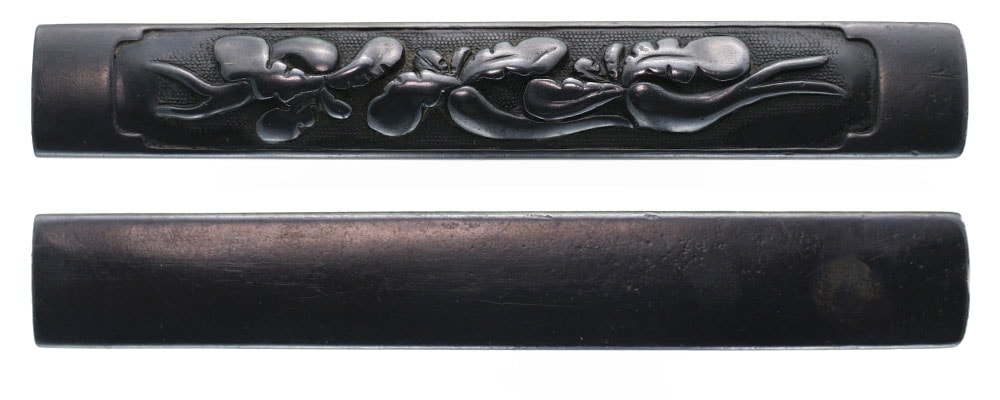
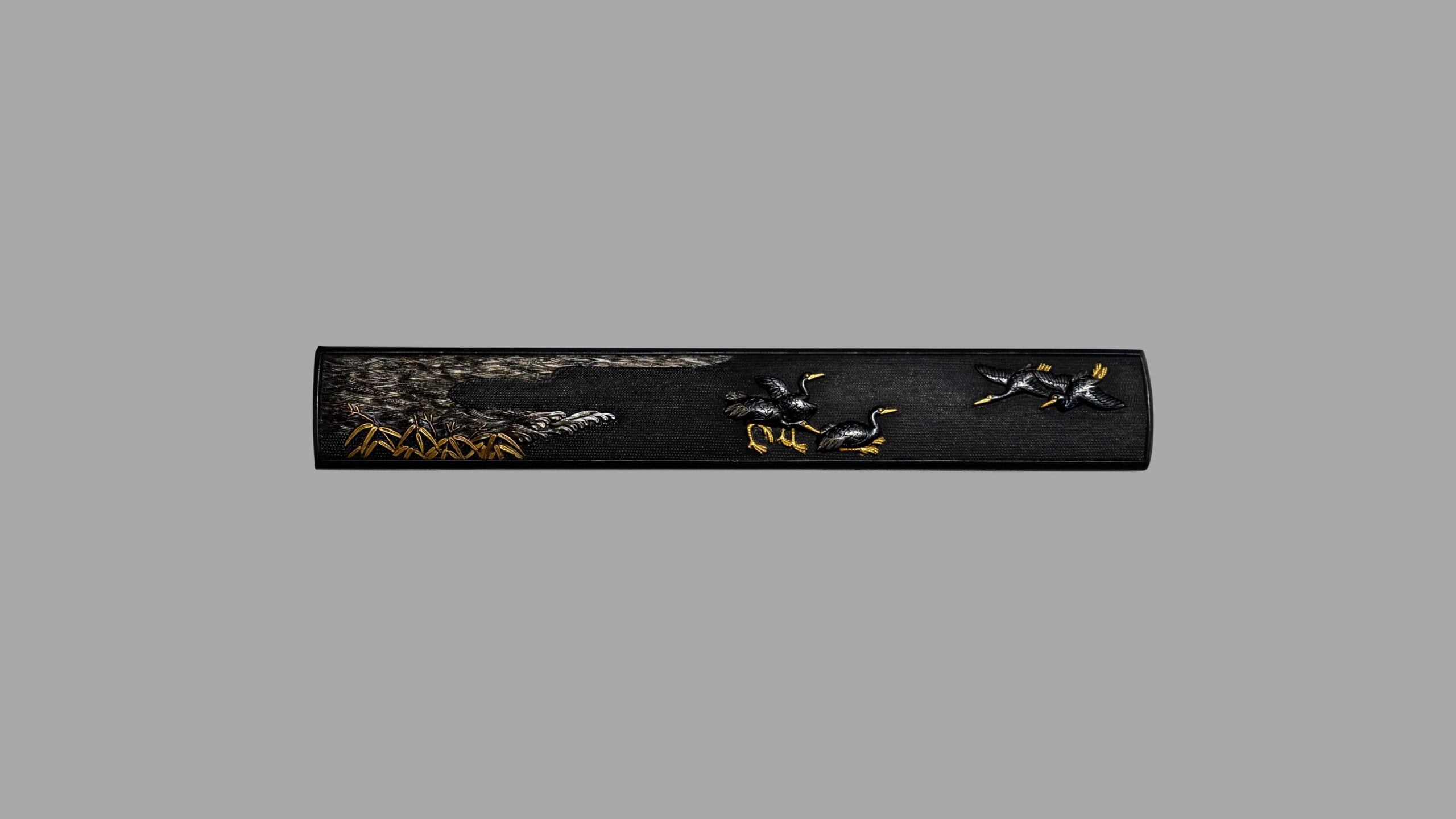
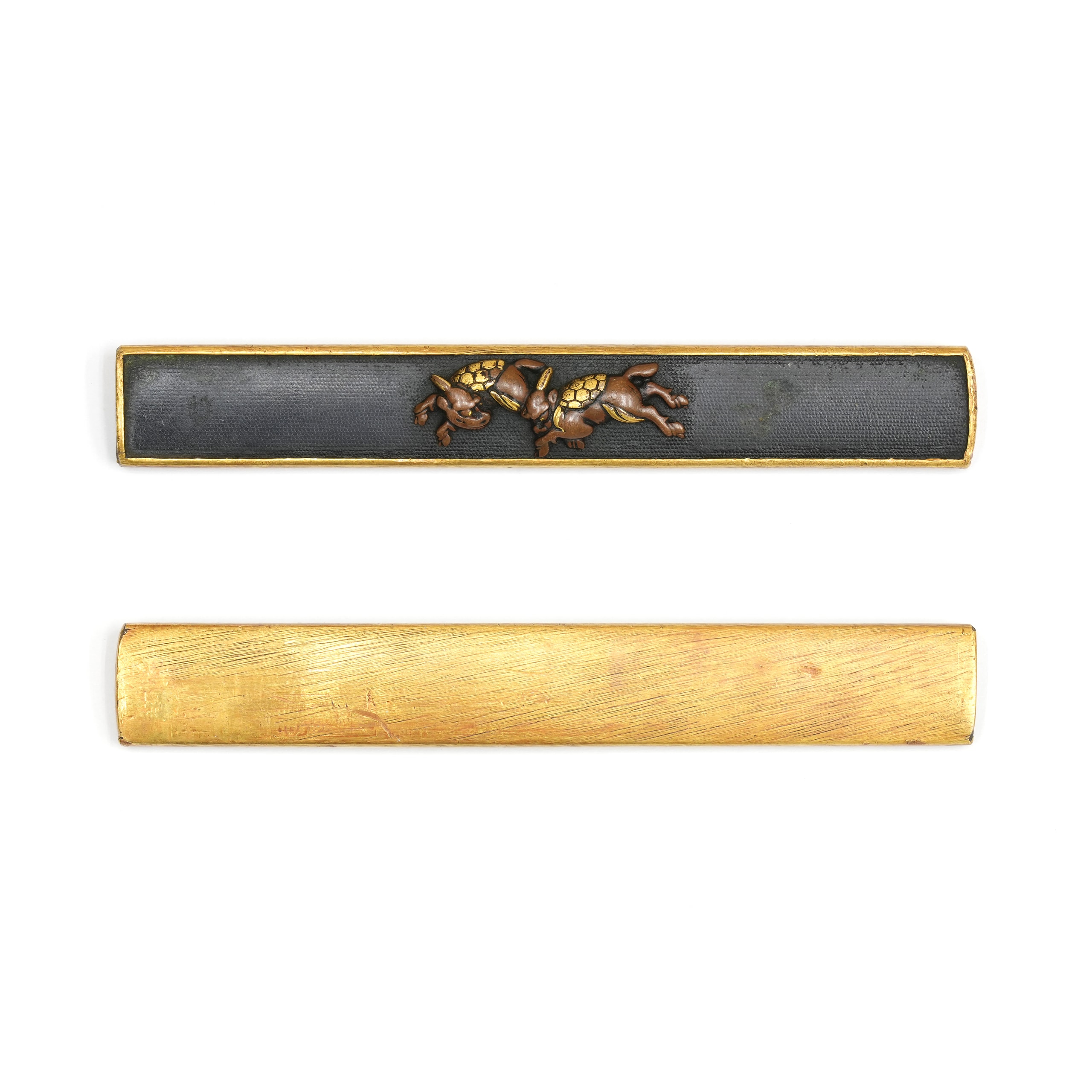
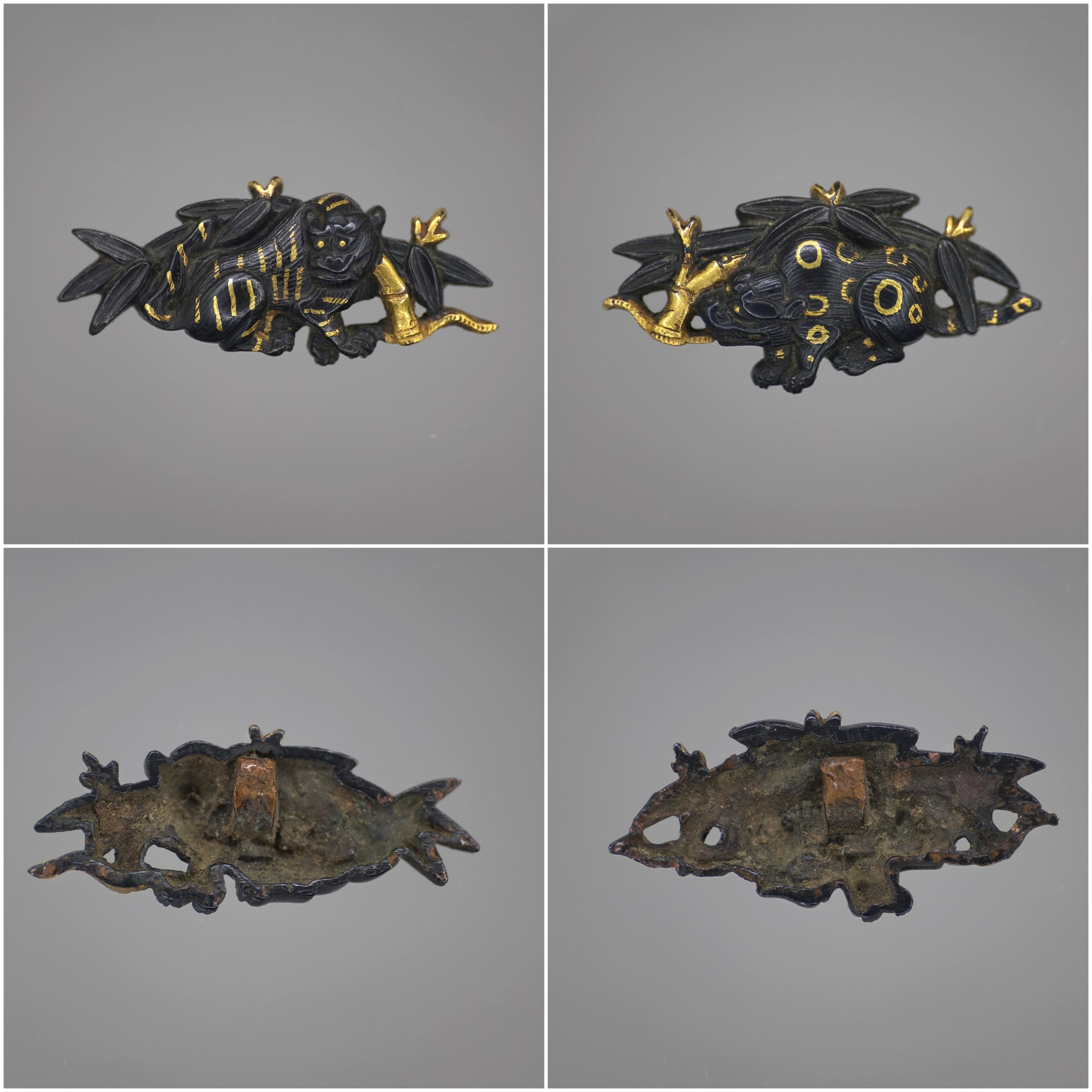
Ginza Choshuya 東京都中央区銀座3-10-4 月–土 9:30–17:30 late Edo period / Edo city, Musashi province 後藤宗家十四代光守は光理の子で元文五年に江戸京橋に生まれた。はじめ光儔と銘し、明和八年に兄光孝の養子となり、天明四年に宗家の家督を相続している。後藤家の伝統的な作風に加え、特別な注文によるものであろう縁頭の製作や町彫風の瀟洒な作品をも遺している。この縁頭が良い例で、下地は赤銅地を浮かび上がらせる性の良い朧銀地。綺麗に揃った魚子地に仕上げ、くっきりと彫り出した孔雀の身体は赤銅に金の色絵、背景の笹はすっきりとした彫口で、要所に施された金の色絵も鮮やか。
 NihontoWatch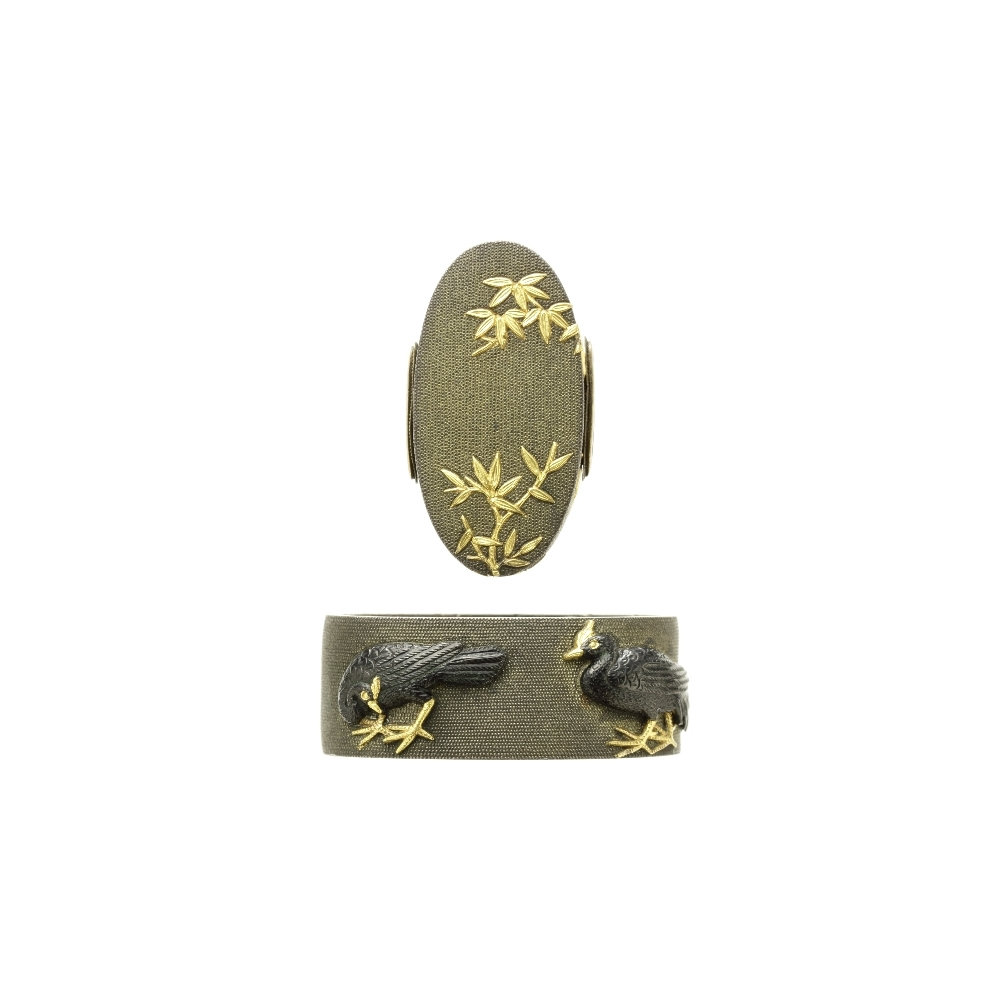
後藤
江戸
武蔵
在銘
保存 (NBTHK)
家彫 · 山城 · 1741-1804頃
現在2点販売中
後藤桂乗(諱は光守)は正統後藤家の十四代当主で、十二代寿乗光理の三男、寛保元年(一七四一)の生まれである。実名を光儔、俗名は吉五郎と称した。兄である十三代光孝(延乗)に後継者がいなかったので、その養子となり、光孝歿後に家督を相続して宗家十四代目となり、名を四郎兵衛光守と改めた。その子が十五代真乗光美である。自身銘を切る当主で、諱を冠した「後藤光守(花押)」と読み、目貫では同じ諱が無銘ながら彼の作と極められる。その画題は、家の正格の倶利迦羅・宝尽に中国故事の黄石公・張良図、麒麟図や蝶図の薩摩拵金具、さらに富嶽図のような絵風のものまでを、正統の赤銅魚子地の家地に濃やかで肉置の良い彫口に運ぶ。自身銘の作は少なく、その代表作に数えられる。説明は、自身銘の少ない光守の銘文は好資料であるとする。極めを行う当主の一人として、その裸の光名「光守」が上代の品を極めた極め銘にも現れ、彼自身の自身銘の作と区別しなければならない。
後藤桂乗の位置づけを、日本刀全体および伝統・時代・時期ごとに示します。各位(随一・屈指・有数・著名)は、NBTHK および文化庁による指定に加え、三作や名物帳などの歴史的栄誉を加味したものです。
各項目を選ぶと評価方法が表示されます。
家彫 · 山城
時期区分: 後藤宗家· 1573–1900
現在325点販売中
銘が正しい、または無銘でも年代・流派を指摘でき、美術工芸的価値が認められる、保存に値する真正の刀装具と鑑定されたものです。
日本美術刀剣保存協会(NBTHK)は、1948年に設立され、文化庁の監督を受ける公益財団法人で、東京・刀剣博物館に本部を置きます。専門の審査員が出品作を直接審査し、美術的・歴史的価値に応じた鑑定書を発行します。NBTHKの鑑定書は、日本刀および刀装具の真正性を示す最も広く認知された基準です。
NBTHK公式サイト弊社の過失により、本来の状態と著しく異なる場合には商品の返品が可能です。クーリングオフは商品到着後一週間以内です。
Ginza Choshuya 東京都中央区銀座3-10-4 月–土 9:30–17:30 late Edo period / Edo city, Musashi province 後藤宗家十四代光守は光理の子で元文五年に江戸京橋に生まれた。はじめ光儔と銘し、明和八年に兄光孝の養子となり、天明四年に宗家の家督を相続している。後藤家の伝統的な作風に加え、特別な注文によるものであろう縁頭の製作や町彫風の瀟洒な作品をも遺している。この縁頭が良い例で、下地は赤銅地を浮かび上がらせる性の良い朧銀地。綺麗に揃った魚子地に仕上げ、くっきりと彫り出した孔雀の身体は赤銅に金の色絵、背景の笹はすっきりとした彫口で、要所に施された金の色絵も鮮やか。
NihontoWatch後藤
江戸
武蔵
在銘
保存 (NBTHK)
家彫 · 山城 · 1741-1804頃
現在2点販売中
後藤桂乗(諱は光守)は正統後藤家の十四代当主で、十二代寿乗光理の三男、寛保元年(一七四一)の生まれである。実名を光儔、俗名は吉五郎と称した。兄である十三代光孝(延乗)に後継者がいなかったので、その養子となり、光孝歿後に家督を相続して宗家十四代目となり、名を四郎兵衛光守と改めた。その子が十五代真乗光美である。自身銘を切る当主で、諱を冠した「後藤光守(花押)」と読み、目貫では同じ諱が無銘ながら彼の作と極められる。その画題は、家の正格の倶利迦羅・宝尽に中国故事の黄石公・張良図、麒麟図や蝶図の薩摩拵金具、さらに富嶽図のような絵風のものまでを、正統の赤銅魚子地の家地に濃やかで肉置の良い彫口に運ぶ。自身銘の作は少なく、その代表作に数えられる。説明は、自身銘の少ない光守の銘文は好資料であるとする。極めを行う当主の一人として、その裸の光名「光守」が上代の品を極めた極め銘にも現れ、彼自身の自身銘の作と区別しなければならない。
後藤桂乗の位置づけを、日本刀全体および伝統・時代・時期ごとに示します。各位(随一・屈指・有数・著名)は、NBTHK および文化庁による指定に加え、三作や名物帳などの歴史的栄誉を加味したものです。
各項目を選ぶと評価方法が表示されます。
家彫 · 山城
時期区分: 後藤宗家· 1573–1900
現在325点販売中
銘が正しい、または無銘でも年代・流派を指摘でき、美術工芸的価値が認められる、保存に値する真正の刀装具と鑑定されたものです。
日本美術刀剣保存協会(NBTHK)は、1948年に設立され、文化庁の監督を受ける公益財団法人で、東京・刀剣博物館に本部を置きます。専門の審査員が出品作を直接審査し、美術的・歴史的価値に応じた鑑定書を発行します。NBTHKの鑑定書は、日本刀および刀装具の真正性を示す最も広く認知された基準です。
NBTHK公式サイト弊社の過失により、本来の状態と著しく異なる場合には商品の返品が可能です。クーリングオフは商品到着後一週間以内です。