説明
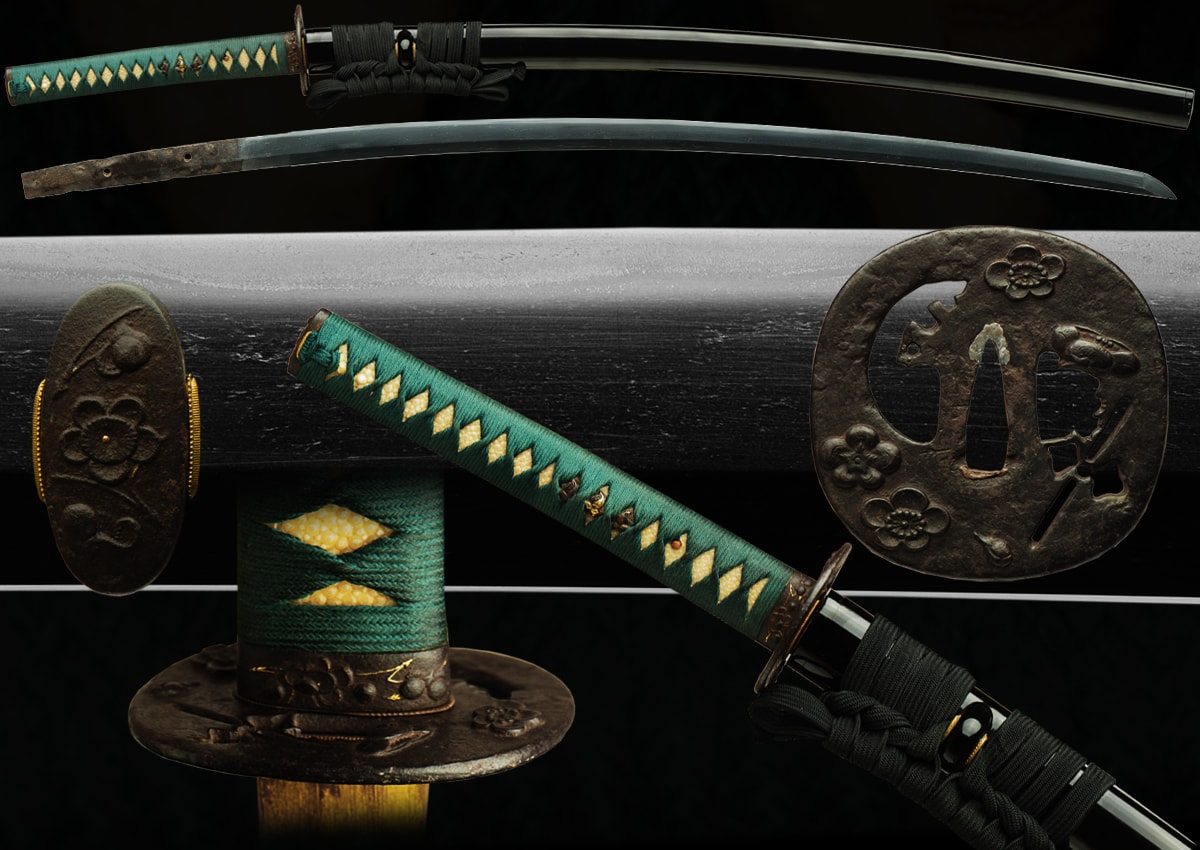
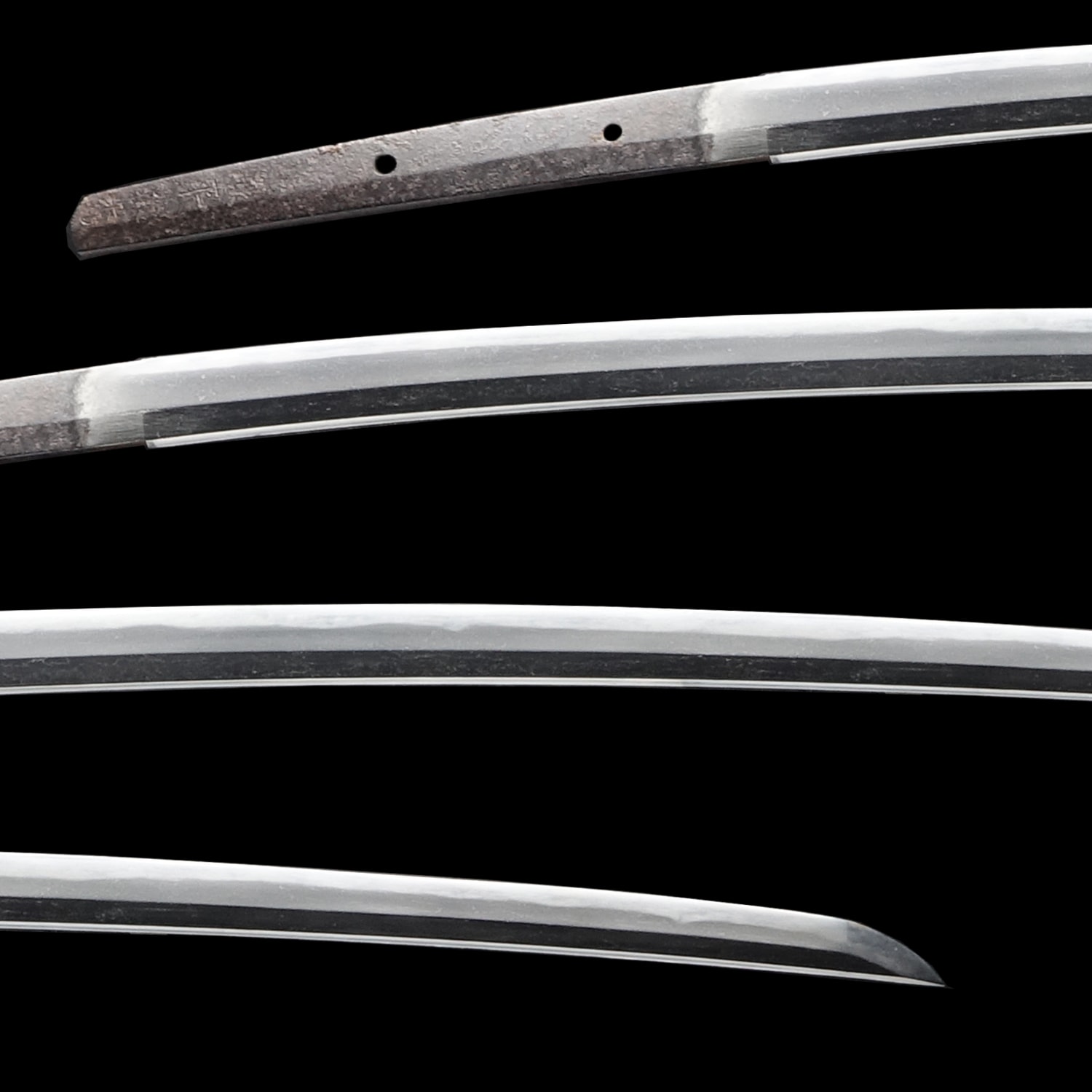
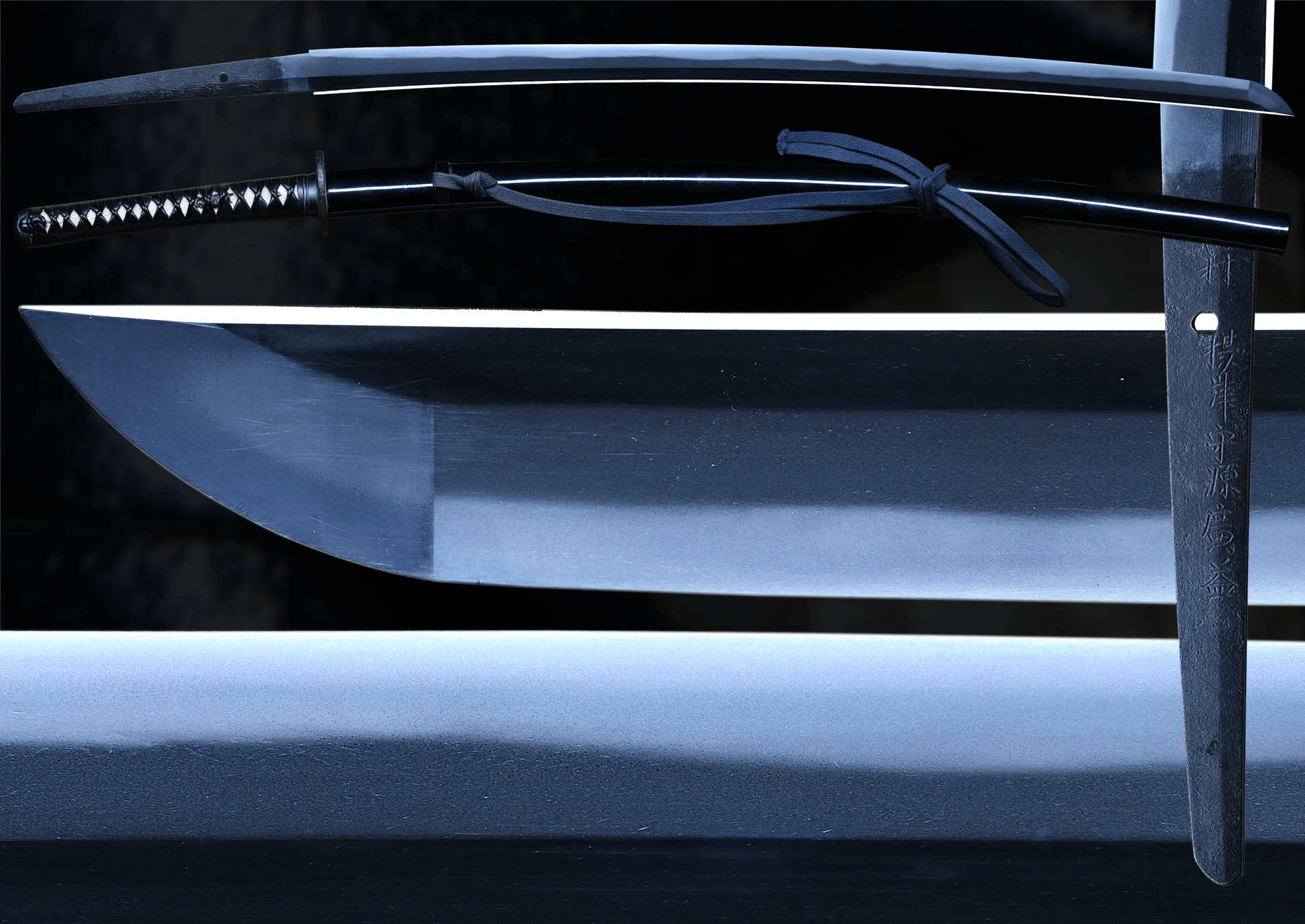
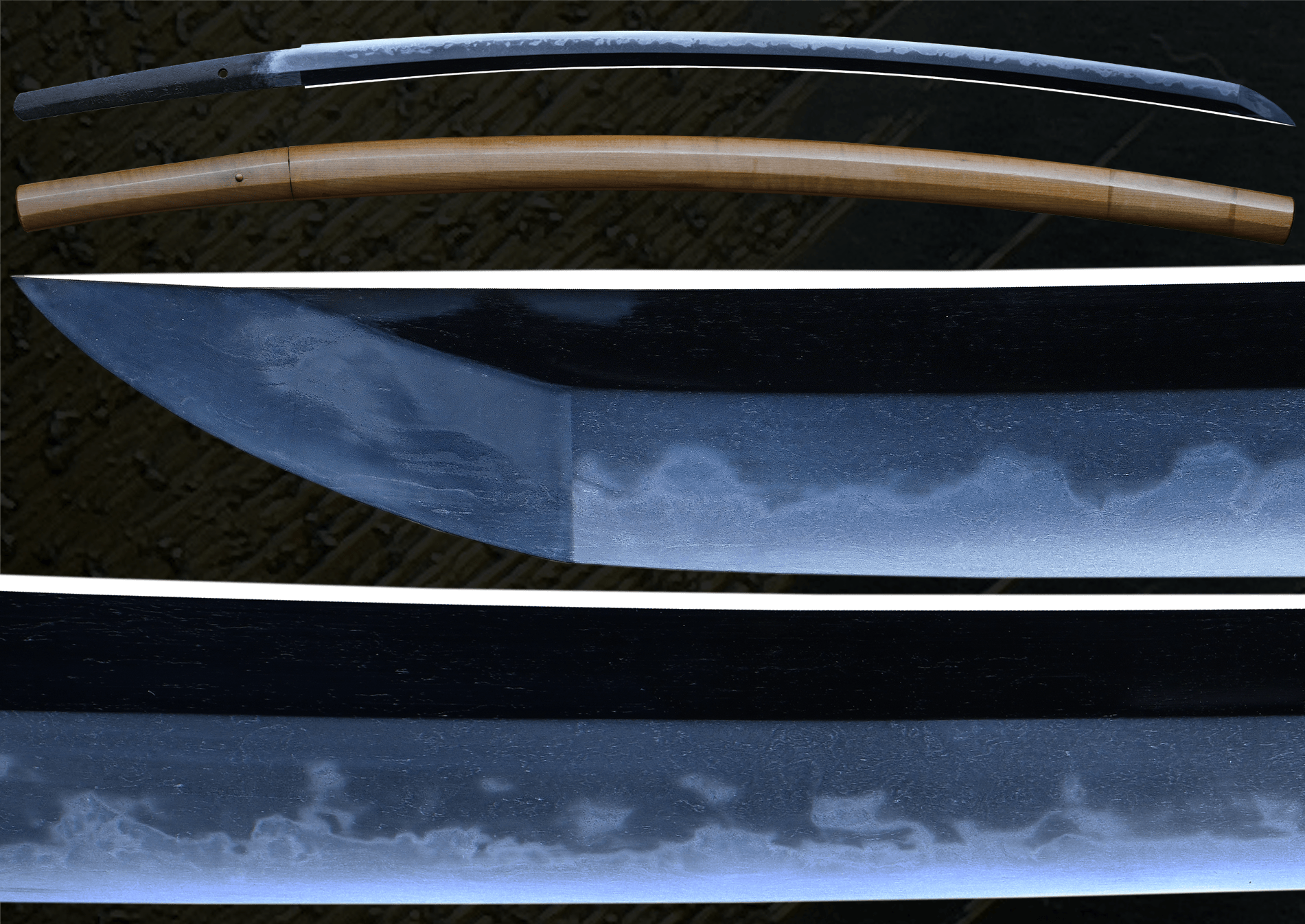
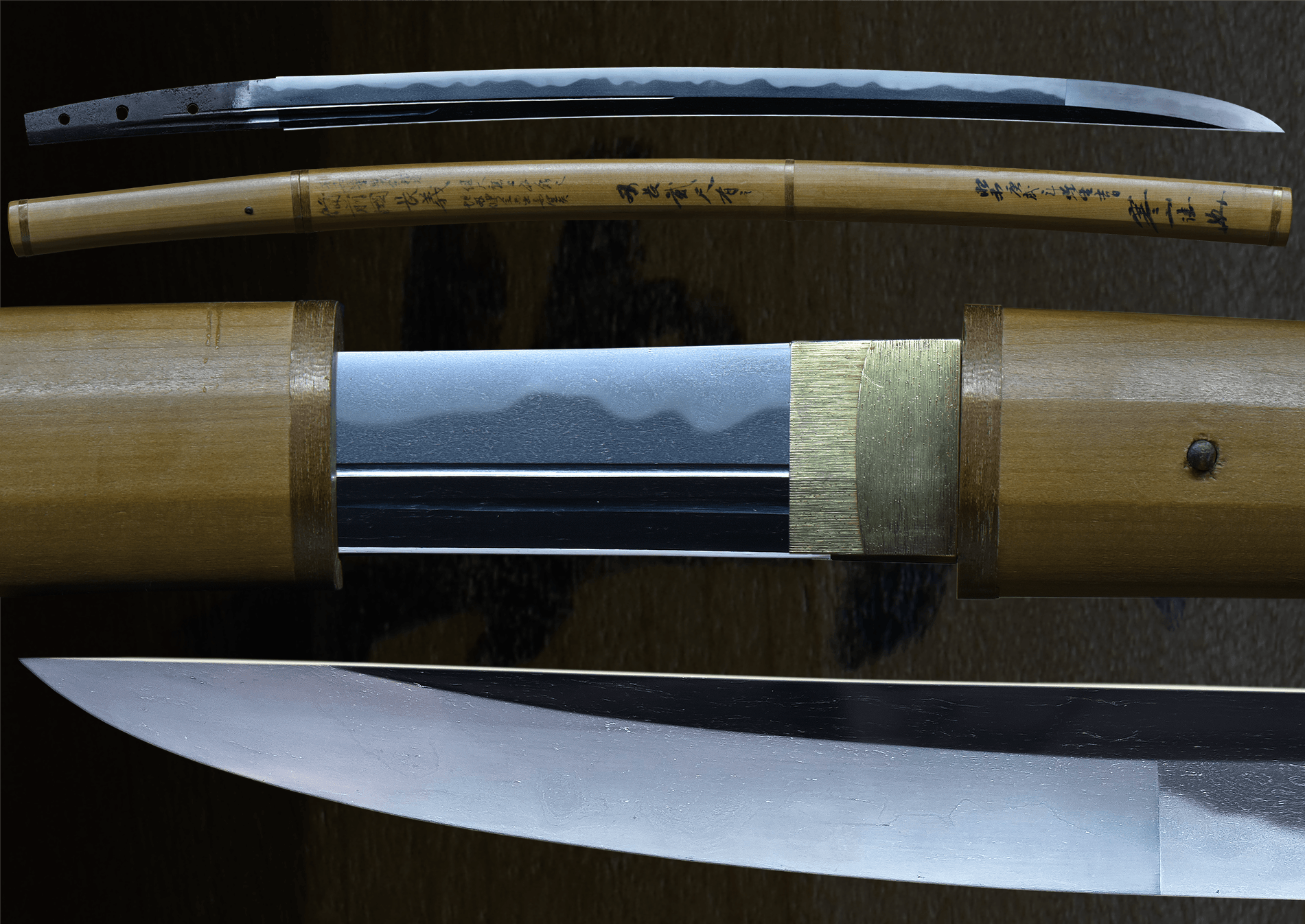
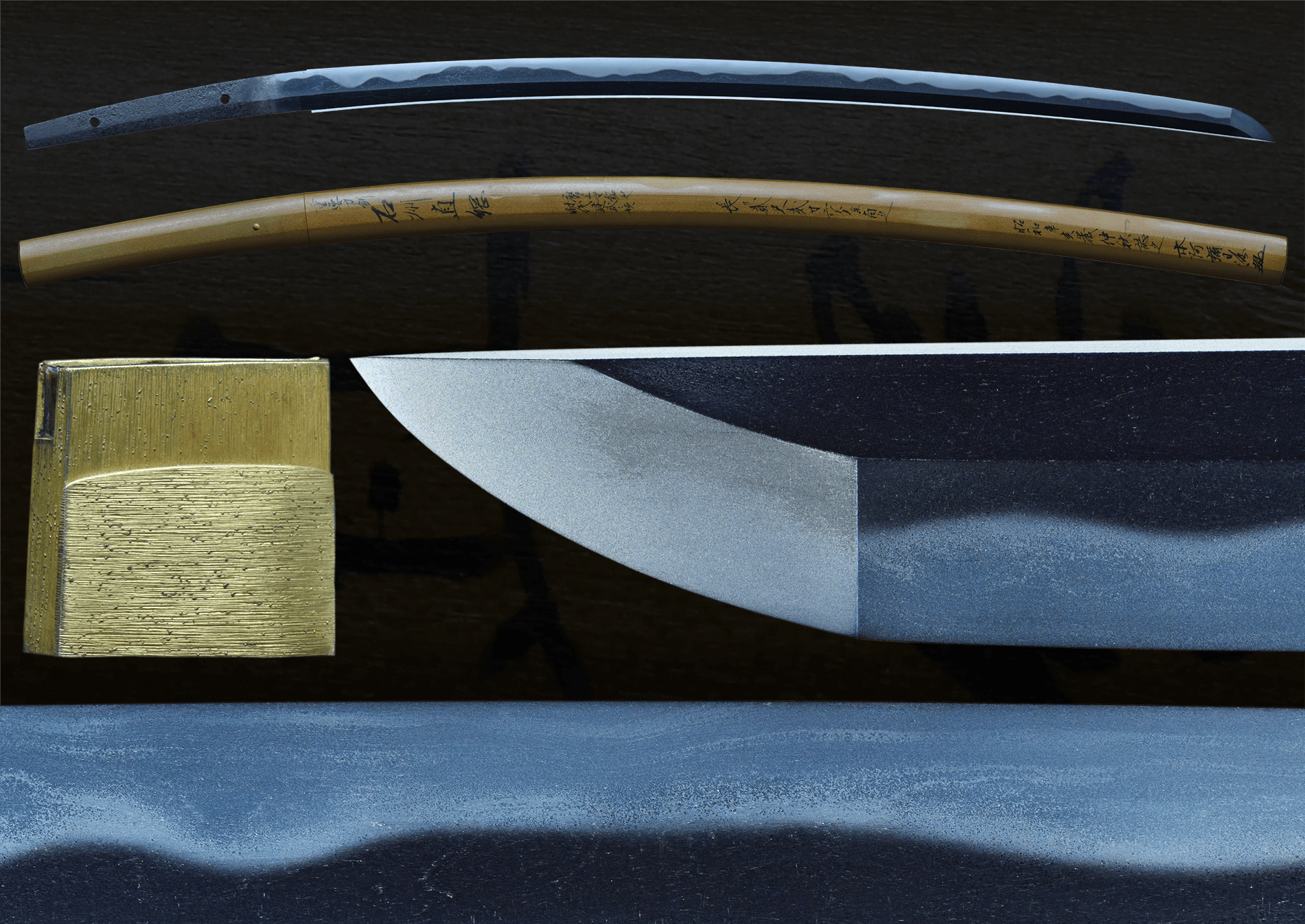
A beautiful strongly curved koto sword attributed to the Naminohira group of swordsmiths. The hada/grain pattern is Masame with itama and Shirake utsuri can be seen. The hamon is sugu-ha with ashi and sunagashi, there is nijuba which can be seen also. The koshirae saya is finished in a black lacquer.The Tsuka ito is green. There are Uma blossom design in iron on the fuchi kashira finished in the taka-bori style.. the tsuba is iron sukashi also with Uma blossomsAfter the Kamakura period (1185-1333) on through the Edo period (1615-1868), the name of Naminohira was passed down from generation to generation of sword makers who lived in Naminohira, Satsuma Province (the southern outskirts of present-day Kagoshima City).For those who love to sail or in the Navy, this sword holds very special significance.‘Nami’ means ‘wave‘, hira means ‘flat‘. This translates to “sail on calm seas“. Naminohira swords made by Satsuma swordsmiths were very popular among the Japanese Imperial Navy for the swords brought with them a positive omen. In general Naminohira blades are very rare, so this is a unique find.As history tells us, during the Edo Period (1603-1868) the ruling Tokugawa family kept Japan in virtual isolation from foreign visitors for two and a half centuries. Interestingly enough, the Satsuma area had gates of their own, both to those outside their land in Kyushu AND to the outside world. Essentially only those born in Satsuma lived in Satsuma.To defend their unique culture and maintain their way of life,Satsuma developed a fierce army of their own. The government from Edo often sent spies to Satsuma, but this more often than not resulted in the death of these spies – never to return to Edo.Satsuma warriors were one of the most feared in the country.One fine example of the strength of Satsuma warriors was the Namamugi Jiken (Samurai from the Shimazu Daimyo Family. In 1862 in Satsuma, a British man was killed during a small war between the British and the Satsuma clan. A newspaper in the UK at that time, reported emphatically that the British were defeated by one of the clans in Japan. Since this historical scuffle at the end of the Edo period, Satsuma and Britain have forged a seemingly close relationship. Typical Naminohira attribute are as follows pertaining the the Muromachi era.MUROMACHI ERA BLADE DETAILS:SHINOGI and wide SHINOGI-JI but OEI influence brought low SHINOGI without FUNBARI. Medium curve. Some with MARU NAKAGO-MUNE. Looser grain and less JI-NIE than the earlier pieces. HOSO-SUGU with ASHI, SUGU KO-GUNOME and SUGU-KUZURE BA in deep NIOI. SUNAGASHI. BOSHI can become KUZURE.Deep KAERI is a late-school mark.
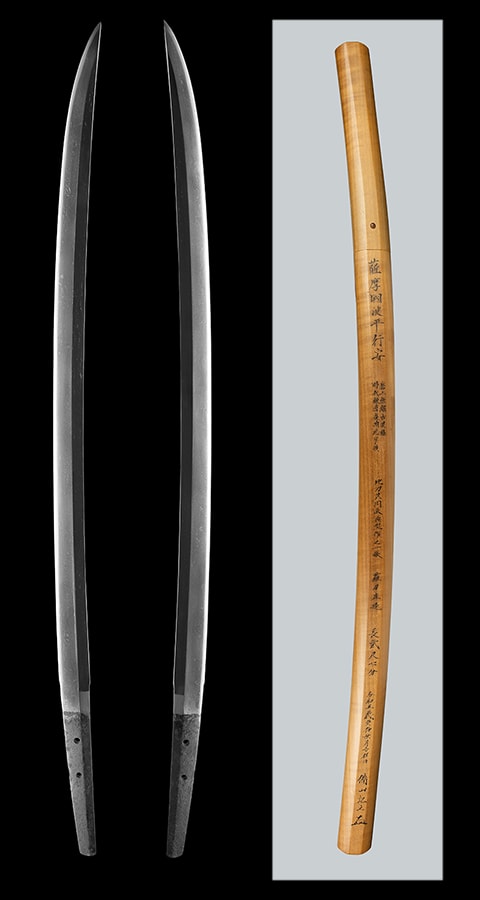
Mei:Mumei, attributed to NaminohiraDate:koto (1400’s-1500’s)Nagasa:26-7/8 inchesSori:20.0 mmWidth at the ha-machi:28.0 mmWidth at the yokote:18.1 mmThickness at the mune-machi:7.0 mmConstruction:Shinogi zukuriMune:IoriNakago:UbuKitae:itame/masame shirake-utsureHamon:Midare GunomeBoshi:MaruCondition:Good polish
kantei-sho(鑑定書) No 354596katana,mumei: Naminohira (波平)nagasa2shaku2sun5bu hanMigi wa tô-kyôkai ni oite shinsa no kekka,hozon-tôkento kantei-shi kore o shô-suru.(右は當協會に於て審査の結果保存刀剣と鑑定しこれを証する)Heisei jûichinen jûgatsu itsuka (平成十一年十月五日)zaidan-hôjin (公益財團法人): Nihon Bijutsu Tôken Hozon Kyôkai (日本美術刀劍保存協會)Appraisalkatana, unsigned: Naminohiranagasa~ 68.3 cmAccording to the result of theshinsacommittee of our society we judged this work as authentic and designate it ashozon-tôken.October 5th1999[Foundation] NBTHK
Subscribe for the Latest Updates!Join our mailing list to receive the latest News & Updates fromNihonto Antiques.SUBSCRIBEYou have Successfully Subscribed!Your email address will be kept private & will only be used to send updates from this site!
Owner to get 4.5k maybe 4kRick Georgergeorge5957@yahoo.com(806) 438-4515