 NihontoWatchNihontoWatch
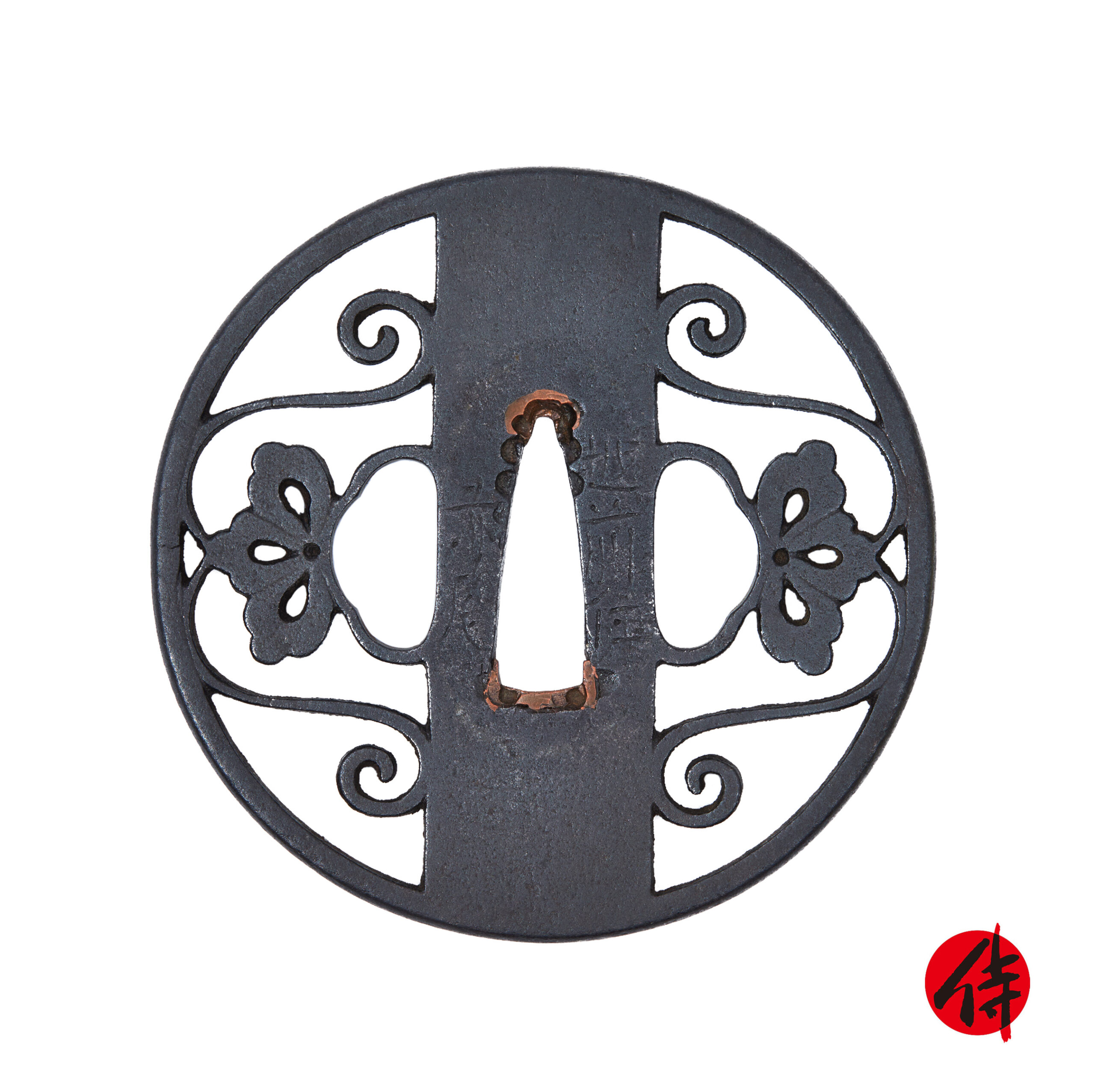
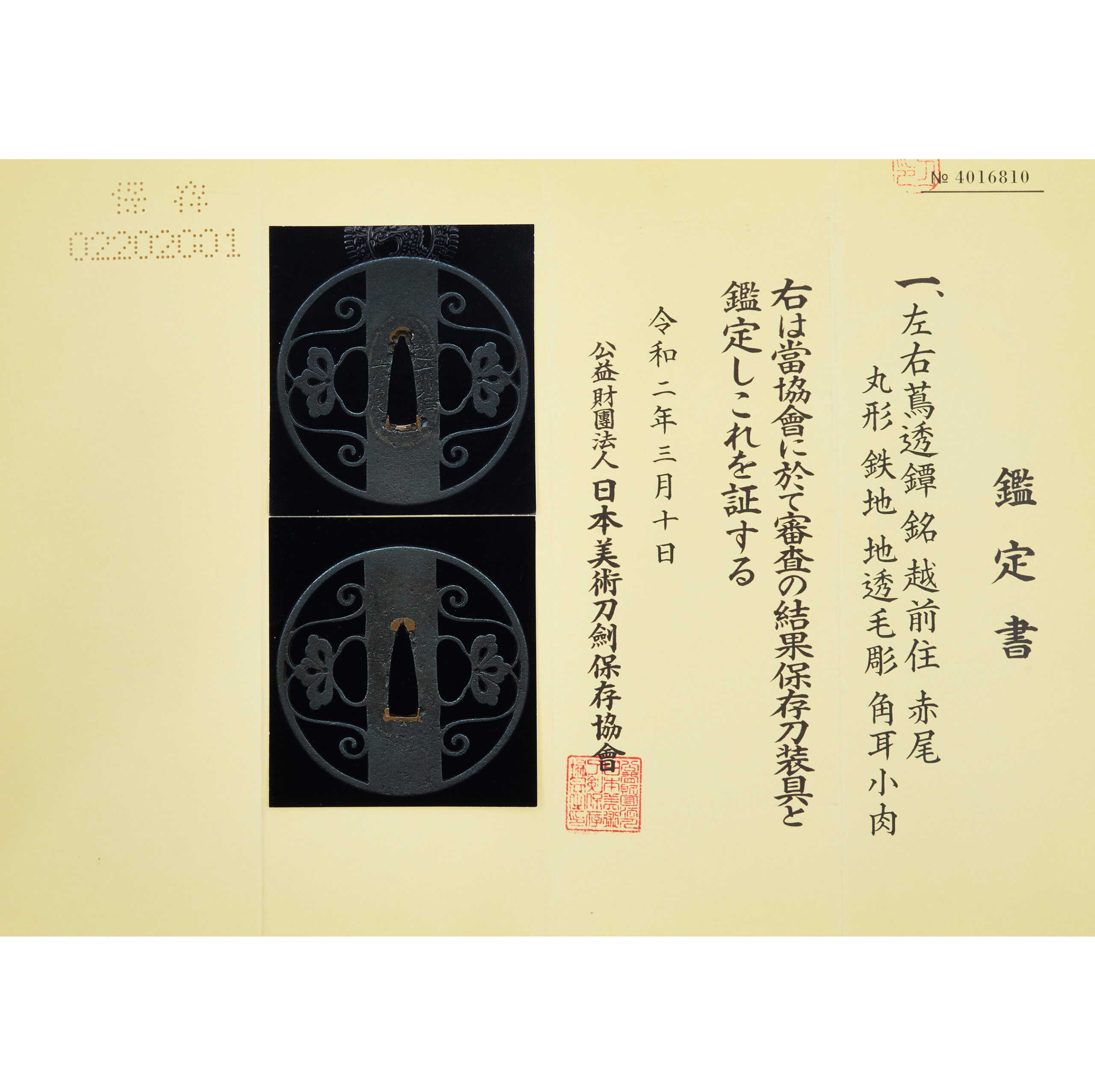
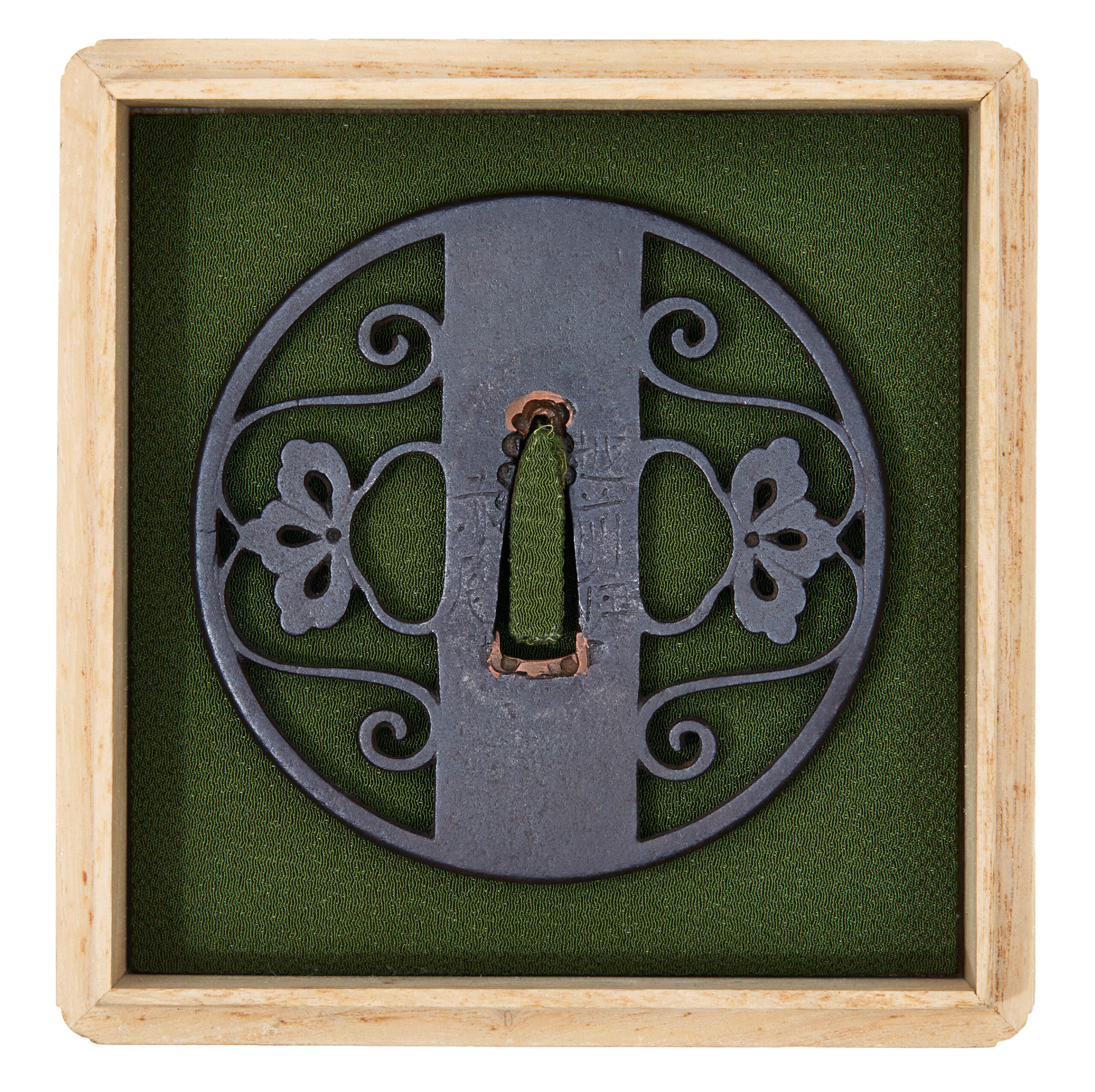
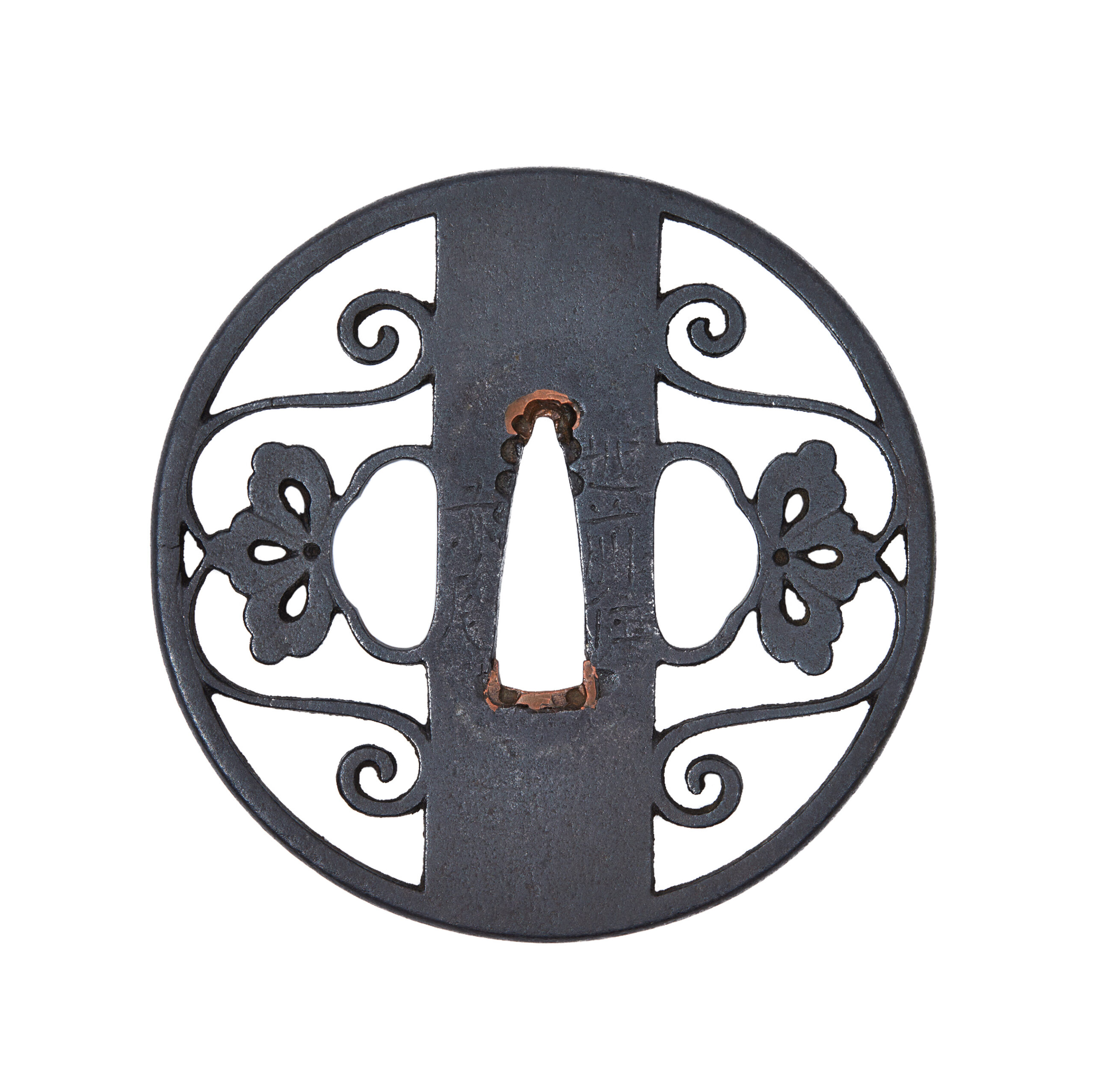
This Tsuba was made in Echizen Province (today’s Fukui Prefecture) by a craftsman known as Echizen-jū Akao (越前住赤尾). According to the certificate, the name of this Tsuba is “Sayū Tsuta Sukashi Tsuba (左右蔦透かし鍔),” which means it features a symmetrical design of ivy leaves made with the Sukashi (openwork) technique. In addition, the openwork parts are decorated with fine patterns using a technique called Jizukashi kebori (地透かし毛彫り). The tsuba is made of iron and has a round shape, which is classified as Marugata tetsuji (丸形鉄地, round iron type). The edge of the Tsuba is classified as Kakumimi koniku (角耳小肉). “Kakumimi” means the edge is slightly squared and sticks out a bit, while “koniku” means the edge has a small rounded thickness. In other words, the edges are shaped in a way that is both straight and slightly curved, giving it a smooth look and feel. Authentication Paper They authenticated the Tsuba on March 10th in 2nd year of Reiwa (2020). They appraised it as Hozon Tousougu, the Tsuba worth preserving for Japanese society.
NihontoWatch
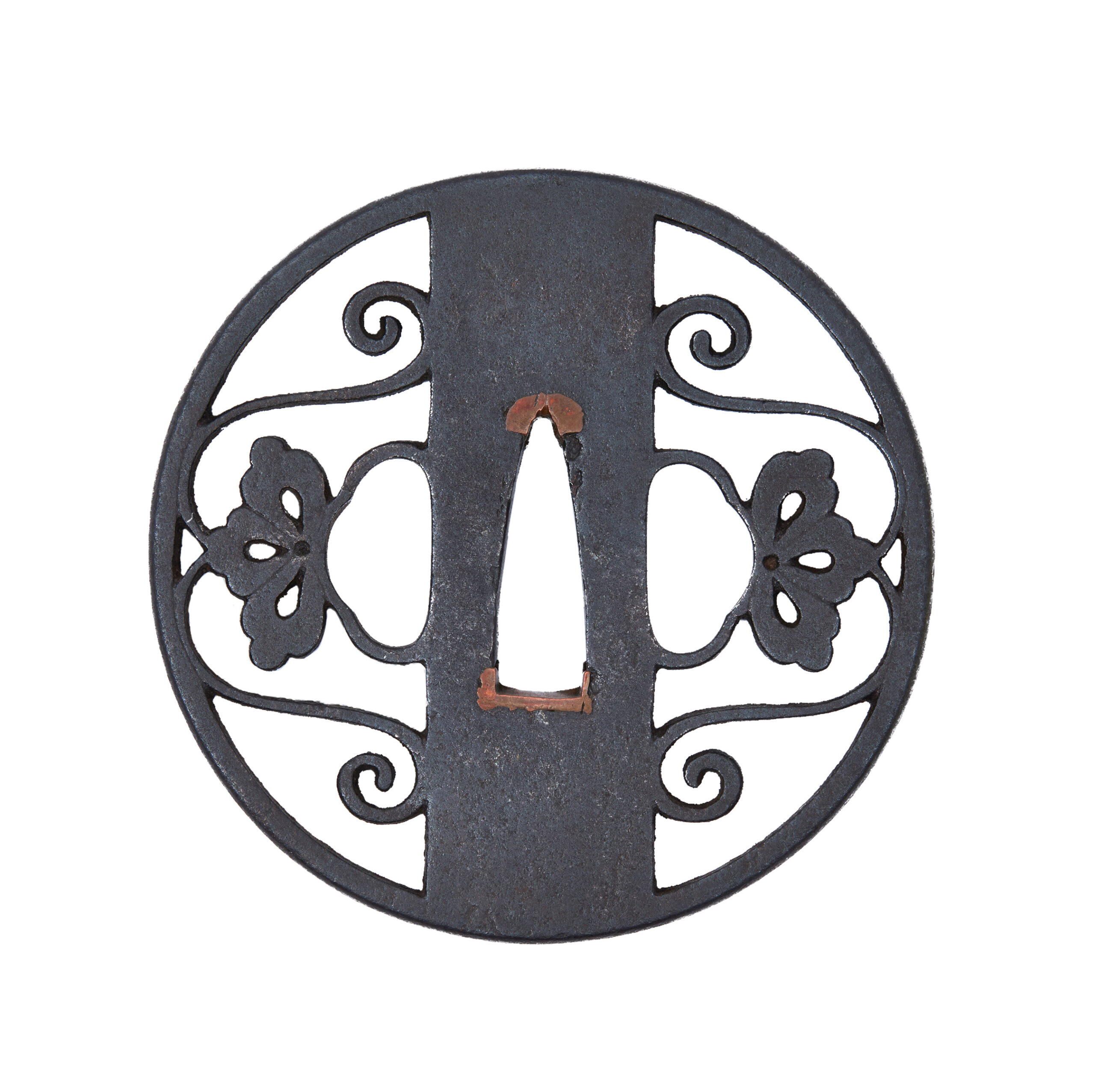
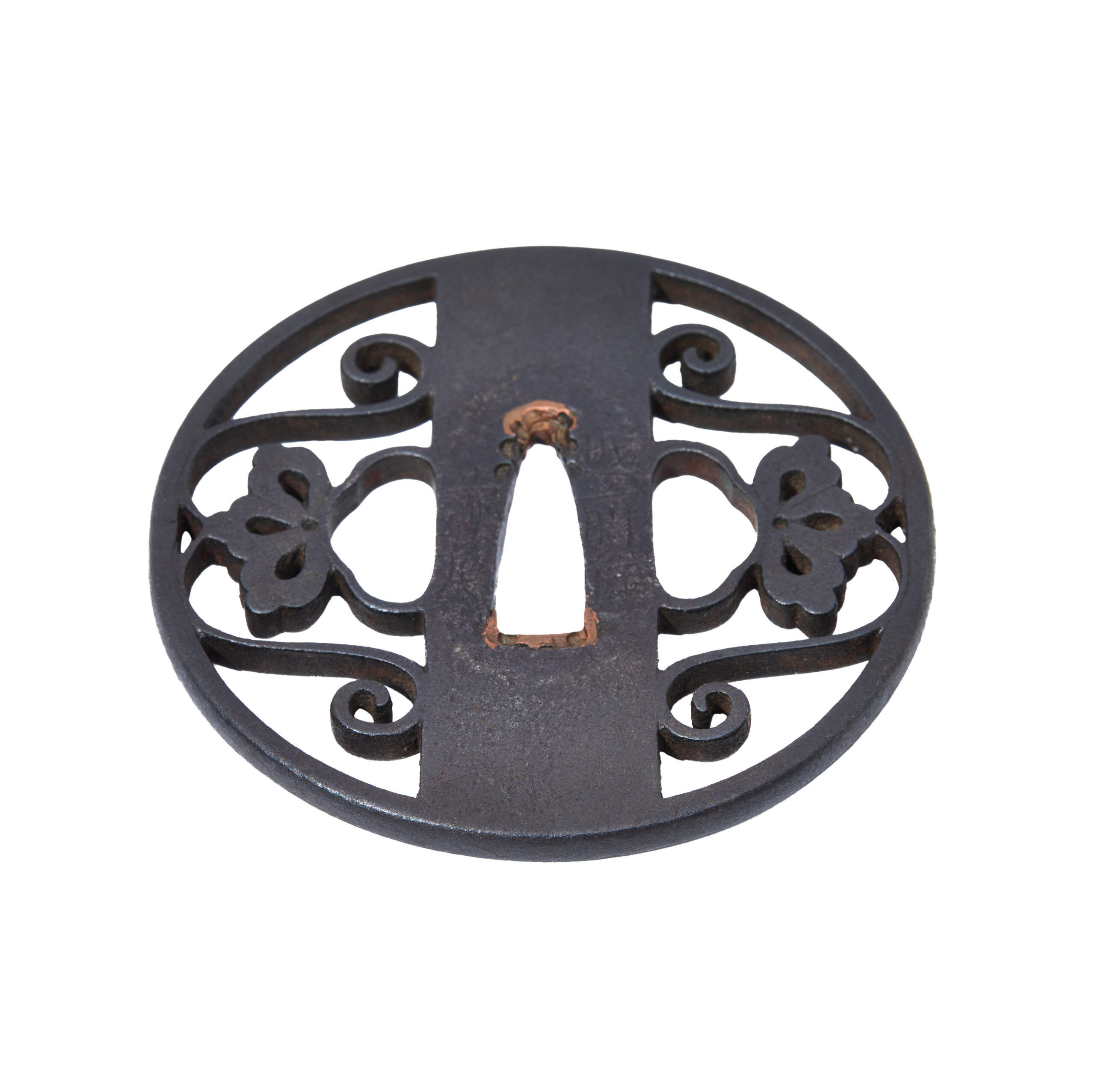
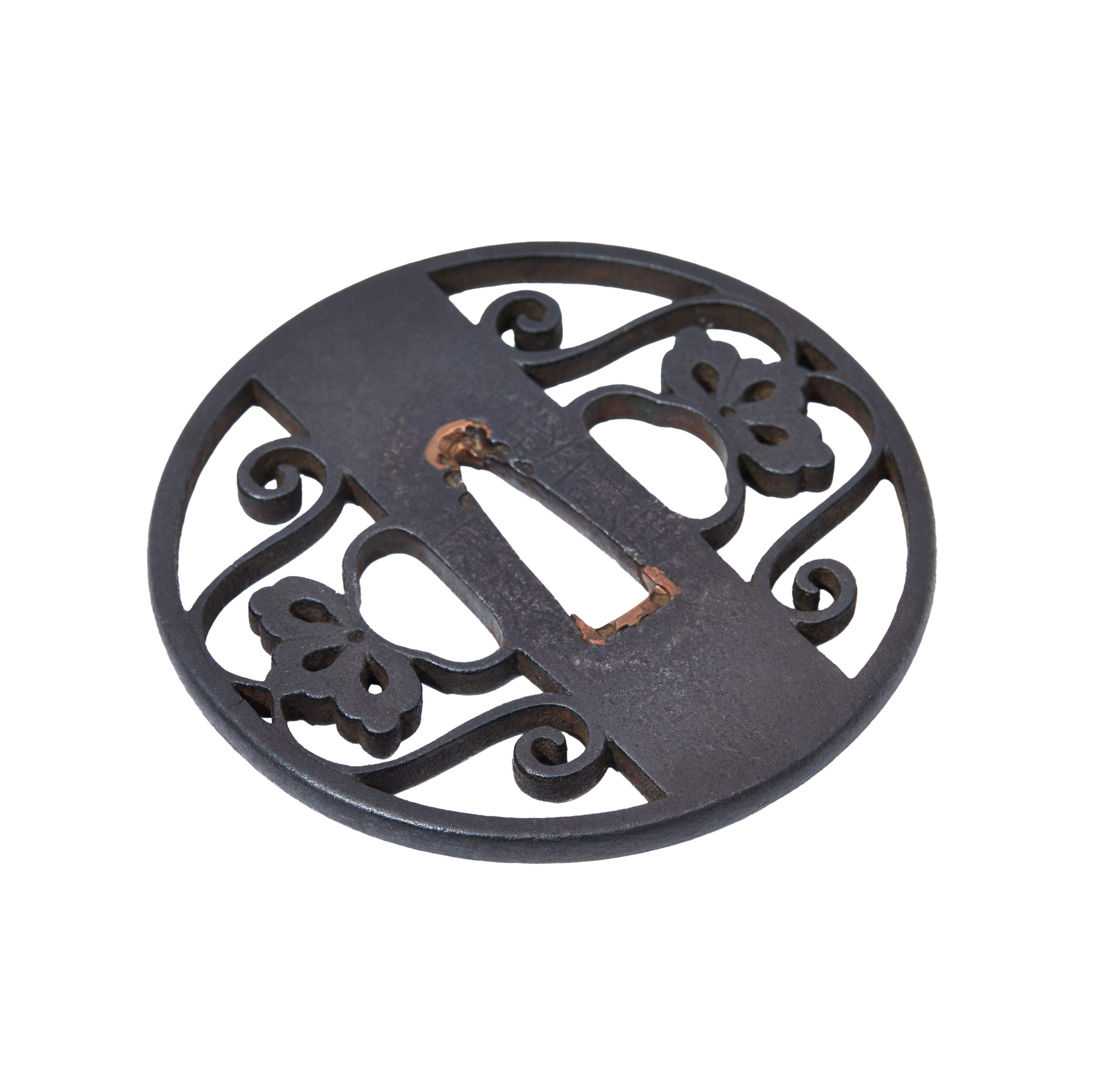
販売店の記載のまま
銘が正しい、または無銘でも年代・流派を指摘でき、美術工芸的価値が認められる、保存に値する真正の刀装具と鑑定されたものです。
日本美術刀剣保存協会(NBTHK)は、1948年に設立され、文化庁の監督を受ける公益財団法人で、東京・刀剣博物館に本部を置きます。専門の審査員が出品作を直接審査し、美術的・歴史的価値に応じた鑑定書を発行します。NBTHKの鑑定書は、日本刀および刀装具の真正性を示す最も広く認知された基準です。
NBTHK公式サイトReturns/exchanges limited to defects caused by shipping (except willful misconduct or gross negligence by the company); customers must contact within 72 hours of receiving the product.