室町は刀剣業を産業に変えた。徒歩の集団戦とともに打刀が興り、長船と関は数打ち物と注文打ちを並行して産し、勘合貿易は日本刀を数万振の単位で海外へ運んだ。
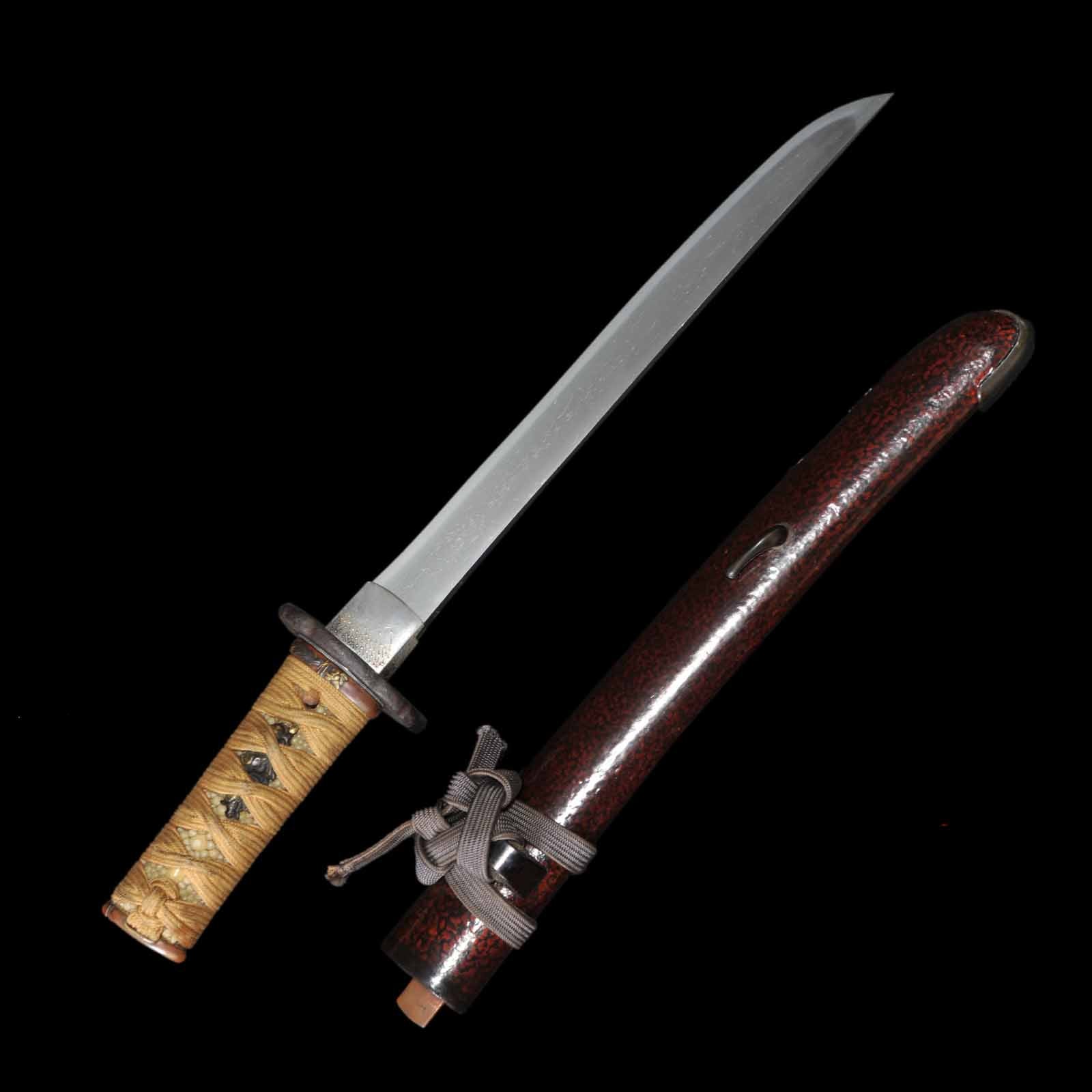
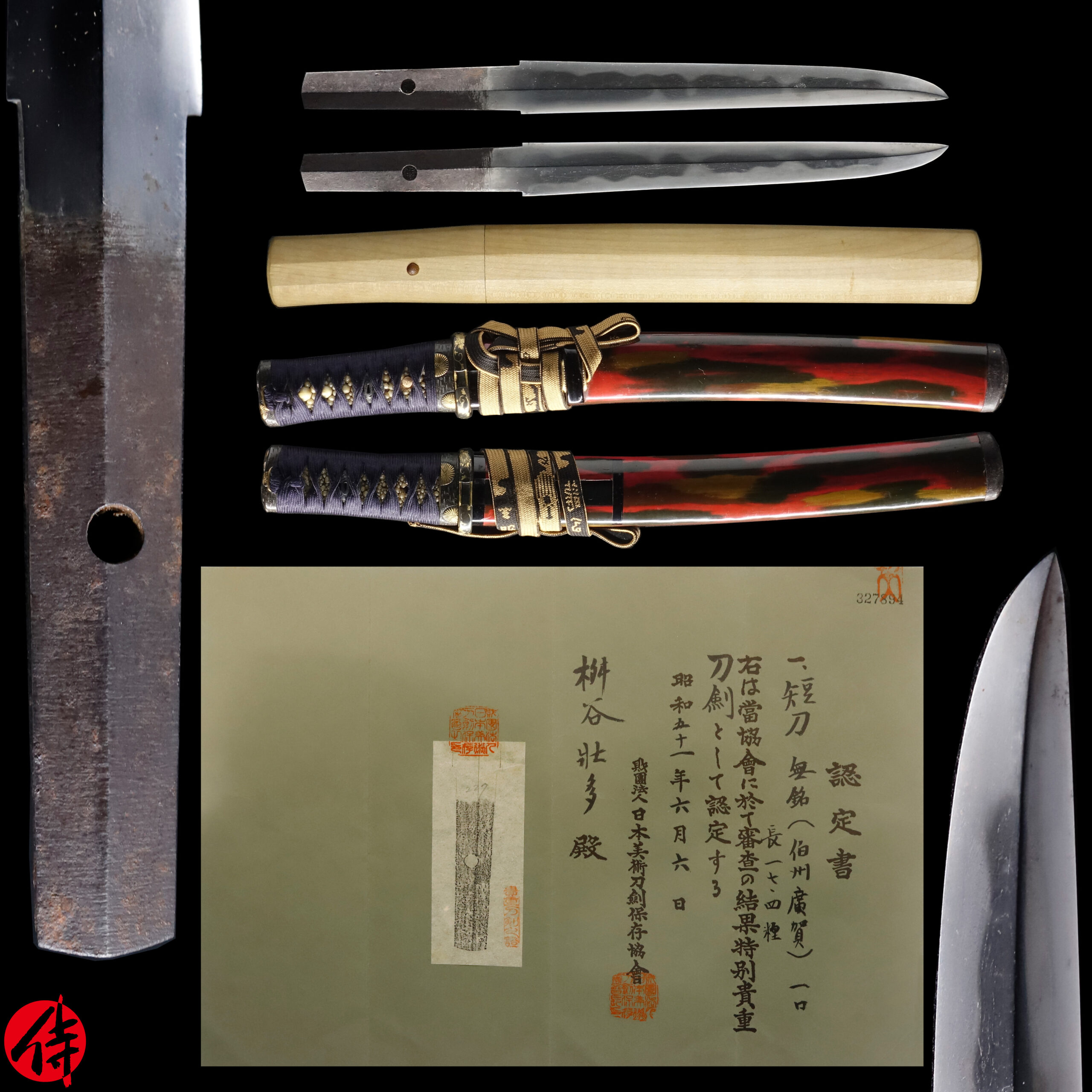
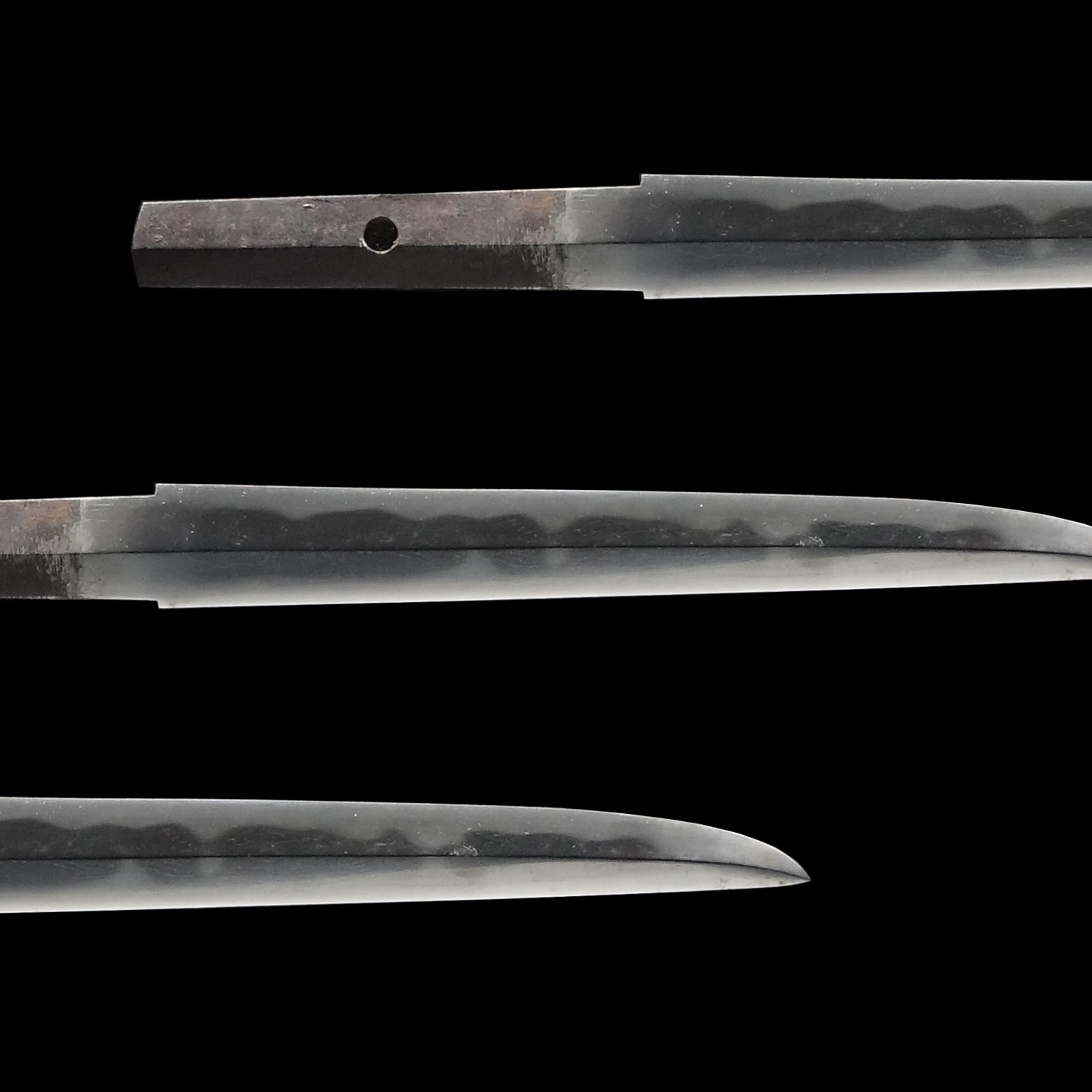
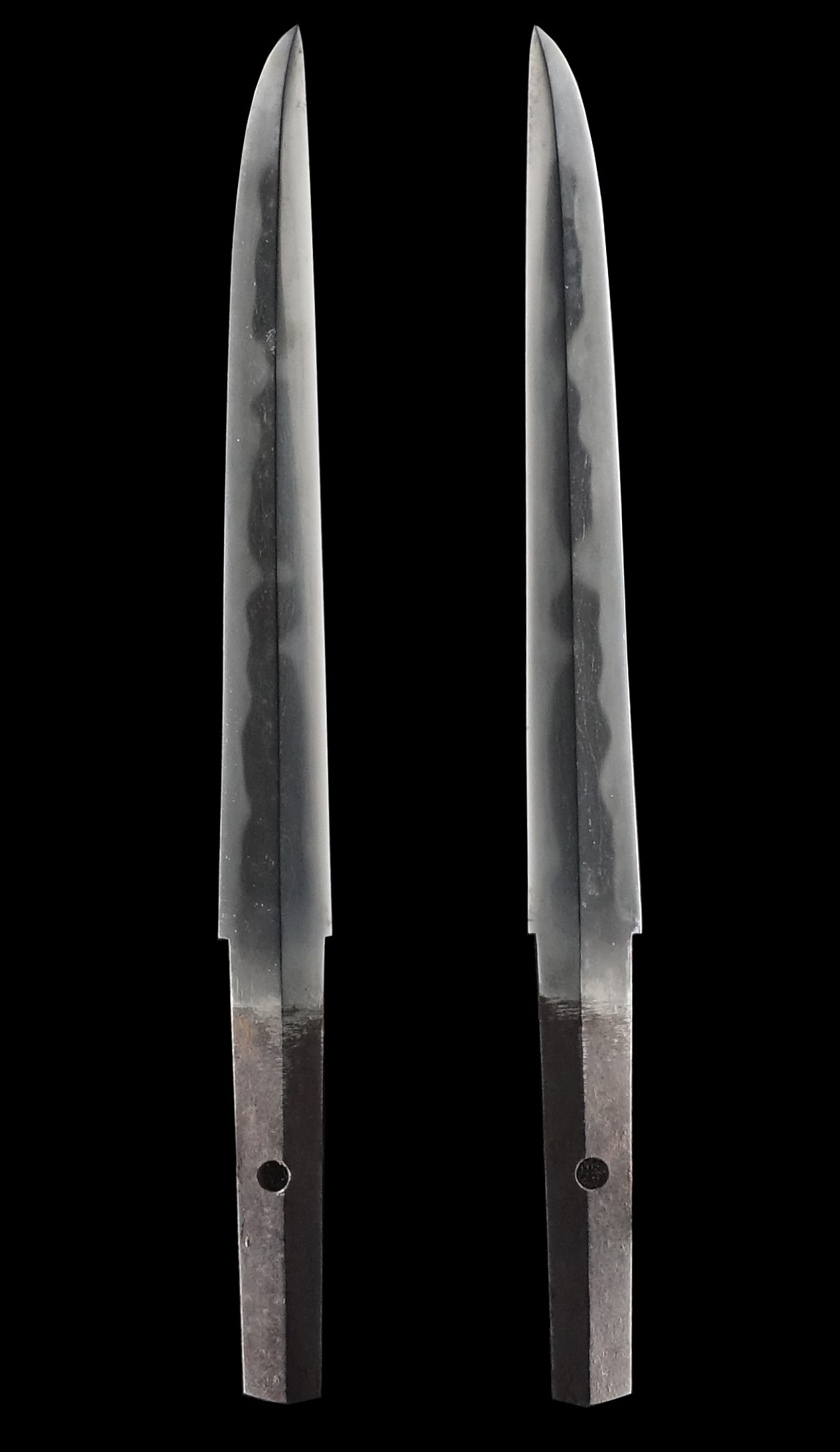
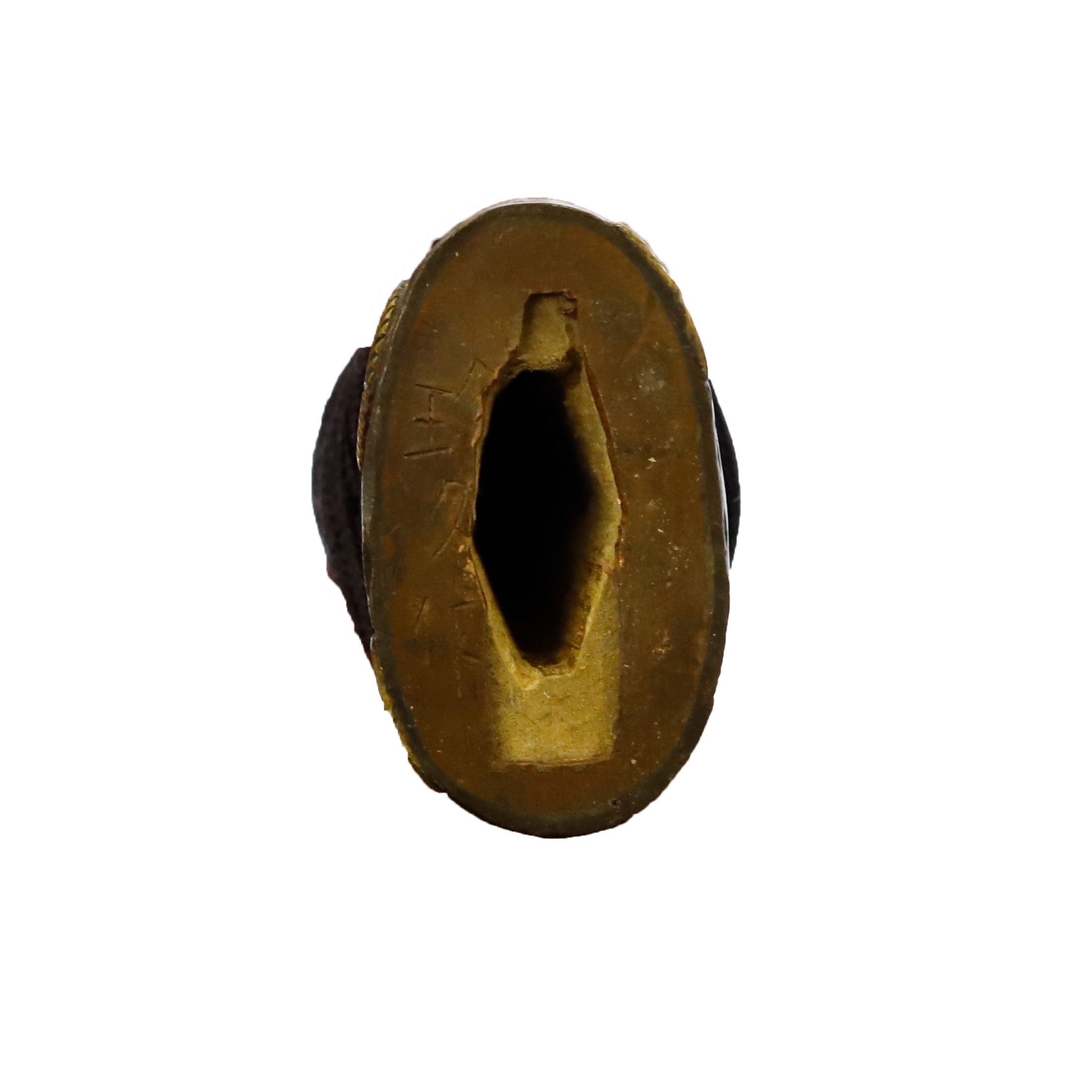
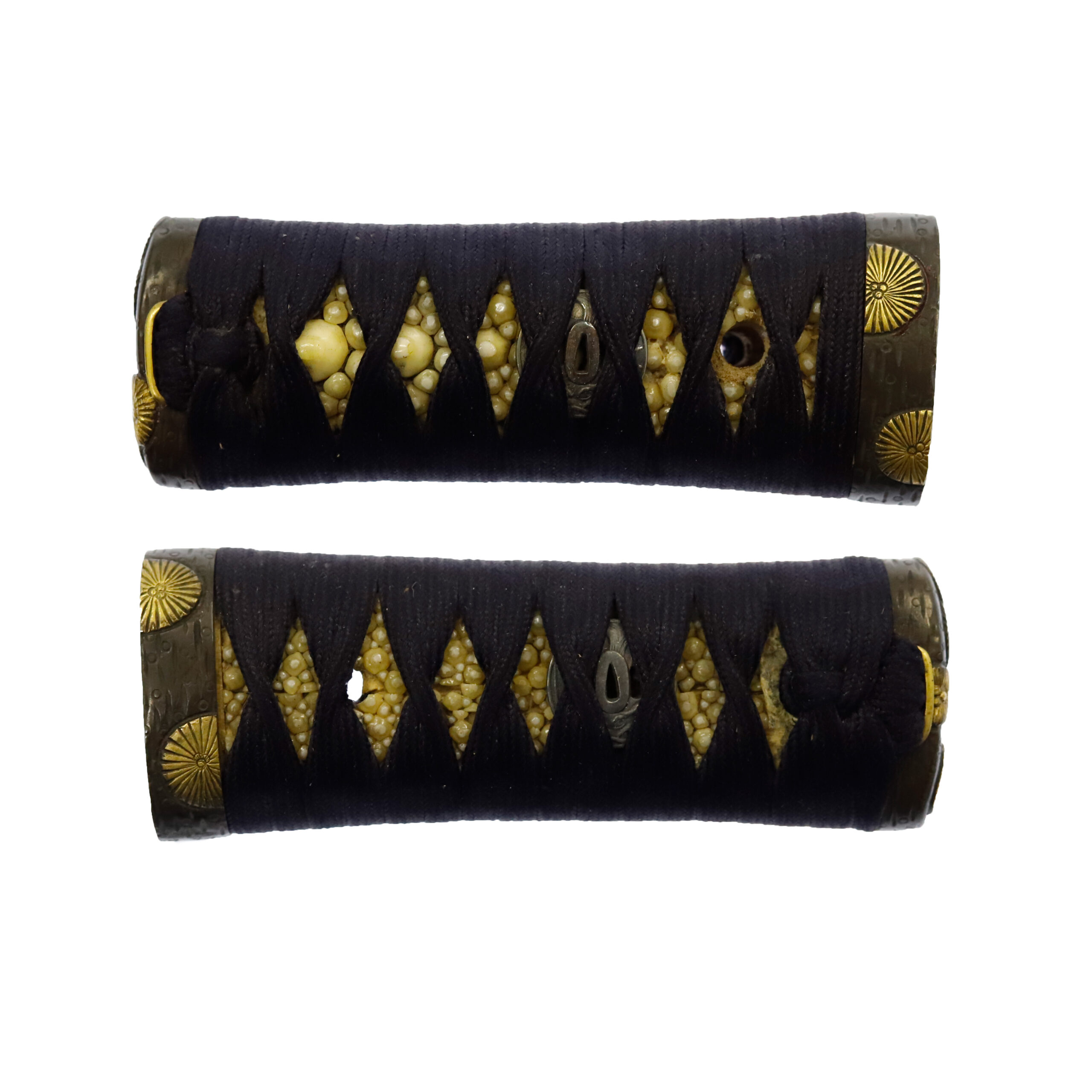
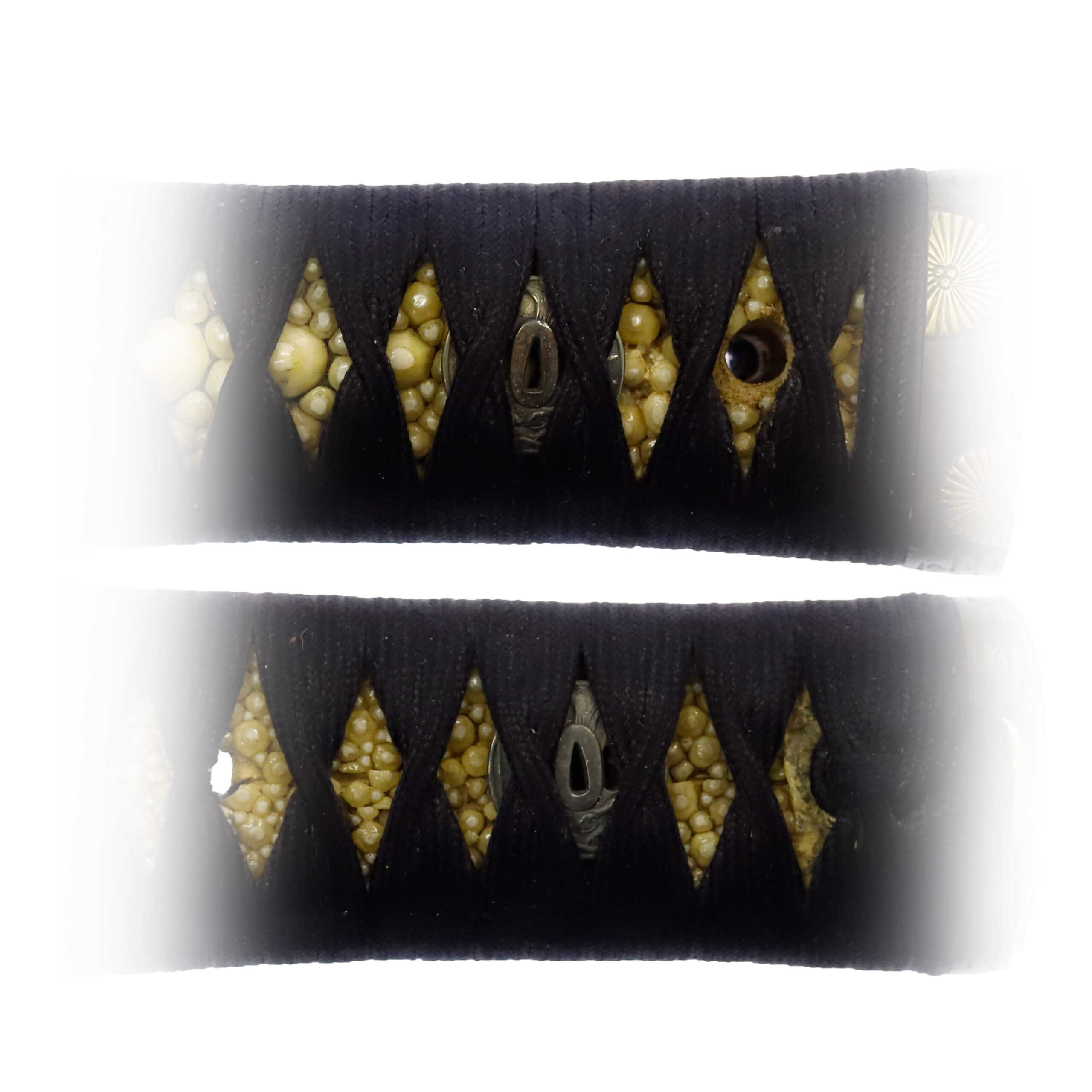
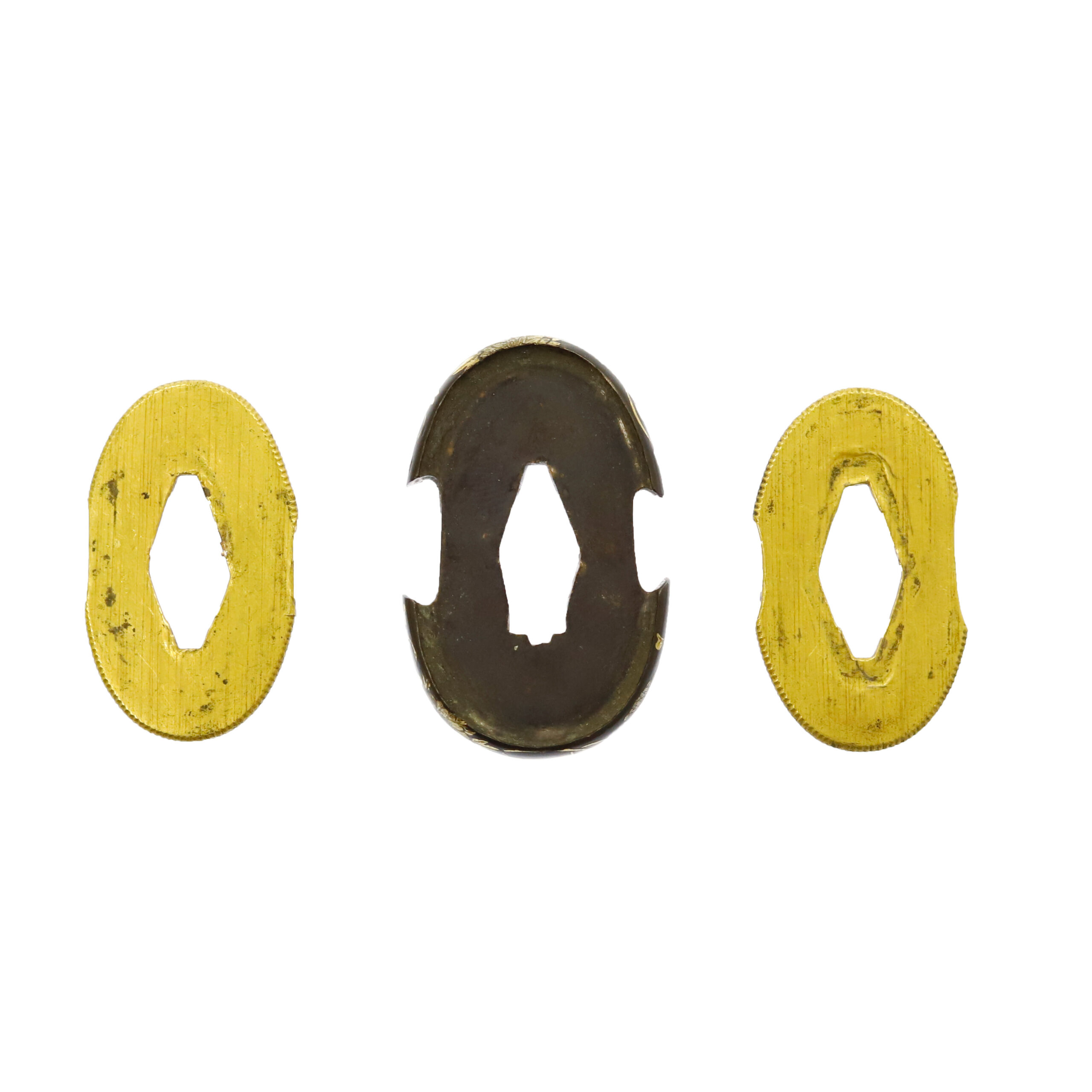
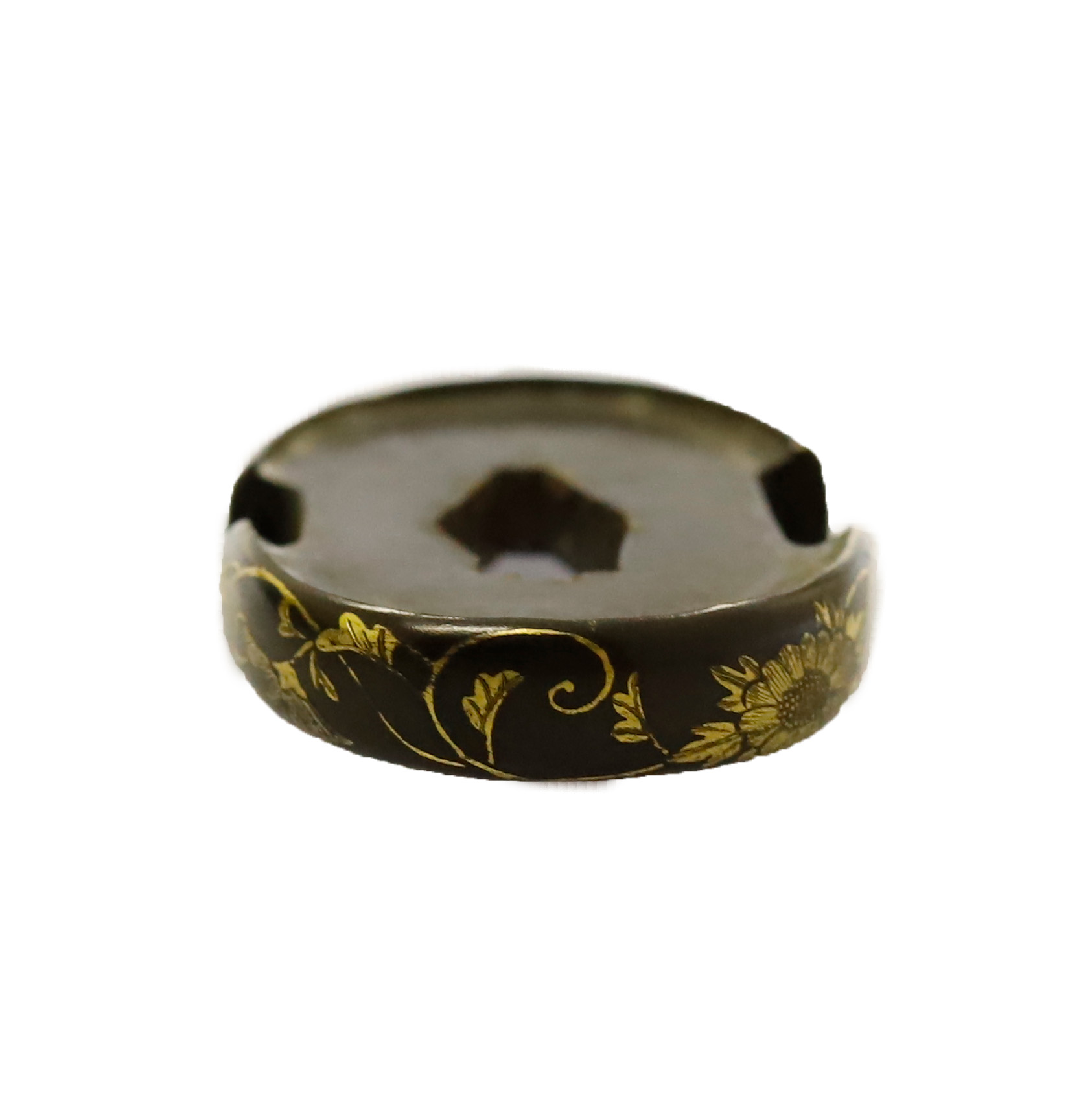
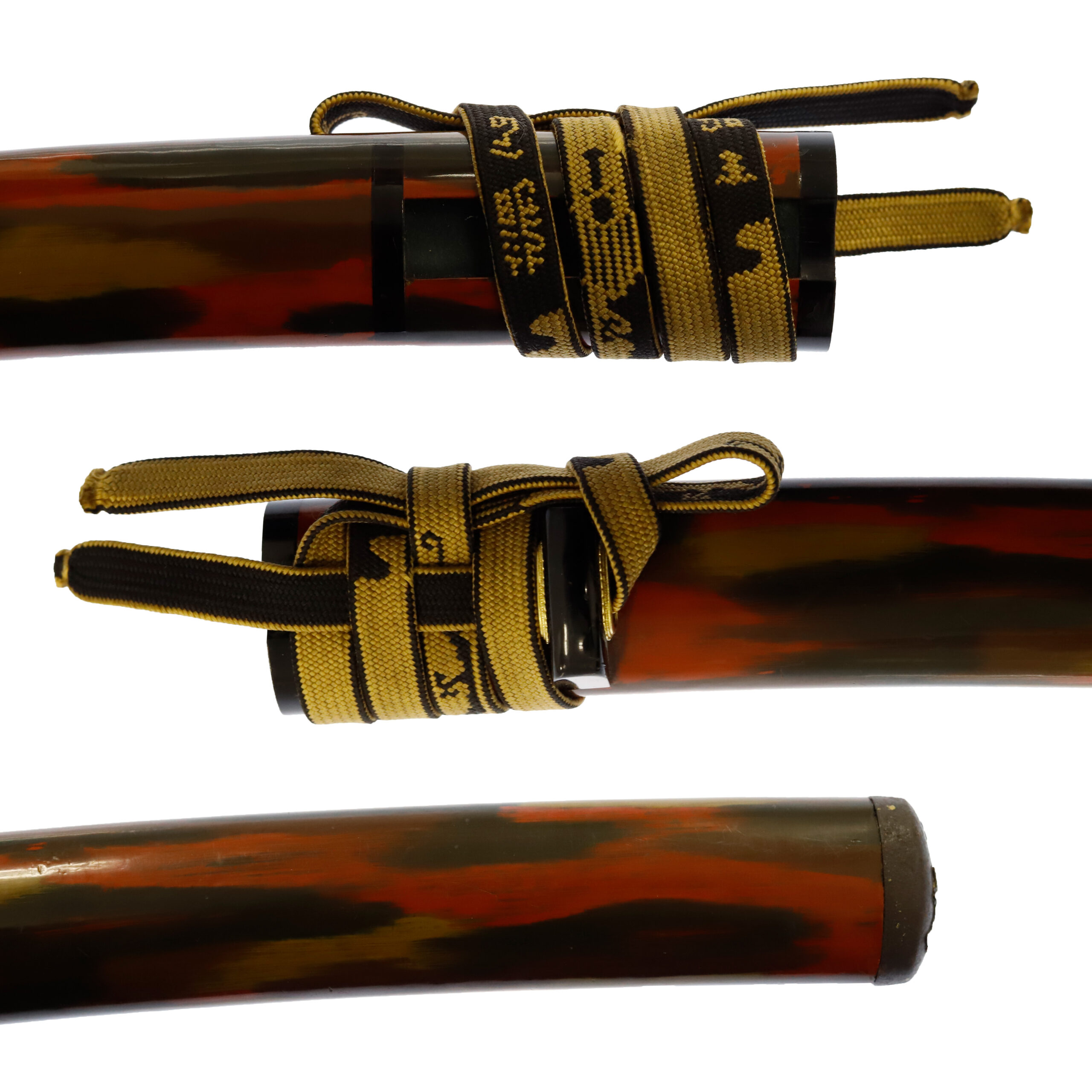
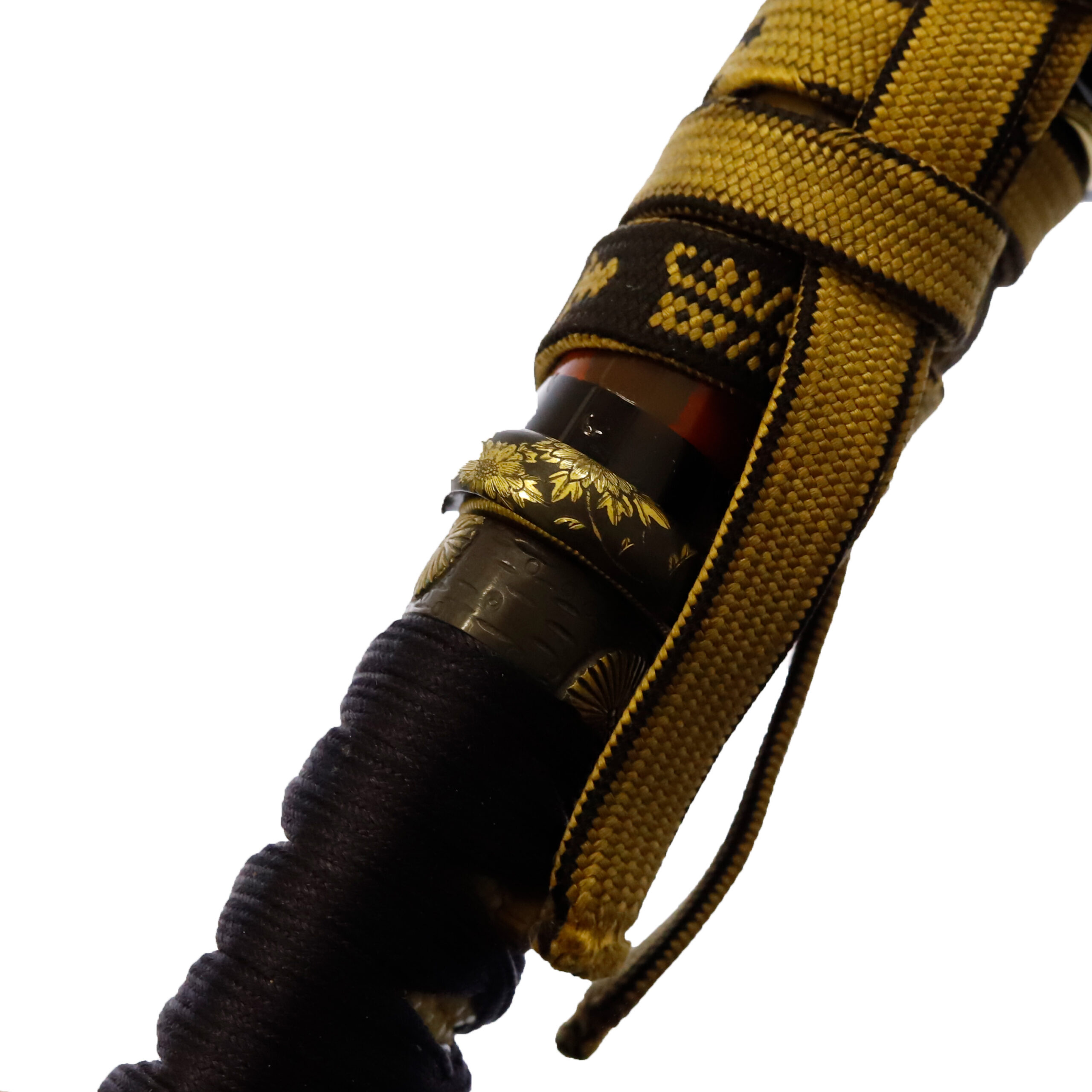
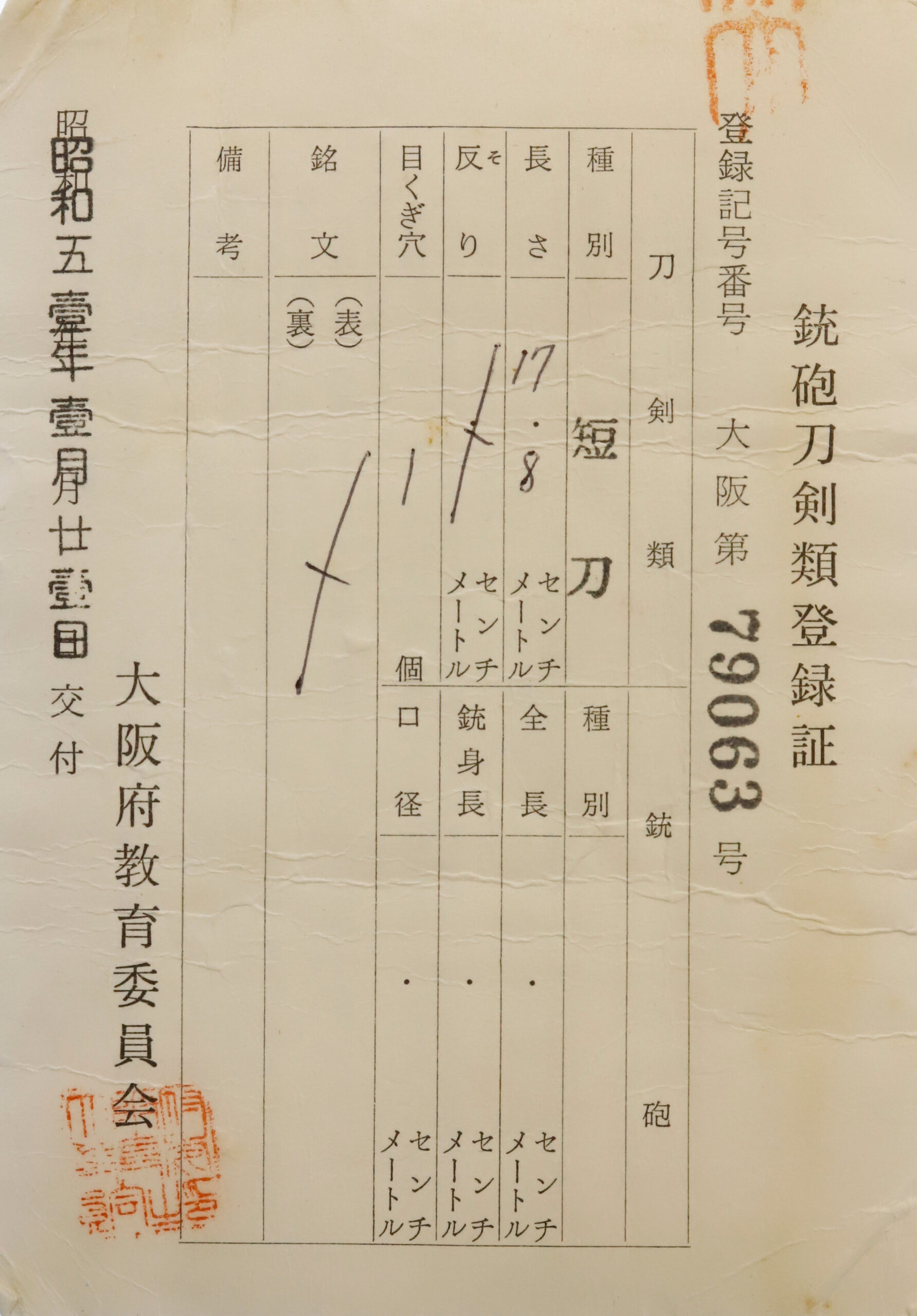
Antique Japanese Sword Tanto Attributed to Hiroga with NBTHK Tokubetsu Kicho Certificate 【Description】 Summary This blade is attributed to Hakushu Hiroga (伯州廣賀) during the late Muromachi period ( Early-Mid 16th century). Hiroga is a prestigious school divided into two branches; Saono (道祖尾) and Mita (見田). Hakushu, also known as Hoki no Kuni, was located in today’s Tottori prefecture. Saono (道祖尾) School Saono school was established by the first-gen Hiroga, who originally had learned sword-forging techniques from swordsmiths in Soshu province. After mastering a particular sword-forging tradition called SOSHU DEN, he created his workshop near Sano temple in today’s Tottori prefecture. That is why this school used Saono as its school name. Those who belonged to this school were active during the mid-Muromachi- mid-Edo period (1469-1681) in a village called Kurayoshi Kaji Machi (倉吉鍛冶町) in Hoki province. Mita (見田) School Mita school was founded later than Saono school. It is said that Heibei Hiroga created the school during the late Muromachi period (1504-) and lasted until the early Edo period. This school was located in a village called Tsuhara. The maker’s name Hiroga lasted a few generations during this period. It is said that the founder was an apprentice of Soshu Tsunahiro (相州綱廣), a famous swordsmith in Soshu province (Today’s Kanagawa prefecture). This blade was made in a warring state period (Sengoku Jida) when there were so many rivalries among feudal lords to expand their territories and gain political influence. It has an interesting structure called Moroha Zukuri (諸刃造り), which has two edges on both sides but has a different shape on each side. *Please keep in mind that there are a couple of black rust spots on the tip of the blade. If you like to see the detailed condition, please feel free to contact us. 【Blade】 Cutting Edge Length(Nagasa) : 17.8 cm ( 7.0 inches) Curvature(Sori) : 0 cm (0 inches) Hamon : The crystalline structure which forms along the cutting edge of a blade as a result of the hardening process Jimon(Jihada) : visible steel surface pattern created by folding and hammering during forging process Nakago : Nakago is the tang of the Japanese sword. Japanese swordsmiths left the black rust on the tang because it prevents red rust while the tang is in its handle. And the discoloration of the tang was created over time, and it is a great indicator for a Japanese sword specialist to estimate when the sword was forged. Koshirae: Koshirae is the mounting of the Japanese sword. There are several parts that consist of Koshirae such as Saya(Scabbard), Tsuka(Handle), Kozuka. Fuchi-Kashira : A pair of matching sword fittings that cover the upper and bottom parts of its sword hilt. This Fuchi Kashira is decorated with pine tree designs, and gold-colored paint is applied to them. Although there is partial fading, it remains relatively in good condition. Since pine trees keep their green color throughout the years by withstanding severe heat and cold, people thought this plant pattern represents eternal youth. FIn addition, its color is called the Tokiwa-Iro (常盤色, evergreen trees’ dark green color with brown), and pine trees have another name Tokiwa-Gi (常盤木). Tokiwa means immutability, so Tokiwa-Iro is a color that praises green with a wish for longevity and prosperity. There are many types of pine tree patterns, and they are used in various things. The beauty of pine tree patterns and the auspiciousness associated with the habits of pine tree might be why people have loved it for so long. Tsuka and Menuki : Tsuka is the handle of the Japanese sword and Menuki is its decoration. Seeing from the gaps of the Tsukamaki thread, this Menuki’s motif is a Tsuba (鐔, hand guard). We cannot see its details, but it seems a kind of plant pattern is designed on it. Tsuba and Habaki : Tsuba is the handguard for the Japanese Sword and Habaki is the equipment to make the blade not touch its scabbard inside. It prevents the blade from get
 NihontoWatch
無銘 · Saono · 室町 · 長さ 17.8cm
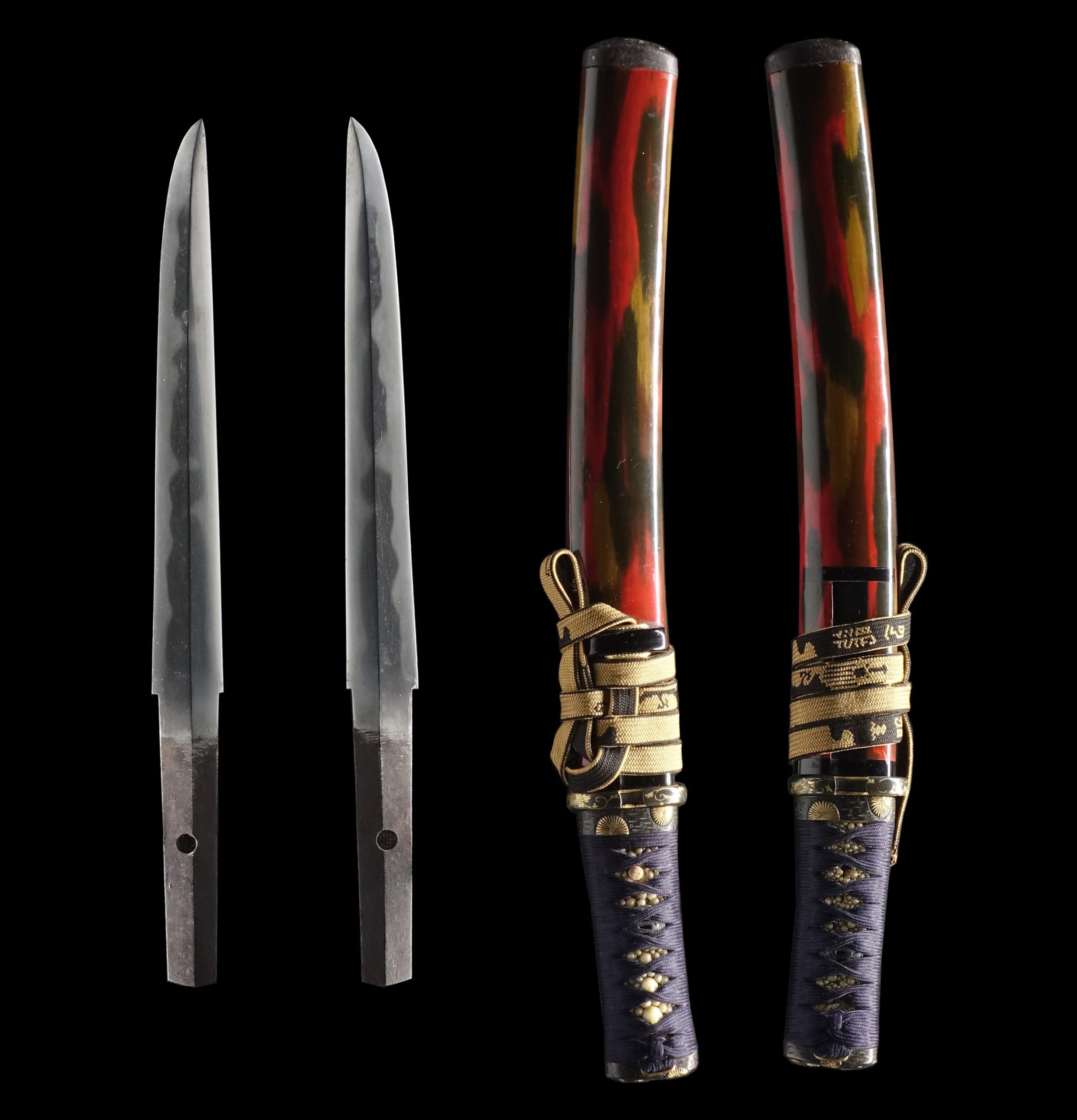
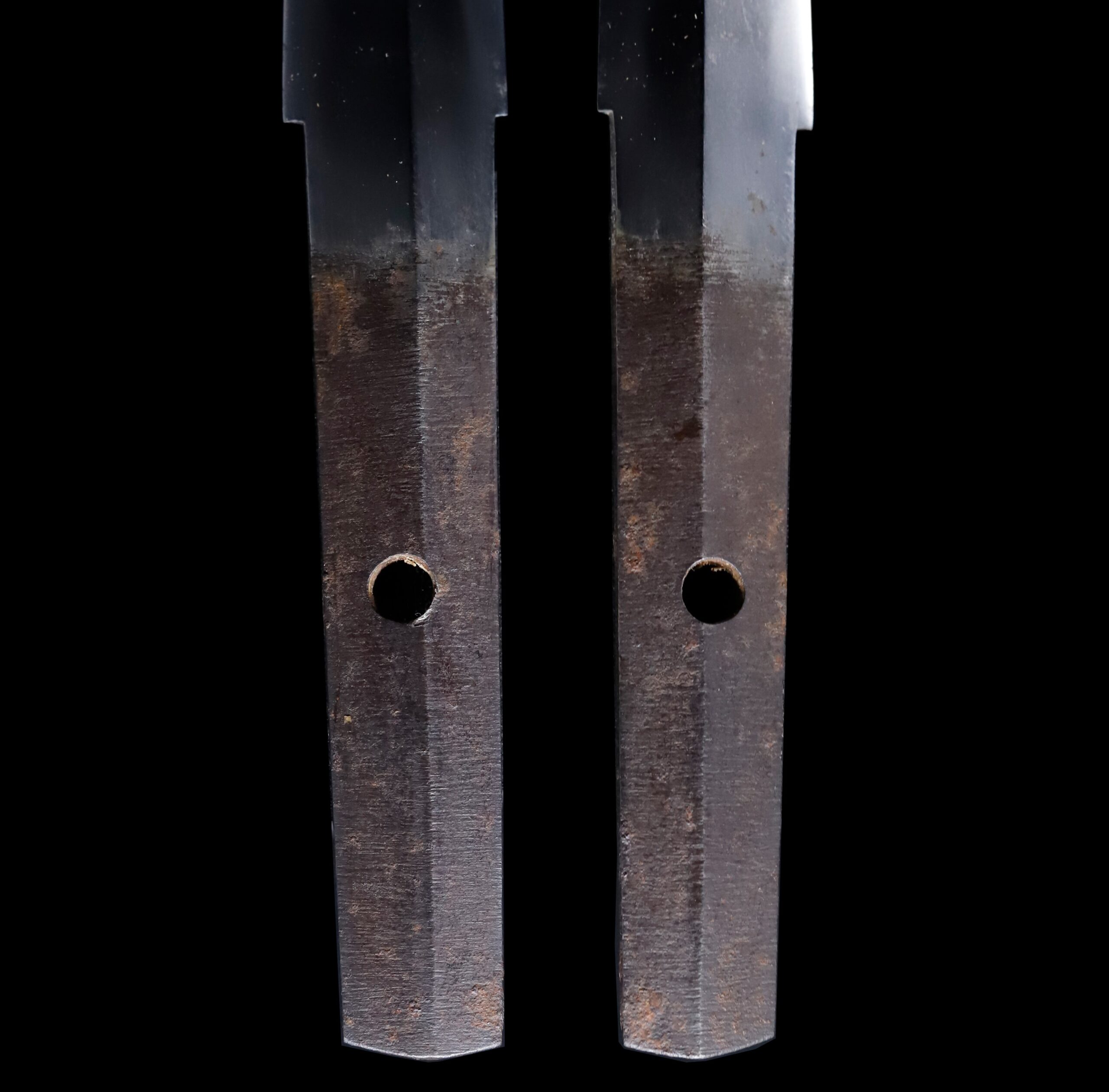
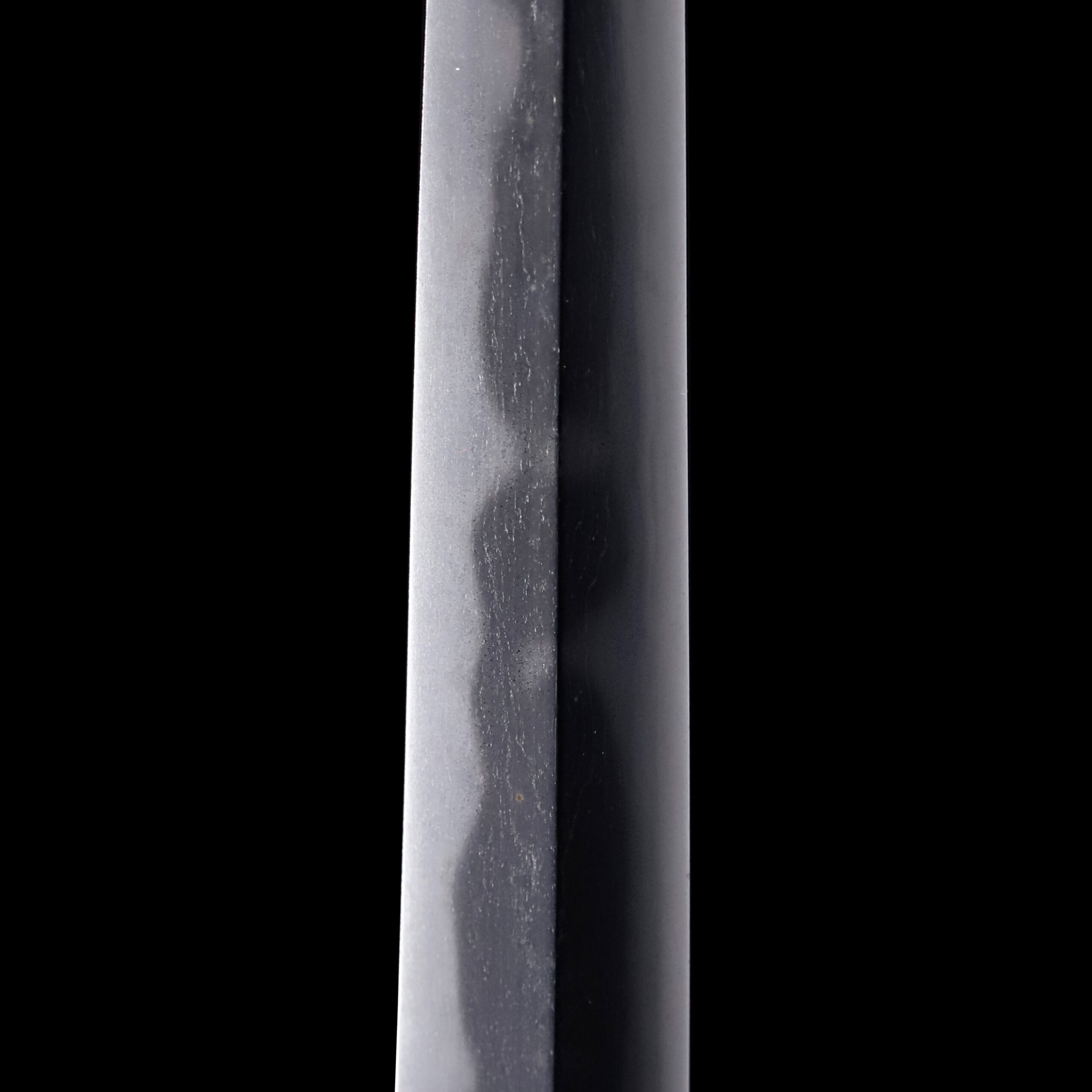
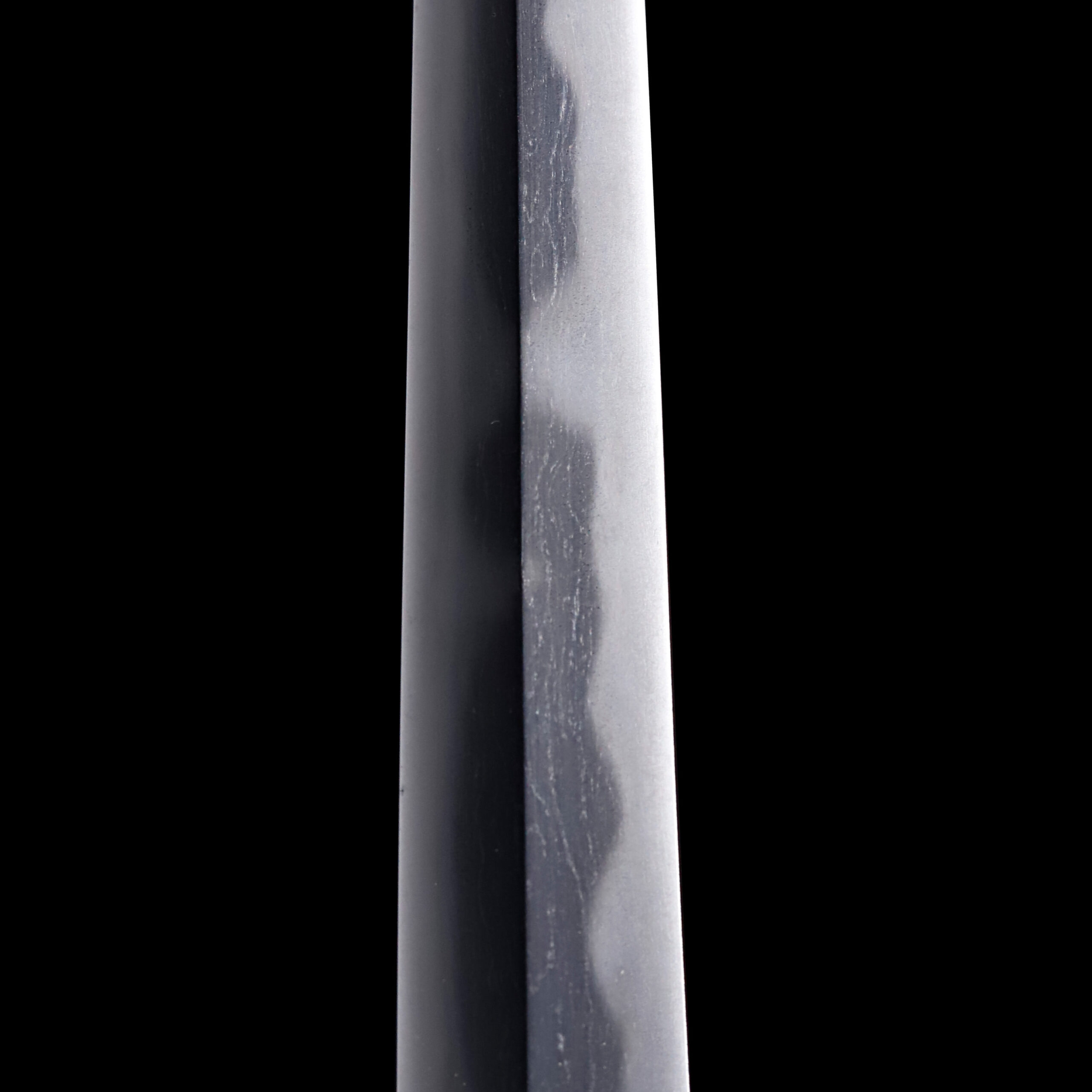
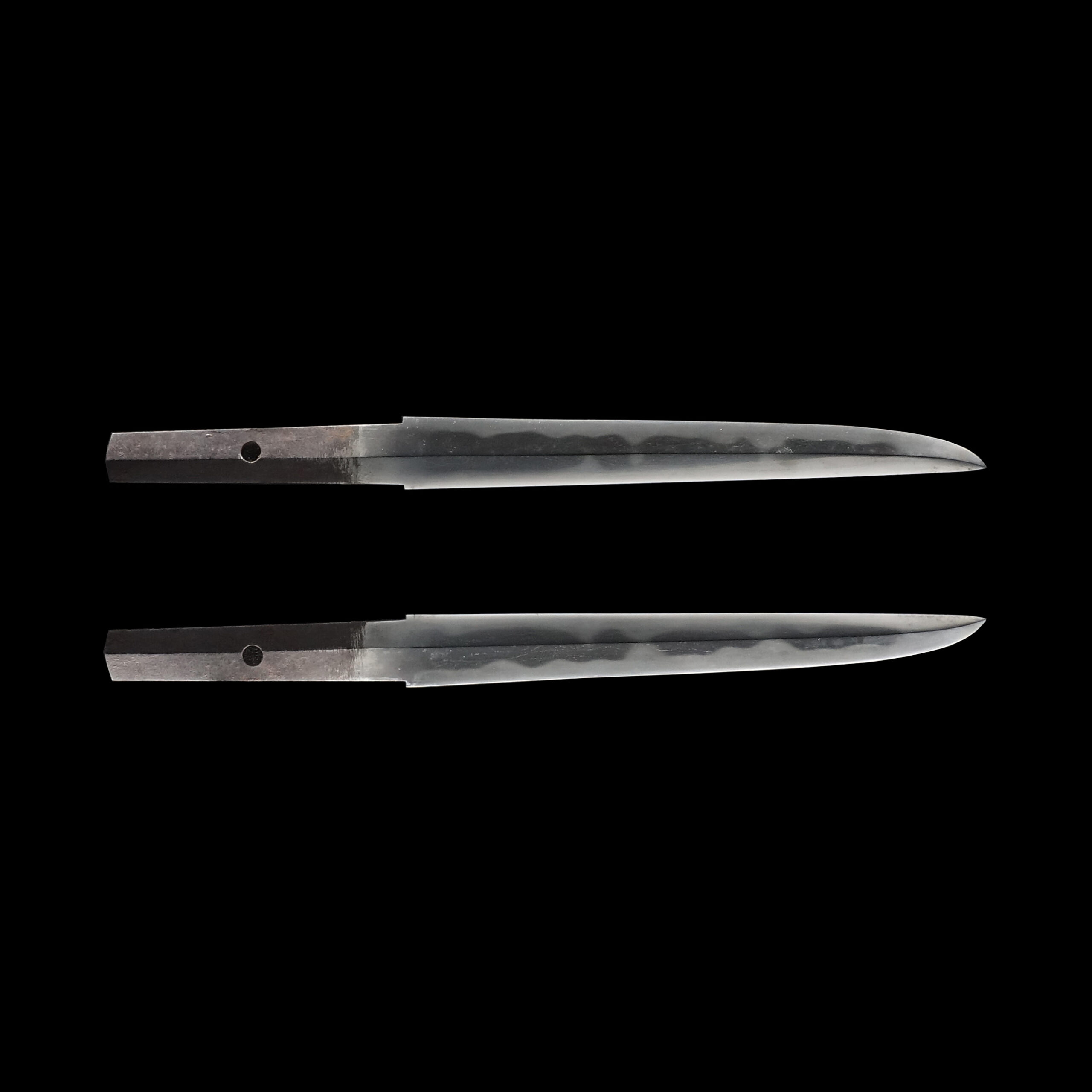
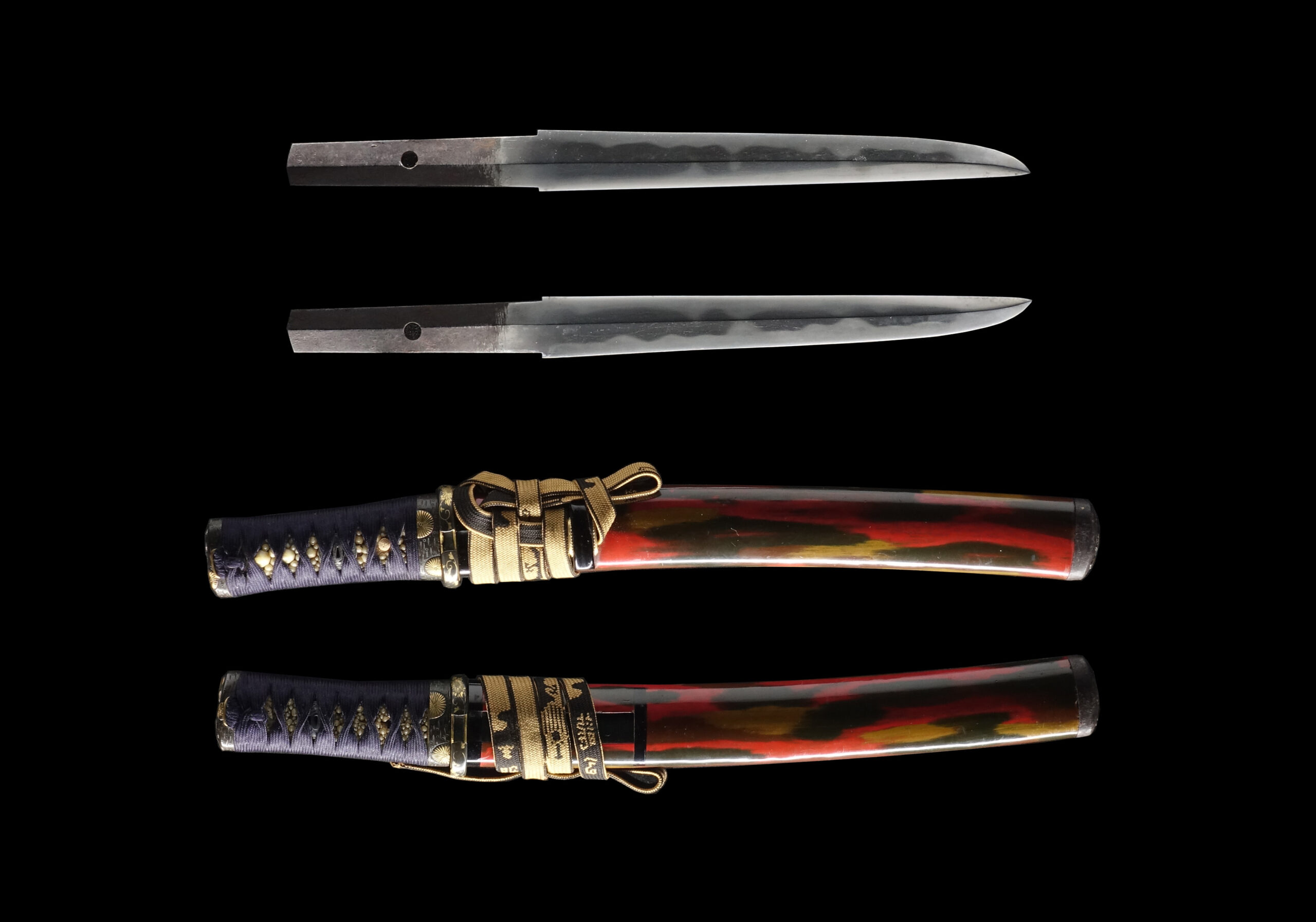
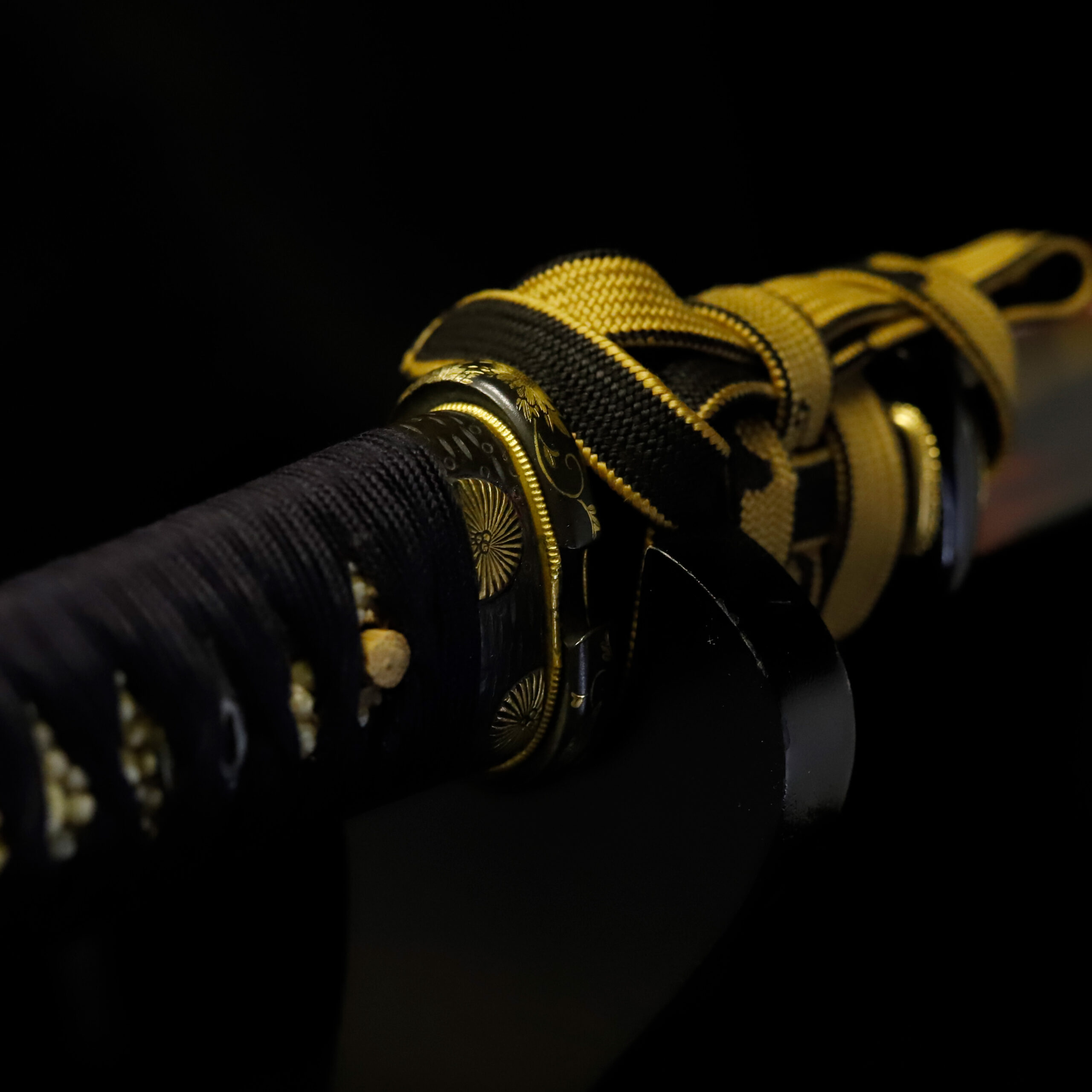
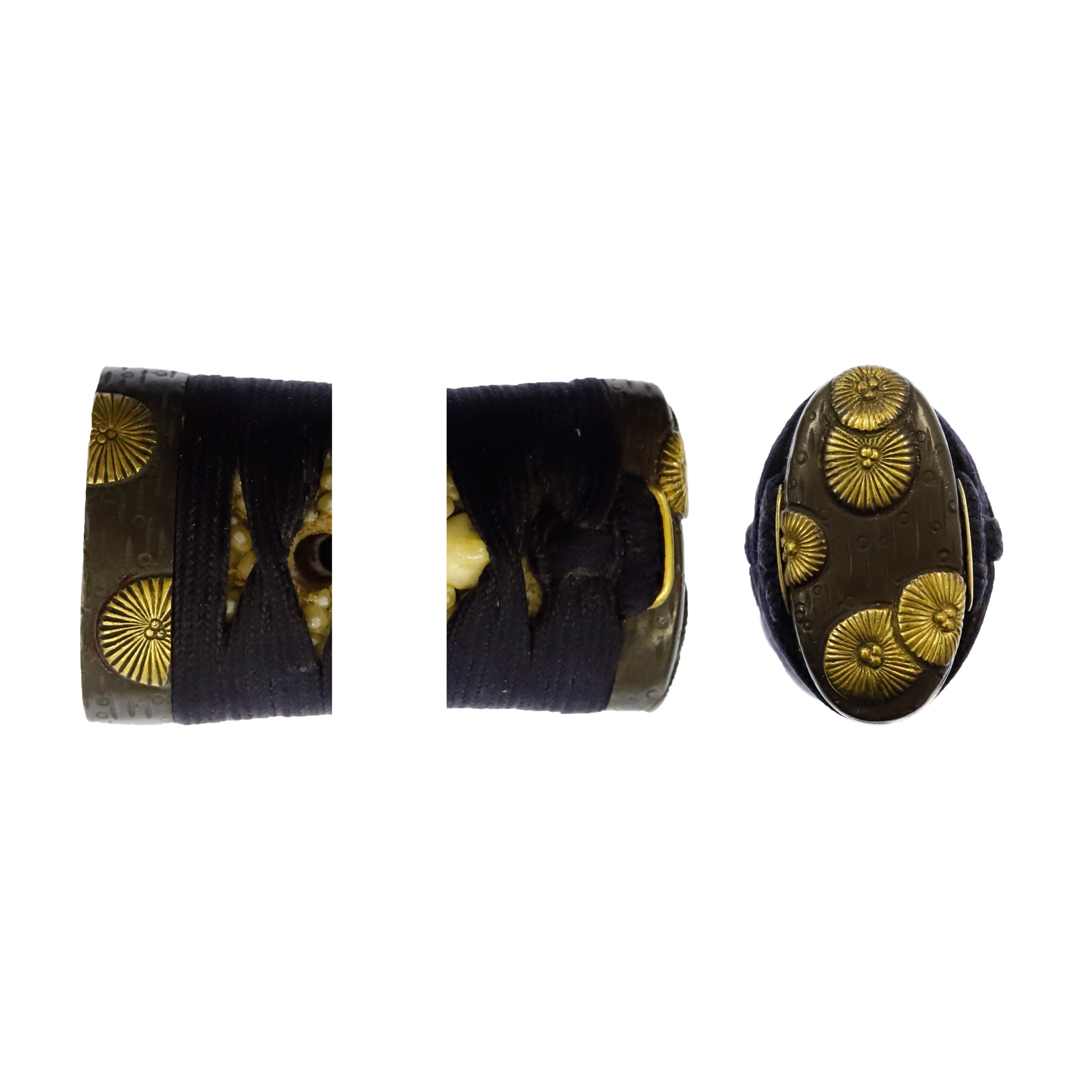
Hoki Hiroga (Mita Gorozaemon line) · 伯耆 · 1532-1565頃
藤代 Jo saku · 刀剣大鑑 上位37%
現在1点販売中
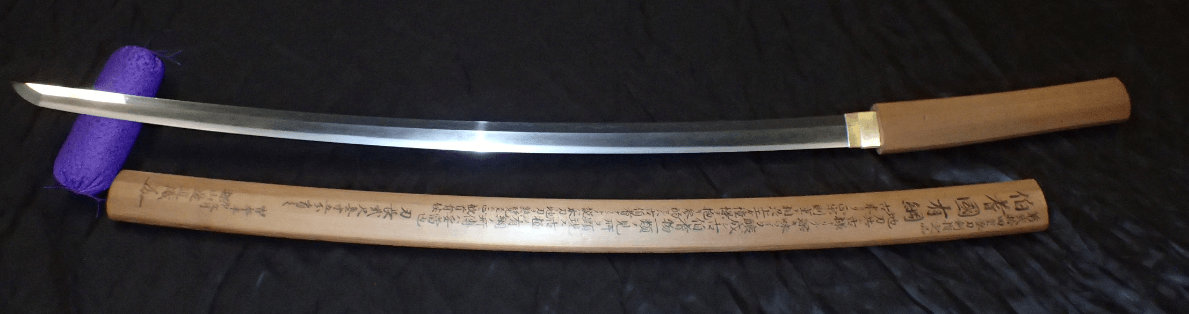
伯耆国の広賀は、見田五郎左衛門尉と銘し、末室町の天文・永禄頃に津原に住して作刀した。棟に「六十一歳作」と行年銘を切った天文二年(一五三三)の短刀は、「同作中最も古い年紀」[[c:1]]と目される。広賀の名は伯耆に文明頃おこり、同銘数代を経て新刀期にまで続き、倉吉鍛冶町に鍛えた道祖尾家と、本稿の見田家とに分かれる。見田家は津原に住し、後に倉吉と往還した。説明書は彼を「相州綱広の門人と伝え」[[c:2]]とし、彼とともに山陰の一隅に及んだのは末相州の作風であった。伯州広賀の同銘数工の中で、説明書は「見田五郎左衛門尉と銘するものが特に上手である」[[c:3]]とし、「若州冬広と並んで」[[c:4]]「室町末期の山陰地方鍛冶の代表工である」[[c:5]]と位置づける。
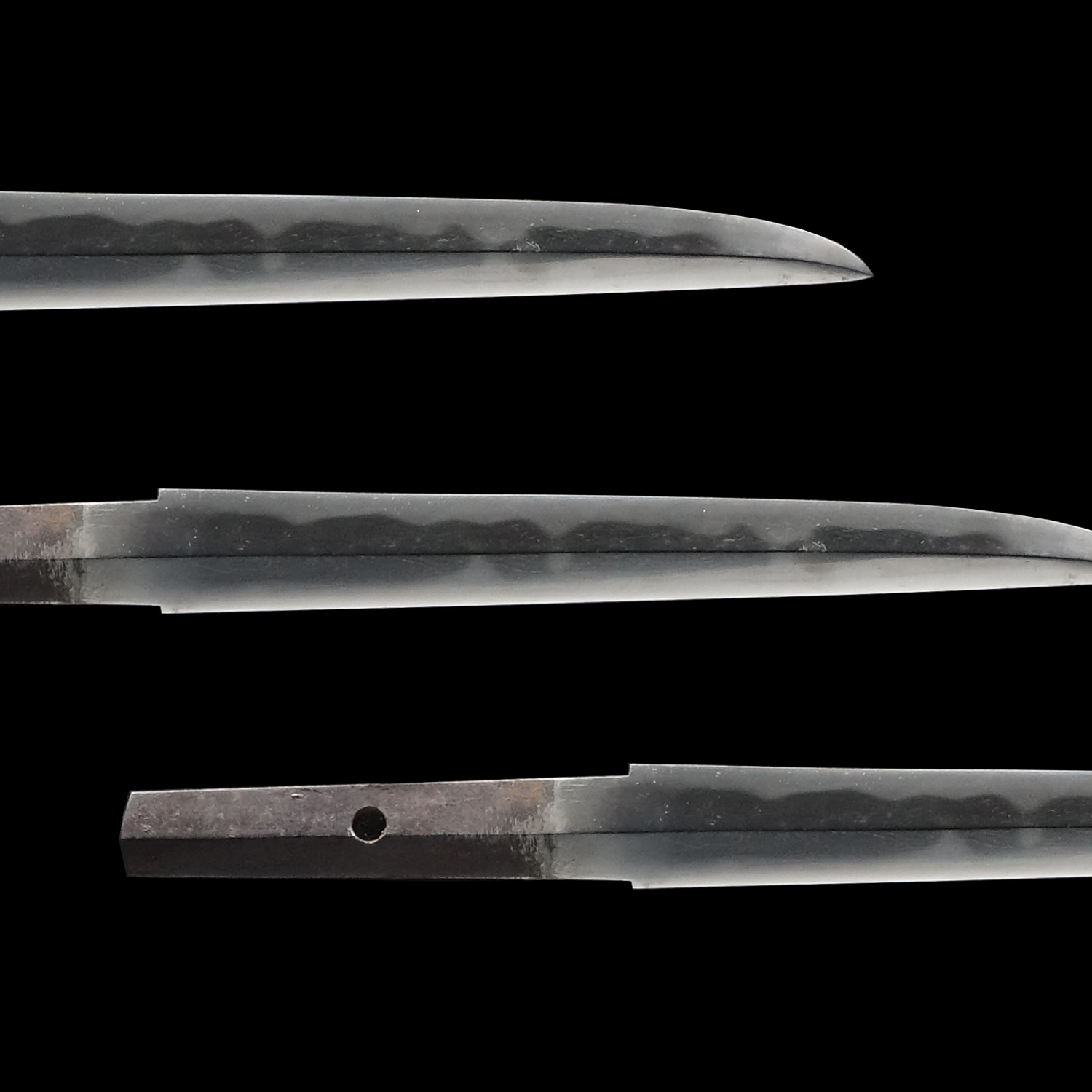
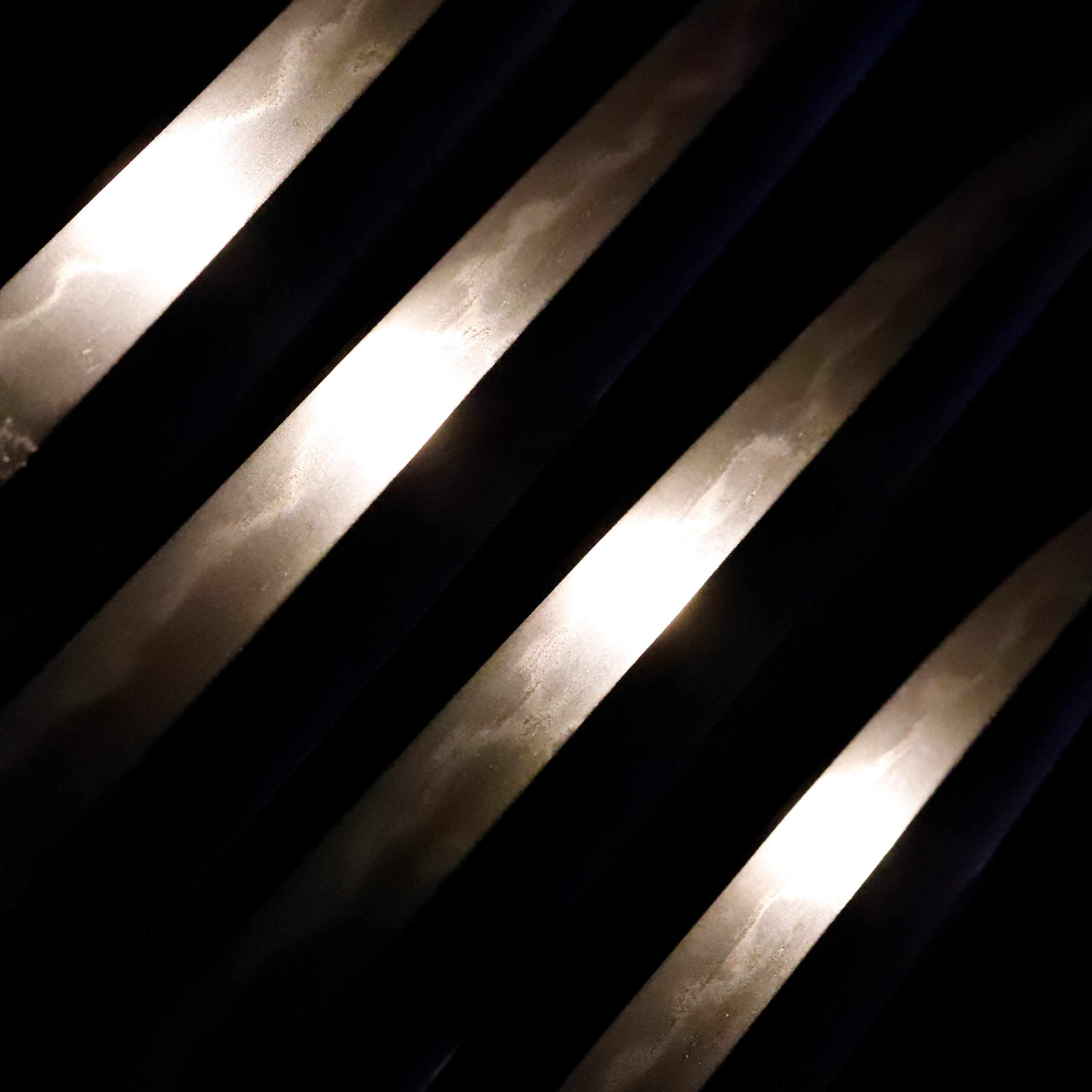
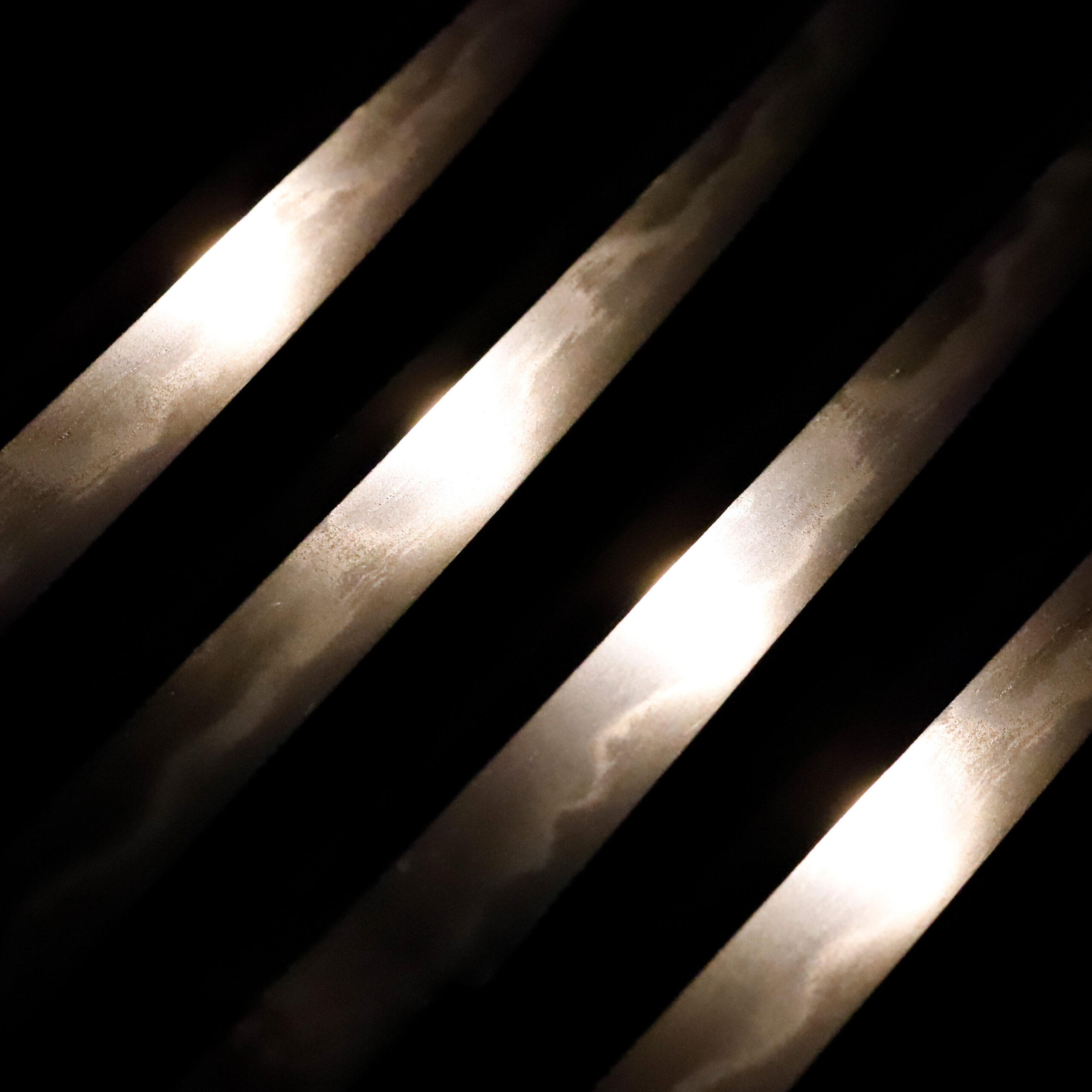
彼の作を最も分かつものは、それが一手ではなく二手であることで、この二面性を説明書は明言する。その作は「相州風のものと、備前風のものと」[[c:6]]に分かれ、一部に「末相州と末備前両派のおもむきが加味されたもの」[[c:7]]がある。相州の側は豊かな一面で、大きく開いた互の目乱れ、処々腰開きの互の目あるいは大のたれ調に複式の趣を見せる。丁子足・葉が沸えて頻りに入り、飛焼頻りにかかって皆焼となり、沸よくつき、砂流しに僅かに金筋を交える。備前調の側は穏やかな一面で、広直刃調に互の目を交え、足・葉を伴って小沸つき、砂流しがかかる。帽子はその下の刃に従い、乱れの上では乱れ込んで深く返り一枚風に棟焼へつづき、直刃の上では直ぐに丸く長く焼き下げる。
二様のいずれの下にも一つの地鉄がある。よくつんだ小板目に地沸が細かく厚くつき、処々杢を交え地景が入り、最も大きな刀では白け風の映りが淡く立つ。永禄八年の刀では地に地斑が交じり、山陰の末作特有の趣を与え、短刀では小板目が表裏に大きく流れ肌を交える。説明書はこの地鉄に直に触れ、その鋼に一種の野趣があり、「かな色に黒味あるものがあってそこがこの派の見どころともなっている」[[c:8]]として、この地刃の趣を地方鍛冶の欠点ではなくこの派の見どころとする。その上の刃は相州の作で沸に富み、直刃の上では足・葉を交えて明るく、短刀では直刃基調に浅いのたれと腰の喰違刃を交え、物打上の焼幅広くなり湯走りごころとなる。
姿も焼きに劣らず明白である。刀は鎬造、先反りつき中鋒延び、一口は鎬高く反り深く、一口は腰反りに踏張りつく。説明書はこれを「室町時代の打刀の典型的なものとして貴重」[[c:9]]とする。短刀は平造、身幅広く重ね厚くふくら枯れて鎧通しの姿を呈し、表に腰樋、裏に護摩箸を彫る。現存する作はいずれも生ぶで、棟寄りに長銘があり、多くは見田五郎左衛門尉広賀の長銘に永禄・天文の年紀、時に注文主銘や行年銘を添え、その年代は皆明らかである。その年紀作は天文五年(一五三六)から元亀三年(一五七二)にわたり、本稿の各作は天文二年・永禄元年・永禄四年・永禄八年の年紀を持ち、十六世紀中葉から第三四半期にその活動を定める。
広賀の名の中で彼の位置は、説明書が上手と見る見田の一派であり、道祖尾家や後の同銘諸代がその周囲に立つ。説明書が描く比較は師よりも同時代の工に向けられる。永禄の刀は「末備前派の作などに比して遜色がな」[[c:10]]いとされ、その作風は備前清光・若州冬広・豊後統景など、同時代の山陰・山陽の工に近いとされる。その一群の中で彼自身の刀を分かつものは、借り物の比較ではなく、相州の側の飛焼から皆焼への転じと、備前調の側の黒味ある地斑を帯びた広い互の目にある。綱広に由来する相州の作風を、彼は模倣としてではなく地方の作風として伝え、都の相州物より硬く野趣に富む。その野趣こそが、説明書にいうとおりこの派を識別する。
広賀を巡る鑑賞は、名声の高い名工というより、上手な地方の名手のそれである。参考書は彼を藤代の位列で上作に置き、刀工大鑑で四百点とする。これは当代第一級には遠く及ばぬ、堅実で収集に値する刀工の評価である。彼に国宝はなく重要文化財もなく、指定を受けた作は五口で、いずれも重要刀剣の位にあり、特別重要刀剣にはまだ上っていない。伝来は、伝わる限り実あるもので、薙刀一口は宇喜多秀家家より前田家に伝わり、永禄八年の刀は注文主のために作られて播州の広峯神社に長く奉納されており、見田五郎左衛門尉の短刀一口は皇室の収蔵に記録される。他の所持者は私蔵である。収集家にとってこのことは、相州・備前の大名跡とは異なり、彼を手の届く存在とする。在銘生ぶの広賀刀、飛焼・皆焼を帯びた相州風の広い乱れ、あるいは穏やかな広直刃調の一口は、年紀明らかな末室町の作として時に市場に現れ、忍耐ある眼に応えるものであり、伯耆広賀の最も上手な手になる、地刃健全な一刀である。
廣賀の位置づけを、日本刀全体および伝統・時代・時期ごとに示します。各位(随一・屈指・有数・著名)は、NBTHK および文化庁による指定に加え、三作や名物帳などの歴史的栄誉を加味したものです。
各項目を選ぶと評価方法が表示されます。
在銘年紀作が示す、確実に活動していた年代
脇物 · 伯耆
時期区分: 末伯耆· 1334–1600
現在4点販売中
末伯耆は、安綱を中心とする古伯耆の名工の世から時代を大きく降った、室町時代後期の伯耆鍛冶を指す。説明によれば、この後代を代表するのは広賀の名跡であって、室町時代の文明頃におこり、以後新刀期にまで続いている。その家系は道祖尾家と見田家とに分かれ、道祖尾家は文明頃から江戸期に亘って倉吉鍛冶町に作刀し、天正頃の道祖尾七郎左衛門尉守広は一派の中でも技量の優れた工とされる。見田家は天文の五郎左衛門尉広賀にはじまり、津原に住して後に倉吉と往還し、名跡は江戸前期まで栄えた。その見田五郎左衛門尉広賀は相州綱広の門人と伝え、年紀はおおむね天文から元亀に渡って、同名数代の中でもとりわけ上手とされる。広賀は若州冬広と並んで、室町末期の山陰地方鍛冶の代表工に数えられている。 作風には、古伯耆の最古層に立つ安綱の世とは隔たった、室町末期の地方鍛冶らしい性格が見える。説明は、広賀の作風を末相州・末備前などに通じるものとし、相州風には大互の目乱れに飛焼が頻りにかかって皆焼となるものが多く、備前風のものもあって二様をなすと記す。直刃調に喰違刃を交える短刀もあり、地鉄は小板目に流れ肌を交え地沸つくが、なかには一種の野趣が盛られ、鉄色に黒味あるものがあって、そこがこの派の見どころともなっている。古伯耆が直刀から湾刀への移りゆく古さの中に古雅な強さをたたえたのに対し、末伯耆では同時代の備前清光・若州冬広・豊後統景らに通う共通の作柄へと整えられ、姿も室町の打刀の典型に落ち着いている。なお守広の佳作には地刃の出来が古作の二字国俊を髣髴とさせるものもあると伝え、後代にも上工の作に紛れる一口が遺ることが知られる。 評価の上で末伯耆を古伯耆と分かつ要点は、何よりその時代と作柄にある。古伯耆が安綱・真守を双璧として湾刀初期を担うのに対し、末伯耆は文明以降の広賀一門を中心とし、その手は末相州・末備前風という室町末期に共通する作域に拠っている。主要工としては道祖尾家の守広、見田家の五郎左衛門尉広賀が挙げられ、ことに見田五郎左衛門尉広賀が最も名高い。広峯神社に奉納されて永く伝えられた一口のように、神社への奉納や注文主銘を伴う作が遺り、年紀や行年銘の明らかなものは同工研究の好資料ともなって、末伯耆の伝来と作域を今に伝えている。 詳しく見る →
室町時代
室町は刀剣業を産業に変えた。徒歩の集団戦とともに打刀が興り、長船と関は数打ち物と注文打ちを並行して産し、勘合貿易は日本刀を数万振の単位で海外へ運んだ。
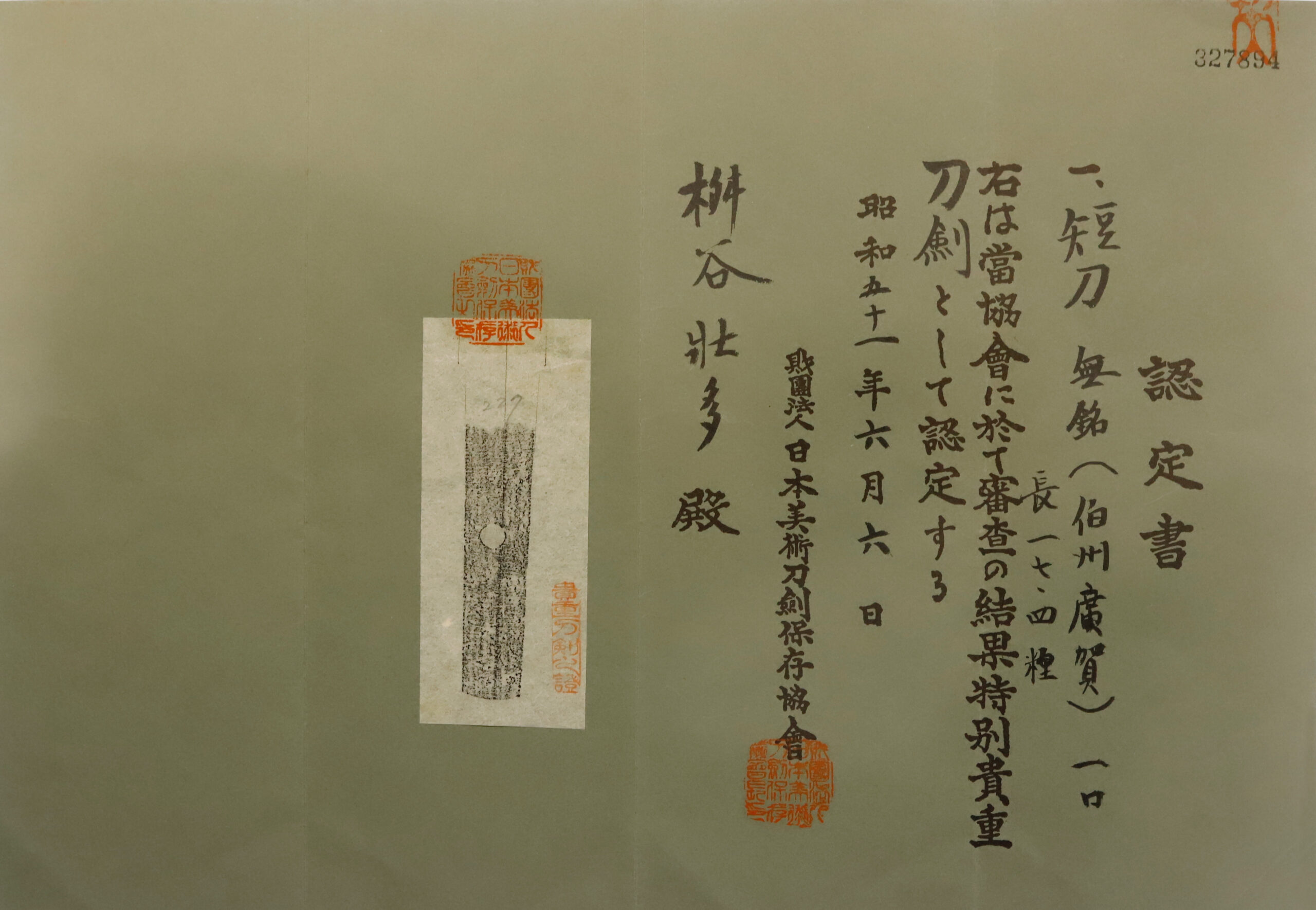
本作はNBTHKの旧鑑定書(貴重・特別貴重)を有しますが、これらは現在発行されておらず、信頼性に欠けるとされています。極めを確認するには、公的な鑑定機関(NBTHK・NTHKなど)への再提出による現代の鑑定をご検討いただけます。
Returns/exchanges limited to defects caused by shipping (except willful misconduct or gross negligence by the company); customers must contact within 72 hours of receiving the product.
Antique Japanese Sword Tanto Attributed to Hiroga with NBTHK Tokubetsu Kicho Certificate 【Description】 Summary This blade is attributed to Hakushu Hiroga (伯州廣賀) during the late Muromachi period ( Early-Mid 16th century). Hiroga is a prestigious school divided into two branches; Saono (道祖尾) and Mita (見田). Hakushu, also known as Hoki no Kuni, was located in today’s Tottori prefecture. Saono (道祖尾) School Saono school was established by the first-gen Hiroga, who originally had learned sword-forging techniques from swordsmiths in Soshu province. After mastering a particular sword-forging tradition called SOSHU DEN, he created his workshop near Sano temple in today’s Tottori prefecture. That is why this school used Saono as its school name. Those who belonged to this school were active during the mid-Muromachi- mid-Edo period (1469-1681) in a village called Kurayoshi Kaji Machi (倉吉鍛冶町) in Hoki province. Mita (見田) School Mita school was founded later than Saono school. It is said that Heibei Hiroga created the school during the late Muromachi period (1504-) and lasted until the early Edo period. This school was located in a village called Tsuhara. The maker’s name Hiroga lasted a few generations during this period. It is said that the founder was an apprentice of Soshu Tsunahiro (相州綱廣), a famous swordsmith in Soshu province (Today’s Kanagawa prefecture). This blade was made in a warring state period (Sengoku Jida) when there were so many rivalries among feudal lords to expand their territories and gain political influence. It has an interesting structure called Moroha Zukuri (諸刃造り), which has two edges on both sides but has a different shape on each side. *Please keep in mind that there are a couple of black rust spots on the tip of the blade. If you like to see the detailed condition, please feel free to contact us. 【Blade】 Cutting Edge Length(Nagasa) : 17.8 cm ( 7.0 inches) Curvature(Sori) : 0 cm (0 inches) Hamon : The crystalline structure which forms along the cutting edge of a blade as a result of the hardening process Jimon(Jihada) : visible steel surface pattern created by folding and hammering during forging process Nakago : Nakago is the tang of the Japanese sword. Japanese swordsmiths left the black rust on the tang because it prevents red rust while the tang is in its handle. And the discoloration of the tang was created over time, and it is a great indicator for a Japanese sword specialist to estimate when the sword was forged. Koshirae: Koshirae is the mounting of the Japanese sword. There are several parts that consist of Koshirae such as Saya(Scabbard), Tsuka(Handle), Kozuka. Fuchi-Kashira : A pair of matching sword fittings that cover the upper and bottom parts of its sword hilt. This Fuchi Kashira is decorated with pine tree designs, and gold-colored paint is applied to them. Although there is partial fading, it remains relatively in good condition. Since pine trees keep their green color throughout the years by withstanding severe heat and cold, people thought this plant pattern represents eternal youth. FIn addition, its color is called the Tokiwa-Iro (常盤色, evergreen trees’ dark green color with brown), and pine trees have another name Tokiwa-Gi (常盤木). Tokiwa means immutability, so Tokiwa-Iro is a color that praises green with a wish for longevity and prosperity. There are many types of pine tree patterns, and they are used in various things. The beauty of pine tree patterns and the auspiciousness associated with the habits of pine tree might be why people have loved it for so long. Tsuka and Menuki : Tsuka is the handle of the Japanese sword and Menuki is its decoration. Seeing from the gaps of the Tsukamaki thread, this Menuki’s motif is a Tsuba (鐔, hand guard). We cannot see its details, but it seems a kind of plant pattern is designed on it. Tsuba and Habaki : Tsuba is the handguard for the Japanese Sword and Habaki is the equipment to make the blade not touch its scabbard inside. It prevents the blade from get
NihontoWatch無銘 · Saono · 室町 · 長さ 17.8cm
Hoki Hiroga (Mita Gorozaemon line) · 伯耆 · 1532-1565頃
藤代 Jo saku · 刀剣大鑑 上位37%
現在1点販売中
伯耆国の広賀は、見田五郎左衛門尉と銘し、末室町の天文・永禄頃に津原に住して作刀した。棟に「六十一歳作」と行年銘を切った天文二年(一五三三)の短刀は、「同作中最も古い年紀」[[c:1]]と目される。広賀の名は伯耆に文明頃おこり、同銘数代を経て新刀期にまで続き、倉吉鍛冶町に鍛えた道祖尾家と、本稿の見田家とに分かれる。見田家は津原に住し、後に倉吉と往還した。説明書は彼を「相州綱広の門人と伝え」[[c:2]]とし、彼とともに山陰の一隅に及んだのは末相州の作風であった。伯州広賀の同銘数工の中で、説明書は「見田五郎左衛門尉と銘するものが特に上手である」[[c:3]]とし、「若州冬広と並んで」[[c:4]]「室町末期の山陰地方鍛冶の代表工である」[[c:5]]と位置づける。
彼の作を最も分かつものは、それが一手ではなく二手であることで、この二面性を説明書は明言する。その作は「相州風のものと、備前風のものと」[[c:6]]に分かれ、一部に「末相州と末備前両派のおもむきが加味されたもの」[[c:7]]がある。相州の側は豊かな一面で、大きく開いた互の目乱れ、処々腰開きの互の目あるいは大のたれ調に複式の趣を見せる。丁子足・葉が沸えて頻りに入り、飛焼頻りにかかって皆焼となり、沸よくつき、砂流しに僅かに金筋を交える。備前調の側は穏やかな一面で、広直刃調に互の目を交え、足・葉を伴って小沸つき、砂流しがかかる。帽子はその下の刃に従い、乱れの上では乱れ込んで深く返り一枚風に棟焼へつづき、直刃の上では直ぐに丸く長く焼き下げる。
二様のいずれの下にも一つの地鉄がある。よくつんだ小板目に地沸が細かく厚くつき、処々杢を交え地景が入り、最も大きな刀では白け風の映りが淡く立つ。永禄八年の刀では地に地斑が交じり、山陰の末作特有の趣を与え、短刀では小板目が表裏に大きく流れ肌を交える。説明書はこの地鉄に直に触れ、その鋼に一種の野趣があり、「かな色に黒味あるものがあってそこがこの派の見どころともなっている」[[c:8]]として、この地刃の趣を地方鍛冶の欠点ではなくこの派の見どころとする。その上の刃は相州の作で沸に富み、直刃の上では足・葉を交えて明るく、短刀では直刃基調に浅いのたれと腰の喰違刃を交え、物打上の焼幅広くなり湯走りごころとなる。
姿も焼きに劣らず明白である。刀は鎬造、先反りつき中鋒延び、一口は鎬高く反り深く、一口は腰反りに踏張りつく。説明書はこれを「室町時代の打刀の典型的なものとして貴重」[[c:9]]とする。短刀は平造、身幅広く重ね厚くふくら枯れて鎧通しの姿を呈し、表に腰樋、裏に護摩箸を彫る。現存する作はいずれも生ぶで、棟寄りに長銘があり、多くは見田五郎左衛門尉広賀の長銘に永禄・天文の年紀、時に注文主銘や行年銘を添え、その年代は皆明らかである。その年紀作は天文五年(一五三六)から元亀三年(一五七二)にわたり、本稿の各作は天文二年・永禄元年・永禄四年・永禄八年の年紀を持ち、十六世紀中葉から第三四半期にその活動を定める。
広賀の名の中で彼の位置は、説明書が上手と見る見田の一派であり、道祖尾家や後の同銘諸代がその周囲に立つ。説明書が描く比較は師よりも同時代の工に向けられる。永禄の刀は「末備前派の作などに比して遜色がな」[[c:10]]いとされ、その作風は備前清光・若州冬広・豊後統景など、同時代の山陰・山陽の工に近いとされる。その一群の中で彼自身の刀を分かつものは、借り物の比較ではなく、相州の側の飛焼から皆焼への転じと、備前調の側の黒味ある地斑を帯びた広い互の目にある。綱広に由来する相州の作風を、彼は模倣としてではなく地方の作風として伝え、都の相州物より硬く野趣に富む。その野趣こそが、説明書にいうとおりこの派を識別する。
広賀を巡る鑑賞は、名声の高い名工というより、上手な地方の名手のそれである。参考書は彼を藤代の位列で上作に置き、刀工大鑑で四百点とする。これは当代第一級には遠く及ばぬ、堅実で収集に値する刀工の評価である。彼に国宝はなく重要文化財もなく、指定を受けた作は五口で、いずれも重要刀剣の位にあり、特別重要刀剣にはまだ上っていない。伝来は、伝わる限り実あるもので、薙刀一口は宇喜多秀家家より前田家に伝わり、永禄八年の刀は注文主のために作られて播州の広峯神社に長く奉納されており、見田五郎左衛門尉の短刀一口は皇室の収蔵に記録される。他の所持者は私蔵である。収集家にとってこのことは、相州・備前の大名跡とは異なり、彼を手の届く存在とする。在銘生ぶの広賀刀、飛焼・皆焼を帯びた相州風の広い乱れ、あるいは穏やかな広直刃調の一口は、年紀明らかな末室町の作として時に市場に現れ、忍耐ある眼に応えるものであり、伯耆広賀の最も上手な手になる、地刃健全な一刀である。
廣賀の位置づけを、日本刀全体および伝統・時代・時期ごとに示します。各位(随一・屈指・有数・著名)は、NBTHK および文化庁による指定に加え、三作や名物帳などの歴史的栄誉を加味したものです。
各項目を選ぶと評価方法が表示されます。
在銘年紀作が示す、確実に活動していた年代
脇物 · 伯耆
時期区分: 末伯耆· 1334–1600
現在4点販売中
末伯耆は、安綱を中心とする古伯耆の名工の世から時代を大きく降った、室町時代後期の伯耆鍛冶を指す。説明によれば、この後代を代表するのは広賀の名跡であって、室町時代の文明頃におこり、以後新刀期にまで続いている。その家系は道祖尾家と見田家とに分かれ、道祖尾家は文明頃から江戸期に亘って倉吉鍛冶町に作刀し、天正頃の道祖尾七郎左衛門尉守広は一派の中でも技量の優れた工とされる。見田家は天文の五郎左衛門尉広賀にはじまり、津原に住して後に倉吉と往還し、名跡は江戸前期まで栄えた。その見田五郎左衛門尉広賀は相州綱広の門人と伝え、年紀はおおむね天文から元亀に渡って、同名数代の中でもとりわけ上手とされる。広賀は若州冬広と並んで、室町末期の山陰地方鍛冶の代表工に数えられている。 作風には、古伯耆の最古層に立つ安綱の世とは隔たった、室町末期の地方鍛冶らしい性格が見える。説明は、広賀の作風を末相州・末備前などに通じるものとし、相州風には大互の目乱れに飛焼が頻りにかかって皆焼となるものが多く、備前風のものもあって二様をなすと記す。直刃調に喰違刃を交える短刀もあり、地鉄は小板目に流れ肌を交え地沸つくが、なかには一種の野趣が盛られ、鉄色に黒味あるものがあって、そこがこの派の見どころともなっている。古伯耆が直刀から湾刀への移りゆく古さの中に古雅な強さをたたえたのに対し、末伯耆では同時代の備前清光・若州冬広・豊後統景らに通う共通の作柄へと整えられ、姿も室町の打刀の典型に落ち着いている。なお守広の佳作には地刃の出来が古作の二字国俊を髣髴とさせるものもあると伝え、後代にも上工の作に紛れる一口が遺ることが知られる。 評価の上で末伯耆を古伯耆と分かつ要点は、何よりその時代と作柄にある。古伯耆が安綱・真守を双璧として湾刀初期を担うのに対し、末伯耆は文明以降の広賀一門を中心とし、その手は末相州・末備前風という室町末期に共通する作域に拠っている。主要工としては道祖尾家の守広、見田家の五郎左衛門尉広賀が挙げられ、ことに見田五郎左衛門尉広賀が最も名高い。広峯神社に奉納されて永く伝えられた一口のように、神社への奉納や注文主銘を伴う作が遺り、年紀や行年銘の明らかなものは同工研究の好資料ともなって、末伯耆の伝来と作域を今に伝えている。 詳しく見る →
室町時代
室町は刀剣業を産業に変えた。徒歩の集団戦とともに打刀が興り、長船と関は数打ち物と注文打ちを並行して産し、勘合貿易は日本刀を数万振の単位で海外へ運んだ。
本作はNBTHKの旧鑑定書(貴重・特別貴重)を有しますが、これらは現在発行されておらず、信頼性に欠けるとされています。極めを確認するには、公的な鑑定機関(NBTHK・NTHKなど)への再提出による現代の鑑定をご検討いただけます。
Returns/exchanges limited to defects caused by shipping (except willful misconduct or gross negligence by the company); customers must contact within 72 hours of receiving the product.