説明
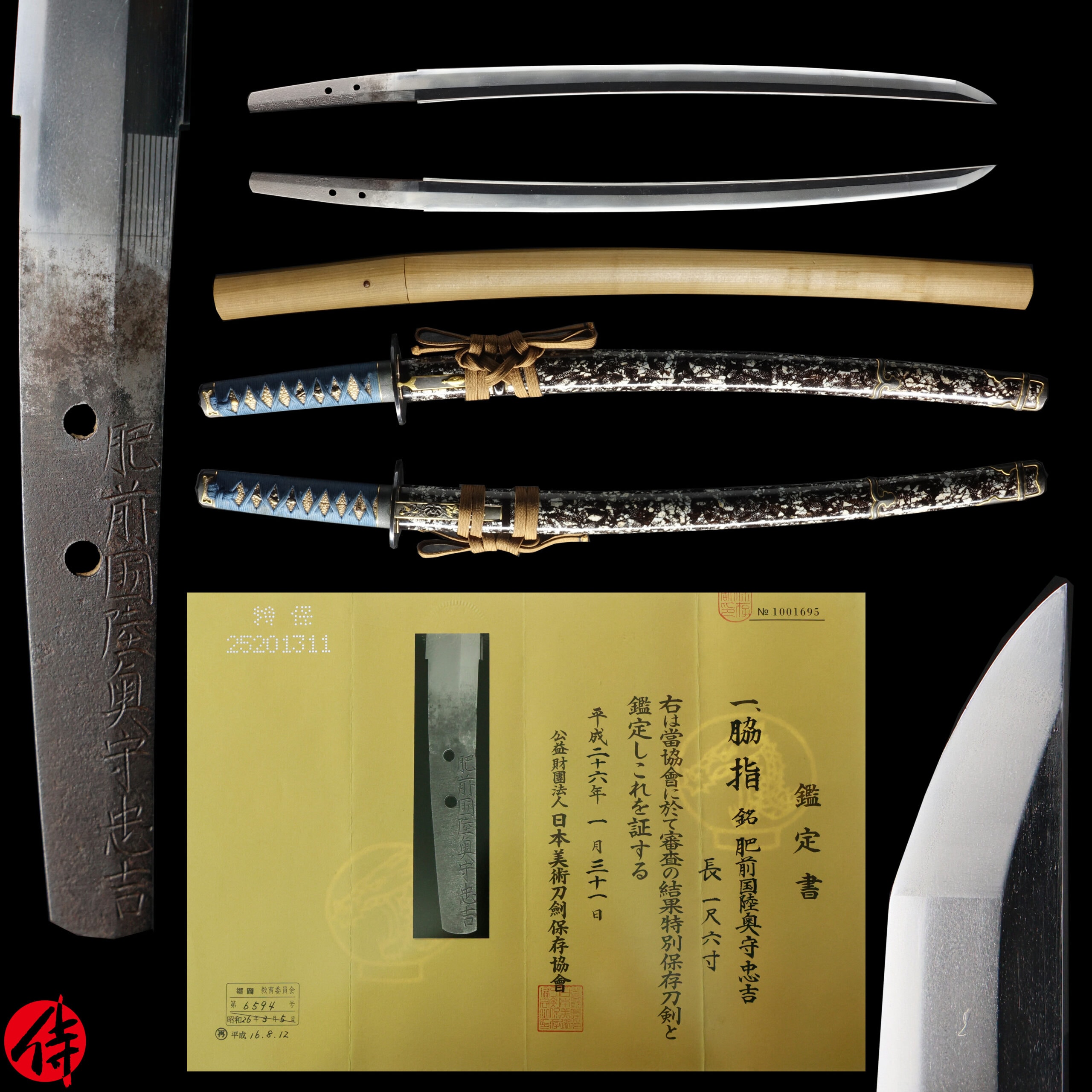
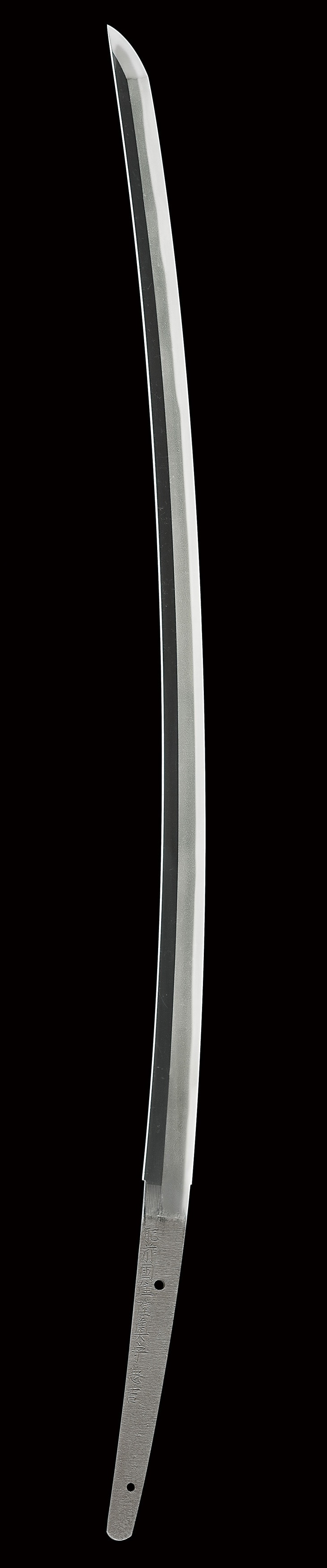
Antique Japanese Sword Wakizashi Signed by
Mutsu no Kami Tadayoshi
with NBTHK
Tokubetsu
Hozon
Certificate
【Description】
This blade was signed by Mutsu no Kami Tadayoshi (陸奥守忠吉), also known as the third-gen Tadayoshi. He was especially active during the Manji-Kanbun era (1658-1673: Early Edo period). He was the son of Omi Daijo Tadahiro (近江大掾忠広). The maker’s name, Tadayoshi, lasted nine generations from the early to late Edo period.
He received Mutsu Daijo title in the third year of the Manji era (1660) and got promoted to Mutsu no Kami in the first year of the Kanbun era (1661). Kami and Daisho are honorable official titles given by the imperial court for one’s excellent craftsmanship. There are not many remaining works created by the third-gen Tadayoshi because it is said that he often did a Daisaku for his father, Tadahiro. Daisaku is a regular act where an apprentice or a child of the swordsmith signed his master’s name with his master’s permission or forged a blade on behalf of the master. The third-gen Tadayoshi died at the age of 50.
The third-gen Tadayoshi is also known for forging very sharp swords, which made him and his work classified as Saijo Owazamono Toko( 良業物刀工). Wazamono is a classification of Japanese swords and swordsmiths used in Japan to identify historic blades of exceptional quality in the book written by Kaiho Kenjaku ( 懐宝剣尺 ) in 1797. He is categorized as a top-tier sword maker in terms of fame and craftsmanship.
The first-gen Tadayoshi (His grandfather)
The first-gen Tadayoshi was born and raised in the Saga domain. In 1596, under the domain’s order, he went to Kyoto to learn the sword-forging technique from Umetada Myojyu(埋忠明寿), one of the greatest swordsmiths in the early Edo period. He improved his craftsmanship and returned to the Saga domain two years later (1598). The first head of the Nabeshima clan, Nabeshima Katsushige, appreciated the work of the first-gen Tadayoshi very much. Then, Katsushige appointed him as his Okakaekaji, a swordsmith who exclusively forged swords for a specific domain or clan. And Tadayoshi started to stay near Saga castle, which is the headquarter of the Nabeshima clan. And, he founded Hizen Tadayoshi school, which trained more than 100 swordsmiths during the Edo period. Tadahiro is one of them.
Omi Daijo Tadahiro (His father)
Tadahiro took over the school his father ran when he was only 19 years old, and he started to make a sword in the same year. This fact indicates that he was excellent at making swords, and the apprentices of his father(Tadayoshi) supported him to run the school. Tadahiro received the title of Omi Daijyo in 1641 (the sixth year of the Genroku era). He kept forging swords for almost 60 years for the Nabeshima clan, strong feudal lords.
Tadahiro died at the age of 81 in 1693 and left a large number of excellent swords before his decease. He had many famous apprentices, such as the third-gen Mutsu Daijyo Tadayoshi, Harima Daijyo Tadakuni, and Kawachi Daijyo Masahiro.
Hizen Province
The swordsmiths in the Hizen province worked under the auspices of the Nabeshima clan like Tadayoshi. They could produce beautiful Jigane-patterned blades, also known as Hizen To, using and mixing carbon steel made in western countries. Hizenkoku had been flourishing by international trading. The geographic location of this domain made it possible to have easy access to western carbon steel.
It is appraised as a
Tokubetsu Hozon Token
(特別保存刀剣) issued by NBTHK (Nihon Bijutsu Touken Hozon Kyokai: 日本美術刀剣保存協会). This authentication paper was only given to authentic Japanese swords, especially well preserved and high quality with artistic value.
*Please keep in mind that there are a couple of Kitae Kizu on this blade. If you like to know the detailed condition, please feel free to contact us.
【Blade】
Cutting Edge Length (Nagasa)
:
49.6 cm (19.5 inches)
Curvature (Sori)
:
0.90 cm (0.35 inches)
Hamon
:
The crystalline structure which forms along the cutting edge of a blade as a re

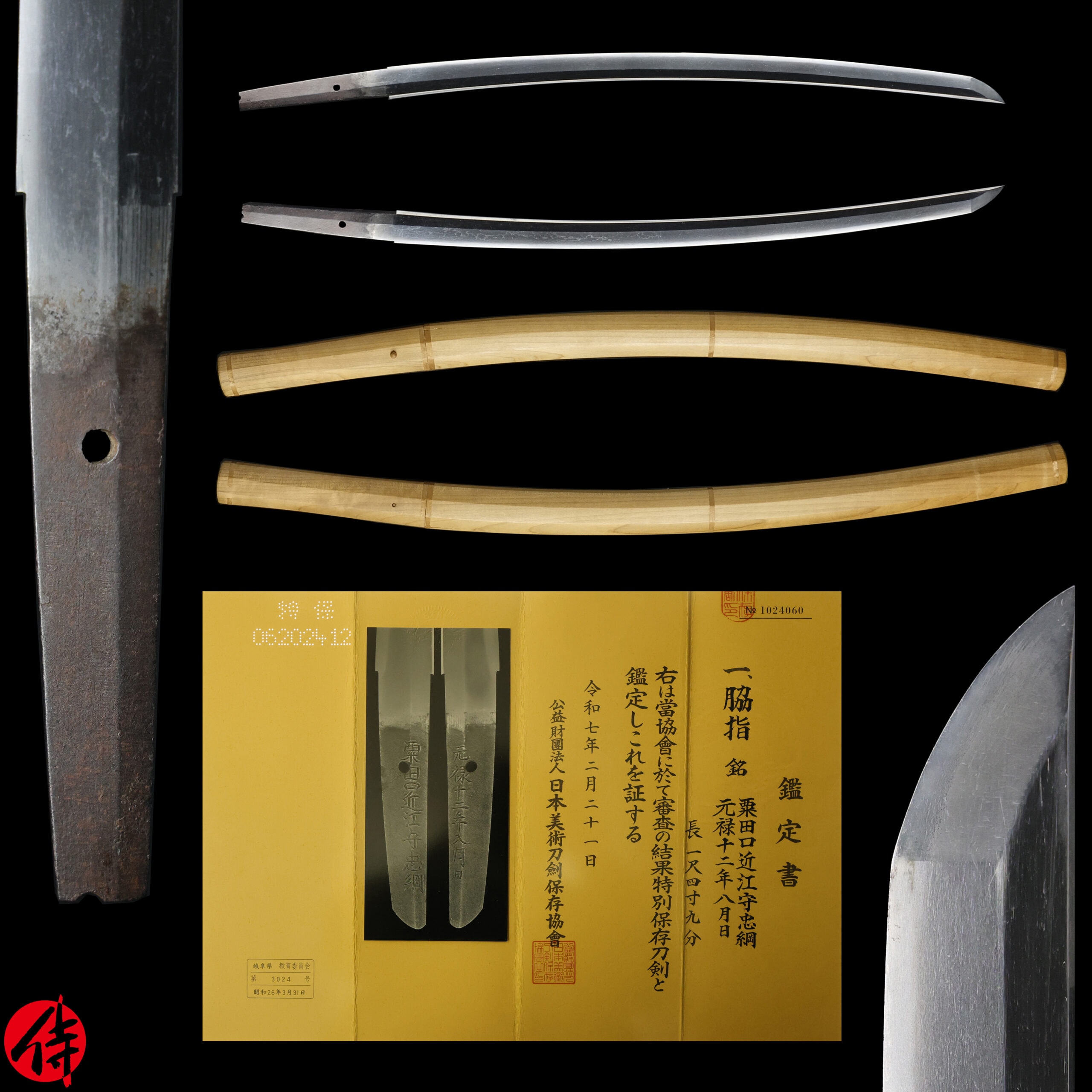
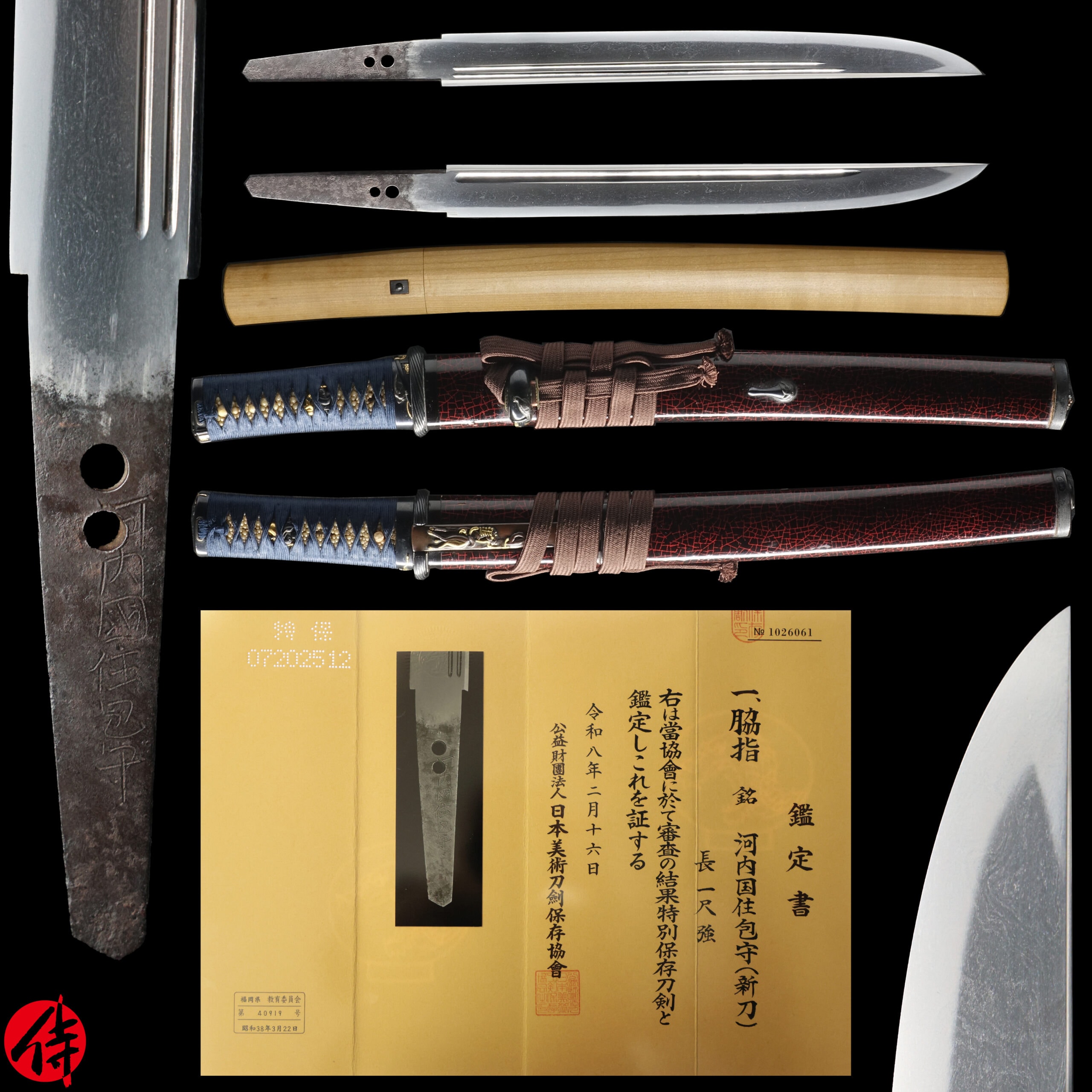
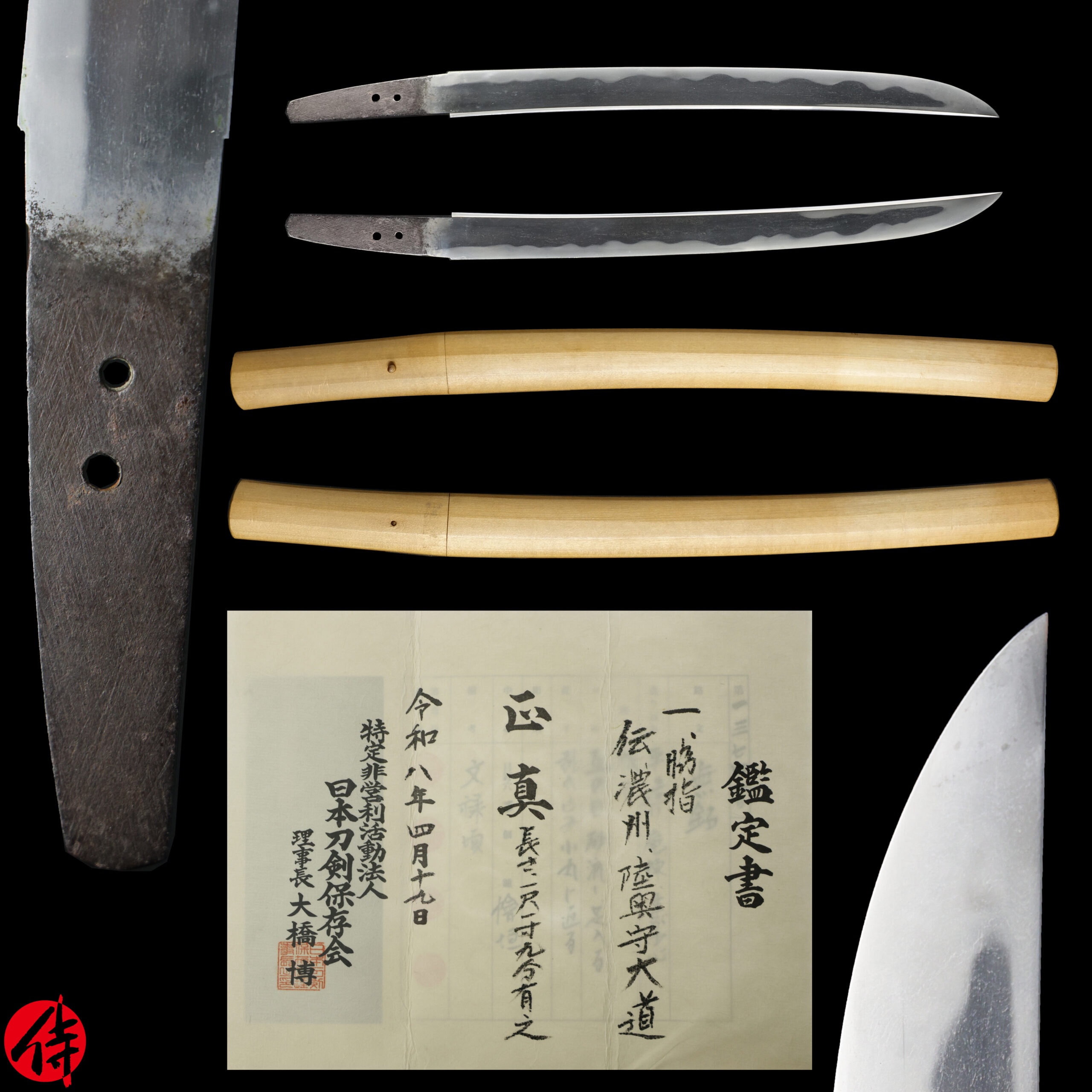
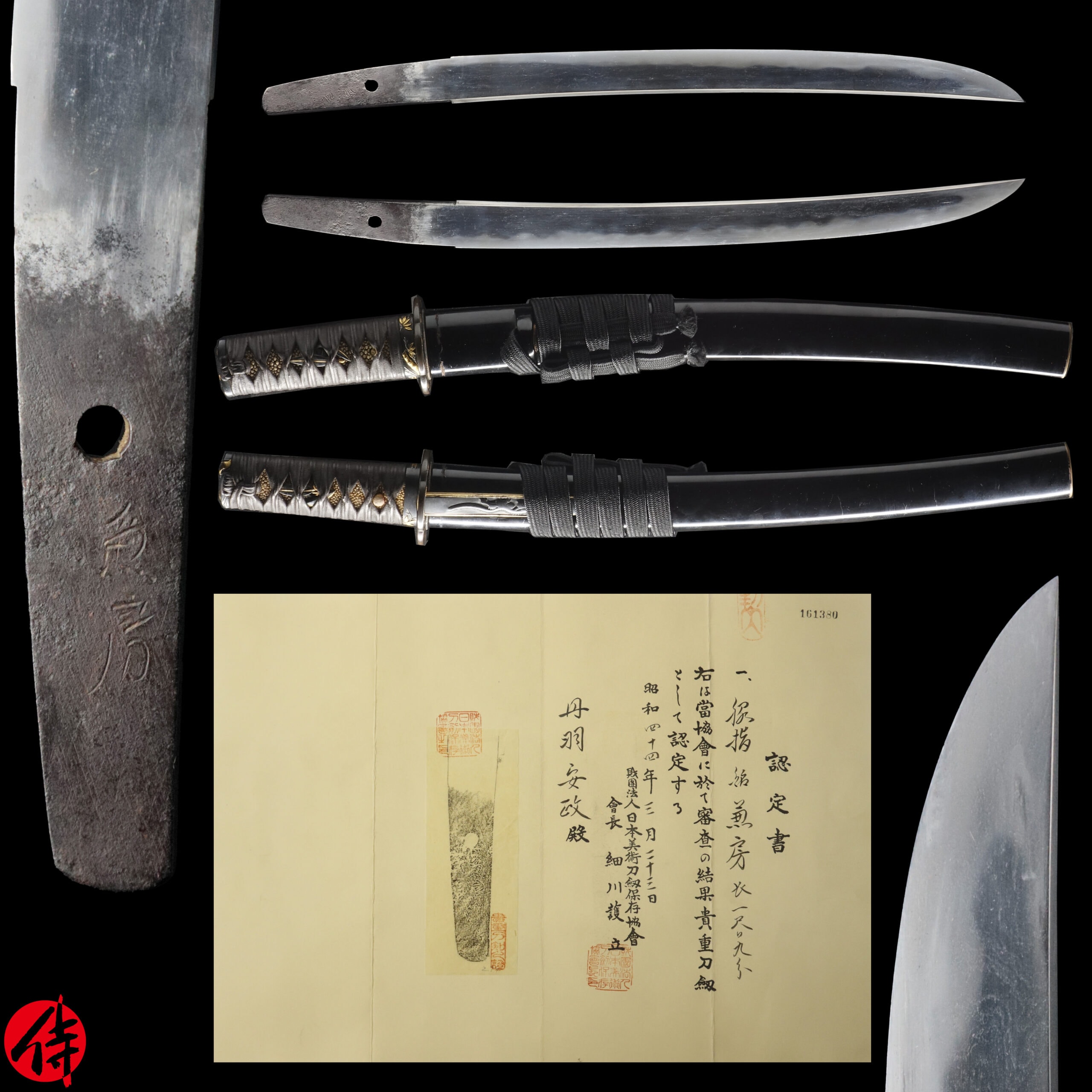
![陸奥守藤原忠吉 特別保存刀剣鑑定書 Wakizashi Mutsuno - kami Fujiwara Tadayoshi [ NBTHK : Tokubetsu Hozon ]品番:WA036](/_next/image?url=https%3A%2F%2Fitbhfhyptogxcjbjfzwx.supabase.co%2Fstorage%2Fv1%2Fobject%2Fpublic%2Flisting-images%2Ftoyuukai%2FL398639%2F00.jpg&w=2560&q=90)
![Wakizashi [Hizen-koku Mutsu-no-kami Tadayoshi(Saijo-O-Wazamono)][N.B.T.H.K] Tokubetsu Hozon Token](/_next/image?url=https%3A%2F%2Fitbhfhyptogxcjbjfzwx.supabase.co%2Fstorage%2Fv1%2Fobject%2Fpublic%2Flisting-images%2Fworld-seiyudo%2FL31269%2F00.jpg&w=2560&q=90)