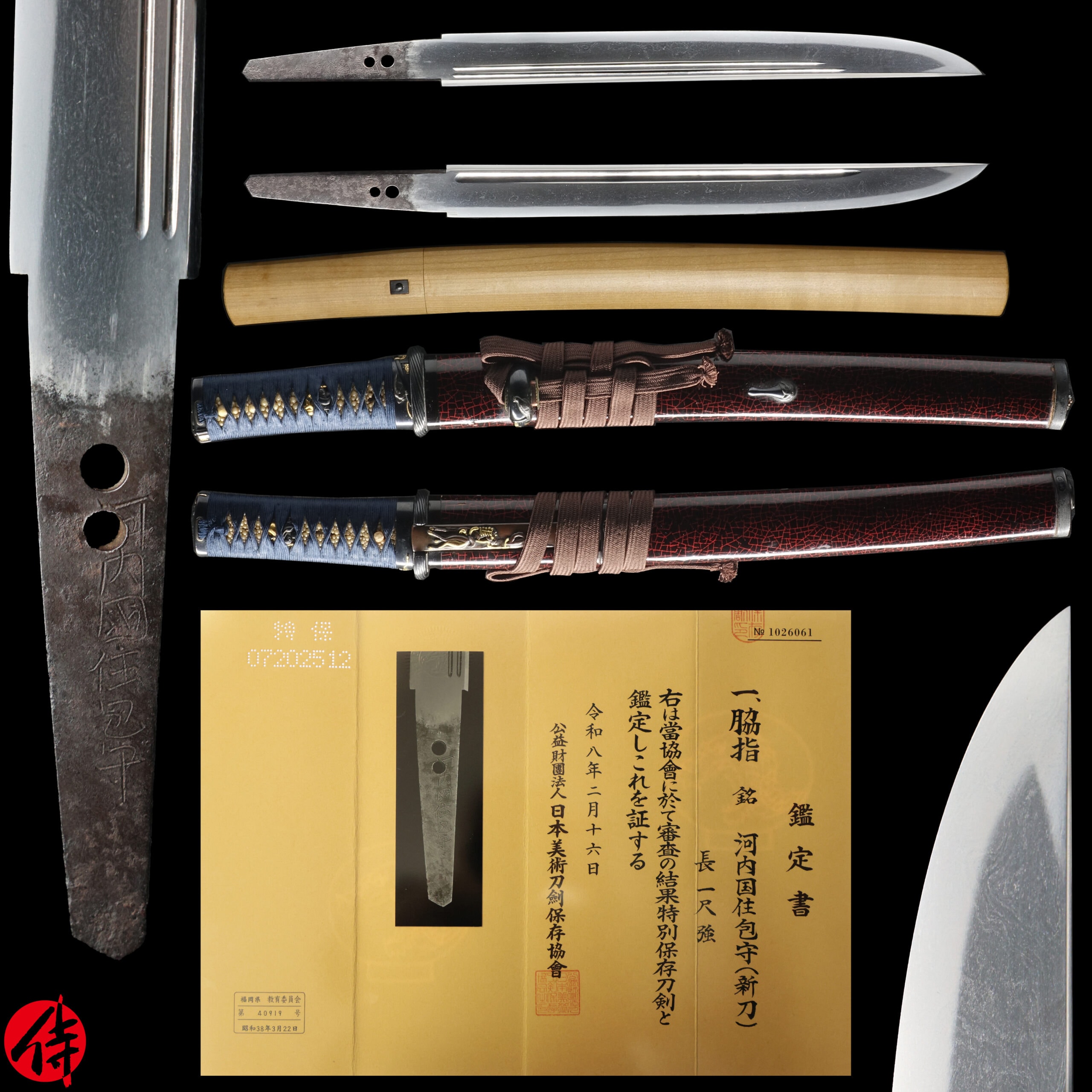
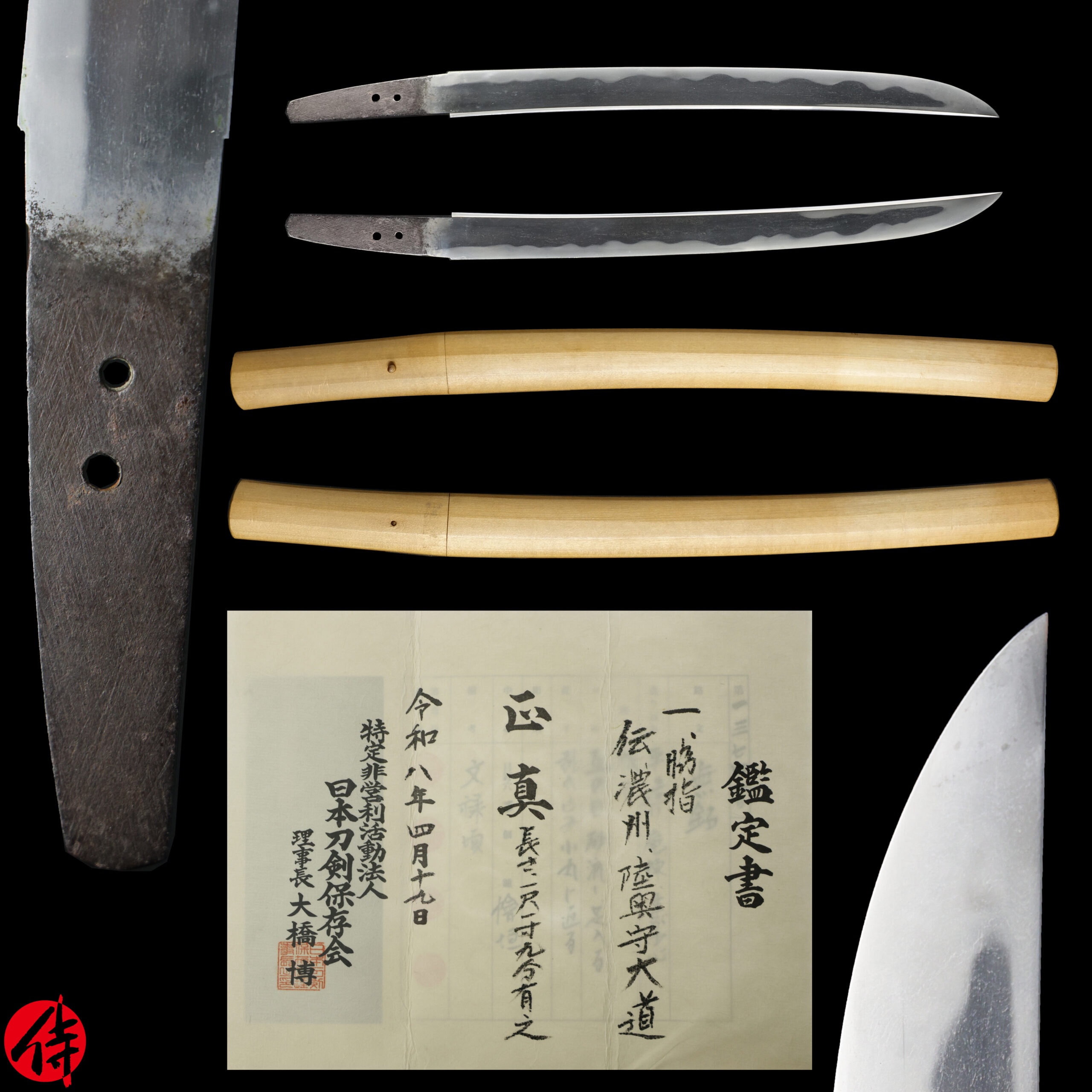
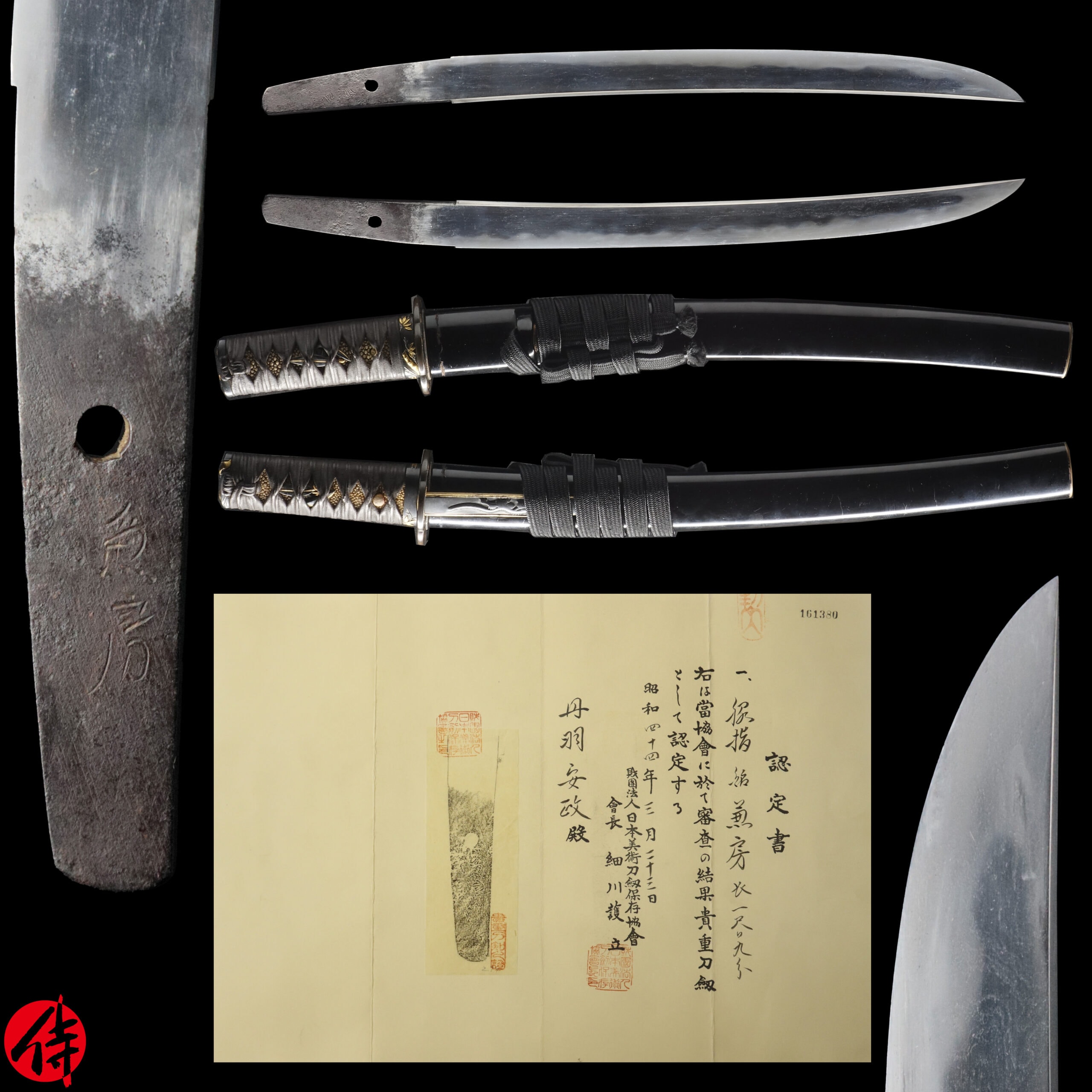
説明
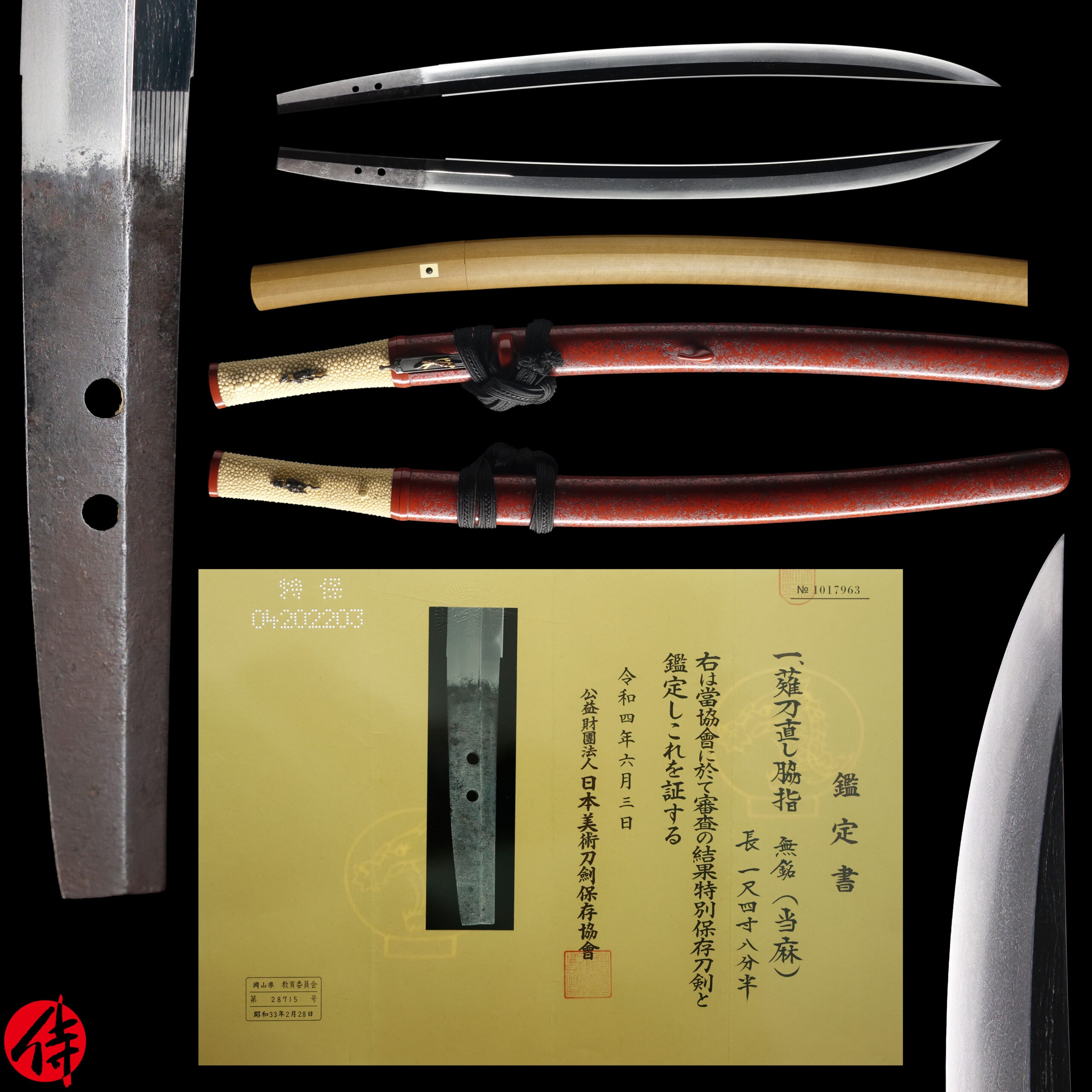
Antique Japanese Sword Wakizashi Attributed to Taima with NBTHK
Tokubestsu
Hozon
Certificate
【Description】
This blade is attributed to Taima (当麻), which was the name of the school active during late Kamakura period-early Nanbokucho period (Late 13th- Early 14th century) in Yamato province. Taima smiths were one of the five Yamato sword-forging schools and were associated with Taima Temple in Taima Town, Kitakatsuragi District, Nara Prefecture, a key transportation hub in ancient times. The school originated in the late Kamakura period within the estates of Kōfuku-ji Temple (興福寺, currently located in Nara City, Nara Prefecture) and was patronized by the temple.
The founder of the Taima school is said to be Kuniyuki (国行), who emerged during the Shōō era (1288–1293). The school flourished throughout the Nanboku-chō period (1336–1392). Like the other four Yamato schools, Taima smiths
served politically powerful monks. They were initially forging swords for military monks who became powerful due to the government’s policy back then. Monks needed many weapons as there were many political rivalries between influential temples. They required strong weapons like swords to protect themselves. During this time, Taima school or other Yamato sword schools met the requests from monks. They also forged blades for Samurai during their heyday.
This blade is an outstanding example of a naginata-naoshi (薙刀直し), a type of sword reforged from a naginata, a pole weapon with a curved blade measuring several tens of centimeters at the tip of a long shaft. The naginata was already in use by the late Heian period (794–1185) and is famously associated with Benkei (弁慶).
A distinguishing feature of naginata-naoshi is its curvature, which is positioned toward the tip, making the blade’s curve continuous from the hamachi (notch at the base) to the kissaki (tip). It retains a shinogi (ridge line), but lacks a yokote (dividing line between the blade and tip). As the use of naginata declined on the battlefield, many were reforged into uchigatana, a type of sword more suited for later combat styles.
Yamato Den
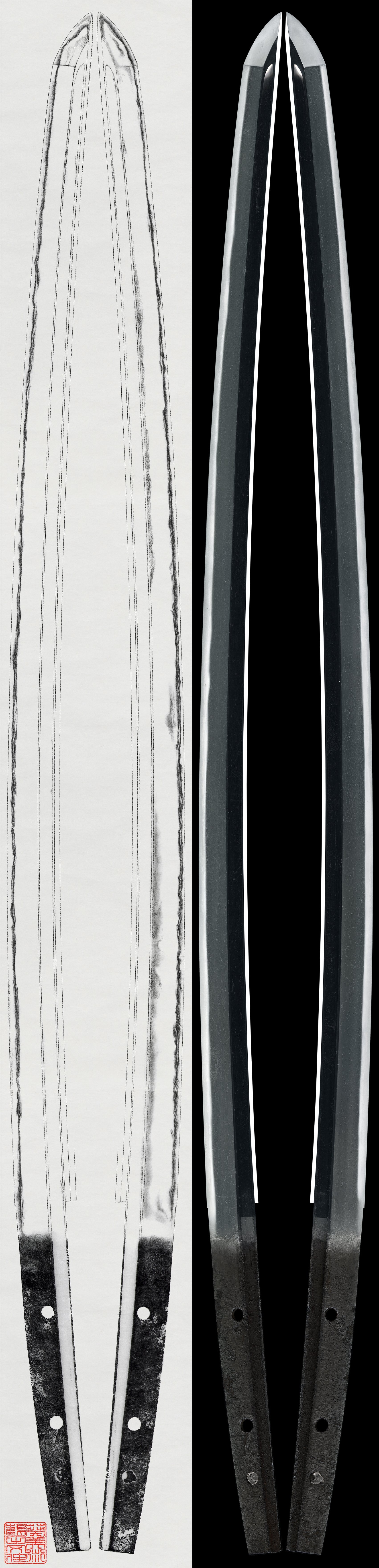
The swords forged in Yamato regions are famous for their beautiful Jigane, steel surface, and straight tempering line (Suguha). And, they invented the particular sword-forging tradition called YAMATO DEN. This blade has a beautiful Jigane with a Suguha tempering line, which shows an outstanding characteristic of the Yamato sword.
This blade is appraised as a
Tokubetsu Hozon Token
(特別保存刀剣) issued by NBTHK(Nihon Bijutsu Touken Hozon Kyokai:日本美術刀剣保存協会). This authentication paper was only given to authentic Japanese swords, especially well preserved and high quality with artistic value.
*Please keep in mind that there are a couple of Kitae Kizu on this blade. If you like to see the detailed condition, please feel free to contact us.
【Blade】
Cutting Edge Length(Nagasa)
:
45.7 cm (
17.9 inches)
Curvature(Sori)
:
0.15
cm ( 0.05 inches)
Hamon
:
The crystalline structure which forms along the cutting edge of a blade as a result of the hardening process
Jimon(Jihada)
:
visible steel surface pattern created by folding and hammering during forging process
Kissaki
:
Kissaki is the tip of the Japanese sword.
Nakago
:
Nakago is the tang of the Japanese sword.
Koshirae
: Koshirae is the mounting of the Japanese sword. There are several parts that consist of Koshirae such as Saya (Sabbard), Tsuka (Handle), Tsuba (Handguard).
Fuchi-Kashira
:
A pair of matching sword fittings that cover the upper and bottom parts of its sword hilt.
Tsuka and Menuki
:
Tsuka is the handle of the Japanese sword and Menuki is its decoration.
The design of this Menuki features an intricate depiction of a peony flower (botan, 牡丹) with delicate, overlapping petals, crafted in dark metal. The peony, a symbol of prosperity, honor, and bravery in Japanese culture, is accentuated with gold-plated leaves, adding contrast and depth to the piece.
The Menuki is a decorative fitting found on the hilt (tsuka