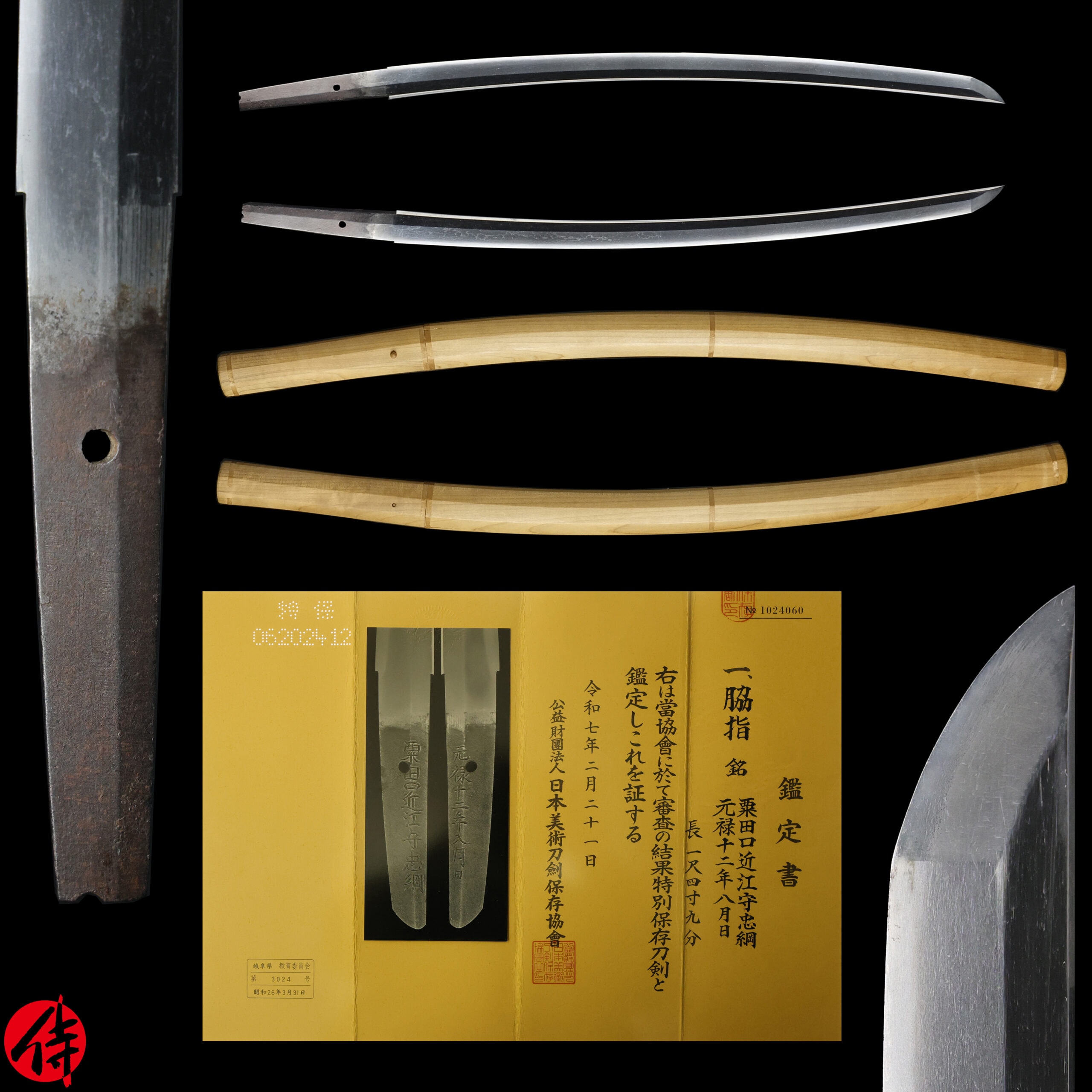
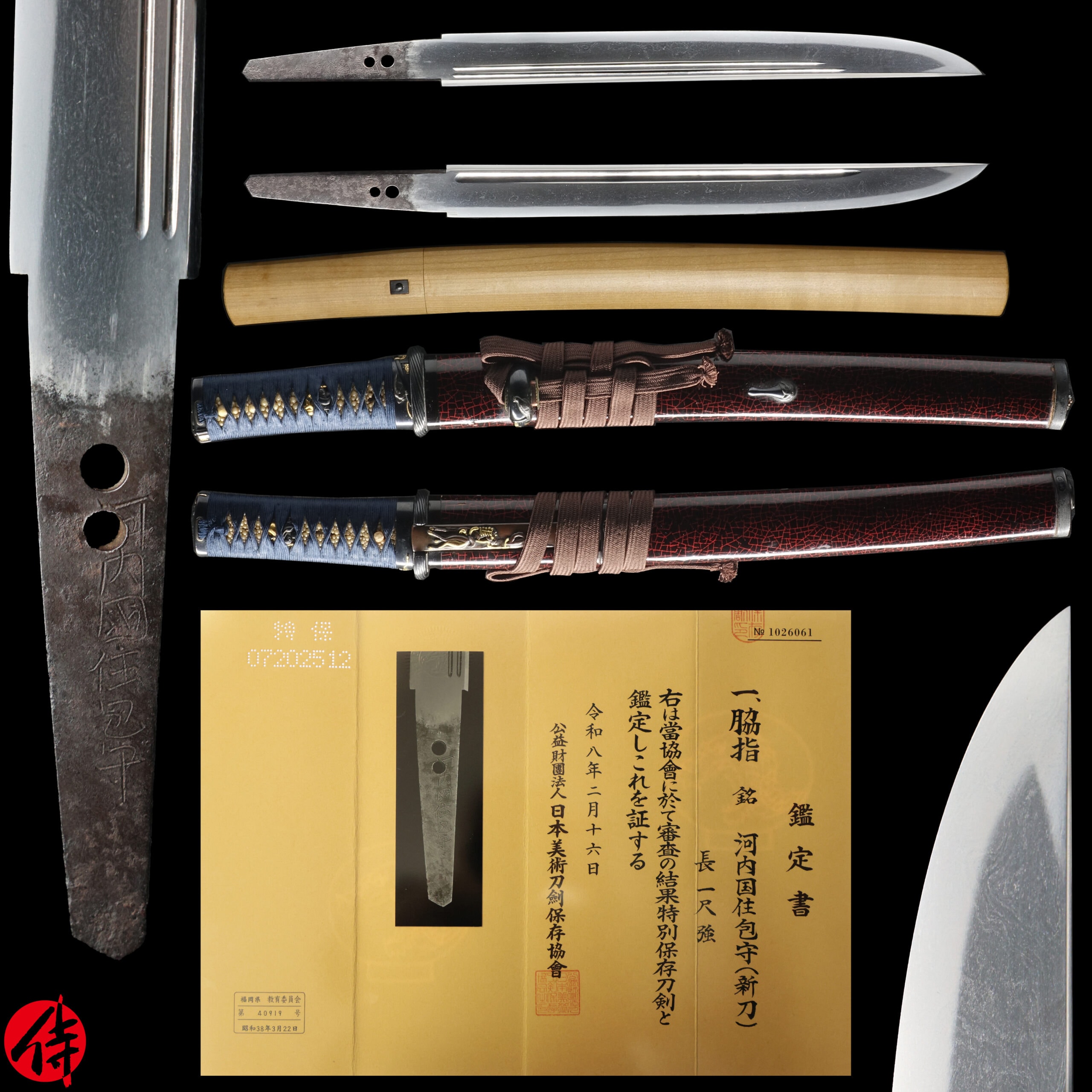
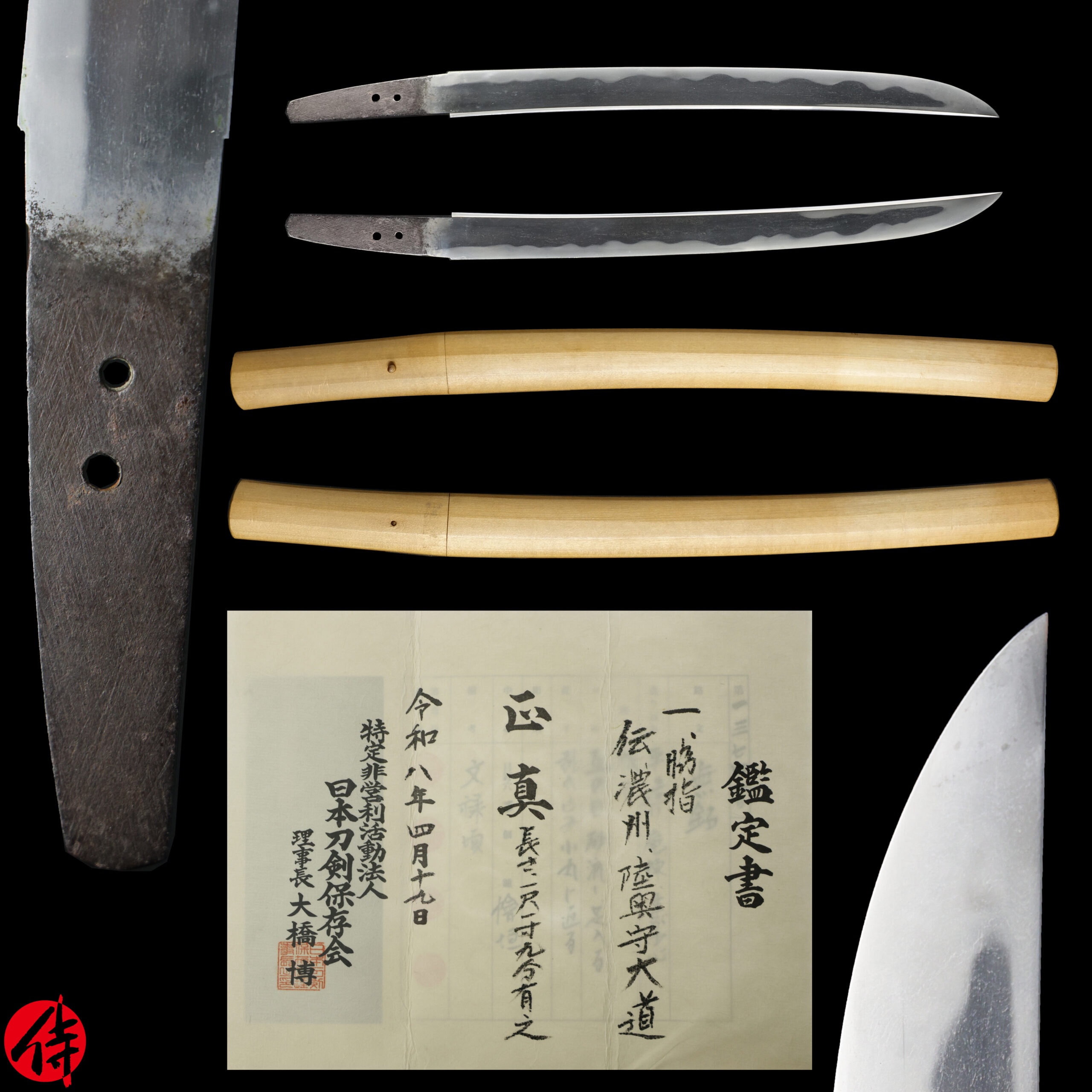
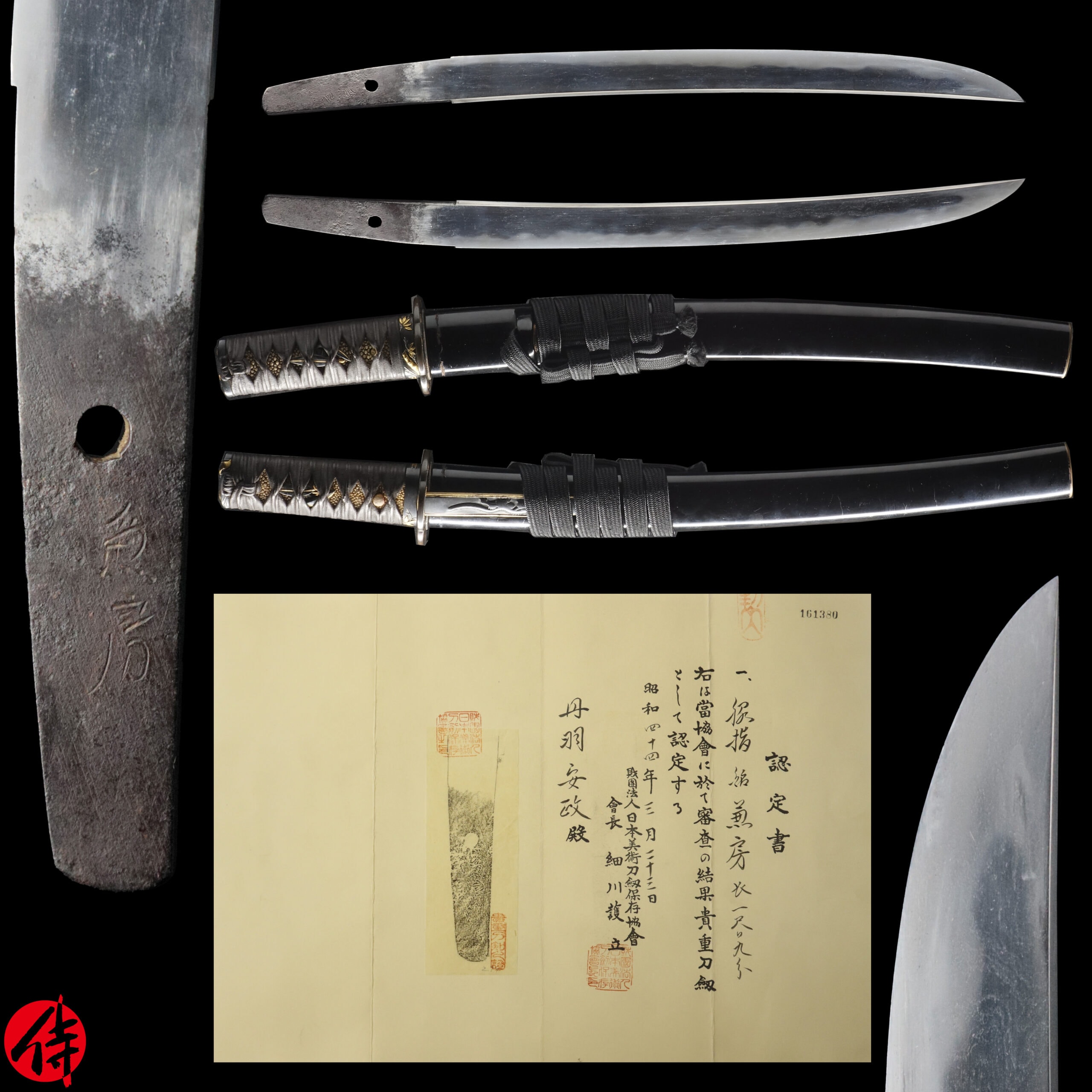
説明
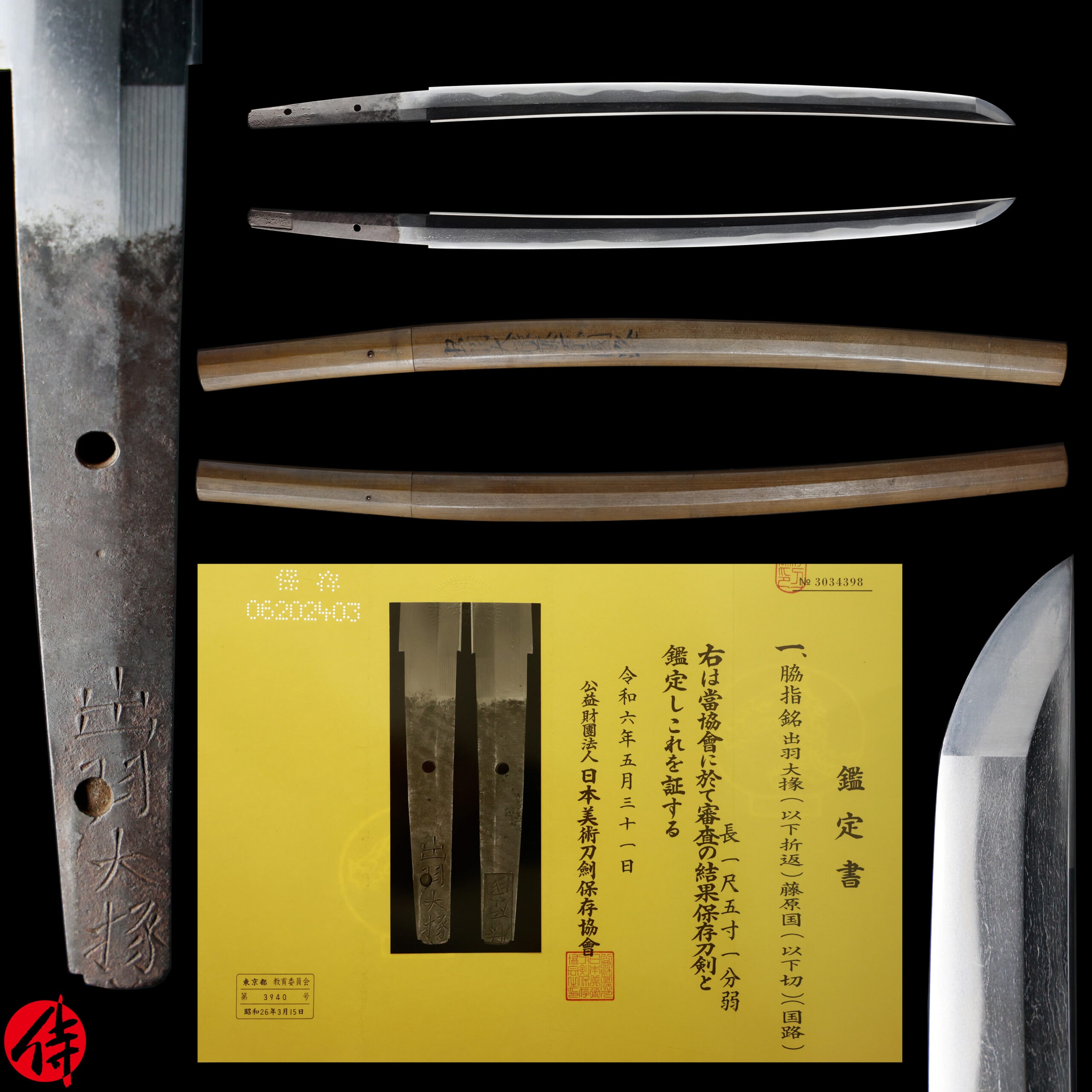
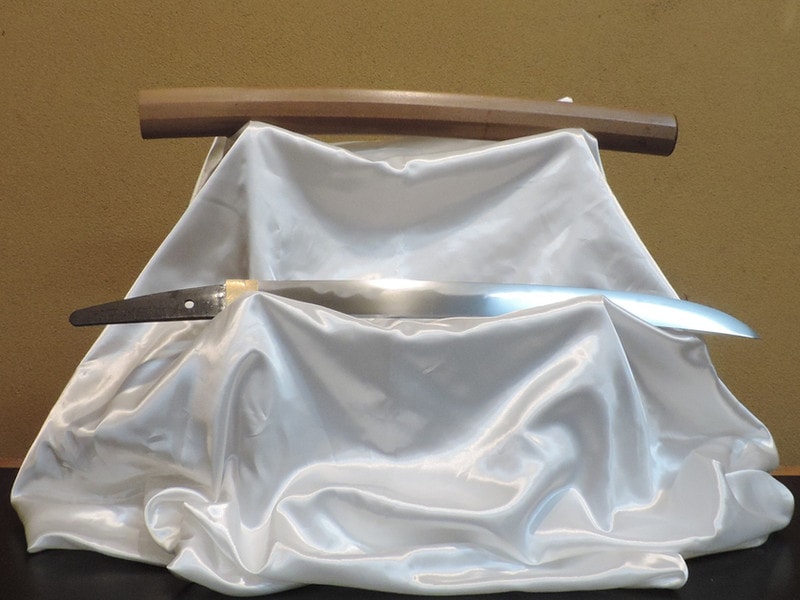
Antique Japanese Sword Wakizashi Signed by Fujiwara Kunimichi with NBTHK
Hozon
Certificate
【Description】
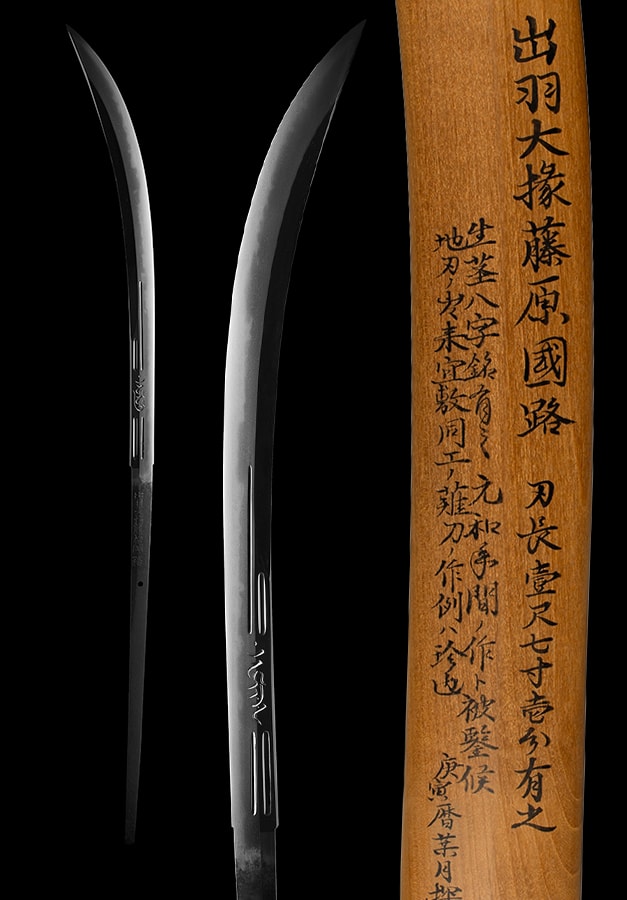
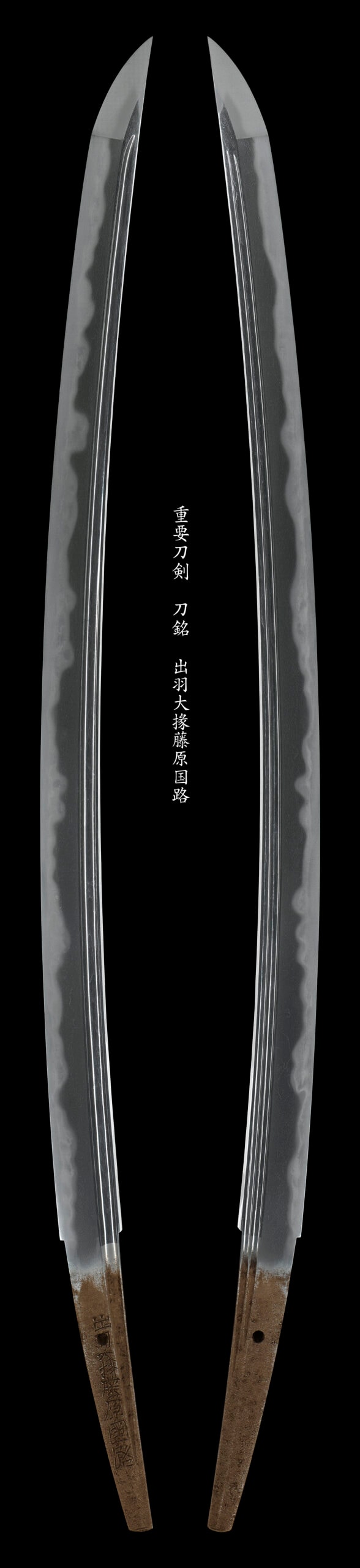
This blade was signed by Dewa Daijo Fujiwara Kunimichi (出羽大掾藤原国路), who was especially active during the Genna-Meireki era era (1615-1658: Early Edo period) in Yamashiro province (today’s Kyoto prefecture). It is said that Kunimichi originally belonged to Mishina school at the beginning of his career and later started to serve Horikawa Kunihiro school. He also signed Heianjo Kunimichi (平安城国道), Heianjo Jyu Kunimichi (平安城住国路), Dewa Daijo Fujiwara Rai Kunimichi (出羽大掾藤原来国路).
He was born in the 4th year of the Tensho era (1576: Azuchi Momoyama period). Based on available records, he started to officially appear in Japanese sword history in the 13th year of the Keisho era (1608: the beginning of the Edo period). He first signed Kunimichi (国道). As you can see, the letter of Michi is different from the one seen on this blade. Those who belonged to Mishina (三品) school used Michi (道) as their maker’s names, such as Iga no Kami Kimichi (伊賀守金道). That is why it is believed that Kunimichi originally belonged to Mishina school. Also, at the end of his career, he used Rai (来) in his maker’s name, which is the only characteristic of the swordsmiths who belonged to Mishina school back then.
In the 14th year of the Keisho era (1609), he started to use both Kunimichi (国道) and Kunimichi (国路). It is thought that this year was when he shifted his maker’s name to Kunimichi (国路). He received the title of Dawa Daijo (出羽大掾) in the 20th year of the Keisho era (1615). Kami is an honorable official title given by the imperial court for one’s excellent craftsmanship. Since Dewa Daijo is inscribed on this blade, this blade was at least made after 1615 when he had already mastered superb sword-forging techniques.
His master, Horkawa Kunihiro, died in the 18th year of the Kisho era (1613). After his master’s decease, it is said that he started to belong to Mishina school again and learned sword-forging techniques from Iga no Kami Kinmichi.
Kunimichi was one of the most prominent figures in Horikawa Kunihiro school. He was incredibly excellent at forging blades in Mino DEN, one of the five Japanese sword forging traditions. Two of his works are Important Cultural Property, and five of them are Important Artwork, all of which were designated by the Agency for Cultural Affairs.
It is appraised as a
Hozon Token
(保存刀剣) issued by NBTHK (Nihon Bijutsu Touken Hozon Kyokai: 日本美術刀剣保存協会). This authentication paper was only given to authentic Japanese swords, especially well preserved and high quality with artistic value.
*Please keep in mind that there is a small Kitae Kizu on the blade. If you like to see more detailed condition, please feel free to contact us.
【Blade】
Cutting Edge Length (Nagasa)
:
45.7 cm (17.9 inches)
Curvature (Sori)
:
0.9 cm (0.35 inches)
Hamon
:
The crystalline structure which forms along the cutting edge of a blade as a result of the hardening process.
Jimon(Jihada)
:
visible steel surface pattern created by folding and hammering during forging process
Kissaki
:
Kissaki is the tip of the Japanese sword.
Nakago
:
Nakago is the tang of the Japanese sword.
Japanese swordsmiths left the black rust on the tang because it prevents red rust while the tang is in its handle. And the discoloration of the tang was created over time, and it is a great indicator for a Japanese sword specialist to estimate when the sword was forged.
Habaki
:
Habaki is the equipment to make the blade not touch its scabbard inside. It prevents the blade from getting rusty and chipped.
Authentication Paper
:
NBTHK Hozon Certificate for the blade (No. 3034398)
NBTHK
, also known as Nihon Bijutsu Touken Hozon Kyokai (the Society for the Preservation of the Japan Art Sword), is one of the oldest Japanese sword appraising organizations in modern-day Japan. They authenticated the blade on May 31st in the 6th year of Reiwa (2024). They appraised it as Hozon Touken, the blade especial