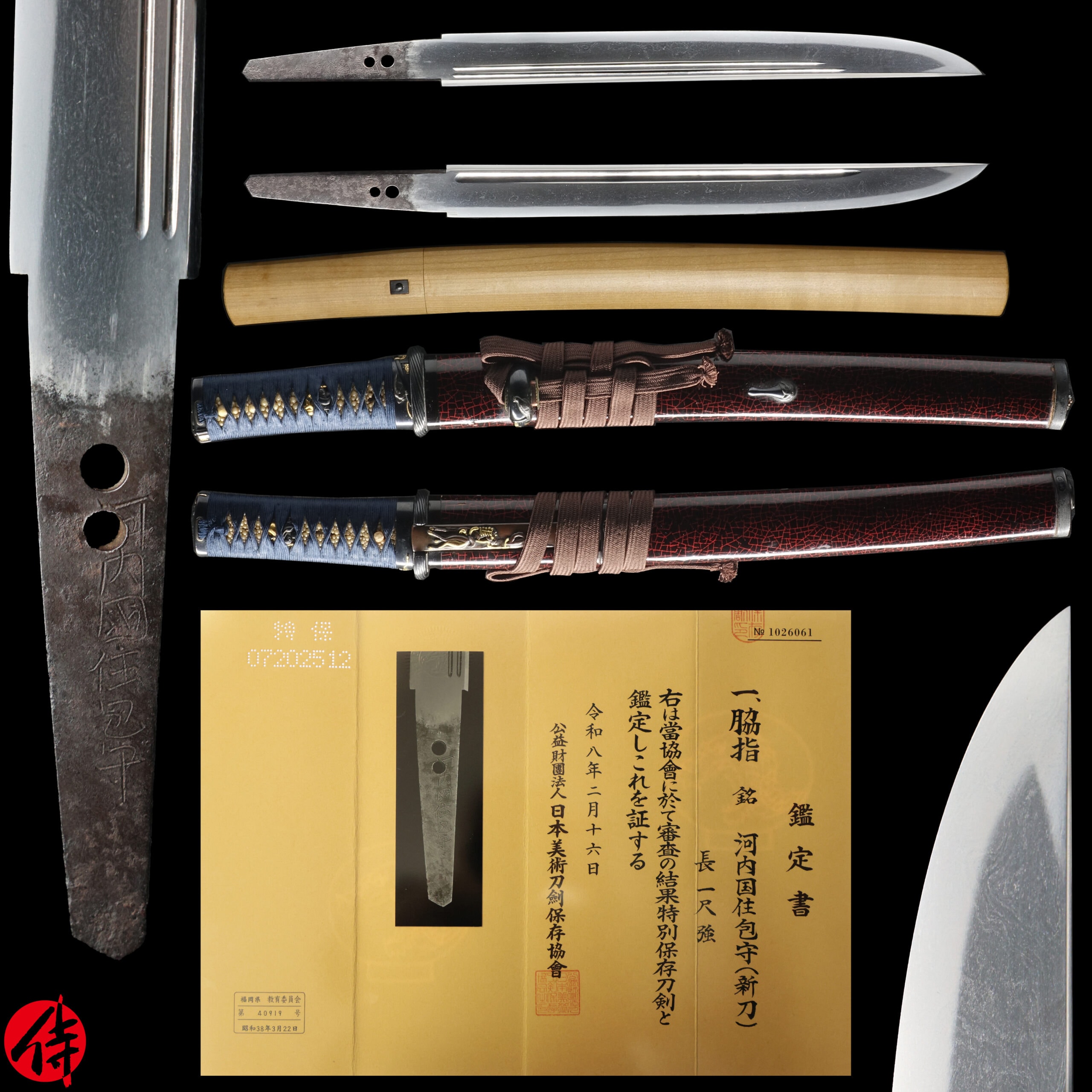
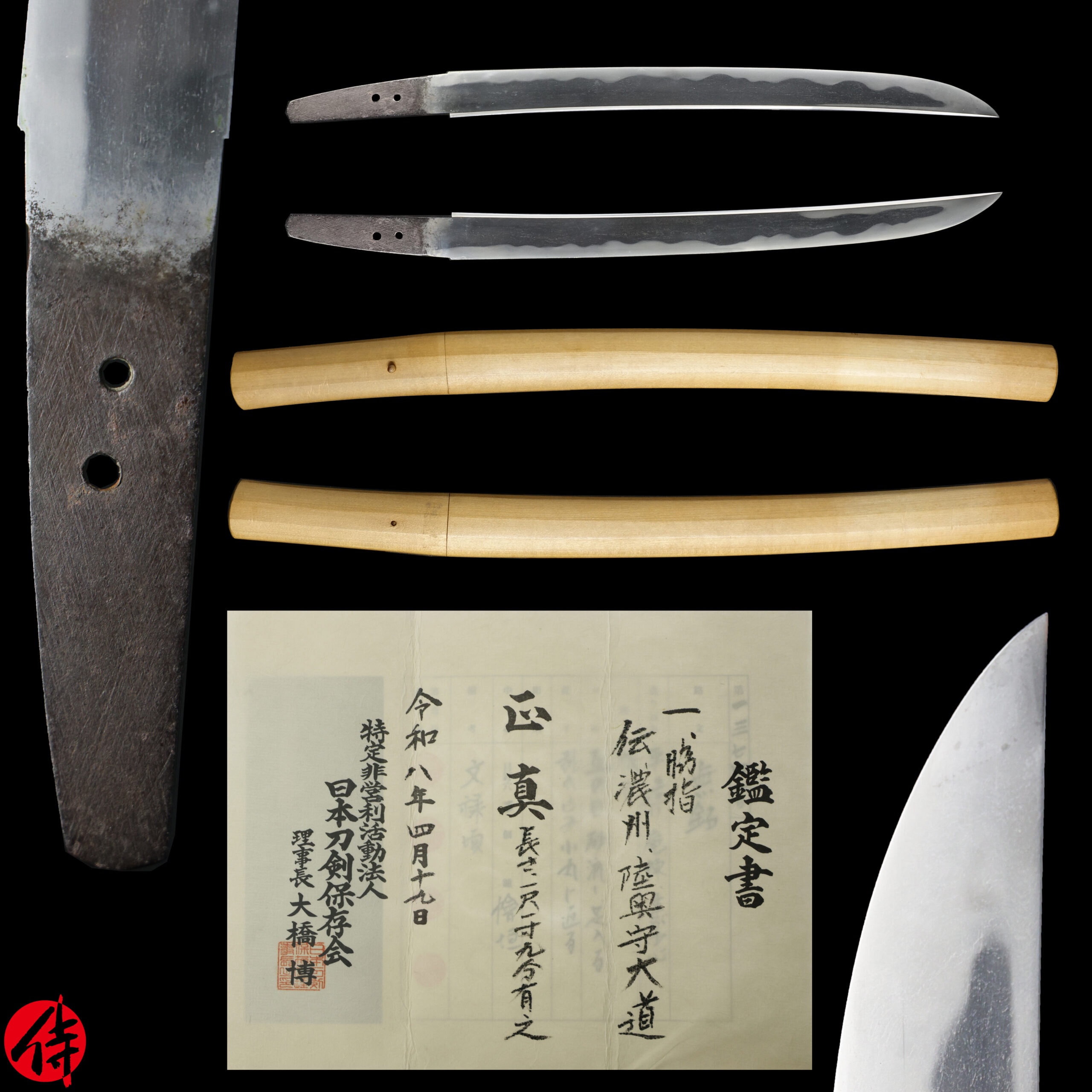
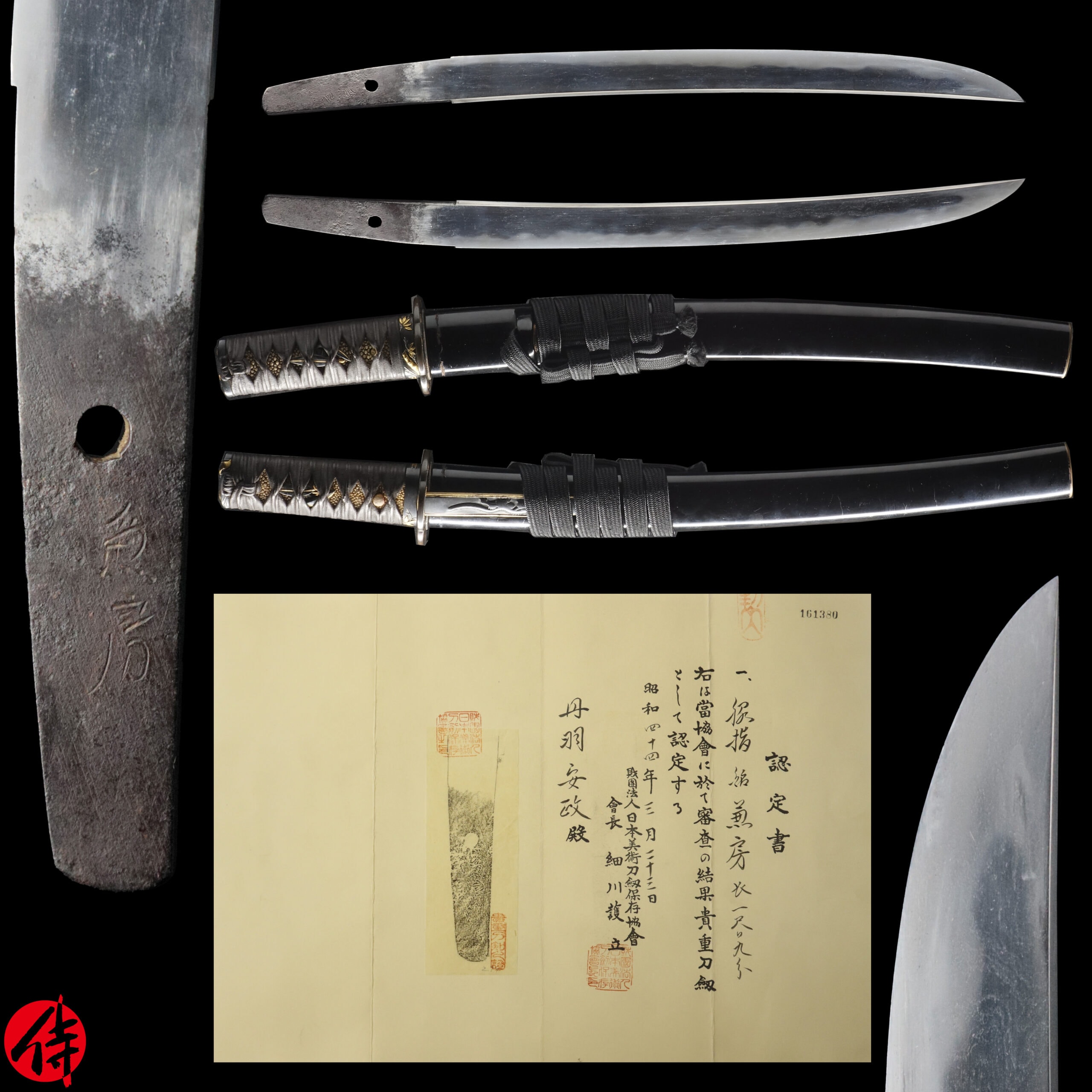
説明
Antique Japanese Sword Wakizashi Signed by Yoshimichi
with NBTHK
Tokubestsu
Hozon
Certificate
【Description】
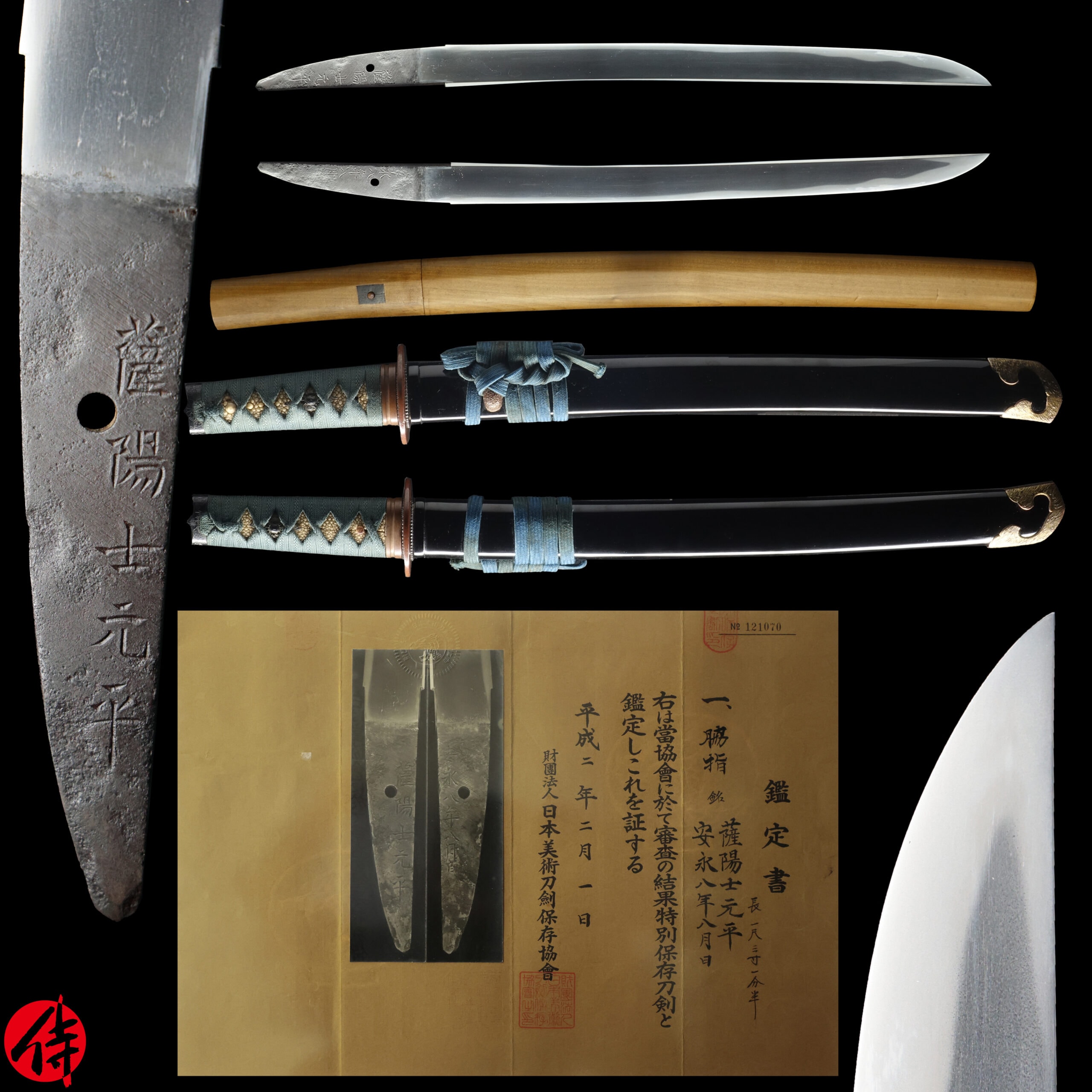
This blade was signed by Satsuyo Shi Motohira (薩陽士元平) in the 8th year of the Anei era (1779). Motohira is one of the most renowned swordsmiths in Satsuma domain (Today’s Kagoshima prefecture) during the mid Edo period. Satsuyo Shi means Samurai who served Satsuma domain.
He was born in October, the first year of the Enkyo era (1744), as the first son of Oku Motonao in Satsuma domain. His birth name was Oku Kouzaemon. It was often the case with many swordsmiths that they used different makers’ names from their real names.
In his early career, he learned sword-forging techniques from his father, and when he was 38 years old, he became a Hanko (藩工), who exclusively forged swords for a specific clan.
This fact suggests that his craftsmanship was widely recognized in the domain. Furthermore, he received Yamato no Kami in the first year of the Kansei era (1789). Kami is an honorable official title given by the emperor to highly skilled swordsmiths. It is said that he trained many swordsmiths, including Bizen Sukehira. Many of his apprentices traveled to Satsuma domain from a very long distance. We assume his sword-forging techniques were very refined and appreciated among Japanese swordsmiths. Motohira was great at forging blades in Soshu Den tradition.
Considering when he was born, this blade was forged in his late 30s. He lived a long life, and he died at the age of 84 in 1826. He kept forging blades until he was 83 years old. He must have had full of vitality to make high-quality blades throughout his career.
Satsuma province had a high ratio of Samurai population compared to other parts of Japan. And they are famous for their military power ruled by Shimazu clan. We assume a swordsmith needed to be skilled to stay active and popular in this demanding place. Motohira was one of them.
This blade is appraised as a
Tokubetsu Hozon Token
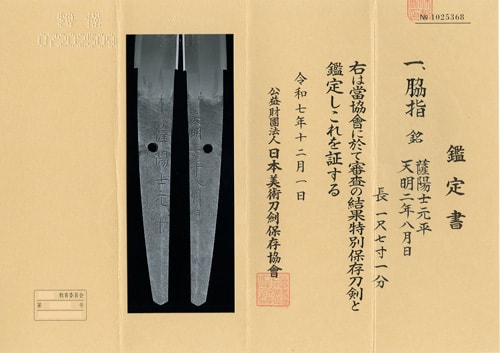
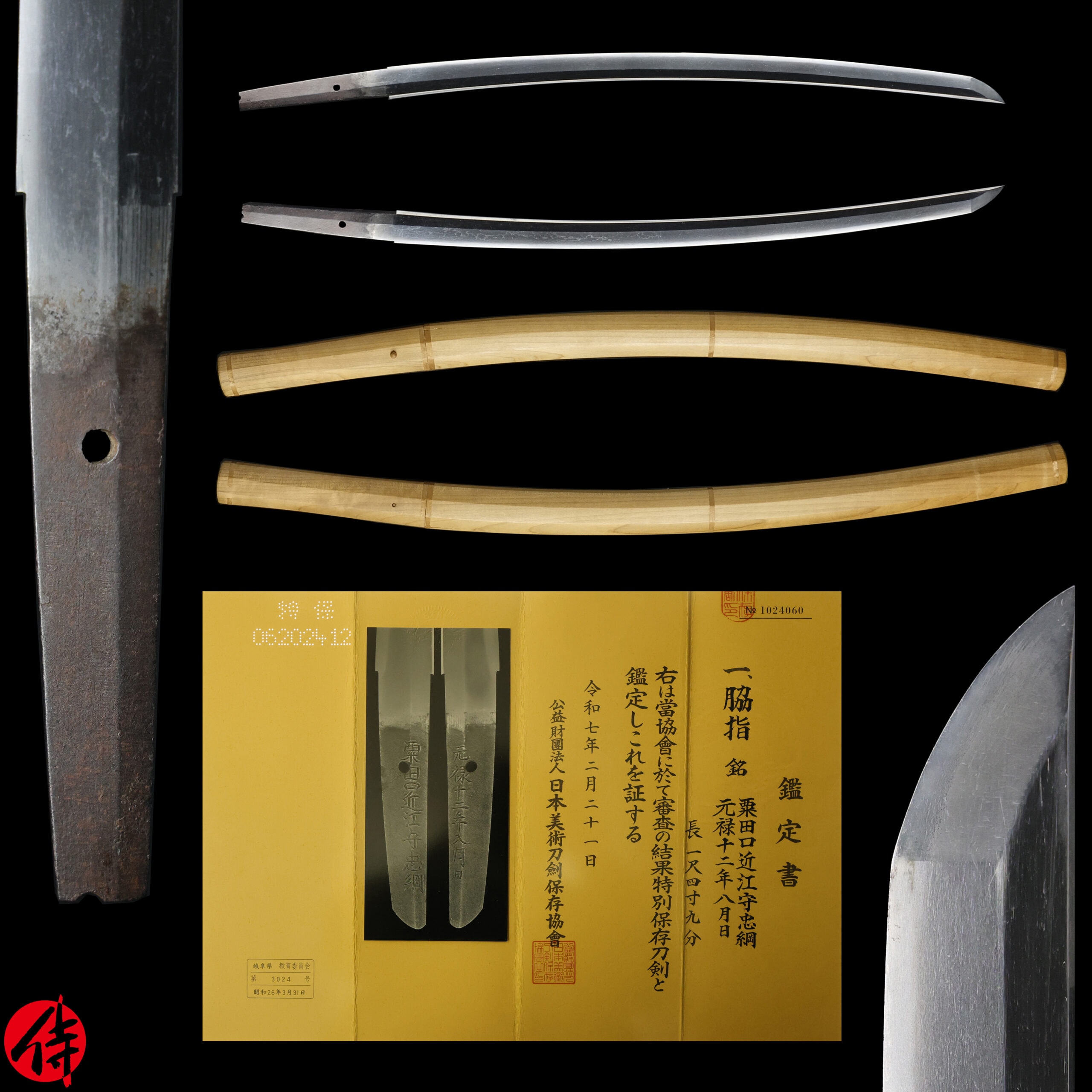
(特別保存刀剣) issued by NBTHK (Nihon Bijutsu Touken Hozon Kyokai:日本美術刀剣保存協会). This authentication paper was only given to authentic Japanese swords, especially well preserved and high quality with artistic value.
*Please keep in mind that there is a small Kitae Kizu on the blade. If you would like to know the detailed condition, please feel free to contact us.
【Blade】
Cutting Edge Length(Nagasa)
:
40.2
cm (15.8
inches)
Curvature(Sori)
:
0.3 cm (0.11 inches)
Hamon
:
The crystalline structure which forms along the cutting edge of a blade as a result of the hardening process
Jimon(Jihada)
:
visible steel surface pattern created by folding and hammering during forging process
Kissaki
:
Kissaki is the tip of the Japanese sword.
Nakago
:
Nakago is the tang of the Japanese sword.
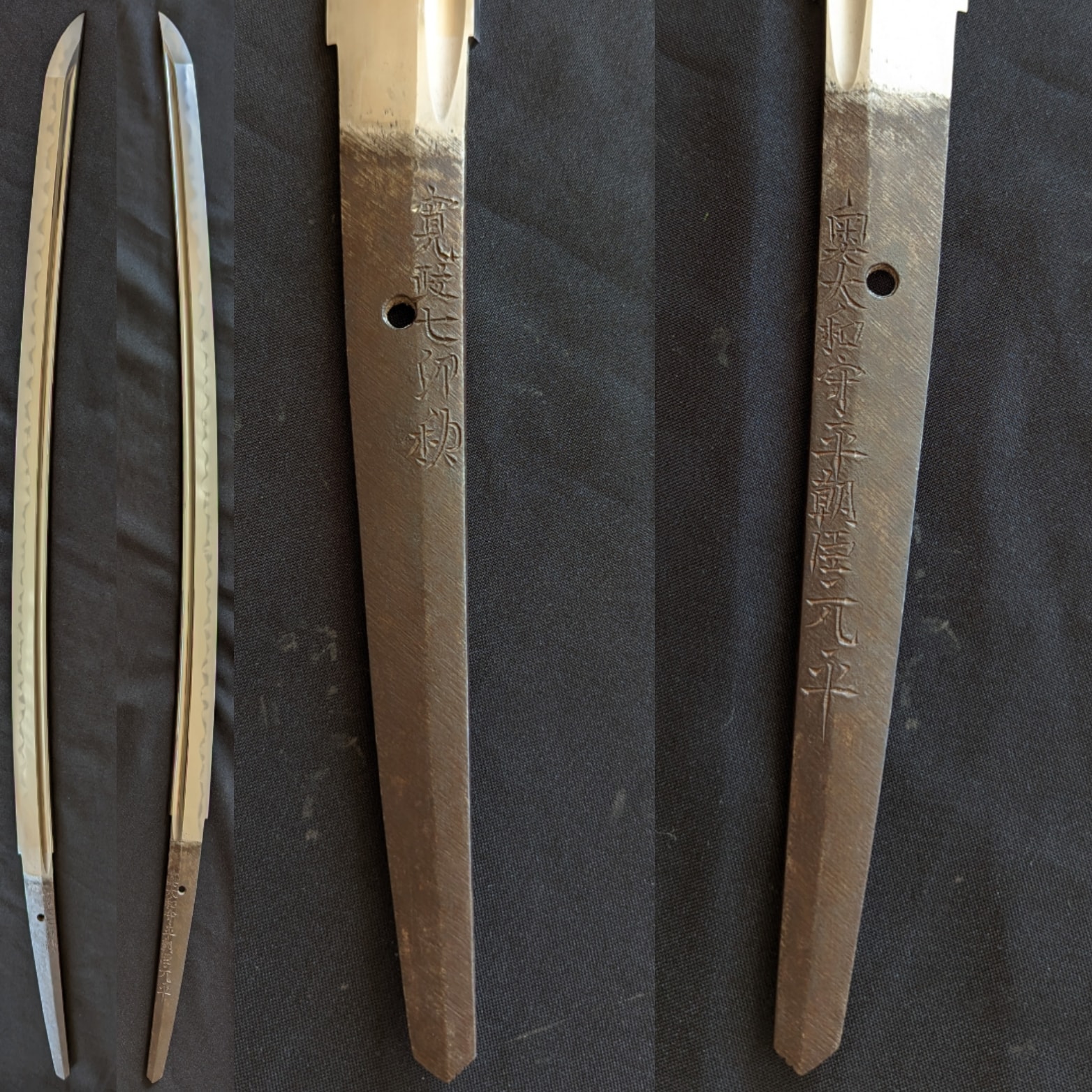
Japanese swordsmiths left the black rust on the tang because it prevents red rust while the tang is in its handle. And the discoloration of the tang was created over time, and it is a great indicator for a Japanese sword specialist to estimate when the sword was forged.
Koshirae
:
Koshirae is the mounting of the Japanese sword. There are several parts that consist of Koshirae such as Saya (Scabbard), Tsuka (Handle), Tsuba (Handguard).
Fuchi-Kashira
:
A pair of matching sword fittings that cover the upper and bottom parts of its sword hilt.
We believe that the motif of this Fuchi-Kashira is 秋草 (Akikusa, autumn plants). These plants are native to Japan, and during the autumn season, you can often see them swaying together in the wind. This scene has long been associated with the sadness of passing time and the impermanence of life, which is why these autumn plants are commonly used in designs that express such themes in Japanese culture.
Tsuka and Menuki
:
Tsuka is the handle of the Japanese sword and Menuki is its decoration.
We assume the motif of this Menuki might be Sasagani Zu (笹蟹図). It is a combination of bamboo grass and crab. The word Sasagani (笹蟹/細蟹) was an old name of a spider or spider’s thread. As spiders handle threads