二十世紀は二度この工芸を殺しかけた。戦時の歪みと、占領下の禁令である。1948年の日刀保設立と1953年の作刀再開が刀を美術として再建し、人間国宝と無鑑査がその頂に立つ。
 NihontoWatchNihontoWatch
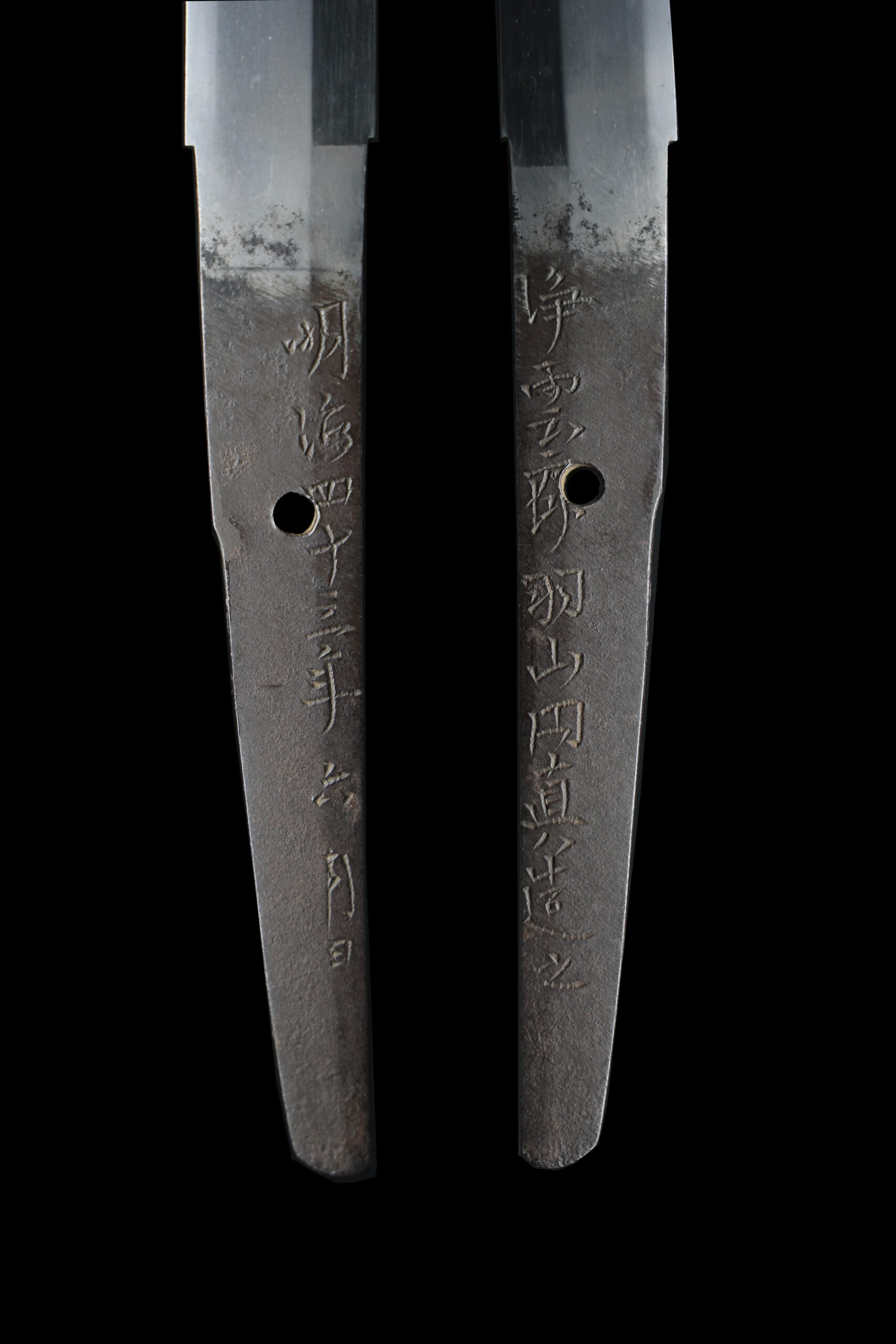
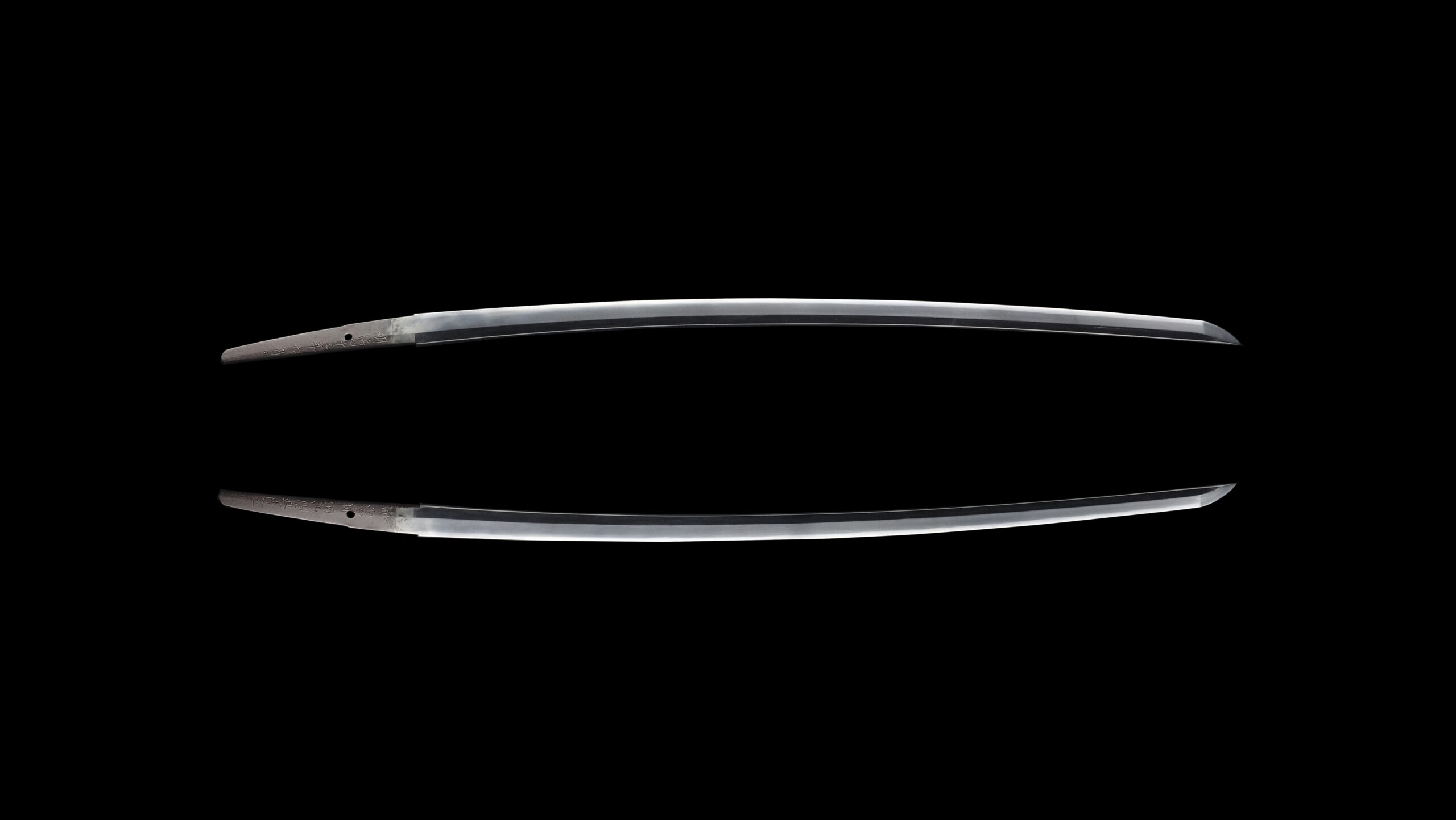
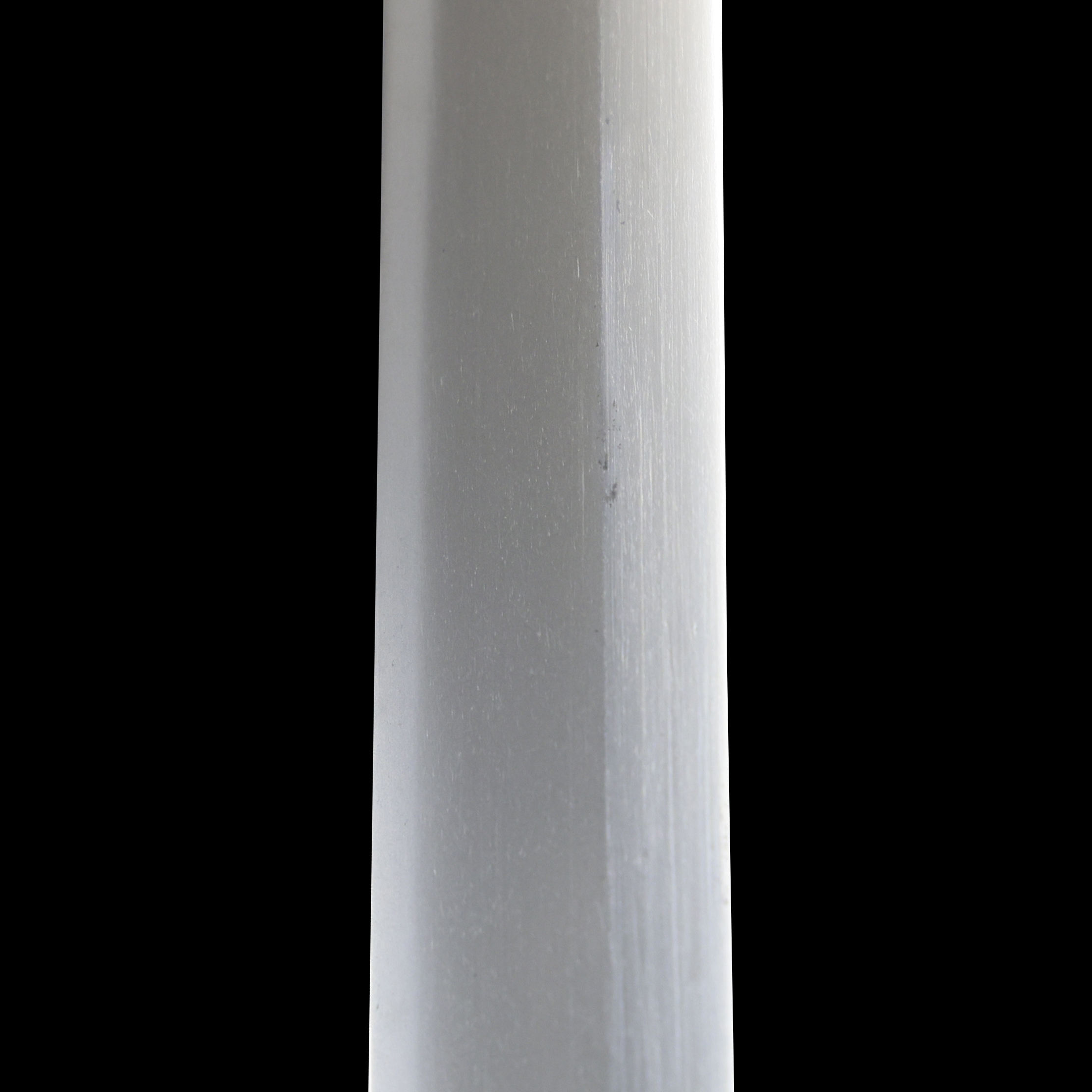
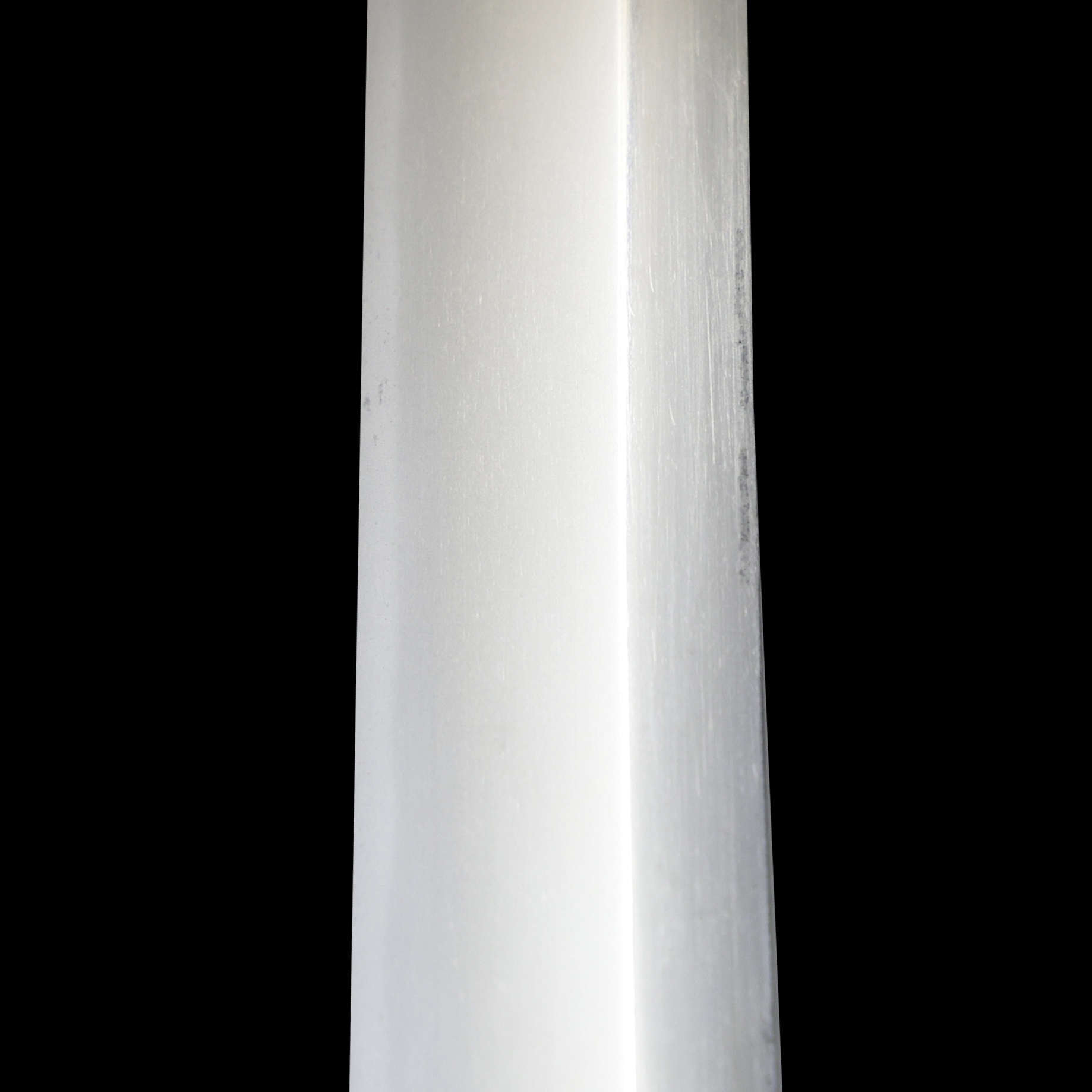
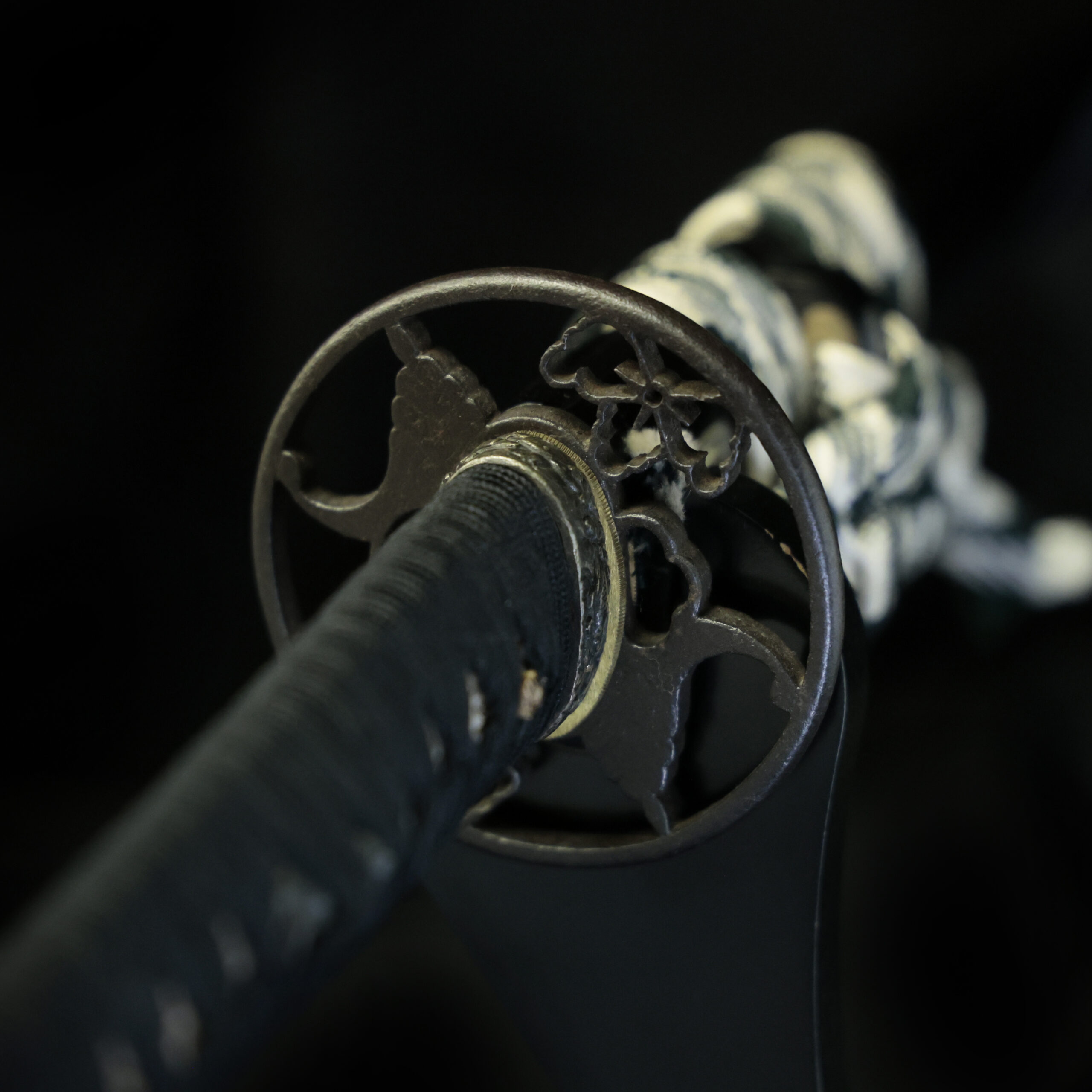
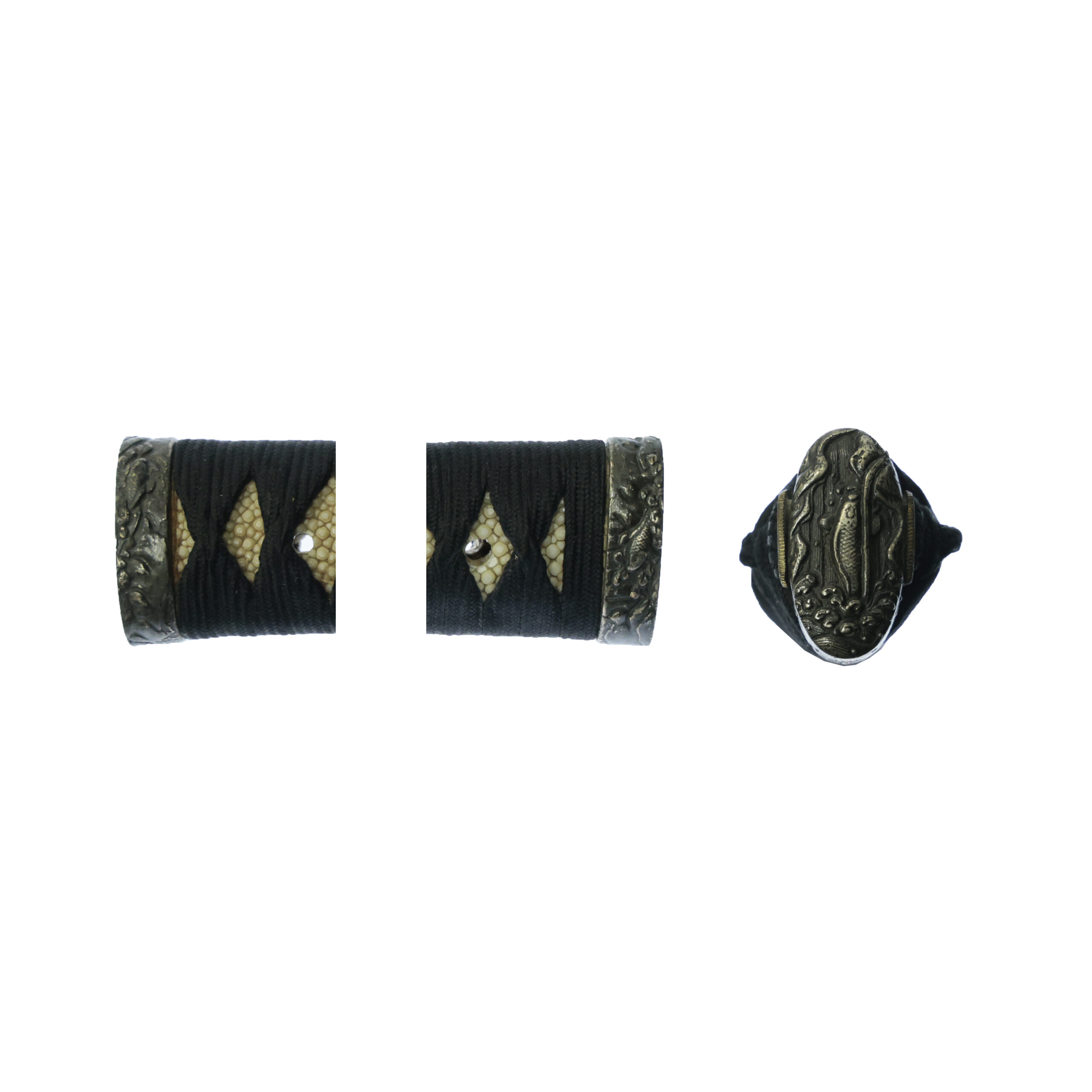
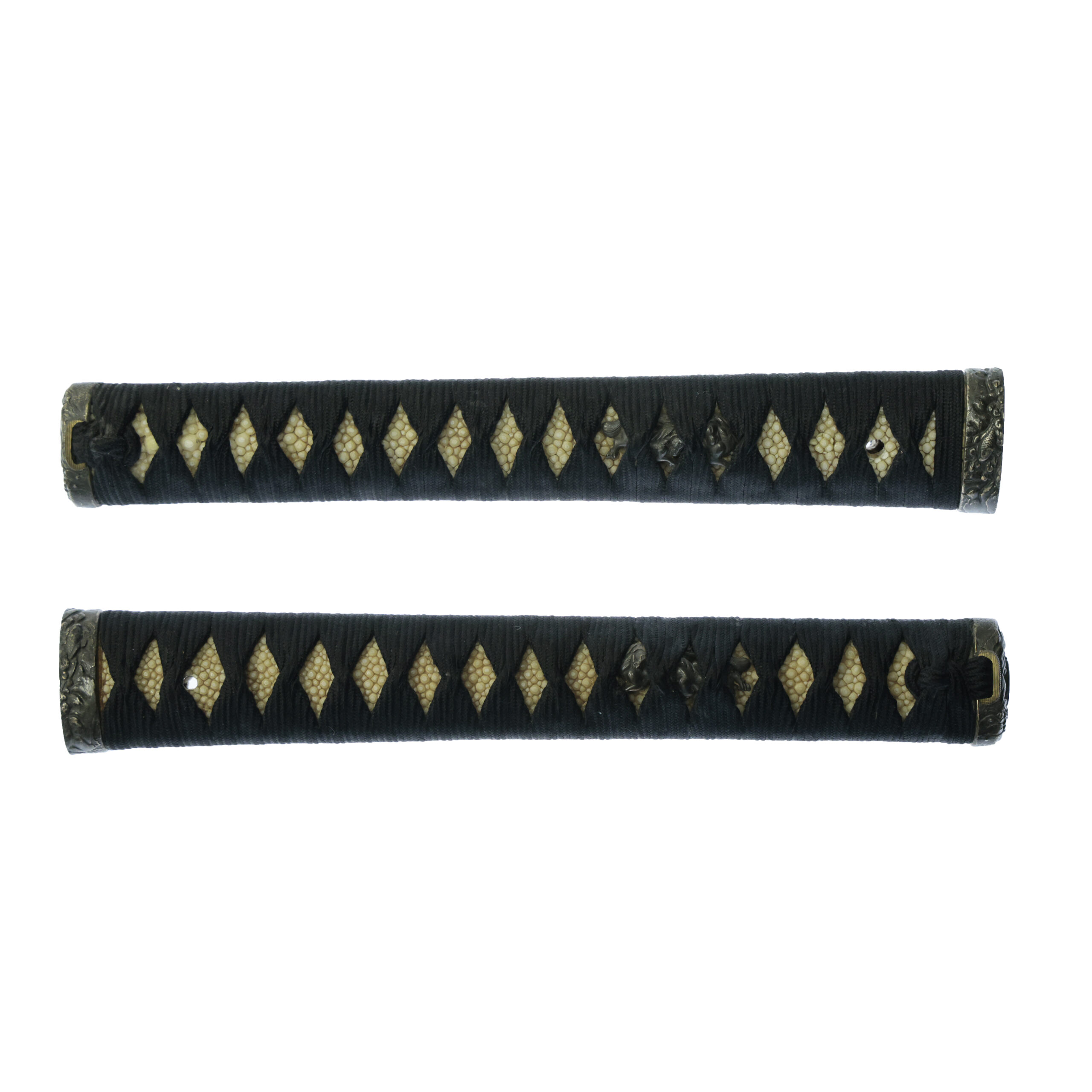
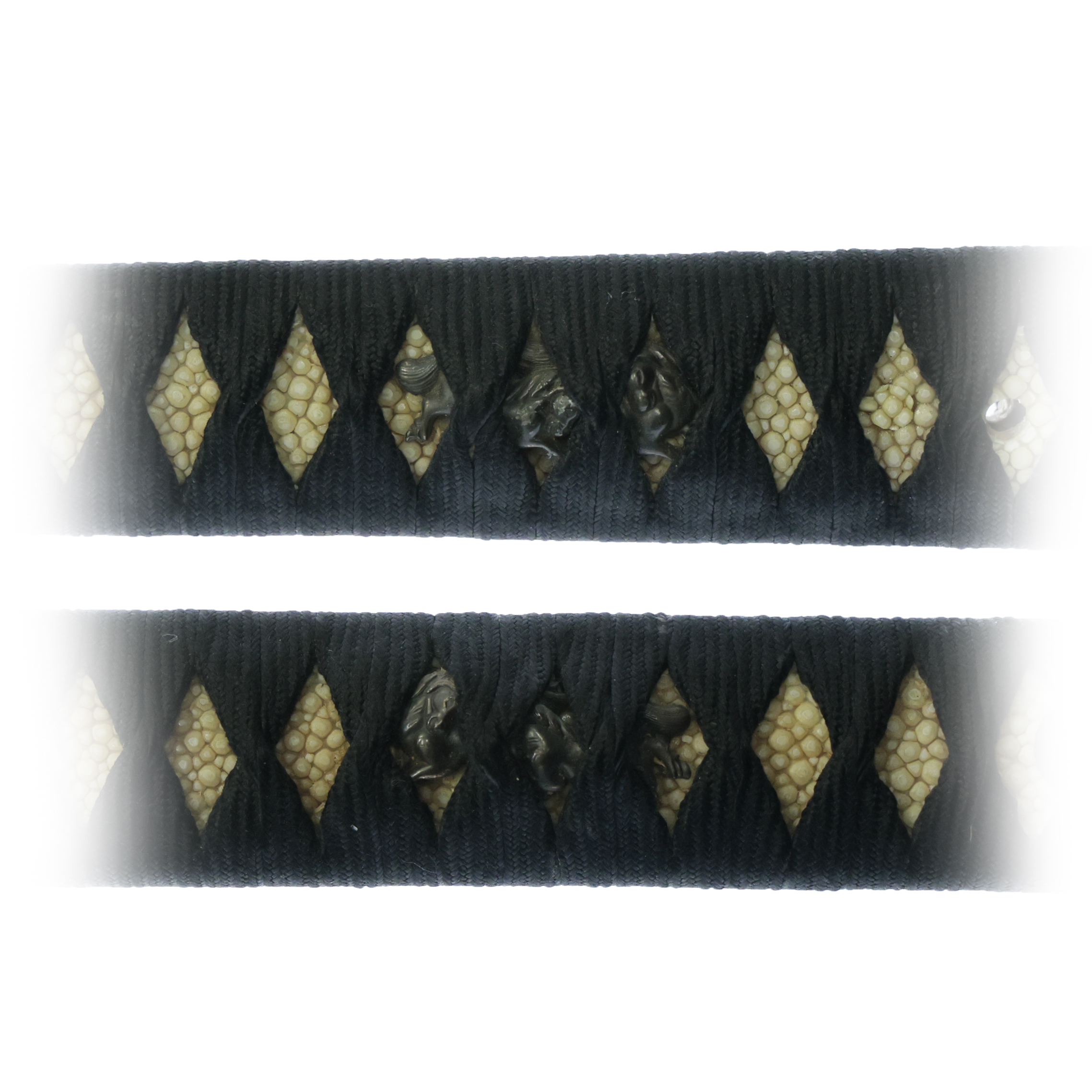
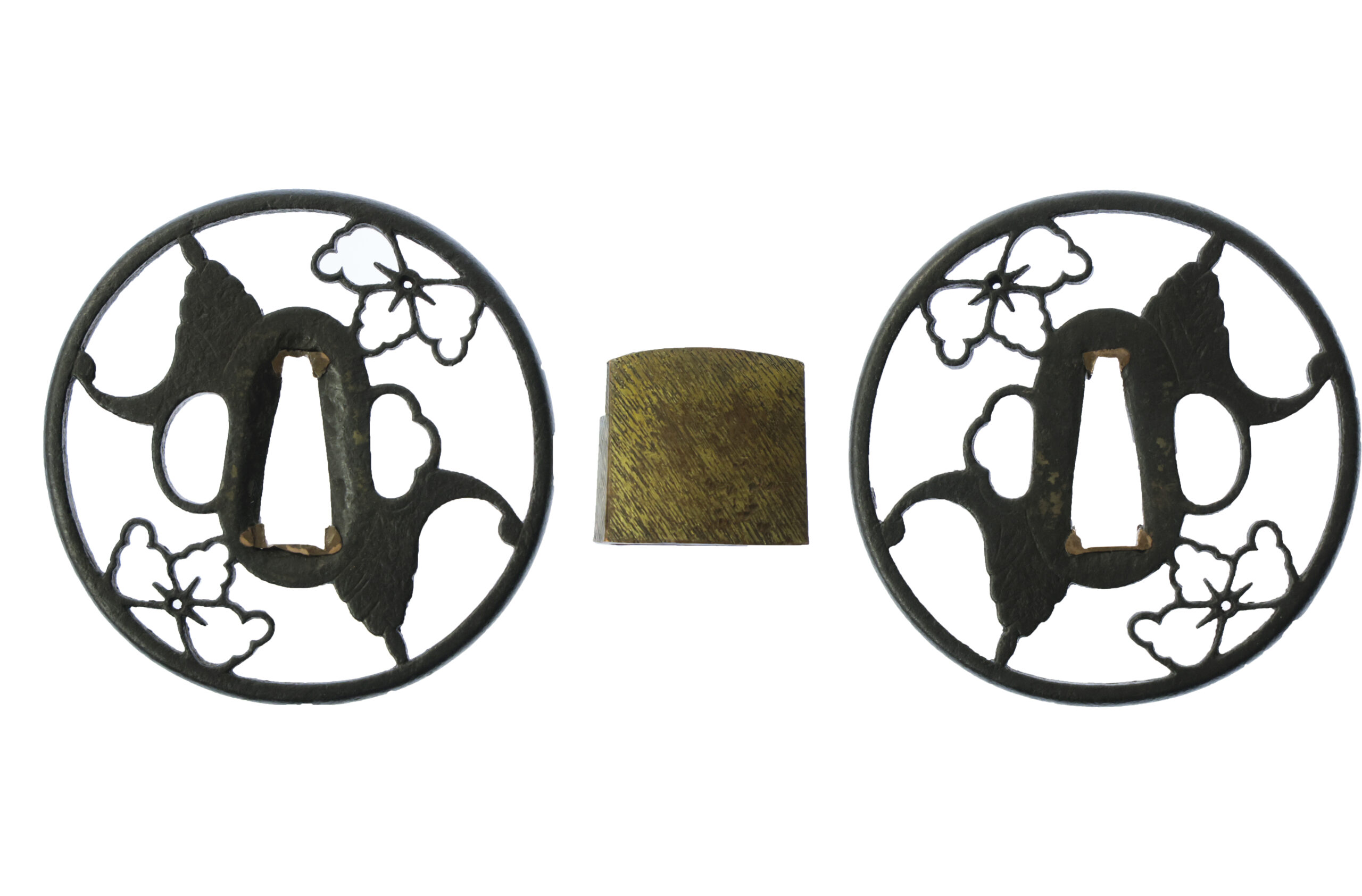
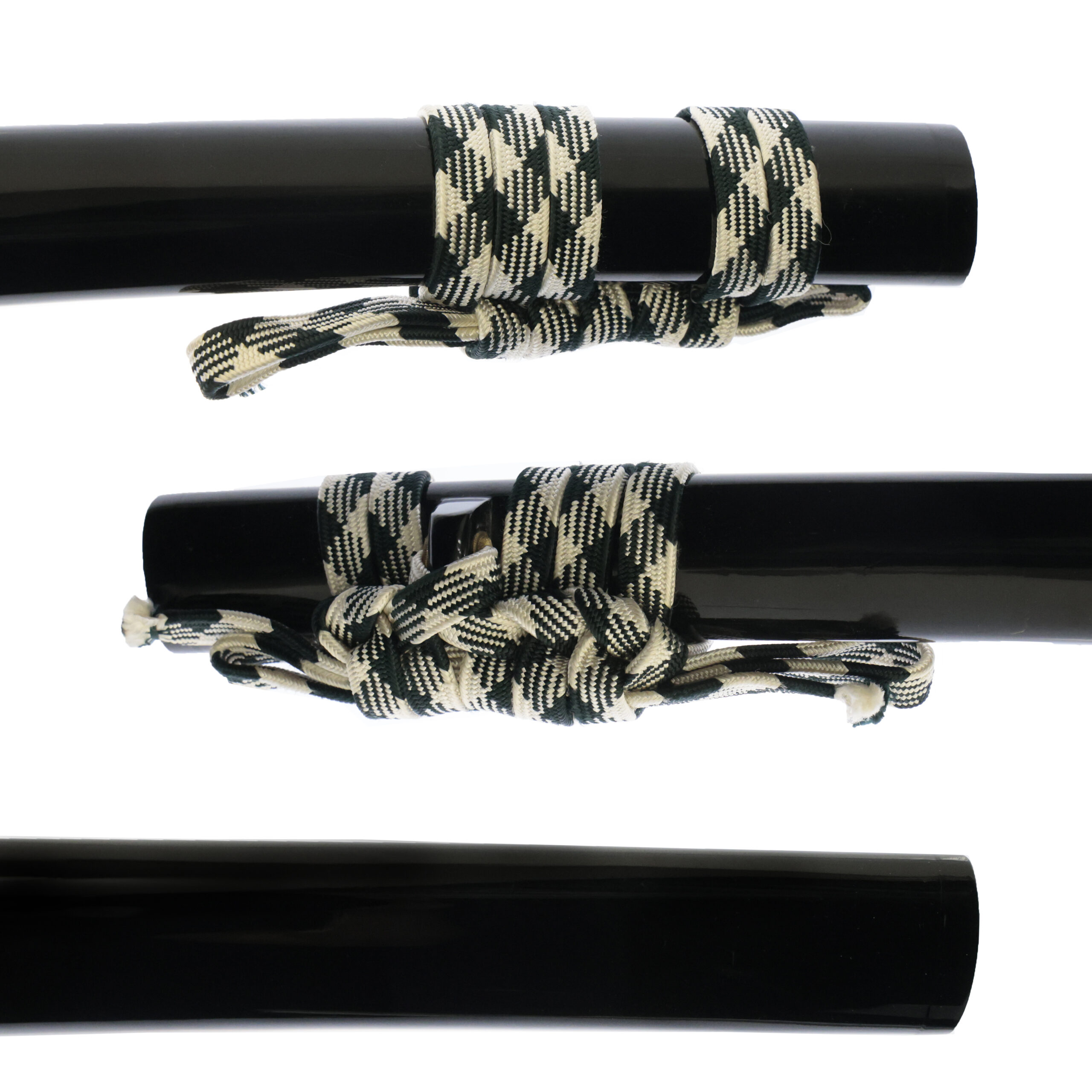
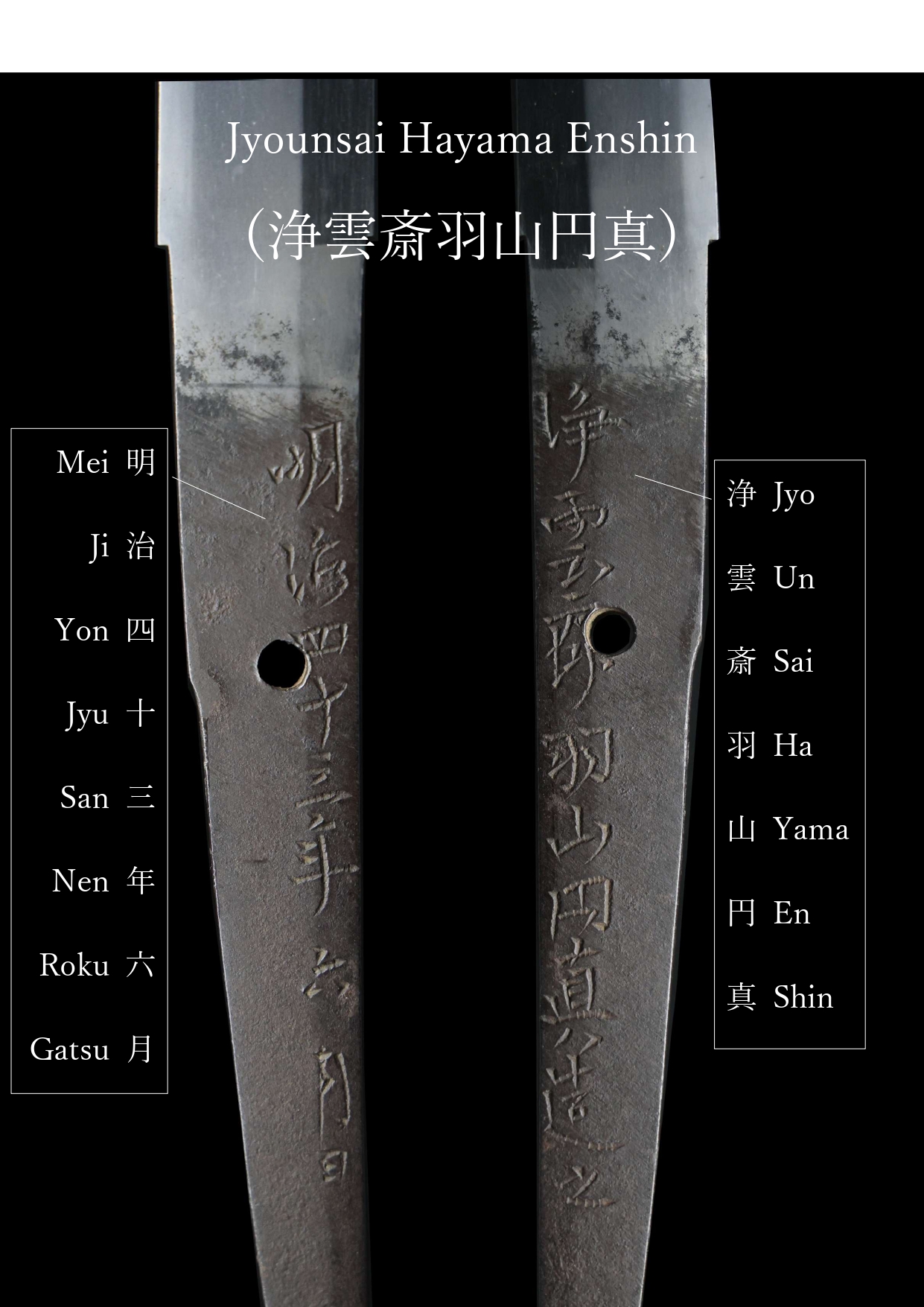
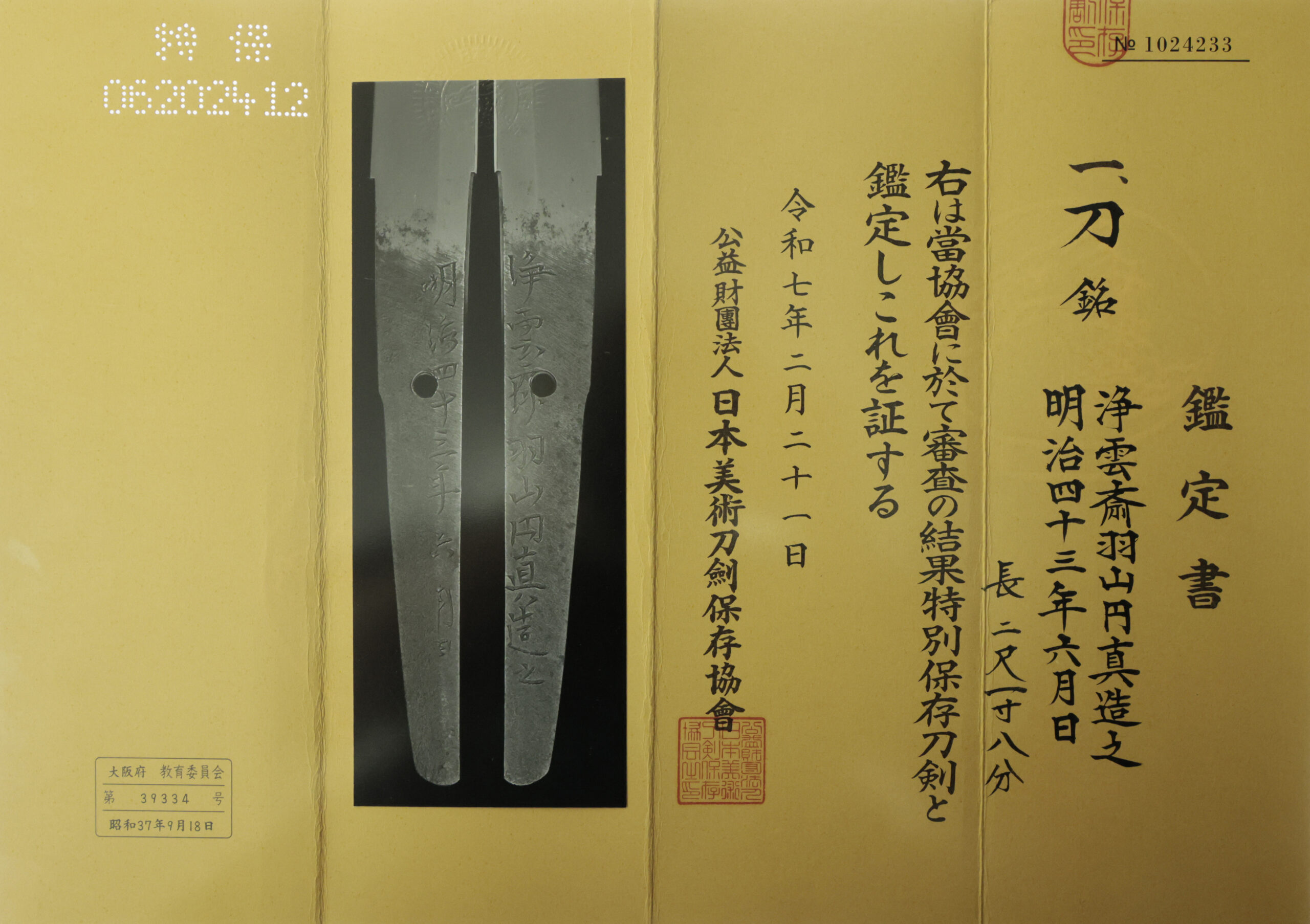
This blade was signed by Jyounsai Hayama Enshin (浄雲斎羽山円真) in June, the 43rd year of the Meiji era (1910). Enshin was born in the second year of the Koka era (1845: The Late Edo period) in Edo city. His birth name was Suzuki Masahiro. He learned sword-forging techniques from Suzuki Masao, an apprentice of Kiyomaro, one of the most famous swordsmiths at the end of the Edo period. Enshin lived in Edo city while he was a Samurai from Toyohashi city (Aichi prefecture). Enshin was one of the most renowned swordsmiths during the Meiji-Taisho era, and he preferred to use Swiss carbon steel, while other swordsmiths used Tamahagane, traditional Japanese carbon steel. He was known as a master of using western carbon steel. He was excellent at making *Utsushi of famous Japanese swords such as Awataguchi Kuniyoshi (粟田口国吉). The shape of Nakago in his work is very peculiar, and it is called Kiji Momo Gata Nakago (雉子股型茎). You can see the sudden bump on the upper part of the Nakago. It was named after the fact that its shape resembles a pheasant’s thigh. In Japanese, pheasant is pronounced as Kiji, and thigh is Momo. This Nakago shape was often found in the Tachi blades forged in the Heian and Kamakura period. Kiji Momo Gata Nakago symbolizes famous swords in ancient times. When Enshin started his career, it was the end of the Edo period, when the military government of Samurai(Tokugawa Shogunate)controlled Japan, and feudal society was the norm. There was plenty of demand for weapons from Samurais back then. However, in 1868, there was a civil war between Tokugawa’s shogunate government and the new Meiji imperial government. After this battle, the Tokugawa shogunate was ousted, and the imperial government gained control. The whole feudal system was dismantled, and the new government took Samurai’s social status. The demand for Japanese swords decreased dramatically from the beginning of the Meiji era. Many swordsmiths lost their jobs or changed their career. However, Enshin kept forging swords to keep the tradition alive. He died at 75 on Feb 14th in the 9th year of the Taisho era. *Utsushi is a Japanese sword whose specification was based on historically famous swords, but it was made by a different swordsmith to pay respect to a renowned swordsmith. It is appraised as a Tokubetsu Hozon Token (特別保存刀剣) issued by NBTHK (Nihon Bijutsu Touken Hozon Kyokai:日本美術刀剣保存協会). *Please keep in mind that there are a couple of Kitae Kizu as well as minor black rust on the blade. Fuchi-Kashira It seems the fish depicted on this Fuchi Kashira might be a Koi (鯉, domestic carp). According to an ancient foreign story, many fishes tried to climb the waterfall called the Ryumon (竜門, dragon gate) in the rapid stream of the Yellow River. As a result, only Koi could have climbed up and become a dragon and run through the sky. This is the reason why “Koi-no Taki Nobori” (鯉の滝昇り, domestic carp climbing waterfall) became a symbol of success in life. The Ryumon legend is associated with this story. This fish has been treated as the symbol of success in business and good health. By living confidently and making efforts, people hoped for their children to grow up to become magnificent people. Samurai families then might have used this fish motif wishing their sons to be promoted to high-ranked Samurai. The custom of decorating Koi-Nobori (鯉のぼり, domestic carp streamers) on Tango no Sekku (端午の節句, the Boy’s Festival) is said to have started in the middle of the Edo period. It is one of the traditional customs that has been passed down to the present day. Sea bream is a good-luck bringer, so it has often been used for celebrations. Also, this fish is a symbol of the Ebisu (恵比寿) God, who is a member of the Shichifukujin (七福神, the Seven Gods of Good Fortune). The Ebisu God usually has a fishing pole and a sea bream, so initially, he was the God of fishing. Ports will be done well by the comings and goings of ships. Safe voyages will bring profitable businesses; therefore, the Ebisu became famous as the God of trade. In addition, it is believed to be the God of good match or wealth in some areas. Although the Ebisu God himself is not depicted for this Menuki, it might suggest this God’s existence. Tsuka and Menuki The motif of this Menuki is the horse (馬: Uma). Horses have been around human life for a long time, not only as our food but also for transportation or carriage of luggage. In Japan, horses were thought of as vehicles for gods to be dedicated to shrines in ancient times. It is said it is the origin of Ema (絵馬, picture tablet used as an offering at a shrine) today. Horses had been used as a tool for rituals and festivals. After the age that Samurai appeared, wearing large armor or performing archery riding a hose became martial arts. Equestrian tactics became the pillar of military action and security activities. According to a theory, that is why the Japanese sword began to have a curve to make it suitable for slashing (the Japanese sword was straight in the beginning). Tsuba and Habaki The motif of this Tsuba is Hanabishi (花菱). Its petals are designed in a rhombus. This pattern became a Yusoku Monyou (有職文様, generic term for designs of court nobles’ clothing or furnishings, these designs have unique and elegant styles) during the Heian period (794-1185). And people loved it as an auspicious pattern. Saya This scabbard is covered with black lacquer. Due to its high waterproof effect, lacquer has been used since ancient times in Asia. The blade of a Japanese sword is made of iron, and moisture is the greatest enemy of iron. For the purpose of carrying the blade without degrading it, people devised a method of coating the scabbard with lacquer. To prevent not only moisture but also rain and snow from penetrating the inside of the scabbard, it was necessary to apply multiple layers of lacquer. The Nushi (塗師, lacquerers) was born precisely because advanced techniques were required to handle the complicated processes. Authentication Paper They authenticated the blade on February 21st in the 7th year of Reiwa (2025). They appraised it as Tokubetsu Hozon Touken, the blade especially worth preserving for Japanese society.

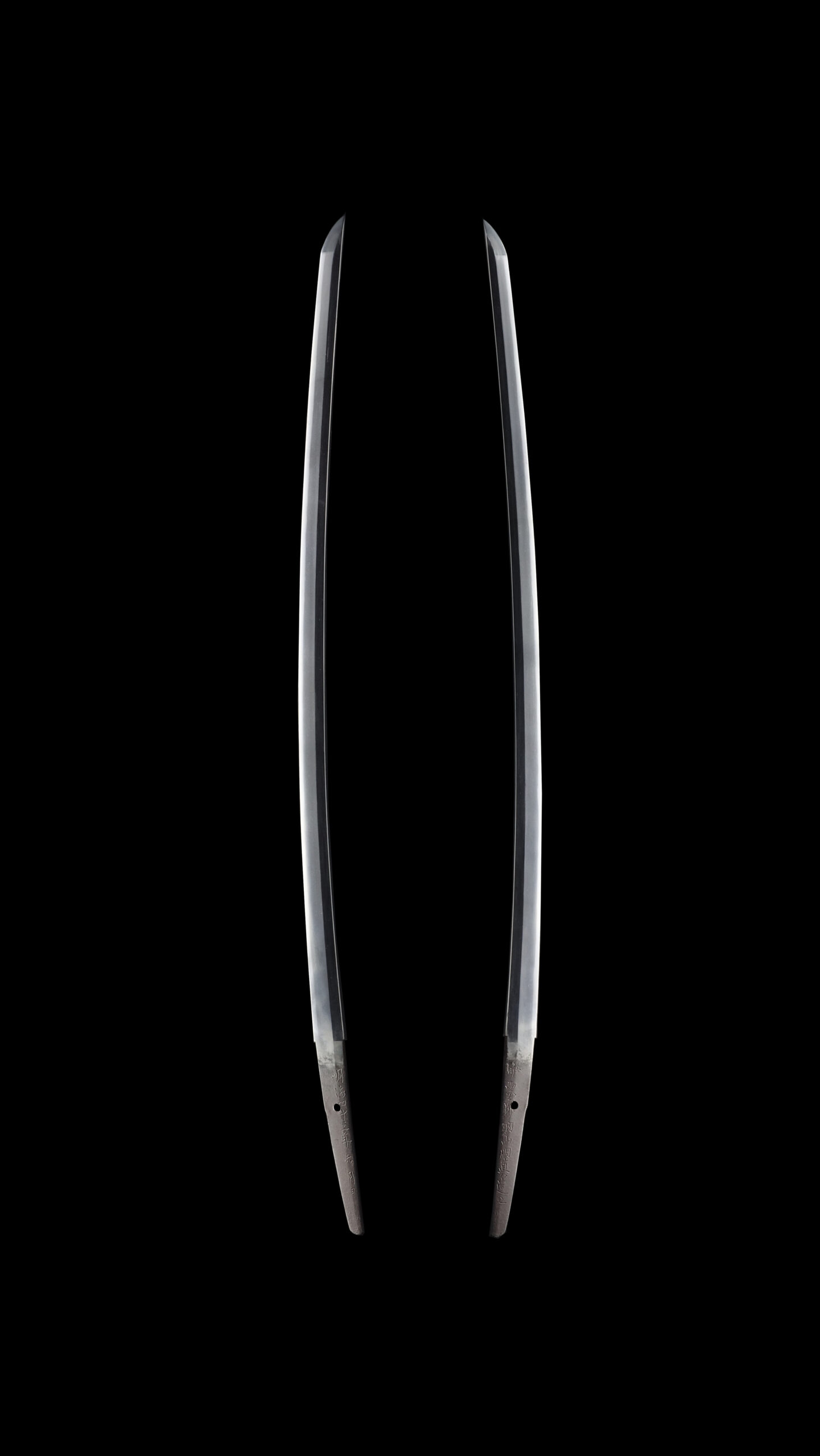
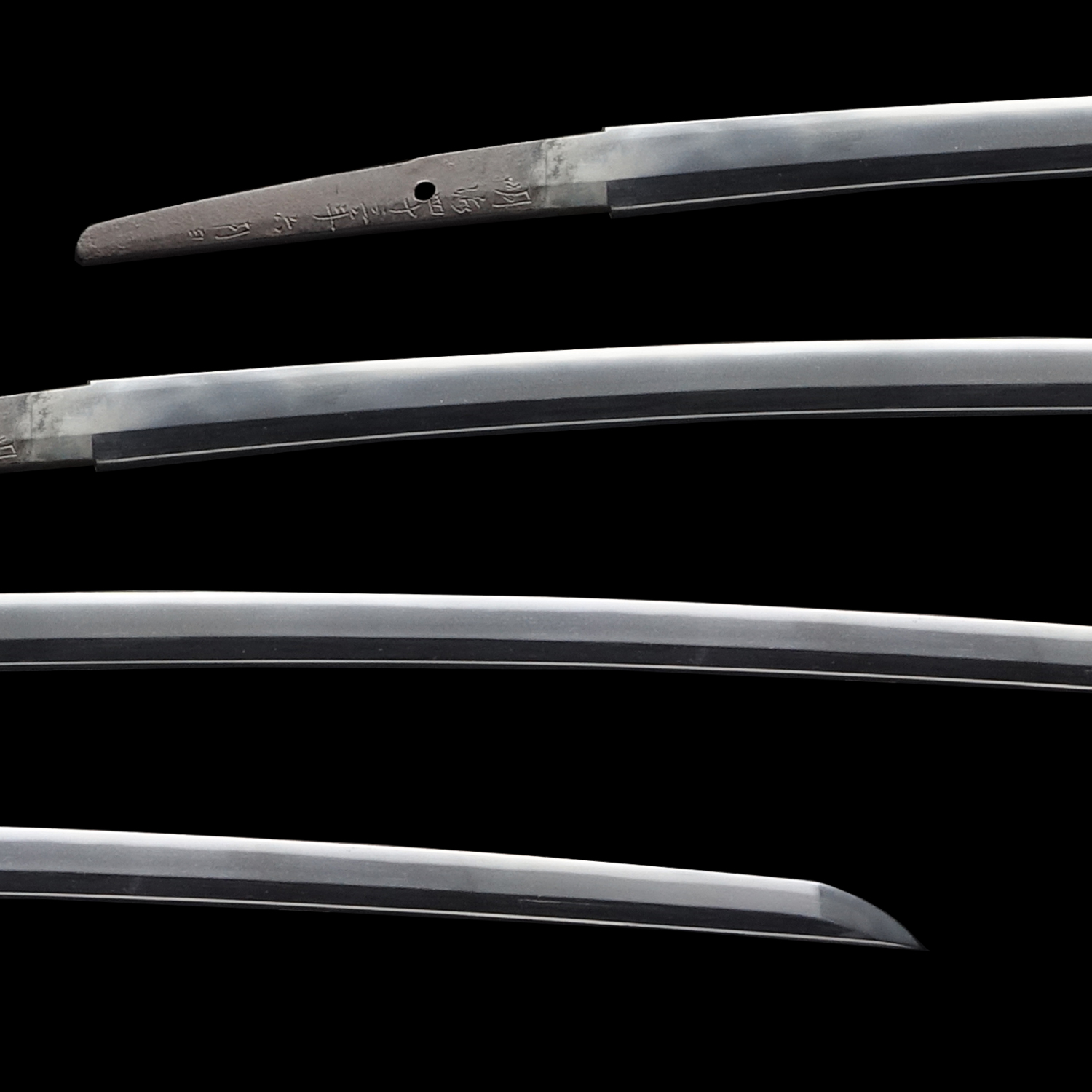
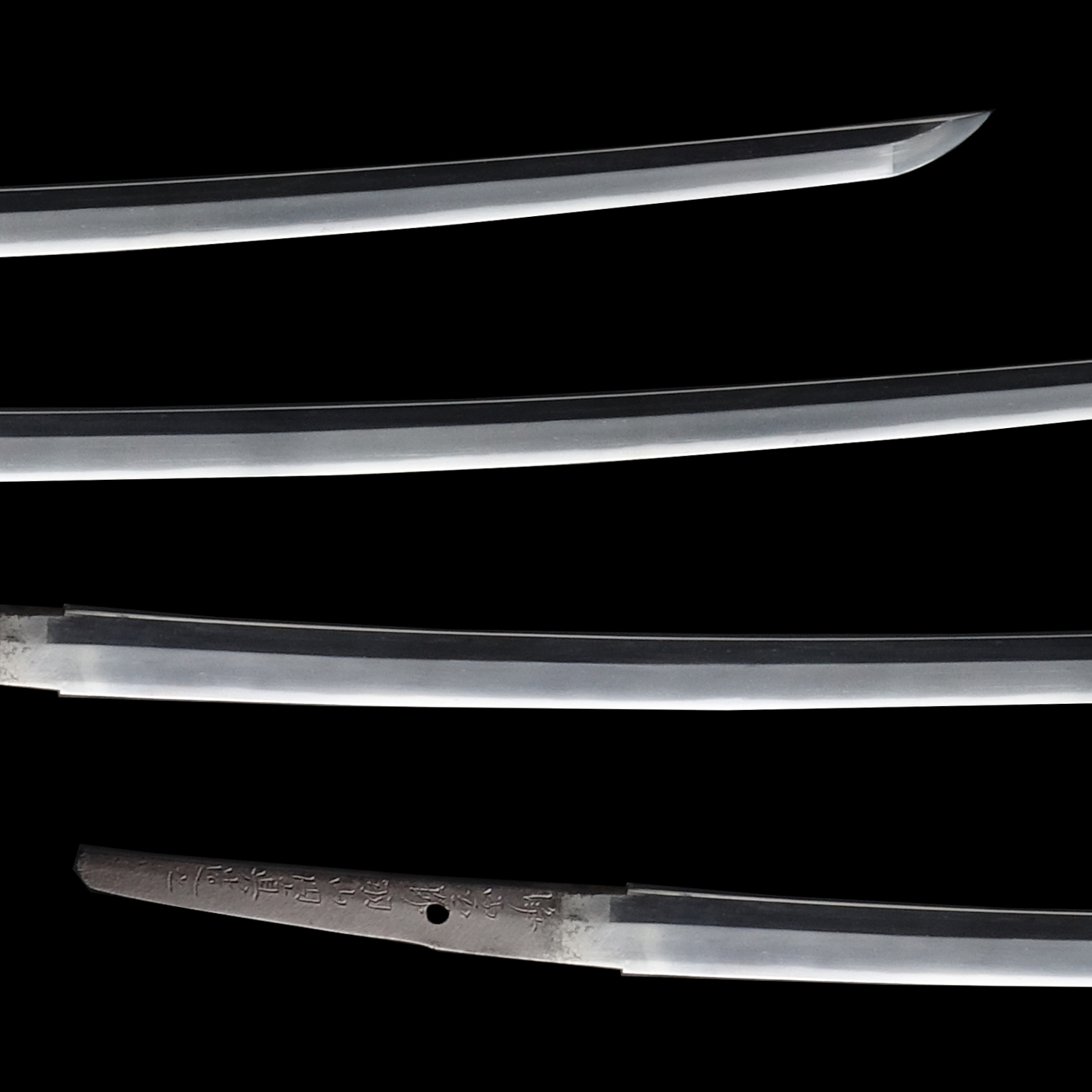
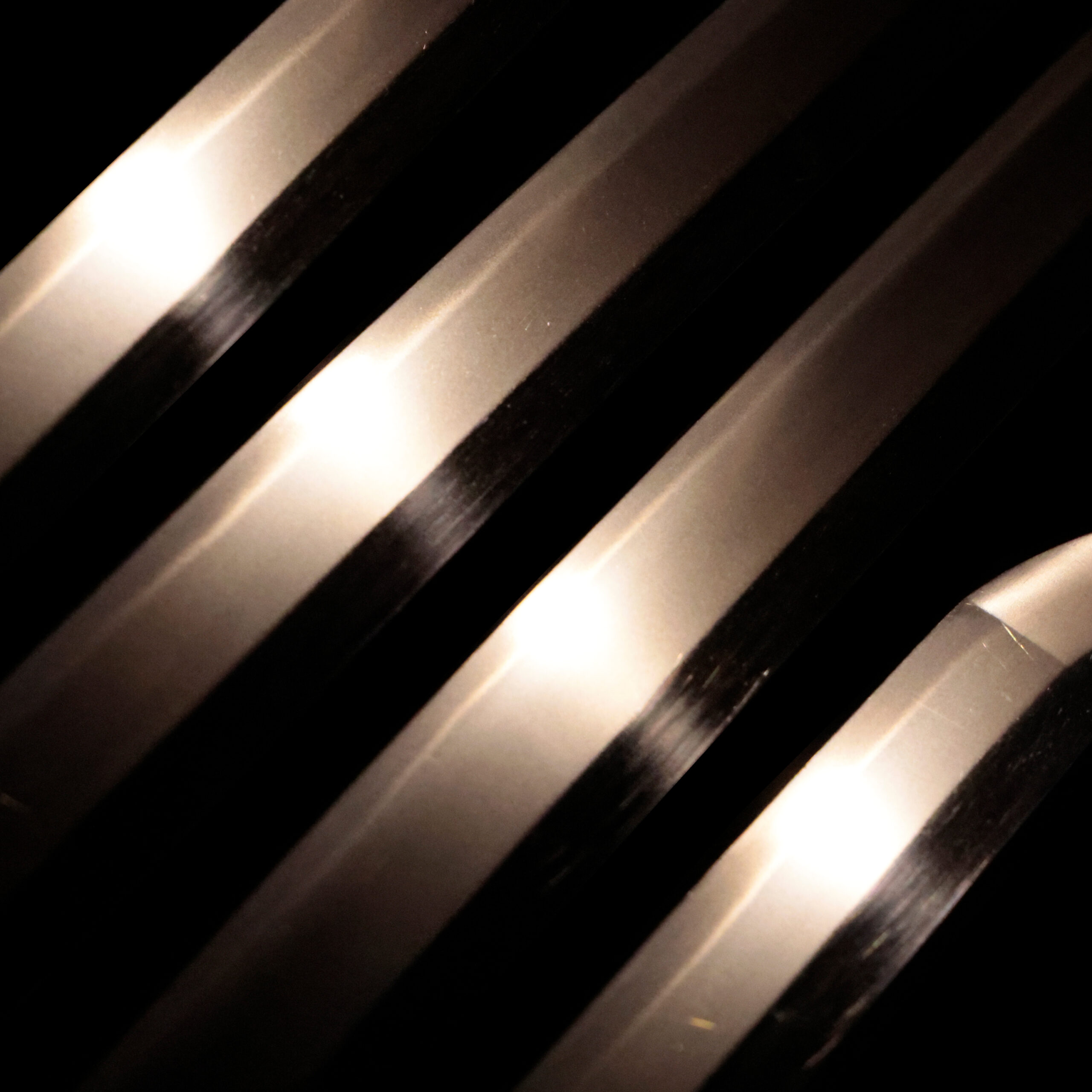
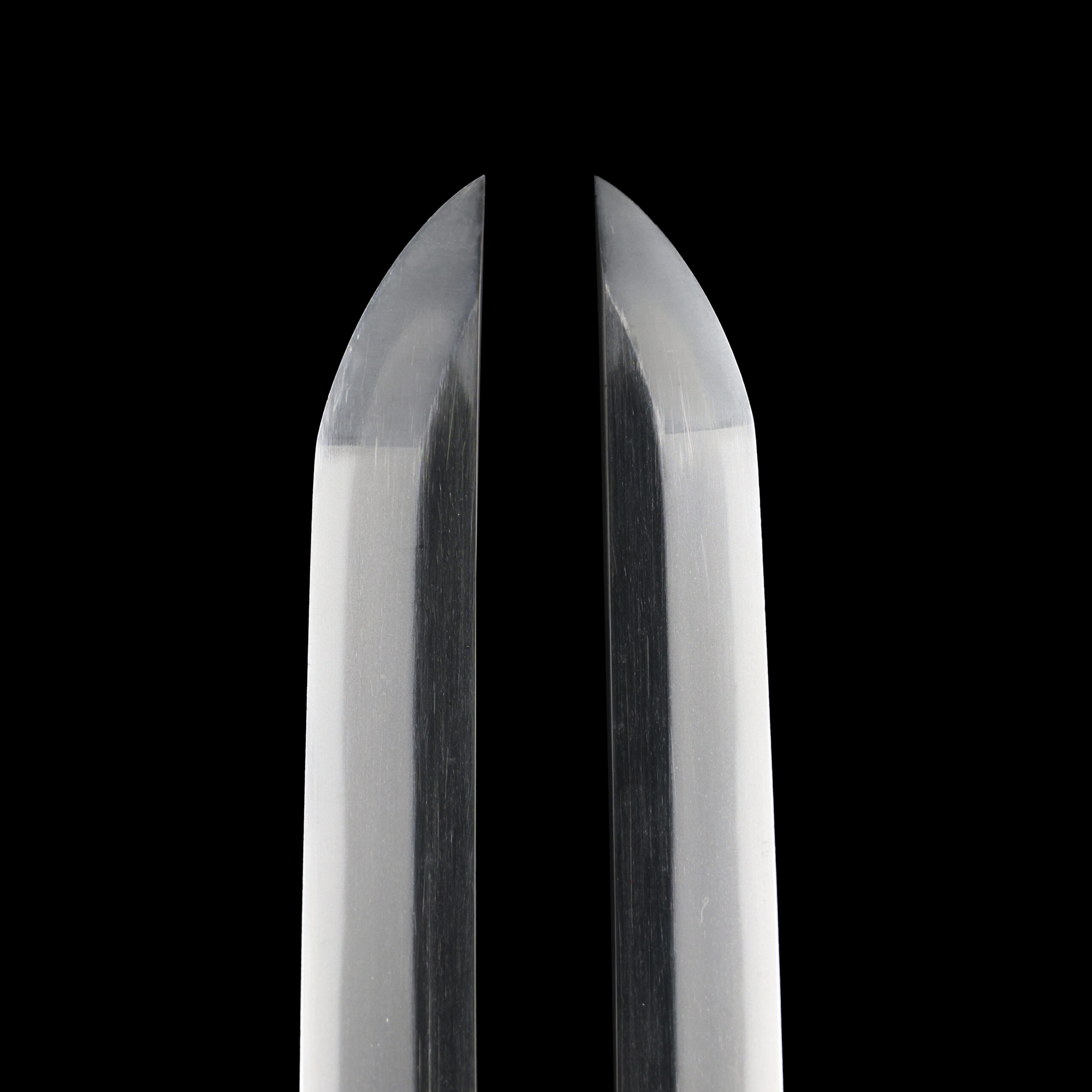
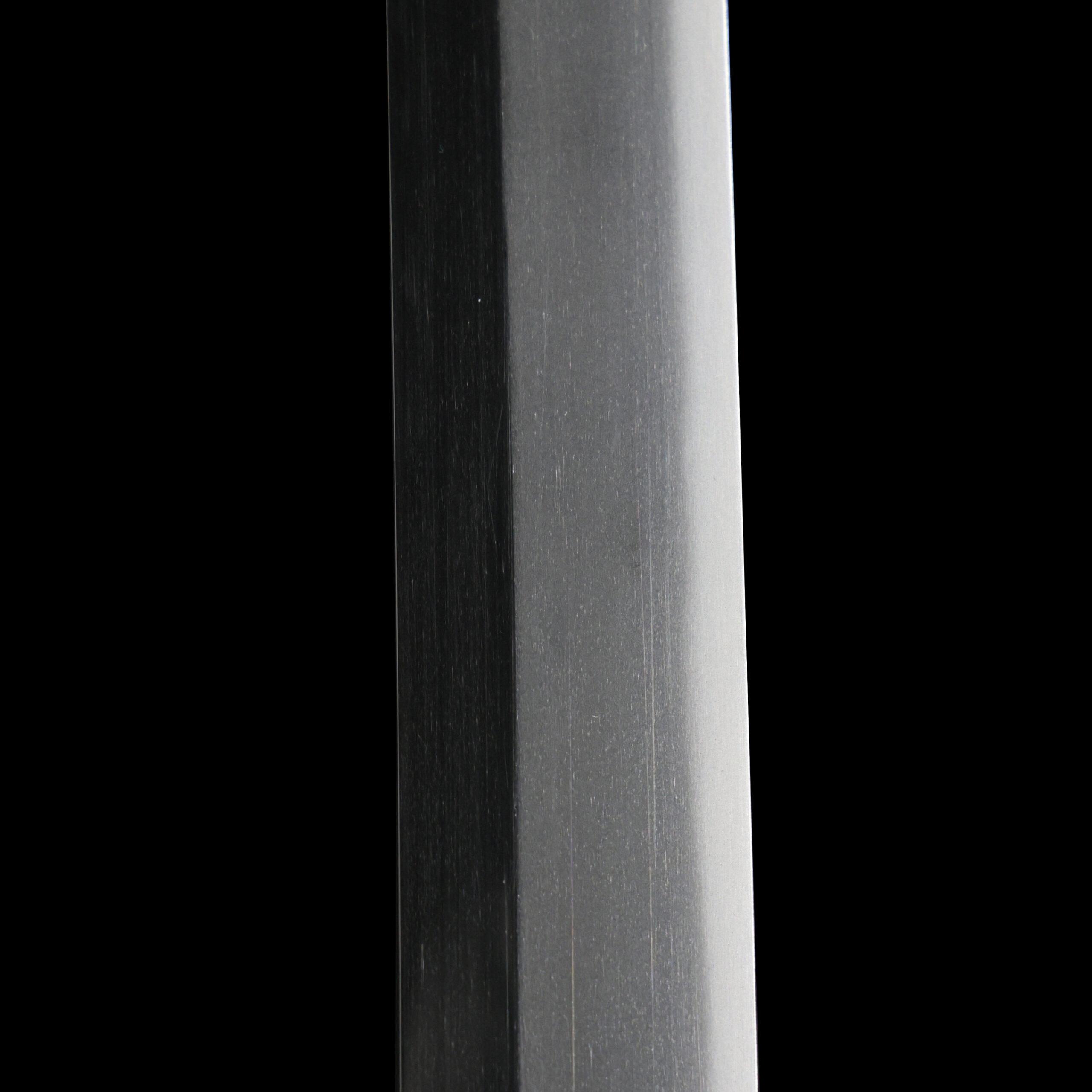
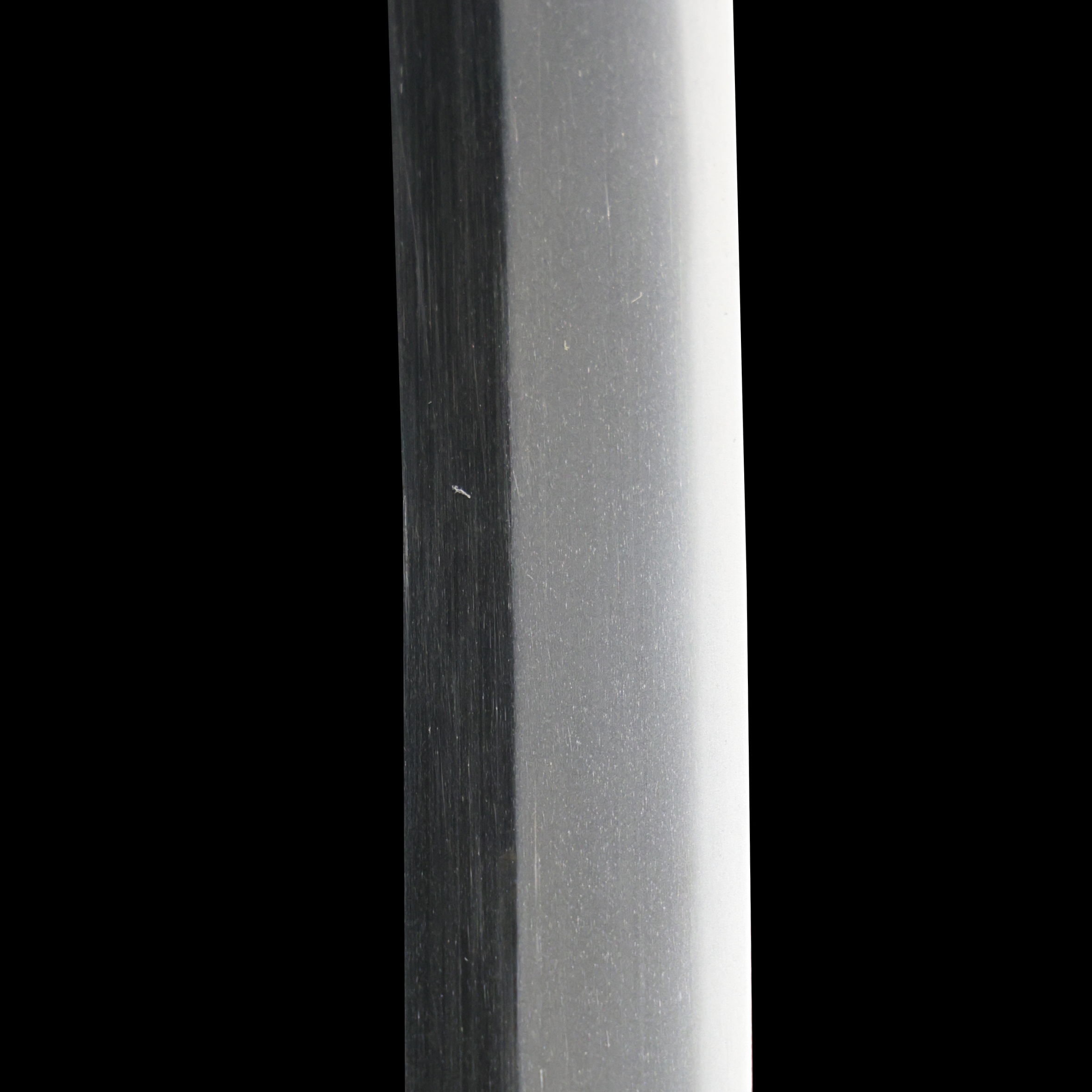
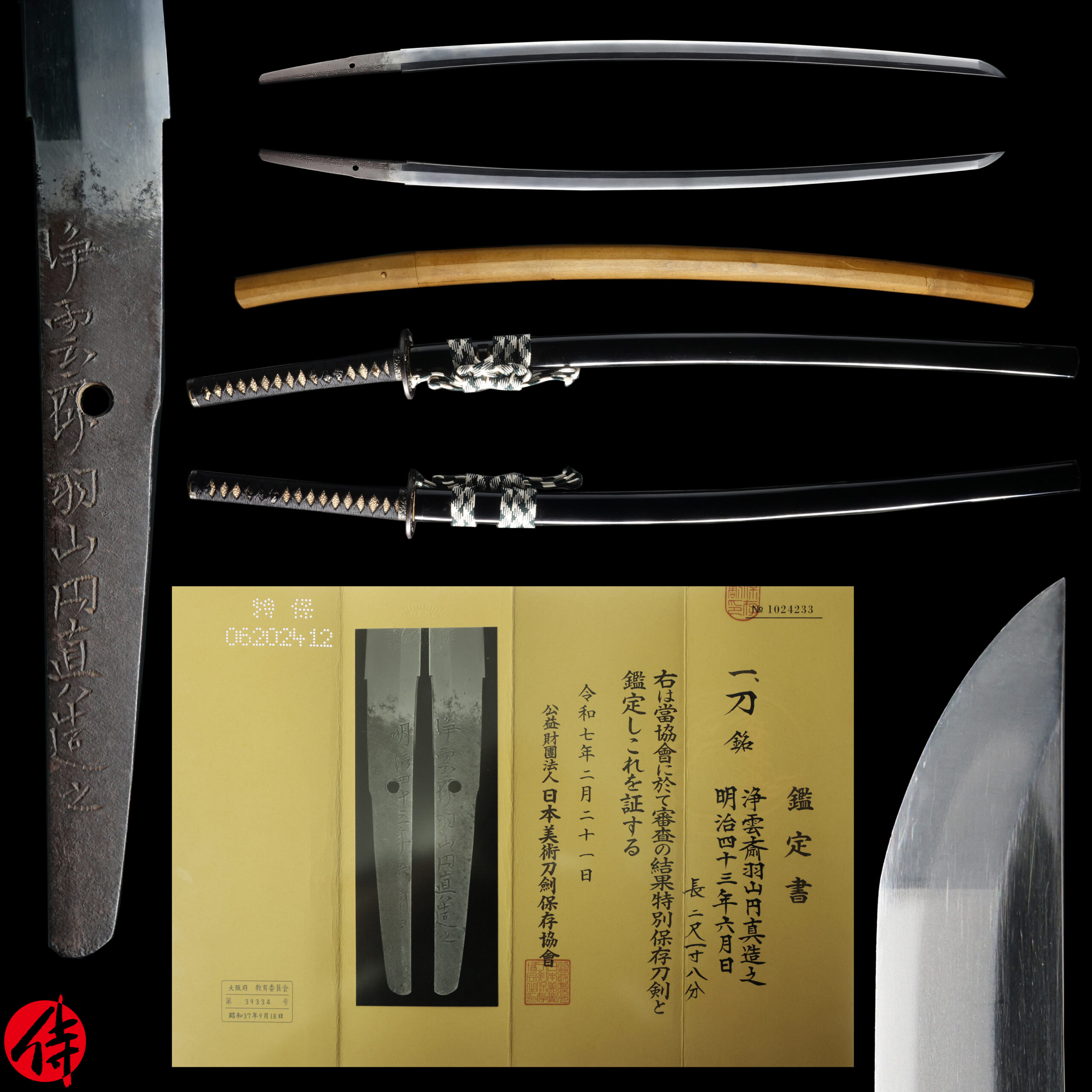
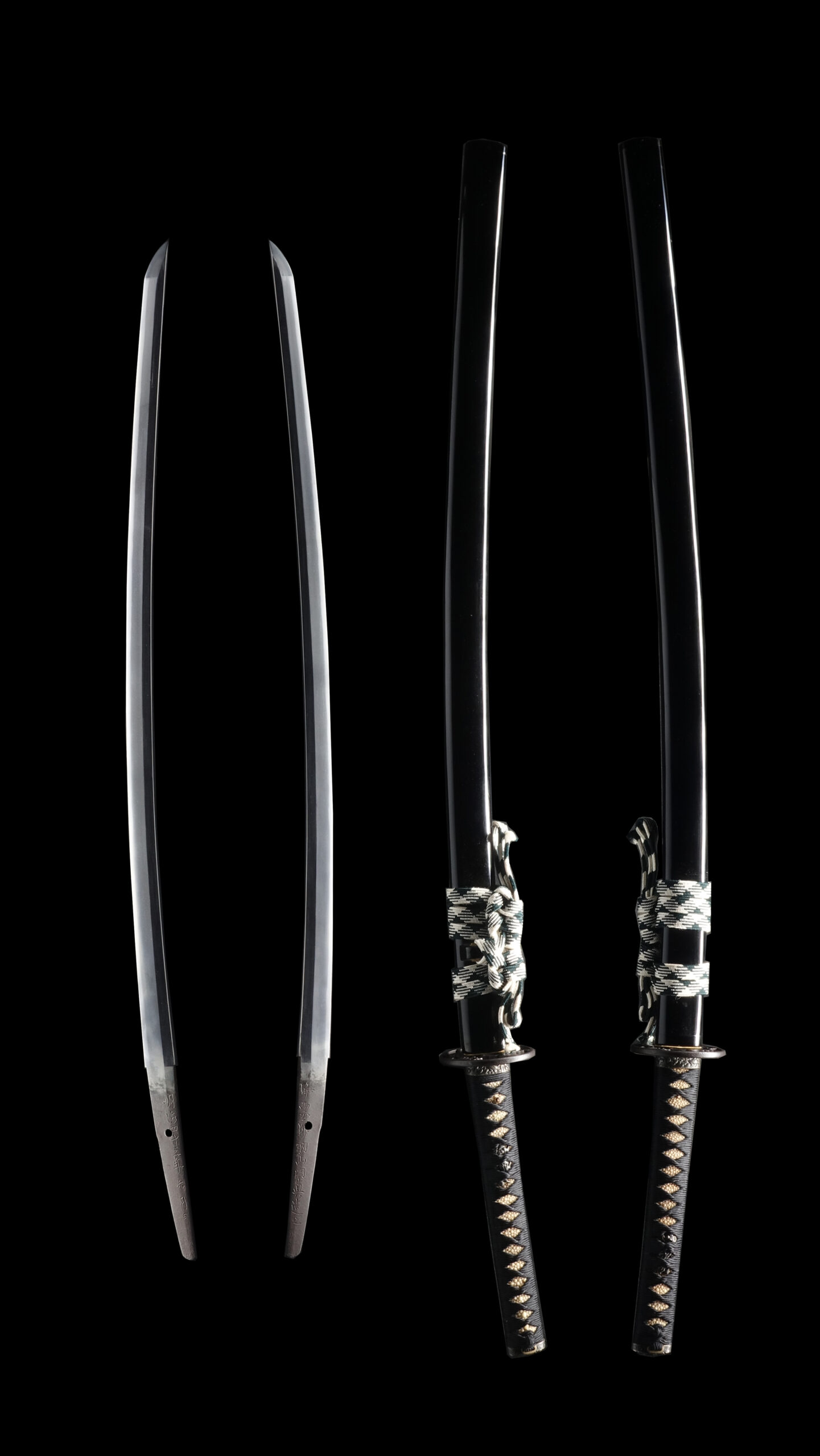
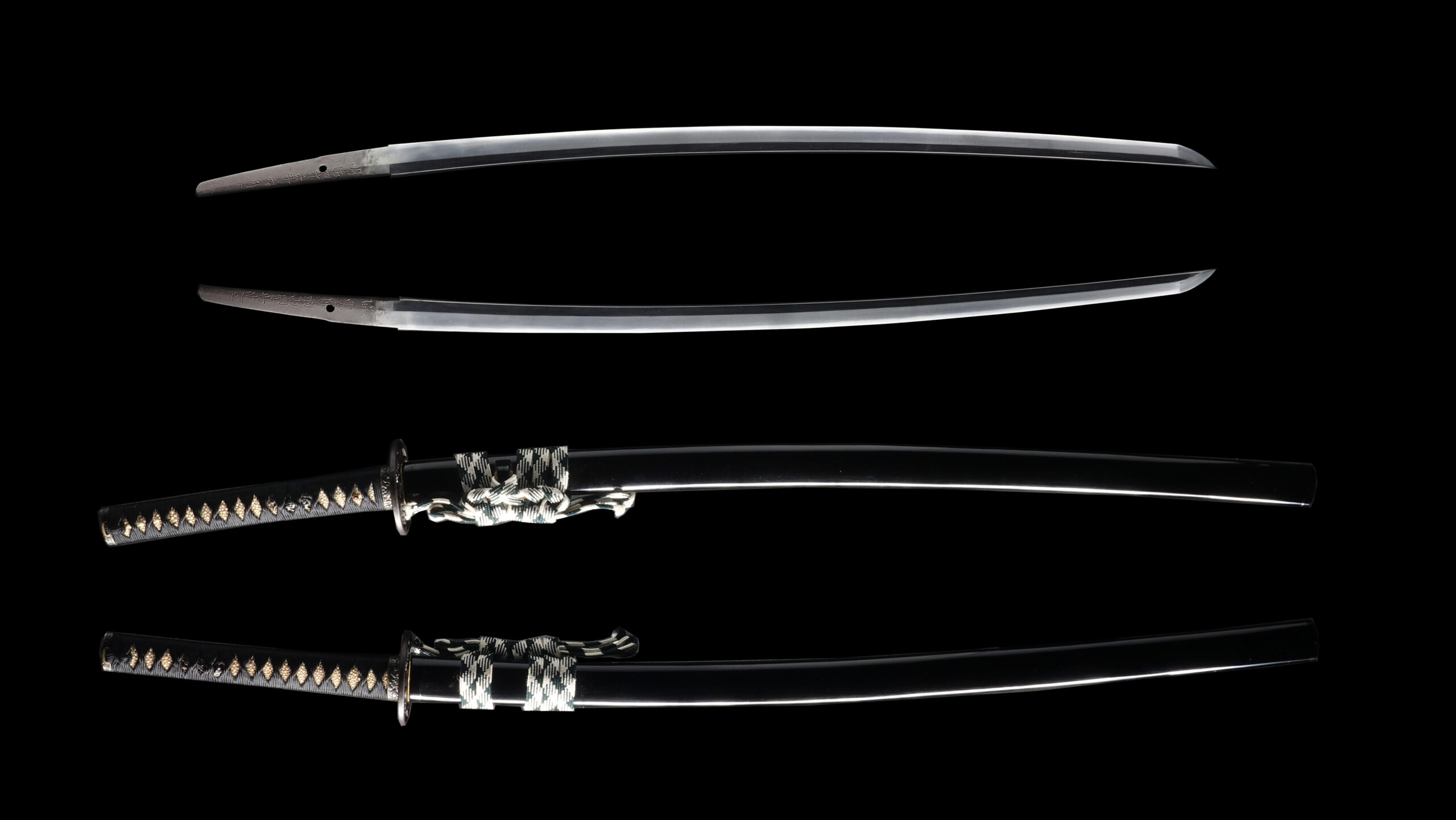
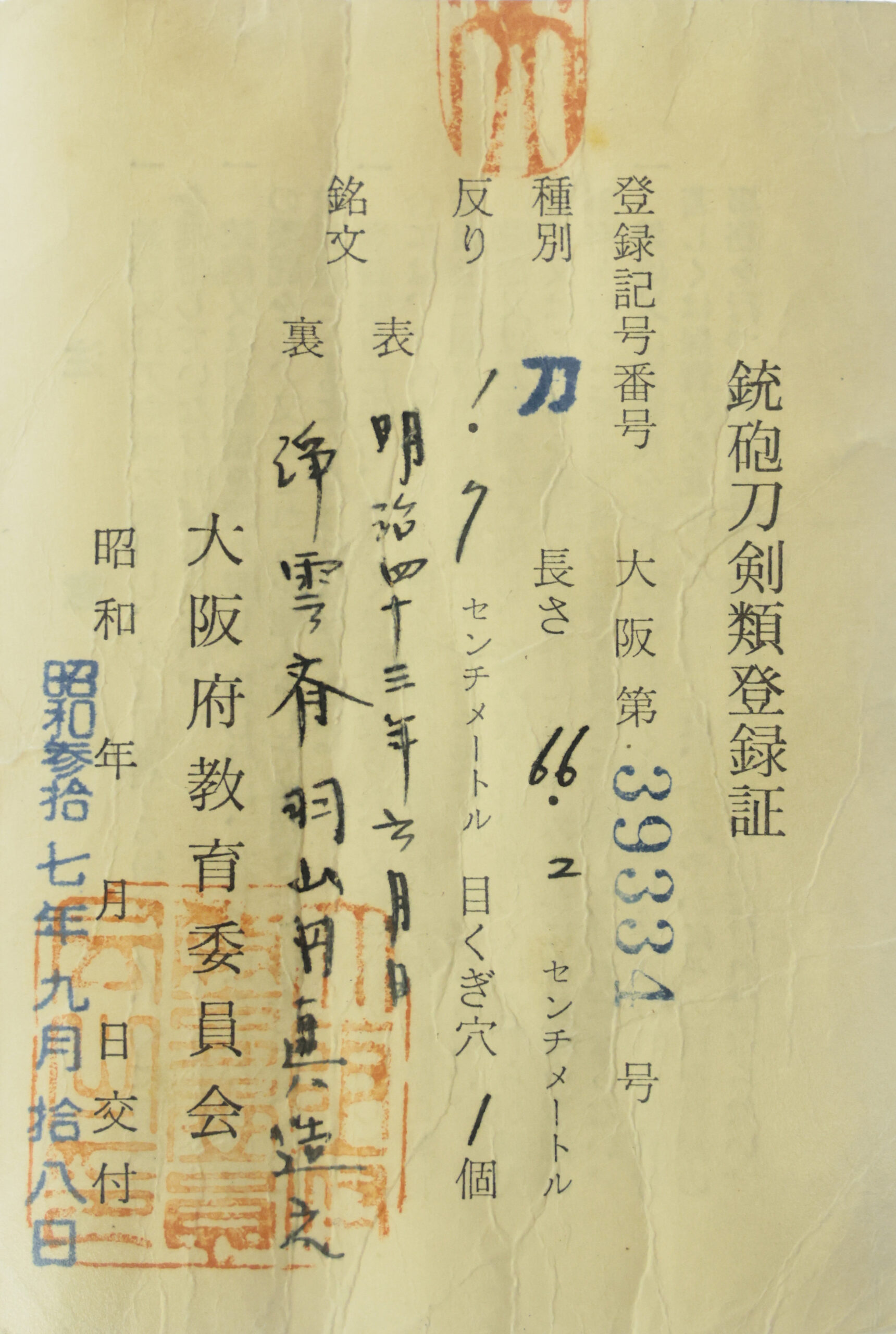
販売店の記載のまま
武蔵 · 1868-1912頃
藤代 中上作 · 刀剣大鑑 上位87%
現在5点販売中
昭和から現代へ 断絶と再生
二十世紀は二度この工芸を殺しかけた。戦時の歪みと、占領下の禁令である。1948年の日刀保設立と1953年の作刀再開が刀を美術として再建し、人間国宝と無鑑査がその頂に立つ。
保存刀剣のうち、出来が一層優れ、保存状態も良好と認められたものです。再刃や、室町・江戸期の多くの無銘作は対象外となり、保存刀剣より高い基準が課されます。
日本美術刀剣保存協会(NBTHK)は、1948年に設立され、文化庁の監督を受ける公益財団法人で、東京・刀剣博物館に本部を置きます。専門の審査員が出品作を直接審査し、美術的・歴史的価値に応じた鑑定書を発行します。NBTHKの鑑定書は、日本刀および刀装具の真正性を示す最も広く認知された基準です。
NBTHK公式サイトReturns/exchanges limited to defects caused by shipping (except willful misconduct or gross negligence by the company); customers must contact within 72 hours of receiving the product.