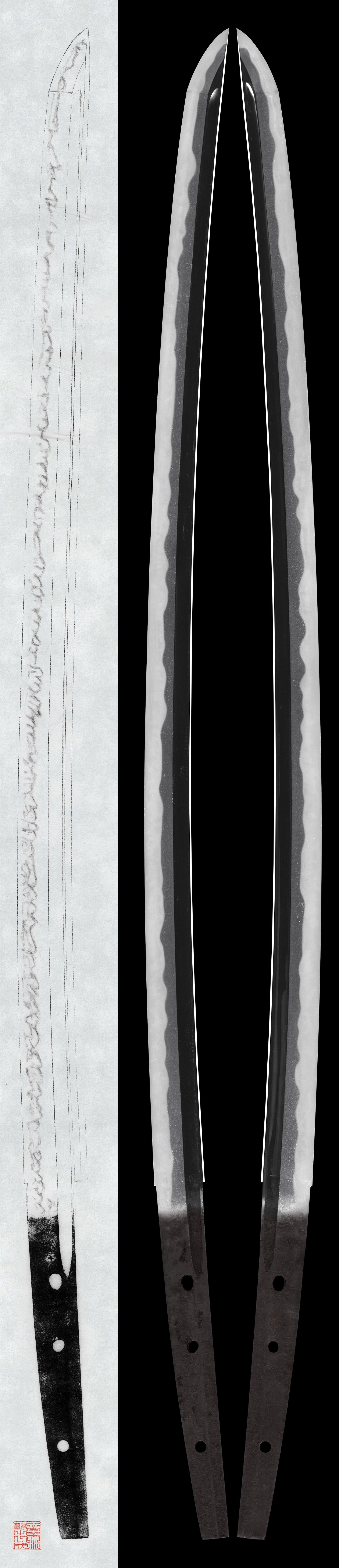
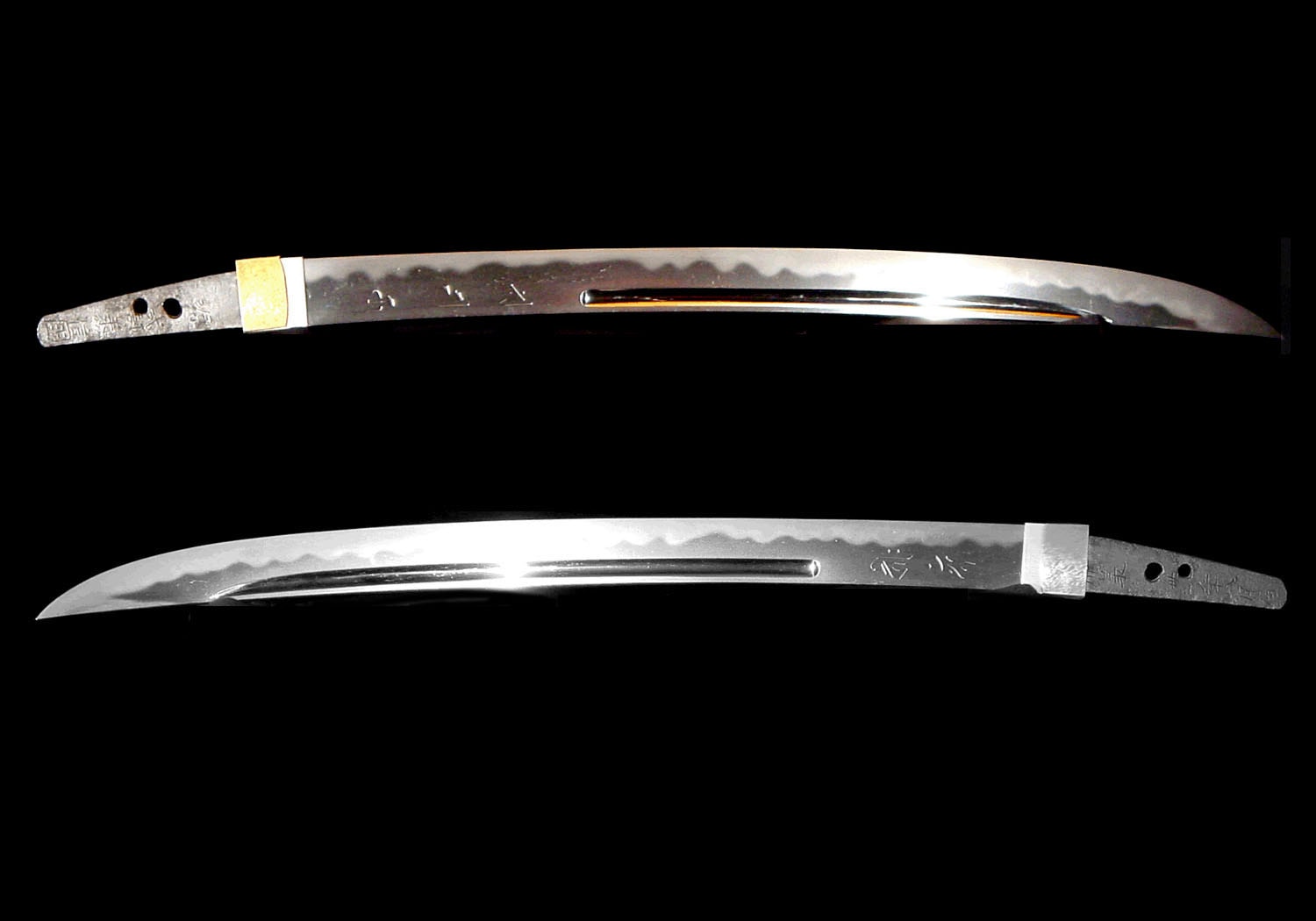
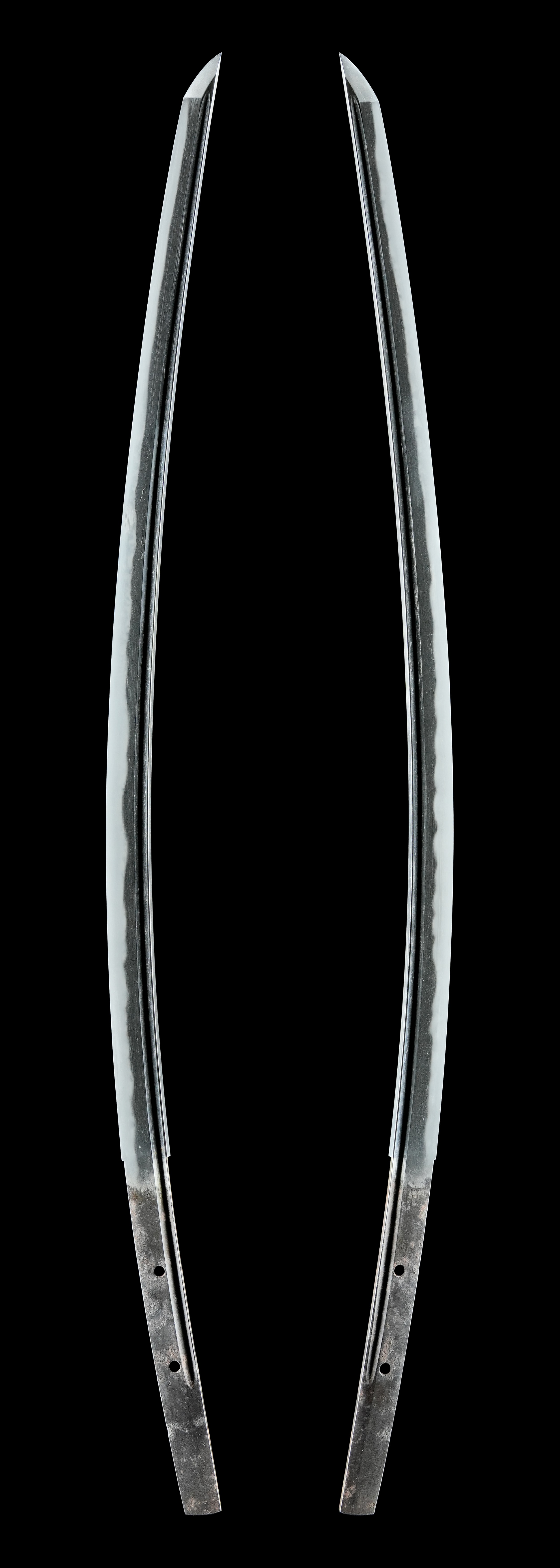
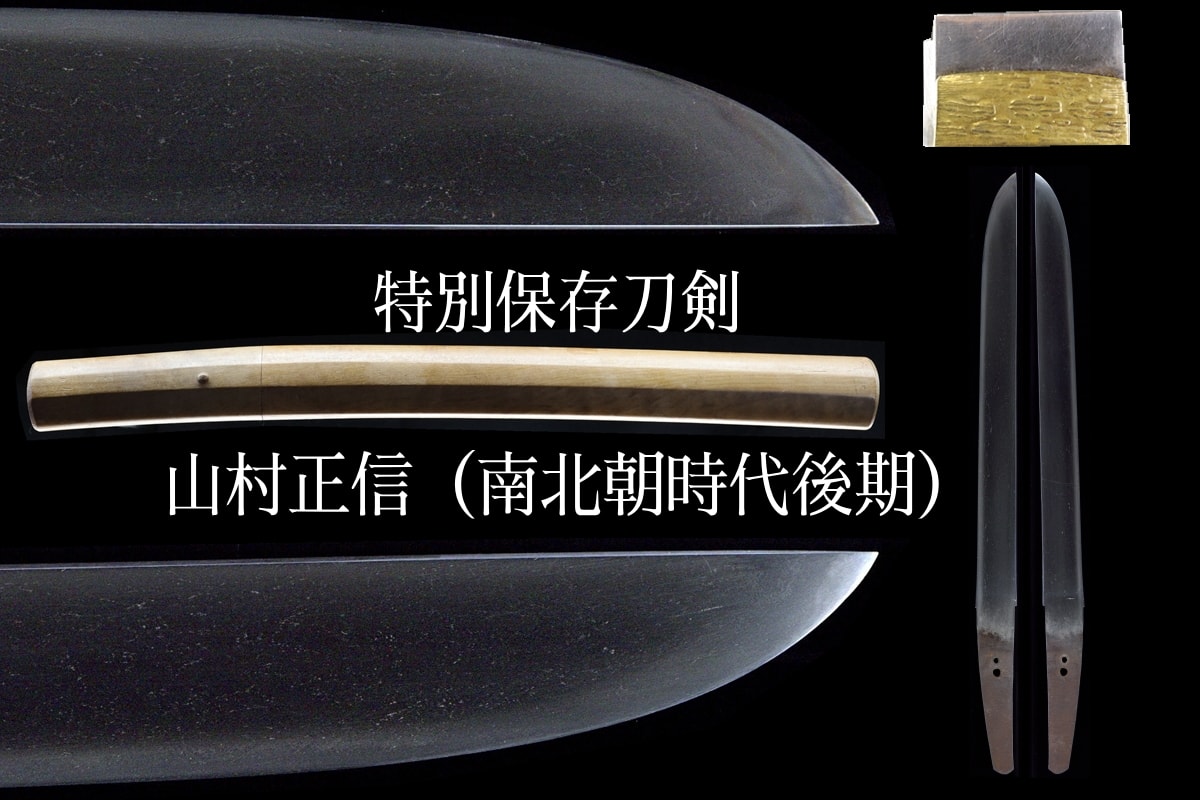
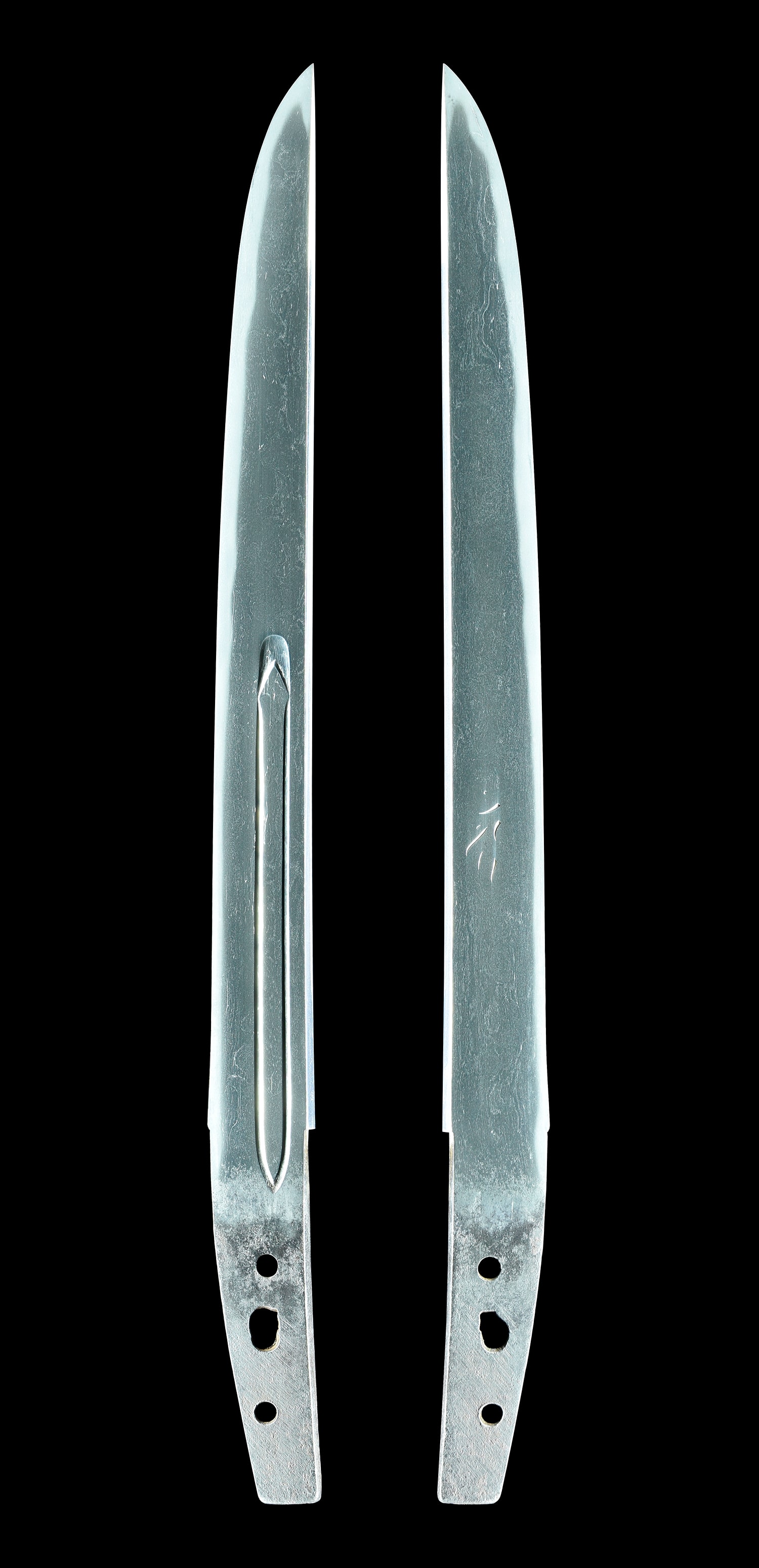
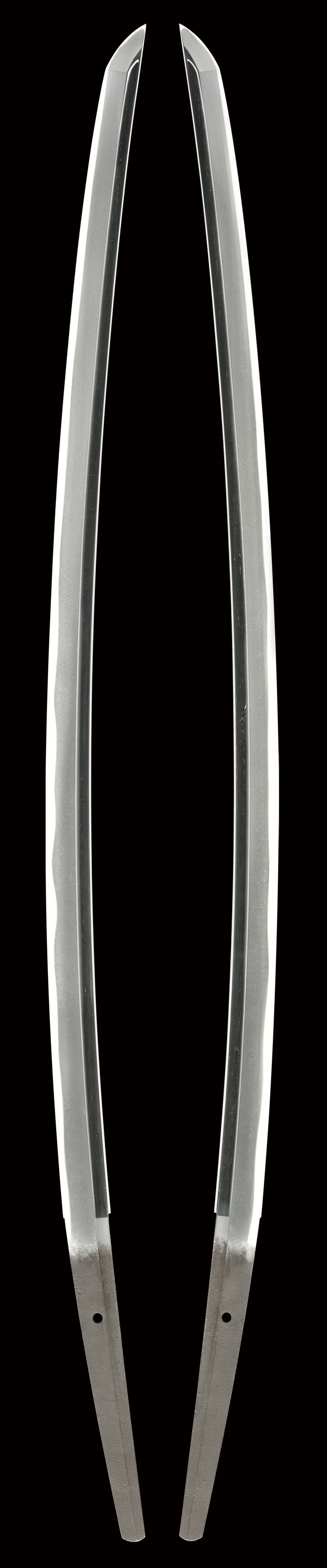
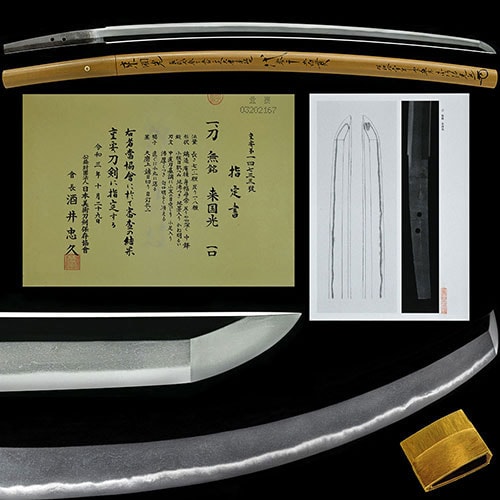
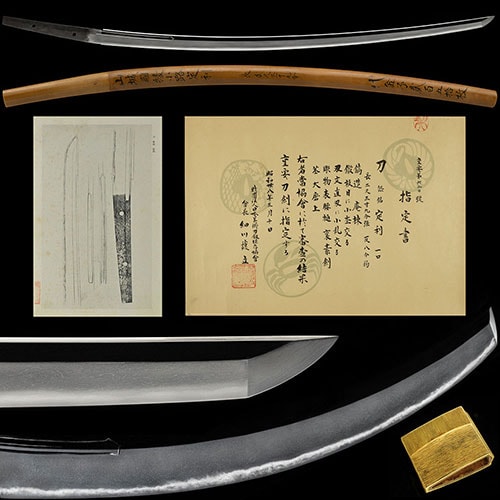
Nobukuni was a distinguished Kyoto lineage of swordsmiths that flourished from the Nanbokucho period through the Muromachi period. The first-generation Nobukuni belonged to the Ryokai line, and tradition holds that he studied under Soshu Sadamune; dated works are known from the Enbun, Koan, and Joji eras. Thereafter, successive generations using the name Nobukuni are recognized toward the end of the Nanbokucho period, and in the early Muromachi period there appeared the so-called Oei Nobukuni, namely Saemon no Jo Nobukuni and Shikibu no Jo Nobukuni. During the Nanbokucho period alone, two or three smiths using the same name are thought to have been active, with the line continuing into the Oei era.
Across the generations, the workmanship presents two principal modes: suguha reflecting the Kyo-mono tradition, and notare inheriting Sadamune's style. From the late Nanbokucho successors through the Oei Nobukuni, however, one can additionally observe a newly developed range of irregular temper based primarily on gunome. The jihada is characteristically itame-hada mixed with mokume, tightly forged, with thick ji-nie and frequent chikei. The hamon in the notare-flavored mode mixes gunome with yahazu-shaped elements -- a trait that distinctly manifests the special characteristics of this lineage. Kinsuji and sunagashi run through, and the nioiguchi is bright. The boshi typically enters in notare-komi with ko-maru and hakikake. The character "koku" written in the left-form style appears from around the Shitoku-Meitoku years and is frequently encountered in works of the Oei era.
The superimposed horimono (kasanebori) executed on both sides of many Nobukuni works is consistently praised as magnificent, harmonizing well with the blade and enhancing the overall effect. Both ji and ha are repeatedly noted as being in kenzen condition, and the line's signed works, including the valuable Meitoku date inscription, constitute important reference material for the study of Kyoto swordsmithing.