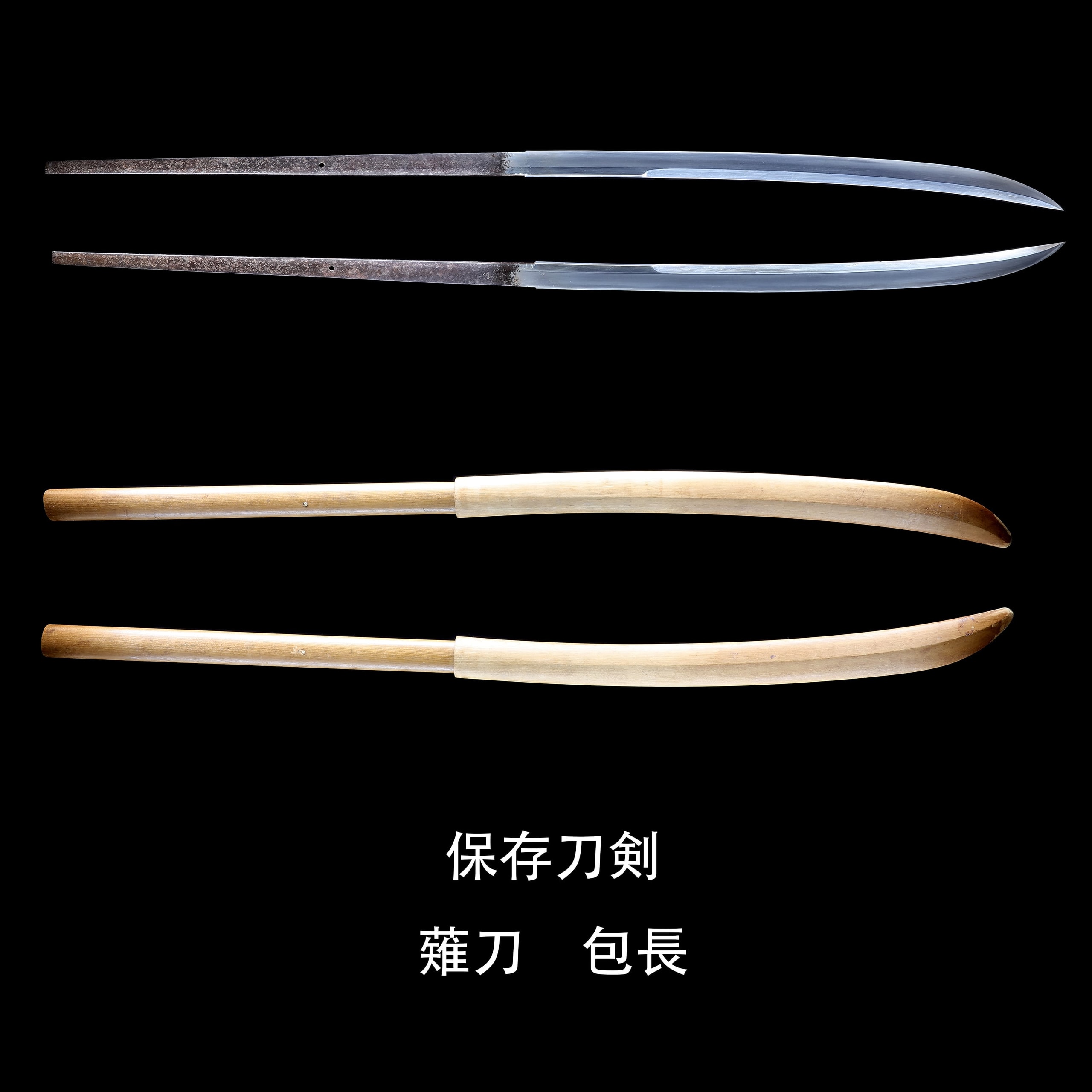
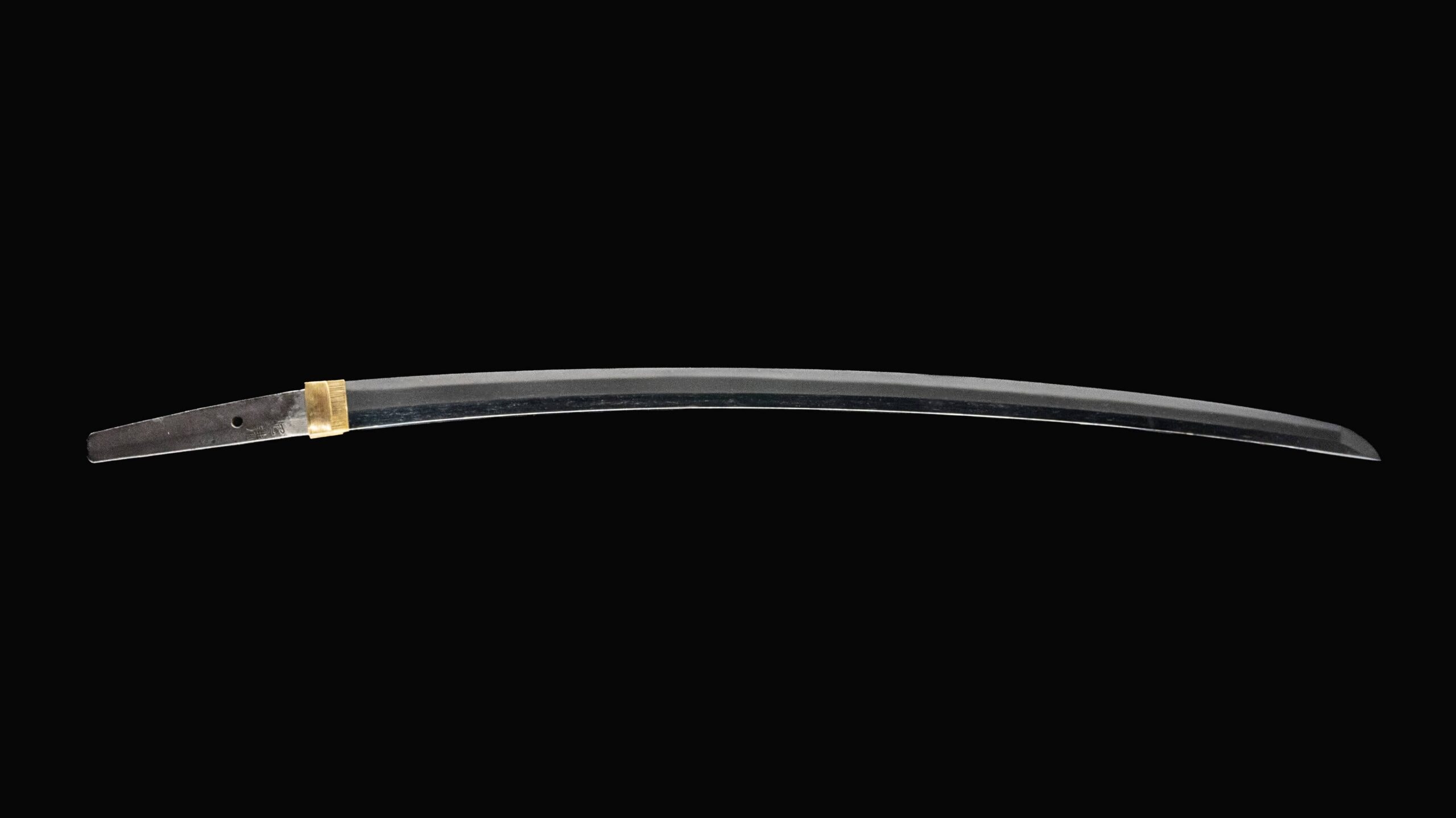
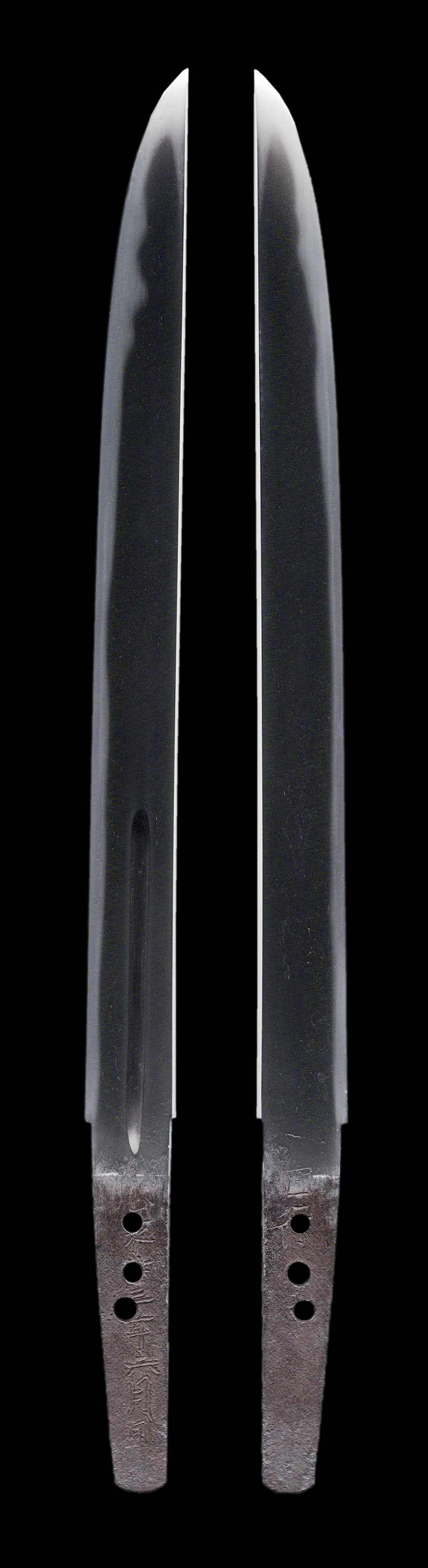
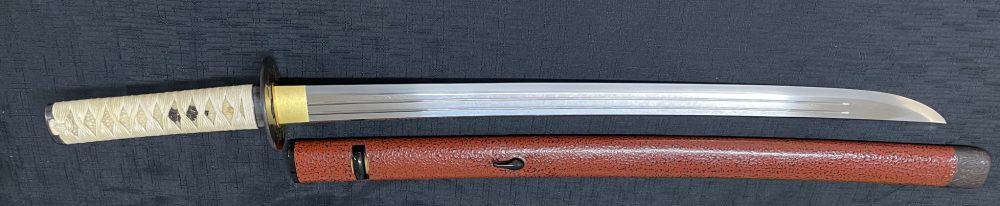
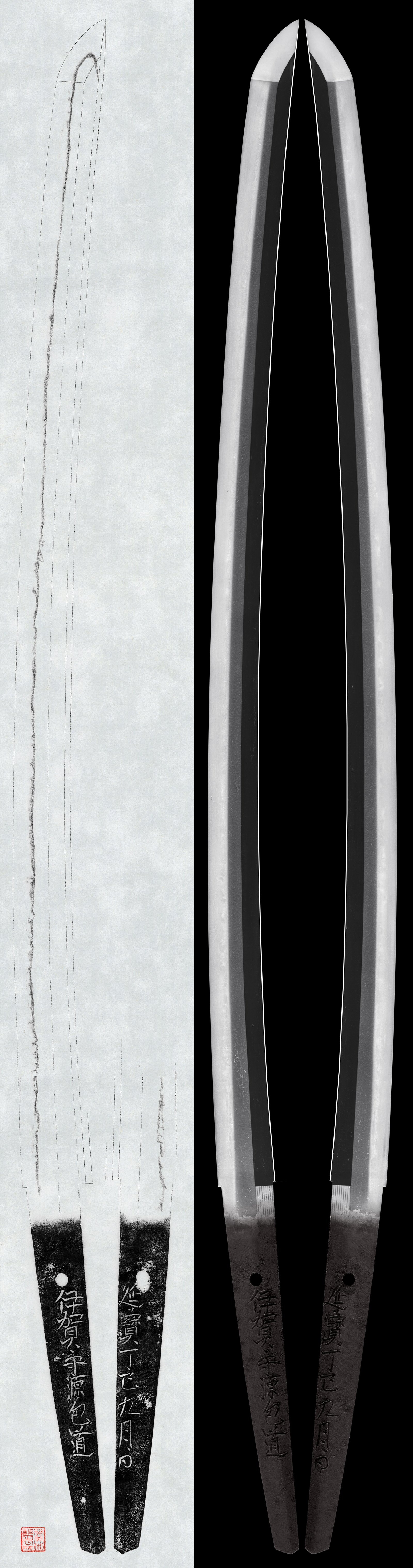
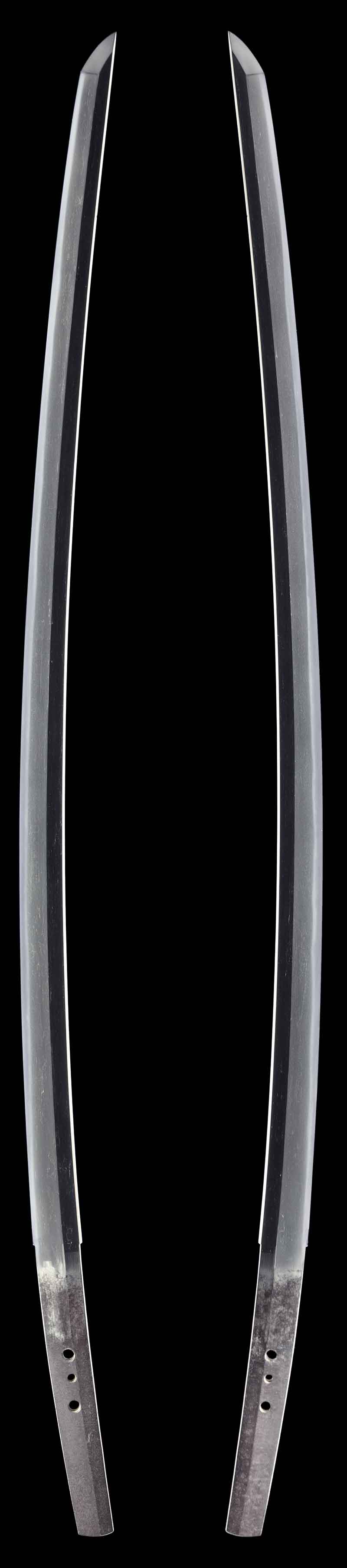
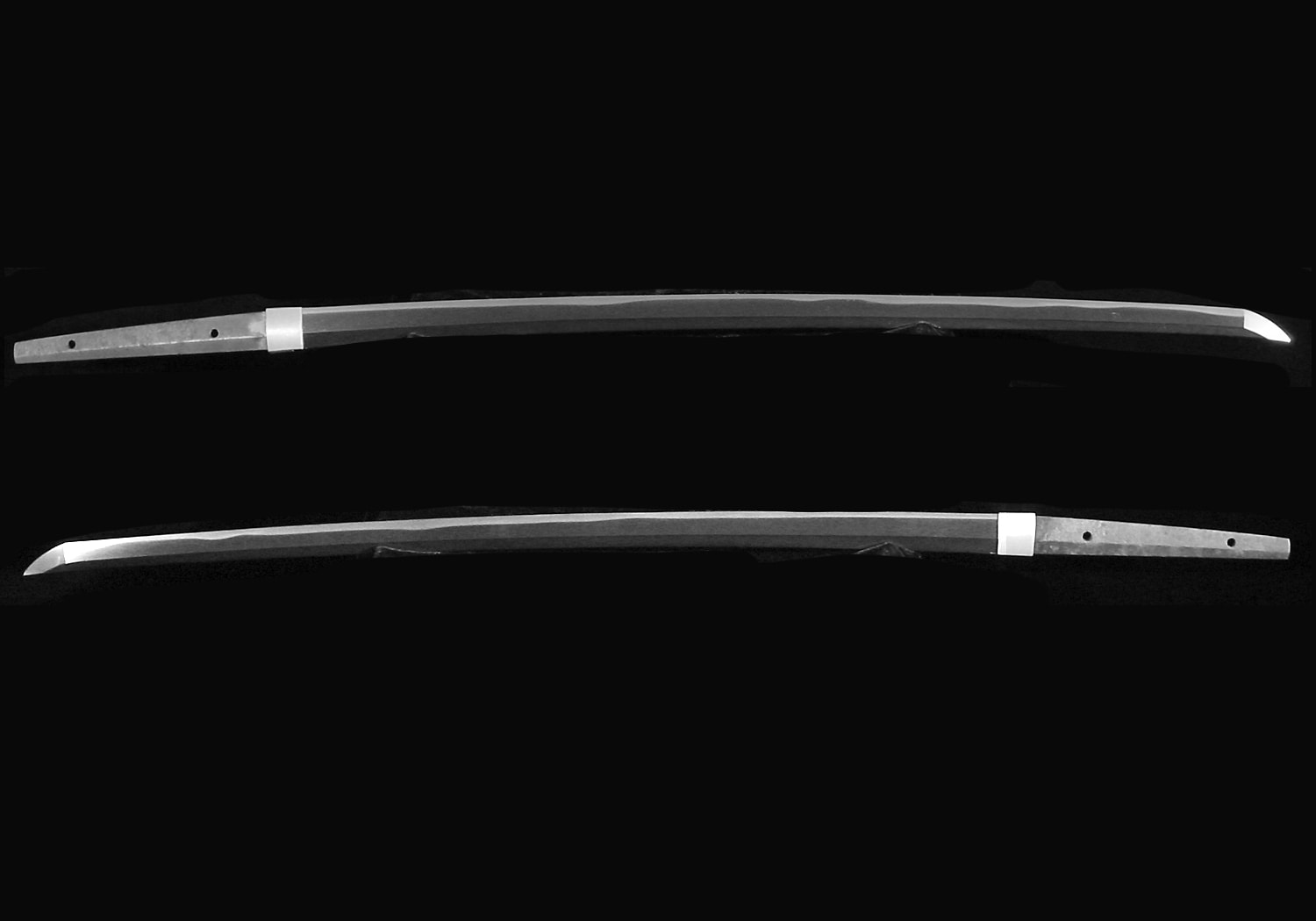
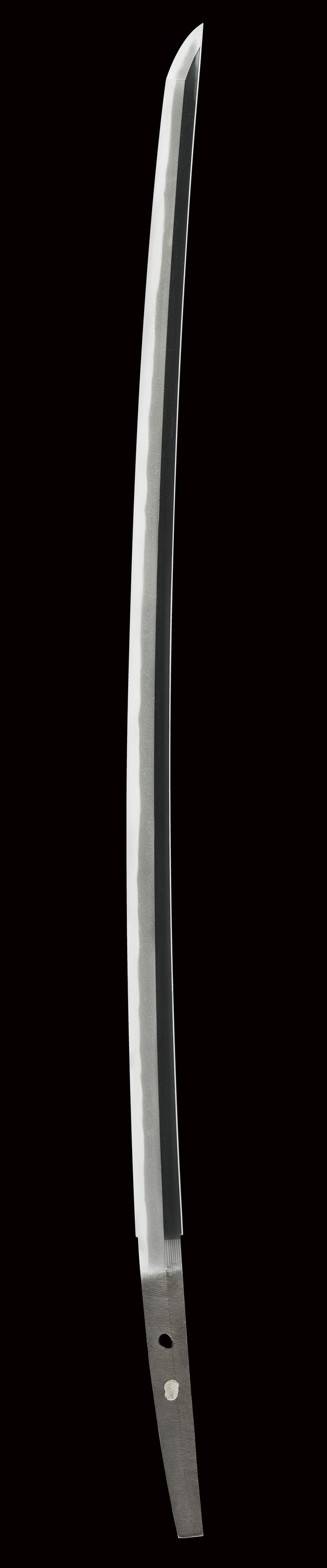
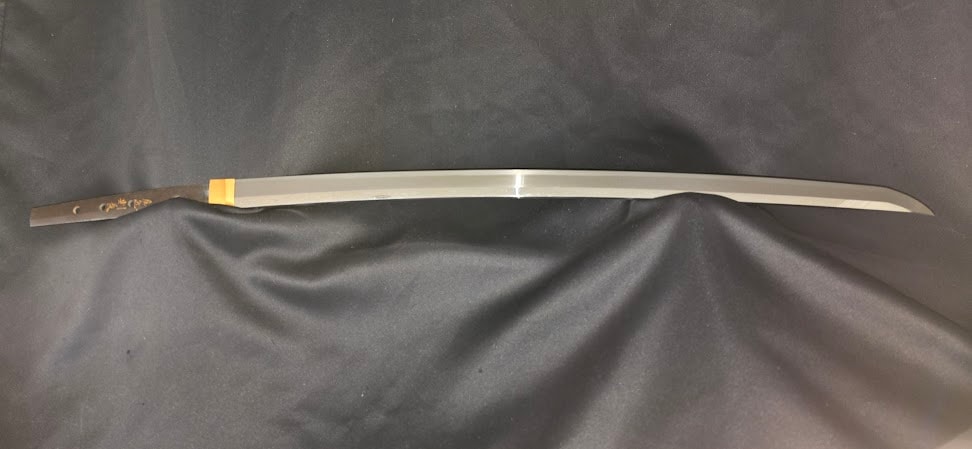
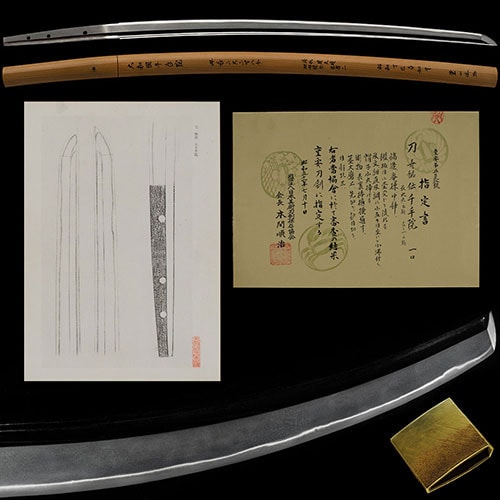
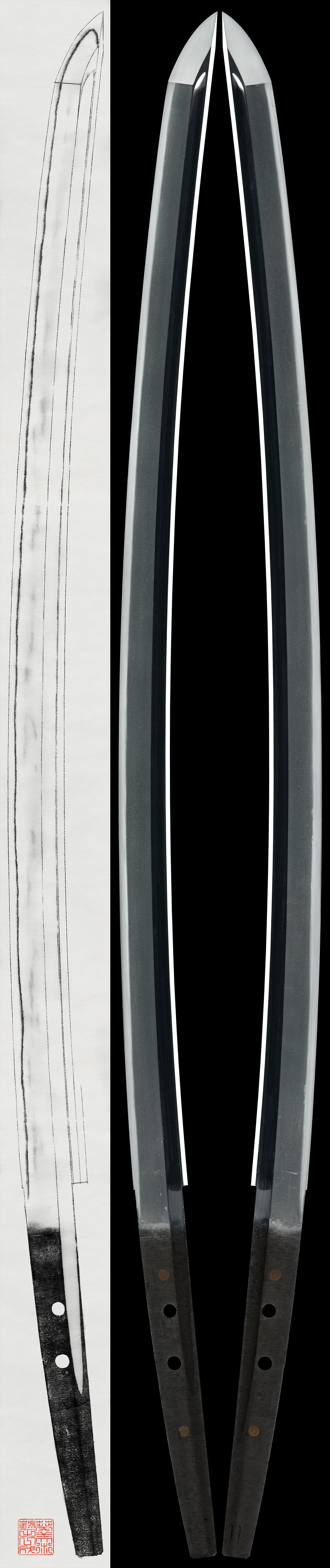
Kanemasa (包真) was a swordsmith of the Tegai school, a group of smiths residing near the Tengai-mon of Todaiji in Nara. The school takes Kanenaga of the late Kamakura period as its de facto founder and prospered throughout the Muromachi period. According to the meikan, Kanemasa was "a disciple in the line of Kanenaga, and the first generation is transmitted as Yasuyasu," with successive generations continuing into the late Muromachi period. Works by Kanemasa, together with those of Kanetoshi, are numerous from the Muromachi period. The earliest signed works are dated to no later than the Oei era, with a documented example bearing the date Oei 2 (1405).
Tegai works characteristically show little individual eccentricity, instead presenting the traditional style of the school. The kitae displays ko-itame mixed with flowing itame and masame, well packed with a slightly whitish tone to the ground steel. The hamon is generally a suguha with a tightened nioiguchi, to which ko-nie adheres brightly, often showing slight hotsure and kuichigai-ba. In the later Sue Tegai period, the temper broadens with more vigorous nie, sunagashi, and yubashiri appearing. The boshi turns back in ko-maru with a long kaeri, and file marks are typically higaki. The NBTHK observes that the nie in Kanemasa's work "richly manifests the nie seen in Kanenaga's work" and possesses "an archaic flavor" that "overflows with strength."
Among signed Kanemasa works, the earliest example is described as "a valuable reference piece for research on the Tegai school." The NBTHK identifies an "unmistakably neat and careful workmanship" as the hallmark of Tegai production from the Oei era, with the jigane praised as being "of good quality" and the suguha "splendid." Kanemasa's oeuvre traces the arc of the Tegai tradition from its measured Kamakura-derived restraint through to the more animated expression of the Sue Tegai period.